This page has the embedded videos of the Simply Church Ministry lectures on “The Bible Doctrine of the Church.” Below each lesson below is a link to the YouTube video of the lesson.
Below the YouTube video are links to online articles including those mentioned in the lesson. Those links, except the link to the written lesson, are not included below.
You can go to the Video Lecture page for direct links to all lessons in the short course.
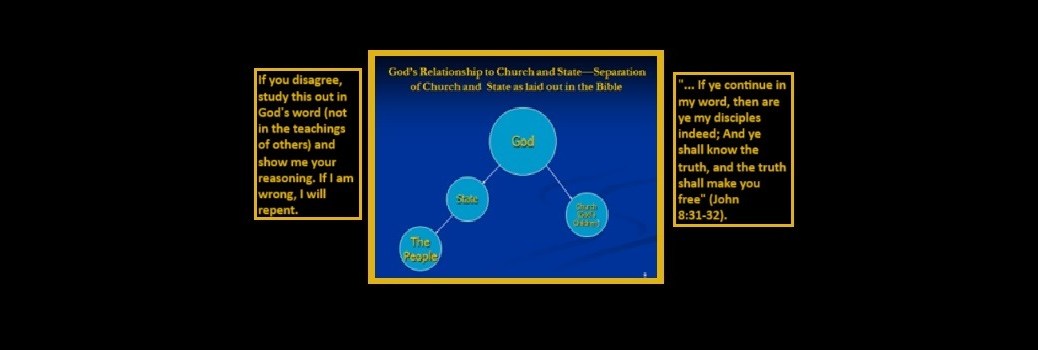
The primary purpose of these studies is to glorify God by teaching God’s principles concerning (1) church, state, and union of church and state and (2) the application of those principles. Deviating from those principles brings dire consequences for individuals, families, churches, and nations.
To understand God’s desired relationship between church and state, the believer must know what God says about church and state – about government (individual, family, civil, and church governments).
Click here to go to links to all written lessons.
Contents
I. Embedded videos of each lesson
II. Direct links to YouTube videos of each lesson
I. Embedded Videos of Each Lesson
1. Introduction
2. Definitions of “Separation of Church and State,” “Established Church,” and “Religious Freedom or Soul Liberty”
3. Dispensation Theology versus Covenant Theology and Their Importance to the Issue of Church and State Relationship in America:
–(1) Introduction
–(2) Colonial Theological Warfare–Separation of Church and State
–(3) The Essence of Dispensationalism (Optional)
–(4) The Way in Which the Two Systems Meet the Requirements for a Philosophy of History (Optional)
–(5) Some Basic Teachings of Covenant Theology (Optional)
–(6) Puritan Covenant Theology Exposed in the American Colonies
–(7) Three Critical Factors Upon Which Dispensationalism and Covenant Theology Disagree (Optional)
–(8) Dispensationalism Correctly Explains the Covenants of Law and Grace (Optional)
–(9) Persecution: A Consequence of Covenant Theology
–(10) History Proves Established Churches Are Vile, Viciously Persecute Heretics, and Corrupt the State, the Church, and the People (Optional)
–(11) New Testament Teaching against Persecution of Heretics (Optional)
–(12) Conclusion to “Dispensation Theology versus Covenant Theology and their importance to the issue of church and state relationship in America”
4. Distinct Differences between Church and State Which Render Them Mutually Exclusive
5. Render Unto God the Things That Are His: A Study of Romans 13 and Other Verses Taken Out of Context to Support Union of Church and State
–(1) Introduction: Render Unto God the Things that Are His.
–(2) Render unto Caesar…? (Lk. 20.25, Mt. 22.21, and Mk. 12.17).
–(3) Let every soul be subject to the higher powers? (Ro. 13.1 and Ro. 13 in general).
–(4) Doth not your master pay tribute? (Mt. 17.24-27).
–(5) Submit to every ordinance of man? (1 Pe. 2.13).
–(6) Pray for all rulers? (1 Ti. 2.1-6).
–(7) Conclusion.
6. Christ-church, Husband-Wife, Bridegroom-bride
7. Conclusion
II. Direct links to YouTube videos of each lesson
1. Introduction
2. Definitions of “Separation of Church and State,” “Established Church,” and “Religious Freedom or Soul Liberty”
3. Dispensation Theology versus Covenant Theology and Their Importance to the Issue of Church and State Relationship in America:
–(1) Introduction
–(2) Colonial Theological Warfare–Separation of Church and State
–(3) The Essence of Dispensationalism (Optional)
–(4) The Way in Which the Two Systems Meet the Requirements for a Philosophy of History (Optional)
–(5) Some Basic Teachings of Covenant Theology (Optional)
–(6) Puritan Covenant Theology Exposed in the American Colonies
–(7) Three Critical Factors Upon Which Dispensationalism and Covenant Theology Disagree (Optional)
–(8) Dispensationalism Correctly Explains the Covenants of Law and Grace (Optional)
–(9) Persecution: A Consequence of Covenant Theology
–(10) History Proves Established Churches Are Vile, Viciously Persecute Heretics, and Corrupt the State, the Church, and the People (Optional)
–(11) New Testament Teaching against Persecution of Heretics (Optional)
–(12) Conclusion to “Dispensation Theology versus Covenant Theology and their importance to the issue of church and state relationship in America”
4. Distinct Differences between Church and State Which Render Them Mutually Exclusive
5. Render Unto God the Things That Are His: A Study of Romans 13 and Other Verses Taken Out of Context to Support Union of Church and State
–(1) Introduction: Render Unto God the Things that Are His.
–(2) Render unto Caesar…? (Lk. 20.25, Mt. 22.21, and Mk. 12.17).
–(3) Let every soul be subject to the higher powers? (Ro. 13.1 and Ro. 13 in general).
–(4) Doth not your master pay tribute? (Mt. 17.24-27).
–(5) Submit to every ordinance of man? (1 Pe. 2.13).
–(6) Pray for all rulers? (1 Ti. 2.1-6).
–(7) Conclusion.
6. Christ-church, Husband-Wife, Bridegroom-bride
7. Conclusion
 Simply Church