9. How To Recognize a New Testament Church


A Publication of Simply Church Ministry


If you miss one part of the puzzle that is being put together in these studies, you will never see and understand the whole picture.


Previous Lesson:
7. Other Bible Metaphors for a Church: Family, Etc.

Next Lesson:
9. Heresy and Apostasy

Click here to go to all lessons on the Bible Doctrine of the Church.

Click here to go to the written lessons.

Click here to go to the 5 minute video lectures.


Jerald Finney
Copyright © January 5, 2018

Prior lessons on the church give much insight into knowing how to recognize a New Testament Church. This lesson gives some additional insights and stresses the importance of seeking a church which is organized and conducted God’s way, according to his commandments and his word.

To recognize a church, an assembly of people, which is modeled after New Testament Church principles, one must look at New Testament Church doctrine. That doctrine is given us in the epistles penned by the Apostle Paul. Prior lessons have examined much of that doctrine.

J. M. Carroll, in describing the overall organization of the church, accurately listed eleven “Marks of a New Testament Church:

  1. “Its Head and Founder—CHRIST. He is the lawgiver; the Church is only the executive. (Matt. 16:18; Col. 1:18.)
  2. “Its only rule of faith and practice—THE BIBLE. (II Tim. 3:15-17.)
  3. “Its name—‘CHURCH,’ ‘CHURCHES.’ (Matt. 16:18; Rev. 22:16.)
  4. “Its polity—CONGREGATIONAL—all members equal. (Matt. 20:24-28; Matt. 23:5- 12.)
  5. “Its members—only saved people. (Eph 2:21-22; I Peter 2:5.)
  6. “Its ordinances—BELIEVER’S BAPTISM, FOLLOWED BY THE LORD’S SUPPER. (Matt. 28:19-20.)
  7. “Its officers—PASTORS and DEACONS. (I Tim. 3:1-16.)
  8. “Its work—getting folks saved, baptizing them (with a baptism that meets all the requirements of God’s Word), teaching them (‘to observe all things whatsoever I have commanded you’). (Matt. 28:16-20.)
  9. “Its financial plan—‘Even so (TITHES and OFFERINGS) hath the Lord ordained that they which preach the gospel should live of the gospel.’ (I Cor. 9.14.)
  10. “Its weapons of warfare—spiritual, not carnal. (II Cor. 10:4; Eph. 6:10-20.)
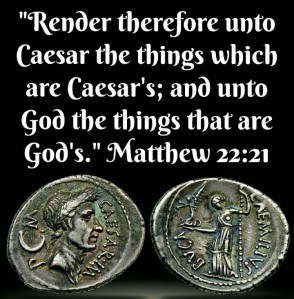
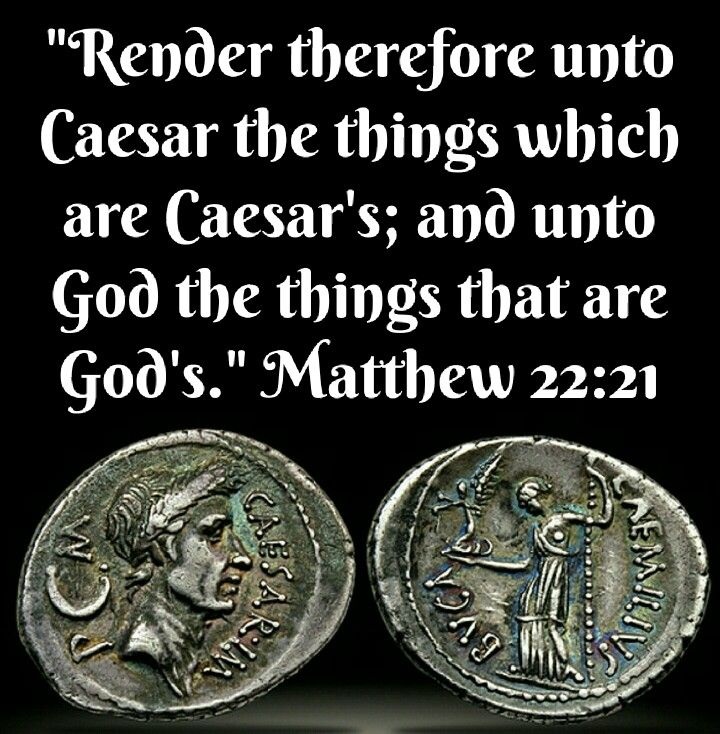
  11. “Its independence—separation of Church and State. (Matt. 22:21.)” [i]

Certainly, a preacher on the street corner with a crowd around him as he preaches is not a church. Nor is a group of people meeting in a house and preaching the Word. However, if that house group chooses a properly ordained and baptized pastor, organizes and operates according to biblical principles, initiates a proper baptism for new believers, and begins to partake of the Lord’s Supper, an ordered New Testament church comes into existence. The Lord desires that those who are saved be baptized into a properly ordered New Testament church.

An eChurch is not a New Testament church, nor is a group who starts following someone on Facebook or other social network. As has been established in prior lessons, a church is a spiritual body or assembly ordered according to the principles of the New Testament.

Only the assembly where the true doctrine is preached is a church: “But though we, or an angel from heaven, preach any other gospel unto you than that which we have preached unto you, let him be accursed” (Ga. 1.8).  Where only false doctrines are preached, no church can exist. For example, the Catholic Church, some Baptist churches, many Protestant churches, the Church of Jesus Christ of Latter Day Saints, Islam, and the Jehovah’s Witnesses are not churches. When the preaching of a church conceals the gospel message of salvation by grace through faith alone from its members, so that the gospel message is not clearly proclaimed, and has not been proclaimed for some time, the group meeting there is not a church.

A church can exist only where the Bible is believed to be the inerrant Word of God, where the Bible is the sole basis for faith and practice, and where that Bible is taught, preached, and practiced.

Local churches assemble in His name for the breaking of bread, worship, praise, prayer, testimony, the ministry of the word, discipline, and the furtherance of the Gospel (He. 10.25; Ac. 20.7; 1 Co. 14.26; 1 Co. 5.4, 5; Ph. 4.14-18; 1 Th. 1.8; Ac. 13.1-). Every such local church has Christ in the midst, is a temple of God, indwelt by the Holy Spirit (1 Co. 3.16, 17), and is “the pillar and ground of the truth” (1 Ti. 3.15).

A church is the body of Christ of which He is the Head. Christ desires that a church remain solely under Him: “And [God] hath put all things under his feet, and gave him to be the head over all things to the church” (Ep. 1.22-23). “For the husband is the head of the wife, even as Christ is the head of the church” (Ep. 5.23). Prior lessons have covered this and other  matters mentioned in this lesson in more completely.

New Testament church doctrine and example further define what a church is to be:

  1. Click here to go to a study of Matthew 22:21, Romans 13, and related verses.

    Spiritual entity only. [ii] A church which is a legal entity such as a 501(c)(3) corporation is, at best, in God’s permissive will and out of God’s perfect will. Such a church has combined the earthly, temporal, and Satanic with the heavenly, eternal and spiritual.[iii]

  2. The body of Christ of which He is the Head. Christ desires that a church remain solely under Him: “And [God] hath put all thingsunder his feet, and gave him to be the head over all things to the church” (Ep. 1.22-23). “For the husband is the head of the wife, even as Christ is the head of the church” (Ep. 5.23). A church which is a legal entity has two heads, the Lord Jesus Christ and civil government. Such a church cannot be a New Testament church.[iv]
  3. Separate from the world. An incorporated 501(c)(3) or 508(c)(1)(A) church is not separated from the world.[v]
  4. A church is to assemble in His name for the breaking of bread, worship, praise, prayer, testimony, the ministry of the word, discipline, and the furtherance of the Gospel (He. 10.25; Ac. 20.7; 1 Co. 14.26; 1 Co. 5.4, 5; Ph. 4.14-18; 1 Th. 1.8; Ac. 13.1-).
  5. Every such local church has Christ in the midst, is a temple of God, indwelt by the Holy Spirit (1 Co. 3.16, 17), and is “the pillar and ground of the truth” (1 Ti. 3.15).
  6. A church has duties outside the meeting house. The teaching of doctrine inside, work outside.[vi] Outside, the members are to present the Gospel, including all relevant truth from God’s word, to the world through door to door and one-on-one evangelism and street ministry, in the political arena, and everywhere one is involved.
  7. Fight the spiritual warfare against powers, principalities and the rulers of darkness in this present world (Ep. 6.10-18). This fight is being waged by Satan on all fronts. Churches and believers should likewise be fighting on all fronts using God’s methods of warfare.
Click here to go to Bible Study of Ephesians. Ephesians reveals the institution of the church as God’s masterpiece. It is more wonderful that any temple made with hands, constructed of living stones, indwelt by the Holy Spirit. Ephesians 1 presents the church as a body. The book is both doctrinal and practical. The first three chapters are doctrinal and go into the heavenlies. The last three chapters are practical and cover the believers responsibilities on earth. A church and a believer are to remain connected to their heavenly head as they walk on this earth.

Bible Studies of various Books on the Doctrine of the Church.

The Biblical Doctrine of the Church.


Endnotes

[i] J. M. Carroll, The Trail of Blood, (Distributed by Ashland Avenue Baptist Church, 163 N. Ashland Avenue, Lexington KY 40502, 606-266-4341), pp. 4-5. J. M. Carroll was a leader among Baptists who studied history and the Bible in an attempt to “find the church which was the oldest and most like churches described in the New Testament.” In the course of his studies, he gathered “one of the greatest libraries on church history. This library was given at his death to the Southwestern Baptist Seminary, Ft. Worth, Texas.”

[ii] See What is a spiritual entity?; A Church Is a Mystery, an Assembly, a Spiritual Body; The Holy Spirit Forms a Church which Is a Temple, a Spiritual Body, the Body of Christ.

[iii] See What is a legal entity?; Links to Lessons on Satan.

[iv]  Christ Ordained the Church and Builds It upon the Rock; Christ, the Head/Bridegroom/Husband of the Local Church.

[v] What is an established church?; The Biblical Doctrine of Separation of Church and State.

[vi] Click here to go to Bible Study of Ephesians. Ephesians reveals the institution of the church as God’s masterpiece. It is more wonderful that any temple made with hands, constructed of living stones, indwelt by the Holy Spirit. The book is both doctrinal and practical. The first three chapters are doctrinal and go into the heavenlies. The last three chapters are practical and cover the believers responsibilities on earth. A church and a believer are to remain connected to their heavenly Head, the Lord Jesus Christ, and Him alone as they walk on this earth.
7. Other Descriptors for a New Testament Church


A Publication of Simply Church Ministry


If you miss one part of the puzzle that is being put together in these studies, you will never see and understand the whole picture.


Previous Lesson:
6. The Love between Christ and His Churches

Next Lesson:
8. How To Recognize a New Testament Church

Click here to go to all lessons on the Bible Doctrine of the Church.

Click here to go to the written lessons.

Click here to go to the 5 minute video lectures.


Jerald Finney
Copyright © January 5, 2018


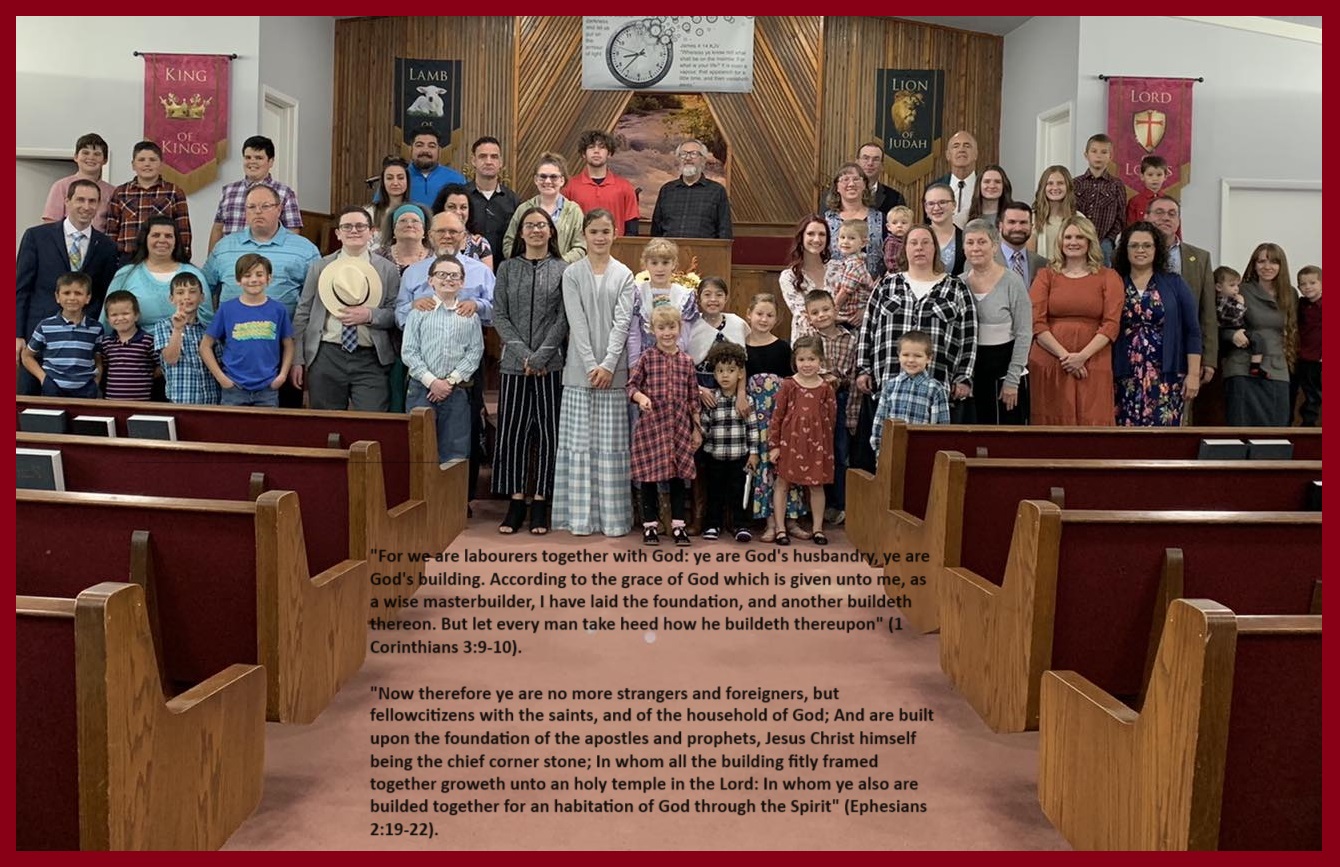
My church family

For our understanding of her nature, Scripture describes a church in many ways. Earlier lessons have examined some of them. This lesson will look at others.

One is indwelt by the Holy Spirit and becomes a member of the family of God at the moment of salvation (Ac. 10.45, 11.15-18; Romans 8:14-16; Galatians 4:4-7). God’s desire for that individual is that he then be baptized and become a member of a local church under Christ (Acts 2:41).

Thus, all members of a church, except any who have not been saved form a family; a church is a family. “Rebuke not an elder, but entreat him as a father; and the younger men as brethren; The elder women as mothers; the younger as sisters, with all purity” (1 Ti. 5.1-2). “And [I] will be a Father unto you, and ye shall be my sons and daughters, saith the Lord Almighty” (2 Co. 6.18). “And he stretched forth his hand toward his disciples, and said, Behold my mother and my brethren! For whosoever shall do the will of my Father which is in heaven, the same is my brother, and sister, and mother” (Mt. 12.49-50). Many other verses could be cited. Look for them as you read through the New Testament.

The Bible compares the church to a pearl of great price which “a merchant man sold all that he had, and bought it (Mt. 13.45-46):

  • “A church is one body formed by the Holy Spirit. As Israel is the hid treasure, so a church is a pearl of great cost. Covering the same period as the mysteries of the kingdom, is the mystery of the church (Rom. 16:25, 26; Eph. 3:3-10; 5.32). Of the true Church a pearl is a perfect symbol: (1) a pearl is one, a perfect symbol of unity (1 Cor. 10.17; 12.12, 13; Eph. 4.4-6). (2) A pearl is formed by accretion, and that not mechanically, but vitally, through a living one, as Christ adds to the Church (Acts 2.41, 47; 5.14; 11.24; Eph. 2.21; Col 2.19. (3) Christ, having given Himself for the pearl, is now preparing it for the presentation to Himself (Eph. 5.25-27).  The kingdom is not the Church, but the true children of the kingdom during the fulfillment of these mysteries, baptized by one Spirit into one body (1 Cor. 12. 12, 13), compose … the pearl.” A variation of a quote from 1917 Scofield Reference Edition, n. 3 to Matthew 13.45, p. 1017.).

Here are some other descriptions of a church from God’s word:

  1. the Father’s love gift to Jesus Christ (Jn. 17.2, 6, 9, 11, 12, 24);
  2. the bride and wife of Christ, who is the Head of the church as the husband is the head of the wife;
  3. a virgin espoused to one husband (2 Co. 11.1-2);
  4. “the household of God” and “an holy temple in the Lord” (Ep. 2.19-21; see also 1 Co. 3.16);
  5. branches on a vine (Jn. 15.5);
  6. an olive tree (Ro. 11.17-24);
  7. a field of crops (1 Co. 3.6-9);
  8. God’s husbandry and God’s building” (1 Co. 3.9);
  9. a harvest (Mt. 13.1-30; Jn. 4.35);
  10. lively stones (1 Pe. 2.5);
  11. built up a spiritual house ((1 Pe. 2.5), a spiritual body or organism (1 Cor. 13, Ep. 4.1-16, Ro. 12.3-8);
  12. an holy priesthood, to offer up spiritual sacrifices, acceptable to God by Jesus Christ (1 Pe. 2.5);
  13. Christ’s house (He. 3.6) built by Christ Himself (He. 3.3); and
  14. ‘the pillar and ground of the truth’ (1 Ti. 3.15).

God gave each description for a reason.

“Each of the [descriptors] used for the church can help us to appreciate more of the richness of privilege that God has given us by building us into a local church. The fact that a church is like a family should increase our love and fellowship with one another. The thought that the church is like the bride of Christ should stimulate us to strive for greater purity and holiness, and also greater love for Christ and submission to him. The image of the church as branches in a vine should cause us to rest in him more fully. The idea of an agricultural crop should encourage us to continue growing in the Christian life and obtaining for ourselves and others the proper spiritual nutrients to grow. The picture of the church as God’s new temple should increase our awareness of God’s very presence dwelling in our midst as we meet. The concept of the church as a priesthood should help us to see more clearly the delight God has in the sacrifices of praise and good deeds that we offer to him (See He. 13.15-16). The [descriptor] of the church as the body of Christ should increase our interdependence on one another and our appreciation of the diversity of gifts within the body. Many other applications could be drawn from these and other [descriptors] for the church listed in Scripture.”[i]


Click here to go to Bible Study of Ephesians. Ephesians reveals the institution of the church as God’s masterpiece. It is more wonderful that any temple made with hands, constructed of living stones, indwelt by the Holy Spirit. Ephesians 1 presents the church as a body.


Articles, Essays, and Other Resources Related to the Doctrine of the Church, Incorporation, 501c3, Etc.

Bible Studies of various Books on the Doctrine of the Church.

The Biblical Doctrine of the Church


Endnote

[i] This is a variation of a quote from Wayne Grudem, Systematic Theology (Grand Rapids, Michigan: Zondervan; Leicester, England: Inter-Varsity Press, 1994), p. 859.

6. The Love between Christ and His Churches, (Proof that Most American Churches Do Not Love the Lord)


A Publication of Simply Church Ministry


If you miss one part of the puzzle that is being put together in these studies, you will never see and understand the whole picture.


Previous Lesson:
5.
Christ, the Head/Bridegroom/Husband of the Local Church

Next Lesson:
7. Other Bible Metaphors for a Church: Family, Etc.

Click here to go to all lessons on the Bible Doctrine of the Church.

Click here to go to the written lessons.

Click here to go to the 5 minute video lectures.


Jerald Finney
Copyright © January 4, 2018


This lesson will prove, from the Bible, that most American churches do not love the Lord.
Christ, the bridegroom, purchased the church “with his own blood” (Acts 20:28) “and gave himself for it” (Ephesians 5:25). He is, in love, sanctifying the church, and will present the church to Himself as a reward for His sacrifice and labor of love, a glorious church, not having spot, or wrinkle, or any such thing, a perfect church without spot or blemish, “one pearl of great price” (Mt. 13.45-46).

Jesus is the Father’s love-gift to the world.[i] The believer, the church member, is His reward, given Him as a love-gift by the Father.[ii]

Just as a bridegroom gives gifts to his earthly bride, so Christ gives gifts to His bride, to those whom the Father gave Him. See En [iii] for a list of those gifts with verses quoted.

Loving God is preeminent for a believer and for a church. One does not love God by just asserting that he loves God. Jesus said, “If ye love me, keep my commandments” (Jn. 14.15). The greatest commandment is to love the Lord with all one’s heart, soul, mind, and strength (Mt. 22.37; Mk. 12.30; Lu. 10.27).

This love between Christ and His church is seen in the Song of Solomon. The Song of Solomon, primarily, is the expression of pure marital love as ordained of God in creation, and the vindication of that love as against both asceticism and lust—the two profanations of the holiness of marriage. The secondary and larger interpretation is of Christ, the Son and His heavenly bride, the Church.

“Many waters cannot quench love, neither can the floods drown it: if a man would give all the substance of his house for love, it would be utterly contemned” (Song of Solomon 8.7). See 1 En [iv] for definition of “Contemned.” God despises, scorns, slights, neglects, or rejects with disdain all that a church does, whatever professions of love she makes, if those acts and/or professions are without love. See Revelation 2:1-7.

A church who does not honor Christ as a wife is to honor her bridegroom and her husband, by remaining pure and chaste, does not display love for the Lord. Loving one’s neighbor by witnessing to him, sending missionaries to him, helping him materially or any other way in obedience to the second commandment—“Thou shalt love thy neighbor as thyself”—is vanity in God’s eyes if one ignores the greatest commandment. The love of the temporal, the worldly—e. g., worldly organization, ownership of property, worldly power and prestige, etc.–by a church infringe the total love (charity) which Christ desires of his churches.

This fact is also articulated in the New Testament. The Lord Jesus is jealous over His church.  If we do not love the Lord Jesus, He despises all the “Christian” work we do and the money we put in the offering plate. 1 Corinthians 13.1-3, quoted in En [v] along with definition of “charity,” makes this clear.

Love of a church and of a believer is an act of the will (See, I Corinthians 13:1-7). A church refutes its proclamations of love for the Lord when it wholly or partially combines with or submits to any other entity in anything or acts in any manner which is contrary to the principles for a church given in God’s word. Christ desires to be over a church in “all things” (Ephesians 2:22), to have the preeminence in “all things” (Colossians 1:28).

1 Corinthians 13 explains the kind of love God wants from his children and churches. Love “[r]ejoiceth not in iniquity, but rejoiceth in the truth” (1 Co. 13.6). Iniquity means “Injustice, unrighteousness, … [w]ant of rectitude [rightness in principle or practice], … a sin or crime; wickedness…”[vi] Bible truth makes clear that the love of Christ for His church is immense, that He wants to be the only Head and companion of the church who is likened to His bride and wife, and that for a church to even partially put herself under or associate with another entity is a great wickedness and repudiates all professions of love for the Lord. As will be seen by the believer who follows these teachings to the end, the church who incorporates and secures a 501(c)(3) tax exemption commits wicked sinful acts in violation of biblical principle, and rejoices in iniquity by putting herself partially under two other heads (the state of incorporation and the federal government).

The Lord Jesus warned the church at Ephesus that she had left her first love, the Lord Jesus Christ. See En [vii] for that warning. The Lord instructed that church, “Repent, and do the first works; or else I will come unto thee quickly, and will remove thy candlestick out of his place, except thou repent” (Re. 2.4-5). This warning was for every church who has lost her love for the Lord Jesus.[viii]

As the Lord Jesus Christ is jealous over His churches, so should pastors and church members be jealous, with a godly jealousy, over the church they belong to, just as Paul was: “For I am jealous over you with godly jealousy: for I have espoused you to one husband, that I may present you as a chaste virgin to Christ. But I fear, lest by any means, as the serpent beguiled Eve through his subtilty, so your minds should be corrupted from the simplicity that is in Christ.  For if he that cometh preacheth another Jesus, whom we have not preached, or if ye receive another spirit, which ye have not received or another gospel, which ye have not accepted, ye might well bear with him” (2 Co. 11.2-4; Lu. 18.8; 2 Ti. 3.1-8).

The church who really loves her Husband, the Lord Jesus Christ, will seek to maintain her purity, to be subject to her Husband in all things. All the professions of love, all the good deeds, the hymns sung, and the messages preached by a church who does not totally submit herself in all things to her Husband, are contemned by the Lord.

Most pastors, believers and churches do not know what God tells us about this love relationship, nor to thy understand its application.  Thus, they combine with, or submit to, another entity, (civil government) in various ways. They obtain, for example, 501(c)(3) or 508(c)(1)(A) federal “tax-exemption,” state incorporation, license to do certain things, or a permit from the state. In short, the choose to become a temporal, earthly, entity subject to the jurisdiction of earthly powers, the state and/or federal government. Such a “church,” in spite of any professions of love for the Lord, according to her acts, shows that she does not love the Lord Jesus Christ.


Click the following to go to Bible study: The Love Relationship between Christ and His Churches as Depicted in Song of Solomon


Endnotes

[i] “For God so loved the world, that he gave his only begotten Son, that whosoever believeth in him should not perish, but have everlasting life” (Jn. 3.16).

[ii] “As thou hast given him power over all flesh, that he should give eternal life to as many as thou hast given him” (Jn. 17.2). “I have manifested thy name unto the men which thou gavest me out of the world: thine they were, and thou gavest them me; and they have kept thy word” (Jn. 17.6). “I pray for them: I pray not for the world, but for them which thou hast given me; for they are thine” (Jn. 17.9). “And now I am no more in the world, but these are in the world, and I come to thee. Holy Father, keep through thine own name those whom thou hast given me, that they may be one, as we are. While I was with them in the world, I kept them in thy name: those that thou gavest me I have kept, and none of them is lost, but the son of perdition; that the scripture might be fulfilled” (Jn. 17.11-12). “Father, I will that they also, whom thou hast given me, be with me where I am; that they may behold my glory, which thou hast given me: for thou lovedst me before the foundation of the world” (Jn. 17.24).

[iii] 1. He gives His bride eternal life: “As thou hast given him power over all flesh, that he should give eternal life to as many as thou hast given him” (Jn. 17.2).
2. The Father’s name: “I have manifested thy name unto the men which thou gavest me out of the world: thine they were, and thou gavest them me; and they have kept thy word…. And I have declared unto them thy name, and will declare it: that the love wherewith thou hast loved me may be in them, and I in them…. Jesus saith unto her, Touch me not; for I am not yet ascended to my Father: but go to my brethren, and say unto them, I ascend unto my Father, and your Father; and to my God, and your God” (Jn. 17.6, 26; 20.17).
3. The Father’s words: “For I have given unto them the words which thou gavest me; and they have received them, and have known surely that I came out from thee, and they have believed that thou didst send me…. I have given them thy word; and the world hath hated them, because they are not of the world, even as I am not of the world” (Jn. 17.8, 14).
4. His own joy: “And now come I to thee; and these things I speak in the world, that they might have my joy fulfilled in themselves” (Jn 1.7.13).
5. His own glory: “And the glory which thou gavest me I have given them; that they may be one, even as we are one” (Jn. 17.22).

[iv] “Contemned” means “despised, scorned, slighted, neglected, or rejected with disdain” (AMERICAN DICTIONARY OF THE ENGLISH LANGUAGE, NOAH WEBSTER (1828), definition of “CONTEMNED”).

[v] “Though I speak with the tongues of men and of angels, and have not charity, I am become as sounding brass, or a tinkling cymbal. And though I have the gift of prophecy, and understand all mysteries, and all knowledge; and though I have all faith, so that I could remove mountains, and have not charity, I am nothing. And though I bestow all my goods to feed the poor, and though I give my body to be burned, and have not charity, it profiteth me nothing” (1 Co. 13.1-3). “Charity” speaks of God’s kind of love. “In a theological sense, [‘charity’] “includes supreme love to God and a universal good will to men. 1 Cor. xiii. Col. iii. 1 Tim. i” (AMERICAN DICTIONARY OF THE ENGLISH LANGUAGE, NOAH WEBSTER (1828), definition of “CHARITY”).

[vi] (AMERICAN DICTIONARY OF THE ENGLISH LANGUAGE, NOAH WEBSTER (1828), definitions of “INIQUITY” and “RECTITUDE”).

[vii] “I know thy works, and thy labour, and thy patience, and how thou canst not bear them which are evil: and thou hast tried them which say they are apostles, and are not, and hast found them liars: And hast borne, and hast patience, and for my name’s sake hast laboured, and hast not fainted. Nevertheless, I have somewhat against thee, because thou hast left thy first love. Remember therefore from whence thou art fallen, and repent, and do the first works; or else I will come unto thee quickly, and will remove thy candlestick out of his place, except thou repent” (Re. 2.2-5).

[viii] “It was a warning of danger of getting away from a personal and loving relationship with Jesus Christ. The real test of any believer, especially those who are attempting to serve Him, is not your little method or mode or system, or your dedication, or any of the things that are so often emphasized today. The one question is: Do you love Him? Do you love the Lord Jesus? When you love Him, you will be in a right relationship with Him, but when you begin to depart from the person of Christ, it will finally lead to lukewarmness. The apostate church was guilty of lukewarmness. It may not seem to be too bad, but it is the worst condition that anyone can be in. A great preacher in upper New York state said: ‘Twenty lukewarm Christians hurt the cause of Christ more than one blatant atheist.’ A lukewarm church is a disgrace to Christ” (J. Vernon McGee, RevelationVolume I (Pasadena, California: Thru the Bible Books, 1982), pp. 121-122).

5. Christ, the Head/Bridegroom/Husband of the Local Church


A Publication of Simply Church Ministry


If you miss one part of the puzzle that is being put together in these studies, you will never see and understand the whole picture.


Previous Lesson:
4. The Holy Spirit Forms a Church which Is a Temple, a Spiritual Body, the Body of Christ

Next Lesson:
6. The Love between Christ and His Churches

Click here to go to all lessons on the Bible Doctrine of the Church.

Click here to go to links to all written lessons.

Click here to go to the 5 minute video lectures.


Jerald Finney
Copyright © January 4, 2018

Espousal and marriage is a love story, either disastrous or glorious. God, in his word, covers the three marriages, that of man to woman, God the Father to Israel, and Christ to the church. Hosea presents the tragedy of a broken home, the personal experience of the prophet. He walks out of a broken home to speak to the nation Israel from a heart that was broken. He tells them the consequences of their unfaithfulness: that the northern kingdom will go into Assyrian captivity as Jeremiah foretold the captivity of the Southern Kingdom to Babylon. He knew how God felt because he felt the same way.

God the Son is espoused to the church. The tragic story of the marriage of Christ and His churches, and the consequences, is foretold in the New Testament. The great majority of American churches have followed the example the example of Israel in her marriage to God the Father in their relationship with God the Son. Americans have witnessed the bride of Christ, except for a remnant, become unfaithful. This religious apostasy, as always, has dire consequences: downfall of individuals, families, moral awfulness, political anarchy, and the downfall of the nation.

Song of Solomon 2:16

Christ, the Bridegroom wishes to present his bride, the church, (see Jn. 3:28-29; quoted in  En[i]) to himself a chaste virgin, glorious and without spot or wrinkle or any such thing, holy and without blemish, not corrupted from the simplicity that is in Christ. The apostle Paul stated, as inspired by God, that he was jealous over  the church and wished to present her as a chaste virgin to Christ. See, 2 Corinthians 11:1-3; See En [ii].  Paul likens the marriage relationship of husband and wife to the relationship of Christ and His churches:

Song2.1-4“For the husband is the head of the wife, even as Christ is the head of the church: and he is the savior of the body. Therefore as the church is subject unto Christ, so let the wives be to their own husbands in everything. Husbands, love your wives, even as Christ also loved the church, and gave himself for it; That he might sanctify and cleanse it with the washing of water by the word.  That he might present it to himself a glorious church, not having spot, or wrinkle, or any such thing; but that it should be holy and without blemish.  For no man ever hated his own flesh; but nourisheth and cherisheth it, even as the Lord the church: For we are members of his body, of his flesh, and of his bones.  For this cause shall a man leave his father and mother, and shall be joined unto his wife, and they two shall be one flesh.  This is a great mystery: but I speak concerning Christ and the church. Nevertheless let every one of you in particular so love his wife even as himself; and the wife see that she reverence her husband” (Ep. 5.23, 25-27, 29-33)
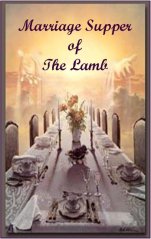
3At the marriage of the Lamb, Christ will marry His bride, and all members of the family of God will become part of a universal church or assembly. (Revelation 19:6-8) quoted in En[ii] and Hebrews 12:22-24 quoted in En [iii]

Various marriages in the Old Testament are types of Christ, the bridegroom, and the church, the bride. For example, Eve is a type of the church as bride and wife of Christ (2 Cor. 11:3). Rebecca was a type of the church, the “called out” virgin bride of Christ. Isaac was a type of the bridegroom, who loves through the testimony of the unnamed Servant; En [iv] he was a type of the bridegroom who goes out to meet and receive his bride. En [v]“Typically, the book of Ruth may be taken as a foreview of the church—Ruth, as the Gentile bride of Christ, the Bethlehemite who is able to redeem.” Song of Solomon pictures, for one thing, the love between Christ and His church. Song of Solomon “is the expression of pure marital love as ordained of God in creaton, and the vindication of that love as against both asceticism and lust–the two profinations of the holiness of marriage.” Two larger interpregations are of (1) God the Father and Israel, and (2) “Christ, the Son and His heavenly bride, the Church.” En [vi].

The coming of the bridegroom is cause for great rejoicing by the believer, the friend of the bridegroom. En [vii]. The marriage of the Lamb to His bride will be a glorious event which will occur in heaven, unlike the restoration of Israel which will take place on the earth. En [viii].

The husband is to be the only head of the wife, and Christ is to be the only Head of His churches. En [ix]. “After Jesus was born, “there came wise men from the east to Jerusalem, Saying, where is he that is born King of the Jews? for we have seen his star in the east, and are come to worship him” (Mt. 2.1-2).  “‘The King’ is one of the divine titles (Ps. 10.6), and so used in the worship of the Church (I Ti. 1.17), but Christ is never called ‘King of the Church.’ He is ‘King of the Jews’ (Mt. 2.2) and Lord and ‘Head of the Church’ En [x].

bridewaitingThe bridegroom is without fault. What about the local church? Has she joined with any other lover? If she is incorporated, has federal tax-exempt status, or is united with the state or any other lover in any way, she has committed spiritual fornication. If so, why not repent and return to your first love?
Bible Studies of various Books of the Bible on the Doctrine of the Church.

The Biblical Doctrine of the Church


Endnotes

[i] “Ye yourselves bear me witness, that I said, I am not the Christ, but that I am sent before him. He that hath the bride is the bridegroom: but the friend of the bridegroom, which standeth and heareth him, rejoiceth greatly because of the bridegroom’s voice: this my joy therefore is fulfilled” (Jn. 3.28, 29).

[ii] “Would to God ye could bear with me a little in my folly: and indeed bear with me. For I am jealous over you with godly jealousy: for I have espoused you to one husband, that I may present you as a chaste virgin to Christ. But I fear, lest by any means, as the serpent beguiled Eve through his subtilty, so your minds should be corrupted from the simplicity that is in Christ (2 Co. 11.1-3). “Wherefore, my brethren, ye also are become dead to the law by the body of Christ; that ye should be married to another, even to him who is raised from the dead, that we should bring forth fruit unto God” (Ro. 7.4).

[iii] “But ye are come unto mount Sion, and unto the city of the living God, the heavenly Jerusalem, and to an innumerable company of angels, To the general assembly and church of the firstborn, which are written in heaven, and to God the Judge of all, and to the spirits of just men made perfect, And to Jesus the mediator of the new covenant, and to the blood of sprinkling, that speaketh better things than that of Abel” (Hebrews 12:22-24).

[iv] “Whom having not seen, ye love; in whom, though now ye see him not, yet believing, ye rejoice with joy unspeakable and full of glory” (1 Pe. 1.8).

[v] “For if we believe that Jesus died and rose again, even so them also which sleep in Jesus will God bring with him. For this we say unto you by the word of the Lord, that we which are alive and remain unto the coming of the Lord shall not prevent them which are asleep. For the Lord himself shall descend from heaven with a shout, with the voice of the archangel, and with the trump of God: and the dead in Christ shall rise first” (1 Th. 4.14-16).

[vi] 1917 Scofield Reference Edition, Headnote to “Song of Solomon,” p. 705.

[vii] “He that hath the bride is the bridegroom: but the friend of the bridegroom, which standeth and heareth him, rejoiceth greatly because of the bridegroom’s voice: this my joy therefore is fulfilled” (Jn. 1.29).

[viii] “Let us be glad and rejoice, and give honour to him: for the marriage of the Lamb is come, and his wife hath made herself ready. And to her was granted that she should be arrayed in fine linen, clean and white: for the fine linen is the righteousness of saints. And he saith unto me, Write, Blessed are they which are called unto the marriage supper of the Lamb. And he saith unto me, “These are the true sayings of God” (Re. 19.7-9; see also Re. 21.9-22.17).

[ix] See Ep. 5.23, 25-27, 29-33 quoted in the article above. “And hath put all things under his feet, and gave him to be the head over all things to the church” (Ep. 1.22).

[x] “And hath put all things under his feet, and gave him to be the head over all things to the church, Which is his body, the fulness of him that filleth all in all. (Ep. 1.22, 23)”  “Who is the image of the invisible God, the firstborn of every creature: For by him were all things created, that are in heaven, and that are in earth, visible and invisible, whether they be thrones, or dominions, or principalities, or powers: all things were created by him and for him: And he is before all things, and by him all things consist. And he is the head of the body, the church: who is the beginning, the firstborn from the dead; that in all things he might have the preeminence” (Col. 1.15-18).


4. The Holy Spirit Forms a Church which Is a Temple, a Spiritual Body, the Body of Christ


A Publication of Simply Church Ministry


If you miss one part of the puzzle that is being put together in these studies, you will never see and understand the whole picture.


Previous Lesson:
3. A Church Is a Mystery, an Assembly, a Spiritual Body

Next Lesson:
Christ, the Head/Bridegroom/Husband of the Local Church

Click here to go to all lessons on the Bible Doctrine of the Church.

Click here to go to the written lessons.

Click here to go to the 5 minute video lectures.


Jerald Finney
Copyright © January 2, 2018


The Bible expressly declares that the Holy Spirit is a divine Person (e.g., Jn. 14.16, 16, 26; 15.26; 16.7-15; Mt. 28.19). This is everywhere implied.

The Holy Spirit forms a church. When Peter opened the door of the kingdom to the Gentiles (Ac. 10), the Holy Spirit, without delay, or other condition than faith, was given to those who believed (Ac. 10.44; 11.15-18). This is the permanent fact for the entire church-age. Every believer is born of the Spirit (Jn. 3.3, 6; 1 Jn. 5.1), indwelt by the Spirit, whose presence makes the believer’s body a temple (Ga. 4.6, Ro. 8.9-15 (“if any man have not the Spirit of Christ, he is none of his”); 1 Co. 3.16-17; 1 Co. 6.19; 1 Jn. 2.27;), thus sealing him for God (Ep. 1.13; 4.30). The Holy Spirit imparts gifts for service to every member of that body (1 Co. 12.7-11, 27, 30; Ep. 4.3-4; 11, 16), guides the members in their service and is Himself the power of that service (Lk. 2.27; 4.1; Ac. 1.8; 2.4; Ac. 16.6, 7; 1 Co. 2.4; 12.4-11). The Spirit abides in the company of believers who constitute a local church, making of them, corporately, a temple (1 Co. 3.16, 17; 2 Co. 6.16; Ep. 2.21).

A church is called the body of Christ, and therefore a living organism a spiritual body. Paul gives two metaphors of the body, the living spiritual body or organism. The first is in 1 Corinthians 12.12-27, quoted in En [i]. The second is in Ephesians 4:4-16, quoted in En [ii]

In other passages, Christ is depicted as the head of the church and the earthly members as the body. Remember that these passages are from Epistles written to local churches for their instruction.

  1. “And hath put all things under his feet, and gave him to be the head over all things to the church, Which is his body, the fulness of him that filleth all in all” (Ep. 1.22-23).
  2. “But speaking the truth in love, may grow up into him in all things, which is the head, even Christ:  From whom the whole body fitly joined together and compacted by that which every joint supplieth, according to the effectual working in the measure of every part, maketh increase of the body unto the edifying of itself in love” (Ep. 4.15-16).
  3. “And not holding the Head, from which all the body by joints and bands having nourishment ministered, and knit together, increaseth with the increase of God” (Col. 2.19).

A church is a holy temple for the habitation of God through the Spirit (Ep. 2.21, 22); is “one flesh” with Christ (Ep. 5.30, 31); and espoused to Him as a chaste virgin to one husband (2 Co. 11.2-4). By speaking the truth in love, a church “may grow up into him in all things, which is the head, even Christ.”


For more details, to include an examination of conflicting views, see Definition, Organization, and Purposes of a Church.

Click here to go to Bible Study of Ephesians. Ephesians reveals the institution of the church as God’s masterpiece. It is more wonderful that any temple made with hands, constructed of living stones, indwelt by the Holy Spirit. Ephesians 1 presents the church as a body.

Articles, Essays, and Other Resources Related to the Doctrine of the Church, Incorporation, 501c3, Etc.

The Local Church: A Building or What?

Bible Studies of various Books on the Doctrine of the Church.

The Biblical Doctrine of the Church


Endnotes

[i] 1 Corinthians 12.12-27: “For as the body is one, and hath many members, and all the members of that one body, being many, are one body: so also is Christ. For by one Spirit are we all baptized into one body, whether we be Jews or Gentiles, whether we be bond or free; and have been all made to drink into one Spirit. For the body is not one member, but many. If the foot shall say, Because I am not the hand, I am not of the body; is it therefore not of the body? And if the ear shall say, Because I am not the eye, I am not of the body; is it therefore not of the body? If the whole body were an eye, where were the hearing? If the whole were hearing, where were the smelling? But now hath God set the members every one of them in the body, as it hath pleased him. And if they were all one member where were the body? But now are they many members, yet but one body. And the eye cannot say unto the hand, I have no need of thee: nor again the head to the feet, I have no need of you.  Nay, much more those members of the body, which seem to be more feeble, are necessary: And those members of the body, which we think to be less honourable, upon these we bestow more abundant honour; and our uncomely parts have more abundant comeliness. For our comely parts have no need: but God hath tempered the body together, having given more abundant honour to that part which lacked: That there should be no schism in the body: but that the members should have the same care one for another. And whether one member suffer, all the members suffer with it; or one member be honoured, all the members rejoice with it. Now ye are the body of Christ, and members in particular” (1 Co. 12.12-27)

[ii] Ephesians 4:4-16: “There is one body, and one Spirit, even as ye are called in one hope of your calling; One Lord, one faith, one baptism, One God and Father of all, who is above all, and through all, and in you all. But unto every one of us is given grace according to the measure of the gift of Christ. Wherefore he saith, When he ascended up on high, he led captivity captive, and gave gifts unto men.  (Now that he ascended, what is it but that he also descended first into the lower parts of the earth? He that descended is the same also that ascended up far above all heavens, that he might fill all things.)  And he gave some, apostles; and some, prophets; and some, evangelists; and some, pastors and teachers; For the perfecting of the saints, for the work of the ministry, for the edifying of the body of Christ: Till we all come in the unity of the faith, and of the knowledge of the Son of God, unto a perfect man, unto the measure of the stature of the fulness of Christ:  That we henceforth be no more children, tossed to and fro, and carried about with every wind of doctrine, by the sleight of men, and cunning craftiness, whereby they lie in wait to deceive; But speaking the truth in love, may grow up into him in all things, which is the head, even Christ:  From whom the whole body fitly joined together and compacted by that which every joint supplieth, according to the effectual working in the measure of every part, maketh increase of the body unto the edifying of itself in love.”

3. A Church Is a Mystery, an Assembly, a Spiritual Body


A Publication of Simply Church Ministry


If you miss one part of the puzzle that is being put together in these studies, you will never see and understand the whole picture.


Previous Lesson:
2. Christ Ordained the Church and Builds It upon the Rock

Next Lesson:
4. The Holy Spirit Forms a Church which Is a Temple, a Spiritual Body, the Body of Christ

Click here to go to all lessons on the Bible Doctrine of the Church.

Click here to go to links to all written lessons.

Click here to go to the 5 minute video lectures.


Jerald Finney
Copyright © January 1, 2018


Note. For more on this, see Stewards of the Mystery of the Church Found Lacking, Except for a Remnant (033020)

Members of a New Testament Church under Christ alone are stewards of the mysteries of God; therefore, stewards of the mystery of the church. God requires that His stewards be found faithful. (1 Co. 4.1-2).

The institution of the New Testament church, made  up of local assemblies, is a mystery hidden in past ages and, therefore, not revealed in the Old Testament; but now “made known unto the sons of men, as it is now revealed unto his holy apostles and prophets by the Spirit” (Ep. 3.5). A mystery in Scripture means that God is revealing something that, up to that time, he had not revealed. Such a mystery has two elements: (1) It cannot be discovered by human reason. (2) It is revealed at the proper time and not concealed; and enough is revealed to establish the fact without all the details being given. Believers in a local church may understand this mystery of Christ, when they read the words of God penned by the Apostle Paul (Ep. 3:4).

Just as the church in the wilderness was an assembly called out by God, an ecclesia (see Ac. 7.38), so a New Testament church is an assembly of called-out ones. Israel, in the wilderness, was a church or assembly, but in striking contrast with the New Testament assembly. Israel in the land is never called a church; they were not all assembled after they entered the land. Born-again believers are admonished not to forsake the assembling of themselves together, not to forsake the local church, the only assembly of believers on earth (He. 10.25).

That the Gentiles were to be saved was no mystery (Ro. 9.24-33; 10.19-21).[i] The mystery was the divine purpose to make of Jew and Gentile a wholly new thing—the church made up of local autonomous New Testament bodies in this age—and in which the earthly distinction of Jew and Gentile disappears. (Ep. 2.14, 15; Co. 3.10, 11). Jesus Christ established His local assembly while he walked as the God Man on earth and appointed His local assembly as executor of His Will or Testament. For more on this, see, e.g., The New Testament of Jesus Christ:  His Executor Named and Empowered. The revelation of this mystery which was foretold but not explained by Christ (Mt. 16.18) was committed to Paul.

The institution of the New Testament church is solely made up of local spiritual bodies, made up of an assembly of believers (See, e.g., Ep. 4). Christ will gather all members of his earthly family together in a general or universal assembly in the heavenly Jerusalem (He. 12.22-24) at the marriage of the Lamb (Re. 19.7-10). Before that, there will be no universal assembly.

All Bible references to a church here on the earth refer to a local body of Jewish and/or Gentile believers and not to a universal or catholic church. Nowhere in the New Testament is a church here on the earth ever referred to as anything other than a local spiritual body and nowhere does Scripture teach that a church is to have any type authority above it other than the Lord Jesus Christ. Some examples of references to churches as they existed in the New Testament are listed and quoted in endnote [ii].

Adherents can do no more than quote Matthew 16.18, 1 Corinthians 12.12-13, or other verses taken misinterpreted and taken out of context in support of the universal church doctrine. 1 Corinthians was written to a local autonomous church, with principles to be applied by all churches. One must analyze the verse in context of all immediate verses as well as all New Testament doctrine to ascertain its meaning; such an examination gives absolutely no support to a universal church doctrine for this age. See [iii] for links to more resources, a webpage with teachings and links to more sermons, and an article on C. I. Schofield’s “True Church” doctrine.

In his seven letters to seven local autonomous Gentile churches (in Rome, Corinth, Galatia, Ephesus, Philippi, Colosse, and Thessalonica), the church, the “mystery from the beginning of the world hath been hid in God,” (Ep. 3.9) is fully revealed, and fully instructed as to her unique place in the counsels and purposes of God. Through Paul alone, we know that a church is not an organization, but an organism instinct with His life, and heavenly in calling promise and destiny. Through him alone, we know the nature, purpose, and form of organization of local churches, the right conduct of such assemblies, and the commandments for the earthly walk of the members.

A church is a spiritual body made up individual believing members (Ep. 4, 1 Co. 12). Each member is indwelt by the Holy Spirit and has a proper place in the local body. Christ sets some in the body as apostles,[iv] prophets,[v] evangelists, pastors, and teachers; “For the perfecting of the saints, for the work of the ministry, for the edifying of the body of Christ” (Ep. 4.12). The members of the local body are to speak the truth in love, that they “may grow up into him in all things, which is the head, even Christ. From whom the whole body fitly joined together and compacted by that which every joint supplieth, according to the effectual working in the measure of every part, maketh increase of the body unto the edifying of itself in love” (Ep. 4.15-16).


Click here to go to Bible Study of Ephesians. Ephesians reveals the local church as God’s masterpiece. It is more wonderful that any temple made with hands, constructed of living stones, indwelt by the Holy Spirit. Ephesians 1 presents the local church as a body.

Articles, Essays, and Other Resources Related to the Doctrine of the Church, Incorporation, 501c3, Etc.

The Local Church: A Building or What?

Bible Studies of various Books on the Doctrine of the Church.

The Biblical Doctrine of the Church


Endnotes

[i] A mystery in Scripture is a previously hidden truth, now divinely revealed, but in which a supernatural element still remains despite the revelation.

[ii] New Testament verses:

  • “Then had the churches rest throughout all Judaea and Galilee and Samaria, and were edified; and walking in the fear of the Lord, and in the comfort of the Holy Ghost, were multiplied” (Ac. 9.31).
  • Paul said, “Likewise greet the church that is in their house. (Ro. 16.5)” Notice that the church refers to the local body of baptized believers. The house was just the place where they met; it was not a church.
  • Paul wrote to the church in Corinth, “Paul … Unto the church of God which is at Corinth, to them that are sanctified in Christ Jesus, called to be saints, with all that in every place call upon the name of Jesus Christ our Lord, both their’s and our’s” (1 Co. 1.1-2).
  • “If therefore the whole church be come together into one place….” (1 Co. 14.23).
  • “The churches [Not “the church of Asia”] of Asia salute you. Aquila and Priscilla salute you much in the Lord, with the church that is in their house” (1 Co. 16.19).
  • “Paul … unto Philemon … and to the church in thy house” (Phil. 1-2).
  • “… [T]hat thou mayest know how thou oughtest to behave thyself in the house of God, which is the church of the living God, the pillar and ground of the truth” (1 Ti. 3.15).
  • The Bible defines “house of God”: “For every house is builded by some man; but he that built all things is God. And Moses verily was faithful in all his house; as a servant, for a testimony of those things which were to be spoken of after; But Christ as a son over his own house; whose house are we, if we hold fast the confidence and the rejoicing of the hope firm unto the end” (He. 3.4-6).
  • In Revelation, the Lord speaks to “the church of Ephesus” (Re. 2.1) “the church in Smyrna” (Re. 2.8), “the church in Pergamos” (Re. 2.12), “the church in Thyatira” (Re. 2.18), “the church in Sardis” (3.18), “the church in Philadelphia” (Re. 3.7), and “the church of the Laodiceans” (Re. 3.14).

[iii] Defining the word Church: Local, Visible, Institutional, never Universal; Origin of the Universal Church Exposed: Constantine, Augustine & Scofield; Rightly Dividing Baptisms: Is 1 Corinthians 12:13 Spirit baptism or water baptism?. For more in depth teachings and sermons on the church, go to the following webpage and scroll down: The Biblical Doctrine of the Church. See also, the article, Scofield’s headnote to “Ephesians” and margin notes on his false “true church” doctrine.

[iv] The word apostle, means “one sent forth,” and is is used of our Lord He. 3:1. Elsewhere it is used for the twelve who were called to that office by our Lord during His earth ministry; of Paul, called to the apostleship by the risen and ascended Lord, and of Barnabas Ac. 14:14 specially designated by the Holy Spirit Ac. 13:2. Of Matthias, chosen by lot by the eleven to take the place of Judas Iscariot, Ac .1:16-26: “And he was numbered with the eleven.” Ac. 1:26
The “signs” of an apostle were (1) They were chosen directly by the Lord Himself, or, as in the case of Barnabas, by the Holy Spirit (Mt. 10:1-2; Mk. 3:13-14; Lk. 6:13; Ac. 9:6; 13:2; 22:10,14-15; Ro. 1:1). (2) They were endued with sign gifts, miraculous powers which were the divine credentials of their office (Mt. 10:1; Ac 5:15; 16:16-18; Mt 28:8-9). (3) Their relation to the kingdom was that of heralds, announcing to Israel only Mt. 10:5-6 the kingdom as at hand and manifesting kingdom powers Mt. 10:7-8. (4) To one of them, Peter, the keys of the kingdom of heaven, viewed as the sphere of Christian profession, as in Mt. 13, were given Mt 16:19. (5) Their future relation to the king will be that of judges over the twelve tribes Mt 19:28. (6) Consequent upon the rejection of the kingdom, and the revelation of the mystery hid in God (Mt .16:18; Ep. 3:1-12), the Church, the apostolic office was invested with a new enduement, the baptism with the Holy Spirit Ac. 2:1-4; a new power, that of imparting the Spirit to Jewish-Christian believers; a new relation, that of foundation stones of the new temple (Ep. 2:20-22) and a new function, that of preaching the glad tidings of salvation through a crucified and risen Lord to Jew and Gentile alike. (7) The indispensable qualification of an apostle was that he should have been an eye-witness of the resurrection (Ac. 1:22; 1 Co. 9:1).

[v] The church was “built on the foundation of the apostles and prophets, Jesus Christ himself being the chief corner stone (Ep. 2.20). These “prophets” were New Testament prophets; to the Old Testament prophets, the church remained a mystery.

  • The mystery of the church, “Which in other ages was not made known unto the sons of men, as it is now revealed unto his holy apostles and prophets by the Spirit” (Ep. 3.5).
  • “To whom coming, as unto a living stone, disallowed indeed of men, but chosen of God, and precious, Ye also, as lively stones, are built up a spiritual house, an holy priesthood, to offer up spiritual sacrifices, acceptable to God by Jesus Christ. Wherefore also it is contained in the scripture, Behold, I lay in Sion a chief corner stone, elect, precious: and he that believeth on him shall not be confounded” (1 Pe. 2.4-6).

2. Christ Ordained His Local Visible New Testament Churches and Builds Them upon the Rock


A Publication of Simply Church Ministry


If you miss one part of the puzzle that is being put together in these studies, you will never see and understand the whole picture.


The Church’s One Foundation
Fountainview Academy


Previous Lesson:
1. Introduction

Next Lesson:
3. A Church Is a Mystery, an Assembly, a Spiritual Body

Click here to go to all lessons on the Bible Doctrine of the Church.

Click here to go to links to all written lessons.

Click here to go to the 5 minute video lectures.


Jerald Finney
Copyright © January 1, 2018


Just as God ordained civil government, He also ordained His churches after the nation Israel rejected Him and the kingdom of heaven. Civil government, as we learned in earlier lessons was to secure a temporal earthly blessing for mankind. The power given by God to His churches on earth was to secure a spiritual good for their members.

When Christ asked His disciples whom they thought Him to be (Mt. 16.15, Mk. 8.29, Lu. 9.20), Peter answered, “Thou art the Christ, the Son of the living God” (Mt. 16.16; see also, Mk. 8.29, Lu. 9.20). At that point, our Lord announced the out calling of the church when He said: “And I say also unto thee, [t]hat thou art Peter, and upon this rock I will build my church; and the gates of hell shall not prevail against it. And I will give unto thee the keys of the kingdom of heaven: and whatsoever thou shalt bind on earth shall be bound in heaven: and whatsoever thou shalt loose on earth shall be loosed in heaven” (Mt. 16.18-19).

The building of the institution of the New Testament church which is made up of local visible church bodies is on the rock of Peter’s confession, the Christ he confessed. Peter makes clear that the rock upon which the Lord will build the institution of the church is Christ Himself:

  • “To whom coming, as unto a living stone, disallowed indeed of men, but chosen of God, and precious, Ye also, as lively stones, are built up a spiritual house, an holy priesthood, to offer up spiritual sacrifices, acceptable to God by Jesus Christ. Wherefore also it is contained in the scripture, Behold, I lay in Sion a chief corner stone, elect, precious: and he that believeth on him shall not be confounded. Unto you therefore which believe he is precious: but unto them which be disobedient, the stone which the builders disallowed, the same is made the head of the corner. And a stone of stumbling, and a rock of offence, even to them which stumble at the word, being disobedient: whereunto also they were appointed” (1 Pe. 2.4-9).

“This is the stone which was set at nought of you builders, which is become the head of the corner” (Ac. 4.11, part of Peter’s address to the Sanhedrin). From the context, it is obvious that Peter is speaking of the Lord as being the chief corner stone. Nowhere in the Bible is there any indication that Peter was the cornerstone of a universal visible or invisible church.

The words used also make clear that Christ was referring to Himself as the rock on which the church would be built. There is in the Greek [in Matthew 16.18] a play upon the words, “thou art Peter [petros—literally, ‘a little rock’], and upon this rock [Petra] I will build my church.” He does not promise to build His church upon Peter, but upon Himself, as Peter himself is careful to tell us (1 Pet. 2.4-9).

Jesus did not give Peter the keys—a key being a badge of power or authority (see, e.g., Is. 22.22 and Re. 3.7)—but to “the kingdom of heaven,” which in this age is represented by Christ’s local autonomous New Testament Churches and the individual believers therein who are to function as a spiritual body, each exercising his/her individual spiritual gifts. Peter assumed no other authority. In the council at Jerusalem as recorded in Acts 15, James seems to have presided. Peter claimed nothing more than to be an apostle by gift and an elder by office (See 1 Pe. 1.1 and 5.1). The power of binding and loosing was shared by the other apostles (See Mt. 18.18 and Jn. 20.23). Since only Christ held the keys of death and the place of departed spirits, this did not involve the determination of the eternal destiny of souls.  “I [Jesus Christ] am he that liveth, and was dead; and, behold, I am alive for evermore, Amen; and have the keys of hell and of death” (Re. 1.18).

Isaac Backus, the great Baptist leader in New England, elaborated upon the faith confessed by Peter:

“This faith is the foundation of the church; against this faith the gates of hell shall not prevail; this faith hath the keys of the kingdom of heaven; what this faith shall loose or bind on earth, is bound and loosed in heaven…. Now it followeth, that whatsoever person hath received the same precious faith with Peter, as all the faithful have, 2 Pet. i. 1, that person hath a part in this gift of Christ. Whosoever doth confess, publish, manifest or make known Jesus to be the Christ, the Son of the living God, and Saviour of the world, that person opens heavens gates, looseth sin, and partakes with Peter in the use of the keys; and hereupon it followeth necessarily, that one faithful man, yea, or woman either, may loose and bind, both in heaven and earth, as all the ministers in the world” (Isaac Backus, A History of New England With Particular Reference to the Denomination of Christians called BaptistsVolume 1 (Eugene, Oregon: Wipf & Stock, Publishers, Previously published by Backus Historical Society, 1871), p. 12 quoting John Robinson, A Justification of Separation from the Church of England.).


Click here to go to Bible Study of Ephesians. Ephesians reveals the institution of the church as God’s masterpiece. It is more wonderful that any temple made with hands, constructed of living stones, indwelt by the Holy Spirit. Ephesians 1 presents the church as a body.

Articles, Essays, and Other Resources Related to the Doctrine of the Church, Incorporation, 501c3, Etc.

The Local Church: A Building or What?

Bible Studies of various Books on the Doctrine of the Church.

The Biblical Doctrine of the Church

Links to Lessons on Satan

(1) Lucifer Becomes Satan, Deceives Mankind, and Continues To War Against God
(2) The Beast System and the Fate of the Beast
(3) Warfare with Satan: His Demons
(4) Satan’s Devises and the Believer’s Resources
(5) The Choice: God or Satan?

Click here to go links to all written lessons.
Click here to go to links to the 3 1/2 to 6 minute video lectures.
Click here to go to all lessons on the Bible Doctrine of Government.


Bible Lessons on Israel

Click here to go to Bible Doctrine of Government.

Click the following links to go to the subdivisions on lessons on Israel.

(1) Israel, the only theocracy ordained by God
(2) Israel’s Performance, God’s Judgement, and a New Economy—God’s Grace
(3)  God is the God of Israel

Click here to go links to the written lessons.
Click here to go to links to the 3 1/2 to 6 minute video lectures.
Click here to go to all lessons on the Bible Doctrine of Government.

d. Civil government

Click the following links to go to the subdivisions on lessons on Civil Government:

(1) The Ordination and Purpose of Civil government 
(2) The Purpose of Gentile Civil Government
(3) Civil Government Failure and God’s Judgment of Nations
(4) God Desires that Gentile Nations Glorify Him

Click here to go to links to all written lessons.

Click here to go to the 3 1/2 to 6 minute video lectures.

Click here to go to all lessons on the Bible Doctrine of Government.