All posts by Jerald Finney

Jerald Finney was the lead counsel for the Biblical Law Center ("BLC") from May, 2005 until 2011. The BLC helps churches who desire to organize according to New Testament principles. In 2016, he again worked with the BLC and still does, but he now heads up the Churches under Christ Ministry which is under the authority of Charity Baptist Tabernacle of Amarillo TX. Finney is a licensed attorney who can be reached at 512-785-8445 jerald.finney@sbcglobal.net. Over the last few years he has lectured and preached on the issues concerning government, church, and separation of church and state. God called Finney, a Christian and fundamental Baptist since his salvation, to enter the University of Texas School of Law in 1990 at the age of 43 to stand in the gap concerning legal issues facing Christians. Since being saved, he has been a faithful and active member of a local fundamental, Bible-believing Baptist church. He received his JD degree in 1993 and has followed the Lord in the practice of law since that time. Finney received his law license in November 1993 and began practicing law in January, 1994. All along he was seeking the Lord’s direction. The Lord initially led Finney to practice criminal law. He knew that not many, if any, of the Christian law firms dealt with or specialized in criminal law, and that some Christians were being charged with crimes for their Christian behavior and for taking a stand for God’s principles. The Lord confirmed Finney's choice. Very soon after he started practicing, he helped an Eastern Orthodox priest with a criminal charge. He was charged under a criminal statute for trying to expose the promotion of sodomy and other sins within a Catholic Church. God gave the victory in that case. Then Steve, a Christian who counseled outside abortion clinics, called Finney. He was charged with a crime under the Austin, Texas Sign Ordinance for his activities outside an abortion clinic. Being a new lawyer, Finney called the Rutherford Institute. They asked him to send them a summary of the facts and a copy of the Sign Ordinance. Then they told him that the case could not be won and that they would not help. Steve lost at trial, but God gave the victory on appeal. The Austin Police Department immediately cited Steve for violation of the state sign ordinance. The Lord gave the victory at trial. Finney's first felony trial came about a year and six months after he started practicing law. A single Christian mother was charged with third degree felony injury to a child for spanking her six year old son. She left some prominent stripes across his rear end and also a stripe across his face when he turned suddenly during the spanking. The Lord gave the victory at trial. At the same time, Finney was also representing another Christian married lady who was charged with the same crime for spanking her little girl with a switch. On the date the trial in that case was to begin, the prosecutor, with prompting by the judge, lowered the offer to deferred adjudication probation of short duration on a misdemeanor charge with very few conditions on the probation. In a deferred adjudication in Texas, there is never a judgment of guilt if the probationer successfully completes the term of the probation, (and, with successful completion of the probation, the probationer can now file a Motion for Nondisclosure which, if granted, requires the file to be sealed so that the general public has no access to it). The mother decided to take the offer. The Lord has also allowed Finney to help Christian parents in numerous situations involving Child Protective Services (“CPS”) infringement into parental rights. God has given the victory in all those situations. The Lord has also used Finney to intervene in numerous situations where government officials or private companies tried to deny certain Christians their rights to do door-to-door evangelization, preach on the street, hand out gospel literature in the public forum, and pass out gospel tracts and communicate the gospel at their place of employment. Finney has also fought other legal spiritual battles including a criminal case in San Antonio. A peaceful pro-life advocate was arrested and charged with criminal trespass for handing pro-life literature giving information about the development of the unborn baby, places to go for help, and other information to women entering an abortion clinic. All the above-mentioned cases as well as others not mentioned were handled free of charge (except the last spanking case for which Finney received $750). In 2005 Finney became lead counsel for the Biblical Law Center. Since his early Christian life, he has considered the issue of separation of church and state as taught in the Bible to be one of the primary issues facing New Testament churches today. He believes, based upon what the Bible teaches, that operating as a corporation (sole or aggregate), unincorporated association, or any other type of legal entity and/or getting a tax exempt status from the federal government at the very least puts the church under the headship of both the Lord and the state, and may even take the church from under the headship of Christ and put the church under the headship of the state. He believes that taking scriptures out of context and applying human reasoning contrary to biblical teaching (such as “Obey every ordinance of man,” or “We should be good stewards and incorporation is good stewardship”) in order to justify unbiblical marriage with the state causes our Lord much grief. Once he took on the position as counsel for the BLC, it was necessary to do an in-depth study of the issue of separation of church and state. He began with the Bible. He initially read through the Bible at least five times (and many more times since then) primarily seeking the answer to the question, “Does the Bible have anything to say about this issue?” He was amazed at what He learned. The Bible gives God’s principles concerning separation of church and state, the purpose of a church, the purpose of the civil government, the headship of church, the headship of civil government, the principles by which each is to be guided, and much more concerning these two God ordained institutions. He continued to read the Bible daily seeking insights into these and other issues. He also began to read other books. he had already read starting shortly after being saved, books and other information by Christian authors. For example, he had read, among other works, A Christian Manifesto[1], The Light and the Glory,[2] From Sea to Shining Sea,[3] The Myth of Separation and some other works by David Barton, [4]Rewriting America’s History,[5] and America’s God and Country.[6] These resources inspired, influenced and guided him and millions of other Christians, gave them philosophical and historical underpinning, and led them into battlefields such as politics, law, and education armed with what they learned from those resources. Sometime in 2006 he began to realize that some of the books by Christian authors which he had come to depend upon were misleading, at the very least. Other books revealed to him that some of the above mentioned books had misinformed and misled sincere Christians by revising and/or misrepresenting the true history of separation of church and state in America. In 2006, he read One Nation Under Law[7] which cites a wealth of resources for one seeking to understand the history of separation of church and state in the United States and of the First Amendment to the United States Constitution.[8] Reading One Nation Under Law, some of the books it cited, and some other books was a launching pad into the universe of historical information which he never dreamed existed. He had expected to be misled in the secular law school he attended. He was amazed that he had been misled by Christian brothers. I asked myself, “How could Peter Marshall and others have missed this vital information?” At an Unregistered Baptist Fellowship conference in Indianapolis, Indiana, James R. Beller, a Baptist historian, gave a PowerPoint presentation which gave him the answer to this question. Finney bought two of Beller's books and read them. Those books filled in the details not mentioned in Pastor Beller’s concise PowerPoint presentation. Since that time, God has led Finney into an in depth study of the issues of government, church, and separation of church and state. God Betrayed/Separation of Church and State: The Biblical Principles and the American Application and the other books he has written and listed on this website were written as a result of those studies. God Betrayed is not a rehash of the same information that has been circulated in the Fundamental Baptist and Christian community through sermons, books, seminars, etc. since at least 1982, the year Finney was saved. God Betrayed and Finney's other books reveal facts and information that must be understood in order for a pastor and other Christians to begin to successfully (in God's eyes) fight the spiritual warfare we are engaged in according to knowledge. Finney believes that the lack of attention to the biblical doctrines concerning government, church (which is likened to the wife and bride of Christ), and separation of church and state, has had dire consequences for individuals, families, churches, and America. Unless pastors educate themselves on these doctrines and their application in America, the rapid downhill slide will continue at an accelerating pace. [1] Francis A. Schaeffer, A Christian Manifesto, (Westchester, Illinois: Crossway Books, 1981). [2] Peter Marshall and David Manuel, The Light and the Glory, (Old Tappan, New Jersey: Fleming H. Revell Company, 1977). [3] Peter Marshall and David Manuel, From Sea to Shining Sea (Old Tappan, New Jersey: Fleming H. Revell Company, 1986). [4] David Barton, The Myth of Separation, What is the Correct relationship between Church and State? (Aledo, Texas: Wallbuilder Press, 1992). [5] Catherine Millard, Rewriting America’s History (Camp Hill, Pennsylvania: Horizon House Publishers, 1991). [6] William J. Federer, America’s God and Country, Encyclopedia of Quotations (Coppell, Texas: FAME Publishing, Inc., 1994). [7] Mark Douglas McGarvie, One Nation Under Law: America’s Early National Struggles to Separate Church and State (DeKalb, Illinois: Northern Illinois University Press, 2005). [8] The First Amendment to the United States Constitution states: “Congress shall make no law respecting an establishment of religion, or prohibiting the free exercise thereof; or abridging the freedom of speech, or of the press; or the right of the people peaceably to assemble, and to petition the Government for a redress of grievances.” The religion clause, properly interpreted, as is shown in God Betrayed, is a correct application of the biblical principle of separation of church and state.

Sermons & programs explaining and concerning street preaching

Click here to hear May 21, 2014, Old Paths Baptist Church of Paris TX program on “The Need for Street Preaching”
(Street preaching discussion follows coverage of some other matters. The street preaching discussion begins at 37 min. 15 sec.)
Click to hear May 28, 2014, Old Paths Baptist Church of Paris TX blogtalk program on “Street Preaching and Evangelism Today”
(Street preaching discussion follows coverage of some other matters. The street preaching discussion begins at 53 min. 40 sec.)


How a Church Can Organize To Remain a New Testament Church (Holding Property in Trust for God Is a Scriptural Principle Recognized, but not Created, by the Legal System)

Jerald Finney
Copyright © May 6, 2016
“Separation of Church and State Law” ministry
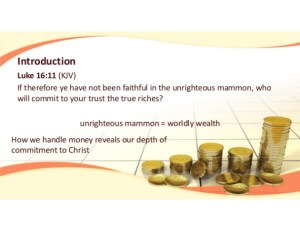
He that is faithful in that which is least is faithful also in much: and he that is unjust in the least is unjust also in much. If therefore ye have not been faithful in the unrighteous mammon, who will commit to your trust the true riches? And if ye have not been faithful in that which is another man’s, who shall give you that which is your own? No servant can serve two masters: for either he will hate the one, and love the other; or else he will hold to the one, and despise the other. Ye cannot serve God and mammon.Lk. 16:10-13
Let a man so account of us, as of the ministers of Christ, and stewards of the mysteries of God. Moreover it is required in stewards, that a man be found faithful.” 1 Co. 4.1-2
But as we were allowed of God to be put in trust with the gospel, even so we speak; not as pleasing men, but God, which trieth our hearts.” 1 Th. 2:4
According to the glorious gospel of the blessed God, which was committed to my trust.” 1 Ti. 1:11
O Timothy, keep that which is committed to thy trust, avoiding profane and vain babblings, and oppositions of science falsely so called:1 Ti. 6:20

See also, Documents Which Establish a Church under Christ Alone.

Note. “Property” included both real and personal property. Personal property, also referred to as movable property, is anything other than land that can be the subject of ownership, including money and bank accounts.

Contents:

  1. Introduction
  2. Trust is a Bible concept
  3. The Trustor
  4. The Trustee
  5. The Beneficiary
  6. A church Bible trust agreement and estate
  7. The wisdom of a Declaration of Trust
  8. American law recognizes and applies the concept of trust
  9. Conclusion

1. Introduction

American law recognizes, but did not originate, the concept of trust. Efforts of scholars to trace the origin have been futile. See, e.g., Fn 1, Trusts, trust-like concepts and ius commune, 8 Eur. Rev. Private L. 453 (2000), C. H. Van Rhee: “… Whether these origins are Roman, Canonical or Germanic [or of some other origin] remains an unresolved question. …” (This article can be viewed and/or downloaded at: https://www.academia.edu/5937188/Trusts_Trust_like_Concepts_and_Ius_Commune. It can also be downloaded and viewed at https://www.academia.edu/3568421/On_the_Origin_of_the_Uses_and_Trusts?email_work_card=view-paper.)

Scholars have not considered all historic evidence. Had they done so, they would have discovered that the concept of trust was originated by God in the manner in which He ordered things. The concept started in the beginning, in the Garden of Eden, and is evident throughout the Word of God. In the Bible one finds by implication “trust” (also explicitly stated), “trust estate,” “trustor,” (or “grantor” or “settlor”), “trustee,” “beneficiary,” and “fiduciary.” Actually, the concept is just part of the way things work, the way God arranged things, as He explains in His Word. “Trust” is recognized by American law as will be seen below. See, 8. American law recognizes and applies the concept of trust, below.

The Roman Catholic “Church,” with all its heresies understood the this matter, although with some distortion, a long time ago:

“Trust-like devices were popular in the Church [speaking of the Roman Catholic ‘church’], since they allowed this institution to accumulate the necessary means to discharge its tasks. At the same time, these devices preempted the criticism that the Church was not practising [sic] its own teachings on the spiritual dangers of wealth. The wealth accumulated by the Church was not regarded as property owned by the Church itself. According to S. Herman, it was said to belong to God the Father as sovereign Lord, the Pope and his clerical lieutenants acting as His stewards. In trust terminology: God acted as ‘settlor’, while the Pope and his clerical lieutenants acted as trustees. Christ, the meek, the poor and the congregation were usually designated as ‘beneficiaries’. God, as the settlor, also figured as the ultimate beneficiary of creation. In this way, the wealth of the Church could be justified, since the Church simply acted as a depositary of goods created for all. Church officials were charged with managing the goods entrusted to them as ‘trustees’ and with using them for the good of the community. ” See Trusts, Trust-Like Concepts and Ius Commune…; Op Cit.

Of course this Catholic misunderstanding allowed the Institution of the Roman Catholic “Church” to prosper and the clergy to live a luxurious life (the “beneficiaries” in practice although not in name) because the trust estate was not used for the benefit of God, the true owner of all things, and all mankind. The Catholic Church, accordingly, has stored up tremendous wealth and actually worships mammon. Nonetheless, even though misapplying the concept, Catholicism recognized it.

Most contemporary “Bible believing Christians” in America have no idea of the concept. Rather, most prostitute their churches through the use of various legal entity devises such as church incorporation and Internal Revenue Code Section 501(c)(3) or 508(c)(1)(A) tax exempt status.

This article examines the Bible doctrine of trust and its proper application by churches. A church can operate according to the principles of the New Testament only should she apply the concept of trust. God entrusts a New Testament (“NT”) church to her members. He wants each church to operate and organize according to His precepts as laid out in the Bible. According to the NT, a church is to be a spiritual entity only. A spiritual entity cannot hold property or money, sue, be sued, enter into contracts or act legally in any way. Only a temporal entity can do those things. See, for explanation, What Is a Church  Under Christ (a New Testament Church) and What Upholds Her Integrity? (article); see also, Separation of Church and State/God’s Churches: Spiritual or Legal Entities? (book).

God wants members of His churches to give to Him, not to their church. If church members (a church is made of her members ) give to a church, that church gives to herself. Of course, many believers in non-NT churches while giving to the churches they are members of, not to God, believe in their heart they are giving to God. I believe God will honor their giving, even though not according to knowledge, understanding and wisdom. However, when one grows to understand the truth about giving to God, he has a responsibility to begin to do things God’s way.

This article will answer the question, “How can a church organize such that the church complies with Bible principles?” The answer in a nutshell is by complying with Bible teaching on the matter. There is only one Bible way to do so. That is by establishing an irrevocable trust relationship with money and property. When church members give to God, they should entrust their gifts and offerings to someone who holds and manages God’s money and property solely for the benefit of the true owner, the Lord Jesus Christ. With an irrevocable common law trust, all property held in trust (the trust estate) is to benefit the Lord Jesus Christ according to His will as given us in the Bible. No property placed in the trust estate is to be returned to the person who gave it or to any inure to the benefit of any person, except, of course for helping the poor or those in need as the Lord leads and consistent with Christ’s will.

The principle of trust originated with God. God embedded this precept in His word and it is seen from Genesis to Revelation. God has administered his rule over the world in various dispensations or economies as He progressively works out His purpose of world history. The principle is still effectual to this day. Primarily, dispensations are stewardships. All in a particular dispensational economy are stewards, although one man usually stands out. For example, Paul was used by God more than any other to reveal His grace. Nonetheless, all the apostles and every other believer are also stewards of God’s grace. All have a responsibility to respond to that grace. God will judge those who fail to do so. (Charles C. Ryrie, Dispensationalism (Chicago: Moody Press, 1995), pp. 56-57; for an more detailed analysis of dispensations and dispensationalism, see the short article The Essence of Dispensationalism).

God created and owns all things. (Ge. 1.1). After the creation, God “saw every thing that he had made, and behold, it was very good.” (Ge. 1.31).

God is trustor or settlor – God established the trust relationship whereby man holds God’s property in trust for God, the owner. Man is trustee under God with a fiduciary duty to use all God has given him for the glory of God. Obedience to God brings blessings. Disobedience brings curses.

God entrusted the earth to man. God as trustor or settlor established the trust agreement. The trust estate is His. Man was trustee. Man, as trustee, has a fiduciary duty, under God, to care God’s earthly trust estate for Him. Man’s God-given purpose is to glorify God in all things.  “Whether therefore ye eat, or drink, or whatsoever ye do, do all to the glory of God” (Corinthians 10:31).
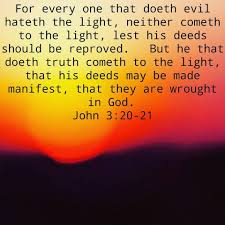
Jn.3.20-21_2Every man has a choice of glorifying God or not glorifying God. The first step is salvation. The light  of salvation comes to every man (See John 3.16-22); some come to it, some do not. Even after salvation, new light continues to shine through; one either comes to that light or rejects it. Only the saved man is made privy to additional light from God; when that light comes to him, he either accepts and acts on it or rejects it. “For every one that doeth evil hateth the light, neither cometh to the light, lest his deeds should be reproved. But he that doeth truth cometh to the light, that his deeds may be made manifest, that they are wrought in God” (John 3:20-21). “The night is far spent, the day is at hand: let us therefore cast off the works of darkness, and let us put on the armour of light” (Romans 13:12; written to believers).

God made man trustee of that which God gave him. A trustee is one who holds money or property for the benefit of someone else. He has a fiduciary duty to do so.

Again the true owner of all things is God. Beneficiary is a term used to denote the true owner of all property in a trust estate. Man, as trustee, is to hold and manage all things for the benefit of the true, beneficial, and equitable owner of all things, for God.

God gave the first man man only one commandment or rule—not to eat of the fruit of the tree of knowledge of good and evil. Man violated the rule and fell. All was no longer good. God judged the serpent, Adam, and Eve. Man remained trustee of all that God had given him; but God changed things. Churches, in general, continue to dishonor rather than to glorify God by rejecting God’s trust relationship and replacing it with some kind of earthly man-made organizational scheme which places them under some authority other than the Lord Jesus Christ.

2. Trust is a Bible concept

Some meanings of trust, as given in the 1828 Webster’s Dictionary, are:

  1. Confidence; a reliance or resting of the mind on the integrity, veracity, justice, friendship or other sound principle of another person. He that putteth his trust in the Lord shall be safe. Proverbs 29:25.
  2. Something committed to a person’s care for use or management, and for which an account must be rendered. Every man’s talents and advantages are a trust committed to him by his Maker, and for the use or employment of which he is accountable.

Both definitions are Biblical. This article will deal with definition 2 above. From that definition, one can see that the God ordained trust arrangement with mankind has a trust estate, a trustor, a trustee, a beneficiary. The true, beneficial, and equitable owner of all things, both material and spiritual, is God; He is the beneficiary. The creator, trustor, or settlor of the trust arrangement is God. God established the trust estate, made up of both material and spiritual elements. Man is the trustee of all the trust estate. As trustee, he is to manage all that God entrusted to him for the benefit of, God, the true owner of the estate.

God owns everything—not only the land, but also everyone and everything. That ownership is implicit in the fact that He created it all. (Ge. 1). He clearly stated His ownership of all in His Word:

  • God said, “Now therefore, if ye will obey my voice indeed, and keep my covenant, then ye shall be a peculiar treasure unto me above all people: for all the earth is mine:” (Ex. 19.5).
  • God said, “The land shall not be sold for ever: for the land is mine; for ye are strangers and sojourners with me.” (Le. 25.23).
  • “But who am I, and what is my people, that we should be able to offer so willingly after this sort? for all things come of thee [God], and of thine own have we given thee.” (1 Chr. 29.14).
  • “The earth is the LORD’S, and the fulness thereof; the world, and they that dwell therein.” (Ps. 24.1).
  • God said, “For every beast of the forest is mine, and the cattle upon a thousand hills.” (Ps. 50.10).
  • “The heavens are thine [God’s], the earth also is thine: as for the world and the fulness thereof, thou hast founded them.” (Ps. 89.11).
  • “The silver is mine, and the gold is mine, saith the LORD of hosts.” (Hag. 2.8).

For example, when a church assembles together, God owns the land upon which they meet. The land is temporarily loaned to man for the benefit of God, the true owner. Although man has the temporal and legal title to the land, God is the true, beneficial, and equitable owner. An equitable owner is “[o]ne who is recognized in equity as owner of the property, because real and beneficial use and title belong to him, even though bare legal title is invested in another.” (BLACK’S LAW DICTIONARY (6th Ed. 1990), 539). “In a trust relationship, as distinguished from a ‘contract,’ there is always a divided ownership of property, to which the trustee usually has legal title and cestui [que trust] an equitable title.” (90 C.J.S. Trusts § 1, fn. 13 (2007). C.J.S., like AM. JUR 2D, is a highly respected, used, and cited legal encyclopedia).
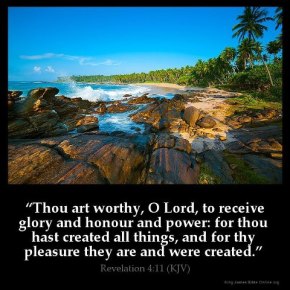
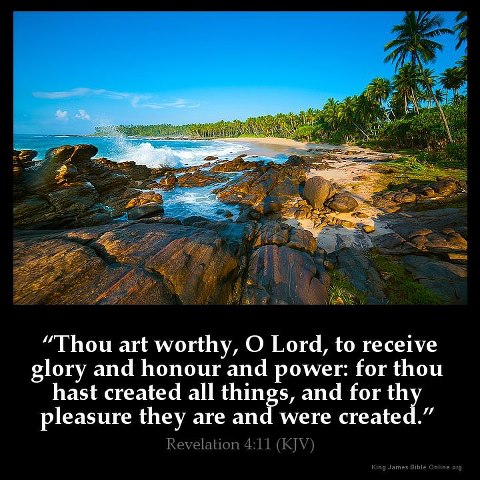
Re.4.11The Bible teaches that God, the true owner of all things, entrusted man, under God, with the earth and all that was in it. God entrusted man with His property. Man was put in trust to administer God’s earthly property according to God’s plan. Man did not own the earth, but, of course, man benefited from use of the property entrusted him. Man was to use the property God entrusted him with for the glory of God, for God’s pleasure. (Re. 4.11).

The word of God also teaches that God entrusted a New Testament church to the members of the church.

A trustee is “a person to whom anything is committed, in confidence that he will discharge his duty.” Man was trustee of God’s property. Church members are trustees of the church they are members of.

Man was a fiduciary. Fiduciary, as a noun, means “One who holds a thing in trust; a trustee.” Man, as trustee, had a fiduciary duty to hold and administer God’s property for the benefit of God. Church members have a fiduciary duty to organize and operate the church they belong to according to God’s guidelines as stated in the New Testament. Fiduciary as an adjective means, “Not to be doubted; as fiduciary obedience” or “Held in trust.” Man benefits from use of God’s property and church members benefit from belonging to a church under God only.

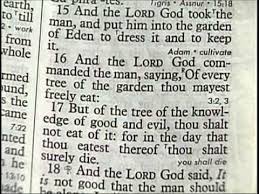
 “And the LORD God commanded the man, saying, Of every tree of the garden thou mayest freely eat: But of the tree of the knowledge of good and evil, thou shalt not eat of it: for in the day that thou eatest thereof thou shalt surely die.” (Ge. 2:16-17). Eating of the true of knowledge of good and evil was a violation of man’s fiduciary duty to administer God’s property for the benefit of the true, beneficial, and equitable owner of the property.

God entrusted Adam and Eve with the earth and all that is in it and gave them responsibilities:
Ge.1.26-28“And God blessed them, and God said unto them, Be fruitful, and multiply, and replenish the earth, and subdue it: and have dominion over the fish of the sea, and over the fowl of the air, and over every living thing that moveth upon the earth.  And God said, Behold, I have given you every herb bearing seed, which is upon the face of all the earth, and every tree, in the which is the fruit of a tree yielding seed; to you it shall be for meat.  And to every beast of the earth, and to every fowl of the air, and to every thing that creepeth upon the earth, wherein there is life, I have given every green herb for meat: and it was so.  And God saw every thing that he had made, and, behold, it was very good. And the evening and the morning were the sixth day.” (Ge. 1.28-31).

Man violated his duty and God held him accountable. Satan lied to man and tempted him to eat of the fruit of the tree of the knowledge of good and evil and man fell or violated his fiduciary duty with bad results.

“And when the woman saw that the tree was good for food, and that it was pleasant to the eyes, and a tree to be desired to make one wise, she took of the fruit thereof, and did eat, and gave also unto her husband with her; and he did eat.  And the eyes of them both were opened, and they knew that they were naked; and they sewed fig leaves together, and made themselves aprons.” (Ge. 3:6-7).

God then judged man, woman, and Satan. Things changed. No longer was all that God had made good.

 “And the LORD God said, Behold, the man is become as one of us, to know good and evil: and now, lest he put forth his hand, and take also of the tree of life, and eat, and live for ever: Therefore the LORD God sent him forth from the garden of Eden, to till the ground from whence he was taken. So he drove out the man; and he placed at the east of the garden of Eden Cherubims, and a flaming sword which turned every way, to keep the way of the tree of life.” (Ge. 3:22-24)

Man remained in trust of all that God gave him. Mankind continued as trustee of God’s earthly property. Man had legal title to God’s earthly propery. The perpetual principle that nations—Gentile nations and Israel—and individuals were left in trust of land and all things for the benefit of God runs throughout the Bible and continues.

As recorded in the NT, God ordained his church, an institution made up of local autonomous spiritual bodies.

3. The Trustor

As shown above, God is trustor or settlor of all things. A trustor or settlor is the one who establishes a trust agreement. This is  because He owns all things. Once God created man, He gave man the duty to oversee His creations; God put man in trust with His earth and all that is in it. God put church members in trust with His churches.
Lk.19.27The Lord spoke of the concept of trust in at least two parables as recorded in the books of Matthew and Luke. (Mt. 25.14-30; Lu. 19.12-27). He spoke of an earthly master leaving certain amounts of his goods or money with his servants, according to their abilities. The more important parallel spiritual meaning was to the Lord and His servants. The master had an absolute right to his own goods, but he distributed to his servants to be used for the benefit of the master, the servants to be awarded according to their profitable use of the property entrusted to them. Some used the money productively and upon the master’s return presented him with a profit. The property belonged to the master, and the servants were to use it for the master’s benefit, not for their own benefit. Of course, they would be rewarded if they used the property wisely for the benefit of the master. One servant in each example returned only the original amount left in trust with them. The master instructed that the goods which he had left with the unprofitable servants be taken from them, and they were left with nothing. The profitable servants were rewarded by the master. In the story found in Matthew, the Master said, “[C]ast ye the unprofitable servant into outer darkness: there shall be weeping and gnashing of teeth.” (Mt. 25.30).

The parables of the last paragraph speak of the heavenly master (trustor) and his earthly trustees. Men, as servants of the Master are left in trust of all things for His benefit and will be rewarded or punished according to their use of His goods.

A church, under God, acts as the trustor of a church Bible trust agreement—the church by so doing is recognizing and acting on the Bible principles regarding trust.

4. The Trustee

The trustee of the trust is the legal (earthly, temporal) owner of the trust estate. He has a  duty to hold and manage the trust estate solely for the benefit of the Lord Jesus Christ, the true owner of the trust estate.

According to Scripture, who should be the trustee named in a church Bible trust agreement?
1Ti.6.20-21Timothy was a preacher with a special position of trust. Timothy was a trustee of a spiritual heritage: “O Timothy, keep that which is committed to thy trust, avoiding profane and vain babblings, and oppositions of science falsely so called:” (1 Ti. 6.20). Likewise, elders, which includes pastors, must meet specific requirements which not every man in a church can meet. (See, for example, Tit. 1.5-9). These elders must hold fast the Word of God, “that he may be able by sound doctrine both to exhort and to convince the gainsayers” (Tit. 1.9-16, 2.2; see also, Ac. 11.30, 14.23, (ordained elders in every church), 15.2, 4, 6, 22-23, 16.4, 20.17, 21.18; 1 Ti. 5.1 (“rebuke not an elder, but entreat him as a father”), 1 Ti. 5.17-19; Ja. 5.14-15; He. 13.7, 17; 1 Pe. 5.1 (Peter the Apostle was an elder, here writing to “the elders who are among you”; 1 Pe. 5.5 (younger to submit to the elder, and all to submit to one another); 2 Jn. 1 and 3 Jn. 1 (John the Apostle was also an elder);

Biblically, a pastor must meet stringent God-given requirements:

  • “This is a true saying, If a man desire the office of a bishop [pastor], he desireth a good work. A bishop then must be blameless, the husband of one wife, vigilant, sober, of good behaviour, given to hospitality, apt to teach; Not given to wine, no striker, not greedy of filthy lucre; but patient, not a brawler, not covetous; One that ruleth well his own house, having his children in subjection with all gravity; (For if a man know not how to rule his own house, how shall he take care of the church of God?) Not a novice, lest being lifted up with pride he fall into the condemnation of the devil.  Moreover he must have a good report of them which are without; lest he fall into reproach and the snare of the devil.” (1 Ti. 3.1-7).
  • “For a bishop must be blameless, as the steward of God; not selfwilled, not soon angry, not given to wine, no striker, not given to filthy lucre;” (Tit. 1.7).

These requirements are strict because a pastor, and every member of a church, is entrusted by God to “take care of the church of God.” (1 Ti. 3.5). He is a trustee of God.

“The elders [pastors included] which are among you I exhort, who am also an elder, and a witness of the sufferings of Christ, and also a partaker of the glory that shall be revealed: Feed the flock of God which is among you, taking the oversight thereof, not by constraint, but willingly; not for filthy lucre, but of a ready mind; Neither as being lords over God’s heritage, but being ensamples to the flock. And when the chief Shepherd shall appear, ye shall receive a crown of glory that fadeth not away.” (1 Pe. 5.1-5).

The Bible proclaims: “Remember them which have the rule over you, who have spoken unto you the Word of God: whose faith follow, considering the end of their conversation.” (He. 13.7). “Obey them that have the rule over you, and submit yourselves: for they watch for your souls, as they that must give account, that they may do it with joy, and not with grief: for that is unprofitable for you.” ( He. 13.17). “Salute all them that have the rule over you, and all the saints….” (He. 13.24). “Them” is plural, and includes the pastor  and other elders of a church.

The elders, including the pastor, are to oversee a church: “Take heed therefore unto yourselves, and to all the flock, over the which the Holy Ghost hath made you overseers, to feed the church of God, which he hath purchased with his own blood.” (Ac. 20.28). Paul was speaking to the elders of the church at Ephesus (Ac. 20.17-18).

A pastor is responsible to act as a ruler, trustee, steward, and overseer of a church. As such, he should be as qualified as any other elder to be the trustee given oversight of a trust established by a church.

Likewise, all men are trustees over that with which God has entrusted them. A father is a trustee of his family. A civil government is a trustee which is to operate under God within its God-given jurisdiction. God has appointed every human being who has ever lived as trustee over himself, all that God has given him, his spiritual heritage, and his spiritual destiny. The earth is still God’s, but He told man care for and possess His earth. Mankind is “trustee” of the earth. The pastor is a trustee, and a prominent trustee, of a church.

5. The Beneficiary

The beneficiary is the true owner of everything in the trust estate. All property in the trust estate is to be held and managed by the legal owner of the trust estate (the trustee) solely for the benefit of the owner of everything in the trust estate, the Lord Jesus Christ. This means that the trustee has a duty to use the trust estate for purposes consistent with the will of God as laid out in God’s Word.

6. A church Bible trust agreement and estate

A church can remain a spiritual entity only by utilizing the Bible concept of trust, only be establishing an irrevocable common law or Bible trust, whether declared in writing or not. In a Bible trust arrangement, God’s spiritual and temporal rules are honored. Regarding money and property, a church is trustor, the  appointed temporal and legal owner of the trust estate is the trustee, and the Lord Jesus Christ is the beneficiary. The beneficiary is, by definition, the true, beneficial, and equitable owner of the property held in the trust estate. Gifts, tithes, and offerings are to God (to the trust estate which is owned by God), not to the church. The church is the giver, God is the recipient and owner.

This type of trust arrangement is Scriptural. The church is not the trust and the trust is not the church. The church remains totally under the authority of the Lord Jesus Christ and His word. The trustee does not hold the property for the church. The trustee holds the property for the benefit of the true owner of the property, the Lord Jesus Christ. The trustee is the legal owner of the property and the Lord Jesus Christ is the true, equitable, and beneficial owner. The trustee has a fiduciary duty under God to use the property, not for his own or the trustor church’s benefit, but for the benefit of the Lord Jesus Christ.

As to property on which a church meets, the state will declare someone to be legal owner of that property if no one lawfully has title and if it is brought to the attention of the state. The law requires someone to hold legal title to real property. A New Testament church is to be, according to Scripture, a spiritual entity only. Therefore, a New Testament church cannot hold title to property. Should a church hold title to property through a trustee or trustees, that church is no longer a spiritual entity only because she has entwined herself with the legal system. A title is a legal declaration of ownership.

Only a legal entity can act legally, sue, be sued, enter into contracts, or be charged with a crime. To assume ownership of property is to act legally. Every American citizen in his right mind is a legal entity. Likewise, corporations (aggregate of sole, profit or non-profit), charitable trusts, business trusts, and Internal Revenue Code § 501(c)(3) and § 508 organizations are legal entities. A church who owns property through one of these legal devises is asserting ownership. A  church who does not hold property or money but puts money and perhaps property into a trust estate of a properly structured irrevocable common law or Bible trust is not acting legally. The trustee of such a trust holds legal or earthly title to the property in the trust estate. He is to administer the property, if any, for the benefit of the true owner of the property, the Lord Jesus Christ. On the other hand, a church who holds property through a trustee for the benefit of the Lord Jesus Christ is a legal or earthly entity.

Holding property in the recommended manner has additional benefits. Not only does holding property in this manner comport with biblical principles, it also lessens the chances that the property, and especially the buildings, will become idols. “Their idols are … the work of men’s hands.  … They that make them are like unto them; so is every one that trusteth in them.” (Ps. 115.4-8). Also, a church who establishes this type of trust relationship is not a legal entity (for example, cannot be sued) as long as she is careful not to forfeit her status under Christ only by acting legally in some way. Finally, holding property in this way assures that a church has chosen not to be structured like a business or a government created organization; that church can operate according to the principles in the New Testament.

7. The wisdom of a Declaration of Trust
4Wisdom dictates that the best course of action—for a church who meets on property entrusted to a trustee for the benefit of the true owner of the property, the Lord Jesus Christ, and or hands over tithes, offerings, and/or gifts to a trustee to be held and used for the benefit of the Lord Jesus Chris—is to properly write and execute a declaration with supporting document(s) of the principles and terms of the trust. A “declaration” is a publication or manifestation. A good name for this type of writing is “Declaration of Trust (‘DOT’).” This section will cover the reasons why wisdom recommends the use of such a declaration.

First, a DOT which describes a Bible Trust relationship totally conforms to Scriptural principles and guidelines. It, with supporting documents, makes clear to all that the church, as trustor or settlor, remains a spiritual entity and closes the door to all legitimate arguments that the church is not a legal, as opposed to a spiritual, entity.

Second, a well written and executed DOT and supporting documents settle arguments about the terms of the trust and the intended use of the trust estate. No disgruntled church member can rewrite (without support of the other members) or control the terms of the trust agreement. No such member can argue that any type of contract, charitable trust, or other legal arrangement was intended or implemented. The door is closed for such a member to control the church property (the Declaration makes clear that the trust property and monies belong to God, not to the church), and/or to control the spiritual direction of the church. No government agent can argue the type of trust created or the intent of the creator(s) of the trust agreement. The written Declaration, if in conformity to Bible principles, serves as the light and authority as to intent and terms. Should anyone dispute the terms of the trust relationship, the Declaration serves as the standard.

Third, if such Declaration and supporting document(s) reflect Bible principles, they serve as an educational tool to church members, other churches, the lost, and the saved. God’s light shines through the documents. The documents proclaim the Bible truths being implemented.

Fourth, a properly worded and executed Declaration and supporting document(s) are solid proof that neither the trust agreement thereby created and declared nor the trustor church is a business trust, charitable trust, non-profit corporation, unincorporated association, or other type of creature of the state which is legally organized under state law.

Fifth (to repeat the first for emphasis), a properly worded and executed DOT and supporting document(s) make clear that no type of business or government entity is thereby created and that the church is a spiritual entity under God only, not a two headed monster partially under the state and partially under God.

8. American law recognizes and applies the concept of trust

One can start his legal research to verify this matter in many places. He can do a word search on a legal website such as Westlaw or Lexis. Since access to these websites is expensive, for the most part only lawyers and paralegals who regularly practice or research law will find it practical to use them. One can also go to the law library and go to case digests, treatises, case reporters, legal encyclopedias and other sources.

On the subject of trusts, this author started with a legal encyclopedia, American Jurisprudence 2nd, Volume 76, Trusts. In explaining the concept of trust, this author used that resource, with some information from Corpus Juris Secundum, another legal encyclopedia, to give an overall explanation of the concept in its use by churches to remain spiritual entities only, as opposed to incorporated 502(c)(3) legal organizations. See, Chapter 7 of PDF of 2nd Edition of Separation of Church and State: God’s Churches – Spiritual or Legal Entities?

See Fn2 for some excerpts from some cases which define and apply the trust relationship.

9. Conclusion

God instituted the concept of trust in the beginning, in the Garden of Eden. It is a biblical concept which, when properly implemented, keeps a church under God (the Scriptures) only. If a church is a NT church, that church has established a trust agreement with the Lord; her gifts are to a trustee. The trustee holds any money or property given to the Lord for the benefit of the true owner or the money and property, the Lord Jesus Christ. A properly worded and executed Declaration of Trust and supporting documents serve as a standard for church members and for the world as to the intent of the creators of the trust agreement and as a light to the world.

The American legal system did not legislate the concept of trust, but merely recognizes the concept. A basic trust is not a legal entity. See, Powerpoint: The Basics of the Bible Principle of Trust in Church Organization; Explanation of “Trust,” as opposed to “Business Trust,” “Charitable Trust,” and other kinds of trusts. How can you know who to trust for the truth about these matters? How can you know if what is presented here is the truth? Etc. Of course, the legal system has expanded the basic concept of trust far beyond its original God established meaning. “Business trusts,” “charitable trusts,” and various other types of trusts are legal entities. The legal system recognizes the basic “trust” in the church and religious institution context, as shown above.

Should any member dislike the way the Lord’s money is spent by the trustee, he can quit giving his money to the Lord’s estate. Should he complain about property which were paid for in part or whole by his past giving, he can take it up with the Lord since the property is the Lord’s.
downloadThe church, the trustor or settlor, implements God’s guidelines as to both eternal spiritual and temporal material matters. The trustee holds property (if any) and money in a trust estate for the benefit of the Lord Jesus Christ, the true, equitable, and beneficial owner of all things. As trustee, he is the temporal and legal owner of the Lord’s properties and monies held in the trust estate.

The trustee has a duty as a fiduciary to manage the trust estate for the benefit of the Lord Jesus  Christ, not for his own benefit. He is not to utilize the property as a profit-making venture in any way. If he violates his fiduciary duties as God’s trustee, God will certainly hold him accountable. “For we know him that hath said, Vengeance belongeth unto me, I will recompense, saith the Lord. And again, The Lord shall judge his people. It is a fearful thing to fall into the hands of the living God.” (He. 10.30-31).

For a basic understanding of the concept as it should be applied by churches see PowerPoint: The Basics of the Bible Principle of Trust in Church Organization. “Trust” Explained and Differentiated from “Business Trust,” Charitable Trust, and other kinds of trusts. (If you click the link, the PowerPoint will download onto your computer.

Footnotes

Fn 1. Trusts, Trust-Like Concepts and Ius Commune, 8 Eur. Rev. Private L. 453 (2000), C. H. van Rhee:  This article concludes:

Trust and Ius Commune: an Assessment
On the basis of the above, several conclusions may be drawn. Firstly, it may be concluded that it is very likely that the origins of the trust cannot completely be traced. Whether these origins are Roman, Canonical or Germanic remains an unresolved question. A link between Romanocanonical usus -Roman usus in a Canonical guise- and the trust seems the most promising of all possible links. However, much research needs to be conducted of ecclesiastical records both on the continent and in England. Examining these records should be the primary aim of legal historians interested in the origins of the trust.

“Secondly, the nineteenth-century shift from Roman law to indigenous law as the alleged origins of the trust did not change the position of the trust as a concept which may be placed in the ius commune tradition. Both the Germanic and Romano-canonical origins of the trust are of interest to scholars studying the question of whether trusts are part of a shared European tradition. As we know, ius commune comprised elements from both the Germanic and the Romano-canonical legal traditions.

“And thirdly, it may be concluded that it is very unlikely that there has been an exact
continental equivalent to the English ‘use’ or trust. The conclusion may be drawn that trust law cannot be viewed as an amalgam of concepts from the Corpus Iuris. This conclusion has also been drawn by Kenneth Reid (see his paper), who alleges that the modern trust is a relatively new concept, which cannot be explained solely by a contract/real right model. Nevertheless, we must continue to ask the question whether the uncovered similarities amount to more than parallels reflecting similar social conditions. My answer to this question is that it is very likely that English trust law was influenced by ideas on the Continent. This is not too bold a statement paying regard to the influence of the ecclesiastical courts in England as well as to the fact that English civilians frequently used Roman and Canon law texts when describing trusts.”

An interesting except from the article: 

“Trust-like devices were popular in the Church [speaking of the Roman Catholic ‘church’], since they allowed this institution to accumulate the necessary means to discharge its tasks. At the same time, these devices preempted the criticism that the Church was not practising [sic] its own teachings on the spiritual dangers of wealth. The wealth accumulated by the Church was not regarded as property owned by the Church itself. According to S. Herman, it was said to belong to God the Father as sovereign Lord, the Pope and his clerical lieutenants acting as His stewards. In trust terminology: God acted as ‘settlor’, while the Pope and his clerical lieutenants acted as trustees. Christ, the meek, the poor and the congregation were usually designated as ‘beneficiaries’. God, as the settlor, also figured as the ultimate beneficiary of creation. In this way, the wealth of the Church could be justified, since the Church simply acted as a depositary of goods created for all. Church officials were charged with managing the goods entrusted to them as ‘trustees’ and with using them for the good of the community. “

Fn2 You may go directly to the cases by clicking the case name.

KOPSOMBUT-MYINT BUDDHIST CENTER, v. STATE BOARD OF EQUALIZATION, 728 S.W. 2d 327 (1986) Court of Appeals of Tennessee, Middle Section, at Nashville. Permission to Appeal Denied, April 6, 1987. IMPORTANT POINT: The court itself declared that the property at issue was held in trust even though there was no writing directly proclaiming a trust. The court did this in order to uphold a property tax exemption. Property held in trust for a Buddhist Temple qualifies for a property tax exemption, if the property is used for religious purposes and the owner, any stockholder, officer, member or employee of such institution is not lawfully entitled to receive and pecuniary profit from the operations of that property in competition with like property owned by others which is not exempt. Property held in trust and which otherwise qualifies for the exemption is to be exempted from property tax.  Of note, for emphasis, it was obvious that corporate, 501(c)(3) status was not a prerequisite for religious property tax exemption. Also, this case deals with a “trust,” not a “business trust” “charitable trust” or some other type of trust that is a legal entity.” The opinion states:

  • “A valid trust need not be in writing. It can be created orally unless the language of the written conveyance excludes the existence of a trust. Sanderson v. Milligan,585 S.W.2d 573, 574 (Tenn. 1979); Linder v. Little, 490 S.W.2d 717, 723 (Tenn. Ct. App. 1972); and Adrian v. Brown, 29 Tenn. App. 236, 243, 196 S.W.2d 118, 121 (1946). However, when a party seeks to establish an oral trust, it must do so by greater than a preponderance of the evidence. Sanderson v. Milligan, 585 S.W.2d 573, 574 (Tenn. 1979); Hunt v. Hunt, 169 Tenn. 1, 9, 80 S.W.2d 666, 669 (1935); and Browder v. Hite, 602 S.W.2d 489, 493 (Tenn. Ct. App. 1980).
  • “The existence of a trust requires proof of three elements: (1) a trustee who holds trust property and who is subject to the equitable duties to deal with it for the benefit of another, (2) a beneficiary to whom the trustee owes the equitable duties to deal with the trust property for his benefit, and (3) identifiable trust property. See G.G. Bogert & G.T. Bogert, The Law of Trusts and Trustees § 1, at 6 (rev. 2d ed. 1984) and Restatement (Second) of Trusts § 2 comment h (1957). We find that the Kopsombut-Myint Buddhist Center has proved the existence of each of these elements by clear and convincing evidence.” [p. 333].

WAUSHARA COUNTY v. Sherri L. GRAF, 166 Wis.2d 442 (1992), 480 N.W.2d 16, Supreme Court of Wisconsin. Submitted on briefs October 4, 1991.Decided February 17, 1992The Supreme Court of Wisconsin reviewed the evidence and concluded that “The evidence indicates that Basic Bible was established to evade taxation. Basic Bible failed to meet its burden of proving that it is a “church” or “religious association” under [Wisconsin law]. The court held that Basic Bible was not property tax exempt.” The fact that the church held “in trust” the property for which a property tax exemption was sought was not a factor in the decision. The Court concluded that incorporation and 501(c)(3) status is not a prerequisite for church property tax exemption; and, again, made clear that the fact that the church held the property “in trust” did not disqualify the church from property tax exemption.

Note. Many, many cases are on the record involving denials of “church,” or “religious organization” property tax exemption for incorporated 501(c)(3) tax scams. See, for some examples, III. Organizations which created religious scams in order to obtain Property Tax Exemption on the webpage, Law on Church Organization (Trusts, Property tax, etc.). WAUSHARA COUNTY v. Sherri L. GRAF is the only case I have found in which a “church” or “religious organization or society” which held property and/or money in trust was held to be such a scam. Also, by reading this entire case with knowledge, one versed in these matters readily sees that Basic Bible did not understand the law nor the Bible. One could write a lengthy analysis proving that. Also very interesting is the analysis of the pro se representation in this case.]. This case reminds one of the unjust steward, an outright crook, in Luke 16. “No servant can serve two masters: for either he will hate the one, and love the other; or else he will hold to the one, and despise the other. Ye cannot serve God and mammon” Luke 16.13.

The Wisconsin Supreme Court stated, in WAUSHARA COUNTY v. Sherri L. GRAF:

  • “We need not reiterate the excellent discussion and analysis underpinning that conclusion that appears in the court of appeals opinion. 157 Wis. 2d at 539-49” [the citation for this case].

The opinion from the court of appeals referred to by the Wisconsin Supreme Court was WAUSHARA COUNTY v. Sherri L. GRAF, 157 Wis.2d 539 (1990), 461 N.W.2d 143, Court of Appeals of Wisconsin. Submitted on briefs December 8, 1989. Decided August 2, 1990Here are some very important points made on pp. 539-49 of that decision:

The court examined the legislative history of the pertinent statutes to determine if a church or religious organization must be incorporated for its property to be tax exempt [under state law].

  • The court started with examination of the first exemption from taxation of the property of churches and religious organizations—in sec. 24, ch. 47, Revised Statutes of 1849. “Chapter 47 prescribed the procedure by which persons belonging to a church congregation or religious society, “not already incorporated,” could incorporate. … The exemption was not limited to religious societies incorporated under ch. 47.
  • “Chapter 130, Laws of 1868, provided for the assessment of property for taxation and for exemptions therefrom. Section 2, 3d exempted “[p]ersonal property owned by any religious, scientific, literary or benevolent association, used exclusively for the purposes of such association, and the real property necessary for the location and convenience of the buildings of such association . . . not exceeding ten acres. . . .” Chapter 130 did not define “association.”
  • “Section 2 of ch. 130, Laws of 1868, was incorporated, without substantial change, in Section 1038, Wisconsin Statutes of 1898. Section 1038, subd. 3 was renumbered sec. 70.11(4), Stats., by sec. 16, ch. 69, Laws of 1921. Throughout its history, the exemption from taxation of property of churches and religious associations has been accorded in substantially the same language. No “linkage” has existed between the exemption statutes and those affecting the organization of churches and religious associations or societies.
  • “Chapter 411, Laws of 1876, provided for the incorporation of religious societies. Apparently this act replaced ch. 47 of the revised statutes of 1849. Chapter 411 is silent as to the taxation or exemption of the property of religious societies incorporated thereunder.
  • “The procedures for the incorporation of religious societies were included in ch. 91, Revised Statutes of 1878. Nash’s Wisconsin Annotations (1914), sec. 1990, ch. 91 at 753, states: ‘The revisers of 1878 in their note said: ‘Chapter 411, 1876, is taken to have been intended as a revision of the law for the incorporation of religious societies.’ The privilege of organizing a corporation is extended to all classes and denominations, it not being supposed the law means to be intolerant of any religious belief or to be partial in its offer of privileges.’
  • “The same annotation at page 755 states: ‘Church’ and ‘Congregation.’ A church consists of those who are communicants, have made a public profession of religion and are united by a religious bond of common spiritual welfare. It is the spiritual body, not the legal one. But a religious society or congregation, under the statute, is a voluntary association of persons, generally but not necessarily in connection with a church proper, united for the purpose of having a common place of worship and to provide a proper teacher to instruct them in doctrines and duties, etc. [Citations omitted.]
  • “Decisions interpreting ch. 91, Revised Statutes of 1878, make plain that failure of a church or religious organization to incorporate thereunder did not affect the power of the church or religious organization to hold title to property. “Under the repeated decisions of this court, we must hold that the mere fact that [a] church or religious society had not yet been incorporated at the time of the delivery of [a] deed in no way frustrated the trust thereby created, if such trust was otherwise valid.” Fadness v. Braunborg, 73 Wis. 257, 278-79, 41 N.W. 84, 90 (1889) (emphasis in original).
  • “In Holm v. Holm, 81 Wis. 374, 382, 51 N.W. 579, 581 (1892), the facts included that the Norwegian Evangelical Lutheran Church of Roche-a-Cree was a voluntary association until February 7, 1889. The court noted that “[p]rior to that date the title to the churches in which the members of the association worshiped was vested in trustees named in . . . deeds, and their successors in office. . . . The trusts imposed by such deeds appear to have been valid upon the principles stated by this court in Fadness v. Braunborg. . . .” Id.
  • “In Franke v. Mann, 106 Wis. 118, 131, 81 N.W. 1014, 1018-19 (1900), the court further said that ‘[w]hat has been said is in harmony with the law regarding trusts for religious uses, whether the trustees be officers of a religious corporation or of an unincorporated ecclesiastical body. . . .’ Id. at 131-32, 81 N.W. at 1019 (emphasis added).
  • “It is plain from these decisions that the court did not consider that the legislature, by offering to ecclesiastical bodies the advantages of incorporation, intended to impose corporate structure upon such bodies. The property of unincorporated ecclesiastical bodies was commonly held in trust for the benefit of the members.
  • “The Basic Bible Church established that title to the real estate subject to foreclosure was held in the name of the trustees for the benefit of the church. We conclude that the trust constituted an “entity” which could claim tax exemption under sec. 70.11(4), Stats., for the benefit of the Basic Bible Church.”
Expose And Reject The Teachings and Methods of Church Organization Con-Artists and Charlatans

Jerald Finney
May, 2016

This article concerns those who falsely claim legal expertise in the area of church/state relations and ends with Bible justification for standing against forces of darkness which invade the arena of church organization in America.

A remnant of believers in America seek to do all things the Bible way, God’s way. One perplexing and somewhat complex matter for those believers concerns the organization of a New Testament church. Believers who study and believe the New Testament quickly come across passages which make clear that Christ wants his churches to be under Him only. Some of those believers, including some of God’s good pastors, seek help in organizing churches. Tragically, many come in contact with and rely on charismatic pseudo-Biblical/legal experts.

Truly, a believer must be well-studied in both the relevant Bible and legal principles in order to intelligently and correctly organize a church such that she remains under the authority of the Lord Jesus Christ (Scripture) only. Knowing the Bible without true legal competence is a recipe for disaster. For example, the Ecclesiastical Law Center alleges Bible as opposed to legal solutions to church organization, but due to legal incompetence organizes churches legally, not Scripturally.

Jethro on the Beverly Hillbillies often stated that he wanted to be a brain surgeon. Some pastors are wannabe “lawyers,” some even going so far as to claim lawyer status even though they never produce any reliable proof of such and even though a diligent examination of their attempts to keep churches under the authority of God and the Scriptures only belie their claim. Of course, few if any believers have the time to check out what they are told about such matters and many follow people who are skilled “Christian” con-artists and charlatans. Most get to liking and even loving their misguided mentors and many lash out at anyone who would try to discredit them. It is hard to confront uncomfortable or damnable truths about those one loves.

Complicating the matter is the fact that many “Christian” lawyers either prove to be incompetent or are trained in the law but not studied in the Bible. Their standard for all matters in faith and practice is not the Bible. Their authority for all matters is the law. As they amass their earthly fortunes, they teach and apply legal, not Bible, principles. For example, David Gibbs relies on the Internal Revenue Service, not the Bible, definition of “church,” and instructs churches to become legal, not spiritual or New Testament entities. These spiritual/legal con-artists, while deceiving and being followed by multitudes, also cause some to distrust all lawyers without further examination.

For years, this lawyer shied away from confronting false teachers. For example, he knew for many years that the Ecclesiastical Law Center (“ELC”) was not qualified to deal with church and state matters even though they falsely claim to have “Bible” as opposed to “legal” solutions to church organization. His attitude was that it is up to believers seeking help to sort out and apply good versus bad advice; and, additionally, he did not wish to attack the ELC because he knew and liked one of their leaders who spoke at his church on the subject of church organization several years before he delved into an extended study of Bible (first), and historical (second), principles and methods of church organization. After completing that study, he studied law to assure that he correctly navigated around the legal landscape in a manner which did not inadvertently result in organization of a church as a legal, as opposed to spiritual only, entity.

However, after coming in contact with many of good men of God who were deceived and who parroted the ridiculous rhetoric, the false teachings, and the foolish and unlearned questions of the ELC and after witnessing relentless and untrue ELC attacks against others over a period of years, this author finally took the time to do an examination of the ELC and their teachings. The result was an online booklet, Ecclesiastical Law Center Exposed.

The corporation sole and Internal Revenue Code § 508 method of church organization is another scam used by skilled but unethical charlatans to deceive the unwary. Critique of “Church Freedom and the Corporation Sole” Website exposes that fraudulent deception.

So far the message of this article to believers and churches seeking help in organizing New Testament churches is, “Beware of false teachers and unskilled pseudo-lawyers.” Do your homework. Look at qualifications and testimonies. Seek truth and apply it, even if you must confront false methods and teachings of others you love. Base all conclusions on Bible precepts and verifiable facts.

Now to the question, “Why is this article justified, under God?” What is the Bible basis for exposing deceivers? As soldiers of the Lord, one is to contend against the forces of darkness, to fight the good spiritual fight of faith. Only a few of many verses which support this conclusion are quoted:

Speaking of deceptions within the churches, Jude wrote: “Beloved, when I gave all diligence to write unto you of the common salvation, it was needful for me to write unto you, and exhort you that ye should earnestly contend for the faith which was once delivered unto the saints. For there are certain men crept in unawares, who were before of old ordained to this condemnation, ungodly men, turning the grace of our God into lasciviousness, and denying the only Lord God, and our Lord Jesus Christ…. Likewise also these filthy dreamers defile the flesh, despise dominion, and speak evil of dignities…. But these speak evil of those things which they know not: but what they know naturally, as brute beasts, in those things they corrupt themselves.” Jude 3-4, 8.

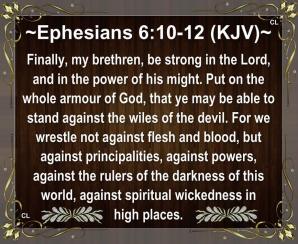
Ep.6.10-12As to Christ’s relationship with his churches, the Apostle Paul wrote: “Husbands, love your wives, even as Christ also loved the church, and gave himself for it; That he might sanctify and cleanse it with the washing of water by the word, That he might present it to himself a glorious church, not having spot, or wrinkle, or any such thing; but that it should be holy and without blemish.” Ephesians 5:25-27. Speaking to the church at Corinth, he said: “For I am jealous over you  with godly jealousy: for I have espoused you to one husband, that I may present you as a chaste virgin to Christ. But I fear, lest by any means, as the serpent beguiled Eve through his subtilty, so your minds should be corrupted from the simplicity that is in Christ.” 2 Corinthians 11:2-3.
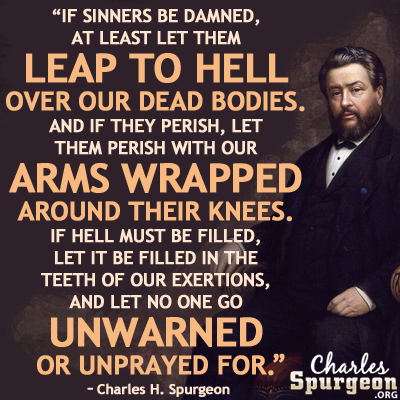
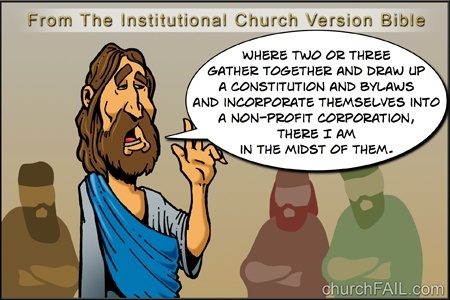
Fight the good fight. Keep the faith. Expose false methods and teaching in all matters, including the preeminent  area of church organization. Make sure you get it right. Is not the Lamb of God worthy of your diligence efforts to keep his body pure and undefiled?

Citizen v. Citizen: Some Northfield, Minnesota Citizens Seek to Circumvent First Amendment

Jerald Finney
BAB, HB (member of OPBC, an Historic Baptist Church), BBA, JD
April 8, 2016

See the attack of the leaf blowers by Krin Finger and associates by clicking here
See the History of Bridge Square by clicking here
(Bridge Square has a history of parades, demonstrations, war protests, and vigils of peace activists. This is so because it is, as to speech protected by the First Amendment, a public forum.)

Very instructive concise teaching: An Abridged History of the First Amendment
A more complete history is at: The History of the First Amendment

For the whole story of the battle against the OPBC street preachers click here

For Jerald Finney’s message to OPBC on April 10, 2016 which dealt with his article on this conflict submitted to the Northfield News and related matters click:

Separation of church and State: The Biblical Principles and the American Application on Youtube (041016)(Click here for sermonaudio.com of this message.)

En1 Article printed in the Northfield News (500 words)
En2 Article sumitted (>500 words)
En3 Facebook comment on OPBC street preaching at Planned Parenthood and Pastor Jason Cooley’s reply

En4 Article by Joshua Burnham

Well, they are at it again. Some citizens of Northfield, Minnesota, spurred on by Krin Finger, are conspiring with their mayor and other city officials to stop protected speech by seeking a way to circumvent the law, namely, the First Amendment. Their efforts are reported in the Northfield News on April 6, 2016 in Northfield organizations renew effort to address issues with Bridge Square preachers.

This author offered the Northfield News an article presenting the other side of the issue. See En2 for the online version of that offer which may have to be edited to 500 words or less for publication (leaving out links).

A shorter version was prepared and submitted. See En1 for that submission. Northfield News contacted the author about the article and stated that the newspaper would print it Wednesday, April 13, 2016.

The article was posted online by the Northfield News on April 12, 2016. Click here to go directly to the online article: Northfield Citizens seek to circumvent First Amendment.

Another member of Old Paths Baptist Church will present the Northfield News with another article for publication. See En3.

Pastor Jason Cooley learned of the Nortfield News article about 45 minutes before his sermon on Wednesday night, April 6, 2016. As he result, he incorporated his response to that article in his sermon:

What They Meant For Evil God Meant For Good” on Youtube (040616)(Click here for sermonaudio.com of that sermon.)

The street preachers go to Bridge Square and preach an average of about two hours about once a month at most. Those citizens who would stamp out the First Amendment had they the power to do so are not concerned about loss of business (their own activities against the street preachers are the only thing than could possibly hurt their business), logical discussion, law (except how to circumvent it), history (how America got the First Amendment and why), safety concerns, or anything else but their hatred for what the street preachers are preaching.

Those religious citizens are out of a Catholic/Protestant/Lutheran line. Like Catholicism and Lutheranism before them, they hate the preaching of the word of God. They would do the same to the street preachers as did their spiritual ancestors were it not for the First Amendment and parallel laws in the Minnesota Constitution and the Northfield, Minnesota Code of Ordinances and Charter. See Street Preaching in America: Is it Legal? for excerpts from those laws; see The History of the First Amendment for the true history of persecution of true believers and followers of Jesus Christ. They are “offended” by Bible based preaching which says that all are sinners, that one cannot earn his way to heaven, that one must repent and trust the Lord Jesus Christ to save him in order to become a child of God, etc.. The Bible contradicts their religion and they do not like it. The Northfield News posted a video of the preaching. It is good Bible preaching and represents speech in the public forum protected by the First Amendment. The following is a link to that video:

http://www.southernminn.com/youtube_c52c6e96-aefe-558c-a4db-04018618a5c4.html
(entitled “Northfield Street Preacher.”)

OPBC does not want to take the city, the mayor and other city officials, other citizens of Northfield, and other conspirators or wrongdoers to court over this matter. As always, they wish to exercise their First Amendment rights in preaching the gospel and carry on their other ministries in peace without taking tremendous time and effort required to go through a legal process; especially since these matters are well settled in the law. They have no desire to cost the opposing parties, including the taxpayers of Northfield, a lot of money on lawsuits.

For examples of what happens in these matters when a lawsuit is filed, see the cases in Street Preaching in America: Is it Legal?. Consider also, a very recent case and the consequences to the offending parties (I would note that OPBC does not believe that the methods of the preachers in the case below comport with Bible principles even though they agree with the right of the speakers to communicate their message in the public forum):

Whether you agree with the speech or not, it is protected in America and the court tells police officers that they must protect the speakers and the speech.

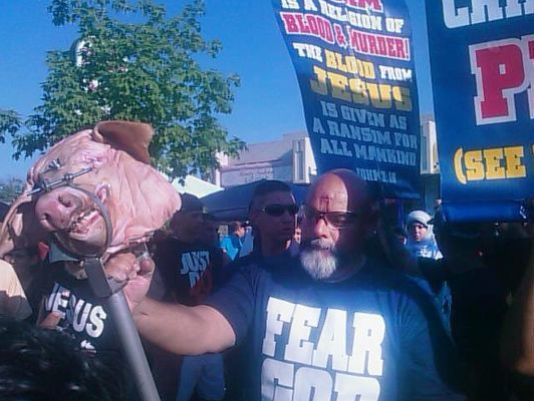
On October 28, 2015, the U.S. Sixth Circuit restated and strengthened First Amendment protection of speech in the public forum in a case where “Bible Believers” involved in street preaching to Muslims displayed a pigs head. “Bible Believers” sued WAYNE COUNTY, MICHIGAN; BENNY N. NAPOLEON, in his official capacity as Sheriff, Wayne County Sheriff’s Office; DENNIS RICHARDSON, individually and in his official capacity as Deputy Chief, Wayne County Sheriff’s Office; and MIKE JAAFAR, individually and in his official capacity as Deputy Chief, Wayne County Sheriff’s Office. The Sixth Circuit stressed that the First Amendment “envelops all manner of speech, even when that speech is loathsome in its intolerance, designed to cause offense, and, as a result of such offense, arouses violent retaliation.” Attorney Robert Muise of the American Freedom Law Center, who argued the case on behalf of the Bible Believers, applauded the decision, saying it was  “solidly on the side of free speech.” “If this went the other way, it would incentivize  violence as a legitimate response to free speech, and that is wrong in our country,” Muise said.  “Any freedom-loving American enjoys protections of the First Amendment.”The Sixth Circuit said, “(The ruling)  affirms the rule of law that when a violent mob is responding violently to protected speech, the police’s duty is to protect the speaker and not join that mob that is intent in suppressing the speech,” Muise said. “Today, the First Amendment was the victor.” Click here to go directly to the opinion. Article: Anti-Muslim Slurs Get Legal Protection (102915). The case now goes back to a federal judge in Detroit, who will decide what damages the Bible Believers are entitled to.

The court stated: “Ultimately, we find that Defendants violated the Bible Sinners_HellBelievers’ First Amendment rights because there can be no legitimate dispute based on this record that the WCSO effectuated a heckler’s veto by cutting off the Bible Believers’ protected speech in response to a hostile crowd’s reaction.” (p. 15 of the opinion).

I suggest that one read and study the above opinion which covers all aspects of the legal debate. The counsel for “Bible Believers” letter, prior assaults against “Bible Believers” by Moslems at the same yearly festival, the facts of the case including assaults against “Bible Believers” and the actions of the police, the law, etc. are carefully recited in the opinion.

Endnotes

En1

The following submission was posted online by the Northfield News on April 12, 2016. Click here to go directly to the online article: Northfield Citizens seek to circumvent First Amendment.

Citizen v. Citizen: Some Northfield, Minnesota Citizens Seek to Circumvent First Amendment

Jerald Finney
BAB, HB (member of OPBC, an Historic Baptist Church), BBA, JD
April 11, 2016

As reflected in the article “Northfield organizations renew effort to address issues with Bridge Square preachers,” some citizens of Northfield are trying to circumvent the First Amendment protections of fellow citizens.

Certain biased Northfield citizens hate street preaching and will do anything they can to try to shut it down. The only speech they wish to prevent is that of the street preachers. See “Protesters question Northfield’s permit processNorthfield News, August 8, 2014.

The offending citizens are attacking law-abiding citizens who understand, practice, and support speech protected by the First Amendment. Several of the preachers – including this author who just recently moved to the area, opened a Northfield bank account, and has spent several thousand dollars there – are from Northfield and the surrounding area. They own homes, buy food, clothing, gas and other things in Northfield, do business, work, vote, go to church, and pay taxes there.

This author has free online resources which explain that Bible teaching, history, and law support their public speech. See opbcbibletrust.wordpress.com. Yet, the only concern of those opposing their position is to try to find a way to legally or illegally circumvent the Bible, the lessons of history, and the law.

The instigating citizens present a false story concerning an illegal permit reserving Bridge Square in 2014. The street preachers preached in Bridge Square the first Saturday the permit went into effect. The permit was not enforced then or later and no one ever approached to tell the preachers to leave.

The street preachers seek to comply with both the laws of God and man. God instructs them to love their neighbor as themselves. See Matthew 5.38-48; 22.39 for a couple of many of the guidelines which forbid them to physically assault or harm anyone. The actions of Jesus’ followers in the Bible make clear that God’s children are to publicly proclaim truth as do instructions found in, for example, Mark 16:15, Luke 24:46-47, and Acts 1:8.

They also know and obey man’s law. Peace officers would already have arrested any street preacher(s) who violated the proscriptions of the First Amendment. In spite of American law which clearly protects the activities of the street preachers, some citizens are pressuring the police and the city officials including the mayor to stop the street preaching. They make false allegations which can only be tested by honest investigation.

Except for one isolated incident, the police in Northfield have been totally professional in performing their duty concerning the street preachers. The citizens should be thankful to their police officers for complying with the law, thereby protecting city money (as well as the money of any city officials and citizens who could be implicated) from the ravages of a potential civil rights lawsuit.

The real problem is not the street preachers, but those who oppose their legally protected public speech. The correct solution: learn, apply, and teach others unrevised history, law, and Scripture. Everyone will profit from such an approach.

This conflict is fully covered at: https://opbcbibletrust.wordpress.com/gods-plan-of-salvation/b-messages-from-pastor/street-preaching/december-25-2013-an-unfolding-street-preaching-battle-in-northfield-minnesota/

End

En2

Citizen v. Citizen: Some Northfield, Minnesota Citizens Seek to Circumvent First Amendment

Jerald Finney
BAB, HB (member of OPBC, an Historic Baptist Church), BBA, JD
April 11, 2016

As reflected in the Northfield News article “Northfield organizations renew effort to address issues with Bridge Square preachers,” some citizens of Northfield are trying to circumvent the First Amendment protections of other citizens.

The guilty parties are biased Northfield citizens who do not understand American law of speech in the public forum, hate street preaching, and will do anything they can get away with to prevent speech they dislike. These citizens have before made clear that the only speech they wish to prevent is that of the street preachers. See “Protesters question Northfield’s permit process” (http://www.southernminn.com/northfield_news/news/article_913bc7ad-25a2-52cc-a02b-9ce15935df23.html) Northfield News, August 8, 2014.

The offending citizens are attacking law-abiding citizens (street preachers) who understand, practice, and support freedom of speech in the public forum. Several of the preachers are from Northfield. They own homes, buy food, clothing, gas and other things in Northfield, do business, work, vote, go to church, and pay taxes there. Some others live in Rice County. Although this author and street preacher recently left Texas and moved into a home in Faribault, he has already opened a bank account in Northfield and spent several thousand dollars there.

This author has offered free online resources which explain relevant Bible principles, history, and law concerning speech in the public forum. The Northfield citizens against the street preachers have never mentioned the relevant Biblical, historic, or legal, facts and principles. They are concerned with none of those matters except the law. Their concern with the law is to try to find a way to legally or illegally circumvent it.

The instigating citizens, according to the article, misrepresent facts concerning a prior permit which was in effect on Saturdays at Bridge Square starting August 16, 2014. Some citizens concocted a plan to violate the constitutional rights of other citizens by working with the city to get an illegal permit.  Business Owners Try To Shut Down Street Preaching In Northfield, Minnesota (https://opbcbibletrust.wordpress.com/2014/08/17/business-owners-try-to-shut-down-street-preaching-in-northfield-minnesota/) chronicles their actions and the results as well as putting this battle in proper perspective. As correctly reported in that article, “Next, on Saturday, August 16, 2014 the preachers went to Bridge Square Park and preached, as already planned. They waited for a community affair taking place in the park to be closed down, then preached. The police came and did their job. The preachers were allowed to preach without hindrance. Neither Ms. Finger or anyone else came to ask the street preachers to leave.”

The street preachers are careful not to violate any law either of God or of man. While preaching in public, they attempt to comply with God’s law, a higher law than man’s law. God instructs them to love their neighbor as themselves. God instructs: “Matthew 5:39, 44: “But I say unto you, That ye resist not evil: but whosoever shall smite thee on thy right cheek, turn to him the other also… But I say unto you, Love your enemies, bless them that curse you, do good to them that hate you, and pray for them which despitefully use you, and persecute you;” Matthew 22:39: “And the second is like unto it, Thou shalt love thy neighbour as thyself.”

They preach on the streets in order to comply with God’s instructions in the Bible. The Bible makes clear that God’s children are to publicly proclaim truth. The examples of the followers of Jesus, as recorded in the Bible, verify this. Their orders are, for example: Mark 16:15: “And he said unto them, Go ye into all the world, and preach the gospel to every creature.” Luke 24:46-47: “And said unto them, Thus it is written, and thus it behoved Christ to suffer, and to rise from the dead the third day: And that repentance and remission of sins should be preached in his name among all nations, beginning at Jerusalem.” Acts 1.8: “But ye shall receive power, after that the Holy Ghost is come upon you: and ye shall be witnesses unto me both in Jerusalem, and in all Judaea, and in Samaria, and unto the uttermost part of the earth.””

They also know and obey man’s law. Peace officers would already have arrested any and all street preachers who went beyond the bounds of the proscriptions of the First Amendment, man’s highest law regarding religion, press, assembly, and speech in America.

The law concerning street preaching is explained in Street Preaching in America: Is it Legal? (https://opbcbibletrust.wordpress.com/gods-plan-of-salvation/b-messages-from-pastor/street-preaching/tract-street-preaching-in-america-is-it-legal/). In spite of the law, some citizens are pressuring the police and the city officials including the mayor to stop the street preaching. They make false allegations which can only be tested by honest investigation.

Except for one isolated incident, the police in Northfield have been totally professional in performing their duty concerning the street preachers. They obviously have a higher sense of justice than do those citizens supported by the article being analyzed. The citizens should be thankful to their police officers for complying with the law, thereby protecting city money (as well as the money of any city officials and citizens who could be implicated) from the ravages of a potential civil rights lawsuit.

The real problem is not the street preachers, but those who oppose their legally protected public speech. The correct solution: learn history, law, and for those who are religious, relevant Bible teachings on relevant matters. Then, teach others the truth. Everyone will profit from such an approach.

History of the First Amendment  (https://opbcbibletrust.wordpress.com/contents/online-version-of-the-book-god-betrayed/the-history-of-the-first-amendment/)

Articles, etc. chronicling and analyzing the attacks, including and beginning with the Northfield MN attacks, against OPBC street preachers (The story of this conflict from beginning to end.)( https://opbcbibletrust.wordpress.com/gods-plan-of-salvation/b-messages-from-pastor/street-preaching/december-25-2013-an-unfolding-street-preaching-battle-in-northfield-minnesota/6-articles-etc-chronicling-and-analyzing-the-attacks-including-and-beginning-with-the-northfield-mn-attacks-against-opbc-street-preachers/)

What They Meant For Evil God Meant For Good on sermonaudio.com (040616)(Sermon by Pastor Jason Cooley on April 6, 2016.)( http://www.sermonaudio.com/sermoninfo.asp?sermonID=471610430)

En3

Facebook message:

I have been outside the Planned Parenthood at times and heard your ministry. I will admit that you scare me. Not by words because I couldn’t really understand what was being said. I was called names like Jezabel and I was just there to pray. What made it scary was the yelling. I was upset enough to look you up on Facebook. I was actually pleasantly surprised by what I heard there. What I thought was craziness was actually sanity. You are highly intelligent people and speak truth. Your knowledge of scripture and history and how to apply it is impressive. When I think back to what I experienced, I really wished it had been more like your on-line sermons. The yelling and name calling distracted from the message to the point that I quit going on Fridays when one of you were there. I now understand why you preach the way you do after watching your sermons but wonder if have you ever thought of a video message that you can hand out instead? I believe your message is important but I feel it may not be delivered the way people will listen to it. The delivery in the videos is way more impactful than the yelling.

Pastor Jason’s reply to the above message:

Hello friend, The man you are referring to has been disciplined out. He would always rail on sinners and on others and we do not agree with that and we voted him out of our church. He was there alone many times and he would say things that we did not agree with. While we preach bold we do not like railing on people. Yes we preach loud but we found him to be way out of line. I’m thinking thats who you are talking about possibly??

En4 

HYPOCRISY IN NORTHFIELD

Joshua Burnham
April 7, 2016

Opposing ideas cause conflict. It is no surprise that the preachers of Old Paths Baptist Church in Northfield are causing “no small stir.” Christ’s gospel is offensive.

History teaches of Christians persecuted for preaching; for example, the Waldensians and Albigensians. This historical trend towards persecution continues today for God says “all that will live godly in Christ Jesus shall suffer persecution (2 Timothy 3:12).”

Certain Northfield citizens despise preaching in public. The article Northfield organizations to renew effort to deal with preachers in Bridge Square by Brad Phenow gives the quote,

“…the Northfield Historical Society, NDDC, Convention and Visitors Bureau and Northfield Area Chamber of Commerce are ‘spearheading a renewed effort to deal with [the street preachers].’”

This initiative contradicts the First Amendment which states,

“Congress shall make no law respecting an establishment of religion, or prohibiting the free exercise thereof; or abridging the freedom of speech, or of the press…”

Freedom of speech is granted by the Constitution. Those opposing preaching are allowed to by the First Amendment. This is hypocrisy.

Despising preaching evidences the absence of salvation, “For the preaching of the cross is to them that perish foolishness; but unto us which are saved it is the power of God (1 Corinthians 1:18).” Those who experienced Biblical conversion love preaching, much like Paul saying, “So, as much as in me is, I am ready to preach the gospel to you that are at Rome also. For I am not ashamed of the gospel of Christ (Romans 1:15-16).” Some in Northfield are ashamed of the gospel.

Christ was not ashamed to preach in public. We read in Mark 1:14, “Jesus came into Galilee, preaching the gospel of the kingdom of God, And saying, The time is fulfilled, and the kingdom of God is at hand: repent ye, and believe the gospel.” Was the Lord wrong?

Stopping preachers is wicked. Christ said, “But woe unto you, scribes and Pharisees, hypocrites! for ye shut up the kingdom of heaven against men: for ye neither go in yourselves, neither suffer ye them that are entering to go in (Matthew 23:13).”

It is a great evil to despise the gospel. Preaching aids people in repenting and believing on Christ. Hell awaits sinners. The preaching will not stop. Jesus commanded, “Go ye into all the world, and preach the gospel to every creature (Mark 16:15).”


Church Submission to Christ – A Works Agenda?

On January 19, 2016, I received the following e-mail from a brother in Christ. My reply follows his e-mail below.

Mr. Finney,

I am deacon in a nondenominational church and in the past few years GOD has brought the issue of church incorporation and many other matters before me regarding how we relate to government. Needless to say it has not been taught thoroughly.   When I presented the problem to the “board” last year it was quickly rejected by pastor and most of other deacons except for one as unimportant and was promoting a “works agenda”.   I have prayed about the issue and GOD has at least softened my pastors heart in regards to hearing what is involved in unincorporating.   Which brings me to thanking you for all the valuable information in scripture and otherwise  you have put together on this subject.

I do have question for you   In reading your material I keep running across the statement “Ultimately, fewer and fewer souls are saved because of this compromise.”

This strikes as false to me.  Please back up with scripture.

Fewer and fewer souls are not saved NOT as a result of a individuals or churches failure to present the gospel.   GOD has foreknowledge of who will believe and he is not limited to providing them with the way of salvation because of the failures of a church or individual.   That would violate his attributes of Omniscience and Omnipotence.  Did he not know from eternity past who would and would not believe?

No doubt we are to be a SALT and LIGHT and be prepared to give the GOSPEL when the opportunity arises.

Your brother in CHRIST

__________________

My Reply:

Dear Brother __________,

Thanks for your e-mail. It is always good to hear from a believer who loves the Lord and is sensitive to the word of God and his precepts, and seeks to promote those precepts in his church body. Thank you for your interest and concerns. You ask a very good question.

The Bible is my authority. I would rather believe the word of God than any of man’s interpretations. I have thoroughly considered the issue you bring up and bowed my thoughts to the mind of Christ, as stated in his word. I followed the directive in Isaiah 28.9-13:

“Whom shall he teach knowledge? and whom shall he make to understand doctrine? them that are weaned from the milk, and drawn from the breasts.  For precept must be upon precept, precept upon precept; line upon line, line upon line; here a little, and there a little:  For with stammering lips and another tongue will he speak to this people.  To whom he said, This is the rest wherewith ye may cause the weary to rest; and this is the refreshing: yet they would not hear. But the word of the LORD was unto them precept upon precept, precept upon precept; line upon line, line upon line; here a little, and there a little; that they might go, and fall backward, and be broken, and snared, and taken.”

So, according to Scripture, one is not to leave out some lines and some precepts. One is to begin in Genesis and read and study through Revelation to grow in knowledge and understanding of a doctrine. That is what I did. I considered all the relevant doctrines of Christ, taking in all of related Scripture, just believing what I read, without interpretation. Therefore, I could not distort or leave out those parts that did not agree with an interpretation. One cannot fully understand all that God has for us in his word. Therefore, it is best just to believe it all.

Now, please allow me to first address the response of your pastor and other deacons who feel that getting a church under Christ according to the precepts of God – their reply that doing so is a “works agenda.” That response shows a complete lack of understanding of vital Bible doctrines. I am reminded, first of Titus 2:14: “Who gave himself for us, that he might redeem us from all iniquity, and purify unto himself a peculiar people, zealous of good works.”

Let me now be more specific. As you probably know, I quote many verses concerning the matter of church order in my books. Let me just mention one here:

Ephesians 5:22-33  “Wives, submit yourselves unto your own husbands, as unto the Lord. For the husband is the head of the wife, even as Christ is the head of the church: and he is the saviour of the body. Therefore as the church is subject unto Christ, so let the wives be to their own husbands in every thing. Husbands, love your wives, even as Christ also loved the church, and gave himself for it; That he might sanctify and cleanse it with the washing of water by the word, That he might present it to himself a glorious church, not having spot, or wrinkle, or any such thing; but that it should be holy and without blemish. So ought men to love their wives as their own bodies. He that loveth his wife loveth himself. For no man ever yet hated his own flesh; but nourisheth and cherisheth it, even as the Lord the church: For we are members of his body, of his flesh, and of his bones. For this cause shall a man leave his father and mother, and shall be joined unto his wife, and they two shall be one flesh. This is a great mystery: but I speak concerning Christ and the church. Nevertheless let every one of you in particular so love his wife even as himself; and the wife see that she reverence her husband.”

Those verses show both the sovereignty of God and the free will of man. Those verses (and many other verses which I do not quote here) make clear the nature of the relationship and that churches are free to either honor or dishonor that relationship. God honors the relationship. The question is, “Will a church honor the relationship.” Should a church honor the relationship, she will be a “glorious church, not having spot or wrinkle,” since Christ will, without fail, honor the relationship. Christ gave himself for the church. The only question is whether a church will be subject to and give herself to Christ. A church is sanctified and cleansed ” with the washing of water by the word.” The church body is to get into the word of God, study the relevant precepts, and apply them in and to the body.

I surmise from your letter that the pastor and other deacons feel that believers are free, under God, to do whatever they decide to do as long as their motive is to do God’s work. Motive is important, but it can lead to heresy and even apostasy when God’s methods are not followed in doing God’s work. In fact, substituting man’s methods for God’s methods is the result of, at the very least, heresy. The Bible teaches that men are free to do whatever they want in regards to doing God’s work – they can choose to do things God’s way or they can choose to do things man’s way contrary to the ways of God. Of course, God desires that they follow his directions and not make up their own methodologies which are out of line with his word. You see, the method matters to God. I suggest listening to the sermon, “The Method Matters To God,” which can be accessed by going to the following webpage and scrolling down to sermons by Pastor Jason Cooley on the doctrine of the church

The Biblical Doctrine of the Church

The Biblical Doctrine of the Church

The Bible teaches, for the present time, the local autonomous spiritual body (church), not the universal visible or invisible church. There will be a universal visi…

View on jeraldfinney.wordpre… Preview by Yahoo

I believe in the sovereignty of God. I believe that the Bible makes clear that God is sovereign and that, as sovereign, he allows men to choose life or to choose death. There are many, many, many verses in the Bible that teach free will as there are that teach the sovereignty of God.

This is not a works doctrine, although it may be said to be in line with the word of God a works agenda. We are to work if we are saved, but we are not saved by our works. Faith is not a work. Repentance is not a work. Trusting Christ to save one from sin is the opposite of a work. Romans 4:5 “But to him that worketh not, but believeth on him that justifieth the ungodly, his faith is counted for righteousness.”

I agree that God has foreknowledge. God knows who will choose life and who will choose death. Nevertheless, we see his warnings and pleas for man to repent and choose life throughout Scripture. We also see that he points out the consequences of loving him as opposed to rejecting him throughout Scripture. The Lord instructs believers in the New Testament to preach the Gospel to everyone. Likewise, we see that God tells us about heresy and apostasy and where it leads. See my articles on apostasy below.

Heresy and apostasy

Heresy and apostasy

Jerald Finney Copyright © December 19, 2012  Note. This is a modified version of Section II, Chapter 4 of God Betrayed: Separation of Church and State/The Biblical …

View on jeraldfinney.wordpre… Preview by Yahoo

Church Incorporation, 501c3, Heresy, and Apostasy

Church Incorporation, 501c3, Heresy, and Apostasy

Jerald Finney Copyright © November, 2010 Click the following for links to articles on: “Christian Issues, Heresy, And Apostasy” “When Did the Church Become a Busi…

View on jeraldfinney.wordpre… Preview by Yahoo

Recent accelerated apostasy in the United States

Apostasy at the end of the church age

Apostasy at the end of the church age

Jerald Finney Copyright © December 19, 2012 Click here to download and listen to Jerald Finney’s audio teaching on the “Apostasy at the end of the church age.” The …

View on jeraldfinney.wordpre… Preview by Yahoo

The apostasy of Israel and the apostasy of the church followed the same pattern and result(ed) in fewer and fewer coming to the Lord to the point that, eventually, in Israel, only a small remnant believed and followed God, his statutes and commandments; the point was reached where the only remedy available to God was judgment. The same is true of the church age – the apostasy has led to fewer and fewer coming to and following our Lord. God’s word explains what the results will be.

The Bible teaches that there are three steps in the downfall of a nation – religious apostasy, moral awfulness, and political anarchy. Romans 1.21-32, which gives the seven stages of Gentile world apostasy (verses 21-23) and the result of Gentile world apostasy (verses 24-32) demonstrate both the sovereignty of God and the free will of man.

Romans 1:21-32: “Because that, when they knew God, they glorified him not as God, neither were thankful; but became vain in their imaginations, and their foolish heart was darkened. Professing themselves to be wise, they became fools, And changed the glory of the uncorruptible God into an image made like to corruptible man, and to birds, and fourfooted beasts, and creeping things. Wherefore God also gave them up to uncleanness through the lusts of their own hearts, to dishonour their own bodies between themselves: Who changed the truth of God into a lie, and worshipped and served the creature more than the Creator, who is blessed for ever. Amen.  For this cause God gave them up unto vile affections: for even their women did change the natural use into that which is against nature: And likewise also the men, leaving the natural use of the woman, burned in their lust one toward another; men with men working that which is unseemly, and receiving in themselves that recompence of their error which was meet. And even as they did not like to retain God in their knowledge, God gave them over to a reprobate mind, to do those things which are not convenient;  Being filled with all unrighteousness, fornication, wickedness, covetousness, maliciousness; full of envy, murder, debate, deceit, malignity; whisperers, Backbiters, haters of God, despiteful, proud, boasters, inventors of evil things, disobedient to parents, Without understanding, covenantbreakers, without natural affection, implacable, unmerciful:  Who knowing the judgment of God, that they which commit such things are worthy of death, not only do the same, but have pleasure in them that do them.”

May the Lord bless you as you seek to do his will.

For His Glory,
Brother Jerald Finney


Kicking someone out of church for speech, the state church versus the New Testament church, and Nicolaitism

January 16, 2016

AVVO is a website where individuals can ask legal questions and lawyers can respond. An individual asked the following question on AVVO:

“What are my legal rights? Can I be prohibited from attending this church for simply expressing my opinions? A pastor in Florida attempted to censure my First Amendment rights to Freedom of Speech by “counseling” me not to express my personal opinions about biblical matters with other members of the church. No matter that my conversations were private and one on one with other believers and only after small group studies outside the class room, not during the bible studies.”

8Several lawyers,  including me, answered the question. The asker chose my answer as the best answer, and then, in subsequent replies by him and me, I learned something I had not thought of.

The webpage with the questions and answers is copied and pasted below. For some reason, the website removed my answer, and the asker’s and my replies.

I suggest reading the following articles in conjunction with this dialogue:

  1. Can a church force a homosexual to turn straight to stay in the church? (Another AVVO question asked and answered.)

  2. First Amendment Protection of New Testament Churches/Federal Laws Protecting State Churches (Religious Organizations) by Jerald Finney, February 2010.

Copied and pasted below is the page to this date, January 17, 2016.

1KickedOutOfChurch

2

3

4

5

The cite for the webpage (where you may see the dialogue yourself as well as any future replies) is: What are my legal rights? Can I be prohibited from attending this church for simply expressing my opinions? 


Principles, Dispensations, and Covenants in the Bible

Jerald Finney
Copyright © December, 2015

The Lord has impressed this author to write a booklet (which may turn into a book) corresponding to a long time and continuing detailed study of the word of God covering principles, dispensations, and covenants in the Bible. This study may look at some other teachings, but all such teachings will be compared to what the Bible literally says from Genesis to Revelation concerning the particular principle, dispensation, or covenant each of which will occupy its own chapter or chapters (to be determined as this booklet is penned). The author will not present finished chapters all at once, but will publish each chapter in its beginning and as it progresses.

Understanding these matters should be near the top of any serious Bible study since correctly dividing the word of truth on them is necessary to a solid understanding of Scripture, of the history of the church including the history of the persecution of authentic believers, and of the daily spiritual battle that all believers are instructed to engage in. Knowing the history of the persecution of believers is important; knowing why they were willing to die horrible deaths for their faith in Jesus Christ is more important since the latter must be based upon the foundation of the word of God. Accurate history and present day fact proves that true believers (as well as heretics, apostates, and followers of false religions) died and continue to die for their faith. Dying for the wrong reason may surprise one when he ends up in hell. Sadly, generally speaking, much study time has been devoted to historical persecution of true believers, but little time to Bible foundations of their martyrdom.

This study is open to analysis, but Bible analysis only. It matters not what anyone teaches. What matters is what Scripture teaches on the subject as a whole. For example, the book of Hebrews speaks of the new and the old covenants. Does this mean that there are only two covenants in the Bible. It cannot mean such a thing since there are obviously more than two covenants in the Bible. To understand what Hebrews is teaching, one must first understand if the rest of the Bible describes only two covenants. One must consider to whom is the particular Scripture speaking, for what purpose, and both the immediate and overall Scriptural context.

There are definitely numerous principles, covenants, and dispensations in the Bible. After many years of study accompanied by copious notes, the author cannot deny the obvious. The author has always looked at Scripture as the standard when reading what others have written or said.

The author is aware that good men of God have been led down the road to a belief in what is called “Covenant Theology” by studying what others have written on the subject and verifying what they have been taught by looking at the Bible. In trying to convince others to believe in covenant theology, men will usually start with verses in the New Testament, taken out of context without a foundational study starting in Genesis 1.1 and ending with Revelation 22.21. They have not started in Genesis with dedicated study and copious notes on principles, covenants, and dispensations. Covenant theologians are not the only ones who have perverted the teachings of Scripture; others such as hyperdispensationalists have done likewise, although in a different manner, maybe even by going through the entire Bible starting in Genesis.

David Ickes comment concerning classical learning is totally appropriate to Bible learning:

“[W]hen one reads a properly written book, each paragraph expounds on the previous one. So the reader’s brain learns subconsciously about premises and conclusions built upon them. One would not grasp the meaning of the 4th paragraph without first reading the previous 3. This teaches organized linear thinking. Each chapter would do the same in relation to the previous ones and so on.”

This is the way to learn the Bible. This is not the way of the Reformed Covenant Theologian; this is not the way of the hyperdispensationalist; this is the way of the dispensationalist. The Reformed takes the Bible out of order, adds to the Bible, and spiritualizes portions of the Bible to support a false theology.

This study starts with covenants.

Covenants

The reformed or the covenant theology definition, as repeated in Webster’s 1828 dictionary, is incorrect according to the Bible. It says:

  • “In theology, the covenant of works, is that implied in the commands, prohibitions, and promises of God; the promise of God to man, that man’s perfect obedience should entitle him to happiness. This do, and live; that do, and die.
  • “The covenant of redemption, is the mutual agreement between the Father and Son, respecting the redemption of sinners by Christ.
  • “The covenant of grace, is that by which God engages to bestow salvation on man, upon the condition that man shall believe in Christ and yield obedience to the terms of the gospel.”

Notice that the covenant of works is “implied” according to the Covenant Theologian. To correct the above definition of the so called “covenant of works”, the Bible from beginning to end teaches that the God-given goal of man is the glory of God, not personal happiness. The goal of man from the beginning was to glorify God. He did so by obedience.

According to Genesis, God’s first covenant with man was stated, not implied, and that covenant included five dos and one do not. The five dos were:

“(1)  To replenish the earth with a new order—man; (2) to subdue the earth to human uses; (3) to have dominion over the animal creation; (4) to eat herbs and fruits; (5) to till and keep the garden.” Genesis 1.28-30

However, there was only one “do not” and only disobeying that “do not” rule brought death: do not eat of the tree of knowledge of good and evil. Genesis 1.16-17.

Ge.2.16-17In that first covenant, God gave one rule which would bring death: if man ate of the tree of the knowledge of good and evil, he would die. God commanded man to do certain things. However, man was told not to do only one thing: not to eat or the tree of knowledge of good and evil. Disobedience to that one rule would result in death.

How much clearer can the Bible be? How can the Covenant Theologian so misconstrue the word of God and get by with it? One who believes and studies the word of God cannot deny the above truth. As this study progresses, many more fallacies of the Reformed will be revealed.

That is enough for tonight, December 15, 2015.

Questions Which Reveal Whether One Is A Covenant Theologian

Jerald Finney
Copyright © November 22, 2015

Note. See Dispensational Theology versus Covenant Theology as well as the first four sections of God Betrayed/Separation of Church and State: The Biblical Principles and the American Application for an accurate explanation (not the perversions of the doctrine which many follow) of the origin, definition, etc. of the term “Dispensational Theology.”

3This short article gives questions to help the knowledgeable believer and the believer who wishes to become knowledgeable determine what he believes and why; specifically whether he is a Covenant Theologian, a Dispensational Theologian (both as defined in the article above) or some variation thereof.

Many more questions could be added, but these few will help one determine whether he believes Covenant Theology or some aspects of that theology. One who answers all the questions “yes” is a Covenant Theologian. Should you answer some questions yes and some questions no, you have inconsistent and mutually exclusive beliefs. Some of these questions are rather difficult and you may not be able to answer them with your present knowledge and understanding of the Bible and theology. If so, just skip those questions and answer the ones you do understand.

  1. Do you believe that the rules for church and state and for the Jewish religion-state are the same?
  2. Do you make important dispensational distinctions even though you view them as related to the unifying and underlying Covenant of Grace?
  3. Do you see the present struggle between good and evil terminated by the beginning of eternity at which point there will come catastrophe and divine judgment?
  4. Do you believe that the unifying principle for the philosophy of history is the Covenant of Grace?
  5. Do you believe that the redemption of the elect plus many other programs are all parts of God’s purpose for history?
  6. Are you convinced that Israel and the church are essentially the same?
  7. Do you believe in a nonliteral interpretation of Scripture, especially when interpreting prophecy?
  8. Are you amillennial?
  9. Do you believe that the church/state union (a one world church/state) will be achieved and will succeed in bringing peace to the earth before the return of Christ?
  10. Do you believe that the ultimate purpose of history is the glory of God through the redemption of the elect?
  11. Do you develop the Bible’s philosophy of history on the basis of two or three covenants: the Covenant of Redemption (some covenant theologians do not include this covenant), the Covenant of Works, and the Covenant of Grace? [Note. One definition of “philosophy of history” is “a systematic interpretation of universal history in accordance with a principle by which historical events and successions are unified and directed toward ultimate meaning.” Of course, that definition requires some thinking to understand. If you wish to know whether you are or are not a Covenant Theologian, you should be able to understand it.]
  12. Do you believe that person who is a child of the regenerate is a member of the Covenant of Grace even if he does not enter into the communion of life aspect through a confession of faith?
  13. Have you divided postfall history into two dispensations, the Mosaic dispensation sometimes called the “Old Covenant,” and the Christian dispensation, usually called the “New Covenant”?
  14. Do you believe that the Covenant of Grace, although administration of that covenant differed between the dispensations, exists throughout these dispensations?
  15. Do you believe that each of the biblical covenants is a continuation and newer phase of the Covenant of Grace?
  16. Do you believe in dual covenants? (I.e., that the Covenant of Works required obedience for salvation. According to the Covenant of Grace one could only be saved by faith in Christ.)
  17. If your answer to 16 was “yes” then is the Covenant of Works still in effect?
  18. Do you believe that God’s commands are “too severe even for Adam in innocency, and that grace[, through the covenant of circumcision and its successor, baptism,] gives an exemption from that severity,” under the Covenant of Grace?
  19. Do you believe that the local church should be made up of both those who are under the Covenant of Works as well as those who are under the Covenant of Grace?
  20. Do you believe that all in society should be forced to be members of a church which is united with and supported by the state?
  21. Do you believe in infant baptism?
  22. Do you believe in union of church and state?
  23. Do you believe in enforcing all the Ten Commandments?
  24. Do you believe in executing those who do not agree with your theology, at least outwardly?
  25. Do you believe in forcing all to attend the established church?

These matters are most important because the road to religious freedom without persecution in America was a story of the conflict between opposing Bible beliefs and practices – between the persecutors (Covenant Theologians such as the Anglicans and the Puritans or Congregationalists) and the persecuted. Because the same theologies are at war today, a believer actively engaged in spiritual warfare should make sure he is fighting according to knowledge, understanding, and wisdom on all fronts and especially on the front of accurate Bible teaching.

Knowing the answer to this question is vital to spiritual warfare.

The history without the theologies involved is incomplete and inadequate. The battle between false theology and truth is still raging. To side with the false in even some areas dishonors our Lord and leads to bad consequences. It is better to fight for right no matter what, but so doing without knowing and teaching the reasons for the fight and the Bible precepts behind the war, and exposing lies and false theologies does not fully glorify God. Failure of God’s soldiers to proclaim all truth contributes to the cause of those who are pushing spiritual lies. All believers should seek to be in God’s perfect will even though one knows that he will never perfectly achieve such a thing.

As is obvious from a reading of Dispensational Theology versus Covenant Theology as well as God Betrayed/Separation of Church and State: The Biblical Principles and the American Application, those Baptists who led the charge for religious freedom were well studied in their beliefs, exposed the doctrines and practices of their Covenant Theology adversaries, and very articulately published their positions. Let us look to our examples, those historic Baptists who stood for truth and followed the teachings of the Bible no matter the cost.

Questions Which Reveal Whether One Is A Dispensationalist Plus Bible Matters Which Are Outside God’s Dispensational System

Jerald Finney
Copyright © November 22, 2015
Modified October 29, 2018

Covenant, as opposed to dispensational, theologians believe there are only 2 or 3 covenants in the Bible.

Note. See, for more on Dispensationalism, Dispensations (a continuing Bible study), The Essence of Dispensationalism, God’s Covenants (a continuing Bible study) Dispensational Theology versus Covenant Theology as well as the first four sections of God Betrayed/Separation of Church and State: The Biblical Principles and the American Application for an accurate explanation (not the perversions of the doctrine which many follow) of the origin, definition, etc. of the term “Dispensational Theology.”

As my pastor teaches, the authority for all things of God is the Word of God. The Word of God is my authority for this article which challenges one to closely consider whether he is a dispensationalist and challenges the reader to consider whether certain other fundamental Bible truths or principles such as “salvation” fit within a dispensational scheme. Should you disagree with me, please do not get angry. Show me where my analysis is wrong. Keep in mind that this is only a primer and not a thesis.

This short article presents some basic Bible questions; many more could be added, but these few are adequate for one to determine whether he is a dispensationalist. Your answers will let you know whether you are a dispensationalist.

  1. Would you agree that God has run the earth with different economies, economy meaning, “the arrangement or mode of operation of something.” Before you answer this question, you may want to answer the following questions.
  2. Do you agree that the only direction and control (government) over man in the Garden of Eden was individual direction and control under God, was man’s only direction and control?
  3. Do you believe that, before the fall of man in the Garden of Eden, as ordained by God, man lived in a paradise on earth and would never die?
  4. Do you believe that, before the fall of man in the Garden of Eden, God gave man only one rule and set the consequence for breaking that rule? Do you believe that man broke that rule? Do you believe that man failed when his only control was individual government under God?
  5. Do you believe that God judged man, woman, and Satan when Satan tempted Eve and man broke that rule?
  6. Do you believe that, before the fall of man in the Garden of Eden, man had no knowledge of good and evil (conscience)?
  7. Do you believe that after the fall of man in the Garden of Eden, God took man out of the paradise on earth, the garden of Eden, and gave man, woman, and Satan new rules? In other words, do you believe that at the fall, God established a new economy for man?
  8. Do you believe that after the fall of man in the Garden of Eden, man had knowledge of good and evil (conscience) and that man would now die?
  9. Do you believe that God changed the the economy of mankind at the fall?
  10. Do you believe that, at the fall, God instituted family government?
  11. Do you believe that after the fall, man retained individual government but now with an additional check on his actions, his knowledge of good and evil (his conscience)?
  12. Do you believe that after the fall and until the flood, man’s conscience was to be the only control over his actions as he proceeded with both individual and family government?
  13. Do you believe that, after the fall and before the flood, God told mankind not to exert direction and control over another man (not to take vengeance against another – one who had murdered someone)?
  14. Do you believe that man, being guided by his conscience relatively soon arrived at the point where “the wickedness of man was great in the earth, and that every imagination of the thoughts of his heart was only evil continually?”
  15. Do you believe that man, being guided by his conscience relatively soon arrived at the point where “[t]he earth also was corrupt before God, and the earth was filled with violence.”
  16. Do you believe that, at the flood, God changed the the economy for man? Do you believe that, at the flood, God instructed man to take direction and control over others by killing one who murders another whereas God had before instructed man not to take vengeance? Do you agree that one can call this new economy “civil government (man ruling over man in order to provide a direct control over certain evils?)?
  17. Do you believe that God divided the isles of the Gentiles in their lands; every one after his tongue, after their families, in their nations?
  18. Do you believe that after the flood and that after God instituted civil government man rebelled against God at the Tower of Babel?
  19. Do you believe that God judged this rebellion at the Tower of Babel?
  20. Do you believe that God called out Abraham to establish a people (a nation unto Himself)?
  21. Do you agree that all other nations continued under the original economy for civil government established by God at the flood?
  22. Do you believe that Abraham obeyed God, and that, as a result, a nation distinct from all others came into being?
  23. Do you believe that the Ten Commandments given by God to the Israelites changed the way God dealt with the Israelites as a nation (not as to individual salvation)?
  24. Do you believe that God combined religion and state in establishing the theocracy of Israel? Note. Of course, all heathen nations in general have always combined religion and state, but not according to the directive of God.
  25. Do you believe that Israel was to proceed as a theocracy under God whereas the Gentile nations were to continue to proceed under God’s plan established at the flood?
  26. Do you believe that God ordained something new, a new economy and a new type of government (direction and control), the church, as recorded in the New Testament?
  27. Do you believe that God gave directions to the New Testament church which are different from those directions he gave to the nation Israel and the Jewish religion?
  28. Do you believe that the New Testament teaches that churches are to be entirely separate from the civil government? Note. God desires all nations to choose to operate under Him, but does not force them to do so. One nation under God is not the same thing as union of church and state. The church is not God, and God, not the religion was over the Old Testament “church” and the nation Israel. See God Betrayed, especially Section IV; or, for a shorter explanation see Is Separation of Church and State Found in the Constitution?
  29. Do you believe that Christ will establish the millennial kingdom?
  30. Do you believe in a literal interpretation of Scripture?
One depending upon God's directives revealed by the Apostle Paul will, of course, study and teach the relevant doctrines of both the Old and New Testaments.
One depending upon God’s directives revealed by the Apostle Paul will, of course, study and teach the relevant doctrines of both the Old and New Testaments.

One who answers any one of the above questions “yes” and still denies that he is a dispensationalist does not understand dispensationalism, or may have, in his understanding of Scripture, combined elements of two or more opposing and mutually exclusive understandings of the Bible such as covenant theology and dispensational theology, or he may be a spiritual baby still living on the milk of the Word. There are perversions of dispensationalism such as “hyperdispensationalism” which should be exposed, not by demeaning the correct teaching of dispensationalism, but rather by exposing the errors. A correct understanding of dispensationalism is nothing more than a correct understanding of the Bible.

Of course, one must also understand that God also includes, within the pages of Scripture, facts and principles that run from Genesis to Revelation, and that are separate from economies or dispensations. One must also consider God’s various covenants as he considers the dispensations. See God’s Covenants (a Bible study). When one fails to do this, he will probably misunderstand other matters, such as the matter of how men are saved at various times or the matter of the time which the church was established. This happens because he does not distinguish between facts, principles, dispensations, covenants, etc.

The following facts, among others, run from the the creation of man to the end of Christ’s millennial reign:

  1. Everyone in every dispensation is a sinner except Jesus Christ; thus there is none good, no not one, except Jesus Christ. Psalms 14.1, 3; Romans 3:10; Matthew 19:17; Mark 10:18.
  2. No man in any dispensation, except Christ, is righteous. Psalms 14:1; Romans 3:10.
  3. No man in any dispensation can do enough good works to earn salvation; man’s righteousness is as filthy rags. Isaiah 64:6.
  4. Salvation in every dispensation requires a sinless sacrifice.
  5. Christ, the God-man, is the only sinless man to ever live.
  6. God the Son, Jesus Christ, provided the sinless sacrifice required by God the Father.
  7. Salvation in every dispensation is by grace through faith.

On the matter of salvation, I offer the following very brief explanation to show that salvation has always, since the fall, been by grace, through faith:

  • Paul speaks of that which justifies man before God, namely faith alone wholly apart from works (see, e.g., Romans 4). James, on the other hand, speaks of the proof before man; that he who professes to have justifying faith really has it. Paul speaks of what God sees – faith; James of what man sees – works as visible evidence of faith. Paul’s illustration in Romans 4 concerning Abraham is from Genesis 15.6 (“And he believed in the LORD; and he counted it to him for righteousness.”). James’ is from Genesis 22.1-19. James uses the phrase “ye see” (James 2.24) for man cannot see faith except as manifested through works.
  • In Psalm 15 David is saying exactly what James said: “Yea, a man may say, Thou hast faith, and I have works: shew me thy faith without thy works, and I will shew thee my faith by my works” (James 2:18). As it has been said, “Faith alone saves, but faith that saves is not alone.”
  • And what is and always has been, since the fall, the object of that faith? The Lord Jesus Christ. Only through faith in Him can one be saved. I cannot see Him, but I know, by faith, who He is and that He died, was buried and that he is risen. I, like all (including all who lived before resurrection of Christ) except those who witnessed His resurrection, can only, through faith, trust Him. Just as I know that He will return for His children at rapture only by faith in the Word of God, I can only know of His death, burial, and resurrection by faith in His Word, both Old and New Testaments. Adam and Even, Cain and Abel, Job (Job 13:15-17, 18-28; 19.25-27) Abraham, God’s Old Testament prophets, and their believing contemporaries knew of the coming Messiah. “And Abraham said, My son, God will provide himself a lamb for a burnt offering: so they went both of them together” (Genesis 22:8)[Bold emphasis mine](See also, CHRIST PROPHESIED IN THE OLD TESTAMENT: BEGINNING WITH GENESIS 3.15). The Old Testament, without reference to the New, reveals Him, His death, burial, and resurrection, sometimes in more detail than the New Testament (See, e.g., Isaiah 53 and the Messianic Psalms). The woman at the well, not a Jew, knew of the Messiah (John 4.22). How? Because of the Old Testament. Salvation is something separated from any dispensation and must be considered outside an examination of God’s economies or dispensations.