Category Archives: Written Lessons

Some Basic Teachings of Covenant Theology


A Publication of Churches Under Christ Ministry


If you miss one part of the puzzle that is being put together in these studies, you will never see and understand the whole picture.


Click here to go to the written lessons.
Click here to go to the 3 1/2 to 6 minute video lectures.


Click here to go to Dispensation Theology versus Covenant Theology and Their Importance to the Issue of Church and State Relationship in America


Jerald Finney
Copyright © February 9, 2018


This chapter will not examine Covenant Theology in detail, but some explanation is necessary. Some information will repeat some of the concepts already discussed. This study is primarily concerned with Covenant Theology, as practiced in the American colonies by established churches and the resulting unbiblical practices including persecution of dissenters.

Covenant Theology is “a system of theology which attempts to develop the Bible’s philosophy of history on the basis of two or three covenants,” the Covenant of Redemption, the Covenant of Works, and the Covenant of Grace. Covenant Theology began as a system in the 16th or 17th century and was introduced into America primarily through the Puritans.[i] One version of Covenant Theology combines the Covenant of Redemption with the Covenant of Grace. Covenant Theology teaches that God established the Covenant of Redemption in eternity past when God determined to provide redemption during the course of history for the elect. This Covenant placed requirements on the Lord Jesus Christ. God the Father gave the Son the responsibility of paying for the sin of Adam and His elect (those the Father had given Him). He could do that by keeping the law thereby assuring eternal life for His children.[ii]

According to Covenant Theology, the Covenant of Works and the Covenant of Grace came after God created man. These covenants are deduced by Covenant Theologians and are not specified in Scripture. The Covenant of Works was established between the creation and fall of man. It required “implicit and perfect obedience of Adam.”[iii] Adam broke the Covenant of Works after which God established the Covenant of Grace.

The Covenant of Grace has been defined as “that gracious agreement between the offended God and the offending but elect sinner, in which God promises salvation through faith in Christ, and the sinner accepts this believingly, promising a life of faith and obedience.”[iv] God is the first party to the covenant, and, depending upon the theologian, the second party is the sinner, the elect, or the elect sinner in Christ. Some people who never become regenerate are included in the Covenant of Grace since it exists as both ‘a communion of life’ experienced by only the regenerate and as a ‘purely legal relationship’ experienced by both believers and their children.

The children of believers experience the Covenant of Grace as a legal relationship in four ways: They are in the Covenant (1) “as far as their responsibility [to repent and believe] is concerned;” (2) “in the sense that they may lay claim to the promises which God gave when He established His covenant with believers and their seed;” (3) “in the sense that they are subject to the ministrations of the covenant;” and (4) “as far as the common covenant blessings are concerned.” A person who is a child of the regenerate is regarded as a member of the covenant even if he does not enter into the communion of life aspect through a confession of faith.[v]


Endnotes

[i] Showers, pp. 7-8; Charles C. Ryrie, Dispensationalism (Chicago: Moody Press, 1995), pp. 183-184.

[ii] See, e.g., Renald E. Showers, There Really Is a Difference: A Comparison of Covenant and Dispensational Theology (Bellmawr, New Jersey: The Friends of Israel Gospel Ministry, 1990), p. 9.

[iii] Showers., p. 10; see also, Ryrie, pp. 188-189.

[iv] Showers, pp. 10-11; see also, Ryrie, p. 184 citing Berkhof, p. 277.

[v] Showers, pp. 11-13.

The Way in Which the Two Systems Meet the Requirements for a Philosophy of History


A Publication of Churches Under Christ Ministry


If you miss one part of the puzzle that is being put together in these studies, you will never see and understand the whole picture.


Click here to go to the written lessons.
Click here to go to the 3 1/2 to 6 minute video lectures.


Click here to go to Dispensation Theology versus Covenant Theology and Their Importance to the Issue of Church and State Relationship in America


Jerald Finney
Copyright © February 9, 2018


“[T]he way in which the two systems meet [the] requirements [for a valid philosophy of history] affirms that dispensationalism is the more valid and helpful system.”[i] First, Dispensationalists find the goal of history in the establishment of the millennial kingdom on earth, an optimistic view which insists that the glory of the sovereign God must be seen in the present heavens and earth. According to Dispensational Theology, all history moves toward the ultimate goal for God to glorify Himself by demonstrating that He alone is the sovereign God.

Throughout Scripture, God is glorified. The First of the Ten Commandments, “Thou shalt have no other Gods before me,” an absolute, rock-hard rule, indicates that God wants to be glorified. Everything is seen in the Bible as being for His glory.[ii] The successive dispensations glorify God by (1) demonstrating that God is sovereign throughout history despite Satan’s attempts to overthrow God’s rule and man’s rebellion against God since God can “hold man responsible to obey His methods of administering His rule and can judge man for his” disobedience; (2) “displaying the disorder and tragedy which result from the rejection of God’s rule;” and (3) by “progressively [moving] history toward the fulfillment of its God-intended climax.”[iii]

On the other hand, the Covenant Theologian seems pessimistic and sees the present struggle between good and evil terminated by the beginning of eternity at which point there will come catastrophe and divine judgment.[iv]

Second, in Covenant Theology, the unifying principle for the philosophy of history is the Covenant of Grace, a soteriological principle. Dispensational Theology has a unifying principle—the sovereign rule of God—which “ties the distinctions and progressive stages of revelation together and directs them toward the fulfillment of purpose in history.”[v] Dispensational Theology recognizes that the redemption of the elect plus many other programs are all parts of God’s purpose for history.

“In dispensationalism the [unifying] principle is theological or eschatological or doxological, for the differing dispensations reveal the glory of God as He manifests His character in the differing stewardships, which culminate in history with the millennial glory. This is not to say that dispensationalism fails to give salvation its proper place in the purpose of God…. If the goal of history is the earthly Millennium and if the glory of God will be manifest at that time in the personal presence of Christ in a way hitherto unknown, then the unifying principle of dispensationalism may be said to be eschatological (if viewed from the goal toward which we are moving) or theological (if viewed from the self-revelation of God in every dispensation) or doxological (if viewed from the perspective of the overall manifestation of the glory of God).”[vi]

Third, Dispensationalism gives a proper place to the idea of development, whereas Covenant Theology does not. In Covenant Theology in practice there is extreme rigidity even though Covenant Theology does include in its system different modes of administration of the Covenant of Grace, and although those modes would give an appearance of an idea of progressiveness in revelation. Dispensational Theology states that each new dispensation requires a new revelation, thereby supplying the element of a proper concept of the progress of revelation. According to Dispensationalism, under different economies, God gives new revelation which is increasingly progressive in scope. The similarities in different dispensations are part of a progression of development by God rather than:

  • “a result of employing the unifying principle of the covenant of grace…. Only dispensationalism can cause historical events and successions to be seen in their own light and not to be reflected in the artificial light of an overall covenant.
  • “Thus a correct philosophy of history with its requirements of a proper goal, a proper unifying principle, and a proper concept of progress is best satisfied by the dispensational system. Like the need for biblical distinctions, the proper concept of the philosophy of history leads to dispensationalism.”[vii]

Endnotes

[i] Charles C. Ryrie, Dispensationalism (Chicago: Moody Press, 1995), p. 17.

[ii] See Renald E. Showers, There Really Is a Difference: A Comparison of Covenant and Dispensational Theology (Bellmawr, New Jersey: The Friends of Israel Gospel Ministry, 1990), pp. 50-51 for an excellent overview of Scripture that substantiates this point.

[iii] Ibid., pp. 50-51.

[iv] Ryrie, pp. 17-18 citing Alva J. McClain, “A Premillennial Philosophy of History,” Bibliotheca Sacra 113 (April 1956): 113-14.

[v] Showers, p. 52.

[vi] Ryrie, pp. 17-18; see also, Showers, p. 53.

[vii] Ryrie, p. 19.

The Essence of Dispensationalism


A Publication of Churches Under Christ Ministry of Charity Baptist Tabernacle of Amarillo, Texas


If you miss one part of the puzzle that is being put together in these studies, you will never see and understand the whole picture.


Click here to go to Dispensation Theology versus Covenant Theology and Their Importance to the Issue of Church and State Relationship in America


Click here to go to the written lessons.
Click here to go to the 3 1/2 to 6 minute video lectures.


Jerald Finney
Copyright © February 8, 2018


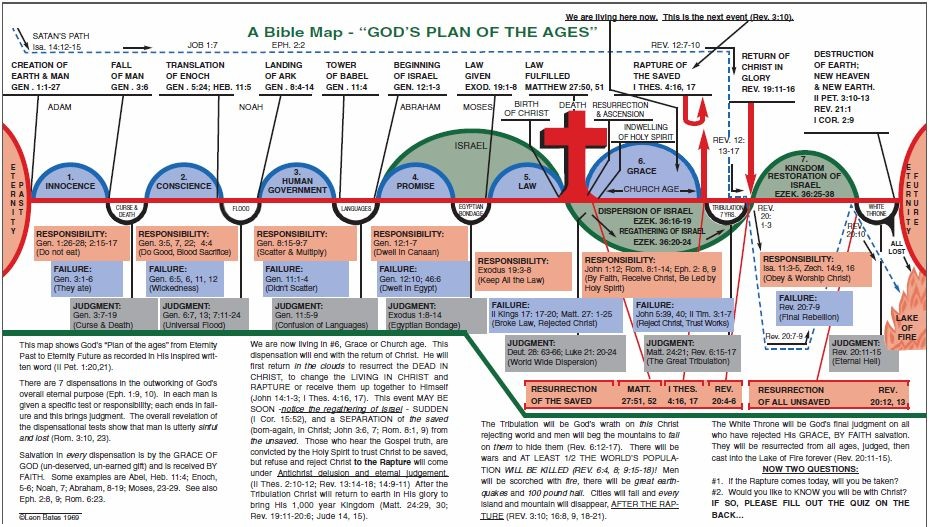
“[T]he term dispensation as it relates to Dispensational Theology could be defined as a particular way of God’s administering His rule over the world as He progressively works out His purpose of world history.[i] Another way to define “dispensation” is “a distinguishable economy in the outworking of God’s purpose.”[ii] “Dispensationalism views the world as a household run by God.”[iii]

There are important characteristics and considerations concerning dispensations. There are three characteristics of each dispensation necessary to make it distinct from all other dispensations. First, each dispensation is characterized by a unique ruling factor or combination of ruling factors. “Second, it must involve a particular responsibility for man.” “Third, it must be characterized by divine revelation which had not been given before.” Three secondary characteristics are that each dispensation applies a test to man to see whether or not man will perfectly obey God’s rule, each dispensation demonstrates the failure of man to obey the particular rule of God of that dispensation, and each dispensation involves divine judgment because of man’s failure.[iv]

Some important considerations are first, the different dispensations are different ways of God’s administering His rule over the world, not different ways of salvation. Since the fall, individuals have always been saved by grace through faith. The sacrifices of the Israelites in the Old Testament did not provide salvation. “For it is not possible that the blood of bulls and of goats should take away sin” (He. 10.4). The Israelite’s offering implied confession of sin and of its due desert, death; and God ‘covered’ [or ‘passed over,’ ] his sin, in anticipation of Christ’s sacrifice, which did, finally, ‘put away’ the sins ‘done aforetime in the forbearance of God.

“For all have sinned, and come short of the glory of God: Being justified freely by his grace through the redemption that is in Christ Jesus: Whom God hath set forth to be a propitiation through faith in his blood, to declare his righteousness for the remission of sins that are past, through the forbearance of God” (Ro. 3.23-25).

And for this cause he is the mediator of the new testament, that by means of death, for the redemption of the transgressions that were under the first testament, they which are called might receive the promise of eternal inheritance” (He. 9.15).

Second, “[a] dispensation is a particular way of God’s administering His rule, but an age is a particular period of time”—hence a dispensation is not an age of history. Third, a dispensation may involve God’s administering His rule over all mankind or over only one segment of mankind. “Fourth, a dispensation may continue or discontinue some ruling factors of previous dispensations, but it will have at least one new ruling factor never introduced before.” “Fifth, each new dispensation requires new revelation.”[v]

Dispensations have characteristics. Primarily, dispensations are stewardships. All in a particular dispensational economy are stewards, although one man usually stands out. For example, Paul was used by God more than any other to reveal His grace. Nonetheless, all the apostles and every other believer are also stewards of God’s grace. All have a responsibility to respond to that grace. God will judge those who fail to do so.[vi]

Most theologians recognize seven dispensations: Innocence (Gen. 1.28); Conscience (Gen. 3.23); Human Government (Gen. 8.20); Promise (Gen. 12.1); Law (Ex. 19.8); Grace (John 1.17); Kingdom (Eph. 1.10).[vii]

In each dispensation, God used or uses a ruling factor to govern man. Man failed or will fail in every dispensation, even in the last dispensation in which Christ Himself will rule over a perfect government and exceptional conditions. Man’s failure in that dispensation will bring God’s judgment. Those who rebel outwardly during that time will be executed (See, Is. 11.3-4; 29.20-21; Je. 31.29-30), and “God will crush the huge revolt which will take place immediately after the seventh dispensation sending fire to destroy the human rebels and casting Satan into the lake of fire for everlasting torment (Rev. 20:9-10).”[viii]

Dispensational Theology recognizes distinctions of things which differ in history by asserting that distinctions are the result of God’s administering His rule in different ways at different periods of history. “There is no interpreter of the Bible who does not recognize the need for certain basic distinctions in the Scriptures.”[ix] The Covenant Theologian also makes rather important dispensational distinctions even though he views them as related to the unifying and underlying Covenant of Grace. For example, Louis Berkhof, after rejecting the usual dispensational scheme of Bible distinctions, enumerates his own scheme of dispensations or administrations—the Old Testament dispensation and the New Testament dispensation. “However, within the Old Testament dispensation Berkhof lists four subdivisions, which although he terms them ‘stages in the revelation of the covenant of grace,’ are distinguishable enough to be listed.’” Thus, he recognizes five dispensations—four in the Old Testament and the New Testament dispensation.[x]


Endnotes

[i] Renald E. Showers, There Really Is a Difference: A Comparison of Covenant and Dispensational Theology (Bellmawr, New Jersey: The Friends of Israel Gospel Ministry, 1990), pp. 27-30; see also, Charles C. Ryrie, Dispensationalism (Chicago: Moody Press, 1995), pp. 28-31.

[ii] Ryrie, p. 28.

[iii] Ibid., p. 29; see pp. 29-31 for definitions of “dispensation” by various scholars.

[iv] Showers, pp. 30-31; see also, Ryrie, pp. 33-35.

[v] Showers, pp. 31-32.

[vi] See Ryrie, pp. 56-57.

[vii] See Showers pp. 33-49 and Ryrie, pp. 45-57 (Showers and Ryrie call the Dispensation of Law the Dispensation of Mosaic Law and the Dispensation of Kingdom the Dispensation of the Millennium; Ryrie calls the Dispensation of Human Government the Dispensation of Civil Government.

[viii] Showers, pp. 33-49.

[ix] Ryrie, p. 16.

[x] Ibid., citing Louis Berkhof, Systematic Theology (Grand Rapids: Eerdmans, 1941), pp. 293-301.

(2) Colonial Theological Warfare—Separation of Church and State


A Publication of Simply Church Ministry


If you miss one part of the puzzle that is being put together in these studies, you will never see and understand the whole picture.


Jerald Finney
Copyright © February 7, 2018


A complete analysis of Dispensationalism and Covenant Theology requires a long and deep study of the Bible. FN [i] These short lessons will briefly look at some of the characteristics of each and distinctions between the two. The differences were debated in the colonies during a spiritual warfare that began in the early 1630’s. Fortunately, the dispensationalist view prevailed. This resulted in the adoption of the First Amendment to the United States Constitution which, among other things, separates church and state (not God and state).

The two theologies have distinct “philosophies of history.” FN [ii] The two main systems which Bible-believing scholars have developed to exposit the Bible’s philosophy of history, Dispensationalism or Dispensational Theology and Covenant Theology, have produced two systems of theology. Dispensational Theology contains all the necessary elements of a valid philosophy of history. “Dispensationalism, [which] can be defined very simply as a system of theology which attempts to develop the Bible’s philosophy of history on the basis of the sovereign rule of God, represents the whole of Scripture and history as being covered by several dispensations[, economies, or stewardships] of God’s rule.” FN [iii]

“The essence of dispensationalism … is the distinction between Israel and the church. This grows out of the dispensationalist’s consistent employment of normal or plain or historical-grammatical interpretation, and it reflects an understanding of the basic purposes of God in all His dealings with mankind as that of glorifying Himself through salvation and other purposes as well.” FN [iv]

Covenant theologians teach that the church has replaced Israel. The Bible literally teaches that the rules for the church and state are different than the rules God ordained for the theocracy in Israel. Distinct rules, as discussed in the articles under Distinct Differences between Church and State that Render Them Mutually Exclusive, are laid down in the Bible concerning Judaism and Israel and the church and state.

Covenant theologians believe that God is through with Israel, that the church replaces Israel. This is a grave mistake to Judaize the church, a mistake which has many consequences.

“It may safely be said that the Judaizing of the Church has done more to hinder her progress, pervert her mission, and destroy her spiritually, than all other causes combined. Instead of pursuing her appointed path of separation from the world and following the Lord in her heavenly calling, she has used Jewish Scriptures to justify herself in lowering her purpose to the civilization of the world, the acquisition of wealth, the use of an imposing ritual, the erection of magnificent churches, the invocation of God’s blessing upon the conflicts of armies, and the division of an equal brotherhood into ‘clergy’ and ‘laity.’” FN [v]

The “Judaizing” of the church is based upon false biblical interpretation, upon a false philosophy of history.

The main issue in the theological warfare in the colonies was the relationship of church and state. Other issues such as believer’s baptism (Dispensational) versus infant baptism (Covenant Theology)—an issue closely related to the issue of separation of church and state—were also hotly debated. Covenant theologians believe in union of church and state. Dispensationalists take the literal meaning of the Bible on this issue—that God desires church and state to be separate in Gentile nations; both under God, but neither working over, with, or under the other. The arguments of both sides in the colonies are still available. Both secular and Christian histories of the theological warfare and the accompanying persecutions of dissenters is undeniable. Sadly, Calvinist, Protestant, and Catholic revisionism has done a masterful job of both promoting a revised version of history while hiding the truth from untold millions of “Christians.”


Endnotes

[i] For much more in-depth look at these matters, see Dispensational Theology versus Covenant Theology.

[ii] “Karl Lowith defines ‘a philosophy of history as ‘a systematic interpretation of universal history in accordance with a principle by which historical events and successions are unified and directed toward ultimate meaning’” (Charles C. Ryrie, Dispensationalism (Chicago: Moody Press, 1995), p. 17, citing Karl Lowith, Meaning in History (Chicago: Univ. of Chicago Press, 1949), p. 1; see also, Renald E. Showers, There Really Is a Difference: A Comparison of Covenant and Dispensational Theology (Bellmawr, New Jersey: The Friends of Israel Gospel Ministry, 1990), p.  1). This definition “centers on three things: (1) the ultimate goal of history; (2) the unifying principle; and (3) the recognition of ‘historical events and successions,’ or a proper concept of the progress of revelation in history” (Ryrie, p. 17). The Bible contains a philosophy of history because it deals with the issue of meaning, offers a systematic interpretation of history, covers the entire scope of history from beginning to end, including the what and why of the future, presents a unifying principle which ties together and makes sense of the whole gamut of events, distinctions, and successions, and demonstrates that history has an ultimate goal or purpose (Showers, p. 2; Ryrie, p. 17).

[iii] Renald E. Showers, There Really Is a Difference: A Comparison of Covenant and Dispensational Theology (Bellmawr, New Jersey: The Friends of Israel Gospel Ministry, 1990), p. 27.

[iv] Charles C. Ryrie, Dispensationalism (Chicago: Moody Press, 1995), p. 41.

[v] Dr C. I. Scofield, Rightly Dividing the Word of Truth (New Jersey: Loizeaux Brothers, First Edition, January, 1896), p. 12.

3. Dispensation Theology versus Covenant Theology and their importance to the issue of church and state relationship in America

A Publication of Churches Under Christ Ministry


If you miss one part of the puzzle that is being put together in these studies, you will never see and understand the whole picture.


Previous Lesson:
2. Definitions of “Separation of Church and State,” “Established Church,” and “Religious Freedom or Soul Liberty”2

Next Series of Lessons:
 4. Distinct Differences between Church and State Which Render Them Mutually Exclusive

Click here to go to all lessons on the Bible doctrine on the relationship of Church and State.

Click here to go to the written lessons.

Click here to go to the 3 1/2 to 6 minute video lectures.


A student may not choose to delve into all the matters concerning Dispensationalism versus Covenant Theology. Some of the studies below are optional and not necessary for a basic understanding of the spiritual or theological warfare that went on between established and dissenting, mainly Baptist, churches and their representatives in the colonies. Therefore, some of the studies noted below are noted to be “Optional.”

(1) Introduction
(2) Colonial Theological Warfare–Separation of Church and State
(3) The Essence of Dispensationalism (Optional)
(4) The Way in Which the Two Systems Meet the Requirements for a Philosophy of History (
Optional)
(5) Some Basic Teachings of Covenant Theology (Optional)
(6) Puritan Covenant Theology Exposed in the American Colonies
(7) Three Critical Factors Upon Which Dispensationalism and Covenant Theology Disagree (Optional)
(8) Dispensationalism Correctly Explains the Covenants of Law and Grace (Optional)
(9) Persecution: A Consequence of Covenant Theology
(10) History Proves Established Churches Are Vile, Viciously Persecute Heretics, and Corrupt the State, the Church, and the People (Optional)
(11) New Testament Teaching against Persecution of Heretics (Optional)
(12) Conclusion to “Dispensation Theology versus Covenant Theology and their importance to the issue of church and state relationship in America”

Click here to go to the written lessons.
Click here to go to the 3 1/2 to 6 minute video lectures.

Introduction: Dispensation Theology versus Covenant Theology


If you miss one part of the puzzle that is being put together in these studies, you will never see and understand the whole picture.


A publication of Simply Church Ministry


Click here to go to Dispensation Theology versus Covenant Theology and Their Importance to the Issue of Church and State Relationship in America.
Click here to go to the written lessons.
Click here to go to the 3 1/2 to 6 minute video lectures.


Jerald Finney
Copyright © January 29, 2018


In order to understand religious liberty and the history of the First Amendment to the United States Constitution (freedom of speech, press, association, religion (or religious liberty); conscience; soul liberty; separation of church and state; and the right to petition the government for a redress of grievances), one must understand Dispensational Theology and Covenant Theology. This is because proponents of these two theologies fought a spiritual warfare in the colonies which led to the adoption of the First Amendment to the United States Constitution.

The Puritans were Covenant Theologians. Historic Baptists were Dispensationalists in belief, although the term Dispensational Theology was not coined until sometime in the last few hundred years. These two theologies clashed in the English colonies of America, the Baptist view prevailing at the federal level with the adoption of the First Amendment.

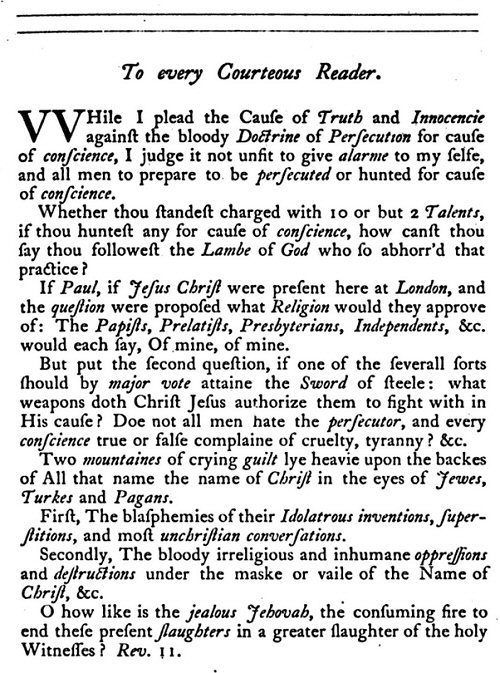
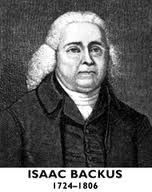
Christian and Secular Revisionists, as always, continue to deceive the general population in America with a revised history of the First Amendment. The contrived version of “Christian” revisionist history predominates the American Christian landscape. Endnote [i] The historical section of these studies will summarize that history, which scholars have recorded from the colonial period until this day. Endnote [ii] Contemporary Christian Revisionists use the same techniques as did their Calvinist forefathers. As Isaac Backus noted, concerning the revisionism and lies of the leaders of the established churches in the colonies:

  • “[I] appeal to the conscience of every reader, whether he can find three worse things on earth, in the management of controversy, than, first, to secretly take the point disputed for truth without any proof; then, secondly, blending that error with known truths, to make artful addresses to the affections and passions of the audience, to prejudice their minds, before they hear a word that the respondent has to say; and thirdly, if the respondent refuses to yield to such management, then to call in the secular arm to complete the argument?”[iii]

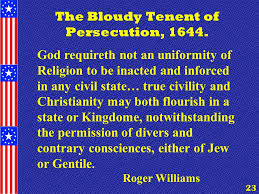
See Isaac Backus Quoted in God Betrayed to get a little understanding of the importance of his efforts and writings in the colonies for the cause of separation of church and state and religious liberty. The first major threat to the colonial establishments was instituted by Roger Williams in New England. His activities and writings forcefully revealed fallacies of Puritan (Calvinist) theology and Puritan persecution of “heretics” and led the founding of the first civil government in history with any lasing influence with religious liberty. See Roger Williams: Quotes and Other Information from God Betrayed.

Baptists in the colonies fought the Puritan and Anglican establishments. Isaac Backus came out of the Congregational (Puritan) Church, became a Baptist, and fought against establishment of churches, infant baptism, etc. His Bible studies led him to disregard significant portions of Calvinist allegorized interpretations of Scripture. He still called himself a Calvinist,  but rejected much of classic Calvinism. Through his extensive writing and activities, he fought for separation of church and state, baptismal regeneration, and other issues in the colonies.  These studies, especially the advanced studies, extensively quote Isaac Backus, and others such as Roger Williams—another hero of the faith who, as a Congregational pastor arrived in Massachusetts from England in the 1630s and soon clashed with Puritanism. It is obvious from their writings that these men took a literal view of Scripture and rejected the allegorized interpretation of Catholicism and Protestantism. Their writings totally dismantled the teachings of Puritans such as John Cotton. At the same time, Cotton and other Puritans, true to form and according to their theology, lied and misrepresented truth as always. They justified lying based upon false interpretations of Scriptures such as those dealing with Rahab the harlot and the midwives in Egypt.

The warfare between various biblical theologies continues and will continue until the kingdom of heaven is established by our Lord. Most “Baptists,” not to mention members of denominations and religions, have unknowingly succumbed to false religious beliefs and philosophies as end-time prophesy unfolds as foretold in Scripture.

This and the next few teachings will, in a nutshell, explain Dispensational Theology and Covenant Theology, distinguish them, and will be invaluable in one’s quest for understanding of the biblical principle of separation of church and state and the American application thereof. To fully understand these matters will not be the goal; only the most important matters will be covered, and those in summary form. see the citations and references for more in depth analysis and study.

Covenant theology allegorizes and spiritualizes Scripture and teaches union of church and state. Covenant theology applies selected principles regarding the theocracy of Israel to Gentile civil government and the church. Dispensational theology is based upon a literal belief in Scripture which accordingly teaches separation of church and state. Although many biblical principles run from Genesis to Revelation, the rules for church and state and for the Jewish religion-state are not the same. Under Judaism (the Jewish religion as ordained by God), religion and state operated hand-in-hand under God; that is, the religion and state were unified by God, both religion and state instructed by God to work together directly under God for the same goals.

Keep in mind that there are many variations of Covenant Theology. Likewise, Dispensationalist systems of theology deviate, some alarmingly, from accurate and literal understanding and teaching on Scripture. God will not call every believer to totally understand these systems. The best thing a believer can do with God’s Word is to study it, believing what it says. When one does that, he will by definition be a dispensationalist. The important thing is that the believer read his own Bible and verify any Bible teaching. It is a serious mistake to blindly follow anyone, especially traditional Calvinist, Reformed, Catholic, Charismatic, JW, Mormon, or similar cultic teachings and teachers.


Endnotes

[i] See, The history and Meaning of the First Amendment or The Trail of Blood of the Martyrs of Jesus/Christian Revisionism on Trial which also explains why those revisionists lie about history and seek to intentionally deceive Christians.

[ii] See, Legal and Scholarly Resources and Authorities. See also, The Trail of Blood of the Martyrs of Jesus/Christian Revisionism on Trial.

[iii] Backus, A History of New England…, Volume 1, p. 150. This comment followed and preceded illustrations of how those in favor of church/state marriage, infant baptism, etc. advance their cause.  On pp. 151-152, Mr. Backus illustrated how those in favor of infant baptism argued their position, pointing out the fallacies of their arguments. Their tactics have not changed, although in America, due to the First Amendment to the United States Constitution, they no longer can call upon civil government to enforce their beliefs. Click here for Quotes of Isaac Backus in God Betrayed.

2. Definitions of “separation of church and state,” “established church,” and “religious freedom or soul liberty”


A Publication of Simply Church Ministry


If you miss one part of the puzzle that is being put together in these studies, you will never see and understand the whole picture.


Previous Lesson:
1. Introduction

Next Lesson:
3. Dispensation Theology versus Covenant Theology and Their Importance to the Issue of Church and State Relationship in America 

Click here to go to all lessons on the Bible doctrine on the relationship of Church and State.

Click here to go to links to all written lessons.

Click here to go to the 3 1/2 to 6 minute video lectures.


Jerald Finney
Copyright © January 22, 2018


Separation of church and state,” “established church” and “religious freedom and soul liberty (the two go hand in hand),” are inherent in the establishment clause of the First Amendment to the United States Constitution. This lesson will define those phrases. The remaining studies and cited authorities, especially the studies on the history of the First Amendment, will make perfectly clear that the definitions given here are accurate.

 1. Definition of Separation of Church and State

Click the above to go to the article, “Is Separation of Church and State Found in the Constitution?

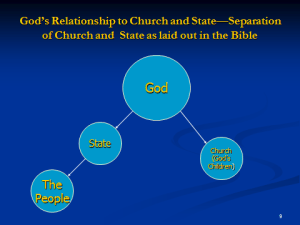
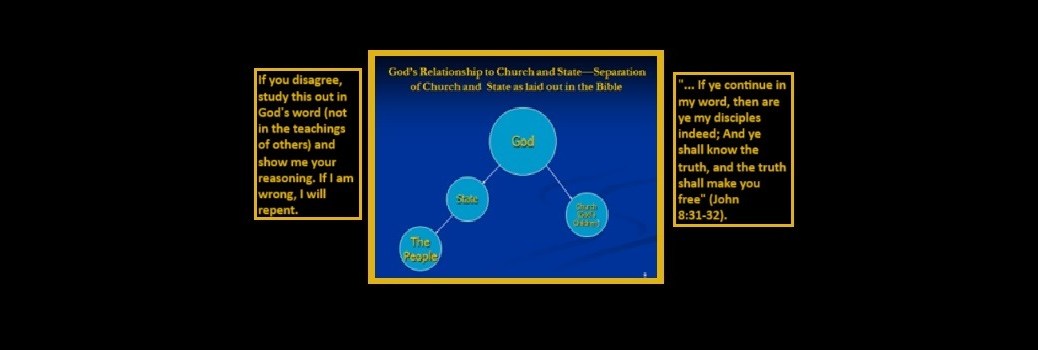
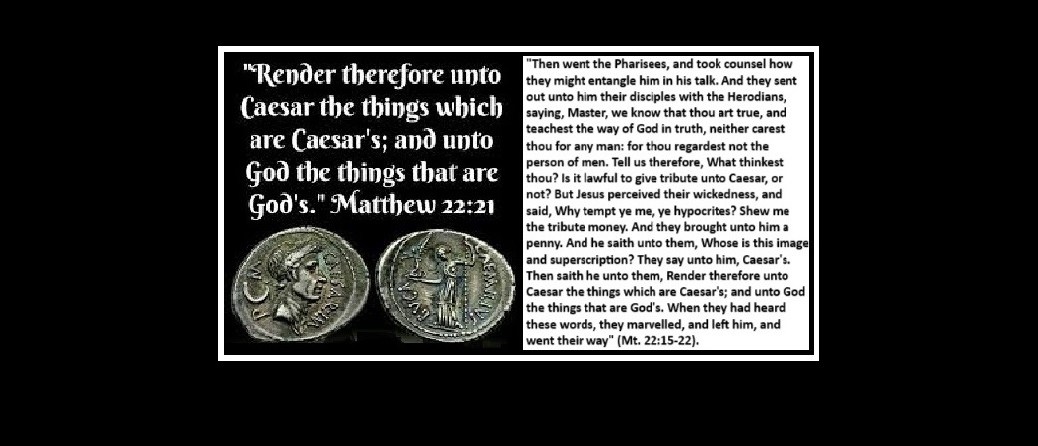
The biblical principle of “separation of church and state” is that God desires both a church and the state to choose to be under God, but desires neither to be over or to work hand in hand with the other. According to God’s word, different principles apply to church and state. A church has spiritual responsibilities. The state has earthly responsibilities. God desires the two to be totally separate entities, both ordained by God who desires both to submit to Him in love and to be guided by His principles as stated in His Word. God’s principle of separation applies to church and state. As Jesus explained to the Pharisees, “Render therefore unto Caesar the things which are Caesar’s; and unto God the things that are God’s” ()Matthew 22:21). 

A church under God remains an eternal spiritual entity only so long as she does not inadvertently or intentionally change her status to an earthly temporal entity by placing herself under the law of man, under civil government. By placing herself under the law of man, she combines church and state and makes herself, at least partially and sometimes wholly, a temporal, legal, earthly entity.

The incorporated and federal tax exempt (501(c)(3) or 508(c)(1)(A)) church is the main type of state/church union. The rules of civil government for such a church are secular and such a church agrees, when she applies for and accepts the status, to the rules which come with state non-profit corporation law and the rules that come with her tax-exempt status. She also agrees that any disputes over violation of the rules will be decided by her chosen authority—the state of incorporation or, for 501(c)(3) and 501(c)(3)(A) purposes, the federal government. God and the Bible will have no part  in disputes deemed by the state to be under their authority.

In other words, man, not God, has authority over much of what the corporate 501(c)(3) or 508(c)(1)(A) church, being an established church, does. For many activities, the First Amendment and corresponding provisions of the particular state constitution which are statements of the Bible principle of separation of church and state (not separation of God and state) no longer apply. Such a church has chosen to become a legal person under the Fourteenth Amendment. See, Incorporated Church: A Human Being with No Soul.

 2. Definition of “Established Church”

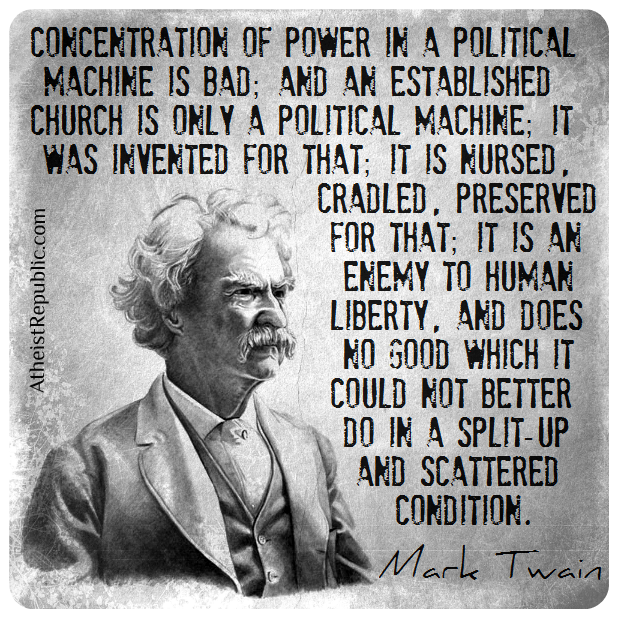
An established church is a church who is an integral part of the state and receives state support. She does this by choosing to become a legal entity. The church and state reach an agreement or enter into a contract whereby either the state runs the church, the church runs the state, or the church and state work hand in hand, as equal partners, to enforce earthly and spiritual laws and principles. In modern America state-churches are influenced, perverted, and/or perhaps dominated by state enforced satanic principles.

Historically, the established church has either been over the state, or the state has been over the established church. When the state has been over the church, the state directs the affairs of the church to a greater or lesser degree and vice-versa. In either case, the spiritual affairs of the church are mixed with the earthly responsibilities of the state. In the past, in either a church/state or state/church, leaders of both church and state operated under a false theology based upon false biblical principles. The results were (1) corruption of the church, corruption of the state, corruption of the clergy and political leaders and the members of society and the church, and (2) torture, imprisonment, confiscation of property, and/or the killing of those who refused to bow down to the theology of the church-state or state-church. We see the former results in the church-state activities in America today. The latter results occuried in the American colonies.

  3. Definition of Religious Freedom or Soul Liberty

“By religious freedom, or soul liberty, is meant the natural and inalienable right of every soul to worship God according to the dictates of his own conscience, and to be unmolested in the exercise of that right, so long, at least, as he does not infringe upon the rights of others; that religion is, and must be a voluntary service; that only such service is acceptable to God; and, hence that no earthly power, whether civil or ecclesiastical, has any right to compel conformity to any creed or to any species of worship, or to tax a man for its support.”

Religious freedom exists when every citizen has, by law, the choice, without persecution, of choosing God, false gods or a false god, or no god at all. Religious freedom, as shown in God’s Word, is what He desires in a Gentile nation. Even though He desires Gentile nations to provide for religious liberty, He also wants them to submit themselves to Him and His principles, and recognize that Jesus Christ is the Supreme Sovereign. Thus a nation modeled after biblical principles will provide for religious liberty while also operating under God and His principles for civil government.

Click the above to go to book.

“This principle gives to ‘Caesar’ ‘the things that are Caesar’s,’ but it denies to Caesar ‘the things that are God’s.’ It does not make it a matter of indifference what a man believes or how he acts, but it places all on the same footing before God, the only lord of the conscience, and makes us responsible to him alone for our faith and practice. [By 1900 this doctrine was] very generally accepted, not only in Virginia, but also throughout the United States. It [had] been incorporated into our National and State Constitutions, and it [was ] the basis for our civil liberties” (Charles F. James, Documentary History of the Struggle for Religious Liberty in Virginia (Harrisonburg, VA.: Sprinkle Publications, 2007; First Published Lynchburg, VA.: J. P. Bell Company, 1900), p. 9.)


1. Introduction to the Biblical Doctrine of Separation of Church and State


A Publication of Simply Church Ministry


Miss one part of the puzzle that is being put together in these studies and you will never see and understand the whole picture.


Previous Chapter:
B. Bible Doctrine of Church

Next Lesson:
2. Definitions of “Separation of Church and State,” “Established Church,” and “Religious Freedom or Soul Liberty”

Click here to go to all lessons on the Bible doctrine on the relationship of Church and State.

Click here to go to links to all written lessons.

Click here to go to the 3 1/2 to 6 minute video lectures.


Jerald Finney
Copyright © January 20, 2018


As these studies have already shown, God, the Supreme Ruler, ordained civil government and the church at different times, for different purposes, and for peoples with different natures. God ordained the state, the civil government, to deal with earthly matters, and the church to deal with spiritual matters. God’s word reveals distinct differences, some of which have already been explored in prior lessons, which render church and the state mutually exclusive. God’s desires a special, exclusive, loving  relationship with churches. As we have seen from Scripture, God is jealous over his espoused, his churches. See, for example, 2 Corinthians 11:1-3.

God leaves no doubt: the methods used by individuals, families, churches, and nations matter to God. When church and state combine, the earthly combines with the spiritual and trouble lies ahead.

God desires that both civil governments and churches choose to be under Him, to operate according to His principles. His principles for churches are very distinct from those for the government of nations. Thus, God desires separation of church and state—that is, He desires that neither the church nor the Gentile state work with or be under the other. A church who does not understand this proper relationship will be easily influenced to take earthly benefits from the state in return for forsaking her purely spiritual status and calling under Christ. Most American churches have corporate 501(c)(3) legal status; both combine church and state for earthly temporal legal reasons. Such churches are established churches, legal creatures of the state. See, EN.[i]

It is the responsibility of every church, not the state—regardless of all persecutions by the state, by the church-state alliance, and/or by the world in general—to be a light and stand for and proclaim truth. This is so because a church is the only institution made up of people privy to God’s spiritual insights, and only the church can be “the pillar and ground of the truth.” See, EN [ii] When churches leave truth in the dust, they become apostate and there is no longer any support for God’s truth. When that happens, individuals, families, churches, and the nation are headed for trouble, ultimately God’s judgment.

The first union of church in state occurred in the early fourth century. Augustine developed a theology justifying union of church and state. History proves that church state union has always resulted in the corruption of the church, the state, and the people and the persecution of those deemed to be heretics through imprisonment, torture, murder, taking of property, banishment, and other means. Catholic and Protestant establishments, when in exclusive union with the state, viciously persecute and murder those who will not bow down to their ungodly union. See, EN [iii]

The persecutions of the Old World were brought to America. Established churches in the colonies—notably, the Puritans and Anglicans—persecuted heretics. Due to constraints by England, their persecutions were not as severe as in the Old World. In the English colonies, those who refused to bow down to the established churches could not be killed; they could only be jailed, fined, imprisoned, humiliated, etc. As always, faithful Bible believers peacefully stood against the establishments. Due to the circumstances in the colonies, those heroes of the faith ultimately prevailed when the First Amendment was ratified and added to the United States Constitution.

Click the above to go to the article, “Is Separation of Church and State Found in the Constitution?

The Covenant Theology of the Puritans, a modified form of Calvinism, which is derived from Catholic church/state theology, spiritualizes and allegorizes much of the Bible. The Puritans in New England prescribed a union of church and state where the church controls the state. Anglican colonial establishments practiced a form of Augustinianism in which the state (the King) controls the church.

The main opponents of union of church and state and persecution of “heretics” in the colonies were the Baptists. Their writings and history has survived. The writings of men such as Roger Williams, Dr. John Clarke, Isaac Backus, and others reveal the colonial spiritual warfare that led to the First Amendment. Sadly, Christian Revisionists like David Barton and William Federer, have revised that history in their attempts to implement their false Presbyterian Calvinist union of church and state theology. They have deceived the great majority of believers since they control “Christian” media and Christian political activism.

Many pastors and believers come up with false reasons for uniting with the state through incorporation, federal tax-exempt status and/or other means. Many take Bible verses taken out of context to prop up their false church/state theology. They have reworded and/or misinterpreted God’s word to justify unholy union of churches with civil government. Many are just ignorant of any Bible reasoning and application and blindly follow tradition .

God’s gives clear warning to churches against building upon the wrong foundation. By the grace of God, this Simply Church Ministry will continue to sound the alarm in the midst of the almost universal hersey and apostasy of American churches. We invite those who have an ear to hear to join with us

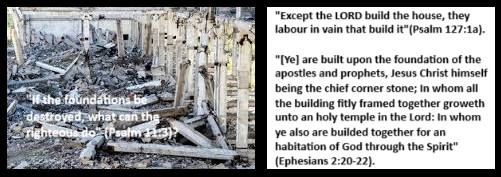
1 Corinthians 3:9-17 (KJV) “For we are labourers together with God: ye are God’s husbandry, ye are God’s building. According to the grace of God which is given unto me, as a wise masterbuilder, I have laid the foundation, and another buildeth thereon. But let every man take heed how he buildeth thereupon. For other foundation can no man lay than that is laid, which is Jesus Christ. Now if any man build upon this foundation gold, silver, precious stones, wood, hay, stubble; Every man’s work shall be made manifest: for the day shall declare it, because it shall be revealed by fire; and the fire shall try every man’s work of what sort it is. If any man’s work abide which he hath built thereupon, he shall receive a reward. If any man’s work shall be burned, he shall suffer loss: but he himself shall be saved; yet so as by fire. Know ye not that ye are the temple of God, and that the Spirit of God dwelleth in you? If any man defile the temple of God, him shall God destroy; for the temple of God is holy, which temple ye are” (1 Corinthians 3:9-17).


Endnotes

[i] See What is an established church?

[ii] 1 Ti. 3.15. Many earthly relationships and behaviors involve the application of spiritual insights. For example, God teaches, in His Word, the responsibilities of husbands to wives, wives to husbands, parents to children, children to parents, civil government to marriages and the men and women joined in marriage, civil government to children, and so forth. Although these are spiritual teachings, they are to be applied in earthly relationships to which there is a spiritual parameter. In other words, God is involved in all relationships and has outlined the ultimate consequences for behaviors, and therefore, everything is spiritual even though it may have an earthly dimension. The trouble comes when man tries to exclude God and His principles, an impossible task.

Also, every sphere of ordained government has its own God-given jurisdiction. God desires the state to stay out of family affairs unless criminal acts are involved. He wants civil government to stay out of church affairs, and the church, as an institution to stay out of state affairs. At the same time, he wants Christians to be in authority since only Christians can apply His principles in the realm of government (of course this has almost never happened). Likewise, a church has no God-given jurisdiction over a family.

[iii] Some resources which cover history of the union of church and state under Catholic and Protestant legal establishments (established church/states) are: The History of the First AmendmentThe Trail of Blood of the Martyrs of Jesus, and Introduction to the biblical doctrine of “Separation of Church and State (Covers persecution from the crucifixion of Christ by Jews, Rome (the Catholic/Roman establishment), to the Reformation, to the American colonies).


10. Heresy and Apostasy


A Publication of Simply Church Ministry


If you miss one part of the puzzle that is being put together in these studies, you will never see and understand the whole picture.


Previous Lesson:
8. How To Recognize a New Testament Church

Next Chapter:
C. Bible Doctrine Concerning Relationship of Church and State

Click here to go to the video of this lesson on Heresy and Apostasy

Click here to go to all lessons on the Bible Doctrine of the Church.

Click here to go to the Written Lessons.

Click here to go to the 5 minute video lectures.


Jerald Finney
Copyright © January 9, 2018


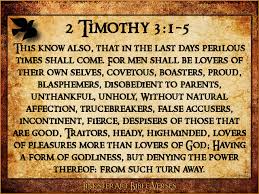
Prior to the return of the Lord, the visible churches, except for a remnant, will go into apostasy.[i] The Endnotes quote many New Testament Scriptures which deal with the matter of church apostasy. Second Timothy, Second Peter, Jude, and Second and Third John has to do with the apostasy and the personal walk and testimony of the believer who is seeking to walk in the Spirit in a day of apostasy and declension.

“Apostasy, ‘falling away,’ is the act of professed Christians who deliberately reject revealed truth (1) as to the deity of Jesus Christ, and (2) redemption through His atoning and redeeming sacrifice.[ii] Apostasy differs therefore from error concerning truth, which may be the result of ignorance[iii] or heresy, which may be due to the snare of Satan[iv] both of which may consist with true faith. The apostate is perfectly described in 2 Timothy 4.3, 4.[v] Apostates depart from the faith, but not from the outward profession of Christianity.[vi] Apostate teachers are described in various verses in the New Testament.[vii] Apostasy in the church, as in Israel[viii] is irremediable, and awaits judgment.[ix]

Inevitably, there is no remedy for apostasy but judgment.[x] For example, Noah preached for 120 years, won no converts, and the judgment predicted by his great-grandfather fell.[xi]

“Nevertheless, when the Son of man cometh, shall he find faith on the earth” (Lu. 18.8b)?  The reference is not to personal faith, but to belief in the whole body of revealed truth.[xii] “Now the Spirit speaketh expressly, that in the latter times some shall depart from the faith, giving heed to seducing spirits, and doctrines of devils” (1 Ti. 4.1).

In the New Testament, the apostasy was treated as having already set in. In fact, the Asian churches had not disbanded, nor ceased to call themselves Christian; but they had turned away from the doctrines of grace distinctively revealed through the Apostle Paul. Thus, even in the beginning of the church, the apostle Paul and Jude were concerned with the tendency to depart from the faith due to the influence of false teachers.[xiii]

Many of our churches today, even many of our independent Bible believing churches, have perverted the gospel of Christ and turned the grace of our God into lasciviousness even though perhaps they have not verbally denied our Lord God, and our Lord Jesus Christ.

Gentile world apostasy comes in seven stages.[xiv] As a result of this worldwide Gentile apostasy, mankind sinks to the depths of depravity.[xv] The apostasy is usually introduced by ungodly men who will “wax worse and worse, deceiving, and being deceived.”[xvi]

Our Lord warned against false teachers.[xvii] The Lord is obviously warning that many of His children will be deceived by the many false prophets which shall arise. With heresy and apostasy, the God-given doctrines and goal for churches and for Christians are left in the dust.  As a result, God is not glorified at all. Everything in the ultimate modern American church is for self—the headship, the “Bibles,” the doctrines taught, the preaching, the music, the dress, the goal, everything.

Peter, Paul, and Jude traced the origin of apostasy to false teachers, explained their methods of operation, and warned the church to beware of the apostasy.[xviii]

Only a little leaven can completely change and pervert the truth of the Gospel.[xix]

False teachers deny redemption truth.[xx] Others deny the truth concerning Christ’s person as Son of God, God himself.[xxi]

In Jude all phases of apostasy are seen. Jude mentions those who “ran after the error of Balaam for reward.” Many pastors and other Christians today, like Balaam, revert to human reasoning and, among other unbiblical practices, put God’s church under the state for reward—that is, for money, for popularity, or power. They may not have gone completely into apostasy, but heresy is the first step toward apostasy.
The tone of the New Testament writers when dealing with heresy and apostasy is never one of dejection or pessimism. They remained sustained and joyful.[xxii] God & His promises are still the resource of the believer.

2 Timothy, 2 Peter, Jude, and 2 & 3 John deal the personal walk and testimony of a true servant of Christ in a day of apostasy and declension. For example, Paul gives instructions for the “good soldier” in the face of apostasy.[xxiii] Paul instructed Timothy, a preacher whom Paul called his “dearly beloved son (2 Ti. 1.2)” and his “own son in the faith” (1 Ti. 1.2) as to what to do in times of apostasy.[xxiv]

“The believer’s resources in a day of general declension and apostasy  are faith (2 Ti. 1.5), the spirit (2 Ti. 1.6-7), the Word of God (2 Ti. 1.13; 3.1-17; 4.3-4), the grace of Christ (2 Ti. 2.1), separation from vessels unto dishonor (2 Ti. 2.4, 20-21), the Lord’s sure reward (2 Ti. 4.7-8), and the Lord’s faithfulness and power (2 Ti. 2.13, 19).


For more thorough studies on heresy and apostasy, to chapters numbered 4-9 at the following webpage:
The Biblical Doctrine of the Church


Endnotes

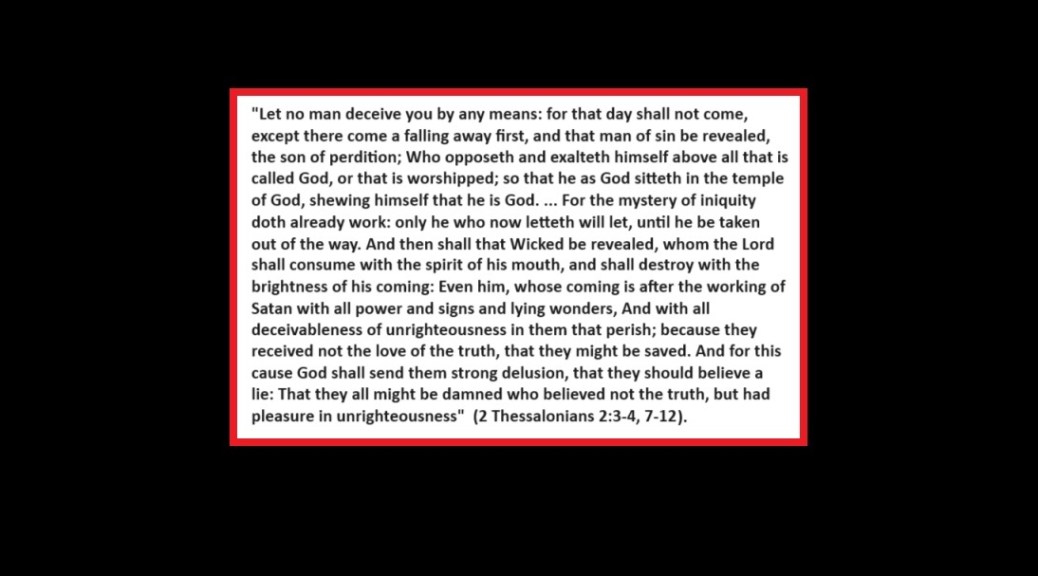
[i] “Let no man deceive you by any means: for that day shall not come, except there come a falling away first, and that man of sin be revealed, the son of perdition: who opposeth and exalteth himself above all that is called God, or that is worshipped; so that he as God sitteth in the temple of God, shewing himself that he is God” (2 Th. 2.3-4).

[ii] 1 Jn. 4.1-3: “Beloved, believe not every spirit, but try the spirits whether they are of God: because many false prophets are gone out into the world. Hereby know ye the Spirit of God: Every spirit that confesseth that Jesus Christ is come in the flesh is of God: And every spirit that confesseth not that Jesus Christ is come in the flesh is not of God: and this is that spirit of antichrist, whereof ye have heard that it should come; and even now already is it in the world.’]; Phil. 3.18: “For many walk, of whom I have told you often, and now tell you even weeping, that they are the enemies of the cross of Christ;” 2 Pe. 2.1: “But there were false prophets also among the people, even as there shall be false teachers among you, who privily shall bring in damnable heresies, even denying the Lord that bought them, and bring upon themselves swift destruction.”

[iii] Ac. 19.1-6: “And it came to pass, that, while Apollos was at Corinth, Paul having passed through the upper coasts came to Ephesus: and finding certain disciples, He said unto them, Have ye received the Holy Ghost since ye believed? And they said unto him, We have not so much as heard whether there be any Holy Ghost. And he said unto them, Unto what then were ye baptized? And they said, Unto John’s baptism. Then said Paul, John verily baptized with the baptism of repentance, saying unto the people, that they should believe on him which should come after him, that is, on Christ Jesus. When they heard this, they were baptized in the name of the Lord Jesus. And when Paul had laid his hands upon them, the Holy Ghost came on them; and they spake with tongues, and prophesied.”

[iv] 2 Ti. 2.25, 26 “In meekness instructing those that oppose themselves; if God peradventure will give them repentance to the acknowledging of the truth; And that they may recover themselves out of the snare of the devil, who are taken captive by him at his will.”

[v] 2 Ti. 4.3-4: “For the time will come when they will not endure sound doctrine; but after their own lusts shall they heap to themselves teachers, having itching ears; And they shall turn away their ears from the truth, and shall be turned into fables.”

[vi] 2 Ti. 3.5: “Having a form of godliness, but denying the power thereof, from such turn away.”

[vii] . 2 Ti. 4.3: “For the time will come when they will not endure sound doctrine; but after their own lusts shall they heap to themselves teachers, having itching ears;: 2 Pe. 2.1-19 [quoted here in part]: “But there were false prophets also among the people, even as there shall be false teachers among you, who privily shall bring in damnable heresies, even denying the Lord that bought them, and bring upon themselves swift destruction. And many shall follow their pernicious ways; by reason of whom the way of truth shall be evil spoken of.  And through covetousness shall they with feigned words make merchandise of you: … But these, as natural brute beasts, made to be taken and destroyed, speak evil of the things that they understand not; and shall utterly perish in their own corruption; …  Which have forsaken the right way, and are gone astray, following the way of Balaam the son of Bosor, who loved the wages of unrighteousness; ….These are wells without water, clouds that are carried with a tempest; to whom the mist of darkness is reserved for ever. For when they speak great swelling words of vanity, they allure through the lusts of the flesh, through much wantonness, those that were clean escaped from them who live in error.  While they promise them liberty, they themselves are the servants of corruption: for of whom a man is overcome, of the same is he brought in bondage;” Jude 4, 8, 11-13, 16: “For there are certain men crept in unawares, who were before of old ordained to this condemnation, ungodly men, turning the grace of our God into lasciviousness, and denying the only Lord God, and our Lord Jesus Christ…. Likewise also thesefilthy dreamers defile the flesh, despise dominion, and speak evil of dignities…. Woe unto them! for they have gone in the way of Cain, and ran greedily after the error of Balaam for reward, and perished in the gainsaying of Core. These are spots in your feasts of charity, when they feast with you, feeding themselves without fear: clouds they are without water, carried about of winds; trees whose fruit withereth, without fruit, twice dead, plucked up by the roots; Raging waves of the sea, foaming out their own shame; wandering stars, to whom is reserved the blackness of darkness for ever. These are murmurers, complainers, walking after their own lusts; and their mouth speaketh great swelling words, having men’s persons in admiration because of advantage.”

[viii] Isa. 1.5, 6; 5.5-7.

[ix] 2 Thes. 2.10-12: “And with all deceivableness of unrighteousness in them that perish; because they received not the love of the truth, that they might be saved. And for this cause God shall send them strong delusion, that they should believe a lie: That they all might be damned who believed not the truth, but had pleasure in unrighteousness;” 2 Pet. 2.17, 21: “These are wells without water, clouds that are carried with a tempest; to whom the mist of darkness is reserved for ever…. For it had been better for them not to have known the way of righteousness, than, after they have known it, to turn from the holy commandment delivered unto them;” Jude 11-15; Re. 3.14-16.

[x] Is. 1.2-7, 24, 25; He. 6.4-8; 10.26-31.

[xi]  Jude 14, 15; Ge. 7.11.

[xii] See, e.g., Ro. 1.5; 1 Co. 16.13; 2 Co. 13.5; Col. 1.23, 2.7; Tit. 1.13; Jude 3.

[xiii] “I marvel that ye are so soon removed from him that called you into the grace of Christ unto another gospel:  Which is not another; but there be some that trouble you; and would pervert the gospel of Christ. But though we, or an angel from heaven, preach any other gospel unto you than that which we have preached unto you, let him be accursed” (Ga. 1.6-8). “For there are certain men crept in unawares, who were before of old ordained to this condemnation, ungodly men, turning the grace of our God into lasciviousness, and denying the only Lord God, and our Lord Jesus Christ” (Jude 4).

[xiv] “Because that, when they knew God, they glorified him not as God, neither were thankful; but became vain in their imaginations, and their foolish heart was darkened. Professing themselves to be wise, they became fools. And changed the glory of the uncorruptible God into an image made like to corruptible man, and to birds, and fourfooted beasts, and creeping things” (Ro. 1.21-23).

[xv] “Wherefore God also gave them up to uncleanness through the lusts of their own hearts, to dishonour their own bodies between themselves: Who changed the truth of God into a lie, and worshipped and served the creature more than the Creator, who is blessed for ever. Amen. For this cause God gave them up unto vile affections: for even their women did change the natural use into that which is against nature: And likewise also the men, leaving the natural use of the woman, burned in their lust one toward another; men with men working that which is unseemly, and receiving in themselves that recompence of their error which was meet. And even as they did not like to retain God in their knowledge, God gave them over to a reprobate mind, to do those things which are not convenient; Being filled with all unrighteousness, fornication, wickedness, covetousness, maliciousness; full of envy, murder, debate, deceit, malignity; whisperers, Backbiters, haters of God, despiteful, proud, boasters, inventors of evil things, disobedient to parents. Without understanding, covenantbreakers, without natural affection, implacable, unmerciful: Who knowing the judgment of God, that they which commit such things are worthy of death, not only do the same, but have pleasure in them that do them”  (Ro. 1.24-32).

[xvi]  2 Ti. 3.13.

[xvii] “Beware of false prophets, which come to you in sheep’s clothing, but inwardly they are ravening wolves” (Mt. 7.15). “Not every one that saith unto me, Lord, Lord, shall enter into the kingdom of heaven; but he that doeth the will of my Father which is in heaven. Many will say to me in that day, Lord, Lord, have we not prophesied in thy name? and in thy name have cast out devils? and in thy name done many wonderful works? And then will I profess unto them, I never knew you: depart from me, ye that work iniquity” (Mt. 7.21-23). “And Jesus answered and said unto them, Take heed that no man deceive you. For many shall come in my name, saying, I am Christ; and shall deceive many” (Mt. 24.4-5). “And many false prophets shall rise, and shall deceive many” (Mt. 24.11). “For false Christs and false prophets shall rise, and shall shew signs and wonders, to seduce, if it were possible, even the elect” (Mk. 13.22). “Whosoever therefore shall break one of these least commandments, and shall teach men so, he shall be called the least in the kingdom of heaven” (Mt. 5.19). “But in vain do they worship me, teaching for doctrines the commandments of men” (Mt. 15.9).

[xviii] “Take heed therefore unto yourselves, and to all the flock, over the which the Holy Ghost hath made you overseers, to feed the church of God, which he hath purchased with his own blood. For I know this, that after my departing shall grievous wolves enter in among you, not sparing he flock: Also of your own selves shall men arise, speaking perverse things, to draw away disciples after them. Therefore watch, and remember, that by the space of three years I ceased not to warn every one night and day with tears” (Ac. 20.28-31).

“But though we, or an angel from heaven, preach any other gospel unto you than that which we have preached unto you, let him be accursed. As we said before, so say I now again, If any man preach any other gospel unto you than that ye have received, let him be accursed” (Ga. 1.8-9).

“O foolish Galatians, who hath bewitched you, that ye should not obey the truth, before whose eyes Jesus Christ hath been evidently set forth, crucified among you” (Ga. 3.1)?

“For there must be also heresies among you, that they which are approved may be made manifest among you” (1 Co. 11.19).

“For if he that cometh preacheth another Jesus, whom we have not preached, or if ye receive another spirit, which ye have not received, or another gospel, which ye have not accepted, ye might well bear with him” (2 Co. 11.4).

“For there are many unruly and vain talkers and deceivers, specially they of the circumcision; Whose mouths must be stopped, who subvert whole houses, teaching things which they ought not, for filthy lucre’s sake” (Tit. 1.10-11).

“Now the spirit speaketh expressly, that in the latter times some shall depart from the faith, giving heed to seducing spirits, and doctrines of devils; Speaking lies in hypocrisy; having their conscience seared with a hot iron” (1 Ti. 4.1-2).

“For the time will come when they will not endure sound doctrine; but after their own lusts shall they heap to themselves teachers, having itching ears; And they shall turn away their ears from the truth, and shall be turned to fables. Having a form of godliness, but denying the power thereof: from such turn away” (2 Ti. 4.3-5).

“But there were false prophets also among the people, even as there shall be false teachers among you, who privily shall bring in damnable heresies, even denying the Lord that bought them and bring upon themselves swift destruction. And many shall follow their pernicious ways; by reason of whom the way of truth shall be evil spoken of. And through covetousness shall they with feigned words make merchandise of you: whose judgment now of a long time lingereth not, and their damnation slumbereth not….  Which have forsaken the right way, and are gone astray, following the way of Balaam the son of Bosor, who loved wages of unrighteousness; But was rebuked for his iniquity: the dumb ass speaking with man’s voice forbad the madness of the prophet. These are wells without water, clouds that are carried with a tempest; to whom the mist of darkness is reserved for ever. For when they speak great swelling words of vanity, they allure through the lusts of the flesh, through much wantonness, those that were clean escaped from them who live in error. While they promise them liberty, they themselves are the servants of corruption: for of whom a man is overcome, of the same is he brought into bondage” (2 Pe. 2.1-3, 15-19. All of 2 Pe. 2 deals with false teachers.).

“Whosoever transgresseth, and abideth not in the doctrine of Christ, hath not God. He that abideth in the doctrine of Christ, he hath both the Father and the Son. If there come any unto you, and bring not this doctrine, receive him not into your house, neither bid him God speed: For he that biddeth him God speed is partaker of his evil deeds” (2 Jn. 9-11).

“Knowing this first, that there shall come in the last days scoffers, walking after their own lusts, And saying, Where is the promise of his coming? for since the fathers fell asleep, all things continue as they were from the beginning of the creation” (2 Pe. 3.3-4).

“For there are certain men crept in unawares, who were before of old ordained to this condemnation, ungodly men, turning the grace of our God into lasciviousness, and denying the only Lord God, and our Lord Jesus Christ” (Jude 4. Jude predicts the apostasy of the professing church and describes the cause and course of the apostasy. As in 2 Timothy and 2 Peter, the apostasy is treated as having already set in.

[xix] “Ye did run well; who did hinder you that ye should not obey the truth?  This persuasion cometh not of him that calleth you. A little leaven leaveneth the whole lump” (Ga. 5.7-9).

[xx] “[False teachers] shall bring in damnable heresies, even denying the Lord that bought them and bring upon themselves swift destruction” (2 Pe. 2.1).

[xxi] “BELOVED, believe not every spirit, but try the spirits whether they are of God: because many false prophets are gone out into the world. Hereby know ye the Spirit of God: Every spirit that confesseth not that Jesus Christ is come in the flesh is not of God: and this is that spirit of antichrist, whereof ye have heard that it should come; and even now already is it in the world. Ye are of God, little children, and have overcome them: because greater is he that is in you, than he that is in the world. They are of the world: therefore speak they of the world, and the world heareth them” (1 Jn. 4.1-5; see also, 1 Jn. 2.18-28).

[xxii] Although Paul as recorded in II Timothy and Peter as recorded in II Peter are aware that martyrdom is near (See 2 Ti. 4.6-8, 2 Pe. 1.14, and Jn. 21.18-19), both are apparently sustained and joyful: “For I am now ready to be offered, and the time of my departure is at hand. I have fought a good fight, I have finished my course, I have kept the faith: Henceforth there is laid up for me a crown of righteousness, which the Lord, the righteous judge, shall give me at that day: and not to me only, but unto all them also that love his appearing” (2 Ti. 4.7-8). The whole book of 2 Timothy reflects Paul’s joyful attitude as 2 Peter shows Peter to be likewise joyful and sustained.

[xxiii] “[B]e strong in the grace that is in Christ Jesus. And the things that thou has heard of me among many witnesses, the same commit thou to faithful men, who shall be able to teach others also. Thou therefore endure hardness, as a good soldier of Jesus Christ. No man that warreth entangleth himself with the affairs of this life: that he may please him who hath chosen him to be a soldier….  Remember that Jesus Christ of the seed of David was raised from the dead according to my gospel: …  It is a faithful saying: For if we be dead with him, we shall also live with him: If we suffer, we shall also reign with him: If we deny him, he also will deny us: If we believe not, yet he abideth faithful: he cannot deny himself….  Study to shew thyself approved unto God, a workman that needeth not to be ashamed, rightly dividing the word of truth. But shun profane and vain babblings: for they will increase unto more ungodliness. And their word will eat as doth a canker: …  Flee also youthful lusts: but follow righteousness, faith, charity, peace, with them that call on the Lord out of a pure heart. But foolish and unlearned questions avoid, knowing that they do gender strifes. And the servant of the Lord must not strive; but be gentle unto all men, apt to teach, patient, In meekness instructing those that oppose themselves; if God peradventure will give them repentance to the acknowledging of the truth; And that they may recover themselves out of the snare of the devil, who are taken captive by him at his will” (2 Ti. 2.1-4, 8, 11-13, 15-17a, 22-25).

[xxiv] “Preach the word: be instant in season, out of season; reprove, rebuke, exhort with all longsuffering and doctrine. For the time will come when they will not endure sound doctrine; but after their own lusts shall they heap to themselves teachers, having itching ears; And they shall turn away their ears from the truth, and shall be turned into fables. But watch thou in all things, endure afflictions, do the work of the evangelist, make full proof of thy ministry” (2 Ti. 4.2-5).
11. Conclusion to the Doctrine of the Church


A Publication of Simply Church Ministry


If you miss one part of the puzzle that is being put together in these studies, you will never see and understand the whole picture.


Jerald Finney
Copyright © January 14, 2025


This lesson will serve as a conclusion to New Testament Church Bible studies and also as a bridge to the next series of lessons on what God’s word has to say about God’s desired relationship between church and state.

Jesus, God the Son, summed it up when he said to those who were trying to “entangle him in his talk: “Render therefore unto Caesar the things which are Caesar’s; and unto God the things that are God’s.” The church belongs to God alone and is not to be mixed with what God has given to Caesar (human government); in other words, church and state, not God and state, are to be separate; they each have their own God-given jurisdiction. (See, Matthew 15:15-22 for the whole context of this encounter of our Lord with the disciples of the Pharisees. This is copied in the featured picture above).

To fully understand God’s prescribed relationship between church and state, the believer must understand what God says about church government and organization, what he says about individual, family, and civil or human government ( See, Bible Doctrine of Government), and finally what he says about his desired relationship between church and state (See, Bible Doctrine Concerning the Relationship between Church and State). These lessons are geared for a full understanding of church organization and the relationship of church and state according to God’s Word.

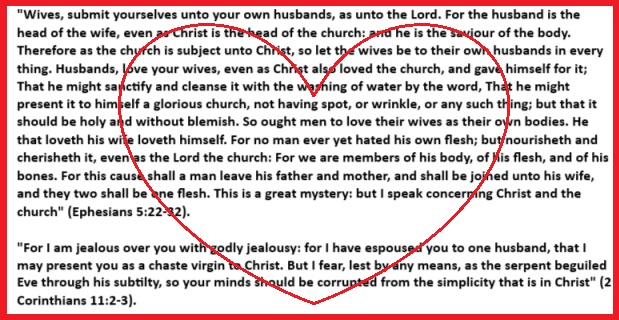
New Testament churches are God’s. God, in his word has given them extensive instructions on how he wishes them to organize and conduct themselves. He is to be their first and only love. His love for the church which he builds is the greatest love the world has ever seen. He gave himself for the church (Ephesians 5:25). He shed his own blood for it (Acts 20.28). He is jealous over it and wishes it to be presented to him as a chaste virgin (2 Corinthians 11:2).

Sadly, most churches in America today have left their first love. They work, as did the church at Ephesus, and their good works, not Christ, have become their purpose (See Revelation 2:1-7). As a result, Christ admonishes them: “Remember from whence they art fallen, and repent, and do the first works; or else I will come unto thee quickly, and will remove thy candlestick out of his place, except thou repent.” Christ was saying that the church at Ephesus (one of the seven candlesticks or churches among which he walked) would no longer have Christ in its midst, no matter their verbal proclamations concerning him. Very likely Christ has already removed the candlestick of many American churches and Christ is no longer walking in their midst. Furthermore, they do not hear his plea, “Behold, I stand at the door, and knock: if any man hear my voice, and open the door, I will come in to him, and will sup with him, and he with me.” (Revelation 3:20).

The New Testament prophecies concerning church apostasy have been at work in America since the founding of this  nation. In America, true colonial and early national history reveals that Baptist churches paid a price for standing against union of church and state. They stood strongly, against all worldly odds, as did their spiritual forefathers since the time God ordained the New Testament church. Some of them incorporated, under the leadership of traitors such as Hezekiah Smith in Massachusetts, but many stood firm.

After the ratification of the United States Constitution and the First Amendment, most of the state constitutions provided for religious freedom and soul liberty, but all still offered incorporation for those churches who desired it. (Note. In 1833, Massachusetts became the last state to do away with forced establishment  (incorporation or union of church and state)).  Many chose the latter. They become spiritual whores. They betrayed their first love. Once one takes a step away from their espoused, they will continue to take additional steps toward apostasy, except they repent.

For a brief overview of Bible teaching and prophesy concerning church apostasy, see, Heresy and Apostasy. For the true, as opposed to the Christian revisionist, history of religious and soul liberty as expressed in the First Amendment to the United States Constitution, see An Abridged History of the First Amendment. see, for more detailed studies: (1) Religious Liberty in America; (2) God Betrayed: Separation of Church and State: The Biblical Principles and the American Application; (3) The Trail of Blood of the Martyrs of Jesus: Christian Revisionism on Trial.

The pillars and ground of the truth have been destroyed. Like the Pharisees spoken of in Matthew 22:15-22, when someone presents the truth about church organization and God’s desired relationship between church and state to the average corporate 501(c)(3) or 508(c)(1)(A) pastor and believer, they leave and go their way.