All posts by Jerald Finney

Jerald Finney was the lead counsel for the Biblical Law Center ("BLC") from May, 2005 until 2011. The BLC helps churches who desire to organize according to New Testament principles. In 2016, he again worked with the BLC and still does, but he now heads up the Churches under Christ Ministry which is under the authority of Charity Baptist Tabernacle of Amarillo TX. Finney is a licensed attorney who can be reached at 512-785-8445 jerald.finney@sbcglobal.net. Over the last few years he has lectured and preached on the issues concerning government, church, and separation of church and state. God called Finney, a Christian and fundamental Baptist since his salvation, to enter the University of Texas School of Law in 1990 at the age of 43 to stand in the gap concerning legal issues facing Christians. Since being saved, he has been a faithful and active member of a local fundamental, Bible-believing Baptist church. He received his JD degree in 1993 and has followed the Lord in the practice of law since that time. Finney received his law license in November 1993 and began practicing law in January, 1994. All along he was seeking the Lord’s direction. The Lord initially led Finney to practice criminal law. He knew that not many, if any, of the Christian law firms dealt with or specialized in criminal law, and that some Christians were being charged with crimes for their Christian behavior and for taking a stand for God’s principles. The Lord confirmed Finney's choice. Very soon after he started practicing, he helped an Eastern Orthodox priest with a criminal charge. He was charged under a criminal statute for trying to expose the promotion of sodomy and other sins within a Catholic Church. God gave the victory in that case. Then Steve, a Christian who counseled outside abortion clinics, called Finney. He was charged with a crime under the Austin, Texas Sign Ordinance for his activities outside an abortion clinic. Being a new lawyer, Finney called the Rutherford Institute. They asked him to send them a summary of the facts and a copy of the Sign Ordinance. Then they told him that the case could not be won and that they would not help. Steve lost at trial, but God gave the victory on appeal. The Austin Police Department immediately cited Steve for violation of the state sign ordinance. The Lord gave the victory at trial. Finney's first felony trial came about a year and six months after he started practicing law. A single Christian mother was charged with third degree felony injury to a child for spanking her six year old son. She left some prominent stripes across his rear end and also a stripe across his face when he turned suddenly during the spanking. The Lord gave the victory at trial. At the same time, Finney was also representing another Christian married lady who was charged with the same crime for spanking her little girl with a switch. On the date the trial in that case was to begin, the prosecutor, with prompting by the judge, lowered the offer to deferred adjudication probation of short duration on a misdemeanor charge with very few conditions on the probation. In a deferred adjudication in Texas, there is never a judgment of guilt if the probationer successfully completes the term of the probation, (and, with successful completion of the probation, the probationer can now file a Motion for Nondisclosure which, if granted, requires the file to be sealed so that the general public has no access to it). The mother decided to take the offer. The Lord has also allowed Finney to help Christian parents in numerous situations involving Child Protective Services (“CPS”) infringement into parental rights. God has given the victory in all those situations. The Lord has also used Finney to intervene in numerous situations where government officials or private companies tried to deny certain Christians their rights to do door-to-door evangelization, preach on the street, hand out gospel literature in the public forum, and pass out gospel tracts and communicate the gospel at their place of employment. Finney has also fought other legal spiritual battles including a criminal case in San Antonio. A peaceful pro-life advocate was arrested and charged with criminal trespass for handing pro-life literature giving information about the development of the unborn baby, places to go for help, and other information to women entering an abortion clinic. All the above-mentioned cases as well as others not mentioned were handled free of charge (except the last spanking case for which Finney received $750). In 2005 Finney became lead counsel for the Biblical Law Center. Since his early Christian life, he has considered the issue of separation of church and state as taught in the Bible to be one of the primary issues facing New Testament churches today. He believes, based upon what the Bible teaches, that operating as a corporation (sole or aggregate), unincorporated association, or any other type of legal entity and/or getting a tax exempt status from the federal government at the very least puts the church under the headship of both the Lord and the state, and may even take the church from under the headship of Christ and put the church under the headship of the state. He believes that taking scriptures out of context and applying human reasoning contrary to biblical teaching (such as “Obey every ordinance of man,” or “We should be good stewards and incorporation is good stewardship”) in order to justify unbiblical marriage with the state causes our Lord much grief. Once he took on the position as counsel for the BLC, it was necessary to do an in-depth study of the issue of separation of church and state. He began with the Bible. He initially read through the Bible at least five times (and many more times since then) primarily seeking the answer to the question, “Does the Bible have anything to say about this issue?” He was amazed at what He learned. The Bible gives God’s principles concerning separation of church and state, the purpose of a church, the purpose of the civil government, the headship of church, the headship of civil government, the principles by which each is to be guided, and much more concerning these two God ordained institutions. He continued to read the Bible daily seeking insights into these and other issues. He also began to read other books. he had already read starting shortly after being saved, books and other information by Christian authors. For example, he had read, among other works, A Christian Manifesto[1], The Light and the Glory,[2] From Sea to Shining Sea,[3] The Myth of Separation and some other works by David Barton, [4]Rewriting America’s History,[5] and America’s God and Country.[6] These resources inspired, influenced and guided him and millions of other Christians, gave them philosophical and historical underpinning, and led them into battlefields such as politics, law, and education armed with what they learned from those resources. Sometime in 2006 he began to realize that some of the books by Christian authors which he had come to depend upon were misleading, at the very least. Other books revealed to him that some of the above mentioned books had misinformed and misled sincere Christians by revising and/or misrepresenting the true history of separation of church and state in America. In 2006, he read One Nation Under Law[7] which cites a wealth of resources for one seeking to understand the history of separation of church and state in the United States and of the First Amendment to the United States Constitution.[8] Reading One Nation Under Law, some of the books it cited, and some other books was a launching pad into the universe of historical information which he never dreamed existed. He had expected to be misled in the secular law school he attended. He was amazed that he had been misled by Christian brothers. I asked myself, “How could Peter Marshall and others have missed this vital information?” At an Unregistered Baptist Fellowship conference in Indianapolis, Indiana, James R. Beller, a Baptist historian, gave a PowerPoint presentation which gave him the answer to this question. Finney bought two of Beller's books and read them. Those books filled in the details not mentioned in Pastor Beller’s concise PowerPoint presentation. Since that time, God has led Finney into an in depth study of the issues of government, church, and separation of church and state. God Betrayed/Separation of Church and State: The Biblical Principles and the American Application and the other books he has written and listed on this website were written as a result of those studies. God Betrayed is not a rehash of the same information that has been circulated in the Fundamental Baptist and Christian community through sermons, books, seminars, etc. since at least 1982, the year Finney was saved. God Betrayed and Finney's other books reveal facts and information that must be understood in order for a pastor and other Christians to begin to successfully (in God's eyes) fight the spiritual warfare we are engaged in according to knowledge. Finney believes that the lack of attention to the biblical doctrines concerning government, church (which is likened to the wife and bride of Christ), and separation of church and state, has had dire consequences for individuals, families, churches, and America. Unless pastors educate themselves on these doctrines and their application in America, the rapid downhill slide will continue at an accelerating pace. [1] Francis A. Schaeffer, A Christian Manifesto, (Westchester, Illinois: Crossway Books, 1981). [2] Peter Marshall and David Manuel, The Light and the Glory, (Old Tappan, New Jersey: Fleming H. Revell Company, 1977). [3] Peter Marshall and David Manuel, From Sea to Shining Sea (Old Tappan, New Jersey: Fleming H. Revell Company, 1986). [4] David Barton, The Myth of Separation, What is the Correct relationship between Church and State? (Aledo, Texas: Wallbuilder Press, 1992). [5] Catherine Millard, Rewriting America’s History (Camp Hill, Pennsylvania: Horizon House Publishers, 1991). [6] William J. Federer, America’s God and Country, Encyclopedia of Quotations (Coppell, Texas: FAME Publishing, Inc., 1994). [7] Mark Douglas McGarvie, One Nation Under Law: America’s Early National Struggles to Separate Church and State (DeKalb, Illinois: Northern Illinois University Press, 2005). [8] The First Amendment to the United States Constitution states: “Congress shall make no law respecting an establishment of religion, or prohibiting the free exercise thereof; or abridging the freedom of speech, or of the press; or the right of the people peaceably to assemble, and to petition the Government for a redress of grievances.” The religion clause, properly interpreted, as is shown in God Betrayed, is a correct application of the biblical principle of separation of church and state.

The Separates and the Baptists in New England


Jerald Finney
Copyright © December 31, 2012


Click here to go to the entire history of religious liberty in America.


Note. This is a modified version of Section IV, Chapter 7 of God Betrayed: Separation of Church and State/The Biblical Principles and the American Application. Audio Teachings on the History of the First Amendment has links to the audio teaching of Jerald Finney on the history of the First Amendment.


The Separates and the Baptists in New England

Contents:

I. George Whitfield and the Great Awakening in New England
II.
The Separate movement, the New Lights and the Old Lights, Isaac Backus separates, persecution brings more to the New Light position
III.
The Separate movement had enduring consequences; Baptist churches sprang from it in New England; Isaac Backus became a Baptist and a Baptist leader, stood for Baptist principles, and was vilified and persecuted for his stand
IV.
The Separates and Baptists divide in love
V.
The revival died out; Separate churches disappeared; the Baptist denomination experienced unprecedented growth; the Warren Association was formed to obtain religious liberty; Backus led the fight for religious liberty, and was opposed by John Adams; Backus sought the same end as George Mason, Thomas Jefferson and James Madison as to a Bill of Rights, but from a pietistic as opposed to a humanistic point of view
VI.
The Baptists fought on, the certificates, the Baptists went to the courts, the Cutter case and other cases, persecution of Baptists continued but the Baptists continued to grow in numbers, in 1818 state support for the Congregationalist church was withdrawn in Connecticut


I. George Whitfield and the Great Awakening in New England

“Congregationalism claimed a large class of inferior church members by 1720, baptized into the churches without conversion” (William L. Lumpkin, Baptist Foundations in the South (Eugene, Oregon: Wipf & Stock Publishers, 2006), p. 2).  Generally speaking, by 1740, religious decay had spread throughout New England. However, “the relentless preaching of Jonathan Edwards of complete surrender to the will of God introduced the novel phenomenon of revival in Massachusetts” (Ibid.). The revival spread down the Connecticut Valley into Connecticut (Louis Franklin Asher, John Clarke (1609-1676): Pioneer in American Medicine, Democratic Ideals, and Champion of Religious Liberty (Paris, Arkansas: The Baptist Standard Bearer, Inc.), p. 21). Between 1635 and 1640 Congregationalism had been planted in the Connecticut colony: “As the country was more fully discovered, the lands on Connecticut river grew so famous for their fruitfulness, and convenience to keep cattle, that great numbers from New-Town, Dorchester, &c., removed there, under the conduct of Mr. Hains, Mr. Hopkins, Mr. Ludlow, and Mr. Hooker, &c., and through inexpressible hardships, through famine, and weariness, and perils of the enemy, they at length settled at Hartford, 1635 and 1636, which was the beginning of the Connecticut colony; and, in 1637, New-Haven colony was begun by a people directly from England” ((John Callender, The Civil and Religious Affairs of the Colony of Rhode-Island (Providence: Knowles, Vose & Company, 1838), pp. 67-68). The initial revival was of short duration … and did not touch the people of New England generally (Lumpkin, p. 2). Then, George Whitefield, the world-famous English evangelist arrived at Newport. Great crowds greeted Whitefield wherever he went to preach. In Connecticut, he was greeted with great enthusiasm. All Connecticut was at his feet.

As a result of that great revival, many were converted and churches experienced unprecedented growth. The Great Awakening emphasized individual conversion and the new birth (Ibid., pp. 3-5). “[T]he new converts were dubbed ‘New Lights’ by their critics because the awakened people emphasized the immediacy of the Holy Spirit’s illumination and leadership in their personal lives” (Ibid., p. 7).  The members of the old churches were called “Old Lights.” “The former favored Whitefield’s type of evangelism and the idea of the regenerate church; the latter opposed revivalism and defended the state church order” (Ibid.).

Many itinerant preachers arose as a result of this revival. Consequently, the General Court of Connecticut “forbade all itinerant preaching under penalty of loss of the right to collect one’s legal salary and imprisonment. Itinerant lay preachers or strange ministers were to be silenced or expelled from the colony” (Ibid., p. 8; see also, for the actual wording of the act against itinerant and other preachers, Isaac Backus, A History of New England With Particular Reference to the Denomination of Christians called Baptists, Volume 2 (Eugene, Oregon: Wipf & Stock Publishers, Previously published by Backus Historical Society, 1871), pp. 44-46). “In Connecticut, legal action was taken against the revivalists, their churches were deprived of legal status, and some of the preachers were thrown into jail” (William H. Marnell, The First Amendment: Religious Freedom in America from Colonial Days to the School Prayer Controversy (Garden City, New York: Doubleday & Company, Inc., 1964), p. 87).

The Great Awakening brought as many as 50,000 new converts, and brought into being, between 1740 and 1760, one hundred and fifty new Congregationalist churches and added to the number of Separatist and Baptist churches. “It brought the personal and pietistic religious tradition into a section previously dominated without challenge by Calvinistic rationalization…. As always and everywhere, the New England situation shows that such separation and disestablishment arose out of religion and not its opposite” (Ibid.).


II. The Separate movement, the New Lights and the Old Lights, Isaac Backus separates, persecution brings more to the New Light position

A number of New Lights who initially tried to influence the church to return to the concept of the pure church were forced out of the established churches. The term “Separates” referred to those who believed that the church should only include regenerate members and those who separated from the state-churches on this conviction. The Separate movement started in Connecticut and moved to Massachusetts. Separate churches began to appear at various towns.

There was great prejudice against Baptists. England forced New England to exempt Baptists from taxation in 1728, but the establishment found ways to circumvent this exemption. Operating clandestinely because of opposition by the authorities, Baptist preachers had come into Connecticut from Rhode Island, as they had done in Massachusetts, starting in 1674. They made some converts and even started some churches in Connecticut in 1704, 1710, 1735, and 1740. All dissenters were taxed to support the established church unless certified to pay the tax to their own churches. To be exempted they had to attend regularly their own church and live within five miles of their meeting place. Those who belonged to no church were also assessed the tax (Lumpkin, pp. 11-13). However, Separates were not given the privileges accorded Baptists, Quakers, and Anglicans.

One of the most prominent of the Separates was Isaac Backus. Although he spent much of his ministry in Massachusetts, he was a native of Norwich, Connecticut. In the new movement, he became the leading figure; and his shift from the Separate to the Baptist camp is central to the religious history of New England (William G. McLoughlin, Isaac Backus and the American Piestic Tradition (Boston: Little, Brown and Company, 1967); Isaac Backus on Church, State, and Calvinism, Pamphlets, 1754-1789, Edited by William G. McLoughlin (Cambridge, Mass.: The Belknap Press of Harvard University Press, 1968), pp. 60-61).

Mr. Backus was saved in 1741. On August 24, 1741, Mr. Backus, in his own words, speaking of himself, realized:

“that he had done his utmost to make himself better, without obtaining any such thing; but that he was a guilty sinner in the hands of a holy God, who had a right to do with him as seemed good in God’s sight; which he then yielded to and all his objections against it were silenced.  And soon upon this a way of relief was opened to his soul, which he never had any true idea of before, wherein truth and justice shine with luster, in the bestowment of free mercy and salvation upon objects who have nothing in themselves but badness. And while this divine glory engaged all his attention, his burthen of guilt and evil dispositions was gone, and such ideas and inclinations were implanted in his heart  as were never there before, but which have never been rooted out since, though often overclouded” (Backus, A History of New England…, Volume 2, p. 107).

Two years later, he, his mother, and some of his other relatives walked out of the established Norwich Church they belonged to and started holding meetings of their own. They left the church because the church voted to admit new members by a majority vote without evidence of conversion, the minister appeared to think that the Lord’s Supper was a converting ordinance, and the church exhibited a “strong affection for the Saybrook scheme.”

A revolution had begun.

“The essence of the religious revolution which the Separate movement began (and the Baptists finished) lay in church government and not in theology—though it became necessary eventually to modify Calvinism in order that it might conform more nearly to the unforeseen ramifications of the new practices in church discipline and polity. The major issues involved in church government were the autonomy and purity of the church, the nature of the ministry, and the relationship between Church and State” (McLoughlin, The American Pietistic Tradition, pp. 23-24).

The church and state were interwoven in New England. Into the eighteenth century the Puritan tradition continued in greater strength in Connecticut than elsewhere. All citizens were taxed for the support of religion. The Saybrook Platform was ordained by the Connecticut legislature in 1708. Under it, county associations of ministers met frequently to deal with matters of common interest, regional bodies called consociations were to handle all kinds of ecclesiastical difficulties, and a general state association exercised a general superintendency over churches and ministers. Under the Saybrook Platform, the county associations approved, licensed, and ordained the ministers of the parishes (Lumpkin, p. 11; Backus, A History of New England…, Volume 1, pp. 472-474; Backus, A History of New England…, Volume 2, p. 319). The state supported the actions of the county associations, and could deny the right of a minister to preach and collect his salary (McLoughlin, The American Pietistic Tradition, p. 24).

Various struggles arose. In 1742 and 1743 laws were passed forbidding itinerant preachers from preaching without permission of the parish minister with penalty of imprisonment, excluding settled ministers who preached in any other parish without consent of the parish minister from any benefit of the laws for their support, removing from Connecticut any minister from any other colony who preached in Connecticut, and giving the legislature authority to license dissenting churches which complied with the British Toleration Act of 1689 (Backus, A History of New England…, Volume 2, pp. 319-320). The Legislature disciplined members of the Council and General Assembly known to sympathize with the New Lights. “Unauthorized schools and colleges were forbidden and only university graduates were eligible for ministerial standing before the law” (Lumpkin, p. 15; see also, Backus, A History of New England…, Volume 2, p. 57, fn. 3). The county associations began to act. The New Haven Consociation in 1742 expelled pastors of established churches for preaching to a group of Separates and Baptists against the wishes of the established minister. In Canterbury, Windham County the majority of the church, New Lights, voted for a certain man to be pastor, but the Old Lights who were the majority in the parish voted for another. By law, both the church and parish had to concur, but the Windham Consociation declared that the minority of Old Lights in the church were the true church and ordained their choice (Backus, A History of New England…, Volume 2, pp. 68-74; McLoughlin, p. 26). In Plainfield, the Windham Consociation “reversed the position it had taken in Canterbury and sided with a minority of Old Lights in the church to choose an Old Light minister over the objection of the majority of New Lights in the parish” (McLoughlin, The American Pietistic Tradition, pp. 26-27).

The inequities and the persecutions by the established church and civil government resulted in more and more defections to the New Light position. The civil government used repressive measures to compel the Separates to return to the fold. “Revivalistic ministers were shut out of meeting houses; members were moved from civic office and, when they refused to pay taxes for support of the regular ministry, imprisoned” (Lumpkin, p. 14, citing Backus, A History of New England…, Volume 2, p. 176).  At first most Separates that left the state-churches seemed destined to become Baptists. However, great disagreement arose between those who still adhered to infant baptism and those who insisted upon believer’s baptism—baptism after a confession of faith only. As a result of this disagreement, the Baptist members left the Separate churches and formed their own churches.


III. The Separate movement had enduring consequences; Baptist churches sprang from it in New England; Isaac Backus became a Baptist and a Baptist leader, stood for Baptist principles, and was vilified and persecuted for his stand

This Separate movement had enduring consequences. One writer appropriately noted:

“[T]he Separatist movement is not appreciated as it deserves. We have too nearly forgotten our obligations to those men who dared to break away from the corrupt and worldly churches of the Standing Order, though they were armed with all the power of the State, of which they were a part, and to establish other churches in which vital godliness was the condition of membership. It was a transition movement, it is true, and of necessity only temporary, but its results were enduring. Many of the Baptist churches in New England spring from it directly, and through them, indirectly, almost all the rest; and other evangelical churches are largely indebted to it for their vitality and efficiency.—ED” (Backus, A History of New England…, Volume 2, fn. 1, p. 64).

From the point of his conversion, Mr. Backus gradually became a leader of the Baptist movement. He was asked to preach to a church at Titicut in 1748, a revival resulted, people were saved, and a Separate church was formed in February, 1748 in defiance of the authorities. Mr. Backus and sixteen men signed the church covenant which provided for election and dismissal of the ministers, deacons, and elders by a majority vote, repudiated the claim that the minister was superior in authority to the brethren, stated that the minister was to be supported by free contribution of the members, and asserted the priesthood of all believers and the right and duty of all members to exercise any ability they had to preach or pray in public (McLoughlin, The American Pietistic Tradition, pp. 42-43).

Mr. Backus was opposed by scurrilous opposition. As he said, “I had many things thrown upon me to represent my Carecter odious and hinder me in this glorious Work.” Lies were told about him, such as that he had a wife and children in the country, that he had “bastards in this place or that, that there was a girl or two with his child (Ibid., p. 46).

The members of the church were taxed to support the established church. The church protested the tax, but parish committee refused to exempt Mr. Backus and his followers from religious taxes. Their rationale was basically that the golden rule required them to do so, and that the committee would want their neighbors to force them to pay such a tax if they were in error. “[N]either doth God himself countenance or give Liberty to any men to follow the ‘Dictates of a misguided Eronius Conscience’” (Ibid., p. 52). The reply gave an argument over the separation of church and state with which Backus had to wrestle the rest of his life.

“Oppression ‘can’t mean and intend that Tis unwarrantable or sinfull for men to urge and press others to a compliance with their Duty as it is pointed out by the Laws of God or the good and wholesome Laws of the Land and in case men through obstinacy and willfulness [refuse] and so will not make good either Lawfull Contracts [&] Covenants the original good and Design of their being incorporated into Distinct [religious] societies [or parishes] and so Tis no oppression….’ Under the Golden Rule the committee said it would want their neighbors to force them to do their duty if they were in error. ‘Liberty of Conscience according to the word of god is not for men to Live as they list or Do as they please while they maintain Erors in Judgment, Disown the truth of god, Exclaim against a faithful ministry, make Light of that good order and government which Jesus Christ has set up in his church; neither does God himself countenance or give Liberty to any men to follow the Dictates of a misguided Eronius Conscience….’ ‘Let it be observed that there is a great difference between persecution and prosecution’ (Ibid.).”

In February, 1749, Backus was arrested for not paying a ministerial tax, but someone paid it for him, and he was released. Other members of the church were imprisoned or had their property confiscated for failing to pay the tax.

“Three-quarters of a century were to pass and Backus was to be in his grave before the people of Massachusetts yielded to the radical New Light view that the state should indeed allow individuals to ‘act and Conduct as they pleas’ in matters of religion even if it meant imperiling their souls, the destruction of the parish system, the end of compulsory religious taxation, and the abandonment of the Puritan ideal of a corporate Christian commonwealth” (Ibid., pp. 52-53).

Backus struggled with the issue of baptism, studied Scripture, rejected infant baptism, and was baptized by dipping on August 22, 1751 (Backus, A History of New England…, Volume 2, pp. 108-111).  He set out to refute the anti-pedobaptist position by first turning to the Bible, and then to the claims of Baptist scholars in England that infant baptism was a corruption brought into the Christian church in the 2nd or 3rd century. What he found surprised him.

Next, Backus examined the Covenant Theology which lay at the heart of New England Puritanism. The relevance of this theology to Backus was mainly its effect on the church-state issue (McLoughlin, pp. 61-63):

First, “[T]he Jewish church was clearly a national church, a theocracy in which Moses and Aaron ruled together, and thus the Puritans were able to utilize the covenant theology to justify their ecclesiastical laws and their system of territorial parishes and religious taxes.  Second, the covenant theology provided the Puritans with justifications for the Halfway Covenant, thus polluting the purity of the mystical body of Christ. And in the third place the covenant theology, by emphasizing that grace ran ‘through the loins of godly parents,’ that the baptized children of visible saints were somehow more likely than others to obtain salvation, thereby established a kind of hereditary spiritual aristocracy; it also undermined the sovereignty of God by implying that God was bound by this covenant to save certain persons rather than others. [Etc.]” (Ibid., pp. 62-64).

The Puritans supported the unity of the Abrahamic Covenant in Romans 11.17:“Here, the apostle Paul spoke of the Christian covenant as being grafted on to the Jewish covenant as a branch is grafted on to an olive tree, from whence the Puritans ‘argued the right of professors now to baptize their children, because the Jews circumcised theirs.’ This Backus rejected as misinterpretation. ‘The Jews were broken off thro’ unbelief, and the Gentiles were grafted in, and stand only by faith.’ Faith was essential to baptism. What Puritans stressed as organic continuity, Backus and the Baptists stressed as a complete break” (Ibid., p. 76).

Backus concluded that the Separates must explicitly reject the Covenant Theology, the whole conception of the corporate Christian state which the Puritans had so painstakingly constructed in the wilderness of New England. Backus decided against infant baptism and was baptized. “[H]e rejected the Covenant Theology of the Puritans by arguing as the Baptists had long done that the Bible contained two covenants, the old Covenant of Works made with the Jews, and the Covenant of Grace made with those who believe in Christ….” “[T]he Puritans had confused the gospel of grace with the doctrine of works and transformed the gospel church of visible saints into a national church with a birthright membership” (Ibid., pp. 73-76). “Backus and the Baptists stressed the discontinuity, the antithetical nature of the two, the complete and distinct break between the past and the present dispensations. That Americans were ready to grasp this new outlook after 1740 and to pursue it to its logical conclusions marks the real break with the Old World, the medieval mind and the Puritan ethos…” (Ibid., p. 74).


IV. The Separates and Baptists divide in love

At first the Separatists and Baptists desired to meet together. This proved untenable.

“[They] were bound together by the closest ties. The [Baptists] left the [Separate Congregational churches] with no ill feeling but with heartiest love, and this love continued, on both sides, after their separation. Their members had been converted together in the Great Awakening; together they had come out from the Standing Order; together they had suffered and were still suffering for the truth; they had the same enemies and oppressors; they felt the force of the same unjust and cruel laws; their plundered goods were sold at the same auctions, and their bodies confined in the same prisons; they had many kindred views and feelings, by which they sympathized most closely, and in which there were no others to sympathize with them. Moreover, they mutually desired inter-communion. Council after council and conference after conference recommended it, and there seemed to be no voice against it. And yet it failed. Practical difficulties arose…. The truth could not be escaped that Baptist churches, by renouncing infant baptism and sprinkling, and then practically recognizing them again as a proper declaration of discipleship and initiation to membership in the visible church, placed themselves in a position of direct inconsistency. One by one, reluctantly, but at last universally, they abandoned the untenable ground.—ED” (Backus, A History of New England…, Volume 2, fn. 1, p. 115; on pp. 116-119 Backus gives further arguments.).

By 1754, “the alliance between the two groups within Separatism was practically at an end, and the Baptist members left to form new churches or join existing ones” (Lumpkin, p. 18).

A Baptist church was instituted in Middleborough, Massachusetts by a number of brethren led by Mr. Backus from the Titicut Separatist church who were convinced communion should be limited to believers baptized upon a profession of their own faith. On July 23, 1756, Mr. Backus was installed as their pastor.

“He … published a discourse from Gal. iv. 31, to shew that Abraham’s first son that was circumcised was the son of the bond-woman, an emblem of the national church of the Jews; in distinction from regenerate souls, the spiritual seed of Abraham, of whom the Christian church was constituted; into which neither natural birth, nor the doings of others, can rightly bring any one soul, without its own consent. Upon these principles was the first Baptist church in Plymouth county then founded” (Backus, A History of New England…, Volume 2, pp. 117-118).


V. The revival died out; Separate churches disappeared; the Baptist denomination experienced unprecedented growth; the Warren Association was formed to obtain religious liberty; Backus led the fight for religious liberty, and was opposed by John Adams; Backus sought the same end as George Mason, Thomas Jefferson and James Madison as to a Bill of Rights, but from a pietistic as opposed to a humanistic point of view

The revival died out almost as fast as it had appeared. Conversions became rare. People turned their attention to politics and controversy. The Separate churches and groups either died, or found their way into the Baptist camp. The Baptists denomination experienced an unprecedented growth. In 1740 no more than six Calvinistic Baptist churches existed in New England; but by 1800 there were more than 325 Baptist churches, most of them Calvinistic (Lumpkin, p. 20).

The Warren Association, an association of Baptist churches, was formed in 1770. The main goal was to obtain religious liberty. This marked an important movement in the history of New England. An advertisement to all Baptists in New England was published requesting them to bring in exact accounts of their cases of persecution to the first annual meeting on September 11, 1770. The establishment feared the association and countered by dealing deceitfully with it and spreading lies about the association (Backus, A History of New England…, Volume 2, pp. 154-156; see also, pp. 408-409 concerning formation of the Warren Association).

Isaac Backus was the key member of the grievance committee of the Warren Association in September, 1771. “[He soon] became the principal spokesman for the Baptists in their efforts to disestablish the Puritan churches. As such he did more than any other man to formulate and publicize the evangelical position on Church and State which was ultimately to prevail throughout America” (McLoughlin, The American Pietistic Tradition, p. 109).

“An Appeal to the Public for Religious Liberty Against the Oppression of the Present Day” was the most important of the 37 tracts which Backus published during his lifetime and was central to the whole movement for separation of Church and State in America. “It remains the best exposition of the 18th century pietistic concept of separation” (Ibid., p. 123. The entire contents of the tract are in Isaac Backus on Church, State, and Calvinism, Pamphlets, 1754-1789, Edited by William G. McLoughlin (Cambridge, Massachusetts: The Belknap Press of Harvard University Press, 1968), pp. 303-343.). In that tract, Backus argued, among other things:

“Basic to the Baptist position was the belief that all direct connections between the state and institutionalized religion must be broken in order that America might become a truly Christian country. Backus, like Jefferson and Madison, believed that ‘Truth is great and will prevail’—but by ‘Truth’ he meant the revealed doctrines of grace. His fundamental assumption was that ‘God has appointed two different kinds of government in the world which are different in their nature and ought never to be confounded together; one of which is called civil, the other ecclesiastical government.’ The two had been ‘confounded together’ by the Emperor Constantine and the Papacy and had ultimately been brought to New England by the Puritans ‘who had not taken up the cross so as to separate from the national church before they came away.’ A ‘Brief view of how civil and ecclesiastical affairs are blended together among us [in 1773] to the depriving of many of God’s people of that liberty of conscience which he [God] has given us’ utilized also the long–forgotten arguments of Roger Williams to defend the doctrines of separation” (McLoughlin, The American Pietistic Tradition, pp. 123-124).

Amidst persecutions of Baptists for failing to pay ministerial taxes, the association met on September 1773 and voted to refrain from giving any more certificates for tax exemption to pay the established minister. Backus listed the reasons why they would no longer obey “a law requiring annual certificates to the other denomination.” “Jefferson in his preamble to the Religious Liberty Act of Virginia and Madison in his famous Remonstrance of 1785 utilized essentially deistic arguments based upon reason and natural law. Backus’s arguments were pure pietism” (Ibid., p. 126):

1. [To get a certificate] “implies an acknowledgement that religious rulers had a right to set one sect over another, which they did not have.” 2. Civil rulers have no right to impose religious taxes. 3. Such practice emboldens the “actors to assume God’s prerogative.” 4. For the church, which is presented as a chaste virgin to Christ, to place her trust and love upon others for temporal support is playing the harlot. 5. “[B]y the law of Christ every man is not only allowed but also required to judge for himself concerning the circumstantials as well as the essentials of religion, and to act according to the full persuasion of his own mind.”The practice tends to envy, hypocrisy, and confusion, and the ruin of civil society (Backus, A History of New England…, Volume 2, p. 178, citing “An Appeal to the Public for Religious Liberty.”).

An Appeal to the Public was pietistic America’s declaration of spiritual independence. Like Jefferson’s Declaration three years later, it contained a legal brief against a long train of abuses, a theoretical defense of principle, and a moral argument for civil disobedience” (McLoughlin, The American Pietistic Tradition, p. 127). No answer was ever given to “An Appeal to the Public” which was published in Boston. The collection of taxes for support of the established religion continued with confiscation of property and imprisonments occurring (Backus, A History of New England…, Volume 2, pp. 178-182).

Attempts to gain religious freedom continued. The Warren Association sent Isaac Backus to the Continental Congress in 1774 where he met with an Association of other Baptist churches from several adjacent colonies which had elected a large committee to assist. They presented their appeal for religious liberty. John Adams and Samuel Adams, neither of whom was a friend to separation of church and state, falsely asserted that Massachusetts had only a “very slender” establishment, hardly to be called an establishment, that the General Court was clear of blame and always there to hear complaints and grant reasonable help (Ibid., pp. 200-202, and fn. 1, p. 201).  While Mr. Backus was gone, the lie was spread that he had gone to Philadelphia to break the union of the colonies.

All the time these happenings were going on, the issues were being debated in the newspapers. The Warren Association continued to publish to the public instances of persecution as well as to actively seek religious liberty from the government. The Warren Association presented a memorial on July 19, 1775 requesting religious liberty and pointing out the inconsistency of rebelling against England for taxing without representation while doing the same thing in the colonies. Ultimately, nothing came of this. In 1777, Mr. Backus prepared an address which was supported by a large number from various denominations urging religious liberty to the Assembly which had been empowered to frame a new Constitution which was accomplished in 1780. The Third Article of the new constitution “excluded all subordination of one religious sect to another,” but imprisonment, and confiscation of property from men who refused to acknowledge such subordination continued (Ibid., pp. 203-204, 219-220, 225-229, 228-229).

In 1778 Mr. Backus wrote “Government and Liberty Described and Ecclesiastical Tyranny Exposed.”He quoted Charles Chauncy:

“We are in principle against all civil establishments in religion. It does not appear to us that God has entrusted the State with a right to make religious establishments…. We claim no right to desire the interposition of the State to establish that mode of worship, [church] government, or discipline we apprehend is most agreeable to the mind of Christ. We desire no other liberty than to be left unrestrained in the exercise of our principles in so far as we are good members of society.” This, said Backus, was all that Baptists asked (McLoughlin, The American Pietistic Tradition, p. 140.  The entire tract is reproduced in Isaac Backus on Church, State, and Calvinism, Pamphlets, 1754-1789, Edited by William G. McLoughlin (Cambridge, Mass.: The Belknap Press of Harvard University Press, 1968) pp. 345-365).

“Perhaps as a result of this tract, the General Assembly tried to conciliate the Baptists by appointing a Baptist minister to deliver the election sermon in May, 1779. That minister, in his sermon, remained faithful to the principle of separation” (Ibid., 141).

Massachusetts began efforts to adopt a new constitution in 1777. The proposed constitution was defeated, but a new effort which began in 1779 proved successful. John Adams worked against the Baptist position at the convention. Mr. Backus, although not a delegate, went to Boston to stand for Baptist principles during the constitutional convention. He lobbied, wrote newspaper articles, published new tracts, and informed his brethren of what was going on (Ibid., p. 142).

Mr. Backus worked at the convention for a Bill of Rights. The first basic rights he listed were:

  • “All men are born equally free and independent, and have certain natural, inherent and unalienable rights, among which are the enjoying and defending life and liberty, acquiring, possessing, and protecting property, and persuing and obtaining happiness and safety.”
  • “As God is the only worthy object of all religious worship, and nothing can be true religion but a voluntary obedience unto his revealed will, of which each rational soul has an equal right to judge for itself; every person has an unalienable right to act in all religious affairs according to the full persuasion of his own mind, where others are not injured thereby. And civil rulers are so far from having any right to empower any person or persons to judge for others in such affairs, and to enforce their judgments with the sword, that their power ought to be exerted to protect all persons and societies, within their jurisdiction, from being injured or interrupted in the free enjoyment of his right, under any pretence whatsoever” (Ibid., pp. 142-144).

Backus’ position, although seeking the same end, was from a different point of view than that of George Mason, Thomas Jefferson and James Madison:

  • “Three years earlier George Mason, with Jefferson’s approval and Madison’s amendments, had written a statement on religious freedom into the Bill of Rights in the Virginia Constitution:
  • ‘That religion, or the duty which we owe to our Creator, and the manner of discharging it, can be directed only by reason and conviction, not by force or violence and therefore all men are equally entitled to the free exercise of religion, according to the dictates of conscience; and that it is the mutual duty of all to practice Christian forbearance, love, and charity towards each other.’
  • “Backus’s tone was that of a New Light pietist; Mason’s that of an Enlightened latitudinarian. The Virginians spoke of the ‘Creator,’ Backus spoke of ‘God.’ Mason stressed reason and duty, Backus stressed ‘religious worship.’ Backus referred directly to God’s ‘revealed will’ and to the ‘soul.’ Mason omitted any reference to them.
  • “The difference was obvious and fundamental. The Virginia separationists were interested in leaving the mind free to follow its own rational direction. The Massachusetts pietists believed that separation was necessary in order to leave the ‘rational soul’ free to find ‘true religion’ as expressed in the Bible, ‘the revealed will’ of God. Implicit in both statements was a belief in God, in natural law, in man’s ability to find them. But the deistic separationists of Virginia trusted entirely to man’s reason and free will. The pietists insisted that only through the supernatural grace of God would men find the Truth that is in Jesus Christ. Though both views were individualistic, the deist was anthropocentric, the pietist theocentric” (Ibid., pp. 142-144).

The humanistic view of Mason, Jefferson, and Madison, that man, through his reason could successfully address all his problems, and the humanistic goal of the “happiness of man” were inherent in the Declaration of Independence and the Constitution, the two greatest governing documents of all time, although blended with biblical principles. The goal of “the glory of God” was not in the Declaration of Independence or the Constitution. Again, the Constitution is the greatest governing document ever conceived by a nation, but the biblical principle of “leaven”—bad doctrine always corrupts the good—has proven again, by the national experience, to be true. To understand and address a problem, one must be willing to face all the facts head on.

The Warren Association, on September 13, 1780, published a remonstrance, authored by Mr. Backus, against Article Three of that proposed constitution stating, among other things, that the provision therein requiring the majority of each parish “the exclusive right of covenanting for the rest with religious teachers,” thereby granting a power no man has a right to; and further stating that “the Legislature, by this Article, are empowered to compel both civil and religious societies to make what they shall judge to be suitable provision for religious teachers in all cases where such provision shall not be made voluntarily” (Backus, A History of New England…, Volume 2, fn. 2, pp. 229-230). But support for ministry could only be through voluntary support, not coercion which denied freedom of conscience. Backus and other Baptists “did not object to the view that Massachusetts should remain a Christian commonwealth; piety, religion, and morality could only be maintained with the institution of the public worship of God and of public instructions in piety, religion, and morality” were “generally diffused throughout the community” (McLoughlin, The American Pietistic Tradition, pp. 148-149).

“Jefferson, Mason, and Madison, designing the creation of a secular state, not only opposed all such practices but also objected to the use of chaplains in the Congress and armed forces, the authorization by the state of certain days of fasting, thanksgiving, and prayer; and the compulsory religious services in state universities. Jefferson explicitly stated that America was not and ought not to be a Christian country…. Backus never qualified his belief in a Christian commonwealth. He consistently argued for ‘a sweet harmony between’ Church and State. ‘It is readily granted,’ he wrote in 1784, ‘that piety, religion, and morality are essentially necessary for the good order of civil society’” (Ibid., pp. 149-150).


VI. The Baptists fought on, the certificates, the Baptists went to the courts, the Cutter case and other cases, persecution of Baptists continued but the Baptists continued to grow in numbers, in 1818 state support for the Congregationalist church was withdrawn in Connecticut

The Baptists fought on. They took their case to the courts. Attleboro, Massachusetts assessed a religious tax on everyone. Some members of a Baptist church in Attleboro refused to file a certificate and refused to pay the tax. The property of some was sold to pay the tax. Elijah Balkcom, after being arrested, paid the tax under protest, then sued to test the constitutionality of Article Three. They won an initial victory in county court.

However, the case was overturned two years later on appeal of the favorable trial court decision in the case of Cutter v. Frost. Cutter also held that only incorporated religious societies were entitled to legal recognition. Since most, if not all, of the Baptist churches in Massachusetts were unincorporated, they were not qualified for exemption (Ibid., pp. 160-161; see Backus’ reaction to the decision in the Balkcom case in McLoughlin, Isaac Backus on Church, State, and Calvinism, “A Door Opened for Christian Liberty,” pp. 428-438).  A lawyer advised Mr. Backus and the grievance committee to file the certificates, pay their taxes, and sue if the parish treasurer refused to turn the money over to their own pastor. The committee voted to follow this advice, Mr. Backus casting the lone negative vote. This was a reversal of the 1773 stand against giving of the certificates. “The spirit of the times did not call for martyrdom and fanaticism. The other members of the committee were more interested in improving the status and respectability of their denomination” (Ibid., pp. 163-164).

As a result, three cases were brought in three different courts and the Baptists prevailed at trial court and on appeal. In other cases over the years, much time and expense was expended to get tax money earmarked for Baptist ministers. One case required fourteen lawsuits before the town treasurer yielded the taxes. In some towns, when it was shown the Baptists would sue, the “Standing Order” ceased to argue the matter (Ibid., pp. 164-165).

Mr. Backus, being disappointed with his twelve-year battle against certificates, turned his zeal to other outlets—to fighting the threat to Baptist doctrines.

As new Baptist churches continued to be constituted, and the number of Baptists continued to increase, the persecution continued in Connecticut. In 1784 Connecticut made a new law continuing the support of established ministers by taxation. However, another act exempted all persons from that tax who filed a certificate to the effect that they regularly attended and supported worship services in any type of gospel ministry. Mr. Backus said of this act, “[I]s not this a mark of the beast? … Blood hath ever followed the support of worship by the sword of the magistrate…. And how can any man keep himself unspotted from the world, if he forces the world to support his worship” Backus, A History of New England…, Volume 2, pp. 320-321 ()?

Then, in May of 1791, Connecticut passed an addition to the ineffectual law of 1784 which held that “no certificate could be legal, until it was approbated by two justices of the peace, or only by one, if there was no more in the town where the dissenter lived,” and that such certificate was ineffective as to taxes granted before the certificate was lodged (Ibid., p. 345).  However, after a remonstrance and petition were presented, the law was repealed in October 1791 and another law made to allow every man to give in his own certificate, if he dissented from the ruling sect.

The quest for religious freedom in Connecticut continued until 1818 when state support was withdrawn from the Congregationalist Church (Marnell, p. 114).

From New England to the South


Jerald Finney
Copyright © December 31, 2012


Click here to go to the entire history of religious liberty in America.


Note. This is a modified version of Section IV, Chapter 8 of God Betrayed: Separation of Church and State/The Biblical Principles and the American Application. Audio Teachings on the History of the First Amendment has links to the audio teaching of Jerald Finney on the history of the First Amendment.


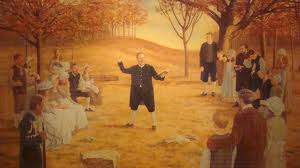
From New England to the South

Summary: The Great Awakening carried from New England to the South; Shubal Stearns and Daniel Marshall left Congregationalist church, became Baptists, moved to North Carolina, started the Sandy Creek Baptist Church, planted churches, the movement exploded and expanded into other states, the War of the Regulation, the Baptists depart, the departing Baptists went into South Carolina, Georgia, and Tennessee, spreading the Gospel and reaping the harvest. What Satan meant for evil, God used for His glory.

Shubal Stearns


By 1755 only a few Baptist churches had been constituted in the South. This was about to change. The change came partly as a result of the Great Awakening.

Shubal Stearns and Daniel Marshall, both members of Congregationalist churches in Connecticut, separated from the established churches, later became Baptists, as had Isaac Backus, and became chief instruments in carrying the Great Awakening to the South. The Separates were subject to persecution—fines, imprisonment, placing in stocks, and whipping—for their defiance of the laws of the commonwealth. They were subjected to a more intense persecution than the dissenters such as Baptists and Quakers, and many of them were imprisoned for practicing their beliefs.

Shubal Stearns was born in Boston on January 28, 1706. His family moved to Connecticut in his youth and joined the Congregational church in Tolland. He was converted to New Light views in 1745 as a result of the Whitefield revival. Mr. Stearns led others in his church to become a Separate church. After a thorough study of the Scriptures, he declared himself a Baptist and was baptized (William L. Lumpkin, Baptist Foundations in the South (Eugene, Oregon: Wipf & Stock Publishers, 2006), p. 21).

Daniel Marshall was born in 1706 in Windsor. He became a prosperous farmer and a deacon in the established Congregational church. Deeply affected by George Whitefield, by 1747 he was a Separate; and by 1751 he, along with Shubal Sterns, was a radical Separate (Ibid., pp. 21-23).

George Whitefield’s preaching had a grand effect on his converts. A “twofold conviction was borne in and upon the hearts of the Separates around 1750.” Since all men can be saved, the urgency of missions and the need for men to hear the gospel now was impressed upon their hearts. “Love for [all] others, said Whitefield, stands alongside aversion to sin, a spirit of supplication, and a spirit of conquest over the world as a mark of having the Holy Spirit” (Ibid., p. 24, citing Stuart C. Henry, George Whitefield, Wayfaring Witness (Nashville: Abingdon Press, 1957), p. 124).

In 1751 or 1752, as had others before him, Mr. Marshall set out with his wife and three children and possibly with one other couple, with no prospect of material reward, to minister to the Indians in New York. They settled at the Indian town of Onnaquaggy, but had to leave after eighteen months because strife among the Indians caused by the French and English struggle and attempts to gain the support of various tribes disrupted his work and threatened his family. He went to Connogogig, Pennsylvania for a short stay, then moved to Opekon, Virginia. He was baptized by the pastor of Mill Creek Baptist Church. His powerful preaching ability was recognized and a revival ensued (Ibid., pp. 25-28 citing Stewart Pearce, Annals of Luzerne County (Philadelphia: J. B. Lippincott & Co., 1960), pp. 34-35; J. B. Taylor, Virginia Baptist Ministers (Philadelphia: J. B. Lippincott & Co., 1859), I, 19; R. B. Stemple, A History of the Rise and Progress of the Baptists of Virginia, revised and extended by G. W. Beale (Richmond: Pitt & Dickinson, 1894), p. 370).

Shubal Stearns and his wife, along with five other families, possessed with missionary zeal, left Tolland, Connecticut in August, 1754. They moved to Virginia where they were greeted by Daniel Marshall. They settled in Cacapon Creek, Virginia, but did not stay there long. Members of some neighboring churches (later called “Regular” Baptist churches), which upheld dignity and orderliness in worship, were upset with the “noisy and emotional preaching of the Separates,” by some of the preaching, which “may have suggested Armenianism to them,” and by “the prominent place occupied by women in some Separate meetings which hinted at disorder.” Also, in 1755 the Indians broke into open hostility. Consequently, Mr. Stearns and his party moved to Sandy Creek, North Carolina, “a strategic center from which he could itinerate to a growing and spiritually destitute population” (Ibid., pp. 28-30).  There they constituted the Sandy Creek Church with Mr. Stearns as minister and Daniel Marshall and Joseph Breed as assistant ministers.

Mr. Stearns immediately began to preach. People from neighboring farms began to attend, for the first time hearing the doctrine of the new birth:

  • “The enthusiastic manner of preaching, too, was unprecedented. Stearns’ delivery was warm and appealing, full of persuasive zeal, not at all the commonplace, lecture-type discourses which the people had formerly heard. Strong gestures and a fervent plea told the people that the preacher was intensely involved in his message.  It was obvious he wanted a verdict.
  • “The preachers deep feeling and personality passed to the members of the church and from them to the visitors. The music in the little pastor’s voice soon penetrated every heart, and his piercing, discursive eye seemed to peer into every soul. The tears, tremblings, and shouts of the members quickly affected the visitors, and from the little meetinghouse a tumult of grief at sin and joy at salvation ascended to heaven. Men who came to the meetings to mock returned home praising and glorifying God. The church began to grow!
  • “Then the Separates knew that they had found their home and that God’s will was being perfected in them. The heart of their little community held a plan worthy of the heart of an empire” (Ibid., pp. 31-32).

The population of North Carolina was growing rapidly. People were coming from Virginia, Maryland, and Pennsylvania; and large families were common. Although the Church of England was established by law in 1701 in North Carolina, it had a feeble career there, and the colony gained a reputation as an asylum for the religiously persecuted. By 1755 the population of North Carolina was nearly a hundred thousand (Ibid., pp. 33-34, citing G. W. Paschal, History of North Carolina Baptists (Raleigh: General Board of North Carolina Baptist State Convention, 1930), I, pp. 252-254).

The Quakers preached the first sermon in North Carolina in 1672 and were the earliest dissenters. The Moravians also flourished there. The Anglicans were few in number, had only one or two ministers in the colony at any given time, and were looked upon with indifference and hostility by the people of North Carolina. Except for the Quakers and Moravians, until the middle of the eighteenth century, “[r]eligious concerns among the early dissenters were doomed to steady decline because of the shortage of churches, religious instruction, and pastors” (Ibid., pp. 34-36).

The work at Sandy Creek soon began to produce much fruit. Mr. Stearns and the other preachers in his church were in great demand to go preach at other settlements. He and Daniel Marshall decided, before having been at Sandy Creek a year, to go on a preaching mission all the way to the coast. Converts were being called into ministry, and the Separate Baptist movement was seeing the birth of new churches. Within three years, there were three churches with a combined membership of over nine hundred, and these churches had numerous branches. Young evangelists were “beginning to occupy the land of promise.” In 1758, the Sandy Creek Association was organized. The plan for the association “required careful planning, for the associational movement would usher in a grand new chapter in Separate Baptist expansion” (Ibid., pp. 41-45).

The movement exploded. Ministers and converts went all over North Carolina, then into South Carolina and Georgia. The power of God was with these Separate Baptist preachers. Churches were planted and many were converted. In North Carolina, the Anglicans and the Presbyterians were displaced by the Baptists. Daniel Marshall went to South Carolina with some others in his church and started a church there. From there, he went on preaching trips into Georgia. He was so successful in some of his forays there that he was arrested, convicted, and commanded to preach no more in Georgia. “The arresting constable and even the magistrate who tried Marshall were soon converted and baptized.” In 1771 Mr. Marshall moved to Kiokee Creek, Georgia and formed the first Baptist church in Georgia at Appling in 1772 (Ibid., p. 55, citing J. H. Kilpatrick, The Baptists, (Atlanta: Georgia Baptist Convention, 1911), pp. 37-38).

In 1771 the so-called War of the Regulation broke out. The government of North Carolina tried to suppress the Separate Baptists, but succeeded only in spreading their movement all along the southern frontier. Before the suppression began, the established church, the Anglican Church, was ineffectual in North Carolina and only had five ministers in the state in 1765.

Before 1765 the western counties, made up of frontiersman, a large percentage of whom had become Baptists, were disproportionately taxed and represented in the Assembly. “Sheriffs, judges, and other officials of county government, were notorious for their injustice, and in the western counties they were, as a rule, dishonest, haughty, and overbearing” (Ibid., pp. 72-74). A license was required for teachers, and no place of higher education could be administered, except by ministers of the Church of England. The Church of England was given exclusive rights to perform marriages. In 1755, poll and vestry taxes were imposed upon North Carolinians (James R. Beller, America in Crimson Red: The Baptist History of America (Arnold, Missouri: Prairie Fire Press, 2004), pp. 181-182). The settlers mounted protests against these injustices.

When William Tryon became governor of North Carolina in 1765, the troubles moved quickly to a crisis. Governor Tryon set out to strengthen the position of the Church of England. He called for twenty-seven more Anglican clergymen and increased taxes and raised a military force. By 1770, Governor Tryon had established eighteen Anglican priests in thirty-two parishes in North Carolina. Property was seized for back taxes, people accused of rioting were arrested and set for trial, and others were fined and imprisoned. “In several places the Regulators yielded to mob spirit, broke up courts, and whipped the officers” and “some court records were destroyed” (Lumpkin, pp. 78-79). Armed conflict finally broke out. On May 16, 1771, a poorly trained and supplied force of two thousand regulators was routed by the state militiamen. Although Shubal Stearns and the Sandy Creek Association forbade Baptists to take up arms against the government, many did.

After the defeat of the regulators, Tryon “laid waste to plantations, burned homes, and sent numbers of men in chains to Hillsboro. The countryside was terrorized” (Ibid., p. 83).  Tryon seized Benjamin Merrill, who appears to have been a church leader. Merrill was convicted as a traitor, hung publicly, cut into pieces—quartered—and his body scattered (Beller, America in Crimson Red, p. 197).

The Baptists had a mass exodus from North Carolina. By 1772, Sandy Creek Church had only fourteen members, down from six hundred and six. Little River Church went from five hundred to a dozen members. But as with the persecution of the first Christians in Jerusalem, the persecuted spread to other parts and carried out the Great Commission—the departing Baptists went into South Carolina, Georgia, and Tennessee, spreading the Gospel and reaping the harvest. What Satan meant for evil, God used for His glory.

Shubal Stearns, the chief light and the guiding genius behind the Separate Baptist movement, died on November 20, 1771 at the age of sixty-five. Forty-two churches and one hundred and twenty-five ministers had sprung from the Sandy Creek Church by 1772. Fires had been started in North Carolina and in other states, which could not be quenched (Lumpkin, p. 59).

To Virginia


Jerald Finney
Copyright © December 31, 2012


Click here to go to the entire history of religious liberty in America.


Note. This is a modified version of Section IV, Chapter 9 of God Betrayed: Separation of Church and State/The Biblical Principles and the American Application. Audio Teachings on the History of the First Amendment has links to the audio teaching of Jerald Finney on the history of the First Amendment.


To Virginia

Contents:

I. Introduction: the dissenters, mainly Baptists, led the fight for religious liberty.
II.
Virginia colonial government controlled by religion (Episcopal church) and law (covering both Tables), Presbyterians First Amendment.
III.
Presbyterians settle in Virginia, some were licensed, kept their promises and oaths under the Act of Toleration.
IV.
Regular Baptists applied for license and took oaths; Separate Baptists stood for religious freedom, had success because of the power of God and the immorality of the established clergy; Separate Baptists grew in number and power; the ministry of Samuel Harris.
V.
Severe persecution of Baptists from 1768-1774.
VI.
Baptists petitioned Virginia House of Burgesses for relief, Presbyterians petitioned for favors; James Madison writes on the persecutions, establishment which leads to pride, ignorance, knavery, and corruption, freedom of conscience, etc.
VII.
Intolerance and persecution were ended because of the Revolution; the Baptists push for religious freedom and the end of the establishment; Virginia became the second colony to recognize religious liberty in a new Constitution in 1776 (Patrick Henry proposed tolerance, but James Madison pushed religious liberty-which he learned from the Baptists-and explained the difference).
VIII.
1776-1786 the battle for soul liberty was on;1776 compromise bill sounded the death knell of Anglicanism; 1776-1779 assembly daily contests between the “contending factions” with a flood of undeviating and uncompromising Baptist petitions as well as watered down Presbyterian and Methodist petitions; Jefferson introduced his Bill for Religious Liberty; a ‘bill establishing provision for teachers of the Christian religion,’ sponsored by Patrick Henry, opposed by Madison who prepared his famous “Memorial and Remonstrance” (quoted below) in opposition; legislature passed a bill incorporating the Episcopal church in 1785; January 16, 1786, the Virginia Act for Religious Liberty, drafted by Thomas Jefferson, passed.
IX.
The Baptists continued the struggle to remove all vestiges of the establishment until the glebes were sold and all religious societies were placed on an equal footing.


I. Introduction: the dissenters, mainly Baptists, led the fight for religious liberty

Although the final expression of religious freedom that would be incorporated into the Constitution came from Virginia, the final motivation came as a result of the convictions of the dissenters, mainly the Baptists, and the thrust for their growth and influence came from the Great Awakening.

“[T]he early Baptists of Virginia, … while they could not boast of great wealth, or culture, or refinement, they possessed some things of more real value, and which the Commonwealth greatly needed. In the first place they had religion—genuine religion; not a sham, nor an empty form, but the old time religion of the heart. Then they had a personal worth or character, that character which always follows from having genuine religion. And then, again, those early Baptists had an unquenchable love of liberty. The truth of the New Testament makes men free indeed, and it inspires them with a love of freedom, not for themselves only, but for all men. And it was because they possessed these traits that they resisted the temptations of the General Incorporation and General Assessment, and stood their ground amid the general desertion. They resolved to continue to fight” (Charles F. James, Documentary History of the Struggle for Religious Liberty in Virginia (Harrisonburg, VA.: Sprinkle Publications, 2007; First Published Lynchburg, VA.: J. P. Bell Company, 1900), Appendix A, pp. 207-208).

The conflict in Virginia originally involved the Anglicans and Presbyterians, neither of which originally believed in either religious freedom or separation of church and state. Religious freedom and separation are owed mainly to the Baptists who believed in both. What Jefferson and Madison wrote about and did for religious freedom[, although leavened with enlightenment principles,] resulted from their observance of the conflict among “Christians” and is not to be found in the pages of philosophers of the enlightenment (See, e.g., William H. Marnell, The First Amendment: Religious Freedom in America from Colonial Days to the School Prayer Controversy (Garden City, New York: Doubleday & Company, Inc., 1964), pp. 89-90.).

“The Presbyterians [in Virginia] won religious liberty for themselves against the opposition of the Episcopalians. Next the Baptists won religious liberty for themselves against the opposition of the Episcopalians and the Presbyterians. By 1775 about three quarters of the people of Virginia were outside the Church of England, but many of the most influential Virginians were inside. When the war started, there were ninety-five Anglican parishes in Virginia. The war killed off at least a quarter of them. Nowhere in the colonies was Tory sentiment stronger than among the Anglican clergy of Virginia, and they found themselves at the gravest of odds with their flocks” (Ibid., p. 93).


II. Virginia colonial government controlled by religion (Episcopal church) and law (covering both Tables), Presbyterians First Amendment

The Episcopal church, the Church of England, in Virginia was established from the founding of Jamestown in 1607:

“It was known, also, as the ‘Established Church,’ because it was made, by legal enactment, the church of the State and was supported by taxation. Not only so, but it was designed to be the established church, to the exclusion of all others. Rigid laws, with severe penalties affixed, were passed, having for their object the exclusion of all Dissenters from the colony, and the compelling of conformity to the established, or State, religion. Even after the Revolution of 1688, which placed William and Mary upon the throne of England and secured the passage of the ‘Act of Toleration’ the following year, the ‘General Court of the Colony’ of Virginia construed that act to suit themselves, and withheld its benefits from Dissenters … until they were compelled to yield to the force of circumstances” (James, pp. 10-11).

The Church of England was stronger in Virginia than in any colony.

In Virginia, the established Anglican church was controlled by the state, unlike in New England where the established church controlled the state. From the beginning of the colony, the “company knew not how to control the members composing the colony but by religion and law” (Ibid., p. 17). The original “Lawes Divine, Moral and Martial” which were decreed in 1612, were severe. Speaking impiously of the Trinity or of God the Father, Son, or Holy Spirit, blaspheming God, incorrigibly cursing, a third failure to attend religious services, and a third “Sabbath-breaking,” were punishable by death. Other spiritual offenses were punished by whipping and other penalties (See Leo Pfeffer, Church, State, and Freedom (Boston: The Beacon Press, 1953), p. 69 for the text of this law.).

These laws were repealed upon appeal to England, and the laws enacted in support of the Anglican establishment were less severe. Still, the Anglican church was established (and this establishment continued until the revolution with one short interruption), nonattendance at church services was the subject of fines, the payment of tithes were mandatory, every parson was entitled to the glebe—a piece of land—parish churches were built by taxes, and ministers were required to “conform themselves in all things according to the canons of the Church of England.”

“Puritan clergy were banished for failing to conform to Anglican services; Quakers [and Baptists] were fined, imprisoned, and banished. Catholics were disqualified for public office, and any priest who ventured to enter the colony was subject to instant expulsion. Penalties were imposed on those who having scruples against infant baptism, neglected to present their children for that purpose” (Ibid.; see also, James, pp. 17-20 for a more comprehensive overview of the laws of Virginia which provided for religious persecution and the established church.).

A 1643 law forbade anyone to teach or preach religion, publicly or privately, who was not a minister of the Church of England, and instructed governor and council to expel all nonconformists from the colony (William L. Lumpkin, Baptist Foundations in the South (Eugene, Oregon: Wipf & Stock Publishers, 2006), p. 105). In 1643, three Congregationalist ministers from Boston were forced to leave the colony. Also in 1643, “Sir William Berkeley, Royal Governor of Virginia, strove, by whippings and brandings, to make the inhabitants of that colony conform to the Established church, and thus drove out the Baptists and Quakers, who found a refuge in … North Carolina.” Quakers first came to Virginia in “1659-60, and … the utmost degree of persecution was exercised towards them.” “During the period of the Commonwealth in England, there had been a kind of interregnum as to both Church and State in Virginia; but in 1661, the supremacy of the Church of England was again fully established.” Only ministers of the Church of England were permitted to preach, and only ministers of that church could “celebrate the rites of matrimony,” and only “according to the ceremony prescribed in the Book of Common Prayer” (James, pp. 17-20).


III. Presbyterians settle in Virginia, some were licensed, kept their promises and oaths under the Act of Toleration

Although some Presbyterians settled in Virginia from 1670 to 1680, the number & influence of Presbyterians in Virginia was small until the mid-1700s. In the mid-1700s an influential body of Presbyterians settled in Hanover County as a result of a 1738 agreement between the Presbyterian Synod of Philadelphia and Virginia governor William Gooch which allowed “emigrants to occupy the frontier portions of Virginia and enjoy the benefits of the Act of Toleration” (Ibid., pp. 11-12).

The first non-Anglican minister to receive a license under the Act of Toleration passed by the British Parliament in 1689, which instructed liberty of conscience for all but Papists, was Francis Makemie, a Presbyterian minister in Accomac County. By 1725, no more than five conventicles, “three small meetings of Quakers and two of Presbyterians,” were licensed, and these in poorer counties who were unable to pay the established minister enough to stay. In 1725, a similar license was granted to “certain parties (doubtless Presbyterians)” in Richmond County (Ibid., pp. 20-22).

Presbyterian families from Pennsylvania and Maryland began to move to remote parts of Virginia on the western frontier in 1738. The Presbyterian Synod of Pennsylvania wrote Governor Gooch of Virginia asking for religious freedom for those Presbyterians. Governor Gooch, knowing these people “to be firm, enterprising, hardy, brave, good citizens and soldiers,” and desiring “to form a complete line of defense against the savage inroads,” welcomed them. “At so great a distance from the older settlements, he anticipated no danger to the established church.” The conditions of settlement were that they “were not only to settle in the frontier counties as a buffer between the Churchmen and the Indians, but they had to swear allegiance to ‘His Magesty’s person and government,’” pay the taxes levied in support of the Established Church, and never by word or deed seek to injure the said church…. “Houses for public worship could not be occupied without permission from the civil authorities, and each application for a house of worship was heard on its own merits.” “[Those early Presbyterians] did not break their promise nor violate their oaths.”  Up to the Revolution, “they never demanded anything more than their rights under the Act of Toleration, and … not until the Revolution was accomplished, and Virginia had thrown off allegiance to Great Britain, did they (the Presbyterians) strike hands with the Baptists in the effort to pull down the Establishments.” However, with the fury of the French and Indian War which broke out in 1755, Presbyterians east of the Blue Ridge occupied houses of worship without license or molestation (Ibid., pp. 22-25, citing Foote, “Sketches of Virginia,” pp. 99, 160-162, 307, 308).


IV. Regular Baptists applied for license and took oaths; Separate Baptists stood for religious freedom, had success because of the power of God and the immorality of the established clergy; Separate Baptists grew in number and power; the ministry of Samuel Harris

Different bodies of Baptists came to Virginia during the colonial period. The “Regular Baptists,” like the Presbyterians, “applied for license and took the prescribed oaths.” As for the “Separate Baptists,” the “body spread so rapidly throughout the State from 1755 to the … Revolution,” and “did not recognize the right of any civil power to regulate preaching or places of meeting.” They were the “most active in evangelizing Virginia and most severely persecuted, and … had the largest share of the work of pulling down the ‘Establishment’ and securing religious liberty for all.” “While yielding a ready obedience to the civil authorities in all civil affairs, in matters of religion they recognized no lord but Christ. They were truly apostolic in refusing to obey man rather than God” (Ibid., pp. 12-14, 26).

Conditions were favorable for the rapid growth of Baptist principles. “First, the distress of the colonists, consequent upon the French and Indian wars, inclined them towards religion.” Secondly, the distressed people could find no solace or comfort in the immoral established clergy.

“The great success and rapid increase of the Baptists in Virginia must be ascribed primarily to the power of God working with them. Yet it cannot be denied but that there were subordinate and cooperating causes; one of which, and the main one, was the loose and immoral deportment of the Established clergy, by which the people were left almost destitute of even the shadow of true religion. ‘Tis true, they had some outward forms of worship, but the essential principles of Christianity were not only not understood among them, but by many never heard of. Some of the cardinal precepts of morality were discarded, and actions plainly forbidden by the New Testament were often proclaimed by the clergy as harmless and innocent, or, at worst, foibles of but little account. Having no discipline, every man followed the bent of his own inclination. It was not uncommon for the rectors of parishes to be men of the lowest morals. The Baptist preachers were, in almost every respect, the reverse of the Established clergy’” (Ibid., pp. 26-27, citing Robert B. Semple, “History of the Baptists of Virginia,” 1810, p. 25).

The bad character and actions of the established clergy are proven by their own authorities. Many of that clergy came to Virginia “to retrieve either lost fortune or lost character….” “Many of them had been addicted to the race-field, the card-table, the theatre—nay, more, to drunken revel, etc….” “They could babble in a pulpit, roar in a tavern, exact from their parishioners, and rather by their dissoluteness destroy than feed the flock” (Ibid., pp. 27-28, citing Foote, p. 38 quoting from the Bishop of London; Bishop Meade, “Old Parishes and Families of Virginia” (Vol. I, 118, 385, etc.; Dr. Hawks, “History of the Protestant Episcopal Church of Virginia,” p. 65.)).

The Baptists grew stronger and more numerous in Virginia. The first Baptist church in Virginia was established in 1714 by Robert Nordin who arrived from England. By 1755, there were six Baptist churches in Virginia (James R. Beller, America in Crimson Red: The Baptist History of America (Arnold, Missouri: Prairie Fire Press, 2004), pp. 140-142). 1758 to 1769 was a period of slow but persistent growth in the face of a determined popular hostility. The early opposition to the Baptists came from the lower classes and was based upon prejudice.

The Virginia expansion was intimately tied up with the ministry of Colonel Samuel Harris. Harris who served at various times as church warden, sheriff, justice of the peace, colonel of the county, and captain and commissary of Fort Mayo and its military garrison, was the first person of prominence to join the Separates in Virginia and was just one of many examples of the power of this movement. He was saved at a house meeting after hearing a sermon preached by a Separate Baptist from North Carolina. He resigned from his official positions and narrowed his business interests almost to the vanishing point in order to preach. He began to preach throughout Virginia, and many were converted as a result of his ministry (Lumpkin, pp. 48-49).

Harris was a fearless preacher. “The excellence of his preaching lay chiefly in ‘addressing the heart,’ and Semple holds that ‘perhaps even Whitefield did not surpass him in this’” (Ibid., p. 90, citing A. B. Semple, A History of the Rise and Progress of the Baptists of Virginia (Richmond: Pitt & Dickinson, 1894), p. 380). He had the assistance of several North Carolina itinerant evangelists planting the earliest Separate churches in south central Virginia. The Dan River Church was started in 1760 by Daniel Marshall and Philip Mulkey with seventy-four charter members, eleven of whom were Negroes. Other churches were soon constituted from the Dan River Church (Ibid., pp. 90-98).

Wherever the Baptist itinerants preached, great crowds came to hear them. Many were converted in Virginia, and many Baptist churches were started. In 1770, there were only two Separate churches north of the James River, four south of it. The General Association of Separate Baptists of Virginia was held in May, 1771 in Orange County with twelve churches represented, and three not represented.

By 1772 the Separate Churches outnumbered those of the Regular churches. In that year, as many as forty thousand Virginians may have heard the gospel. By 1773 thirty-four churches were represented at the General Association meeting, and they reported a combined membership of 3,195. By May, 1774, when Baptist expansion and Baptist persecution were at high tide, the Southern District in Virginia had twenty-seven churches with 2,033 members and the Northern District had twenty-four churches with 1,921 members. By the end of 1774, there was at least one Separate Baptist church in twenty-eight of the sixty counties of Virginia. During the Revolution, Baptist growth continued, but at a much slower pace (Ibid., pp. 90-103).


V. Severe persecution of Baptists from 1768-1774

From 1768 through 1774, the Baptists were persecuted severely. “Baptist preachers were whipped, arrested, fined, imprisoned on bread and water, although the authorities sanctimoniously denied that punishment was for ‘preaching’; the crime they said, was ‘breach of the peace’ (Pfeffer, p. 95. citing Edward F. Humphrey, Nationalism and Religion in America (Boston: Chipman Law Publishing Co., 1924), p.370).”  The first instance of actual imprisonment was on June 4, 1768 when John Waller, Lewis Craig, James Childs, James Reed, and William Marsh were arrested at Craig’s meetinghouse in Spotsylvania and charged with disturbing the peace. The magistrates offered to release them if they would promise to preach no more for a year and a day. They refused and were jailed. Many more were jailed and otherwise persecuted until 1774 (James, pp. 29-30. Included is a listing of some of those jailed and otherwise persecuted. See also, Beller, America in Crimson Red, pp. 230-250; Lumpkin, pp. 105-120; Dr. William P. Grady, What Hath God Wrought: A Biblical Interpretation of American History (Knoxville, Tennessee: Grady Publications, Inc., 1999), Appendix A, pp. 593-598 citing Lewis Peyton Little, Imprisoned Preachers and Religious Liberty in Virginia, (Galatin, Tenn.: Church History Research and Archives, 1987), pp. 516-520 (lists many Baptists and the persecutions they endured in Virginia; persecutions such as being jailed for preaching, civil suit, being annoyed by men drinking and playing cards, being jerked off stage and head beaten against the ground, hands being slashed, beaten with bludgeons, being shot with a shotgun, ousted as a justice for preaching, being brutally beaten by a mob, severely beaten with a stick, etc.)).

  •  “[The persecutors] seemed sometimes to strive to treat the Baptists and their worship with as much rudeness and indecency as was possible. They often insulted the preacher in time of service, and would ride into the water and make sport when they administered baptism. They frequently fabricated and spread the most groundless reports, which were injurious to the characters of the Baptists. When any Baptist fell into any improper conduct, it was always exaggerated to the utmost extent” (James, p. 30, citing Semple, p. 19).
  • “The enemy, not contented with ridicule and defamation, manifested their abhorrence to the Baptists in another way. By a law then in force in Virginia, all were under obligation to go to church several times a year; the failure subjected them to fine. [Little action against members of the Established church was taken under this law, but] as soon as the ‘New Lights’ were absent, they were presented by grand jury, and fined…. [Others were imprisoned for preaching without a license.] ‘When persecutors found religion could not be stopped … by ridicule, defamation, and abusive language, the resolution was to take a different step and see what they could do; and the preachers in different places were apprehended by magisterial authority, some of whom were imprisoned and some escaped. Before this step was taken, the parson of the parish was consulted [and he advised that] the ‘New Lights’ ought to be taken up and imprisoned, as necessary for the peace and harmony of the old church…’” (Ibid., pp. 30-31, citing William Fristoe, “History of the Ketocton Baptist Association,” p. 69).
  • “[An Episcopalian wrote,] No dissenters in Virginia experienced, for a time, harsher treatment than did the Baptists. They were beaten and imprisoned, and cruelty taxed its ingenuity to devise new modes of punishment and annoyance” (Ibid., citing Dr. Hawks, “History of the Protestant Episcopal Church of Virginia,” p. 121).

VI. Baptists petitioned Virginia House of Burgesses for relief, Presbyterians petitioned for favors; James Madison writes on the persecutions, establishment which leads to pride, ignorance, knavery, and corruption, freedom of conscience, etc.

As a result of the persecutions and oppressions, Baptists began to petition the House of Burgesses for relief. Their first petition in 1770 requesting that Baptist ministers “not be compelled to bear arms or attend musters” was rejected. Other petitions from Baptists in several counties were submitted in 1772 requesting that they “be treated with the same indulgence, in religious matters, as Quakers, Presbyterians, and other Protestant dissenters enjoy.” The petitions continued until 1775 (Ibid., pp. 31-35). The Presbyterians petitioned also, but for the right to incorporate so that they could receive and hold gifts of land and slaves for the support of their ministers. One of the Presbyterian petitions was improperly hailed as proof “that the Presbyterians anticipated the Baptists in their memorials asking for religious liberty.” An examination of that petition reveals that it “contemplate[d] nothing more than securing for Presbyterians and others in Virginia the same privileges and liberties which they enjoyed in England under the Act of Toleration,” and contained no “attack upon the Establishment, or any sign of hostility to it” (Ibid., pp. 42-47).

During this time, James Madison wrote to his old college friend, Bradford of Philadelphia in a letter dated January 24, 1774. He expressed his belief that if

  • “uninterrupted harmony had prevailed throughout the continent [in matters of established religion as practiced in Virginia] it is clear to me that slavery and subjection might and would have been gradually insinuated among us. Union of religious sentiments begets a surprising confidence, and ecclesiastical establishments tend to great ignorance and corruption, all of which facilitates the execution of mischievous projects…. Poverty and luxury prevail among all sorts; pride, ignorance, and knavery among the priesthood, and vice and wickedness among the laity. This is bad enough; but it is not the worst I have to tell you. That diabolical, hell-conceived principle of persecution rages among some, and to their eternal infamy, the clergy can furnish their quota of imps for such purposes. There are at this time in the adjacent country not less than five or six well-meaning men in close jail for publishing their religious sentiments, which in the main are very orthodox. I have neither patience to hear, talk, or think of anything relative to this matter; for I have squabbled and scolded, abused and ridiculed, so long about it to little purpose, that I am without common patience…. So I must beg you to pity me, and pray for liberty of conscience to all” (Ibid., p. 36).
  • [In another letter to Bradford dated April 1, 1774, Madison wrote that he doubted that anything would be done to help the dissenters in the Assembly meeting beginning May 1, 1774.] He spoke of “the incredible and extravagant stories [which were] told in the House of the monstrous effects of the enthusiasm prevalent among the sectaries, and so greedily swallowed by their enemies…. And the bad name they still have with those who pretend too much contempt to examine into their principles and conduct, and are too much devoted to ecclesiastical establishment to hear of the toleration of the dissentients…. The liberal, catholic, and equitable way of thinking, as to the rights of conscience, which is one of the characteristics of a free people, and so strongly marks the people of your province, is little known among the zealous adherents to our hierarchy…. [Although we have some persons of generous principles in the legislature] the clergy are a numerous and powerful body, have great influence at home by reason of their connection with and dependence on the bishops and crown, and will naturally employ all their arts and interest to depress their rising adversaries; for such they must consider dissentients, who rob them of the good will of the people, and may in time endanger their livings and security.
  • “… Religious bondage shackles and debilitates the mind, and unfits if for every enterprise, every expanded prospect” (Ibid., pp. 35-38, citing Rives Life and Times of Madison, Vol. I, pp. 43, 53; Norman Cousins, In God We Trust (Kingsport, Tennessee: Kingsport Press, Inc., 1958), pp. 299-301).

VII. Intolerance and persecution were ended because of the Revolution; the Baptists push for religious freedom and the end of the establishment; Virginia became the second colony to recognize religious liberty in a new Constitution in 1776 (Patrick Henry proposed tolerance, but James Madison pushed religious liberty-which he learned from the Baptists-and explained the difference)

1775 closed the period of “Intolerance, Toleration, and Persecution.”

“The colony is involved in trouble with the mother country. Virginia has denounced the ‘Boston Port Bill,’ and made common cause with Massachusetts. The First Continental Congress has already met in Philadelphia. Patrick Henry has electrified the country by his memorable speech in the popular Convention which met March, 1775…. The Battles of Lexington and Concord have been fought (April 19), and Virginia has taken steps to enroll companies of volunteers in every county. The war of the Revolution is on, and the times call for union and harmony among all classes. Hence, there is no more persecution of Baptists. There are no more imprisonments in 1775, and that obnoxious Toleration Bill is indefinitely postponed. The same ruling class that admitted the Presbyterians to Virginia and to the benefits of the Act of Toleration, on condition that they occupied the frontier counties, and thus protected them against Indian raids, are now inclined to tolerate, not only the Presbyterians, but the Baptists also, with all their ‘pernicious doctrines,’ if only they will help in the struggle with Great Britain. The Baptists will help, and not a Tory will be found among them. But they will strike for something more and something dearer to them than civil liberty—for freedom of conscience, for ‘just and true liberty, equal and impartial liberty’” (James, pp. 47-48).

The Baptists were ready to push for religious freedom and abolition of the establishment. In their Association meeting on the fourth Saturday of May, 1775, “they were to a man favorable to any revolution by which they could obtain freedom of religion. They had known from experience that mere toleration was not a sufficient check, having been imprisoned at a time when that law was considered by many as being in force.” They decided to circulate petitions throughout the state calling for abolition of the church establishment and freedom of religion, and also to appoint commissioners to present their address for military resistance to British oppression and “offering the services of their young men as soldiers and asking only that, so far as the army was concerned, their ministers might enjoy like privileges with the clergy of the Established church” to the State Convention which was the House of Burgess under a new name and in a different character. The Convention, still controlled by “the same class that had, a few years before made concessions to the … Presbyterians on condition that they settle on the western counties forming a line of defense against the Indians, resolved to allow those dissenters in the military who so desired to attend divine worship administered by dissenting preachers. This first step towards placing all Virginia clergy on an equal footing, came as a result of the need for the numerical strength of the Baptists in what was considered by the establishment in 1775 a “struggle for their rights ‘in the union’ [with England].” The Convention maintained their “faith and true allegiance to His Majesty, George the Third, [their] only lawful and rightful King.” “It would have been very impolitic, even if their petitions had been ready, to have sprung the question of disestablishment upon [the Convention] before they had committed themselves to the cause of independence” (Ibid., pp. 49-57).

Virginia adopted a new constitution in 1776. The Convention of 1776 was, by its act, made the “House of Delegates” of the first General Assembly under the new constitution. There were twenty-nine new members in this meeting that were not in the 1775 Convention. “[W]hen there was anything near a division among the other inhabitants in a county, the Baptists, together with their influence, gave a caste to the scale, by which means many a worthy and useful member was lodged in the House of Assembly and answered a valuable purpose there” (Ibid., p. 58). Among those favorable to Baptist causes was James Madison. On May 12, the Congress met in Philadelphia “and instructed the colonies to organize independent governments of their own. The war was on.” On May 15, the Convention resolved to declare the “colonies free and independent states” and that a committee be appointed to prepare Declaration of Rights and a plan of government which would “maintain peace and order” and “secure substantial and equal liberty to the people” (Ibid., pp. 58-62).

Other than Rhode Island, Virginia was the first colony to recognize religious liberty “in her organic law, and this she did in Article XVI. of her Bill of Rights, which was adopted on the 12th day of June, 1776” (Ibid p. 10.). In 1776 the Virginia state convention was beset by petitions from all over Virginia seeking religious freedom and freedom of conscience. Patrick Henry proposed the provision to section sixteen of the Virginia Bill of Rights which granted religious tolerance (Marnell, pp. 94-95; James, pp. 62-65). On June 12 the House adopted a Declaration of Rights. The 16th Article provided for religious tolerance. However, [o]n motion on the floor by James Madison, the article was amended to provide for religious liberty. In committee, Madison opposed toleration because toleration “belonged to a system where there was an established church, and where it was a thing granted, not of right, but of grace. He feared the power, in the hands of a dominant religion, to construe what ‘may disturb the peace, the happiness, or the safety of society,’ and he ventured to propose a substitute, which was finally adopted” (James, pp. 62-65). He probably moved to change the amendment before the whole house in order to demonstrate his position to the Baptists who were viewing the proceedings. The proposed amendment read:

“That religion, or the duty which we owe to our Creator, and the manner of discharging it, can be directed only by reason and conviction, not by force or violence; and, therefore, all men are equally entitled to the free exercise of religion according to the dictates of conscience; and that it is the mutual duty of all to practice Christian forbearance, love, and charity towards each other” (Ibid., pp. 62-64; Pfeffer, p. 96).

“The adoption of the Bill of Rights marked the beginning of the end of the establishment” (Pfeffer, p. 96).

Where did Madison learn the distinction between religious freedom and religious toleration?

“It had not then begun to be recognized in treatises on religion and morals. He did not learn it from Jeremy Taylor or John Locke, but from his Baptist neighbors, whose wrongs he had witnessed, and who persistently taught that the civil magistrate had nothing to do with matters of religion” (James, p. 63 quoting Dr. John Long).

Madison studied for the ministry at Princeton University, then the College of New Jersey, under John Witherspoon. When he returned to Virginia, he continued his theological interests and developed a strong concern for freedom of worship.

“At the time of Madison’s return from Princeton, several ‘well-meaning men,’ as he described them, were put in prison for their religious views. Baptists were being fined or imprisoned for holding unauthorized meetings. Dissenters were taxed for the support of the State Church. Preachers had to be licensed. Madison saw at first hand the repetition of the main evils of the Old Country. But he also saw a deep dissatisfaction among the people—the kind of dissatisfaction that would grow and that would serve as a mighty battering ram for religious freedom” (Cousins, p. 296).

It appears that the Baptists were the only denomination of Christians that addressed the 1775 and 1776 conventions on the subject of the rights of conscience. Not until the Revolution in Virginia were the Presbyterians free from the agreement with Governor Gooch. When the Assembly met in October 1776, they were “powerful allies of the Baptists and other dissenters in the war against the Establishment” (James, pp. 66-67).


VIII. 1776-1786 the battle for soul liberty was on;1776 compromise bill sounded the death knell of Anglicanism; 1776-1779 assembly daily contests between the “contending factions” with a flood of undeviating and uncompromising Baptist petitions as well as watered down Presbyterian and Methodist petitions; Jefferson introduced his Bill for Religious Liberty; a ‘bill establishing provision for teachers of the Christian religion,’ sponsored by Patrick Henry, opposed by Madison who prepared his famous “Memorial and Remonstrance” (quoted below) in opposition; legislature passed a bill incorporating the Episcopal church in 1785; January 16, 1786, the Virginia Act for Religious Liberty, drafted by Thomas Jefferson, was passed

“From that time down to January 19, 1786, when Jefferson’s ‘Bill for Establishing Religious Freedom,’ became the law of the State, the battle for soul liberty was on” (Ibid., p. 10), and the process of disestablishment gathered momentum. The legislature of 1776 repealed the laws punishing heresy and absence from worship and exempted dissenters from paying taxes for support of the Church. Although this bill was a compromise, it sounded the death knell of the Anglican establishment. A later statute removed the law fixing the salaries of clergymen, and the position of the Established church was limited more and more until the Declaratory Act of 1787 ended establishment in Virginia (Marnell, pp. 94-95; Pfeffer, p. 96).

“From 1776 to 1779 the assembly was engaged almost daily in the desperate contests between the contending factions” (Pfeffer, p. 97). Whereas only one Baptist petition had been presented to the first Convention in 1776, and that after the adoption of the Bill of Rights, the Legislature which assembled on October 7, 1776 was immediately flooded with petitions both for and against establishment. “None of the petitions against establishment were from Baptists as such. However, historians of the times admit that Baptists ‘were not only the first to begin the work, but also the most active in circulating petitions for signatures.’” “Among the signers were some of all denominations of Christians, and many of no denomination. This explains why the Baptist petition or petitions were from dissenters in general, instead of from Baptist dissenters in particular” (James, p. 74. See pp. 68-74 for the petitions against establishment.). The Reverend E. G. Robinson, in his review of Rives’ Life and Times of James Madison, Christian Review of January, 1860, said, “The [Presbyterians] argued their petitions on various grounds, and indeed sought for different degrees of religious freedom, while the [Baptists] were undeviating and uncompromising in their demands for a total exemption from every kind of legal restraint or interference in matters of religion” (Ibid., p. 82).The Methodists and the established church presented petitions for establishment (Ibid., pp. 75-78. The petitions of the Methodists and the established church are quoted and the author comments on the petition of the established church.).

The established church did not give up. Thomas Jefferson gave an account of the struggle through which the Legislature, meeting in late 1776, had just passed:

“The first republican Legislature, which met in 1776, was crowded with petitions to abolish this spiritual tyranny. These brought on the severest contest in which I have ever been engaged…. The petitions were referred to a Committee of the Whole House on the State of the Country; and, after desperate contests in the committee almost daily from the 11th of October to the 5th of December, we prevailed so far only as to repeal the laws which rendered criminal the maintenance of any religious opinions (other than those of the Episcopalians), the forbearance of repairing to the (Episcopal) church, or the exercise of any (other than the Episcopal) mode of worship; and to suspend only until the next session levies on the members of that church for the salaries of its own incumbents. For, although the majority of our citizens were dissenters, as has been observed, a majority of the legislature were churchmen. Among these, however, were some reasonable and liberal men, who enabled
us on some points to obtain feeble majorities. But our opponents carried, in the general resolutions of November the 19th, a declaration that religious assemblies ought to be regulated, and that provision ought to be made for continuing the succession of the clergy and superintending their conduct. And in the bill now passed was inserted an express reservation of the question whether a general assessment should not be established by law on every one to the support of the pastor of his choice; or whether all should be left to voluntary contributions; and on thus question, debated at every session from 1776 to 1779 (some of our dissenting allies, having now secured their particular object, going over to the advocates of a general assessment,) we could only obtain a suspension from session to session until 1779, when the question against a general assessment was finally carried, and the establishment of the Anglican church entirely put down” (Ibid., pp. 80-81; See also, Pfeffer, p. 96).

Legislative meetings from 1776 to December 1779 were presented with memorials both for and against establishment (James, pp. 84-91 quotes those memorials).

When the House met in June 1779, petitions presented to the Assembly showed that the old establishment and its friends were fighting for some sort of compromise on the basis of a general assessment. In 1779, the assembly repealed all laws requiring members of the Episcopal Church to contribute to the support of their own ministry (Pfeffer, p. 97). In December 1779, a bill passed which “cut the purse strings of the Establishment, so that the clergy could no longer look for support to taxation. But they still retained possession of the rich glebes, and enjoyed a monopoly, almost, of marriage fees” (James, p. 95). It took until 1779 to pass a bill taking away tax support for the clergy because the dissenters, with the exception of the Baptists, “having been relieved from a tax which they felt to be both unjust and degrading, had no objection to a general assessment” (Ibid., pp. 96-98).

“Jefferson sought to press the advantage, and introduced his Bill for Establishing Religious Freedom, but Virginia was not quite ready to formalize the separation which had in effect taken place, and the bill was not voted on” (Pfeffer, p. 97). Instead “a bill was introduced which declared that “the Christian Religion shall in all times coming be deemed and held to be the established Religion of this Commonwealth.” This bill required everyone to register with the county clerk stating which church he wished to support (Ibid., citing R. Freeman Butts, The American Tradition in Religion and Education (Boston: Beacon Press, 1950), pp. 53-56).

Although various petitions were presented to the Assembly during the period from 1780 until the end of the Revolution on September 3, 1783, the General Assembly did very little regarding the cause of religious liberty. In 1783 “the project … of incorporating, or establishing as the religion of the State, all the prevailing denominations, and assessing taxes upon the people to support the ministers of all alike, was now warmly advocated by Presbyterians, Episcopalians, and Methodists, and becoming quite popular. To this scheme the Baptists still gave the most determined opposition, and sent up against it the most vigorous remonstrances.” The Baptists also continued to petition for the adoption of the Act to Establish Religious Freedom (James, pp. 112-121 citing Dr. R. B. C. Howell, “Early Baptists of Virginia” for the quotation which is on p. 120).

After the Revolution, numerous petitions and memorials were presented to the House of Delegates in 1784 and 1785 by the above-mentioned denominations in support of their positions (Ibid., pp. 122-133). The Episcopalians sought to recover lost ground. “In the late spring of 1784, a resolution was introduced in the Virginia Assembly seeking official recognition for the Episcopal Church. The resolution was debated for two days, with notable opposition from Baptists and Presbyterians” (Cousins, p. 301). Madison, in a letter to Thomas Jefferson dated July 3, 1784, wrote concerning this resolution:

“The Episcopal clergy introduced a notable project for re-establishing their independence of laity. The foundation of it was that the whole body should be legally incorporated, invested with the present property of the Church, made capable of acquiring indefinitely—empowered to make canons and by-laws not contrary to the laws of the land, and incumbents when once chosen by vestries, to be immovable otherwise than by sentence of the Convocation” (Ibid., p. 302).

The Baptists continued their uncompromising stand against any vestige of union of church and state. They gave their reasons for their position against a general assessment:

  • “First, it was contrary to their principles and avowed sentiments, the making provision for the support of religion by law; that the distinction between civil and ecclesiastical governments ought to be kept up without blending them together; that Christ Jesus hath given laws for the government of his kingdom and direction of his subjects, and gave instruction concerning collections for the various purposes of religion, and therefore needs not legislative interference.
  • “Secondly, should a legislative body undertake to pass laws for the government of the church, for them to say what doctrines shall be believed, in what mode worship shall be performed, and what the sum collected shall be, what a dreadful precedent it would establish; for when such a right is claimed by a legislature, and given up by the people, by the same rule that they decide in one instance they may in every instance. Religion is like the press; if government limits the press, and says this shall be printed and that shall not, in the event it will destroy the freedom of the press; so when legislatures undertake to pass laws about religion, religion loses its form, and Christianity is reduced to a system of worldly policy.
  • “Thirdly, it has been believed by us that that Almighty Power that instituted religion will support his own cause; that in the course of divine Providence events will be overruled, and the influence of grace on the hearts of the Lord’s people will incline them to afford and contribute what is necessary for the support of religion, and therefore there is no need for compulsory measures.
  • “Fourthly, it would give an opportunity to the party that were numerous (and, of course, possessed the ruling power) to use their influence and exercise their art and cunning, and multiply signers to their own favorite party. And last, the most deserving, the faithful preacher, who in a pointed manner reproved sin and bore testimony against every species of vice and dissipation, would in all possibility, have been profited very little by such a law, while men-pleasers, the gay and the fashionable, who can wink at sin and daub his hearers with untempered mortar, saying, ‘Peace, peace,’ when there is no peace, who can lay out his oratory in dealing out smooth things mingled with deception, the wicked, it is clear, would like to have it so; and it follows the irreligious and carnal part of the people would richly reward them for their flattery, and the undeserving go off with the gain” (James, pp. 132-133, citing William Fristoe, “History of the Ketocton Association”).

The Presbyterians took “a sort of middle ground, which caused confusion in their own ranks and compromised them in the estimation of others.” It appears that the Presbyterian clergy advocated a plan of general assessment supporting all denominations who believed in union of church and state, but not those who believed in religious liberty and absolute freedom of conscience. James Madison commented on the position of the Presbyterians:

“The laity of the other sects (other than Episcopalian) are generally unanimous [against the general assessment]. So are all the clergy, except the Presbyterian, who seem as ready to set up an establishment which is to take them in as they were to pull down that which shut them out. I do not know a more shameful contrast than might be found between their memorials on the latter and former occasions. Rives, I., 630” [Quoting a letter to James Monroe, April 12, 1775] (Ibid., p. 130; Cousins, p. 306)

Thus, “[i]n [these] later stages of disestablishment there was a curious alliance formed between the Episcopalian and Presbyterian clergy with an eye to creating a new line of defense” (Marnell, p. 95). “In 1784, the Virginia House of Delegates having under consideration a ‘bill establishing provision for teachers of the Christian religion,’ postponed it until the next session, and directed that the Bill should be published and distributed, and that the people be requested ‘to signify their opinion respecting the adoption of such a bill at the next session of assembly” (Reynolds v. United States, 98 U.S. 145, 163 (1879); see James, p. 129 where the preamble to the bill is quoted.). This last action was a result of a resolution offered by the Baptists and adopted by the Legislature. The Baptists, appearing to be losing ground as the only opponents of a general assessment, the majority of the Legislature being churchmen, the only hope of the opponents of the assessment was an appeal to the people (James, p. 135).

The bill—which was proposed by Patrick Henry and supported by George Washington, Richard Henry Lee, and John Marshall—provided for the establishment a provision for teachers of the Christian religion, in effect providing for the “establishment of Christianity, but without precedence in such an establishment to any particular church” (Marnell, pp. 95, 96). The bill required all persons

“to pay a moderate tax or contribution annually for the support of the Christian religion, or of some Christian church, denomination or communion of Christians, or for some form of Christian worship” (Pfeffer, p. 98, citing N. J. Eckenrode, The Separation of Church and State in Virginia (Richmond, Va.: Virginia State Library, 1910), p. 86. Pfeffer notes in Chapter 4 fn. 102 that the text of the bill is printed as an appendix to Justice Rutledge’s dissent in Everson, 330 U.S. 1.).

Leo Pfeffer noted that:

  • “the bill was predicated on the legislative determination in its preamble that ‘the general diffusion of Christian knowledge hath a natural tendency to correct the morals of men, restrain their vices, and preserve the peace of society; which cannot be effected without a competent provision for licensed teachers.’
  • “The preamble is of great significance, because it recognized the widely held belief that religion was not within the competence of civil legislatures. It sought to justify intervention not on any theocratic ground but on what today would be called the ‘police’ or ‘welfare’ power. Government support of religion is required to restrain vice and preserve peace, not to promote God’s kingdom on earth” (Ibid.).

Pfeffer does not understand, nor does the modern Supreme Court, that God has given civil government the choice of whether to honor His principles. The government is to intervene, according to God’s Word, to control and restrain certain crimes. Government does not support religion in order to do its job. Government merely makes a choice of whether to honor God and His principles for the purpose of restraining vice and preserving peace.

James Madison, among others, opposed the bill. Mr. Madison had witnessed and opposed the persecution of the Baptists in his own state.

“Madison wrote to a friend in 1774: ‘That diabolical, hell-conceived principle of persecution rages among some…. This vexes me the worst of anything whatever. There are at this time in the adjacent country not less than five or six well-meaning men in close jail for publishing their religious sentiments, which in the main are very orthodox. I have neither patience to hear, talk, or think of anything relative to this matter; for I have squabbled and scolded, abused and ridiculed, so long about it to little purpose, that I am without common patience. So I must beg you to pity me, and pray for liberty of conscience to all.’ I Writings of James Madison (1900) 18, 21” (Everson, 330 U.S. fn. 9 at 11; 67 S. Ct. at 509).

Mr. Madison prepared his famous “Memorial and Remonstrance,” in which he maintained “that religion, or the duty we owe the Creator,” was not within the cognizance of civil government. The “Memorial” presents fifteen arguments against the assessment bill (Pfeffer, p. 101. Pfeffer, a secularist scholar states that “[i]t is important to note the emphasis the ‘Memorial’ places on ideological factors.” His comments following that quote ignore the references to our “creator,” and the “Governor of the Universe.” A reading of Pfeffer’s writings emphasizes the need for Christians to read and analyze themselves from a biblical perspective the issues of the day and to become involved deeply in those issues.). One historian says of this document, “For elegance of style, strength of reasoning, and purity of principle, it has, perhaps, seldom been equaled, certainly never surpassed, by anything in the English language” (James, p. 135, quoting Semple). “Dr. George B. Taylor says: ‘It may certainly be called a Baptist document this far, that they only, as a people, held its views, and pressed those views without wavering’” (Ibid., p. 135, quoting Dr. George B. Taylor, Memorial Series, No. IV., page 19). Dr. E. G. Robinson wrote of the document:

“In a word, the great idea which he [Madison] put forth was identical with that which had always been devoutly cherished by our Baptist fathers, alike in the old world and the new, and which precisely a century and a half before had been perfectly expressed in the celebrated letter of Roger Williams to the people of his settlement, and by him incorporated into the fundamental law of the colony of Rhode Island. By Mr. Madison it was elaborated with arguments and wrought into the generalizations of statesmanship, but the essential idea is precisely the same with the ‘soul liberty’ so earnestly contended for by the Baptists of every age” (Ibid., p. 135).

One must keep in mind that although the document advocated freedom of conscience, something for which Baptists had long struggled, the tone was that of deistic or humanistic arguments based upon reason and natural law. As pointed out supra,Jefferson and Madison and other deistic separatists “were interested in leaving the mind free to follow its own rational direction.” A trust in man’s reason without consideration of principles in the Word of God is a leaven which eventually totally pollutes. Tragically, the pietistic arguments of Isaac Backus never prevailed in America. America never fully proceeded upon the lessons taught by the Bible, and implemented by Roger Williams, John Clarke, and the other founders of Rhode Island.

Some excerpts from Madison’s “Memorial and Remonstrance” follow:

  • “Because we hold it for a fundamental and unalienable truth, ‘that religion, or the duty which we owe to the Creator, and the manner of discharging it, can be directed only by reason and conviction, not by force or violence,’ the religion, then of every man, must be left to the conviction and conscience of every man; and it is the right of every man to exercise it as these may dictate. The right is, in its nature, an unalienable right. It is unalienable, because the opinions of men depending only on the evidence contemplated by their own minds, cannot follow the dictates of other men. It is unalienable, also, because what is here a right towards man, is a duty towards the Creator…. The duty is precedent both in order and time, and in degree of obligation, to the claims of civil society, he must be considered as a subject of the Governor of the Universe…. We maintain, therefore, that in matters of religion, no man’s rights is abridged by the institution of civil society; and that religion is wholly exempt from its cognizance….
  • “Because if religion be exempt from the authority of society at large, still less can it be subject to that of the legislative body. The latter are but the creatures and viceregents of the former. Their jurisdiction is both derivative and limited…. The preservation of a free government requires, not merely that the metes and bounds which separate each department of power, be invariably maintained; but more especially that neither of them be suffered to overleap the great barrier which defends the rights of the people. The rulers, who are guilty of such an encroachment, exceed the commission from which they derive their authority, and are tyrants. The people who submit to it, are governed by laws made neither by themselves, nor by an authority derived from them, and are slaves.
  • “Because it is proper to take alarm at the first experiment on our liberties, we hold this prudent jealousy to be first duty of citizens, and one of the noblest characteristics of the late revolution…. Who does not see that the same authority, which can establish Christianity in exclusion of all other religions, may establish, with the same ease, any particular sect of Christians, in exclusion of all other sects; that the same authority, which can force a citizen to contribute three pence only of his property, for the support of any one establishment, may force him to conform to any other establishment, in all cases whatsoever?
  • “Because the bill violates that equality which ought to be the basis of every law; and which is more indispensable, in proportion as the validity or expediency of any law is more liable to be impeached…. Whilst we assert for ourselves a freedom to embrace, to profess, and observe the religion which we believe to be of divine origin, we cannot deny an equal freedom to those, whose minds have not yet yielded to the evidence which has convinced us. If this freedom be abused, it is an offense against God, not against man. To God, therefore, and not to man, must account of it be rendered….
  • “Because the bill implies, either that the civil magistrate is a competent judge of religious truths, or that he may employ religion as an engine of civil policy. The first is an arrogant pretension, falsified by the extraordinary opinion of rulers, in all ages, and throughout the world; the second, an unhallowed perversion of the means of salvation.
  • “Because the establishment proposed by the bill, is not requisite for the support of the Christian religion itself; for every page of it disavows a dependence on the power of the world; it is a contradiction to fact, for it is known that this religion both existed and flourished, not only without the support of human laws, but in spite of every opposition from them; and not only during the period of miraculous aid, but long after it had been left to its own evidence and the ordinary care of Providence: nay, it is a contradiction in terms; for a religion not invented by human policy, must have pre-existed and been supported, before it was established by human policy: it is, moreover, to weaken in those, who profess this religion, a pious confidence in its innate excellence, and the patronage of its Author; and to foster in those, who still reject it, a suspicion that its friends are too conscious of its faculties, to trust it to its own merits.
  • “Because experience witnesses that ecclesiastical establishments, instead of maintaining the purity and efficacy of religion, have had a contrary operation. During almost fifteen centuries has the legal establishment of Christianity been on trial. What have been its fruits? More or less in all places, pride and indolence in the clergy; ignorance and servility in the laity; in both, superstition, bigotry, and persecution. Inquire of the teachers of Christianity for the ages in which it appeared in its greatest luster; those of every sect point to the ages prior to its incorporation with civil policy. Propose a restoration of this primitive state, in which its teachers depended on the voluntary rewards of their flocks, many of them predict its downfall….
  • “Because the establishment in question is not necessary for the support of civil government…. If religion be not within the cognizance of civil government, how can its legal establishment be said to be necessary for civil government? What influences, in fact, have ecclesiastical establishments had on civil society? In some instances, they have been seen to erect a spiritual tyranny on the ruins of the civil authority; in more instances, have they been seen upholding the thrones of political tyranny; in no instance have they been seen the guardians of the liberties of the people. Rulers who wished to subvert the publick liberty, may have found on established clergy convenient auxiliaries. A just government instituted to secure and perpetuate it needs them not. Such a government will be best supported by protecting every citizen in the enjoyment of his religion, with the same equal hand which protects his person and property; by neither invading the equal hand which protects his person and property; by neither invading the equal rights of any sect, nor suffering any sect to invade those of another.
  • “Because the proposed establishment is a departure from that generous policy, which, offering an asylum to the persecuted and oppressed of every nation and religion, promised a luster to our country, and an accession to the number of its citizens…. [The proposed bill] is a signal of persecution. It degrades from the equal rank of citizens, all of those whose opinions in religion do not bend to those of the legislative authority. Distant as it may be, in its present form, from the inquisition, it differs from it only in degree; the one is the first step, the other the last, in the career of intolerance….
  • “Because it will have a tendency to banish our citizens…. Torrents of blood have been spilt in the old world, by vain attempts of the secular arm to extinguish religious discord, by proscribing all differences in religious opinion….
    “Because the policy of the bill is adverse to the light of Christianity. The first wish of those, who ought to enjoy this precious gift, ought to be, that it may be imparted to the whole race of mankind. Compare the number of those, who have as yet received it, with the number still remaining under the dominion of false religions, and how small is the former? Does the policy of the bill tend to lessen the disproportion? No; it at once discourages those who are strangers to the light of truth, from coming into the regions of it; and countenances, by example, the nations who continue in darkness, in shutting out those who might convey it to them….
  • “Because, finally, ‘the equal right of every citizen to the free exercise of his religion according to the dictates of his conscience,’ is held by the same tenure with all our other rights…. Either then we must say, that the will of the Legislature is the only measure of their authority; and that in the plentitude of this authority, they may sweep away all our fundamental rights; or, that they are bound to leave this particular right untouched and sacred: either we must say, that they may control the freedom of the press; may abolish the trial by jury; may swallow up the executive and judiciary powers of the State; nay, that they have no authority our very right of suffrage, and erect themselves into an independent and hereditary assembly; or we must say that they have no authority to enact into a law, the bill under consideration. We the subscribers say, that the General Assembly of this Commonwealth have no such authority; and that no effort may be omitted on our part, against so dangerous an usurpation, we oppose to it this Remonstrance, earnestly praying, as we are in duty bound, that the Supreme Lawgiver of the Universe, by illuminating those to whom it is addressed, may, on the one hand, turn their councils from every act, which would affront his holy prerogative, or violate the trust committed to them; and on the other guide them into every measure which may be worthy of His blessing, may redound to their own praise, and may establish more firmly the liberties, the property, and the happiness of the Commonwealth” (Beller, America in Crimson Red, pp. 512-515; Cousins, pp. 308-314).

Madison, who led the opposition, was able to obtain a postponement of consideration of the bill from December, 1784 to November, 1785. Before adjourning, the legislature passed a bill which incorporated the Protestant Episcopal Church,

  • “deemed necessary in order to regulate the status of that church in view of the severance of its subordination to the Church of England that had resulted from the Revolution. The bill gave the Episcopal ministers title to the churches, glebes, and other property, and prescribed the method of electing vestrymen.
  • “Even Madison voted for the incorporation bill, though reluctantly and only in order to stave off passage of the assessment bill. Nonetheless, the incorporation bill aroused a good deal of opposition” (Pfeffer, p. 99, citing Eckenrode, p. 100).

The people were against the assessment bill, and the Presbyterians reversed their position, opposed the bill, and for the first time, on August 10, 1785, the whole Presbyterian body supported Jefferson’s “Bill for Establishing Religious Freedom,” “although that bill had been before the Legislature since June, 1779.” The Baptists asked all counties which had not yet prepared a petition to do so and agreed to prepare a remonstrance and petition against the assessment. Thus the Presbyterians and Baptists stood together, but for different motives. Mr. Madison’s opinion was that the Presbyterians were “moved by either a fear of their laity or a jealousy of the Episcopalians. The mutual hatred of these sects has been much inflamed by the late act incorporating the latter…. Writings of Madison, I., 175” (James, pp. 134-139. Madison’s quote was from a letter to Mr. Jefferson).

Patrick Henry, the leading proponent of the assessment bill was elected governor, “depriving the bill of its ablest legislative leader.” The Memorial and Remonstrance had received wide distribution. At the next session the General Assembly was flooded with petitions and memorials from all parts of the State, overwhelmingly against the bill. The bill was defeated by three votes.

On January 16, 1786, the Virginia Act for Religious Liberty, drafted by Thomas Jefferson, was passed instead. That bill provided for religious liberty and freedom of conscience. It stated:

  • “I. Well aware that Almighty God hath created the mind free; that all attempts to influence it by temporal punishments or burthens or by civil incapacitations, tend only to beget habits of hypocrisy and meanness, and are a departure from the Holy Author of our religion, who being Lord of both body and mind, yet chose not to propagate it by coercions on either, as was in his Almighty power to do;that the impious presumption of legislators and rulers, civil as well as ecclesiastical, who, being themselves but fallible and uninspired men, have assumed dominion over the faith of others, setting up their own opinions and modes of thinking as the only true and infallible, and as such, endeavoring to impose them on others hath established and maintained false religions over the greatest part of the world and through all time;
  •   that to compel a man to furnish contributions of money for the propagation of opinions which he disbelieves, is sinful and tyrannical; that even the forcing him to support this or that teacher of his own religious persuasion is depriving him of the comfortable liberty of giving his contributions to the particular pastor whose morals he would make his pattern, and whose powers he feels most persuasive to righteousness, … that our civil rights have no dependence on our religious opinions any more than [on] our opinions in physics or geometry;
  • that therefore the proscribing any citizen as unworthy the public confidence by laying upon him an incapacity of being called to offices of trust and emolument, unless he profess or renounce this or that religious opinion is depriving him injuriously of those privileges and advantages to which in common with his fellow citizens he has a natural right; …
  • that to suffer the civil magistrate to intrude his powers into the field of opinion and to restrain the profession or propagation of principles, on supposition of their ill tendency, is a dangerous fallacy, which at once destroys all religious liberty, because he being of course judge of that tendency, will make his opinions the rule of judgment, and approve or condemn the sentiments of others only as they shall square with, or differ from his own;
  • that it is time enough for the rightful purposes of civil government for its officers to interfere when principles break out into overt [open, or public] acts against peace and good order;
  • and, finally, that truth is great and will prevail if left to herself, that she is proper and sufficient antagonist to error and has nothing to fear from the conflict, unless by human interposition disarmed of her natural weapons, free argument and debate, errors [cease] to be dangerous when it is permitted freely to contradict them.
  • “II. Be it enacted by the General Assembly that no man shall be compelled to frequent or support any religious worship, place, or ministry whatsoever, nor shall be enforced, restrained, molested, or burdened in his body or goods, nor shall otherwise suffer on account of his religious opinions or belief; but that all men shall be free to profess, and by argument to maintain, their opinion in matters of religion, and that the same shall in no wise diminish, enlarge, or affect their civil capacities.
  • “III. And though we well know that this assembly, elected by the people for the ordinary purposes of legislation only, have no power to restrain the acts of succeeding assemblies, constituted with powers equal to her own, and that therefore to declare this act irrevocable would be of no effect in law, yet, as we are free to declare, and do declare, that the rights hereby asserted are of the natural right of mankind, and that if any act shall hereafter be passed to repeal the present or to narrow its operation, such act will be an infringement of natural rights” (Cousins, pp. 125-127; see also, for an edited version, Living American Documents, Selected and edited by Isidore Starr, Lewis Paul Todd, and Merle Curti, (New York, Chicago, Atlanta, Dallas, Burlingame: Harcourt, Brace & World, Inc., 1961), pp. 67-69).

The act included three factors: church, state, and individual. It protected the individual from loss at the hands of the state incursion into his church affiliation, and implicitly banned church establishment. “It did not attempt to define the relations between Church and State except in terms of the individual” (Marnell, pp. 96-97).

Thomas Jefferson, the author of the above bill, never swerved from his devotion to the complete independence of church and state. He wrote:

  • “The care of every man’s soul belongs to himself. But what if he neglect the care of it? Well, what if he neglect the care of his health or estate, which more clearly relate to the state. Will the magistrate make a law that he shall not be poor or sick? Laws provide against injury from others; but not from ourselves. God himself will not save men against their wills” (Pfeffer, p. 94, citing Saul K. Padover, The Complete Jefferson (New York: Duell, Sloan & Pearce, 1943), p. 943. Keep in mind that although Pfeffer’s quotes of Jefferson and others often spoke of God and His sovereignty and freedom of conscience, Pfeffer passes over God as though He had not been mentioned.).
  • “But our rulers can have no authority over such natural rights, only as we have submitted to them. The rights of conscience we never submitted, we could not submit. We are answerable for them to our God….
  • “Is uniformity attainable? Millions of innocent men, women, and children, since the introduction of Christianity, have been burnt, tortured, fined, imprisoned; yet we have not advanced one inch towards uniformity. What has been the effect of coercion? To make one half the world fools, and the other half hypocrites. To support roguery and error all over the earth” (Pfeffer, citing Joseph L. Blau, Cornerstones of Religious Freedom in America (Boston: Beacon Press, 1949), pp. 78-79).

According to biblical principles, the bill was right about some things and wrong about others. It was right about its position on freedom of conscience from interference by civil and ecclesiastical governments, about compelling contributions to opinions to which one is opposed, about forcing any contributions to any pastor whatsoever, and about its assertion “that it is time enough for the rightful purposes of civil government for its officers to interfere when principles break out into overt acts against peace and good order.”

However, the act was wrong in four ways. First, it was wrong in not recognizing that the Word of God is the source of all ultimate truth. Second, it was wrong in not recognizing that God desires all nations to be under Him, and that judgment is the ultimate fate of all nations which are not under Him. Third, it was wrong in not recognizing that the only way to determine what acts against peace and good order against one’s fellow man is through God-given conscience and the study of the Word of God as led by the Holy Spirit. Fourth, the act was also wrong when it asserted “that truth is great and will prevail if left to herself, that she is proper and sufficient antagonist to error and has nothing to fear from the conflict, unless by human interposition disarmed of her natural weapons, free argument and debate, [for] errors [cease] to be dangerous when it is permitted freely to contradict them.” As mankind has proven over and over, truth never prevails. Ultimately, mankind always reverts to satanic principles instead of truth which is of God. Not recognizing this accelerates the ultimate deterioration and judgment of a nation.


IX. The Baptists continued the struggle to remove all vestiges of the establishment until the glebes were sold and all religious societies were placed on an equal footing

The Baptists continued their struggle to remove all vestiges of the establishment until 1802 when the glebes were sold and all religious societies were placed on equal footing before the law. The glebes were tracts of land and buildings built thereon for the accommodation of the minister and his family, all at the expense of the people within the parish. The Baptists fought to have the act incorporating the Episcopal church repealed. Reuben Ford and John Leland attended the first 1787 assembly meeting as agents in behalf of the Baptist General Committee (James, pp. 142-146). On August 10, 1787, the act incorporating the Episcopal church was repealed, and until 2001—when Jerry Falwell and trustees of the Thomas Road Baptist Church, who were joined by the American Civil Liberties Union, challenged the Virginia Constitutional provision forbidding the incorporation of churches in federal district court—no church in Virginia could be incorporated (See Falwell v. Miller, 203 F. Supp. 2d 624 (W.D. Va. 2002)).

“The Baptists continued to memorialize the Legislature … and in 1799 that body passed an act entitled ‘An Act to Repeal Certain Acts, and to Declare the Construction of the Bill of Rights and the Constitution Concerning Religion,’ which act declared that no religious establishment had legally existed since the Commonwealth took the place of the regal government, repealed all laws giving to the Protestant Episcopal church any special privileges, and declared that ‘the act establishing religious freedom’ contains the true construction of the Bill of Rights and of the Constitution; but no order was given for the sale of the glebes” (James, pp. 142-145).

As the Anglican establishment in Virginia yielded to pressure from Baptists [and to a much lesser extent Presbyterians] so that religious liberty was established in that state, “[t]he same pressure, reinforced by the conditions of frontier living, ended the Anglican establishment in the Carolinas and Georgia…. [T]he conditions which made establishment possible never existed in the states admitted after Vermont, nor in the territories with the exception of unique Utah” (Marnell, p. 130).

By the time the Constitutional Convention convened in 1787, “three states, Rhode Island, New York, and Virginia granted full religious freedom. Pennsylvania, Delaware, and Maryland demanded in different degrees adherence to Christianity. New Jersey, North Carolina, South Carolina, and Georgia demanded Protestantism” (Ibid., p. 98).

To the New Nation


Jerald Finney
Copyright © December 31, 2012


Click here to go to the entire history of religious liberty in America.


Note. This is a modified version of Section IV, Chapter 10 of God Betrayed: Separation of Church and State/The Biblical Principles and the American Application. Audio Teachings on the History of the First Amendment has links to the audio teaching of Jerald Finney on the history of the First Amendment.


To the new nation

Summary of Contents: The Constitutional Convention, submission to states for ratification; James Madison persuaded John Leland that he would stand for religious freedom and Leland withdrew as candidate for state ratification convention in favor of Madison, the Constitution was ratified, Madison was elected as Representative and introduced several amendments, including the First Amendment; the First Amendment was adopted on September 25, 1789 and approved by the required number of sstates in 1791.

Leland-Madison Memorial ParkLeland Madison Memorial Park


A convention was called in Philadelphia in 1787 to revise the Articles of Confederation.

“In a little more than a year after the passage of the Virginia Act for Religious Liberty the convention met which prepared the Constitution of the United States. Of this convention Mr. Jefferson was not a member, he being then absent as minister to France…. Five of the states, while adopting the Constitution, proposed amendments. Three—New Hampshire, New York, and Virginia—included in one form or another a declaration of religious freedom in the changes they desired to have made, as did also North Carolina, where the convention at first declined to ratify the Constitution until the proposed amendments were acted upon. Accordingly, at the first session of the first Congress the amendment now under consideration [the First Amendment] was proposed with others by Mr. Madison. It met the views of the advocates of religious freedom, and was adopted” (Reynolds v. United States, 98 U.S. 145, 163 at 164 (1879)).

After the drafting of the Constitution, it was submitted to the states for ratification. The Baptists of Virginia were against ratification because the Constitution did not have sufficient provision for religious liberty. Patrick Henry had declined to serve at the Convention and was against it. He posed as the champion of the Baptists in opposition to the Constitution. Of course, Madison was for ratification. However, John Leland, the most popular preacher in Virginia, was chosen by the Baptists as candidate of Orange County to the state ratification convention opposed to ratification, and his opponent was to be James Madison. Mr. Leland likely would have been elected had he not later withdrawn. Mr. Madison, when he returned from Philadelphia, stopped by Mr. Leland’s house and spent half a day communicating to him about “the great matters which were then agitating the people of the state and the Confederacy” and relieving Baptist apprehensions as to the question of religious liberty. As a result of this meeting, Mr. Leland withdrew in favor of Mr. Madison and the Baptists of Orange County were won over to the side of Madison (Charles F. James, Documentary History of the Struggle for Religious Liberty in Virginia (Harrisonburg, VA.: Sprinkle Publications, 2007; First Published Lynchburg, VA.: J. P. Bell Company, 1900), pp. 150-158; Dr. William P. Grady, What Hath God Wrought: A Biblical Interpretation of American History (Knoxville, Tennessee: Grady Publications, Inc., 1999), pp. 166-167).

The Constitution was ratified and election of the officers of government was the next order of business. Patrick Henry, using his influence in the Legislature, prevented Madison from being elected as Senator. In addition, the Legislature drew the lines for Representative district so as to prevent Madison from being elected as Representative. However, he was able to “relieve Baptist apprehensions as to any change in his principles, and assure them of his readiness to aid in securing a proper amendment to the Constitution on the subject of religious liberty.” He was elected.

His first act, after the First Congress was organized, in 1789, was to propose, on June 8, certain amendments, including what is now the First Amendment. His purpose was to “conciliate and to make all reasonable concessions to the doubting and distrustful”—to those, the Baptists, who were concerned about the issue of religious liberty. “Of all the denominations in Virginia, [the Baptists] were the only ones that had expressed any dissatisfaction with the Constitution on that point, or that had taken any action into looking to an amendment.” The Baptists of Virginia had also corresponded with Baptists of other states to “secure cooperation in the matter of obtaining” a religious liberty amendment. No other denomination asked for this change (James, p. 167). A general committee of Baptist churches from Virginia presented an address to President Washington, dated August 8, 1789, expressing concern that “liberty of conscience was not sufficiently secured,” perhaps because “on account of the usage we received in Virginia, under the regal government, when mobs, bonds, fines and prisons, were [their] frequent repast” (Isaac Backus, A History of New England With Particular Reference to the Denomination of Christians called Baptists, Volume 2 (Eugene, Oregon: Wipf & Stock Publishers, Previously published by Backus Historical Society, 1871), p. 340).  President Washington assured them that he would not have signed the Constitution if he had had the slightest apprehension that it “might endanger the religious rights of any ecclesiastical society” (Ibid.).

Some Baptists and others did not see the need for a religious freedom amendment. Indeed, the First Amendment may not have been necessary to guarantee separation of church and state. Isaac Backus was elected as a delegate to the Massachusetts convention of January, 1788, which considered the issue of ratification of the new Constitution. He spoke at the convention.

“On February 4, [Backus] spoke of ‘the great advantage of having religious tests and hereditary nobility excluded from our government.’ These two items in the Constitution seemed to him a guarantee against any establishment of religion and against the formation of any aristocracy. ‘Some serious minds discover a concern lest, if all religious tests should be excluded, the congress would hereafter establish Popery, or some other tyrannical way of worship. But it is most certain that no such way of worship can be established without any religious test.’ He said ‘Popery,’ but he probably feared, as many Baptists did, that some form of Calvinism of the Presbyterian or Consociational variety was more likely. His interpretation of this article helps to explain why the Baptists [of Massachusetts] made no effort to fight for an amendment on freedom of religion along with the others which the convention sent to Congress” (William G. McLoughlin, Isaac Backus and the American Piestic Tradition (Boston: Little, Brown and Company, 1967), pp. 198-199).

Even Madison, who proposed and fought for the First Amendment, did not believe that it was necessary for the security of religion. He wrote in his Journal on June 12, 1788:

“… Is a bill of rights a security for Religion? … If there were a majority of one sect, a bill of rights would be a poor protection for liberty. Happily for the states, they enjoy the utmost freedom of religion. This freedom arises from that multiplicity of sects, which pervades America, and which is the best and only security for religious liberty in any society. For where there is such a variety of sects, there cannot be a majority of any one to oppress and persecute the rest. Fortunately for this commonwealth, a majority of the people are decidedly against any exclusive establishment—I believe it to be so in the other states…. But the United States abound in such a variety of sects, that it is a strong security against religious persecution, and it is sufficient to authorize a conclusion, that no one sect will ever be able to outnumber or depress the rest” (Norman Cousins, In God We Trust (Kingsport, Tennessee: Kingsport Press, Inc., 1958), pp. 314-315).

Others were against a bill of rights. “James Wilson argued that ‘all is reserved in a general government which is not given,’ and that since the power to legislate on religion or speech or press was not given to the Federal government, the government did not possess it, and there was therefore no need for an express prohibition” (Leo Pfeffer, Church, State, and Freedom (Boston: The Beacon Press, 1953), p. 112). “Alexander Hamilton argued that a bill of rights, not only was unnecessary, but would be dangerous, since it might create the inference that a power to deal with the reserved subject was in fact conferred” (Ibid., citing Federalist Papers, Modern Library ed., 1937, p. 559).

The amendment was adopted on September 25, 1789 and was approved by the required number of states in 1791.

Conclusion to “History of Religious Freedom in America”


Jerald Finney
Copyright © December 31, 2012


Click here to go to the entire history of religious liberty in America.


Note. This is a modified version of Section IV, Chapter 11 of God Betrayed: Separation of Church and State/The Biblical Principles and the American Application. Audio Teachings on the History of the First Amendment has links to the audio teaching of Jerald Finney on the history of the First Amendment.


Conclusion

Early in the colonial period, the first government in history which provided for religious liberty and separation of church and state was formed as a result of the conflict of the two currents which flowed in opposite directions.

“A large number of people fled out of the old world into this wilderness for religious liberty; but had not been here long before some put in high claims for power, under the name of orthodoxy; to whom others made fierce opposition professedly from the light within; and their clashings were so great that several lives were lost in the fray. This made a terrible noise on the other side of the water. But as self-defence is a natural principle, each party wrote volume after volume to clear themselves from blame; and they both conspired to cast a great part of it upon one singular man [Roger Williams], whom they called a weathercock and a windmill. Now let the curious find out if they can, first how men of university learning, or of divine inspiration, came to write great volumes against a windmill and a weathercock? secondly, how such a strange creature came to be an overmatch for them all, and to carry his point against the arts of priestcraft, the intrigues of court, the flights of enthusiasm and the power of factions, so as after he had pulled down ruin upon himself and his friends, yet to be able, in the midst of heathen savages, to erect the best form of civil government that the world had seen in sixteen hundred years? thirdly, how he and his ruined friends came to lie under those reproaches for a hundred years, and yet that their plan should then be adopted by thirteen colonies, to whom these despised people could afford senators of principal note, as well as commanders by sea and land?  The excellency of this scene above those which many are bewitched with, consists in its being founded upon facts and not fictions; being not the creature of distempered brains, but of an unerring Providence” (Isaac Backus, A History of New England With Particular Reference to the Denomination of Christians called Baptists, Volume 1 (Eugene, Oregon: Wipf & Stock Publishers, Previously published by Backus Historical Society, 1871), pp. 408-409).

Besides Roger Williams, many brave men and women, with Baptists at the forefront, paid a high price on the path to religious liberty and freedom of speech, association, and the press. One should not forget that those people were motivated by a deep love for God and His Word, not by earthly concerns.

As a result of the fight, Christians (and everyone else) in America have religious freedom. The United States Supreme Court to this day still upholds the wall of separation between church and state and freedom of conscience (See Section V of God Betrayed or the upcoming reproduction of that section on this website. See Jerald Finney’s audio teaching, Religion Clause Jurisprudence,” which summarizes the teaching in Section V of God Betrayed.). Christians in America have been blessed above measure and can choose to please God and not be persecuted for it. The brief time mankind as a whole will be on earth is miniscule compared to eternity past and eternity future. The time an individual Christian is here is nothing more than a blink of the eye.

“A Christian will never have another opportunity like this. Every breath he takes out of God’s will is a wasted breath. When he gets to heaven, it will be nothing but praising God naturally. He will not praise God as a matter of choice. This is his one chance during his eternal existence to live for Christ of his own free will. This is the one shot he has to choose to please the Lord, to praise Him, to glorify Him. When he gets to heaven, he will glorify God, but he may remember that he never glorified Him when he had the choice” (From sermon preached at Capitol City Baptist Church in Austin, Texas by Evangelist Samuel Gipp, February 17, 2008).

Oh how the Savior must be pleased when a church uses this opportunity to exercise her free will and glorify Him, her Husband/Bridegroom/Head.

Conclusion to “The Biblical Doctrine of Separation of Church and State”


Jerald Finney
Copyright © December 19, 2012


Click here to go to “Self-exam Questions: Conclusion to the Biblical Doctrine of Separation of Church and State” [To be added as time permits.]


Note. This is a modified version of Section III, Chapter 8 of God Betrayed: Separation of Church and State/The Biblical Principles and the American Application. The Biblical Doctrine of Separation of Church and State has links to the audio teaching of Jerald Finney on this and other subjects related to the doctrine of separation of church and state.


Conclusion to “The Biblical Doctrine of Separation of Church and State”

God’s principles separate church and state. The God-ordained purpose of both is to glorify God, but neither will do this if operated outside the jurisdictional boundaries set by God. The two are so distinct that the possibility of the two operating together, or the possibility of one assuming leadership over the other without the very nature of the church being distorted and corrupted is a nullity. The church is a heavenly institution to be operated by men who are walking in the Spirit. The state is an earthly institution usually run by fleshly men whose purpose and goals are earthly. Even should born-again believers be the rulers of civil government (a temporary possibility at best), a state-church or church-state society is doomed to failure because God does not desire such a union and has made the two so different that it is impossible for the church to continue to be pure while the two operate together.

Men, walking in the flesh and not in the Spirit, have gone to great lengths to distort Scripture to justify an unholy alliance of church and state. And it is only a church, not the state, that is responsible for an alliance between church and state. Christ instructed Christians:

  • “Ye are the salt of the earth: but if the salt have lost his savour, wherewith shall it be salted? it is thenceforth good for nothing, but to be cast out, and to be trodden under foot of men.  Ye are the light of the world. A city that is set on an hill cannot be hid. Neither do men light a candle, and put it under a bushel, but on a candlestick; and it giveth light unto all that are in the house. Let your light so shine before men, that they may see your good works and glorify your Father which is in heaven” (Mt. 5.13-16; see also, Lu. 11.33 and Mk. 4.20-21).  “The seven candlesticks which thou sawest are the seven churches” (Re. 1.20).
  • Lay not up for yourselves treasures upon earth, where moth and rust doth corrupt, and where thieves break through and steal: But lay up for yourselves treasures in heaven, where neither moth nor rust doth corrupt, and where thieves do not break through nor steal: For where your treasure is, there will your heart be also. The light of the body is the eye: if therefore thine eye be single, thy whole body shall be full of light. But if thine eye be evil, thy whole body shall be full of darkness. If therefore the light that is in thee be darkness, how great is that darkness. No man can serve two masters: for either he will hate the one, and love the other; or else he will hold to the one, and despise the other. Ye cannot serve God and mammon” (Mt. 6.19-24; see also Lu. 11.34-36).
  • “For God sent not his Son into the world to condemn the world; but that the world through him might be saved. He that believeth on him is not condemned: but he that believeth not is condemned already, because he hath not believed in the name of the only begotten Son of God. And this is the condemnation, that light is come into the world, and men loved darkness rather than light, because their deeds were evil. For every one that doeth evil hateth the light, neither cometh to the light, lest his deeds should be reproved. But he that doeth truth cometh to the light, that his deeds may be made manifest, that they are wrought in God” (Jn. 3.17-21).
    “For God, who commanded the light to shine out of darkness, hath shined in our hearts, to give the light of the knowledge of the glory of God in the face of Jesus Christ” (2 Co. 4.6).
  • “Be not unequally yoked with unbelievers: for what fellowship hath righteousness with unrighteousness: and what communion hath light with darkness? And what concord hath Christ with Belial: or what part hath he that believeth with an infidel? And what agreement hath the temple of God with idols? for ye are the temple of the living God; as God hath said, I will dwell in them, and walk in them; and I will be their God, and they shall be my people. Wherefore come out from among them, and be ye separate saith the Lord, and touch not the unclean thing; and I will receive you, and will be a Father unto you, and ye shall be my sons and daughters, saith the Lord Almighty” (2 Co. 6.14-18).
  • “…God is light, and in him is no darkness at all. If we say we have fellowship with him, and walk in darkness, we lie, and do not the truth: But if we walk in the light, as he is in the light, we have fellowship one with another, and the blood of Jesus Christ his Son cleanseth us from all sin” (1 Jn. 1.5-7).

The Lord, who loved His espoused future wife and gave Himself for her,  her only Mate. But He has given her a choice. She can be a light to the world showing forth the purity of the heavenly marriage, or she can spend part of her time with another partner or lover, taking instructions, advice, and material help from him. She can put her light wholly or partially under a bushel where it is subdued. The result will be a partially or wholly worldly “church.” Fewer people will be drawn to the light, since the light is dimmed or completely hidden. The question is. “How much does a church love her future Husband and her fellow man?” As Roger Williams said,

“A chaste wife will not only abhor to be restrained from her husband’s bed as adulterous and polluted, but also abhor (if not much more) to be constrained to the bed of a stranger. And what is abominable in corporal, is much more loathsome in spiritual whoredom and defilement” (Roger Williams and Edward Bean Underhill, The Bloudy Tenent of Persecution for Cause of Conscience Discussed and Mr. Cotton’s Letter Examined and Answered (London: Printed for the Society, by J. Haddon, Castle Street, Finsbury, 1848), p. 38).

Christ-Church, Husband-Wife, Bridegroom-Bride


Jerald Finney
Copyright © December 19, 2012


Click here to go to “Self-exam Questions: Christ-Church, Husband-Wife, Bridegroom-Bride” [To be added as time permits]


Note. This is a modified version of Section III, Chapter 7 of God Betrayed: Separation of Church and State/The Biblical Principles and the American Application. The Biblical Doctrine of Separation of Church and State has links to the audio teaching of Jerald Finney on this and other subjects related to the doctrine of separation of church and state.


Christ-Church, Husband-Wife, Bridegroom-Bride

“Husbands, love your wives, even as Christ also loved the church, and gave himself for it” (Ep. 5.25).

The Word of God reveals the mind of God. The Bible tells the believer how God feels concerning certain actions of His children. The Husband-wife and Bridegroom-bride analogies depicting Christ and His church (discussed in Section II, Chapter 3 of God Betrayed) have important implications. From the Husband-wife analogy, we know that Christ, likened to a husband, wants to be over His wife, the church, in all things and is jealous when His wife, even if remaining for some purposes under Christ, also puts herself under another head. Why else would God have given this analogy? He wants us to know how important this relationship is.

What godly husband would not be jealous if his wife came to him, arms around another man, and said,

“You know that I love you very much. I appreciate your love for me and all you do for me. I have entered into an agreement with Joe. I want you to know that I have decided that I am going to meet with Joe a couple of times a week for breakfast, or lunch, or dinner; and maybe occasionally meet with him just to talk. He cares for me, and he can give me additional advice and information which will be very helpful to me and which you are not able to give, although the advice you do give is most appreciated and helpful as far as it goes and as far as it is correct. He will also help me financially, since you cannot give me all that I need and want. I will still love and honor you. I know that my relationship with Joe will be alright with you.”

How would a husband feel about such an arrangement? Would it affect the marriage in any way? Would not it affect the way the husband and wife treat and respond to one another? Would the husband be jealous? Is not Christ jealous of His church? Is not the Lord grieved when His wife, the church, puts herself under the state through incorporation and tax exempt status (see Section VI of God Betrayed) or in any other manner?

We see pictures of the Husband-wife relationship in the Old Testament, between Jehovah God the Father and the nation Israel:

Isaiah 54 deals with Israel the restored wife of Jehovah & security and blessing of restored Israel. God the Father was the husband of Israel.  “For thy maker is thine husband; the LORD of hosts is his name; and thy Redeemer the Holy one of Israel; The God of the whole earth shall he be called” (Is. 54.5).

Jeremiah 2-6 discusses the harlotry of Israel toward her husband, Jehovah and His warnings and promises to her depending upon whether she repents. “Turn, O backsliding children saith the LORD; for I am married unto you….   Surely as a wife treacherously departeth from her husband, so have ye dealt treacherously with me, O house of Israel, saith the LORD” (Je. 3.14, 20).

Hosea depicts the dishonored wife (Israel), and the sinful people. “… Plead with your mother, plead: for she is not my wife, neither  am I her husband. Let her  therefore put away her  whoredoms out of her  sight, and her adulteries from between her breasts; Lest I  strip her naked, and set her  as in the day that she was born, and make her as a wilderness, and set her like a dry land, and slay her with thirst. And  I will not have mercy on her children; for they be the children  of whoredoms. For their mother hath played the harlot: she that conceived them hath  done shamefully: for she said, I will go after other lovers, that  give me  my bread and  my water, my wool and my flax, mine oil and my drink…” (Ho. 2.2-5).

Hosea 4.6-11 speaks of the willful ignorance of Israel: “My people are destroyed for lack of knowledge: because thou hast rejected knowledge, I will also reject thee, that thou shalt be no priest to me: seeing thou has forgotten the law of thy God, I will also forget my children…” (Ho. 4).

Sadly, many of our leading Christians and pastors today, like the Israelites spoken of by the prophets, are either willfully ignorant or allow their reasoning to blind their eyes as to the importance of this issue to God.

What happens when a wife starts to have an affair, even a non-sexual affair? She may be able to hide her earthly affair from her husband, but she cannot hide the effects of the affair. (Of course, a church cannot hide her affair from the Lord.) The attitude, speech, and actions of the wife change. Does not her relationship with her husband change? Her husband now has to share his time with another who is partially over his wife. Does not the joy leave the marriage? Many times, if she does not repent, is not the marriage destroyed? Even if she repents, she and her husband will never forget. Hopefully, he will forgive.

In many ways it is the same with the local assembly that enters into an unholy union with the civil government. Perhaps the church who does this tries to cover up the fact that the church has dishonored and grieved her Husband, the Lord Jesus Christ—those who even think about what is going on say, “Well, if my new partner ever tells me that I cannot preach salvation, he will have gone too far.” The pastor says, “The Lord and his ways are not sufficient. The civil government takes better care of me than does the Lord. The civil government protects the church, allows the church to enter into contracts, gives the church limited liability, gives the church tax exemption (not realizing that God makes the church non-taxable which is not good enough), allows my people to deduct their contributions, etc.” This pastor either does not understand or ignores the Word of God in these matters. He does not understand that God instructs him that the Lord is to be over His church, that he is at the very least combining the holy with the unholy, or at worst committing spiritual adultery, and that disastrous consequences are ahead. Unlike an earthly husband, God can and will forgive and forget if a church repents and turns back to the Lord.

“Wherefore, my brethren, ye also are become dead to the law by the body of Christ; that ye should be married to another, even to him who is raised from the dead, that we should bring forth fruit unto God” (Ro. 7.4).

Note. This subject is dealt with in much more detail in The Most Important Thing: Loving God and/or Winning Souls.

The Coming Universal Church Will Reign with the Lord


Jerald Finney
Copyright © December 19, 2012


Click here to go to “Self-exam Questions: The Coming Universal Church Will Reign with the Lord

Click here to listen to and/or download Jerald Finney’s audio teaching on “The church will reign with the Lord. Note that this audio teaching was significantly revised by this revised article on January 29,2013.


The Biblical Doctrine of the Church has links to the audio teaching of Jerald Finney on this and other subjects related to the doctrine of the church.


Note. This is a significantly revised version of Section II, Chapter 7 of God Betrayed: Separation of Church and State/The Biblical Principles and the American Application. 


The Coming Universal Church Will Reign with the Lord

6Several so-called universal “churches” were instituted and built by those who did not honor the word of God. Those “churches” killed untold millions of what they deem to be heretics (many of whom were born-again believers who refused to bow down to the false religion-state) while leading multitudes to hell since the initiation of the first such “church” in the early fourth century. Nonetheless, true believers in Christ, even in martyrdom, have always rejoiced in exceeding gladness. They will become members of the universal visible church which will be established at the marriage supper of the Lamb.

1As explained in the last article, no universal church exists on earth. Rather, unbiblical “ universal” religious organizations were organized by the god of this world: first the Catholic “church,” then the Protestant “churches,” and many religious offshoots from biblical heresies and apostasies. Due to a lack of knowledge, wisdom, and understanding, some believers join or continue alongside the lost members of those organizations. Those believers are out of order. God’s desire is for them to seek out a local, autonomous, New Testament Church—i.e., a church which orders herself according to the principles of the New Testament. Only in such churches is the service of God in biblical order; and properly ordered New Testament churches have continuously existed since Jesus Christ ordained the institution of the church. Jesus said to Peter, “And I say also unto thee, That thou art Peter, and upon this rock I will build my church; and the gates of hell shall not prevail against it” (Mt. 16:18).

In spite of the steady movement toward the foretold end time political and religious Babylon, true Christians have the ultimate hope: they will reign with the Lord. This should be a cause for great rejoicing as well as incentive to be responsible members of the body of Christ, to make sure that every effort is made to glorify God, and  to assure that the individual, his family and the church he is a member of remains totally under Christ in every way.

The Holy Spirit is now calling out, not the subjects, but the co-heirs and co-rulers of the kingdom:

  • Mt5.10-122 Ti. 2.11-12: “It is a faithful saying: For if we be dead with him, we shall also live with him: If we suffer, we shall also reign with him: if we deny him, he also will deny us;”
  • Re. 1.6: “And hath made us kings and priests unto God and his Father; to him be glory and dominion for ever and ever. Amen;”
  • Re. 3.21: “To him that overcometh will I grant to sit with me in my throne;”
  • Re. 5.10: “And hast made us unto our God kings and priests: and we shall reign on the earth;”
  • Ro. 8.15-18: “For ye have not received the spirit of bondage again to fear; but ye have received the Spirit of adoption, whereby we cry, Abba, Father.’ The Spirit itself beareth witness with our spirit, that we are the children of God: And if children, then heirs; heirs of God, and joint heirs with Christ; if so be that we suffer with him, that we may be also glorified together. For I reckon that the sufferings of this present time are not worthy to be compared with the glory which shall be revealed in us;”
  • 1 Co. 6.2-3: “Do ye not know that the saints shall judge the world? and if the world shall be judged by you, are ye unworthy to judge the smallest matters? Know ye not that we shall judge angels? how much more things that pertain to this life?”

3“Blessed are they which are persecuted for righteousness’ sake: for theirs is the kingdom of heaven. Blessed are ye, when men shall revile you, and persecute you, and shall say all manner of evil against you falsely, for my sake.  Rejoice, and be exceeding glad: for great is your reward in heaven: for so persecuted they the prophets which were before you” (Mt. 5.10-12).

“But ye are come unto mount Sion, and unto the city of the living God, the heavenly Jerusalem, and to an innumerable company of angels, To the general assembly and church of the firstborn, which are written in heaven, and to God the Judge of all, and to the spirits of just men made perfect,  And to Jesus the mediator of the new covenant, and to the blood of sprinkling, that speaketh better things than that of Abel” (He. 12:22-24).

Apostasy at the End of the Church Age

Jerald Finney
Copyright © December 19, 2012

Click here to go to “Self-exam Questions: Apostasy at the End of the Church Age”

Click here to download and listen to Jerald Finney’s audio teaching on the “Apostasy at the end of the church age.”

The Biblical Doctrine of the Church has links to the audio teaching of Jerald Finney on this and other subjects related to the doctrine of the church.

Note. This is a modified version of Section II, Chapter 6 of God Betrayed: Separation of Church and State/The Biblical Principles and the American Application. 

Re.3.16

The Lord says to the church of the Laodiceans, at the end of the church age and at the final stage of the apostasy:

“I know thy works, that thou art neither cold nor hot: I would thou wert cold or hot. So then because thou art lukewarm, and neither cold nor hot, I will spue thee out of my mouth. Because thou sayest, I am rich, and increased with goods, and have need of nothing; and knowest not that thou art wretched, and miserable, and poor, and blind, and naked: I counsel thee to buy of me gold tried in the fire, that thou mayest be rich; and white raiment, that thou mayest be clothed, and that the shame of thy nakedness do not appear; and anoint thine eyes with eyesalve, that thou mayest see. As many as I love, I rebuke and chasten: be zealous therefore, and repent” (Re. 3.15-19).

Many pastors believe that the saved will go to heaven but be without rewards should they not follow after Christ after salvation. Pastor Joey Faust states the following concerning the church at Laodicea:

“To fall from, one has to be in something first. I believe Laodicea is a church made up of TRUE (thus real) Christians, who nevertheless have fallen away from truth and fellowship with Jesus in their materialism, pride, etc. This church and its pastor (and all true churches in the last days who are Laodicean) will lose the right to reign and fellowship with Jesus when He appears—thus the Lord’s command to be zealous and repent” (See J.D. Faust, The Rod: Will God Spare It? (Hanesville, N.C.: Schoettle Publishing Co., Inc. 2002))!

Whether one agrees with Pastor Faust or not concerning this issue, the Bible shows that at the end of the church age, the Lord will be outside the Laodicean church (Re. 3.20). Nonetheless, He will still be there for the individual, just as He, while on earth as the second Adam, still appealed to the individual after the nation Israel rejected His rule over the nation: “If any man will hear my voice, I will come in to him, and will sup with him, and he with me” (Ibid.).

UnionOfChurchAndStateThe final result of the apostasy will be the great ecclesiastical harlot spoken of in Revelation 17 and 18. In Revelation 17 is mystery Babylon, the apostate church (J. Vernon McGee, Revelation, Volume 1, p. 89). Dr. McGee states:

“… The church of Thyatira, described in Revelation 2.18-29, which permitted Jezebel to teach, will become the apostate church of the great tribulation. It will attain the goal of the present-day apostates of all the great systems of the world: Romanism, Protestantism, pagan religions, cults and isms. Even in our so-called independent Bible churches there will be those who are not believers, and during the tribulation they will join this great organization that may call itself a church but is not. The Bible calls it a harlot….  This is ecumenical ecclesiasticism of the one-world church….”

True believers will not go through the God’s wrath; they will be raptured out before the wrath of God begins. Keep in mind that tribulation is not the wrath of God. Professing believers who are not saved will be left here on this earth when authentic Christians are raptured. As Dr. George Gill used to say, some churches will meet the Sunday after the rapture and will not miss a member…. They are churches in earthly name only.  They are harlots. The last so-called church is a pseudo-religious system, which is hated by the political beast. The Beast will destroy the harlot in order to set up his own religion.”

1

True believers will be glorified (Mt. 13.36-43; Ro. 8.18-23). The Lord will rapture the dead in Christ: “For the Lord himself shall descend from heaven with a shout, with the voice of the archangel, and with the trump of God: and the dead in Christ shall rise first: Then we which are alive and remain shall be caught up together with them in the clouds, to meet the Lord in the air: and so shall we ever be with the Lord” (1 Th. 4.16-17).

Universal Church Heresy

I believe Dr. McGee, C.I. Scofield, and many others—including many fundamental “Baptists” who should know better and would know better if they studied the Bible and their history on the issue–are wrong in their understanding of a “true or universal church.” See “C.I. Scofield’s ‘True Church’ Doctrine”. True believers, according to many Bible students and scholars, will not go through the great tribulation, but will not experience the wrath of God which follows. Some believers make a good argument for a mid-tribulation rapture and many for a post-tribulation rapture. Regardless, the Bible never mentions a “true church” or a “universal church.” “A church” or “the church” is mentioned. However, to go from there to a “true church” or a “universal church” prior to the marriage supper of the Lamb is a leap unsupported by Scripture. Only in the heavenly Jerusalem will a general assembly (what could be called a universal church) come into existence. The “true church” or “universal church” doctrine is responsible for totally disordered churches (which includes most fundamental and fundamental Baptist churches), many of whose doctrines are totally off-base according to biblical church doctrine.

rapturesThe author challenges anyone to take the Bible and prove him wrong; he believes that it cannot be done; but if he can be shown that Bible truth proves him wrong, he will repent publically and adjust his teachings accordingly. The author has been proven to be open minded. He has come to his conclusions based upon many years of study of the Bible, the only source which can give the correct answer. He had to abandon much of what he had been taught over twenty-five years of faithful church membership and attendance. Of course, over that period he had not been taught much, because most pastors do not get into the deeper things of God (such as the doctrine of the church, the doctrine of government, the doctrine of separation of church and state, etc.) with the church bodies they are entrusted with. As one pastor who will go unnamed said,” I don’t do that because many of the members of ____ Church would not bear it.” Most pastors learn their doctrine of the church from Bible College of from other Fundamentalists who have bought the traditional anti-scriptural teachings on this matter.

This alleged “true church” doctrine was used to justify the Protestant and Catholic doctrines of universal visible and universal invisible church. This in turn was a basis for the doctrine of union of church and state, the doctrine of sacraments, and will be used by the great spiritual harlot to establish spiritual Babylon in the end times. Of course, this was never an historical Baptist doctrine because it is contrary to the teaching of the Bible. Many or most so-called Baptists in America today have betrayed their roots and many biblical doctrines to one degree or another. Most are nothing more than Protestants and many fall so far that they are nothing more than “wolves in sheep’s clothing.”

Ecclesiastical Babylon (apostate Christendom, the harlot whom many biblical scholars logically conclude will be headed up under the Papacy and which will at that time condone every iniquity of the rich and will be corrupted to the core by commercialism, wealth, and luxury; the “universal church on earth”) will be destroyed by political Babylon, that is by the nations; and political Babylon, the nations, will be crushed by Christ when they come against Israel at the end of the tribulation (See Re. 17.15-18). All this will happen because men choose to succumb to Satan’s principles in order to satisfy their lusts.

13

Jesus proclaimed, “And I say also unto thee, That thou art Peter, and upon this rock I will build my church; and the gates of hell shall not prevail against it.” He was speaking of the institution of the church which was to be made up of local, autonomous, spiritual bodies. Paul, in his epistles laid out the doctrine of the church. The only “churches” one sees in the Bible on earth until the marriage supper of the lamb, are local, autonomous spiritual bodies. One can refer to the other chapters in this section on the biblical doctrine of the church for much more information on this matter.

There will one day be a “universal church.” “But ye are come unto mount Sion, and unto the city of the living God, the heavenly Jerusalem, and to an innumerable company of angels, To the general assembly and church of the firstborn, which are written in heaven, and to God the Judge of all, and to the spirits of just men made perfect” (He. 12:22-23). That church will come into existence at the marriage of the Lamb: “Let us be glad and rejoice, and give honour to him: for the marriage of the Lamb is come, and his wife hath made herself ready. And to her was granted that she should be arrayed in fine linen, clean and white: for the fine linen is the righteousness of saints” (Re. 19:7-8). “And there came unto me one of the seven angels which had the seven vials full of the seven last plagues, and talked with me, saying, Come hither, I will shew thee the bride, the Lamb’s wife. And he carried me away in the spirit to a great and high mountain, and shewed me that great city, the holy Jerusalem, descending out of heaven from God” (Re. 21:9-10).

bridewaitingUntil the universal church is established by Jesus Christ, we should listen to Jesus and Paul on this matter. Jesus said, “Husbands, love your wives, even as Christ also loved the church, and gave himself for it; That he might sanctify and cleanse it with the washing of water by the word, That he might present it to himself a glorious church, not having spot, or wrinkle, or any such thing; but that it should be holy and without blemish…. For we are members of his body, of his flesh, and of his bones.” (Ep. 5:25-27, 30). Paul wrote, “For I am jealous over you with godly jealousy: for I have espoused you to one husband, that I may present you as a chaste virgin to Christ” (2 Co. 11:2).


Heresy and Apostasy


Jerald Finney
Copyright © December 19, 2012


Click here to go to “Self-Exam Questions: Heresy and Apostasy”


 Note. This is a modified version of Section II, Chapter 4 of God Betrayed: Separation of Church and State/The Biblical Principles and the American Application.


Heresy and Apostasy

2Th2.3Prior to the return of the Lord, the visible churches, except for a remnant, will go into apostasy. “Let no man deceive you by any means: for that day shall not come, except there come a falling away first, and that man of sin be revealed, the son of perdition: who opposeth and exalteth himself above all that is called God, or that is worshipped; so that he as God sitteth in the temple of God, shewing himself that he is God” (2 Th. 2.3-4).

1“Apostasy, ‘falling away,’ is the act of professed Christians who deliberately reject revealed truth (1) as to the deity of Jesus Christ, and (2) redemption through His atoning and redeeming sacrifice:

  • 1 John 4.1-3: “Beloved, believe not every spirit, but try the spirits whether they are of God: because many” false prophets are gone out into the world. Hereby know ye the Spirit of God: Every spirit that confesseth that Jesus Christ is come in the flesh is of God: And every spirit that confesseth not that Jesus Christ is come in the flesh is not of God: and this is that spirit of antichrist, whereof ye have heard that it should come; and even now already is it in the world.”
  • Phil. 3.18 “For many walk, of whom I have told you often, and now tell you even weeping, that they are the enemies of the cross of Christ.”
  • 2 Pet. 2.1 “But there were false prophets also among the people, even as there shall be false teachers among you, who privily shall bring in damnable heresies, even denying the Lord that bought them, and bring upon themselves swift destruction.’]).

Apostasy truthdiffers therefore from error concerning truth, which may be the result of ignorance:

  • Acts 19.1-6: “And it came to pass, that, while Apollos was at Corinth, Paul having passed through the upper coasts came to Ephesus: and finding certain disciples, He said unto them, Have ye received the Holy Ghost since ye believed? And they said unto him, We have not so much as heard whether there be any Holy Ghost. And he said unto them, Unto what then were ye baptized? And they said, Unto John’s baptism. Then said Paul, John verily baptized with the baptism of repentance, saying unto the people, that they should believe on him which should come after him, that is, on Christ Jesus. When they heard this, they were baptized in the name of the Lord Jesus. And when Paul had laid his hands upon them, the Holy Ghost came on them; and they spake 7with tongues, and prophesied.”

or heresy, which may be due to the snare of Satan:

  • 2 Tim. 2.25, 26: “In meekness instructing those that oppose themselves; if God peradventure will give them repentance to the acknowledging of the truth; And that they may recover themselves out of the snare of the devil, who are taken captive by him at his will.’]), both of which may consist with true faith.

The apostate is perfectly described in 2 Tim. 4.3, 4: “For the time will come when they will not endure sound doctrine; but after their own lusts shall they heap to themselves teachers, having itching ears; And they shall turn away theirears from the truth, and shall be turned into fables.”

Apostates depart from the faith, but not from the outward profession of Christianity:

  • 2 Tim. 3.5: “Having a form of godliness, but denying the power thereof, from such turn away.”

Apostate teachers are described in

  • 2 Tim. 4.3: “For the time will come when they will not endure sound doctrine; but after their own lusts shall they heap to themselves teachers, having itching ears.”
  • Balaam2 Pet. 2.1-19, quoted here in part: “But there were false prophets also among the people, even as there shall be false teachers among you, who privily shall bring in damnable heresies, even denying the Lord that bought them, and bring upon themselves swift destruction. And many shall follow their pernicious ways; by reason of whom the way of truth shall be evil spoken of.  And through covetousness shall they with feigned words make merchandise of you: … But these, as natural brute beasts, made to be taken and destroyed, speak evil of the things that they understand not; and shall utterly perish in their own corruption; …  Which have forsaken the right way, and are gone astray, following the way of Balaam the son of Bosor, who loved the wages of unrighteousness; ….These are wells without water, clouds that are carried with a tempest; to whom the mist of darkness is reserved for ever. For when they speak great swelling words of vanity, they allure through the lusts of the flesh, through much wantonness, those that were clean escaped from them who live in error.  While they promise them liberty, they themselves are the servants of corruption: for of whom a man is overcome, of the same is he brought in bondage.”
  • Judgment3Jude 4, 8, 11-13, 16: “For there are certain men crept in unawares, who were before of old ordained to this condemnation, ungodly men, turning the grace of our God into lasciviousness, and denying the only Lord God, and our Lord Jesus Christ…. Likewise also thesefilthy dreamers defile the flesh, despise dominion, and speak evil of dignities…. Woe unto them! for they have gone in the way of Cain, and ran greedily after the error of Balaam for reward, and perished in the gainsaying of Core. These are spots in your feasts of charity, when they feast with you, feeding themselves without fear: clouds they are without water, carried about of winds; trees whose fruit withereth, without fruit, twice dead, plucked up by the roots; Raging waves of the sea, foaming out their own shame; wandering stars, to whom is reserved the blackness of darkness for ever. These are murmurers, complainers, walking after their own lusts; and their mouth speaketh great swelling words, having men’s persons in admiration because of advantage.”

Apostasy in the church, as in Israel (Isa. 1.5, 6; 5.5-7), is irremediable, and awaits judgment:

  • 2 Thes. 2.10-12: “And with all deceivableness of unrighteousness in them that perish; because they received not the love of the truth, that they might be saved. And for this cause God shall send them strong delusion, that they should believe a lie: That they all might be damned who believed not the truth, but had pleasure in unrighteousness.”
  • 2 Pet. 2.17, 21: “These are wells without water, clouds that are carried with a tempest; to whom the mist of darkness is reserved for ever…. For it had been better for them not to have known the way of righteousness, than, after they have known it, to turn from the holy commandment delivered unto them.”
  • Jude 11-15; Rev. 3.14-16) (1917 Scofield Reference Edition, n. 1 to 2 Ti. 3.1, p. 1280). [Bold emphasis mine].

Inevitably, there is no remedy for apostasy but judgment. (Is. 1.2-7, 24, 25; He. 6.4-8; 10.26-31. For example, Noah preached for 120 years, won no converts, and the judgment predicted by his great-grandfather fell (Jude 14, 15; Ge. 7.11)).

Lk.18.8b“Nevertheless, when the Son of man cometh, shall he find faith on the earth” (Lu. 18.8b)?  The reference is not to personal faith, but to belief in the whole body of revealed truth (1917 Scofield Reference Edition, n. 1 to Lu. 18.8, p. 1101; see, e.g., Ro. 1.5; 1 Co. 16.13; 2 Co. 13.5; Col. 1.23, 2.7; Tit. 1.13; Jude 3). “Now the Spirit speaketh expressly, that in the latter times some shall depart from the faith, giving heed to seducing spirits, and doctrines of devils” (1 Ti. 4.1).

Ga.1.8-9In the New Testament, the apostasy was treated as having already set in. In fact, the Asian churches had not disbanded, nor ceased to call themselves Christian; but they had turned away from the doctrines of grace distinctively revealed through the Apostle Paul. Thus, even in the beginning of the church, the apostle Paul and Jude were concerned with the tendency to depart from the faith due to the influence of false teachers:

  • Ga. 1:6-8: “I marvel that ye are so soon removed from him that called you into the grace of Christ unto another gospel:  Which is not another; but there be some that trouble you; and would pervert the gospel of Christ. But though we, or an angel from heaven, preach any other gospel unto you than that which we have preached unto you, let him be accursed.”
  • Jude 4: “For there are certain men crept in unawares, who were before of old ordained to this condemnation, ungodly men, turning the grace of our God into lasciviousness, and denying the only Lord God, and our Lord Jesus Christ.”

Many of our churches today, even many of our independent Bible believing churches, have perverted the gospel of Christ and turned the grace of our God into lasciviousness (“Looseness; irregular indulgence of animal desires; wantonness; lustfulness; Tendency to excite lust, and promote irregular indulgences” (AMERICAN DICTIONARY OF THE ENGLISH LANGUAGE, NOAH WEBSTER (1828) definition of “LASCIVIOUSNESS.”) even though perhaps they have not verbally denied our Lord God, and our Lord Jesus Christ.

19Gentile world apostasy comes in seven stages:

“Because that, when they knew God, they glorified him not as God, neither were thankful; but became vain in their imaginations, and their foolish heart was darkened. Professing themselves to be wise, they became fools. And changed the glory of the uncorruptible God into an image made like to corruptible man, and to birds, and fourfooted beasts, and creeping things” (Ro. 1.21-23).

As a result of this worldwide Gentile apostasy, mankind sinks to the depths of depravity:

  • Ro. 1:24-32: “Wherefore God also gave them up to uncleanness through the lusts of their own hearts, to dishonour their own bodies between themselves: Who changed the truth of God into a lie, and worshipped and served the creature more than the Creator, who is blessed for ever. Amen. For this cause God gave them up unto vile affections: for even their women did change the natural use into that which is against nature: And likewise also the men, leaving the natural use of the woman, burned in their lust one toward another; men with men working that which is unseemly, and receiving in themselves that recompence of their error which was meet. And even as they did not like to retain God in their knowledge, God gave them over to a reprobate mind, to do those things which are not convenient; Being filled with all unrighteousness, fornication, wickedness, covetousness, maliciousness; full of envy, murder, debate, deceit, malignity; whisperers, Backbiters, haters of God, despiteful, proud, boasters, inventors of evil things, disobedient to parents. Without understanding, covenantbreakers, without natural affection, implacable, unmerciful: Who knowing the judgment of God, that they which commit such things are worthy of death, not only do the same, but have pleasure in them that do them.”

Pope20The apostasy is usually introduced by ungodly men who will “wax worse and worse, deceiving, and being deceived” (2 Ti. 3.13).  Our Lord warned against false teachers:

  • Mt. 7.15: “Beware of false prophets, which come to you in sheep’s clothing, but inwardly they are ravening wolves.”
  • Mt. 7.21-23: “Not every one that saith unto me, Lord, Lord, shall enter into the kingdom of heaven; but he that doeth the will of my Father which is in heaven. Many will say to me in that day, Lord, Lord, have we not prophesied in thy name? and in thy name have cast out devils? and in thy name done many wonderful works? And then will I profess unto them, I never knew you: depart from me, ye that work iniquity.”
  • Mt. 24.4-5: “And Jesus answered and said unto them, Take heed that no man deceive you. For many shall come in my name, saying, I am Christ; and shall deceive many.”
  • Mt. 24.11: “And many false prophets shall rise, and shall deceive many.”
  • Mk. 13.22: “For false Christs and false prophets shall rise, and shall shew signs and wonders, to seduce, if it were possible, even the elect.”
  • Mt. 5.19: “Whosoever therefore shall break one of these least commandments, and shall teach men so, he shall be called the least in the kingdom of heaven.”
  • Mt. 15.9: “But in vain do they worship me, teaching for doctrines the commandments of men.”

The Lord is obviously warning that many of His children will be deceived by the many false prophets which shall arise. With heresy and apostasy, the God-given doctrines and goal for churches and for Christians are left in the dust. The goal or purpose of most churches and “Christians” is the happiness of man and not the glory of God. They ask “What can God do for me,” not “What can I do for God?” Their purpose for giving, for doing, and for going to church is to get something back from God. Many believers today, many in allegedly independent Bible believing churches, are being deceived about many biblical doctrines, including the doctrines of church, state, and separation of church and state. As a result, they are, among other things, incorporating and becoming 501(c)(3) tax exempt organizations. Section VI of God Betrayed (PDFonline version) and Separation of Church and State: God’s Churches—Spiritual or Legal Entities (PDFonline version) discuss incorporation and tax exempt status of churches in some detail, and will explain ways that a church can hold property and also please God.

As a result, God is not glorified at all. Everything in the ultimate modern American church is for self—the headship, the “Bibles,” the doctrines taught, the preaching, the music, the dress, the goal, everything.

5Peter, Paul, and Jude traced the origin of apostasy to false teachers, explained their methods of operation, and warned the churches to beware of the apostasy:

  • Ac. 20.28-31: “Take heed therefore unto yourselves, and to all the flock, over the which the Holy Ghost hath made you overseers, to feed the church of God, which he hath purchased with his own blood. For I know this, that after my departing shall grievous wolves enter in among you, not sparing he flock: Also of your own selves shall men arise, speaking perverse things, to draw away disciples after them. Therefore watch, and remember, that by the space of three years I ceased not to warn every one night and day with tears.”
  • Ga. 1.8-9: “But though we, or an angel from heaven, preach any other gospel unto you than that which we have preached unto you, let him be accursed. As we said before, so say I now again, If any man preach any other gospel unto you than that ye have received, let him be accursed.”
  • Ga. 3.1: “O foolish Galatians, who hath bewitched you, that ye should not obey the truth, before whose eyes Jesus Christ hath been evidently set forth, crucified among you?”
  • 1 Co. 11.19: “For there must be also heresies among you, that they which are approved may be made manifest among you.”
  • 2 Co. 11.4: “For if he that cometh preacheth another Jesus, whom we have not preached, or if ye receive another spirit, which ye have not received, or another gospel, which ye have not accepted, ye might well bear with him.”
  • Tit. 1.10-11: “For there are many unruly and vain talkers and deceivers, specially they of the circumcision; Whose mouths must be stopped, who subvert whole houses, teaching things which they ought not, for filthy lucre’s sake.”
  • 1 Ti. 4.1-2“Now the spirit speaketh expressly, that in the latter times some shall depart from the faith, giving heed to seducing spirits, and doctrines of devils; Speaking lies in hypocrisy; having their conscience seared with a hot iron.”
  • 2 Ti. 4.3-5: “For the time will come when they will not endure sound doctrine; but after their own lusts shall they heap to themselves teachers, having itching ears; And they shall turn away their ears from the truth, and shall be turned to fables. Having a form of godliness, but denying the power thereof: from such turn away.”
  • 2 Pe. 2.1-3, 15-19 (All of 2 Pe. 2 deals with false teachers): “But there were false prophets also among the people, even as there shall be false teachers among you, who privily shall bring in damnable heresies, even denying the Lord that bought them and bring upon themselves swift destruction. And many shall follow their pernicious ways; by reason of whom the way of truth shall be evil spoken of. And through covetousness shall they with feigned words make merchandise of you: whose judgment now of a long time lingereth not, and their damnation slumbereth not….  Which have forsaken the right way, and are gone astray, following the way of Balaam the son of Bosor, who loved wages of unrighteousness; But was rebuked for his iniquity: the dumb ass speaking with man’s voice forbad the madness of the prophet. These are wells without water, clouds that are carried with a tempest; to whom the mist of darkness is reserved for ever. For when they speak great swelling words of vanity, they allure through the lusts of the flesh, through much wantonness, those that were clean escaped from them who live in error. While they promise them liberty, they themselves are the servants of corruption: for of whom a man is overcome, of the same is he brought into bondage.”
  • 2 John 9-11: “Whosoever transgresseth, and abideth not in the doctrine of Christ, hath not God. He that abideth in the doctrine of Christ, he hath both the Father and the Son. If there come any unto you, and bring not this doctrine, receive him not into your house, neither bid him God speed: For he that biddeth him God speed is partaker of his evil deeds.”
  • 2 Pe. 3.3-4: “Knowing this first, that there shall come in the last days scoffers, walking after their own lusts, And saying, Where is the promise of his coming? for since the fathers fell asleep, all things continue as they were from the beginning of the creation.”
  • Jude 4: “For there are certain men crept in unawares, who were before of old ordained to this condemnation, ungodly men, turning the grace of our God into lasciviousness, and denying the only Lord God, and our Lord Jesus Christ” (Jude predicts the apostasy of the professing churches and describes the cause and course of the apostasy. As in II Timothy and II Peter, the apostasy is treated as having already set in.).
  • Col. 2:6-8: “As ye have therefore received Christ Jesus the Lord, so walk ye in him: Rooted and built up in him, and stablished in the faith, as ye have been taught, abounding therein with thanksgiving. Beware lest any man spoil you through philosophy and vain deceit, after the tradition of men, after the rudiments of the world, and not after Christ.”

LeavenOnly a little leaven can completely change and pervert the truth of the Gospel: “Ye did run well; who did hinder you that ye should not obey the truth?  This persuasion cometh not of him that calleth you. A little leaven leaveneth the whole lump” (Ga. 5.7-9).

False teachers deny redemption truth: “[False teachers] shall bring in damnable heresies, even denying the Lord that bought them and bring upon themselves swift destruction” (2 Pe. 2.1).  Others deny the truth concerning Christ’s person as Son of God, God himself.

1 Jn. 4.1-5: “BELOVED, believe not every spirit, but try the spirits whether they are of God: because many false prophets are gone out into the world. Hereby know ye the Spirit of God: Every spirit that confesseth not that Jesus Christ is come in the flesh is not of God: and this is that spirit of antichrist, whereof ye have heard that it should come; and even now already is it in the world. Ye are of God, little children, and have overcome them: because greater is he that is in you, than he that is in the world. They are of the world: therefore speak they of the world, and the world heareth them” (See also, 1 Jn. 2.18-28).

In Jude all phases of apostasy are seen. Jude mentions those who “ran after the error of Balaam for reward.” Many pastors and other Christians today, like Balaam, revert to human reasoning, philosophy, and tradition as they sell out God’s churches for reward—that is, for money, popularity, pleasure and power. They may not have gone completely into apostasy, but heresy is the first step toward apostasy.

The tone of the New Testament writers when dealing with heresy and apostasy is never one of dejection or pessimism. God & His promises are still the resource of the believer. Although Paul as recorded in II Timothy and Peter as recorded in II Peter are aware that martyrdom is near (See 2 Ti. 4.6-8, 2 Pe. 1.14, and Jn. 21.18-19), both are apparently sustained and joyful: “For I am now ready to be offered, and the time of my departure is at hand. I have fought a good fight, I have finishedmy course, I have kept the faith: Henceforth there is laid up for me a crown of righteousness, which the Lord, the righteous judge, shall give me at that day: and not to me only, but unto all them also that love his appearing” (2 Ti. 4.7-8). The whole book of II Timothy reflects Paul’s joyful attitude as II Peter shows Peter to be likewise joyful and sustained.

1II Timothy, II Peter, Jude, and II & III John deal the personal walk and testimony of a true servant of Christ in a day of apostasy and declension. For example, Paul instructs the “good soldier” in the face of apostasy:

  • 2 Ti. 2.1-4, 8, 11-13, 15-17a, 22-25: “[B]e strong in the grace that is in Christ Jesus. And the things that thou has heard of me among many witnesses, the same commit thou to faithful men, who shall be able to teach others also. Thou therefore endure hardness, as a good soldier of Jesus Christ. No man that warreth entangleth himself with the affairs of this life: that he may please him who hath chosen him to be a soldier….  Remember that Jesus Christ of the seed of David was raised from the dead according to my gospel: …  It is a faithful saying: For if we be dead with him, we shall also live with him: If we suffer, we shall also reign with him: If we deny him, he also will deny us: If we believe not, yet he abideth faithful: he cannot deny himself….  Study to shew thyself approved unto God, a workman that needeth not to be ashamed, rightly dividing the word of truth. But shun profane and vain babblings: for they will increase unto more ungodliness. And 2Ti.4.1-2their word will eat as doth a canker: …  Flee also youthful lusts: but follow righteousness, faith, charity, peace, with them that call on the Lord out of a pure heart. But foolish and unlearned questions avoid, knowing that they do gender strifes. And the servant of the Lord must not strive; but be gentle unto all men, apt to teach, patient, In meekness instructing those that oppose themselves; if God peradventure will give them repentance to the acknowledging of the truth; And that they may recover themselves out of the snare of the devil, who are taken captive by him at his will.”.

Paul instructed Timothy, a preacher whom Paul called his “dearly beloved son (2 Ti. 1.2)” and his “own son in the faith:”

  • 2 Ti. 4.2-5: “Preach the word: be instant in season, out of season; reprove, rebuke, exhort with all longsuffering and doctrine. For the time will come when they will not endure sound doctrine; but after their own lusts shall they heap to themselves teachers, having itching ears; And they shall turn away their ears from the truth, and shall be turned into fables. But watch thou in all things, endure afflictions, do the work of the evangelist, make full proof of thy ministry.”

“The believer’s resources in a day of general declension and apostasy  are faith (2 Ti. 1.5), the spirit (2 Ti. 1.6-7), the Word of God (2 Ti. 1.13; 3.1-17; 4.3-4), the grace of Christ (2 Ti. 2.1), separation from vessels unto dishonor (2 Ti. 2.4, 20-21), the Lord’s sure reward (2 Ti. 4.7-8), and the Lord’s faithfulness and power (2 Ti. 2.13, 19).”