CLICK HERE TO GO TO
LETTERS AND QUESTIONS FROM PASTORS AND OTHERS ANSWERED
 Jerald Finney
January 28, 2019
Edited January 19, 2024
I received the following e-mail on January 28, 2019:
Good morning Brother Finney,
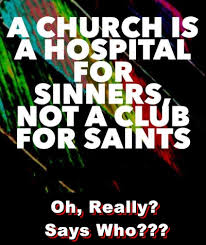
I’m going to use your outline “The Doctrine of the Church” to teach on Wednesday evenings. My question is one that we so often hear; I’d like your response to it: “The church is a hospital for sinners.”
I’ve always had a problem with that statement.
Thank you,
Pastor ___________________
__________________ Church
I responded to his inquiry as follows:
Dear Pastor ________________________,
I am humbled that you are using my outline to teach the doctrine of the church. I know that you will carefully examine it and modify it as the Lord leads. Please let me know if you find things that you feel need to be clarified, corrected, etc. according to the Word of God.
I humbly offer the following response to your question concerning a church being a hospital for sinners. I believe that the heresy is doing great harm to the cause of Christ. When a believer, family, church, or nation does not honor God’s Word, especially as to such a preeminent matter as the church Christ purchased with his own blood (Acts 20:28), much harm is done to the cause of Christ.
When one compares God’s New Testament church doctrine to the facts about a hospital, he can easily discern that the analogy, “A church is a hospital for sinners,” is heretical. Let us first look at some basics of New Testament church doctrine that make this clear.
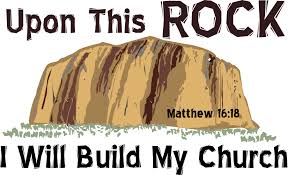
Is a church a hospital for sinners? It can be, but if it is, it is not a church modeled after New Testament church doctrine. An assembly of people meeting regularly for some purpose is a church; however, most such assemblies are not churches of Christ, churches under Christ. When Christ declared that “Thou are Peter and upon this rock (Himself), I will build my church,” he knew that there were already churches (ekklesias) in existence that were not His churches and that there would be such churches in the future. He said “I will build my church,” speaking of an institution that would be made up of local autonomous assemblies of born again baptized believers under Him in all things (See Epheisians 1.22; Colossians 1.18) each diligently seeking to follow-according to knowledge, understanding, and wisdom-His New Testament principles as to calling, purpose, organization, conduct, discipleship, discipline, etc.
Christ commissioned his disciples and the churches they planted to go into the world and preach the gospel, baptize, disciple the saved and to do all that he commanded them.
- Matthew 28:18-20: “And Jesus came and spake unto them, saying, All power is given unto me in heaven and in earth. Go ye therefore, and teach all nations, baptizing them in the name of the Father, and of the Son, and of the Holy Ghost: Teaching them to observe all things whatsoever I have commanded you: and, lo, I am with you alway, even unto the end of the world. Amen.”
- Mark 16:15-16: “And he said unto them, Go ye into all the world, and preach the gospel to every creature. He that believeth and is baptized shall be saved; but he that believeth not shall be damned.”
- Luke 24:46-47: “And said unto them, Thus it is written, and thus it behoved Christ to suffer, and to rise from the dead the third day: And that repentance and remission of sins should be preached in his name among all nations, beginning at Jerusalem.”
- Acts 1:8 But ye shall receive power, after that the Holy Ghost is come upon you: and ye shall be witnesses unto me both in Jerusalem, and in all Judaea, and in Samaria, and unto the uttermost part of the earth.
See, for more information on the foundation of Christ’s churches: The New Testament of Jesus Christ: His Executor Named and Empowered.
Before our Lord ascended to heaven, the Lord, being assembled together with His church:
Acts 1:4 : “… commanded them that they should not depart from Jerusalem, but wait for the promise of the Father, which, saith he, ye have heard of me.” … Acts 1:8: “But ye shall receive power, after that the Holy Ghost is come upon you: and ye shall be witnesses unto me both in Jerusalem, and in all Judaea, and in Samaria, and unto the uttermost part of the earth.”
Thus did the disciples; and, on the day of Pentecost, Christ filled them with the Holy Ghost (Acts 2.1-4) as foretold by John the Baptist (Matthew 3.26; Mark 1.8, Luke 3.16).
Immediately, Peter stood up and preached the gospel (Acts 2.1-36). “Then they that gladly received his word were baptized: and the same day there were added unto them about three thousand souls” (Acts 2.41). Three thousand souls were added to them (Christ’s church which had waited at Jerusalem)! Those who were saved were baptized and added to the only church under Christ in existence at that time, the church at Jerusalem.
“And they continued stedfastly in the apostles’ doctrine and fellowship, and in breaking of bread, and in prayers. And fear came upon every soul: and many wonders and signs were done by the apostles. And all that believed were together, and had all things common; And sold their possessions and goods, and parted them to all men, as every man had need. And they, continuing daily with one accord in the temple, and breaking bread from house to house, did eat their meat with gladness and singleness of heart, Praising God, and having favour with all the people. And the Lord added to the church daily such as should be saved” (Acts 2:42-47).
This is the pattern for all believers and churches from that time on: salvation, baptism into a local church body, discipleship in the assembly, and going into the world in accord with His will. God makes this clear as one studies his doctrine of the church as given us by the apostle Paul in his epistles.n Of course, as a continued study in God’s epistles given us by the apostle Paul, the members of every church are not required to sell all their possessions and goods and part them to all men, as every man has a need. They first church did this voluntarily and not as a requriement.
God’s epistles written by the Apostle Paul further develop the doctrine of the church. Those epistles “fully reveal and instruct as to the purpose of local churches as to their unique place in the counsels and purposes of God.” Through those epistles we know that a church under Christ:
- “is not an organization, but an organism, the body of Christ; instinct with His life, and heavenly in calling, promise, and destiny. Through him alone we know the nature, purpose, and form of organization of local churches, and the right conduct of such gatherings.”
A New Testament church is a spiritual organism (See, What Is a Spiritual Entity?) made up of born again believers. God reveals the make-up and purpose of a church under Christ in Ephesians; 1 Corinthians 12-14; Romans 12.3-8 and other passages:
Ephesians 4:11-16: “And he gave some, apostles; and some, prophets; and some, evangelists; and some, pastors and teachers; For the perfecting of the saints, for the work of the ministry, for the edifying of the body of Christ: Till we all come in the unity of the faith, and of the knowledge of the Son of God, unto a perfect man, unto the measure of the stature of the fulness of Christ: That we henceforth be no more children, tossed to and fro, and carried about with every wind of doctrine, by the sleight of men, and cunning craftiness, whereby they lie in wait to deceive; But speaking the truth in love, may grow up into him in all things, which is the head, even Christ: From whom the whole body fitly joined together and compacted by that which every joint supplieth, according to the effectual working in the measure of every part, maketh increase of the body unto the edifying of itself in love.”
New converts are immediately added to the family of God. God desires them to be baptized into a local church body under Christ. Sadly, such churches are few and far between in America and elsewhere in the world. We see this progression in Ephesians 2:19-22:
- “Now therefore ye are no more strangers and foreigners, but fellowcitizens with the saints, and of the household of God; And are built upon the foundation of the apostles and prophets, Jesus Christ himself being the chief corner stone; In whom all the building fitly framed together groweth unto an holy temple in the Lord: In whom ye also are builded together for an habitation of God through the Spirit.”
First, addition to the household or family of God, then baptism and church membership. Of course there are those who get saved and do not become church members, but that is not God’s ideal. He wants every believer to be a member of a local church of Christ.
God’s churches under Christ are for the saved and their purpose is stated in Ephesians 4.11-16, 1 Corinthians 12, and other passages. A church is for the saved, not for the lost. Saved church members are to assemble for the purposes given in Ephesians 4.11-16. Then, they are to go out into the world as ambassadors for Christ and preach the gospel to every creature! When sinners get saved, God wants them to be baptized into a local church under Christ.
I suggest that 1 Corinthians 2 gives insight into why the local assembly is for the saints, not the lost. The lost are worldly, fleshly. The saved are heavenly, spiritual. Lost people cannot know the things of God as can born again believers. They are dead in trespasses and sins whereas the saved are spiritually alive. They serve the god of this world. “And you hath he quickened, who were dead in trespasses and sins; Wherein in time past ye walked according to the course of this world, according to the prince of the power of the air, the spirit that now worketh in the children of disobedience” (Ephesians 2.1-2).
The New Testament teaches that new believers are to be baptized into a Bible believing church under Christ according to Ephesians 4, 1 Corinthians 12, Romans 12.3-8. There they enjoy the fellowship with other believers in the Holy Spirit and are equipped to go to their homes, to the workplace, and to the world as ambassadors winning the lost to Christ and baptizing them into a local New Testament church of Christ.
Instead, many churches tell their members to bring the lost to church where they will hear the gospel and do little to mature the spiritual babies in the assembly. Many of those churches will preach nothing but “salvation” on Sunday morning; and, at other times and at best, little more than a few simple fundamentals of the faith. As a result, most believers remain spiritual babies fed with milk (See 1 Corinthians 3.1-3; Hebrews 5.11-14 and 6.1-2) distracted and misled by the many lost in their midst. A small remnant of Christ’s churches carry out His commission and purposes as the mega-churches and false prophets (such as Joel Olsteen) preach the heresies of the devil to assemblies of lost people (for the most part) and lead untold millions to hell (See, e.g., 2 Corinthians 11.13-15).
Briefly, a hospital is a place which provides for a paid in-patient service and treatment for a worldly disease, sickness, or injury. One does not become a member of a hospital and leaves when he dies or the service and treatment ends. The hospital does not disciple its patients, operate as a worldly or spiritual assembly or congregation, etc. Most adults their right minds know this and much more about hospitals which clearly distinguish them from a New Testament Chruch. Believers, and especially those who are church members should be able to figure this out; but, sadly, most believers know little or nothing about God’s New Testament church doctrine
If anyone disagrees upon the foundation of the King James Bible, I ask them to please explain. If proven wrong, a published repentence will follow.
I hope this is helpful. Again, let me know if you believe something needs correction.
For His Glory,
Brother Jerald Finney
 Simply Church