Category Archives: Written Lessons

(3) God is the God of Israel


If you miss one part of the puzzle that is being put together in these studies, you will never see and understand the whole picture.


A Publication of Simply Church Ministry


Previous Lesson:
(2) Israel’s Performance, God’s Judgement, and a New Economy—God’s Grace

Next Lesson:
God Desires That All Nations Choose To Glorify Him

Click here to go to links to all lessons on Israel.

Click here to go to links to all written lessons.

Click here to go to the 5 to 8 minute video lectures.


Go to much more extensive essay by clicking here.


Jerald Finney
Copyright © December 28, 2017
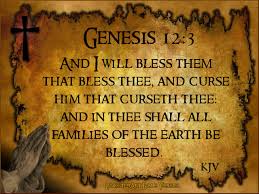

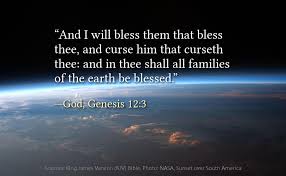
1God promised the nation Israel He would bless those that bless her and curse those who curse her. This promise was for all time. No such promise was ever given to any other nation.[1]

To suggest that Israel has only the rights God has given to all nations is a shocking rejection of clear biblical teaching! God distinctly tells Israel that He has “separated [and] severed [her] from other people”[2] and that she will not be “reckoned among the nations”[3] because He loved Israel and chose her to be a “special people … above all people.”[4]

God promises repeatedly, “O Israel … I am with thee … to save thee: though I make a full end of all nations whither I have scattered thee, yet will I not make a full end of thee.”[5] “The Bible identifies the true god as ‘the God of Israel’ 203 times, ‘the God of Jacob’ 28 times, ‘the God of Abraham’ 17 times, and ‘the God of Isaac’ 13 times. Never is He called the God of any other ethnic group. These designations are foundational to everything the Bible teaches, including the character of God. To profess to believe in God and at the same time to hold a prejudice against God’s chosen people, the Jews, or against Israel, which turns these clear biblical identifications into meaningless titles, casts doubt upon whether one really knows the true God.”[6]

The land of Israel was unconditionally given to Abraham and to his seed in the covenant God made with Abraham (the Abrahamic Covenant).[7] God said to Abraham, “For all the land which thou seest, to thee will I give it, and to thy seed for ever;”[8] “And he said unto him, I am the LORD that brought thee out of Ur of the Chaldees, to give thee this land to inherit it.”[9]

“The Abrahamic Covenant as formed (Gen. 12.1-4) and confirmed (Gen. 13.14-17; 15.1-7; 17.1-8) is in seven distinct parts:

  1. “‘I will make of thee a great nation.’ Fulfilled in a threefold way: (a) In a natural posterity—‘as the dust of the earth’ (Gen. 13.16; John 8.37), viz. the Hebrew people. (b) ‘In a spiritual posterity—look now toward heaven … so shall thy seed be’ (John 8.39; Rom. 4.16, 17; 9.7, 8; Gal. 3.6, 7, 29, viz. all men of faith, whether Jew or Gentile.) Fulfilled also through Ishmael (Gen. 17.18-20).
  2. “I will bless thee.’ Fulfilled in two ways: (a) temporally (Gen. 13.14, 15, 17; 15.18; 24.34, 35); (b) spiritually (Gen. 15.6; John 8.56).
  3. “‘And make thy name great.’ Abraham’s is one of the universal names.
  4. “‘And thou shalt be a blessing.’ (Gal. 3.13, 14).
  5. “‘I will bless them that bless thee.’ In fulfillment closely related to the next clause.
  6. “‘And curse him that curseth thee.’ Wonderfully fulfilled in the history of the dispersion. It has invariably fared ill with the people who have persecuted the Jew—well with those who have protected him. The future will still more remarkably prove this principle (Deut. 30.7; Isa. 14.1, 2; Joel 3.1-8; Mic. 5.7-9; Hag. 2.22; Zech. 14.1-3; Mt. 25.40, 45).
  7. “‘In thee shall all the families of the earth be blessed.’ This is the great evangelic promise fulfilled in Abraham’s Seed, Christ (Gal. 3.16; John 8.56-58). It brings into greater definiteness the promise of the Adamic Covenant concerning the Seed of the woman (Ge. 3.15).

“NOTE.—The gift of the land is modified by prophecies of three dispossessions and restorations (Gen. 15.13, 14, 16; Jer. 25.11, 12; Deut. 28.62-65; 30.1-3). Two dispossessions and restorations have been accomplished. Israel is now in the third dispersion, from which she will be restored at the return of the Lord as King under the Davidic Covenant (Deut. 30.3; Jer. 23.5-8; Ezk. 37.21-25; Lk. 1.30-33; Acts 15.14-17).”[10]

Thus God made three kinds of promises in the Abrahamic Covenant: (1) personal promises to Abraham, (2) national promises concerning Israel, and (3) universal promises that would affect all the people of the world.[11]  Some of those promises have been fulfilled, but His promises “to give the land of Canaan for an everlasting possession to Abraham’s physical descendants (Genesis 17.8) and to give the Abrahamic Covenant for an everlasting covenant to those same descendants (Genesis 17.7, 19)” have not yet been fulfilled.[12]

The Abrahamic Covenant was an everlasting covenant dependent upon God and not upon what Abraham did. A theological controversy surrounds this issue, but the Bible makes clear that the covenant is everlasting.[13]

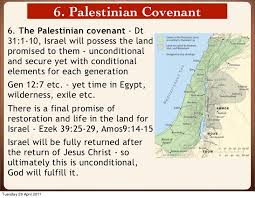
Palestinian_1As pointed out above, Israel entered the land under Joshua after Israel wandered forty years in the wilderness under the conditional covenant God made with Israel prior to their entering the land, the Palestinian Covenant. The Palestinian Covenant, which was established by God with Israel after He gave the Mosaic Covenant, was separate from the Mosaic Covenant.  “These are the words of the covenant, which the LORD commanded Moses to make with the children of Israel in the land of Moab, beside the covenant which he made with them in Horeb.”[14] In conjunction with the covenant, God made very significant promises to Israel.[15]

These promises are to be fulfilled with literal, not spiritual, Israel, and reveal that God always leaves the way open for unfaithful Israel to be reconciled to Him. The final fulfillment of these promises to Israel is in the future. Since God intends to fulfill these promises to Israel when all the curse of Deuteronomy 28 concerning the nation Israel has been completed, this shows that literal Israel, as distinguished from the church (identified by some theologians as spiritual Israel), will survive the curse of God. God’s promise to restore Israel to the land which he gave to Abraham and his descendents when all the curse of Deuteronomy 28 has been fulfilled is another guarantee of Israel’s permanent ownership of that land. The Word of God in the promises of the Palestinian Covenant guarantees that literal Israel will repent and become saved in the future.[16]

3DavidicThe future blessing of Israel as a nation rests upon the Palestinian Covenant of restoration and conversion and the covenant God made with David, the Davidic Covenant of the Kingship of the Messiah, David’s Son, and this gives to predictive prophecy its Messianic character. The exaltation of Israel is secured in the kingdom, and the kingdom takes its power to bless from the Person of the King, David’s Son, but also “Emmanuel.” The interpretation of “Emmanuel” is “God with us.”[17]

Later, after Israel rejected the theocracy and demanded a king, and after God anointed David as King, God made a covenant with David as recorded in 2 Samuel 7.8-17.[18] The Davidic Covenant, “upon which the glorious kingdom of Christ ‘of the seed of David according to the flesh’ is to be founded, secures:

(1) A Davidic ‘house’; i.e. posterity, family.
(2) A ‘throne’; i.e. royal authority.
(3) A kingdom; i.e. sphere of rule.
(4) In perpetuity; ‘for ever.’
(5) And this fourfold covenant has but one condition: disobedience in the Davidic family is to be visited with chastisement, but not to the abrogation of the covenant (2 Sam. 7.15; Psa. 89.20-37; Isa. 24.5; 54.3). The chastisement fell; first in the division of the kingdom under Rehoboam, and finally, in the captivities (2 Ki. 25.1-7). Since that time but one King of the Davidic family has been crowned at Jerusalem and He was crowned with thorns. But the Davidic Covenant confirmed to David by the oath of Jehovah, and renewed to Mary by the angel Gabriel, is immutable (Psa. 89.30-37), and the Lord God will yet give to that thorn-crowned One ‘the throne of his father David’ (Lk. 1.31-33; Acts 2.29-32; 15.14-17).[19]

assyrianCaptivityUtterly violating the conditions of the Palestinian Covenant, the nation was first disrupted[20] and then cast out of the land.[21] The dispersion was for disobedience, as foretold by God.[22]

A temporary dispersion within was prophesied, to come before the extended dispersion. “The LORD shall bring thee, and thy king which thou shalt set over thee, unto a nation which neither thou nor thy fathers have known; and there shalt thou serve other gods, wood and stone.”[23] This refers to Babylonian captivity of 70 years prophesied by Jeremiah.[24]

God, through Moses, told Israel that her continued disobedience would be punished by a worldwide dispersion.[25]

The Lord Jesus confirmed Moses’ words: “And they shall fall by the edge of the sword, and shall be led away captive into all nations: and Jerusalem shall be trodden down of the Gentiles, until the times of the Gentiles be fulfilled.”[26] After the siege and total destruction of Jerusalem in 70 A.D. almost all Judea became a desert and remained that way for nineteen-hundred and fifty years until 1948.

But the same covenant unconditionally promises a national restoration of Israel which is yet to be fulfilled. We see this in many prophecies. See En27[27] for some of those prophecies.

6This is where we are in prophecy at the present time: “And they shall fall by the edge of the sword, and shall be led away captive into all nations: and Jerusalem shall be trodden down of the Gentiles, until the times of the Gentiles be fulfilled.”[28]

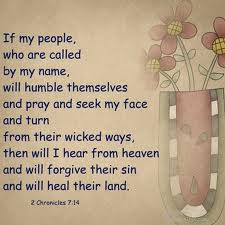
God told Israel, “If my people [Israel], which are called by my name, shall humble themselves and pray, and seek my face, and turn from their wicked ways; then will I hear from heaven, and will forgive their sin, and will heal their land.”[29] Israel will repent in the future while still in the dispersion: “And shalt return unto the LORD thy God, and shalt obey his voice according to all that I command thee this day, thou and thy children, with all thine heart, and with all thy soul[.]”[30]  God will then forgive them, restore them to their land which He gave them, and heal them.


Go to the following webpage for links to more in-depth Bible studies on Israel: The Bible Doctrine of Government.

Go to much more extensive essay by clicking here.


Endnotes

[1] 2 S. 7.23-26. David understood this. David said to the Lord after the Lord proclaimed to him what is called the Davidic Covenant: “And what one nation in the earth is like thy people, even like Israel, whom God went to redeem for a people to himself, and to make him a name, and to do for you great things and terrible, for thy land, before thy people, which thou redeemedst to thee from Egypt, from the nations and their gods? For thou hast confirmed to thyself thy people Israel to be a people unto thee for ever: and thou, LORD, art become their God. And now, O LORD God, the word that thou hast spoken concerning thy servant, and concerning his house, establish it for ever, and do as thou hast said…. And let thy name be magnified for ever, saying, The LORD of hosts is the God over Israel: and let the house of thy servant David be established before thee.”

[2] Le. 20.24, 26.

[3] N. 23.9.

[4] De. 7.6-9: “For thou [Israel] art an holy people unto the LORD thy God: the LORD thy God hath chosen thee to be a special people unto himself, above all people that are upon the face of the earth. The LORD did not set his love upon you, nor choose you, because ye were more in number than any people; for ye were the fewest of all people: But because the LORD loved you, and because he would keep the oath which he had sworn unto your fathers, hath the LORD brought you out with a mighty hand, and redeemed you out of the house of bondmen, from the hand of Pharoah king of Egypt.”.

[5] Je. 30.10-11.

[6] Dave Hunt, “God of Jacob, God of Israel, Part I,” The Berean Call, August 2006, Vol. XXI, No. 8, pp. 3, 5. See Matthew 22.29-31; See article for more good information on those who think the covenant with Israel was broken.  See also, Dave Hunt, “God of Jacob, God of Israel, Part Two,” The Berean Call, September 2006, Vol. XXI, No. 9, pp. 3-4.

[7] Ge. 12.1-4: “Now the LORD had said unto Abram, Get thee out of thy country, and from thy kindred, and from thy father’s house, unto a land that I will shew thee: And I will make of thee a great nation, and I will bless thee, and make thy name great; and thou shalt be a blessing: And I will bless them that bless thee, and curse him that curseth thee: and in thee shall all families of the earth be blessed. So Abram departed, as the LORD had spoken unto him; and Lot went with him: and Abram was seventy and five years old when he departed out of Haran.”.

[8] Ge. 13.15.

[9] Ge. 15.7.

[10] 1917 Scofield Reference Edition, n. 3 p. 24 to Genesis 15.18. This notation was made before the Jews were restored to the land in 1948. But even in 1948 and thereafter, there has not been a complete restoration to all the land that God gave to the Jews.

[11] Renald E. Showers, There Really Is a Difference: A Comparison of Covenant and Dispensational Theology (Bellmawr, New Jersey: The Friends of Israel Gospel Ministry, 1990), p p. 57-58.

[12] Ibid., p. 59.

[13] Ibid., pp. 60-68: Renald E. Showers sums up the dispensational arguments against the conditional position.

[14] De. 29.1.

[15] De. 30.1-10: “And it shall come to pass, when all these things are come upon thee, the blessing and the curse, which I have set before thee, and thou shalt call them to mind among all the nations, whither the LORD thy God hath driven thee, And shalt return unto the LORD thy God, and shalt obey his voice according to all that I command thee this day, thou and thy children, with all thine heart, and with all thy soul; That then the LORD thy God will turn thy captivity, and have compassion upon thee, and will return and gather thee from all the nations, whither the LORD thy God hath scattered thee. If any of thine be driven out unto the outmost parts of heaven, from thence will the LORD thy God gather thee, and from thence will he fetch thee: And the LORD thy God will bring thee into the land which thy fathers possessed, and thou shalt possess it; and he will do thee good, and multiply thee above thy fathers. And the LORD thy God will circumcise thine heart, and the heart of thy seed, to love the LORD thy God with all thine heart, and with all thy soul, that thou mayest live. And the LORD thy God will put all these curses upon thine enemies, and on them that hate thee, which persecuted thee. And thou shalt return and obey the voice of the LORD, and do all his commandments which I command thee this day. And the LORD thy God will make thee plenteous in every work of thine hand, in the fruit of thy body, and in the fruit of thy cattle, and in the fruit of thy land, for good: for the LORD will again rejoice over thee for good, as he rejoiced over thy fathers: If thou shalt hearken unto the voice of the LORD thy God, to keep his commandments and his statutes which are written in this book of the law, and if thou turn unto the LORD thy God with all thine heart, and with all thy soul.”

[16] Bible teaching on this is outlined in this chapter, infra. See also, Showers, pp. 81-82.

[17] Mt. 1.23.

[18] 2 S. 7.8-17. “Now therefore so shalt thou say unto my servant David, Thus saith the LORD of hosts, I took thee from the sheepcoat, from following the sheep, to be ruler over my people, over Israel: [a]nd I was with thee whithersoever thou wentest, and have cut off all thine enemies out of thy sight, and have made thee a great name, like unto the name of the great men that are in the earth. Moreover I will appoint a place for my people Israel, and will plant them, that they may dwell in a place of their own, and move no more; neither shall the children of wickedness afflict them any more, as beforetime.  “And as since the time that I commanded judges to be over my people Israel, and have caused thee to rest from all thine enemies. Also the LORD telleth thee that he will make thee an house. And when thy days be fulfilled, and thou shalt sleep with thy fathers, I will set up thy seed after thee, which shall proceed out of thy bowels, and I will establish his kingdom.  He shall build an house for my name, and I will stablish the throne of his kingdom for ever. I will be his father, and he shall be my son. If he commit iniquity, I will chasten him with the rod of men, and with the stripes of the children of men: [b]ut my mercy shall not depart away from him, as I took it from Saul, whom I put away before thee. And thine house and thy kingdom shall be established for ever before thee: thy throne shall be established for ever. According to all these words, and according to all this vision, so did Nathan speak unto David.”  “Although this passage does not call God’s promises to David a covenant, other passages clearly indicate that God was establishing a covenant with His servant (2 Sam. 23:5; 2 Chr. 7:18; 21:7; Ps. 89:3-4, 28-29, 34-37; Jer. 33.19-26).” Showers, p. 85.

[19] See also, 1 Chr. 17.7-15.

[20] 1 K. 12.

[21] 2 K. 17.1-18; 14.1-25.11.

[22] De. 30.1-3: “And it shall come to pass, when all these things are come upon thee, the blessing and the curse, which I have set before thee, and thou shalt call them to mind among all the nations, whither the LORD thy God hath driven thee, And shalt return unto the LORD thy God, and shalt obey his voice according to all thine heart, and with all thy soul; That then the LORD thy God will turn thy captivity, and have compassion upon thee from all the nations, whither the LORD thy God hath scattered thee.” De. 28.25, 63-64: “The LORD shall cause thee to be smitten before thine enemies: thou shalt go out one way against them, and flee seven ways before them: and shalt be removed into all the kingdoms of the earth…. And it shall come to pass, that as the LORD rejoiced over you to do you good, and to multiply you; so the LORD will rejoice over you to destroy you, and to bring you to nought; and ye shall be plucked from off the land whither thou goest to possess it. And the LORD shall scatter thee among all people, from the one end of the earth even unto the other; and there thou shalt serve other gods, which neither thou nor thy fathers have known, even wood and stone.” See also, Le. 26.32-39

[23] De. 28.36.

[24] Je. 25.11-12: “And this whole land shall be a desolation, and an astonishment; and these nations shall serve the king of Babylon seventy years. And it shall come to pass, when seventy years are accomplished, that I will punish the king of Babylon, and that nation, saith the LORD, for their iniquity, and the land of the Chaldeans, and will make it perpetual desolations.”. God gives explicit details of what will happen in that dispersion in De. 28.35-62.

[25] Deuteronomy 28.63-64. “And it shall come to pass, that as the LORD rejoiced over you to do you good, and to multiply you; so the LORD will rejoice over you to destroy you, and to bring you to nought; and ye shall be plucked from off the land whither thou goest to possess it. And the LORD shall scatter thee among all people, from the one end of the earth even unto the other; and there thou shalt serve other gods, which neither thou nor thy fathers have known, even wood and stone.” See verses 63-68.

[26] Lk. 21.24.

[27] Is. 11.11; Isaiah 48 explains that Israel will be restored & why; Isaiah 49.8-21: Israel to be preserved & restored; Is. 51.3; Is. 52.8, 9; Is. 54 describes Israel the restored wife of Jehovah & security and blessing of restored Israel; Is. 61.3-11; 62: The restoration of Israel; Is. 65.17-66.24: The eternal blessing of Israel in the new earth.

Is. 65.1-16 tells of all the bad things Israel, the rebellious people had done. Is. 65.17-25 tells of the eternal blessing of Israel in the new earth. Verse 17 looks beyond the kingdom-age to the new heavens and the new earth, but verses 18-25 describe the kingdom-age itself.  Longevity is restored, but death, the “last enemy” (1 Co. 15.26), is not destroyed till after Satan’s rebellion at the end of the thousand years (Re. 20.7-14).

Je. 16.15c (see Je. 16.14-16); Je. 23.1-40: the future restoration and conversion of Israel. This chapter tells the bad things the nation, the prophets, the priests, the people had done, and also states. “And I will gather the remnant of my flock out of all countries whither I have driven them, and will bring them again to their folds; and they shall be fruitful and increase…. Behold, the days come saith the LORD, that I will raise unto David a righteous Branch, and a King shall reign and prosper, and shall execute judgment and justice in the earth. In his days Judah shall be saved, and Israel shall dwell safely: and this is his name whereby he shall be called, THE LORD OUR RIGHTEOUSNESS.”

Je. 24 speaks of both the good and the evil and the good people who will be deported & the evil who remain in Judah and those who dwell in Egypt. God says he will remove the evil “into all the kingdoms of the earth for their hurt, to be a reproach and a proverb, a taunt and a curse, in all places whither I shall drive them … and will send the sword, the famine, and the pestilence, among them, till they be consumed from off the land that I gave unto them and their fathers” (Je. 24.9-10). But He will “set [his] eyes upon them for  good, and … will bring them again to this land: and … will build them, and not pull them down; and … will plant them, and not pluck them up.” (Je. 24.6). Je. 30.8-11, 16-24; 31; 32.37-44: Israel will be restored; Je. 32.32, 37-41; Jeremiah 33: God will restore Israel and Judah; Je. 46.27-28; Je. 50.19-20, 51.5; Ezekiel 11.17-21: Israel to be restored to the land and converted; Ezekiel 16.60-63: The promise of future blessing under the Palestinian Covenant and the New Covenant; Ez. 28.25-26; Ezekiel 34.11-31. Israel to be restored and the Davidic kingdom to be set up.

Notice the reason God restores Israel: “Therefore say unto the house of Israel, thus saith the Lord GOD; I do not this for your sakes, O house of Israel, but for mine holy name’s sake, which ye have profaned among the heathen, whither ye went. And I will sanctify my great name, which was profaned among the heathen, which ye have profaned in the midst of them; and the heathen shall know that I am the LORD, saith the Lord GOD, when I shall be sanctified in you before their eyes. Not for your sakes I do this saith the Lord GOD, be it known unto you: be ashamed and confounded for your own ways, O house of Israel.” Ez. 36.22-23, 32 [Bold emphasis mine]. One purpose for God setting aside the nation of Israel was to point other nations to God. Israel failed miserably. See Ezekiel 36 and many other passages in the OT.  Man always fails.  Only God succeeds.  As was mentioned in Chapter 2 above, the God-given purpose of man is to glorify God, but man seeks his happiness, and seeks not the glory of God.

“Jehovah gives [in Ez. 37] the method of the restoration of the nation. The “bones” are the whole house of Israel who shall then be living. The “graves” are the nations where they dwell. The order of the procedure is: (1) the bringing of the people out (v12); (2) the bringing of them in (v12); (3) their conversion (v13); (4) the filling with the Spirit (v14). The symbol of the 2 sticks follows. The 2 sticks are Judah and the ten tribes; united, they are one nation (vs. 19-21). Then follows (vs 21-27) the plain declaration as to Jehovah’s purpose, and verse 28 implies that then Jehovah will become known to the Gentiles in a marked way.  This is also the order of Acts 15.16, 17, and the two passages strongly indicate the time of full Gentile conversion.  See also Isa. 11.10.” 1917 Scofield Reference Edition, n. 1 to Ezekiel 37.1, p. 881.

Ez. 37.26-28; Ezekiel 39.25-29: Vision of restored and converted Israel. Ez. 40.1-48.35: Israel in the land during the kingdom-age. Vision of the future temple. Vision of the glory of the Lord filling the temple. The place of the throne of the future kingdom. The measure of the altar.  The offerings. 43.19-27. The gate for the prince. The priests of the future temple. Etc. Ez. 43.7-12: The place of the throne of the future kingdom.

“That Israel is the wife of Jehovah (see vs. 16-23), now disowned but yet to be restored, is the clear teaching of the passages [in the book of Hosea]….  Israel is, then, to be the restored and forgiven wife of Jehovah, … Jehovah’s earthly wife (Hos. 2.23)[.] …” Schofield, n. 1 to Ho. 2.2, p. 922. Ho. 2.14-23: Israel, the adulterous wife, to be restored. Ho. 13.9-16: The ultimate blessing of Israel in the kingdom.

Joel 3.1; Joel 3.17-21: The kingdom blessing; Amos 9.13-15: Full kingdom blessing of restored Israel; Micah 4.6-8: Israel to be regathered; Zephaniah 3.14-20: The kingdom blessing of Israel; Zec. 2.4-13: Jerusalem in the kingdom age; Zec. 8.1-8: Jehovah’s unchanged purpose to bless Israel in the kingdom; Zec. 8.20-23: Jerusalem to be the religious center of the earth; Zec. 9.10-17: The future deliverance of Judah and Ephriam, and the world-wide kingdom; Zec. 10: The future strengthening of Judah and Ephraim and the dispersion and regathering of Israel in one view.

Luke 1.26-38 (Here the angel Gabriel says to Mary): “He shall be great, and shall be called the Son of the Highest: and the Lord God shall give unto him the throne of his father David: And he shall reign over the house of Jacob for ever; and of his kingdom there shall be no end.”

Zacharias, filled with the Holy Ghost, prophesies… “And he raised up an horn of salvation for us in the house of his servant David; As he spake by the mouth of his holy prophets, which have been since the world began: That we should be saved from our enemies, and from the hand of all that hate us; To perform the mercy promised to our fathers, and to remember his holy covenant; The oath he sware to our father Abraham, That he would grant unto us, that we being delivered out of the hand of our enemies might serve him without fear, In holiness and righteousness before him, all the days of our life.”

When Jesus taught the apostles after he was risen, they “asked of him saying, Lord, wilt thou at this time restore again the kingdom to Israel? And he said unto them, It is not for you to know the times or the seasons, which the Father hath put in his own power” (Ac. 1.6-7). Notice, Jesus indicated that this would happen, but would not tell them when.

“… Taken together, the N.T. teachings concerning the return of Jesus Christ may be summarized as follows: (1) That the return is an event, not a process, and is personal and corporeal (Mt. 23.39; 24.30; 25.31; Mk. 14.62; Lk. 17.24; John 14.3; Acts 1.11; Phil. 3.20, 21; 1 Thes. 4.14-17). (2) His coming has a threefold relation: to the church, to Israel, to the nations.

“(a) To the church the descent of the Lord into the air to raise the sleeping and change the living saints is set forth as a constant expectation and hope (Mt. 24.36, 44, 48-51; 25.13; 1 Cor. 15.51, 52; Phil. 3.20; 1 Thes. 1.10; 4.14-17; 1 Tim. 6.14; Tit. 2.13; Rev. 22.20).
“(b) To Israel, the return of the Lord is predicted to accomplish the yet unfulfilled prophecies of her national regathering, conversion, and establishment in peace and power under the Davidic Covenant (Acts 15.14-17 with Zech. 14.1-9). See “Kingdom (O.T.),” 2 Sam. 7.8-17; Zech. 13.8, note; Lk. 1.31-33; 1 Cor. 15.24, note.
“(c) To the Gentile nations the return of Christ is predicted to bring the destruction of the present political world-system (Dan. 2.34, 35; Rev. 19.11, note); the judgment of Mt. 25.31-46, followed by world-wide Gentile conversion and participation in the blessings of the kingdom (Isa. 2.2-4; 11.10; 60.3; Zech. 8.3, 20, 23; 14.16-21).” 1917 Scofield Reference Edition, n. 1 to Ac.. 1.11, p. 1148.

“A distinction must be observed between the ‘last days’ when the prediction relates to Israel and the ‘last days’ when the prediction relates to the church (1 Tim. 4.1-3; 2 Tim. 3.1-8; Heb. 1.1, 2; 1 Pet. 1.4, 5; 2 Pet. 3.1-9; 1 John 2.18, 19; Jude 17-19). Also distinguish the ‘last days’ (plural) from ‘the last day’ (singular); the latter expression referring to the resurrections and last judgment (John 6.39, 40, 44, 54; 11.24; 12.48). The ‘last days’ as related to the church began with the advent of Christ (Heb. 1.2), but have especial reference to the time of declension and apostasy at the end of this age (2 Tim. 3.1; 4.4). The ‘last days’ as related to Israel are the days of Israel’s exaltation and blessing, and are synonymous with the kingdom-age (Isa. 2.2-4; Mic. 4.1-7). They are ‘last’ not with reference to this dispensation, but with reference to the whole of Israel’s history.” Ibid., n. 1, p. 1151 to Acts 2.17.

Acts 15.13-17: James declares the result of the council at Jerusalem which considered the issues of whether it was “needful to circumcise [the Gentile believers], and to command them to keep the law of Moses” (Ac. 15.5). the outcalling of the Gentiles agrees with the promises to Israel. Peter had argued, “And God, which knoweth the hearts, bare them witness, giving them the Holy Ghost, even as he did unto us; And put no difference between us and them, purifying their hearts by faith. Now therefore why tempt ye God, to put a yoke upon the neck of the disciples, which neither our fathers nor we were able to bear? But we believe that through the grace of the Lord Jesus Christ we shall be saved, even as they” (Ac. 15.8-11).

Romans 9-11: The Gospel does not set aside the covenants with Israel. 9.4-5 gives the sevenfold privilege of Israel. “I SAY then, Hath God cast away his people? God forbid.  For I also am an Israelite, of the seed of Abraham, of the tribe of Benjamin. God hath not cast away his people which he foreknew…. And so all Israel shall be saved: as it is written, There shall come out of Sion the Deliverer, and shall turn away ungodliness from Jacob: For this is my covenant unto them, and I shall take away their sins” (Ro. 11.1-2, 26-27).

“That Israel has not been forever set aside is the theme of [Romans 11]. (1) The salvation of Paul proves that there is still a remnant (v. 1). (2) The doctrine of the remnant proves it (vs. 2-6). (3) The present national unbelief was foreseen (vs. 7-10). (4) Israel’s unbelief is the Gentile opportunity (vs. 11-25). (5) Israel is judicially broken off from the good olive tree, Christ (vs. 17-22). (6) They are to be grafted in again (vs. 23, 24). (7) The promised Deliverer will come out of Zion and the nation will be saved (vs. 25-29). That the Christian now inherits the distinctive Jewish promises is not taught in Scripture. The Christian is of the heavenly seed of Abraham (Gen. 15.5, 6; Gal. 3.29), and partakes of the spiritual blessings of the Abrahamic Covenant (Gen. 15.18, note); but Israel as a nation always has its own place, and is yet to have its greatest exaltation as the earthly people of God. See ‘Israel’ (Gen. 12.2; Rom. 11.26); ‘Kingdom’ (Gen. 1.26-28; Zech. 12.8).” (1917 Scofield Reference Edition, n. 2 to Ro. 11.1, p. 1204).

[28] Lk. 21.24.

[29] 2 Chr. 7.14.

[30] De. 30.2.
(2) Israel’s Performance, God’s Judgement, and a New Economy—God’s Grace


If you miss one part of the puzzle that is being put together in these studies, you will never see and understand the whole picture.


A Publication of Simply Church Ministry


Previous Lesson:
(1) Israel, the only theocracy ordained by God

Next Lesson:
(3)  God is the God of Israel

Click here to go to links to all lessons on Israel.

Click here to go to links to all written lessons.

Click here to go to the 5 to 8 minute video lectures.


Jerald Finney
Copyright © December 28, 2017


“The reader of scripture should hold firmly in mind: (1) that from Genesis 12. to Matthew 12.45 the Scriptures have primarily in view Israel, the little rill, not the great Gentile river, though again and again the universality of the ultimate divine intent breaks into view;[1] (2) that the human race, henceforth called Gentile in distinction from Israel, goes on under the covenants given to Adam and Noah; and that for the race (outside Israel) men are guided by conscience and human government continues. The moral history of the great Gentile world is told in Romans 1.21-32, and its moral accountability in Romans 2.1-16. Conscience never acquits: it either ‘accuses’ or ‘excuses.’  Where the law is known to the Gentiles it is to them, as to Israel, ‘a ministration of death,’ a ‘curse.’[2] A wholly new responsibility arises when either Jew or Gentile knows the Gospel.[3]

2The Mosaic Law covered the period from Moses until the death and resurrection of Christ, or from Exodus 19.1 to Acts 1.26. Under the covenant God made with Moses, the Jews were to be responsible for keeping the whole law.[4] They did not succeed in their responsibility. Their zeal for God was not according to knowledge; they, being ignorant of God’s righteousness, went about to “establish their own righteousness, and did not submit themselves to the righteousness of God.[5] The result was the captivity of Judah by Babylon and the captivity of Israel by Assyria. After the Jews later rejected the Lord, they were scattered over the entire world. Jesus lamented, “O Jerusalem, Jerusalem, thou that killest the prophets, and stonest them which are sent unto thee, how often would I have gathered thy children together, even as a hen gathereth her chickens under her wings, and ye would not! Behold, your house is left unto you desolate. For I say unto you, Ye shall not see me henceforth, till ye shall say, Blessed is he that cometh in the name of the Lord.”[6]

“All during their many periods of declension and backsliding, God dealt with them graciously from the very first apostasy with the golden calf, when the law was being delivered to Moses, to the gracious promises of final regathering and restoration in the millennial age to come. These promises of a glorious future are guaranteed secure by the Abrahamic promises, which the law in no way abrogated (Gal. 3.3-25). We are also told clearly in the New Testament (Rom. 3.20 [“Therefore by the deeds of the law there shall no flesh be justified in his sight: for by the law is the knowledge of sin.”]) that the law was not a means of justification but of condemnation.”[7]

God declared that Israel would lend to other nations, but would not borrow, that Israel would reign over many nations, but that no nation would reign over Israel.[8] Israel was called the wife of Jehovah.[9] Israel is the “rod for his inheritance,” and God will use Israel to “break into pieces the nations.”[10] Thus, Israel is the key to everything regarding the nations of this world.

Again, Israel was ordained to be a theocracy under the direct rule of God, through His judges. This type civil government was unique to Israel. We see how this type of civil government was applied by Israel in the book of Judges. Over and over again, especially in Deuteronomy, the Jews were told to follow God’s law, to keep his commandments and statutes. “These are the statutes and judgments, which ye shall observe to do in the land, which the LORD God of thy fathers giveth thee to possess it, all the days that ye live upon the earth….”[11]  God’s laws covered everything, including idolatry. The Ten Commandments exemplified the law, and the whole of the Ten Commandments, including the first four, were to be enforced in the nation Israel.

kings-crownGod gave Israel free will. Ultimately Israel rejected God’s plan under which God himself ruled over the nation of Israel and demanded a king like the Gentile nations. Israel demanded a king.[12] God told Samuel to hearken unto their demand, that Israel had rejected God and His rule over them:[13]

God also told Samuel to tell the people the ill consequences of being ruled by a king: the king would take their sons and daughters for various services to the king; that the king would give their fields, vineyards, and oliveyards, the best of them to his officers and servants; their menservants, maidservants and their goodliest young men, their asses and put them to work; a tenth of their sheep; that they would be the servants of the king. Finally, Samuel warned them: “And ye shall cry out in that day because of your king which ye shall have chosen you; and the LORD will not hear you in that day.”[14]

King_Saul004But they still demanded a king.[15]  They were looking at man, not God, when they made this demand: “And they said unto Samuel, Behold, thou art old, and thy sons walk not in thy ways[.]”[16]  They still did not realize that God fulfills His purposes. Had Israel walked in faith and kept His statutes and commandments, God had promised to bless them.

Before the Israelites rejected God, God’s law as transmitted through Moses, then through his successors, was the whole of civil and religious government. God’s chosen people, even in the theocracy, rebelled against God and His ways time and again, were judged by God for so doing, and returned to God.

When kings started to rule, kings dominated prophet and priest. Saul, the first king, disobeyed the command of God through Samuel[17] and even sought to slay Samuel, the prophet of God.[18] David followed Saul as king of Israel. After the death of Solomon, David’s son who became king after the death of King David, the nation of Israel split in two. The northern Kingdom was called Israel, and the southern Judah. Before those two nations were eventually taken into captivity for their failure to proceed under God, all nineteen kings of Israel were evil and only eight of twenty kings of Judah were good (did that which was right in the eyes of the Lord).

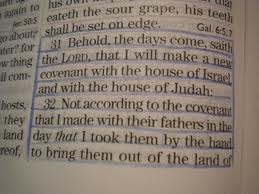
During that time, God sent prophets to warn the kings of both Israel and Judah to cast down their idols and return to the ways of the Lord and to proclaim the consequences that would surely come if they did not do so. Rarely did the kings heed the warnings of those prophets.  The Jews broke the Mosaic Law repeatedly.[19]

The nation was judged many times during this dispensation. Israel and Judah were both ultimately conquered and the people taken into captivity because of their rebellion against God. Worldwide dispersion resulted from their rejection of Christ.

5Israel miserably failed to obey God on the basis of conscience, the restraint of the Holy Spirit, human government, promise, and law. As a result, God instituted a new economy in which He dealt with all mankind on the basis of Grace. Conscience, the restraint of the Holy Spirit, human government, promise, and grace are being used by God to govern people. The law is not a ruling factor for the believer during this time of grace.[20]

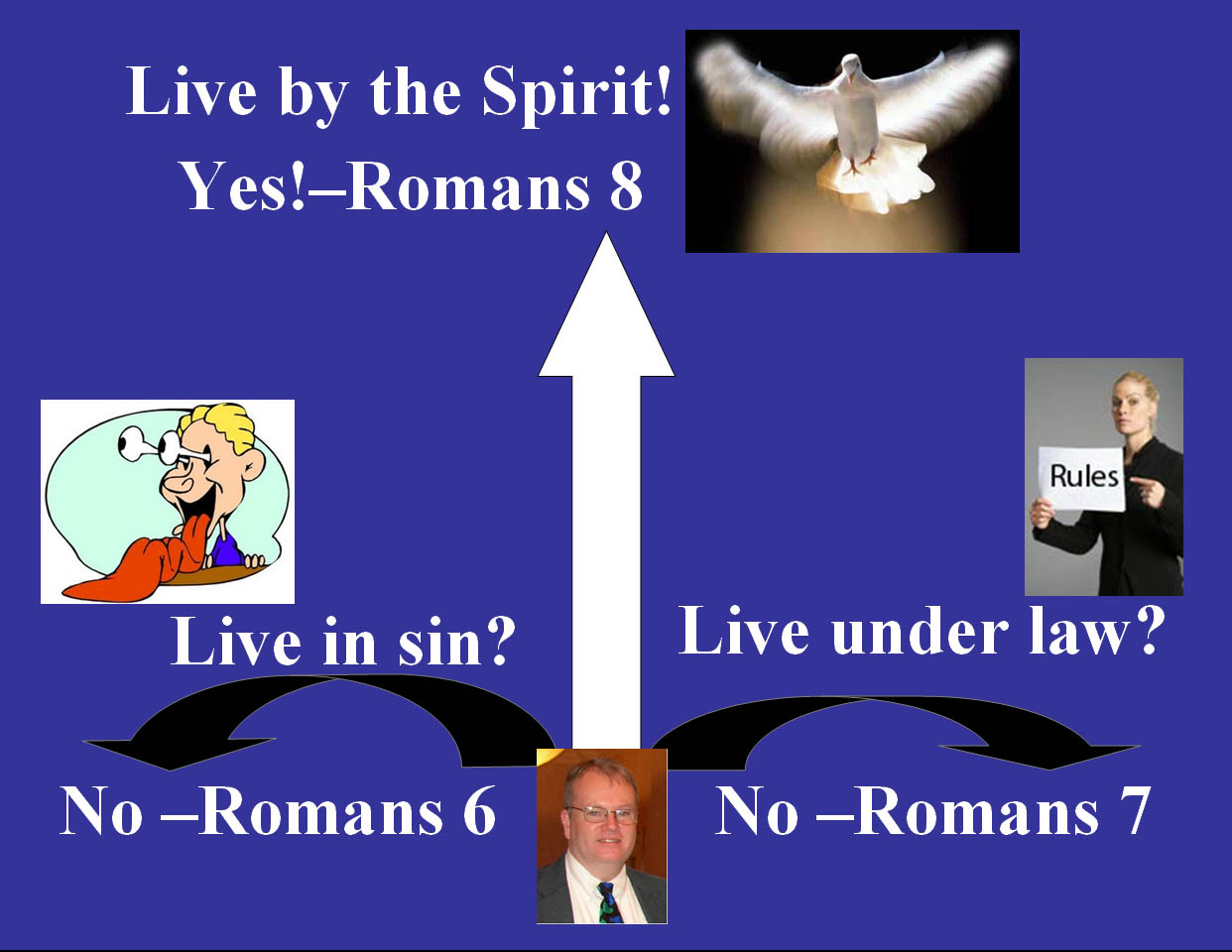
ROMANSGrace as a ruling factor for the believer consists of two things. First, a confirmed favorable disposition toward God, the law of God in the heart.[21] The second thing is the indwelling Holy Spirit: “What? know ye not that your body is the temple of the Holy Ghost which is in you, which ye have of God, and ye are not your own? For ye are bought with a price: therefore glorify God in your body, and in your spirit, which are God’s.”[22]

Sadly, the majority of Jews and Gentiles do not accept the gift of righteousness offered by God through grace. Organized Christendom does not fulfill its mission given it by God in the New Testament—it does not “fulfill the Great Commission, maintain a pure membership, discipline unruly members, prevent false teaching from existing within it, and contend earnestly for the true faith.”[23]  Man again will fail, and judgment will follow.


Go to the following webpage for links to more in-depth Bible studies on Israel: The Bible Doctrine of Government.


Endnotes

[1] e.g. Ge. 12.3; Is. 2.2, 4; 5.26, 9.1, 2; 11.10-12; 42.1-6; 49.6, 12; 52.15; 54.3; 55.5; 60.3, 5, 11-16; 61.6, 9; 62.2; 66.12, 18, 19; Je. 16.19; Joel 3.9, 10; Mal. 1.11; Ro. 9., 10., 11.; Ga. 3.8-14

[2] Ro. 3.19, 20; 7.9, 10; 2 Co. 3.7; Ga. 3.10.

[3] Jn. 3.18, 19, 36; 15.22-24; 16.9; 1 Jn. 5.9-12

[4] Ja. 2.10.

[5] Ro. 10.1-3.

[6] Mt. 23.37-39.

[7] Charles C. Ryrie, Dispensationalism (Chicago: Moody Press, 1995), p. 55.

[8] De. 15.6.

[9] Is. 54.5; Je. 3.14, 20; Ez. 16.26-59; 24.15-27. In Hos., we see the picture given that illustrates to the Jews how God feels when His wife, Israel, commits adultery.

[10] See Je. 51.19-23.

[11] De. 12.1.

[12] 1 S. 8.5.

[13] 1 S. 8.9.

[14] 1 S. 8.11-18.

[15] 1 S. 19.

[16] 1 S. 8.5.

[17] See 1 S. 15.

[18] 1 S. 16.2.

[19] Je. 31.32; Zec. 7.12.

[20] Ga. 3.19, 23-25; Ro. 6.14; 1 Co. 9.20.

[21] Ro. 7.22; 2 Co. 3.3-11; He. 8.8-12.

[22] 1 Co. 6.19-20.

[23] Renald E. Showers, There Really Is a Difference: A Comparison of Covenant and Dispensational Theology (Bellmawr, New Jersey: The Friends of Israel Gospel Ministry, 1990), p. 46.

(1) Israel—The Only Theocracy Ordained by God


If you miss one part of the puzzle that is being put together in these studies, you will never see and understand the whole picture.


A Publication of Simply Church Ministry


Previous Series of Lessons:
Civil Government

Next Lesson:
(2) Israel’s Performance, God’s Judgement, and a New Economy—God’s Grace

Click here to go to links to all lessons on Israel.

Click here to go to links to all written lessons.

Click here to go to the 5 to 8 minute video lectures.


Click here to go to much more thorough essay on this subject by clicking here.


Jerald Finney
Copyright © December 27, 2017


Originally, all civil governments were under the same guidelines. Although Gentile nations proceeded under the original plan as ordained by God in the covenant He made with Noah, God called out Israel, a nation for Himself. First, Abraham was called out and obtained a promise of God.[1] Since man had failed to obey God on the basis of human conscience, the restraint by the Holy Spirit, and human government, God instituted a new economy, a new way of dealing with man. He made promises to Abraham and his seed, Jesus Christ, which were four hundred years before the law. The inheritance was not of the law which was added because of transgressions, “until the seed should come” who was Jesus Christ.[2] God “sware” this promise “by himself.[3]

God promised Abraham that He would bless him, make his name great, give him many physical descendants, make him the father of many nations, give him the land of Canaan for an everlasting possession, and bless those who blessed him and curse those who cursed him.[4]

God promised Abraham, Isaac, Jacob, and their seed everlasting possession of a physical land on the earth with prescribed boundaries. Israel’s government, working in conjunction with the Jewish religious leaders, was given the responsibility to enforce all ten of the Ten Commandments, as well as all of God’s moral law. The Gentile nations proceeded under the original plan laid down by God and their highest function was the judicial taking of life, from which all other governmental powers may be implied.

Israel was called by God for specific purposes: “Israel was called to be a witness to the unity of God in the midst of universal idolatry;[5] to illustrate the blessedness of serving the true God;[6]) to receive and preserve the divine revelations;[7] and to produce the Messiah.[8]

The Jewish patriarchs (heads of families) failed in the responsibilities God gave them, and judgment followed. Their responsibility was only to believe and serve God who provided all material and spiritual resources requisite to inspire them to do this. God gave them the Promised Land, and blessings were guaranteed while they remained in the land. In spite of this, their future was predominated by failure. Jacob eventually led his children to Egypt where they were enslaved. God delivered them and crushed their taskmasters.

After God delivered Israel from their Egyptian oppressors, He gave them the Mosaic Law. This was, of course, before they entered the Promised Land. He dealt with them now on the basis of that law in addition to conscience, the restraint of the Holy Spirit, civil government, and promise. God’s new economy for Israel was based on law. Promise and law are sharply distinguished in Galatians 3 even though the law did not annul the promise.[9]

The law was written in stone and “was a totally external way of God’s administering His rule over Israel.”[10] It was an external moral restrainer, a “schoolmaster to bring us to Christ.”[11]

When God delivered Israel out of Egyptian bondage, their faith failed and God caused them to wander in the wilderness for forty years. Before God allowed Israel to enter the Promised Land, she operated under a covenant directed solely to the nation Israel. All other nations, the Gentile nations, continued under the covenant God made with Noah. Israel was given covenant declared in Deuteronomy 30.1-10 which gives God’s conditions under which Israel entered the land. Israel has never as yet taken the land under the unconditional Abrahamic Covenant, nor has it ever possessed the whole land.[12] The seven parts to the covenant given in Deuteronomy 30 are:

  1. Dispersion for disobedience, v. 1 (De. 28.63-68. See Ge. 15.18, note).
  2. The future repentance of Israel while in the dispersion, v.2.
  3. The return of the Lord, v.3 (Amos 9.9-14; Ac. 15.14-17).
  4. Restoration to the land, v. 5 (Is. 11.11, 12; Je. 23.3-8; Ez. 37.21-25).
  5. National conversion, v.6 (Ro. 11.26, 27; Hos. 2.14-16).
  6. The judgment of Israel’s oppressors, v. 7 (Is. 14.1,2; Joel 3.1-8; Mt. 25.31-46).
  7. National prosperity, v. 9 (Amos 9.11-14).

Israel in the land was originally a theocracy directly under God. God spoke directly to Moses and Joshua, and then chosen judges in Israel. God does not and never has spoken directly to Gentile nations as He did with Israel.

Israel was a theocracy. The word “theocracy” comes from two Greek words, theos meaning God and kratos meaning ruler. “Theocracy” means “Government of a state by the immediate direction of God; or the state thus governed. Of this species the Israelites furnish an illustrious example. The theocracy lasted till the time of Saul.”[13]

The church, which God instructed to be directly under God and His principles only, is not a state, and therefore not a theocracy. Nor can a church take the place of God over a state; such an arrangement is not a theocracy.

Next, we will take a look at how Israel performed in the theocracy in the land, God’s judgments of Israel, and God’s grace.


Go to the following webpage for links to more in-depth Bible studies on Israel: The Bible Doctrine of Government.


Endnotes

[1] He. 6.15; 11.9

[2] Ga. 3.15-22.

[3] He. 6.13-15.

[4] Ge. 12.2-3; Ge. 13.14-17; Ge. 22.16-18. See also, Ge. 15 and 17.1-22.

[5] De. 6.4; Is. 43.10-12.

[6] De. 33.26-29.

[7] Ro. 3.1, 2; De. 4.5-8.

[8] Ge. 3.15; 21.3; 28.10, 14; 49.10; 2 S. 7.16, 17; Is. 4.3, 4; Mt. 1.1.

[9] Ga. 3.10-18.

[10] Showers, p. 42.

[11] Ga. 3.23-25.

[12] Cf. Ge. 15.18, with Nu. 34.1-12.

[13] AMERICAN DICTIONARY OF THE ENGLISH LANGUAGE, NOAH WEBSTER (1828), definition of “THEOCRACY.”

(1) The Ordination and Purpose of Civil Government


If you miss one part of the puzzle that is being put together in these studies, you will never see and understand the whole picture.


A publication of Simply Church Ministry


Previous Lesson:
Family Government and Conscience

Next Lesson:
(2) The Purpose of Gentile Civil Government

Click here to go to links to all lessons on Civil Government.

Click here to go to links to all written lessons.

Click here to go to the 5 to 8 minute video lectures.


Click here to go to Youtube lecture for this lesson.


Jerald Finney
Copyright © December 27, 2017


5

In spite of conscience and the restraint of the Holy Spirit, what happened without civil government? Very soon after the fall, God was grieved and repented that he had made man because the imagination of the thoughts of the heart were “only evil continually.” “All flesh had corrupted his way on the earth.” The earth was filled with violence. Remember that God had told men not to take vengeance; and that, if he did so, He would take vengeance on man sevenfold. So God told Noah He would destroy them.[1] The total corruption of mankind, except for Noah and his family, had occurred in a relatively short period of time after the fall of man and his expulsion from the Garden of Eden. The only remedy was God’s judgment and the initiation of an additional direct control over men.

Even man’s God-given common sense will tell a man the need for civil government. For example, “Alexander Hamilton asked and answered his own question: ‘Why has government been instituted at all? Because the passions of men will not conform to the dictates of reason and justice without constraint.'”[2]

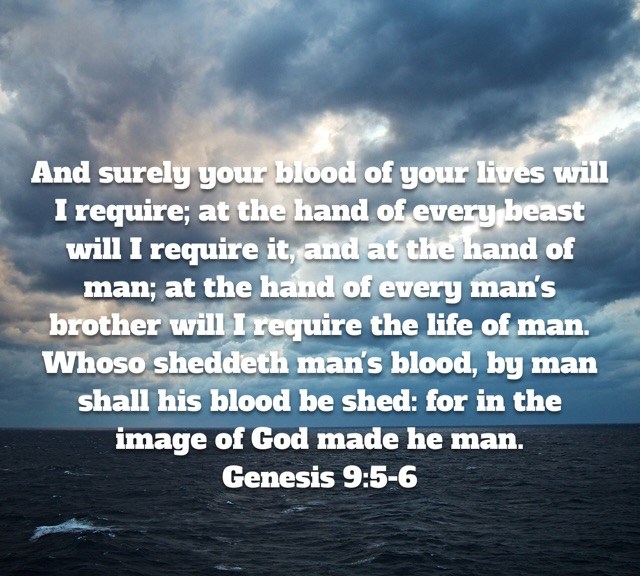
At the flood, for the first time, God made a new covenant with man giving man the responsibility for ruling over man for Him; God ordained human or civil government. “For there is no power but of God: the powers that be are ordained of God.” [3] God gave man the responsibility of taking the life of one who “sheddeth man’s blood,” “for in the image of God made he man.” [4] God gave man the right to take the life of a man, which in the very nature of the case gave man the authority to govern others. Unless [civil] government has the right to the highest form of punishment, its basic authority is questionable and insufficient to protect properly those it governs. He ordained civil government for the earthly benefit of man—to control evil.

NoahFoundGraceCivil government was established within the covenant God made with Noah. The elements of that covenant are:
  1. The relation of man to the earth under the Adamic Covenant is confirmed (Gen. 8.21).
  2. The order of nature is confirmed (Gen. 8.22).
  3. Human government is established (Gen. 9.1-6).
  4. Earth is secured against another universal judgment by water (Gen. 8.21; 9.11).
  5. A prophetic declaration is made that from Ham will descend an inferior and servile posterity (Gen. 9.24, 25).
  6. A prophetic declaration is made that Shem will have a peculiar relation to Jehovah (Gen. 9.26, 27). All divine revelation is through Semitic men, and Christ, after the flesh, descends from Shem.
  7. A prophetic declaration is made that from Japheth will descend the ‘enlarged’ races (Gen. 9.27). Government, science, and art, speaking broadly, are and have been Japhetic, so that history is the indisputable record of the exact fulfillment of these declarations.

God then ordered man to multiply and populate the earth: “And God blessed Noah and his sons, and said unto them, Be fruitful, and multiply, and replenish the earth.”[5]

The covenant God made with Noah was to continue: It was to be an “everlasting covenant” [6] for “perpetual generations.”[7] Thus, the covenant is in effect today.

Would man obey God on the basis of conscience, the restraint of the Holy Spirit, and human government? I will answer that question in the next study.


Endnotes

[1] Ge. 6.5-7, 12-13; 8.21.

[2] M. Stanton Evans, The Theme Is Freedom (Washington, D.C.: Regency Publishing, 1994), p. 193 cited in William P. Grady, What Hath God Wrought? (Knoxville, TN: Grady Publications, Inc. 1999), p. 72.

[3] Ro. 13.1b,c.

[4] Ge. 9.5-6.

[5] Ge. 9.1.

[6] Ge. 9.12.

[7] Ge. 9.16.

Family government and conscience


If you miss one part of the puzzle that is being put together in these studies, you will never see and understand the whole picture.


A publication of Simply Church Ministry


Previous Lesson:
Self-government

Next Series of Lessons:
Civil Government

Click here to go to links to all written lessons.

Click here to go to all lessons on the Bible Doctrine of Government.

Click here to go to the 5 to 8 minute video lectures.


Click here to go to video lecture on this lesson.


Jerald Finney
Copyright © December 27, 2017


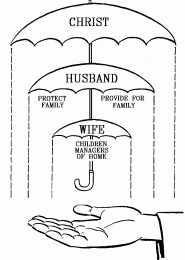
submission-umbrellasAfter the fall, God established family government. He said to the woman: “I will greatly multiply thy sorrow and thy conception; in sorrow thou shalt bring forth children; and thy desire shall be to thy husband, and he shall rule over thee.”[1] The Bible teaches that the husband is to be the head of the wife,[2] and children are to be instructed and led by the parents.[3] Parents, not the state, are to care for their children: “But if any provide not for his own, and specially for those of his own house, he hath denied the faith, and is worse than an infidel.”[4] Even an infidel has a love for his children placed there by God.[5] God desires that man satisfy his sexual desire only in marriage. “Thou shalt not commit adultery.”[6] “Nevertheless, to avoid fornication, let every man have his own wife, and let every woman have her own husband.”[7]

God desires parents, not civil government, to provide a God-centered education for their children:

  • “Hear, O Israel: The LORD our God is one LORD: And thou shalt love the LORD thy God with all thine heart, and with all thy soul, and with all thy might. And these words, which I command thee this day, shall be in thine heart: And thou shalt teach them diligently unto thy children, and shalt talk of them when thou sittest in thine house, and when thou walkest by the way, and when thou liest down, and when thou risest up.”[8]

ConscienceAfter the fall, God gave mankind a chance to be directed by his conscience (an awareness of doing wrong), still to be individually controlled only by self-government. God had told man, prior to the fall, “For God doth know that in the day ye eat thereof [of the forbidden fruit], then your eyes shall be opened, and ye shall be as gods, knowing good and evil.”[9]  After man ate the forbidden fruit, God told them, “And the LORD God said, Behold, the man is become as one of us, to know good and evil.”[10]  Some[11] refer to this economy, this method God uses to deal with individuals, as Conscience, the title being taken from these verses: “For when the Gentiles, which have not the law, do by nature the things contained in the law, these, having not the law, are a law unto themselves: Which shew the work of the law written in their hearts, their conscience also bearing witness, and their thoughts the mean while accusing or else excusing one another[.]”[12] The Holy Spirit also strove with man during the days before the upcoming flood: “And the LORD said, My spirit shall not always strive with man, for that he also is flesh: yet his days shall be an hundred and twenty years.”[13]

Even though God later ordained civil government and church government, every person since the fall is born with a God-given self-conscience (knowledge of who he is) as well as with a God-consciousness[14], a knowledge of who God is.

God gave mankind certain responsibilities:

  • “During this stewardship man was responsible to respond to God through the promptings of his conscience, and part of a proper response was to bring an acceptable blood sacrifice as God had taught him to do (Gen. 3.21; 4.4). We have a record of only a few responding, and Abel, Enoch, and Noah are especially cited as heroes of faith. We also have the record of those who did not respond and who by their evil deeds brought judgment on the world. Cain refused to acknowledge himself a sinner even when God continued to admonish him (Gen. 4.3, 7). So murder came on the scene of human history.”[15]

In the story of Cain and Abel, we see that God still did not allow civil government. After Cain killed Abel, the Lord told Cain, “And now art thou cursed from the earth, which hath opened her mouth to receive thy brother’s blood from thy hand; When thou tillest the ground, it shall not henceforth yield unto thee her strength; a fugitive and a vagabond shalt thou be in the earth.”[16] Since Cain feared that “every one that findeth me shall slay me,”[17] God said, “… Therefore whosoever slayeth Cain, vengeance shall be taken on him sevenfold. And the Lord set a mark upon Cain, lest any finding him should kill him.”[18]  The Supreme Ruler of the universe was telling man that he had no authority to rule over man and that God would take vengeance on him sevenfold if he did.


Click here to go to more thorough written lesson.


Endnotes

[1] Ge. 4.16.

[2] 1 Co. 11.3; Ep. 5.22-26; 1 Pe. 3.1, 5-7; 1 Ti. 2.11-15.

[3] Ex. 20.12; De. 6.6-7; 11.18-21; Pr. 4.1, 2, 10, 11; Ep. 6.1, 4; Col. 3.20.

[4] 1 Ti. 5.8.

[5] Mt. 7.9-11.

[6] Ex. 20.14.

[7] 1 Co. 7.2.

[8] De. 6.4-7; see also, Pr. 4.1, 2, 10, 11; 5.1, 2; 22.6; Ep. 6.4.

[9] Ge. 3.5.

[10] Ge. 3.22a.

[11] 3c will deal specifically with the two main methods of Bible understanding, belief versus allegory. “Allegory” means “interpreting the Bible in such a way as to reveal a hidden meaning, a meaning which cannot be seen by believing what the Bible says.” Classic Catholic and covenant theology allegorize or spiritualize much of the Bible. The warfare between those who believe the Bible and those who allegorize it had already started when the New Testament was written (See, e.g., Colossians). As a result, as will be seen by the student who follows these studies, Augustine and his progency (Luther, Calvin, Zwingli, Knox et al) used this method to develop the theology which combined church and state and resulted in the persecution (imprisonment, torture, hanging, burning at the stake, drowning, confiscation of property, and the destruction or confiscation of the writings of the martyrs) of fifty million plus “heretics.” That theology still operates in America even though the proponents do not, at this time, have the power to persecute.

[12] Ro. 2.14-15.

[13] Ge. 6.3.

[14] See Ro. 1.18-32.

[15] Charles C. Ryrie, Dispensationalism (Chicago: Moody Press, 1995), pp. 52-53.

[16] Ge. 4.11-12.

[17] Ge. 4.14.

[18] Ge. 4.15.

Self-government


A Publication of Simply Church Ministry


Previous Lesson:
Introduction to the Bible Doctrine of Government

Next Lesson:
Family Government and Conscience

Click here to go to links to all written lessons.

Click here to go to all lessons on the Bible Doctrine of Government.

Click here to go to the 5 to 8 minute video lectures.


Click here to go to accompanying video lecture.


Jerald Finney
Copyright © December 26, 2017


Self-government or individual government was the first government ordained by God and is simply control or direction over oneself.

On the sixth day, God created man in His own image, “male and female created he them.”[1]  After creating the man, God created woman out of one of Adam’s ribs to be an “help meet” for him.[2]  God brought the woman to Adam and marriage was instituted: “Therefore shall a man leave his father and his mother, and shall cleave unto his wife: and they shall be one flesh.”[3]

After creating them, God blessed them and told them to “be fruitful and multiply, and replenish” and subdue the earth. He gave them dominion over all living things. He put them in the garden of Eden to “dress it and keep it.” And the LORD God commanded the man, saying, Of every tree of the garden thou mayest freely eat: But of the tree of the knowledge of good and evil, thou shalt not eat of it: for in the day that thou eatest thereof thou shalt surely die.”[4]

Thus, God, , made a covenant with man and woman, the first of eight great covenants of Scripture which condition life and salvation, and about which all scripture crystallizes.[5] The covenant God made with them has seven elements. The man and woman in Eden were responsible:

  1. To replenish the earth with a new order—man;
  2. to subdue the earth to human uses;
  3. to have dominion over the animal creation;
  4. to eat herbs and fruits;
  5. to till and keep the garden;
  6. to abstain from eating of the tree of knowledge of good and evil;
  7. the penalty—death.”

God, in the Garden of Eden, gave man an opportunity to operate under self-government, under the constraint of only one simple rule. Man failed. Man was tempted by Satan to disobey the one small rule God had laid down, and mankind failed.[6]  Satan came to woman and misquoted the Word of God: “Yea, hath God said, Ye shall not eat of every tree of the garden?”[7]  Eve quoted the Word of God back to Satan, but added to it: “We may eat of the fruit of the trees of the garden: But of the fruit of the tree which is in the midst of the garden, God hath said, Ye shall not  eat of it, neither shall ye touch it, lest ye die.”[8] Satan then directly challenged the Word of God: “Ye shall not surely die: For God doth know that in the day ye eat thereof, then your eyes shall be opened, and ye shall be as gods, knowing good and evil.”[9]

“And when the woman saw that the tree was good for food, and that it was pleasant to the eyes, and a tree to be desired to make one wise, she took of the fruit thereof, and did eat, and gave also unto her husband with her; and he did eat. And the eyes of them both were opened, and they knew that they were naked; and they sewed fig leaves together, and made themselves aprons.”[10]

At that point, God judged the serpent (the devil), the woman, and the man. [11]

God gave another covenant, a covenant conditions the life of fallen man—conditions which must remain till … “the creation also shall be delivered from the bondage of corruption into the glorious liberty of the sons of God” (Ro. 8.21). The elements of that covenant are:

  1. The serpent, Satan’s tool, is cursed (v.14), and becomes God’s illustration in nature of the effects of sin—from the most beautiful and subtle of creatures to a loathsome reptile.
  2. The first promise of a Redeemer (v.15). Here begins the “highway” that leads to Christ.
  3. The changed state of the woman (v16). In three particulars: (a) Multiplied conception; (b) motherhood linked with sorrow; (c) the headship of the man[12] (cf. Gen. 1.26, 27). The entrance of sin, which is disorder, makes necessary a headship, and it is vested in man (1 Tim. 2.11-14; Eph. 5.22-25; 1 Cor. 11.7-9).
  4. The earth cursed (v17) for man’s sake. It is better for fallen man to battle with a reluctant earth than to live without toil.
  5. The inevitable sorrow of life (v17).
  6. The light occupation of Eden (Gen. 2.15) changed to burdensome labor (vs. 18, 19).
  7. Physical death (v19; Rom. 5.12-21). See ‘Death (spiritual)’ (Gen. 2.17; Eph. 2.5, note).”

God continued to hold man individually responsible for his spiritual decisions. We see this first in the story of Cain and Abel in Genesis 4.

Satan is still successfully deceiving man as to God’s authority and God’s government by manifold attacks on the inerrancy of the Word of God, by the same “Yea, hath God said” strategy he used in the Garden of Eden. This course will show how he has deceived untold millions of Christians with regard to the issue of separation of church and state by misquoting and misinterpreting the Bible.

Thus man makes a choice of his own free will as to how he will respond to God. The principle of freedom of conscience or free will is found throughout the Bible.[13]

Love requires a choice. Without free will, man has no choice and God would be, by force, taking some people to heaven and some to the lake of fire at His discretion. Admittedly, one can do no work to earn his way to heaven, but faith is not a work. “But to him that worketh not, but believeth on him that justifieth the ungodly, his faith is counted for righteousness.”[14]

All other governments, except God’s supreme government, are made up of individuals. God desires the individual(s) who lead(s) a church government, a family government, or a civil government to confine that government to the principles laid down by God for the administration of itself. If a civil government will point individuals, families, businesses, and other institutions to God’s principles without infringing the God-ordained limitations to its authority and the freedom of conscience of individuals to choose God, god, gods, or no god at all, that civil government will guarantee liberty and will be operating in God’s will, as will be shown.


Go to a more in-depth version of “Self-Government” by clicking here.


Endnotes


[1] Ge. 1.27.

[2] Ge. 2.18, 21-22.

[3] Ge. 2.23.

[4] Ge. 1.28-29; 2.15-17.

[5] Id.

[6] Ge. 3.1-13.

[7] Ge. 3.1.

[8] Ge. 3.2-3.

[9] Ge. 3.4-5.

[10] Ge. 3.6-7.

[11] Ge. 3.14-19.

[12] Ge. 1.26, 27.

[13] See, e.g., Jn. 3.16, 18 (“For God so loved the world that he gave his only begotten Son, that whosoever believeth in him should not perish, but have everlasting life…. He that believeth on him is not condemned, but he that believeth not is condemned already, because he hath not believed in the name of the only begotten Son of God.); Re. 22.17 (“And the spirit and the bride say, Come. And let him that heareth say, Come. And let him that is athirst come. And whosoever will, let him take the water of life freely.”).

[14] Romans 4.5.

Introduction to the Biblical Doctrine of Government


A Publication of Simply Church Ministry


Next Lesson:
Self-government

Click here to go to links to all written lessons.

Click here to go to all lessons on the Bible Doctrine of Government.

Click here to go to the 5 to 8 minute video lectures.


If you miss one part of the puzzle that is being put together in these studies, you will never see and understand the whole picture.


Jerald Finney
Copyright © December 26, 2017


12A basic definition of government is “direction, control.” God is the highest Ruler. His government is above all other governments; all other governments derive their authority from God. He, as the Sovereign of the universe ordained and rules over all other governments. “Ordain” means “to establish or order by appointment, decree, or law” (WEBSTER’S COLLEGIATE DICTIONARY 818 (10th ed. 1995)). Men know that God is in control because God put a God-consciousness in every person (See Ro. 1.18-32).
God teaches in many ways, throughout the Bible, that He is the Supreme Ruler and His is the Higher and Highest Power. As possessor of heaven and earth, God has and exercises supreme authority in both the heavenly and earthly sphere.

That God is supreme, the Highest Power, is revealed in the Old Testament through, among other things, His names. The Old Testament reveals the existence of a Supreme Being, the Creator of the universe and of man, the Source of all life and intelligence who is to be worshipped and served by men and angels.

As the Supreme Ruler, He has decreed that men may choose to be guided by His principles or not. However, choices are met by either blessings or judgment. In the final analysis He will either reward or judge all governments according to the degree they abide by His will.

The first government established by God was self-government. Every person exercises self-government, and decides whether he or she will receive the only true and eternal hope which is provided by God, that is the Lord Jesus Christ, as Savior. “And this is the will of him that sent me, that every one which seeth the Son, and believeth on him, may have everlasting life: and I will raise him up at the last day” (Jn. 6.40).

After the fall of man in the Garden of Eden, and man knew “good and evil,” God established family government. Every person within a family – father, mother, and children – in exercising self-government, chooses whether to submit to God’s guidelines concerning family government.

The next type of government ordained by God was human government or civil government. God ordained civil government at the time of the great flood.  For the first time, He gave man the responsibility of ruling the world for God. Relatively quickly after Cain killed Abel, all mankind except Noah and his family, guided only by conscience (knowledge of good and evil or an awareness of right and wrong) had become totally corrupted. Civil government provided further and direct control over the evil nature of man.

Some time after ordaining civil government, God called out Abraham to be the father of Israel. Israel was established as a theocracy. All other nations were non-theocratic and were and are called “Gentile.” God established Israel to be directly under Him for specific purposes. Israel was to be the only theocracy that God has ever ordained. The Gentile nations can only look to Israel to see that God is who He claims to be, but God still desires every nation to choose to honor Him and His principles.

The Word of God teaches us that no civil government, Jew or Gentile, since it is made up of sinful men, will, before the return of Christ, ever follow the principles of God for any significant period of time. That both Israel and the Gentiles have governed for self, not God, is sadly apparent. Therefore, every civil government that has ever existed or which will ever come about prior to the return of the Lord will be judged by God.

God used a Gentile nation to take Israel into captivity, and He has already judged and is judging many Gentile nations. The Lord will return and crush the Gentile world-powers existing at the time of His return which, led by the beast and false prophet, will come and besiege Israel (Re. 19.19). The nation Israel will then be restored to the land which God gave them according to his covenant with them (Many verses in the Bible verify this. God will do this for His “holy name’s sake, which [Israel had] profaned among the heathen….”  Then Satan will be cast “into the bottomless pit, that he might deceive the nations no more, till the thousand years should be fulfilled,” the nations shall be judged, and God’s kingdom will be set up.

Throughout these studies, the student should keep in mind all governments: first, God’s Supreme Government, then the other governments which God has ordained—self-government, family government, civil government, and church government. Biblical principles of governments other than church government are dealt with in this section, Section 1 with an emphasis on civil government; and biblical principles of church government are dealt with in Section 2. God laid down the boundaries of the authority of each type of government and the principles by which every government should conduct its affairs. He will hold every government responsible for the choices it makes. The reader should also keep in mind that the God-given goal for all governments is the glory of God, not the happiness of man. Joy is a side effect of “loving the Lord thy God with all thy heart, and with all thy soul, and with all thy mind.”


Many Bible verses back up the conclusions stated in this brief lesson. Only a few are given here. The student can go to Introduction to the Bible Doctrine of Government online or to Online PDF of God Betrayed pages 3-9 to find those verses.


Overview of Basic Course


A course of instruction offered by Churches Under Christ Ministry.


If you miss one part of the puzzle that is being put together in these studies, you will never see and understand the whole picture.


Click here to go to the written lessons.
Click here to go to the 5 minute video lectures.


Pr.23.12This study is designed for the born again believer who wishes to learn what the Bible teaches about government, church, separation of church and state, and how those principles have been and are applied in America. The topics covered are extremely important to our Lord Jesus Christ, to individuals, to families, to churches, and to the nation. The guiding light is the Bible.

Let me emphasize that a lost person cannot understand the subject matter since it requires spiritual discernment. To learn how to be saved, go to God’s Plan of Salvation Page on this website. Salvation through faith in Jesus Christ is preeminent. It is a choice every person should make, but God leaves the choice up to the individual.

1Co.2.14-16This course is presented at the spiritual grade school level. Each lesson  will be only about five to eight minutes in length. The course presents basic knowledge. At first, only an elementary analysis and understanding is taught and required by the student. For those who are already more advanced, they can listen to the study and go to the resources cited in the accompanying written (and probably more thorough, but still grade school level) study for more in depth and detailed studies which will connect to further studies. One can progress as far as he wants, even to the graduate level, if he continues to follow the links to the top studies such as God Betrayed. At that level, meditation, analysis, and study become very important.

In grade school, one accepts what he is told. He begins to think on a basic level, of course, but his instructors can either guide him to truth, to lies, or to a way of thinking that says there is no truth. The underlying basis of this course is truth based on Bible principle, Bible fact, historical fact, and man’s law as tested against the higher law, God’s law. The Bible emphasizes the importance of truth, so truth is the goal of this course.

The only way to arrive at truth in the Bible is to believe what it says. Those religions who have improperly spiritualized and allegorized portions of the Bible have brought havoc to the world, as will be seen in these studies.

Pr.2.6A child of God should never just accept what he is told. He should make sure what he is told is in line with the Word of God. Even on the grade school level, some verses will be cited as the basis for a teaching. The more mature student will want to make sure those verses are not taken out of their immediate context and the overall context of Scripture.

As to facts outside the Bible, a mature believer will want to make sure those facts are reliable. At the highest level of these studies, which one can check out by going up the chain of links provided with the teachings, the student will find complete citations and analysis.

Once one has a working knowledge of these studies all the way to the top, he will have achieved the equivalent of four years of college studies, to put it in secular terms. Then, he will be prepared to do his own studies, analysis, etc. at the Masters and Doctoral level. You see, one will understand as he arrives at the graduate level that  many of the matters studied in this course have room for further important development.

This initial study is for the believer who has not studied these matters at least to any extent, or who has depended upon

  1. as to spiritual matters: pastors or teachers who never delve into the deeper things of God
  2. as to factual matters, revisionists such as David Barton or Roger Federer, et al.

Again, this study is for born again believers who want to honestly seek truth. God highly esteems truth, along with knowledge, understanding, and wisdom.

The following is an outline of things to come:

  1. First, Foundational Bible Principles. The Bible Doctrines of Church, State, and Separation of Church and State.
  2. Second, the American Application of Those Principles. (1) The History of the First Amendment. (2) Then, a study of Union of Church and State in America.
  3. Finally, how a church can organize according to the principles of organization in the New Testament.

Pr.4.7One should not attempt to start with the final phase of the course without understanding the foundational principles and the application of those principles.

For a more thorough outline, go to the Written Lessons Page.

The material that you will study in this course fits together like a puzzle. The completed puzzle will present a picture that everyone, and especially the children of God in America should have hidden in their hearts.

God bless you as we grow together in the knowledge, understanding, and wisdom concerning the institution God loved and gave Himself for, the church.

Who Is Jerald Finney? Introduction To Bible Trust Ministries


*A course of instruction offered by Old Paths Baptist Church Separation of Church and State Law Ministry


Click here to go to this material on video


Hello. My name is Jerald Finney. I am first and foremost a humble servant of the Lord Jesus Christ. I was saved and became a member of a Bible believing church in 1982. The Lord saved me from my sin—I did nothing to earn that salvation. He did it all. He paid the price which I cannot pay.

Since then, 35 years ago, the Holy Spirit has directed me, instructed me through Bible study and life, and taken me step by step along the path God had for me. God called me to go to Law School after I had been saved 7 years. In 1990, I entered the University of Texas Law School. I started practicing law in January 1994, following the  Lord step by step. In 2005, He called me into the arena of church state relationship. My passion since then has been to help churches do things God’s way, the Bible way.

I have been a member of 3 different churches. I am now a member of Old Paths Baptist Church of Northfield MN. I live in Faribault MN, 13 miles from Northfield. I am licensed to practice law in Minnesota and Texas (inactive).

You can go to the link below this video for much more information about me. However, it is not about me. It is about the Glory of God. The standard for all things, temporal and eternal, earthly and heavenly, legal and spiritual is the Word of God, the Bible. Check out what you are told. If you are lost, check out God’s plan of salvation. The greatest thing anyone can do for himself and others is to be born again into the family of God. If you are saved, study the Word of God, become a member of a local autonomous Bible believing church, be sensitive to the leading of the Holy Spirit, and apply God’s principles and New Testament Commandments in all matters.

The purpose of Bible Trust Ministries is to inform believers and churches on the issues regarding church state relationship. More specifically, the purpose is to show churches how they can organize in America according to the principles in the New Testament. This is a very important matter, according to the Word of God. “Christ loved the church and gave Himself for it” (Ep. 5.25) Ephesians 5:26-27: “That he might sanctify and cleanse it with the washing of water by the word, That he might present it to himself a glorious church, not having spot, or wrinkle, or any such thing; but that it should be holy and without blemish” (Ep. 5.27-27).

Likewise we should have that same love for the churches we are members of. The Apostle Paul, writing as inspired by the Holy Spirit wrote to the church at Corinth: 2 Corinthians 11:1-5 “Would to God ye could bear with me a little in my folly: and indeed bear with me.  For I am jealous over you with godly jealousy: for I have espoused you to one husband, that I may present you as a chaste virgin to Christ. But I fear, lest by any means, as the serpent beguiled Eve through his subtilty, so your minds should be corrupted from the simplicity that is in Christ. For if he that cometh preacheth another Jesus, whom we have not preached, or if ye receive another spirit, which ye have not received, or another gospel, which ye have not accepted, ye might well bear with him.  For I suppose I was not a whit behind the very chiefest apostles.”

The purpose of Bible Trust Ministries is to help churches present themselves as chaste virgins to Christ.

It is my desire that these broadcasts glorify God, not me. Feel free to call me at any time at the phone number on the “Contact” page of the website linked to below this broadcast.