Category Archives: Written Lessons

V. Virginia Persecution of Baptists from 1768-1774; Baptist Petitions; James Madison on Religious Establishment and Persecution


A Publication of Churches Under Christ Ministry


Previous Lesson:
IV. Baptists in Virginia Colony; The Bad Character of the Anglican Clergy; Colonel Sam Harris and Other Baptist Preachers; The Separate and Regular Baptists

Next Lesson:
VI. The Period of Intolerance and Persecution in Virginia Ends in 1775 with the Beginning of the Revolution; The Baptists Push for Religious Freedom

Click here for links to all lessons on “To Virginia.

Click here to go to the written lessons.

Click here to go to the 3 1/2 to 6 minute video lectures.

For accompanying more thorough study from God Betrayed click here.


Jerald Finney
Copyright © March 2, 2018
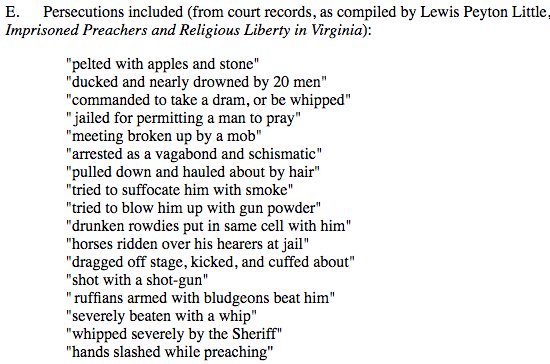

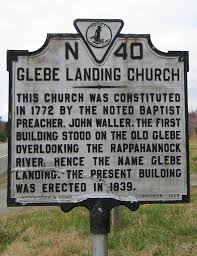
From 1768 through 1774, the Baptists were persecuted severely. “Baptist preachers were whipped, arrested, fined, imprisoned on bread and water, although the authorities sanctimoniously denied that punishment was for ‘preaching’; the crime they said, was ‘breach of the peace.’”[1] The first instance of actual imprisonment was on June 4, 1768, when John Waller, Lewis Craig, James Childs, James Reed, and William Marsh were arrested at Craig’s meetinghouse in Spotsylvania and charged with disturbing the peace. The magistrates offered to release them if they would promise to preach no more for a year and a day. They refused and were jailed. Many more were jailed and otherwise persecuted until 1774.[2]
  • “[The persecutors] seemed sometimes to strive to treat the Baptists and their worship with as much rudeness and indecency as was possible. They often insulted the preacher in time of service, and would ride into the water and make sport when they administered baptism. They frequently fabricated and spread the most groundless reports, which were injurious to the characters of the Baptists. When any Baptist fell into any improper conduct, it was always exaggerated to the utmost extent.”[3]
  • “The enemy, not contented with ridicule and defamation, manifested their abhorrence to the Baptists in another way. By a law then in force in Virginia, all were under obligation to go to church several times a year; the failure subjected them to fine. [Little action against members of the Established church was taken under this law, but] as soon as the ‘New Lights’ were absent, they were presented by grand jury, and fined…. [Others were imprisoned for preaching without a license.] ‘When persecutors found religion could not be stopped … by ridicule, defamation, and abusive language, the resolution was to take a different step and see what they could do; and the preachers in different places were apprehended by magisterial authority, some of whom were imprisoned and some escaped. Before this step was taken, the parson of the parish was consulted [and he advised that] the ‘New Lights’ ought to be taken up and imprisoned, as necessary for the peace and harmony of the old church….’”[4]
  • “[An Episcopalian wrote,] No dissenters in Virginia experienced, for a time, harsher treatment than did the Baptists. They were beaten and imprisoned, and cruelty taxed its ingenuity to devise new modes of punishment and annoyance.”[5]
Because of the persecutions and oppressions, Baptists began to petition the House of Burgesses for relief. Their first petition in 1770 requesting that Baptist ministers “not be compelled to bear arms or attend musters” was rejected. Other petitions from Baptists in several counties were submitted in 1772 requesting that they “be treated with the same indulgence, in religious matters, as Quakers, Presbyterians, and other Protestant dissenters enjoy.” The petitions continued until 1775.[6] The Presbyterians petitioned also, but for the right to incorporate so that they could receive and hold gifts of land and slaves for the support of their ministers. One of the Presbyterian petitions was improperly hailed as proof “that the Presbyterians anticipated the Baptists in their memorials asking for religious liberty.” An examination of that petition reveals that it “contemplate[d] nothing more than securing for Presbyterians and others in Virginia the same privileges and liberties which they enjoyed in England under the Act of Toleration,” and contained no “attack upon the Establishment, or any sign of hostility to it.”[7]
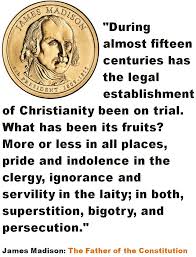
During this time, James Madison wrote to his old college friend, Bradford of Philadelphia, in a letter dated January 24, 1774. He expressed his belief that if

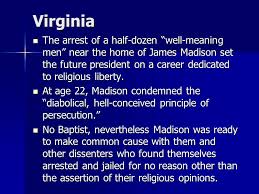
  • “uninterrupted harmony had prevailed throughout the continent [in matters of established religion as practiced in Virginia] it is clear to me that slavery and subjection might and would have been gradually insinuated among us. Union of religious sentiments begets a surprising confidence, and ecclesiastical establishments tend to greatly ignorance and corruption, all of which facilitates the execution of mischievous projects…. Poverty and luxury prevail among all sorts; pride, ignorance, and knavery among the priesthood, and vice and wickedness among the laity. This is bad enough; but it is not the worst I have to tell you. That diabolical, hell-conceived principle of persecution rages among some, and to their eternal infamy, the clergy can furnish their quota of imps for such purposes. There are at this time in the adjacent country not less than five or six well-meaning men in close jail for publishing their religious sentiments, which in the main are very orthodox. I have neither patience to hear, talk, or think of anything relative to this matter; for I have squabbled and scolded, abused and ridiculed, so long about it to little purpose, that I am without common patience…. So I must beg you to pity me, and pray for liberty of conscience to all.”[8]
  • [In another letter to Bradford dated April 1, 1774, Madison wrote that he doubted that anything would be done to help the dissenters in the Assembly meeting beginning May 1, 1774.] He spoke of “the incredible and extravagant stories [which were] told in the House of the monstrous effects of the enthusiasm prevalent among the sectaries, and so greedily swallowed by their enemies…. And the bad name they still have with those who pretend too much contempt to examine into their principles and conduct, and are too much devoted to ecclesiastical establishment to hear of the toleration of the dissentients…. The liberal, catholic, and equitable way of thinking, as to the rights of conscience, which is one of the characteristics of a free people, and so strongly marks the people of your province, is little known among the zealous adherents to our hierarchy…. [Although we have some persons of generous principles in the legislature] the clergy are a numerous and powerful body, have great influence at home by reason of their connection with and dependence on the bishops and crown, and will naturally employ all their arts and interest to depress their rising adversaries; for such they must consider dissentients, who rob them of the good will of the people, and may in time endanger their livings and security.
  • “… Religious bondage shackles and debilitates the mind, and unfits if for every enterprise, every expanded prospect.”[9]

Endnotes

[1] Leo Pfeffer, Church, State, and Freedom (Boston: The Beacon Press, 1953), p. 95 citing Edward F. Humphrey, Nationalism and Religion in America (Boston: Chipman Law Publishing Co., 1924), p. 370.

[2] Charles F. James, Documentary History of the Struggle for Religious Liberty in Virginia (Harrisonburg, VA.: Sprinkle Publications, 2007; First Published Lynchburg, VA.: J. P. Bell Company, 1900), pp. 29-30. Included is a listing of some of those jailed and otherwise persecuted. See also James R. Beller, America in Crimson Red: The Baptist History of America (Arnold, Missouri: Prairie Fire Press, 2004), pp. 230-250; William L. Lumpkin, Baptist Foundations in the South (Eugene, Oregon: Wipf & Stock Publishers, 2006), pp. 105-120; William P. Grady, What Hath God Wrought: A Biblical Interpretation of American History (Knoxville, Tennessee: Grady Publications, Inc., 1999), Appendix A, pp. 593-598 citing Lewis Peyton Little, Imprisoned Preachers and Religious Liberty in Virginia, (Galatin, Tenn.: Church History Research and Archives, 1987), pp. 516-520 (lists many Baptists and the persecutions they endured in Virginia; persecutions such as being jailed for preaching, civil suit, being annoyed by men drinking and playing cards, being jerked off stage and head beaten against the ground, hands being slashed, beaten with bludgeons, being shot with a shotgun, ousted as a justice for preaching, being brutally beaten by a mob, severely beaten with a stick, etc.).

[3] James, p. 30, citing Semple, p. 19.

[4] Ibid., pp. 30-31, citing William Fristoe, “History of the Ketocton Baptist Association,” p. 69.

[5] Ibid., citing Dr. Hawks, “History of the Protestant Episcopal Church of Virginia,” p. 121.

[6] Ibid., pp. 31-35.

[7] Ibid., pp. 42-47.

[8] Lenni Brenner, editor, Jefferson and Madison on Separation of Church and State (Fort Lee, NJ: Barricade Books, Inc, 2004), pp. 11-12; James, p. 36.

[9] Brenner, pp. 12-13; James, pp. 35-38, citing Rives Life and Times of Madison, Vol. I, pp. 43, 53; Norman Cousins, In God We Trust (Kingsport, Tennessee: Kingsport Press, Inc., 1958), pp. 299-301.
IV. Baptists in Virginia Colony; The Bad Character of the Anglican Clergy; Colonel Sam Harris and Other Baptist Preachers; The Separate and Regular Baptists


A Publication of Churches Under Christ Ministry


Previous Lesson:
III. Presbyterians in Virginia

Next Lesson:
V. Virginia Persecution of Baptists from 1768-1774; Baptist Petitions; James Madison on Religious Establishment and Persecution

Click here for links to all lessons on “To Virginia.

Click here to go to links to all written lessons.

Click here to go to the 3 1/2 to 6 minute video lectures.

For accompanying more thorough study from God Betrayed click here.


Jerald Finney
Copyright © March 2, 2018


Different bodies of Baptists came to Virginia during the colonial period. The “Regular Baptists,” like the Presbyterians, “applied for license and took the prescribed oaths.” As for the “Separate Baptists,” the “body spread so rapidly throughout the State from 1755 to the … Revolution,” and “did not recognize the right of any civil power to regulate preaching or places of meeting.” They were the “most active in evangelizing Virginia and most severely persecuted, and … had the largest share of the work of pulling down the ‘Establishment’ and securing religious liberty for all.” “While yielding a ready obedience to the civil authorities in all civil affairs, in matters of religion they recognized no lord but Christ. They were truly apostolic in refusing to obey man rather than God.”[1]

Conditions were favorable for the rapid growth of Baptist principles. “First, the distress of the colonists, consequent upon the French and Indian wars, inclined them towards religion.” Secondly, the distressed people could find no solace or comfort in the immoral established clergy.

  • “The great success and rapid increase of the Baptists in Virginia must be ascribed primarily to the power of God working with them. Yet it cannot be denied but that there were subordinate and cooperating causes; one of which, and the main one, was the loose and immoral deportment of the Established clergy, by which the people were left almost destitute of even the shadow of true religion. ‘Tis true, they had some outward forms of worship, but the essential principles of Christianity were not only not understood among them, but by many never heard of. Some of the cardinal precepts of morality were discarded, and actions plainly forbidden by the New Testament were often proclaimed by the clergy as harmless and innocent, or, at worst, foibles of but little account. Having no discipline, every man followed the bent of his own inclination. It was not uncommon for the rectors of parishes to be men of the lowest morals. The Baptist preachers were, in almost every respect, the reverse of the Established clergy.’”[2]

Their own authorities prove the bad character and actions of the established clergy. Many of that clergy came to Virginia “to retrieve either lost fortune or lost character….” “Many of them had been addicted to the race-field, the card-table, the theatre—nay, more, to drunken revel, etc….” “They could babble in a pulpit, roar in a tavern, exact from their parishioners, and rather by their dissoluteness destroy than feed the flock.”[3]

The Baptists grew stronger and more numerous in Virginia. Robert Nordin, when he arrived from England in 1714, established the first Baptist church in Virginia. By 1755, there were six Baptist churches in Virginia.[4] 1758 to 1769 was a period of slow but persistent growth in the face of a determined popular hostility. The early opposition to the Baptists came from the lower classes and was based upon prejudice.

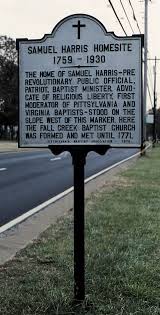
The Virginia expansion was intimately tied up with the ministry of Colonel Samuel Harris. Harris—who served at various times as churchwarden, sheriff, justice of the peace, colonel of the county, and captain and commissary of Fort Mayo and its military garrison—was the first person of prominence to join the Separates in Virginia and was just one of many examples of the power of this movement. He was saved at a house meeting after hearing a sermon preached by a Separate Baptist from North Carolina. He resigned from his official positions and narrowed his business interests almost to the vanishing point in order to preach. He began to preach throughout Virginia, and many were converted because of his ministry.[5]

Harris was a fearless preacher. “The excellence of his preaching lay chiefly in ‘addressing the heart,’ and Semple holds that ‘perhaps even Whitefield did not surpass him in this.’”[6] He had the assistance of several North Carolina itinerant evangelists planting the earliest Separate churches in south central Virginia. In 1760, Daniel Marshall and Philip Mulkey with seventy-four charter members, eleven of whom were Negroes, started the Dan River Church. Other churches were soon constituted from the Dan River Church.[7]

Wherever the Baptist itinerants preached, great crowds came to hear them. Many were converted in Virginia, and many Baptist churches were started. In 1770, there were only two Separate churches north of the James River, four south of it. The General Association of Separate Baptists of Virginia was held in May 1771 in Orange County with twelve churches represented, and three not represented.

By 1772, the Separate Churches outnumbered those of the Regular churches. In that year, as many as forty thousand Virginians may have heard the gospel. By 1773, thirty-four churches were represented at the General Association meeting, and they reported a combined membership of 3,195. By May 1774, when Baptist expansion and Baptist persecution were at high tide, the Southern District in Virginia had twenty-seven churches with 2,033 members and the Northern District had twenty-four churches with 1,921 members. By the end of 1774, there was at least one Separate Baptist church in twenty-eight of the sixty counties of Virginia. During the Revolution, Baptist growth continued, but at a much slower pace.[8]


Endnotes

[1] Charles F. James, Documentary History of the Struggle for Religious Liberty in Virginia (Harrisonburg, VA.: Sprinkle Publications, 2007; First Published Lynchburg, VA.: J. P. Bell Company, 1900), pp. 12-14, 26.

[2] Ibid., pp. 26-27, citing Robert B. Semple, “History of the Baptists of Virginia,” 1810, p. 25.

[3] Ibid., pp. 27-28, citing Foote, p. 38 quoting from the Bishop of London; Bishop Meade, “Old Parishes and Families of Virginia” (Vol. I, 118, 385, etc.; Dr. Hawks, “History of the Protestant Episcopal Church of Virginia,” p. 65.).

[4] James R. Beller, America in Crimson Red: The Baptist History of America (Arnold, Missouri: Prairie Fire Press, 2004), pp. 140-142.

[5] Lumpkin, pp. 48-49.

[6] Ibid., p. 90, citing A. B. Semple, A History of the Rise and Progress of the Baptists of Virginia (Richmond: Pitt & Dickinson, 1894), p. 380.

[7] Ibid., pp. 90-98.

[8] Ibid., pp. 90-103.

III. Presbyterians in Virginia Colony


A Publication of Churches Under Christ Ministry


Previous Lesson:
II. Only the Church of England Was Tolerated in Virginia Colony

Next Lesson:
IV. Baptists in Virginia Colony; The Bad Character of the Anglican Clergy; Colonel Sam Harris and Other Baptist Preachers; The Separate and Regular Baptists

Click here for links to all lessons on “To Virginia.

Click here to go to the written lessons.

Click here to go to the 3 1/2 to 6 minute video lectures.

For accompanying more thorough study from God Betrayed click here.


Jerald Finney
Copyright © March 2, 2018


Although some Presbyterians settled in Virginia from 1670 to 1680, the number & influence of Presbyterians in Virginia was small until the mid-1700s. In the mid-1700s an influential body of Presbyterians settled in Hanover County as a result of a 1738 agreement between the Presbyterian Synod of Philadelphia and Virginia governor William Gooch which allowed “emigrants to occupy the frontier portions of Virginia and enjoy the benefits of the Act of Toleration.”[1]

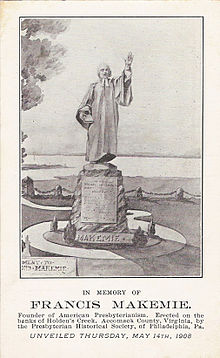
The first non-Anglican minister to receive a license under the Act of Toleration passed by the British Parliament in 1689, which instructed liberty of conscience for all but Papists, was Francis Makemie, a Presbyterian minister in Accomac County. By 1725, no more than five conventicles, “three small meetings of Quakers and two of Presbyterians,” were licensed, and these in poorer counties who were unable to pay the established minister enough to stay. In 1725, a similar license was granted to “certain parties (doubtless Presbyterians)” in Richmond County.[2]

Presbyterian families from Pennsylvania and Maryland began to move to remote parts of Virginia on the western frontier in 1738. The Presbyterian Synod of Pennsylvania wrote Governor Gooch of Virginia asking for religious freedom for those Presbyterians. Governor Gooch, knowing these people “to be firm, enterprising, hardy, brave, good citizens and soldiers,” and desiring “to form a complete line of defense against the savage inroads,” welcomed them. “At so great a distance from the older settlements, he anticipated no danger to the established church.” The conditions of settlement were that they “were not only to settle in the frontier counties as a buffer between the Churchmen and the Indians, but they had to swear allegiance to ‘His Magesty’s person and government,’” pay the taxes levied in support of the Established Church, and never by word or deed seek to injure the said church…. “Houses for public worship could not be occupied without permission from the civil authorities, and each application for a house of worship was heard on its own merits.” “[Those early Presbyterians] did not break their promise nor violate their oaths.” Up to the Revolution, “they never demanded anything more than their rights under the Act of Toleration, and … not until the Revolution was accomplished, and Virginia had thrown off allegiance to Great Britain, did they (the Presbyterians) strike hands with the Baptists in the effort to pull down the Establishments.” However, with the fury of the French and Indian War, which broke out in 1755, Presbyterians east of the Blue Ridge occupied houses of worship without license or molestation.[3]


Endnotes

[1] Charles F. James, Documentary History of the Struggle for Religious Liberty in Virginia (Harrisonburg, VA.: Sprinkle Publications, 2007; First Published Lynchburg, VA.: J. P. Bell Company, 1900), pp. 11-12.

[2] Ibid., pp. 20-22.

[3]Ibid., pp. 22-25, citing Foote, “Sketches of Virginia,” pp. 99, 160-162, 307, 308.

II. Only the Church of England Was Tolerated in Virginia Colony


A Publication of Churches Under Christ Ministry


Previous Lesson:
I. Motivation for the Final Thrust for the First Amendment-the Convictions of Dissenters, mainly the Baptists; the thrust for the growth of the Baptists Came from the Great Awakening

Next Lesson:
III. Presbyterians in Virginia

Click here for links to all lessons on “To Virginia.

Click here to go to the written lessons.

Click here to go to the 3 1/2 to 6 minute video lectures.

For accompanying more thorough study from God Betrayed click here.


Jerald Finney
Copyright © March 2, 2018


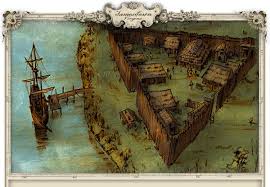
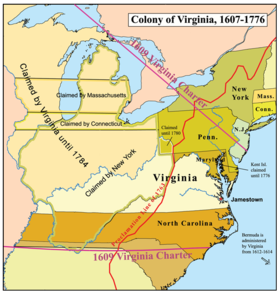
Virginia “was founded by members of the Church of England and none others were tolerated in its jurisdiction.”[1] The Episcopal church, the Church of England, in Virginia was established from the founding of Jamestown in 1607.

  • “It was known, also, as the ‘Established Church,’ because it was made, by legal enactment, the church of the State and was supported by taxation. Not only so, but it was designed to be the established church, to the exclusion of all others. Rigid laws, with severe penalties affixed, were passed, having for their object the exclusion of all Dissenters from the colony, and the compelling of conformity to the established, or State, religion. Even after the Revolution of 1688, which placed William and Mary upon the throne of England and secured the passage of the ‘Act of Toleration’ the following year, the ‘General Court of the Colony’ of Virginia construed that act to suit themselves, and withheld its benefits from Dissenters … until they were compelled to yield to the force of circumstances.”[2]

The Church of England was stronger in Virginia than in any colony.

1612 Virginia Charter

In Virginia, the established Anglican church was controlled by the state, unlike in New England where the established church controlled the state. From the beginning of the colony, the “company knew not how to control the members composing the colony but by religion and law.”[3] The original “Lawes Divine, Moral and Martial” which were decreed in 1612, were severe. Speaking impiously of the Trinity or of God the Father, Son, or Holy Spirit, blaspheming God, incorrigibly cursing, a third failure to attend religious services, and a third “Sabbath-breaking,” were punishable by death. Other spiritual offenses were punished by whipping and other penalties.[4]

Upon appeal to England, these laws were repealed. The laws enacted in support of the Anglican establishment were less severe. Still, the Anglican church was established (and this establishment continued until the revolution with one short interruption), nonattendance at church services was the subject of fines, the payment of tithes were mandatory, every parson was entitled to the glebe—a piece of land—parish churches were built by taxes, and ministers were required to “conform themselves in all things according to the canons of the Church of England.”

“Puritan clergy were banished for failing to conform to Anglican services; Quakers [and Baptists] were fined, imprisoned, and banished. Catholics were disqualified from public office, and any priest who ventured to enter the colony was subject to instant expulsion. Penalties were imposed on those who having scruples against infant baptism, neglected to present their children for that purpose.”[5]

A 1643 law forbade anyone to teach or preach religion, publicly or privately, who was not a minister of the Church of England, and instructed governor and council to expel all nonconformists from the colony.[6] In 1643, three Congregationalist ministers from Boston were forced to leave the colony. Also in 1643, “Sir William Berkeley, Royal Governor of Virginia, strove, by whippings and brandings, to make the inhabitants of that colony conform to the Established church, and thus drove out the Baptists and Quakers, who found a refuge in … North Carolina.” Quakers first came to Virginia in “1659-60, and … the utmost degree of persecution was exercised towards them.” “During the period of the Commonwealth in England, there had been a kind of interregnum as to both Church and State in Virginia; but in 1661, the supremacy of the Church of England was again fully established.” Only ministers of the Church of England were permitted to preach, and only ministers of that church could “celebrate the rites of matrimony,” and only “according to the ceremony prescribed in the Book of Common Prayer.”[7]


Endnotes

[1] John T. Christian, A History of the Baptists, Volume I, (Texarkana, Ark.-Tex.: Bogard Press, 1922), p, 381.

[2] Charles F. James, Documentary History of the Struggle for Religious Liberty in Virginia (Harrisonburg, VA.: Sprinkle Publications, 2007; First Published Lynchburg, VA.: J. P. Bell Company, 1900), pp. 10-11.

[3] Ibid., p. 17.

[4] See Leo Pfeffer, Church, State, and Freedom (Boston: The Beacon Press, 1953), p. 69 for the text of this law.

[5] Ibid.; see also James, pp. 17-20 for a more comprehensive overview of the laws of Virginia which provided for religious persecution and the established church.

[6] William L. Lumpkin, Baptist Foundations in the South (Eugene, Oregon: Wipf & Stock Publishers, 2006), p. 105.

[7] James, pp. 17-20.

I. Motivation for the Final Thrust for the First Amendment-the Convictions of Dissenters, mainly the Baptists; the thrust for the growth of the Baptists Came from the Great Awakening


A Publication of Churches Under Christ Ministry


Previous Series of Lessons:
From New England to the South

Next Lesson:
II. Only the Church of England Was Tolerated in Virginia Colony

Click here for links to all lessons on To Virginia.

Click here to go to the written lessons.

Click here to go to the 3 1/2 to 6 minute video lectures.

For accompanying more thorough study from God Betrayed click here.


Jerald Finney
Copyright © March 2, 2018


Although the final expression of religious freedom that would be incorporated into the Constitution came from Virginia, the final motivation came because of the convictions of the dissenters, mainly the Baptists, and the thrust for their growth and influence came from the Great Awakening.

  • “[T]he early Baptists of Virginia, … while they could not boast of great wealth, or culture, or refinement, they possessed some things of more real value, and which the Commonwealth greatly needed. In the first place they had religion—genuine religion; not a sham, nor an empty form, but the old time religion of the heart. Then they had a personal worth or character, that character which always follows from having genuine religion. And then, again, those early Baptists had an unquenchable love of liberty. The truth of the New Testament makes men free indeed, and it inspires them with a love of freedom, not for themselves only, but for all men. And it was because they possessed these traits that they resisted the temptations of the General Incorporation and General Assessment, and stood their ground amid the general desertion. They resolved to continue to fight.”[1]

The conflict in Virginia originally involved the Anglicans and Presbyterians, neither of which originally believed in either religious freedom or separation of church and state. Religious freedom and separation are owed mainly to the Baptists who believed in both. What Jefferson and Madison wrote about and did for religious freedom resulted from their observance of the conflict among Christians and is not to be found in the pages of philosophers of the Enlightenment.[2]

  • “The Presbyterians [in Virginia] won religious liberty for themselves against the opposition of the Episcopalians. Next the Baptists won religious liberty for themselves against the opposition of the Episcopalians and the Presbyterians. By 1775 about three quarters of the people of Virginia were outside the Church of England, but many of the most influential Virginians were inside. When the war started, there were ninety-five Anglican parishes in Virginia. The war killed off at least a quarter of them. Nowhere in the colonies was Tory sentiment stronger than among the Anglican clergy of Virginia, and they found themselves at the gravest of odds with their flocks.”[3]

Endnotes

[1] Charles F. James, Documentary History of the Struggle for Religious Liberty in Virginia (Harrisonburg, VA.: Sprinkle Publications, 2007; First Published Lynchburg, VA.: J. P. Bell Company, 1900), Appendix A, pp. 207-208.

[2] See, e.g., Marnell, pp. 89-90.

[3] Ibid., p. 93.

III. Religious Injustice in Anglican North Carolina; Governor Tryon Moves to Strengthen the Anglican Church in North Carolina; The War of the Regulation Spread the Separate Baptists throughout the South and Started a Fire that Could Not Be Put Out


A Publication of Churches Under Christ Ministry


Previous Lesson:
II. Shubal Stearns and Daniel Marshall Go To Virginia, then to Sandy Creek North Carolina, and Anglican Colony; The Work at Sandy Creek Explodes

Next Series of Lessons:
To Virginia

Click here for links to all lessons on “From New England to the South.”

Click here to go to the written lessons.

Click here to go to the 3 1/2 to 6 minute video lectures.

For accompanying more thorough study from God Betrayed click here.


Jerald Finney
Copyright © March 1, 2018


Before 1765 the western counties, made up of frontiersman, a large percentage of whom had become Baptists, were disproportionately taxed and represented in the Assembly. “Sheriffs, judges, and other officials of county government, were notorious for their injustice, and in the western counties they were, as a rule, dishonest, haughty, and overbearing.”[1] A license was required for teachers, and no place of higher education could be administered, except by ministers of the Church of England. The Church of England was given exclusive rights to perform marriages. In 1755, poll and vestry taxes were imposed upon North Carolinians.[2] The settlers mounted protests against these injustices.

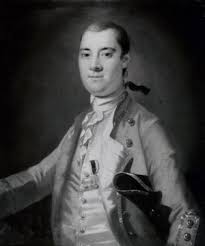
Governor William Tryon

When William Tryon became governor of North Carolina in 1765, the troubles moved quickly to a crisis. Governor Tryon set out to strengthen the position of the Church of England. He called for twenty-seven more Anglican clergymen, increased taxes, and raised a military force. By 1770, Governor Tryon had established eighteen Anglican priests in thirty-two parishes in North Carolina. Property was seized for back taxes, people accused of rioting were arrested and set for trial, and others were fined and imprisoned. “In several places the Regulators yielded to mob spirit, broke up courts, and whipped the officers” and “some court records were destroyed.”[3] Armed conflict finally broke out.

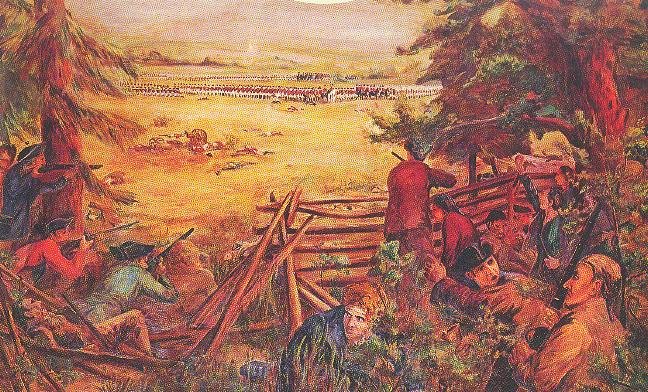
Battle of Alamac, War of the Regulation

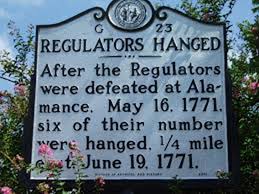
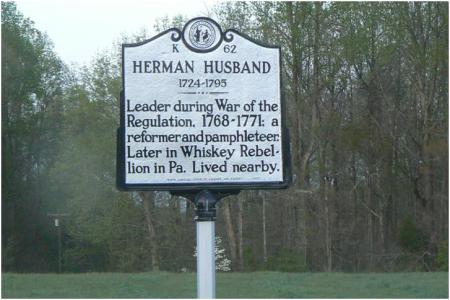
In 1771, the so-called War of the Regulation broke out. The government of North Carolina tried to suppress the Separate Baptists, but succeeded only in spreading their movement all along the southern frontier. Before the suppression began, the established church, the Anglican Church, was ineffectual in North Carolina and only had five ministers in the state in 1765. On May 16, 1771, the state militiamen routed a poorly trained and supplied force of two thousand regulators. Although Shubal Stearns and the Sandy Creek Association forbade Baptists to take up arms against the government, many did.

After the defeat of the regulators, Tryon “laid waste to plantations, burned homes, and sent numbers of men in chains to Hillsboro. The countryside was terrorized.”[4] Tryon seized Benjamin Merrill, who appears to have been a church leader. Merrill was convicted as a traitor, hung publicly, cut into pieces—quartered—and his body scattered.[5]

The Baptists had a mass exodus from North Carolina. By 1772, Sandy Creek Church had only fourteen members, down from six hundred and six. Little River Church went from five hundred to a dozen members. Nevertheless, as with the persecution of the first Christians in Jerusalem, the persecuted spread to other parts and carried out the Great Commission. The departing Baptists went into South Carolina, Georgia, and Tennessee, spreading the Gospel and reaping the harvest. What Satan meant for evil, God used for His glory.

Shubal Stearns, the chief light and the guiding genius behind the Separate Baptist movement, died on November 20, 1771, at the age of sixty-five. Forty-two churches and one hundred and twenty-five ministers had sprung from the Sandy Creek Church by 1772. Fires, which could not be quenched, had been started in North Carolina and in other states.[6]


Endnotes

[1] William L. Lumpkin, Baptist Foundations in the South (Eugene, Oregon: Wipf & Stock Publishers, 2006), pp. 72-74.

[2] James R. Beller, America in Crimson Red: The Baptist History of America (Arnold, Missouri: Prairie Fire Press, 2004), pp. 181-182.

[3] Lumpkin, pp. 78-79.

[4] Ibid., p. 83.

[5] Beller, p. 197.

[6] Lumpkin, p. 59.

II. Shubal Stearns and Daniel Marshall Go To Virginia, then to Sandy Creek North Carolina, an Anglican Colony; The Work at Sandy Creek Explodes


A Publication of Churches Under Christ Ministry


Previous Lesson:
I. Shubal Stearns and Daniel Marshall, Congregationalists in Connecticut, Were Converted in the Whitefield Revival, and Become Separatists and then Baptists

Next Lesson:
III. Religious Injustice in Anglican North Carolina; Governor Tryon Moves to Strengthen the Anglican Church in North Carolina; The War of the Regulation Spread the Separate Baptists throughout the South and Started a Fire that Could Not Be Put Out

Click here for links to all lessons on “From New England to the South.”

Click here to go to the written lessons.

Click here to go to the 3 1/2 to 6 minute video lectures.

For accompanying more thorough study from God Betrayed click here.


Jerald Finney
Copyright © March 1, 2018


In 1751 or 1752, as had others before him, Mr. Marshall set out with his wife and three children and possibly with one other couple, with no prospect of material reward, to minister to the Indians in New York. They settled at the Indian town of Onnaquaggy. They had to leave after eighteen months because strife among the Indians caused by the French and English struggle and attempts to gain the support of various tribes disrupted his work and threatened his family. He went to Connogogig, Pennsylvania for a short stay, then moved to Opekon, Virginia. The pastor of Mill Creek Baptist Church baptized him. His powerful preaching ability was recognized and a revival ensued.[1]

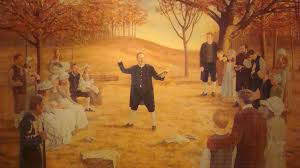
Shubal Stearns and his wife, along with five other families, possessed with missionary zeal, left Tolland, Connecticut in August 1754. They moved to Virginia. Daniel Marshall greeted them there. They settled in Cacapon Creek, Virginia, but did not stay there long. Members of some neighboring churches (later called “Regular” Baptist churches), which upheld dignity and orderliness in worship, were upset with the “noisy and emotional preaching of the Separates,” by some of the preaching, which “may have suggested Armenianism to them,” and by “the prominent place occupied by women in some Separate meetings which hinted at disorder.” The Indians broke into open hostility in 1755. Consequently, Mr. Stearns and his party moved to Sandy Creek, North Carolina, “a strategic center from which he could itinerate to a growing and spiritually destitute population.”[2] There they constituted the Sandy Creek Church with Mr. Stearns as minister and Daniel Marshall and Joseph Breed as assistant ministers.

Shubal Stearns preaching at Sandy Creek

Mr. Stearns immediately began to preach. People from neighboring farms began to attend, for the first time hearing the doctrine of the new birth.

  • “The enthusiastic manner of preaching, too, was unprecedented. Stearns’ delivery was warm and appealing, full of persuasive zeal, not at all the commonplace, lecture-type discourses which the people had formerly heard. Strong gestures and a fervent plea told the people that the preacher was intensely involved in his message. It was obvious he wanted a verdict.
  • “The preachers deep feeling and personality passed to the members of the church and from them to the visitors. The music in the little pastor’s voice soon penetrated every heart, and his piercing, discursive eye seemed to peer into every soul. The tears, tremblings, and shouts of the members quickly affected the visitors, and from the little meetinghouse a tumult of grief at sin and joy at salvation ascended to heaven. Men who came to the meetings to mock returned home praising and glorifying God. The church began to grow!
  • “Then the Separates knew that they had found their home and that God’s will was being perfected in them. The heart of their little community held a plan worthy of the heart of an empire.” [3]

The population of North Carolina was growing rapidly. People were coming from Virginia, Maryland, and Pennsylvania; and large families were common. Although law established the Church of England in 1701 in North Carolina, it had a feeble career there, and the colony gained a reputation as an asylum for the religiously persecuted. By 1755, the population of North Carolina was nearly a hundred thousand.[4]

The Quakers preached the first sermon in North Carolina in 1672 and were the earliest dissenters. The Moravians also flourished there. The Anglicans were few in number, had only one or two ministers in the colony at any given time, and were looked upon with indifference and hostility by the people of North Carolina. Except for the Quakers and Moravians, until the middle of the eighteenth century, “[r]eligious concerns among the early dissenters were doomed to steady decline because of the shortage of churches, religious instruction, and pastors.”[5]

The work at Sandy Creek soon began to produce much fruit. Mr. Stearns and the other preachers in his church were in great demand to go preach at other settlements. He and Daniel Marshall decided, before having been at Sandy Creek a year, to go on a preaching mission all the way to the coast. Converts were being called into ministry, and the Separate Baptist movement was seeing the birth of new churches. Within three years, there were three churches with a combined membership of over nine hundred, and these churches had numerous branches. Young evangelists were “beginning to occupy the land of promise.” In 1758, the Sandy Creek Association was organized. The plan for the association “required careful planning, for the associational movement would usher in a grand new chapter in Separate Baptist expansion.”[6]

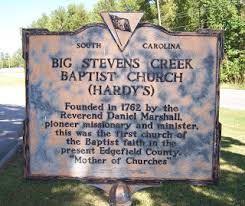
The movement exploded. Ministers and converts went all over North Carolina, then into South Carolina and Georgia. The power of God was with these Separate Baptist preachers. Churches were planted and many were converted. In North Carolina, the Baptists displaced the Anglicans and the Presbyterians. Daniel Marshall went to South Carolina with some others in his church and started a church there. From there, he went on preaching trips into Georgia. He was so successful in some of his forays there that he was arrested, convicted, and commanded to preach no more in Georgia. “The arresting constable and even the magistrate who tried Marshall were soon converted and baptized.” In 1771, Mr. Marshall moved to Kiokee Creek, Georgia and formed the first Baptist church in Georgia at Appling in 1772. [7]


Endnotes

[1] William L. Lumpkin, Baptist Foundations in the South (Eugene, Oregon: Wipf & Stock Publishers, 2006), p p. 25-28 citing Stewart Pearce, Annals of Luzerne County (Philadelphia: J. B. Lippincott & Co., 1960), pp. 34-35; J. B. Taylor, Virginia Baptist Ministers (Philadelphia: J. B. Lippincott & Co., 1859), I, 19; R. B. Stemple, A History of the Rise and Progress of the Baptists of Virginia, revised and extended by G. W. Beale (Richmond: Pitt & Dickinson, 1894), p. 370.

[2] Ibid., pp. 28-30.

[3] Ibid., pp. 31-32.

[4] Ibid., pp. 33-34, citing G. W. Paschal, History of North Carolina Baptists (Raleigh: General Board of North Carolina Baptist State Convention, 1930), I, pp. 252-254.

[5] Ibid., pp. 34-36.

[6] William L. Lumpkin, Baptist Foundations in the South (Eugene, Oregon: Wipf & Stock Publishers, 2006), pp. 41-45.

[7] Ibid., p. 55, citing J. H. Kilpatrick, The Baptists, (Atlanta: Georgia Baptist Convention, 1911), pp. 37-38.

I. Shubal Stearns and Daniel Marshall, Congregationalists in Connecticut, Were Converted in the Whitefield Revival, and Become Separatists and then Baptists


A Publication of Churches Under Christ Ministry


Previous Series of Lessons:
The Separates and Baptists in New England

Next Lesson:
II. Shubal Stearns and Daniel Marshall Go To Virginia, then to Sandy Creek North Carolina, and Anglican Colony; The Work at Sandy Creek Explodes

Click here for links to all lessons on “From New England to the South.”

Click here to go to links to all the written lessons.

Click here to go to the 3 1/2 to 6 minute video lectures.

For accompanying more thorough study from God Betrayed click here.


Jerald Finney
Copyright © March 1, 2018


By 1755, only a few Baptist churches had been constituted in the South. This was about to change. The change came partly as a result of the Great Awakening.

Shubal Stearns and Daniel Marshall, both members of Congregationalist churches in Connecticut, separated from the established churches, later became Baptists, as had Isaac Backus, and became chief instruments in carrying the Great Awakening to the South. The Separates were subject to persecution—fines, imprisonment, placing in stocks, and whipping—for their defiance of the laws of the commonwealth. They were subjected to a more intense persecution than the dissenters such as Baptists and Quakers, and many of them were imprisoned for practicing their beliefs.

Shubal Stearns was born in Boston on January 28, 1706. His family moved to Connecticut in his youth and joined the Congregational church in Tolland. He was converted to New Light views in 1745 because of the Whitefield revival. Mr. Stearns led others in his church to become a Separate church. After a thorough study of the Scriptures, he declared himself a Baptist and was baptized.[1]

Daniel Marshall was born in 1706 in Windsor. He became a prosperous farmer and a deacon in the established Congregational church. Deeply affected by George Whitefield, by 1747 he was a Separate; and by 1751, he, along with Shubal Sterns, was a radical Separate.[2]

George Whitefield’s preaching had a grand effect on his converts. A “twofold conviction was borne in and upon the hearts of the Separates around 1750.” Since all men can be saved, the urgency of missions and the need for men to hear the gospel now was impressed upon their hearts. “Love for [all] others, said Whitefield, stands alongside aversion to sin, a spirit of supplication, and a spirit of conquest over the world as a mark of having the Holy Spirit.”[3]


Endnotes

[1] William L. Lumpkin, Baptist Foundations in the South (Eugene, Oregon: Wipf & Stock Publishers, 2006), p. 21.

[2] Ibid., pp. 21-23.

[3] Ibid., p. 24, citing Stuart C. Henry, George Whitefield, Wayfaring Witness (Nashville: Abingdon Press, 1957), p. 124.

IX. The Baptists Fight in the Courts; Reject Backus’s Advice; Backus Changes His Focus to Baptist Doctrines; Connecticut Continues To Persecute Dissidents; Connecticut Rejects Forced Establishment in 1818


A Publication of Churches Under Christ Ministry


Previous Lesson:
VIII. Backus Presents Appeal for Religious Liberty at Continental Congress; Debate in the Newspapers; Warren Association Activities; Backus Urges Religious Liberty in New Massachusetts Constitution; John Adams Works against Religious Liberty

Next Series of Lessons:
From New England to the South

Links to all lessons on “The Separates and the Baptists in New England.”

Click here to go to all written lessons.

Click here to go to the 3 1/2 to 6 minute video lectures.

For accompanying more thorough study from God Betrayed click here.


Jerald Finney
Copyright © February 28, 2018


The Baptists fought on. They took their case to the courts. Attleboro, Massachusetts assessed a religious tax on everyone. Some members of a Baptist church in Attleboro refused to file a certificate and refused to pay the tax. The property of some was sold to pay the tax. Elijah Balkcom, after being arrested, paid the tax under protest, and then sued to test the constitutionality of Article Three. They won an initial victory in county court.

However, the case was overturned two years later on appeal of the favorable trial court decision in the case of Cutter v. Frost. Cutter also held that only incorporated religious societies were entitled to legal recognition. Since most, if not all, of the Baptist churches in Massachusetts were unincorporated, they were not qualified for exemption. [1] A lawyer advised Mr. Backus and the grievance committee to file the certificates, pay their taxes, and sue if the parish treasurer refused to turn the money over to their own pastor. The committee voted to follow this advice, Mr. Backus casting the lone negative vote. This was a reversal of the 1773 stand against giving of the certificates. “The spirit of the times did not call for martyrdom and fanaticism. The other members of the committee were more interested in improving the status and respectability of their denomination.”[2]

As a result, three cases were brought in three different courts and the Baptists prevailed at trial court and on appeal. In other cases over the years, much time and expense was expended to get tax money earmarked for Baptist ministers. One case required fourteen lawsuits before the town treasurer yielded the taxes. In some towns, when it was shown the Baptists would sue, the “Standing Order” ceased to argue the matter.[3]

Mr. Backus, being disappointed with his twelve-year battle against certificates, turned his zeal to other outlets—to fighting the threat to Baptist doctrines.

As new Baptist churches continued to be constituted, and the number of Baptists continued to increase, the persecution continued in Connecticut. In 1784, Connecticut made a new law continuing the support of established ministers by taxation. However, another act exempted all persons from that tax who filed a certificate to the effect that they regularly attended and supported worship services in any type of gospel ministry. Mr. Backus said of this act, “[I]s not this a mark of the beast? … Blood hath ever followed the support of worship by the sword of the magistrate…. And how can any man keep himself unspotted from the world, if he forces the world to support his worship?”[4]

Then, in May of 1791, Connecticut passed an addition to the ineffectual law of 1784 which held that “no certificate could be legal, until it was approbated by two justices of the peace, or only by one, if there was no more in the town where the dissenter lived,” and that such certificate was ineffective as to taxes granted before the certificate was lodged.[5] However, after a remonstrance and petition were presented, the law was repealed in October 1791 and another law made to allow every man to give in his own certificate, if he dissented from the ruling sect.

The quest for religious freedom in Connecticut continued until 1818 when state support was withdrawn from the Congregationalist Church.[6]


Endnotes

[1] William G. McLoughlin, Isaac Backus and the American Piestic Tradition (Boston: Little, Brown and Company, 1967), p p. 160-161; see Backus’ reaction to the decision in the Balkcom case in McLoughlin, William G., Editor. Isaac Backus on Church, State, and Calvinism, Pamphlets, 1754-1789. Cambridge, Massachusetts: The Belknap Press of Harvard University Press, 1968, “A Door Opened for Christian Liberty,” pp. 428-438.

[2] Ibid., pp. 163-164.

[3] Ibid., pp. 164-165.

[4] Isaac Backus, A History of New England With Particular Reference to the Denomination of Christians called Baptists, Volume 2 (Eugene, Oregon: Wipf & Stock Publishers, Previously published by Backus Historical Society, 1871), pp. 320-321.

[5] Ibid., p. 345.

[6] William H. Marnell, The First Amendment: Religious Freedom in America from Colonial Days to the School Prayer Controversy (Garden City, New York: Doubleday & Company, Inc., 1964), p. 114.

VIII. Backus Presents Appeal for Religious Liberty at Continental Congress; Debate in the Newspapers; Warren Association Activities; Backus Urges Religious Liberty in New Massachusetts Constitution; John Adams Works against Religious Liberty


A Publication of Churches Under Christ Ministry


Previous Lesson:
VII. The Revival Dies; Separate Churches Die; Baptist Denomination Grows; Formation of the Warren Association in 1770 To Obtain Religious Liberty; Isaac Backus’s Efforts; An Appeal to the Public

Next Lesson:
IX. The Baptists Fight in the Courts; Reject Backus’s Advice; Backus Changes His Focus to Baptist Doctrines; Connecticut Continues To Persecute Dissidents; Connecticut Rejects Forced Establishment in 1818

Click here for links to all lessons on “The Separates and the Baptists in New England.”

Click here to go to the written lessons.

Click here to go to the 3 1/2 to 6 minute video lectures.

For accompanying more thorough study from God Betrayed click here.


Jerald Finney
Copyright © February 28, 2018


Attempts to gain religious freedom continued. The Warren Association sent Isaac Backus to the Continental Congress in 1774 where he met with an Association of other Baptist churches from several adjacent colonies which had elected a large committee to assist. They presented their appeal for religious liberty. John Adams and Samuel Adams, neither of whom was a friend to separation of church and state, falsely asserted that Massachusetts had only a “very slender” establishment, hardly to be called an establishment, that the General Court was clear of blame and always there to hear complaints and grant reasonable help.[1] While Mr. Backus was gone, the lie was spread that he had gone to Philadelphia to break the union of the colonies.

All the time these happenings were going on, the issues were being debated in the newspapers. The Warren Association continued to publish to the public instances of persecution as well as to actively seek religious liberty from the government. The Warren Association presented a memorial on July 19, 1775, requesting religious liberty and pointing out the inconsistency of rebelling against England for taxing without representation while doing the same thing in the colonies. Ultimately, nothing came of this. In 1777, Mr. Backus prepared an address, which was supported by a large number from various denominations, urging religious liberty to the Assembly which had been empowered to frame a new Constitution which was accomplished in 1780. The Third Article of the new constitution “excluded all subordination of one religious sect to another,” but imprisonment, and confiscation of property from men who refused to acknowledge such subordination continued.[2]

In 1778, Mr. Backus wrote “Government and Liberty Described and Ecclesiastical Tyranny Exposed.” He quoted Charles Chauncy:

  • “We are in principle against all civil establishments in religion. It does not appear to us that God has entrusted the State with a right to make religious establishments…. We claim no right to desire the interposition of the State to establish that mode of worship, [church] government, or discipline we apprehend is most agreeable to the mind of Christ. We desire no other liberty than to be left unrestrained in the exercise of our principles in so far as we are good members of society.” This, said Backus, was all that Baptists asked. [3]
  • “Perhaps as a result of this tract, the General Assembly tried to conciliate the Baptists by appointing a Baptist minister to deliver the election sermon in May 1779. That minister, in his sermon, remained faithful to the principle of separation.”[4]

Massachusetts began efforts to adopt a new constitution in 1777. The proposed constitution was defeated, but a new effort which began in 1779 proved successful. John Adams worked against the Baptist position at the convention. Mr. Backus, although not a delegate, went to Boston to stand for Baptist principles during the constitutional convention. He lobbied, wrote newspaper articles, published new tracts, and informed his brethren of what was going on.[5]

Mr. Backus worked at the convention for a Bill of Rights. The first basic rights he listed were:

  • “All men are born equally free and independent, and have certain natural, inherent and unalienable rights, among which are the enjoying and defending life and liberty, acquiring, possessing, and protecting property, and persuing and obtaining happiness and safety.”
  • “As God is the only worthy object of all religious worship, and nothing can be true religion but a voluntary obedience unto his revealed will, of which each rational soul has an equal right to judge for itself; every person has an unalienable right to act in all religious affairs according to the full persuasion of his own mind, where others are not injured thereby. And civil rulers are so far from having any right to empower any person or persons to judge for others in such affairs, and to enforce their judgments with the sword, that their power ought to be exerted to protect all persons and societies, within their jurisdiction, from being injured or interrupted in the free enjoyment of his right, under any pretence whatsoever.”[6]

Backus’ position, although seeking the same end, was from a different point of view than that of George Mason, Thomas Jefferson and James Madison.

“Three years earlier George Mason, with Jefferson’s approval and Madison’s amendments, had written a statement on religious freedom into the Bill of Rights in the Virginia Constitution:

  • ‘That religion, or the duty which we owe to our Creator, and the manner of discharging it, can be directed only by reason and conviction, not by force or violence and therefore all men are equally entitled to the free exercise of religion, according to the dictates of conscience; and that it is the mutual duty of all to practice Christian forbearance, love, and charity towards each other.’
  • “Backus’s tone was that of a New Light pietist; Mason’s that of an Enlightened latitudinarian. The Virginians spoke of the ‘Creator,’ Backus spoke of ‘God.’ Mason stressed reason and duty, Backus stressed ‘religious worship.’ Backus referred directly to God’s ‘revealed will’ and to the ‘soul.’ Mason omitted any reference to them.
  • “The difference was obvious and fundamental. The Virginia separationists were interested in leaving the mind free to follow its own rational direction. The Massachusetts pietists believed that separation was necessary in order to leave the ‘rational soul’ free to find ‘true religion’ as expressed in the Bible, ‘the revealed will’ of God. Implicit in both statements was a belief in God, in natural law, in man’s ability to find them. But the deistic separationists of Virginia trusted entirely to man’s reason and free will. The pietists insisted that only through the supernatural grace of God would men find the Truth that is in Jesus Christ. Though both views were individualistic, the deist was anthropocentric, the pietist theocentric.”[7]

The humanistic view of Mason, Jefferson, and Madison that man, through his reason could successfully address all his problems, and the humanistic goal of the “happiness of man” were inherent in the Declaration of Independence and the Constitution, the two greatest governing documents of all time, although blended with Biblical principles. Neither the name of Jesus nor the goal of “the glory of God” was in the Declaration of Independence or the Constitution.[8]

The Warren Association, on September 13, 1780, published a remonstrance, authored by Mr. Backus, against Article Three of the proposed constitution. The remonstrance stated, among other things, that the provision therein requiring the majority of each parish “the exclusive right of covenanting for the rest with religious teachers,” thereby granting a power no man has a right to; and further stating that “the Legislature, by this Article, are empowered to compel both civil and religious societies to make what they shall judge to be suitable provision for religious teachers in all cases where such provision shall not be made voluntarily.”[9] However, support for ministry could only be through voluntary support, not coercion that denied freedom of conscience. Backus and other Baptists “did not object to the view that Massachusetts should remain a Christian commonwealth; piety, religion, and morality could only be maintained with the institution of the public worship of God and of public instructions in piety, religion, and morality” were “generally diffused throughout the community.[10]

  • “Jefferson, Mason, and Madison, designing the creation of a secular state, not only opposed all such practices but also objected to the use of chaplains in the Congress and armed forces, the authorization by the state of certain days of fasting, thanksgiving, and prayer; and the compulsory religious services in state universities. Jefferson explicitly stated that America was not and ought not to be a Christian country…. Backus never qualified his belief in a Christian commonwealth. He consistently argued for ‘a sweet harmony between’ Church and State. ‘It is readily granted,’ he wrote in 1784, ‘that piety, religion, and morality are essentially necessary for the good order of civil society.’”[11]

Endnotes

[1] Isaac Backus, A History of New England With Particular Reference to the Denomination of Christians called Baptists, Volume 2 (Eugene, Oregon: Wipf & Stock Publishers, Previously published by Backus Historical Society, 1871), pp. 200-202, and fn. 1, p. 201.

[2] Ibid., pp. 203-204, 219-220, 225-229, 228-229.

[3] William G. McLoughlin, Isaac Backus and the American Piestic Tradition (Boston: Little, Brown and Company, 1967), p. 140. The entire tract is reproduced in Isaac Backus on Church, State, and Calvinism, Pamphlets, 1754-1789, Edited by William G. McLoughlin (Cambridge, Massachusetts: The Belknap Press of Harvard University Press, 1968), pp. 345-365.

[4] Ibid., 141.

[5] Ibid., p. 142.

[6] Ibid., pp. 142-144.

[7] Ibid., pp. 142-144.

[8] Again, the Constitution is the greatest governing document ever conceived by a nation, but the Biblical principle of “leaven”—bad doctrine always corrupts the good—has proven again, by the national experience, to be true. To understand and address a problem, one must be willing to face all the facts head on.

[9] Backus, A History of New England…, Volume 2, fn. 2, pp. 229-230.

[10] McLoughlin, Isaac Backus and the American Piestic Tradition, pp. 148-149.

[11] Ibid., pp. 149-150.