Family government and conscience


If you miss one part of the puzzle that is being put together in these studies, you will never see and understand the whole picture.


A publication of Simply Church Ministry


Previous Lesson:
Self-government

Next Series of Lessons:
Civil Government

Click here to go to links to all written lessons.

Click here to go to all lessons on the Bible Doctrine of Government.

Click here to go to the 5 to 8 minute video lectures.


Click here to go to video lecture on this lesson.


Jerald Finney
Copyright © December 27, 2017


submission-umbrellasAfter the fall, God established family government. He said to the woman: “I will greatly multiply thy sorrow and thy conception; in sorrow thou shalt bring forth children; and thy desire shall be to thy husband, and he shall rule over thee.”[1] The Bible teaches that the husband is to be the head of the wife,[2] and children are to be instructed and led by the parents.[3] Parents, not the state, are to care for their children: “But if any provide not for his own, and specially for those of his own house, he hath denied the faith, and is worse than an infidel.”[4] Even an infidel has a love for his children placed there by God.[5] God desires that man satisfy his sexual desire only in marriage. “Thou shalt not commit adultery.”[6] “Nevertheless, to avoid fornication, let every man have his own wife, and let every woman have her own husband.”[7]

God desires parents, not civil government, to provide a God-centered education for their children:

  • “Hear, O Israel: The LORD our God is one LORD: And thou shalt love the LORD thy God with all thine heart, and with all thy soul, and with all thy might. And these words, which I command thee this day, shall be in thine heart: And thou shalt teach them diligently unto thy children, and shalt talk of them when thou sittest in thine house, and when thou walkest by the way, and when thou liest down, and when thou risest up.”[8]

ConscienceAfter the fall, God gave mankind a chance to be directed by his conscience (an awareness of doing wrong), still to be individually controlled only by self-government. God had told man, prior to the fall, “For God doth know that in the day ye eat thereof [of the forbidden fruit], then your eyes shall be opened, and ye shall be as gods, knowing good and evil.”[9]  After man ate the forbidden fruit, God told them, “And the LORD God said, Behold, the man is become as one of us, to know good and evil.”[10]  Some[11] refer to this economy, this method God uses to deal with individuals, as Conscience, the title being taken from these verses: “For when the Gentiles, which have not the law, do by nature the things contained in the law, these, having not the law, are a law unto themselves: Which shew the work of the law written in their hearts, their conscience also bearing witness, and their thoughts the mean while accusing or else excusing one another[.]”[12] The Holy Spirit also strove with man during the days before the upcoming flood: “And the LORD said, My spirit shall not always strive with man, for that he also is flesh: yet his days shall be an hundred and twenty years.”[13]

Even though God later ordained civil government and church government, every person since the fall is born with a God-given self-conscience (knowledge of who he is) as well as with a God-consciousness[14], a knowledge of who God is.

God gave mankind certain responsibilities:

  • “During this stewardship man was responsible to respond to God through the promptings of his conscience, and part of a proper response was to bring an acceptable blood sacrifice as God had taught him to do (Gen. 3.21; 4.4). We have a record of only a few responding, and Abel, Enoch, and Noah are especially cited as heroes of faith. We also have the record of those who did not respond and who by their evil deeds brought judgment on the world. Cain refused to acknowledge himself a sinner even when God continued to admonish him (Gen. 4.3, 7). So murder came on the scene of human history.”[15]

In the story of Cain and Abel, we see that God still did not allow civil government. After Cain killed Abel, the Lord told Cain, “And now art thou cursed from the earth, which hath opened her mouth to receive thy brother’s blood from thy hand; When thou tillest the ground, it shall not henceforth yield unto thee her strength; a fugitive and a vagabond shalt thou be in the earth.”[16] Since Cain feared that “every one that findeth me shall slay me,”[17] God said, “… Therefore whosoever slayeth Cain, vengeance shall be taken on him sevenfold. And the Lord set a mark upon Cain, lest any finding him should kill him.”[18]  The Supreme Ruler of the universe was telling man that he had no authority to rule over man and that God would take vengeance on him sevenfold if he did.


Click here to go to more thorough written lesson.


Endnotes

[1] Ge. 4.16.

[2] 1 Co. 11.3; Ep. 5.22-26; 1 Pe. 3.1, 5-7; 1 Ti. 2.11-15.

[3] Ex. 20.12; De. 6.6-7; 11.18-21; Pr. 4.1, 2, 10, 11; Ep. 6.1, 4; Col. 3.20.

[4] 1 Ti. 5.8.

[5] Mt. 7.9-11.

[6] Ex. 20.14.

[7] 1 Co. 7.2.

[8] De. 6.4-7; see also, Pr. 4.1, 2, 10, 11; 5.1, 2; 22.6; Ep. 6.4.

[9] Ge. 3.5.

[10] Ge. 3.22a.

[11] 3c will deal specifically with the two main methods of Bible understanding, belief versus allegory. “Allegory” means “interpreting the Bible in such a way as to reveal a hidden meaning, a meaning which cannot be seen by believing what the Bible says.” Classic Catholic and covenant theology allegorize or spiritualize much of the Bible. The warfare between those who believe the Bible and those who allegorize it had already started when the New Testament was written (See, e.g., Colossians). As a result, as will be seen by the student who follows these studies, Augustine and his progency (Luther, Calvin, Zwingli, Knox et al) used this method to develop the theology which combined church and state and resulted in the persecution (imprisonment, torture, hanging, burning at the stake, drowning, confiscation of property, and the destruction or confiscation of the writings of the martyrs) of fifty million plus “heretics.” That theology still operates in America even though the proponents do not, at this time, have the power to persecute.

[12] Ro. 2.14-15.

[13] Ge. 6.3.

[14] See Ro. 1.18-32.

[15] Charles C. Ryrie, Dispensationalism (Chicago: Moody Press, 1995), pp. 52-53.

[16] Ge. 4.11-12.

[17] Ge. 4.14.

[18] Ge. 4.15.

Self-government


A Publication of Simply Church Ministry


Previous Lesson:
Introduction to the Bible Doctrine of Government

Next Lesson:
Family Government and Conscience

Click here to go to links to all written lessons.

Click here to go to all lessons on the Bible Doctrine of Government.

Click here to go to the 5 to 8 minute video lectures.


Click here to go to accompanying video lecture.


Jerald Finney
Copyright © December 26, 2017


Self-government or individual government was the first government ordained by God and is simply control or direction over oneself.

On the sixth day, God created man in His own image, “male and female created he them.”[1]  After creating the man, God created woman out of one of Adam’s ribs to be an “help meet” for him.[2]  God brought the woman to Adam and marriage was instituted: “Therefore shall a man leave his father and his mother, and shall cleave unto his wife: and they shall be one flesh.”[3]

After creating them, God blessed them and told them to “be fruitful and multiply, and replenish” and subdue the earth. He gave them dominion over all living things. He put them in the garden of Eden to “dress it and keep it.” And the LORD God commanded the man, saying, Of every tree of the garden thou mayest freely eat: But of the tree of the knowledge of good and evil, thou shalt not eat of it: for in the day that thou eatest thereof thou shalt surely die.”[4]

Thus, God, , made a covenant with man and woman, the first of eight great covenants of Scripture which condition life and salvation, and about which all scripture crystallizes.[5] The covenant God made with them has seven elements. The man and woman in Eden were responsible:

  1. To replenish the earth with a new order—man;
  2. to subdue the earth to human uses;
  3. to have dominion over the animal creation;
  4. to eat herbs and fruits;
  5. to till and keep the garden;
  6. to abstain from eating of the tree of knowledge of good and evil;
  7. the penalty—death.”

God, in the Garden of Eden, gave man an opportunity to operate under self-government, under the constraint of only one simple rule. Man failed. Man was tempted by Satan to disobey the one small rule God had laid down, and mankind failed.[6]  Satan came to woman and misquoted the Word of God: “Yea, hath God said, Ye shall not eat of every tree of the garden?”[7]  Eve quoted the Word of God back to Satan, but added to it: “We may eat of the fruit of the trees of the garden: But of the fruit of the tree which is in the midst of the garden, God hath said, Ye shall not  eat of it, neither shall ye touch it, lest ye die.”[8] Satan then directly challenged the Word of God: “Ye shall not surely die: For God doth know that in the day ye eat thereof, then your eyes shall be opened, and ye shall be as gods, knowing good and evil.”[9]

“And when the woman saw that the tree was good for food, and that it was pleasant to the eyes, and a tree to be desired to make one wise, she took of the fruit thereof, and did eat, and gave also unto her husband with her; and he did eat. And the eyes of them both were opened, and they knew that they were naked; and they sewed fig leaves together, and made themselves aprons.”[10]

At that point, God judged the serpent (the devil), the woman, and the man. [11]

God gave another covenant, a covenant conditions the life of fallen man—conditions which must remain till … “the creation also shall be delivered from the bondage of corruption into the glorious liberty of the sons of God” (Ro. 8.21). The elements of that covenant are:

  1. The serpent, Satan’s tool, is cursed (v.14), and becomes God’s illustration in nature of the effects of sin—from the most beautiful and subtle of creatures to a loathsome reptile.
  2. The first promise of a Redeemer (v.15). Here begins the “highway” that leads to Christ.
  3. The changed state of the woman (v16). In three particulars: (a) Multiplied conception; (b) motherhood linked with sorrow; (c) the headship of the man[12] (cf. Gen. 1.26, 27). The entrance of sin, which is disorder, makes necessary a headship, and it is vested in man (1 Tim. 2.11-14; Eph. 5.22-25; 1 Cor. 11.7-9).
  4. The earth cursed (v17) for man’s sake. It is better for fallen man to battle with a reluctant earth than to live without toil.
  5. The inevitable sorrow of life (v17).
  6. The light occupation of Eden (Gen. 2.15) changed to burdensome labor (vs. 18, 19).
  7. Physical death (v19; Rom. 5.12-21). See ‘Death (spiritual)’ (Gen. 2.17; Eph. 2.5, note).”

God continued to hold man individually responsible for his spiritual decisions. We see this first in the story of Cain and Abel in Genesis 4.

Satan is still successfully deceiving man as to God’s authority and God’s government by manifold attacks on the inerrancy of the Word of God, by the same “Yea, hath God said” strategy he used in the Garden of Eden. This course will show how he has deceived untold millions of Christians with regard to the issue of separation of church and state by misquoting and misinterpreting the Bible.

Thus man makes a choice of his own free will as to how he will respond to God. The principle of freedom of conscience or free will is found throughout the Bible.[13]

Love requires a choice. Without free will, man has no choice and God would be, by force, taking some people to heaven and some to the lake of fire at His discretion. Admittedly, one can do no work to earn his way to heaven, but faith is not a work. “But to him that worketh not, but believeth on him that justifieth the ungodly, his faith is counted for righteousness.”[14]

All other governments, except God’s supreme government, are made up of individuals. God desires the individual(s) who lead(s) a church government, a family government, or a civil government to confine that government to the principles laid down by God for the administration of itself. If a civil government will point individuals, families, businesses, and other institutions to God’s principles without infringing the God-ordained limitations to its authority and the freedom of conscience of individuals to choose God, god, gods, or no god at all, that civil government will guarantee liberty and will be operating in God’s will, as will be shown.


Go to a more in-depth version of “Self-Government” by clicking here.


Endnotes


[1] Ge. 1.27.

[2] Ge. 2.18, 21-22.

[3] Ge. 2.23.

[4] Ge. 1.28-29; 2.15-17.

[5] Id.

[6] Ge. 3.1-13.

[7] Ge. 3.1.

[8] Ge. 3.2-3.

[9] Ge. 3.4-5.

[10] Ge. 3.6-7.

[11] Ge. 3.14-19.

[12] Ge. 1.26, 27.

[13] See, e.g., Jn. 3.16, 18 (“For God so loved the world that he gave his only begotten Son, that whosoever believeth in him should not perish, but have everlasting life…. He that believeth on him is not condemned, but he that believeth not is condemned already, because he hath not believed in the name of the only begotten Son of God.); Re. 22.17 (“And the spirit and the bride say, Come. And let him that heareth say, Come. And let him that is athirst come. And whosoever will, let him take the water of life freely.”).

[14] Romans 4.5.

Introduction to the Biblical Doctrine of Government


A Publication of Simply Church Ministry


Next Lesson:
Self-government

Click here to go to links to all written lessons.

Click here to go to all lessons on the Bible Doctrine of Government.

Click here to go to the 5 to 8 minute video lectures.


If you miss one part of the puzzle that is being put together in these studies, you will never see and understand the whole picture.


Jerald Finney
Copyright © December 26, 2017


12A basic definition of government is “direction, control.” God is the highest Ruler. His government is above all other governments; all other governments derive their authority from God. He, as the Sovereign of the universe ordained and rules over all other governments. “Ordain” means “to establish or order by appointment, decree, or law” (WEBSTER’S COLLEGIATE DICTIONARY 818 (10th ed. 1995)). Men know that God is in control because God put a God-consciousness in every person (See Ro. 1.18-32).

God teaches in many ways, throughout the Bible, that He is the Supreme Ruler and His is the Higher and Highest Power. As possessor of heaven and earth, God has and exercises supreme authority in both the heavenly and earthly sphere.

That God is supreme, the Highest Power, is revealed in the Old Testament through, among other things, His names. The Old Testament reveals the existence of a Supreme Being, the Creator of the universe and of man, the Source of all life and intelligence who is to be worshipped and served by men and angels.

As the Supreme Ruler, He has decreed that men may choose to be guided by His principles or not. However, choices are met by either blessings or judgment. In the final analysis He will either reward or judge all governments according to the degree they abide by His will.

The first government established by God was self-government. Every person exercises self-government, and decides whether he or she will receive the only true and eternal hope which is provided by God, that is the Lord Jesus Christ, as Savior. “And this is the will of him that sent me, that every one which seeth the Son, and believeth on him, may have everlasting life: and I will raise him up at the last day” (Jn. 6.40).

After the fall of man in the Garden of Eden, and man knew “good and evil,” God established family government. Every person within a family – father, mother, and children – in exercising self-government, chooses whether to submit to God’s guidelines concerning family government.

The next type of government ordained by God was human government or civil government. God ordained civil government at the time of the great flood.  For the first time, He gave man the responsibility of ruling the world for God. Relatively quickly after Cain killed Abel, all mankind except Noah and his family, guided only by conscience (knowledge of good and evil or an awareness of right and wrong) had become totally corrupted. Civil government provided further and direct control over the evil nature of man.

Some time after ordaining civil government, God called out Abraham to be the father of Israel. Israel was established as a theocracy. All other nations were non-theocratic and were and are called “Gentile.” God established Israel to be directly under Him for specific purposes. Israel was to be the only theocracy that God has ever ordained. The Gentile nations can only look to Israel to see that God is who He claims to be, but God still desires every nation to choose to honor Him and His principles.

The Word of God teaches us that no civil government, Jew or Gentile, since it is made up of sinful men, will, before the return of Christ, ever follow the principles of God for any significant period of time. That both Israel and the Gentiles have governed for self, not God, is sadly apparent. Therefore, every civil government that has ever existed or which will ever come about prior to the return of the Lord will be judged by God.

God used a Gentile nation to take Israel into captivity, and He has already judged and is judging many Gentile nations. The Lord will return and crush the Gentile world-powers existing at the time of His return which, led by the beast and false prophet, will come and besiege Israel (Re. 19.19). The nation Israel will then be restored to the land which God gave them according to his covenant with them (Many verses in the Bible verify this. God will do this for His “holy name’s sake, which [Israel had] profaned among the heathen….”  Then Satan will be cast “into the bottomless pit, that he might deceive the nations no more, till the thousand years should be fulfilled,” the nations shall be judged, and God’s kingdom will be set up.

Throughout these studies, the student should keep in mind all governments: first, God’s Supreme Government, then the other governments which God has ordained—self-government, family government, civil government, and church government. Biblical principles of governments other than church government are dealt with in this section, Section 1 with an emphasis on civil government; and biblical principles of church government are dealt with in Section 2. God laid down the boundaries of the authority of each type of government and the principles by which every government should conduct its affairs. He will hold every government responsible for the choices it makes. The reader should also keep in mind that the God-given goal for all governments is the glory of God, not the happiness of man. Joy is a side effect of “loving the Lord thy God with all thy heart, and with all thy soul, and with all thy mind.”


Many Bible verses back up the conclusions stated in this brief lesson. Only a few are given here. The student can go to Introduction to the Bible Doctrine of Government online or to Online PDF of God Betrayed pages 3-9 to find those verses.


Overview of Basic Course


A course of instruction offered by Churches Under Christ Ministry.


If you miss one part of the puzzle that is being put together in these studies, you will never see and understand the whole picture.


Click here to go to the written lessons.
Click here to go to the 5 minute video lectures.


Pr.23.12This study is designed for the born again believer who wishes to learn what the Bible teaches about government, church, separation of church and state, and how those principles have been and are applied in America. The topics covered are extremely important to our Lord Jesus Christ, to individuals, to families, to churches, and to the nation. The guiding light is the Bible.

Let me emphasize that a lost person cannot understand the subject matter since it requires spiritual discernment. To learn how to be saved, go to God’s Plan of Salvation Page on this website. Salvation through faith in Jesus Christ is preeminent. It is a choice every person should make, but God leaves the choice up to the individual.

1Co.2.14-16This course is presented at the spiritual grade school level. Each lesson  will be only about five to eight minutes in length. The course presents basic knowledge. At first, only an elementary analysis and understanding is taught and required by the student. For those who are already more advanced, they can listen to the study and go to the resources cited in the accompanying written (and probably more thorough, but still grade school level) study for more in depth and detailed studies which will connect to further studies. One can progress as far as he wants, even to the graduate level, if he continues to follow the links to the top studies such as God Betrayed. At that level, meditation, analysis, and study become very important.

In grade school, one accepts what he is told. He begins to think on a basic level, of course, but his instructors can either guide him to truth, to lies, or to a way of thinking that says there is no truth. The underlying basis of this course is truth based on Bible principle, Bible fact, historical fact, and man’s law as tested against the higher law, God’s law. The Bible emphasizes the importance of truth, so truth is the goal of this course.

The only way to arrive at truth in the Bible is to believe what it says. Those religions who have improperly spiritualized and allegorized portions of the Bible have brought havoc to the world, as will be seen in these studies.

Pr.2.6A child of God should never just accept what he is told. He should make sure what he is told is in line with the Word of God. Even on the grade school level, some verses will be cited as the basis for a teaching. The more mature student will want to make sure those verses are not taken out of their immediate context and the overall context of Scripture.

As to facts outside the Bible, a mature believer will want to make sure those facts are reliable. At the highest level of these studies, which one can check out by going up the chain of links provided with the teachings, the student will find complete citations and analysis.

Once one has a working knowledge of these studies all the way to the top, he will have achieved the equivalent of four years of college studies, to put it in secular terms. Then, he will be prepared to do his own studies, analysis, etc. at the Masters and Doctoral level. You see, one will understand as he arrives at the graduate level that  many of the matters studied in this course have room for further important development.

This initial study is for the believer who has not studied these matters at least to any extent, or who has depended upon

  1. as to spiritual matters: pastors or teachers who never delve into the deeper things of God
  2. as to factual matters, revisionists such as David Barton or Roger Federer, et al.

Again, this study is for born again believers who want to honestly seek truth. God highly esteems truth, along with knowledge, understanding, and wisdom.

The following is an outline of things to come:

  1. First, Foundational Bible Principles. The Bible Doctrines of Church, State, and Separation of Church and State.
  2. Second, the American Application of Those Principles. (1) The History of the First Amendment. (2) Then, a study of Union of Church and State in America.
  3. Finally, how a church can organize according to the principles of organization in the New Testament.

Pr.4.7One should not attempt to start with the final phase of the course without understanding the foundational principles and the application of those principles.

For a more thorough outline, go to the Written Lessons Page.

The material that you will study in this course fits together like a puzzle. The completed puzzle will present a picture that everyone, and especially the children of God in America should have hidden in their hearts.

God bless you as we grow together in the knowledge, understanding, and wisdom concerning the institution God loved and gave Himself for, the church.

Who Is Jerald Finney? Introduction To Bible Trust Ministries


*A course of instruction offered by Old Paths Baptist Church Separation of Church and State Law Ministry


Click here to go to this material on video


Hello. My name is Jerald Finney. I am first and foremost a humble servant of the Lord Jesus Christ. I was saved and became a member of a Bible believing church in 1982. The Lord saved me from my sin—I did nothing to earn that salvation. He did it all. He paid the price which I cannot pay.

Since then, 35 years ago, the Holy Spirit has directed me, instructed me through Bible study and life, and taken me step by step along the path God had for me. God called me to go to Law School after I had been saved 7 years. In 1990, I entered the University of Texas Law School. I started practicing law in January 1994, following the  Lord step by step. In 2005, He called me into the arena of church state relationship. My passion since then has been to help churches do things God’s way, the Bible way.

I have been a member of 3 different churches. I am now a member of Old Paths Baptist Church of Northfield MN. I live in Faribault MN, 13 miles from Northfield. I am licensed to practice law in Minnesota and Texas (inactive).

You can go to the link below this video for much more information about me. However, it is not about me. It is about the Glory of God. The standard for all things, temporal and eternal, earthly and heavenly, legal and spiritual is the Word of God, the Bible. Check out what you are told. If you are lost, check out God’s plan of salvation. The greatest thing anyone can do for himself and others is to be born again into the family of God. If you are saved, study the Word of God, become a member of a local autonomous Bible believing church, be sensitive to the leading of the Holy Spirit, and apply God’s principles and New Testament Commandments in all matters.

The purpose of Bible Trust Ministries is to inform believers and churches on the issues regarding church state relationship. More specifically, the purpose is to show churches how they can organize in America according to the principles in the New Testament. This is a very important matter, according to the Word of God. “Christ loved the church and gave Himself for it” (Ep. 5.25) Ephesians 5:26-27: “That he might sanctify and cleanse it with the washing of water by the word, That he might present it to himself a glorious church, not having spot, or wrinkle, or any such thing; but that it should be holy and without blemish” (Ep. 5.27-27).

Likewise we should have that same love for the churches we are members of. The Apostle Paul, writing as inspired by the Holy Spirit wrote to the church at Corinth: 2 Corinthians 11:1-5 “Would to God ye could bear with me a little in my folly: and indeed bear with me.  For I am jealous over you with godly jealousy: for I have espoused you to one husband, that I may present you as a chaste virgin to Christ. But I fear, lest by any means, as the serpent beguiled Eve through his subtilty, so your minds should be corrupted from the simplicity that is in Christ. For if he that cometh preacheth another Jesus, whom we have not preached, or if ye receive another spirit, which ye have not received, or another gospel, which ye have not accepted, ye might well bear with him.  For I suppose I was not a whit behind the very chiefest apostles.”

The purpose of Bible Trust Ministries is to help churches present themselves as chaste virgins to Christ.

It is my desire that these broadcasts glorify God, not me. Feel free to call me at any time at the phone number on the “Contact” page of the website linked to below this broadcast.

What does church, inc. mean?


A Publication of Churches Under Christ Ministry


Click here to go to All Written Course Segments
Click here to go to General Questions Answered
Click here To Go to Links to All 5 Minute Youtube Course Segments

See also, Legal Explanation of Incorporation of Churches


Click here for video of this lesson.


Your incorporated church is not affected by its corporate status? Article by Pastor William Raymond: Judge’s ruling regarding State Street Baptist Church, Inc. Left click the following to go to Kentucky case cited in Pastor Raymond’s article below: Hollins v. Edmonds, 616 S.W.2d 801, (1981). There are a lot of other cases that could be cited on this matter. Click here to go to the Kentucky Non-Profit Corporation Statute (revised since Hollins v. Edmonds)I suggest that each church carefully study the non-profit corporation law of their state. To go to the law of a particular state, google “non-profit corporation law of [name of state]. Then compare what you find to church principles for organization given in the New Testament epistles of Paul. See, The Bible Doctrine of the Chiurch. After all, does not the Lord wish the bride of Christ to know whether their actions please and glorify God?


Jerald Finney
Copyright © December 22, 2017


1

The overwhelming majority of churches have chosen to incorporate (inc.). Many or most church members of inc. churches do not know that the church they attend is inc., nor do they know what inc. means. This article is meant for their edification.

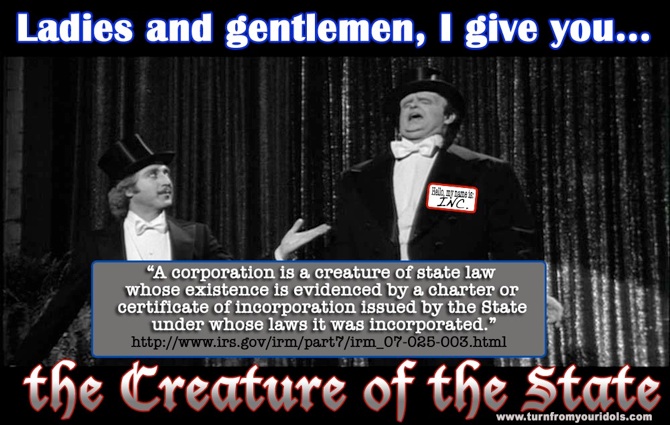
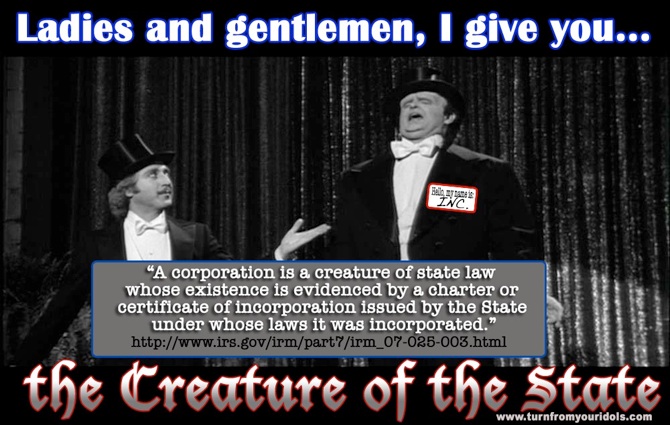
A church may choose to apply for corporate status under state law. If the church is approved, the church becomes a creature of the state, a temporal, earthly, legal entity as opposed to an eternal, heavenly, spiritual entity. See What is a legal entity?; What is a spiritual entity?; Is a church a spiritual entity, a legal entity, or a spiritual/legal entity?

The following are the main attributes of church non-profit corporation status in a nutshell:

  1. The state creates the corporation through state non-profit corporation law. A corporation is an artificial being, invisible, intangible, and existing only in comtemplation of man’s earthly law.
  2. The sovereign of a corporation is the state of incorporation. No corporation can exist without the consent or grant of the sovereign since the corporation is a creature of the state and derives its powers by legislative grant.
  3. The right to act as a corporation is a special privilege conferred by the sovereign power.
  4. ArticlesOfIncorpAn incorporated church is a monstrosity with two heads which are at odds with one another. Whenever there is an incorporated church, there are two entities—the one, the church as such, not owing its ecclesiastical or spiritual existence to the civil law, and the other, the legal corporation, each separate although closely allied. Such a church gets part of her powers from God and part from civil government.
  5. An incorporated church is obligated to have elected officers who conduct business meetings, meet statutory requirements, etc. It has contracted to conduct its business activities in compliance with temporal corporate law, including governmental regulation of its employment relationships, so long as the employment does not depend on doctrinal matters.
  6. The members of a corporate church do not think God’s power and provisions are adequate.
  7. Incorporation excludes God entirely as regards certain matters controlled by the contracts created by incorporation.
  8. The organization of a New Testament Church and an incorporated church are different. The former organizes solely according to God’s New Testament Church principles. The latter according to the non-profit corporation law of the state of incorporation.
  9. An incorporated church and a New Testament Church have different creators. The state creates the former and God creates the latter.
  10. Ownership of a New Testament Church and a corporation differ. Members in a non-profit corporation are the owners of the corporation. Jesus Christ owns a New Testament Church.
  11. The properties utilized by the corporate church and that utilized by the New Testatment church have different owners. The non-profit corporation owns any property used by the incorporated church. The Lord Jesus Christ owns the property held by a New Testament Church.
  12. An incorporated church has contracted or agreed to comply with all the government red tape that goes along with incorporation: elect officers, hold business meetings, notify members of those meetings pursuant to statutory requirements, keep records, etc. If the incorporated church honors their word and complies with their agreement or contract with the state of incorporation, these matters take tremendous time, energy, and resources which could be used for the glory of God doing the work God prescribes for his churches in the New Testament.
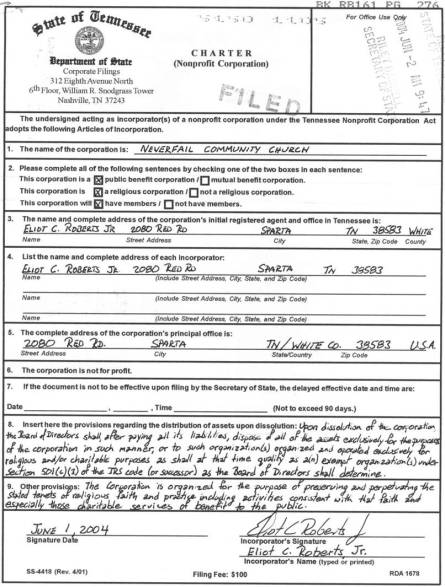
  13. CharterThe corporate charter is a contract of threefold nature: a contract between the state and the corporation, a contract between the corporation and its members of stockholders, and a contract between the members inter se. Any contract disputes can be taken to civil court where only man’s law, not the Bible, controls.
  14. The bylaws of the corporation create contracts between the member, and between the corporation and its members. The multiple contracts created by the articles of incorporation and the bylaws entangle the incorporated church with earthly concerns.
  15. As sovereign, the state of incorporation has ultimate authority in interpreting the articles of incorporation.
  16. A corporation is a state “franchise.” Franchises are rights or privileges conferred by grant of a sovereign.
  17. A corporate church is, at best, in God’s permissive will as to organization.
  18. A corporate church is subject to the non-profit corporation laws which created the corporation. A New Testament church is operated solely under the Lord Jesus Christ and His New Testament Church Doctrine.
  19. The sovereign or head of the corporate part of an incorporated church is the state. The sovereign or head of a New Testament Church is the Lord Jesus Christ only.
  20. A corporation is called an artificial person, a legal fiction; it is a temporal organization. A New Testament Church is a spiritual organism, a spiritual body.
  21. AnnualReport
    Church non-profit corporations agree, when they get their corporate charter, to file an annual report with the state.

    The church non-profit corporation loses much of its First Amendment protections by placing itself, as an artificial person, under the Fourteenth Amendment for many purposes.

  22. The church non-profit corporation can be sued in court for civil damages, as when an old lady falls on the ice going into the church building. See Spurious rationale for church incorporation: limited liability/incorporation increases liability of church members. Of course, most or all corporate churches buy insurance in the name of the church. A New Testament Church cannot be sued for damages since she is not a legal entity. She cannot buy insurance, but liability insurance not held by the church will still pay for any liabilities for such damages.
  23. The church non-profit corporation can own property since it is a legal entity. Although a New Testament Church cannot own property, she can still have access to property. Any property utilized by a New Testament church can be held by a non-legal entity, a simple trust which creates a fiduciary relationship with property whereby a trustee is holds all assets in the trust estate for the benefit of the Lord Jesus Christ, the true, beneficial and equitable owner of the properties. See
  24. Non-profit corporations are tax exempt. New Testament Churches are non-taxable under the First Amendment.
  25. Church non-profit corporations use man’s limited and false tax reasons rather than New Testament Church proinciples to rationalize corporate 501(c)(3) status. See Spurious rationale for church corporate-501(c)(3) status: tax exemption and tax deductions for contributions OR Tax reasons given for church corporate 501(c)(3) status: a biblical and legal analysis.
  26. Church non-profit corporations falsely reason that a church should depend upon her convictions as to whether to incorporate. See Spurious rationale for church corporate-501(c)(3) status: one’s convictions.
  27. Church non-profit corporations falsely reason that winning souls is the most important thing, even more important than loving the Lord Jesus Christ, and that church incorporation is just a minor issue. Put another way, they claim that “Soul winning solves all the problems of a church. See Spurious rationale for church corporate-501(c)(3) status: winning souls is more important than loving God/.

See Legal Explanation of Incorporation of Churches, and Spurious rationale for church incorporation: to hold property for a much more detailed explanation of both church incorporation and holding that which God has committed to His churches in trust for Him.

Church non-profit corporation status is a choice churches make for various humanist reasons. No law requires a church to incorporate. Is it illegal for a church in America not to incorporate? Does a church have to be a 501c3?, What is a First Amendment Church? The First Amendment and the constitutions of every state make clear that a church can choose either non-legal entity status or legal entity status. The Bible teaches that Christ’s churches are to be spiritual entities only. Is a church a spiritual or legal entity? The Bible does not say, “Churches shall not incorporate;” but principles in the Bible, when applied to the facts about church non-profit corporation status, make clear that church corporate status violates New Testament church principles.

A church who incorporates reject God’s authority, thereby causing our Lord much grief. See Does God Care if our Church is Incorporated? (The principles in this article also apply to the 501(c)(3) church); Articles, Essays, and Other Resources Related to the Doctrine of the Church, Incorporation, 501c3, Etc., What is an established church?, What is a First Amendment Church?;  A Call to Anguish: Churches Reject God’s Authority (November 21, 2017)(The real meaning of church 501(c)(3) application and status emphasized in analysis of new article: “A New Religion Forms That Will Worship A ‘Godhead’ Based on AI”)A “Christian” Refuge of Lies: An Expose of “The Church that Birthed America” (113017); Separation of Church and State/God’s Churches:Spiritual or Legal Entities?; God Betrayed/Separation of Church and State: The Biblical Principles and the American Application.


The Bible Answer to the Question, “Is an Incorporated 501(c)(3) or 508 Church a Church of Christ?” (Prepared for a talk given at the September 16-19 Liberty Baptist Church of Albuquerque, NM, Southwest Baptist Heritage Camp Meeting. Click here to go to Part I of the video of that presentationClick here to go to Part II of that presentation, “Why a Church Is Not a Business.” Part II was removed from Part I. In Part II, Jerald Finney invited Evangelist and Pastor Terry Woodside to tell his story which demonstrates that a church which is a non-legal entity cannot be sued in America. Click here to go to the page which has links to all sermons and presentations at that meeting.)

The History and Meaning of “Establishment of Religion” in America

A Publication of Churches Under Christ Ministry


Click here to go to All Written Course Segments
Click here to go to General Questions Answered
Click here To Go to Links to All 5 Minute Youtube Course Segments


Jerald Finney
December 18, 2017


This article will succinctly answer several questions:

  1. What did “establishment or religion” mean in the colonies?
  2. What did “establishment or religion” mean at the time of the adoption of the First Amendment?[i]
  3. What happened with the remaining forced religious establishments after the adoption of the First Amendment?
  4. What does “establishment or religion” mean today?

Contents

I. Introduction: Meaning of “Establishment of Religion”
II. The Path to Multiple Establishments in the American Colonies
III. State Establishments
IV. Conclusion


I. Introduction: Meaning of “Establishment of Religion”


First Amendment Religion Clause

To understand these issues, one must first define “establishment of religion” and understand the meaning of “law ‘respecting’ an ‘establishment of religion.” At the adoption of the First Amendment, “No law respecting” meant “no law concerning or touching the subject of.” That still leaves unresolved the meaning of “establishment of religion.” Prior to colonization and for some time thereafter, “establishment of religion” meant one officially recognized church which worked with, over, or under the state, the civil government. The original meaning of “establishment of religion” which existed prior to and at the founding of America, was replaced by a “multiple establishment” understanding long before the adoption of the First Amendment. “The evidence demonstrates that by an establishment of religion the framers meant any government policy that aided religion and its agencies, the religious establishments.”[ii]

“After the American Revolution, seven of the fourteen states that comprised the Union in 1791 required establishments of religion by law. The other states which originally had established churches, had already done away with forced establishment in favor of chosen establishment and they all provided for multiple establishment. No state maintained a single or preferential establishment of religion. An establishment of religion meant to those who framed and ratified the First Amendment what it meant to the states: support of religion on a nonpreferential basis. It was specifically this support on a nonpreferential basis that the establishment clause of the First Amendment sought to forbid.”[iii]

In 1833, Massachusetts became the last state to replace forced establishment of religion with establishment of religion by choice. The First Amendment forbade establishment of religion in federal jurisdiction.


II. The Path to Multiple Establishments in the American Colonies


Establishment by choice and the free exercise of religion (soul liberty) took different paths in America. Almost all the colonies started out with single establishments of religion. Due to a variety of factors, by the time of the adoption of the First Amendment, all state establishments, whether by force or choice, were general or multiple establishments.

In the conventional sense, before the colonization of America as well as in most of the original colonies when founded, an establishment of religion meant the legal union of government and a single church or denomination such as Catholicism (numerous European countries), Calvinism (Geneva), Presbyterianism (Scotland), Lutheranism (Germany), or the Church of England.

With the founding of the colonies, conventional establishments existed in the southern colonies of Virginia, Maryland, North Carolina, South Carolina, and Georgia. In 1778, South Carolina created an establishment or religion endorsed by William Tennent. “He called it a ‘general establishment’ because it recognized and nurtured the legal equality of all Protestants without preferring one denomination over others.” These general establishments were replaced by multiple establishment.

New England, Massachusetts, New Hampshire, and Connecticut at first had single establishments, Congregationalism. Massachusetts, Connecticut, and New Hampshire were founded and ruled by the Puritans, who came to American for freedom of religion “for themselves only.” The Puritans felt that they were the right people, at the right place, at the right time to establish a “city on a hill” to light the world, to show the world the rightness and resulting blessings of doing things God’s way (according to their Calvinist theology). Their experiment was well on its way to self-destruction by 1660. Gradually, the exclusive establishments in these New England colonies were replaced by multiple establishments.

Persecutions of “heretics,” those whose conscience prohibited them from bowing down to the colonial establishments were well documented. Those who supported establishment of their church were persecuted when in a colony with another established church. For example, Anglicans in New England were persecuted when they went to Massachusetts, and Presbyterians and others were persecuted to one extent or another in Virginia and other southern colonies. However, in opposing the persecuting establishment, they never favored complete separation of church and state and combined church and state when in the majority or in control.

A minority remnant of the Baptists were the only ones who consistently stood against union of church and state. That most Baptists by that time did not oppose total separation of church and state became clear when most of them sought certificates and compromised on the issue when the move toward multiple establishments had taken force.

Among those who stood their ground and led the fight against any establishment were Roger Williams, Dr. John Clarke, Isaac Backus, and John Leland. In New England, Roger Williams, Dr. John Clarke, and later, Isaac Backus wrote extensively against establishment and chronicled the persecutions which continued until the eve of the American Revolution and after, to a lesser extent.[iv] On the eve of the American Revolution, in 1774, eighteen Baptists were jailed in Warwick, Massachusetts for refusing to pay taxes in support of the town’s Congregational minister. To be exempted from paying the ministerial tax, a Baptist had to obtain a certificate that he regularly attended a church of his own denomination. For a copy of the certificate, he had to pay a tax of four pence. Isaac Backus, and some of his followers opposed the tax and the certificate and maintained that they were persecuted by the Congregational majority. John Adams, a Congregationalist (Puritan) leader stated that the establishment was “but a slender one” that did not infringe religious liberty.

In 1774, Baptists still paid ministerial taxes in Virginia and other colonies for building churches and were imprisoned for preaching in unlicensed Houses, preaching without Anglican ordination, and for other infractions.  Virginia Baptists were beaten by mobs, fined, and imprisoned for their religious beliefs which prevented them from obeying the laws of the established Anglican Church. The Virginia establishment originated with the colonies first charter in 1606.

Rhode Island not only never had an establishment of any kind, but also commanded complete religious freedom of soul liberty for all. Pennsylvania, Delaware, and New Jersey had no establishment of religion, but did not allow complete religious freedom for all. For example, Pennsylvania did not grant freedom of religion to Catholics.

In New York, Massachusetts, Connecticut, and New Hampshire, the pattern of establishment was diversified and unique. New York was the first example of an establishment very different from the European type, a general establishment without preference to one church over others.


III. State Establishments


The First Amendment, which until 1947 applied only to the federal government, forbade establishment of religion and guaranteed soul liberty at the national level only. After the First Amendment was adopted, states which still had laws requiring establishment gradually amended their constitutions to do away with the requirement that churches be “established.” All state constitutions allow churches to became established, but also provide that a church can make the choice not to become established. State constitutional provisions regarding church and state do not require establishment and also mandate soul liberty or the free exercise of religion.

A remnant of the Baptists continued to stand against any kind of establishment, including establishment by incorporation until all states had done away with forced establishment. John Leland was notable Baptist preacher, writer, and activist against union of church and state during a period starting in the 1780’s in Virginia and later in Massachusetts and Connecticut. The efforts and writings of earlier Baptist leaders, especially those of Isaac Backus, continued their influence during this period. Most Baptists had already been severed from their roots and betrayed God and their historic Baptist forefathers who had stood against the establishment to the death.[v]

New Jersey (1776), Pennsylvania (1776), New York (1777), and Delaware (1776 and 1792) made clear in their Constitutions that there would be no coerced establishment of religion.

North Carolina, by its constitution of 1776, became the first southern state to enact preferential establishment. “In Maryland, Georgia, and South Carolina, ‘an establishment of religion’ meant very much what it did in the three New England states that maintained multiple establishments. However, those three southern states merely permitted but did not create establishment.”[vi]

In six other states, pro-establisment parties were forced to make concessions to the growing sentiment against any forced establishments. Four other states replaced single establishments by authorizing multiple establishments, and two substituted multiple establishments for dual ones. “The evidence relating to each of these six proves that an …an establishment of religion was not restricted in meaning to a state church or to a system of public support of one sect alone; instead, and establishment of religion meant public support of several or all churches, with preference to none.”[vii]

Three of these states—Massachusetts, New Hampshire, and Connecticut—were in New England. The 1780 Massachusetts Constitution allowed for the possibility that a Baptist or some other minority minister might be elected by a town and receive the taxes of his congregation. This happened in several towns where the Baptists became the majority. In those towns, the Baptist ministers, by law, were supposed to receive their salaries from the town treasuries. As the Reverend John Leland pointed out, in towns where Baptists formed a majority, they might “tax all in the town or precincts to part with their money for religious uses,” thereby violating Baptist principles.[viii] A minority of Baptists stood on Bible principles and followed Isaac Backus in refusing to compromise their beliefs; but a majority followed men such as Hezekiah Smith and compromised on the important doctrine of separation of church and state. The conflicts continued until 1833, when Massachusetts became to last state to do away with required establishments.

New Hampshire’s establishment of religion after the Revolution did not significantly differ from that of Massachusetts. Article VI of its 1784 Declaration of Rights created a multiple establishment. The majority of New Hampshire’s Baptists, sometimes sought the incorporation of their churches, as in Massachusetts, to insure tax exemption of their congregants from a local Congregational church. But, says William G. McLoughlin, most of the petitions to incorporate “seemed to originate from the Baptists’ desire to enable their congregations to levy religious taxes on their own members which could be binding in law,” the Baptists as well as Congregationalists also accepted from the state ministerial lands regardless of the demands of some of them for a separation of church and state.[ix] The establishment of religion in New Hampshire fell victim to state politics, not to the drive to separate church and state because of the principle of voluntarism. “Voters, increasingly non-Congregationalist, rallied around the Democrats’ condemnation of the tax system as having promoted an establishment of religion that supposedly favored the prevailing denomination at the expense of the religious liberty of others.” The Democrats passed a Toleration Act in 1919 that ended the system of tax support for religion.[x]

In 1784, Connecticut passed its Toleration Act which allowed certain Protestant denominations to publicly worship “in a way agreeable to their consciences” and be exempted from taxes if they produced certificates. Due to continuing protests and changes in the law which did not satisfy many dissenters who continued to protest, a law was passed that allowed nonconformists to write their own certificates attesting membership in a different religious society which they supported, thus exempting them for the support of the town church. John Leland, in a tract describing the evils of an establishment of religion, did not doubt that Connecticut had one, even though one’s contribution to religion went to the church whose worship one attended.[xi]

The battle in Connecticut continued. In 1802, the Baptists petitioned the legislature to repeal the system of compulsory religious taxes; held a statewide convention remonstrating against Connecticut’s establishment because it favored the Congregationalists and because religion should be left to voluntary support, petitioned the government in 1804 because the required certificates did not apply to the Congregationalists as well as others. The consistent argument of the Baptists, except for a minority led by Isaac Backus, was that the existing church-state relationship preferred Congregationalism and that private donations should be the only source of support to religion, despite Baptist participation in the establishment’s largess. In 1816, Connecticut received a windfall repayment from the United States for its costs incurred in the War of 1812 and divided 6/7 of it among the denominations and the Baptists accepted their share. The Baptists, except for a remnant who stood for complete separation of church and state, compromised when it became “practical.” In 1818, Connecticut provided that no one could be compelled to support any religious society, yet allowed any religious society to tax itself and privately collect the assessment from each member. As with every state, Connecticut provided for voluntary incorporation by churches.

“Maryland’s constitution of 1776 ended the former supremacy of the Episcopalian church, which had an exclusive establishment during the colonial period; but allowed the legislature to legislate multiple or nonpreferential establishment of “Christian,” to include Roman Catholic churches. In 1810, Maryland amended its constitution to remove any taxation for support of any religion. Churches could still incorporate under state law, but no religious taxes were to be collected from anyone.

When the First Amendment was adopted, South Carolina’s constitution permitted multiple establishment and collection of taxes for religious support of the established churches. Under the constitution of 1778, all Protestant denominations were treated equally. “Any religious society of a Protestant denomination might therefore be incorporated and become ‘a church of the established religion of this State’ on condition of subscribing to articles of faith: a belief in God, a promise to worship him publicly, profession of Christianity as ‘the true religion’ and reliance on the Scriptures as divinely inspired.” No one was required to pay toward any church that he did not “freely join.” This was the first religious establishment ever that “did not exact religious assessments.” [xii] The 1790 South Carolina constitution did away with religious taxes altogether, but still allowed incorporation of churches.

The Baptists led the fight for religious liberty in Virginia. Many were abused and jailed for their refusal to bow down to the established church/state in Virginia. They influenced statesmen like Thomas Jefferson, George Washington, and James Madison to fight for religious liberty in Virginia. The result was the 1776 Virginia Bill for Religious Liberty.

Although Virginia still had single establishment before 1776, no state or colony had a statute that included every religion. Three of the states with multiple establishments authorized by law established Protestantism and three established Christianity. The establishments of all six included all denominations and sects with a sufficient number of members to form a church. Protestantism was synonymous with religion because Jews and Roman Catholics were nonexistent or too few to make a difference; “and where Christianity was established, as in Maryland which had many Catholics, Jews were scarcely known.” “Clearly the provisions of these six states show that to understand the American meaning of “an establishment of religion” one cannot adopt a definition based on European experience.”[xiii]

Georgia’s constitution of 1777 permitted multiple establishment without exception, thereby replacing the exclusive establishment of the Anglican church. The establishment of religion meant government tax support of all churches, with preference for none. The 1789 constitution permitted multiple establishments. In 1798, Georgia finally guaranteed nonpreferential establishment of religion and that no person should be “obliged to pay tithes, taxes, or any other rate, for  … any place of worship, or for maintenance of any minister or ministry, contrary to what he believes to be right, or hath voluntarily engaged.”

Vermont became the fourteenth state in 1791 and had a multiple establishment. Due largely to the stand of Baptists in Vermont, that state repealed all laws concerning taxation for religion, thus doing away with forced union of church and state.


IV. Conclusion


Every church has a choice – either under God only or under man (civil government).

As establishment became available to all churches,  many or the majority of churches incorporated. Today the overwhelming majority of churches, to include Baptist churches, incorporate in order to obtain perceived temporal earthly benefits for the state governments. After the addition of 26 United States Code §§ 501(c)(3) and 508, churches sought perceived benefits from the federal government as well by obtaining “tax exempt” status.

All church state establishments which have ever existed came about as a result of a civil government law which combined church and state. In all cases, a church or churches combined with the state under man’s law for perceived benefits from the state. That is the case in America. Even today, one of the reasons for choosing such arrangements is financial. All reasons given by churches for joining with the state are based upon man’s temporal, fleshly, earthly and legal reasoning. All such reasons, by their very nature, circumvent God’s eternal, spiritual, heavenly, and Biblical principles for His churches. [xiv]


Endnotes

[i] See, for list of source authorities, List of Scholarly Resources Which Explain and Comprehensively Document the True History of Religious Freedom in America.

[ii] Leonard W. Levy, The Establishment Clause/Religion and the First Amendment (London: MacMillan Publishing Co., 1986), p. xiv.

[iii] Id., p. xvi.

[iv] See, e.g., Isaac Backus. A History of New England With Particular Reference to the Denomination of Christians Called Baptists, Volumes 1 and 2 (Eugene, Oregon: Wipf & Stock, Previously Published by Backus Historical Society, 1871)(originally published in the late 1700’s); Williams, Roger and Underhill, Edward Bean. The Bloudy Tenent of Persecution for Cause of Conscience Discussed and Mr. Cotton’s Letter Examined and Answered. London: Printed for the Society, by J. Haddon, Castle Street, Finsbury, 1848 (Reprint)(originally published in 1644); Clarke, John. Ill News from New-England or A Narative of New-Englands Persecution. Paris, Ark.: The Baptist Standard Bearer, Inc., Reprint: 1stprinted in 1652; List of Scholarly Resources Which Explain and Comprehensively Document the True History of Religious Freedom in America.

[v] See, for more information, A Brief History of the First Amendment. That brief article gives links to more resources for the interested student.

[vi] Levy, The Establishment Clause/Religion and the First Amendment, p. 47.

[vii] Levy, p. 26.

[viii] “The Yankee Spy” (1794), in L.F. Greene, ed., The Writings of John Leland (New York, reprint 1969), pp. 225, 227, cited in id., p. 40. John Leland (May 14, 1754 – January 14, 1841) was an American Baptist minister who preached in Virginia,, Massachusetts, and Connecticut, as well an outspoken abolitionist. He was an important figure in the struggle for religious liberty in the United States.

[ix] William G. McLoughlin, New England Dissent 1630-1833: The Baptists and the Sepration of Church and State (Cambridge, Mass., 1971, 2 vols.), II, pp. 874, 886, cited in Levy, The Establishment Clause/Religion and the First Amendment, p. 40.

[x] Levy, p. 40.

[xi] John Leland, “The Rights of Conscience Inalienable,” in Writings of John Leland, p. 186.

[xii] Levy, p. 50-51.

[xiii] Levy, p. 60-61.

[xiv] See, for a complete understanding of church incorporation and church 26 United States Code §§ 501(c)(3) and 508 status, Separation of Church and State: God’s Churches – Spiritual or Legal Entities?


What is the history of the First Amendment?

A Publication of Churches Under Christ Ministry


Click here to go to All Written Course Segments
Click here to go to General Questions Answered
Click here To Go to Links to All 5 Minute Youtube Course Segments


Jerald Finney
Copyright © December 18, 2017


The First Amendment to the United States Constitution.

The history of the First Amendment is a history of persecution of those who stood against state “establishment of religion.” The established churches persecuted those true born again believers and others who stood against union of church and state and establishment of religion. In general, those believers who adhered to the apostolic doctrines and stood against union of church and state and its dogmas can be referred to as historic Baptists. Their unrelenting stand resulted in the adoption of the First Amendment to the United States Constitution.

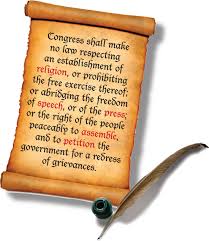
The First Amendment to the United States Constitution says, “Congress shall make no law respecting an establishment of religion, or prohibiting the free exercise thereof; or abridging the freedom of speech, or of the press; or the right of the people peaceably to assemble, and to petition the Government for a redress of grievances.” The religion clause of the First Amendment, “Congress shall make no law respecting an establishment of religion, or prohibiting the free exercise thereof,” legislates the Bible principles of separation of church and state and “soul liberty.” This brief article presents the history of the First Amendment in a nutshell. See Endnote for links to more detailed histories.

zzChristians, since the beginning of the church age, have, generally speaking, always been persecuted to one degree or another. They were persecuted because they obeyed God rather than men (man’s law) when man’s law required them to disobey God’s law. Of course, Americans have yet to suffer more than some inconveniences which, to this point cannot be called persecution; but Christians are, this very day, being severely persecuted in many countries.

Jesus Christ was crucified since He came to lay down his life for the sins of the world. After the crucifixion of Christ, the Jews persecuted the Christians. All the apostles except John, who was persecuted but not killed, were martyrs as were many other Christians. Roman Emperors, off and on, persecuted Christians.

In the early fourth century some of the pastors or bishops went to Rome, at the invitation of Emperor Constantine, and agreed to unite church and state, to make “Christianity” the official religion of the Roman Empire. Not long after that, the official church/state establishment began to viciously persecute dissenters, those labeled to be “heretics” by the establishment. For over a thousand years thereafter, established churches persecuted dissenters.

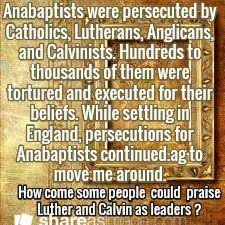
Augustine early on developed the Catholic theology that was the basis for the brutal torture and murder of at least 50 million people labeled to be “heretics” by Catholic/state establishments. The Protestants—Luther, Calvin, Zwingli, the Church of England etc.—continued the persecutions as they accepted and implemented Augustine’s church state theology.

The persecution by established churches continued in the colonies, mainly under the Puritans in New England and the Anglicans in the South. The Catholic Church had no or insignificant influence in the American colonies and the early Republic since Catholics were few and far between. Had the Puritans and Anglicans had their way there would never have been a First Amendment; church/state establishment of one most powerful church would have been enforced by man’s law in America.

Due to the circumstances of colonization, the persecution in the colonies was severe at times, but not as severe as it had been in the Old World. Forces came together in the colonies which gradually eroded the power of the establishments. Generally speaking, the establishment of one church gave way to the establishment of multiple churches.

A theological warfare went on in the colonies between the dissenters, mainly the Baptists, and the established churches. The Baptists were the primary foes of establishment, of “union of church and state” which, as always, came about through man made law. Men such as Roger Williams, Dr. John Clarke, Isaac Backus, and John Leland fought and wrote extensively against establishment and Protestant theology. Many Baptists and others labeled “heretic” by established churches were persecuted.

As a result of Baptist efforts in the colonies, from the early 1630’s to the adoption of the United States Constitution and the Bill of Rights, the First Amendment was adopted. The spiritual warfare in the colonies gradually eroded the concept of the establishment of only one church. By the time the Constitution and First Amendment were adopted, only seven states still had forced “multiple establishment” (more than one established church). The other states had already moved to choice—churches could choose whether to become established under the law of the state.

The continuing efforts of Baptists after that led to Massachusetts being the last state to do away with forced establishment. Since that time, all states, though their constitutions, provide every church a choice: remain under God only or become established, that is, submit to the law of man. In 1954, the federal government passed into law 26 United States Code §§ 501(c)(3) and 508. Since passage of that law, a churches chooses either to remain non-taxable under the First Amendment or to establish under 501(c)(3) and 508 federal tax exempt law.


 Endnote

Click the above for information on this book.

More thorough histories:

An Abridged History of the First Amendment. Online only.

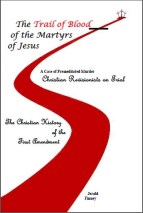
The Trail of Blood of the Martyrs of Jesus/A Case of Premeditated Murder: Christian Revisionists on Trial (The History of the First Amendment).

EXPOSING CATHOLIC/CALVINIST/REFORMED HISTORIC REVISIONISM

See LIST OF SCHOLARLY RESOURCES WHICH EXPLAIN AND COMPREHENSIVELY DOCUMENT THE TRUE HISTORY OF RELIGIOUS FREEDOM IN AMERICA

Section IV of God Betrayed/Separation of Church and State: The Biblical Principles and the American Application. Section I, II, and III of God Betrayed and some other sections to a lesser degree, also offer insights as to the spiritual warfare in the colonies which resulted in the adoption of the First Amendment.


Philippians

Click here to go to “Bible Studies on the Doctrine of the Church” from other books of the Bible.

Great Message from Philippians 2: The Mind of Christ by Charles Lawson


Ph.1.6Contents:

INTRODUCTION
THEME
PAUL AND EPHESUS
OUTLINE
NOTES


NOTE. For more details see, McGee, Philippians. This study is taken from that book with significant modifications mainly dealing with organization and method aligned to Bible principle and teaching. The study is also available online in audio at: Philippians.

DATE. A.D. 64 is the commonly received date.


INTRODUCTION

Four men left Rome in A.D. 62 bound for Turkey. These men had four of the most sublime compositions of the Christian faith. When these men bade farewell to the Apostle Paul, each was given an epistle to bear to his particular constituency. These four letters are in the Word of God, and they are designated the “Prison Epistles of Paul,” since he wrote them while he was imprisoned in Rome. He was awaiting a hearing before Caesar Nero. The four men and their respective places of abode were: (1) Epaphroditus from Philippi who had the Epistle to the Philippinans (Philippians 4.18). (2) Tychicus from Ephesus who had the Epistle to the Ephesians (Ephesians 6.21). (3) Epaphras from Colosse who had the Epistile to the Colossians (Colossians 4.12). (4) Onesimus, a runaway slave from Colosse, who had the Epistle to Philemon, his master (Philemon 10).

These epistles present a composite picture of Christ, the church, the Christian life, and the interrelationship and functioning of all. These different facets present the Chritian life on the highest plane.

The Epistle of Paul to the Philippians was written to the believers in Europe in the city of Philippi. Paul had a wonderful relationship with the Philippian church. This church was closer to Paul than to any other church. Their mutual love is mirrored in this epistle. It deals with Christian experience at the level on which all believers should be living.

Paul visited Philippi on his second missionary journey. Paul had taken Barnabas with him on his first missionary journey. Paul took Silas with him on his second missionary journey. They retraced Paul’s steps  into Galatian country, visiting the churches they had established in the first missionary journey.

The Spirit of God put a roadblock on Paul’s attempt to go south, so he went north, to where Turkey is today, but when “they assayed to go into Bithynia . . . the Spirit suffered them not” (Ac. 16.7). He can’t go south or north, he has come from the east, so there is but one direction to go. He went west as far as Troas. To go further, he would have to go by boat. He was waiting for instructions from God. Sometimes we feel God must lead us immediately, but He can let us wait, let us cool our heels. Finally Paul was given the vision of the man of Macedonia, recorded in Ac. 16.9, 10. Paul & his companions boarded the ship which took them to Europe. His first stop was Philippi. There he met Lydia, a seller of purple. See Ac. 16.13-15. She was saved and baptized. She besought them to stay at her house.

Lydia was the man in Macedonia. She was holding a prayer meeting down by the river, which probably had a lot to do with bringing Paul to Europe. That was the greatest crossing that ever took place. Lydia was the first convert in Europe.

Lydia was a member of the Philippian church to which Paul wrote this epistle. Anoterh member was a girl who was delivered from demon possession (Ac. 16.16-18).

And the Philippian jailer and his family were members of this church (See Ac. 16.30-34). All the members were very close to the Apostle Paul. They followed him in his journeys and ministered to him time and time again. The lost sight of him 2 years after his arrest in Jerusalem. They finally heard he was in a Roman prison. They immediately dispatched their pastor, Epaphroditus, with a gift that would minister to Paul’s needs.

So Paul wrote this epistle to thank the church and express his love for them. He had no doctrine to correct as in his letter to the Galatians. Neither did he have to correct their conduct as in his epistle to the Corinthians. There was only one small ripple in the fellowship of the church between tow women, Euodias and Syntyche, and Paul gives them a word of admonishment near the end of his letter. He didn’t seem to treat it as being serious.

His letter to the Philippian believers is the great epistle of Christian experience. that is his subject in Paul’s Epistle to the Philippians.


OUTLINE

I. PHILOSOPHY OF CHRISTIAN LIVING, Chapter 1
1. Introduction, verses 1, 2
2. Paul’s Tender Feeling for the Philippians, 3-11
3. Bonds and Afflictions Further the Gospel, 12-20
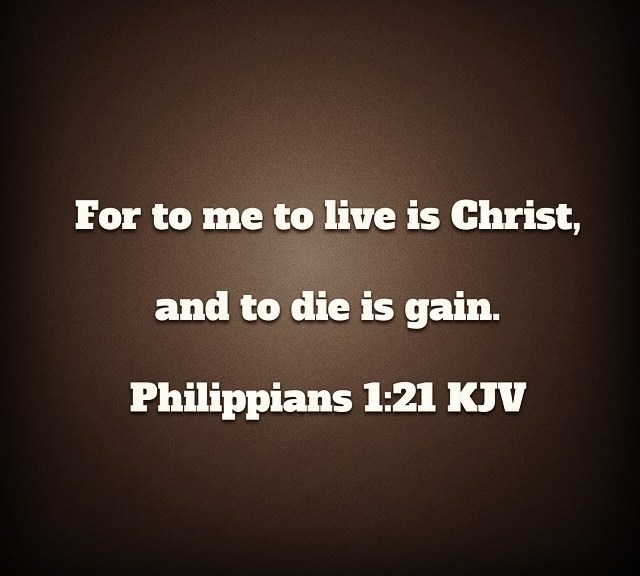
4. In Life or Death—Christ, 21-30

II. PATTERN FOR CHRISTIAN LIVING, Chapter 2
1. Others, 1-4
2 Mind of Christ—Humble, 5-8
3. Mind of God—Exaltation of Christ, 9-11
4. Mind of Paul—Things of Christ, 12-18
5. Mind of Timothy—Like-minded with Paul, 19-24
6. Mind of Epaphroditus—the Word of Christ, 25-20

III. PRIZE FOR CHRISTIAN LIVING, Chapter 3
1. Paul Changed His Bookkeeping System of the Past, 1-9
2. Paul Changed His Purpose for the Present, 10-19
3. Paul Changed His Hope for the Future, 20, 21

II. POWER FOR CHRISTIAN LIVING, Chapter 4
1. Joy—the Source of Power, 1-4
2. Prayer—the Secret of Power, 5-7
3. Contemplation of Christ—the Sanctuary of Power, 8, 9
4. In Christ—the Satisfaction of Power, 10-23


Chapter 1
The Philosophy of Christian Living


As we study this letter, we will not be seated in the heavenlies as in Ephesians. Philippians is practical. We will be down where the rubber meets the road.

Introduction (vv1, 2)
Ph.1.1-2v1 Paul associated Timothy with himself. Paul is encouraging Timothy. Paul loved Timothy. He was Paul’s son in the Lord—he won him to Christ—and he was very interested in him. Paul is constantly identifying certain young preachers with himself.

Paul identifies himself and Timothy as servants of Jesus Christ; this contrasts with Galatians and Corinthians where Paul began with, “Paul, an apostle.” The Philippians loved him and accepted his apostleship. So Paul takes a humble place, his rightful position.

“To all the saints….” Paul is not writing to one little clique.  Every believer is a saint. There are 2 groups in the human race: the saints and the ain’ts.  Saints are believers in Christ. They are saints, not because of their conduct, but because of their position in Christ. “Saint” means holy, set apart for God.

The saints are “in Christ Jesus.” You are put in Christ by the Holy Spirit who baptizes you into the family of God.

Salvation is to be in Christ. You get in Christ when you accept Him as your Saviour.

“With the bishops and deacons.” “Bishop” means “overseer or shepherd; it refers to the office. “Deacons” refers to spiritual men who are performing an earthly service (Ac. 6).

v2 Peace always follows grace. There is a peace with God through our Lord Jesus Christ (Ro. 5.1). The grace and peace are “from God our Father, and from the Lord Jesus Christ.” The Holy Spirit was already there in Philippi, indwelling the believers.

PAUL’S TENDER FEELING FOR THE PHILLIPPIANS (vv3-11)

v3 All believers should have this tender relationship.

v4 Always in prayer for them and making “request with joy.” “For you all.” He is speaking to all the saints, the whole body of believers. He was in Roman prison, but he makes his request with joy! The word joy is used 19 times in this epistle. The name of Jesus Christ appears over 40 times in this epistle. Christ is the center of the epistle. The emphasis should be on Christ rather than upon joy. The philosophy of Christian living has to do with Christ; the pattern has to do with Him. The price of Christian living has to do with Him, and the power has to do with Him. It is a personal relationship with Christ that brings joy to a believer’s life.

We try to produce joy in a church by external means. We have programs and invite people to enjoy them. We have a banquet. Actually, joy does not depend on outward circumstances. Real joy depends on the inward condition of the individual. You may have a little fun at a church banquet, but that will not be joy. When a believer gets to the place where he finds himself in the center of the will of God and know he is in His will regardless of circumstances, then there will be joy in our lives.

Paul said, “As I am here in jail, it is a lot of fun to pray for you Philippians; it brings joy to my heart.” Now, having told them he thanked God for them, he gives a reason.

Ph.1.6v5 “For your fellowship in the gospel.” Fellowship means that which believers can share in the things of Christ. There are three elements which must enter into it: spiritual communication (sharing the things of Christ), sympathetic cooperation (working together for Christ), and sweet communion (this makes us partners with Christ).

“From the First day until now.” From the day Paul met Lydia til now!

v6 Being confident of this very thing, that he which hath begun a good work in you will perform it until the day of Jesus Christ.The Holy Spirit has sealed you and me until the day of redemption. In the meantime, Ep. 4:30 “And grieve not the holy Spirit of God, whereby ye are sealed unto the day of redemption.”

v7 “Meet” is an old Elizabethan word that means “right.” “Because I have you in my heart.” “Partakers of my grace.” Paul is saying that he and the Philippians are all wrapped up together as partners in the gospel.

Paul was closer to the church at Philippi than to any other church. With a church like this, there is that sympathetic cooperation, besides spiritual communication, and it always produces sweet communion.

v8 “Bowels” really means tender feelings. Paul says he longs for them in the tender feelings of Jesus Christ. Very little takes place in the head. Paul’s reaction is not mental but emotional.

v9 Paul prays that “Your love may abound yet more and more in knowledge and in all judgment [or discernment]. We are to love all believers in Christ. Some believers are a little difficult to love. We are to love the unlovely, but we are to love with knowledge and with discernment.

v10 When Paul says “That ye may approve things that are excellent,” he means that you need to try the things that differ. That has to do, according to Dr. McGee, with the Lord’s will for your life. There are times when there are two or more routes that we could go. There are times we do not know which route to go. The Lord will not send an angel to tell us, nor will he turn on red or green lights to give us signals. He expects us to use a little consecrated and concentrated gumption. Try the things that differ.

“That ye may be sincere.” Paul is saying, “Don’t be a phony. Be real, be genuine, be sincere.”

“Without offense,” means blameless. Just make sure that the bad things people say about you are not true. “Till the day of Christ.”

v11 The “fruits of righteousness” are the fruits of the Holy Spirit. See Ga. 5.22, 23.

BONDS AND AFFLICTIONS FURTHER THE GOSPEL (vv12-20)

v12 Paul says that the Gospel is going out and that they things that have happened to him have not curtailed but have actually furthered the gospel. Now he will make clear what he means by this.

Paul was chained to a member of the Praetorian Guard, and these members where the Roman patricians, members of Caesar’s household. See Ac. 28.16. The Lord said Paul would “bear my name before the Gentiles, and kings, and the children of Israel” (Ac. 9.15). Until this point, Paul had taken the gospel to largely the common, vegetable variety of citizens in the Roman Empire. Now he has members of the royalty chained to him. What do you think Paul talked about? Many of the royalty did come to know Christ and Tertullian wrote that the Roman government killed many of those in authority when they were found to be Christians. Here Paul reveals that his imprisonment enabled him to reach into Caesar’s household with the Gospel.

v14 Many brethren became emboldened to preach the gospel without fear by Paul’s example.

v15 Some preached Christ of envy and strife. If you will exercise your gift in love, you will not envy someone else. The believer is warned against strife and envy. “Strife means to stir up, referring to demons. Demons stir up strife. Envy and strife hurt a church. Alcohol and drugs on the outside of a church cannot hurt it nearly as much as the envy and strife on the inside of a church.

Notice however that some preached Christ of good will.

v16 Some preached “Christ of contention, not sincerely, supposing ot add affliction to my bonds.” They were envious of the Apostle Paul.

v17. “The other of love.” There were 2 groups. What was Paul’s attitude toward them?

v18 The main thing to Paul was that Christ be preached, whether in pretense of by true motives. Christ can be preached insincerely and yet people can still be saved. God honor His Word, not the man nor the organization.

V19 By “salvation” here, Paul means deliverance from prison. Paul says that through their prayers he hopes to be set free. “Through … the supply of the Spirit of Jesus Christ.”

v20 Paul said he did not want to be ashamed of his witness while in this life and also when he came into the presence of the Lord Jesus Christ.

IN LIFE OR DEATH—CHRIST (vv21-30)
ph-1-21.jpgv21 To live is Christ and to die is gain. This is the philosophy of Christian living. The most important thing is to have fellowship with Him so that your joy might be full. Now we know why Paul was undisturbed by the criticism being leveled at him. You can’t hurt a man who is in fellowship with Jesus Christ. What could anyone do to such a man?

v22 Paul did not know his future—what a single day would bring forth. Same for everyone.

vv23-4 Paul says he was torn between wanting to go to be with the Lord, which is the better of the two, or to stay with the Philippian believers because they needed him. It is normal for a believer who is doing something for Christ to want to finish it before going home to be with the Lord.

vv25-26 Paul is practical. He still has work to do. Get busy for the Lord. “This is the stage on which you and I play our part. I want to stay as long as possible, and I have promised the Lord I would teach the Word as long as He lets me stay” (Dr. McGee).

v27 “Conversation” means your way of life which should be a credit to the gospel, as well as our speech.

vv28-9 Don’t be terrified by your adversaries, for it is given to you not only to believe on Him, but to suffer for Him.

v30 Paul knew what it was to suffer for Christ. Suffering for Christ is a token of blessing, not a sign that God has turned His face away.

Chapter 1 is summed up in one verse: “For me to live is Christ, and to die gain.”

Chapter 2
The pattern for Christian living

The pattern for Christian living is the mind of Christ as we shall see. It cannot be by imitation. Paul is not talking about imitation. He is talking about impartation. That is, the mind of Christ should be in us, and it can only be there by the power of the Holy Spirit.

We need to sit back and watch the Spirit of God move. Of course, we carry on the program that God has given us, but the power and dynamic comes from the Spirit of God.

OTHERS (vv1-4)

v1 “If” here is not conditional.

v2 Even though he is in prison, he is rejoicing in the Lord. Paul wants the Philippian church to be of one mind. To be of one mind is to let the mind of Christ be in you. We won’t be beating each other over the head because of disagreements.

v3 “In lowliness of mind let each esteem other better than themselves.” “Let nothing be done through strife or vainglory.” Most problems in a church are due to strife and envy. Some people just naturally cause trouble. If you are doing something through strife and vainglory, you would be better off not to do it at all. The same thing is true if you do it to be recognized.

v4 “Look nor every man on his own things, but every man also on the things of others.” Christ came from heaven’s glory to this earth for others. Why should we carry the gospel? For others.

THE MIND OF CHRIST—Humble (vv5-8)
Ph.2.6-11v5 Humility characterized the mind of Christ. Ephesians 4:1-2: “I therefore, the prisoner of the Lord, beseech you that ye walk worthy of the vocation wherewith ye are called,  With all lowliness and meekness, with longsuffering, forbearing one another in love.”

You and I can’t be humble. We are not made that way. We can’t be meek. None of us want to be offended, or ignored. We develop hang-ups if we are brought up in such a way that we have been trampled on.

We not come to the emptying, the kenosis, of Christ It wll give us the seven steps of humiliation which Christ took. Then we have listed 7 steps upward. Then we will see the mind of God. It is in the mind of God the Father to exalt the Lord Jesus Christ. Since it is the purpose of God the Father to exalt Jesus Christ, Dr. McGee believes it is the will of God for every one of us. We are to exalt Jesus Christ wherever we are and whatever we do. We are to be one with the Father in this ultimate purpose of the exaltation of Jesus Christ.

The first step downward was when He left heaven’s glory. He came all the way down to where you and I are. It is absolutely beyond human comprehension to understand what He did for us.

v6 Jesus Christ was God. He did not have to hold to it or fear that an angel might take His place.

Now we see the 2nd step down

v7 “Made himself of no reputation” means to empty. Christ emptied Himself. The Gnostics propounded the first heresy that He emptied Himself of His deity, that the deity entered into Him at the time of His baptism and left Him at the cross. This theory is not substantiated anywhere in the Word of God. He emptied Himself of something, but it was not His deity. There was never a moment when He was not God. See John 1.1-3, 14.

Dr. McGee believes He emptied Himself of the prerogatives of deity. He lived on this earth with limitations which were self-limitations.

The whole universe, not just a few shepherds and wisemen, and even the multitude of angels were a sorry turnout.

Jesus did not force them to come because he had laid aside His prerogatives of deity. He was willing to be born in a dirty, filthy place—not the pretty, clean stable of Christmas pageants and Christmas cards. He was willing to grow to manhood in a miserable town named Nazareth. He was willing to be an unknown carpenter. He could have had the Shekinah glory with Him all the time, but he didn’t. He didn’t have a halo around His head as we see in so many paintings of Him. Judas has to kiss Him the night he was betrayed so that the crowd would know which was the man they were to capture. He didn’t stand out from other men by some kind of inner light or glory around Him. He was a human being, but He was God manifest in the flesh. He laid aside the prerogitives of His deity.

Can we be sure of that? Dr. McGee thinks we can. After He finished His ministry, He gathered His own about Him on His last night on earth, and He prayed a very wonderful prayer to His Heavenly Father. On thing He said in that prayer is this: “And now, O Father, glorify thou me with thine own self with the glory which I had with thee before the world was” (Jn. 17.5). Notice this carefully: He prayed to have His glory restored. He did not pray to have His deity restored, because He had never given up His deity. He is asking that His glory, the glory light, a prerogative of deity, be restored. Obviously, He had laid that aside. Philippians 2:6: “Who, being in the form of God, thought it not robbery to be equal with God.”

The 3rd step downward  in the humiliation of Christ is this: “And took upon him the form of a servant.” Jesus came to earth as a servant. He worked as a carpenter. He came as a working man, a humble man, a little man. He was one of the little people.

Isaiah wrote that Christ would come as a “root of Jesse) (Is. 11.10). Yes, Mary was in the line of David as was Joseph by another route. But Jesse was a farmer in Bethlehem, and his line had dropped back to the place of peasant. Our Lord was born into a peasant family.

The 4th step in his humiliation is this: “And was made in the likeness of men.” For a man to become an ant would be humiliation. But that is nothing compared to what my Lord did when He left heaven’s glory and became a man, when He took upon Himself our humanity, when He was made in the likeness of men.

The 5th step in our Lord’s humiliation is that He humbled Himself. “And being found in fashion as a man, he humbled himself.” For a man to humble himself is very unusual, but here, God humbled Himself.

Example: One time John Wesley was starting over a bridge just wide enough for one person. As he was starting over, he met a liberal preacher of that day. This preacher swelled up and said, “I never give way to a fool.” John Wesley looked at him for a moment, smiled, and began to back off, saying, “I always do.” It is difficult to take that humble place. Our Lord humbled Himself.

The 6th step in His humiliation: “and [He] became obedient unto death.” Death is a very humiliating sort of thing. It is not natural. God did not create man to die. Man dies because of sin, because of his transgression. Death came by the transgression of one man, Adam; and death has passed down to all men.

Jesus came to earth to die. You and I came to live. He did not have to die, but He “became obedient unto death” and gave himself willingly. I have to die, but don’t want to. He didn’t have to die, but He “became obedient unto death” and gave Himself willingly. He did not have to die, but He wanted to. Why? In order that He might save you and me if we will put our trust in Him.  He said, “As the Father knoweth me, even so know I the Father: and I lay down my life for the sheep. And other sheep I have, which are not of this fold: them also I must bring, and they shall hear my voice; and there shall be one fold, and one shepherd. Therefore doth my Father love me, because I lay down my life, that I might take it again. No man taketh it from me, but I lay it down of myself. I have power to lay it down, and I have power to take it again. This commandment have I received of my Father” (Jn. 10:15-18).

The 7th and last step in the humiliation of Christ is “even the death of the cross.” Not only did He become obedient unto death, but to the death of the cross. It was a disgraceful death. He came from the highest glory to the lowest place of humiliation. Why.  “Look not every man on hius own things, but every man also on the things of others.” He came to earth and suffered the death of a criminal for others—for y0ou and me. Thank god for that! This is the mind of Christ.

THE MIND OF GOD (vs. 9-)

The mind of God the Father is to glorify Christ. We have seen the seven steps downward; now we will see the seven steps upward. The mind of God is the exaltation of Christ.

The 1st step up: “God also hath highly exalted him.” The supreme purpose of God the Father is that Jesus Christ be glorified in the universe which He created., and that He be glorified on the earth where man dwells, where man rebelled against God.

Nothing but the death of Christ makes this little earth significant. The thing that has lent dignity to man and has caused him to look up into the heavens and sing the doxology is the fact that Jesus Christ came to this earth and died on the cross for him. “Wherefore God also hath highly exalted him.

Now the 2nd step. “and given him a name which is above every name.” The next time you take His name in vain, think of and drag in the mud. His name will be exalted above the names of all the great men of this world and above the names of all the angels in glory.

v10 gives the next 3 steps of Christ’s exaltation.

The 3rd step: “That at the name of Jesus”—“Jesus” means Saviour. Matthew 1:21: “And she shall bring forth a son, and thou shalt call his name JESUS: for he shall save his people from their sins.” Now notice the reference to prophecy: “Now all this was done, that it might be fulfilled which was spoken of the Lord by the prophet, saying, Behold, a virgin shall be with child, and shall bring forth a son, and they shall call his name Emmanuel, which being interpreted is, God with us” (Mt. 1.22-23). One can find no verse where they called Him Emmanuel. But He can save His people from their sins because He will be Immanuel, God with us. Because of that, He can be called Jesus. Nobody else can properly be called Jesus.

The 4th step. “Of things in heaven.”

The5th step: “And things in earth.”

And the 6th step: “And things under the earth.” Here God is talking about the Lordship of Christ. God has highly exalted Him, that at the name of Christ every knee must bow, in heaven, in earth, and under the earth. That is, even hell will bow down to Him because He is the Lord. He is God. But merely bowing does not imply salvation.  Colossians 1.20 is not talking about Lordship, but about Christ’s reconciling work, His redemptive work. And what was reconciled? What was redeemed? Was Hell included? No. The tunings under the earth are not mentioned. Why? Because this verse is talking about redemption, and there is no redemption in hell.

v11 The final and 7th step of Christ’s exaltation: Every tongue shall “confess that Jesus Christ is Lord.” That doesn’t mean every man shall confess Him as savior. Even in hell, they will confess that Jesus Christ is Lord.

Word of caution. Be careful about calling Jesus your Lord if He is not your Lord. Matthew 7:21-23: “Not every one that saith unto me, Lord, Lord, shall enter into the kingdom of heaven; but he that doeth the will of my Father which is in heaven. Many will say to me in that day, Lord, Lord, have we not prophesied in thy name? and in thy name have cast out devils? and in thy name done many wonderful works? And then will I profess unto them, I never knew you: depart from me, ye that work iniquity.” You better know Him as your Savior before you say He is your Lord. If He is your Savior, then you can become obedient to Him as your Lord.

Jesus said, John 15:14: “Ye are my friends, if ye do whatsoever I command you.”

MIND OF PAUL (vs. 12-18)

We have seen that the mind of Christ cannot be imitated. It can happen only be impartation. It is the work of the Spirit of God within us which will produce the fruit of meekness or humility in our lives. We will see the mind of Christ as it walked down Roman roads, lived in Roman homes, and in a Roman jail. We will see three examples; the mind of Paul, the mind of Timothy, and the mind of Epaphroditus (pastor of the church of Philippi).

v12 “Salvation” here is used in a general sense. Paul is talking about working out their problems which they had in the church, and working out the problems in their own Christian lives. He is in a Roman prison, so he does not know if he will ever be there with them again to help them. So he tells them to work out their “own salvation with fear and trembling.”

v13 God works out that which He had worked in. God saves a person by faith plus nothing. After one is saved, God talks to him about his works. He will work out the salvation He has worked in by faith. James 2:17-18: “Even so faith, if it hath not works, is dead, being alone.  Yea, a man may say, Thou hast faith, and I have works: shew me thy faith without thy works, and I will shew thee my faith by my works.” True faith will work itself out so that the people around us will be able to tell that we are different, that we are Christians.

v14 “Do all things without murmuring of disputings.”

v15. Be a light.

v16 “Holding forth the word of life.” Life and light are related. Holding for the word of life, we are lights to the world.

v17 This verse is one of the most wonderful in the entire Word of God. It pictures what the Christian life really should be. He is referring to one of the earliest sacrifices in the OT. Genesis 35:14: “And Jacob set up a pillar in the place where he talked with him, even a pillar of stone: and he poured a drink offering thereon, and he poured oil thereon.” Then in the books of Leviticus and Numbers, the sacrifices are described. The drink offering was to be added to the burnt offering and the meal offering, but never to the sin or trespass offering. It had to do with the person of Christ. They would bring in a skin of wine and pour it on the sacrifice which was being consumed by fire. It would just go up in smoke.

Paul was saying, “I want my life to be poured out like a drink offering on the offering in Christ.” Paul knows that the Lord Jesus Christ made the supreme sacrifice. He wanted his life to be a drink offering—just poured out to go up in steam. He wanted to be consumed and obscured that all that is seen is just Jesus. He wanted Jesus Christ to receive all the honor and the glory. This was the mind of Paul.

v18 In other words, “If your life commends the gospel, my life is just poured out as a drink offerning. Together we’ll rejoice over this.” Paul ends on a note of joy and rejoicing. If we are walking in humility, we will rejoice at the success of others. We have too much strife and vainglory. This hurts the cause of Christ.

THE MIND OF TIMOTHY—Like-minded with Paul (vs. 19-24)

v19 Timothy was Paul’s spiritual son. Paul had great confidence in him. He could trust Timothy to care for the state of the Philippian believers.

v20 He is like-minded with Paul which means he had the mind of Christ, and he was characterized by humility. If men have the mind of Christ, they are together.

Timothy had been faithful to Paul. Like minded men can work together. Sometimes a convert later turns against the person who led him to the Lord.

v21 There were many others who were seeking their own glory. They wanted to make a name for themselves. Because they were seeking their own glory, they were willing to belittle Paul.

v22 You can be miles apart from someone, but they can be together if they have the mind of Christ. When a husband and wife have the mind of Christ, they are really together. It is a glorious wonderful relationship.

vs.23-24 Paul wanted Timothy to be the one to bring them the message about what was going to happen to him in prison. He hoped to be released. He was released, but when the Christians were persecuted under Nero, Paul was brought back and executed. This is not recorded in Scripture.

MIND OF EPAPHRODITUS—The Work of Christ (vs. 25-30)

v25 Epaphroditus also had the mind of Christ. He, Paul and Timothy worked together. Paul had founded the church at Philippi, but Epaphroditus was not jealous of him. Paul calls him, “my brother, and my companion in labor, and my fellowsoldier.” Paul says, “He fights with me. He doesn’t stick a knife in my back when I’m away. He does not side with my enemies.” He was a practical help to Paul who is confined there in chains.

v26 Epaphroditus was sick, and word got back to the church at Philippe that their own pastor was sick. He longed for them. It hurt him that they were hurt because he was sick! This revealed the marvelous relationship between the church and their pastor.

The rejection of a Bible preaching pastor is the death knell of many churches . The devil has been very clever. He has shifted his attack from the Word of God itself to the man who teaches the Word of God.

Epaphroditus was greatly loved by his church, and that speaks well for the church in Philippi.

v27 Why did not Paul heal Epaphroditus? He was so sick he almost died! Paul and the apostles had the sign gifts because they did not have what we have today, a New Testament. His authority when he went into new territory was his message was nothing but sign gifts, which included the gift of healing. Paul had a thorn in the flesh which the Lord Jesus would not remove.  Instead, He gave Paul the grace to bear it. Timothy had stomach trouble. If Paul was a faith healer why did he not heal Timothy? Actually, he told Timothy to take a little wine for his stomach’s sake.  In 2 Ti. 4.20, he said that he had left Torphimus in Miletum sick. And now here Paul says he has this young preacher, Epaphroditus, with him, and he was so sick he almost died. He did not heal him. Rather, he gives all the credit to God; he says that God had mercy on him. His healing came about in a natural sort of way. Paul made it a matter of prayer, and God heard and answered. Even at this late stage, even before the apostles disappeared from the scene, the emphasis is moving back to the Great Physician.

You see, this epistle is emphasizing the mind of Christ, a humble mind. If I were a faith healer, I would be in the limelight. I would be somebody very great and very famous. but I am not. The Lord Jesus is the great physician. So Paul here is putting no emphasis on healing whatsoever. He has a sick preacher with him, but is putting the emphasis where it should be, on the Lord Jesus Christ.

v28 Now Paul is sending Epaphroditus back to them. Paul wants them to rejoice, not sorrow, that he “may be the less sorrowful.”

v29 How gracious Paul is with this preacher from Philippi! A man like Epaphroditus whould be respected and loved. We should respect the one who is teaching the Word of God. Both the gift and the teacher should be respected. Our attention should be focused on the Word of God. Our problem is not the drug problem, the alcohol problem, the sex problem. The problem is that we don’t get back to the Word of God. It is the Word of God that reveals Christ and the mind of Christ.

v30 Epaphroditus was doing the work of Christ. He had to have the  mind of Christ to do that. “Because for the work of Christ, he was nigh unto death, not regarding his life, to supply your lack of service toward me.” In the Roman Empire, there was no mercy shown to anyone, but there was law and order everywhere. Then there went out this little man, Paul the Apostle, and those who were like-minded with him, and they preached a gospel that there is a God of the universe who, through a redemption that He has wrought on a Roman cross, had provided mercy for mankind. Multitudes turned to the Lord Jesus in that day.

Now this little man, Paul, is chained to a Roman soldier. He is witnessing for Christ, and he is rejoicing in the Lord. He has the mind of Christ. And a find young man, Timothy, walking in that pagan city. He did pretty well in a godless society. He had the mind of Christ. And then Epaphroditus, a faithful pastor way up in the city of Philippi, a pagan heathen city. Epaphroditus had the mind of Christ.

Then I look at me. I say Stop offering excuses in this day in which you are living! Forget yourself, humble yourself, you have nothing to be proud about. Seek the mind of Christ! Yield to Him so the Spirit of God can produce in you the mind of Christ!

Chapter 3
The prize for Christian living

v1 Paul’s final message was going to be “Rejoice in the Lord.” He has shown 3 men, Paul, Timothy, and Epaphroditus who were able to rejoice in sickness and imprisonment. The early church could rejoice amid the first of persecution.

Paul is saying that it has been no burden for him to write this letter (as there had been in his heart when he wrote the Galatians and Corinthians). The Philippians had been a great joy to him. It is safe for him to write to the Philippians. He felt close to them. He knows they will understand.

v2 “Beware of dogs.” We get some insight into what Paul was writing by looking at Isaiah who warned against the false prophets of his day. Isaiah 56:10: “His watchmen are blind: they are all ignorant, they are all dumb dogs, they cannot bark; sleeping, lying down, loving to slumber.” The northern kingdom had already gone into captivity because the false prophets had given them a false security.  God was warning the southern kingdom not to do the same thing. He was calling the false prophets “dumb dogs.” They won’t speak out. They won’t tell it like it is. Dogs are those who are not declaring the full counsel of God.

We are comfortable today. We look for the same comfort in the church. There is a danger of comforting the church members because that is what they would like to find in the ministry.

Most church members don’t need messages of comfort but messages of warning. America has gone to sleep under the comfortable blanket of affluence.

“Beware of evil workers.” another group that would actually abuse them and use them They are not honest.

“Beware of the concision.” He is saying that they are no longer of the true circumcision, referring to the legalizers, those who were attempting to force Christians to keep the law of Moses for salvation and sanctification.

v3 “We are of the circumcision.” He makes clear what he means by this in Galatinas 6.15: “For in Christ Jesus neither circumcision availeth any thing, nor uncircumcision, but a new creature.” True circumcision is of the heart. It is the new birth, a new heart attitude toward God. It is being in Christ.

“And have no confidence in the flesh.” No confidence in our old nature. We trust Christ alone.

v4 Paul answers those who speak behind his back that because of Paul’s ignorance and failure in life to measure up to the requirements of the law he says have no confidence in the flesh. Paul says he would be willing to stack his religious life against that of any man. He says, “And I more.”

Now, in vs.5-6 he is lists 7 things in which he trusted at one time. This is religion. He had godly parents and was circumcised on the 8th day. They brought him up according to the Mosaic law. (2) He was “of the stock of Israel.” (3) “Of the tribe of Benjamin.” Benjamin had been Jacob’s favorite son. (4) “An Hebrew of Hebrews.” This means he was a leader, in the highest strata of the religious circle. (5) As touching the law, a Pharisee.” The Pharisees represented the very best in Israel. They were a religious-political party and their aim was to establish the kingdom. They were fundamental Bible believers. (6) “Concerning zeal, persecuting the church.” He though he was doing God’s will by that. (7) Touching the righteousness which is in the law, blameless.” He does not say he was sinless or perfect; he says he was blameless. Ro. 7:7:”What shall we say then? Is the law sin? God forbid. Nay, I had not known sin, but by the law: for I had not known lust, except the law had said, Thou shalt not covet.” One can covet without anyone knowing. Paul says the law “slew him.”

By “touching the righteousness which is in the law, blameless,” Paul menat that he had brought the proper sacrifice for his sin to make things right before God. Paul was sincere.

Paul thought all those things commended him to God. However, he hated Christ and His followers and set out to eliminate them. Then He met Jesus and he changed his whole bookkeeping system.

v7 But then Paul met Christ and put all his trust in Him.

v8 Paul’s conversion was not just an experience of the moment. Conversion is not a balloon ascension. Conversion stays with you. It continues for a lifetime. Sanctification is a daily walk in dependence upon God. Paul flushes away all the things he used to trust. He now trusts the Lord Jesus and Him only for His salvation.

v9 “Not having mine own righteousness which is of the law.” That righteousness is as filthy rags in God’s sight (Is. 64.6). One comes to Christ as a bankrupt sinner offering Christ nothing. You have nothing; He has everything, and He offers it to you.

“By faith” is the important word. “The righteousness of God” came about because when Christ died on the cross He subtracted your sins, and He rose again from the dead for your justification, your righteousness.

PAUL CHANGED HIS PURPOSE FOR THE PRESENT (vs.10-19)

Paul is no longer trying o build up legal righteousness. He has changed his bookkeeping system and is going to change his purpose.

vs.10-11 Saving faith is a faith that moves you. James 2:18: “Yea, a man may say, Thou hast faith, and I have works: shew me thy faith without thy works, and I will shew thee my faith by my works.” If you don’t have works, you are not saved! That is what Paul is saying. If you have faith that saves, you have a new motivation, a new life purpose, a new life style. If your faith in Christ has not saved you, you have not been saved.

Paul’s effort and energy comes from the Holy Spirit, which is far greater than any legal effort. Under the law system, he was willing to go to Damascus to stamp out the followers of Christ. Under the grace-faith system, he will go to the end of the earth to make followers of Christ and to witness for Him. Your works have nothing to do with your salvation. Your faith in Christ is the motivation for you to live for God.

“That I may know him”—Paul still had a motivation, at the end of his life, to know Christ. We need the reality of Christ in our lives.

“And the fellowship of his sufferings.” If you don’t enjoy praising Christ now, why should you go to heaven?

“If by any means I might attain unto the resurrection of the dead.” Paul is affirming that he will have a part in the rapture with great joy. He did not expect to attain perfection in this life. The church will be resurrected at the rapture. The rest of the dead will not be raised until the end of the millennium. And the Old Testament saints are not to be raised until the end of the great tribulation period.

v12 The knowledge that he will not already detained perfection does not deter Paul.

v13 Paul gives us the modus operandi of his life. “I count not myself to have apprehended”—Paul is saying that he had not arrived.

“This one thing I do.” Paul had whittled his life down to one point. “Forgetting those things which are behind.” He is leaving the past and its mistakes behind, not letting it handicap him for the future. The future—he lives in the present in the anticipation of the future when he will grow and develop.

v14 “I press toward the mark for the prize.” He likens himself to a track star, running for the prize. The Olympic Games were held at times in the amphitheater in Ephesus. Paul lived there three years. He used many figures of speech that were taken from those athletic events.

“The prize for the high calling of God in Christ Jesus.” Not some earthly reward, but to be in His presence.

We don’t run for salvation. Salvation is not the prize. Either we trust Christ or we don’t. Faith in Christ is a gift. Ep. 2.8, 9.

Paul, after he received eternal life, is running for a prize. Christ is everything to him, and he is running a race that he might win Christ. His whole thought is “When I come into His presence, I don’t want to be ashamed.” John said it is possible to be ashamed at His appearing: “And now, little children, abide in him; that, when he shall appear, we may have confidence, and not be ashamed before him at his coming” (1 Jn.2.28).

v15 “As many as be perfect.” By “perfect” Paul means arriving where one should be in maturation. If a 17 year old says, “Da-da,” there is something radically wrong.

“And if in any thing ye be otherwise minded, God will reveal even this unto you.”  Maybe God does have something else for you to do. If you are willing to do it, He will show it to you. He is able to lead a willing believer. It is a matter of being in touch with the Lord, being close to Him.

v16 Paul is encouraging the Philippian believers to get out on the race track. He now gives himself as an example.

v17 “If you want to know how to do it, watch me” he says. Not an imitation. He means, “Learn to share the power of Christ in the body of Christ, the church.”

Now Paul discusses the negative side.

vs18, 19 This is a severe condemnation of those who profess to be Christians. They contradict their profession by their lives. Their God is their belly. This means they are led by their appetites. Some professing Christians have an appetite for money and will do most anything for the almighty dollar. For others, it is sex. Others covet. They live for self and self only, and glory in this.

If you have no works, you are not going to convince your neighbor. James 2:17-18: “Even so faith, if it hath not works, is dead, being alone.  Yea, a man may say, Thou hast faith, and I have works: shew me thy faith without thy works, and I will shew thee my faith by my works.”

PAUL CHANGED HIS HOPE FOR THE FUTURE (vs20-21)

v20 “Conversation in heaven” means the total way of life, a new life style. We are to represent heaven and heaven’s message here upon the earth today.

“From whence also we look for the Saviour, the Lord Jesus Christ.” Paul expresses the hope of the believer on a high plane.

v21 “Our vile body.” It means he shall change our earthly body.

One day our bodies will be transformed “unto his glorious body.” The trump shall sound suddenly (1 Co.15.51, 52). Revelation deals with Israel. In the OT we read that Israel moved in the wilderness march by the blowing of 2 silver trumpets. Israel is used to trumpets, we are not.  1 Thes. 4.16. It is the trump of God. Revelation 1:10: “I was in the Spirit on the Lord’s day, and heard behind me a great voice, as of a trumpet.”

“Who shall change our vile body, that it may be fashioned like unto his glorious body.” This is exactly the same thought that John had: 1 Jn. 3:2 “Beloved, now are we the sons of God, and it doth not yet appear what we shall be: but we know that, when he shall appear, we shall be like him; for we shall see him as he is.” When Christ appears, we shall be like him. This is a high hope.

Chapter 4
The power for Christian living

Philosophy, pattern, prize would be meaningless and useless if there were no power for them. Power is all-important.

JOY—THE SOURCE OF POWER (vs1-4)

v1: “My joy and crown.” Paul expected to receive a crown for winning these folk to the Lord. And they were his joy down here. He loved these believers in Philippi!

“So stand fast in the Lord, my dearly beloved.”

v2 Now he comes to the only problem in the Philippian church. It was a ripple, not serious. Apparently, these 2 ladies were not speaking to each other.

v3 Women had labored with Paul in the gospel. Etc.

v4 This is a commandment to the Christian: Rejoice always in the Lord, Rejoice. Regardless of the circumstances. We can’t produce this. It is a fruit of the Holy Spirit. There is no power in a Christian’s life if he has no joy.

PRAYER—THE SECRET OF POWER (vs5-7)

v5 We need to emphasize the person of Christ. The Lord is at hand” Paul believed the Lord would come at any moment.

v6 “Be careful for nothing.” Another commandment. Worry about nothing, pray about everything. Prayer is the secret of power. The reason we are to worry about nothing is that we are to pray about everything. Nothing leaves out everything. There is nothing in our life that is big to God.

“With thanksgiving let your requests be made known unto God.”

v7 Different kinds of peace. World peace. One day the world will have peace. The peace that comes when sins are forgiven (Ro. 5.1). Peace that is tranquility (Jn. 14.27).

The “peace that passeth all understanding” in this vers “shall keep your hearts and minds through Christ Jesus.” We entered this passage with anxiety, worry and fear and we come out of it w/peace. Between the two was prayer. We should be praying, “God change me.” Prayer is the secret of power. We enter with worry, we can come out in peace. Joy is the source or power; prayer is the secret of power.

COMTEMPLATION OF CHRIST—THE SANCTUARY OF POWER (vs.8-9 )

v8 “Finally, brethren, whatsoever things are true, whatsoever things are honest, whatsoever things are just, whatsoever things are pure, whatsoever things are lovely, whatsoever things are of good report; if there be any virtue, and if there be any praise, think on these things.”

Only the Word of God can bring strength to you. This world surrounds us with filth. Get into the Word of God.

v9 Paul says “Do what I do.”

IN CHRIST—THE SATISFACTION OF POWER (vs10-)

v10 Paul has been talking about the Christian experience. Now he is thanking them for their gift. He said, in other words, “You had lost contact with me; so that you didn’t have the opportunity ot help me.”

v11 Paul is content in whatever state he is in, even in prison.

v12 “Though I appreciate your sympathy, I know how to live on the lowest plane economically, and how to live on the highest plane.”

v13 Paul is saying he can do all things through Christ (in the will of God). He can’t go jump over a house. Whatever Christ has for you to do, He will give you the power. He will give you the power to manifest the gift He has given you. It is essential to be in God’s will, and His will is determined by a knowledge of His Bible.

v14 Paul wants them to know he appreciates their gift.

v15 This church was a jewel. They were the ones who sent him support. Paul was their missionary.

v16 No one was helping Paul but the Philippian believers.

v17 Paul wrote them to thank them.

v18 A Christian in his giving is like a high priest making an offering to God. When given with the right spirit, it is an offering, an odor of a sweet smell to God.

v19 Thinking of their sacrifice, Paul assures them that God would supply all their needs.

v21 God gets all the glory. He will not share it with another.

vs21-22 He greets each believer personally.

v23 Paul closes with a benediction.
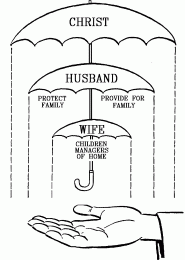

Romans 1.18-32 Lessons Learned from Street Preaching Encounter with a Reprobate


Jerald Finney
December 11, 2017
Attacks on First Amendment Protection of Freedoms (Religion, Speech, Press, and Association)


Romans 1.18-32

“18 For the wrath of God is revealed from heaven against all ungodliness and unrighteousness of men, who hold the truth in unrighteousness; 19 Because that which may be known of God is manifest in them; for God hath shewed it unto them.  20 For the invisible things of him from the creation of the world are clearly seen, being understood by the things that are made, even his eternal power and Godhead; so that they are without excuse: 21 Because that, when they knew God, they glorified him not as God, neither were thankful; but became vain in their imaginations, and their foolish heart was darkened. 22 Professing themselves to be wise, they became fools, 23 And changed the glory of the uncorruptible God into an image made like to corruptible man, and to birds, and fourfooted beasts, and creeping things. 24 Wherefore God also gave them up to uncleanness through the lusts of their own hearts, to dishonour their own bodies between themselves: 25 Who changed the truth of God into a lie, and worshipped and served the creature more than the Creator, who is blessed for ever. Amen. 26 For this cause God gave them up unto vile affections: for even their women did change the natural use into that which is against nature: 27 And likewise also the men, leaving the natural use of the woman, burned in their lust one toward another; men with men working that which is unseemly, and receiving in themselves that recompence of their error which was meet. 28 And even as they did not like to retain God in their knowledge, God gave them over to a reprobate mind, to do those things which are not convenient; 29 Being filled with all unrighteousness, fornication, wickedness, covetousness, maliciousness; full of envy, murder, debate, deceit, malignity; whisperers, 30 Backbiters, haters of God, despiteful, proud, boasters, inventors of evil things, disobedient to parents, 31 Without understanding, covenantbreakers, without natural affection, implacable, unmerciful: 32 Who knowing the judgment of God, that they which commit such things are worthy of death, not only do the same, but have pleasure in them that do them.”


This letter was e-mailed to the person who is unidentified here.

Dear Mr. _____________:

CastingCrowns-8
Learning some lessons while street preaching on December 9, 2017. The man in the blue sports coat is the person this letter was addressed to. I am the one with the mustache who is talking to him.

I am the lawyer you met Saturday night. I thank the Lord for bringing us into contact. In preparing me for our encounter the Lord had been dealing with me about the principles in Romans 1-3 for a couple of weeks prior. Our encounter was a “where the rubber meets the road” revelation of the teachings in Romans 1.18-32. Our discussion was very enlightening about the teachings in Romans 1. Thank the Lord, and thank you, for the light God shined on those verses by bringing you to me and the other street preachers I was working with. Please permit me to explain the lessons I learned.

Scripture applied to any issue will reveal truth to the diligent believing follower of the Lord Jesus Christ. A lot of verses prove this. Romans 1 reveals the truth about the God consciousness which our Lord reveals or shows to every human being. God reveals to everyone “Who He is.” He explains this and the consequences of rejecting that light in Romans 1.18-32.

God offers light to everyone in the same order. The first light He offers is the light of “Who He Is” – step 1 (Ro. 1). If that light is accepted, He then reveals, through one’s conscience, who the individual is – step 2 (Ro. 2-3). If the individual accepts that light, God then offers light as to the way to justification through the Scriptures – step 3 (Ro. 3). If the individual who has accepted the light God gives in steps 1-3 acts on that light, God regenerates him and he becomes a child of God.

I will only look at step 1, Romans 1.18-32, in this letter.

God imparts a God consciousness to every single person who has ever lived or ever will live (vv. 18-20). That consciousness tells everyone who God is. He is a God of wrath (18) and a God of judgment (32). He shows to everyone all that He wishes them to know about Himself (19-20). No one will have an excuse for rejecting God and going to hell (20). Even the invisible things of God are clearly seen and understood, so that they without excuse (20).

Everyone knows God. But some do not glorify Him as God, neither are they thankful (21), even though He created them and gives them all the information they need to know to know “Who He Is.” Rather, they become vain in their imaginations and their foolish hearts are darkened (21). They profess themselves to be wise even though they are fools (22). They “change the glory of the uncorruptible God into an image made like to corruptible man, and to birds, and fourfooted beasts, and creeping things” (23). The result: “Wherefore God also [gives] them up to uncleanness through the lusts of their own hearts, to dishonour their own bodies between themselves” But it is not too late for them to arise and accept the light God offers. If a person does so at any point up to here, God will take him to step 2 – the knowledge of who he (the individual) is.

However, those who do not wake up by this time change “the truth of God into a lie, and worship the creature more than the Creator, who is blessed for ever. Amen” (25). God  then gives them “up unto vile affections: for even their women change the natural use into that which is against nature: And likewise also the men, leaving the natural use of the woman, burn in their lust one toward another; men with men working that which is unseemly, and receiving in themselves that recompence of their error which was meet.” (26-27). I believe that it is possible for an individual who has gone this far to still repent and accept God’s light. If he does so, God will move to step 2.

However, those who do not repent, and since they “do not like to retain God in their knowledge, God gives them over to a reprobate mind, to do those things which are not convenient” (28). At that point, there is no possibility for those persons to ever go to step 2. They will be lost for all eternity with no hope.

All that is left for those individuals is the condition described in verses 29-32: “Being filled with all unrighteousness, fornication, wickedness, covetousness, maliciousness; full of envy, murder, debate, deceit, malignity; whisperers, Backbiters, haters of God, despiteful, proud, boasters, inventors of evil things, disobedient to parents, Without understanding, covenantbreakers, without natural affection, implacable, unmerciful: Who knowing the judgment of God, that they which commit such things are worthy of death, not only do the same, but have pleasure in them that do them.”

Several observable facts indicate that God has turned you over to a reprobate mind:

  1. I asked you to back up what you believed with Scripture. You did not. You held the truth in unrighteousness, not in Scripture. Your authority was “I think.”
  2. You insisted that we are to love everyone and that you do that, not by giving them truth, but by being a friend, joining with them in their debauchery. You had been drinking and carousing with them for hours according to your own admission. Your friend wanted you to leave and go to the “Gay Nineties,” one of the lowest of the low nightclubs in town. After you left, I believe you did just that. God tells us to love the lost primarily by preaching the truth, one-on-one, to groups, publicly, privately, everywhere in the world. Of course, we are also to help them materially as well, but the primary focus is on public evangelism, as did the Apostles and Christians in the New Testament. For doing so, they were hated, run out of town, threatened, and killed. But, at the same time, many were saved and true churches, not apostate religious organizations like “Hope Church,” were organized and built. For example, when Paul went to Ephesus, he conducted a public ministry (there were no church meetinghouses), people were saved, and a church was started. This was the pattern.
  3. You refused to allow me the courtesy to respond to you after I agreed to and did allow you to speak first. I told you my response would be the Word of God. I started reading in Romans 1.18, but you interrupted before I could finish the verse. I tried to continue, pointing out that I was going to read several verses, but you refused to allow it. You kept imposing on me what you thought.
  4. You kept pointing at one of our signs, verbally stating that “haters of God” on one of the signs is not the way to present the Gospel to the lost. “Haters of God” is one of the inconvenient things that a reprodate is given up to do (30). You, according to your own witness the night we met, are also guilty of some of the other inconvenient things mentioned in verses 29-32.
  5. You insisted that God is love. You refused to acknowledge the wrath of God and the judgment of God, two attributes which are central to knowing who God is (18, 32). It grieved you so much when I tried to get into the wrath and judgment of God that you became overbearing to the extent that you immediately verbally seized control at my mere mention of one of those terms.
  6. You equated love and method. Love is a motivational factor for doing something. Method is the way to do something. To equate the two shows total lack of understanding, something displayed by all you said and did (31).
  7. You pushed and controlled a debate (29). Debate is normally an endeavor to find truth. However, in the context of Romans 1.18-32, debate is an attempt to bring others into line with the beliefs and lifestyle of a reprobate. Your “debate” was a one-sided attempt to force your view according to what you thought, not to arrive at Bible truth.
  8. “Filled with unrighteousness” (29). You displayed drinking, carousing in the ultimate “gay” din of iniquity, and who knows what else.
  9. “Wickedness” (29). Ditto.
  10. “Despiteful” (30). (Characterized by intense ill will or spite: black, evil, hateful, malevolent, malicious, malign, malignant, mean, nasty, poisonous, spiteful, venomous, vicious, wicked).
  11. “Proud” (30). Pride means, “Inordinate self-esteem; an unreasonable conceit of one’s own superiority in talents, beauty, wealth, accomplishments, rank or elevation in office, which manifests itself in lofty airs, distance, reserve, and often in contempt of others.” You were so proud of yourself that you approached God’s people, doing God’s work in God’s way, with the obvious assumption that you could convince us to your way of thinking. God protects those who are His, who have put on the armor of God, from the wiles of the devil.
  12. “Without understanding” (31). You have no ability to understand God or God’s truths.

Jude1.3-4Going into gay bars and holding the truth in unrighteousness is sad. I am reminded of Matthew 23:15: “Woe unto you, scribes and Pharisees, hypocrites! for ye compass sea and land to make one proselyte, and when he is made, ye make him twofold more the child of hell than yourselves.”
Sadder still is your revelation that you have a youth ministry in an apostate church. Luke 17:2: “It were better for him that a millstone were hanged about his neck, and he cast into the sea, than that he should offend one of these little ones.”

Jude1.15God revealed Himself to you. You rejected all the light He shined on you about Himself. You appear to be a reprobate. I grieve for anyone who has reached that point. Preaching to you invoked the ire of your father the devil. Of course, if indeed you are a reprobate, this letter will not help you. I am posting it online in the hopes that it may be of some help to someone else so that they progress to step 2, a knowledge of who they are, to step 3, a knowledge of their only hope, and finally to salvation and justification.
Jude “For there are certain men crept in unawares, who were before of old ordained to this condemnation, ungodly men, turning the grace of our God into lasciviousness, and denying the only Lord God, and our Lord Jesus Christ” (4). “And others save with fear, pulling them out of the fire; hating even the garment spotted by the flesh” (23). Read the whole book.

See also, 2 Timothy 2, 2 Peter 2.

Click the above image or click here to go to the webpage, “From Queer to Christ.”

Links to Bible studies on the heresy and apostasy are available at: The Bible Doctrine of the Church.

The local church sanctified and cleansed by the washing of water by the word——————–A ministry of Charity Baptist Tabernacle of Amarillo, Texas led by Pastor Ben Hickam. "Would to God ye could bear with me a little in my folly: and indeed bear with me. For I am jealous over you with godly jealousy: for I have espoused you to one husband, that I may present you as a chaste virgin to Christ. But I fear, lest by any means, as the serpent beguiled Eve through his subtilty, so your minds should be corrupted from the simplicity that is in Christ" (2 Corinthians 11:1-3). ————————————Jerald Finney, a Christian Lawyer and member of Charity Baptist Tabernacle, having received this ministry in the Lord, explains how a church in America can remain under the Lord Jesus Christ and Him only. "As every man hath received the gift, even so minister the same one to another, as good stewards of the manifold grace of God. If any man speak, let him speak as the oracles of God; if any man minister, let him do it as of the ability which God giveth: that God in all things may be glorified through Jesus Christ, to whom be praise and dominion for ever and ever. Amen" (1 Peter 4:10-11; See also, Ephesians 4::1-16 and 1 Corinthians 12:1-25). "Take heed to the ministry which thou hast received in the Lord, that thou fulfil it" (Colossians 4:17). "And hath put all things under his feet, and gave him to be the head over all things to the church" (Ephesians 1.22; See also, e.g. Colossians 1:18).