(1) Introduction: Distinct Differences between Church and State Render Them Mutually Exclusive

Click the above to go to the article, “Is Separation of Church and State Found in the Constitution?

If you miss one part of the puzzle that is being put together in these studies, you will never see and understand the whole picture.


A publication of Simply Church Ministry


Previous Lesson:
3. Dispensation Theology versus Covenant Theology and Their Importance to the Issue of Church and State Relationship in America

Next Lesson:
(2) The Holy Spirit, through Paul, Explained the Temporal Earthly and the Eternal Spiritual

Click here to go to all articles on “Distinct Differences Between Church and State Render Them Mutually Exclusive.”

Click here to go to the written lessons.

Click here to go to the 3 1/2 to 6 minute video lectures.


Jerald Finney
Copyright © February
11, 2018


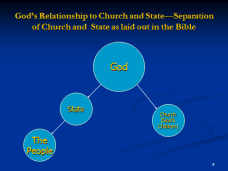
This series of lessons will examine Bible teaching which makes clear that state (civil government) and church are so distinct that they are mutually exclusive—that God ordained each for particular purposes and that He desires that both operate under Him but that neither work with, over, or under the other. The Old Testament develops the doctrine of civil government. There we learn that God ordained civil government to directly control evil since the restraint of conscience was insufficient to control the sinful man. God added the restraint of civil government as a further direct, worldly control over man. The Old Testament deals with Gentile civil government and the theocracy of Israel, their purposes and authorities under God, their history, and prophecies concerning, among other things, concerning their fate. The New Testament announces something new, the church, a spiritual organism made up of spiritual beings.

Combining church and state has had dire consequences, as history shows. EN [i] Catholic and Protestant theology historically justified (and continue to justify) the union of church and state by examining Scripture not literally, but allegorically or spiritually, when and where convenient to support a desired conclusion (such as union of church and state). Those religious organizations interpret Scripture in such a way as to apply the principles for Israel and Judaism to Gentile nations. Just as religion and state were combined in the Jewish theocracy, this spiritualized and allegorized theology, when implemented, unites church and state in Gentile nations.

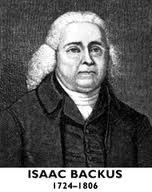
JamesMadisonOnC&SMany of America’s founding fathers—most especially James Madison and Thomas Jefferson (see EN [ii], a copy of Virginia Bill for Religious Liberty drafted by Thomas Jefferson)—and other leaders understood that church and state should be separate. From a worldly common-sense point of view Madison and Jefferson and others arrived at their understanding by studying the consequences of such unions both historically and also contemporaneously. From a Bible or spiritual perspective, Roger Williams, Isaac Backus, John Leland and other Baptists understood and explained both the problems created by combining church and state and the true reasons for those problems. Backus wrote:

  • “Christians must be careful not to apply God’s principles for the Jewish religion and the nation Israel to church and state. The principles for the two are so distinct that they are mutually exclusive. The government of the Church of Christ is as distinct from all worldly governments, as heaven is from earth.” EN [iii]

Indeed, union of church and state is contrary to biblical principles; and, therefore, the consequences of church-state union have always been dire and will be so until the return of Christ and the establishment of the Kingdom of Heaven.

God gave both church and state certain powers. God gave the state earthly and temporal power within jurisdictional boundaries which He set out. The heavenly eternal powers God gave the church were  meant to provide a spiritual and eternal good.

The purpose of the Gentile civil government is fleshly or earthly. EN [iv] Gentile civil government, according to God, was ordained by God to deal with those temporal earthly matters assigned it by God. God gave man certain authority over man. He gave man the responsibility to rule over man under His rules. Gentile civil government has authority to punish those who commit certain crimes against their fellow man and to reward those who do good. The purpose of the Gentile civil government is to control evil men thereby maintaining some degree of peace in this present world. A civil government, as defined by God, is made up of men under God ruling over man in earthly matters.

Much of God’s word deals with actions of individuals, families, churches, and nations here upon the earth. Civil governments are not given jurisdiction over many areas of life which are governed by the Word of God. A civil government which ignores God and His Word is setting itself up for judgment.

God gave neither a church nor the state authority to rule over or with the other. Civil government does not have the authority under God or the ability (the knowledge, understanding and wisdom) to rule over God’s churches. For reasons already looked at in these lessons, a church is not to join with the civil government in any way.

God ordained a church under God, not a business under civil government, an entity that is to work hand in hand with or perhaps over the state to bring in the kingdom of God, or an entity that is to work under state rules. Admittedly, the ultimate God-given purpose of both a church and a civil government is to glorify God, each acting under God, but neither acting with or under the other. However, the underlying purposes of a church and the state are significantly different: the underlying purpose of a church is heavenly or spiritual; the underlying purpose of a civil government is earthly.

Christians are told to obey civil government as regards certain earthly matters and civil government has authority over all citizens as to some temporal earthly matters. Individuals, families, and churches are not to be under the civil government with regard to spiritual matters, which include many activities and actions as shown in the Bible.


Endnotes

[i] See the historical section of this study of this abridged course for more on this. See, for a more advanced study, (1) Section 4 of God Betrayed/Separation of Church and State: The Biblical Principles and the American Application which is available free in both PDF and online form or may be ordered in softback and Kindle by going to “Order information for books by Jerald Finney which also has links to the free PDF and Online Form of the book; (2) the section on the history of the First Amendment; and/or (3) An Abridged History of the First Amendment.).

[ii] Virginia Bill for Religious Freedom drafted by Thomas Jefferson:Virginia Bill for Religious Liberty drafted by Thomas Jefferson in 1779 and enacted in 1786.

[iii]  Isaac Backus, A History of New England With Particular Reference to the Denomination of Christians called Baptists, Volume 2 (Eugene, Oregon: Wipf & Stock Publishers, Previously published by Backus Historical Society, 1871), p. 561.

[iv] See Section I.A., The Biblical Doctrine of Government of this short course for more on government. For a more advanced analysis, “The biblical doctrine of government for more on the jurisdiction and purposes of the various God-ordained governments including civil government.

4. Distinct Differences Between Church and State Render Them Mutually Exclusive

Click the above to go to the article, “Is Separation of Church and State Found in the Constitution?

Click here to go to I. C. BIBLE DOCTRINE CONCERNING RELATIONSHIP OF CHURCH AND STATE

Previous lesson: 3. Dispensation Theology versus Covenant Theology and Their Importance to the Issue of Church and State Relationship in America

Next lesson: 5. Render Unto God the Things That Are His: A Study of Romans 13 and Other Verses Taken Out of Context to Support Union of Church and State

Segments of this lesson:

(1) Introduction: Distinct Differences Between Church and State Render Them Mutually Exclusive
(2) The Holy Spirit, through Paul, Explained the Temporal Earthly and the Eternal Spiritual
(3) Persecuted Christians and Churches Have Always Stood for Separation of Church and State
(4) Nine Distinct Differences Between Church and State Which Render Them Mutually Exclusive

Click here to go to the written lessons.
Click here to go to the 3 1/2 to 6 minute video lectures.
Click here to go to all lessons on the Bible doctrine on the relationship of Church and State.
Click here to go to a much more detailed study (for the advanced student).

Conclusion to “Dispensation Theology versus Covenant Theology and Their Importance to the Issue of Church and State Relationship in America”


A Publication of Churches Under Christ Ministry


If you miss one part of the puzzle that is being put together in these studies, you will never see and understand the whole picture.


Click here to go to the written lessons.
Click here to go to the 3 1/2 to 6 minute video lectures.


Click here to go to Dispensation Theology versus Covenant Theology and Their Importance to the Issue of Church and State Relationship in America


Jerald Finney
Copyright © February 10, 2018


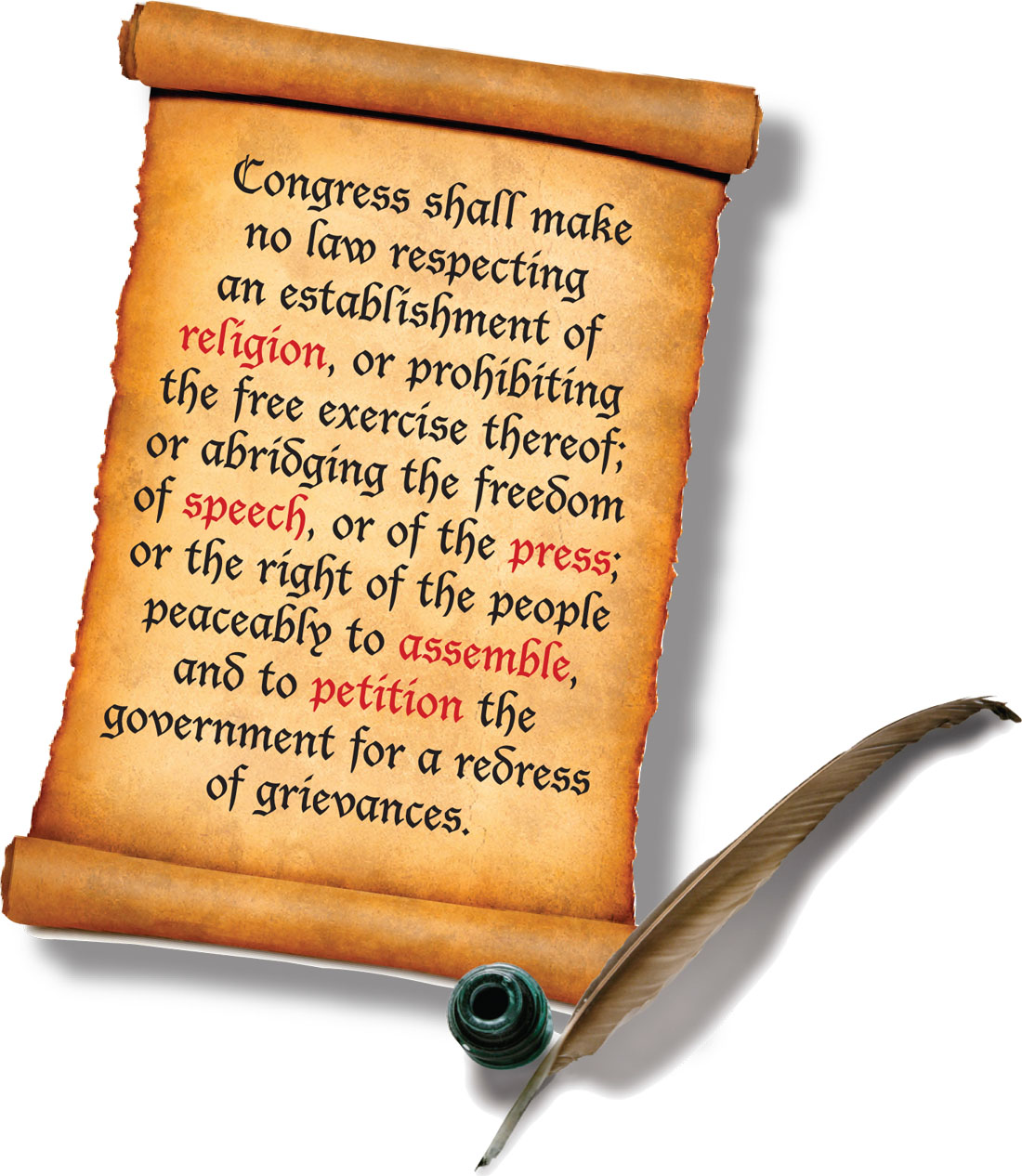
The First Amendment to the U.S. Constitution

The church and state wed at the invitation of the Roman Emperor Constantine early in the fourth century. Some churches married the state and became the officially recognized “church.” After that unholy union, the established Roman Catholic “church,” working hand in hand with the state, persecuted believers. The persecution was continued by the Protestant churches which came out of Roman Catholicism, and finally was brought to America and our colonies by the Puritans, Anglicans, and others.

Throughout these teachings, Scripture and arguments are presented which refute Covenant Theology. Section I.A.—The Biblical Doctrine of Government—explains that God, because of His covenants with Israel, will establish Israel in the land he has given them. Section I.B.—The Biblical Doctrine of the Church—shows that Christ desires to be the only head of the church, that He loves the church and gave Himself for it, and that the church is the bride and wife of Christ. The distinct differences between the church and state, as will be shown in Chapter I.C.4 infra, render the two mutually exclusive, operating in different spheres—the civil government or the state operates in the earthly sphere and the church operates in the spiritual realm (although application of spiritual principles affect earthly actions).

The Covenant Theology examined in this book cannot coexist with free will or choice. As will be shown in Section IV, the established churches in almost all the American colonies advocated either a church-state or state-church, unions of church and state under which the strong arm of the state punished, sometimes by death, (execution of dissidents in the colonies was forbidden by England after four Quakers were hanged in Massachusetts as will be explained in Section IV) those the state-church labeled as “heretics.” Had the official churches prevailed, America would not have the First Amendment to the United States Constitution. Thank God that Baptist dissenters led the fight that resulted in the First Amendment to the United States Constitution which made religious liberty and freedom of conscience a part of the highest law of the land.

New Testament Teaching Against Persecution of Heretics


A Publication of Churches Under Christ Ministry


Click here to go to the written lessons.
Click here to go to the 3 1/2 to 6 minute video lectures.


Click here to go to Dispensation Theology versus Covenant Theology and Their Importance to the Issue of Church and State Relationship in America


Jerald Finney
Copyright © February 10, 2018


Scriptures—other than those already cited to show that the church and state are not to wed or to enter into any kind of relationship, especially for persecution of those who do not submit to the official religion–teach that the church is not to enforce spiritual laws in society in general, even with the help of civil government; some of those Scriptures have already been cited and more are given in this lesson.

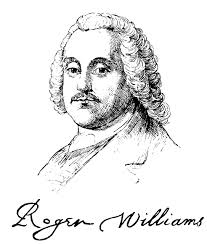
The Lord commanded that men not remove the tares “lest [they] root up also the wheat [the children of the kingdom]” (Mt. 13.24-30, 37-43). Instead, they are to be permitted to grow together until the harvest when the Lord shall send forth his angels to gather the tares and cast them into a furnace of fire (Ibid.). The Lord commanded His disciples to leave the Pharisees, whom He referred to as the “blind leading the blind,” alone because “every plant, which [His] heavenly father hath not planted, shall be rooted up” (Mt. 15.13-14). He told his disciples: “Let them alone: they be blind leaders of the blind. And if the blind lead the blind, both shall fall in the ditch” (Mt. 15.14). As Roger Williams noted, “This sentence against [the blind Pharisee], the Lord Jesus only pronounceth in his church, his spiritual judicature, and executes this sentence in part at present, and hereafter to all eternity. Such a sentence no civil judge can pass, such a death no civil sword can inflict.”[i]

Some other relevant scriptures dealing with the actions of a Christian against his enemies, those who curse, hate, despitefully use, persecute and disagree with him include:

  • “But I say unto you, Love your enemies, bless them that curse you, do good to them that hate you, and pray for them which despitefully use you, and persecute you; That ye may be the children of your Father which is in heaven: for he maketh his sun to rise on the evil and the good, and sendeth rain on the just and on the unjust. For if ye love them which love you, what reward have ye? do not even the publicans the same? And if ye salute your brethren only, what do ye more than others? do not even the publicans so” (Mt. 5.44-47)?
  • The Lord said to his disciples, “Behold, I send you forth as sheep in the midst of wolves: be ye therefore wise as serpents, and harmless as doves. But beware of men: for they will deliver you up to the councils, and they will scourge you in they synagogues; [a]nd ye shall be brought before governors and kings for my sake, for a testimony against them and the Gentiles” (Mt. 10.16-18). What sheep ever attacked a wolf or anything else?
  • “And John answered him, saying, Master, we saw one casting out devils in thy name, and he followeth not us: and we forbad him, because he followeth not us. But Jesus said, Forbid him not: for there is no man which shall do a miracle in my name, that can lightly speak evil of me. For he that is not against us is on our part. For whosoever shall give you a cup of water to drink in my name, because ye belong to Christ, verily I say unto you, he shall not lose his reward” (Mk. 9.38. See also Lu. 9.49-50).
  • The Lord Jesus said to his disciples, James and John, who desired to command fire down from heaven to devour Samaritans who would not receive Him, “Ye know not what manner of spirit ye be of. For the Son of man is not come to destroy men’s lives, but to save them” (Lu. 9.55-56).
  • “The thief cometh not, but for to steal, and to kill, and to destroy: I am come that they might have life, and that they might have it more abundantly. I am the good shepherd: the good shepherd giveth his life of the sheep” (Jn. 10.10-11).
  • “And the servant of the Lord must not strive; but be gentle unto all men, apt to teach, patient, [i]n meekness instructing those that oppose themselves; if God peradventure will give them repentance to the acknowledging of the truth; [a]nd they may recover themselves out of the snare of the devil, who are taken captive by him at his will” (2 Ti. 2.24-26).

As mentioned many times, Catholicism, behind perverted doctrine, viciously murdered fifty million or more “heretics” when in power over the middle ages. Protestant churches continued the persecutions when in power.

The reason for not attempting to remove heretics, the tares, from the world seems to be, as Roger Williams noted:

  • “because they who now are tares, may hereafter become wheat; they who are now blind, may hereafter see; they that now resist him may hereafter receive him; that that are now in the devil’s snare, in adverseness to the truth, may hereafter come to repentance; they that are now blasphemers and persecutors, as Paul was, may in time become faithful as he; they that are now idolaters, as the Corinthians once were, 1 Cor. vi. 9, may hereafter become true worshippers as they; they that are now no people of God, nor under mercy, as the saints sometimes were 1 Pet. ii. 10, may hereafter become the people of God, and obtain mercy, as they.
  • “Some come not till the eleventh hour, Matt. xx. 6: if those that come not till the last hour should be destroyed, because they come not at the first, then should they never come, but be prevented” (Williams and Underhill, pp. 11-12).

Persecution of “heretics” is contrary to many New Testament teachings. True believers were promised that they would be persecuted, and never were told to persecute anyone. Jesus told the disciples that “the time cometh that whosoever killeth you will think that he doeth God service” (Jn. 16.2. This was spoken directly to the apostles, but the Bible and history show that it is applicable to all believers who have been persecuted or will be persecuted for Christ’s sake. Christ is actually speaking to all who are not of the world, but are the chosen of God. See, e.g., Jn. 15.).

The promises to the Jew in the Old Testament were significantly different than the promises to the Christian in the New Testament. No greater example can be cited than the contrast between the Old Testament promises that Israel would prosper and be blessed materially if they would keep God’s commandments and statutes or that they would be judged if they failed to do so (See, e.g., Ex. 15.26; 19.5-8; 24.3, 7; 34.18-35.3; Le. 18.3-20.27; 20.22-23; 26 (read in conjunction with De. 28-30); De. 4-11; 12.30-31; 28-30; 28.1-68; I S. 12.1-5; 1 K. 6.12-13; 9.1-9; 2 Chr. 7.12-22; 15.1-7; etc.) and the New Testament promise to Christians that “all that will live godly in Christ Jesus shall suffer persecution” (2 Ti. 3.12).

Other New Testament verses on the matter of treatment of enemies and others include: Mt. 5.10-12, 38-48; Mt. 6.8-13, 18.21-35; Lk. 6.27-46, 9.51-56; Ac. 26.17 (what to preach to the lost we love); Ro. 8.28, 12.9-21; 14.13, 19 1 Co. 6.1-20; 2 Co. 6.3-10; Ga. 6.10; Phill. 2.15-16; 1 Thes. 5.14-15; 1 Ti. 1.8, 2.8-10, 3.1-7; 2 Ti. 3.1-12; Ja. 3.17; 1 Pe. 2.9, 2.15-16, 2.20-25, 4.1-19 (Spiritual warfare weapons and methods);

Click here for additional Bible verses and teaching on Persecution and Suffering.


Endnote

[i] Roger Williams and Edward Bean Underhill, The Bloudy Tenent of Persecution for Cause of Conscience Discussed and Mr. Cotton’s Letter Examined and Answered (London: Printed for the Society, by J. Haddon, Castle Street, Finsbury, 1848), p. 97, First published in 1644.

History Proves Established Churches Are Vile, Viciously Persecute Heretics, and Corrupt the State, the Church, and the People


A Publication of Churches Under Christ Ministry


Click here to go to the written lessons.
Click here to go to the 3 1/2 to 6 minute video lectures.


Click here to go to Dispensation Theology versus Covenant Theology and Their Importance to the Issue of Church and State Relationship in America


Jerald Finney
Copyright © February 9, 2018


The church proceeded under the New Covenant, whereas the Jewish theocracy operated under the Mosaic covenant. Isaac Backus, in pointing out that Jesus did away with the Old Testament Covenant of Law, wrote:

  • “When our Savior came, he fulfilled the law, both moral and ceremonial, and abolished those hereditary distinctions among mankind. But in the centuries following, deceitful philosophy took away the name which God has given to that covenant, (Acts vii.8) [the covenant of circumcision] and added the name Grace to it; from whence came the doctrine, that dominion is founded in grace. And although this latter name has been exploded by many, yet the root of it has been tenaciously held fast and taught in all colleges and superior places of learning, as far as Christianity has extended, until the present time; whereby natural affection, education, temporal interest and self-righteousness, the strongest prejudices in the world, have all conspired to bind people in that way, and to bar their minds against equal liberty and believer’s baptism.”[i]

The New Covenant established a spiritual kingdom, not an earthly kingdom. New Testament Church principles make clear that the church, made up of local independent assemblies, are to remain separate from the world and that union with the world combines the holy with the unholy. Satan is the god of this world and controls the world system. Combining church and state combines God’s set apart assemblies with the world system. Corruption is inevitable when church and state are intermixed.

As history shows, the official corrupted “churches” were vile to the core. For over a thousand years, the Catholic Church (starting in the early fourth century) was the only established church. The reformers became especially aware of the corruption within the Roman “church.” However, after successfully breaking the Catholic monopoly, they brought with them many of the heresies of their harlot mother. When established themselves, they, for example, continued the vicious persecution of “heretics.”

To quote a great Bible teacher: “The church that sets out to spiritualize the world will soon find that the world will secularize the church. When wheat and tares compromise, it is the wheat that suffers. Light and darkness, right and wrong, good and evil, truth and error are incompatibles, and when they compromise it is the light, the right, the good, and the truth that are damaged”[ii]

Separation is a Biblical principle that runs throughout scripture. Holy means set apart for God. You cannot bring that which is holy and unholy together without making the holy things unholy. Holy things combined with unholy things do not make the unholy holy. It always makes the holy unholy. Being around someone who is sick may make a well person sick. Being around a well person won’t make a sick person well. If you are grounded and touch the ground and a power line at the same time, you are cooked. If you try to touch God and touch the world, you will be corrupted.

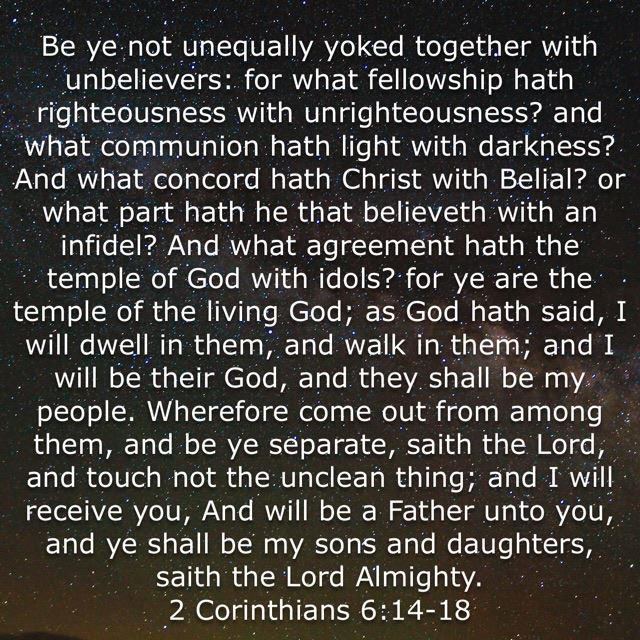
The Holy Bible, the basic source for all truth, proclaims: “Be ye not unequally yoked together with unbelievers: for what fellowship hath righteousness with unrighteousness? and what communion hath light with darkness? And what concord hath Christ with Belial? or what part hath he that believeth with an infidel? And what agreement hath the temple of God with idols? for ye are the temple of the living God: as God hath said, I will dwell in them and walk in them: and I will be their God, and they shall be my people. Wherefore, come out from among them, and be ye separate, saith the Lord, and touch not the unclean thing; and I will receive you. And will be a Father unto you, and ye shall be my sons and daughters saith the Lord Almighty.”[iii]

Just as the union of church and state corrupted the Roman “church” and society, it also corrupted the established Protestant churches and the nations which had established Protestant churches.


Endnotes

[i] Isaac Backus, An Abridgement to the Church History of New England (Boston: Harvard University, 1804; reprinted. 1935), p. 136. cited in Beller, America in Crimson Red…, p. 446.

[ii] W. Graham Scroggie, born 1877, twelve times the Bible teacher at the famous Keswick, England conference, They Knew Their God, Vol. 5, 194 cited in The Berean Call, February 2006, p. 5, available at www.thebereancall.org.

[iii] 2 Co. 6.14-18. The doctrine of separation is taught extensively in the Word of God.

Persecution: A Consequence of Covenant Theology


A Publication of Churches Under Christ Ministry


If you miss one part of the puzzle that is being put together in these studies, you will never see and understand the whole picture.


Click here to go to the written lessons.
Click here to go to the 3 1/2 to 6 minute video lectures.


Click here to go to Dispensation Theology versus Covenant Theology and Their Importance to the Issue of Church and State Relationship in America


Jerald Finney
Copyright © February 9, 2018


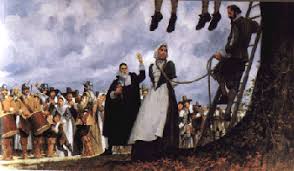
Puritans hung 4 Quakers for returning to Massachusetts after being banished for their religious beliefs.

Covenant Theology has had clear consequences. Roger Williams pointed out, concerning religious persecution based upon Covenant Theology: “He [that is, the established churches] that kills and he [those defined as heretics by the established churches] that is killed, they both cry out, ‘It is for God, and for their conscience.”[i] Only one side can be right, and the Bible shows that side to be the persecuted Baptists. Both protestants and papists, Williams continued, “pretend they have spoke with Moses and the prophets, who all, say they, before Christ came, allowed such holy persecutions [and] holy wars against the enemies of holy church.”[ii]

It is impossible for a Gentile nation prior to the return of Christ to operate as a true theocracy. As seen in Section I, Chapter 6 of God Betrayed (which is published online in an edited version), a theocracy is a “Government of a state by the immediate direction of God; or the state thus governed.” All alleged “Christian” theocracies (church over state, state over church, or a combination of church and state; called ecclesiocracies by the author) are only poor imitators of the one true God-ordained theocracy in Israel. God never told the church to work with the state, over the state, or under the state.

Israel, the only theocracy which has ever existed, operated as a theocracy only until the Israelites rejected God and demanded a king, and God acted on their request and gave them King Saul. In the theocracy, all ten of the commandments were enforced. While operating as a theocracy, Israel was directly under God, and God initially spoke directly to the leaders of the nation of Israel. After God allowed Israel, at Israel’s request, to be ruled by a king, the Jewish religion and the civil government no longer worked together, although God spoke to the kings of Israel through his chosen prophets.

God no longer speaks directly to leaders of civil government, to the leaders of church government, or to others. He speaks to believers, led by the Holy Spirit, through His Word, the Bible. This is consistent with the fact that He only ordained one theocracy, Israel, prior to the second return of Christ. Yet Covenant Theology united church and state, with the church taking the place of God in speaking directly to the civil government. As a result, the “church” used the strong arm of the state to enforce its own particular brand of religion, or the state itself enforced its preferred religion. The only way to justify such a union is to use a false interpretation of Scripture, an interpretation which, since it is based upon Satan’s principles, must have been developed by Satan himself and implemented either by his children or by children of God who were not walking in the spirit according to knowledge.

The beating of Obadiah Holmes by the Puritans in Massachusetts

The most noticeable and atrocious consequence of all church-state and state-church unions has been the confiscation of property, dissemination of lies about “heretics” as defined by the state-church, and other persecutions such as the beating, torture, imprisonment, and killing of untold millions of people who have dissented from the views of the state-church. The ultimate result of church-state or state-church alliances is always the same—the alliance of church and state called for by a perverted interpretation of Scripture forces others to profess allegiance to the doctrines of the official church under penalty of persecution, thereby attempting to stamp out those who practice free will. The state-church or church-state enforces its own peculiar doctrines including all of the Ten Commandments among which are the first four commandments which deal with man’s relationship to God. In effect, it requires many to be dishonest with both man and God. Since no one can be forced to choose to believe a particular religious belief in their heart, a lot of religious hypocrites are thereby created.


Endnotes

[i] Roger Williams and Edward Bean Underhill, The Bloudy Tenent of Persecution for Cause of Conscience Discussed and Mr. Cotton’s Letter Examined and Answered (London: Printed for the Society, by J. Haddon, Castle Street, Finsbury, 1848), p. 33, First published in 1644.

[ii] Ibid., p. 34.

Dispensationalism Correctly Explains the Covenants of Law and Grace


A Publication of Churches Under Christ Ministry


Click here to go to the written lessons.
Click here to go to the 3 1/2 to 6 minute video lectures.


Click here to go to Dispensation Theology versus Covenant Theology and Their Importance to the Issue of Church and State Relationship in America


Jerald Finney
Copyright © February 9, 2018


Dispensationalism correctly explains the Covenants of Law and Grace. God made a covenant with the children of Israel called the Mosaic Covenant. The Mosaic Covenant of Law applied to an earthly people.

The Mosaic Covenant (1) given to Israel (2) in three divisions, each essential to the others, and together forming the Mosaic Covenant, viz.: the Commandments, expressing the righteous will of God (Ex. 20.1-26; the ‘judgments,’ governing the social life of Israel (Ex. 21.1-24.11); and the ‘ordinances,’ governing the religious life of Israel (Ex. 24.12-31.18). These three elements form ‘the law,’ as that phrase is generically used in the New Testament (e.g. Mt. 5.17, 18). The Commandments and the ordinances formed one religious system. The Commandments were a ‘ministry of condemnation’ and of ‘death’ (2 Co. 3.7-9); the ordinances gave, in the high priest, a representative of the people with Jehovah; and in the sacrifices a ‘cover’ for their sins in anticipation of the Cross (He. 5.1-3; 9.6-9; Ro. 3.25, 26). The Christian is not under the conditional Mosaic Covenant of works, the law, but under the unconditional New Covenant of grace (Ro. 3.21-27; 6.14, 15; Ga. 2.16, 3.10-14, 16-18, 24-26; 4.21-31; He. 10.11-17).

Christ was the mediator of a better covenant, called the New Covenant “But now hath he obtained a more excellent ministry, by how much also he is the mediator of a better covenant, which was established upon better promises” (He. 8.6. He.8.1-5 speaks of the Mosaic Covenant of Law).

“The New Covenant, Summary:

  • “‘Better’ than the Mosaic Covenant, not morally, but efficaciously [or ‘as of having the power to produce the desired effect’]. 7.19; Rom. 8.3;
  • “Established on ‘better’ (i.e., unconditional) promises. In the Mosaic Covenant God said, ‘If ye will.’ 19.5-6a; in the New Covenant, He says, ‘I will’ (Heb. 8.10, 12-13.
  • “Under the Mosaic Covenant obedience sprang from fear. 2.2; 12.25-27; under the New, from a willing heart and mind ([Heb. 8.]9-10;
  • “The New Covenant secures the personal revelation of the Lord to every believer (He. 8.11; “the complete oblivion of sins. 8.12; He. 10.17; cf. He. 10.3; “rests upon an accomplished redemption. Mt. 26.27, 28; 1 Co. 11.25; He. 9.11, 12, 18-23; “and secures the perpetuity, future conversion, and blessing of Israel (Jer. 31.31-40 see also 2 Sa. 7.8-17).
  • The New Covenant is the eighth, thus speaking of resurrection and of eternal completeness.”

“In that he saith, A new covenant, he hath made the first old. Now that which decayeth and waxeth old is ready to vanish away” (He. 8.12).


Three Critical Factors Upon which Dispensationalism and Covenant Theology Disagree


A Publication of Churches Under Christ Ministry


If you miss one part of the puzzle that is being put together in these studies, you will never see and understand the whole picture.


Click here to go to the written lessons.
Click here to go to the 3 1/2 to 6 minute video lectures.


Click here to go to Dispensation Theology versus Covenant Theology and Their Importance to the Issue of Church and State Relationship in America


Jerald Finney
Copyright © February 9, 2018


Three factors are indispensable to Dispensational Theology. First, Dispensational Theology recognizes the distinction between the nation Israel and the Church. Covenant Theology is convinced that Israel and the church are essentially the same. “The theological liberal, no matter how much he speaks of the Judaistic background of Christianity, recognizes that Christianity is different from Judaism.”[i]

Second, Dispensational Theology, unlike Covenant Theology, uses a single hermeneutic or method of interpreting Scripture—the historical-grammatical method. “If plain or normal interpretation is the only valid hermeneutical principle and if it is consistently applied, it will cause one to be a dispensationalist.”[ii] “Covenant Theologians are well known for their use of nonliteral interpretation, especially when interpreting prophecy, and they are equally well known for their amillennialism, which is only the natural outcome of such a hermeneutic.”[iii] Thus, the 144,000 of Revelation 7 cannot refer “to literal Israel, but the spiritual Israel, or the church, [etc.].”[iv]

Third, Dispensational Theology recognizes that the ultimate purpose of history is the glory of God through the demonstration that He alone is the sovereign God, unlike Covenant Theology which advocates that the ultimate purpose of history is the glory of God through the redemption of the elect. “[A]lthough Dispensational Theology recognizes that the redemption of elect human beings is a very important part of God’s purpose for history, it is convinced that it is only one part of that purpose.” God is working out many other programs in addition to the program of redeeming people, all of which must be contributing something to the ultimate purpose of history.[v]


Endnotes

[i] Charles C. Ryrie, Dispensationalism (Chicago: Moody Press, 1995), p. 52.

[ii] Ryrie, p. 16 see also, Renald E. Showers, There Really Is a Difference: A Comparison of Covenant and Dispensational Theology (Bellmawr, New Jersey: The Friends of Israel Gospel Ministry, 1990), p. 53.

[iii] Ryrie, p. 20; Showers, p. 53.

[iv] Ryrie, p. 20, citing George E. Ladd, The Blessed Hope (Grand Rapids: Eardmans, 1956), 126.

[v] Showers, pp. 52-53.

Puritan Covenant Theology Exposed in the American Colonies


A Publication of Simply Church Ministry


If you miss one part of the puzzle that is being put together in these studies, you will never see and understand the whole picture.


Click here to go to the written lessons.
Click here to go to the 3 1/2 to 6 minute video lectures.


Click here to go to Dispensation Theology versus Covenant Theology and Their Importance to the Issue of Church and State Relationship in America


Jerald Finney
Copyright © February 9, 2018


This lesson will discuss some shortcomings of Covenant Theology and give a few examples of the exposure of the Puritan Covenant Theology by colonial dissenters. Some of the quotes are quite long, so the lesson is not as condensed as in other lessons in this short course.
As one Puritan preacher, in an attempt to remove objections of some against partaking of the Lord’s Supper because of fears of not being born again, preached in order to persuade them:

“The children of those who are members of the visible church are, by the constitution of God, from their first coming into existence, members of his kingdom in common with their parents. So it was under the Jewish dispensation; and so it is now, [under the Christian] if there is any validity in one of the principal arguments, by which we vindicate our practice, in baptizing the infants of those who are members of Christ’s church.”[i]

According to Covenant Theology, the main promise God made in the Covenant of Grace was: “I will … be a God unto thee, and to thy seed after thee (Ge. 17.7);” and “includes the following promises: temporal blessings, justification, adoption, eternal life, the Spirit of God with His many ministries, and final glorification.”[ii] Establishment of religion in Christianity depends upon this covenant. Isaac Backus taught, “All establishments of worship by human laws, that ever were erected under the Christian name, were built upon calling the covenant in Gen. xvii the covenant of grace.”

Mr. Backus goes on to point out that “Those who have seen the nature of original sin, cannot tell how to keep up the idea of children’s being born in the covenant of grace, without some regard to grace in their parents. And in the same chapter where the unbelieving consort is said to be sanctified by the believer, a widow is required to marry only in the Lord….” [He then refers to a parable wherein to make his point the author thereof describes a church which advised a member to marry a certain woman of grace in the church rather than a woman he loves who is not of grace. Of the woman of grace, the church says:]

  • “As to some trifles, which a carnal man would object to, it becomes you as a spiritual man, to make no objection. It is true, she is of a mean family, and a very weak understanding; she is peevish and fretful to the highest degree; her shape is semicircular; she is what the world calls monstrous ugly; every feature is adapted to mortify carnal desires, which is much better than to have them gratified; she is the queen of sluts, and without any polite education. But she has grace, saving grace; she is regenerated; let your grace wed with hers, and a sweet bride she will be. Moreover, she is past the flower of her age, and we suppose need so requires.”
  • Backus goes on to say that this parable can be applied to no church on earth, but says “[H]ow mean and spiteful it is to treat the Word Grace [in the manner treated by Covenant Theologians]! Affixing the word to the covenant of circumcision, where God never put it, is the source of [a difficulty of a church at Stockbridge where to be sanctified by the believer, a widow is required to marry only in the Lord].”[iii]

Most Covenant Theologians have divided postfall history into two dispensations, the Mosaic dispensation sometimes called the “Old Covenant,” and the Christian dispensation, usually called the “New Covenant;” and they claim that the Covenant of Grace, although administration of that covenant differed between the dispensations, exists throughout these dispensations. “[E]ach dispensation or covenant named in the Bible is simply another stage of the progressive revelation of the nature of the Covenant of Grace.”[iv]

Covenant Theology has many problems. Many of them are pointed out in more thorough studies by Jerald Finney such as God Betrayed/Separation of Church and State: The Biblical Principles and the American Application. Several significant shortcomings of Covenant Theology follow, repeating some already discussed:

  • First its “ultimate goal of history[, also discussed supra, the Glory of God through the redemption of the elect,] is too narrow…. Second, Covenant Theology denies or weakens some of the distinctions which are in the Bible by insisting that distinctions are simply different phases of the same Covenant of Grace…. In addition, Covenant theology denies the existence of distinctive gospels in the Bible…. Covenant Theology insists that there is no essential distinction between the Mosaic Covenant (the Law) and the New Covenant…. Covenant theology also denies the distinction between the nation of Israel and the Church.… Third, Covenant Theology is mistaken when it teaches that each of the biblical covenants is a continuation and newer phase of the Covenant of Grace…. Fourth, Covenant Theology’s unifying principle is too limited or narrow. [First, Covenant Theology is too limited in that it unifies history through the Covenant of Grace from either the fall of man or the time of Abraham. It is too narrow because it deals only with God’s redemption of the elect, and it does not unify the program of redemption with all God’s other programs.] Second, … it does not unify prefall history with postfall history, which a valid exposition of the biblical philosophy of history must do…. Fifth, in order to make its system work, Covenant Theology must employ a double hermeneutic (a double system of interpretation)….”[v]

According to the Covenant Theologian, “the idea of dual covenants functioned as a warning against reliance on good works for salvation.” The Covenant of Works required obedience for salvation. According to the Covenant of Grace one could only be saved by faith in Christ.[vi]

Yet, the Covenant of Works remained in effect.

  • “This meant, first, that New Englanders whom God had not yet called effectually into salvation remained entirely under a covenant of works and subject to its moral restraint. It meant also, according to Cotton, that the burden of moral expectation should drive the sensitive conscience to Christ. It was ‘the usuall manner of God to give a Covenant of Grace by leading men first into a Covenant of works.’ Living under the covenant of works, Shepard explained, they would discover their sinfulness, and their ‘terrors, and fears, and hopes’ would turn them to Christ. And it meant, third, that even Christians safely within the covenant of grace remained subject to the moral substance of the first covenant. Abolished as a ‘covenant of life,’ Shepard said, the law still remained a ‘Rule of Life.’ These were the traditional three uses of the law in Reformed theology; covenantal language provided a lively way to restate them.”[vii]

Covenant Theologians teach that God’s commands are “too severe even for Adam in innocency, and that grace[, through the covenant of circumcision and its successor, baptism,] gives an exemption from that severity,” under the Covenant of Grace.

Covenant Theology, which does not recognize or correctly analyze the roles of the Old and New Covenants, is at odds with a correct interpretation of the Bible on this issue. Isaac Backus, in exposing the New England Puritan theology, explained:

  • “[The law is holy, just, and good]; it [is] spiritual; but [man] a carnal slave to sin, instead of having such high dignity and liberty as he before imagined he had…. A false imagination of good in the forbidden fruit, drew our first parents into rebellion against God; and such imaginations are the only source of sin in all their children. James i. 14, 15. Good is still their pursuit, but they have lost the knowledge of who can give it, or of what it is; but the regenerate soul knows both, and this is the precise difference between them. Psalm iv. 6, 7. Who does not know that debtors and criminals are not fit judges in their own causes? [Y]et that is the case with all reasoners against the truth and perfection of God’s written word…. And to hear many speaking evil of things they know not, but what they know naturally as brute beasts, and in those things to corrupt themselves; to see them tread down the good pastures, and foul the deep waters, and thrust others with side and shoulder, serves to confirm believers in the truth of revelation, and in the hope of a speedy deliverance from such evil beasts. Jude 10. Ezek. xxxiv. 18, 25.”[viii]

To show that God has “disannulled the national covenant which he made with Abraham,” Backus offered the following insights:

  • “First, Abraham had no right to circumcise any stranger, until he had bought him as a servant for money. Gen. xvii. 12, 13. But God says to his children, Ye are bought with a price, be not ye the servants of men. I Cor. vii. 23. And he says to his ministers, Feed the church of God which he hath purchased with his own blood. Acts xx. 28. He also says, Ye have sold yourselves for nought, and ye shall be redeemed without money. And this is the gospel of peace. Is. lii. 3, 7; Rom. x. 15. Thus do the apostles explain the prophets. Secondly, The children of Israel had no right to receive strangers into the church by households, until the day in which they came out of Egypt, when the Passover was instituted. And then God said, Every man’s servant that is bought for money, when thou hast circumcised him, then shall he eat thereof. Exod. xii. 44—48. Circumcision and the Passover were as binding upon servants as children; and both ordinances pointed to the blood of Christ, which he was to shed for his people. And in reference to that, God said, Behold, the days come, saith the Lord, that I will make a new covenant with the house of Israel, and with the house of Judah; not according to the covenant that I made with their fathers, in the day that I took them by the hand, to bring them out of the land of Egypt. Jer. xxxi. 31, 32. And an inspired apostle says, In that he saith, A new covenant, he hath made the first old. Now that which decayeth and waxeth old is ready to vanish away. He taketh away the first, that he may establish the second. viii. 7—13; x. 9.  And can old and new, first and second, mean but one covenant? Surely no. Thirdly, Circumcision is the name which God gave to his covenant with Abraham. Acts vii. 8. And though Jews and Mahometans are still zealous for it, yet all Christians allow that circumcision is repealed. But after the apostolic age, men took away the name which God gave to that covenant, and added the name Grace to it; and they held that dominion is founded in grace. And from thence the nations have made merchandise of all the vanities of time, and of slaves and souls of men. But the plagues of Babylon will come upon all men who add to the word of God, and take away from the words of his book, if they refuse to come out of that practice. Rev. xviii. 4—13; xxii. 18, 19. And there is not a word in all the Bible for bringing any child to baptism without his own profession of faith in Christ, nor for forcing any man to support any religious minister; and all national churches are built upon these two superstitions. Fourthly, Circumcision was the shedding of human blood; and when Abraham received it, it was a seal of righteousness of the faith which he before had in Christ, in whom believers are justified by his blood. Rom. iv. 11, 23; v. 9; Gal. iii. 16; Gen. xv. 6; xvii. 24. It was a seal to him; but neither circumcision nor baptism are ever called seals to any other person in the Bible. But God says to true believers in Christ, In whom also after that ye believed, ye were sealed with that Holy Spirit of promise. And he also says, Grieve not the Holy Spirit of God, whereby ye are sealed unto the day of redemption. Eph. i. 13; iv. 30. After believing in Christ, the Holy Spirit seals the merits of his death, and the promises of his grace to the soul. And all believers from the beginning, looked through the bloody ordinances which God appointed, to the blood of Christ for justification. And after the beast arose out of the bottomless pit, God said, All that dwell upon the earth shall worship him, whose names are not written in the book of life of the Lamb slain from the foundation of the world. Rev. xiii. 8. Force and cruelty is the general character of the beast; but Jesus, who is the root and offspring of David, will cause all evil beasts to cease out of the land. Ezek. xxxiv. 4, 25; Rev. xxii. 16. Fifthly, the believing Jews were suffered to go on in circumcision for a number of years past the death of Christ, and then God said to them, If ye be circumcised, Christ shall profit you nothing. …. Whosoever of you are justified by the law, ye are fallen from grace. Gal. v.2—4. So far was the covenant of circumcision from being the covenant of grace. That bloody sign not only pointed to the death of Christ, but also to the death of all true believers in him. Therefore Paul says, I through the law am dead to the law, that I might live unto God. I am crucified with Christ, nevertheless I live; yet not I, but Christ liveth in me; and the life which I now live in the flesh, I live by the faith of the Son of God, who loved me, and gave himself for me. … The fruit of the Spirit is love, joy, peace, long-suffering, gentleness, goodness, faith, meekness, temperance, against such there is no law. And they that are Christ’s, have crucified the flesh, with the affections and lusts. Gal. ii. 19, 20; v. 22-24. Adam and Christ are the only two public heads of mankind, as to the great affairs of the soul and eternity. For as by one man’s disobedience, many were made sinners; so by the obedience of one, shall many be made righteous. Rom. v. 19. For parents to bring up their children in the nurture and admonition of the Lord, is of infinite importance; but we can find no warrant for any to bring them to baptism without a personal profession of faith in Christ….
  • “God said of Abraham, I know him, that he will command his children and his household after him, and they shall keep the way of the Lord, to do justice and judgment; that the Lord may bring upon Abraham that which he hath spoken of him. Gen. xviii. 19. He will and They shall, was the language of God’s covenant with Abraham; but I will, and They shall, is the language of the new covenant, since the death of Christ. Heb. viii. 10; x. 9. It was the will of God that the visible church should continue in the line of Abraham’s posterity, until Christ came and died for his people, and then the holy spirit was given, and believing Jews and Gentiles were united in his church. And they never were called Christians, until believing Gentiles were received into the church without circumcision….
  • “[T]he holding that the children of believers are born into the covenant of grace, or that baptism can bring them into it, without their own knowledge or choice, is such a confounding of grace and works together as holds multitudes in blindness and bondage.”[ix]

We should look at the Dispensation of Grace to find the duties of believers today.

Who are the true seed of Abraham? Mr. Backus again correctly divided the Word of Truth in answering this question:

  • “Circumcision was only for males, but females are equally the subjects of baptism, which proves an essential change of the covenant. And our Lord gave the gospel commission to the eleven, who were all born again; and he said to them, Go teach all nations, baptizing them in the name of the Father, and of the Son, and of the Holy ghost; teaching them to observe all things, whatsoever I have commanded you; and lo, I am with you always, even unto the end of the world. Amen. Matt. xxviii. 16—20. This promise is only to his children, in the way of obedience to all his commandments. And as the covenant of circumcision gave Israel a right to buy the heathen for servants, and circumcision was only for the males, the gospel says to believers, Ye are all the children of God by faith in Christ Jesus. For as many of you as have been baptized into Christ have put on Christ. There is neither Jew nor Greek, there is neither bond nor free, there is neither male nor female; for ye are all one in Christ Jesus. And if ye be Christ’s then ye are Abraham’s seed, and heirs according to the promise. Gal. iii.26—29. Abraham was an eminent type of Christ, and none are his spiritual seed but believers in Christ.” (, pp. 370-371).

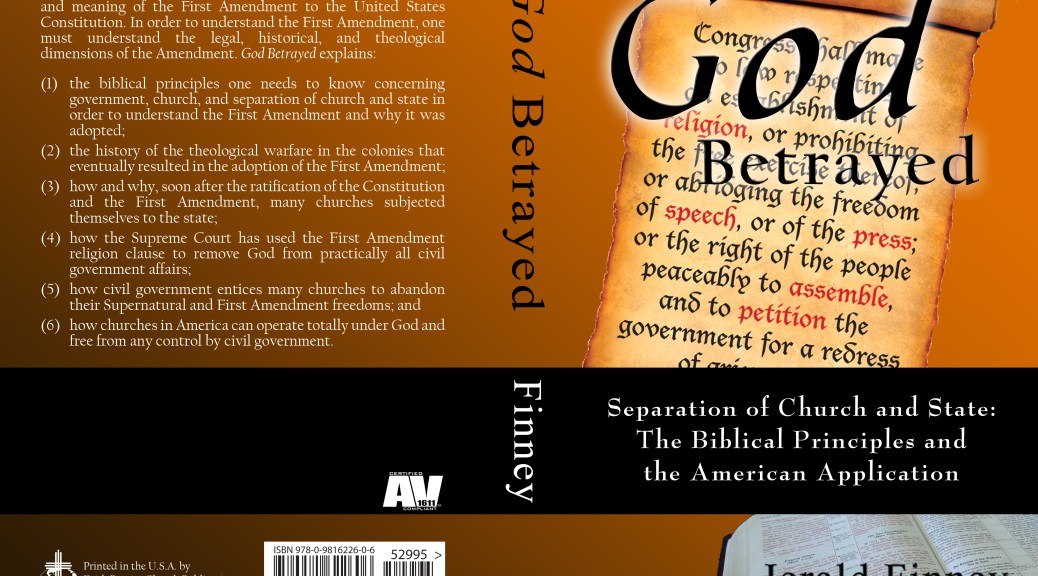
Again, this is only a small sampling. For more, see Isaac Backus Quotes from God Betrayed; Roger Williams: Quotes and Other Information from God Betrayed; or, for the most thorough treatment God Betrayed/Separation of Church and State: The Biblical Principles and the American Application.


Endnotes

[i] Isaac Backus, A History of New England With Particular Reference to the Denomination of Christians called Baptists, Volume 2 (Eugene, Oregon: Wipf & Stock Publishers, Previously published by Backus Historical Society, 1871), p. 171.

[ii] Renald E. Showers, There Really Is a Difference: A Comparison of Covenant and Dispensational Theology (Bellmawr, New Jersey: The Friends of Israel Gospel Ministry, 1990), p. 14, citing Berkhof, p. 277.

[iii] Backus, A History of New England…, Volume 2, pp. 238-241.

[iv] Showers, pp. 14-16, citing Berkhof, pp. 282-283 and Ernest Frederick Kevan, “Dispensation,” in Baker’s Dictionary of Theology, editor-in-chief, Everett F. Harrison (Grand Rapids; Baker Book House, 1960), p. 168.

[v] Showers, pp. 19-25 citing Berkof, pp. 298, 300; Bernhard W. Anderson, “The New Covenant and The Old,” in The Old Testament and Christian Faith, ed. by Bernard W. Anderson (New York: Herder and Herder, 1969), p. 232; and Johannes Behm, “kainos,” Theological Dictionary of the New Testament, Vol. III, ed. by Gerhard Kittel, trans. and ed. by Geoffrey W. Bromiley (Grand Rapids: Wm. B. Eerdmans Publishing Company, 1965, pp. 447, 448, 449. See Showers for a more detailed explanation of the deficiencies listed.

[vi] E. Brooks Holifield, Theology in America: Christian Thought from the Age of the Puritans to the Civil War (Ann Arbor, Michigan: Sheridan Books, 2003), p. 40.

[vii] Ibid.

[viii] Backus, A History of New England…, Volume 2, p. 254.

[ix] Ibid., pp. 364-366, 371-372, 373.
Some Basic Teachings of Covenant Theology


A Publication of Churches Under Christ Ministry


If you miss one part of the puzzle that is being put together in these studies, you will never see and understand the whole picture.


Click here to go to the written lessons.
Click here to go to the 3 1/2 to 6 minute video lectures.


Click here to go to Dispensation Theology versus Covenant Theology and Their Importance to the Issue of Church and State Relationship in America


Jerald Finney
Copyright © February 9, 2018


This chapter will not examine Covenant Theology in detail, but some explanation is necessary. Some information will repeat some of the concepts already discussed. This study is primarily concerned with Covenant Theology, as practiced in the American colonies by established churches and the resulting unbiblical practices including persecution of dissenters.

Covenant Theology is “a system of theology which attempts to develop the Bible’s philosophy of history on the basis of two or three covenants,” the Covenant of Redemption, the Covenant of Works, and the Covenant of Grace. Covenant Theology began as a system in the 16th or 17th century and was introduced into America primarily through the Puritans.[i] One version of Covenant Theology combines the Covenant of Redemption with the Covenant of Grace. Covenant Theology teaches that God established the Covenant of Redemption in eternity past when God determined to provide redemption during the course of history for the elect. This Covenant placed requirements on the Lord Jesus Christ. God the Father gave the Son the responsibility of paying for the sin of Adam and His elect (those the Father had given Him). He could do that by keeping the law thereby assuring eternal life for His children.[ii]

According to Covenant Theology, the Covenant of Works and the Covenant of Grace came after God created man. These covenants are deduced by Covenant Theologians and are not specified in Scripture. The Covenant of Works was established between the creation and fall of man. It required “implicit and perfect obedience of Adam.”[iii] Adam broke the Covenant of Works after which God established the Covenant of Grace.

The Covenant of Grace has been defined as “that gracious agreement between the offended God and the offending but elect sinner, in which God promises salvation through faith in Christ, and the sinner accepts this believingly, promising a life of faith and obedience.”[iv] God is the first party to the covenant, and, depending upon the theologian, the second party is the sinner, the elect, or the elect sinner in Christ. Some people who never become regenerate are included in the Covenant of Grace since it exists as both ‘a communion of life’ experienced by only the regenerate and as a ‘purely legal relationship’ experienced by both believers and their children.

The children of believers experience the Covenant of Grace as a legal relationship in four ways: They are in the Covenant (1) “as far as their responsibility [to repent and believe] is concerned;” (2) “in the sense that they may lay claim to the promises which God gave when He established His covenant with believers and their seed;” (3) “in the sense that they are subject to the ministrations of the covenant;” and (4) “as far as the common covenant blessings are concerned.” A person who is a child of the regenerate is regarded as a member of the covenant even if he does not enter into the communion of life aspect through a confession of faith.[v]


Endnotes

[i] Showers, pp. 7-8; Charles C. Ryrie, Dispensationalism (Chicago: Moody Press, 1995), pp. 183-184.

[ii] See, e.g., Renald E. Showers, There Really Is a Difference: A Comparison of Covenant and Dispensational Theology (Bellmawr, New Jersey: The Friends of Israel Gospel Ministry, 1990), p. 9.

[iii] Showers., p. 10; see also, Ryrie, pp. 188-189.

[iv] Showers, pp. 10-11; see also, Ryrie, p. 184 citing Berkhof, p. 277.

[v] Showers, pp. 11-13.