At first the Separatists and Baptists desired to meet together. This proved untenable.
“[They] were bound together by the closest ties. The [Baptists] left the [Separate Congregational churches] with no ill feeling but with heartiest love, and this love continued, on both sides, after their separation. Their members had been converted together in the Great Awakening; together they had come out from the Standing Order; together they had suffered and were still suffering for the truth; they had the same enemies and oppressors; they felt the force of the same unjust and cruel laws; their plundered goods were sold at the same auctions, and their bodies confined in the same prisons; they had many kindred views and feelings, by which they sympathized most closely, and in which there were no others to sympathize with them. Moreover, they mutually desired inter-communion. Council after council and conference after conference recommended it, and there seemed to be no voice against it. And yet it failed. Practical difficulties arose…. The truth could not be escaped that Baptist churches, by renouncing infant baptism and sprinkling, and then practically recognizing them again as a proper declaration of discipleship and initiation to membership in the visible church, placed themselves in a position of direct inconsistency. One by one, reluctantly, but at last universally, they abandoned the untenable ground.—ED.”[1]
By 1754, “the alliance between the two groups within Separatism was practically at an end, and the Baptist members left to form new churches or join existing ones.”[2]
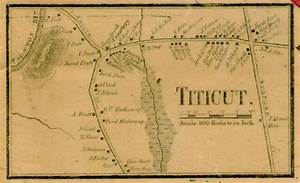
A Baptist church was instituted in Middleborough, Massachusetts by a number of brethren led by Mr. Backus from the Titicut Separatist church who were convinced communion should be limited to believers baptized upon a profession of their own faith. On July 23, 1756, Mr. Backus was installed as their pastor.
“He … published a discourse from Gal. iv. 31, to shew that Abraham’s first son that was circumcised was the son of the bond-woman, an emblem of the national church of the Jews; in distinction from regenerate souls, the spiritual seed of Abraham, of whom the Christian church was constituted; into which neither natural birth, nor the doings of others, can rightly bring any one soul, without its own consent. Upon these principles was the first Baptist church in Plymouth county then founded[.]”[3]
Endnotes
[1] Isaac Backus, A History of New England With Particular Reference to the Denomination of Christians called Baptists, Volume 2 (Eugene, Oregon: Wipf & Stock Publishers, Previously published by Backus Historical Society, 1871), fn. 1, p. 115; on pp. 116-119 Backus gives further arguments.
[2] William L. Lumpkin, Baptist Foundations in the South (Eugene, Oregon: Wipf & Stock Publishers, 2006), p. 18.
Isaac Backus found the answer by studying the Bible.
Backus struggled with the issue of baptism, studied Scripture, rejected infant baptism, and was baptized by dipping on August 22, 1751.[1] He set out to refute the anti-pedobaptist position by first turning to the Bible, and then to the claims of Baptist scholars in England that infant baptism was a corruption brought into the Christian church in the 2nd or 3rd century. What he found surprised him.
Next, Backus examined the Covenant Theology which lay at the heart of New England Puritanism. The relevance of this theology to Backus was mainly its effect on the church-state issue:[2]
First, “[T]he Jewish church was clearly a national church, a theocracy in which Moses and Aaron ruled together, and thus the Puritans were able to utilize the covenant theology to justify their ecclesiastical laws and their system of territorial parishes and religious taxes. Second, the covenant theology provided the Puritans with justifications for the Halfway Covenant, thus polluting the purity of the mystical body of Christ. And in the third place the covenant theology, by emphasizing that grace ran ‘through the loins of godly parents,’ that the baptized children of visible saints were somehow more likely than others to obtain salvation, thereby established a kind of hereditary spiritual aristocracy; it also undermined the sovereignty of God by implying that God was bound by this covenant to save certain persons rather than others. [Etc.]”[3]
The Puritans supported the unity of the Abrahamic Covenant in Romans 11.17.
“Here, the apostle Paul spoke of the Christian covenant as being grafted on to the Jewish covenant as a branch is grafted on to an olive tree, from whence the Puritans ‘argued the right of professors now to baptize their children, because the Jews circumcised theirs.’ This Backus rejected as misinterpretation. ‘The Jews were broken off thro’ unbelief, and the Gentiles were grafted in, and stand only by faith.’ Faith was essential to baptism. What Puritans stressed as organic continuity, Backus and the Baptists stressed as a complete break.”[4]
Isaac Backus rejected Covenant Theology.
Backus concluded that the Separates must explicitly reject the Covenant Theology, the whole conception of the corporate Christian state, which the Puritans had so painstakingly constructed in the wilderness of New England. Backus decided against infant baptism and was baptized. “[H]e rejected the Covenant Theology of the Puritans by arguing as the Baptists had long done that the Bible contained two covenants, the old Covenant of Works made with the Jews, and the Covenant of Grace made with those who believe in Christ….” “[T]he Puritans had confused the gospel of grace with the doctrine of works and transformed the gospel church of visible saints into a national church with a birthright membership.”[5] “Backus and the Baptists stressed the discontinuity, the antithetical nature of the two, the complete and distinct break between the past and the present dispensations. That Americans were ready to grasp this new outlook after 1740 and to pursue it to its logical conclusions marks the real break with the Old World, the medieval mind and the Puritan ethos….”[6]
Endnotes
[1] Isaac Backus, A History of New England With Particular Reference to the Denomination of Christians called Baptists, Volume 2 (Eugene, Oregon: Wipf & Stock Publishers, Previously published by Backus Historical Society, 1871), pp. 108-111.
[2] William G. McLoughlin, Isaac Backus and the American Piestic Tradition (Boston: Little, Brown and Company, 1967), pp. 61-63.
From the point of his conversion, Isaac Backus gradually became a leader of the Baptist movement. He was asked to preach to a church at Titicut in 1748, a revival resulted, people were saved, and a Separate church was formed in February, 1748, in defiance of the authorities. Mr. Backus and sixteen men signed the church covenant which provided for election and dismissal of the ministers, deacons, and elders by a majority vote, repudiated the claim that the minister was superior in authority to the brethren, stated that the minister was to be supported by free contribution of the members, and asserted the priesthood of all believers and the right and duty of all members to exercise any ability they had to preach or pray in public.[1]
Mr. Backus was opposed by scurrilous opposition. As he said, “I had many things thrown upon me to represent my Carecter odious and hinder me in this glorious Work.” Lies were told about him, such as that he had a wife and children in the country, that he had “bastards in this place or that, that there was a girl or two with his child.”[2]
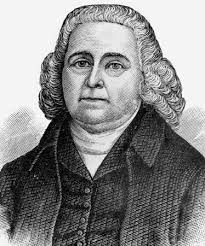
Isaac Backus
The members of the church were taxed to support the established church. The church protested the tax, but parish committee refused to exempt Mr. Backus and his followers from religious taxes. Their rationale was basically that the golden rule required them to do so, and that the committee would want their neighbors to force them to pay such a tax if they were in error. “[N]either doth God himself countenance or give Liberty to any men to follow the ‘Dictates of a misguided Eronius Conscience.’”[3] The reply gave an argument over the separation of church and state with which Backus had to wrestle the rest of his life.
“Oppression ‘can’t mean and intend that Tis unwarrantable or sinfull for men to urge and press others to a compliance with their Duty as it is pointed out by the Laws of God or the good and wholesome Laws of the Land and in case men through obstinacy and willfulness [refuse] and so will not make good either Lawfull Contracts [&] Covenants the original good and Design of their being incorporated into Distinct [religious] societies [or parishes] and so Tis no oppression….’ Under the Golden Rule the committee said it would want their neighbors to force them to do their duty if they were in error. ‘Liberty of Conscience according to the word of god is not for men to Live as they list or Do as they please while they maintain Erors in Judgment, Disown the truth of god, Exclaim against a faithful ministry, make Light of that good order and government which Jesus Christ has set up in his church; neither does God himself countenance or give Liberty to any men to follow the Dictates of a misguided Eronius Conscience….’ ‘Let it be observed that there is a great difference between persecution and prosecution.’”[4]
In February 1749, Backus was arrested for not paying a ministerial tax, but someone paid it for him, and he was released. Other members of the church were imprisoned or had their property confiscated for failing to pay the tax.
“Three-quarters of a century were to pass and Backus was to be in his grave before the people of Massachusetts yielded to the radical New Light view that the state should allow individuals to ‘act and Conduct as they pleas’ in matters of religion even if it meant imperiling their souls, the destruction of the parish system, the end of compulsory religious taxation, and the abandonment of the Puritan ideal of a corporate Christian commonwealth.”[5]
Endnotes
[1] William G. McLoughlin, Isaac Backus and the American Piestic Tradition (Boston: Little, Brown and Company, 1967), p. 42-43.
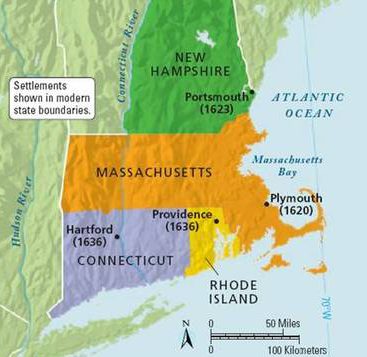
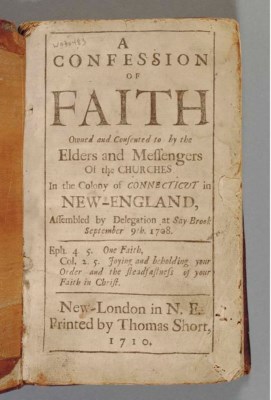
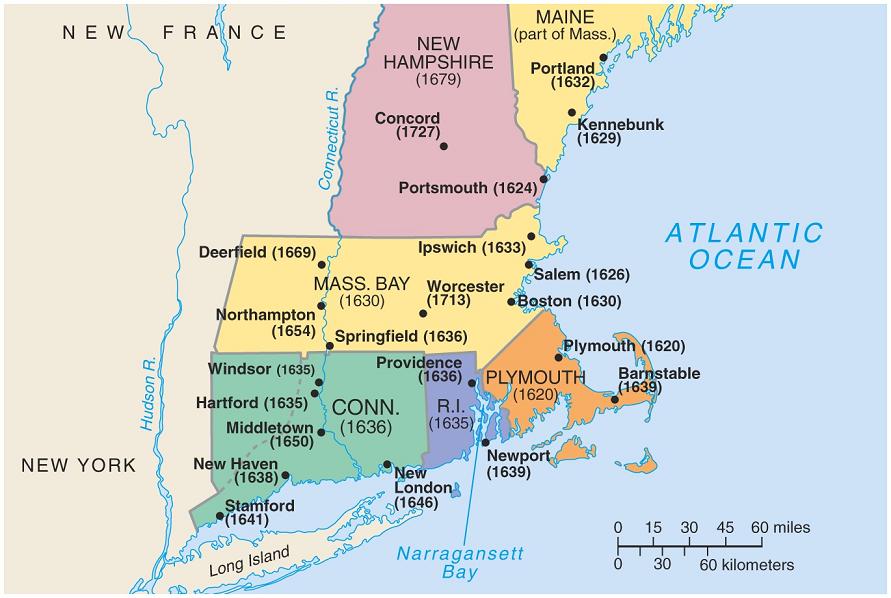
The church and state were interwoven in New England. Into the eighteenth century, the Puritan tradition continued in greater strength in Connecticut than elsewhere. The state taxed all citizens to support religion. In 1708, the Connecticut legislature ordained the Saybrook Platform. Under it, county associations of ministers met frequently to deal with matters of common interest, regional bodies called consociations were to handle all kinds of ecclesiastical difficulties, and a general state association exercised a general superintendency over churches and ministers. Under the Saybrook Platform, the county associations approved, licensed, and ordained the ministers of the parishes.[1] The state supported the actions of the county associations, and could deny the right of a minister to preach and collect his salary.[2]
[SAYBROOK PLATFORM]. A Confession of Faith Owned and Consented to by the Elders and Messengers of the Churches in the Colony of Connecticut in New-England, Assembled by Delegation at Say Brook September 9th, 1708. New-London: Thomas Short, 1710.
Various struggles arose. In 1742 and 1743, laws were passed forbidding itinerant preachers from preaching without permission of the parish minister with penalty of imprisonment, excluding settled ministers who preached in any other parish without consent of the parish minister from any benefit of the laws for their support, removing from Connecticut any minister from any other colony who preached in Connecticut, and giving the legislature authority to license dissenting churches which complied with the British Toleration Act of 1689.[3] The Legislature disciplined members of the Council and General Assembly known to sympathize with the New Lights. “Unauthorized schools and colleges were forbidden and only university graduates were eligible for ministerial standing before the law.”[4] The county associations began to act. The New Haven Consociation in 1742 expelled pastors of established churches for preaching to a group of Separates and Baptists against the wishes of the established minister. In Canterbury, Windham County the majority of the church, New Lights, voted for a certain man to be pastor, but the Old Lights who were the majority in the parish voted for another. By law, both the church and parish had to concur, but the Windham Consociation declared that the minority of Old Lights in the church were the true church and ordained their choice.[5] In Plainfield, the Windham Consociation “reversed the position it had taken in Canterbury and sided with a minority of Old Lights in the church to choose an Old Light minister over the objection of the majority of New Lights in the parish.”[6]
The inequities and the persecutions by the established church and civil government resulted in more and more defections to the New Light position. The civil government used repressive measures to compel the Separates to return to the fold. “Revivalistic ministers were shut out of meeting houses; members were moved from civic office and, when they refused to pay taxes for support of the regular ministry, imprisoned.”[7] At first most Separates that left the state-churches seemed destined to become Baptists. However, great disagreement arose between those who still adhered to infant baptism and those who insisted upon believer’s baptism—baptism after a confession of faith only. Because of this disagreement, the Baptist members left the Separate churches and formed their own churches.
This Separate movement had enduring consequences. One writer appropriately noted:
“[T]he Separatist movement is not appreciated as it deserves. We have too nearly forgotten our obligations to those men who dared to break away from the corrupt and worldly churches of the Standing Order, though they were armed with all the power of the State, of which they were a part, and to establish other churches in which vital godliness was the condition of membership. It was a transition movement, it is true, and of necessity only temporary, but its results were enduring. Many of the Baptist churches in New England spring from it directly, and through them, indirectly, almost all the rest; and other evangelical churches are largely indebted to it for their vitality and efficiency.—ED.”[8]
Endnotes
[1] William L. Lumpkin, Baptist Foundations in the South (Eugene, Oregon: Wipf & Stock Publishers, 2006), p. 11; Isaac Backus, A History of New England With Particular Reference to the Denomination of Christians called Baptists, Volume 1 (Eugene, Oregon: Wipf & Stock Publishers, Previously published by Backus Historical Society, 1871), pp. 472-474; Isaac Backus, A History of New England With Particular Reference to the Denomination of Christians called Baptists, Volume 2 (Eugene, Oregon: Wipf & Stock Publishers, Previously published by Backus Historical Society, 1871), p. 319.
[2] William G. McLoughlin, Isaac Backus and the American Piestic Tradition (Boston: Little, Brown and Company, 1967), p. 24.
There was great prejudice against Baptists. England forced New England to exempt Baptists from taxation in 1728, but the establishment found ways to circumvent this exemption. Operating clandestinely because of opposition by the authorities, Baptist preachers had come into Connecticut from Rhode Island, as they had done in Massachusetts, starting in 1674. They made some converts and even started some churches in Connecticut in 1704, 1710, 1735, and 1740. All dissenters were taxed to support the established church unless certified to pay the tax to their own churches. To be exempted they had to regularly attend their own church and live within five miles of their meeting place. Those who belonged to no church were also assessed the tax.[1] However, Separates were not given the privileges accorded Baptists, Quakers, and Anglicans.
One of the most prominent of the Separates was Isaac Backus. Although he spent much of his ministry in Massachusetts, he was a native of Norwich, Connecticut. In the new movement, he became the leading figure; and his shift from the Separate to the Baptist camp is central to the religious history of New England.[2]
Mr. Backus was saved in 1741. On August 24, 1741, Mr. Backus, in his own words, speaking of himself, realized:
“that he had done his utmost to make himself better, without obtaining any such thing; but that he was a guilty sinner in the hands of a holy God, who had a right to do with him as seemed good in God’s sight; which he then yielded to and all his objections against it were silenced. And soon upon this a way of relief was opened to his soul, which he never had any true idea of before, wherein truth and justice shine with luster, in the bestowment of free mercy and salvation upon objects who have nothing in themselves but badness. And while this divine glory engaged all his attention, his burthen of guilt and evil dispositions was gone, and such ideas and inclinations were implanted in his heart as were never there before, but which have never been rooted out since, though often overclouded..”[3]
Two years later, he, his mother, and some of his other relatives walked out of the established Norwich Church they belonged to and started holding meetings of their own. They left the church because the church voted to admit new members by a majority vote without evidence of conversion, the minister appeared to think that the Lord’s Supper was a converting ordinance, and the church exhibited a “strong affection for the Saybrook scheme.”
A revolution had begun.
“The essence of the religious revolution which the Separate movement began (and the Baptists finished) lay in church government and not in theology—though it became necessary eventually to modify Calvinism in order that it might conform more nearly to the unforeseen ramifications of the new practices in church discipline and polity. The major issues involved in church government were the autonomy and purity of the church, the nature of the ministry, and the relationship between Church and State.”[4]
Endnotes
[1] William L. Lumpkin, Baptist Foundations in the South (Eugene, Oregon: Wipf & Stock Publishers, 2006), p p. 11-13.
[2] William G. McLoughlin, Isaac Backus and the American Piestic Tradition (Boston: Little, Brown and Company, 1967), pp. 60-61.
[3] Isaac Backus, A History of New England With Particular Reference to the Denomination of Christians called Baptists, Volume 2 (Eugene, Oregon: Wipf & Stock Publishers, Previously published by Backus Historical Society, 1871), p. 107.
“Congregationalism claimed a large class of inferior church members by 1720, baptized into the churches without conversion.”[1] Generally speaking, by 1740, religious decay had spread throughout New England. However, “the relentless preaching of Jonathan Edwards of complete surrender to the will of God introduced the novel phenomenon of revival in Massachusetts.”[2] Although the revival spread down the Connecticut Valley into Connecticut,[3] the initial revival was of short duration … and did not touch the people of New England generally.[4]
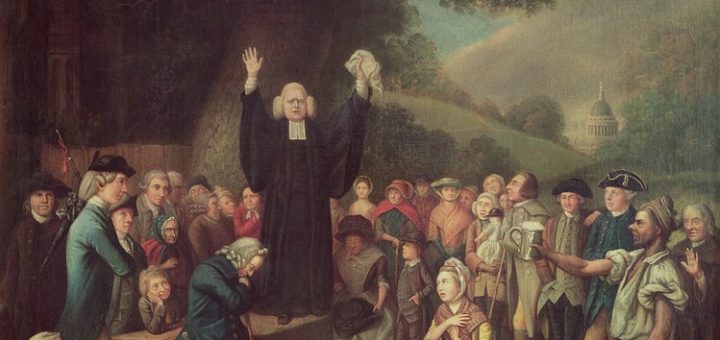
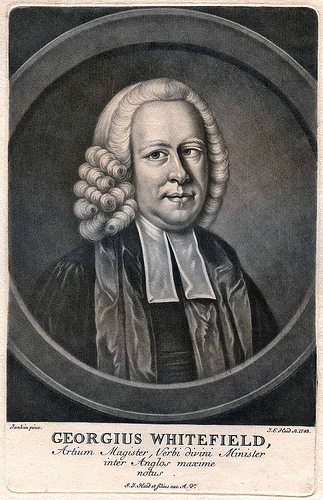
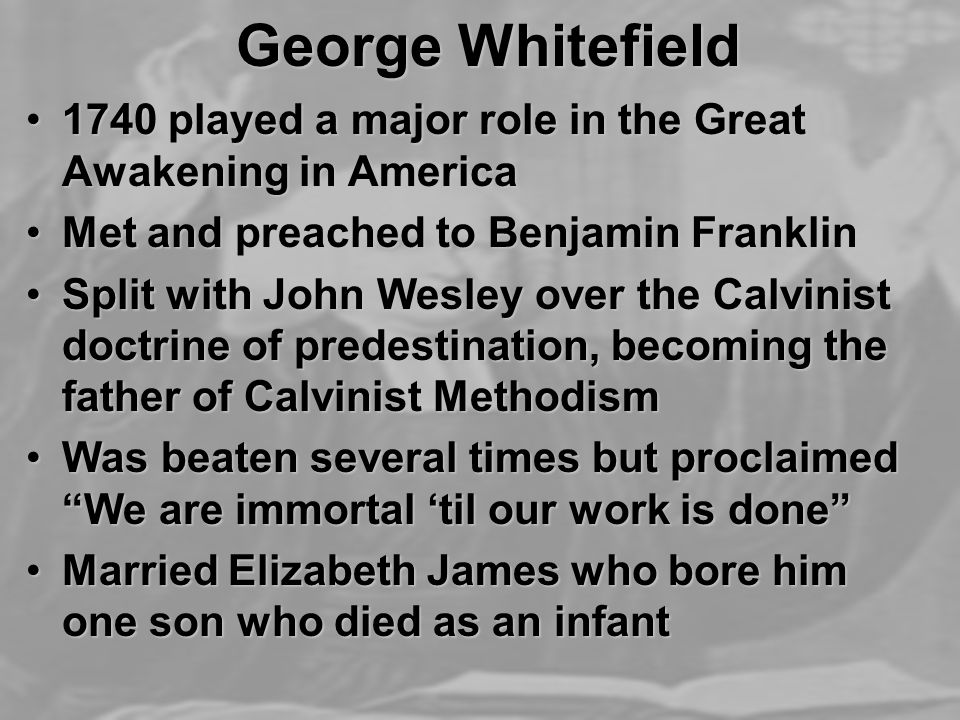
Then, George Whitefield, the world-famous English evangelist arrived at Newport. Great crowds greeted Whitefield wherever he went to preach. In Connecticut, he was greeted with great enthusiasm. All Connecticut was at his feet.
As a result of that great revival, many were converted and churches experienced unprecedented growth. The Great Awakening emphasized individual conversion and the new birth.[5] “[T]he new converts were dubbed ‘New Lights’ by their critics because the awakened people emphasized the immediacy of the Holy Spirit’s illumination and leadership in their personal lives.”[6] The members of the old churches were called “Old Lights.” “The former favored Whitefield’s type of evangelism and the idea of the regenerate church; the latter opposed revivalism and defended the state church order.”[7]
Many itinerant preachers arose because of this revival. Consequently, the General Court of Connecticut “forbade all itinerant preaching under penalty of loss of the right to collect one’s legal salary and imprisonment. Itinerant lay preachers or strange ministers were to be silenced or expelled from the colony.”[8] “In Connecticut, legal action was taken against the revivalists, their churches were deprived of legal status, and some of the preachers were thrown into jail.”[9]
The Great Awakening brought as many as 50,000 new converts, and brought into being, between 1740 and 1760, one hundred and fifty new Congregationalist churches and added to the number of Separatist and Baptist churches. “It brought the personal and pietistic religious tradition into a section previously dominated without challenge by Calvinistic rationalization…. As always and everywhere, the New England situation shows that such separation and disestablishment arose out of religion and not its opposite.”[10]
A number of New Lights who initially tried to influence the church to return to the concept of the pure church were forced out of the established churches. The term “Separates” referred to those who believed that the church should only include regenerate members and those who separated from the state-churches on this conviction. The Separate movement started in Connecticut and moved to Massachusetts. Separate churches began to appear at various towns.
Endnotes
[1] William L. Lumpkin, Baptist Foundations in the South (Eugene, Oregon: Wipf & Stock Publishers, 2006), p. 2.
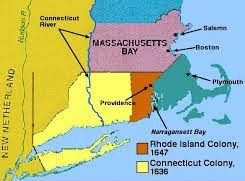
[3] Louis Franklin Asher, John Clarke (1609-1676): Pioneer in American Medicine, Democratic Ideals, and Champion of Religious Liberty (Paris, Arkansas: The Baptist Standard Bearer, Inc.), p. 21: Between 1635 and 1640 Congregationalism had been planted in the Connecticut colony. John Callender, The Civil and Religious Affairs of the Colony of Rhode-Island (Providence: Knowles, Vose & Company, 1838), pp. 67-68: “As the country was more fully discovered, the lands on Connecticut river grew so famous for their fruitfulness, and convenience to keep cattle, that great numbers from New-Town, Dorchester, &c., removed there, under the conduct of Mr. Hains, Mr. Hopkins, Mr. Ludlow, and Mr. Hooker, &c., and through inexpressible hardships, through famine, and weariness, and perils of the enemy, they at length settled at Hartford, 1635 and 1636, which was the beginning of the Connecticut colony; and, in 1637, New-Haven colony was begun by a people directly from England[.]”
[8]Ibid., p. 8; see also for the actual wording of the act against itinerant and other preachers, Backus, A History of New England…, Volume 2, pp. 44-46.
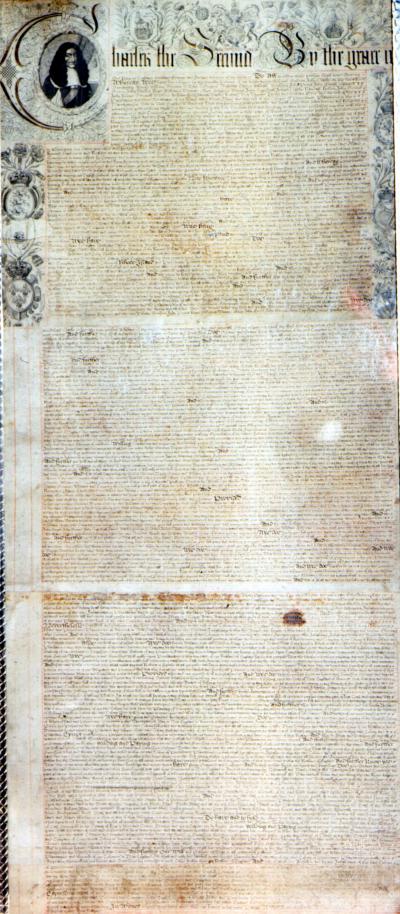
Mr. Clarke remained in England until, on July 8, 1663, he secured a new charter from Charles II. “By this Charter all the powers of government were conferred on the Colony, the King not having reserved to himself the right of revising its proceedings.”[1] This charter was in effect until the constitution, which was adopted in November 1842, became operative the first Tuesday of May 1843. In addition to other matters, the charter cleared up land disputes with Massachusetts and some of the other colonies, provided for the organization of the government, and provided for freedom of conscience.[2] That charter stated, in part:
Inhabitants of Rhode Island “pursuing, with peaceable and loyal minds, their sober, serious, and religious intentions, of godly edifying themselves, and one another, in the holy Christian faith and worship, as they were persuaded … did … transport themselves out of this kingdom of England into America,” and did then “leave their desirable stations and habitations, and with excessive labor and travel, hazard and charge did transport themselves into the midst of Indian natives” … “whereby, as is hoped, there may, in time, by the blessing of God upon their endeavors be laid a sure foundation of happiness to all America: And whereas, in their humble address, they have freely declared, that it is much on their hearts (if they may be permitted) to hold forth a lively experiment, that a most flourishing civil state may stand and best be maintained, and that among our English subjects, with a full liberty in religious concernments; and that true piety rightly grounded upon gospel principles, will give the best and greatest security to sovereignty, and will lay in the hearts of men the strongest obligations to true loyalty: … and to secure them in the free exercise and enjoyment of all their civil and religious rights, appertaining to them, as our loving subjects; and to preserve unto them that liberty in true Christian faith and worship of God, … that no person within the said colony, at any time hereafter shall be any wise molested, punished, disquieted, or called in question, for any differences in opinion in matters of religion, and do not actually disturb the civil peace of our said colony.”[3] [Emphasis mine.]
The charter granted:
“unprecedented liberties in religious concerns. Moreover representation for the people and the limit of power to public officials provided a basic check and balance to popular sovereignty. The Royal Charter of 1663 proved to be distinctive, installing safeguards in the election process through the governing body of the State Assembly, made up of a governor, deputy-governor, assistants, and representatives from each of the towns,”[4] each elected by the people.
The most important Biblical principle of the government they founded was incorporated into the supreme law of the United States of America by the First Amendment to United States Constitution.
As to the effect of the Rhode Island government thus established, John Callender wrote in 1838:
“The civil State has flourished, as well as if secured by ever so many penal laws, and in inquisition to put them to execution. Our civil officers have been chosen out of every religious society, and the public peace has been as well preserved, and the public counsels as well conducted, as we could have expected, had we been assisted by ever so many religious tests.
“All profaneness and immorality are punished by the laws made to suppress them; and while these laws are well executed, speculative opinions or modes of worship can never disturb or injure the peace of a State that allows all its subjects an equal liberty of conscience. Indeed, it is not variety of opinions, or separation in worship, that makes disorders and confusions in government. It is the unjust, unnatural, and absurd attempt to force all to be of one opinion, or to feign and dissemble that they are; or the cruel and impious punishing those, who cannot change their opinions without light or reason, and will not dissemble against all reason and conscience. It is the wicked attempt to force men to worship God in a way they believe He hath neither commanded nor will accept; and the restraining them from worshipping Him in a method they think He has instituted and made necessary for them, and in which alone they can be sincere worshippers, and accepted of God; in which alone, they can find comfort and peace of conscience, and approve themselves before God; in which alone, they can be honest men and good Christians. Persecution will ever occasion confusion and disorder, or if every tongue is forced to confess, and every knee to bow to the power of the sword: this itself is the greatest of all disorders, and the worst of confusions in the Kingdom of Christ Jesus.
“[T]his Colony with some since formed on the same model, have proved that the terrible fears that barbarity would break in, where no particular forms of worship or discipline are established by the civil power, are really vain and groundless; and that Christianity can subsist without a national Church, or visible Head, and without being incorporated into the State. It subsisted for the first three hundred years; yea, in opposition and defiance to all the powers of hell and earth. And it is amazing to hear those who plead for penal laws, and the magistrate’s right and duty to govern the Church of Christ, to hear such persons call those early times the golden age of Christianity.”[5]
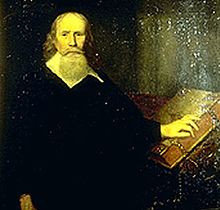
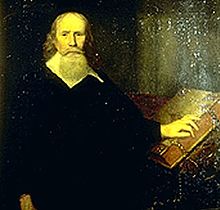
Mr. Clarke, on his return to Rhode Island, was elected Deputy-Governor three successive years. “He continued the esteemed pastor of the first Baptist Church of Newport, till his death” on April 20, 1676.[6] Of Mr. Clarke, Isaac Backus wrote: He “left as spotless a character as any man I know of.”[7] “The testimony which Backus proceeds to give of the purity of [Mr. Clarke’s] character and to his good name, even among his enemies, has been fully corroborated by later writers.”[8] “To no man, except Roger Williams, is Rhode Island more indebted than to him.”[9]
“An eminent American historian justly observed:
“The annals of Rhode-Island, if written in the spirit of philosophy, would exhibit the forms of society under a peculiar aspect. Had the territory of the State corresponded to the importance and singularity of the principles of its early existence, the world would have been filled with wonder at the phenomena of its early history.”[10]
An example of the manner in which Rhode Island honored the doctrine of freedom of conscience is the way they upheld the standard in regards to the Quakers. Other colonies persecuted the Quakers from 1656 until 1661. Massachusetts hanged four Quakers who returned to the colony after being banished. The Commissioners of the United Colonies threatened Rhode Island with cutting off all commerce or trade with them if Rhode Island did not likewise persecute the Quakers by enacting penal legislation against them. Rhode Island “refused, and pointed out that it had no law for punishing people because of their utterances ‘concerning the things and ways of God, as to salvation and to eternal condition.’”[11] The Commissioners of Rhode Island notified John Clarke. As a result, King Charles II ordered, “neither capital nor corporal punishment should be inflicted on Quakers, but that offenders should be sent to England.”[12] This decree of the King probably saved the lives of other dissenters.
Not all that was happening was for naught. Isaac Backus wrote, “It is readily granted that the sentiments of Mr. Williams and Mr. Clarke, about religious liberty, have had a great spread since that day, so that men of a contrary mind cannot carry their oppressive schemes so far now as they did then,”[13] but they still had a ways to go to achieve religious liberty. It was not until 1838 that John Callender declared “[t]he principles of religious freedom, which they [of Rhode Island] clearly and consistently maintained, are now the rule of action adopted by all Christian sects.”[14]
Endnotes
[1] John Callender, The Civil and Religious Affairs of the Colony of Rhode-Island (Providence: Knowles, Vose & Company, 1838), Appendix XXI, pp. 261-262.
[2] Isaac Backus, A History of New England With Particular Reference to the Denomination of Christians called Baptists, Volume 1 (Eugene, Oregon: Wipf & Stock Publishers, Previously published by Backus Historical Society, 1871), pp. 277-280.
[3] See Callender, Appendix No. XXI, pp. 241-262 for the complete charter; see also, James R. Beller, America in Crimson Red: The Baptist History of America (Arnold, Missouri: Prairie Fire Press, 2004), Appendix D, pp. 505-506.
[4] Louis Franklin Asher, John Clarke (1609-1676): Pioneer in American Medicine, Democratic Ideals, and Champion of Religious Liberty (Paris, Arkansas: The Baptist Standard Bearer, Inc.), pp. 78-79.
[10]Ibid., Appendix XVI, p. 230, citing Bancroft’s History of the United States, vol. 1, p. 380.
[11] Leo Pfeffer, Church, State, and Freedom (Boston: The Beacon Press, 1953), p. 75, citing Evarts B. Greene, Religion and the State :(New York: New York University Press, 1941), pp. 24-25.
In November 1651, Dr. Clarke went to England with Roger Williams to promote the interests of Rhode Island. The objects of their commissions were different, but they mutually aided each other in removing a dangerous threat to their experiment of democracy—a Parliamentary Commission granted Governor Coddington, whose autocratic rule threatened the future of Rhode Island, on April 3, 1751, which installed him as governor of Aquidneck for life. “Mr. Clark[e] was the sole agent of the island towns, to procure a repeal of Mr. Coddington’s commission” and “Mr. Williams was the sole agent of Providence and Warwick, to procure a new charter for these two towns.”[1]
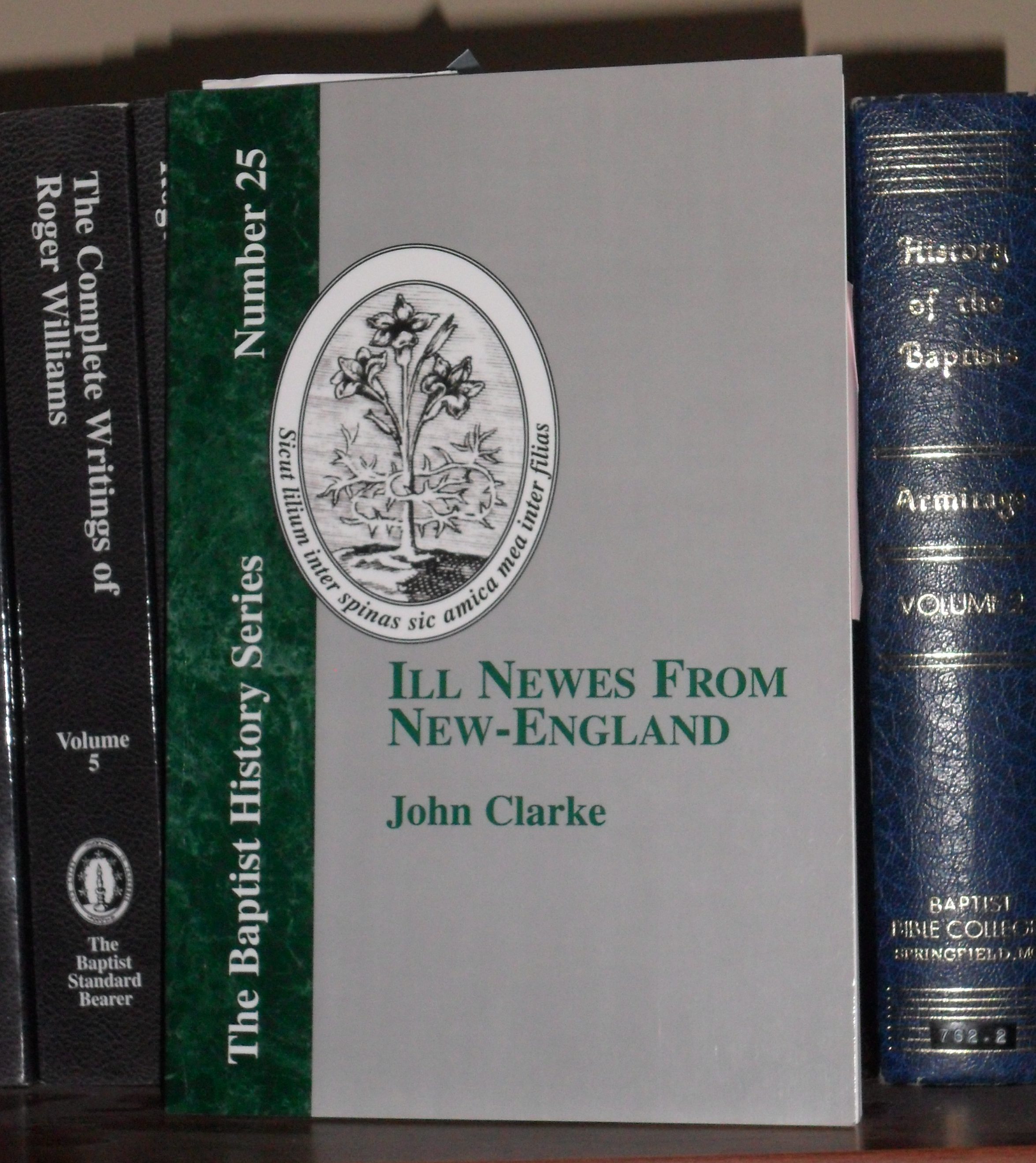
Dr. Clarke published his book Ill News from New-England: or a Narative of New-Englands Persecution…Also four conclusions touching the faith and order of the Gospel of Christ out of his last Will and Testament, confirmed and justified shortly after he arrived in London.
The work clearly demonstrated “Clarke’s subjection to an orderly state” showing that, to “him the secular rule is ordained of God, but it should not interfere with one’s religious convictions.”[2] “Both the church and the status of mankind, he argue[d], are ‘a two fold administration of power suitable to the two fold state of being of man.’ Love and conscience are emphasized by Clarke as inducements toward state honor and subjection rather than as engagements by force and fear. He implore[d] rulers to distinguish between these two ‘administrations of Christ’s power here on earth’ and to leave the spiritual realm to the control of God’s Spirit.” [3]
“The book combines a spirited defense on liberty of individual conscience toward God in religious matters, with pleas directed to England’s consideration in such matters.”[4] “While the letter appears as an apology for the Baptist faith, it seems that Clarke probably intends it as a timely and effective instrument, aimed at drawing British sympathy.”[5] Of Dr. Clarke’s book, Louis Franklin Asher commented, in part:
“Clearly and forcefully, Clarke calls attention to what he conceives as the necessary separation between the two real administrations of Christ’s power as exercised in the world—that is, the sword of steel, ‘whose Sword-bearers you are,’ as he styles the magistrates. The other administration he calls Scripture, the ‘sword that proceeds out of the mouth of his servants, the word of truth.’ Thus Clarke views ‘this spiritual administration as far as it concerns the outward man…[as] managed not by a sword of Steel,’ he argues, but by the Scripture of truth.
“In a bold but subservient manner, Clarke sets forth four simple but imploring proposals to the British Counsel of State. He begs the magistracy not to forcibly inhibit spiritual ministers but allow time to minister according to each one’s own conscience toward God. In so doing, he advises—even if they are heretics—they merely represent the tares among the wheat, to which Christ referred in his prohibition of their harvest or persecution by the secular arm of government. Clarke then asks that the secular power or ‘sword’ be withheld from use against the spiritual ‘tares’ rather than heaping abuse on them. In the fourth proposal, Clarke compares his majesty to that of a prophetic nursing Father in the Old Testament; thus he pleads for encouragement by spiritual ministers….
“[Included in the book is a letter to the Puritan clergy at Massachusetts.] [That] letter served as a fitting climax to Clarke’s encounter with the Bay officials and, it seems, he made use of it to maneuver the Rhode Island Colony into an advantageous posture with the English government. [He pointed out his persecution, contrasting it with] “the much kinder treatment and other ‘curtesies with far greater liberties in point of conscience,’ which previously the Puritan messengers had enjoyed on their tour through Rhode Island….
“[He also] denounces the Puritan church order …, and [t]he firm allegiance of the Puritans to the magistrates in matters of religion…. Clarke’s entire letter appears as a scorching public censure against the Massachusetts Puritanical system and its integrated form of civil power over ecclesiastical liberties.
“Never, under any circumstances, Clarke preached, should Christians force their persuasion on others nor should they resort to obeying magistrates in matters of religious concerns.”[6]
Through Mr. Clarke’s mediation and statesmanship, Coddington’s commission was revoked in 1652. Mr. Clarke was then further commissioned to stay in England to obtain a better and more substantial safeguard against “any further encroachments on their new [] way of life.”[7] Mr. Williams returned to New England in the early summer of 1654.
Endnotes
[1] Louis Franklin Asher, John Clarke (1609-1676): Pioneer in American Medicine, Democratic Ideals, and Champion of Religious Liberty (Paris, Arkansas: The Baptist Standard Bearer, Inc.), p. 72.
The first Baptist church in Newport was formed under the ministry of Dr. John Clarke. According to some who suppose that the church was founded by Clarke and his company upon their arrival in Rhode Island, it could have been established as early as 1638.[1]
Under the leadership of Dr. Clarke, Rhode Island became a government of religious liberty. When elected General Treasurer and General Assistant for Newport in 1650, Dr. Clarke added law and politics to his already crowded professions of medicine and religious ministry. “As a servant of the people, Dr. Clarke would steer the colony toward a government of unprecedented civil and religious liberty—convinced that any other move would be in the direction of a self-centered autocratic theocracy.”[2] The people followed him as he steered a course between democracy with its “attending threat of anarchy and all of its evils of disorder, violence, and ultimate chaos,” and aristocracy and its restrictions on all forms of liberty.[3]
Dr. Clarke and two friends were persecuted when they went to Massachusetts in 1651. He, Obadiah Holmes,[4] and John Crandal went to visit a friend in Boston. They were on “an errand of mercy and had traveled all the way from their church in Newport to visit one of their aging and blind members, William Witter.”[5] They stayed over, and held a service on Sunday. During that service, they were arrested and jailed. Before they were brought to trial, they were forced to attend a Congregational Puritan religious meeting. There, they refused to remove their hats, and Dr. Clarke stood and explained why they declared their dissent from them.
They were charged with denying infant baptism, holding a public worship, administering the Lord’s Supper to an excommunicated person, to another under admonition, proselytizing the Baptist way and rebaptizing such converts, and failing to post security or bail and other ecclesiastical infractions. He asked for a public debate on his religious views, which the Puritans avoided. “Clarke said they were examined in the morning of July 31 and sentenced that afternoon without producing any accuser or witness against them,” and that “Governor John Endicott even insulted the accused and denounced them as ‘trash.’”[6] Dr. Clarke was “fined twenty pounds or to be well whipped;” Mr. Crandal was fined five pounds, only for being with the others; and Mr. Holmes was held in prison, where sentence of a fine of thirty pounds or to be well whipped was entered. [7] A friend paid Mr. Clarke’s fine. Mr. Clarke and Mr. Crandal were released.
The beating of Obadiah Holmes by the Puritans in Massachusetts
Mr. Holmes was beaten mercilessly. His infractions were denying infant baptism, proclaiming that the church was not according to the gospel of Jesus Christ, receiving the sacrament while excommunicated by the church, and other spiritual infractions.[8] Mr. Holmes refused to pay his fine, prepared for the whipping by “communicat[ing] with [his] God, commit[ting] himself to him, and beg[ging] strength from him.”[9] Holmes was confined over two months before his whipping. He related the experience of being whipped for the Lord as follows, in part:
“And as the man began to lay the strokes upon my back, I said to the people, though my flesh should fail, and my spirit should fail, yet my God would not fail. So it please the Lord to come in, and so to fill my heart and tongue as a vessel full, and with an audible voice I broke forth praying unto the Lord not to lay this sin to their charge; and telling the people, that now I found he did not fail me, and therefore now I should trust him forever who failed me not; for in truth, as the strokes fell upon me, I had such a spiritual manifestation of God’s presence as the like thereof I never had nor felt, nor can with fleshly tongue express; and the outward pain was so removed from me, that indeed I am not able to declare it to you, it was so easy to me, that I could well bear it, yea, and in a manner felt it not although it was grievous as the spectators said, the man striking with all his strength (yea spitting in [on] his hand three times as many affirmed) with a three-corded whip, giving me therewith thirty strokes. When he had loosed me from the post, having joyfulness in my heart, and cheerfulness in my countenance, as the spectators observed, I told the magistrates, You have struck me as with roses; and said moreover, Although the Lord hath made it easy to me, yet I pray God it may not be laid to your charge.”[10]
Mr. Holmes “could take no rest but as he lay upon his knees and elbows, not being able to suffer any part of his body to touch the bed whereupon he lay.”[11]
Two men who shook Mr. Holmes’ hand after the beating were, without trial and without being informed of any written law they had broken, sentenced to a fine of forty shillings or to be whipped. Although they refused to pay the fines, others paid their fines and were released.[12]
Of course, the Puritans were fully persuaded of the righteousness of persecution. Here are two examples of their reasoning. Sir Richard Saltonstall wrote to Messrs. Cotton and Wilson of Boston condemning them for this tyranny in Boston, for “compelling any in matters of worship to do that whereof they are not fully persuaded” thus making “them sin, for so the apostle (Rom. 14 and 23) tells us, and many are made hypocrites thereby,” etc.[13] Mr. Cotton replied in part:
“If it do make men hypocrites, yet better be hypocrites than profane persons. Hypocrites give God part of his due, the outward man, but the profane person giveth God neither outward nor inward man. We believe there is a vast difference between men’s inventions and God’s institutions; we fled from men’s inventions, to which we else should have been compelled; we compel none to men’s inventions. If our ways (rigid ways as you call them) have laid us low in the hearts of God’s people, yea, and of the saints (as you style them) we do not believe it is any part of their saintship.”[14]
A second example occurred when some protested being taxed to support the state-church with which they did not agree. The main point of the answer received was as follows:
“What we demand of you is equal and right; what you demand of us is evil and sinful; and hence we have the golden rule upon our side, while you are receding and departing from it; for if we were in an error, and out of the right way, as we see and know that you are in several respects, and you see and know it is of us, as we do of you, we think the golden rule would oblige you to tell us of our error, and not let us alone to go on peaceably in it, that is without proper means to recover and reclaim us; whether by the laws of God, or the good and wholesome laws of the land, as we now treat you.” [15]
[2] Louis Franklin Asher, John Clarke (1609-1676): Pioneer in American Medicine, Democratic Ideals, and Champion of Religious Liberty (Paris, Arkansas: The Baptist Standard Bearer, Inc.), p. 35.
[4] Obadiah Holmes moved from England to Massachusetts. He and several others decided the Baptist way was right and were baptized. He and others were excommunicated in 1650. They moved to Rhode Island where Mr. Holmes became a member of the church pastored by Dr. John Clarke.
[5] Asher, p. 57; See John Clarke, Ill News from New-England or A Narative of New-Englands Persecution (Paris, Ark.: The Baptist Standard Bearer, Inc., Reprint: 1st printed in 1652), pp. 27-65 for a full account of the event; John T. Christian, A History of the Baptists, Volume I, (Texarkana, Ark.-Tex.: Bogard Press, 1922), p p. 379-381.
[6]Ibid., p. 59, citing John Clarke, Ill News from New England: or a Narative of New-Englands Persecution…Also four conclusions touching the faith and order of the Gospel of Christ out of his last Will and Testament, confirmed and justified (London: Printed by Henry Hills, 1652), pp. 30-31, 33.
Mr. Williams set sail for England in June 1643 to attempt to secure a charter for Rhode Island. With help from his friend, Sir Henry Vane, he quickly obtained a charter, dated March 14, 1644, which empowered the Providence Plantations “to rule themselves, and such as should inhabit within their bounds, by such a form of civil government as by the voluntary agreement of all, or the greater part, shall be found most serviceable, in their estate and condition; and to make suitable laws, agreeable to the laws of England, so far as the nature and constitution of the place shall admit, &c.”[1]
The knowledge which was being disseminated through the power of the press was affecting the religious leaders as well as the general population in America. People were now able to read the Bible and other works and thereby make decisions as to the accuracy of what others were asserting. “Many books [were] coming out of England in the year 1645, some in defence of anabaptism and other errors, and for liberty of conscience, as a shelter for a general toleration of all opinions, &c….”[2]
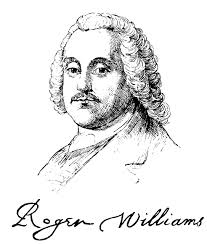
Roge rWilliams Wrote Bloudy Tenent Of Persecution And Other Works
Mr. Williams wrote The Bloudy Tenent of Persecution for Cause of Conscience which was published in London in 1644. “In this work he maintains the absolute right of every man, to a ‘full liberty in religious concernments,’ supported by the most luminous and powerful reasoning … [w]hich have excited admiration in the writings of Jeremy Taylor, Milton, Locke and Furneau.”[3] The book also exposed the Puritan persecutions going on in New England. John Cotton’s reply, The Bloudy Tenent washed, and made white in the Blood of the Lamb, was printed in London in 1649. Mr. Williams’ reply entitled The Bloudy Tenent yet more Bloody,[4] was published in 1652.[5] “The same clear, enlarged and consistent views of religious freedom are maintained in this last work, as in his preceding, with additional arguments, evincing an acute, vigorous, and fearless mind, imbued with various erudition and undissembled piety.”[6]
Endnotes
[1] John Callender, The Civil and Religious Affairs of the Colony of Rhode-Island (Providence: Knowles, Vose & Company, 1838), p. 98.
[2] Isaac Backus, A History of New England With Particular Reference to the Denomination of Christians called Baptists, Volume 1 (Eugene, Oregon: Wipf & Stock Publishers, Previously published by Backus Historical Society, 1871), p. 145, quoting Hubbard, [413-415.].
[4] Roger Williams The Bloudy Tenent Yet More Bloudy published in The Complete Writings of Roger Williams, Volume 4 (Paris, AR, The Baptist Standard Bearer, Inc.).
[5] For an excellent summary of some of the more important arguments presented by both sides see Backus, Volume 1, pp. 134-145.
The local church sanctified and cleansed by the washing of water by the word——————–A ministry of Charity Baptist Tabernacle of Amarillo, Texas led by Pastor Ben Hickam. "Would to God ye could bear with me a little in my folly: and indeed bear with me. For I am jealous over you with godly jealousy: for I have espoused you to one husband, that I may present you as a chaste virgin to Christ. But I fear, lest by any means, as the serpent beguiled Eve through his subtilty, so your minds should be corrupted from the simplicity that is in Christ" (2 Corinthians 11:1-3). ————————————Jerald Finney, a Christian Lawyer and member of Charity Baptist Tabernacle, having received this ministry in the Lord, explains how a church in America can remain under the Lord Jesus Christ and Him only. "As every man hath received the gift, even so minister the same one to another, as good stewards of the manifold grace of God. If any man speak, let him speak as the oracles of God; if any man minister, let him do it as of the ability which God giveth: that God in all things may be glorified through Jesus Christ, to whom be praise and dominion for ever and ever. Amen" (1 Peter 4:10-11; See also, Ephesians 4::1-16 and 1 Corinthians 12:1-25). "Take heed to the ministry which thou hast received in the Lord, that thou fulfil it" (Colossians 4:17). "And hath put all things under his feet, and gave him to be the head over all things to the church" (Ephesians 1.22; See also, e.g. Colossians 1:18).
 At first the Separatists and Baptists desired to meet together. This proved untenable.
 A Baptist church was instituted in Middleborough, Massachusetts by a number of brethren led by Mr. Backus from the Titicut Separatist church who were convinced communion should be limited to believers baptized upon a profession of their own faith. On July 23, 1756, Mr. Backus was installed as their pastor.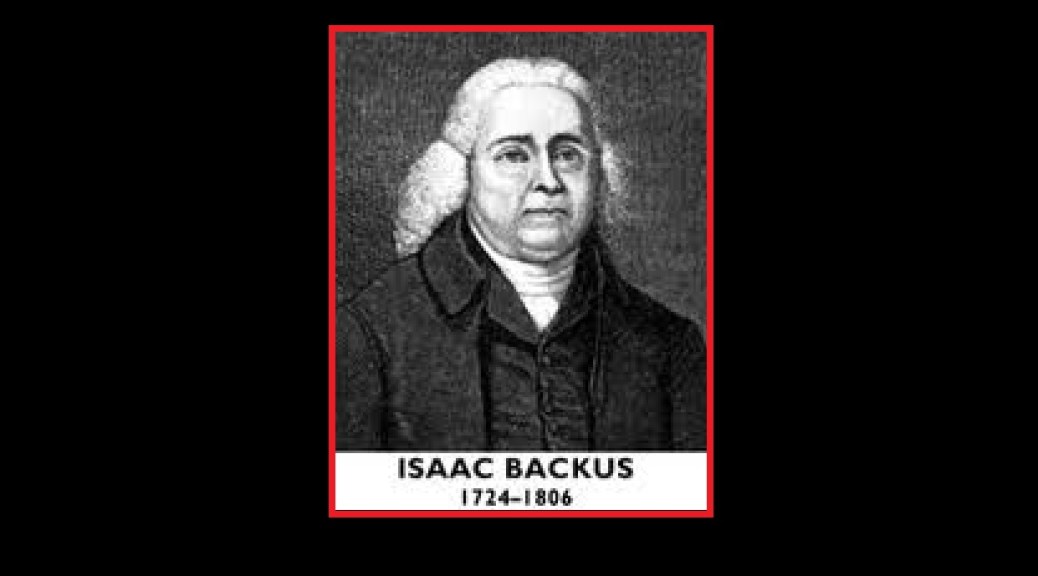





 Simply Church