Did President Trump do away with 501(c)(3) requirements?


A Publication of Churches Under Christ Ministry


Follow-up article published on December 9, 2025:
Have They Gotten Rid of the “Johnson Amendment,
as President Trump Promised?


Click here to go to All Written Course Segments
Click here to go to General Questions Answered
Click here To Go to Links to All 5 Minute Youtube Course Segments


Jerald Finney
Copyright © December 2, 2017


Speech by President Trump: We are giving our churches their voices back


President Trump, desiring to help churches and “Christians,” and according to the advice of those “Christians” and other religious leaders  who surround him, pledged to eliminate the Johnson Amendment which limits all nonprofits from endorsing and opposing political candidates. See Endnote 1 for links to articles on this matter. I believe he is sincerely trying to help churches. Accordingly, he signed an executive order easing restrictions on political activity by non-profits. Of course, he cannot unilaterally change the law; but he did all he could do to help – ease but not eliminate one of the five restrictions which come with 501(c)(3) status. Just as non-profit corporation status puts the state of incorporation over a church for many matters, 501(c)(3), a man made law, still puts the federal government and the IRS agency over churches with respect to certain rules and a multitude of regulations that come with the chosen 501(c)(3) status. See Endnote 2 for list of some of the regulations that come with 501(c)(3) and links to resources which explain 501(c)(3) and 508(c)(1)(A) tax exempt status in some detail.

Does this action by the President correct the problem with 501(c)(3)? No. I explain why in this article.
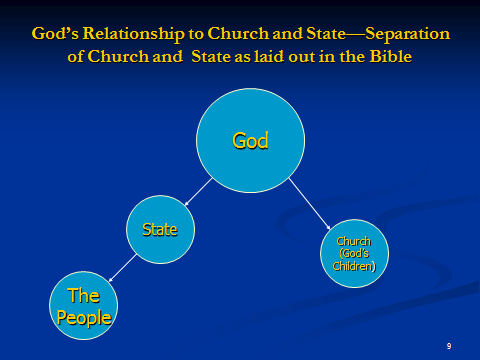
Click the above to go to the article, “Is Separation of Church and State Found in the Constitution?

One should be aware that the highest man made law in America, the First Amendment to the United States Constitution, and corresponding state constitutional provisions make clear that churches have a choice – remain under Christ only or submit to the state and federal governments through corporate 501(c)(3) status.

Keep in mind, for example:

  • Matthew 16:18 “And I say also unto thee, That thou art Peter, and upon this rock I will build my church; and the gates of hell shall not prevail against it.” Is a church built partially or wholly by man (man’s law) a church of Christ? Is such a church His church?
  • Ephesians 1:22 “And hath put all things under his feet, and gave him to be the head over all things to the church.” Is Christ the head over all things to an incorporated 501(c)(3) or 508 church? The simple to comprehend answer is an emphatic, “No!”
  • Colossians 1:18 “And he is the head of the body, the church: who is the beginning, the firstborn from the dead; that in all things he might have the preeminence.”

Let us first briefly examine or look at what church 501(c)(3) status really is. This will highlight the real issue. We will have to touch on incorporation since the two are intertwined.

Most churches choose to apply for both corporate and 501(c)(3) or 508(c)(1)(A) tax exempt status even though a choice not to do so is protected by the First Amendment and corresponding state constitutional provisions. 508(c)(1)(A) status puts a church in the same position as 501(c)(3) status. See, Church Internal Revenue Code § 508 Tax Exempt Status. Churches who incorporate and/or get 501(c)(3) or 508(c)(1)(A) status are established churches. They combine with civil government under man-made law. They get some perceived “benefits” and powers from civil government. In return, they agree to abide by the non-profit corporation laws of the state of incorporation and the commandments which come with the federal 501(c)(3) law they sought and agreed to. They also agree that, in the event they have issue with a commandment imposed by the law, the authority who will decide the issue is the government through its court systems. Their authority for many matters is the civil government, not the Lord Jesus Christ. One might call those churches who constantly defy and complain about the rules or commandments they agreed to “hypocrites.”

Churches who seek and obtain 501(c)(3) agree to abide by the rules and regulations that come with 501(c)(3), and also to any future rules added by the federal government though legislation, or by the Internal Revenue Service and upheld by the courts. Maybe some do not realize what they are doing when they get such status; some may proceed without knowledge, understanding, and wisdom. Nonetheless, when they get the status, they agree to the rules and commandments which come with the status and they agree that, in the event their authority who will decide the issue is the first the agency process with appeal to federal court available to the losing side, not the Word of God. Corporate 501(c)(3) churches proudly proclaim victory when their authority rules in favor of their position and moan and groan when their authority decides against them. They cannot understand that they lost no matter what their authority decides because they have put themselves under the wrong authority, according to the Word of God; and even their so-called victories are riddled with compromise.

Originally, a church who chose 501(c)(3) status agreed to 4 commandments or rules, added by legislative law. The IRS added a fifth. Prior to Bob Jones University v. United States, 461 U.S. 574 (1983), there were four rules. Bob Jones University upheld the IRS “shall not violate fundamental public policy” rule. Now there are five commandments. The fifth one has not yet been applied, as far as I know, to a church. However, many pastors do not preach of certain matters because they fear that they will be in violation of that rule—they do not wish to offend their master, their authority, by preaching certain matters covered by the Word of God. Many pastors openly preach on prohibited matters knowing that the state may exercise their authority and command them to comply or lose their status and suffer other penalty imposed by their master. The only authority to which a church can appeal, should the IRS agency rule against them, is the civil court system. By the way, the court will not allow such a church to make Bible based arguments.

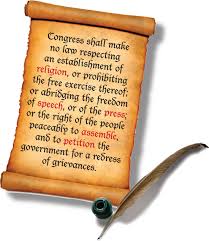
As one can see, corporate 501(c)(3) status comes with the loss of many of the church’s First Amendment rights. A corporate 501(c)(3) church is a “legal entity,” an artificial person who has placed herself under the Fourteenth Amendment for many purposes thereby giving up much of her First Amendment protection. A First Amendment church cannot be sued for violation of the rules that come with 501(c)(3) or 508(c)(1)(A) because such a church has not submitted herself to the Internal Revenue Code Section 501(c)(3) or Section 508(c)(1)(A). She cannot be forced to get such status because the First Amendment religion clause says, “Congress shall make no law respecting the establishment of religion or prohibiting the free exercise thereof.”

A 501(c)(3) church also agrees to many regulations. See Endnote 2 for list of some of the regulations that come with 501(c)(3) and links to resources which explain 501(c)(3) and 508(c)(1)(A) tax exempt status in some detail.

One who does just a little study can easily understand that the governments of the state of incorporation and the federal government are the authorities, for many purposes, of a corporate 501(c)(3) church. The Lord Jesus Christ is, at most, only one of their authorities or heads. For many churches, Christ is completely eliminated from the equation and their sole authority is civil government. Churches grieve our Lord by submitting to another head. Christ is not over “over all things to” those churches.  According to the Bible, this raises a very important question, “Are corporate 501(c)(3) churches of Christ, built by Christ and Him alone?” They are churches, but are they Christ’s churches? The answer is obvious.

So the main issue is one of authority. Looking beyond that, only the legislature, not the President, can eliminate the Johnson Amendment or any other rule that comes with 501(c)(3) status. It is a law, passed by Congress and signed by the President. The President, of course, is the law enforcer. Like any law enforcer, he can choose to ease or relax his efforts to enforce what he deems to be an unjust law, you might say. He cannot do away with the fact that the authority of the 501(c)(3) church, as to the rules that come with it, is the federal government through its agent, the IRS. The courts, not the President, decide unresolved clashes between 501(c)(3) churches and the IRS. Only the legislature, not the President, can repeal a law subject to his signature of approval. The legislature has taken no action to overrule the Johnson Amendment in the many months since President Trump filed his executive order nor has President Trump encouraged the legislature to do away with either 501(c)(3) status or any of the other rules that come with 501(c)(3).

Even should the Johnson Amendment be eliminated by legislative law signed by the President, there would still be four other rules that churches agreed to comply with when they chose to apply for 501(c)(3) tax exemption. It is no secret that churches and so called “Christian” lawyers have also been worried about rule number five, the fundamental public policy rule, for at least 15 or 20 years. Their advice: “pray about it.” I would like to hear one of their prayers. I do not think they will pray, “Lord, forgive us for dishonoring you and causing you much grief by prostituting your churches. We repent. Help us to honorably withdraw from our unholy alliances.”

I have touched on the main issue. Let me restate some of the above points and list some other matters. President Trump’s speeches and his executive order reflect Christian revisionist history. They:

  1. ignore the fact that churches are required to give up some of their First Amendment protections when they choose to become 501(c)(3) organizations who submit to the federal government as to certain matters;
  2. ignore the fact that churches voluntarily put themselves under 501(c)(3) with all the rules and regulations that accompany their choice ;
  3. ignore the fact that churches voluntarily give up much of their First Amendment protection when they place themselves under a law which commands them not to do certain things;
  4. ignore the fact that churches who incorporate and get 501(c)(3) status put themselves, for many purposes, under the Fourteenth Amendment;
  5. do not take into account that 501(c)(3) was a law implemented in 1954, 164 plus years after the adoption of the First Amendment;
  6. ignore the question of whether 501(c)(3) is even constitutional since the First Amendment religion clause says, “Congress shall make no law respecting an establishment of religion or preventing the free exercise thereof;”
  7. reflect a lack of understanding of the true history of the First Amendment;
  8. reflect the “Christian” revised history of the First Amendment;
  9. misrepresent what church/state establishment meant when the Constitution and First Amendment were adopted;
  10. misrepresent what Thomas Jefferson, for example, stood for (He stood for a secular state with complete separation of church and state); (See, Endnote 3 for links to an unrevised history of the First Amendment)
  11. disregard and go contrary to Bible principles concerning church, state, and the relationship God desires between church and state;
  12. ignorantly work for the end-time one world union of church and state under the beast;
  13. etc.

I wish to make one other point: I believe that freeing 501(c)(3) non-profit organizations to become active in politics will unleash liberal 501(c(3) organizations–atheist, secular, and religious–who will fight for liberal candidates, and that those organizations substantially outnumber and have much more money and power than the conservative churches who constantly attack the rule. Those liberal organizations include Planned Parenthood, Inc. (an organization that gets a lot of government money), the Church of Wicca,  Inc. and many many other incorporated 501(c)(3) organizations and churches who will support liberal candidates.

In conclusion, I believe that President Trump is sincerely trying to help the cause of religious liberty. But he is being misled by certain religious persons and organizations who will use any means necessary to achieve their goals. Their false Biblical interpretations and goals hasten fulfillment of end time prophecies—religion and government will unify and bring in a 3 ½ year of peace followed by 3 ½ year period of great tribulation, and finally the appearance of our Lord who will crush the world powers who are coming against Israel and then establish His 1000 year reign on the earth.


Endnotes

Endnote 1: Links to some articles: Trump Vow: ‘Totally Destroy’ 501(c)(3) Political Activity Ban, February 3, 2017.  President Trump vowed to He signed an executive order easing restrictions on religious participation in politics. See Trump signs executive order to ease restrictions on religious participation in politics, May 4, 2017. TRUMP RELAXES 501(C)(3) POLITICAL ACTIVITY RULES, May 5, 2017.

Endnote 2: 501(c)(3) and 508(c)(1)(A) tax exempt status not only come with five government imposed rules, such status also invokes a myriad of regulations. See, e.g., Publication 557 (01/2019), Tax-Exempt Status for Your OrganizationApplication for Recognition of ExemptionExempt Organizations Treasury RegulationsCharities and Nonprofits A-Z Site Index (F-J)Exempt Organization Revenue RulingsPub. 1828, Tax Guide for Churches and Religious Organizations (PDF)Common Tax Law Restrictions on Activities of Exempt OrganizationsExempt Organizations – Ruling and Determinations LettersrExempt Organizations – Private Letter Rulings and Determination LettersExempt Organizations AnnouncementsAnnual Filing Requirements for Supporting OrganizationsExempt Organizations NoticesPublic Disclosure and Availability of Exempt Organizations Returns: Copies of Exempt Organizations Tax DocumentsExempt Organization Revenue ProceduresExempt Organizations UpdateExempt Organizations – Employment TaxesThe Truth About Frivolous Tax Arguments – Section IITermination of Exempt Organization (“… Internal Revenue Code Section 6043(b) and Treasury Regulations Section 1.6043-3 establish rules for when a tax-exempt organization must notify the IRS that it has undergone a liquidation, dissolution, termination, or substantial contraction. Generally, most organizations must notify the IRS when they terminate. Among other things, notice to the IRS of a termination will close the organization’s account in IRS records. …).

See also, for analysis of 501(c)(3) and 508(c)(1)(A): (1) Questionnaire 2, I. Elementary Questions for Those Who Wish to Organize a Church under Christ Alone as opposed to either a Church under Man or a Church under Christ and Man, (2) Federal government control of churches through 501(c)(3) tax exemption; (3)  The church incorporation-501(c)(3) control scheme.

Endnote 3: The History of the First Amendment; An Abridged History of the First Amendment; List of Scholarly Resources Which Explain and Comprehensively Document the True History of Religious Freedom in America.
Does a church in America need a Tax Id Number?


A Publication of Churches Under Christ Ministry


Click here to go to All Written Course Segments
Click here to go to General Questions Answered
Click here To Go to Links to All 5 Minute Youtube Course Segments


Click here for video of this lesson.


Jerald Finney
Copyright © November 25, 2017


The answer to the question depends on the type of church. Is the church a spiritual entity built by the Lord Jesus Christ only or is the church a temporal earthly legal entity organized and built according to the laws of man. I will answer this question as to the church which is a legal, earthly, temporal entity such the corporate 501c3 or 508 church. I will also answer it as to the church which is a spiritual eternal entity only. I will describe how OPBC is the latter—a spiritual eternal entity—which operates in the light and proclaims to the world exactly what they are doing.

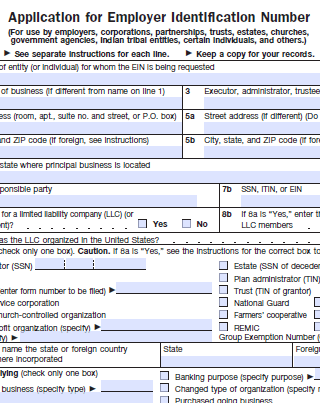
A church that chooses to become a legal entity such as a corporate 501c3 or 508 organization will need a tax number.

A legal entity is an entity that can sue, be sued, act legally, enter into contracts and so forth. A corporation is a “person” in that sense. The essay, Church Internal Revenue Code § 508 Tax Exempt Status gives some insights on the legal fiction that makes a corporation a legal “person.”

Unlike a church who chooses to become a temporal earthly entity such as a corporation with 501c3 or 508 status, the New Testament church, a church which has not voluntarily given up her New Testament and First Amendment status, cannot have an EIN or TIN. Why? Because by doing so that church is acting as an earthly temporal as opposed to eternal spiritual organization. That church is putting money in the bank, for example, in the name of the church.

What is wrong with that? First, the church is acting temporally, legally, earthly. Believers are to give to God, not to an earthly temporal organization created by man. When church members give to an incorporated church, the money is put in the corporate bank account. If the church is not incorporated and the money is put in a bank account in the name of the church, the money is put into an earthly account which belongs to the church. Legally and temporally, the money belongs to the church, not to God. I realize that many people who are in such churches believe in their heart that they are giving to God and I believe that God honors that. However, he is grieved by the fact that they are proceeding without knowledge, understanding and wisdom.

A church that is a New Testament Church, a spiritual entity only, cannot have a Tax or Employment Identification Number. Having a TIN or EIN makes a church a legal entity.

OPBC members give to God, not to the church. The money they give is put in a trust bank account which does not belong to OPBC. The true owner of the money in the trust bank account is the Lord Jesus Christ. OPBC openly proclaims this without fear. The pastor of OPBC showed the bank the trust papers which established the Lord’s trust. The bank opened the account. See, Lessons on the Bible/Common Law Trust.

OPBC does not lease or own the facility they meet in. OPBC does not have insurance on the meetinghouse; but the meetinghouse is insured. The pastor/trustee of OPBC showed the insurance company the paperwork which makes this possible, the paperwork which declares to the world what OPBC is doing. The insurance company sold a policy, not to OPBC, but to the trust relationship with property created by the church in accordance with Bible principles.

Why can a church do this in America? Because American law recognizes the type trust established by OPBC. OPBC established the trust relationship, but the trust is not OPBC nor is OPBC the trust. The trust is simply a fiduciary relationship with property. See, for more information and links to more resources on the trust relationship, Is Old Paths Baptist Church a Spiritual or Legal Entity?

The trust is not a legal entity, like a business trust or charitable trust. The highest man-made law in America, the First Amendment, and also corresponding state constitutional provisions honor the Bible principle of separation of church and state. Those laws guarantee that churches and non-Christian religious organizations such as the Mormons, the Jehovah’s Witnesses, the Catholics, the Moslems, the Hindus, the Buddhists and so forth can choose to operate outside government intervention.

You see, the legal system in America recognizes, but did not create, the fiduciary relationship with money and property which OPBC uses in order to remain a non-legal, eternal, spiritual entity.

As a lawyer and a believer, I proclaim these matters to the world. I would not utilize the tactic of lying so as to displease the Lord, mislead other believers, and lose my law license. Not only that, if OPBC members found that I intentionally or unknowingly lied to them or misled them, they would point out my error and give me a chance to repent. I will not knowingly disgrace God’s churches.


Recommended resources for further study:

Separation of Church and State/God’s Churches: Spiritual or Legal Entities. This is online PDF form of the 2nd edition of the book. OPBC plans to print this in paperback form.

Links to articles on these matters:

Essays and Articles on Church Organization, Separation of Church and State, and Other Church Issues

Essays, Articles, and Other Resources Related to the Doctrine of the Church, Incorporation, 501c3, Etc.

Church Internal Revenue Code § 508 Tax Exempt Status

Trust Explained

Does God Care if our Church is Incorporated?


A Publication of Churches Under Christ Ministry


Click here to go to All Written Course Segments
Click here to go to General Questions Answered
Click here To Go to Links to All 5 Minute Youtube Course Segments


Click here for video of this lesson.


Jerald Finney
Copyright © December 1, 2017


God grieves because His people neither understand nor honor His authority and His precepts. God grieves when a church dishonors His authority. A church can dishonor God’s authority in many ways, to include incorporating and getting 501c3 or 508 status.

God’s grief calls churches and believers to anguish, but few grieve, few cry, few pray, few even know that there is a call to anguish. The call started a long time ago. Authentic churches in the colonies and then the new nation betrayed their roots and compromised the authority of God. In the colonies, in Massachusetts and Connecticut, many Baptist churches applied for certificates whereby they would receive tax dollars on an equal footing with the established churches. Then, as the states legislated religious freedom and separation of church and state but also allowed multiple establishment through their non-profit corporation laws, many churches chose to incorporate to get perceived benefits from man-made laws. Their betrayal passed on to future churches. The betrayal of God increased exponentially for 225 plus years to this very day. This article points out one proof of the consequences of this betrayal that should call believers and churches to anguish.

Please allow me explain by giving one example of the consequences of church incorporation and 501c3. I know of no instance where an incorporated church does not have 501c3 or 508 status. There is no reason for an incorporated church not to get such status since an incorporated church is already an established church, a legal entity.

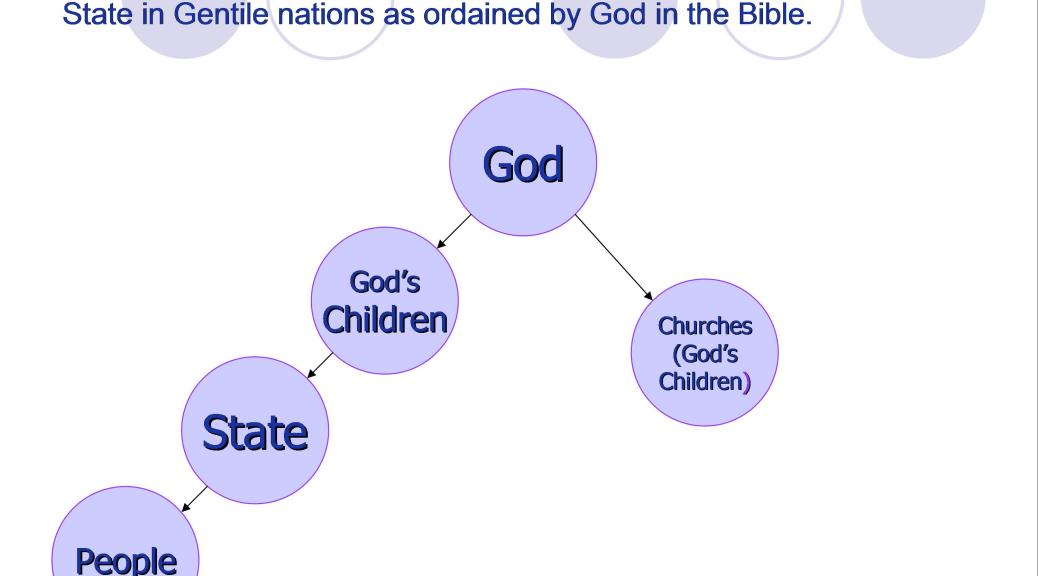
God ordained civil government and laid out its jurisdiction. God gave civil government no authority or ability to define “church.” God defines “church” in the New Testament.  God also made clear that church and state were to remain totally separate. Yet, that was never the case, except for a remnant, in either the American colonies or the states. Church establishment in America gives civil government substantial control over churches and included in that control is the ability to define “church;” to determine if an organization is qualified for “church” non-profit corporation status, the state of incorporation must define “church.” Likewise, the federal government must define “church” to determine whether an organization is qualified for 501c3 or 508 status.

How far off base would civil government go in the definition of “church” as multitudes of organizations sought and continue to seek non-profit corporation and tax exempt status? Let us look at an illustration. “A New Religion Forms That Will Worship A ‘Godhead’ Based On AI” states in the introduction:

“Anthony Levandowski has already filed paperwork with the IRS for the nonprofit corporation that is going to run this new religion.  Officially, this new faith will be known as ‘Way Of The Future.’” The article goes on to explain the tenets of the “Way Of The Future,” which include a faith in science which will create a “Godhead” which will make things better and a denial of the existence of God.

Had God remained the sole authority for churches, organizations  like “Way of the Future” could have existed, but they could not have received official sanction as a “church” and “benefits” from any authority, earthly or heavenly.

Religious Americans, to include many Baptists alongside obviously heretical or apostate Protestants and Catholics, gave civil government the power, the authority to define “church.” Civil government took to the task, first in issues involving state non-profit corporate status; then, later in the twentieth century, income tax exemption status.

As to federal tax exemption law, the authority has developed a process and rationale to determine whether an organization applying for 501(c)(3) tax exempt status is a “church.” When determining whether an organization is a “church,” a “religious organization,” or a “religious society,” the IRS (and court, if the IRS ruling is appealed), has a 14 part criteria, which—though not all-conclusive since other factors will be considered when deemed appropriate by the IRS—is a man-made definition; a definition which is partially contrary to the Word of God. En 1 gives the IRS definition of church with link to online IRS webpage; En 2 discusses a sample IRS ruling; En 3 briefly discusses some cases which have attempted to define church and links directly to those cases.

The IRS agency makes initial determinations, but the ultimate authority is the judiciary. Regardless of the ruling of the IRS, the losing party can appeal to the appropriate court asking for reversal and laying out their arguments for their position. Ultimately, the case could go all the way to man’s highest authority on issues such as this, the United States Supreme Court.

What is wrong with this? God made clear that Christ in heaven is to be the only authority (power or head) “over all things to” His churches. Put another way, a church, the spiritual body whose feet walk and work on earth, is to be connected to only one spiritual head, Christ in heaven. This connection was made after Christ ascended to heaven and filled the members of the church with the Holy Ghost on the day of Pentecost (Ac. 2.4). God the Son, before his ascension, walked with his disciples and apostles. God the Holy Ghost now indwelt them, thereby giving them a direct spiritual link to their God-ordained Head who was now in heaven. See, What is a spiritual entity?What is a legal entity?Is a church a spiritual entity, a legal entity, or a spiritual/legal entity?.

Churches are to be “builded together for an habitation of God through the Spirit,” not built together as corporate 501(c)(3) or 508 organizations according to man’s earthly, temporal, legal laws.

Most of the credit for the door being opened to Godless “religions” to gain the ability to be labeled as “churches” lies with not only with Protestants and Catholics but also with the progenitors of those martyrs who gave their lives standing for New Testament principles, one of which is separation of church and state. Once they had an opportunity to do so, the majority of even authentic Baptist believers and churches who honored and even died standing for the principle of separation of church and state while persecuted betrayed their head, their authority, the Lord Jesus Christ. They incorporated, and with the advent of tax exempt law, they applied for tax exempt status; along with many new breeds of “churches.”

All incorporated and/or 501(c)(3) and 508 “churches” operate under the authority of the federal government, even those who also have or once had some connection to the Lord Jesus Christ. The latter sometimes operate partially under Jesus Christ and partially under civil government; sometimes solely under the authority of civil government.

New Testament churches who obtain state non-profit corporation status and get federal tax exempt status partially or totally lose the power of God because they become legal entities. They are no longer spiritual entities only under the authority, headship or power of Christ alone. Without the power of God, they are ill-equipped to do their work: the perfecting of the saints (inside the assembly), the work of the ministry, the edification of the body of Christ, going into all the world and preaching the gospel to every creature (Mk. 16.15), and performance of other duties outside the assembly. They no longer resemble the spiritual bodies described in the New Testament. See Ep. 4.11-16; 1 Co. 12)

2Additionally, by mixing church and state, churches opened the door to the untenable situation where an earthly temporal civil government which has neither the authority nor the ability to understand spiritual matters is granted power over the church and put in charge of defining “church,” “religious organization,” “religious society,” etc. This mixing of the holy with the unholy has resulted in the inevitable consequences we see shaping up as a result of civil government definition of “church.”
In conclusion, should the IRS and/or the court decide that “Way Of The Future” is a qualified tax exempt religious organization or church, true churches will coexist as earthly legal entities alongside not only already existing corporate 501(c)(3) organizations such as Planned Parenthood, the Church of Wicca, and the Church of Satan, but also another Godless and God-defying organization which directly challenges God and His existence. Because they do not remain under their God-ordained authority (power or headship)—the Lord Jesus Christ—they will possess either no power of God or, at best, a watered down power of God. They betray their Lord, they lose God’s power, God grieves, and they could care less!

Where is the anguish in the House of God today because of the loss of the power of God? There is none. Listen to the powerful clip from sermon A Call to Anguish.


[For complete studies which cover all issues (such as the Ro. 13 issue, the incorporation issue, etc.) see the resources linked to in En 4.]


Endnotes


En 1 Churches Defined “The term church is found, but not specifically defined, in the Internal Revenue Code. With the exception of the special rules for church audits, the use of the term church also includes conventions and associations of churches as well as integrated auxiliaries of a church.

“Certain characteristics are generally attributed to churches.  These attributes of a church have been developed by the IRS and by court decisions.  They include:

  • Distinct legal existence
  • Recognized creed and form of worship
  • Definite and distinct ecclesiastical government
  • Formal code of doctrine and discipline
  • Distinct religious history
  • Membership not associated with any other church or denomination
  • Organization of ordained ministers
  • Ordained ministers selected after completing prescribed courses of study
  • Literature of its own
  • Established places of worship
  • Regular congregations
  • Regular religious services
  • Sunday schools for the religious instruction of the young
  • Schools for the preparation of its members

“The IRS generally uses a combination of these characteristics, together with other facts and circumstances, to determine whether an organization is considered a church for federal tax purposes.

“Source:  Publication 1828, Tax Guide for Churches and Religious Organizations.”

See DEFINING “CHURCH” – THE CONCEPT OF A CONGREGATION by Robert Louthian and Thomas Miller for a discussion of court application of the above criteria.

En 2: Internal Revenue Service Private Letter Ruling 8833001, 1988 PRL LEXIS 1594:

Just one illustration of what can happen when the civil government determines if an organization is a church, when IRS officials determine what constitutes a church within the meaning of IRC § 170(b)(1)(A)(i), follows. The threshold question in determining whether an organization is a church described in § 170(b)(1)(A)(i) is whether the organization qualifies as a religious organization described in § 501(c)(3). Using the 14-part IRS test to determine whether a religious organization was a church, IRS officials held that an organization with the following purpose as stated in its articles of incorporation and bylaws was a church: “[T]o establish an ecumenical church to help people learn to pay attention, wake up, and discover what both Christ and Buddha referred to as one’s true self.”

The ruling stated:

“The organization was established to develop an ecumenical form of religious practice, place greater significance on the modes of religious expression that would unify western and eastern modes of religious practice, place greater significance on the mystical or interior experience of religious truth than that of most western church denominations, and be more spiritually satisfying to members than other existing church organizations.”

In other words, the IRS determined that an organization whose purpose was directly contrary to the principles for a church laid down by the Lord in His Word was a church.

Note. The above ruling is available on LEXIS, a legal website which charges for its services. The website can be assessed in some public law libraries and law firm libraries.

En 3: A small sampling of cases which have attempted to define church and links directly to those cases. These cases cite many other cases which deal with the definition of “church”:

PARSHALL CHRISTIAN ORDER v. BOARD OF REVIEW, COUNTY OF MARION, 315 N.W.2d 798 (1982)(Supreme Court of Iowa)

A family organized as an incorporated 501(c)(3) “religious society” and claimed property tax exemption. “People may not transform their families into religious organizations and thereby obtain exemption for property over which their dominion and use remain unaffected. Granting tax exempt status to PCO would exalt form over substance and violate the rule of construction that exemption statutes are strictly construed.” The case cites and discusses various cases from other jurisdictions.

Ideal Life Church of Lake Elmo v. Washington County, 1981, 304 N.W.2d 308 (Supreme Court of Minnesota)

Purported religious organization which was organized and operated primarily for motive of tax avoidance by private individuals in control of 501(c)(3) corporation, had no formally trained or ordained ministry, had no sacraments, rituals, education classes or literature of its own, had no liturgy other than simple meetings resembling mere social gatherings or discussion groups and did not require a belief in any supreme being or other being, and whose doctrine and beliefs were intentionally vague and nonbinding upon its members and whose members freely continued to practice other religions, was not a “church” as such term was used in state’s tax exemption laws.

In re Collection of Delinquent Real Property Taxes, State of MN v. American Fundamentalist Church, 1995, 530 N.W.2d 200 (S.Ct. Minnesota) rehearing denied

Threshold question in determining whether real property is “church” entitled to tax exemption is whether entity claiming exemption is “church” within meaning of statute…. The organization in this case was an incorporated 501(c)(3) church. Test for determining whether organization is “church” entitled to tax exemption is subjective one, focusing on sincerity of belief and taking into account evidence on objective issues. … Principal motivation for organizing religious corporation was tax minimization and therefore, organization was not “church” and, therefore was not entitled to real property tax exemption in view of evidence that most of financial contributions to organization came from individual founder, that most of founder’s income came from taxpayer, that founder was primary beneficiary of organization’s financial actions, and that founder and his wife, who was co-founder, dominated meetings of organization’s board of trustees.

FELLOWSHIP OF HUMANITY (a Nonprofit Corporation) v. COUNTY OF ALAMEDA, 153 Cal.App.2d 673 (California Court of Appeals. First Dist., Div. One1957)

The precise question involved in the instant case–whether the reverence of a deity is a prerequisite to the receiving of a tax exemption for church property. A humanist organization organized as a nonprofit corporation under the laws of California, Fellowship of Humanity, applied for property tax exemption on the ground that the property was used “solely and exclusively for religious worship….” The fundamental question–is a belief in God or gods essential to “religious worship,” as those terms are used in the state Constitution? The answer of the court: “No.”

WAUSHARA COUNTY v. Sherri L. GRAF, 166 Wis.2d 442 (1992), 480 N.W.2d 16, Supreme Court of Wisconsin. Submitted on briefs October 4, 1991.Decided February 17, 1992

The Supreme Court of Wisconsin reviewed the evidence and concluded that “The evidence indicates that Basic Bible was established to evade taxation. Basic Bible failed to meet its burden of proving that it is a “church” or “religious association” under [Wisconsin law]. The court held that Basic Bible was not property tax exempt.” The fact that the church held “in trust” the property for which a property tax exemption was sought was not a factor in the decision. The Court concluded that incorporation and 501(c)(3) status is not a prerequisite for church property tax exemption; and, again, made clear that the fact that the church held the property “in trust” did not disqualify the church from property tax exemption.

En 4 For further study for the interested believer:

What is a First Amendment Church?


A Publication of Churches Under Christ Ministry


Click here to go to All Written Course Segments
Click here to go to General Questions Answered
Click here To Go to Links to All 5 Minute Youtube Course Segments


Jerald Finney
Copyright © December 1, 2017


The First Amendment to the United States Constitution.

Since the First Amendment is a law which recognizes and applies the Bible principle of separation of church and state, a church who remains under the First Amendment only (as opposed to a church who becomes a legal entity by incorporating, getting or claiming federal tax exempt status, etc.) also complies with Bible principles concerning the relationship of church and state. See Is Separation of Church and State Found in the Constitution? A church who remains under the First Amendment only is not a legal entity. That is, she remains under God only and has no ties to the legal system. She is a spiritual entity only. See Is a church a spiritual or a legal entity? On the other hand, a church who chooses to become a legal entity, such as a corporation or federal tax exempt religious organization, gives up much of her First Amendment freedom as a legal entity or fictitious person under the Fourteenth Amendment.

Click the above to go to the article, “Is Separation of Church and State Found in the Constitution?

Knowing the true history of the First Amendment helps one to understand this. See What is the history of the First Amendment? for a brief outline of that history. See Endnote for links to resources for more thorough studies.

Catholic/Calvinist/Reformed theology, which persecuted heretics, still has not changed. The thing that has changed is that those who adhere to those theologies no longer have an establishment over which they have control. Thus, they no longer have the power to kill those who do not bow down to the church/state union. They are working tirelessly to regain their power. Like all satanic efforts, they use deceit, lies, craft, and so forth, to work toward their goal of union of church and state. History proves that all church/state unions have always resulted in corruption of the church, the state, and the people, except for a remnant; secularists and deists such as James Madison and Thomas Jefferson (from a purely secular historical perspective), like our Baptist forefathers (from a Biblical perspective), understood this. Christian revisionists work from the highest academic levels down to the political level, the church level, and finally to the lowest level – the level of the individual (saved and lost religious person) to persuade men that separation of church and state is not found in the Constitution.

Since they follow Catholic/Calvinist/Reformed lies, most “Christians” believe that there never was any persecution in America. They are also led to believe, against solid facts which honest research readily discovers, that church and state should unite to bring peace on earth. Secular scholars and some Christian scholars know the true history (See, List of Scholarly Resources Which Explain and Comprehensively Document the True History of Religious Freedom in America). The “Christian” landscape is dominated by revisionist history. I explain this in The Trail of Blood of the Martyrs of Jesus/A Case of Premeditated Murder/Christian Revisionists on Trial/The History of the First Amendment.

In the Old World, “establishment” meant union of one church with state. The fight against establishment tyranny in the American colonies and early Republic resulted in another type of establishment – multiple establishments. That continues to this day, but it is now a choice whether to be established or not. Establishment is still possible, if one looks at the meaning of establishment to include any union of church and state made possible by the law of man, the law of a civil government.

State law constitutions, like the United States Constitution, still provide the same religious protections to individuals and churches as does the First Amendment, including freedom of churches to choose to remain outside man’s law and soul liberty (freedom of conscious). Sadly, most churches in America choose to grieve our Lord and incorporate under state law to get “perceived benefits.” Most choose 501c3 or 508(c)(1)(A) federal tax-exempt status. They decide to unite with the state and federal governments under laws made by man. Those man-made laws control many aspects of the existence and operation of a church. Modern American establishment does not give a church or churches power over the state.

Why do churches unite with the state and become legal entities (established churches)? For the love of money and earthly power. They think that more people will join their churches when civil government organizes them so that they can operate like a business. They also want to be able to hold property, insurance, and bank accounts in the name of the church. They want to be able to contract with pastors and pay them a salary instead of taking care of the pastor’s financial needs in a Bible way. They have been scared by “Christian” lawyers who make various false legal reasons. For more understandings on this, see False Reasons of “Christian” Lawyers and Pastors for Combining Church and State, Online version of Separation of Church and State: God’s Churches – Spiritual or Legal Entities? Chapters 9-13 or PDF of 2nd Edition of Separation of Church and State: God’s Churches – Spiritual or Legal Entities? Chapters 6-10.

Most so-called-Christians cannot think spiritually or Biblically. They think according to the principles of the god of this world. They think that they need the tax-exemption so they will bring in more money to the corporation for man-made buildings and business programs (day-care centers, schools, Bible Colleges, and so forth). They try to serve God and mammon. They do not know or apply Bible principles for churches which clearly teach, among other things, separation of church and state, that God desires His churches to be spiritual entitles only. They surely do not understand that “No servant can serve two masters: for either he will hate the one, and love the other; or else he will hold to the one, and despise the other. Ye cannot serve God and mammon” (Lk. 16.13). They give lip service to God, but dishonor and grieve Him by serving another master.

In conclusion, churches have a choice. Most choose mammon rather than God. For those churches who choose God, the First Amendment as well as corresponding state constitutional provisions guarantee that a church can choose, without persecution, to remain under God only, completely separate from state and federal civil government. When a church does so, she is a First Amendment church.


Endnote

Click the above to go to the article, “Is Separation of Church and State Found in the Constitution?

Honest research verify these teachings. See the resources which accompany this posting to verify this:

List of Scholarly Resources Which Explain and Comprehensively Document the True History of Religious Freedom in America

Is a church a spiritual or a legal entity?

Is Separation of Church and State Found in the Constitution?

The History of the First Amendment

An Abridged History of the First Amendment

The Trail of Blood of the Martyrs of Jesus/A Case of Premeditated Murder/Christian Revisionists on Trial/The History of the First Amendment
This book examines not only the history of the First Amendment but also the Catholic/Calvinist/Reformed tactics and motives for killing “heretics” and lying about history and other matters as they attempt to reestablish their establishment theology.

God Betrayed/Separation of Church and State: The Biblical Principles and the American Application
This book examines all aspects of the issue of separation of church and state