Jerald Finney was the lead counsel for the Biblical Law Center ("BLC") from May, 2005 until 2011. The BLC helps churches who desire to organize according to New Testament principles. In 2016, he again worked with the BLC and still does, but he now heads up the Churches under Christ Ministry which is under the authority of Charity Baptist Tabernacle of Amarillo TX. Finney is a licensed attorney who can be reached at 512-785-8445 jerald.finney@sbcglobal.net. Over the last few years he has lectured and preached on the issues concerning government, church, and separation of church and state.
God called Finney, a Christian and fundamental Baptist since his salvation, to enter the University of Texas School of Law in 1990 at the age of 43 to stand in the gap concerning legal issues facing Christians. Since being saved, he has been a faithful and active member of a local fundamental, Bible-believing Baptist church. He received his JD degree in 1993 and has followed the Lord in the practice of law since that time.
Finney received his law license in November 1993 and began practicing law in January, 1994. All along he was seeking the Lord’s direction. The Lord initially led Finney to practice criminal law. He knew that not many, if any, of the Christian law firms dealt with or specialized in criminal law, and that some Christians were being charged with crimes for their Christian behavior and for taking a stand for God’s principles.
The Lord confirmed Finney's choice. Very soon after he started practicing, he helped an Eastern Orthodox priest with a criminal charge. He was charged under a criminal statute for trying to expose the promotion of sodomy and other sins within a Catholic Church. God gave the victory in that case. Then Steve, a Christian who counseled outside abortion clinics, called Finney. He was charged with a crime under the Austin, Texas Sign Ordinance for his activities outside an abortion clinic. Being a new lawyer, Finney called the Rutherford Institute. They asked him to send them a summary of the facts and a copy of the Sign Ordinance. Then they told him that the case could not be won and that they would not help. Steve lost at trial, but God gave the victory on appeal. The Austin Police Department immediately cited Steve for violation of the state sign ordinance. The Lord gave the victory at trial.
Finney's first felony trial came about a year and six months after he started practicing law. A single Christian mother was charged with third degree felony injury to a child for spanking her six year old son. She left some prominent stripes across his rear end and also a stripe across his face when he turned suddenly during the spanking. The Lord gave the victory at trial. At the same time, Finney was also representing another Christian married lady who was charged with the same crime for spanking her little girl with a switch. On the date the trial in that case was to begin, the prosecutor, with prompting by the judge, lowered the offer to deferred adjudication probation of short duration on a misdemeanor charge with very few conditions on the probation. In a deferred adjudication in Texas, there is never a judgment of guilt if the probationer successfully completes the term of the probation, (and, with successful completion of the probation, the probationer can now file a Motion for Nondisclosure which, if granted, requires the file to be sealed so that the general public has no access to it). The mother decided to take the offer.
The Lord has also allowed Finney to help Christian parents in numerous situations involving Child Protective Services (“CPS”) infringement into parental rights. God has given the victory in all those situations.
The Lord has also used Finney to intervene in numerous situations where government officials or private companies tried to deny certain Christians their rights to do door-to-door evangelization, preach on the street, hand out gospel literature in the public forum, and pass out gospel tracts and communicate the gospel at their place of employment.
Finney has also fought other legal spiritual battles including a criminal case in San Antonio. A peaceful pro-life advocate was arrested and charged with criminal trespass for handing pro-life literature giving information about the development of the unborn baby, places to go for help, and other information to women entering an abortion clinic. All the above-mentioned cases as well as others not mentioned were handled free of charge (except the last spanking case for which Finney received $750).
In 2005 Finney became lead counsel for the Biblical Law Center.
Since his early Christian life, he has considered the issue of separation of church and state as taught in the Bible to be one of the primary issues facing New Testament churches today. He believes, based upon what the Bible teaches, that operating as a corporation (sole or aggregate), unincorporated association, or any other type of legal entity and/or getting a tax exempt status from the federal government at the very least puts the church under the headship of both the Lord and the state, and may even take the church from under the headship of Christ and put the church under the headship of the state. He believes that taking scriptures out of context and applying human reasoning contrary to biblical teaching (such as “Obey every ordinance of man,” or “We should be good stewards and incorporation is good stewardship”) in order to justify unbiblical marriage with the state causes our Lord much grief.
Once he took on the position as counsel for the BLC, it was necessary to do an in-depth study of the issue of separation of church and state. He began with the Bible. He initially read through the Bible at least five times (and many more times since then) primarily seeking the answer to the question, “Does the Bible have anything to say about this issue?” He was amazed at what He learned. The Bible gives God’s principles concerning separation of church and state, the purpose of a church, the purpose of the civil government, the headship of church, the headship of civil government, the principles by which each is to be guided, and much more concerning these two God ordained institutions. He continued to read the Bible daily seeking insights into these and other issues.
He also began to read other books. he had already read starting shortly after being saved, books and other information by Christian authors. For example, he had read, among other works, A Christian Manifesto[1], The Light and the Glory,[2] From Sea to Shining Sea,[3] The Myth of Separation and some other works by David Barton, [4]Rewriting America’s History,[5] and America’s God and Country.[6] These resources inspired, influenced and guided him and millions of other Christians, gave them philosophical and historical underpinning, and led them into battlefields such as politics, law, and education armed with what they learned from those resources.
Sometime in 2006 he began to realize that some of the books by Christian authors which he had come to depend upon were misleading, at the very least. Other books revealed to him that some of the above mentioned books had misinformed and misled sincere Christians by revising and/or misrepresenting the true history of separation of church and state in America. In 2006, he read One Nation Under Law[7] which cites a wealth of resources for one seeking to understand the history of separation of church and state in the United States and of the First Amendment to the United States Constitution.[8] Reading One Nation Under Law, some of the books it cited, and some other books was a launching pad into the universe of historical information which he never dreamed existed. He had expected to be misled in the secular law school he attended. He was amazed that he had been misled by Christian brothers. I asked myself, “How could Peter Marshall and others have missed this vital information?” At an Unregistered Baptist Fellowship conference in Indianapolis, Indiana, James R. Beller, a Baptist historian, gave a PowerPoint presentation which gave him the answer to this question. Finney bought two of Beller's books and read them. Those books filled in the details not mentioned in Pastor Beller’s concise PowerPoint presentation.
Since that time, God has led Finney into an in depth study of the issues of government, church, and separation of church and state. God Betrayed/Separation of Church and State: The Biblical Principles and the American Application and the other books he has written and listed on this website were written as a result of those studies. God Betrayed is not a rehash of the same information that has been circulated in the Fundamental Baptist and Christian community through sermons, books, seminars, etc. since at least 1982, the year Finney was saved. God Betrayed and Finney's other books reveal facts and information that must be understood in order for a pastor and other Christians to begin to successfully (in God's eyes) fight the spiritual warfare we are engaged in according to knowledge.
Finney believes that the lack of attention to the biblical doctrines concerning government, church (which is likened to the wife and bride of Christ), and separation of church and state, has had dire consequences for individuals, families, churches, and America. Unless pastors educate themselves on these doctrines and their application in America, the rapid downhill slide will continue at an accelerating pace.
[1] Francis A. Schaeffer, A Christian Manifesto, (Westchester, Illinois: Crossway Books, 1981).
[2] Peter Marshall and David Manuel, The Light and the Glory, (Old Tappan, New Jersey: Fleming H. Revell Company, 1977).
[3] Peter Marshall and David Manuel, From Sea to Shining Sea (Old Tappan, New Jersey: Fleming H. Revell Company, 1986).
[4] David Barton, The Myth of Separation, What is the Correct relationship between Church and State? (Aledo, Texas: Wallbuilder Press, 1992).
[5] Catherine Millard, Rewriting America’s History (Camp Hill, Pennsylvania: Horizon House Publishers, 1991).
[6] William J. Federer, America’s God and Country, Encyclopedia of Quotations (Coppell, Texas: FAME Publishing, Inc., 1994).
[7] Mark Douglas McGarvie, One Nation Under Law: America’s Early National Struggles to Separate Church and State (DeKalb, Illinois: Northern Illinois University Press, 2005).
[8] The First Amendment to the United States Constitution states: “Congress shall make no law respecting an establishment of religion, or prohibiting the free exercise thereof; or abridging the freedom of speech, or of the press; or the right of the people peaceably to assemble, and to petition the Government for a redress of grievances.” The religion clause, properly interpreted, as is shown in God Betrayed, is a correct application of the biblical principle of separation of church and state.
(Revelation 14:6-7) “And I saw another angel fly in the midst of heaven, having the everlasting gospel to preach unto them that dwell on the earth, and to every nation, and kindred, and tongue, and people, {7} Saying with a loud voice, Fear God, and give glory to him; for the hour of his judgment is come: and worship him that made heaven, and earth, and the sea, and the fountains of waters.”
The everlasting gospel is to Fear God for He is Holy. The antichrist gospel is god loves everybody. Because God is holy we need a perfect savior the Lord Jesus Christ. Every time when you are preaching the true gospel of Jesus Christ and showing men that they are under condemnation of sin because of the holiness of God and they need a saviour and somebody comes and screams god is love they are antichrist. Never forget this: they are of their father the devil. If God sent an angel to proclaim to Fear God then it is good enough for me to preach the same thing “Fear God”. Just a few scriptures to encourage you who love and fear God.
Who do you believe: Darwin or the word of God?
(Matthew 10:27-28) ” What I tell you in darkness, that speak ye in light: and what ye hear in the ear, that preach ye upon the housetops. {28} And fear not them which kill the body, but are not able to kill the soul: but rather fear him which is able to destroy both soul and body in hell.”
(Psalms 66:16) “Come and hear, all ye that fear God, and I will declare what he hath done for my soul.”
(Ecclesiastes 12:13-14) “¶ Let us hear the conclusion of the whole matter: Fear God, and keep his commandments: for this is the whole duty of man. {14} For God shall bring every work into judgment, with every secret thing, whether it be good, or whether it be evil.”
(Psalms 36:1-4) “The transgression of the wicked saith within my heart, that there is no fear of God before his eyes. {2} For he flattereth himself in his own eyes, until his iniquity be found to be hateful. {3} The words of his mouth are iniquity and deceit: he hath left off to be wise, and to do good. {4} He deviseth mischief upon his bed; he setteth himself in a way that is not good; he abhorreth not evil.”
(Romans 3:11-18) “There is none that understandeth, there is none that seeketh after God. {12} They are all gone out of the way, they are together become unprofitable; there is none that doeth good, no, not one. {13} Their throat is an open sepulchre; with their tongues they have used deceit; the poison of asps is under their lips: {14} Whose mouth is full of cursing and bitterness: {15} Their feet are swift to shed blood: {16} Destruction and misery are in their ways: {17} And the way of peace have they not known: {18} There is no fear of God before their eyes.”
(Psalms 111:6-10) “He hath shewed his people the power of his works, that he may give them the heritage of the heathen. {7} The works of his hands are verity and judgment; all his commandments are sure. {8} They stand fast for ever and ever, and are done in truth and uprightness. {9} He sent redemption unto his people: he hath commanded his covenant for ever: holy and reverend is his name. {10} The fear of the LORD is the beginning of wisdom: a good understanding have all they that do his commandments: his praise endureth for ever.”
(Proverbs 1:7-9) “¶ The fear of the LORD is the beginning of knowledge: but fools despise wisdom and instruction. {8} My son, hear the instruction of thy father, and forsake not the law of thy mother: {9} For they shall be an ornament of grace unto thy head, and chains about thy neck.”
Ecclesiastes 12.14
(Isaiah 2:10-22) Ҧ Enter into the rock, and hide thee in the dust, for fear of the LORD, and for the glory of his majesty. {11} The lofty looks of man shall be humbled, and the haughtiness of men shall be bowed down, and the LORD alone shall be exalted in that day. {12} For the day of the LORD of hosts shall be upon every one that is proud and lofty, and upon every one that is lifted up; and he shall be brought low: {13} And upon all the cedars of Lebanon, that are high and lifted up, and upon all the oaks of Bashan, {14} And upon all the high mountains,
Wrong. Your god is Satan and he hates you, a creation of God, and wants you to spend eternity in the lake of fire.
and upon all the hills that are lifted up, {15} And upon every high tower, and upon every fenced wall, {16} And upon all the ships of Tarshish, and upon all pleasant pictures. {17} And the loftiness of man shall be bowed down, and the haughtiness of men shall be made low: and the LORD alone shall be exalted in that day. {18} And the idols he shall utterly abolish. {19} And they shall go into the holes of the rocks, and into the caves of the earth, for fear of the LORD, and for the glory of his majesty, when he ariseth to shake terribly the earth. {20} In that day a man shall cast his idols of silver, and his idols of gold, which they made each one for himself to worship, to the moles and to the bats; {21} To go into the clefts of the rocks, and into the tops of the ragged rocks, for fear of the LORD, and for the glory of his majesty, when he ariseth to shake terribly the earth. {22} Cease ye from man, whose breath is in his nostrils: for wherein is he to be accounted of?”
[Note by Jerald Finney: And there are many more such verses in the Bible. Some of those antichrists who reject Bible preaching because “God is love” make up their own religion or philosophy without reference to God’s word; others quote some Bible verse out of context. One example is John 3.16: “For God so loved the world, that he gave his only begotten Son, that whosoever believeth in him should not perish, but have everlasting life.” The problem for them is the rest of John 3 and the whole of the Bible.]
Equality Act Creates LGBT Rights Everywhere!(102315)(Revealed: LGBT Nuclear Bomb Against Churches – Will apply to state churches, such as incorporated 501c3 churches, only. The article below explains how this applies to state churches, but not to New Testament churches.)
Virginia Passes Legislation Forcing Churches to Allow “Transgender” Males into Women’s Bathrooms(04720)(Of course, this will be contested in court. Regardless of the outcome of such contest(s), keep in mind that the established church (incorporated, 501(c)(3) or 501(c)(1)(A) churches have voluntarily given up much of their First Amendment protections and placed themselves under the 14th Amendment for many purposes. Churches who choose to remain under the First Amendment for all purposes are not subject to state legislation. Contact this Churches under Christ Ministry for more information.)
The article, “Christian schools will have no choice about gay marriage: Column,” again puts the ignorance of “Christians” on display. The author of the article, Michael Farris, laments the fact that the United States Supreme Court is posed to deny 501(c)(3)status to Christian colleges and even to churches which oppose same-sex “marriage” (Actually, any union outside that of a male and a female is not marriage. See Jerald Finney’s letter on the webpage “The Sodomite Agenda, Religious Organizations, And Government Tyranny.”). I limit this reply to that article to churches only, even though I could say much about so-called “Christian” schools and institutions of higher learning.
The author of the article, Michael Farris, is a good lawyer who has done much for the cause of homeschooling in America; but his article reveals that he, like most American “Christians,” has no clue as to the important Bible doctrines of church, state, and separation of church and state and their application in America (See the first three sections of God Betrayed/Separation of Church and State: The Biblical Principles and the American Applicationwhich is available free in bothonline and PDFform. The first three sections of the online version are updated. One may study the websiteSeparation of Church and State Law for articles, books and other resources concerning the issue of church organization.). Nor does he understand church incorporation law or Internal Revenue Code section 501(c)(3) as applied to churches.
“Christian colleges and churches need to get prepared. We must decide which is more important to us — our tax exemption or our religious convictions. Keep in mind, it is not the idea that the college itself might have to pay taxes that is the threat. Schools like Patrick Henry College, which I started, never run much of a profit. But since PHC refuses all government aid, all of our donations for scholarships and buildings come from tax deductible gifts. Cutting off that stream of revenue is effectively the end of such colleges absent a team of donors who simply don’t care if gifts are deductible.” [Bold red emphasis added]
Had the convictions of churches in America concerning the relationship of church and state been based upon Bible principles instead of misguided “convictions,” no church in America would have ever incorporated, applied for 501(c)(3) status or become a legal entity in any way; they would have all maintained their First Amendment status thereby remaining under God only. By the way, the First Amendment implements into the highest law of the land the principle of separation of church and state (See The History of the First Amendment or An Abridged History of the First Amendment; Is Separation Of Church And State Found In The Constitution?See also, TheTrail of Blood of the Martyrs of Jesuswhich explains not only the history of the First Amendment but also Christian and Secular revisonist history.)
Mr. Farris’ article points out something that I have pointed out for many years. He states:
“Keep in mind, it is not the idea that the college itself might have to pay taxes that is the threat. Schools like Patrick Henry College, which I started, never run much of a profit. But since PHC refuses all government aid, all of our donations for scholarships and buildings come from tax deductible gifts. Cutting off that stream of revenue is effectively the end of such colleges absent a team of donors who simply don’t care if gifts are deductible.”
“Patrick Henry College is a not-for-profit corporation created and authorized to operate under the laws of the Commonwealth of Virginia. Under Section 501(c)(3) of the Internal Revenue Code, the College is a qualified charitable institution and contributions to PHC are tax deductible to the full extent of the law.“
Patrick Henry College, like incorporated churches, is a creature of the state. The state of Virginia created the corporation and authorizes her to operate under and according to the laws of Virginia, not under the laws of God. PHC is further controlled by the federal government by the rules and regulations that go along with 501(c)(3) status. More rules can be added as shown in Bob Jones University, 461 U.S. 574; 103 S. Ct. 2017; 76 L. Ed. 2d 157; 1983 U.S. LEXIS 36; 51 U.S.L.W. 4593; 83-1 U.S. Tax Cas. (CCH) P9366; 52 A.F.T.R.2d (RIA) 5001 (1983)(See pp. 386-388 of God Betrayedfor an analysis of Bob Jones University). The college has turned to the state of Virginia and the federal government, specifically the Internal Revenue Service, for aid. The aid comes in the form of gifts given by donors who claim tax deductions for their gifts. People give for a tax deduction, not for the glory of God. In return for state aid, the non-profit 501(c)(3) organization agrees to abide by the rules and regulations, present and future, set unilaterally by their benefactor. Therefore, the statement that Patrick Henry College refuses all government aid is patently false. Churches who become non-profit corporate religious organizations and/or claim 501(c)(3) status have turned to state and the federal government for financial aid.
Churches who are not non-profit 501(c)(3) or 508(c)(1)(A) tax exempt religious organizations are not concerned about being taxed because they are non-taxable if they are correctly organized as spiritual entities only and have as their goal the glory of God. Furthermore, the First Amendment protects the non-legal status of New Testament churches. The First Amendment states:
“Congress shall make no law respecting an establishment of religion, or prohibiting the free exercise thereof; or abridging the freedom of speech, or of the press; or the right of the people peaceably to assemble, and to petition the government for a redress of grievances.”
Those churches who become legal entities place themselves under the Fourteenth Amendment for many purposes. The First Amendment guarantees that no church has to incorporate or place themselves under the rules of 501(c)(3). See, Does God and/or Civil Government Require Churches to Get 501(c)(3) Status?. One big change for a church who takes 501(c)(3) or 508(c)(1)(A) status is that the church becomes “tax exempt” as opposed to non-taxable; they place themselves under Internal Revenue Code Sections 501(c)(3) or 508(c)(1)(A), laws made by Congress (notice that the First Amendment says “Congress shall make no law respecting….”) and signed by the President. Before they do that, if they are not some type of legal entity such as a non-profit corporation, they are wholly protected by the First Amendment and are free to exercise their “religion” in conformity to New Testament principles.
Churches can make no profit if operated according to the principles of the New Testament. Without profit there are no taxes anyway. Even a business (something entirely different from a New Testament church but very like most American state churches) pays no taxes if it makes no profit. It is interesting that most American churches today are run like businesses, not like New Testament churches. That was another inevitable result of ordering a church according to the precepts of man, not those of God. Most are glorified social clubs or nightclubs. They are really businesses which pay no taxes because they call themselves churches and organize under state non-profit incorporation law.
What churches which become legal entities are really concerned about, since there is no need to worry about being taxed, is maximizing donations. They believed, after section 501(c)(3) was added to the Internal Revenue Code, that they would get more donations from people who were more concerned about getting a tax deduction than they were about glorifying God by honoring His precepts, from those whose motivation for giving was American “practicality” and not God’s pleasure. You see, God’s precepts often do not seem practical to most American believers. Churches cannot afford to operate the way they want without bringing in huge amounts of money and they cannot bring in that type of money through the tithes and offerings of born-again believers each of whom loves the Lord with all their heart, soul, mind, and strength because most of their members do not fit that description and would not tolerate teaching, preaching, and practice of all Bible doctrines. I explain all this and more in God Betrayed/Separation of Church and State: The Biblical Principles and the American Application and in other articles and teachings on the Separation of Church and State Law website-see Section VI of God Betrayed for a thorough study of the relevant law.
The inevitable results of proceeding without biblical knowledge, understanding, and wisdom are now coming to fruition, and the vast majority of American “Christians” are in panic mode. They fear man more than they fear God. It is a good thing for them to be in panic mode. Maybe some of them will, as a last resort, wake up and study the word of God, repent, and reorder their churches.
The June 2010 articlePreaching on Sodomy in a Hate Crime Atmosphereexplained what a both state churches (a church organized as a legal entity) and New Testament churches must do when they take issue with the civil government.
Endnote
I must mention that I believe that God has preserved his word in English. Since all English versions differ, and since there can only be one word of God, which English version is God’s word? One must answer this question or he has no Bible and no authority.
The following is a complete list (with links) to prior publications of letters concerning this blog. Notice the article Letters from Pastors Regarding Hyles/Schaap and Other Articles which was published September 9, 2010, not long after the 2010 Hyles/Schaap articles were published:
To download a document, right click the link, then left click “Download Linked File” or “Download Linked File As.”
Contents:
Note. A “+” represents a supportive letter, a “-” a negative letter, and neither + nor minus a neutral letter
Introduction
() No. 1: Legal question asked on AVVO on May 12, 2015 from one wanting to know why drawing a cartoon of Mohammed was not the same legally as yelling “Fire” in a crowded theatre with my reply and the reply of some other lawyers with whom I agree.
() No. 2: Letter received from [] wanting to know how a pastor reports his earnings/pay with my reply, his reply and my reply to his reply
()No. 3: E-mail letter from [] received on December 1, 2014 concerning setting up a church as a corporation sole as recommended by churchfreedom.org and my reply.
(+)No. 4: E-mail letter received October 7, 2014 concerning some complex church incorporation matters and my reply.
(+)No. 5: E-mail letter of encouragement and prayer requet received from Pastor Kefhah in Kenya on February 3, 2014, my reply, and his reply to my reply.
(+)No. 6: E-mail received from [] on September 26, 2013 complimenting the website and my reply.
(+) E-mail received on August 27, 2013 from a great brother in Christ, Brother Rick Bagwell commenting on various matters including First Baptist of Hammond/Jack Hyles.
(+) No. 8: Facebook comment from Brother Stanley Rogers.
(+) No. 9 received on from Frank R. May 19, 2013 on Facebook.
(+)No. 10: E-mail from “Bev” on January 22, 2013 concerning website layout and content and my reply.
1. Introduction
This article presents more comments, concerns, and questions from pastors and others concerning articles on this blog and other matters, and my replies. These e-mail letters not only raise important questions which need to be addressed, but also give insights into the thoughts of pastors and other believers and non-believers.
2. No. 1: Legal question asked on AVVO on May 12, 2015 from one wanting to know why drawing a cartoon of Mohammed was not the same legally as yelling “Fire” in a crowded theatre with my reply and the reply of some other lawyers with whom I agree.
Asked on AVVO on May 12, 2014 – Dallas, TX
Practice area: Constitutional
See an article on the incident referred to in the above question at: Garland, Texas, Shooting Suspect Linked Himself To ISIS In Tweets (Note. I commend the police for bravely doing their job according to the law. Two of the Muslims, according to the article, “wore body armor. They carried assault rifles. And one had declared loyalty to ISIS.”)
The following was the question:
“Why isn’t the contest to draw Mohammad in Garland Tx recently the same as yelling ‘Fire!’ in a crowded theater and not protected a known hate group held a contest to draw a ‘cartoon’ of the Muslim prophet, Mohammad. In doing so, the group knew full well it would likely result in violence against those attending. In fact, only the Muslim protesting the drawing were killed as they approached the facility armed with weapons.”
My reply on May 12, 2014 (I did not address some of the issues raised in the question since I agreed with some other lawyer responses, some of which are below. Rather, I tried to offer some insights into the differences between certain Islamic beliefs and certain principles of freedom found in the United States Constitution.):
The religion of Islam has entirely different principles about some matters than does the religion which was responsible for giving the United States freedom of religion, speech, assembly, press, and the right to petition the government for a redress of grievances. These freedoms are denied in many Muslim countries where Christians and others are persecuted and/or killed. Prior to the adoption of the Constitution and the First Amendment, all these freedoms were denied in most of the American colonies (as they had been in the Old World where Catholicism or some form of Protestantism combined with the state).
These freedoms are secured by the First Amendment to the United States Constitution which says:
“Congress shall make no law respecting an establishment of religion, or prohibiting the free exercise thereof; or abridging the freedom of speech, or of the press; or the right of the people peaceably to assemble, and to petition the government for a redress of grievances.”
Anytime religion and state unite, as proven by history, the result is the labeling of those who do not support and embrace the state/religion as “heretics” and their persecution and elimination by the state/religion or state/church combination. At least 50 million of such so-called “heretics” were murdered by the combination of church and state during the reign of Catholicism, and then by Protestant church state unions which adopted the church/state theology of the “mother” church (harlot). Millions of those “heretics,” based upon their biblical beliefs, stood for freedom of religion, freedom of conscience, and the other freedoms which were later guaranteed in America by the First Amendment. Their beliefs were based upon a literal interpretation of the Bible, not on the “spiritual” interpretations of the Catholic church which basically held that the Bible was open to interpretation by certain “spiritual” people (such as Origin, Augustine, and Thomas Aquinas). Those interpreters paganized and spiritualized, according to their preferences, the great truths of the Bible. Protestant churches adopted that part of Catholic theology led by Luther, Zwingli, Knox, etc.
As to the speech issue you mention, the teachings of Islam are fundamentally different from those of those Christian “heretics” who stood against the union of church and state and for freedom of speech, press, religion, and assembly and which resulted in the freedoms in the First Amendment. Many of the Moslems who live in America have brought with them their Muslim beliefs and wish those beliefs to be applied in America. In order for that to happen, American law would have to be fundamentally rewritten.
A cross in a jar of urine is protected speech in America. Other odious depictions of Christ in movies, paintings, signs, etc. are common in America. As a believer, I detest those things, but I also believe in everyone’s right to the freedoms in the First Amendment. I don’t believe in killing anyone for their religious beliefs (as long as those beliefs do not result in murder, stealing, or some other crimes against one’s fellow man). The law protects, and rightfully so, those who express and practice their religious beliefs – even those who criticize other religions, religious leaders, etc.
This answer is not intended as and should not be relied upon as legal advice. Professional legal advice requires…
Reply ofCameron HueyWorkers’ Compensation Lawyer – Sacramento, CA
Answered May 14, 2014. Contrary to popular belief, yelling “fire” in a theater is not the most recent case law on clear and present danger. Schenck v. United States has been superceded by Brandenburg v. Ohio. Hate speech has also been approved as protected by the First Amendment (Virginia v. Black upheld a cross-burning). Hate speech is now akin to viewpoint discrimination. If the “hate group” was prohibited from having a drawing contest of Muhammed, then THEY would sue for violation of free speech rights.
The Constitution doesn’t protect against people being upset. The Constitution protects the speaker’s rights. Yelling “fire” causes panic to a reasonable person. A reasonable person would not have some impulse to hurt or kill other people because their religion/beliefs/opinions are threatened. The fact that they approached the facility armed with weapons WITH THE INTENT of committing a crime against someone who was expressing free speech shows they were in the wrong.
If you want this liberal/progressive defense of free speech that Pamela Gellar and company were engaging in, I suggest you watch some of the debates between supporters of Islam and with progressive TV host Bill Maher.
This answer is not intended as and should not be relied upon as legal advice. Professional legal advice requires…
Answered 28 minutes ago. Because it’s not illegal to “yell ‘fire’ in a crowded theater”; it’s “illegal to FALSELY yell ‘Fire!’ in a crowded theater”, which results in innocent people doing perfectly legal and reasonable things, and getting injured as a result.
Mounting an armed attack against someone who makes fun of your religion is, in the United States, neither legal nor reasonable, and isn’t innocent; it’s a crime.
This answer is not intended as and should not be relied upon as legal advice. Professional legal advice requires…
Answered a day ago. I think the big difference is that yelling “fire!” in a crowded theater will lead reasonable people to panic and potentially be injured, whereas drawing Mohammed will lead only criminals to react in a way that will cause injury.
This answer is not intended as and should not be relied upon as legal advice. Professional legal advice requires…
3. No. 2 :Letter received from [] wanting to know how a pastor reports his earnings/pay with my reply, his reply and my reply to his reply
[] To me; April 30, 2015 at 12:55 AM
Dear Mr. Finney:
There is something I am not seeing in your materials thus far. How exactly does a pastor report his “earnings/pay?”
For example, let’s just say that a pastor receives $100,000 from the members in a year: If the IRS comes to him, how should he be reporting this?
Regards,
[]
My reply
My pastor reports all support as “other income” when filing his income tax. I am cc’ing this to him just to make sure I am correct.
JERALD C. FINNEY
Born Again Believer, Historic Baptist, Attorney at Law
Mail: P.O. Box 1346; Austin, Texas 78767
Office: 700 Lavaca; Ste. 1400
Phone: (512) 808-5529 (O); (512)385-0761 (H) ; 512-785-8445 (C)
Fax: (512)385-0761
E-mail: jerald.finney@sbcglobal.net
His Reply to my Reply
[] To me CC Pastor Jason Cooley; Today at 11:38 AM
Dear Mr. Finney:
Thank you for answering my first question. I hope you wouldn’t mind answering another.
Let’s say a church has the DOT establishing the ordinary trust. They go to a bank to open an account. The bank will require a TIN (tax id number). Will this be the Pastor’s TIN? Or will/can the trust have a TIN?
Regards,
[]
My Reply to his reply
Dear Mr. [],
I am just a sinner saved by grace. I am a nobody – just a lawyer trying to please God in a God-called ministry. I love God, and my fellow man, which obviously means I love you. I wish to speak to you honestly and straightforward. I do not wish to sound arrogant or rude. I wish to humbly help all those who come to me seeking advice in church-state matters. Even though the answers to your question (and the one before it) are simple, there are many others that must be answered in the process of ordering a church according to the principles of the New Testament. Therefore, certain groundwork must be laid before proceeding.
The purpose of this ministry is to glorify God. One must know a lot about the intricacies of Bible principles and law to make sure he glorifies God by doing nothing in the legal system which violates principles in the Bible. One can do the Bible and legal study himself or he can depend upon someone else.
If he does it himself, he can then apply what he has learned by ordering a church accordingly. He must be diligent to honor God in the process.
If he wants to depend upon someone else, he must trust that person. In this case, if you and I (or someone else who was well versed in these matters) were to agree that your spiritual beliefs and mine (or someone else with whom you consult) are consistent, and if you trusted me, you could choose to allow me to organize your church under the DOT. Of course, you would need to do enough study to satisfy yourself that the principles were both biblical and legal; that the legal was consistent with the biblical. Let me assure you that there are many so-called ministries out there who are depended upon by others in the matter of church organization who don’t know what they are doing; they are misleading many good men of God into various methods of church organization which dishonor God by violating Bible principles. Some of those ministries are led by men who purport to be legal scholars or authorities, but who have never been to law school and are also full time pastors, lobbyists, teachers, etc. No one can really master more than one or two difficult endeavors, and one should be willing to pay the price (thousands of hours of study and practice) before setting out to counsel others about a matter so preeminent as church organization. A person who is seeking help should trust no one until he has enough Bible and legal understanding to determine whether he is being misled.
Before proceeding, I need to know things such as, for example:
Who you are (name, address, phone number)?
Why are you asking these question?
What is your salvation testimony?
What church are you a member of?
What are your basic spiritual beliefs?
Why are you inquiring about these matters?
Do you agree with the earmarks of a New Testament (First Amendment) church?
What do you believe about church legal entity versus spiritual entity status?
First, if you wish to continue this dialogue, would you answer the above questions? Would you mind going to the following link and letting me know if you agree with the earmarks of a New Testament (First Amendment) church?:
When one goes to a lawyer for help, he should trust that lawyer. Once he decides to employ that lawyer, he will have to depend, to a great extent upon the competence of the lawyer. Of course the lawyer should discuss the basic law and facts with the new client, but to fully explain all the intricacies of the procedural and substantive law to every client would be an impossibility since the law is very complicated. It takes years of study and practice to become fully competent in any given area of law.
The lawyer will ask questions such as name, address phone number of prospective client and the facts of the matter for which the seeks advice or help. If the person hires the lawyer, the lawyer will rely upon knowledge which he has spent thousands of hours acquiring as well as further research and study if needed for specific factual situations.
These same principles apply to the subject of New Testament church organization, even more than to secular matters. The same principles apply in carrying out this ministry. I have spent untold thousands of hours studying the Bible principles and law of separation of church and state. I can answer what are to me simple questions from an unknown source but that is not a wise thing to do since a little knowledge is a dangerous thing. One must—in order to glorify God, correctly fit together the entirety of the relevant Bible principles and civil law—do diligent extensive study of the Bible, history, and man’s law.
I recently redrafted the Resolution Adopting the Declaration of Trust and the Declaration of Trust of Old Paths Baptist Church because the original Declaration has a flaw which left open the argument that the church was a legal entity. I did not do the original Declaration of Old Paths Baptist Church. I believe the new Resolution and Declaration are solid in every respect. I say that to let you know that you must have a lot of knowledge and experience in order to maximize the chances that you have made no mistakes when you organize a church. Just knowing the answer to a couple of simple questions does not mean that one is ready to correctly order a church.
P.S. Let me add that there are those Pastors who believe that they should not pay income tax, since they depend entirely upon gifts from others. The churches they pastor do not pay them a salary. The IRS Code section 102 says that gifts are not taxable. So those pastors are not breaking the law. However, my pastor’s conviction is that he wishes to report even gifts. Some pastors are in the tax-protest movement. That is not a fight I wish to get involved with. The Lord has not convicted me on that matter. I could say a lot more about that, but I will leave it at that for now. Section 102 says:
(a) General rule
Gross income does not include the value of property acquired by gift, bequest, devise, or inheritance.
(b) Income
Subsection (a) shall not exclude from gross income—
(1) the income from any property referred to in subsection (a); or
(2) where the gift, bequest, devise, or inheritance is of income from property, the amount of such income.
Where, under the terms of the gift, bequest, devise, or inheritance, the payment, crediting, or distribution thereof is to be made at intervals, then, to the extent that it is paid or credited or to be distributed out of income from property, it shall be treated for purposes of paragraph (2) as a gift, bequest, devise, or inheritance of income from property. Any amount included in the gross income of a beneficiary under subchapter J shall be treated for purposes of paragraph (2) as a gift, bequest, devise, or inheritance of income from property.
(c) Employee gifts
(1) In general
Subsection (a) shall not exclude from gross income any amount transferred by or for an employer to, or for the benefit of, an employee.
(2) Cross references
For provisions excluding certain employee achievement awards from gross income, see section 74 (c).
For provisions excluding certain de minimis fringes from gross income, see section 132 (e).
4. No. 3: E-mail letter from [] received on December 1, 2014 concerning setting up a church as a corporation sole as recommended by churchfreedom.org and my reply.
Greetings Mr. Finney,
My name is []. I want to thank you for setting up your website with all of the free information concerning 501c3 etc. I know in the near future God is going to have me start a church. My motive for starting one is for the truth of Gods word being preached and taught correctly. Right now I am doing research and I understand to stay away from 501c3.
However I came across a website called: churchfreedom.org and they seem to be a strong proponent of corporation sole. I wanted to know your perspective on this. Can I still be trapped by the govt. if I was to go the route of corporation sole? Or would I be better protected by establishing a church not tied to anything (just like having church in my house)? I am still ignorant in these matters and I just want to get a complete understanding before I begin. Thank you for your time. Peace and blessings in Jesus. Sent from my iPad
My reply: December 1, 2014 at 2:12 PM
Note. Since receiving this e-mail, I have done a comprehensive booklet explaining the problems with the corporation sole method of organization. The booklet is free at the following web address:
Thanks for your e-mail. Please feel free to contact me concerning this matter. My cell phone is 512-785-8445. Call anytime & if you get a VM, leave a message & I’ll call you back asap.
I would be glad to talk with you over the phone (or in person were that possible), look at the website (1churchfreedom.org) and show you some of the problems with their suggested method. This subject is too vast to answer in a simple e-mail. I am totally against the use of corp. sole by churches; so against it that I turned down a lucrative offer from one of the companies which pushes church corp. sole to work for them as legal counsel.
After quickly browsing churchfreedom.org (about 5 minutes of less) I quickly spotted inaccurate statements as well as several flaws with their method. Please permit me to point out just one of their suggestions that is fatal to New Testament church status. They suggest an affidavit from the church which attests that ” they are a bona fide Church that lives up to the IRS’s own 14 point test.” That one thing shows me that these people do not understand what they are talking about for several reasons. The following paragraph tells you what the 14 part IRS points are.
In attempting to define “church,” the IRS has “given certain characteristics [14 criteria] which are generally attributed to churches” ().IRS Publication 1828 (2007), p. 23. The court has recognized that 14-part test in determining whether a religious organization was a church. The 14 criteria are:
“(1) a distinct legal existence;
“(2) a recognized creed and form of worship;
“(3) a definite and distinct ecclesiastical government;
“(4) a formal code of doctrine and discipline;
“(5) a distinct religious history;
“(6) a membership not associated with any other church or denomination;
“(7) an organization of ordained ministers;
“(8) ordained ministers selected after completing prescribed studies;
“(9) a literature of its own;
“(10) established places of worship;
“(11) regular congregations;
“(12) regular religious services;
“(13) Sunday schools for religious instruction of the young;
“(14) schools for the preparation of its ministers.”American Guidance Foundation, Inc. v. United States , 490 F. Supp. 304 (D.D.C. 1980).
Obviously, a church should never depend upon the IRS or any government agency for the definition of a church. Notice that the IRS uses their 14-part test in determining whether a religious organization is a church. A New Testament church cannot also be a religious organization. If you want further explanation, call me.
Of course, some of the IRS attributes are consistent with Bible church doctrine, some are not. For example, the first one (a distinct legal existence) is definitely against Bible principle. A church cannot have a “legal existence” and be a New Testament church. I deal with this matter extensively online in some of my writings (Some of which are also available in softback and Kindle. All the books are online in PDF form.). Another quick point is that a New Testament church cannot be tax exempt – she must be non-taxable. The churchfreedom.org method will not only displease God, but it will also leave a church vulnerable to the requirements of 501c3. See my online article “Church Internal Revenue Code § 508 Tax Exempt Status” which is at https://opbcbibletrust.wordpress.com/2014/04/28/church-internal-revenue-code-%C2%A7-508-tax-exempt-status/. THESE CONSIDERATIONS ALONE COMPLETELY DISQUALIFY THE USE OF THE churchfreedom.org METHODOLOGY BY A CHURCH WHO WISHES TO PLEASE GOD AND ORGANIZE ACCORDING TO NEW TESTAMENT PRINCIPLES.
The above is sufficient to Scripturally disqualify the churchfreedom.org methodology but it is just the tip of the iceberg. On the other hand, the method recommended by this Old Paths Baptist Church “Separation of Church and State Law” ministry covers all the bases, meets all biblical requirements for a New Testament church, and keeps the church under God only so that the church remains a non-legal entity.
The last paragraph naturally raises other questions. Again, I do not have time to write a book on this, but let me assure you that I can direct you to free online writing and/or audio teachings which will give complete Bible based answers. I will give you short answers in discussions, and will direct you to resources which will give in-depth answers.
My cell phone is 512-785-8445. Call anytime & if you get a VM, leave a message & I’ll call you back asap.
I CHARGE ABSOLUTELY NOTHING FOR HELPING OTHER BELIEVERS AS THEY SEEK ANSWERS TO THESE VERY IMPORTANT MATTERS.
For His Glory,
Jerald Finney
5. No. 4: E-mail letter received October 7, 2014 concerning some complex church incorporation matters and my reply.
Good morning Mr. Finney.
My name is [] on and I pastor [] Church in [], Washington. I found your name and addy online somewhere (don’t exactly remember the site) and decided you might be able to clear some things up for me, if it’s not too much trouble.
I am attaching a document that I found to be very interesting, especially in light of our society and government today. I was hoping you could shed some light on this matter of Church Incorporation for me. Is it necessary to allow governing agencies access to the church, or even profitable to do so?
Here in Washington State, many churches seem to enroll themselves not only with the 503 stuff but with a governmental department called LAbor and Industries. L & I for short. This particular group has stated that the “Pastor/Staff” of the church are considered “employees” and must follow “business” practices such as submitting actual hours worked. I believe this is how they determine how much the Workers Compensation insurance will cast the church. I am more concerned with allow them access to the church records.
The attachment seems to be legit and I for one agree with it. But that and $5 here in Washington may get you a cup of coffee (Starbucks of course).
I would appreciate any light you might be willing to share with me on this matter.
I would also appreciate your acknowledgement of this email. One never knows what gets lost in cyberspace.
…
Pastor []
My Reply
Dear Pastor Olson,
Thank you for your interest in these most important matters. I would be glad to answer your questions in a phone conversation. Please call me at the number below should you wish to discuss your questions. I can only give short answers in such a conversation. I cannot fully explain the reasons for what I say in a short conversation. I humbly submit that to answer your questions would require a college course covering the biblical doctrines of church, government, separation of church and state, the history of the First Amendment (one must understand that history in order to understand the First Amendment and the Religion Clause of that amendment), incorporation and 501c3 status, and how a church in the U.S. can operated under the First Amendment only and do things God’s way totally outside government control as long as the church members or a church member do(es) not commit a crime or illegally damage another person. The First Amendment protects churches who operate outside government control. Churches who incorporate or become legal entities in any way and/or get 501c3 status lose much of their First Amendment protections; and they also violate New Testament principles regarding church, state, and separation of church and state. That is the bad news.
The good news is that I have covered all these matters in great detail in my books, articles, and audio teachings. Those materials provide the basis for understanding it all. It still requires study, but a lot less study than doing from scratch the tremendous amount of research and study needed to understand these matters.
Everyone is welcome to study my materials and tell me if they believe I am wrong. I will listen. As to biblical matters, I will only listen to arguments based upon biblical teaching. If someone can show me where my legal or historical assertions are incorrect, I will repent and publicly correct my error. As to the application of legal issues to biblical principles, the same applies.
I suggest that a good place for one to start is the book Separation of Church and State/God’s Churches: Spiritual or Legal Entities? It is a relatively short, concise book for the interested student.
To fully understand all the issues, I suggest God Betrayed/Separation of Church and State: The Biblical Principles and the American Application.
I also have a book on Romans 13 and related verses.
All the above and more is available free online, The books can also be ordered. The online editions have been updated as my teachings have been modified as to some matters. See the P.S. below for info.
As to the article you attached, I believe it is from the Ecclesiastical Law Center. Much of what they state in the article is correct. I quickly browsed the article, but do not have time to do an analysis. I have read one of their books and heard the lectures of their leader. They are right about some matters but wrong about others. I certainly would not recommend them because they are misleading and wrong about certain very important of their teachings.
Feel free to call me. If you get a voicemail, please leave a message and I will return your call ASAP. Please keep in mind that I still practice law as well as lead this “Separation of Church and State Law” ministry.
For His Glory,
Jerald Finney
Cell: 512-385-0761
P.S. The following is from the “Contents” page of opbcbibletrust.wordpress.com. [I copied and pasted the “Contents” page here. That page is at the following web address: https://opbcbibletrust.wordpress.com/contents/%5D
6. No. 5: E-mail letter of encouragement and prayer requet received from Pastor Kefhah in Kenya on February 3, 2014, my reply, and his reply to my reply.
Dear Servants of God,
If My people who are called by My name WILL HUMBLE THEMSELVES,AND PRAY AND SEEK MY FACE,AND TURN FROM THEIR WICKED WAYS,THEN I WILL HEAR FROM HEAVEN,AND WILL FORGIVE THEIR SIN AND HEAL THEIR LAND.
Good servants and committed to the work of God.
Please we are happy to join you in your ministry as we love your teachings at your website.please we are a young Christian fellowship in Kenya as we pray that you may add as into your churches.
Micah 4:1-2 In the last days the mountain of the LORD’S temple will be established as chief among the mountains; it will be raised above the hills, and peoples will stream to it. Many nations will say, “Come, let us go up to the mountain of the LORD, to the house of the God of Jacob. He will teach us his ways, so that we may walk in his paths.” The law will go out from Zion, the word of the LORD from Jerusalem.
PRAYER,FATHER.Lead me day by day Even in Thine own sweet way;Teach me to be pure and true;Show me what I ought to do.When I am tempted to do wrong,Make me steadfast,Wise and strong And When all alone I stand,Shield me Thy mighty hand May I see the good and bright When they pass before my sight.May I hear the heavenly voice when the pure and Wise rejoice Amen.
Thank you in Christ and please make us to know God more.
God’s blessings be upon you, your family, church and ministry. Thank you so very much for your kind words and your willingness that your teachings at your website. God means for His people to be one body and it is so refreshing to see this going on with the of you.
WONDERFUL Indeed it is that all of you are working together to evangelize here and to start a new church here.
God bless all of you with His love, wisdom and enable me to do all He has called you to do.
Sincerely Pastor Kefhah.
My Reply
Dear Pastor Kefhah,
Your spirit inspired e-mail is a great encouragement! It is truly a blessing to see that this website is being followed all over the world except in closed countries such as China and North Korea where it is not available. The website provides a listing of views which includes the countries of origin of the views.
May the Lord richly bless you as you serve him and fight the spiritual battles he has called us to fight. You are in my prayers.
May I publish your letter below as a testimonial on the website? I can take out your identifying information if you desire.
I have prayed that the Lord will bless you and your work mightily. I will continue to pray for you.
Also, should the Lord lead you to write anything concerning the biblical doctrine of separation of church and state or any insights relating to that subject specifically as to the nation of Kenya and your ministry, please let me know. Perhaps I can publish it on the website, with your permission of course.
God bless you and yours!
Please forgive me for taking so long to answer-I have been very busy.
For His Glory,
|Brother Jerald Finney
Pastor Kefha’s Reply to My Reply:
Dearest Servant of the most High God Brother Jerald,
The Good News of Salvation!!!
“The Spirit of the Lord God is upon Me,
Because the Lord has anointed Me
To preach good tidings to the poor;
He has sent Me to heal the brokenhearted,
To proclaim liberty to the captives,
And the opening of the prison to those who are bound;
To proclaim the acceptable year of the Lord,
And the day of vengeance of our God;
To comfort all who mourn,ISAIAH 61:1-2.
I thank you most sincerely for the appreciation of my email and for the encouragement you have given me on the same.If I have set light and the light is for the truth of salvation,Let the light shine all places in the world.
I therefore permit you to put my testimony in the website so that it can be read anywhere in the world.
Kindly be praying for us in Kenya more so my church followers and the orphans as we also pray for you.
Be blessed,
yours servant of God Pastor Kefhah.
7. No. 6: E-mail received from [] on September 26, 2013 complimenting the website and my reply.
Hey! Someone in my Facebook group shared this site with us so I came to give it a look. I’m definitely enjoying the information. I’m bookmarking and will be tweeting this to my followers! Exceptional blog and wonderful design and style.
My Reply
Thank you so much for the very kind feedback. May the Lord richly bless you and yours.
Jerald
8. No. 7: E-mail received on August 27, 2013 from a great brother in Christ, Brother Rick Bagwell commenting on various matters including First Baptist of Hammond/Jack Hyles.
From: Rick Bagwell <firstladlemen@yahoo.com> To: Greg Dixon <drgregdixon@earthlink.net> Sent: Tuesday, August 27, 2013 11:10 AM Subject: Fw: The Trumpet Online
The Bible clearly speaks of children being taught in the home. Also if we use Ceasars money we must return unto his that which is his. How did Jesus teach? From the seaside in boats on the street corners, etc. He never had a building fund. The Bible says if TWO or MORE are gathered in MY NAME there I will be also. Then we have the stories of the old brush harbors. The Bible also says to go into the highways and byways and compel them to come in. If we depend on God to provide a meeting place it would be a TREMENDOUSLY BETTER one than what the god of money can provide. Is it buildings that we strive for or the souls of men? Let not the government convey to us how we should meet or where and let God provide and show the way. When I hear of public school closings I praise the Lord for we know what they teach and fail to teach. When they kicked God and reading of HIS word and prayer out of public schools that’s when the schools SHOULD have been closed to begin with. So why are we ruled by the god of money anyway? Are we Christian Soldiers? What weapons of warfare has God told us about in HIS word? We DO NOT need Satan’s money. We can teach without it. Paul was a tentmaker and a soul winner/teacher, teaching Gods word. God will provide a way. The Church is going underground as it did decades ago. Are Churches known by God and their titles such as Baptist or Methodist? Or are they known by the preachers who Lord over them? {First Baptist Church of Hammond/Jack Hyles} [ Hyles Anderson College] Just where is the GLORY given to God in such titles? See the problem??? Now you see God has the solution. He will use the enemy to close such Churches and Schools or they will teach the devils agenda. Why don’t Christians have their own money or means? Does God not own the cattle on a thousand hills the wealth in EVERY MINE? God will win the battle before we even enter the war.
Brother Rick Bagwell
Isaiah 40:31
The Beacon Light Baptist
9. No. 8: Facebook comment from Brother Stanley Rogers.
Tonight at Woodbridge Baptist we are continuing our study through the book of Romans. We will begin Chapter 13. This has been an exciting and encouraging study for me. I want to thank Brother Jason Cooley and Brother Jerald Finney for their tireless efforts of teaching the proper rolls of Church and State. Their messages on this subject have been an encouragement to me. Come on and join us in this study. You just might get your heart stirred to proclaim and stand for your Heavenly Citizenship!
10. No. 9 received on from Frank R. May 19, 2013 on Facebook.
It’s nearly impossible to find well-informed people on this subject, but you seem like you know what you’re talking about!
Thanks
11. No. 10: E-mail from “Bev” on January 22, 2013 concerning website layout and my reply.
I was wondering if you ever thought of changing the layout of your site? Its very well written; I love what youve got to say.
But maybe you could a little more in the way of content so people could connect with it better. Youve got an awful lot of text for only having one or two pictures. Maybe you could space it out better?
My Reply to Letter No. (On January 28, 2013)
Thanks for the suggestions. I had been thinking about the very issues you raised. I just did some changes. If you have the time, maybe you can tell me whether the new template is better than the old one.
I do everything myself. This is a ministry with me. Therefore, no income is produced and I try to keep expenses to a minimum. The expenses are all born by me, and I really don’t have money to spend to get a professional to set up my website.
I just returned from a week of travel, visiting families, churches, etc., speaking on the issues of the ministry. I paid for all expenses and it was all done for free.
Again, thanks so much and may the Lord richly bless you and yours.
For His Glory!
Jerald Finney
P.S. Since getting this e-mail, I have continued to make changes. For example, I have gone back and added pictures to many of the articles/chapters. Eventually, I may update them all.
Oregon Revised Statutes Section 65.067. Click the above image to go directly to statute.
“…The corporation sole is a form of religious corporation and differs from other religious corporations organized under this chapter only in that the corporation sole does not have a board of directors, does not need to have officers and is managed by a single director who is the individual who constitutes the corporation and is the corporation sole’s incorporator or the successor of the incorporator.”
That law further states:
“(3) All of the provisions of ORS 65.044 to 65.067 apply to a corporation sole. If the corporation sole has no officers, the director may perform any act that an officer may perform with the same effect and in the same manner as though one or more officers of the corporation sole performed the act.”
ORS 65.044 TO 65.067, with which the corporation sole church has contractually agreed to comply, cover: 65.044 Incorporators; 65.047 Articles of incorporation; 65.051 Incorporation; 65.054 Liability for preincorporation transactions; 65.057 Organization of corporation; 65.061 Bylaws; 65.064 Emergency bylaws and powers; 65.067 Corporation sole.
The church non-profit corporation sole, like all corporations, is a legal entity whose authority for many purposes is the state.
One can first create a “church” by use of a church establishment affidavit. However, if one does so, he violates New Testament church doctrine. The author of the Church Freedom and the Corporation Sole website claims that by creating a church by use of the Church Establishment Affidavit one can get around the problems of incorporation and also avoid the rules of 501c3 by proclaiming that the church is a 508 tax exempt church.
That is all false. The affidavit cannot overrule the law of the creator of the corporation sole, the state (Oregon in this instance). The corporation sole church has accepted the state’s offer laid out in the non-profit corporation law of Oregon, thereby binding the church by contract, to that law. Nor can a church manipulate the Internal Revenue Service Code so as to do away with the speech restrictions of the Code by any scheme, especially the imaginary one concocted by the author of the Church Freedom and the Corporation Sole website. The 508 church is under the same rules as the 501c3 church. Fortunately, the authority over the matter has chosen, to this point, to not go against most churches who openly defy the rules that come with 501c3. The point is that the IRS, not the Lord Jesus Christ, is the authority who can choose to take jurisdiction and threaten the 501c3 or 508 status of a church who does so. See, for example, Church Internal Revenue Code § 508 Tax Exempt Status. The promoters of the corporation sole scheme are aware of the rules and the threat, and they try to convince “churches” led by the unstudied that their program will allow them to say and preach on subjects forbidden by the rules that come with 501c3 by the use of a Church Establishment affidavit in conjunction with 508 status.
In Matthew 16, the Lord announced the purpose of the institution of the church, but wholly without explanation as to how, when, or of what materials that institution should be built, or what should be its position, relationships, privileges, or duties:
“And I say also unto thee, That thou art Peter, and upon this rock I will build my church; and the gates of hell shall not prevail against it” (Matthew 16:18).
The Epistles of Paul develop the doctrine of the New Testament church. Through Paul, we know that a church is not an worldly organization, but a spiritual organism, and taken with all local autonomous New Testament churches, the body of Christ. Through Paul, we know the nature, purpose, and form of organization of local churches, and the right conduct of such gatherings.
The Bible does not condone “creating” a church by use of a legal document such as a “Church Establishment Affidavit.” God said that the gates of hell shall not prevail against His churches. In other words, His churches would, in continuous succession and until the end of the church age, fight the spiritual warfare that He called them to fight. [Emphasis mine.] See, After Salvation, for more understanding of that warfare. Since the beginning of the New Testament church, there has always been a remnant of churches who carried on for the Lord. They were persecuted (burned, drowned, beheaded, tortured, etc.) first by unbelieving Jews, then by the Roman Emperors, by the established churches (Catholic and Protestant), and now by Islam, atheism (e.g., North Korea), Hinduism, Budhism, etc.; but they were and are careful to maintain their continuity and order in spite of persecutions. They never persecuted, they never resorted to the use of a legal document for their creation, nor did they ever, like the established churches and others, twist the word of God to teach the false doctrine of union of church and state through non-profit corporation status or by any other means. One of their “earmarks” was and is adherence to the New Testament doctrine of separation of church and state which is recognized by the First Amendment to the United States Constitution. See Separation of Church and State and The History of the First Amendment. The remnant of New Testament churches in America are not presently persecuted for exercising their beliefs, including their belief in separation of church and state. A New Testament church in America may do things God’s way without persecution.
New Testament churches will never “create” a church by using a Church Establishment Affidavit. Churches who incorporate (as corporation sole or otherwise) may as well concoct some scheme to “create” a church since they are organizing as legal entities and thereby displeasing the Lord by becoming legal entities under their civil government creator. However, most of those churches do not use a Church Establishment Affidavit, and they will make the same decisions as does the corporation sole church as to how to claim their tax exempt status. Any church may claim either 501c3 status or 508 status. Both 501c3 status and 508 status subjugate a church to the rules that come with 501c3; both recognize that the head of the church, as to some matters, is the federal government, and specifically the Internal Revenue Service. See Church Internal Revenue Code § 508 Tax Exempt Status; see also,God Betrayed/Church Corporate-501c3 Status: Union Of Church and State.
The Benefits of the Corporation Sole Compared to a Traditional 501c3 Church page on the Church Freedom and the Corporation Sole website makes some ridiculous claims. Those claims are meticulously analyzed in Chapter 2: Analysis of “Benefits of the Corporation Sole Compared to a Traditional 501c3 Church.” An analysis of those alleged benefits reveals that they are total misrepresentations of truth. There are no benefits to the corporation sole method of organization over that of any other incorporated church who has either 501c3 or 508 status. The believer who is interested in pleasing God as to church organization needs to study that chapter, and all chapters, of this booklet. Should one not already have an understanding of the relevant Bible doctrines—the doctrine of government, the doctrine of the church, and the doctrine of separation of church and state—he can go to the resources on theSeparation of Church and State Law website for a study of those doctrines. Check out all teaching by the standard of the word of God.
Those who fall for the corporation sole scheme violate God’s precepts for New Testament churches and also fall for a scheme which brings no benefits that they would not otherwise have as “traditional 501c3” churches. One thing many individuals and “churches” do – they continue to give money to a con artist who displays no understanding of the relevant Bible doctrines or American law.
May the Lord, through His word, lead you as you seek to glorify Him in all things.
Does the organizational method leave Christ as the only head of the church?
Yes
No
No
Is the church who uses the method a spiritual entity only?
Yes. If the church understands what she is doing and does not act legally in any other way.
No. An incorporated church (includes corporation sole church) is a legal entity, an artificial person.
No. An Ecclesiastical Law Center church is a legal entity since she holds or can hold property through a pastor. Only a legal entity can hold property.
Is the church who uses the method a legal entity?
No. Nor is the Bible trust used by the church a legal entity.
Yes.
Yes, the use of the method by a church makes the church a legal entity. In addition, the type trust used by the ELC church is also a legal entity.
Does it give the state authority over God’s church?
No
Yes.
Yes.
Is the church who uses the method under the First Amendment (statement of a biblical principle) only?
Yes
No
No
Does the use of the method place a church under the Fourteenth Amendment?
No.
Yes (The church is an artificial person (a legal fiction)).
Yes (The church is an artificial person (a legal fiction)).
Is the church who uses the method under IRC § 501c3?
No (If the Bible Trust church claims 501c3 or 508 status, she is no longer a church organized according to the principles of the New Testament).
Depends: If the church so chooses, she is under 501c3. Since she has already compromised her New Testament status, she may as well get 501c3 or 508 status. -both place a church under the 501c3 rules
Depends: If the church so chooses, she is under 501c3. Since she has already compromised her New Testament status, she may as well get 501c3 or 508 status-both place a church under the 501c3 rules.
Is the church who uses the method under IRC § 508?
No (If the Bible Trust church claims 501c3 or 508 status, she is no longer a church organized according to the principles of the New Testament).
Depends: If the church so chooses, she can claim 508 status. Since she has already compromised her New Testament status, she may as well get 501c3 or 508 status.
Depends: If the church so chooses, she can claim 508. Since she has already compromised her New Testament status, she may as well get 501c3 or 508 status.
How is a bank account held?
The trust holds the bank account, not the church. For the church to open a bank account makes the church a legal entity.
The corporation holds the bank account. E.g., First Baptist Church, Inc.
The Ecclesiastical Law Center Trust does not believe in church bank accounts even though the ECL church is already a legal entity.
How is insurance held?
The trust holds the insurance, not the church. For a church to hold insurance makes a church a legal enity.
The corporate church holds the insurance.
?
Who signs the checks?
The pastor/trustee of the trust signs the trust account checks.
A corporate office signs the incorporated church checks.
NA
Who signs deeds to real property?
The pastor/trustee of the trust signs deeds.
A corporate officer signs deeds.
The pastor/trustee of the trust signs the deeds.
Who owns the real property?
The beneficiary of the trust (the Lord Jesus Christ) is the true owner of the property in the trust estate. The pastor/trustee is the legal owner.
The corporation (the church, inc.) is the legal and real owner of the property.
The church through the pastor is the legal owner and the Lord Jesus Christ is the true owner of real property in the trust estate.
Who holds title to personal property?
The pastor/trustee of the trust holds the title as the legal owner of the property. The Lord Jesus Christ is the real or true owner of the property.
The corporation (the church, inc.) holds the title as the legal and real owner of the property.
The pastor/trustee of the trust holds the title for the church who is the legal owner of the property. The Lord Jesus Christ is the real or true owner of the property.
[i] See, Spurious rationale for church incorporation: to hold property. This article compares the Bible Trust (not called that in the article) to church incorporation and explains how the use by a church of a Bible Trust comports with both New Testament and legal principles.
[iii] See Ecclesiastical Law Center Exposed for full explanation of the Ecclesiastical Law Center methods and obvious blatant misrepresentations of the ordinary (Bible) trust.
As shown in Appendix A, a corporation sole church is a non-profit corporation, a creature of the state. Let us look at the 501(c)(3) ramifications of this.
Internal Revenue Code Section 501(c)(3). Click image above to go directly to 501(c)(3)
An organization described in subsection (c) or (d) or section 401(a) shall be exempt from taxation under this subtitle unless such exemption is denied under section 502 or 503.
…
“(c)List of exempt organizations
The following organizations are referred to in subsection (a):
…
“(3)Corporations, and any community chest, fund, or foundation, organized and operated exclusively for religious, charitable, scientific, testing for public safety, literary, or educational purposes, or to foster national or international amateur sports competition (but only if no part of its activities involve the provision of athletic facilities or equipment), or for the prevention of cruelty to children or animals, no part of the net earnings of which inures to the benefit of any private shareholder or individual, no substantial part of the activities of which is carrying on propaganda, or otherwise attempting, to influence legislation (except as otherwise provided in subsection (h)), and which does not participate in, or intervene in (including the publishing or distributing of statements), any political campaign on behalf of (or in opposition to) any candidate for public office.”
Thus, according toInternal Revenue Code § 501(c)(3), corporations are exempt from taxation. A corporation sole is a corporation and therefore may apply for 501(c)(3) tax exempt status. (See Appendix A.).
Some corporation sole churches do not like the rules that go with 501(c)(3) status. Therefore, they make the argument that, since they are not corporations, they may obtain Internal Revenue Code § 508(c)(1)(A) status, become automatically exempt, and not be subject to the rules that come with 501(c)(3). Their arguments are untenable because they are non-profit corporations. Yes, they, like any other church, may claim § 508 status; yes, they may become exempt under § 508; no, they, as § 508(c)(1)(A) churches, do not avoid the 501(c)(3) rules thereby. § 508(c)(1)(A) churches are subject to 501(c)(3) rules.
Corporation sole churches know that they may have to go to court to defend their position. This is an admission that they are legal entities who are under the authority of the state of incorporation and the federal government as to Internal Revenue Code matters. Whether they admit this or not, it is a fact established when they accepted the state’s offer for state, non-profit corporation status and when they claim § 508 status. Since they are legal entities, creatures of the state, their only challenge to rules they do not like is through action in state or federal court. Should they be taken to court, for example by the Internal Revenue Service, they have agreed that the state is the final judge of the issue being litigated.
The issue is one of authority. Those who love the Lord are willing to give their all if necessary as they refuse to follow lower laws when those laws conflict with the highest law. Millions of martyrs have followed the example of the apostles who said, when the authority of the Lord Jesus Christ was at issue, “We ought to obey God rather than men” (Acts 5:29).
Internal Revenue Code Section 508. Click image above to go directly to 508.
Some corporation sole churches try to argue that they are not corporations and therefore that they may claim Internal Revenue Code § 508(c)(1)(A) status which insulates them from following the requirements of 501(c)(3). They do not mind being a creature of the state under the corporation sole law, but they try to avoid being under the rules that come with 501(c)(3). What they are trying to do is attain government approved tax exempt status (as opposed to First Amendment non-taxable status) without submitting to the rules of 501(c)(3). They do not mind the fact that they are not organized according to God’s rules in the New Testament and that they are a creature of the state of incorporation. They wish to twist the law in order to get what they falsely perceive to be benefits without the rules that come with the “benefits.” Their effort is not according to knowledge. The IRS has already covered this matter. 508 churches are held to be subject to the rules that come with 501(c)(3). (See Church Internal Revenue Code § 508 Tax Exempt Status for a full explanation).
Many non-profit corporation churches claim 501(c)(3) status without filing Internal Revenue Service form 1023. They do so in various ways One way is to include the provisions of 501(c)(3) in their corporate constitutions. Another is to simply acknowledge the exemption by giving acknowledgement to those who give. Even should a church not give acknowledgement, in the event of taxpayer audit, what the IRS wants to know is “what was given,” “did the taxpayer give in a manner prescribed by the IRS Code,” and “was the deduction given to a church (whether a legal entity or not.)”.
Corporation sole churches who try to twist the law to keep their deductible status while avoiding the rules that go with exempt status show their true colors to God and to those who take the time to examine what they are doing. Perhaps they act and speak ignorantly because of lack of both Bible and legal study which renders the subject outside their field of expertise.
What is a corporation sole? Who creates the corporation sole? The creator of the corporation sole defines its creation, just as God defines that which He creates, ordains, or establishes. The corporation sole is a creation of state law.
Just as human beings are creatures of God, so corporations sole are creatures of the state. The proof?—the Oregon corporation sole statutes (reproduced below) which allow churches to accept the state of Oregon’s offer to churches to place themselves under state law and become corporations sole. Those statutes make clear that the corporation sole is a non-profit corporation which is under the law which creates it. Keep in mind that a few other states also create corporations sole.
After studying this analysis, one who is heretofore unfamiliar with delving into this issue will be prepared to examine the corporation sole statutes of other states.
“(1) An individual may, in conformity with the constitution, canons, rules, regulations and disciplines of a church or religious denomination, form a corporation under this section to be a corporation sole. The corporation sole is a form of religious corporation and differs from other religious corporations organized under this chapter only in that the corporation sole does not have a board of directors, does not need to have officers and is managed by a single director who is the individual who constitutes the corporation and is the corporation sole’s incorporator or the successor of the incorporator.
“2) The name of the corporation sole is the same as the office within the church or religious denomination that the incorporator holds, followed by the words ‘and successors, a corporation sole.’
“(3) All of the provisions of ORS 65.044 to 65.067 apply to a corporation sole. If the corporation sole has no officers, the director may perform any act that an officer may perform with the same effect and in the same manner as though one or more officers of the corporation sole performed the act.
“(4) If a corporation sole or the individual that constitutes the corporation sole is the only member of a religious corporation, the religious corporation is not required to hold an annual membership meeting under ORS 65.201 if the religious corporation is: (a) Incorporated under the provisions of this chapter; and (b) Of the same church or religious denomination as the corporation sole.
“Approved by the Governor May 16, 2013 Filed in the office of Secretary of State May 17, 2013 Effective date January 1, 2014.”
Notice the first sentence of the above statute: “An individual may, in conformity with the constitution, canons, rules, regulations and disciplines of a church or religious denomination, form a corporation under this section to be a corporation sole.” A church may, as in the case of all non-profit corporation laws in America, form what? A corporation. The law says an individual “may form a corporation … under this section to be a corporation sole.” [Empahsis mine.] Under what? Under this section of the law, not under God. In conformity to what?–In comformity to the “constitution, canons, rules, regulations of a church or religious denomination;” not in conformity to Bible principle. A church corporation sole may be in conformity to the “constitution, canons, rules, regulations of a church or religious denomination” but it is not in conformity to New Testament church guidelines.
The next sentence says: “The corporation sole is a form of religious corporation and differs from other religious corporations organized under this chapter only in that the corporation sole does not have a board of directors, does not need to have officers and is managed by a single director who is the individual who constitutes the corporation and is the corporation sole’s incorporator or the successor of the incorporator.”
Because a church may form a corporation sole under the statute, the state is only extending an offer which a church may accept. If the church accepts the offer, she has entered into a contract with the state.
The basic components of a contract are offer, acceptance, and consideration. Consideration means that each party to the contract must receive a benefit. The state receives a benefit—control over the accepting church to the degree laid out in the statute. The accepting church believes that she receives a benefit—the contractual protections she perceives she gets from the law of contract. Never mind that she is no longer under the Lord Jesus Christ only—His power, principles, laws, judgment, and benefits are not enough for the corporate church. In fact, some of the laws of the state are deemed to be superior to the laws of God; this must be the case because the corporate church agrees to enter into a contract forbidden by the New Testament principles and many of whose conditions directly contradict those principles. Corporation sole churches and all other corporate churches should thank the Lord for his permissive will since they are no longer in His perfect will.
All law has a hierarchy (a line of authority). The authority of a given law depends upon its place in the hierarchy. For example, God’s law is the highest law. In America, the next highest law is the United States Constitution. Below that are state, county, and city, constitutions and laws, in that order. Oregon Revised Statutes,Oregon Non-profit Corporation Law, Volume 2 Business Organizations, Commercial Code§ 65.067, 2013 is not the highest law of the State of Oregon. It falls below the Oregon Constitution, United States Constitution, all of which are under God’s law. One can challenge a lower law in the United States Federal or in the Oregon courts should he believe it is unconstitutional. Of course, as applied to churches, Oregon Revised Statutes,Oregon Non-profit Corporation Law, Volume 2 Business Organizations, Commercial Code§ 65.067, 2013 violates God’s law. It also violates man’s law, the First Amendment, which is a statement of the Bible principle of separation of church and state. (See Is Separation of Church and State Found in the Constitution? and the resources cited in that article.). Instead of not accepting the state’s offer and perhaps challenging the statute on First Amendment grounds, many churches choose to accept the offer the state’s offer.
What about appealing the lawfulness of this Oregon law to the Judge of the Universe? That judge, since He knows all things, created all things, and ordained all lawful powers, does not hold court in a secular manner. He operates outside of time and outside man’s temporal procedures. He weighs all the facts and judges from His throne. In some ways, churches suffer the natural, God-ordained consequences for violation of His laws. Sometimes, God decides to judge in the here and now through temporal means. Sometimes He reserves judgment for the final judgment day.
Although the Oregon Corporation Sole church is a non-profit corporation, she is distinct from in some ways and the same as in some ways to other Oregon non-profit corporations. The law explains how she is distinct and how she is the same. The law says in Section (1):
“… The corporation sole … differs from other religious corporations organized under this chapter only in that the corporation sole does not have a board of directors, does not need to have officers and is managed by a single director who is the individual who constitutes the corporation and is the corporation sole’s incorporator or the successor of the incorporator.” [Emphasis mine.]
That is the only difference which is repeated here for emphasis—the Oregon corporation sole “does not have a board of directors, does not need to have officers and managed by a single director who is the individual who constitutes the corporation and is the corporation sole’s incorporator or the successor of the incorporator.< Section (2) applies to the name of the corporation sole.
Section (3) tells how the corporation sole is the same as other Oregon non-profit corporations: “(3) All of the provisions of ORS 65.044 to 65.067 apply to a corporation sole.” This shows that the Oregon corporation sole is a non-profit corporation and that “All of the provisions of ORS 65.044 to 65.067” apply to her.
What are those provisions? The titles are as follows:
65.044 Incorporators
65.047 Articles of incorporation
65.051 Incorporation
65.054 Liability for preincorporation transactions
65.057 Organization of corporation
65.061 Bylaws
65.064 Emergency bylaws and powers
65.067 Corporation sole
Section (3) also explains the function of the director of the corporation sole:
“If the corporation sole has no officers, the director may perform any act that an officer may perform with the same effect and in the same manner as though one or more officers of the corporation sole performed the act.””
Click to go directly to Church Establishment Affidavit Page
1. Analysis of the first two paragraphs 2. Analysis of section 1, “THE JURISDICTIONAL DISTINCTION AND DIFFERENCES BETWEEN THE LAWS OF 508C1A AND 501C3 IN THEIR RELATIONSHIP TO A CHURCH ESTABLISHMENT AFFIDAVIT” 3. Analysis of section 2 “WHY OUR CHURCH ESTABLISHMENT AFFIDAVIT IS SO IMPORTANT TO CHURCHES” 4. Analysis of “DOES THE GOVERNMENT OR IRS REALLY WANT THIS FIGHT?”
“When getting a Corporation Sole for your Church and Ministry, it is important to note that your actually creating two separate legal creatures. First, you create your Church (which is legally manifested through a Church Establishment Affidavit) and then the Churches subsequent Corporation Sole (which is nothing more than an incorporated office held within the Church for the purposes of managing all of the Churches assets and is NOT the Church itself).”
My comments. Yes, you are creating two legal creatures, but they are not separate which is made clear by the law and by the paragraph quoted above. Notice that he says, “Corporation Sole (which is nothing more than an incorporated office held within the Church for the purposes of managing all of the Churches assets and is NOT the Church itself). The incorporated sole office is held within the church for the purpose of managing all of the Church’s assets. It is also an office created by the corporation sole contract with the state, Oregon in this case. The Bible mentions no such office for a New Testament church. A church under God will comply with New Testament guidelines for the church. A church under the state, created by men, such as the church created by a Church Establishment Affidavit, will concoct its own manner of organization. Some will then publish that method and deceive others such that they contribute monetarily (of course, they are not required to donate) to the deceivers who help them profane God’s church through devices such as non-profit corporation sole and Church Establishment Affidavit which, among other things, defines the church according to the IRS defintion of a church.
“A Corporation Sole CANNOT be established unless your Church is first created through the use of a Church Establishment Affidavit that needs to be signed by both you as the Pastor of the Church but also two Church member witnesses and your Churches eventual Corporation Sole’s Successor and/or Secretary. If a Corporation Sole were to be established prior to you signing, witnessing and having notarized the Church Affidavit, then your Corporation Sole can be out of statutory compliance and potentially deemed a sham organization by the IRS.”
This man, Joshua Kenny-Greenwood, Overseer of The Empowerment Center Church, just makes stuff up, as I have pointed out over and over in this booklet. Hundreds of thousands of churches alone have been established under God, in Bible order, without a church establishment affidavit. Sadly, most American churches chose, against the will of God according to His word, to become legal entities such as non-profit corporations (which, as explained in prior chapters, includes the corporation sole non-profit corporation), unincorporated associations, charitable trusts, and business trusts; the vast majority of those went on to become 501(c)(3) churches. There is a significant remnant of churches in America who are doing things God’s way.
“The reason we emphasis that a Church must first be organized through an Church Establishment Affidavit, is because an Affidavit is the highest form of evidence a person can bring forth into a Federal courtroom. This allows your ministry to prove to the court,without a reasonable doubt, the distinct legal existence of your Church, its MANDATORY tax exemption jurisdiction under the law of 26 USC 508(c)(1)(a), creates a record that is signed under the penalties of perjury by multiple Church members and declares that your Church even adopts the IRS’s own 14 point standard to even be legally recognized as a Church! Its creation and use also allows the Church to create a legal and jurisdictional separation of responsibilities between the role of the Church itself and the isolated and incorporated office of the Corporation Sole (which the latter is under 501c3’s jurisdiction).”
Click to go directly to code.
Should the IRS target a church which is a legal entity, such as a corporation sole church, for some reason, the church will have to first go through the agency process, perhaps a hearing. The IRS Code § 7611 covers church tax inquiries and examinations. § 7611 says:
IRS personnel must observe the restrictions imposed by IRC § 7611 in any inquiry or examination of a church. Such inquiry or examination must be limited to determining whether:
The organization is exempt from tax under IRC § 501(a),
The organization is a church under IRC §§ 509(a)(1) and 170(b)(1)(A)(i),
The church is carrying on an unrelated trade or business as defined in IRC § 513,
The church is otherwise engaged in activities subject to federal tax, or
The church has engaged in an excess benefit transaction (See procedures in IRM 7.27.30.8).
The term “church” includes
Any organization claiming to be a church. However, see ,IRM 4.76.7.4.2(4), and
Any convention or association of churches.
Should the IRS begin an inquiry and examination of a corporation sole church, or any other church which is a legal entity, they must abide by § 7611. Should the church lose in the agency process, she can appeal to Federal Court. Affidavits are not acceptable evidence in many agency and court proceedings. Generally, the adversary has the right to cross-examination. If a trial is required, affidavits will not be accepted. Witness evidence under oath and subject to cross-examination is the highest form of evidence and witness evidence will be required. Even should a church corporation sole be supported by affidavit, an affidavit is not subject to cross-examination and the IRS can subpoena the signers of the affidavit and place them under cross-examination. Since the signers have already displayed their ignorance by falling for the corporation sole scheme, they most assuredly would not look good under cross-examination by an experienced and studied government attorney. The IRS can also bring in other witnesses. See § 7611 for the areas the IRS can inquire into.
2. Analysis of section 1, “THE JURISDICTIONAL DISTINCTION AND DIFFERENCES BETWEEN THE LAWS OF 508C1A AND 501C3 IN THEIR RELATIONSHIP TO A CHURCH ESTABLISHMENT AFFIDAVIT”
This section is like the writing on this entire website, a disgrace in the eyes of man and God. It is similar to a written Frankenstein in that its author, Joshua Kenny-Greenwood, grabs quotes from all kinds of sources, out of contest, puts them together in a chaotic mess, adds hyperbole and falsehoods and presents it to the world as though he has created something beautiful. He is either a brilliant con man or an unknowledgeable person who does not have the requisite skills to understand what he is doing. The sad thing is, apparently, some pastors and churches fall for his scheme.
“In order to better understand everything, let’s first discuss the IRS’s Jurisdiction over both 508c1a and 501c3. You’ll begin to see WHY creating your Church with a Church Establishment Affidavit and then organizing its finances through a subsequent Corporation Sole is the only viable way to creating a Church here in America.”
“First lets look at the law of 508c1a and what entities it has jurisdiction over:
“26 USC 508(c)(1)(a) gives MANDATORY Tax Exemption to Churches without any pre-conditions (Unlike 501c3’s stipulations of barring religious organizations from all political activity).
“Therefor, 508c1a has Jurisdiction over: Churches, their integrated auxiliaries, and conventions or associations of churches and any organization which is not a private foundation and the gross receipts of which in each taxable year are normally not more than $5,000.
“A Church organized with the use of a Statutory Declaration Affidavit is underneath the jurisdiction of 508c1a.
“While 501c3 only has Jurisdiction over: Corporations, Certain Trusts, Community Chests, Funds and Foundations. Source, Cornell Law University. You notice that the word CHURCH is completely absent from this list? Thats because Churches are NOT subject 501c3 rules, they are only mentioned in under the jurisdiction of 508c1a. It is generally misunderstood by most law professors that Churches are generally always under the classification of 501c3. This is a misconception because nearly 99% of all Churches are fully incorporated (thus fall under the Corporate designation of 501c3). Since a Church being formed through an affidavit and being declared under 508(c)(1)(a) is neither considered a Corporation, community chest, religious trust, fund or foundation, the same designation of a Church generally being under 501c3 DOES NOT APPLY.
“Now, unlike 508c1a that gives the Church mandatory tax exemption, 501c3’s tax exemption status is only guaranteed if the religious organization meets the conditions set forth in 501c3.
“These Restrictions for Churches Include:
…“
Click the above to read “1,000 Pastors who pledge to defy IRS and preach politics from pulpit ahead of election misunderstand the law and the hierarchy of law.”
The government has jurisdiction over incorporated churches (including corporation sole churches). The same rules are applied by the IRS to both 501c3 and 508 churches. I have covered this in Church Internal Revenue Code § 508 Tax Exempt Status. You can go directly to the article, of course, by left clicking the link in the last sentence. The IRS makes clear that the 508 church is subject to the same rules as the 501c3 church. Some 501c3 churches are publically proclaiming that they are breaking the rules of 501c3 and the IRS usually has not taken action against them. I wish the IRS had the resources to confront all 501c3 and 508 churches who break the rules. Why? Because all churches who are legal entities such as incorporated churches (including non-profit corporation sole churches) and all 501c3 and 508 churches grieve our Lord by operating under man’s laws rather than under God’s law. I covered the activities of the “Pulpit Initiative” churches several years ago in the article 1,000 Pastors who pledge to defy IRS and preach politics from pulpit ahead of election misunderstand the law and the hierarchy of law. That article will serve as my further comments here.
“To disprove skeptics that would claim otherwise, let me prove to you that a Corporation Sole is immune to this 501c3 requirement. Please allow me present to you an active Oregon State Law § 65.067 (1) which states,
“1.) Any individual may, in conformity with the constitution, canons, rules, regulations and disciplines of any church or religious denomination, form a corporation hereunder to be a corporation sole. Such corporation shall be a form of religious corporation and will differ from other such corporations organized hereunder only in that it shall have no board of directors, need not have officers and shall be managed by a single director who shall be the individual constituting the corporation and its incorporator or the successor of the incorporator.
“All other religious organizations, religious trusts, community chests funds and foundations are subjected to this IRS rule and are legally required to have a board.”
Oregon Revised Statutes Section 65.067. Click the above image to go directly to statute.
He says an active Oregon State Law § 65.067 (1) law, but quotes the 2011, as opposed to the 2013 amended law. Notice that the law he quotes does not require a Church Establishment Affidavit. Then, he adds his own statement: “All other religious organizations, religious trusts, community chests funds and foundations are subjected to this IRS rule and are legally required to have a board.” That does not prove that the corporation sole is immune to the 501c3 requirement. 501c3 has no such rule which requires any church to have a board. The Oregon Non-Profit Corporation Law can be accessed at the following link: 2013 Oregon Revised Statutes,Oregon Non-profit Corporation Law, Volume 2 Business Organizations, Commercial Code§ 65.067. Read it for yourself. You will see that Joshua Kenny-Greenwood is wrong (to be kind).
Greenwood continues:
“#2. No substantial part of the activities of which is carrying on propaganda and which does not participate in, or intervene in (including the publishing or distributing of statements), any political campaign on behalf of (or in opposition to) any candidate for public office:
“This absolutely satanic law means your incorporated Church or religious trust CANNOT engage in or influence any aspect of public policy for any reason whatsoever. Completely defeating the intent of the Church achieving its purpose of fulfillingRomans 8:20-21.
“This is why the Church Establishment Affidavit is so important. Only Corporations (that means ANY incorporated Church or religious organization), Trusts (that means ANY form of a religious trust), community chests, funds and/or foundations are under the jurisdiction of 501c3. Since the Statutory Declaration is neither one of things listed above, it is completely immune to 501c3 and is allows your Church to be under the law of 508c1a. Without this jurisdictional distinction between the Church itself (created under the affidavit) and the office of the Corporation Sole (which is incorporated as a 501c3 for banking purposes) then it would be impossible under current US law to organize a ministry using any other method without the Church itself fully coming under the law of 501c3.”
As has been shown and as is obvious from the law relied upon by the promoters of the church corporation sole, the corporation sole is a corporation provided for by state law. As such, it is subject to the rules that come with 501(c)(3) when it in any way appeals to either 501(c)(3) or 508. One cannot simply override reality by concocted rhetoric as the writings of Church Freedom and the Corporation Sole website purport to do.
3. Analysis of “WHY OUR CHURCH ESTABLISHMENT AFFIDAVIT IS SO IMPORTANT TO CHURCHES”
“We should note that the Church Establishment Affidavit we’ve created here at The Empowerment Center was crafted in such a manner that it accomplishes the following:
It lawfully fulfills ALL 14 Points both the IRS and courts require Churches to have in order to be legally recognized as a Church by the Federal Government.
It distinctly declares the difference between the Church itself and isolated Office of the Corporation Sole (including the different responsibilities of each office).
It uniquely declares your Corporation Sole’s intended future Successor and it defines who fulfills the role of its Secretary.
It allows for two additional witness Church members to declare and affirm the existence of this said Church/Ministry.
It declares its recognition of being under the law of 508c1a.
It declares that it does NOT find it advantageous to seek official recognition from the IRS for the Churches tax exemption status and rejects the IRS’s form 1023.
It removes all doubts and puts an end to any conflicting decision regarding your Churches existence.
The Bank will use it to validate the role of the Successor in the event of the Corporation Sole’s demise and or resignation.“
My comments. I have already covered everything of importance here in other portions of the booklet, but I will add a few comments here. Notice that the Affidavit defines the church according to IRS criteria, not Bible doctrine, so that the IRS will recognize the religious organization as being a church. In other parts of the website, the Empowerment Center recognizes that corporation sole status makes the church a legal entity, not a spiritual New Testament entity only. Hence, the corporation sole church obviously violates Bible principles for New Testament church organization. All church members of a New Testament church will affirm the existence of the New Testament church. In fact, the Lord Jesus Christ will affirm the existence of the New Testament Church; He will be pleased with the New Testament church. His precepts show that the corporation sole church is a religious organization, not a New Testament church and that He is grieved when a church organizes as any kind of corporation, including a corporation sole. The corporation sole status removes any doubts that the church is a worldly religious organization, not a New Testament church. When a church claims 508 status, that church does not fill out IRS form 1023. The 508 church is subject, as explained elsewhere, to the same rules and the 501(c)(3). In other words, the 508 church is under the authority of the Internal Revenue Service as to the rules which come with 501(c)(3) status.
4. Analysis of “DOES THE GOVERNMENT OR IRS REALLY WANT THIS FIGHT?”
The Corporation Sole Scheme chains a church to the government, then she invites a fight with the government.
“Prior to our Church writing the Book and setting the record straight on the Corporation Sole, no one had ever thought to use an unincorporated Church Affidavit to both manifest the Church but also outline the jurisdictional distinction between the Church itself and the isolated office of the Corporation Sole. Then use the Church that is under the law of 26 USC 508(c)(1)(a) and NOT the 501c3 Corporation Sole to conduct operations that could influence public policy.”
No wonder no one had thought to do so. Obviously, the Lord Jesus Christ did not have Joshua Kenny-Greenwood around to help him build his church. The Lord established a reasonable order for His churches, not a chaotic order such as that proposed by Kenny-Greenwood. The Lord inspired the Apostle Paul as he, under the inspiration of God, laid out the ordered doctrine of the New Testament church. No wonder no one else thought of Kenny-Greenwood’s sham. It is so riddled with legal and spiritual error that only one with a fertile imagination and knowledge of neither relevant Bible principles nor law would have implemented it had they thought of it.
“There is an argument to be made that a Church can perform and operate in this manner and not become subjected to 501c3 political restrictions (since the affidavit clearly outlines the different jurisdictions). In fact, it would be the only argument the Church could legally make since every other method a Church uses to incorporate or manage its finances places it underneath 501c3’s jurisdiction.”
This method also, as I have explained over and over in this booklet, places the corporation sole church of Joshua Kenny-Greenwood under the rules of 501c3. Furthermore, he again concedes that the corporation sole church is a legal entity (a non-profit corporation) since only a legal entity can be taken to court. Since she can be taken to court, the state (through the court) is her authority. She is bound to abide by the decision of her authority, the court.
“We understand that this puts us in a position where there is no prior legal precedence for this type of legal claim. That is good for several reasons:
“If the IRS really wanted that fight and wanted to disprove that the said Church in this claim (Lets use our Church, The Empowerment Center, as an example) is in fact NOT a Church, they are going to need to be able to disprove our affidavit (which is vital to our argument that our Church is indeed a Church) is false. They would have several problems in this area. First, they would need to prove that everyone on the affidavit was lying (and thus committed the penalties of perjury). This would be especially difficult since it is VERY difficult for any Judge or IRS official to have the proper regulatory authority to even legally define a Church (one might even say to legally define a Church is unconstitutional in and of itself)! Now, the IRS has in place what they consider a 14 point test to see whether or not a Church is a legitimate Church. The principles of this test are used by the IRS and courts to determine if a Church is just that, a Church. Never mind that in the very same report the authors make the very wise statement that we will HEAVILY be using in any defense,
“‘Given the variety of religious practice, the determination of what constitutes a church is inherently unquantifiable. Attempts to use a dogmatic numerical approach might unconstitutionally favor established churches at the expense of newer, less traditional institutions.” –IRS 14 point rule guide.’”
I have already covered the evidence needed in federal court above. Your church members could testify that the church meets the 14 IRS criteria. That is not the problem. They would hold your church to be a church. I know that the Lord Jesus Christ in His word proves that an Empowerment Center church is not a New Testament church. The problem is that your church is under and recognizes the authority of the state to decide questions brought to them. You have a hybrid church, with two heads – er, maybe only one head, the state. After all, you have defined your church according to the IRS rule book, not God’s rule book.
“Here at The Empowerment Center and ChurchFreedom.org, we recognized this opening and took all 14 points to the IRS’s own preferences and applied them within the framework of our affidavit. Its important that we did this, as this should be enough to satisfy their very own discrepancies since a minimum of 4-5 people are coming together and attesting to these facts under the penalty of perjury, facts that any lawful Church could easily prove. This leaves only the isolated Corporation Sole as the lone bearer of the 501c3 status and not the Church itself. This means the Corporation Sole (which is the only entity underneath 501c3’s jurisdiction) needs to be the sole party responsible for any alleged violations to the 501c3 principle (which again, should only be limited to the 501c3 Corporate Sole and NOT the 508c1a Church). In addition, we would also take a play from the Alliance Defending Freedom’s Pulpit Freedom Sundays playbook as well and argue a secondary point that in their words,
“‘For instance, if a church loses its tax-exempt status for the pastor speaking from the pulpit, there is an argument to be made that because the church is automatically exempt under section 508(c)(1) (A) of the Internal Revenue Code, the tax-exempt status is only lost for the day the sermon was preached, and any contributions made at other times would still be deductible. It is important to note that this argument has not been tested and taxpayers should seek professional advice before claiming any such deduction for itemization.” –From, Pulpit Freedom Sunday and The Alliance Defending Freedom
Here, as in many other places, Joshua Kenny-Greenwood contradicts himself. Read it and figure it out for yourself. Kenny-Greenwood’s writings on this website are so ill-conceived and crazy that reading them leaves a knowledgeable believer who understands these matters with a spiritual headache. I would not continue this booklet if not for the Lord’s admonitions to his children to stand for truth, to fight the spiritual warfare that He has called us to fight. As to the quote from the ADF Pulpit Freedom Sunday’s, I again refer the reader to the article 1,000 Pastors who pledge to defy IRS and preach politics from pulpit ahead of election misunderstand the law and the hierarchy of law.
The argument he then refers to is ridiculous in light of the truths I have presented in this booklet. The argument is for the person who is denied the tax deduction for gifts to a church and not for the church and the church corporation (corporation sole in this instance). Remember what Joshua Kenny-Greenwood wrote in
“Benefit #8 – TAX DEDUCTIBLE CONTRIBUTIONS: A Church that has a Corporation Sole CAN receive tax deductible contributions from any member that gives a gift. The Corporation Sole is also immune from being required by law to give the donor a receipt acknowledging their gift! In this case, it is the responsibility of the donor to keep their records and NOT the Church or Corporation Sole. If your Church chooses to do so, it may voluntarily and freely (out of the kindness of its heart) give the donor a receipt acknowledging their contribution or donation.”
He did not seem to be concerned about the giver when he wrote Benefit #8. I analyzed Alleged Benefit # 8 in Chapter 2: Analysis of “Benefits of the Corporation Sole Comparedto a Traditional 501c3. Furthermore, the corporation sole church has no reason not to give an acknowledgement. It, as has been explained in this booklet several times, is a 508 church which is required to abide by the rules of 501c3.
“Making such bold argument(s) for legitimate Churches could potentially set a VERY REAL and VERY SERIOUS precedence if the Federal Government failed to make their case to a Judge or Jury. If they challenge our argument that Churches operating under the law of 26 USC 508(c)(1)(a), not the Churches subsequent and isolated Corporation Sole, can influence politics, have the Church body vote for or against political candidates, have the Church lobby congress or have the Church distribute political propaganda on behalf or against any political candidate for office (once again, the Church and NOT the 501c3 isolated Corporation Sole) and they lose, then they will potentially open the door WIDE OPEN for EVERY SINGLE CHURCH IN AMERICA to RUN to get their Corporation Sole and be FREE from the political restrictions that have plagued our Nations Churches. If they win such an argument, by the time they win we would have already freely given away our Corporation Sole support to TENS OF THOUSANDS of CHURCHES that already HATE 501c3 with a passion and are already bold enough to speak unfiltered truth behind the pulpit. This could mean EXTREME backlash from potentially millions of registered voters from members of those congregations (many of whom are EXTREMELY influential Christian business men and politicians themselves) that we’ve been training Pastors in how to lead in influencing intended Christian reforms. To make enemies with the Church as well in a political season such as this with the IRS already embroiled in scandal after scandal (from Lois Lerner lying to Congress to the IRS ‘accidentally’ destroying all hard drive evidence) or a Justice Department that fails to enforce current laws or investigate any Government agency of any wrongdoing, it would leave a VERY bad taste in the mouth of Christian voters in these Churches and would propel us to the National Spotlight (which is EXACTLY what we want, so we can make our case to Christians everywhere). It would also be extremely unwise timing as they would have underestimated the Jury’s potential disdain for the Government and their routine MANY failures, coverups and current violations to oaths of office perceived by the American public by officials in the Federal Government (this is in addition to the fact, that we will call upon the several hundred eye witnesses and VERY Charismatic Pastors that will first hand testify that we’re a Church). Any one person being on that Jury that is either a Republican or Christian WILL side with us. This would give the Church a HUGE edge in court. Either way, wisdom would see that such a challenge (if ever) given by the Government based on these merits would end up being a lose/lose situation for them.”
Church Freedom and the Corporation Sole has already lost because your scheme is not according to the Bible and not according to the law. Your incorporated 508 church is subject to the rules of 501c3. That has already been covered in this booket. Since the IRS does not have the resources to deal with every state church who is violating the rules of 501c3, they are not enforcing the law. You are grieving the Lord by organizing a state church (a legal entity). You did not have to so organize, but you did. You then try to twist the law to conform to your vision. The main thing is that your authority is the state. If the IRS wishes to take your church(es) to court for alleged violations of the rules that come with 501(c)(3), they can. They have authority over you. Christ does not wish His authority over His churches to be shared with anyone. Old Paths Baptist Church Separation of Church and State Law Ministry helps churches remain under God only. We can do this because we correctly understand Bible principle and law.
“This is WHY we do whatever it takes to freely give our support to as many qualified approved Churches in the shortest time as humanly possible. Officials should know and understand that while other unscrupulous Corporation Sole peddlers have fallen to greed and tried to sell the Corporation Sole away as a mere tax shelter, we have not. We ABSOLUTELY NEVER give our support to individuals or entities looking to create a tax shelter. If a person cannot get at least 4 living people over the age of 21 that are willing to sign an affidavit under the penalties of perjury that they are a bona fide Church that lives up to the IRS’s own 14 point test, then we deny their application immediately. We’ve denied more applications than anyone knows with individuals trying to offer us everything you can think of for access to our support and we’ve denied ALL OF THEIR ATTEMPTS. If we even remotely smell someone coming that gives us the impression that they are either an individual trying to evade lawful taxes owed or an undercover informant trying to entrap us with promises of money, power or prestige for giving them our ministry and Corporation Sole support, we not only deny their application but we also permanently prohibit their access to our website by blocking their unique IP address. We ONLY work with legitimate BONA FIDE Churches.”
Church Freedom and the Corporation Sole needs to study these matters out and trash their ill-conceived ideas and schemes. They are not according to knowledge, as this booklet has made perfectly clear.
“This is why we need your help to spread the word about ChurchFreedom.org! We want to freely help support EVERY SINGLE Christian Church here in America. With your help, we’ve been able to directly support over 2,000 new Christian Churches this year alone. With your help, we can help FREE America’s Churches from 501c3 entirely.”
If Church Freedom and the Corporation Sole loves the Lord, then they need to study, grow in knowledge, understanding, and wisdom and repent. They need to contact all the churches they have helped, ask forgiveness, let them know the truth, and encourage them to trash their Affidavits, dissolve their corporations and organize according to Bible principles.
1. Analysis of the first sentence and the first paragraph
2. Analysis of Alleged Benefit # 1 –IT BRINGS RELIGIOUS FREEDOM OF SPEECH BACK TO THE CHURCH!
3. Analysis of Alleged Benefit #2 – Local Cities and Governments Can No Longer Impose Permits, Fines and Penalties to Churches for Helping Feed the Homeless
4. Analysis of Alleged Benefit # 3 – A Corporation Sole Requires NO BOARD OF TRUSTEE’S 5. Analysis of Alleged Benefit #4 – The Church Is Now MANDATORILY EXEMPTED From Both Taxation and Being Required to File Annual Information Return to the IRS
6. Analysis of Alleged Benefit #5 – NO BY-LAWS OR CHURCH CORPORATE CHARTER
7. Analysis of Alleged Benefit #6 – A CORPORATION SOLE CAN ISSUE PROMISSORY NOTES
8. Analysis of Alleged Benefit #7 – STATE TAX EXEMPTIONS
9. Analysis of Alleged Benefit #8 – TAX DEDUCTIBLE CONTRIBUTIONS
10. Analysis of Alleged Benefit #9 – TITLE TO REAL PROPERTY
11. Analysis of Alleged Benefit #10 – CLEAR LINE OF SUCCESSION
12. Analysis of Alleged Benefit #11 – DOES NOT REQUIRE AN ATTORNEY
13. Analysis of Alleged Benefit #12 – THE CORPORATION SOLE ACTS AS A NATURAL PERSON
1. Analysis of the first sentence and the first paragraph
“The benefits of the Corporation Sole are near limitless compared to every other form of a Church legally organizing itself.”
That sentence is revealing in so many ways to the knowledgeable believer. As one goes through this analysis, he will discover whether the language declaring the benefits to be limitless is accurate or false hyperbole.
First, that sentence is a clear recognition that the corporation sole organization is a legal entity which also organizes a church legally (makes the church a legal entity). As explained in the Introduction, a New Testament church cannot also be a church which is organized legally because this places the church under the authority of a head other than the Lord Jesus Christ; the legal entity status of the church makes the church a creature of the state. See also, Chapter 1: Legal Entity Status and the Corporation Sole for definition and implications of “legal entity.”
The New Testament teaches that, in order to be in God’s will, a church is to be a spiritual organism under God only; that Jesus Christ is to be her only head; that God is the highest power; and that we are to obey God rather than man when man’s law contradicts God’s law. All this is covered in some detail in The biblical doctrine of government, The biblical doctrine of the church, and The biblical doctrine of separation of church and state. Those who already agree with the Bible on this may wish to go directly to Separation of Church and State to get a quick review of what a church incorporation is. (See Incorporation of churches).Remember that the analysis of church incorporation, for the most part, can also be applied to the corporation sole church: the few differences will be obvious and both Oregon Non-Profit Corporation Law and the article being analyzed here make clear the differences.
Further down in the article, the author quotes the 2011 Oregon Revised Statutes, Oregon Non-profit Corporation Law, Volume 2 Business Organizations, Commercial Code § 65.067(1):
The statute that establishes the corporation sole church as a legal entity.
“Such corporation shall be a form of religious corporation and will differ from other such corporations organized hereunder only in that it shall have no board of directors, need not have officers and shall be managed by a single director who shall be the individual constituting the corporation and its incorporator or the successor of the incorporator.” – Oregon ORS § 65.067(1)
The law itself makes clear that the only difference in the corporation sole and the corporation is that the corporation sole is headed by one man. Perhaps this will be of advantage to the pastor who believes that he should be an earthly dictator of a worldly or legal organization and and not a Bible ordained leader, steward, trustee, overseer, and under shepherd of a New Testament spiritual only church:
“Feed the flock of God which is among you, taking the oversight thereof, not by constraint, but willingly; not for filthy lucre, but of a ready mind; Neither as being lords over God’s heritage, but being ensamples to the flock. And when the chief Shepherd shall appear, ye shall receive a crown of glory that fadeth not away” (1 Peter 5:2-4).
After that first sentence, the article then states as it leads into alleged “Benefit # 1”:
“Let us explain each one of the benefits in great detail so you have a better understanding for how the Corporation Sole can bring legal deliverance to your ministry as a whole.”
Supposedly, according to the article, “the Corporation Sole can bring legal deliverance to your ministry as a whole.” Does it really? I thought the Lord Jesus Christ was the deliverer of the church. What about spiritual deliverance under God? How can a legal entity deliver God’s church?—I forgot, he said “deliverance to your ministry as a whole.” [Emphasis mine]. So by violating fundamental Bible principle for church organization “your ministry” can be delivered?
Notice, as you read the alleged benefits, that he gives no understanding under the so-called explanation as to “how the Corporation Sole can bring legal deliverance to your ministry as a whole.” He just says that it will do so.
2. Analysis of Alleged Benefit # 1
Corporation sole status combines church and state.
(1) How can the corporation sole bring religious freedom of speech back to the church since the corporate sole organization is to comply with all but a very few requirements of the extensive Oregon non-corporation law?
(2) How can the corporation sole bring religious freedom of speech back to the church since the corporate sole non-profit corporation renders the church a legal entity just as does any other non-profit corporate state law organization?
(3) In short, how can the corporation sole bring religious freedom of speech back to the church while at the same time putting the church under the state? (See Chapter 1: Legal Entity Status and the Corporation Sole), whereas a church which is not under state authority has all her First Amendment rights including freedom of speech.
The answer to all three questions is that the corporation sole cannot bring religious freedom of speech back to the church. It cannot do so because it takes religious freedom from a church.
Benefit number 1 is an impossibility. Nonetheless, the website, in the article, Church Establishment Affidavit, gives a ridiculous answer as to how the Corporate Sole form brings religious freedom of speech back to the church. That article states:
“The reason we emphasis that a Church must first be organized through an Church Establishment Affidavit, is because an Affidavit is the highest form of evidence a person can bring forth into a Federal courtroom. This allows your ministry to prove to the court, without a reasonable doubt, the distinct legal existence of your Church, its MANDATORY tax exemption jurisdiction under the law of 26 USC 508(c)(1)(a), creates a record that is signed under the penalties of perjury by multiple Church members and declares that your Church even adopts the IRS’s own 14 point standard to even be legally recognized as a Church! Its creation and use also allows the Church to create a legal and jurisdictional separation of responsibilities between the role of the Church itself and the isolated and incorporated office of the Corporation Sole (which the latter is under 501c3’s jurisdiction).”
As a sidenote, an Affidavit is not the highest form of evidence a person can bring forth into any courtroom (not just a Federal courtroom) in America. Live testimony is the highest form of evidence since it is subject to cross-examination and is judged by the trier of fact (the judge or the jury, as the case may be) as to its veracity. An affidavit is not acceptable evidence in a trial; only live testimony of a fact witness will be heard since the opposing side has the right to cross-examination, and it is impossible to cross-examine an affidavit. Disputes brought under the contracts created by incorporation, including corporation sole, will be heard in a courtroom in the state of incorporation.
Church Establishment Affidavit then continues with an “explanation” which is not an explanation at all, but a pure exercise in postmodernism. It is so ridiculous to the knowledgeable reader that it, as does the entirety of the website, completely discredits the “Church Freedom and the Corporation Sole” organization.
The above quoted paragraph from Church Establishment Affidavit, has many flaws, some repeated and addressed already in this analysis. The church establishes herself as a legal entity by legally executing the paperwork which created the contract between the church and the state of Oregon, the contract between the members of the church and the church, the contracts between the members themselves, and the contracts between the members and the state (See Separation of Church and State/God’s Churches: Spiritual or Legal Entities or Section VI of God Betrayed for an explanation of the law which makes this clear.). Furthermore, any church, no matter how organized, may claim 26 USC 508(c)(1)(a) tax exemption even though a New Testament church gives up her New Testament spiritual only status when she does so; the paragraph above from Church Establishment Affidavit does not explain that church 508 status brings the church under the rules that come with 501(c)(3). This is explained in detail in the article Church Internal Revenue Code § 508 Tax Exempt Status(Click link to go directly to that article.).
The creation and use of a corporation sole does not allow “the Church to create a legal and jurisdictional separation of responsibilities between the role of the Church itself and the isolated and incorporated office of the Corporation Sole.”
“(1) An individual may, in conformity with the constitution, canons, rules, regulations and disciplines of a church or religious denomination, form a corporation under this section to be a corporation sole. The corporation sole is a form of religious corporation and differs from other religious corporations organized under this chapter only in that the corporation sole does not have a board of directors, does not need to have officers and is managed by a single director who is the individual who constitutes the corporation and is the corporation sole’s incorporator or the successor of the incorporator….”
Again, the church, as a legal entity, a non-profit corporation, created by the corporation sole law, is represented by one officer instead of several officers.
Furthermore, is one to believe that he can pick and choose the manners in which he is to violate God’s precepts? Is it OK with God for a church to submit herself to the state through non-profit corporation sole status, and then supposedly remove her submission to the state and submit herself to God by concocting, without understanding, a scheme which only purports to retain complete freedom when fact clearly shows that that corporation sole law which established the church as a legal entity gives the state who created her certain controls over her? Does the church want to retain their givers who give only if they get a tax deduction (not because they love the Lord) by falsely propping up this worthless scheme? Does a person lose their tax deduction for giving to a church who is totally under God as opposed to a church who is a non-profit corporation (which includes the corporation sole church)?Separation of Church and State/God’s Churches: Spiritual or Legal Entities and Section VI of God Betrayed explain these tax matters in some detail, including what the Internal Revenue Code says about the deductions.
All churches can help the homeless.
3. Analysis of Alleged Benefit # 2
Now, let us examine supposed Benefit #2 – Local Cities and Governments Can No Longer Impose Permits, Fines and Penalties to Churches for Helping Feed the Homeless.
Again, this is so disjointed and full of false statements that it is very difficult to analyze. Of course, everyone knows that people will be moved when one alleges, against the truth, that his scheme will allow a church to help the homeless, an opportunity to gain sympathy for the deception.
“Lately, local City Governments across America have been treating traditional 501c3 incorporated Churches that feed the homeless no differently than any other corporate entity and have begun imposing sham taxes upon them in the form permits, fines and levies. The City Governments are able to accomplish this because of a little known Supreme Court ruling called Hale v. Henkle (1906) in which then US Supreme Court Chief Justice Melville Fuller stated that ALL incorporations (including incorporated Churches) are all considered to be, ‘Creatures of the State’.”
The corporation sole is a non-profit corporation under the law of the state of Oregon (in this case). Therefore, corporation sole organization will have no effect on the ability of the church to do these type of good deeds without meeting the requirements of law. (See Chapter 1: Legal Entity Status and the Corporation Sole. See the index of God Betrayed for Hale v. Hinkle.) As the article states, “ALL incorporations (including incorporated Churches) are all considered to be, ‘Creatures of the State’.” The corporation sole church is an incorporated church and a “creature of the state.” (Ibid.).
In the 1980’s the church I was saved in and a member of went downtown and fed the homeless for several years. The city tried to stop us by citing the pastor. The church was not incorporated as a non-profit corporation. Yet, after citing the pastor 80 or 100 times, the case finally went to trial and justice prevailed. The same result would have occurred had the church been a legal entity or not. The church was not charged with a crime, the pastor (who was leading the effort) was charged.
The article continues:
“Once a Church incorporates under 501c3, it instantly looses its Mandatory Tax Exemption status under the law of 26 U.S.C. 508(c)(1)(a) and opens itself to needless legal attack. Only a Church that has been properly established through both a Statutory Declaration Affidavit and a Corporation Sole are completely immune to these types of restrictions and impose taxes. The Church reformed with a Corporation Sole is now able to be completely immune from these type of penalties because it is no longer incorporated (nor considered a creature of the state) and is under the better law of 508(c)(1)(a) instead of 501c3. A Church that is under 508(c)(1)(a) is completely immune to ALL forms of state imposed taxation (this includes City permits to feed the homeless). Without a Corporation Sole, Churches across America are wide open to needlessly imposed taxes that they never had to experience in the first place!”
A church is not incorporated under 501c3. A corporation sole church is incorporated under state law, in this case Oregon Non-profit Corporation law. A church who applies for 501(c)(3) under federal law does not lose her 508(c)(1)(a) status. No church has 508(c)(1)(a) status unless she claims it; there are several ways in which churches can do this. By claiming 508 status, a church gives up her First Amendment only status. She does this by putting herself under a law as opposed to under the First Amendment. The First Amendment says, in relevant part: “Congress shall make no law respecting an establishment of religion or preventing the free exercise thereof.” 508 is a federal law respecting an establishment of religion and which prevents the free excercise thereof. When a church claims 508 status, she has put herself under a federal law, thereby revoking her First Amendment non-taxable status.
Applying for 501c3 tax exempt status and claiming 508 automatic exemption status affect the church in the same manner. Again, this is explained in the article Church Internal Revenue Code § 508 Tax Exempt Status.
The statement “The Church reformed with a Corporation Sole is now able to be completely immune from these type of penalties because it is no longer incorporated (nor considered a creature of the state) and is under the better law of 508(c)(1)(a) instead of 501c3” is utterly ridiculous, at best. Of course it is still incorporated and a creature of the state. The church applied to the state for non-profit corporation sole status as controlled by state law. And, as explained in preceding paragraphs and the linked to article, the 508 church must meet the same requirements as the 501c3 church in order to maintain her tax status.
4. Analysis of Alleged Benefit # 3
One Man Board of Directors.
Examination of Benefit #3 – A Corporation Sole Requires NO BOARD OF TRUSTEE’S:
“Under the law of 501c3, the law states, “no part of the net earnings of which inures to the benefit of any private shareholder or individual” it is specifically due to this clause that EVERY Church in America organized under 501c3 has a polity body (aka a Board of Trustee’s, Board of Directors, Board of Elders and etc). The Corporation Sole is the ONLY EXCEPTION TO THIS RULE. In fact, States like Oregon fully recognize this difference and include it in their state law:
“Such corporation shall be a form of religious corporation and will differ from other such corporations organized hereunder only in that it shall have no board of directors, need not have officers and shall be managed by a single director who shall be the individual constituting the corporation and its incorporator or the successor of the incorporator.” – Oregon ORS § 65.067(1)
Of course, the phrase relied upon in the statute, “no part of the net earnings of which inures to the benefit of any private shareholder or individual” has nothing to do with establishing a “polity body (aka a Board of Trustee’s, Board of Directors, Board of Elders and etc.”) in a corporation. The corporation statute of the state of incorporation establishes a corporate “polity body” of corporations created thereunder. 501c3 was not enacted until 1954. The law of incorporation came long before that and provided for a Board of Trustee’s, Board of Directors, Board of Elders and etc. The Corporation Sole also has a long history, as pointed out on the website being examined at: The History of the Corporation Sole(I have not examined that article for accuracy, but the Corporation Sole does have a long history.). The clause in 501c3 had and has absolutely nothing to do with the body polity of any corporation including the corporation sole.
“This means that a Corporation Sole only has ONE director…the Senior Pastor or Overseer of the Church. Most do not understand how utterly significant this is and why it is such a blessing. You see, most of the headache for Pastors (among other things) is the fact that 501c3 forces Churches to have appropriation committees! It should not take a board to approve whether or not to provide the necessary funds the Church needs to fulfill the Holy Spirit led vision of the Senior Pastor. A Church that has a Corporation Sole does not have to deal with this issue. Now, certain individuals might raise the question, “How can you trust a Pastor with the finances of the Church?” Our reply is simple: The Lord Jesus says in Luke 16:10, “Whoever can be trusted with very little can also be trusted with much, and whoever is dishonest with very little will also be dishonest with much.” If you cannot trust your Pastor with $5, then you cannot trust them with $5 million and they do not need to be your Pastor or be a leader within the Body of Christ. For those Pastors that are Spirit led, this benefit of not having to go through a board, is a tremendous victory for the vision the Lord has laid on their heart. It cuts out any possible confusion and manipulation regarding the Churches finances.”
There is a correct way to establish the pastor as overseer of God’s money and property, and the correct way is not the establishment of any kind of church corporation including a corporation sole. This is explained in the my writings already cited.
5. Analysis of Alleged Benefit # 4
Alleged “benefit # 4” is so completely dishonest that it grieves not only the Lord, but also this author, to know that believers fall for this con.
P. 24 of IRS Publication 557. Click image above to go directly to the Publication
Benefit #4 – The Church Is Now MANDATORILY EXEMPTED From Both Taxation and Being Required to File Annual Information Return to the IRS:
“Unlike a traditional 501c3 Church that has filed an IRS Form 1023 seeking their official recognition of their tax exemption status (and is mandatorily required to file their annual informational returns consecutively every three years or face an automatic revocation of their tax exemption status), A Church properly organized through the use of a Statutory Declaration Affidavit and a Corporation Sole are MANDATORILY exempted from BOTH taxation and being required to file their annual information returns. This is due to the Church now being properly established underneath the jurisdiction of two unique federal laws. First is the mandatory tax exemption law of 26 USC 508(c)(1)(a) which states,
“‘(a) New organizations must notify Secretary that they are applying for recognition of section 501(c)(3) status: Except as provided in subsection (c), an organization organized after October 9, 1969, SHALL NOT BE TREATED as an organization described in section 501(c)(3).’
“With key emphasis on the writing of the law that states, SHALL NOT BE TREATED as an organization described in section 501(c)(3).”
From p. 3 of IRS Pub. 1828. Click image to go directly to publication.
The above gives a portion of the law (IRC § 508, Subsection (a)), and then a few words from that portion of the law which is emphasized in the article by placing it in bold capital letters (“shall not be treated”). The article then gives that portion of the law, out of context, a false meaning. This is clear when the entirety of the relevant law is read. The entire relevant portion of section 508 (sections (a) through(c)) states:
“(a)New organizations must notify Secretary that they are applying for recognition of section 501(c)(3) status “Except as provided in subsection (c), an organization organized after October 9, 1969, shall not be treated as an organization described in section 501(c)(3)— “(1) unless it has given notice to the Secretary in such manner as the Secretary may by regulations prescribe, that it is applying for recognition of such status, or “(2) for any period before the giving of such notice, if such notice is given after the time prescribed by the Secretary by regulations for giving notice under this subsection. “(b)Presumption that organizations are private foundations “Except as provided in subsection (c), any organization (including an organization in existence on October 9, 1969) which is described in section501(c)(3) and which does not notify the Secretary, at such time and in such manner as the Secretary may by regulations prescribe, that it is not a private foundation shall be presumed to be a private foundation. “(c)Exceptions
“(1)Mandatory exceptions “Subsections (a) and (b) shall not apply to— “(A) churches, their integrated auxiliaries, and conventions or associations of churches, or “(B) any organization which is not a private foundation (as defined in section 509(a)) and the gross receipts of which in each taxable year are normally not more than $5,000.”
–
Please notice the blatant dishonesty of theChurch Freedom and the Corporation Sole website. They quote only a portion of the law and then take that portion out of context to mean something that it does not mean when taken in context. They leave out (a)(1) and (a)(2), and (c)(1)(A) which when taken together with (a), as they have to be to understand the true meaning. When the relevant sections are all considered, they make clear that churches are excepted from the (a) and (b) notice requirements of other non-church non-profit organizations.
Their ridiculous conclusion – “With key emphasis on the writing of the law that states, SHALL NOT BE TREATED as an organization described in section 501(c)(3)”- is also totally unfounded. Again, for an accurate understanding of 508 status, I urge the student to go to and study Church Internal Revenue Code § 508 Tax Exempt Status.
“Subsection (C) is for: churches, their integrated auxiliaries, and conventions or associations of churches. (source: Cornell Law)
“This means that the Church is immune to ALL forms of taxation. This includes cities that try to impose an excise tax on Churches for requiring them to obtain permits to feed the homeless and more. There are NO preconditions either (unlike 501c3’s political restrictions and conditions).”
More ridiculous statements. The quote from Subsection (c) does not mean that the church is immune to ALL forms of taxation. Subsection (c) deals with only the matters within its context. Yes, churches, no matter how organized, do not have to pay sales taxes, excise taxes, and other forms of taxes, but those matters are covered by state laws, not the Internal Revenue Code which is federal law.
The insanity continues:
“The Church is also immune from FILING annual informational returns to the IRS. This is due to the Law of 26 USC 6033(c)(a)(1-3). This Federal law gives the Church and its subsequent Corporation Sole immunity for being required to file annual information returns. The law states,
“Except as provided in paragraph (3), every organization exempt from taxation under section 501(a)shall file an annual return, stating specifically the items of gross income, receipts, and disbursements, and such other information for the purpose of carrying out the internal revenue laws as the Secretary may by forms or regulations prescribe, and shall keep such records, render under oath such statements, make such other returns, and comply with such rules and regulations as the Secretary may from time to time prescribe; except that, in the discretion of the Secretary, any organization described in section 401(a)may be relieved from stating in its return any information which is reported in returns filed by the employer which established such organization.” – Source, Cornell Law University
“Parapgraph (3) excludes the following:|
“(3) Exceptions from filing (A) MANDATORY EXCEPTIONS Paragraph (1) shall not apply to— (i) churches, their integrated auxiliaries, and conventions or associations of churches, (ii) any organization (other than a private foundation, as defined in section 509 (a)) described in subparagraph (C), the gross receipts of which in each taxable year are normally not more than $5,000, or (iii) the exclusively religious activities of any religious order.
“The church falls underneath the jurisdiction of subsection (i) while the Corporation Sole falls under the jurisdiction of subsection (iii) as it is operating and exclusively acting on the behalf of the religious order that manages the Churches assets.
“These are two ENORMOUS benefits that traditional 501c3 Churches do not get to enjoy.”
I cannot believe what I am reading. First, he gets the nomenclature of the statute wrong. He says 26 USC 6033(c)(a)(1-3) but the correct nomenclature is 26 USC 6033(a)(1-3), no big deal. However what follows in the above is a big deal. 26 USC 6033(a)(3)(i) clearly says that churches are mandatory exceptions to the filing requirement in 26 USC 6033(c)(a)(1). Thus churches, whether incorporated (corporations sole or otherwise) are subject to the same IRC rules and IRS regulations. “Traditional 501c3 churches” and corporation sole 508 churches do not have to file. Non-incorporated, non-501c3, non-508 churches (First Amendment) churches do not have to file (See Church Internal Revenue Code § 508 Tax Exempt Status for explanation.).
The statement which follows,
“The church falls underneath the jurisdiction of subsection (i) while the Corporation Sole falls under the jurisdiction of subsection (iii) as it is operating and exclusively acting on the behalf of the religious order that manages the Churches assets. These are two ENORMOUS benefits that traditional 501c3 Churches do not get to enjoy.”
is nonsensical, facetious, and false. The corporation sole is not a religious order that manages the churches assets. The law makes clear that the corporation sole is a non-profit corporation (a legal entity) and that corporation sole status makes a church a legal entity (Review, e.g., Chapter 1: Legal Entity Status and the Corporation Sole and Appendix A: What is a Corporation Sole for explanation). The above quote is saying that the law by which a church becomes a legal entity non-profit corporation for which the pastor acts as the only officer is magically transformed by the above ridiculous rhetoric. Obviously, the corporation sole church is in the same position as she would be in as any other non-profit corporation church as to these matters and the two alleged “ENORMOUS benefits” that “traditional 501c3 churches” do not get to enjoy are nonexistent.
6. Analysis of Alleged Benefit # 5
“Benefit #5 – NO BY-LAWS OR CHURCH CORPORATE CHARTER: Jesus was asked a question in Matthew 22:36-40 which states, “Teacher, which is the greatest commandment in the Law?” Jesus replied: “‘Love the Lord your God with all your heart and with all your soul and with all your mind.’This is the first and greatest commandment. And the second is like it: ‘Love your neighbor as yourself.’All the Law and the Prophets hang on these two commandments.”
“‘ALL the Law and the Prophets hang on these two commandments.’ -Yeshua Ha-Mashiach
“ALL other laws that govern the Church that have been made in addition to these two commandments are MAN MADE By-Laws and are NOT from the Holy Spirit. These man-made by-laws do nothing but show us someone else’s personal standard of holiness and serve to do nothing more than bring forth both condemnation and a spirit of religion. In fact, By-laws in there very nature defy the scriptures of both Romans 14:22 and Colossians 2:14-15! We’ve witnessed Churches here at The Empowerment Center that deny membership access to Christians because the husband drove a beer truck to provide income for his family! Not that he was drinking the beer, but simply because he DROVE THE TRUCK. By-Laws have directly influenced Churches across the nation to separate from the fellowship of all Christians and bring forth unnecessary doctrines. Certain denominational by-laws state that you MUST be baptized in water in order to be saved, while others claim that you need to be baptized in the fire of the Holy Spirit and speak in tongues! So, who is right and who is wrong? These By-Laws do NOTHING but create both confusion, disorder, separation and death to the fellowship (1 Timothy 1:4-7 and 2nd Timothy 2:14).
“One of the unique attributes of a Church that is properly established through both a Statutory Declaration of Church Establishment Affidavit and a Corporation Sole is that it requires absolutely no By-Laws whatsoever. In fact, the Statutory Declaration Affidavit we freely provide Church leaders is specifically written in such a manner where it lawfully fulfills ALL 14 points to the IRS’s own requirements to even be considered a Church! There are no additional needless by-laws that cause either separation nor condemnation. The Corporation Sole itself requires no by-laws whatsoever. We’ve took careful consideration to make sure that only the Statutory Declaration itself declares nothing more than the Office of the Corporation Sole’s status and the Corporation Sole’s intended successor and/or secretary’s positions and nothing more. This provides the Church will an unheard of level of freedom that other traditional 501c3 Churches do not presently have.”
ORS § 65.067(3). Click the above image to go directly to the law.
“65.067 Corporation sole. (1) An individual may, in conformity with the constitution, canons, rules, regulations and disciplines of a church or religious denomination, form a corporation under this section to be a corporation sole. The corporation sole is a form of religious corporation and differs from other religious corporations organized under this chapter only in that the corporation sole does not have a board of directors, does not need to have officers and is managed by a single director who is the individual who constitutes the corporation and is the corporation sole’s incorporator or the successor of the incorporator.
“(2) The name of the corporation sole is the same as the office within the church or religious denomination that the incorporator holds, followed by the words “and successors, a corporation sole.
“(3) All of the provisions of ORS 65.044 to 65.067 apply to a corporation sole. If the corporation sole has no officers, the director may perform any act that an officer may perform with the same effect and in the same manner as though one or more officers of the corporation sole performed the act.
“(4) If a corporation sole or the individual that constitutes the corporation sole is the only member of a religious corporation, the religious corporation is not required to hold an annual membership meeting under ORS 65.201 if the religious corporation is:
“(a) Incorporated under the provisions of this chapter; and
“(b) Of the same church or religious denomination as the corporation sole. [1989 c.1010 §27; 2013 c.139 §1]” [Bold emphasis which is mine is the portion relevant to this analysis.]
The bold portion of the law cited above makes clear that “All of the provisions of ORS 65.044 to 65.067 apply to a corporation sole.” Those sections are as follows:
65.044 Incorporators
65.047 Articles of incorporation
65.051 Incorporation
65.054 Liability for preincorporation transactions
65.057 Organization of corporation
65.061 Bylaws
65.064 Emergency bylaws and powers
65.067 Corporation sole
ORS § 65.061. Click above image to go directly to the law.
“(1) The incorporators or board of directors of a corporation, whichever completes the organization of the corporation at its organizational meeting, shall adopt initial bylaws for the corporation.
“(2) The bylaws may contain any provision for managing and regulating the affairs of the corporation that is not inconsistent with law or the articles of incorporation. [1989 c.1010 §25]”
Thus, to put it simply, law which creates the corporation sole clearly states that the corporation sole non-profit corporation “shall adopt initial bylaws for the corporation and that the bylaws may contain any provision for managing and regulating the affairs of the corporation that is not inconsistent with law or the articles of incorporation.”
Thus any church who adopts the corporation sole form of organization and who does not adopt bylaws is in violation of the law. The church violates the law because she becomes a legal entity by voluntarily seeking and obtaining corporation sole status. As a legal entity, she can sue, be sued, enter into contracts, etc. Again, she entered into a contract when she accepted the state non-profit corporation sole offer. (See Church Internal Revenue Code § 508 Tax Exempt Status for clarification.).
The response to the rant attributing various practices and doctrines of some “churches” to their bylaws is:
a church who includes their beliefs in their by laws could also implement those practices and beliefs into the by laws required by corporation sole status or,
should they not be incorporated in any way, into a church covenant, statement of faith, or written creed, or
should they not be incorporated in any way, they could believe and practice their religion without any writing except the Bible.
Benefit #6 – A CORPORATION SOLE CAN ISSUE PROMISSORY NOTES: A Corporation Sole can issue promissory notes. A promissory note is a legal instrument (more particularly, a financial instrument), in which one party (the maker or issuer) promises in writing to pay a determinate sum of money to the other (the payee), either at a fixed or determinable future time or on demand of the payee, under specific terms. If the promissory note is unconditional and readily salable, it is called a negotiable instrument. – Source Wikipedia
Wikipedia. Click above image to go to the Wikipedia page.
The above is all that is said about this alleged benefit. One would suppose that the alleged benefit of this “legal instrument” for the corporation sole is to provide capital or to act as a source of finance to the creditors of the corporation sole. This author is not going to waste his time explaining all the ways in which this scheme violates New Testament church principle since any believer who has read his Bible should be able to figure this out.
8. Analysis of Alleged Benefit # 7
“Benefit #7 – STATE TAX EXEMPTIONS: A Corporation Sole is awarded ALL current state 501c3 tax exemptions. This can include property tax exemptions and more. Since the Corporation Sole is considered a 501c3 (because it is incorporated), it is qualified to seek any current state tax exemptions. It’s also important to note that even if you live in a state that does not have a current Corporation Sole (like here in Oregon) that you can still seek this exemption by having our Church, The Empowerment Center freely represent your Corporation Sole as a registered agent here in Oregon. In this case, your home state WILL fully recognize the tax exemption status of your Oregon based Corporation Sole (this is due to the commerce clause in the US Constitution). We’ve currently helped teach nearly 22,000+ Churches across America about the Corporation Sole and not a single Church has been denied an exemption from their home state.”
Property tax exemptions, sales tax exemptions, and what ever the “and more” tax exemptions are are all the product of state law. 501c3 is a federal law. 501c3 has nothing to do with state tax law provisions. Any church, whether a legal entity or not, is granted property tax exemptions “and more.” Churches who are not legal entities are granted such exemptions—this author has personal knowledge of this and knows of many churches who are not legal entities and who do not pay sales taxes, property taxes, etc.. Of course, an incorporated church such as a corporation sole church pays no such taxes. So this benefit is no benefit all. The Church Freedom and the Corporation Sole website does here recognize that the Corporation Sole “is considered a 501c3 because it is incorporated“), which contradicts teachings covered above which state that the corporation sole church is a IRC section 508 church.
9. Analysis of Alleged Benefit # 8
“Benefit #8 – TAX DEDUCTIBLE CONTRIBUTIONS: A Church that has a Corporation Sole CAN receive tax deductible contributions from any member that gives a gift. The Corporation Sole is also immune from being required by law to give the donor a receipt acknowledging their gift! In this case, it is the responsibility of the donor to keep their records and NOT the Church or Corporation Sole. If your Church chooses to do so, it may voluntarily and freely (out of the kindness of its heart) give the donor a receipt acknowledging their contribution or donation.”
No church has to give a receipt acknowledging their gift. The law requires no church to give an acknowledgement for gifts. If you disagree, I challenge you to show me that law – there is none. I deal with this issue often in discussing the right way for a church to organize according to the New Testament (and the right way is not any kind of non-profit corporation including the corporation sole.). The sad thing about this alleged benefit is that the corporation sole church has no reason not to give an acknowledgement since, if she claims 508 status, she is a legal entity who is subject to the rules of 501c3. See “5. Analysis of Alleged Benefit # 4” above, Corporation Sole and Internal Revenue Code §§ 501(c)(3) and 508, and Church Internal Revenue Code § 508 Tax Exempt Status.
10. Analysis of Alleged Benefit # 9
“Benefit #9 – TITLE TO REAL PROPERTY: Other Advantages of a Corporation Sole, it can claim title to real property. This is especially great for possible State Property Tax Exemptions.”
Any corporation, including any non-profit corporation such as a corporation sole, can buy and sell property. That is one of the attributes of being a legal entity. Since the corporation sole church becomes a legal entity by means of the corporation sole statute, the church is the legal owner of the property, although only one church member acts to fill all offices of the corporation sole.
11. Analysis of Alleged Benefit # 10
“Benefit #10 – CLEAR LINE OF SUCCESSION: Property and powers of a corporation sole are transferred on the death of an incumbent to successors in the office, “not to heirs or through executors”. This is especially nice for married couples that would like their spouse to continue leading their home based Church/Ministry. If the spouse in question is appointed the position of being the successor for the Corporation Sole, it is done through the unanimous consent of the entire Church and is lawfully declared through the Statutory Declaration of Church Establishment Affidavit. Currently, there is no Federal Law that prohibits this type of assignment within a Corporation Sole. This is due to the 1st Amendment to the Constitution which states the following:
“Congress shall make no law respecting an establishment of religion” – 1st Amendment to the United States Constitution (the Supreme Law of the Land).”
Let me first deal with the recitation of the First Amendment in this context. As any believer who understands the history of that Amendment knows, it came about as a result of 17 centuries of persecution (including hanging, burning at the stake, beheading, drowning, live burial, cruel torture) of martyrs who refused to profane God’s truths. This alleged benefit desecrates the holy as does this entire Church Freedom and the Corporation Sole website.
Church Freedom and the Corporation Sole website is here advising people to dishonor God’s precepts for the ordered church and also to use “religion” to protect their personal assets. People may declare themselves to be a “church” according to the 14 Internal Revenue Code criteria, but meeting the requirements of those criteria may be difficult for one who is just concocting a scheme to avoid probate law. Instead of keeping the church pure under God, as any believer who loves the Lord wants to do, this scheme uses man’s law to define their “church” and their motivation is to protect assets while dishonoring God.
Can anyone so motivated actually operate their “church” in conformity to Internal Revenue Code requirements? They may be called on the carpet by the IRS to prove that they have done so. Let’s look at those requirements. In attempting to define “church,” the IRS has “given certain characteristics [14 criteria] which are generally attributed to churches.” (S Publication 1828 (2007), p. 23) The court has recognized that 14-part test in determining whether a religious organization was a church. The 14 criteria are:
“(1) a distinct legal existence;
“(2) a recognized creed and form of worship;
“(3) a definite and distinct ecclesiastical government;
“(4) a formal code of doctrine and discipline;
“(5) a distinct religious history;
“(6) a membership not associated with any other church or denomination;
“(7) an organization of ordained ministers;
“(8) ordained ministers selected after completing prescribed studies;
“(9) a literature of its own;
“(10) established places of worship;
“(11) regular congregations;
“(12) regular religious services;
“(13) Sunday schools for religious instruction of the young;
“(14) schools for the preparation of its ministers.”
(American Guidance Foundation, Inc. v. United States, 490 F. Supp. 304 (D.D.C. 1980)).
“In addition to the 14 criteria enumerated above, the IRS will consider ‘[a]ny other facts and circumstances which may bear upon the organization’s claim for church status.’ Internal Revenue Manual 7(10)69, Exempt Organizations Examination Guidelines Handbook 321.3(3) (Apr. 5, 1982).” (88 T.C. at 1358).
Again, another alleged benefit profanes the holy, and actually testing this benefit may result in bad IRS consequences.
12. Analysis of Alleged Benefit # 11
Corporation sole pastor (his own attorney)
“Benefit #11 – DOES NOT REQUIRE AN ATTORNEY:A Corporate Sole can Sue and be sued, and defend, in all courts, and places, in all matters and proceedings wherever. It represents itself because it acts and behaves as a Natural Person.”
They give the attributes of any legal entity, including those of a corporation sole which is a non-profit corporation.
Who will represent the corporation sole? The pastor, as the one officer? One of the church members?
Anyone can represent themselves in court. However, a person cannot represent another person in court. Furthermore, legal matters can be very complicated substantively and procedurally. The old adage “he who represents himself in court has a fool for a client” should be considered.
13, Analysis of Alleged Benefit # 12
“Benefit #12 – THE CORPORATION SOLE ACTS AS A NATURAL PERSON: A Corporation Sole is recognized by the IRS as a Natural Person in ALL business related transactions for the Church. A Natural person is legally defined pursuant to the United States Supreme Court ruling of Hale v Henkle in which former United States Supreme Court Chief Justice Melville Fuller states,
“‘The individual may stand upon his constitutional Rights as a citizen. He is entitled to carry on his private business in his own way. His power to contract is unlimited. He owes no such duty [to submit his books and papers for an examination] to the State, since he receives nothing therefrom, beyond the protection of his life and property. His Rights are such as existed by the law of the land [Common Law] long antecedent to the organization of the State, and can only be taken from him by due process of law, and in accordance with the Constitution. Among his Rights are a refusal to incriminate himself, and the immunity of himself and his property from arrest or seizure except under a warrant of the law. He owes nothing to the public so long as he does not trespass upon their Rights.” – United States Supreme Court Chief Justice Melville Fuller’
I must interject a comment here. The above Church Freedom and the Corporation Sole website leaves out the first sentence of the above quote from Have v. Henkle. I quoted the entire paragraph in God Betrayed in 2008, which is reproduced below. The first sentence says, “[T]here is a clear distinction in this particular between an individual and a corporation, and that the latter has no right to refuse to submit its books and papers for an examination at the suit of the State.”
“Its also important to note that a ‘Natural Person” is legally defined by Blacks Law Dictionary as,
“A “natural person” and an “individual” are defined by Blacks Law Dictionary 9th Edition as:
“Person (Be) 1. A human being. Also termed natural person.
“Individual, adj. (I5c) 1. Existing as an indivisible entity. 2. For relating to a single person or thing, as opposed to a group. – Blacks Law Dictionary 9th Edition
“There is a possible legal argument to be made that even though a Corporation Sole is registered with a Secretary of State as a corporation, that it in fact has the same rights as individual rights, which supersede corporate law. It is the only known corporation in American law to do this. It is also important to note that this argument has not been used in Federal Court as a defense (because they have not thought to do so).”
From p. 75 of God Betrayed. Click above image to go to PDF of the book.
The legal argument proposed in the last paragraph would be laughed out of court. This has already been settled. I covered this in God Betrayed/Separation of Church and State: The Biblical Principles and the American Application (2008)(Click here to go to the online PDF of the book.). The following is from pages 375-376 of that book.
The incorporated church [such as a non-profit corporation sole church] is an artificial person and a separate legal entity. This has many ramifications.
“The corporate personality is a fiction but is intended to be acted upon as though it were a fact. A corporation is a separate legal entity, distinct from its individual members or stockholders.
“The basic purpose of incorporation is to create a distinct legal entity, with legal rights, obligations, powers, and privileges different from those of the natural individuals who created it, own it, or whom it employs….
“A corporate owner/employee, who is a natural person, is distinct, therefore, from the corporation itself. An employee and the corporation for which the employee works are different persons, even where the employee is the corporation’s sole owner…. The corporation also remains unchanged and unaffected in its identity by changes in its individual membership.
“In no legal sense can the business of a corporation be said to be that of its individual stockholders or officers.”
(18 AM. JUR. 2D Corporations § 44 (2007)).
“A corporation is a person within the meaning of the due process and equal protection clauses of the Fourteenth Amendment to the United States Constitution and similar provisions of state constitutions and within the meaning of state statutes.” (Johnson v. Goodyear, 127 Cal. 4 (1899). “However, a corporation is not considered as a person under the First Amendment to the United States Constitution (religious liberty clause) or under the Fifth Amendment to the United States Constitution.”
Hale v. Hinkle, 201 U.S. 43, 74-75; 26 S. Ct. 370; 50 L. Ed. 652; 1906 U.S. LEXIS 1815 (1906) stated:
“[T]here is a clear distinction in this particular between an individual and a corporation, and that the latter has no right to refuse to submit its books and papers for an examination at the suit of the State. The individual may stand upon his constitutional rights as a citizen. He is entitled to carry on his private business in his own way. His power to contract is unlimited. He owes no duty to the State or to his neighbors to divulge his business, or to open his doors to an investigation, so far as it may tend to criminate him. He owes no such duty to the State, since he receives nothing therefrom, beyond the protection of his life and property. His rights are such as existed by the law of the land long antecedent to the organization of the State, and can only be taken from him by due process of law, and in accordance with the Constitution. Among his rights are a refusal to incriminate himself, and the immunity of himself and his property from arrest or seizure except under a warrant of the law. He owes nothing to the public so long as he does not trespass upon their rights.
“Upon the other hand, the corporation is a creature of the State. It is presumed to be incorporated for the benefit of the public. It receives certain special privileges and franchises, and holds them subject to the laws of the State and the limitations of its charter. Its powers are limited by law. It can make no contract not authorized by its charter. Its rights to act as a corporation are only preserved to it so long as it obeys the laws of its creation. There is a reserved right in the legislature to investigate its contracts and find out whether it has exceeded its powers. It would be a strange anomaly to hold that a State, having chartered a corporation to make use of certain franchises, could not in the exercise of its sovereignty inquire how these franchises had been employed, and whether they had been abused, and demand the production of the corporate books and papers for that purpose.”
When a church incorporates or becomes a legal entity, that church contracts with the state gaining certain “protections” but gives up certain constitutional rights. She takes herself partially out from under First Amendment protection, and puts herself, for some purposes, under the Fourteenth Amendment. While a corporation must “obey the laws of its creation,” it also has constitutionally protected rights. (See Ibid., pp. 74-75). Only the church who is not satisfied with the freedom and provisions afforded the church by God (which, by the way, are implemented by the First Amendment) seeks incorporation. For the incorporated church, God’s provisions are not adequate. Although perhaps the individual church member seeks incorporation for protection by civil government as opposed to protection by God, that member forgets that God is a far more strong and benevolent protector than the state. Furthermore, when a church is not a legal entity, that church cannot be sued. One can sue a legal entity such as a corporation, but how does one sue a church who is “a spiritual house made up of spiritual beings offering up spiritual sacrifices, and not a physical house made by man?” (See Section II of God Betrayed). Individuals, including members of a New Testament church, can be sued for tortious actions or tried for criminal acts, but a New Testament church cannot be sued or tried for criminal acts.
Obviously, to one who studies these matters and as will be shown in the following chapters, the conclusion, and Appendix A and Appendix B, the Church Freedom and the Corporation Sole website does not understand the implications of the fact that the corporation sole is a legal entity and the fact that by organizing as a legal entity, a church becomes subject to all the legal requirements and law regarding legal entities.
Before one can understand the implications of corporation sole status (legal entity status), he must first understand the meaning of “legal entity.” BLACK’S LAW DICTIONARY 893-894 (6th ed. 1990) defines “legal entity” as: “Legal existence. An entity, other than a natural person, who has sufficient existence in legal contemplation that it can function legally, be sued or sue and make decisions through agents as in the case of corporations.” Black’s definition is not totally accurate in that every citizen of America in his right mind is also a legal entity. A citizen may sue, be sued, be charged with a crime, make decisions himself, and function legally (enter into contracts, obtain insurance, get a bank account, etc.). A legal entity such as a non-profit corporation (includes corporation sole) is obviously subject to the laws of the civil government which create the legal entity.
Thus, a church who is a legal entity may enter into contracts, open a bank account, obtain insurance in her name, go into debt, and act legally in other ways. Since a church is not a natural person, she must utilize specific law in order to become a legal entity and obtain “sufficient existence in legal contemplation that it can function legally, be sued or sue and make decisions.” She may do this by the use of state non-incorporation (includes corporation sole), charitable trust, business trust, unincorporated association, etc. law. Of course, the pastor of a corporation sole church acts legally on behalf of the church he represents.
The Church Freedom and the Corporation Sole website and corporation sole law make clear that a church who uses corporation sole law as a means of organization is a legal entity who is not under God only. The website clearly states the corporation sole is a legal entity and that the corporation sole church is a legal entity.
The statute that establishes the corporation sole church as a legal entity: ORS § 65.067(1), 2013.
“(1) An individual may, in conformity with the constitution, canons, rules, regulations and disciplines of a church or religious denomination, form a corporation under this section to be a corporation sole. The corporation sole is a form of religious corporation and differs from other religious corporations organized under this chapter only in that the corporation sole does not have a board of directors, does not need to have officers and is managed by a single director who is the individual who constitutes the corporation and is the corporation sole’s incorporator or the successor of the incorporator….
“(3) All of the provisions of ORS 65.044 to 65.067 apply to a corporation sole. If the corporation sole has no officers, the director may perform any act that an officer may perform with the same effect and in the same manner as though one or more officers of the corporation sole performed the act.
“(4) If a corporation sole or the individual that constitutes the corporation sole is the only member of a religious corporation, the religious corporation is not required to hold an annual membership meeting under ORS 65.201 if the religious corporation is: (a) Incorporated under the provisions of this chapter; and (b) Of the same church or religious denomination as the corporation sole.
“Approved by the Governor May 16, 2013 Filed in the office of Secretary of State May 17, 2013 Effective date January 1, 2014.”
Thus, according to Oregon Corporation Sole law, the corporation sole is controlled by the state law which creates it (not by God’s law) except “that the corporation sole does not have a board of directors, does not need to have officers, and is managed by a single director who is the individual who constitutes the corporation and is the corporation sole’s incorporator or the successor of the incorporator.” So what is a Corporation Sole subject to? The rest of the non-profit corporation law, which can be accessed by clicking Oregon Revised Statutes, Oregon Non-profit Corporation Law, Volume 2 Business Organizations, Commercial Code § 65.067(1), 2013, (left click to go directly to the law) explains what law the Corporation Sole, a non-profit corporation and legal entity, is subject to. This author was going to copy and paste the above law below, but it is too voluminous. The concerned student will find that browsing the above linked to law is very enlightening in his examination of what the Church Freedom and the Corporation Sole website teaches.
The local church sanctified and cleansed by the washing of water by the word——————–A ministry of Charity Baptist Tabernacle of Amarillo, Texas led by Pastor Ben Hickam. "Would to God ye could bear with me a little in my folly: and indeed bear with me. For I am jealous over you with godly jealousy: for I have espoused you to one husband, that I may present you as a chaste virgin to Christ. But I fear, lest by any means, as the serpent beguiled Eve through his subtilty, so your minds should be corrupted from the simplicity that is in Christ" (2 Corinthians 11:1-3). ————————————Jerald Finney, a Christian Lawyer and member of Charity Baptist Tabernacle, having received this ministry in the Lord, explains how a church in America can remain under the Lord Jesus Christ and Him only. "As every man hath received the gift, even so minister the same one to another, as good stewards of the manifold grace of God. If any man speak, let him speak as the oracles of God; if any man minister, let him do it as of the ability which God giveth: that God in all things may be glorified through Jesus Christ, to whom be praise and dominion for ever and ever. Amen" (1 Peter 4:10-11; See also, Ephesians 4::1-16 and 1 Corinthians 12:1-25). "Take heed to the ministry which thou hast received in the Lord, that thou fulfil it" (Colossians 4:17). "And hath put all things under his feet, and gave him to be the head over all things to the church" (Ephesians 1.22; See also, e.g. Colossians 1:18).
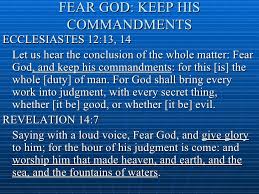
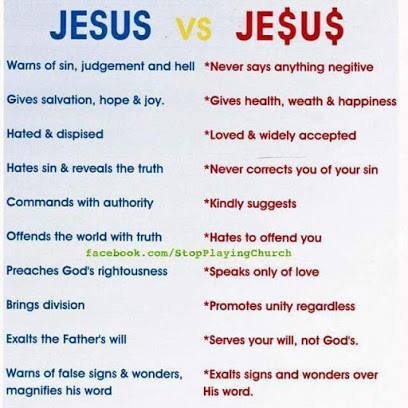
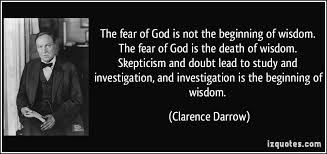
 (Psalms 36:1-4) “The transgression of the wicked saith within my heart, that there is no fear of God before his eyes. {2} For he flattereth himself in his own eyes, until his iniquity be found to be hateful. {3} The words of his mouth are iniquity and deceit: he hath left off to be wise, and to do good. {4} He deviseth mischief upon his bed; he setteth himself in a way that is not good; he abhorreth not evil.”
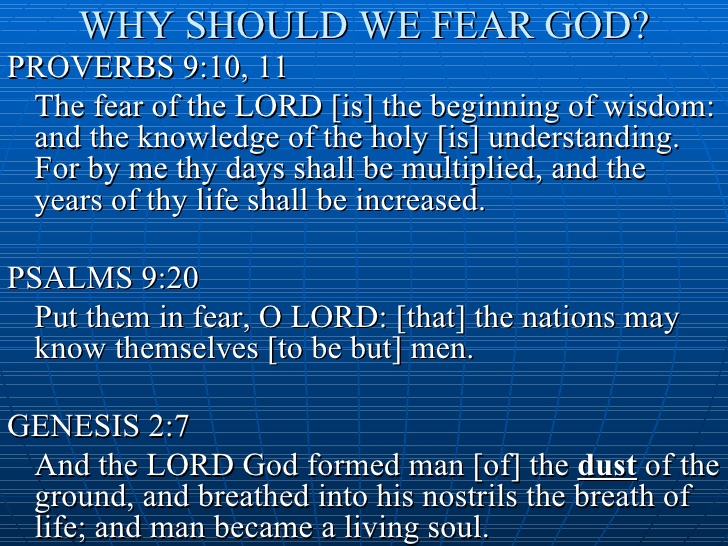 (Psalms 111:6-10) “He hath shewed his people the power of his works, that he may give them the heritage of the heathen. {7} The works of his hands are verity and judgment; all his commandments are sure. {8} They stand fast for ever and ever, and are done in truth and uprightness. {9} He sent redemption unto his people: he hath commanded his covenant for ever: holy and reverend is his name. {10} The fear of the LORD is the beginning of wisdom: a good understanding have all they that do his commandments: his praise endureth for ever.”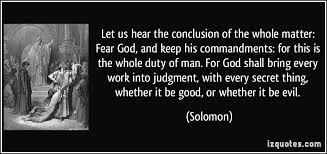

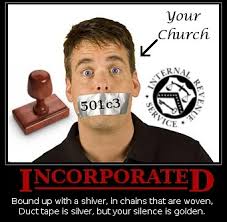
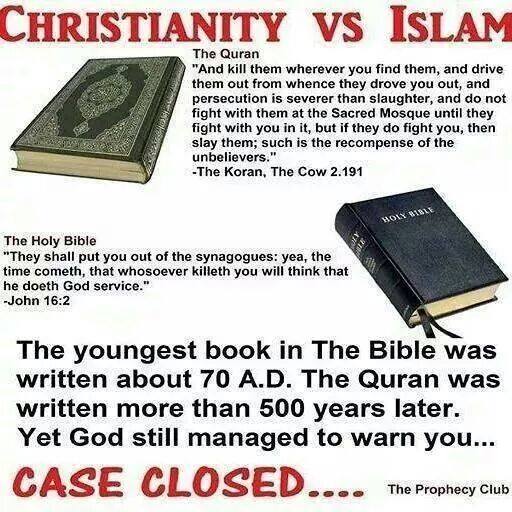

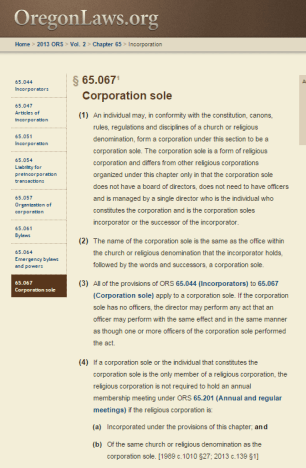
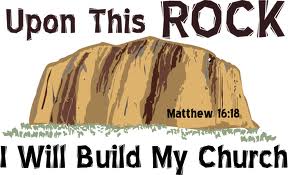

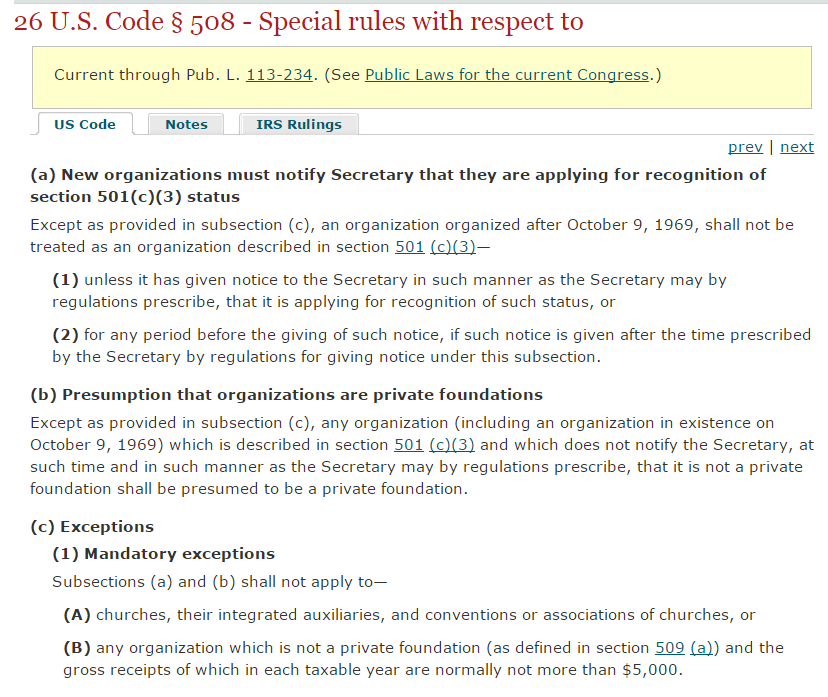

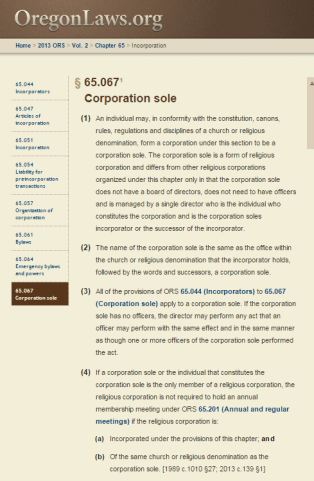


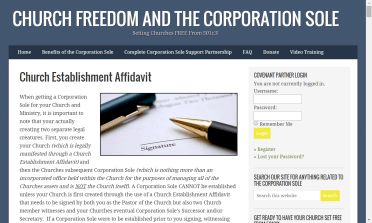


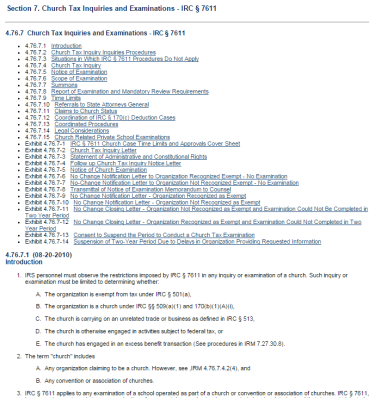
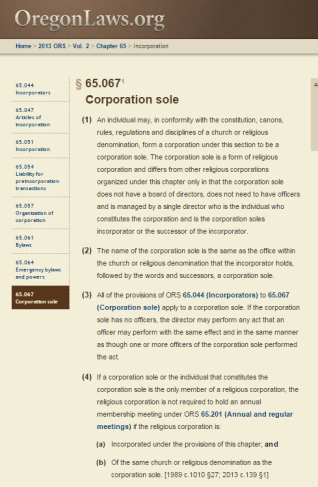

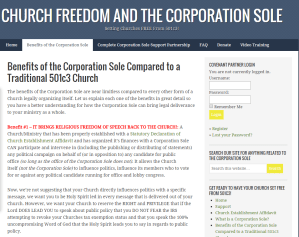


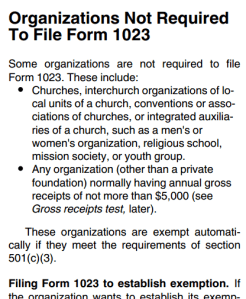
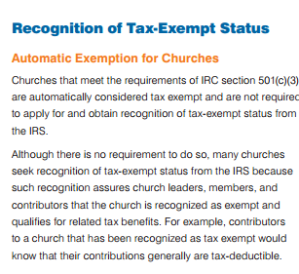
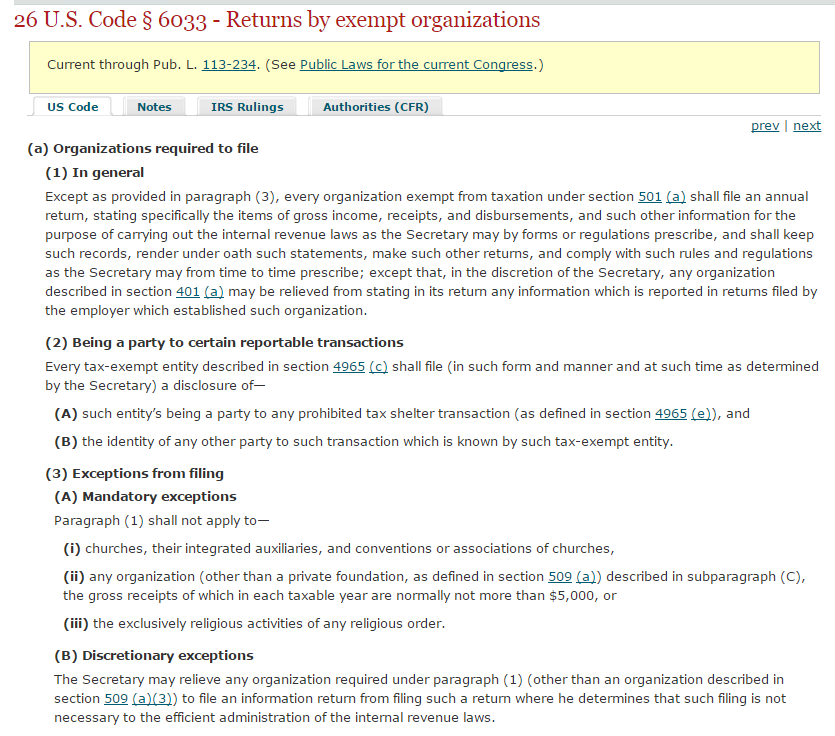
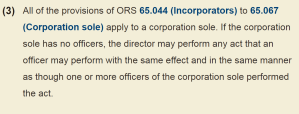
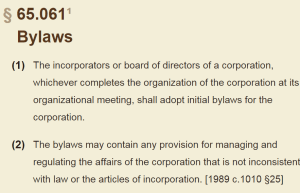

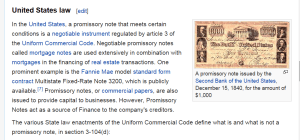

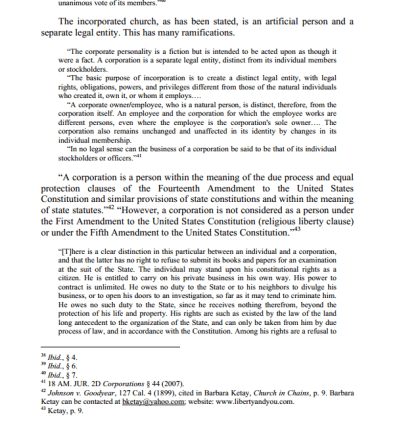

 Simply Church