All posts by Jerald Finney

Jerald Finney was the lead counsel for the Biblical Law Center ("BLC") from May, 2005 until 2011. The BLC helps churches who desire to organize according to New Testament principles. In 2016, he again worked with the BLC and still does, but he now heads up the Churches under Christ Ministry which is under the authority of Charity Baptist Tabernacle of Amarillo TX. Finney is a licensed attorney who can be reached at 512-785-8445 jerald.finney@sbcglobal.net. Over the last few years he has lectured and preached on the issues concerning government, church, and separation of church and state. God called Finney, a Christian and fundamental Baptist since his salvation, to enter the University of Texas School of Law in 1990 at the age of 43 to stand in the gap concerning legal issues facing Christians. Since being saved, he has been a faithful and active member of a local fundamental, Bible-believing Baptist church. He received his JD degree in 1993 and has followed the Lord in the practice of law since that time. Finney received his law license in November 1993 and began practicing law in January, 1994. All along he was seeking the Lord’s direction. The Lord initially led Finney to practice criminal law. He knew that not many, if any, of the Christian law firms dealt with or specialized in criminal law, and that some Christians were being charged with crimes for their Christian behavior and for taking a stand for God’s principles. The Lord confirmed Finney's choice. Very soon after he started practicing, he helped an Eastern Orthodox priest with a criminal charge. He was charged under a criminal statute for trying to expose the promotion of sodomy and other sins within a Catholic Church. God gave the victory in that case. Then Steve, a Christian who counseled outside abortion clinics, called Finney. He was charged with a crime under the Austin, Texas Sign Ordinance for his activities outside an abortion clinic. Being a new lawyer, Finney called the Rutherford Institute. They asked him to send them a summary of the facts and a copy of the Sign Ordinance. Then they told him that the case could not be won and that they would not help. Steve lost at trial, but God gave the victory on appeal. The Austin Police Department immediately cited Steve for violation of the state sign ordinance. The Lord gave the victory at trial. Finney's first felony trial came about a year and six months after he started practicing law. A single Christian mother was charged with third degree felony injury to a child for spanking her six year old son. She left some prominent stripes across his rear end and also a stripe across his face when he turned suddenly during the spanking. The Lord gave the victory at trial. At the same time, Finney was also representing another Christian married lady who was charged with the same crime for spanking her little girl with a switch. On the date the trial in that case was to begin, the prosecutor, with prompting by the judge, lowered the offer to deferred adjudication probation of short duration on a misdemeanor charge with very few conditions on the probation. In a deferred adjudication in Texas, there is never a judgment of guilt if the probationer successfully completes the term of the probation, (and, with successful completion of the probation, the probationer can now file a Motion for Nondisclosure which, if granted, requires the file to be sealed so that the general public has no access to it). The mother decided to take the offer. The Lord has also allowed Finney to help Christian parents in numerous situations involving Child Protective Services (“CPS”) infringement into parental rights. God has given the victory in all those situations. The Lord has also used Finney to intervene in numerous situations where government officials or private companies tried to deny certain Christians their rights to do door-to-door evangelization, preach on the street, hand out gospel literature in the public forum, and pass out gospel tracts and communicate the gospel at their place of employment. Finney has also fought other legal spiritual battles including a criminal case in San Antonio. A peaceful pro-life advocate was arrested and charged with criminal trespass for handing pro-life literature giving information about the development of the unborn baby, places to go for help, and other information to women entering an abortion clinic. All the above-mentioned cases as well as others not mentioned were handled free of charge (except the last spanking case for which Finney received $750). In 2005 Finney became lead counsel for the Biblical Law Center. Since his early Christian life, he has considered the issue of separation of church and state as taught in the Bible to be one of the primary issues facing New Testament churches today. He believes, based upon what the Bible teaches, that operating as a corporation (sole or aggregate), unincorporated association, or any other type of legal entity and/or getting a tax exempt status from the federal government at the very least puts the church under the headship of both the Lord and the state, and may even take the church from under the headship of Christ and put the church under the headship of the state. He believes that taking scriptures out of context and applying human reasoning contrary to biblical teaching (such as “Obey every ordinance of man,” or “We should be good stewards and incorporation is good stewardship”) in order to justify unbiblical marriage with the state causes our Lord much grief. Once he took on the position as counsel for the BLC, it was necessary to do an in-depth study of the issue of separation of church and state. He began with the Bible. He initially read through the Bible at least five times (and many more times since then) primarily seeking the answer to the question, “Does the Bible have anything to say about this issue?” He was amazed at what He learned. The Bible gives God’s principles concerning separation of church and state, the purpose of a church, the purpose of the civil government, the headship of church, the headship of civil government, the principles by which each is to be guided, and much more concerning these two God ordained institutions. He continued to read the Bible daily seeking insights into these and other issues. He also began to read other books. he had already read starting shortly after being saved, books and other information by Christian authors. For example, he had read, among other works, A Christian Manifesto[1], The Light and the Glory,[2] From Sea to Shining Sea,[3] The Myth of Separation and some other works by David Barton, [4]Rewriting America’s History,[5] and America’s God and Country.[6] These resources inspired, influenced and guided him and millions of other Christians, gave them philosophical and historical underpinning, and led them into battlefields such as politics, law, and education armed with what they learned from those resources. Sometime in 2006 he began to realize that some of the books by Christian authors which he had come to depend upon were misleading, at the very least. Other books revealed to him that some of the above mentioned books had misinformed and misled sincere Christians by revising and/or misrepresenting the true history of separation of church and state in America. In 2006, he read One Nation Under Law[7] which cites a wealth of resources for one seeking to understand the history of separation of church and state in the United States and of the First Amendment to the United States Constitution.[8] Reading One Nation Under Law, some of the books it cited, and some other books was a launching pad into the universe of historical information which he never dreamed existed. He had expected to be misled in the secular law school he attended. He was amazed that he had been misled by Christian brothers. I asked myself, “How could Peter Marshall and others have missed this vital information?” At an Unregistered Baptist Fellowship conference in Indianapolis, Indiana, James R. Beller, a Baptist historian, gave a PowerPoint presentation which gave him the answer to this question. Finney bought two of Beller's books and read them. Those books filled in the details not mentioned in Pastor Beller’s concise PowerPoint presentation. Since that time, God has led Finney into an in depth study of the issues of government, church, and separation of church and state. God Betrayed/Separation of Church and State: The Biblical Principles and the American Application and the other books he has written and listed on this website were written as a result of those studies. God Betrayed is not a rehash of the same information that has been circulated in the Fundamental Baptist and Christian community through sermons, books, seminars, etc. since at least 1982, the year Finney was saved. God Betrayed and Finney's other books reveal facts and information that must be understood in order for a pastor and other Christians to begin to successfully (in God's eyes) fight the spiritual warfare we are engaged in according to knowledge. Finney believes that the lack of attention to the biblical doctrines concerning government, church (which is likened to the wife and bride of Christ), and separation of church and state, has had dire consequences for individuals, families, churches, and America. Unless pastors educate themselves on these doctrines and their application in America, the rapid downhill slide will continue at an accelerating pace. [1] Francis A. Schaeffer, A Christian Manifesto, (Westchester, Illinois: Crossway Books, 1981). [2] Peter Marshall and David Manuel, The Light and the Glory, (Old Tappan, New Jersey: Fleming H. Revell Company, 1977). [3] Peter Marshall and David Manuel, From Sea to Shining Sea (Old Tappan, New Jersey: Fleming H. Revell Company, 1986). [4] David Barton, The Myth of Separation, What is the Correct relationship between Church and State? (Aledo, Texas: Wallbuilder Press, 1992). [5] Catherine Millard, Rewriting America’s History (Camp Hill, Pennsylvania: Horizon House Publishers, 1991). [6] William J. Federer, America’s God and Country, Encyclopedia of Quotations (Coppell, Texas: FAME Publishing, Inc., 1994). [7] Mark Douglas McGarvie, One Nation Under Law: America’s Early National Struggles to Separate Church and State (DeKalb, Illinois: Northern Illinois University Press, 2005). [8] The First Amendment to the United States Constitution states: “Congress shall make no law respecting an establishment of religion, or prohibiting the free exercise thereof; or abridging the freedom of speech, or of the press; or the right of the people peaceably to assemble, and to petition the Government for a redress of grievances.” The religion clause, properly interpreted, as is shown in God Betrayed, is a correct application of the biblical principle of separation of church and state.

“How God Trains His Men,” “The Sin of Statistics in a Church,” “Who I Am,” and Other Important Lessons for the Believer

How God Trains His Men
The Sin of Statistics in a Church
What am I? [I am a dry Brook, an empty flower barrel, a dead body]
A teaching on 1 Kings 17.2-24 by Dr. J. Vernon McGee

God had to train Elijah. God has always had the method of training the men he uses bydriedupbrookelijah taking them to the desert. You will recall, that’s where he trained Moses. He got Abraham out of Ur of the Chaldeas, put him up in that land that at that time was very rugged terrain in the hill country. We find that God used the method for Moses, putting him out in the desert. He did it for David. He’s now doing it for Elijah. He did it for John the Baptist also. Paul the Apostle was sent out into the desert of Arabia for at least two years. So this is God’s method for training his men. We find that here He is going to take this man Elijah out and teach him several things he needed to learn.

Click here to hear the whole short teaching, some of which is transcribed below.

Click here to hear the whole broadcast from which the above was excerpted.

“And the word of the LORD came unto him, saying, Get thee hence, and turn thee eastward, and hide thyself by the brook Cherith, that is before Jordan” (1 K. 17.2-3).

God was telling Elijah to get as far out in the country as he could. So he went out into the desert and came to a little stream.

“And it shall be, that thou shalt drink of the brook; and I have commanded the ravens to feed thee there” (1 K. 17.4).

God used two methods of caring for Elijah out in the desert. One was the brook which was a natural means. He was to drink the water. The other was a supernatural means—the ravens were to come and feed him. Well, Elijah stayed there for awhile, and then the brook began to dry up.

“And it came to pass after a while, that the brook dried up, because there had been no rain in the land” (1 K. 17.7).

The brook is drying up. Here is this man out in the wilderness, and he goes to the brook every morning and notices that it is going down a little bit more each day. All he had to do was put a peg in the water to note how much it went down each day. Then he could figure out how many days it would be before he starved to death of thirst. Having the mathematical measurement, anyone with common sense would know that on a certain day the end would come.

This is the sin of statistics. Today the condition of a church is often determined by statistics. If you go to a church meeting and observe that the offering has been good, new members have been received, and there is increased attendance, the church is considered a howling success—and that may not be the true picture.

I once heard the story of a preacher who got up at a church business meeting and said, “We are going to call on the treasurer to give a report so that we can know the status quo of our church.” One of the members got up and said, “Mr. Preacher, we don’t know what status quo means.” The preacher replied, “The ‘status quo’ means the mess we are in.” Interestingly enough, the true status quo of many churches and other organizations often reveals the mess they are in, although the statistics may look healthy.

Now Elijah could have figured very closely the time he was going to die—he could have done it mathematically.  But, you see, the cold figures of mathematics do not take into account the spiritual fire that is there. You cannot put the condition of the church in the form of a bank statement. You cannot measure it on a computer. Even a revival is not determined by numbers. When Elijah looked at that little brook which was getting smaller and smaller, he learned a spiritual lesson. He saw that his life was a dried up brook. He was nothing—he was just a brook, a channel, through which living water could flow. The Lord Jesus Christ says, “Whosoever drinketh of this water shall thirst again: but whosoever drinketh of the water that I shall give him shall be in him a well of water springing up into everlasting life” (Jn. 4.13, 14). Sometimes we sing the song, “Make Me A Blessing,” and I think that half the folk don’t know the meaning of the words. Why, it means that you are an empty brook and that you do not have any water of life. It is only as the water of life, the Word of God, flows through you that you can be a channel of blessing. Elijah had to learn that “God hath chosen the foolish things of the world to confound the wise; and God hath chosen the weak things of the world to confound the mighty” (1 Co. 1.27). God was telling Elijah, “You are not a big, strong, rugged individual. You are no stronger or better than that dried-up brook. You will have no strength until the water of life flows through you.”

It is said of Hudson Taylor that when he prepared young missionaries for service in his mission, he insisted, “Remember that when you come out here you are nothing. It is only what God can and will do through you that will be worth anything.” One young missionary replied, “It is hard for me to believe that I am just nothing.” And Hudson Taylor said to him, “Take it by faith because it is true—you are nothing.” You and I are just dried-up brooks unless the Word of God is flowing through us.

[Then God sent Elijah to a widow woman who was to take care of him. 1 K. 17.8-12. I quit transcribing, but you can listen to the whole teaching on the audio linked to above. It teaches you and I that we are nothing but empty flower barrels, that we have nothing to offer to God. We are nothing until the water of life and the bread of life have been put into us… and some other very important lessons.]

Romans 13 and Related Verses

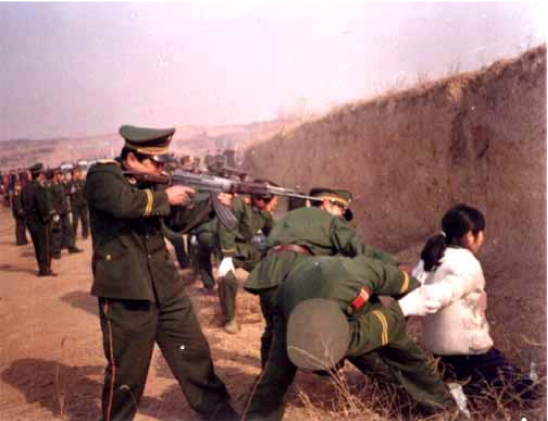
Shortly after this picture was taken, the soldier put a bullet through the head of this teenage girl. Her crime? Proseletyzing during the Bejing Olympics.

Jerald Finney
Copyright © February 7, 2017

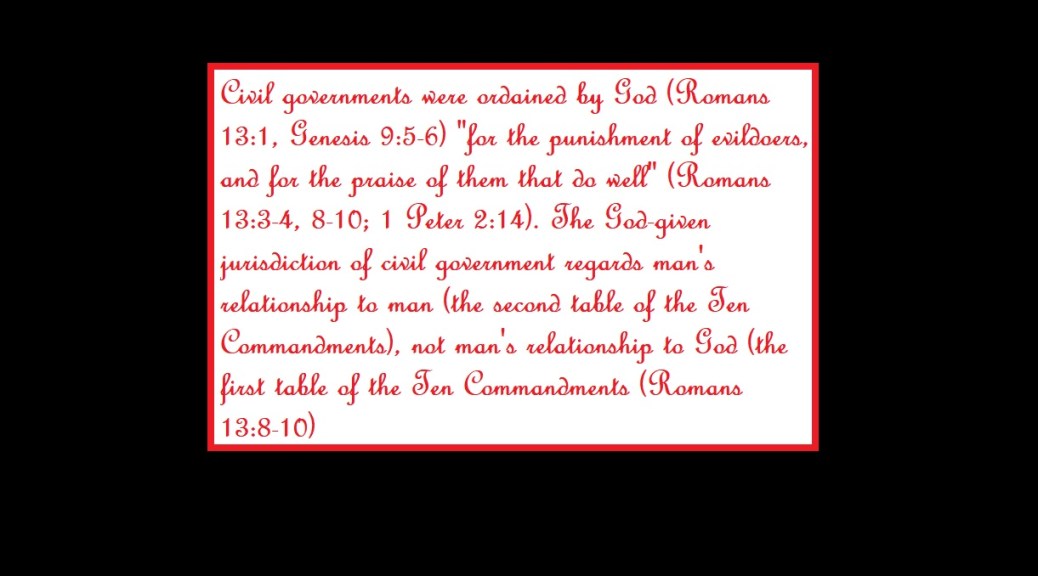
Romans 13:3-4: “For rulers are not a terror to good works, but to the evil. Wilt thou then not be afraid of the power? do that which is good, and thou shalt have praise of the same: For he is the minister of God to thee for good. But if thou do that which is evil, be afraid; for he beareth not the sword in vain: for he is the minister of God, a revenger to execute wrath upon him that doeth evil.” In these verses, God defines the jurisdiction of civil government. After all, God is the highest power. God, the highest power, ordained the powers that be (the lower powers) (Romans 13:1). Can the laws of a lower power take precedence over the laws of a power above? When one is faced with obeying a lower power or a higher power, whom is one to obey? Is one to obey the lower power when the laws of the lower power are contrary to the laws of the higher power? Whom is one to fear more, according to the Word of God?   “And fear not them which kill the body, but are not able to kill the soul: but rather fear him which is able to destroy both soul and body in hell” (Matthew 10:28). Romans 13:8-14 lays out the responsibility of man under lawful civil government, to keep the last table of the Ten Commandments which deal with man’s relationship to man.

Other resources which cover the Romans 13 issue include:

So, you see, Romans 13:1a, when correctly interpreted within the context of the entirety of Romans 13, and within the context of the entirety of Scripture, does not teach unlimited obedience to unlawful civil government. In other words, Romans 13.1a, when correctly considered, is consistent with Romans 13 and with the teachings of the entire Bible. God’s Word is never inconsistent. These matters are addressed in much more detail in the materials below.

HebrewMidwives

Exodus 1:15-17: “And the king of Egypt spake to the Hebrew midwives, of which the name of the one was Shiphrah, and the name of the other Puah: And he said, When ye do the office of a midwife to the Hebrew women, and see them upon the stools; if it be a son, then ye shall kill him: but if it be a daughter, then she shall live. But the midwives feared God, and did not as the king of Egypt commanded them, but saved the men children alive.”

Exodus 1:20-21: “Therefore God dealt well with the midwives: and the people multiplied, and waxed very mighty. And it came to pass, because the midwives feared God, that he made them houses.”

[Continued below at end of page]

The material on this page is also on the “Books by Jerald Finney” page. This page makes it more convenient for one who specifically wants to go to teachings on Romans 13 and related verses.

“Iron Sharpeneth Iron” TV interview of Pastor Jason Cooley and Christian Attorney Jerald Finney.
Host is Pastor Brandon Teague of Old Paths Baptist Church in Paris, Texas.

Romans 13 Do We Obey Government over God?
The Biblical Interpretation

Other teachings by Jerald Finney

March 24, 2013: Romans 13 – What every 501c3 Pastor and Church Member Needs to Hear (Youtube message preached at Gateway Anabaptist Church.)

Relevant sermons by Pastor Jason Cooley follow. Left click to listen to sermon. Right click link, then left click “Save link as…” to download.

Article: “American Abuse of Romans 12.1-2 and Related Verses.” This is an audio teaching series by Jerald Finney.

Book: Render unto God the Things that Are His: A Systematic Study of Romans 13 and Related Verses:

2nd Revised Romans 13 COVER

  1. Introduction to “Render unto God the Things that Are His: A Systematic Study of Romans 13 and Related Verses” (Chapter 1 of Render Unto God the Things that Are His: A Systematic Study of Romans 13 and Related Verses. This material was also covered in less detail in God Betrayed, Section III, Chapters 5, 6.)
  2. Doth not your Master pay tribute? Matthew 17.24-27 (Chapter 2 of Render Unto God the Things that Are His)
  3. Render unto Caesar…? Luke 20.25, Matthey 22.21, Mark 22.17 (Chapter 3 of Render Unto God the Things that Are His)
  4. Let every soul be subject unto the higher powers? Romans 13 (Chapter 4 of Render Unto God the Things that Are His)
  5. Submit to every ordinance of man? 1 Peter 2.13 (Chapter 5 of Render Unto God the Things that Are His)
  6. Pray for all rulers? 1 Timothy 2.1-6 (Chapter 6 of Render Unto God the Things that Are His)
  7. Conclusion to “Render unto God the Things that Are His: A Systematic Study of Romans 13 and Related Verses” (Chapter 7 of Render Unto God the Things that Are His)

The above online version of the book Render unto God the Things that Are His: A Systematic Study of Romans 13 and Related Verses is also on “The Biblical Doctrine of Separation of Church and State” page of this blog.

Click the following link to view the PDF of the book: Render unto God the Things that Are His: A Systematic Study of Romans 13 and Related Verses.

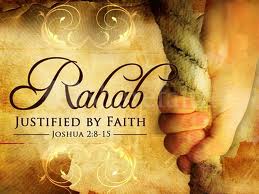
RahabJoshua 2:3-4: “And the king of Jericho sent unto Rahab, saying, Bring forth the men that are come to thee, which are entered into thine house: for they be come to search out all the country. And the woman took the two men, and hid them, and said thus, There came men unto me, but I wist not whence they were:”

Joshua 2:8-15  “And before they were laid down, she came up unto them upon the roof; And she said unto the men, I know that the LORD hath given you the land, and that your terror is fallen upon us, and that all the inhabitants of the land faint because of you.  For we have heard how the LORD dried up the water of the Red sea for you, when ye came out of Egypt; and what ye did unto the two kings of the Amorites, that were on the other side Jordan, Sihon and Og, whom ye utterly destroyed. And as soon as we had heard these things, our hearts did melt, neither did there remain any more courage in any man, because of you: for the LORD your God, he is God in heaven above, and in earth beneath.  Now therefore, I pray you, swear unto me by the LORD, since I have shewed you kindness, that ye will also shew kindness unto my father’s house, and give me a true token: And that ye will save alive my father, and my mother, and my brethren, and my sisters, and all that they have, and deliver our lives from death. And the men answered her, Our life for yours, if ye utter not this our business. And it shall be, when the LORD hath given us the land, that we will deal kindly and truly with thee.  Then she let them down by a cord through the window: for her house was upon the town wall, and she dwelt upon the wall.”

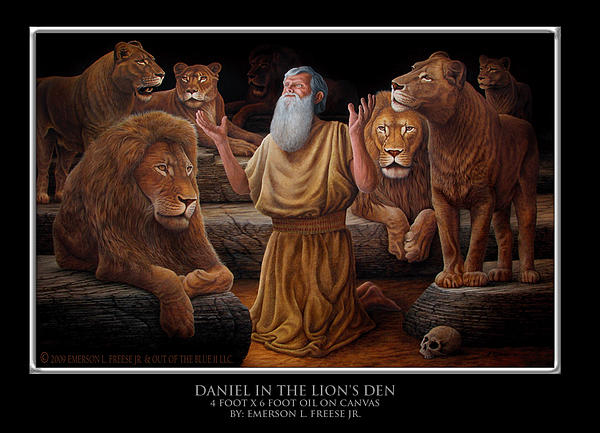
Daniel 6:10-11: “Now when Daniel knew that the writing was signed, he went into his house; and his windows being open inRomans13DanielInLionsDen his chamber toward Jerusalem, he kneeled upon his knees three times a day, and prayed, and gave thanks before his God, as he did aforetime. Then these men assembled, and found Daniel praying and making supplication before his God.”

Daniel 6:16: “Then the king commanded, and they brought Daniel, and cast him into the den of lions. Now the king spake and said unto Daniel, Thy God whom thou servest continually, he will deliver thee.”

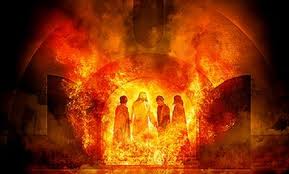
ShadrachMeshachAbednegoDaniel 3:8-11: “Wherefore at that time certain Chaldeans came near, and accused the Jews. They spake and said to the king Nebuchadnezzar, O king, live for ever. Thou, O king, hast made a decree, that every man that shall hear the sound of the cornet, flute, harp, sackbut, psaltery, and dulcimer, and all kinds of musick, shall fall down and worship the golden image:  And whoso falleth not down and worshippeth, that he should be cast into the midst of a burning fiery furnace.”

Daniel 3:16-18: “Shadrach, Meshach, and Abednego, answered and said to the king, O Nebuchadnezzar, we are not careful to answer thee in this matter. If it be so, our God whom we serve is able to deliver us from the burning fiery furnace, and he will deliver us out of thine hand, O king. But if not, be it known unto thee, O king, that we will not serve thy gods, nor worship the golden image which thou hast set up.”

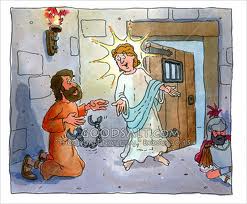
Acts 5:17-20: “Then the high priest rose up, and all they that were with him, (which is the sect of the Sadducees,) and wereRomans13Peter filled with indignation,  And laid their hands on the apostles, and put them in the common prison. But the angel of the Lord by night opened the prison doors, and brought them forth, and said, Go, stand and speak in the temple to the people all the words of this life.”

Acts 4:19-21: “But Peter and John answered and said unto them, Whether it be right in the sight of God to hearken unto you more than unto God, judge ye. For we cannot but speak the things which we have seen and heard. So when they had further threatened them, they let them go, finding nothing how they might punish them, because of the people: for all men glorified God for that which was done.”

Acts 4:23-31: “And being let go, they went to their own company, and reported all that the chief priests and elders had said unto them. And when they heard that, they lifted up their voice to God with one accord, and said, Lord, thou art God, which hast made heaven, and earth, and the sea, and all that in them is: Who by the mouth of thy servant David hast said, Why did the heathen rage, and the people imagine vain things? The kings of the earth stood up, and the rulers were gathered together against the Lord, and against his Christ. For of a truth against thy holy child Jesus, whom thou hast anointed, both Herod, and Pontius Pilate, with the Gentiles, and the people of Israel, were gathered together, For to do whatsoever thy hand and thy counsel determined before to be done. And now, Lord, behold their threatenings: and grant unto thy servants, that with all boldness they may speak thy word, By stretching forth thine hand to heal; and that signs and wonders may be done by the name of thy holy child Jesus. And when they had prayed, the place was shaken where they were assembled together; and they were all filled with the Holy Ghost, and they spake the word of God with boldness.”

Acts 5:27-29: And when they had brought them, they set them before the council: and the high priest asked them, Saying, Did not we straitly command you that ye should not teach in this name? and, behold, ye have filled Jerusalem with your doctrine, and intend to bring this man’s blood upon us. Then Peter and the other apostles answered and said, We ought to obey God rather than men.”

The above is only a small sampling from the Bible. See Render unto God the Things that Are His: A Systematic Study of Romans 13 and Related Verses (reproduced above) for comprehensive biblical coverage.

Information on Books and other writings by Jerald Finney

All books, except An Abridged History of the First Amendment which is available only in online form, by Jerald Finney are available free in both PDF and online form. See, Order information for books by Jerald Finney.

God Betrayed/Separation of Church and State: The Biblical Principles and the American Application (Link to preview of God Betrayed)(PDF; online form) may be ordered from Amazon by clicking the following link: God Betrayed on Amazon.com or from Barnes and Nobel by clicking the following link: God Betrayed on Barnes and Noble. All books by Jerald Finney as well as many of the books he has referenced and read may also be ordered by left clicking Order Information for Books by Jerald Finney or directly from Amazon by going to the following links:

Companion website:Church and State Law

When Did the Church Become a Business?” a beautiful song by Jason Bellard

Click here to go to the article
Click here to go to the article “Is Separation of Church and State Found in the Constitution?”

Self-exam questions: Conclusion to the Biblical Doctrine of “Church”

Give as many Bible verses (where appropriate), comments, and explanations as you can to support your answers.

Click here to go to “Conclusion to the biblical doctrine of ‘Church’”

1. Who ordained the church?

2. Who ordained civil government?

3. What did God give to churches, individuals, families and civil governments?

4. What can churches, individuals, families and civil governments learn from God’s word?

5. Who has misled most churches and other governments.

6. Who have followed Satan’s principles?

7. What has Satan used to mislead churches, individuals, families and civil governments?

8. Who has Satan used to mislead churches, individuals, families and civil governments?

9. When did apostasy creep in to the church?

10. Apostasy has ___________________ in America as the rapture and the tribulation approaches.

11. Many or most people in American churches today are materially _______, but spiritually _________.

12. ________ was not deceived, but the _____________ being deceived was in the ________________ (1 Ti. 2.14, Ro. 5.14, Ge. 3.1-6).

13. Christ was not deceived, but His __________ was. “As the first ________ had to give up a perfect existence in order to be with his __________, so the last Adam, ____________ (1 Co. 15.22, 45), stepped down from heaven to save his _____________. While the first ______ ‘blew it,’ the last ______ would make everything right! (Ro. 5:12-21) Charles Wesley set this doctrine to music with the words, ‘Second _______ from above, reinstate us with thy love.’ … “The all-important verse that connects this typology to the present ______________ apostasy is Ec. 1:9a: ‘The thing that ________ been, it is that which __________ be; and that which is _______is that which shall be _______….’ Thus, the history of mankind will undoubtedly end the same way it began—with a _________ being deceived!”

14. “For God so loved the ______________, that ____________________________________________________________________________

______________________________. For God sent not his Son into the world to ___________ the world; but that the world through him ________ ____ ________. He that believeth on him is not _____________: but he that believeth not is ____________ already, because he hath not believed in the name of the only begotten Son of God. And this is the ___________________, that _________ is come into the world, and men loved ___________ rather than _________, because their deeds were _________” (Jn. 3.16-19).

15. “[Jesus], being in the form of ______, thought it not robbery to be equal with ______: But made himself of no ______________, and took upon him the form of a ___________, and was made in the likeness of ______: And being found in fashion as a _______, he ___________ himself, and became ____________ unto ________, even the ________ of the cross” (Ph. 2.6-8).

16. Regardless of this inevitable apostasy and the events that are to follow, for whom are things looking good?

17. Who has the ultimate hope?

18. Who will reign with the Lord?

18. The Holy Spirit is now calling out, not the __________, but the co-_______ and co-__________ of the kingdom.

19. “It is a faithful saying: For if we be ________ with him, we shall also _______ with him: If we ________, we shall also ________ with him: if we ______ him, he also will ______ us” (2 Ti. 2.11-12).

20. “And hath made us _______ and __________ unto God and his Father; to him be ________ and ____________ for ever and ever. Amen” (Re. 1.6).

21. “To him that _______________ will I grant to sit with me in my _____________” (Re. 3.21).

22. “And hast made us unto our God _________ and __________: and we shall ___________ on the earth” (Re. 5.10).

23. “For ye have not received the spirit of ___________ again to fear; but ye have received the Spirit of ___________, whereby we cry, ______, ___________.’ The Spirit itself beareth ____________ with our spirit, that we are the ___________ of God: And if ___________, then ______; ______ of God, and joint ______ with Christ; if so be that we _________ with him, that we may be also ___________ together. For I reckon that the ___________ of this present time are not worthy to be compared with the __________ which shall be revealed in us” (Ro. 8.15-18).

24. “Do ye not know that the __________ shall ________ the world? and if the world shall be ________ by you, are ye unworthy to _______ the smallest matters? Know ye not that we shall __________ angels? how much more things that pertain to this life” (1 Co. 6.2-3)?

Self-exam Questions: The Coming Universal Church Will Reign with the Lord

Click here to to to “The Coming Universal Church Will Reign With the Lord

Give as many Bible verses (where appropriate), comments, and explanations as you can to support your answers.

1. What did the so-called universal churches do to those who refused to bow down to the religion-state?

2. What has been the reaction of true believers in Christ when martyred?

3. When will the universal invisible church be established?

4. What true universal church has ever existed on earth?

5. Unbiblical “ universal” __________ _______________ were organized by the _____ of this world: first the ___________ “church,” then the ___________.“

6. Why do some believers join or continue alongside the lost members of _____________ ____________________.

7. As to church membership, what is God’s desire for all believers?

8. Only in churches which order themselves according to the principles of the New Testament regarding the local church is the service of God in __________ _______; and properly _________ New Testament churches have ___________________ existed since Jesus Christ ordained the institution of the church.

9. What did Jesus say to Peter as recorded in Matthew 16.18?

10. True Christians have the ultimate hope: they will _______ with the ______.

11. That true Christians have the ultimate hope should be cause for what (two things)?

12. The ______ ________ is now calling out, not the subjects, but the ___-______ and __-______ of the kingdom:

  • 2 Ti. 2.11-12: “It is a faithful saying: For if we be ______ with him, we shall also ______ with him: If we _________, we shall also _______ with him: if we ______ him, he also will _______ us;”
  • Re. 1.6: “And hath made us _______ and _________ unto God and his Father; to him be ________ and ___________ for ever and ever. Amen;”
  • Re. 3.21: “To him that _____________ will I grant to sit with me in my throne;”
  • Re. 5.10: “And hast made us unto our God ________ and __________: and we shall _______ on the earth;”
  • Ro. 8.15-18: “For ye have not received the spirit of _________ again to _______; but ye have received the Spirit of _____________, whereby we cry, Abba, _________.’ The Spirit itself beareth witness with our _________, that we are the __________ of God: And if ___________, then ______; ______ of God, and joint ______ with Christ; if so be that we ________ with him, that we may be also ______________ together. For I reckon that the ______________ of this present time are not worthy to be compared with the ________ which shall be revealed in us;”
  • 1 Co. 6.2-3: “Do ye not know that the ___________ shall judge the world? and if the world shall be judged by you, are ye unworthy to judge the smallest matters? Know ye not that we shall judge _________? how much more things that _________ to this ______?”

13. “Blessed are they which are ______________ for ______________ sake: for theirs is the __________ of _________. Blessed are ye, when men shall _________ you, and _____________ you, and shall say all manner of ______ against you ________, for my sake.  __________, and be ___________ ______: for great is your ________ in heaven: for so _____________ they the ___________ which were before you” (Mt. 5.10-12).

14. “But ye are come unto mount ________, and unto the _______ of the living ______, the ______________ _____________, and to an ________________ company of angels, To the general _____________ and _________ of the firstborn, which are written in heaven, and to ______ the Judge of all, and to the spirits of just _______ made perfect,  And to ________ the mediator of the new ___________, and to the blood of ____________, that speaketh better things than that of _________” (He. 12:22-24).

Self-exam Questions: Apostasy at the End of the Church Age

Give as many Bible verses (where appropriate), comments, and explanations as you can to support your answers.

Click here to go to “Apostasy at the end of the church age

  1. To which church was the Lord speaking in Re. 3.15-19 when he says:

“I know thy works, that thou art neither cold nor hot: I would thou wert cold or hot. So then because thou art lukewarm, and neither cold nor hot, I will spue thee out of my mouth. Because thou sayest, I am rich, and increased with goods, and have need of nothing; and knowest not that thou art wretched, and miserable, and poor, and blind, and naked: I counsel thee to buy of me gold tried in the fire, that thou mayest be rich; and white raiment, that thou mayest be clothed, and that the shame of thy nakedness do not appear; and anoint thine eyes with eyesalve, that thou mayest see. As many as I love, I rebuke and chasten: be zealous therefore, and repent.”

  1. The Bible shows that at the end of the church age, the Lord will be outside the ______________ church (Re. 3.20). Nonetheless, He will still be there for the _________________, just as He, while on earth as the second _________, still appealed to the _____________ after the nation _____________ rejected His rule over the _____________: “If any man will hear ____ voice, _____ will come in to him, and will sup with him, and he with _____.”
  2. The final result of the apostasy will be the great ecclesiastical _________ spoken of in Revelation ____ and ____. In Revelation 17 is mystery __________, the apostate _______________. Dr. McGee states:
  3. According to Dr. J. Vernon McGee, which church will become the apostate church of the great tribulation?
  4. Who are the apostates of the great systems of the world?
  5. What does the Bible call the last great religious organization that will call itself a church?
  6. _______ _____________ will not go through the God’s wrath. They will be ______________ out before the __________________ of God begins.
  7. Is tribulation the wrath of God?
  8. _____________ _________________ who are not _______ will be left here on this earth when authentic Christians are raptured.
  9. Some __________ are spiritual harlots. The last so-called church is a ___________-_____________ system, which is hated by the ____________ beast. The _________ will destroy the ___________ in order to set up his own ______________.


  1. True believers will be ______________ (Mt. 13.36-43; Ro. 8.18-23). The Lord will ___________ the dead in Christ: “For the Lord himself shall descend from heaven with a shout, with the voice of the archangel, and with the trump of God: and the _______ in Christ shall rise _________: Then we which are _________ and remain shall be caught up together with them in the __________, to meet the Lord in the air: and so shall we ever be with the Lord” (1 Th. 4.16-17).
  2. _______ ____________, according to many Bible students and scholars, will go through the great tribulation, but will not experience the __________ of God which follows.
  3. The alleged “______ church” doctrine was used to justify the Protestant and Catholic doctrines of universal visible and universal invisible church. This in turn was a basis for the doctrine of __________ of __________ and state, the doctrine of _____________, and will be used by the great spiritual ____________ to establish spiritual ____________ in the end times. Of course, this was never an historical ___________ doctrine because it is contrary to the teaching of the __________.
  4. Most ______________ are nothing more than Protestants and many fall so far that they are nothing more than “___________ in sheep’s clothing.”
  5. _________________ Babylon (apostate Christendom, the harlot whom many biblical scholars logically conclude will be headed up under the __________ and which will at that time condone every iniquity of the rich and will be corrupted to the core by commercialism, wealth, and luxury; the “universal church on earth”) will be destroyed by _________________ Babylon, that is by the nations; and ______________ Babylon, the nations, will be crushed by ___________ when they come against ___________ at the end of the tribulation period (See Re. 17.15-18). All this will happen because men choose to succumb to _________’s principles in order to satisfy their _________.
  6. Jesus proclaimed, “And I say also unto thee, That thou art ________, and upon this ______ I will build _____ church; and the gates of ________ shall not prevail against it.” Of what was Jesus speaking when he made that statement?
  7. On earth before the rapture, of what is the institution of the church to be made up of?
  8. Who laid out the doctrine of the church? Where is the doctrine of the church recorded?
  9. The only “churches” one sees in the Bible on earth until the marriage supper of the lamb, are _______, ____________ _____________ bodies.
  10. When will the true “universal church” come into existence? “But ye are come unto mount ______, and unto the ______ of the living God, the heavenly ___________, and to an innumerable company of angels, To the general ____________ and __________ of the firstborn, which are written in heaven, and to God the Judge of all, and to the spirits of just men made perfect” (He. 12:22-23). That church will come into existence at the ______________ of the Lamb: “Let us be glad and rejoice, and give honour to him: for the _____________ of the Lamb is come, and his _________ hath made herself ready. And to her was granted that she should be arrayed in fine ________, clean and ________: for the fine _________ is the ________________ of saints” (Re. 19:7-8). “And there came unto me one of the seven angels which had the seven vials full of the seven last plagues, and talked with me, saying, Come hither, I will shew thee the ________, the Lamb’s _______. And he carried me away in the spirit to a great and high mountain, and shewed me that great city, the holy ____________, descending out of heaven from God” (Re. 21:9-10).
  11. Until the universal church is established by Jesus Christ, we should listen to Jesus and Paul on this matter. Jesus said, “______________, love your _________, even as Christ also loved the _________, and gave ____________ for it; That he might ____________ and _____________ it with the washing of __________ by the word, That he might present it to himself a _____________ church, not having spot, or wrinkle, or any such thing; but that it should be holy and without blemish…. For we are members of his ______, of his __________, and of his __________.” (Ep. 5:25-27, 30).
  12. Paul wrote, “For I am ___________ over you with godly _____________: for I have espoused you to one __________, that I may present you asa __________ virgin to Christ” (2 Co. 11:2).


Self-exam questions: Heresy and Apostasy

Give as many Bible verses (where appropriate), comments, and explanations as you can to support your answers.

Click here to go to “Heresy and apostasy

1. Prior to the return of the Lord, the churches, except for a _____________, will go into apostasy. “Let no man deceive you by any means: for that day shall not come, except there come a _________ ______ first, and that _____ ___ ____ be revealed, the son of ___________: who opposeth and ___________ himself above all that is called God, or that is worshipped; so that he as _____ sitteth in the temple of ______, shewing himself that he is _____ (2 Th. 2.3-4).

2. “Apostasy, ‘falling away,’ is the act of professed Christians who deliberately reject revealed truth as to what two things? (1 John 4.1-3 [‘Beloved, believe not every _________, but try the _________ whether they are of _____: because many _______ prophets are gone out into the world. Hereby know ye the _________ of _____: Every spirit that __________ that _______ ________ is come in the flesh is of _____: And every spirit that _____________ not that _______ ________ is come in the flesh is not of _____: and this is that spirit of __________, whereof ye have heard that it should come; and even now already is it in the world.’]; Phil. 3.18 [‘For many walk, of whom I have told you often, and now tell you even weeping, that they are the __________ of the cross of Christ:”]; 2 Pet. 2.1 [“But there were false __________ also among the people, even as there shall be false __________ among you, who privily shall bring in damnable __________, even denying the _______ that bought them, and bring upon themselves swift destruction.’]). Apostasy differs therefore from error concerning truth, which may be the result of ___________ (Acts 19.1-6 [‘And it came to pass, that, while Apollos was at Corinth, Paul having passed through the upper coasts came to Ephesus: and finding certain disciples, He said unto them, Have ye received the ______ _________ since ye believed? And they said unto him, We have not so much as heard whether there be any ______ _______. And he said unto them, Unto what then were ye baptized? And they said, Unto ______’s baptism. Then said Paul, ______ verily baptized with the baptism of repentance, saying unto the people, that they should believe on him which should come after him, that is, on ________ ________. When they heard this, they were baptized in the name of the ______ ________. And when Paul had laid his hands upon them, the ______ ________ came on them; and they spake with tongues, and _____________.’]), or heresy, which may be due to the snare of _________ (2 Tim. 2.25, 26 [‘In meekness instructing those that oppose themselves; if God peradventure will give them _____________ to the acknowledging of the truth; And that they may recover themselves out of the snare of the ________, who are taken captive by him at his will.’]), both of which may consist with true _________. The apostate is perfectly described in 2 Tim. 4.3, 4 [‘For the time will come when they will not endure sound ___________; but after their own lusts shall they heap to themselves ___________, having itching ears; And they shall turn away theirears from the truth, and shall be turned into fables.’]. Apostates depart from the faith, but not from the outward profession of _______________ (2 Tim. 3.5 [‘Having a form of __________, but denying the power thereof, from such turn away.’]). Apostate teachers are described in 2 Tim. 4.3 [“For the time will come when they will not endure sound __________; but after their own lusts shall they heap to themselves ___________, having itching ears.]; 2 Pet. 2.1-19 [quoted here in part: ‘But there were false __________ also among the people, even as there shall be false ___________ among you, who privily shall bring in damnable ____________, even denying the Lord that bought them, and bring upon themselves swift ______________. And many shall follow their pernicious ways; by reason of whom the way of ________ shall be evil spoken of.  And through _______________ shall they with feigned words make _______________ of you: … But these, as natural brute beasts, made to be taken and destroyed, speak evil of the things that they understand not; and shall utterly perish in their own _____________; …  Which have forsaken the _______ way, and are gone astray, following the way of ___________ the son of Bosor, who loved the wages of __________________; ….These are wells without water, clouds that are carried with a tempest; to whom the mist of darkness is reserved for ever. For when they speak great swelling words of ___________, they allure through the ________ of the flesh, through much __________, those that were clean escaped from them who live in _______.  While they promise them __________, they themselves are the servants of ______________: for of whom a man is ____________, of the same is he brought in _________.’]; Jude 4, 8, 11-13, 16 [‘For there are certain men crept in ___________, who were before of old ordained to this _______________, ungodly men, turning the grace of our God into __________________, and denying the only Lord God, and our ________ __________ __________…. Likewise also thesefilthy dreamers defile the flesh, despise dominion, and speak evil of __________…. Woe unto them! for they have gone in the way of ________, and ran greedily after the error of _____________ for reward, and perished in the gainsaying of __________. These are spots in your feasts of charity, when they feast with you, feeding themselves without fear: clouds they are without ________, carried about of winds; trees whose fruit ___________, without fruit, twice dead, plucked up by the roots; Raging waves of the _____, foaming out their own shame; wandering _______, to whom is reserved the blackness of ___________ for ever. These are _____________, complainers, walking after their own _______; and their mouth speaketh great swelling words, having men’s persons in ____________ because of advantage.’].  Apostasy in the church, as in Israel (Isa. 1.5, 6; 5.5-7), is irremediable, and awaits ___________________ (2 Thes. 2.10-12 [‘And with all deceivableness of unrighteousness in them that __________; because they received not the love of the _______, that they might be ________. And for this cause God shall send them strong __________, that they should believe a _____: That they all might be damned who believed not the ________, but had pleasure in ________________’]; 2 Pet. 2.17, 21 [‘These are wells without ________, clouds that are carried with a __________; to whom the mist of darkness is reserved for ever…. For it had been better for them not to have known the way of _______________, than, after they have known it, to turn from the holy commandment delivered unto them.’]; Jude 11-15; Rev. 3.14-16)”

3. What is the only remedy for apostasy?

4. “Nevertheless, when the Son of man cometh, shall he find _________ on the earth” (Lu. 18.8b)?  What is this reference to?

“Now the Spirit speaketh expressly, that in the latter times some shall depart from the ________, giving heed to seducing spirits, and doctrines of devils” (1 Ti. 4.1).

5. When did the apostasy of the church set in?

“I marvel that ye are so soon _______________ from him that called you into the grace of Christ unto another ______________:  Which is not another; but there be some that trouble you; and would pervert the gospel of Christ. But though we, or an angel from heaven, preach any other gospel unto you than that which we have preached unto you, let him be _____________” (Ga. 1.6-8).

“For there are certain men crept in __________, who were before of old ordained to this condemnation, ___________ men, turning the grace of our God into __________________, and denying the only _______ _______, and our Lord Jesus Christ” (Jude 4).

6. What is lasciviousness?

7. Gentile world apostasy comes in _________ stages.

“Because that, when they knew _______, they glorified ______ not as _______, neither were ________; but became vain in their _____________, and their ___________ heart was darkened. Professing themselves to be ________, they became _______. And changed the glory of the uncorruptible God into an image made like to ______________ ______, and to _______, and ______________ _________, and _________ _______” (Ro. 1.21-23).

8. As a result of this worldwide Gentile apostasy, mankind sinks to the depths of ___________:

“Wherefore God also gave them up to _______________ through the lusts of their own hearts, to ____________ their own bodies between themselves: Who changed the ________ of God into a ______ and worshipped and served the __________ more than the _________, who is blessed for ever. Amen. For this cause God gave them up unto vile ___________: for even their women did change the _________ use into that which is against ________: And likewise also the men, leaving the _________ use of the ________, burned in their ______ one toward another; _____ with men working that which is unseemly, and receiving in themselves that recompence of their error which was meet. And even as they did not like to retain God in their ____________, God gave them over to a __________ mind, to do those things which are not _____________; Being filled with all _________________, ______________, ______________, ________________, maliciousness; full of _______, ______, debate, deceit, malignity; whisperers, Backbiters, _________ of God, despiteful, ________, boasters, inventors of _______ things, disobedient to parents. Without ______________, covenantbreakers, without natural _____________, implacable, unmerciful: Who knowing the judgment of God, that they which commit such things are worthy of ________, not only do the same, but have ____________ in them that do them”  (Ro. 1.24-32).

9. Who usually introduces the apostasy?

10. Our Lord warned against __________ teachers:

  • “Beware of _______ prophets, which come to you in sheep’s clothing, but inwardly they are ravening _________” (Mt. 7.15).
  • “Not every one that saith unto me, Lord, Lord, shall enter into the kingdom of heaven; but he that _______ _____ ______ ___ my Father which is in heaven. Many will say to me in that day, Lord, Lord, have we not prophesied in thy name? and in _____ ______ have cast out devils? and in _____ _______ done many wonderful works? And then will I profess unto them, I _______ ______ you: depart from me, ye that work ________” (Mt. 7.21-23).
  • “And Jesus answered and said unto them, Take heed that no man __________ you. For many shall come in my name, saying, I am ________; and shall _________ many” (Mt. 24.4-5).
  • “And many _______ prophets shall rise, and shall __________ many” (Mt. 24.11).
  • “For _______ Christs and _______ prophets shall rise, and shall shew signs and wonders, to seduce, if it were possible, even the _______” (Mk. 13.22).
  • “Whosoever therefore shall break one of these least commandments, and shall teach men so, he shall be called _____ ________ in the kingdom of heaven” (Mt. 5.19).
  • “But in vain do they worship me, teaching for ___________ the commandments of men” (Mt. 15.9).

11.  With heresy and apostasy, what do men ask?

12. For what should men ask?

13. With heresy and apostasy, what is the purpose for doing and for going to church?

14. Many believers today, many in allegedly independent Bible believing churches, are being deceived about many biblical ___________, including the _____________ of church, state, and separation of church and state. As a result what are they doing as to church organization?

15. Everything in the ultimate modern American church is for ________.

16. Peter, Paul, and Jude traced the origin of apostasy to _______ ___________, explained their methods of _____________, and warned the churches to beware of the _______________:

  • “Take heed therefore unto yourselves, and to all the flock, over the which the _________ ___________ hath made you ________________, to feed the church of God, which he hath purchased with his own _________. For I know this, that after my departing shall ____________ __________ enter in among you, not sparing he _________: Also of your own selves shall men arise, speaking _____________ things, to draw away _____________ after them. Therefore watch, and remember, that by the space of three years I ceased not to warn every one night and day with tears” (Ac. 20.28-31).
  • “But though we, or an __________ from heaven, preach any other _________ unto you than that which we have preached unto you, let him be ___________. As we said before, so say I now again, If any man preach any other _________ unto you than that ye have received, let him be _________” (Ga. 1.8-9).
  • “O foolish ____________, who hath ____________ you, that ye should not obey the _________, before whose eyes ________ _________ hath been evidently set forth, ___________ among you” (Ga. 3.1)?
  • “For there must be also _____________ among you, that they which are approved may be made manifest among you” (1 Co. 11.19).
  • “For if he that cometh preacheth another ________, whom we have not preached, or if ye receive another _________, which ye have not received, or another __________, which ye have not accepted, ye might well bear with him” (2 Co. 11.4).
  • “For there are many unruly and vain ___________ and ____________, specially they of the _______________; Whose mouths must be stopped, who subvert whole houses, teaching things which they ought not, for filthy ___________’s sake” (Tit. 1.10-11).
  • “Now the spirit speaketh expressly, that in the _________ ________ some shall depart from the _________, giving heed to ____________ _________, and doctrines of _________; Speaking lies in hypocrisy; having their conscience seared with a hot iron” (1 Ti. 4.1-2).
  • “For the time will come when they will not endure ________ __________; but after their own ________ shall they heap to themselves _____________, having __________ ________; And they shall turn away their _______ from the __________, and shall be turned to ___________. Having a form of ___________, but denying the ________ thereof: from such turn away” (2 Ti. 4.3-5).
  • “But there were _________ prophets also among the people, even as there shall be ________ teachers among you, who privily shall bring in damnable ____________, even denying ______ _______ that bought them and bring upon themselves swift ______________. And many shall follow their _____________ ways; by reason of whom the way of ________ shall be evil spoken of. And through _________________ shall they with feigned words make ________________ of you: whose judgment now of a long time lingereth not, and their ______________ slumbereth not….  Which have forsaken the ________ way, and are gone _________, following the way of __________ the son of Bosor, who loved _________ of unrighteousness; But was ___________ for his iniquity: the _______ _____ speaking with man’s voice forbad the __________ of the prophet. These are wells without ___________, clouds that are carried with a __________; to whom the mist of ____________ is reserved for ever. For when they speak great swelling ________ of vanity, they allure through the ________ of the flesh, through much ______________, those that were clean escaped from them who live in ________. While they promise them ___________, they themselves are the servants of __________: for of whom a man is overcome, of the same is he brought into ___________” (2 Pe. 2.1-3, 15-19. All of 2 Pe. 2 deals with false teachers.).
  • “Whosoever _________________, and abideth not in the ___________ of Christ, hath not _______. He that abideth in the doctrine of _________, he hath both the __________ and the _______. If there come any unto you, and bring not this ___________, receive him not into your house, neither bid him _____ ________: For he that biddeth him _____ ________ is partaker of his _______ deeds” (2 John 9-11).
  • “Knowing this first, that there shall come in the last days ___________, walking after their own _________, And saying, Where is the ___________ of his coming? for since the fathers fell asleep, all things continue as they were from the ____________ of the ___________” (2 Pe. 3.3-4).
  • “For there are certain men ________ in ____________, who were before of old ordained to this ________________, __________ men, turning the ________ of our God into ________________, and denying the only _______ _____, and our ______ _______ ________” (Jude 4. Jude predicts the ___________ of the professing ___________ and describes the cause and course of the ___________. As in II Timothy and II Peter, the ___________ is treated as having already set in.).

Only a little __________ can completely change and pervert the _______ of the Gospel: “Ye did run well; who did hinder you that ye should not obey the ________?  This persuasion cometh not of him that calleth you. A little ________ ___________ the whole lump” (Ga. 5.7-9).

________ teachers deny redemption ________: “[False teachers] shall bring in damnable ___________, even denying the Lord that bought them and bring upon themselves swift destruction” (2 Pe. 2.1).  Others deny the ________ concerning Christ’s _________ as ______ of _____, _____ himself.

“BELOVED, believe not every _________, but try the __________ whether they are of _____: because many ________ prophets are gone out into the _________. Hereby know ye the _________ of God: Every _________ that confesseth not that _______ ________ is come in the _______ is not of _____: and this is that _______ of ______________, whereof ye have heard that it should come; and even now already is it in the world. Ye are of _____, ________ ___________, and have overcome them: because __________ is he that is in you, than he that is in ______ _________. They are of the ________: therefore speak they of the ________ and the ________ heareth them” (1 Jn. 4.1-5; See also, 1 Jn. 2.18-28).

In Jude all phases of ____________ are seen. Jude mentions those who “ran after the error of __________ for reward.” Many pastors and other Christians today, like __________, revert to human _____________ and, among other unbiblical practices, put God’s church under the ________ for __________—that is, for __________, for ______________, or _________. They may not have gone completely into ___________, but heresy is the first step toward ___________.

The tone of the New Testament writers when dealing with heresy and ___________ is never one of dejection or pessimism. God & His promises are still the resource of the ____________. Although Paul as recorded in II Timothy and Peter as recorded in II Peter are aware that ______________ is near (See 2 Ti. 4.6-8, 2 Pe. 1.14, and Jn. 21.18-19), both are apparently sustained and __________: “For I am now ready to be ___________, and the time of my departure is at hand. I have fought a good _______, I have ___________ my course, I have kept the ________: Henceforth there is laid up for me a ________ of ________________, which the _______, the righteous ________, shall give me at that day: and not to me only, but unto all them also that _______ his appearing” (2 Ti. 4.7-8). The whole book of II Timothy reflects Paul’s joyful attitude as II Peter shows Peter to be likewise joyful and sustained.

II Timothy, II Peter, Jude, and II & III John deal the personal _______ and ____________ of a true servant of Christ in a day of ___________ and _______________. For example, Paul instructs the “good soldier” in the face of ___________:

“[B]e _________ in the __________ that is in _________ ___________. And the things that thou has heard of me among many witnesses, the same commit thou to _____________ men, who shall be able to teach others also. Thou therefore endure _____________, as a good _____________ of Jesus Christ. No man that warreth entangleth himself with the affairs of this _______: that he may please him who hath chosen him to be a ___________….  Remember that Jesus Christ of the seed of David was raised from the dead according to my _________: … It is a faithful saying: For if we be ______ with him, we shall also ______ with him: If we _________, we shall also ________ with him: If we ______ him, he also will ______ us: If we ___________ not, yet he abideth faithful: he cannot ______ himself….  _________ to shew thyself approved unto God, a ____________ that needeth not to be ____________, rightly dividing the word of _________. But shun profane and vain ____________: for they will increase unto more ______________. And their word will eat as doth a canker: …  Flee also youthful _______: but follow righteousness, ________, charity, peace, with them that call on the Lord out of a pure _________. But foolish and unlearned ____________ avoid, knowing that they do gender __________. And the servant of the Lord must not __________; but be __________ unto all men, apt to __________, patient, In ______________ instructing those that oppose _______________; if God peradventure will give them ______________ to the acknowledging of the _________; And that they may recover themselves out of the snare of the __________, who are taken captive by him at his will” (2 Ti. 2.1-4, 8, 11-13, 15-17a, 22-25).

Paul instructed Timothy, a preacher whom Paul called his “dearly beloved son (2 Ti. 1.2)” and his “own son in the faith” (1 Ti. 1.2).

“Preach the ________: be instant in _________, out of _________; ___________, _________, _________ with all longsuffering and ___________. For the time will come when they will not endure sound ___________; but after their own _________ shall they heap to themselves __________________, having itching _________; And they shall turn away their _________ from the ___________, and shall be turned into ____________. But watch thou in all things, endure __________________, do the work of the evangelist, make full _________ of thy ministry” (2 Ti. 4.2-5).

“The believer’s resources in a day of general declension and _______________  are _________ (2 Ti. 1.5), the spirit (2 Ti. 1.6-7), the ___________ of God (2 Ti. 1.13; 3.1-17; 4.3-4), the ________ of Christ (2 Ti. 2.1), separation from vessels unto ____________ (2 Ti. 2.4, 20-21), the Lord’s sure __________ (2 Ti. 4.7-8), and the Lord’s ________________ and power (2 Ti. 2.13, 19).

Self-exam questions: Christ, the Bridegroom/Husband/Head of His churches

Click here to go to “Christ, the Bridegroom/Husband/Head of His churches

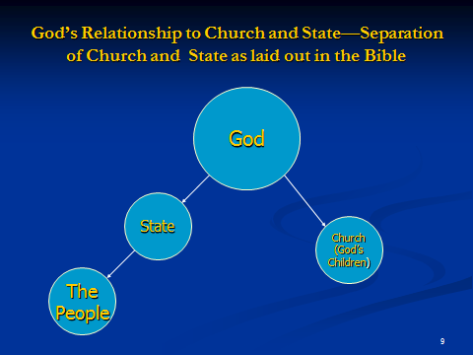
1. According to the Bible, who desires to be the Bridegroom/Husband/Head of His churches?

2. Is the headship of a local autonomous New Testament church an important issue regarding the biblically described principle of separation of church and state? Please explain as thoroughly as you can at this point.

3. To understand how churches violate the biblical principle of the headship of Christ over His churches, one must apply the biblical ____________________ to the facts and to civil law—e.g., what is incorporation, what is Internal Revenue Code § _______(c)(3).

4. _______________ are called the bride of the Lamb.

5. ____________ is the bridegroom of the church: “Ye yourselves bear me witness, that I said, I am not the _________________, but that I am sent before him. He that hath the __________ is the bridegroom: but the friend of the ______________, which standeth and heareth him, rejoiceth greatly because of the __________________’s voice: this my joy therefore is fulfilled” (Jn. 3.28, 29).

6. The New Testament speaks of a church as a virgin espoused to one ______________; Eve is a type of the church as ___________ and _________ of Christ:

  • “Would to God ye could bear with me a little in my folly: and indeed bear with me. For I am _______________ over you with godly ______________: for I have espoused you to one ______________, that I may present you as a chaste ____________ to Christ. But I fear, lest by any means, as the __________ beguiled Eve through his __________, so your minds should be corrupted from the ______________ that is in Christ. For if he that cometh ______________ another Jesus, whom we have not preached, or if ye receive another ____________, which ye have not received, or another _______________, which ye have not accepted, ye might well bear with him” (The Holy Spirit writing to the church at Corinth in 2 Co. 11.1-4).
  • “Wherefore, my brethren, ye also are become ________ to the law by the body of ___________; that ye should be _____________ to another, even to him who is _________ from the _______, that we should bring forth ________ unto God” (Ro. 7.4).

7. Paul likens the _____________ relationship of ______ and wife to the relationship of ____________ and His ______________:

“For the ____________ is the ________ of the wife, even as ___________ is the head of the ___________: and he is the ____________ of the body. Therefore as the church is subject unto ______________, so let the wives be to their own ___________ in everything. ____________, love your ________, even as ___________ also loved the church, and gave __________ for it; That he might ____________ and ________ it with the washing of water by the _______.  That he might present it to himself a ____________ _________, not having _______, or ___________, or any such thing; but that it should be ______ and without __________.  For no man ever hated his own flesh; but _____________ and ________________ it, even as the Lord the church: For we are members of his ______, of his _______, and of his ________.  For this cause shall a man leave his ________ and ________, and shall be joined unto his ______, and they two shall be _____   ______.  This is a great ___________: but I speak concerning _________ and the ________. Nevertheless let every one of you in particular so love his _______ even as himself; and the wife see that she reverence _____   __________” (Ep. 5.23, 25-27, 29-33).

8. The Lamb will marry _____  _______:

“And I heard as it were the voice of a great ____________, and as the voice of many _________, and as the voice of mighty ______________, saying, Alleluia: for the Lord God ____________ reigneth. Let us be glad and rejoice, and give __________ to him: for the ______________ of the Lamb is come, and his _______ hath made herself ready. And to her was granted that she should be arrayed in fine linen, _________ and ________: for the fine linen is the _____________________ of saints” (Re. 19.6-8).

9. All believers will be ___________ to Christ at the ____________ of the Lamb:

“But ye are come unto mount _______, and unto the city of the living _____, the heavenly ____________, and to an innumerable company of __________, To the general assembly and _________ of the firstborn, which are written in ___________, and to God the ________ of all, and to the spirits of just men made perfect,  And to Jesus the ___________ of the new covenant, and to the blood of sprinkling, that speaketh better things than that of ________” (He. 12:22-24).

10. Various people in the _____ ________________ are types of _________, the Bridegroom, and the ________, the bride. For example, Rebecca was a type of the _________, the “called out” virgin _______ of Christ. Isaac was a type of the ____________, who loves through the testimony of the unnamed Servant: “Whom having not seen, ye ______; in whom, though now ye _______ him not, yet believing, ye __________ with joy ______________ and full of ________” (1 Pe. 1.8). Isaac was a type of the ____________ who goes out to meet and receive his bride:

“For if we believe that Jesus died and rose again, even so them also which ________ in Jesus will God bring with him. For this we say unto you by the word of the Lord, that we which are ________ and __________ unto the coming of the Lord shall not prevent them which are _________. For the Lord himself shall ________ from _________ with a shout, with the voice of the ___________, and with the trump of God: and the ______ in Christ shall rise first” (1 Th. 4.14-16).

“Typically, the book of Ruth may be taken as a ____________ of the church—Ruth, as the __________ bride of Christ, the Bethlehemite who is able to redeem.”

11. The coming of the Bridegroom is cause for great rejoicing by the __________, the ______ of the Bridegroom: “He that hath the bride is ____  __________: but the friend of the __________, which standeth and _________ him, ____________ greatly because of the bridegroom’s voice: this my joy therefore is fulfilled” (Jn. 1.29).  The _________ of the Lamb to His bride will be a glorious event which will occur in _________, unlike the restoration of _________ which will take place on the earth:

“Let us be glad and rejoice, and give honour to him: for the __________ of the _______ is come, and his ______ hath made herself ready. And to her was granted that she should be arrayed in fine _______, _______ and _______: for the fine ______ is the righteousness of ________. And he saith unto me, Write, Blessed are they which are called unto the __________ supper of the Lamb. And he saith unto me, “These are the true sayings of _____” (Re. 19.7-9; see also Re. 21.9-22.17).

12. The husband is to be the only _______ of the wife, and Christ is to be the only ______ of His churches. See ______________ 5.23, 25-27, 29-33 quoted above. “And hath put ______ things under his _______, and gave him to be the _____ over ____ things to the church” (Ep. 1.22).

13. After Jesus was born, “there came ______  _____ from the east to Jerusalem, Saying, where is he that is born ______ of the Jews? for we have seen his ______ in the east, and are come to __________ him” (Mt. 2.1-2).  “‘The King’ is one of the divine titles (Psa. 10.6), and so used in the __________ of the Church (I Tim. 1.17), but Christ is never called ‘_______ of the Church.’ He is ‘________of the Jews’ (Mt. 2.2) and ______ and ‘______ of the Church’ (Eph. 1.22, 23)”

14. “Who is the ________ of the invisible God, the ___________ of every creature: For by him were all things _________, that are in ________, and that are in _______, _________ and _________, whether they be _________, or ___________, or ______________, or ________: all things were __________ by him and for him: And he is ________ all things, and by him all things _______. And he is the head of the body, the ________: who is the beginning, the firstborn from the dead; that in all things he might have the ___________” (Col. 1.15-18).

15. Christ, likened unto a husband, because of His love for the church, gave _________ to ________ the church. He is, in love, sanctifying the _________, and will present the ________ to Himself as a _________ for His sacrifice and labor of ______, a glorious ________, not having _______, or _______, or any such thing, a perfect church without ______ or ________, “one _______ of great price” (Mt. 13.45-46).

16. Jesus is the Father’s _____-gift to the world. “For _____ so loved the __________, that he gave his only _________ _____, that whosoever ___________ ___ ____ should not _______, but have ___________  _____” (Jn. 3.16).

17. The ___________, the ________ ________, is His reward, given Him as a ______-gift by the Father. “As thou hast given him _______ over all flesh, that he should give ________ _____ to as many as thou hast given him” (Jn. 17.2). “I have manifested thy name unto the men which thou ________ me out of the world: _______ they were, and thou ________ them me; and they have kept thy ______” (Jn. 17.6). “I pray for _______: I pray not for ___ _______, but for _______ which thou hast _______ me; for they are _______” (Jn. 17.9). “And now I am no more in the _______, but these are in the _______, and I come to thee. Holy Father, keep through thine own name those whom thou hast _______ me, that they may be _____, as we ____. While I was with them in the _______, I kept them in thy ______: those that thou _______ me I have kept, and none of them is ______, but the son of ___________; that the scripture might be fulfilled” (Jn. 17.11-12). “Father, I will that they also, whom thou hast _______ me, be with me where I am; that they may ________ my glory, which thou hast given me: for thou ___________ me before the foundation of the world” (Jn. 17.24).

18. Just as a bridegroom gives gifts to his earthly ________, so Christ gives gifts to His _______, to those whom the Father ______ Him:

(1) He gives His bride _________ ______: “As thou hast given him power over all flesh, that he should give _________  _____ to as many as thou hast _______ him” (Jn. 17.2).

(2) ____  ______’s ______: “I have manifested thy ______ unto the men which thou _________ me out of the world: thine they ______, and thou _________ them me; and they have ______ thy word…. And I have declared unto them thy _______, and will ________ it: that the ______ wherewith thou hast loved me may be in them, and I in them…. Jesus saith unto her, Touch me not; for I am not yet ascended to my Father: but go to my brethren, and say unto them, I ascend unto my Father, and your Father; and to my God, and your God” (Jn. 17.6, 26; 20.17).

(3) The _______’s _______: “For I have given unto them the ________ which thou gavest me; and they have received them, and have known surely that I came out from thee, and they have believed that thou didst send me…. I have given them thy ______; and the world hath hated them, because they are not of the _______, even as I am not of the ________” (Jn. 17.8, 14).

(4) His own j_______: “And now come I to thee; and these things I speak in the world, that they might have my j______ fulfilled in themselves” (Jn 1.7.13).

(5) His own g________: “And the g_______ which thou gavest me I have given them; that they may be one, even as we are one” (Jn. 17.22).

19. ________ God is preeminent for a ___________ and for a church. One does not ______ God by just asserting that he ________ God. Jesus said, “If ye ______ me, keep my commandments” (Jn. 14.15) The greatest commandment is to ______ the Lord with all one’s heart, soul, mind, and strength (Mt. 22.37; Mark 12.30; Lu. 10.27).

20. L______ is action. This ______ between Christ and His church is seen in the Song of Solomon. The Song of Solomon, “[p]rimarily, is the expression of pure marital ______ as ordained of God in creation, and the vindication of that ______ as against both asceticism and lust—the two profanations of the ________ of marriage. The secondary and larger interpretation is of Christ, the Son and His heavenly bride, the _______ (2 Cor. 11.1-4, refs.)” “Many waters cannot quench ______, neither can the floods drown it: if a man would give all the substance of his house for _______, it would be utterly _________” (Song of Solomon 8.7). “___________” means “despised, scorned, slighted, neglected, or rejected with disdain” (AMERICAN DICTIONARY OF THE ENGLISH LANGUAGE, NOAH WEBSTER (1828), definition of “CONTEMNED”). God despises, scorns, slights, neglects, or rejects with disdain all that a church does, whatever professions of ______ she makes, if those acts and/or professions are without ______. A church who does not _______ Christ as a wife is to _______ her bridegroom and her husband, by remaining ______ and ______, does not display ______for the Lord. Thus, _______ ones neighbor by witnessing to him, sending missionaries to him, helping him materially or any other way in obedience to the second commandment—“Thou shalt ______ thy neighbor as thyself”—is vanity in God’s eyes if one ignores the greatest commandment. The ______ of the temporal—e. g., worldly organization, ownership of property, worldly power and prestige, etc.) by a church infringe the total _______ (charity) which Christ desires of his churches.

21. This fact is also articulated in the New Testament. The Lord Jesus is _________ over His church.  If we do not ______ the Lord Jesus, He despises all the “Christian” ______ we do and the _______ we put in the offering plate. “Though I speak with the _________ of men and of angels, and have not _________, I am become as sounding _______, or a tinkling _________. And though I have the gift of __________, and understand all _________, and all ___________; and though I have all _______, so that I could remove __________, and have not _______, I am _______. And though I bestow all my goods to feed ____ ______, and though I give my ______ to be burned, and have not _________, it __________ me nothing” (1 Co. 13.1-3). “__________” speaks of God’s kind of ______. “In a theological sense, _________ “includes supreme ______ to ____ and a universal good will to ______. 1 Cor. xiii. Col. iii. 1 Tim. i” (AMERICAN DICTIONARY OF THE ENGLISH LANGUAGE, NOAH WEBSTER (1828), definition of “CHARITY”). ______ is an act of the will. A church refutes its proclamations of ______ for the Lord when it wholly or partially takes the church from under the ___________ of her Husband, the Lord Jesus Christ or operates in any manner which is contrary to the ____________ for a church given in _____’s word.

______ “[r]ejoiceth not in __________, but rejoiceth in the _______” (1 Co. 13.6). Iniquity means “__________, unrighteousness, … [w]ant of rectitude [rightness in principle or practice], … a ____ or ______; wickedness…” (AMERICAN DICTIONARY OF THE ENGLISH LANGUAGE, NOAH WEBSTER (1828), definitions of “INIQUITY” and “RECTITUDE”). Bible truth makes clear that the ______ of Christ for His church is immense, that He wants to be the only ______ and __________ of the church who is likened to His _______ and _____, and that for a church to even partially put herself under or associate with another entity is a great ____________ and _______________ all professions of ______ for the Lord. As is shown in Section VI of God Betrayed (online version or link to PDF) and Separation of Church and State/God’s Churches: Spiritual or Legal Entities? (online version or link to PDF), the church who ______________ and secures a _____(c)(3) tax exemption commits wicked sinful acts in violation of ____________ principle, and rejoices in ________ by putting herself partially under _____ other heads (the _______ of incorporation and the _______ government),.

22. The Lord Jesus gave a warning to the church at _________:

“I know thy works, and thy labour, and thy patience, and how thou canst not bear them which are ______: and thou hast tried them which say they are __________, and are not, and hast found them _______: And hast borne, and hast _________, and for my name’s sake hast ___________ and hast not _________. Nevertheless, I have ___________ against thee, because ______ ______ ______ _____ ________ _______. Remember therefore from whence thou art _________, and ________, and do the first ________; or else I will come unto thee quickly, and will remove thy ___________ out of his place, except thou ________” (Re. 2.2-5).

23. As Dr. J. Vernon McGee teaches us, this warning was for every church who has lost her love for the Lord Jesus:

“It was a warning of danger of getting away from a personal and ________ relationship with Jesus Christ. The real test of any believer, especially those who are attempting to serve Him, is not your little method or mode or system, or your dedication, or any of the things that are so often emphasized today. The one question is: Do you ______ Him? Do you ______ the Lord Jesus? When you ______ Him, you will be in a right relationship with Him, but when you begin to depart from the person of Christ, it will finally lead to _______________. The apostate church was guilty of _______________. It may not seem to be too bad, but it is the ________ condition that anyone can be in. A great preacher in upper New York state said: ‘Twenty __________ Christians hurt the cause of Christ more than one blatant __________.’ A ___________ church is a disgrace to Christ.”

24. As the Lord Jesus Christ is __________ over His churches, so should pastors and church members be __________, with a godly ____________, over the church they belong to, just as Paul was: “For I am __________ over you with godly ________: for I have espoused you to one ___________, that I may present you as a chaste _________ to Christ. But I fear, lest by any means, as the serpent beguiled Eve through his __________, so your minds should be corrupted from the ______________ that is in Christ.  For if he that cometh preacheth another _________, whom we have not preached, or if ye receive another _________, which ye have not received or another __________, which ye have not accepted, ye might well bear with him” (2 Co. 11.2-4; Lu. 18.8; 2 Ti. 3.1-8).

25. What makes a “church” a two-headed (or three-headed) monster and why taking any head over the church except the Lord Jesus Christ negates all else that they say and do.
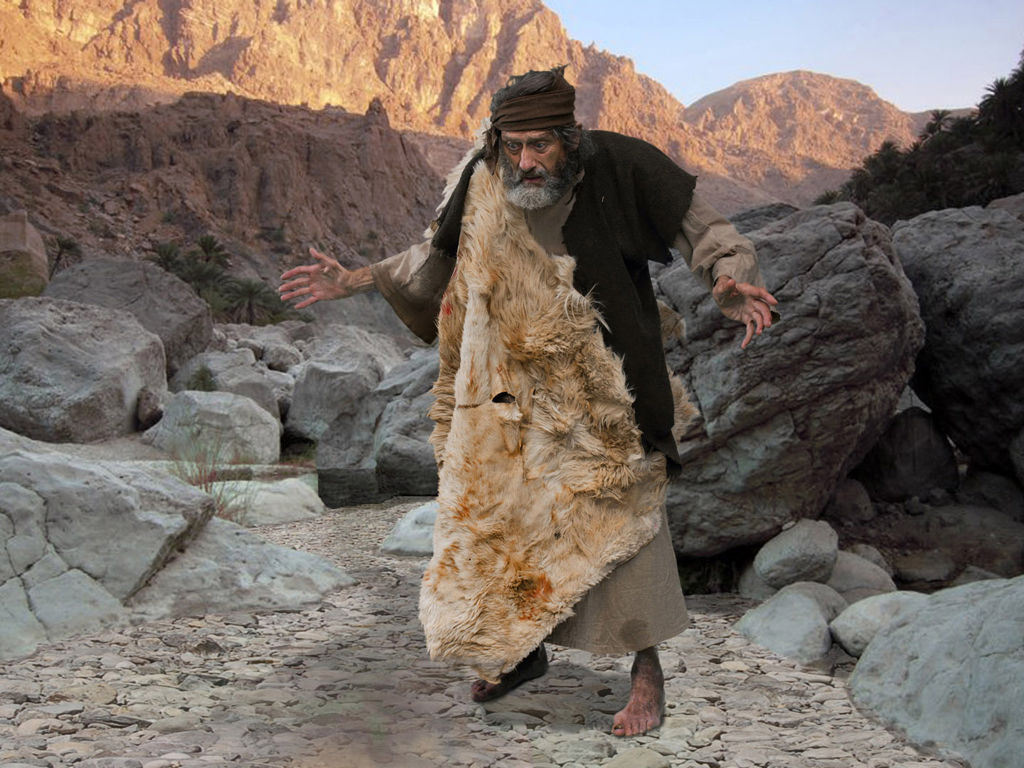
Self-exam questions: Definition, organization, purposes of a church

Give as many Bible verses (where appropriate), comments, and explanations as you can to support your answers.

Click here to go to “Definition, organization, purposes of a church.

1. Is the church, as such, ever never mentioned in the Old Testament?

2. List some matters covered in the Old Testament.

3. Who are the people now chosen by God for His purposes and glory?

4. Since what event have born-again believers been the people chosen by God for His purposes and glory?
5. In the Old Testament, God’s light shined through an ____________ organization, ____ ____________ _____________.

6. In the New Testament, God’s light shines through a ________________ __________________, the institution of the _________________.

7. What is the institution of the church comprised of?

8. Was any organism which resembled the New Testament church described in the Old Testament?

9. Since when, as recorded in Acts 10, has the Holy Spirit indwelt every believer at the moment of salvation?

10. Christ ordained the _____________ and _________ _____________________, and He ordained the _______________.

11. “And I  say also unto thee, That thou art ______________, and upon this ____________ I will build ____ church; and the gates of ___________ shall not prevail against it” (Mt. 16.18).

12. Through which New Testament epistles does Christ develop the doctrine of the church?

13. Through those epistles we know that the institution of the church is made up of ____________, ____________________, spiritual ____________________, heavenly in _______________, _____________, and __________________. Through those epistles we know the _______________, ________________, and form of _____________________ of local churches and the right ________________ of such bodies.

14. What biblical doctrines must one understand in order to understand what the Bible teaches about the issue of separation of church and state?

15. In studying the issues of government, church, and separation of church and state, one must examining both ___________________ Theology and _____________________ Theology. _________ _____________, _______________, and ___________ mandated the examination of both.

16. ______________________ Theology literally interprets Scripture (with an understanding of figures of speech).

17. Covenant Theology ________________________ or ______________________ much of Scripture.

18. The author disagrees with ____________________ Theologians in their interpretation of Scripture. The author does not accept the unbiblical definition of “church” given by ________________ Theologians: “The community of all true believers for all time.”

19. Every teaching on the Word of God—whether it be termed Dispensational Theology, Covenant Theology, or something else—should be carefully examined against ________________________ as to its truth.

20. How can one know if a dispensationalist is right about what he teaches?

21. What is a dispensation?

22. Name seven such dispensations are distinguished in Scripture.

23. If you do not believe that there are dispensations in Scripture, explain why.

24. Covenant Theologians teach that the church has replaced Israel. How do they make this interpretation?

25. Covenant Theologians believe that the _____________ has replaced Israel, that God is finished with ________________ and the ______________, and that God’s promises to and covenants with the nation Israel and selected rules for organization for the Jewish religion should be applied to the ______________.

26. The application to modern nations, and the attempt to make the application in America, of certain principles—including the principle of _______________ of religion (or church) and state— regarding the Jewish religion and the relationship of religion to state in Old Testament Israel has had devastating consequences in the United States.

27. Those theologians who would combine religion and state as in the _________ _________ of antiquity, as with _________________ in the theocracy, as with the established __________________ and _______________ churches who used the arm of the state to kill millions whom they designated as _______________, as with the religion of Islam, etc. have not mastered God’s lessons recorded in His Word and in the historical writings of man. Sadly, America is now overrun with false _________________ and ___________________ religions who hate the biblical principle of _____________________ of church and state (not separation of God and state) as enacted in the First Amendment to the United States Constitution.

28. To properly explain the issue of the relationship, if any, between church and state (separation of church and state), one must correctly understand what the Bible teaches about the __________________ (covered in Section I of these studies) and _________________ (this section, Section II). Section III will culminate this study as it examines the biblical principle of ____________________ of _______________ and state.

29.  The principles for church and state are so distinct that the two are mutually __________________.

30. A New Testament church is made up of visible _____________ who have repented and trusted Jesus Christ to save them and who ____________________ as members of a local autonomous spiritual body.

31. On the other hand, since one cannot see the spiritual condition of people’s ________________, in one sense a church is _________________________. “We can see those who outwardly attend the church, and we can see outward evidences of inward spiritual change, but we cannot actually see into people’s __________________ and view their spiritual state. Only ___________ can do that….

32. One can be in a visible church, yet ________________, _________, and destined for hell; such a person is not really a part of the true church to which he belongs. He is a tare; he will not be at the ______________ of the Lamb (see Re. 19.7-10), and he will not be a part of the “general assembly and church of the firstborn” (see He. 12.22-24).

33. According to the Word of God, the future of the visible Church, except for a remnant, is ______________.

34. A church is authorized to remove a professed believer from ________________________ only, and that for gross __________________ in order to “deliver such an one unto Satan for the destruction of the flesh, that the spirit may be saved in the day of the Lord Jesus” (See 1 Co. 5).

35. Obviously, the Bible rejects the Roman Catholic position that the ___________ _______________ “church” is the only true church or even a church as described in the New Testament. The Roman Catholic “church” was responsible for the persecution of untold millions of believers when that “church” had earthly authority. Catholicism justified the persecution by a false theology.

36. Study of ____________ _____________ without brainwashing, a practice which the vast majority of Roman Catholic churches have traditionally condemned, reveals the fallacies of Roman Catholic theology. 37.  The Bible also rejects ___________________ church theology which has also been responsible for the persecution and murder of those deemed to be heretics.

37. In what two senses does the New Testament speak of the church?

38.All biblical references to a church here on the earth refer to an __________________ local body of Jewish and/or Gentile believers and not to a ___________________ or ___________________ church.

39. Nowhere in the New Testament is a church here on the earth ever referred to as anything other than a local spiritual body and nowhere does Scripture teach that a church is to have any type authority above it other than ________________________________.

40. ________________ have always recognized the biblical teaching as to this aspect of a church—that is, that a church on earth is only a local spiritual body of believers whose Head is Jesus Christ. Name two prominent Baptists of the past who taught this.

41. Paul gives how many metaphors of the body? In what verses are those metaphors found? Give a brief summary of what he wrote in those verses.

42. Who is the head of the church?

43.The __________ is the body of Christ.

44. The Bible compares the church to a ________________________ of great price which “a merchant man sold all that he had, and bought it (Mt. 13.45-46): “Of the true Church a pearl is a perfect symbol: (1) a pearl is one, a perfect symbol of __________________ (1 Cor. 10.17; 12.12, 13; Eph. 4.4-6). (2) A pearl is formed by __________________, and that not mechanically, but vitally, through a living one, as __________________ adds to the Church (Acts 2.41, 47; 5.14; 11.24; Eph. 2.21; Col 2.19. (3) _______________, having given Himself for the pearl, is now preparing it for the presentation to ______________________ (Eph. 5.25-27).  The kingdom is not the ________________, but the true children of the kingdom during the fulfillment of these mysteries, baptized by one Spirit into one body (1 Cor. 12. 12, 13), compose … the pearl.”

45. Name as many things as you can to which he church is compared.

46. What are the eleven “Marks of a New Testament Church” given by Baptist historian J. M. Carroll?

47. Certainly, a preacher on the street corner with a crowd around him as he preaches is not a _______________________. Nor is a group of people meeting in a house and ___________________ the Word. However, if that house group chooses a properly ______________ and baptized pastor, organizes and operates according to __________________ principles, initiates a proper baptism for new __________________, and begins to partake of the Lord’s _________________, an ordered New Testament ________________ comes into existence. The Lord desires that those who are saved be baptized into a properly ordered New Testament ____________________.

48. Where only false ______________ (or no biblical doctrines) are preached, no church can exist. “When the preaching of a church conceals the gospel message of _______________________ by faith alone from its members, so that the gospel message is not clearly proclaimed, and has not been proclaimed for some time, the group meeting there is not a church.” A church can exist only where the _________________ is believed to be the inerrant Word of God, where the ____________________ is the sole basis for faith and practice, and where that ________________ is preached.

49. A church has responsibilities. Strong, knowledgeable believers who are _________________ in the spirit will practice all their God-given _______________________ and apply their spiritual gifts. Included in those ______________________, is the responsibility to “present [the church] as a chaste ________________ to Christ” (See 2 Co. 11.1-4).

50. Worship is preeminent for the believer and for a church. What does “Worship” mean?

51. The principles of worship set out in __________________ 30, the great worship chapter, still apply. Exodus 30.38 condemns “making worship a mere _____________________ to the natural man, whether sensuous, as in … music …, or eloquence, merely to give delight to the natural mind.” Christians are to worship God in _____________ and in _______________ (See Jn. 4.23-24). The Word of God contains principles regarding appropriate ______________, _______________, ______________, and attitude for worship. The Lord commanded, “Ye shall offer no strange ______________________ [on the altar of incense], nor burnt _________________, nor meat offering; neither shall ye pour drink offering thereon” (Ex. 30.9).

52. Why does the local body assemble?

53. Is the purpose of the assembly to preach to and/or win the lost?

54. Believers go outside the assembly and seek the ___________________ of the lost.

55. May lost people attend the assembly?

56. God gifted members of a church “For the perfecting of the ________________, for the work of the ________________, for the ________________________ of the body of Christ: Till we all come in the ________________ of the faith, and of the _____________________ of the Son of God, unto a perfect man, unto the measure of the stature of the fulness of Christ” (Ep. 4.12-13).  The church is to preach the whole counsel of God, “warning every man, and teaching every man in all wisdom; that we may present every man perfect in Christ Jesus” (Col. 1.28).

57. A church has the responsibility to evangelize. “And he said unto them, Go ye into all the ________________, and preach the _______________ to every ______________” (Mk. 16.15).  “Go ye therefore, and ________________ all nations, baptizing them in the name of the Father, and of the Son, and of the Holy Ghost” (Mt. 28.19).

58. Along with the obligation to evangelize goes ________________ and doing ____________ to fellow ____________________ as well as to _______________________. Some verses on this:

  1. “But love ye your enemies, and do good, and lend, hoping for nothing again; and your reward shall be great, and ye shall be the children of the Highest: for he is kind unto the unthankful and to the evil. Be ye therefore merciful, as your Father also is merciful’” (Lu. 6.35-36).
  2. “But whoso hath this world’s good, and seeth his brother have need, and shutteth up his bowels of compassion from him, how dwelleth the love of God in him” (1 Jn. 3.17)?
  3. “Then the disciples, every man according to his ability, determined to send relief unto the brethren which dwelt in Judaea” (Ac. 11.29).
  4. “Recompense to no man evil for evil. Provide things honest in the sight of all men” (Ro. 12.17). “See that none render evil for evil unto any man; but ever follow that which is good, both among yourselves, and to all men” (1 Th. 5.15).
  5. “Praying us with much intreaty that we would receive the gift, and take upon us the fellowship of the ministering to the saints” (2 Co. 8.4).
  6. “What doth it profit, my brethren, though a man say he hath faith, and have not works? can faith save him? If a brother or sister be naked, and destitute of daily food, And one of you say unto them, Depart in peace, be ye warmed and filled; notwithstanding ye give them not those things which are needful to the body; what doth it profit? Even so faith, if it hath not works, is dead, being alone” (Ja. 2.14-17).

59. A church is united together and to Christ by the baptism with the ________ ___________(1 Co. 12.12-34). As such, it is a holy temple for the habitation of God through ______________ (Ep. 2.21, 22); is “one flesh” with ____________ (Ep. 5.30, 31); and espoused to Him as a chaste _____________ to one husband (2 Co. 11.2-4). Other metaphors, as pointed out above, have also been used to describe a church. Local churches assemble in His name for the breaking of ________________, ________________, ______________, ________________, ___________________, the ministry of the ______________, _______________, and the furtherance of the _________________________ (He. 10.25; Ac. 20.7; 1 Co. 14.26; 1 Co. 5.4, 5; Ph. 4.14-18; 1 Th. 1.8; Ac. 13.1-). Every such local church has _____________________ in the midst, is a temple of God, indwelt by the _________ ________________ (1 Co. 3.16, 17), and is “the ___________ and ________________ of the truth” (1 Ti. 3.15). Only the assembly where the true doctrine is preached is a _____________: “But though we, or an angel from heaven, preach any other gospel unto you than that which we have preached unto you, let him be accursed” (Ga. 1.8). A church is the __________ of Christ of which He is the ________. Christ desires that a church remain solely under Him: “And [God] hath put all things under his feet, and gave him to be the _________ over all things to the church” (Ep. 1.22-23). “For the husband is the head of the wife, even as Christ is the __________ of the church” (Ep. 5.23).

Self-exam Questions: Introduction to “The Biblical Doctrine of the Church”

Give as many Bible verses (where appropriate), comments, and explanations as you can to support your answers. Click here to go to “Introduction to ‘The Biblical Doctrine of the Church’

  1. These teachings are based upon a _______________________ interpretation of Scripture.
  2. The Bible uses ____________, ______________________, _________________, and other figures of speech.
  3. Untold damage to the cause of Christ has been caused by unbridled _____________________ or _____________________ of Scripture by _______________, ________________, _______________’s ______________________ and others.
  4. Some of those religions, due to their heinous theologies (false interpretations of Scripture) have violently __________________ and ______________________ others, including ________ ______________ who stood on God’s Word in spite of persecutions and ___________________, down through the last 2,000 years.
  5. Sadly, perversions of Scripture by such religions and the resulting atrocities based upon false interpretations have been attributed to ________ ___________________ by the world in general—________ ___________________ and churches have been lumped together with imposters by both secular and Christian _________________.
  6. In order to understand why church incorporation and 501(c)(3) status violates biblical principles and grieves our Lord Jesus Christ, one must first be __________. Second, he must understand the biblical principles of ___________________, ____________, and _____________________ of ___________ and __________.
  7. He must then understand the facts about and ______________________ of incorporation and 501(c)(3).
  8. Finally, he must apply ____________________ to __________ and ______.
  9. To fully understand this requires a lot of time and study, and God wants His children, and especially ______________, to take the time to do the studying (1 Ti. 2.15).
  10. Most pastors are so consumed with their ministries that they need to rely on specialists within the local church body-for example, born again, Bible believing, God honoring ________________ or others who have the _________, ___________, __________________, and ________ for the Lord necessary to examine these matters.
  11. As foretold by Isaiah (Is. 40.3), John the Baptist announced: “____________ ye: for the ______________ of heaven is at hand. For this is he that was spoken of by the Prophet ______________, saying, The voice of one crying in the wilderness, Prepare ye the way of the ________, make his __________ straight” (Mt. 3.2-3. See also, Mk. 1.2-3; Lu. 3.4; and Jn. 1.23).
  12. The phrase “______________ of heaven” “is peculiar to ______________ and signifies the Messianic earth rule of __________ ____________, the Son of David.
  13. Why is it called called the kingdom of the heavens?
  14. From which Old Testament book is the phrase “kingdom of heaven” derived?
  15. How does Daniel define “kingdom of heaven?”
  16. The “kingdom of heaven” is covenanted to whose seed?
  17. After Israel morally rejected the kingdom of heaven, Jesus predicted judgment on the places chosen for the testing of the nation, _________________, ___________________, and __________________, “wherein most of his mighty works were done, because they ________________ not” (Mt. 11.20-24). Jesus, at that point, turned from the rejecting nation, offered rest and service to ________________ in the nation, and turned to the _________________.
  18. Just as God ordained __________ government, He also ordained His ________________ after the nation ____________ rejected ______ and the ______________ of ____________.
  19. The power given by God to His churches on earth was to secure a ________________ good for their members.
  20. When Christ asked His ____________________ whom they thought Him to be (Mt. 16.15, Mk. 8.29, Lu. 9.20), Peter answered, “Thou art the ____________, the ______ of the living ______”. At that point, our Lord announced the out calling of the ____________ when He said: “And I say also unto thee, [t]hat thou art Peter, and upon this ________ I will build my ____________; and the gates of ________ shall not prevail against it. And I will give unto thee the ________ of the kingdom of heaven: and whatsoever thou shalt ________ on earth shall be bound in heaven: and whatsoever thou shalt loose on earth shall be loosed in heaven.”
  21. Upon whom is Christ’s church built?
  22. Peter made clear that the cornerstone of the church is whom?
  23. Peter made clear that the rock upon which the Lord will build the institution of the church which is made to be made up of __________, ____________________ churches, which are ________________ houses made up of __________________ beings offering up _________________ sacrifices, and not ________________ houses made by man, is Christ Himself:

“To whom coming, as unto a _______________ stone, disallowed indeed of men, but chosen of God, and precious, Ye also, as ____________ stones, are built up a __________________ house, an holy priesthood, to offer up ___________________ sacrifices, acceptable to God by Jesus Christ. Wherefore also it is contained in the scripture, Behold, I lay in Sion a __________ ____________ stone, elect, precious: and he that believeth on him shall not be confounded. Unto you therefore which believe he is precious: but unto them which be disobedient, the stone which the builders disallowed, the same is made the ________ of the corner. And a stone of ________________, and a rock of ________________, even to them which stumble at the word, being disobedient: whereunto also they were appointed” (1 Pe. 2.4-9).

“This is the stone which was set at nought of you builders, which is become the ________of the corner” (Ac. 4.11, part of Peter’s address to the Sanhedrin).

  1. From the context of the above verses, it is obvious that Peter is speaking of the ________ as being the chief corner stone. Nowhere in the Bible is there any indication that Peter was the cornerstone of a ____________________ visible or invisible church. The words used also make clear that Christ was referring to ______________ as the ________ on which the church would be built. “There is in the Greek [in Matthew 16.18] a play upon the words, “thou art Peter [petros—literally, ‘a ____________ rock’], and upon this rock [Petra] I will build my church.” He does not promise to build His church upon __________, but upon ______________, as Peter himself is careful to tell us (1 Pet. 2.4-9).”
  2. Jesus Christ, Head of the church, “__________ the church and gave ______________ for it” (Ep. 5.25).
  3. Jesus did not give ____________ the keys—a key being a badge of power or authority (see, e.g., Is. 22.22 and Re. 3.7)—to the church, but to “the kingdom of heaven,” the keys in the sense of Matthew 13, that is of the sphere of Christian ______________________.
  4. Peter assumed no other authority. In the council at Jerusalem as recorded in Acts 15, ___________ seems to have presided. Peter claimed nothing more than to be an ______________ by gift and an __________ by office. The power of binding and loosing was shared by ______ ____________ _________________. Since only ____________ held the keys of death and the place of departed spirits, “this did not involve the determination of the eternal destiny of souls.” I [__________ ____________] am he that liveth, and was dead; and, behold, I am alive for evermore, Amen; and have the ________ of ________ and of __________” (Re. 1.18).
  5. Isaac Backus, the great Baptist leader in New England, elaborated upon the faith confessed by Peter:

“This __________ is the foundation of the _________________; against this __________ the gates of hell shall not prevail; this __________ hath the keys of the kingdom of heaven; what this __________ shall loose or bind on earth, is bound and loosed in heaven…. Now it followeth, that whatsoever person hath received the same precious __________ with Peter, as all the faithful have, 2 Pet. i. 1, that person hath a part in this gift of Christ. Whosoever doth confess, publish, manifest or make known Jesus to be the Christ, the Son of the living God, and Saviour of the world, that person opens heavens gates, looseth sin, and partakes with Peter in the use of the ________; and hereupon it followeth necessarily, that one faithful man, yea, or woman either, may loose and bind, both in heaven and earth, as all the ministers in the world.”

  1. God’s Word describes the church as being the __________ of Christ and the ________ of Christ. What connotations do those designations carry? The Word of God gives ample _____________________to alert churches to what this relationship entails.
  2. To whom did the Lord reveal how, when, or of what materials local church bodies on this earth should be built, or what should be their position, relationships, privileges or duties. Instead?
  3. The Lord revealed to ________ the mystery of the churches who were to be made up of both ____________ and ____________ believers in ___________________ __________ assemblies. Paul’s epistles develop the _______________ to be followed by the churches. God, through the Apostle Paul, explained the ______________, ___________________, ________-____, and __________________ of the churches, and the relationship of His churches to the ________ __________. Through Paul alone we know that churches are not organizations, but ___________________, local ___________________ bodies.
  4. The Bible makes clear that churches here on earth are to be ______________ ___________ ____________________ bodies, each operating under the principles of the ________ of ______. Paul wrote to local __________________ or _______________—the church of God which is at ______________ (1 Co. 1.2, 2 Co. 2.1), the churches of _______________ (Ga. 1.2), the church at _____________ (See Re. 2.1), the church of the _______________________________ (1 Th. 1.1; 2 Th. 2.1). Christ stood in the in the midst of __________ ____________ ______________________ (local ________________ still on earth) (Re. 1.11-13); and He instructed ________ to write to those seven ________________ (Re. 1.19-20). The Lord delivered individual messages to each of those local assemblies (Re. 2.1-3.22).
  5. Although the Lord made clear that He wants every church to be under ______ in all things, God allows men in a church ________-________ to decide whether to do things His way. Our Lord warned against false __________________ to come and some writers of the New Testament warned of already existing ________________ in the church and revealed that before the return of Christ true believers would all be _________________ and those left behind in the visible “church” would go into total ________________, be called a __________ and not a church, and be destroyed by the nations. Religious _______________ of some churches in America began with the importation from Europe of modernism and has recently accelerated as seen in the recent Church _____________ Movement and, after that, the Emerging ____________ Movement.
  6. Christ is described as the only ________, ______________, and ______________________, of His churches. He will conduct a _________________ ceremony, the wedding of the ________ (Re. 19.7-10), prior to His second coming in glory. The __________ who will be called to the marriage supper of the Lamb will be arrayed in fine __________, which is the _________________________ of the saints. Because of the signs of the times, as related to biblical prophecy, true believers should be vigilant in seeking ______ __________________ ____ ______ since it appears that the Lord will return soon. Only true believers have the ________________ ________: they will __________ with the Lord. The Holy Spirit is now calling out, not the subjects, but the co-__________ and co-_______________ of the kingdom. Since the Lord told believers to ________ others, since believers will be ___________________ with God, and since nonbelievers will be ___________________ _______ God for all eternity, those who are saved should have a great burden for the _____________________ of the lost.
  7. In order to maximize the witness of the local church, believers should be careful to do all they do as individuals, families, as a church body, and as citizens according to the principles of the ________ ____ ______. Initial ____________________ of God’s principles on the church level inevitably leads to further ____________________, to _____________, and in most cases to _______________. ____________________ introduces leaven which in turn infects the whole body. Thus, for example, the initial ____________________ of many ______________ churches after the adoption of the United States Constitution in getting corporate status introduced a little poison into churches. Corporate ________________, generally speaking, had no problem with further _____________________ such as the abandonment of God’s Word in English, and Internal Revenue Code § 501(c)(3) status. The religious __________________ in America among God’s churches has accelerated at an alarming pace.

The Local Church: A Building or What?

Is this a church?
Is this a church?

Many call the building they meet in a “church.” According to the Bible, is that building really a church? Or is the church something else according to the word of God? What is a church? Read the Scriptures cited below then listen to the study which is partially quoted and linked to below for some answers.

Ephesians 2:19-22 “Now therefore ye are no more strangers and foreigners, but fellowcitizens with the saints, and of the household of God; And are built upon the foundation of the apostles and prophets, Jesus Christ himself being the chief corner stone; In whom all the building fitly framed together groweth unto an holy temple in the Lord: In whom ye also are builded together for an habitation of God through the Spirit.”

2 Corinthians 11.3 “But I fear, lest by any means, as the serpent beguiled Eve through his subtilty, so your minds should be corrupted from the simplicity that is in Christ.”

Hebrews 9:1-15:  “Then verily the first covenant had also ordinances of divine service, and a worldly sanctuary.  For there was a tabernacle made; the first, wherein was the candlestick, and the table, and the shewbread; which is called the sanctuary.  And after the second veil, the tabernacle which is called the Holiest of all; Which had the golden censer, and the ark of the covenant overlaid round about with gold, wherein was the golden pot that had manna, and Aaron’s rod that budded, and the tables of the covenant; And over it the cherubims of glory shadowing the mercyseat; of which we cannot now speak particularly. Now when these things were thus ordained, the priests went always into the first tabernacle, accomplishing the service of God. But into the second went the high priest alone once every year, not without blood, which he offered for himself, and for the errors of the people: The Holy Ghost this signifying, that the way into the holiest of all was not yet made manifest, while as the first tabernacle was yet standing: Which was a figure for the time then present, in which were offered both gifts and sacrifices, that could not make him that did the service perfect, as pertaining to the conscience; Which stood only in meats and drinks, and divers washings, and carnal ordinances, imposed on them until the time of reformation.  But Christ being come an high priest of good things to come, by a greater and more perfect tabernacle, not made with hands, that is to say, not of this building; Neither by the blood of goats and calves, but by his own blood he entered in once into the holy place, having obtained eternal redemption for us. For if the blood of bulls and of goats, and the ashes of an heifer sprinkling the unclean, sanctifieth to the purifying of the flesh: How much more shall the blood of Christ, who through the eternal Spirit offered himself without spot to God, purge your conscience from dead works to serve the living God?  And for this cause he is the mediator of the new testament, that by means of death, for the redemption of the transgressions that were under the first testament, they which are called might receive the promise of eternal inheritance.”

Thus, one can see that God does not dwell in a building and never has. He did not dwell in the Temple. See, e.g., 1 Kings 8.27. Today, the Holy Spirit dwells in believers. When they come together, they are a church (an assembly) who form a spiritual organism. See 1 Corinthians 12 and Ephesians 4. When they leave the building, if indeed they are meeting in a building, when they turn off the lights and go home, the Holy Spirit (God) is not in that building and the church is no longer in that building. If they meet under a bridge, the church is under that bridge while they meet there. If none of those who come together are born again believers, baptized into that church, then they are not a Bible church since the Holy Spirit indwells none of them.

Some excerpts from a radio teaching by Dr. J. Vernon McGee on 1 Kings 5 (the complete teaching is linked to at the end):

“Man has been a builder from the beginning. In Genesis 4.17 we are told that Can “builded a city and called the name of the city, after the name of his son, Enoch.” The face of the earth is scarred by great mounds that hide the ruins of great cities and splendid buildings of the past. The spade of the Archaeologist has penetrated into the depths, and you can judge each civilization by the height of the buildings. There are those who say that the cave men of the Stone Age (if they ever existed) were barbarians and uncivilized. They were not builders but sought refuge in caves. The Egyptians, the Assyrians, the Babylonians, the Greeks, and the Romans are all counted as civilized, and it is evidenced in their architecture. Modern man claims a high degree of culture because he has built subdivisions and shopping centers, apartment buildings, and tall office buildings. Today man is building his own cave in which to live and work—like a gopher. The rest of the time he crawls on the freeway like a worm. As long as he can push a button and turn a switch, he says he is living. That is modern man.

“The first buildings of impressive design were the temples. All pagan peoples had temples. Some temples were crude; others, such as the Parthenon in Greece, were the highest expression of beauty. All of this building stems from the Tower of Babel, which was a monument to man’s gargantuan resistance to God. Pagan temples have always been the highest architectural expression, but the pagans who have attended, both civilized and uncivilized, have been on the lowest spiritual level. These temples have been elaborate, large, ornate, rich, and impressive. The temples of the kings on the River Nile, Asshur of Ninevah, Marduk of Babylon, the ziggurats in the Tigris-Euphrates Valley, Baal of the Phoenicians, Athena of the Greeks, and in Athens the Parthenon, Jupiter of the Romans, the Aztec temples of Mexico—all of them are manifestations of rebellion against God.

“Because that, when they knew God, they glorified him not as God, neither were thankful; but became vain in their imaginations, and their foolish heart was darkened” (Romans 1:21). What did they do? They built temples, changing “the glory of uncorruptible God into an image made like to corruptible man, and to birds, and fourfooted beasts, and creeping things” (Romans 1.23). Each made a house for his god to live in. They put their gods in a box like a jack-in-the box.

“The temple Solomon built was never considered in Scripture as a house in which God would live….

“The temple was complicated. The simplicity of the tabernacle was lost…. There is an application for us. We are living in a day when the emphasis in put on methods rather than on the word of God. The church is filled with new programs and new methods.

“When I first began my ministry I pastored a little white church on a red clay hill in Georgia, surrounded by a cotton patch….

“The second thing to notice about the Temple was that Solomon made little windows of narrow lights. There had been no windows in the tabernacle. … The people no longer depended upon divine light as they had in the tabernacle….

“ … The temple was more ornate and gaudy than the tabernacle, and there was more ceremony and ritual connected to it.

“Notice how complicated the temple is in comparison to the tabernacle. …”

For the full study go to the Dr. J. Vernon McGee’s teaching on 1 Kings 5 by clicking here.

For more on the misconception of the meaning of church, see “Sustaining Property Tax,” an article by Winnie Varghese which shows her complete misunderstanding of the meaning of “church.” Her type of church is a place of pagan worship.

For a more thorough study, see The Biblical Doctrine of the Church.

END