My Reply follows the E-mail which was received on June 28, 2019.
E-mail
Good morning…and may the “God and Father of our Lord Jesus Christ,” continue to bless you & yours immensely, brother Finney!
I know you’re exceedingly busy; so I’ll try to state my question(s) as concisely as possible – and I’ll leave my cell# at the end of this, just in case your answer would take too much time to write.
Now, having noted that: since I believe I read in your [June 1st] “Churches Under Christ Newsletter” somewhere, that yours [thus BLC’s] ministry is primarily focused upon helping 501(c)(3) Churches & Parachurch Organizations “under” their direct authority, to repent of this particularly egregious SIN of “spiritual harlotry” – and thus RE-structure according to genuine First Amendment principles [i.e., a DOT?], and please correct me if I’m wrong – then what is the status [before Almighty God] of ALL these other independent, so-called “Christian” Parachurch Organizations, of which are scattered across the religious landscape in this United States?
And I ask this [perhaps legally misguided] question brother Finney, because it seems to me that the corporate “ground is level” before Caesar re: ALL 501(c)(3) NFP’s – religious, irreligious, or otherwise? I mean, what’s the LEGAL difference, when it comes to a “state-licensed 501(c)(3) NFP corporation” conducting their business in the matchless / Holy Name of our Lord Jesus – as these Christian business corporations NO longer retain any First Amendment protections, only 14th Amendment relief [if I’ve understood you & the BLC correctly] – and all those irreligious corporations etc., such as Planned Parenthood, The Church of Satan, the Freedom From Religion Foundation, and on, and on, and on??
And I sure hope I’m not conflating [or confusing] “NGO NFP’s” – with religious NFP’s operating under the 501(c)(3) ‘Johnson Amendment’ related designation either? Whatever help you could provide, and whenever you have the available time, would be greatly appreciated sir!
Once again, thank you so very much for everything you & the BLC have done, and are continuing to do…in Jesus’ Holy name!
“And let us not be weary in well doing: for in due season we shall reap, if we faint not.” (Galatians 6:9)
“Therefore, my beloved brethren, be ye stedfast, unmoveable, always abounding in the work of the Lord, forasmuch as ye know that your labour is not in vain in the Lord.” (1 Corinthians 15:58)
Respectfully & gratefully, in Christ alone,
[Name with address and phone number]
My Reply
Dear Brother ________________________________,
Thank you for your letter and encouragement!
By way of explanation concerning this Churches Under Christ Ministry, the ministry helps churches organize according to New Testament church doctrine (under the 1st A and corresponding state constitutional principles), separate from federal or state governments. A corporate 501c3 church give up many, not all, of their 1st A rights, but the nature, definition, authority over, organization, operation, etc. of such a church is substantially altered. Becoming a legal entity of any kind is a great compromise for a church, the first of many on the path to heresy and apostasy.
I simply do not have time to explain everything over the phone. I have explained it all in books, essays, articles, etc. all of which are online at jeraldfinney.com.I stay pretty busy helping and advising churches. As to your other questions, I suggest you begin by reading and studying the online version of God Betrayed [the online version is the best] at: Online version of God Betrayed/Separation of Church and State: The Biblical Principles and the American Application
The website, jeraldfinney.com has many other resources which will serve to answer your questions.
–
Let me encourage you to stay involved in the spiritual warfare believers are called to fight on this front against powers, principalities, against spritual wickedness in high places. And what higher places are there than “churches” who name the name of Jesus but deny him in their hearts and by their actions.
–
Acts 20:28 “Take heed therefore unto yourselves, and to all the flock, over the which the Holy Ghost hath made you overseers, to feed the church of God, which he hath purchased with his own blood.”
–
2 Corinthians 11:2-4 “For I am jealous over you [the local church at Corinth and by extension, every local church who names the name of Christ] with godly jealousy: for I have espoused you to one husband, that I may present you as a chaste virgin to Christ. But I fear, lest by any means, as the serpent beguiled Eve through his subtilty, so your minds should be corrupted from the simplicity that is in Christ. For if he that cometh preacheth another Jesus, whom we have not preached, or if ye receive another spirit, which ye have not received, or another gospel, which ye have not accepted, ye might well bear with him.”
Greetings in the precious name of our King Jesus Christ of Nazareth !!! Praise His Holy name!!! I’ve endeavored to write this account of the ungodly experiences that I have experienced with an organization that describes itself as a ministry called: Joshua Media Ministries! They are located at: 20320 Superior Road; Taylor, Michigan, 48180! Their main leader/founder to my knowledge is a man called David E. Taylor! As this account is shared it is not my desire or intention to be judgmental, hateful or condemning towards the people involved! However I totally disagree with how they solicit funds to support their organization, especially when they do it without regard to what our savior Jesus Christ taught in the Scriptures! This is an accurate account to the best of my remembrance of my experiences with them and some of their so called ministers!
The most recent encounter occurred on 6-5-19! It was during a conversation by phone with one of their ministers Mr Matthew who informed me that he wanted to relay a message from his leader Mr David E. Taylor that was very important! I became excited because approximately a month earlier Mr Matthew and I had spoken by phone and he also said then that his leader David E. Taylor had been in a period of fasting and while being with Jesus, Jesus had shown him some things about me and I was supposed to part of their ‘ministry’! Anyway on 6-5-19 Mr Matthew started asking me questions about how I had been doing and as I began to explain about some lucrative business opportunities that had been presented to me recently the conversation turned towards money and finances! Mr Matthew very smoothly began talking about my calling by Jesus and that it was to make it easier for other people to live on earth, providing a niche for them! Mr Matthew told me God was transitioning me into greater levels of multiple sources of income! Mr Matthew said I needed to expand my vision and see myself handling billions of dollars that would flow through my hands, to create and provide jobs for people!
But the kicker was Mr Matthew’s leader David E. Taylor who Mr. Matthew emphatically stated was a friend of Jesus, was asking that I should give their organization $2,000! I told him I didn’t have that amount to give even though I wanted to help their organization! All the while Mr Matthew was telling me how his leader and him were traveling around on tours, how great of a man David E. Taylor was and all the accolades he received from people like former President Obama, the leader of South Korea, etc, on and on!
To get to the point, Mr Matthew used smooth, compelling, manipulative speech with me! He was intent on building up my ego, knowing from past conversations with him that I was a deeply caring individual who loved helping others! Instead of giving me a chance to pray and think it over, Mr Matthew pressured me by telling me how many wonderful things they used the money for! Mr Matthew said things like: ‘not even the sky’s the limit’,’the devil won’t steal anything’, he connected my giving to being elevated by connecting it to a number code of some sort according to the amount I gave! He also said giving $2,000 was a god connection! Mr Matthew spoke about the 7 Mountains teaching! Mr Matthew said for me to give a donation was my “assignment”! Mr Matthew said I was on his to do list! He told me David E. Taylor wanted to mentor me!
Lastly, after I said I couldn’t give the first $1,000 of the $2,000 their leader David E. Taylor was asking for; Mr Matthew said that I was to leave a legacy behind and give a sacrificial offering, come as close to the $1,000 as I could ! Mr Matthew spoke as though he knew the amount I had in my bank account!
THE FIRST TIME I MET THIS ORGANIZATION BY PHONE, BECAUSE THEY DO DREAM INTERPRETATIONS, THEY SAY BIBLICALLY, HOWEVER, THEY DID ASK ME WHAT MY BIRTH DATE WAS! WHEN I ASKED WHY, ONE OF THEIR REPS SAID, OH WE JUST LIKE TO KNOW PEOPLES’S BIRTH DATE! I SHOULD HAVE BEEN MUCH MORE DISCERNING, BUT I WASN’T! THE LAST TIME I SPOKE TO SEVERAL OF THEIR SO CALLED MINISTERS TO GET MY FINANCES BACK WHEN I REALIZED THEY WERE CROOKS – ALL OF THEM SAID NO, NO, NO, EVEN AFTER I TOLD THEM I WOULDN’T BE ABLE TO PAY RENT OR FEED MY FAMILY, THEY JUST SAID: ‘TRUST GOD’, YOU HAVE A KIND HEART! AFTER ALL THAT I HAD WENT TO THE BANK AT NIGHT AND FOUND OUT I GAVE JUST ABOUT ALL I HAD TO THEM LIKE SO MANY OTHERS WHO GAVE THEIR ENTIRE INHERITANCE – THEY TOLD ME THIS BOASTFULLY, THEN THEY SAID: DO YOU THINK WHAT YOU GAVE WAS ANY BIG DEAL !!! WELL BROTHER JERALD, GET THIS TESTIMONY OUT THERE, BECAUSE THEY’VE THREATENED OTHERS WHO SPOKE AGAINST THEM WITH CONTRACTING CANCER BECAUSE THEY’RE TALKING ABOUT THEIR LEADER!! I’LL END WITH THIS, WHEN MR MATTHEW TOLD ME TO SHUT IN FOR 5 DAYS TILL I SEE JESUS FACE TO FACE, ASKING JESUS ‘WHO DAVID E.TAYLOR IS’ , SOMETHING IS VERY WRONG!!! WE ALL SHOULD BE REPENTING FOR NOT KNOWING TRULY WHO JESUS CHRIST OF NAZARETH IS AND LEARNING TO KEEP HIS COMMANDMENTS IF WE SAY WE LOVE HIM !!!!!
My comments
The lady who wrote the above letter called me about church 501(c)(3) status, wanting more materials to give to her pastor. We talked at length and she related the above to me. I asked her to write me an e-mail explaining her unfortunate encounter. She obviously loves the Lord dearly and was taken in by this con-organization. I believe that the Lord will honor her gifts to these monsters because of her motive. Thank the Lord for showing her the truth.
Untold thousands of people give to religious charlatans who pose as ministries of Christ. I met such a lady not long after I was saved. Her husband had passed away and she was in the grips of the Kenneth Hagan, one of the many so-called pastors who use the name of Christ to support their ungodly works. I without success tried to explain her folly to her. TV and “Christian Media” showcase many of these frauds. Their ungodly actions cause untold millions of unbelievers to blaspheme the name of Christ.
As God prophesied in His Holy Bible, only a relatively small remnant of true believers and churches of Christ remain. God ordained his local churches to do His work and fight His spiritual battles. To be in line with Bible teaching, a Christian ministry must be under the authority of a local autonomous New Testament Church.
It is not just the big churches and so-called ministries who are guilty. Many smaller “churches,” even so-called fundamental Bible believing churches and most if not all mega-churches, are not churches under Christ. Study the materials on this website to grow in knowledge, understanding, and wisdom. Learn the Bible doctrine of the church and apply it as you seek a church who honors the one who loved the church and gave Himself for it.
All these heretical and/or apostate works are the homes of spiritual wickedness in high places.
Our protection: knowledge, understanding, and wisdom from the Word of God.
Ephesians 6:10-18 (written to the local church-body of believers-at Ephesus for their edification and the edification of all local assemblies under Christ) “Finally, my brethren, be strong in the Lord, and in the power of his might. Put on the whole armour of God, that ye may be able to stand against the wiles of the devil. For we wrestle not against flesh and blood, but against principalities, against powers, against the rulers of the darkness of this world, against spiritual wickedness in high places. Wherefore take unto you the whole armour of God, that ye may be able to withstand in the evil day, and having done all, to stand. Stand therefore, having your loins girt about with truth, and having on the breastplate of righteousness; And your feet shod with the preparation of the gospel of peace; Above all, taking the shield of faith, wherewith ye shall be able to quench all the fiery darts of the wicked. And take the helmet of salvation, and the sword of the Spirit, which is the word of God: Praying always with all prayer and supplication in the Spirit, and watching thereunto with all perseverance and supplication for all saints.” The ministry the lady above wrote about exemplifies “spiritual wickedness in high places.”
2 Peter 1:1-10: “Simon Peter, a servant and an apostle of Jesus Christ, to them that have obtained like precious faith with us through the righteousness of God and our Saviour Jesus Christ: Grace and peace be multiplied unto you through the knowledge of God, and of Jesus our Lord, According as his divine power hath given unto us all things that pertain unto life and godliness, through the knowledge of him that hath called us to glory and virtue: Whereby are given unto us exceeding great and precious promises: that by these ye might be partakers of the divine nature, having escaped the corruption that is in the world through lust. And beside this, giving all diligence, add to your faith virtue; and to virtue knowledge; And to knowledge temperance; and to temperance patience; and to patience godliness; And to godliness brotherly kindness; and to brotherly kindness charity. For if these things be in you, and abound, they make you that ye shall neither be barren nor unfruitful in the knowledge of our Lord Jesus Christ. But he that lacketh these things is blind, and cannot see afar off, and hath forgotten that he was purged from his old sins. Wherefore the rather, brethren, give diligence to make your calling and election sure: for if ye do these things, ye shall never fall.”
Proverbs 2:1-15 “My son, if thou wilt receive my words, and hide my commandments with thee; So that thou incline thine ear unto wisdom, and apply thine heart to understanding; Yea, if thou criest after knowledge, and liftest up thy voice for understanding; If thou seekest her as silver, and searchest for her as for hid treasures; Then shalt thou understand the fear of the LORD, and find the knowledge of God. For the LORD giveth wisdom: out of his mouth cometh knowledge and understanding. He layeth up sound wisdom for the righteous: he is a buckler to them that walk uprightly. He keepeth the paths of judgment, and preserveth the way of his saints. Then shalt thou understand righteousness, and judgment, and equity; yea, every good path. When wisdom entereth into thine heart, and knowledge is pleasant unto thy soul; Discretion shall preserve thee, understanding shall keep thee: To deliver thee from the way of the evil man, from the man that speaketh froward things; Who leave the paths of uprightness, to walk in the ways of darkness; Who rejoice to do evil, and delight in the frowardness of the wicked; Whose ways are crooked, and they froward in their paths.”
Me preaching outside Trinity Fellowship Church in Amarillo TX on a very windy day.
Ephesians 5:11: “And have no fellowship with the unfruitful works of darkness, but rather reprove them.”
Titus 1:9: “Holding fast the faithful word as he hath been taught, that he may be able by sound doctrine both to exhort and to convince the gainsayers.”
Jude 3-4: “Beloved, when I gave all diligence to write unto you of the common salvation, it was needful for me to write unto you, and exhort you that ye should earnestly contend for the faith which was once delivered unto the saints. For there are certain men crept in unawares, who were before of old ordained to this condemnation, ungodly men, turning the grace of our God into lasciviousness, and denying the only Lord God, and our Lord Jesus Christ.”
Colossians 2:8: “Beware lest any man spoil you through philosophy and vain deceit, after the tradition of men, after the rudiments of the world, and not after Christ.”
Postmodernism, to put it simply, is a philosophy which, among other things, teaches that one can create reality through rhetoric. If someone says something is true, so it is, at least for that person. The postmodernist will tell you that all truths are equal and that you have no right to insist that your truth is superior to that of another, that there is only one truth. Thus, no one has the right to say that Jesus Christ and His directions for salvation is the only way. If someone says, “I am Jesus Christ,” you have no right to say he is not. The postmodernist states: “We tolerate everything but the intolerable.”
In the emerging church movement, the pastors and leaders simply say and write what they feel is truth and what experience proves will produce the results that they want. This is postmodernism in action. This is mysticism – feelings and emotions, not the proclamations of “truths” in a book, control. America is full of people who have been immersed in (baptized) to one degree or another (through Bible Colleges, Seminaries, “Christian Schools,” public schools, colleges, universities, secular and religious media), believe, and practice this philosophy.
Postmodernists will, of course, seek out a religion which makes them feel good and which will support their feelings, emotions, and actions (their search for temporal earthly prosperity, power, approval and encouragement of their actions, and their innate, God given knowledge of and yearning for God). Thus, the postmodern leaders find out what the people want and sell it to them. The postmodern church gives them what they want. In return, the people give the postmodern church their money and religious allegiance.
Postmodernism is used to gain and maintain political, economic, and religiouspower and wealth. Success for the postmodernist is measured by relative worldly, earthly standards, whereas success for the born again believer and the church under Christ is measured by obedience to the absolute eternal spiritual standards revealed in God’s word.
Postmodern churches emphasize politics and political involvement by churches and the “churched.” The right religious and political leaders and philosophies are necessary for the earthly prosperity and success their feelings and emotions lead them to desire. Postmodernist religious teachers proclaim that the church and state will work together to establish the Kingdom of Heaven on earth.
Postmodernists churches are therefore antithetical to Bible believing churches. Unkowingly, they are working to bring in the “falling away,” the apostasy foretold in the New Testament. This falling away will usher in the One World Satanic political/religious system of the end times.
There are degrees of postmodernism in religion. Indeed, probably everyone errs by practicing that philosophy to one degree or another. Anytime one allows feelings, emotions, human reasoning or anything else to override the clear mandates of Scripture, he has succumbed to postmodernism. Here is one example: the believer who condones church incorporation and 501(c)(3) or 508 status. Such a person resorts to mysticism and human reasoning to support a type of church organization that obviously violates New Testament principles for church organization. He may seek out other postmodernists to assure him that he is doing nothing unbiblical. His vested interest is in traditional postmodern religion that assures him, he thinks, of temporal earthly success. His measures of success are temporal earthly wealth, pleasure, and power.
Sermon Explaining My Calling To Preach Outside The Typical American Church Explained
The Holy Spirit impressed on me the need to preach outside the emerging church, postmodern churches which are not under Christ in all things (some are totally apostate and under Christ in nothing). I had questions that needed complete Bible and factual answers before proceeding. What are these churches doing that is harming the cause of Christ? How are they harming the cause of Christ? Even if they are in error, should a Christian openly expose their error? After reviewing past studies and also doing further study, I felt assured that I was called by God to initiate this battle.
In this sermon I will answer some questions for you. Are these state churches doing God’s work God’s way? Are they churches of Christ, churches under Christ, or are they doing more harm than good to the cause of Christ? According to the Bible are my actions in line with what God would have me do? Does the Bible say that this battle is of God?
What I will cover:
The Bible Principle: Doing God’s work God’s way;
God’s Churches: Doing God’s Work God’s Way;
Am I doing God’s work God’s way?
More Matters [Apostasy and the results and more]
The typical American church: a product of the church growth movement. Go to The Bible Doctrine of the Church and find essays on church apostasy which chronicle the church growth movement.
I. The Bible Principle: Doing God’s Work God’s Way
1 Peter 1.15-16: “But as he which hath called you is holy, so be ye holy in all manner of conversation; Because it is written, Be ye holy; for I am holy.”
Holy means “set apart to a sacred use, or to the service or worship of God.” The principle of holiness would have a believer and a church to do God’s work, God’s way. God wants his children to be holy and to do His work, His way. This principle runs from Genesis to Revelation.
This principle applies to this ministry and it applies to this church.
Some Bible examples:
A. Hebrews 11:4. “By faith Abel offered unto God a more excellent sacrifice than Cain, by which he obtained witness that he was righteous, God testifying of his gifts: and by it he being dead yet speaketh.”
We see this principle with Cain and Abel. God had told Cain and Abel how to approach Him. Abel approached God God’s way, thereby showing that he was righteous. Can acted in self-will, doing things his way rather than God’s way.
B. We see this principle in Exodus 30, the great worship chapter. The altar of incense was a type of prayer and praise for the Lord, spiritual, not sensuous.
Exodus 30:9 “Ye shall offer no strange incense thereon, nor burnt sacrifice, nor meat offering; neither shall ye pour drink offering thereon.”
Here we learn that were two prohibitions given concerning worship: (1) No “”strange” incense was to be offered. This speaks of simulated or purely formal worship. (2) No “strange” fire was permitted. This refers to the excitation of “religious” feelings by merely sensuous means, and to the substitution for devotion to Christ or any other devotion as to religious causes, or sects.
C. We see this principle of holiness when God called out Israel as a people unto Himself. God informed His people, of the manner by which they were to approach Him. In Leviticus God speaks out of the tabernacle in which He dwells in the midst of His people, to tell them that which befits His holiness in their approach to, and communion with Himself, Leviticus gives the details of the walk, worship, and service of that people. In other words, Leviticus stands in the same relation to Exodus, the record of redemption for the Israelites, as do the Epistles to the Gospels.
The Gospels and Exodus are the records of redemption. Exodus, as a record of redemption for the children of Israel, like the Gospels for born again believers, lays the foundation of the cleansing, worship, and service of God’s people, the Israelites in the Old Testament, believers in the New Testament. Leviticus, for the OT Israelite, and the epistles, for the New Testament believer and church, gives the detail of the walk, worship, and service of the people of God. God wants his people to honor those details. God wants His Work done His way.
Leviticus 10.1-2 “And Nadab and Abihu, the sons of Aaron, took either of them his censer, and put fire therein, and put incense thereon, and offered strange fire before the LORD, which he commanded them not. And there went out fire from the LORD, and devoured them, and they died before the LORD.”
The sin of Nadab and Abihu was in acting in the things of God without seeking the mind of God. It was “will worship” which often has a show of wisdom and humility. It typifies any use of carnal means to kindle the fire of devotion and praise. The results were bad for Nadab and Abihu.
Colossians deals with subtle forms of error which were at work in the church at Colosse—The first was legality in its Alexandrian form of asceticism (“touch not, taste not) with a trace of the Judaic observance of the “days” the object of which was the mortification of the body.
The second was mysticism. A mystic seeks by contemplation and self-surrender to obtain unity with or absorption into the Deity or the absolute; experience, feelings and emotions guide the mystic. Colossians was written to the church at Colosse as warning for that church and for churches in all days and has specific relevance and application to most churches in America today.
As to mysticism, Colossians 2:18-19 says: “Let no man beguile you of your reward in a voluntary humility and worshipping of angels, intruding into those things which he hath not seen, vainly puffed up by his fleshly mind, And not holding the Head, from which all the body by joints and bands having nourishment ministered, and knit together, increaseth with the increase of God.”
As to asceticism, Colossians 2:20-23 says: “Wherefore if ye be dead with Christ from the rudiments of the world, why, as though living in the world, are ye subject to ordinances, (Touch not; taste not; handle not; Which all are to perish with the using;) after the commandments and doctrines of men? Which things have indeed a shew of wisdom in will worship, and humility, and neglecting of the body; not in any honour to the satisfying of the flesh.”
Colossians 1.15-19: “Who is the image of the invisible God, the firstborn of every creature: For by him were all things created, that are in heaven, and that are in earth, visible and invisible, whether they be thrones, or dominions, or principalities, or powers: all things were created by him, and for him: And he is before all things, and by him all things consist. And he is the head of the body, the church: who is the beginning, the firstborn from the dead; that in all things he might have the preeminence. For it pleased the Father that in him should all fulness dwell;”
Colossians 2:6-8 “As ye have therefore received Christ Jesus the Lord, so walk ye in him: Rooted and built up in him, and stablished in the faith, as ye have been taught, abounding therein with thanksgiving. Beware lest any man spoil you through philosophy and vain deceit, after the tradition of men, after the rudiments of the world, and not after Christ.”
D. We see this in the life of David. Even a true man of God can do a right thing in the wrong way. A man of God whose heart is right can err concerning truth out of ignorance or heresy. But when he learns of his error, he corrects it wholeheartedly.
2 Samuel 6.1-11 “Again, David gathered together all the chosen men of Israel, thirty thousand. And David arose, and went with all the people that were with him from Baale of Judah, to bring up from thence the ark of God, whose name is called by the name of the LORD of hosts that dwelleth between the cherubims. And they set the ark of God upon a new cart, and brought it out of the house of Abinadab which was in Gibeah: and Uzzah and Ahio, the sons of Abinadab, drave the new cart. And they brought it out of the house of Abinadab which was at Gibeah, accompanying the ark of God: and Ahio went before the ark. And David and all the house of Israel played before the LORD on all manner of instruments made of fir wood, even on harps, and on psalteries, and on timbrels, and on cornets, and on cymbals. And when they came to Nachon’s threshingfloor, Uzzah put forth his hand to the ark of God, and took hold of it; for the oxen shook it. And the anger of the LORD was kindled against Uzzah; and God smote him there for his error; and there he died by the ark of God. And David was displeased, because the LORD had made a breach upon Uzzah: and he called the name of the place Perezuzzah to this day. And David was afraid of the LORD that day, and said, How shall the ark of the LORD come to me? So David would not remove the ark of the LORD unto him into the city of David: but David carried it aside into the house of Obededom the Gittite. And the ark of the LORD continued in the house of Obededom the Gittite three months: and the LORD blessed Obededom, and all his household.”(also in 1 Chron. 13 where David did a right thing the wrong way). We see King David seeking to bring the ark of God to Israel. Read v. 3.
God had given explicit directions how the ark should be borne. See, Numbers 4:1-15.
Numbers 4:15 “And when Aaron and his sons have made an end of covering the sanctuary, and all the vessels of the sanctuary, as the camp is to set forward; after that, the sons of Kohath shall come to bear it: but they shall not touch any holy thing, lest they die….”
But David adopted a Philistine expedient. The Philistines had built a new cart to return the ark to the Jews.1 Samuel 6.7,8 (“Now therefore make a new cart, and take two milch kine, on which there hath come no yoke, and tie the kine to the cart, and bring their calves home from them: And take the ark of the LORD, and lay it upon the cart; and put the jewels of gold, which ye return him for a trespass offering, in a coffer by the side thereof; and send it away, that it may go.”) was the Philistine expedient adopted by David in 2 Samuel 6:3. (“And they set the ark of God upon a new cart, and brought it out of the house of Abinadab that was in Gibeah: and Uzzah and Ahio, the sons of Abinadab, drave the new cart.”). David transported it on a cart pulled by 2 milch kine. Now David was a man of God—a man after God’s own heart. He was excited about bringing the ark back. “And David and all Israel played before God with all their might, and with singing, and with harps, and with psalteries, and with timbrels, and with cymbals, and with trumpets” (I Chronicles. 13:8).
Failure to do things God’s way always brings bad consequences. The result of David not doing the things of God God’s way—God kills Uzzah for touching the ark when the oxen shook it. David was displeased. But He was also afraid of God and said, “How shall I bring the ark of God home to me” (2 Samuel 6:9; 1 Chronicles 13:12)? Then he did it God’s way—“Then David said, None ought to carry the ark of God but the Levites for them hath the LORD chosen to carry the ark of God, and to minister unto him forever” (1 Chronicles 15:2)—but not until he saw that the LORD blessed the house where the ark was left—the house of Obed-edom. David wanted God’s blessing.
This story of David’s new cart and its results is a striking illustration of the spiritual truth that blessing does not follow even the best intentions in the service of God except as that service is rendered God’s way. It is a constant point of failure. Churches are full of Philistine ways of doing service to Christ. See, e.g., 1 Chronicles 15.2 (“Then David said, None ought to carry the ark of God but the Levites: for them hath the LORD chosen to carry the ark of God, and to minister unto him for ever.”); 1 Corinthians 1.17-31; 2 Corinthians 10.4-5 “For the weapons of our warfare are not carnal, but mighty through God to the pulling down of strong holds; Casting down imaginations, and every high thing that exalteth itself against the knowledge of God, and bringing into captivity every thought to the obedience of Christ;”
II. God’s Churches: Doing God’s Work God’s Way
Matthew 16:18 “And I say also unto thee, That thou art Peter, and upon this rock I will build my church….” Christ said He would build His church. He laid the foundation in the gospels. For more on this see The New Testament of Jesus Christ: His Executor Named and Empowered. He knew that there were already other churches (ekklesias), assemblies of people coming together regularly for certain purposes. He knew that there would be churches in the future. But He said His churches would be built by Him.
Christ’s churches under Him in all things. See Ephesians 1:19-22; Colossians 1:18; Hebrews 2:8; the whole NT doctrine of the church beginning in the Gospels.
Christ’s churches are spiritual organisms not worldly organizations. See, e.g., Ephesians 4 and 1 Corinthians 12.
Churches which are not of Christ or under Christ organize as worldly religious entities, partially under God at best or wholly under man at worst. They do not do God’s work, God’s way. Examples are churches who operate as legal entities of any kind including unincorporated associations, corporations, and 501(c)(3) or 508 tax exempt religious organizations. Many of these churches use business, not Bible, principles to bring people in, to “church” people; to develop a sense of community” as Trinity Fellowship Church calls it. In church, they give rock concerts in a nightclub atmosphere, show movies, and provide programs to help those churched find their purpose, as Trinity Fellowship calls it. They appeal not to the Bible but to mysticism, business methods, occultism, etc. and not the Bible (“Experience God,” “Develop a Sense of Community,” “Find your purpose” Trinity Fellowship Church says).
A. The Corporate 501c3 church.
The corporate 501c3 church is not under God in all things. They may be under Christ in some things, but they are not under Him in all things. A corporate 501c3 church is to one degree or another, a temporal, earthly, fleshly man made organization built by man according to state non-profit corporation and federal Internal Revenue Code law. A church under Christ, is an eternal, heavenly, spiritual organism built by Christ according to the principles in the New Testament.
A corporation is a creature of the state.
I quote from an essay I wrote and posted on my website: “Some define corporation to mean ‘a human being with no soul;’ of course this statement makes an important point even though it is not literally true. A corporation is not a human being, but it is an “artificial person” (a legal fiction) who acts legally, by, for example, entering into contracts, buying and selling property, suing and being sued. And, as an ‘artificial person’ with no soul, the corporation, whether profit or not for profit, will act accordingly. Human beings with souls in a corporation act within an unnatural, soulless, Godless, state-created fiction; because of the contracts created by their act of incorporation, all disputes can be taken to secular courts where only man’s law and rules will be tolerated; do not try to argue God’s law in that environment. The ‘church’ non-profit corporation will be polluted to some degree, greater or lesser, by the immoral, soulless part of the two-headed monster.” Corporation: A human being without a soul.
An incorporated church and a New Testament Church have different creators. The state creates the former and God creates the latter.
The state creates the corporation through state non-profit corporation law. A corporation is an artificial being, invisible, intangible, and existing only in comtemplation of man’s earthly law.
The sovereign of a corporation is the state of incorporation. No corporation can exist without the consent or grant of the sovereign since the corporation is a creature of the state and derives its powers by legislative grant.
An incorporated church is a monstrosity with two heads which are at odds with one another. Whenever there is an incorporated church, there are two entities—the one, the church as such, not owing its ecclesiastical or spiritual existence to the civil law, and the other, the legal corporation, each separate although closely allied. Such a church gets part of her powers from God and part from civil government.
Their organizations are different.
Ownership of a New Testament Church and a corporation differ. Members in a non-profit corporation are the owners of the corporation. Jesus Christ owns a New Testament Church.
The properties utilized by the corporate church and that utilized by the New Testament church have different owners. The non-profit corporation owns any property used by the incorporated church. The Lord Jesus Christ owns the property held by a New Testament Church. See Short Answers to Some Important Questions about incorporation, 501(c)(3), 508 and other matters.
501(c)(3): Product of federal law—Internal Revenue Code Section 501(c)(3). 5 rules come with it. In the event of disagreement, the Internal Revenue service agency process decides the issue. If a church loses there, she can appeal to federal court. Again, do not take your Bible and don’t rely on the First Amendment to the U.S. Constitution since you have given up your 1st A protections when you applied for and received 501c3 status. You became tax exempt as opposed to non-taxable.
IN SHORT, CHURCH CORPORATE 501C3 STATUS CORRUPTS A CHURCH. STARTS A CHURCH UNDER CHRIST ON THE SLIPPERY SLOPE TOWARD APOSTASY AS LAID OUT IN THE NEW TESTAMENT (CORRESPONDS WITH THE APOSTASY OF ISRAEL).
Other matters:
B. Business Techniques and Practices
Businesses. Mega-churches and other incorporated 501c3 religious organizations are run like businesses:
Trinity Fellowship Home Page
Business model: These churches use business techniques and practices. A business finds out what the people want and gives it to them. Bible students readily see all the deviation from God’s principles in this.
They find out what people want (community surveys) and give it to them. “Rock and roll music.” “Country music.” Nightclub atmosphere. Worldly activities such as movies, etc., heretical preaching. They may preach salvation, but that is about all. They bring the world into the church. They do not go into the world, preach the gospel and add those saved to the church.
A church is for saved born again believers. Christ’s commission is for church members to go into the world and preach the gospel. Matthew 28:18-20; Mark 16.15-16; Luke Luke 16.47, Acts 1:8. The pattern is salvation, baptism, church membership. That is the way it has been since the day of Pentecost. Acts 2:41, 47(b) “Then they that gladly received his word were baptized: and the same day there were added unto them [the first church, the church at Jerusalem] about three thousand souls…. And the Lord added to the church daily such as should be saved.”
The draw of the typical American church: “Experience God, Find Community, Fulfill Your Purpose.”
Trinity Fellowship Rock Concert
Hence, Christian Rock Concerts, Cowboy churches with cowboy bands and everything else designed to appeal to “cowboys.” Movies, worldly entertainments of all kinds, etc.
Cowboy Church Technique: The brings them in and the pastor keeps them with watered down preaching.
[Here I presented a little introduction to Godly versus Satanic music.]
C. The ultimate authority for these mega churches is not the Bible; rather, they appeal to mysticism, to experience, emotion; sometimes to occultism, philosophy, vain deceit, the rudiments of the world, etc.
III. The application of the principle of doing God’s work God’s way to the preaching of God’s Word
We have no problem preaching to the porn houses, in front of businesses, going door to door. Yes, according to the NT we are to go to all those places. Why not also to religious organizations that are doing far more harm to the cause of Christ than any business, porn house or other place where people gather.
A church under Christ is an assembly of believers, a spiritual organism (Ephesians 4, I Corinthians 12, the whole New Testament teaching on church doctrine) – the lost can visit of course but are not to be baptized and admitted into membership unless they get saved. A church under Christ is “for the perfecting of the saints, for the work of the ministry, for the edifying of the body” (Ephesians 4.12). Her commission is given in Matthew 28:18-20; also Mark 16:15-18 and Luke 24:47; Acts 1:8.
Jesus, the apostles went outside the church (the assembly) and preached house to house and publickly. They preached at the religious places, the places where religious people, as in the mega churches and most churches in America today, were not following the teachings of the Bible and ignorantly or willingly preaching and plotting against the Savior and His principles.
Jesus preached at the synagogues starting as a 12 year old. Do a word search of the word “synagogue’ in the Gospels. Here are just a couple of examples:
Luke 4:16-20 “And he came to Nazareth, where he had been brought up: and, as his custom was, he went into the synagogue on the sabbath day, and stood up for to read. And there was delivered unto him the book of the prophet Esaias. And when he had opened the book, he found the place where it was written, The Spirit of the Lord is upon me, because he hath anointed me to preach the gospel to the poor; he hath sent me to heal the brokenhearted, to preach deliverance to the captives, and recovering of sight to the blind, to set at liberty them that are bruised, To preach the acceptable year of the Lord. And he closed the book, and he gave it again to the minister, and sat down. And the eyes of all them that were in the synagogue were fastened on him.”
A comparison with the passage quoted by Jesus in the above veres, Isaiah 61:1-2 affords an instance of the exquisite accuracy of Scripture. Jesus stopped at, “The acceptable year of the Lord,” which is connected with the first advent and the dispensation of grace. “[T]he day of vengeance of our God” belongs to the second advent. Jesus quit reading because He was emphasizing that this was His first advent, His first coming and that the Jews needed to read and study Scripture and recognize Him as Messiah and Savior.
John 18:20 “Jesus answered him, I spake openly to the world; I ever taught in the synagogue, and in the temple, whither the Jews always resort; and in secret have I said nothing.”
As to the churches, Jesus preaches to them in the entire NT from Matthew to Revelation. In the Gospels, he is laying the foundation of His churches.
Peter preaching outside the temple.
What about the apostles?
Again, do a word search of “temple” and “synagogue.”
On the day of Pentecost they first preached to the Jews from every nation. In Acts 3, Peter preached outside the temple.
The result: Acts 4:1-4. They jailed them. Then they Peter preached to the rulers, elders and scribes who commanded them not to preach in the name of Jesus and let them go. Then prayed that God would embolden them to continue doing what they had been ordered not to do. Then, as we read in Acts 5, they imprisoned them again.
In Acts 5.20 the angel of the Lord commands them, after breaking them out of prison, to “Go, stand and speak in the temple to the people all the words of this life. (21) And when they heard that, they entered into the temple early in the morning and taught….” When they were brought before the religious rulers, they answered the high priest “We ought to obey God rather than men” (Acts 5.29).
Stephen disputed with rulers of the synagogue and preached to them Acts 6-7. The apostles preached and taught in the synagogue Acts 13:14-43; Acts 14:1; Acts 17:1-4 (Acts 17:1-2 “Now when they had passed through Amphipolis and Apollonia, they came to Thessalonica, where was a synagogue of the Jews: And Paul, as his manner was, went in unto them, and three sabbath days reasoned with them out of the scriptures, …). Acts 18:4 “And he [Paul] reasoned in the synagogue every sabbath, and persuaded the Jews and the Greeks.” Acts 18:19, 26. Acts 19:8. Acts 22:19, 26:11: “And I punished them oft in every synagogue, and compelled them to blaspheme; and being exceedingly mad against them, I persecuted them even unto strange cities.”
Me preaching outside Trinity Fellowship Church in Amarillo TX on a very windy day.
Do a word search of temple and synagogue in Acts. Read the gospels, the book of Acts.
The epistles of Paul, and other New testament books, preach to churches. Revelation 1.4–3.21 preaches to the churches. How shall the heretical and apostate churches know their condition without a preacher? They certainly are not going to read and study the Word of God.
IV. MORE MATTERS
There are more professing athesits in America now than Evangelical “Christians” (those who profess to be Christians and attend a church, not matter how infrequently) or Catholics. Of course only a small portion of those “Christians” are actually saved. So the number of professing atheists vastly outnumbers born again believers in America, especially those who are doing God’s work God’s way. Why? Because true churches in America long ago lost the power of God and the world knows that most churches are powerless businesses posing as religious organizations using worldly techniques and religion and the name of Jesus to avoid property taxes, income taxes, and to gain worldly advantage over other businesses.
But this is to be expected. The New Testament lays out the apostasy.
On the road to apostasy: 2 Peter 2. 2 Peter, 2 Timothy, Jude, Second and Third John have to do with the walk and testimony of a true servant of Christ in a day of apostasy and declension.
2 Timothy 3 predicts the apostasy.
2 Timothy 4.1-4 describes the actions of a faithful servant in times of apostasy.
(Taken by an atheist jogger who I witnessed to and gave a tract).
READ 2 TIMOTHY 4.1-5.
2 Ti. 2.1-5.
For more on Bible teaching on church apostasy and the apostasy of American churches, see the relevant articles at: The Biblical Doctrine of the Church.
The theme of Ephesians 6 is that members of a church are soldiers. The training ground starts in the home (Ep. 6.1-4), and is to be displayed at work (vs. 5-9). In verses 10-18 explains the spiritual warfare of the members of a church. We wrestle against (v12).
COMMENTS ON EPH. 6.10 AND ONE AS APPROPRIATE.
The message I carry to those churches: To individuals I encounter: Are you saved? If so, and if they are a member of the church, Revelation 2.1-7.
[The above message was delivered to Charity Baptist Tabernacle on May 8, 2019.]
Virginia Bill For Religious Freedom -Passed in 1786. Click above image to go to the online PDF.
The people were against the assessment bill, and the Presbyterians reversed their position, opposed the bill, and for the first time, on August 10, 1785, the whole Presbyterian body supported Jefferson’s “Bill for Establishing Religious Freedom,” “although that bill had been before the Legislature since June 1779.” The Baptists asked all counties which had not yet prepared a petition to do so and agreed to prepare a remonstrance and petition against the assessment. Thus the Presbyterians and Baptists stood together, but for different motives. Mr. Madison’s opinion was that the Presbyterians were “moved by either a fear of their laity or a jealousy of the Episcopalians. The mutual hatred of these sects has been much inflamed by the late act incorporating the latter…. Writings of Madison, I., 175.”[1]
Patrick Henry, the leading proponent of the assessment bill was elected governor, “depriving the bill of its ablest legislative leader.” The Memorial and Remonstrance had received wide distribution. At the next session, the General Assembly was flooded with petitions and memorials from all parts of the State, overwhelmingly against the bill. The bill was defeated by three votes.
On January 16, 1786, the Virginia Act for Religious Liberty, drafted by Thomas Jefferson, was passed instead. That bill provided for religious liberty and freedom of conscience. Click here to see the entire PDF of the Bill. It stated, in part:
“I. Well aware that Almighty God hath created the mind free; that all attempts to influence it by temporal punishments or burthens or by civil incapacitations, tend only to beget habits of hypocrisy and meanness, and are a departure from the Holy Author of our religion, who being Lord of both body and mind, yet chose not to propagate it by coercions on either, as was in his Almighty power to do;
that the impious presumption of legislators and rulers, civil as well as ecclesiastical, who, being themselves but fallible and uninspired men, have assumed dominion over the faith of others, setting up their own opinions and modes of thinking as the only true and infallible, and as such, endeavoring to impose them on others hath established and maintained false religions over the greatest part of the world and through all time;
that to compel a man to furnish contributions of money for the propagation of opinions which he disbelieves, is sinful and tyrannical; that even the forcing him to support this or that teacher of his own religious persuasion is depriving him of the comfortable liberty of giving his contributions to the particular pastor whose morals he would make his pattern, and whose powers he feels most persuasive to righteousness, … that our civil rights have no dependence on our religious opinions any more than [on] our opinions in physics or geometry;
that therefore the proscribing any citizen as unworthy the public confidence by laying upon him an incapacity of being called to offices of trust and emolument, unless he profess or renounce this or that religious opinion is depriving him injuriously of those privileges and advantages to which in common with his fellow citizens he has a natural right; …
that to suffer the civil magistrate to intrude his powers into the field of opinion and to restrain the profession or propagation of principles, on supposition of their ill tendency, is a dangerous fallacy, which at once destroys all religious liberty, because he being of course judge of that tendency, will make his opinions the rule of judgment, and approve or condemn the sentiments of others only as they shall square with, or differ from his own;
that it is time enough for the rightful purposes of civil government for its officers to interfere when principles break out into overt [open, or public] acts against peace and good order; …
“II. Be it enacted by the General Assembly that no man shall be compelled to frequent or support any religious worship, place, or ministry whatsoever, nor shall be enforced, restrained, molested, or burdened in his body or goods, nor shall otherwise suffer on account of his religious opinions or belief; but that all men shall be free to profess, and by argument to maintain, their opinion in matters of religion, and that the same shall in no wise diminish, enlarge, or affect their civil capacities.
“III. And though we well know that this assembly, elected by the people for the ordinary purposes of legislation only, have no power to restrain the acts of succeeding assemblies, constituted with powers equal to her own, and that therefore to declare this act irrevocable would be of no effect in law, yet, as we are free to declare, and do declare, that the rights hereby asserted are of the natural right of mankind, and that if any act shall hereafter be passed to repeal the present or to narrow its operation, such act will be an infringement of natural rights.”[2]
The act included three factors: church, state, and individual. It protected the individual from loss at the hands of the state incursion into his church affiliation, and implicitly banned church establishment. “It did not attempt to define the relations between Church and State except in terms of the individual.”[3]
Thomas Jefferson, the author of the above bill, never swerved from his devotion to the complete independence of church and state. He wrote:
“The care of every man’s soul belongs to himself. But what if he neglect the care of it? Well, what if he neglect the care of his health or estate, which more clearly relate to the state. Will the magistrate make a law that he shall not be poor or sick? Laws provide against injury from others; but not from ourselves. God himself will not save men against their wills.”[4]
“But our rulers can have no authority over such natural rights, only as we have submitted to them. The rights of conscience we never submitted, we could not submit. We are answerable for them to our God….
“Is uniformity attainable? Millions of innocent men, women, and children, since the introduction of Christianity, have been burnt, tortured, fined, imprisoned; yet we have not advanced one inch towards uniformity. What has been the effect of coercion? To make one half the world fools, and the other half hypocrites. To support roguery and error all over the earth.”[5]
The Baptists continued their struggle to remove all vestiges of the establishment until 1802 when the glebes were sold and all religious societies were placed on equal footing before the law. The glebes were tracts of land and buildings built thereon for the accommodation of the minister and his family, all at the expense of the people within the parish. The Baptists fought to have the act incorporating the Episcopal church repealed. Reuben Ford and John Leland attended the first 1787 assembly meeting as agents in behalf of the Baptist General Committee.[6] On August 10, 1787, the act incorporating the Episcopal church was repealed, and until 2001—when Jerry Falwell and trustees of the Thomas Road Baptist Church, who were joined by the American Civil Liberties Union, challenged the Virginia Constitutional provision forbidding the incorporation of churches in federal district court—no church in Virginia could be incorporated.[7]
“The Baptists continued to memorialize the Legislature … and in 1799 that body passed an act entitled ‘An Act to Repeal Certain Acts, and to Declare the Construction of the Bill of Rights and the Constitution Concerning Religion,’ which act declared that no religious establishment had legally existed since the Commonwealth took the place of the regal government, repealed all laws giving to the Protestant Episcopal church any special privileges, and declared that ‘the act establishing religious freedom’ contains the true construction of the Bill of Rights and of the Constitution; but no order was given for the sale of the glebes.”[8]
As the Anglican establishment in Virginia yielded to pressure from Baptists [and to a much lesser extent Presbyterians] so that religious liberty was established in that state, “[t]he same pressure, reinforced by the conditions of frontier living, ended the Anglican establishment in the Carolinas and Georgia…. [T]he conditions which made establishment possible never existed in the states admitted after Vermont, nor in the territories with the exception of unique Utah.”[9]
By the time the Constitutional Convention convened in 1787, “three states, Rhode Island, New York, and Virginia granted full religious freedom. Pennsylvania, Delaware, and Maryland demanded in different degrees adherence to Christianity. New Jersey, North Carolina, South Carolina, and Georgia demanded Protestantism.”[10]
Endnotes
[1] Lenni Brenner, editor, Jefferson and Madison on Separation of Church and State (Fort Lee, NJ: Barricade Books, Inc, 2004), p. 74 (letter dated August 20, 1785); Charles F. James, Documentary History of the Struggle for Religious Liberty in Virginia (Harrisonburg, VA.: Sprinkle Publications, 2007; First Published Lynchburg, VA.: J. P. Bell Company, 1900), p p. 134-139. Madison’s quote was from a letter to Mr. Jefferson.
[2] Cited in Norman Cousins, In God We Trust (Kingsport, Tennessee: Kingsport Press, Inc., 1958), pp. 125-127; see also, for an edited version, Living American Documents, Selected and edited by Isidore Starr, Lewis Paul Todd, and Merle Curti, (New York, Chicago, Atlanta, Dallas, Burlingame: Harcourt, Brace & World, Inc., 1961), pp. 67-69.
[3] William H. Marnell, The First Amendment: Religious Freedom in America from Colonial Days to the School Prayer Controversy (Garden City, New York: Doubleday & Company, Inc., 1964), pp. 96-97.
[4] Leo Pfeffer, Church, State, and Freedom (Boston: The Beacon Press, 1953), p. 94, citing Saul K. Padover, The Complete Jefferson (New York: Duell, Sloan & Pearce, 1943), p. 943. Keep in mind that although Pfeffer’s quotes of Jefferson and others often spoke of God and His sovereignty and freedom of conscience, Pfeffer passes over God as though he had not been mentioned.
[5] Pfeffer, citing Joseph L. Blau, Cornerstones of Religious Freedom in America (Boston: Beacon Press, 1949), pp. 78-79.
The revival died out almost as fast as it had appeared. Conversions became rare. People turned their attention to politics and controversy. The Separate churches and groups either died, or found their way into the Baptist camp. The Baptist denomination experienced an unprecedented growth. In 1740 no more than six Calvinistic Baptist churches existed in New England; but by 1800 there were more than 325 Baptist churches, most of them Calvinistic.[1]
The Warren Association, an association of Baptist churches, was formed in 1770. The main goal was to obtain religious liberty. This marked an important movement in the history of New England. An advertisement to all Baptists in New England was published requesting them to bring in exact accounts of their cases of persecution to the first annual meeting on September 11, 1770. The establishment feared the association and countered by dealing deceitfully with it and spreading lies about the association.[2]
Isaac Backus was the key member of the grievance committee of the Warren Association in September 1771. “[He soon] became the principal spokesman for the Baptists in their efforts to disestablish the Puritan churches. As such he did more than any other man to formulate and publicize the evangelical position on Church and State which was ultimately to prevail throughout America.”[3]
“An Appeal to the Public for Religious Liberty Against the Oppression of the Present Day” was the most important of the 37 tracts which Backus published during his lifetime and was central to the whole movement for separation of church and state in America. “It remains the best exposition of the 18th century pietistic concept of separation.”[4] In that tract, Backus argued, among other things:
“Basic to the Baptist position was the belief that all direct connections between the state and institutionalized religion must be broken in order that America might become a truly Christian country. Backus, like Jefferson and Madison, believed that ‘Truth is great and will prevail’—but by ‘Truth’ he meant the revealed doctrines of grace. His fundamental assumption was that ‘God has appointed two different kinds of government in the world which are different in their nature and ought never to be confounded together; one of which is called civil, the other ecclesiastical government.’ The two had been ‘confounded together’ by the Emperor Constantine and the Papacy and had ultimately been brought to New England by the Puritans ‘who had not taken up the cross so as to separate from the national church before they came away.’ A ‘Brief view of how civil and ecclesiastical affairs are blended together among us [in 1773] to the depriving of many of God’s people of that liberty of conscience which he [God] has given us’ utilized also the long–forgotten arguments of Roger Williams to defend the doctrines of separation.”[5]
Amidst persecutions of Baptists for failing to pay ministerial taxes, the association met on September 1773 and voted to refrain from giving any more certificates for tax exemption to pay the established minister. Backus listed the reasons why they would no longer obey “a law requiring annual certificates to the other denomination.” “Jefferson in his preamble to the Religious Liberty Act of Virginia and Madison in his famous Remonstrance of 1785 utilized essentially deistic arguments based upon reason and natural law. Backus’s arguments were pure pietism[:]”[6]
[To get a certificate] “implies an acknowledgement that religious rulers had a right to set one sect over another, which they did not have.” 2. Civil rulers have no right to impose religious taxes. 3. Such practice emboldens the “actors to assume God’s prerogative.” 4. For the church, which is presented as a chaste virgin to Christ, to place her trust and love upon others for temporal support is playing the harlot. 5. “[B]y the law of Christ every man is not only allowed but also required to judge for himself concerning the circumstantials as well as the essentials of religion, and to act according to the full persuasion of his own mind.” The practice tends to envy, hypocrisy, and confusion, and the ruin of civil society.[7]
“An Appeal to the Public was pietistic America’s declaration of spiritual independence. Like Jefferson’s Declaration three years later, it contained a legal brief against a long train of abuses, a theoretical defense of principle, and a moral argument for civil disobedience.”[8] No answer was ever given to “An Appeal to the Public” which was published in Boston. The collection of taxes for support of the established religion continued with confiscation of property and imprisonments occurring.[9]
Endnotes
[1] William L. Lumpkin, Baptist Foundations in the South (Eugene, Oregon: Wipf & Stock Publishers, 2006), p. 20.
[2] Isaac Backus, A History of New England With Particular Reference to the Denomination of Christians called Baptists, Volume 2 (Eugene, Oregon: Wipf & Stock Publishers, Previously published by Backus Historical Society, 1871), pp. 154-156; pp. 408-409 of A History of New England… gives more on the formation of the Warren Association.
[3] William G. McLoughlin, Isaac Backus and the American Piestic Tradition (Boston: Little, Brown and Company, 1967), p. 109.
[4]Ibid., p. 123. The entire contents of the tract are in Isaac Backus on Church, State, and Calvinism, Pamphlets, 1754-1789, Edited by William G. McLoughlin (Cambridge, Massachusetts: The Belknap Press of Harvard University Press, 1968), pp. 303-343.
On Friday, March 1, 2019, 12:35:10 PM CST, _______________________ <______________________> wrote:
Dear Brother Finney:
I have been studying the articles, opinions, legal issues, etc. on your website. As far as planting a church is concerned, I agree with nearly everything you propose. If I should ultimately decide to form a church, I will be calling on you for assistance. However, should a great number of churches begin to follow your lead, I would be surprised if the government did not seek another way to crush that movement. Being right would not make much difference.
I did also find very interesting the articles regarding organizing and operation as a non-tax exempt church or a tax paying church. If I read you correctly, short of forming as an NT church, a church, by choosing to initially organize or switch to a tax paying church status, avoids restrictions imposed by the government regarding campaigning or preaching against law or public policy. Correct me if I am wrong.
The only thing I am not convinced of at this point is that any ministry should or must grow out of or be attached to the Church, NT church or not. In my case, I believe I have been called to evangelism. As I believe the Spirit stated it, “I mean a full blown ministry. Don’t think small.” The only reason I have been exploring actually starting a Church is to find a way to allow the tax deduction to donors, as a ministry outside a Church has to have 501(c)(3) exemption for that to be possible. I have almost come to the conclusion to operate a a tax paying ministry to avoid government restrictions on what I can or cannot say. If some potential donors won’t donate due to lack of a deduction, so be it. I would not enter into this if I was interested in getting rich. Even as a for profit, tax paying ministry, it would be my sincere intent to use nearly all income to the ministry for promoting the gospel and saving souls, which is as it should be.
Oh. I see I left out my main complaints with most Churches in general: They don’t teach the full Gospel. They use watered down translations/versions of the Bible. They often speak against listening to anyone that might be preaching on TV. Although I certainly do not accept all that may be heard there, I have found that some on TV actually teach more of the KJB than I ever heard in Church. At this point, I wonder how many other poor slobs have been shorted on the truth of the full Gospel.
I know you are a busy man, Sir, but if you find the time, any comment from you would be valued.
I could write many pages or even a book addressing your e-mail. I will briefly but humbly and in love answer some of the matters raised in your e-mail. “Faithful are the wounds of a friend; but the kisses of an enemy are deceitful” (Proverbs 27.6).
Let me just say a few relevant things. The purpose of this ministry is to help otherwise properly ordered churches (according to the KJB) organize according to New Testament church doctrine, no matter what positions civil government or church/state establishment takes on the matter. Fortunately, churches in America can organize according to Bible principles without persecution. This is because of the First Amendment to the United States Constitution and corresponding state constitutional provisions. Of course, we can see the writing on the wall – the day will come when Christ’s remnant churches in America will have no choice but to go underground.
There is no such thing as tax paying status for a church. A New Testament church (a First Amendment church) is non-taxable. A church obtains 501(c)(3) tax-exempt status by application. There is a great difference between tax-deductible status and tax-exempt status. Churches are exempt from filing for tax-exempt status if they meet the requirements of IRC Section 501(c)(3). 501(c)(3) churches are subject to extensive rules and regulations. 501(c)(3) churches are subject to extensive rules and regulations. See, Internal Revenue Code Section 508(c)(1)(A) – Special Rules with respect to 501(c)(3) Organizations; see also, Church Internal Revenue Code Section 501(c)(3) Status and other articles linked to there. The real reason churches seek tax exempt status is so that contributions are tax-deductible. This means that people give for a tax deduction, not because they love the Lord, the latter being the only reason God will honor anything one gives.
First Amendment churches are non-taxable and submit themselves to no federal government rules or regulations (that is, if they are not incorporated under state law or have become a type of legal entity other than a corporation). See The Rules and Regulations that Come with Church IRS Code Sections 501(c)(3) and 508(c)(1)(A) Tax-Exempt Status. Churches are not businesses. Unlike churches, businesses are not protected by the First Amendment. The only way that a church can become taxable is for the government to pass a law stating that churches are taxable. The First Amendment prohibits the federal government from passing any such law.
The First Amendment states: “Congress shall pass no law respecting an establishment of religion or preventing the free exercise thereof.” Nonetheless, the federal government passed laws, Sections 501(c)(3) and 508(c)(1)(A) of the Internal Revenue Code which apply not only to non-church organizations but which also “respecting an establishment of religion and prohibiting the free exercise thereof.” Churches in America are not required to obtain or claim tax-exempt status because of the First Amendment. If they choose to do so, they willingly submit to the Internal Revenue Service rules and regulations.
I would also give conclusory answers to some other issues you raised that can be verified with a lengthy, Holy Spirit led KJB New Testament study:
God ordained His churches, not ministries outside His churches. Ministry is to be under the authority of a visible New Testament ordered church under Christ and Christ alone, not government (or any other entity) or Christ and another entity. Lone wolf ministries are not in God’s perfect will. I understand from experience that the Holy Spirit may call a church member to initiate a ministry which the church will not support since most pastors and churches are locked into their traditions of supporting only certain ministries; most restrict the working of the Spirit. Most do not understand that the Holy Spirit lives in, comforts, instructs, and directs every believer according to his gift(s) and calling. In that case, the member may have no other choice but to go it alone.
The New Testament principle and model for an evangelist is for him to be ordained and sent out from a local New Testament church.
God has principles for His churches which you do not understand, as proven by your e-mail.
You wish to establish for an extra-biblical organization which will ultimately do much harm to the cause of Christ.
Question: Where did the Holy Spirit state:
“”I mean a full blown ministry. Don’t think small.”?
What do you mean by small? A Bible principle is:
“Little is much when God is in it. Much is Satanic when God is not in it.” God’s Word makes clear that few enter God’s gate (the narrow way) and many enter Satan’s ways (the broad way). For example, mega churches think big in the worldly fleshly sense but minimize or eliminate the eternal and spiritual because doing otherwise means persecution or rejection by the multitudes of lost people and spiritual babies who fill their magnificent edifices and contribute to their temporal earthly goals and ambitions.
I agree with you that few, if any, churches preach the whole Gospel. Even relatively good pastors fear touching some essential doctrines including the doctrines of church, government, and separation of church and state. Many are heretical. Most are apostate. They are not churches under Christ. They are not Christ’s churches.
Believers should proceed in knowledge, understanding and wisdom. One can start a church, but he cannot start a church under Christ outside His guidelines. Christ’s churches are built by Him and are under Him in all things. He has an order for church planting. Any church started, organized, and operated outside His plan is not His church. It may be a church (an ekklesia, an assembly of people) but it is not His church.
This page links to resources and gives excerpts from resources, to include some cases in the Endnote, and is not a legal analysis of any law or the constitutionality thereof.
Texas Property Tax Exemption for Religious Organizations
The exemption for religious organizations is provided for in Sections 151.310, 156.102 and 171.058 of the Texas Tax Code,
and more detailed information can be found in Comptroller’s Rules 3.322, 3.161, 3.541 and 3.583.
Included on that form is the following statement: ” Special note to unincorporated entities: Include your organization’s governing documents, such as the bylaws or constitution.”
194 S.W.3d 501 (2006); CAMERON APPRAISAL DISTRICT, Petitioner, v. Thora O. ROURK, et al., Respondents.No. 04-0359.Supreme Court of Texas. June 2, 2006. [Regarding administrative procedures for contesting property taxes]
846 S.W.2d 554 (1993)BEXAR COUNTY APPRAISAL REVIEW BOARD, et al., Appellants, v. FIRST BAPTIST CHURCH, et al., Appellees.No. 04-89-00543-CV.Court of Appeals of Texas, San Antonio. January 20, 1993. Rehearing Denied January 20, 1993. {Good on Walz, etc. “We consider first the district’s contention that the exemption violates the Texas Constitution, which mandates a tax exemption for “actual places of religious worship” and states that “all laws exempting property from taxation other than the property mentioned in this Section shall be null and void.” Tex. Const, art. VIII, § 2. The district argues that the parking lot at issue in this case is not an actual place of religious worship, and that to exempt it from property taxation goes beyond article eight, § 2 and is void.”]
“For purposes of the tax exemption, a place of religious worship includes not only the sanctuary, but also those grounds and structures surrounding the sanctuary which are necessary for the use and enjoyment of the church.” [See the dissent for good info.] City of Austin v. University Christian Church, 768 S.W.2d 718, 719 (Tex.1988).[3]
This case involved a late application made after the application law was enacted. The case gave a brief history of the application law:
I.
Taxes are imposed upon real property each year as of January 1. Tex.Tax Code § 21.02. On that date a lien authorized by article VIII, section 15 of the Texas Constitution attaches to the property to secure their payment. Id. § 32.01. The amount of taxes assessed is not determined until later in the year, however, when appraisals have been completed and tax rates set. Id. §§ 26.01 & 26.05. Tax bills must be mailed by October 1 of the year for which taxes are assessed, or as soon thereafter as practicable. Id. § 31.01. Taxes are due upon receipt of the bill, and if not paid by February 1 of the following year, the taxing unit may sue to collect the tax and foreclose its lien. Id. §§ 31.02 & 33.41.
Article VIII, section 2(a) of the Texas Constitution authorizes the Legislature to exempt the property of religious organizations from taxation, and the Legislature has exercised this authority. Id. § 11.20. To be entitled to the exemption, however, a religious organization, like certain others claiming tax exemptions, must apply to the chief appraiser in the district where the property 623*623 is located before May 1 of the first year for which the tax exemption is claimed. Id. § 11.43(a), (c) & (d). Application for the exemption in subsequent years need not be made unless the chief appraiser requires it. Id. § 11.43(c).
An application for exemption was first required of religious organizations in 1982, after section 11.43 of what was then the new Tax Code took effect. Act of May 26, 1979, 66th Leg., R.S., ch. 841, § 3(a), 1979 Tex. Gen.Laws 2217, 2313. Before 1980, under the prior law, the procedure for claiming the exemption was for a religious organization to file with the taxing authority a sworn, itemized list of exempt property. Act approved May 14, 1931, 42nd Leg., R.S., ch. 124, § 1, 1931 Tex.Gen.Laws 211, 211-12 (formerly TEX.REV.CIV.STAT.ANN. art. 7150(1)). This statute was repealed, effective January 1, 1980, by the enactment of the new Tax Code. Act of May 26, 1979, 66th Leg., R.S., ch. 841, §§ 3(f) & 6(d), 1979 Tex.Gen.Laws 2217, 2315, 2330. The religious organization exemption under section 11.20 of the new Tax Code, which simply carried over from the prior law, became effective on January 1, 1980, along with other parts of the new Code. Act of May 26, 1979, 66th Leg., R.S., ch. 841, § 3(f), 1979 Tex.Gen.Laws 2217, 2315. As already noted, however, this was two years before the effective date of section 11.43, governing applications for exemption. Thus, in 1980 and 1981 a religious organization was not required to file a list of property, make application, or do anything else to claim the property tax exemption.
The requirement of an application and the deadline for filing that application appear to have caught religious organizations and other tax-exempt persons unaware, with the result that some lost their exemption because they did not timely apply for it. See House Comm. ON WAYS & MEANS, BILL ANALYSIS, Tex.H.B. 835, 73rd Leg., R.S. (1993) (explaining the reason for the twelve-year extension enacted in 1993, which also applies to the six-year extension enacted three years earlier.) In response, the Legislature in 1990 enacted section 11.433, effective September 6, 1990, which states:
11.433. Late Application for Religious Organization Exemption
(a) The chief appraiser shall accept and approve or deny an application for an exemption under Section 11.20 [for religious organizations] after the filing deadline provided by Section 11.43 if the application is filed not later than December 31 of the sixth year after the year in which the taxes for which the exemption is claimed were imposed.
(b) The chief appraiser may not approve a late application for an exemption filed under this section if the taxes imposed on the property for the year for which the exemption is claimed are paid before the application is filed.
(c) If a late application is approved after approval of the appraisal records for the year for which the exemption is granted, the chief appraiser shall notify the collector for each taxing unit in which the property was taxable in the year for which the exemption is granted. The collector shall deduct from the organization’s tax bill the amount of tax imposed on the property for that year if the tax has not been paid and any unpaid penalties and accrued interest relating to that tax. The collector may not refund taxes, penalties, or interest paid on the property for which an exemption is granted under this section.
(d) The chief appraiser may grant an exemption for property pursuant to an application filed under this section only if the property otherwise qualified for the exemption under the law in effect on January 1 of the tax year for which the exemption is claimed.
(e) An application may not be filed under this section after December 31, 1991.
Act of June 6, 1990, 71st Leg., 6th C.S., ch. 8, § 1, 1990 Tex.Gen.Laws 46. This is the provision at issue in this case. In 1993, the late application deadline was further extended when subsection (e) was amended to read as follows:
(e) Notwithstanding Subsection (a), the chief appraiser shall accept and approve or deny an application for an exemption under Section 11.20 after the filing deadline provided by Section 11.43 if the application 624*624 is filed not later than December 31 of the 12th year after the year in which the taxes for which the exemption is claimed were imposed and if the application is filed before January 1, 1995. This subsection expires January 1, 1996.
Act of May 30, 1993, 73rd Leg., R.S., ch. 971, § 1, 1993 Tex.Gen.Laws 4235. Section 11.433 does not extend the time for applying for an exemption if the taxes have already been paid, nor does it permit refunds.
Section 11.433 is similar to two other statutes enacted in 1991 permitting late applications for tax exemptions, although the permission granted by those two statutes has now expired. TEX.TAX CODE § 11.434 (six-year extension for school exemption until December 31, 1992); § 11.435 (two-year extension for charitable organization exemption until December 31, 1991); Act of May 27, 1991, 72nd Leg., R.S., ch. 836, §§ 6.3 & 6.4, 1991 Tex.Gen.Laws 2890, 2894-95. The Legislature has also extended the deadline for claiming a homestead exemption for a year after taxes are paid or become delinquent. Tex.Tax Code § 11.431. Section 11.431, unlike sections 11.433-.435, appears to have been motivated by constitutional concerns. See Op.Tex. Att’y Gen. MW-259 (1980) (“A legislatively designated cutoff date for homestead exemption claims under article VIII, section 1-b of the Texas Constitution will not alone operate to deprive a taxpayer of an exemption …”); see also Op.Tex. Att’y Gen. JM-221 (1984) (section 11.431 permits tax refunds when homestead application is filed late).
Virginia Constitution: Article 10: Section 6. Exempt property.
(a) Except as otherwise provided in this Constitution, the following property and no other shall be exempt from taxation, State and local, including inheritance taxes:
…
(6) Property used by its owner for religious, charitable, patriotic, historical, benevolent, cultural, or public park and playground purposes, as may be provided by classification or designation by an ordinance adopted by the local governing body and subject to such restrictions and conditions as provided by general law.
Note. The above constitutional provision clearly indicates that the property does not have to be in the name of the church: “Property used by its owner for religious …purposes.” However, the law and forms may present a problem.
The Code of Virginia § 58.1-3606. Property exempt from taxation by classification.
Pursuant to the authority granted in Article X, Section 6 (a)(6) of the Constitution of Virginia to exempt property from taxation by classification, the following classes of real and personal property shall be exempt from taxation:
Property owned directly or indirectly by the Commonwealth, or any political subdivision thereof.
Real property and personal property owned by churches or religious bodies, including (i) an incorporated church or religious body and (ii) a corporation mentioned in § 57-16.1, and exclusively occupied or used for religious worship or for the residence of the minister of any church or religious body, and such additional adjacent land reasonably necessary for the convenient use of any such property. Real property exclusively used for religious worship shall also include the following: (a) property used for outdoor worship activities; (b) property used for ancillary and accessory purposes as allowed under the local zoning ordinance, the dominant purpose of which is to support or augment the principal religious worship use; and (c) property used as required by federal, state, or local law.
Virginia law authorizes tax exemption on real and personal property owned by churches or religious bodies and exclusively occupied or used for religious worship or for the residence of its minister and such additional adjacent land reasonably necessary for the exempt use. Property can be held by incorporated churches or by unincorporated churches or religious bodies in the name of a Court-appointed trustee, an elected or appointed bishop, minister or other ecclesiastical officer with proper authorization or a corporation created pursuant to §57-16.1 of the Virginia Code, as amended, to hold the property.
Application for Exemption (This is for the County of Prince William. See https://hampton.gov/433/Tax-Exemption for property tax exemption webpage for Hampton VA. You can click the link at the bottom of that page to go to the application for exemption. Section 6 a states: “6. Under sections A, B or C please check the qualifying use for which exemption is being sought (one only). A. Article X, Section 6 of the Constitution of Virginia – current qualifying uses; owned and exclusively occupied by churches or religious bodies for religious worship or for residences of their ministers.” There is no specific subsection of Section 6 that fits holding in property in trust as we do it. I mention this so that you know that you may have to deal with the tax board to get exemption on property and may have to litigate this issue if you try to claim a property tax exemption for property used by the church. I would be glad to talk with you more about this.)
We have gone over Indiana Property Tax Exemption law and what you need to do at closing to keep the property tax exemption. As we discussed, you will emphasize to the Title Co. what they need to do at closing and make sure they do it. I will talk to them as well as to the name of the owner in the deed, and the way the Trustee is to sign the deed. Call me at any time for any reason.
I received the following e-mail with questions concerning setting up a trust (identifiers omitted):
Hi,
I really appreciated your site. I am starting a prophetic ministry. I will be operating out of a trust to cover office and travel expenses and whatever other needs, but no salaries or profits, and relying on donations. I was wondering if you could answer a couple of questions:
Click the above to go to the LDS article, “5 Righteous Women Called ‘Prophetess’ in the Bible”
1) Is there anything I need to do with any conceivable “entity” to declare myself a ministry? I am not a pastor, but a prophetess. My ministry will be dedicated to the manifestation of the prophecies in the Bible. To the best of your knowledge, must the ministry be connected to a church? I am a believer in the house church and am not a part of an established church.
2) Is an IRS information return needed for donations received? I understand that this is required of a 501c3.
3) Do I call myself a non-profit organization, or is does that apply to a 501c3?
Quote from LDS Elder, L. Tom Perry
4) I am encountering a tricky thing regarding beneficiaries, as I don’t want to name other ministries. Truly the ones with beneficial interest are the “people of God” as a whole, especially the people of the Promised Land, which I believe to be the USA. I don’t know if I can say that legally. In addition, the projects that I plan to start in order to bring this about will involve people, places and things that have not yet come into being. Do you know of anyone who can counsel me about how to establish the beneficiaries of a trust in this prophetic context, in which the Spirit will be my guide?
This comes with a prayer for you, your family, your church, and your ministry – that God may pour out His blessings on you, as you do on us!
Sister _____________________
My Reply
Dear Ms _____________________,
Thanks for your desire to please the Lord. Since you have asked me questions and given me information about what you are doing, I must answer you honestly and in love.
A New Testament ministry must be under the authority of a church under Christ in all things. One cannot separate a God ordained ministry from a church under Christ. A ministry that is not under the authority of a church under Christ is not in God’s perfect will. Also, to be approved of God, a church and a ministry must be called of God and in line with Bible teaching in all things including leadership, makeup, doctrine, etc.
To answer to your question, “Do I call myself a non-profit organization, or is does that apply to a 501c3?” would require more time than I have, so I just address one facet of the question. If you organize a church or ministry of a church as 501c3 or 508, you have just submitted that church or ministry to a head other than the Lord Jesus Christ. Why set up a trust (a properly ordered trust, not the type of trust you envision) and defeat its purpose by placing the entity you are trying to keep completely out of man’s control, and then partially submit it to man’s control?
I can see by your e-mail that you do not understand the concept of the Bible trust and the beneficiary thereof. The “people of God” are not the beneficiaries of a church Bible trust. The trust used by this Churches under Christ Ministry is patterned after Bible trust doctrine and is recognized, not created, by American law as a non-legal entity.
These matters took me many years of Holy Spirit led study of the Bible (the KJB being the Word of God in English), history, and law. When even a lost person, much less a born again believer, grabs bits of information for which he/she has no studied understanding, he cannot implement the information with knowledge and wisdom. Only those born of the spirit can understand spiritual matters, and the basis of understanding for that person in all matters concerning faith and practice is the Word of God (the King James Bible in English).
The Bible conclusively proves that the USA is not the “Promised land” and reveals other errors in your e-mail which I do not have time to address.
I know no one who can help you, including myself, because one of us has been misled by the wrong spirit. I am a born again believer in God the Son, the Lord Jesus Christ, and am convinced that God the Holy Spirit has guided me through my studies so that what I believe and teach is in line with God’s Word. I invite anyone to show me, from the KJB only without reference to any interpretation of the Bible or any other writing, where I am wrong on these matters.
Click the above image to go to ““What Books Should I Read?”: Essential Readings in Mormonism for Every Member”
Again, I trust that you are sincere, but sincerely uneducated and misinformed about many matters. The evidence suggests that you have fallen for the lies of the LDS cult; if not, your email assertions match some LDS lies. I believe that the LDS church uses the King James Bible but other books take priority and are considered as authoritative. I believe that the LDS church teaches that the King James Bible is correct insofar as it is correctly translated and interpreted and that other LDS books fill in a lot which your prophets and teachers, as led by the god of this world, assert was left out of or incorrectly preserved in the KJB. Those deceivers have to correct it and fill in so as to accommodate the teachings of the devils, disguised as angels, who inspired them to believe their lies. The LDS church teaches a false Jesus and false doctrine and leads millions to hell.
I write this to you in love hoping that you will see the error of your ways. I am not your enemy because I tell you the truth. I especially suggest that you diligently seek the Lord and the salvation He offers through His son (not the false Jesus of the LDS religion). I recommend the following as you seek the truth about God and eternity: What the Word of God teaches about Salvation and After Salvation.
Since the inception of the New Testament church during Christ’s earthly ministry, He began to build his first assembly, his first church (ekklesia). He called out His apostles. Disciples followed Him. As he walked and assembled with His apostles and disciples, He taught them and answered their questions (See The New Testament of Jesus Christ: His Executor Named and Empowered).
An assembly of people meeting regularly for some purpose is a church. However, most such assemblies are not churches of Christ, churches under Christ. When Christ declared that “Thou are Peter and upon this rock [Himself], I will build my church” (Matthew 16.18), he knew that there were already churches (ekklesias) in existence that were not His churches and that there would be such churches in the future. He said “I will build my church,” speaking of an institution that would be made up of local autonomous assemblies under Him in all things (See Epheisians 1.22; Colossians 1.18) each following His New Testament principles as to organization, purpose, calling, make-up etc.
Only a very small remnant of churches who name the name of Jesus and give Jesus Christ and the Bible (The King James Bible) or some interpretation of the Bible lip service are churches of Christ, churches under Christ. This is easily ascertained because almost all churches are legal entities, mainly corporate and Internal Revenue Code § 501(c)(3) or § 508 religious organizations. That alone disqualifies them as churches of Christ. Why? Because such churches have chosen to submit themselves to more than one authority. They have betrayed their first love, the Lord Jesus Christ. See What does church, inc. mean?for explanation of church incorporation.
Likewise, a church who obtains Internal Revenue Code Section 501(c)(3) or 508 tax exempt status has further betrayed the Lord Jesus Christ. Such a church chooses to submit herself to the federal government through its agency, the Internal Revenue Service and the rules that come with 501(c)(3). For more details on 501(c)(3) and 508 status, see What is 501c3?, Should a Church Be a 508 Church?
A church who submits to any authority other than the Lord Jesus Christ has betrayed her first love, the Lord Jesus Christ. She, like the church of Ephesus about 30 or 40 years after Paul wrote his epistle to the church at Ephesus, had left her first love (Revelation 2.1-7). Christ commended her on her many good works. Yet, he said to her, “Nevertheless I have somewhat against thee, because thou hast left thy first love. Remember therefore from whence thou art fallen, and repent, and do the first works; or else I will come unto thee quickly, and will remove thy candlestick out of his place, except thou repent” (Revelation 2:4-5). A church whose candlestick is removed by Christ is no longer a Christ’s light for the world, no matter her “good works.”
Some churches and believers are ignorant of Bible teaching on these matters. Some do not understand what church incorporation and 501(c)(3) and 508 status are. They do not understand that church legal status puts a church under an authority other than the Lord Jesus Christ. They have never been taught the principles and facts and have not studied these matters out for themselves. Once they have been enlightened but continue in their betrayal of our Lord, God holds them to a higher standard. They no longer have an excuse; and if they continue in their sin, Jesus Christ will remove their candlestick. They will be churches, ekklesias, assemblies of people, but they will no longer be churches of Christ.
The local church sanctified and cleansed by the washing of water by the word——————–A ministry of Charity Baptist Tabernacle of Amarillo, Texas led by Pastor Ben Hickam. "Would to God ye could bear with me a little in my folly: and indeed bear with me. For I am jealous over you with godly jealousy: for I have espoused you to one husband, that I may present you as a chaste virgin to Christ. But I fear, lest by any means, as the serpent beguiled Eve through his subtilty, so your minds should be corrupted from the simplicity that is in Christ" (2 Corinthians 11:1-3). ————————————Jerald Finney, a Christian Lawyer and member of Charity Baptist Tabernacle, having received this ministry in the Lord, explains how a church in America can remain under the Lord Jesus Christ and Him only. "As every man hath received the gift, even so minister the same one to another, as good stewards of the manifold grace of God. If any man speak, let him speak as the oracles of God; if any man minister, let him do it as of the ability which God giveth: that God in all things may be glorified through Jesus Christ, to whom be praise and dominion for ever and ever. Amen" (1 Peter 4:10-11; See also, Ephesians 4::1-16 and 1 Corinthians 12:1-25). "Take heed to the ministry which thou hast received in the Lord, that thou fulfil it" (Colossians 4:17). "And hath put all things under his feet, and gave him to be the head over all things to the church" (Ephesians 1.22; See also, e.g. Colossians 1:18).

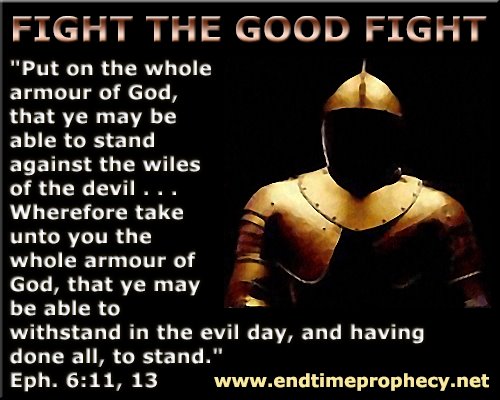

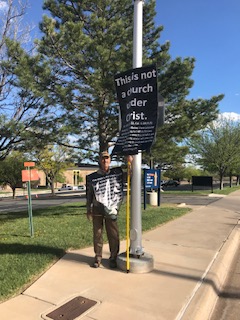
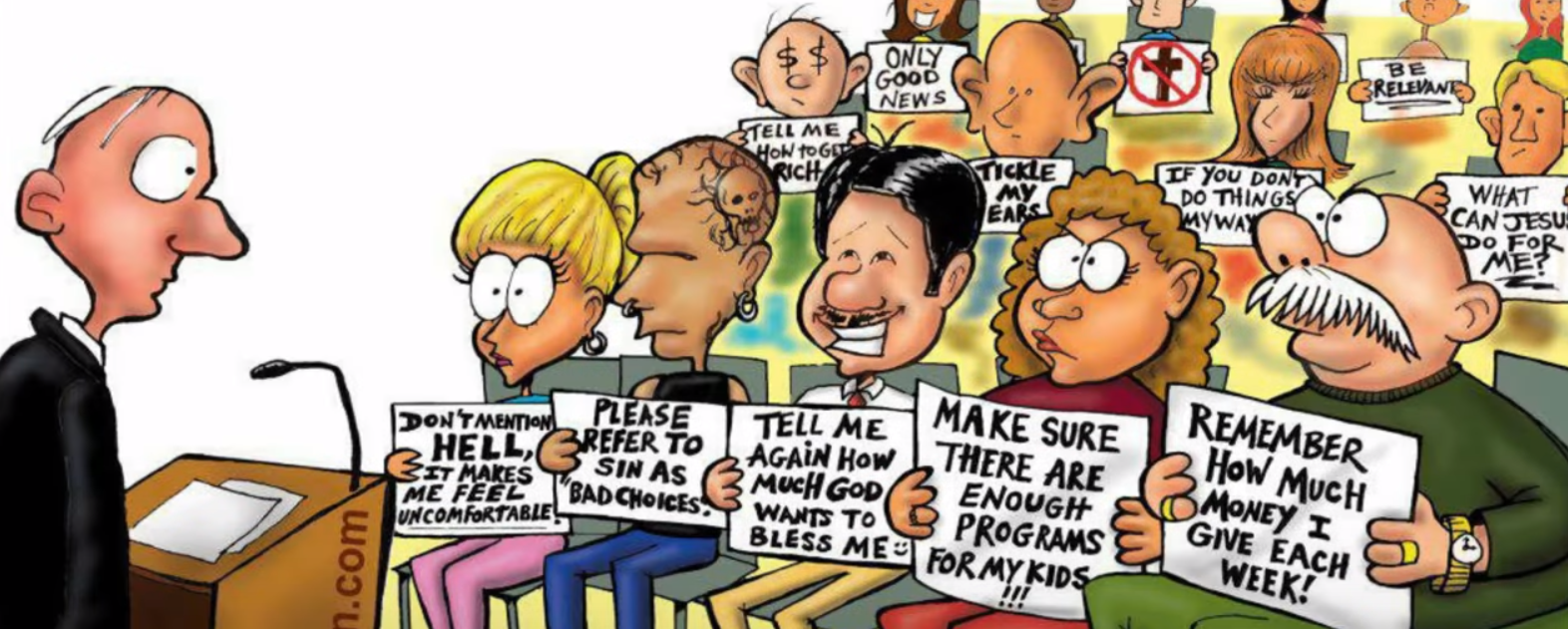
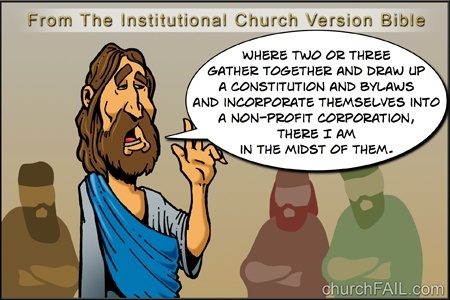
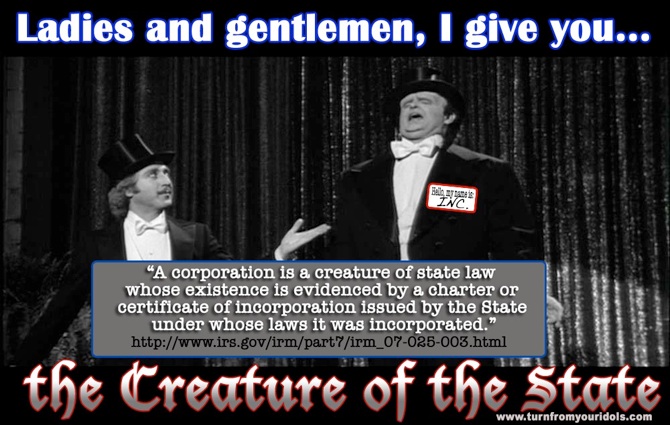
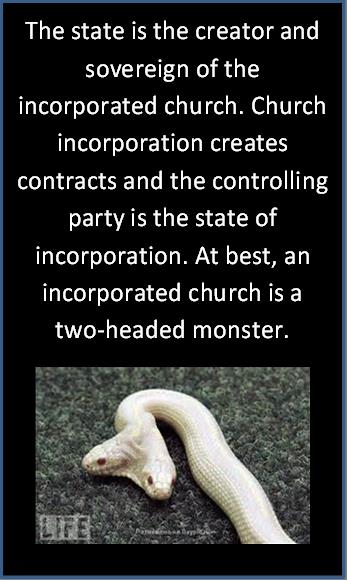

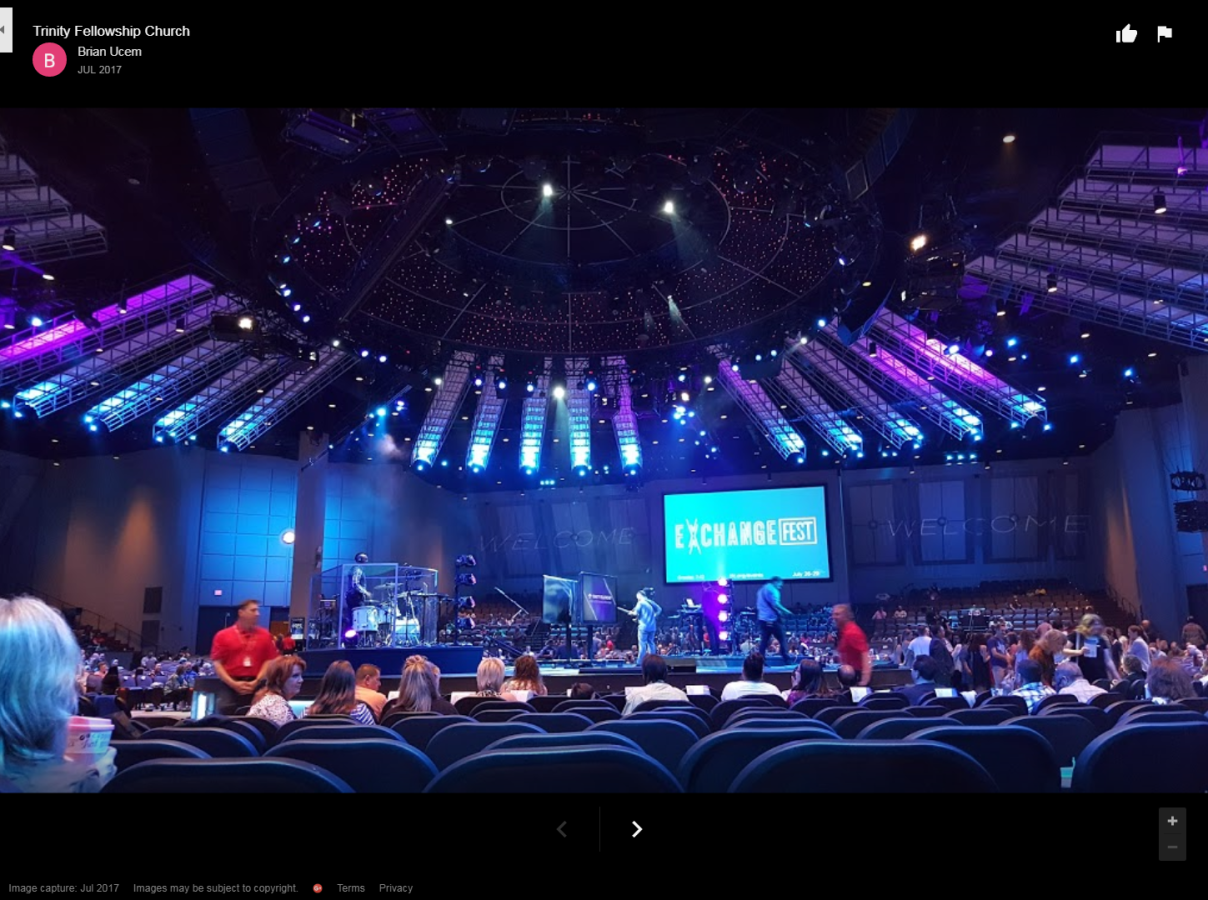
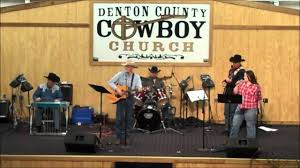
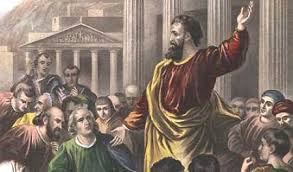
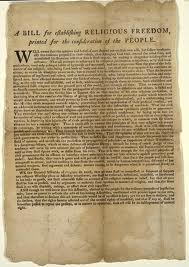



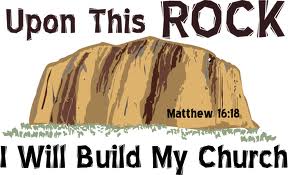
 Only a very small remnant of churches who name the name of Jesus and give Jesus Christ and the Bible (The King James Bible) or some interpretation of the Bible lip service are churches of Christ, churches under Christ. This is easily ascertained because almost all churches are legal entities, mainly corporate and Internal Revenue Code § 501(c)(3) or § 508 religious organizations. That alone disqualifies them as churches of Christ. Why? Because such churches have chosen to submit themselves to more than one authority. They have betrayed their first love, the Lord Jesus Christ. See
  Likewise, a church who obtains Internal Revenue Code Section 501(c)(3) or 508 tax exempt status has further betrayed the Lord Jesus Christ. Such a church chooses to submit herself to the federal government through its agency, the Internal Revenue Service and the rules that come with 501(c)(3). For more details on 501(c)(3) and 508 status, see
  Simply Church