Is a Church a Hospital for Sinners?

CLICK HERE TO GO TO
LETTERS AND QUESTIONS FROM PASTORS AND OTHERS ANSWERED
Jerald Finney
January 28, 2019
Edited January 19, 2024

I received the following e-mail on January 28, 2019:

Good morning Brother Finney,

I’m going to use your outline “The Doctrine of the Church” to teach on Wednesday evenings. My question is one that we so often hear; I’d like your response to it: “The church is a hospital for sinners.”

I’ve always had a problem with that statement.

Thank you,
Pastor ___________________
__________________ Church

I responded to his inquiry as follows:

Dear Pastor ________________________,

I am humbled that you are using my outline to teach the doctrine of the church. I know that you will carefully examine it and modify it as the Lord leads. Please let me know if you find things that you feel need to be clarified, corrected, etc. according to the Word of God.

I humbly offer the following response to your question concerning a church being a hospital for sinners. I believe that the heresy is doing great harm to the cause of Christ. When a believer, family, church, or nation does not honor God’s Word, especially as to such a preeminent matter as the church Christ purchased with his own blood (Acts 20:28), much harm is done to the cause of Christ.

When one compares God’s New Testament church doctrine to the facts about a hospital, he can easily discern that the analogy, “A church is a hospital for sinners,” is heretical. Let us first look at some basics of New Testament church doctrine that make this clear.

Is a church a hospital for sinners? It can be, but if it is, it is not a church modeled after New Testament church doctrine. An assembly of people meeting regularly for some purpose is a church; however, most such assemblies are not churches of Christ, churches under Christ. When Christ declared that “Thou are Peter and upon this rock (Himself), I will build my church,” he knew that there were already churches (ekklesias) in existence that were not His churches and that there would be such churches in the future. He said “I will build my church,” speaking of an institution that would be made up of local autonomous assemblies of born again baptized believers under Him in all things (See Epheisians 1.22; Colossians 1.18) each diligently seeking to follow-according to knowledge, understanding, and wisdom-His New Testament principles as to calling, purpose, organization, conduct, discipleship, discipline, etc.

Christ commissioned his disciples and the churches they planted to go into the world and preach the gospel, baptize, disciple the saved and to do all that he commanded them.

  • Matthew 28:18-20: “And Jesus came and spake unto them, saying, All power is given unto me in heaven and in earth. Go ye therefore, and teach all nations, baptizing them in the name of the Father, and of the Son, and of the Holy Ghost:  Teaching them to observe all things whatsoever I have commanded you: and, lo, I am with you alway, even unto the end of the world. Amen.”
  • Mark 16:15-16:  “And he said unto them, Go ye into all the world, and preach the gospel to every creature. He that believeth and is baptized shall be saved; but he that believeth not shall be damned.”
  • Luke 24:46-47: “And said unto them, Thus it is written, and thus it behoved Christ to suffer, and to rise from the dead the third day: And that repentance and remission of sins should be preached in his name among all nations, beginning at Jerusalem.”
  • Acts 1:8 But ye shall receive power, after that the Holy Ghost is come upon you: and ye shall be witnesses unto me both in Jerusalem, and in all Judaea, and in Samaria, and unto the uttermost part of the earth.

See, for more information on the foundation of Christ’s churches: The New Testament of Jesus Christ:  His Executor Named and Empowered.

Before our Lord ascended to heaven, the Lord, being assembled together with His church:

Acts 1:4 : “… commanded them that they should not depart from Jerusalem, but wait for the promise of the Father, which, saith he, ye have heard of me.” … Acts 1:8: “But ye shall receive power, after that the Holy Ghost is come upon you: and ye shall be witnesses unto me both in Jerusalem, and in all Judaea, and in Samaria, and unto the uttermost part of the earth.”

Thus did the disciples; and, on the day of Pentecost, Christ filled them with the Holy Ghost (Acts 2.1-4) as foretold by John the Baptist (Matthew 3.26; Mark 1.8, Luke 3.16).

Immediately, Peter stood up and preached the gospel (Acts 2.1-36).  “Then they that gladly received his word were baptized: and the same day there were added unto them about three thousand souls” (Acts 2.41). Three thousand souls were added to them (Christ’s church which had waited at Jerusalem)! Those who were saved were baptized and added to the only church under Christ in existence at that time, the church at Jerusalem.

“And they continued stedfastly in the apostles’ doctrine and fellowship, and in breaking of bread, and in prayers. And fear came upon every soul: and many wonders and signs were done by the apostles. And all that believed were together, and had all things common; And sold their possessions and goods, and parted them to all men, as every man had need. And they, continuing daily with one accord in the temple, and breaking bread from house to house, did eat their meat with gladness and singleness of heart,  Praising God, and having favour with all the people. And the Lord added to the church daily such as should be saved” (Acts 2:42-47).

This is the  pattern for all believers and churches from that time on: salvation, baptism into a local church body, discipleship in the assembly, and going into the world in accord with His will. God makes this clear as one studies his doctrine of the church as given us by the apostle Paul in his epistles.n Of course, as a continued study in God’s epistles given us by the apostle Paul, the members of every church are not required to sell all their possessions and goods and part them to all men, as every man has a need. They first church did this voluntarily and not as a requriement.

God’s epistles written by the Apostle Paul further develop the doctrine of the church. Those epistles “fully reveal and instruct as to the purpose of local churches as to their unique place in the counsels and purposes of God.” Through those epistles we know that a church under Christ:

  • “is not an organization, but an organism, the body of Christ; instinct with His life, and heavenly in calling, promise, and destiny. Through him alone we know the nature, purpose, and form of organization of local churches, and the right conduct of such gatherings.”

A New Testament church is a spiritual organism (See, What Is a Spiritual Entity?) made up of born again believers. God reveals the make-up and purpose of a church under Christ in Ephesians; 1 Corinthians 12-14; Romans 12.3-8 and other passages:

Ephesians 4:11-16: “And he gave some, apostles; and some, prophets; and some, evangelists; and some, pastors and teachers; For the perfecting of the saints, for the work of the ministry, for the edifying of the body of Christ: Till we all come in the unity of the faith, and of the knowledge of the Son of God, unto a perfect man, unto the measure of the stature of the fulness of Christ:  That we henceforth be no more children, tossed to and fro, and carried about with every wind of doctrine, by the sleight of men, and cunning craftiness, whereby they lie in wait to deceive; But speaking the truth in love, may grow up into him in all things, which is the head, even Christ:  From whom the whole body fitly joined together and compacted by that which every joint supplieth, according to the effectual working in the measure of every part, maketh increase of the body unto the edifying of itself in love.”

New converts are immediately added to the family of God. God desires them to be baptized into a local church body under Christ. Sadly, such churches are few and far between in America and elsewhere in the world. We see this progression in Ephesians 2:19-22:

  • “Now therefore ye are no more strangers and foreigners, but fellowcitizens with the saints, and of the household of God; And are built upon the foundation of the apostles and prophets, Jesus Christ himself being the chief corner stone; In whom all the building fitly framed together groweth unto an holy temple in the Lord: In whom ye also are builded together for an habitation of God through the Spirit.”

First, addition to the household or family of God, then baptism and church membership. Of course there are those who get saved and do not become church members, but that is not God’s ideal. He wants every believer to be a member of a local church of Christ.

God’s churches under Christ are for the saved and their purpose is stated in Ephesians 4.11-16, 1 Corinthians 12, and other passages. A church is for the saved, not for the lost. Saved church members are to assemble for the purposes given in Ephesians 4.11-16. Then, they are to go out into the world as ambassadors for Christ and preach the gospel to every creature! When sinners get saved, God wants them to be baptized into a local church under Christ.

I suggest that 1 Corinthians 2 gives insight into why the local assembly is for the saints, not the lost. The lost are worldly, fleshly. The saved are heavenly, spiritual. Lost people cannot know the things of God as can born again believers. They are  dead in trespasses and sins whereas the saved are spiritually alive. They serve the god of this world. “And you hath he quickened, who were dead in trespasses and sins; Wherein in time past ye walked according to the course of this world, according to the prince of the power of the air, the spirit that now worketh in the children of disobedience” (Ephesians 2.1-2).

The New Testament teaches that new believers are to be baptized into a Bible believing church under Christ according to Ephesians 4, 1 Corinthians 12, Romans 12.3-8. There they enjoy the fellowship with other believers in the Holy Spirit and are equipped to go to their homes, to the workplace, and to the world as ambassadors winning the lost to Christ and baptizing them into a local New Testament church of Christ.

Instead, many churches tell their members to bring the lost to church where they will hear the gospel and do little to mature the spiritual babies in the assembly. Many of those churches will preach nothing but “salvation” on Sunday morning; and, at other times and at best, little more than a few simple fundamentals of the faith. As a result, most believers remain spiritual babies fed with milk (See 1 Corinthians 3.1-3; Hebrews 5.11-14 and 6.1-2) distracted and misled by the many lost in their midst. A small remnant of Christ’s churches carry out His commission and purposes as the mega-churches and false prophets (such as Joel Olsteen) preach the heresies of the devil to assemblies of lost people (for the most part) and lead untold millions to hell (See, e.g., 2 Corinthians 11.13-15).

Briefly, a hospital is a place which provides for a paid in-patient service and treatment for a worldly disease, sickness, or injury. One does not become a member of a hospital and leaves when he dies or the service and treatment ends. The hospital does not disciple its patients, operate as a worldly or spiritual assembly or congregation, etc. Most adults their right minds know this and much more about hospitals which clearly distinguish them from a New Testament Chruch. Believers, and especially those who are church members should be able to figure this out; but, sadly, most believers know little or nothing about God’s New Testament church doctrine

If anyone disagrees upon the foundation of the King James Bible, I ask them to please explain. If proven wrong, a published repentence will follow.

I hope this is helpful. Again, let me know if you believe something needs correction.

For His Glory,
Brother Jerald Finney
The Indiana Board of Tax Review Determines that Church Property Held in Trust for the Lord Jesus Christ Must Be Granted Property Tax Exemption

Click the above to go directly to the Youtube of the hearing.

Jerald Finney
January 23, 2019
* See Endnote for Indiana Tax Code for Religious Property Tax Exemption

Trinity Springs Baptist Church had executed a Declaration of Trust in accordance with the First Amendment to the United States Constitution and corresponding Indiana Constitutional provisions. The county tax board had honored the tax exemption on the real property held in the trust estate for some years. However, in 2013 the local property tax board denied the exemption.

The issues in the case were:

  1. whether the the church had to be incorporated and obtain Internal Revenue Code § 501(c)(3) status in order to qualify for the property tax exemption;
  2. whether a church which files a letter of notification stating the that the sole purpose of the property was for worship and explaining that filing an exemption application was against the Church’s religious precepts instead of the state application for property tax exemption is disqualified from receiving the property tax exemption.

Martin Jones, Pastor of Trinity Springs Baptist Church requested an administrative hearing in accordance with Indiana law to contest the denial. That hearing was video recorded. The video is linked to in the following online article: Trinity Springs Baptist Church Wins Tax Case. The two witnesses for Trinity Springs at the hearing were Pastor Jones and Greg Dixon, Pastor of Indianapolis Baptist Temple. Pastor Dixon testified as to a property tax exemption issue involved with IBT which had been unincorporated and organized using the Declaration of Trust since the 1980s. Pastor Jones’ testimony is very instructive. The state offered testimony and argument at the hearing. The facts and issues were well explained by Pastor Jones at the hearing. Pastor Jones’ Defense is a transcript of the defense testimony given by Pastor Jones at the hearing.

Pastor Jones entered the following exhibits into the record at the hearing before the local tax board:

  • Petitioner Exhibit A – Trinity Springs Baptist Church Congregational Resolution,
  • Petitioner Exhibit B – The Trail of Blood, J.M. Carroll,
  • Petitioner Exhibit C – Trinity Springs Baptist Church Letter of Notification to Assessor, 2006
  • Petitioner Exhibit D – Trinity Springs Baptist Church Letter of Notification to Assessor, 2013
  • Petitioner Exhibit E – 1989 Memorandum from State Board of Tax Commissioners to County Auditors regarding exemption of religious property,
  • Petitioner Exhibit F – Biblical and Historical Baptist Position –Separation of Church and State (click to go to PDF of that Exhibit), and
  • Petitioner Exhibit G – 2007 pay 2008 tax statement.

The local tax board denied the property tax exemption after the hearing. Pastor Jones appealed to the Indiana Board of Tax Review who held for Pastor Jones in all matters. Go to the PDF of the Final Determination of the Board of Tax Review by clicking the following: FINAL DETERMINATION OF THE INDIANA BOARD OF TAX REVIEW. That determination lays out the facts, procedural history, issues, and analysis of the case.

The Indiana property tax exemption hearing process is much more friendly to those who wish to contest property tax matters than that of some states. Minnesota, for example, has no agency hearing process and property tax payers must petition the  Minnesota Tax Court in their attempts to obtain relief, a much more cumbersome and time consuming process. It can take years for the Minnesota Tax Court to get to a case and the rules of civil procedure involved are much more cumbersome than those of the Indiana agency approach. So much so that it would be very difficult for one such as Pastor Jones to deal with the case pro se in Minnesota and some other states. Of course, had Pastor Jones lost in the agency process he could have appealed to state court.

Click here to go to: Trinity Springs Baptist Church Trust: Pastor Martin Jones, A Hero of the Faith Gives His Testimony Concerning His Battles Against Government Intrusions Into God’s Churches


Endnote

Indiana Code Title 6. Taxation § 6-1.1-10-21

Sec. 21. (a) The following tangible property is exempt from property taxation if it is owned by, or held in trust for the use of, a church or religious society:

(1) A building that is used for religious worship.

(2) The pews and furniture contained within a building that is used for religious worship.

(3) The tract of land upon which a building that is used for religious worship is situated.

(b) The following tangible property is exempt from property taxation if it is owned by, or held in trust for the use of, a church or religious society:

(1) A building that is used as a parsonage.

(2) The tract of land, not exceeding fifteen (15) acres, upon which a building that is used as a parsonage is situated.

(c) To obtain an exemption for parsonages, a church or religious society must provide the county assessor with an affidavit at the time the church or religious society applies for the exemptions. The affidavit must state that:

(1) all parsonages are being used to house one (1) of the church’s or religious society’s rabbis, priests, preachers, ministers, or pastors; and

(2) none of the parsonages are being used to make a profit.

The affidavit shall be signed under oath by the church’s or religious society’s head rabbi, priest, preacher, minister, or pastor.

(d) Property referred to in this section shall be assessed to the extent required under IC 6-1.1-11-9.

[Pre-1975 Property Tax Recodification Citation: 6-1-1-2(6).]

Formerly: Acts 1975, P.L.47, SEC.1. As amended by Acts 1981, P.L.68, SEC.1; P.L.74-1987, SEC.5; P.L.198-2001, SEC.30; P.L.264-2003, SEC.2.

My reply to pastor teaching on Matthew 16.18 and Ephesians 1.22 thereafter questioned by accountant about church non-taxable status and the First Amendment

CLICK HERE TO GO TO
LETTERS AND QUESTIONS FROM PASTORS AND OTHERS ANSWERED

Jerald Finney
Copyright © January 14, 2019

CONTENTS:
1. THE PASTOR’S E-MAIL
2. MY REPLY

 1. THE PASTOR’S E-MAIL

Hello Brother Finney,

I have been preaching/teaching on Mt. 16:18 and Eph. 1:22 for the last two weeks. After the service one gentleman (who is an accountant) asked me to show him where in the First Amendment it says that churches are non-taxable.

Just checking with you if I answered him correctly. The phrase, “Congress shall make no law respecting an establishment of religion OR PROHIBITING THE FREE EXERCISE THEREOF….”  Would not taxing the church fall under, “…prohibiting the free exercise thereof…”?

Thanks for the 15 page article it was very helpful, also the one about Sovereignty.

And to your question, yes our church would like to be one of your “Lighthouse Churches”.

Keeping the Faith,
Brother ________________ for
________________________

 2. MY REPLY

Dear Brother ____________________,

What a blessing to hear that you are teaching these matters. By so doing, you are already a “lighthouse church.” I hope to set up some online conferences for pastors and churches who are fighting this battle for Christ’s churches. I will let you know when we get that going. Keep up the good work and let us keep in contact.

The only way a church, an individual, or a business can become taxable is for Congress to pass a law taxing them. For Congress to pass a law taxing churches is forbidden by the First Amendment. You correctly pointed out to the accountant that for Congress to tax a church would violate the First Amendment free exercise clause. It would also violate the First Amendment establishment clause because taxing churches would require a law made by Congress which would control churches, a law respecting an establishment of religion.

It does not violate the First Amendment for civil government to tax individuals and businesses. Only churches and religions have First Amendment protections. Of course, due to the 501(c)(3) and 508 laws made by Congress in 1954, churches can choose to place themselves under federal government controls by becoming tax exempt as opposed to non-taxable. First Amendment churches are non-taxable. 501(c)(3) and 508 churches are tax exempt. When a church freely applies for 501(c)(3) status or claims 508 status, that church becomes tax exempt, not non-taxable. Tax exempt status places another authority over a church other than the Lord Jesus Christ; and certain rules enforceable by the Internal Revenue Service come with that status. First Amendment non-taxable status gives churches protection from federal government intervention in any way, unless the church has chosen to become a legal entity by applying for state non-profit corporation status or has made herself a legal entity by some other action.

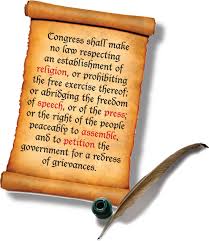
I believe 501(c)(3) and 508 are unconstitutional as applied to churches in that they violate the First Amendment religion clause: “Congress shall make no law respecting an establishment of religion or preventing the free exercise thereof.” 501(c)(3) or 508 status for churches respects an establishment of religion and prevents the free exercise thereof. Yet most churches, not being churches of Christ or churches under Christ, freely embrace 501(c)(3) and 508 status, thereby betraying their first love.

The accountant, like almost all attorneys, including myself until 2005, never knew the true history of the First Amendment. I had studied a Christian revisionist history of the First Amendment. The real history of the First Amendment makes very very clear that the First Amendment was meant to separate church and state and, in so doing, it was meant, among other things, to prevent the federal government from taxing churches and/or using tax money to support any religion or church.

In addition, the United States Supreme Court, although wrong about removing God from civil government matters, was right to declare that the First Amendment has erected a high and impregnable wall between church and state, a wall that was meant to keep church and the federal government completely separate:

  • “The constitutional inhibition of legislation on the subject of religion has a double aspect. On the one hand it forestalls compulsion by law of the acceptance of any creed or the practice of any form of worship…. On the other hand, it safeguards the free exercise of the chosen form of religion…. The interrelation of the ‘establishment’ and ‘free exercise’ clauses [according to the United States Supreme Court] has been well summarized as follows: ‘The structure of our government has, for the preservation of civil liberty, rescued the temporal institutions from religious interference. On the other hand, it has secured religious liberty from the invasion of the civil authority.’” Donald T. Kramer, J.D. Annotation: Supreme Court Cases Involving Establishment and Freedom of Religion Clauses of Federal Constitution, 37 L. Ed. 2d 1147 § 2 citing Everson v. Board of Education, 330 U.S. 1, 91 L. Ed. 711, 67 S. Ct. 504, 168 A.L.R. 1392 (1947), reh’g denied 330 U.S. 855, 91 L. Ed. 1297, 67 S. Ct. 962. For a full discussion of Everson and the removal of God from practically all civil government affairs, see Section V of God Betrayed.

In the words of Jefferson, the clause against establishment of religion by law was intended to erect ‘a wall of separation between Church and State.’” McCollum v. Board of Education, 333 U.S. 203, 210-211 (1948). Jefferson, contrary to the assertions of Christian revisionists, clearly believed in a secular state and separation of church and state.

Separation of church and state does not equate to separation of God and state. It does not mean that civil government should keep God out of civil government. God ordained civil government in order for man to have direct control over certain matters: the protection of life, liberty, and property. God desires every individual, family, civil, and church government to choose to recognize Him and to operate within the jurisdictional boundaries He set out in His Word. He also desires total separation of church and state. See Part I of God Betrayed for explanation.

I would also suggest that you refer the accountant to the Law Review Articles linked to on the following webpage: LAW REVIEW ARTICLES: 501(C)(3), 1ST AMENDMENT HISTORY, ETC.

May the Lord continue to richly bless you and and this Churches Under Christ Ministry as we go forward for His Glory.

Brother Jerald Finney

The Church Bible Trust Relationship Explained and How a Church Can Nullify Her Efforts to Remain Under Christ Only

Jerald Finney
Copyright © January 11, 2019
Since this article was published, the ministry has published an online booklet covering the trust relationship with property in much more thoroughly: Simply Church: The Holy Union of Christ and His Local Church 

More and more churches are seeking to exercise their Bible freedom and duty to operate under the Lord Jesus Christ in all things; to repent, do the first works as churches of Christ before He removes their candlesticks. American churches who desire to do so are protected by the First Amendment to the United States Constitution and corresponding state constitutional provisions. This short essay will give a simple explanation of the trust relationship used by churches in order to remain under Christ and Christ alone. Then, it will explain ways some of those churches nullify that attempt to honor the Lord Jesus Christ.
The “Bible” trust is a fiduciary relationship with real and personal property (personal property includes intangible property such as money and bank accounts) recognized but not created by man’s law. This relationship is created by an agreement between a trustor and trustee, is private, creates no contract with the state (the state is not a party), and is not subject to control by civil government and its courts. Trust documents, if any, are never required to be filed in man’s legal system through any of its courts or agencies. This type of trust is not a legal entity. The trust relationship can be established orally or in writing; a properly drafted writing is better.  If not in writing, and if the facts show the intent to establish a relationship with property to be held by a trustee for the benefit of the true owner of the property then a trust relationship has been established. This is so no matter the terms used. It is not necessary to use the terms “trust,” “trustor,” “trustee,” “trust estate,” or “beneficiary” for a trust relationship to come into existence if the essentials of the relationship are there.

The trustor creates the relationship and names a trustee who agrees to administer a trust estate funded by the trustor (and others, if any, who wish to contribute to the trust estate) solely for the benefit of another, the true owner of the trust estate, the beneficiary. The trustor merely establishes the trust relationship. The trustee administers the trust estate solely for the benefit of the owner of the trust estate. Once assets are placed in the trust estate, those assets permanently belong to the beneficiary, not to the trustor  (in an irrevocable trust).

An inactive trust is no trust at all. The elements of valid trust are: trustor, trustee, beneficiary, and trust estate. If an element is missing, there is no trust. If there is no trustor, trustee, trust estate and beneficiary there is no trust. Without a trust estate, there is no trust. For a trust relationship to exist, all elements of the trust must exist. If there is no trust estate, there can be no trust. One cannot establish a fiduciary relationship with property if there is no property.

Some churches have properly drafted and executed documents establishing a proper trust relationship in order to remain under the Lord Jesus Christ only; but they have nullified their efforts by never listing trust property to the trust estate in an appendix to the trust document. All property and assets in the trust estate should be listed in the appendix. Again, if no property is placed in the trust estate, the trust is non-existent. The Appendix should list all personal property (song books, pews, musical instruments, etc.), real property, motor vehicles, bank accounts and other assets held in trust estate.

Another way churches who have set up a trust relationship with money and property – through a Declaration of Trust, Procedures, or whatever the document is titled – nullify their efforts to remain under Christ only is to act legally. When a church acts legally, she is a legal entity subject to the jurisdiction of civil government.

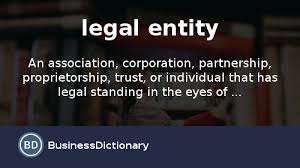
What is a legal entity? A legal entity is an entity that can be sued, sues, can be charged with a crime, enters into contracts or acts legally in any way. When a church acts legally, she has declared herself to be a legal entity.

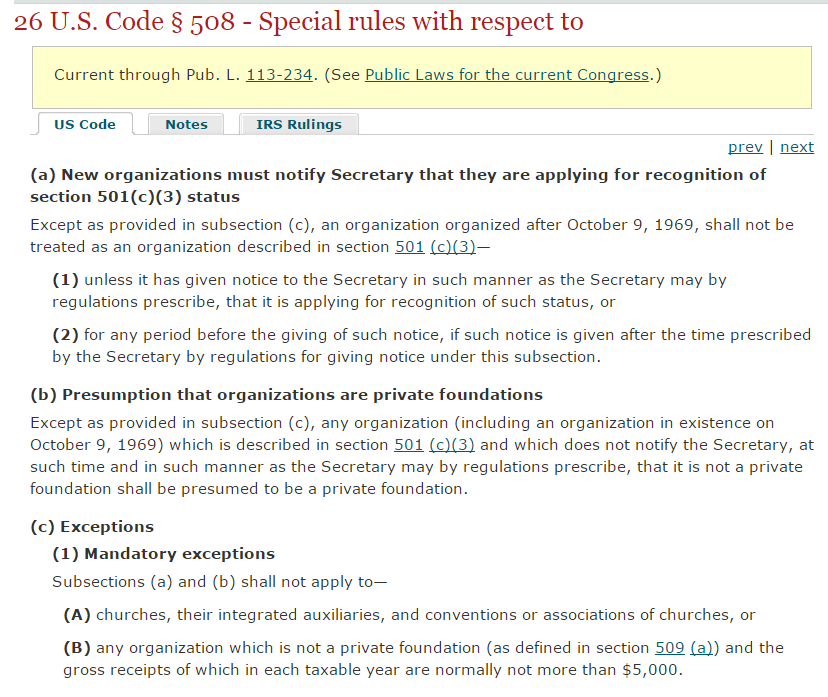
How can a church act legally? She can, for example, hold deed to real property, open a bank account, hold title to motor vehicle(s), hold insurance, contract, borrow money, incorporate the church or a ministry of the church, get Internal Revenue Code § 501(c)(3) or § 508 status for the church or a ministry of the church, have employees, pay salaries or do anything else in accordance with or subject to man’s legal system and not according to New Testament church guidelines and example. A church who holds insurance admits that she is a legal worldly entity who can be sued. Doing anything is man’s system makes a church a legal entity subject to man’s law.

A properly implemented trust relationship with money and/or property keeps a church entirely out of man’s earthly legal systems and under the Lord Jesus Christ in all things. That is, if the church does not misstep and declare herself to be a legal entity subject to the law of man in some other way. Thank the Lord and The Trail of Blood of the Martyrs of Jesus who in putting Christ first in all things paid the price that gave all Americans freedom of religion and soul liberty as guaranteed by the First Amendment to the United States Constitution and corresponding state constitutional provisions.

“… Christ also loved the church, and gave himself for it; That he might sanctify and cleanse it with the washing of water by the word, That he might present it to himself a glorious church, not having spot, or wrinkle, or any such thing; but that it should be holy and without blemish. … For we are members of his body, of his flesh, and of his bones.” (Ephesians 5.25-27, 30).


Recommended Online Booklet published after this article which explains the Bible Trust in much more detail:   Simply Church: The Holy Union of Christ and His Local Church (Booklet which explains the Bible Trust in much more detail than this article)

Other resources which will be of help in understanding the concept of trust.

Law on Church Organization (Trusts, Property Tax, Etc.)

Links to Essays, Articles, and Other Resources:

The Bible Trust Relationship: Links to Essays and Other Resources

Can One Become a “Sovereign Citizen?”

Jerald Finney
Copyright © January 8, 2019

The sovereign citizen movement grew out of a belief in government abuses of power. Can one really become a sovereign citizen? Yes and no. Does the Bible teach earthly sovereignty for the individual? Yes and no. This short article addresses these issues primarily in the American context.

Technically, everyone born in a nation is a legal or lawful entity subject to the laws of that nation no matter what steps he takes to divorce himself from the law and become “sovereign.” Practically, one may be able to live his entire life as sovereign and never get entangled with the laws of a nation.

Some, in their attempt to become sovereign, do not get a social security number, a driver’s license, or any other government document that ties them to man’s law. American civil government, before the social security number, the driver’s license, or any other kind of license or government contract or document, considered everyone born in America to be a legal entity and so it is today. Today those who have no social security or other government number or license are considered to be citizens and legal entities. Nonetheless, one may be able to live his life as a “sovereign citizen.”

One who takes steps to become a “sovereign citizen” may, for all practical purposes, remain so because American civil government may never interfere with his life in any way. No one in America is forced to get a driver’s license or a social security number or to enter into any agreement with the civil government or with any individual or company. As long as a person controls his life so as not to interfere with or harm the rights of life, liberty, and property of any other person or entity or does interfere with the rights of others and does not get caught, the effects of being a legal or lawful entity will be nonexistent unless he is falsely accused.

If one can remain unnoticed by and outside the jurisdiction of civil government, the effects of being a legal or lawful entity will be nonexistent. Moving to the middle of the Alaskan wilderness by oneself or with one’s family may be the best choice for the man who wishes to remain sovereign. Living in the middle of New York City might work if, in addition to finding and remaining outside any civil government contracts and licenses, one finds a way to provide for himself and those, if any, to whom he is responsible and he:

  • does not enter into any contract with civil government or get any government license or number;
  • does not enter into and/or violate any contracts or agreements with another;
  • does not harm another and get sued for so doing;
  • does not commit a crime and get cited or charged and apprehended;
  • does not get falsely accused of a crime and get cited or charged and apprehended;
  • does not harm or interfere with another’s life, liberty, or property (or without being found out if he does so); and
  • does not act legally in any way.

If anyone commits a crime, he will be charged (if police have facts which give probable cause to believe he did it). If he knowingly, intentionally, negligently (and sometimes recklessly) harms another and causes damages, the victim can file a civil suit for damages. Therefore, one is a legal entity who has, practically speaking, come under the technical definition of “legal entity.” One can choose, even though he may not do so, to enter into agreements or contracts with others. If he ever hires someone to do a job for him, he entered a contract with them to do the work. If he hired them, they did the job as agreed, and he does not pay them as agreed for their services completed, they can sue him whether he has a social security or other government number or not, whether he claims to be “sovereign” or not. One can choose to act legally or not. But one cannot choose to completely remove himself from the legal system such that he is not liable for his crimes or torts. Etc. Therefore, by definition, one is a “legal entity.”

God ordained civil government for certain purposes. He gave civil government jurisdiction over certain matters – the protection of life, liberty, and property. Without direct earthly control of man by man, as is proved by the period between the Fall and the Flood, mankind quickly becomes totally corrupted; violence fills the earth. Jesus did not fight civil government, nor did the apostles and Historic Christians (Historic Baptists by whatever name called).  They did not fight it even though they always chose to obey God rather than men when man’s law contradicted God’s law and forbid them to honor God. They did not fight it although it was tyrannical and was not under God as God ordained. They obeyed God in all things and man as to those matters which did not cause them to violate God’s commandments.

God’s Word teaches that God put earthly controls, civil governments, in place to control earthly fleshly people, those who are not born again of the Spirit (not spiritual beings), and those who say that they are but are not or who say they are but walk in the flesh. Just because civil governments are corrupt and guided, for the most part, by the god of this world and his principles does not mean that one should, according to the will of God, treat civil government as having no authority. Jesus, the apostles, and authentic Christians over the last two thousand years have followed Bible teaching and honored civil government as long as civil governments and combinations of religion and state such as the Catholic/Protestant establishments did not try to force them to dishonor God’s law. When that happened, they lay down their lives for the faith rather than betray our Lord.

Letter and reply to a born again believer who left a church that would not discuss the issue of church corporate 501(c)(3) status

CLICK HERE TO GO TO
LETTERS AND QUESTIONS FROM PASTORS AND OTHERS ANSWERED

Letter received January 8, 2019:

Bro Finney,

Do you think going to talk to Pastors would make a difference? (I could take them your book) or are they all not willing to listen because they have to report numbers to their denominations?

I had met a very old Pastor outside of San Marcos that had to close down his church under the pressure about 10 years ago. He was in his late 80’s and it was just too much for him.  He would not go 501c3.

I have to tell you, i stopped going to the little Hispanic church – after my conversation with the pastor and the two elders .. I kinda go the cold shoulder. It made me sad and I did have one more conversation with the pastor and he hem hogged and said that it wasn’t his decision alone .. excuses excuses.  To tell you the truth –  I lost respect for him.

That church was not New Testament.. It was like a Hebraic root church, they sang so pretty and they study Hebrew and they meet on Friday nights for 2 hours and Saturdays all day almost from 11am to about 6pm. it was very nice and the music was great but to me it seemed like they were saying two things at once.

  • they want to only celebrate Biblical Holidays …
  • they only use Yeshua or Hashem – they do not say Jesus …
  • they keep Sabbath day …

I know they love Him but at the same time they wanted to be a 501c3.. .. to me it seemed like double talk – they are not in obedience – they are just going through the motions.

Thank you for all the work you do for Him.

____________________

My Reply

Dear _____________________,

They are off on a lot of Bible doctrines. Let me first deal with the church corporate 501(c)(3) status, then briefly mention the other matters you spoke of.

There are false theologies which teach union of church and state. Some branches of the universal church doctrine have no problem with combination of church and state because they believe the “true church” is in heaven and that they can do what they want since God has given no commandments or principles for the organization, conduct, etc. of the local assemblies on earth. Certain Christian Revisionists have adopted theologies such as replacement theology, reconstructionism, dominionism, and theonomy  nd other “Christian” revisionists believe that the principles that applied to Israel (union of religion and state under the theocracy) are to be applied to church and state in Gentile nations. Impossible! God was over Israel – both the religion and the civil government – and both worked together under Him.

Such heresies adopt an unbiblical definition of “theocracy.” The Bible truth is that since God has not ordained theocracy for Gentile nations (and Israel rejected her theocracy), there can be no Bible theocracy today. So religion (Catholicism first, then Protestantism) invented a “theocracy” which combines church and state and which would put religion over state if implemented as they desire. They work toward that end in America on a gradual basis – first to combine church and state, then to establish one religion. This is a worldwide effort by false religions (an ecumenical movement) which will ultimately bring in the one world religion headed by the religious whore of whores, the Catholic Church.

So the church you left may be the product of one of those heresies, or they may never have really studied the matter out.. I suggest that you get and read The Trail of Blood of the Martyrs of Jesus which explains this. Also, read the first three sections of God Betrayed (free online).

Be encouraged. The Bible tells us of the apostasy of the church. These things are to be expected. He will always have a remnant until His earthly kingdom is established. We, His remnant, will be rewarded as we stand for Him. We serve Him because we love Him. All we can do is give out God’s truths. Of course, God’s ideal is for His children to also be a member of a local church under Christ. As you know, churches (assemblies of people, ekklesias) are everywhere in America, but local churches of Christ are few and far between. See, The New Testament of Jesus Christ:  His Executor Named and Empowered.

As to the other matters you brought up:

  • They probably celebrate the Jewish “holidays” which are not for God’s New Testament Churches.
  • New Testament churches are to worship on Sunday, not on the Sabbath.
  • The Lord’s name in English is Jesus, not Yeshua or Hashem. On the day of Pentecost, God used his preacher to speak to them all in their language at the same time. He did not speak to them in Hebrew or Greek, but in their individual languages.
  • We have the Word of God in English—the King James Bible. So why learn a foreign language?

They are off base on a lot of matters. They do not rightly divide the Word of truth. 2 Corinthians 11:14: “And no marvel; for Satan himself is transformed into an angel of light.” John 15:10: “If ye keep my commandments, ye shall abide in my love; even as I have kept my Father’s commandments, and abide in his love.”

God bless as you seek the Lord’s will.

Brother Jerald Finney

Legal answer to Pastor’s inquiry concerning whether a potential donor of substantial gift can claim a tax deduction under IRC Section 508 even though the church will not give an IRS acknowledgement

Jerald Finney
BBA, JD
December 31, 2018

Internal Revenue Code Section 508. Click image above to go directly to 508.

Contents:
1. The Issues Presented
2. My Legal Analysis
Introduction
a. Analysis of issue 1: Analysis of the pastor’s observations:
  (1) A church is NOT required to apply for 501(c)3 status, and
(2) Donations to that church ARE still automatically tax deductible.
b. Analysis of issue 2:
“We are looking for a legal opinion that can explain to this person that a church is automatically a qualified organization (per IRS own documentation) and donations are tax deductible even if the church has not applied for the 501c3 recognition (per IRS own documentation).”
3. Conclusion

1. The Issues Presented

I received some important e-mail questions from a pastor of an incorporated non-501(c)(3) church. The entire interplay between he and I is in in Endnote [i] His initial email with issues he was concerned about was as follows:

Issue 1: The following is copied and pasted from one of the pastor’s emails to me:

“Are you available for us to hire to provide a legal opinion on the following two statements:
(1) A church is NOT required to apply for 501(c)3 status, and
(2) Donations to that church ARE still automatically tax deductible.
Thanks
Pastor ____________

“The IRS states that a church is automatically a qualified organization, and therefore contributions are automatically deductible.

“See IRS Publication 526:
Organizations that qualify to receive Deductible Contributions:
You can deduct your contributions only if you make them to a qualified organization. To become a qualified organization, most organizations other than churches and governments, as described below, must apply to the IRS. 
 Examples: The following list gives some examples of qualified organizations: Churches, a convention or association of churches, temples, synagogues, mosques, and other religious organizations.

“In order to be considered for 501(c)(3) tax-exempt status by the IRS, an organization
must fill out and submit an “Application for Recognition of Exemption” on IRS Form 1023,
however churches are NOT required to file this application, and are automatically exempt.

“See IRS Publication 557:
Organizations not required to file Form 1023 –
Some organizations are not required to file Form 1023 or 1023-EZ. These include: Churches, interchurch organizations of local units of a church, conventions or Associations of churches, or integrated auxiliaries of a church, such as a men’s or women’s organization, religious school, mission society, or youth

“See IRS Publication 1828:
Recognition of Tax-Exempt Status – Automatic Exemption for Churches
Churches that meet the requirements of IRC Section 501(c)(3) are automatically considered tax exempt and are not required to apply for and obtain recognition of tax-exempt status from the IRS. Although there is no requirement to do so, many churches seek recognition of tax-exempt status from the IRS

“Thanks
Pastor ____________
[Phone No. ___________________________]”

Issue 2. He further defined what he was asking in another e-mail:

We already operate our church as a non-501(c)3 church and have no intention of applying. Our members contribute to the church without worrying about tax deductible receipts.
However, the issue we are actually dealing with, is a specific person that wants to donate a very sizeable amount of money, but they want to be able to claim that donation as a tax deduction on their income tax return. We of course have no intention of applying for 501c3 status just to accomodate this person, regardless of the amount of money they want to give.
We are looking for a legal opinion that can explain to this person that a church is automatically a qualified organization (per IRS own documentation) and donations are tax deductible even if the church has not applied for the 501c3 recognition (per IRS own documentation).

2. My Legal Analysis (by phone and reproduced here)

Introduction

First, let me commend you on seeking legal advice on this matter from an attorney who understands these matters instead of a “Christian” legal firm or lawyer who promotes church legal status such as corporate 501(c)(3) or 508(c)(1)(A) status; such attorneys and firms not only misunderstand the relevant legal principles, they also, and more importantly, do not understand the relevant Bible principles of church, state, and God’s desired relationship between church and state. Included in those firms are private firms, as well as firms such as the “Christian” Law Association, the Christian Legal Society, and many others. Even the Alliance Defense Fund has now joined ranks with them.

It is big business, big money, and big power for those “Christian” lawyers and law firms who promote union of church and state. Why? Because incorporated and 501(c)(3) and 508(c)(1)(A) churches are a continuing and rich source of revenue for their unholy activities. They get payment or “gifts” from a multitude of churches and believers who have succumbed to their lies and manipulations. Their churches become part of the legal system and many matters disputed within their churches can be taken to their authority—the government courts.

Who is needed for the legal matters with which an incorporated, 501(c)(3) or 508(c)(1)(A) church is entangled? Who is needed to advise them on how to write their constitutions, by-laws and other documents? Who is needed to advise them on how to conduct their affairs so as to counter feared government intrusions into their affairs? Who is needed by both sides of a conflict initiated by one faction of a church against another faction, or members against a pastor, or for other matters which one or more members may wish to take to their authority, to court? Lawyers and more lawyers are needed. They sustain themselves by sucking money out of incorporated 501(c)(3) or 508 believers and churches, money which could be used for the glory of God, as well as from other incorporated 501(c)(3) organizations such as The Church of Satan, The Church of Wicca, Planned Parenthood and the list goes on and on.

Luke 11:39-48: “And the Lord said unto him, Now do ye Pharisees make clean the outside of the cup and the platter; but your inward part is full of ravening and wickedness. Ye fools, did not he that made that which is without make that which is within also? But rather give alms of such things as ye have; and, behold, all things are clean unto you.  But woe unto you, Pharisees! for ye tithe mint and rue and all manner of herbs, and pass over judgment and the love of God: these ought ye to have done, and not to leave the other undone. Woe unto you, Pharisees! for ye love the uppermost seats in the synagogues, and greetings in the markets. Woe unto you, scribes and Pharisees, hypocrites! for ye are as graves which appear not, and the men that walk over them are not aware of them. Then answered one of the lawyers, and said unto him, Master, thus saying thou reproachest us also. And he said, Woe unto you also, ye lawyers! for ye lade men with burdens grievous to be borne, and ye yourselves touch not the burdens with one of your fingers. Woe unto you! for ye build the sepulchres of the prophets, and your fathers killed them. Truly ye bear witness that ye allow the deeds of your fathers: for they indeed killed them, and ye build their sepulchres.

2a. Analysis of issue 1, the pastor’s observations:
  (1) A church is NOT required to apply for 501(c)3 status, and
(2) Donations to that church ARE still automatically tax deductible.

You have misread the documents (the Internal Revenue Service Regulations you cited). You have also read them out of context. To fully understand these matters, one must read and understand:

  1. the portion of Publication 1828 which you quoted: “Churches that meet the requirements of IRC Section 501(c)(3) are automatically considered tax exempt and are not required to apply for and obtain recognition of tax-exempt status from the IRS.” [Bold red emphasis mine]. Notice that a church that meets the requirements of IRC Section 501(c)(3) is automatically considered tax exempt. Section 508(c)(1)(A) of the IRC exempts churches from the 501(c)(3) filing requirement. A church who chooses to rely on 508(c)(1)(A) for tax exempt status is in the same position as a 501(c)(3) church—it is subject to the same rules and regulations and its authority for the matters covered by those rules and regulations is the federal government through the Internal Revenue Service. For more thorough explanation, see, Endnote [ii] for list of IRS regulations for the 501(c)(3) and 508(c)(1)(A) churches and Church Internal Revenue Code § 508 Tax Exempt Status (042814); Are Churches Automatically Tax Exempt? (040822).
  2. the entirety of the relevant IRS regulations.
  3. the laws upon which the regulations are based. The IRS regulations are written by the IRS to implement laws in the Internal Revenue Code, in this instance §§ 501(c)(3) and 508(c)(1)(A) of the IRC. However, other sections of the IRS come into play, such as § 170. For more on § 170 see Spurious rationale for church corporate-501(c)(3) status: tax exemption and tax deductions for contributions OR Tax reasons given for church corporate 501(c)(3) status: a biblical and legal analysis. Keep in mind that that was written several years ago and there may have been modifications to the law since then.
  4. the relevant federal constitutional provisions and the history and meaning thereof—in this instance the First Amendment to the United States Constitution and the Fourteenth Amendment to the United States Constitution which is implicated because your church is an established church, a church incorporated under the laws of the state of incorporation. A First Amendment church is not a legal entity such as a corporation, an unincorporated association, an entity with employees, a staff, a a payroll, a constitution and/or bylaws, etc. Your church, as a legal entity has given up much of her First Amendment protection because she has submitted herself, against Bible principle and against the spirit of the First Amendment and corresponding state constitutional provisions, to civil government.
  5. the non-profit corporation law of the state of incorporation. That law may or may not, depending on the state, implicate 501(c)(3) and 508(c)(1)(A) considerations.

2b. Analysis of issue 

“We are looking for a legal opinion that can explain to this person that a church is automatically a qualified organization (per IRS own documentation) and donations are tax deductible even if the church has not applied for the 501c3 recognition (per IRS own documentation).”

The issue is one, not for your church, but for the donor. If you were not an incorporated church, I would charge you no fee. Since you are incorporated, you do not need to hire me, but if you wish me to do a complete written memorandum of law to prove my conclusions to you, I will do it for a charge. My advice at this point is that this is not a matter for your church to deal with. There is no charge for my advice to this point. 501(c)(3) goes to churches who apply for tax exempt status by submitting Form 1023. 508(c)(1)(A) tax exempt status go to churches who claims them, not to the individual donors who are concerned with receiving a tax deduction for their “gifts.” You have  made clear in our correspondence that you will not give IRS acknowledgements for gifts, no matter what, even if it means not getting a substantial donation. To claim 508(c)(1)(A) status violates your declaration as I will explain. Should the donor claim the deduction and state that he gave to a 508(c)(1)(A) church, the IRS will look to see if he has an IRS acknowledgement from the church for the donation. A church who claims 508(c)(1)(A) status is also agreeing to give IRS acknowledgements to the donor.

As I mentioned above, giving an IRS acknowledgement for tithes, offerings, and gifts subjects a church to the rules that come with 501(c)(3), even if the church has not applied for the status. If the church is not 501(c)(3), the church, by giving the acknowledgement, submits herself to 508(c)(1)(A) status which means subjection to 501(c)(3) rules and regulations.

Practically speaking, a church can submit herself to the regs and then violate them with little fear that the IRS or the government will enforce them, unless it is a high profile church who raises the eyebrows of the IRS. The IRS does not have the resources to take on churches, nor do they have the inclination. In fact, The Alliance Defending Freedom has conducted more than one pulpit initiative over the years in which hundreds of pastors announced that they were going to preach on politics on certain dates and times in violation of one of the rules that come with 501(c)(3) and 508(c)(1)(A) status, did so, and even sent copies of their sermons to the IRS admitting that they had preached them, in violation of the rules, giving the date, time, and place that they did so. The IRS did nothing.

Those pastors and churches miss the point: they were hoping that their chosen authority, the Internal Revenue Service, would challenge what they did so they could present their unlearned arguments in federal court, ultimately the United States Supreme Court. They simply do not understand that they were losers in God’s eyes, according to New Testament Church doctrine, because they put themselves into a position where an authority other than the Lord was voluntarily chosen to be the authority to which they appealed.

They had also lost, regardless of the outcome of their endeavor, because they were also incorporated under state non-profit corporation laws, thereby subjecting their churches to state non-profit corporation law and supervision for many matters. Their chosen authority was the state of incorporation.

Nor did they understand that by incorporating and getting 501(c)(3) or 508 status they had removed themselves from First Amendment status only and placed themselves, as legal persons, under the Fourteenth Amendment. See 1,000 Pastors who pledge to defy IRS and preach politics from pulpit ahead of election misunderstand the law and the hierarchy of law (100312).

So why is this important at all? Because the Supreme Ruler of the universe and our Lord and Savior Jesus Christ has made clear in His Word that He wants no other authority over His churches. He loved the church and gave Himself for it. The local visible church is the executor of His will and, as such, it to be organized and guided by His precepts alone.

If the proposed donor wishes to claim a deduction for what he gives, then it is not the church’s battle. It is his, unless you join with him. The correct motive for giving to God is love for God, not getting a tax deduction. If one wants to claim a deduction, I cannot fault him if his attitude is that he is giving because he loves the Lord, not for the deduction and if he determines that he will give no  matter whether he gets the deduction.

I believe that one way a believer who is considering the tax deduction for giving can approach this is to balance the assets with which the Lord has entrusted him against his family duties and other obligations and figure out how much he can give without claiming the deduction so as to come out the same as though he were to claim the deduction. Then, give that amount and not claim a deduction.

If he claims the deduction and the church will not give him and IRS acknowledgement, there are ways provided for in the Internal Revenue Code which allow him to claim without acknowledgement from the church [I explained this in a nutshell to the pastor—I leave that out of this article, but have explained it in my online writings.]. If he makes the claims and provides the required proof of the gift, the IRS may ask him to prove that the organization to which he gave was a church. Or, the IRS may disallow the deduction with or without such proof having been given. At that point, in my opinion, he has legitimate constitutional grounds to fight it out in court. For example, one argument that he can legitimately make is that it is contrary to the First Amendment for the government to prefer a First/Fourteenth Amendment church over a First Amendment church, a church that has chosen not to become a legal entity.

3. Conclusion

In short, a church who has determined that she will not give an IRS acknowledgement for donations cannot claim 508(c)(1)(A) status because that would directly contradict her commitment. 508(c)(1)(A), in the event of audit of the taxpayer, requires an IRS acknowledgement from the 508 church and places the church in the same position as 501(c)(3) status. The 508(c)(1)(A) church has submitted to an authority other than the Lord Jesus Christ for some purposes.

The pastor agreed that the fight should be that of the donor, not the church. He asked if it would be OK with me if he gave the person this advice and referred him to me. I agreed. I further stated that there would be a charge for my services if the donor wished a lengthy memorandum or even a lengthy oral explanation.

The pastor pointed out that the consultation had taken over the fifteen minutes and that I could send him a bill for the extra time (I had offered him a free fifteen minute consultation). I told him there would be no charge. Why? Because I love the Lord and I love my neighbor and even churches and pastors who have dishonored our Lord by becoming legal entities. I loved this pastor because of his very humble, kind and considerate attitude toward me and the honor he gave me by calling on me for help.

In the last month, I have spent many hours on the phone with a pastor of another church which is both corporate and 501(c)(3) concerning a legal suit against the church by a faction which had been disciplined out of the church. I ultimately told him to call a legal firm which handles legal matters for churches which are legal entities. I charged him nothing for all the time I gave him. Why? Because I love the Lord and I love my Christian brothers and sisters. I tell them the truth because my motivation is love for my Lord and for my brothers in Christ, not the love of money. God bless.

Endnotes

EN [i] E-mail received December 27, 2018
On Thursday, December 27, 2018, 10:55:28 PM CST, ____________________ wrote:
Hi
Are you available for us to hire to provide a legal opinion on the following two statements:
(1) A church is NOT required to apply for 501(c)3 status, and
(2) Donations to that church ARE still automatically tax deductible.
Thanks
Pastor ___________________

The IRS states that a church is automatically a qualified organization, and therefore
contributions are automatically deductible.
See IRS Publication 526:
Organizations that qualify to receive Deductible Contributions:
You can deduct your contributions only if you make them to a qualified organization. To become a qualified organization, most organizations other than churches and governments, as described below, must apply to the IRS. 

Examples: The following list gives some examples of qualified organizations:
       Churches, a convention or association of churches, temples, synagogues, mosques,
and other religious organizations.

In order to be considered for 501(c)(3) tax-exempt status by the IRS, an organization
must fill out and submit an “Application for Recognition of Exemption” on IRS Form 1023,
however churches are NOT required to file this application, and are automatically exempt.
See IRS Publication 557:
Organizations not required to file Form 1023 –
Some organizations are not required to file Form 1023 or 1023-EZ. These include:
Churches, interchurch organizations of local units of a church, conventions or
Associations of churches, or integrated auxiliaries of a church, such as a men’s or
women’s organization, religious school, mission society, or youth group. These
organizations are exempt automatically if they meet the requirements of section 501(c)(3)

See IRS Publication 1828:
Recognition of Tax-Exempt Status – Automatic Exemption for Churches
Churches that meet the requirements of IRC Section 501(c)(3) are automatically
considered tax exempt and are not required to apply for and obtain recognition of
tax-exempt status from the IRS. Although there is no requirement to do so, many
churches seek recognition of tax-exempt status from the IRS

Thanks
Pastor ____________

My reply: On 12/27/2018 8:59 PM, Jerald Finney wrote:

Yes, I am available to hire. Thanks. 512-785-8445

On Saturday, December 29, 2018, 8:51:52 AM CST, ____________________________ wrote:

Hi Jerald, Can we setup a phone call on Monday? Maybe  8:30am PACIFIC time? Can you tell me the charges for your services?
Thanks

On 12/29/2018 10:17 AM, Jerald Finney wrote:

Dear Pastor __________,

I cannot tell you what I will charge for my services at this point. I would be glad to do a 15 minute consultation with you at 10:30 a.m. Monday morning at no charge in order to get an idea of the extent of the time needed to research your issues and reach an opinion. If you wish to extend the time of that consultation, my fee is $150.00 per hour.

If those terms are agreeable, please let me know. If you wish to do the Monday morning consultation, I will need you to answer some initial questions. I only have one matter to ask you about at this point. Is your concern:

  • to establish a church according to New Testament principles, that is a church under Christ in all things, a church ordered according to New Testament church doctrine?
  • to avoid the rules that come with 501(c)(3)?
  • all of the above?
  • all of the above plus ….?
  • anything else?

Please e-mail me your answer as soon as possible. After our talk, I will get back with you to know what my charges will be. If you want me to go forward once that is determined, I ask for payment in advance.

Please note. 501(c)(3) and 508 churches are what is called “tax exempt.” They are not “tax deductible” as you indicated in your initial e-mail. First Amendment churches are non-taxable, not tax exempt. Much more needs to be said for full understanding.

God bless you and yours.

______________________________  To:Jerald Finney Dec 29 at 11:06 AM

Hi
Monday at 8:30am will work fine for 15 minutes. And payment in advance is not a problem if we decide to go forward.
We already operate our church as a non-501(c)3 church and have no intention of applying. Our members contribute to the church without worrying about tax deductible receipts.
However, the issue we are actually dealing with, is a specific person that wants to donate a very sizeable amount of money, but they want to be able to claim that donation as a tax deduction on their income tax return. We of course have no intention of applying for 501c3 status just to accomodate this person, regardless of the amount of money they want to give.
We are looking for a legal opinion that can explain to this person that a church is automatically a qualified organization (per IRS own documentation) and donations are tax deductible even if the church has not applied for the 501c3 recognition (per IRS own documentation).
Per your comments in your email, perhaps I have misread the IRS documents, but I look forward to talking on Monday morning.

Thanks

Pastor _____________________

EN [ii] 501(c)(3) and 508(c)(1)(A) tax exempt status not only come with five government imposed rules, such status also invokes a myriad of regulations. See, e.g., Publication 557 (01/2019), Tax-Exempt Status for Your OrganizationApplication for Recognition of ExemptionExempt Organizations Treasury RegulationsCharities and Nonprofits A-Z Site Index (F-J)Exempt Organization Revenue RulingsPub. 1828, Tax Guide for Churches and Religious Organizations (PDF)Common Tax Law Restrictions on Activities of Exempt OrganizationsExempt Organizations – Ruling and Determinations LettersrExempt Organizations – Private Letter Rulings and Determination LettersExempt Organizations AnnouncementsAnnual Filing Requirements for Supporting OrganizationsExempt Organizations NoticesPublic Disclosure and Availability of Exempt Organizations Returns: Copies of Exempt Organizations Tax DocumentsExempt Organization Revenue ProceduresExempt Organizations UpdateExempt Organizations – Employment TaxesThe Truth About Frivolous Tax Arguments – Section IITermination of Exempt Organization(“… Internal Revenue Code Section 6043(b) and Treasury Regulations Section 1.6043-3 establish rules for when a tax-exempt organization must notify the IRS that it has undergone a liquidation, dissolution, termination, or substantial contraction. Generally, most organizations must notify the IRS when they terminate. Among other things, notice to the IRS of a termination will close the organization’s account in IRS records. …);

Short course: important questions answered

The New Testament of Jesus Christ: His Executor Named and Empowered

1. Is it illegal for a church in America not to incorporate? Does a church have to be a 501c3?
2. Are churches automatically tax exempt?
3. What is a Spiritual entity?
4.What is a legal entity?
5. Is a church a Spiritual entity, a legal entity, or a Spiritual/legal entity? See also, Spiritual versus Legal Entities
6. Does God Care if our Church is Incorporated?
7. Should a Church Be a 508 Church?
8. Does a church in America need an Employer (Tax) ID Number?
9.What does church, inc. mean?
10. Who Is the head of an incorporated church?
11. What is 501c3?
12. What is 508?
13. What is the history of the First Amendment?
14. What is the History and Meaning of “Establishment of Religion” in America?
15. What is an established church?
16. What is a First Amendment Church?
17. Question from a Church Concerning Church Organization
18. The Bible Answer to the Question, “Is an Incorporated 501(c)(3) or 508 Church a Church of Christ?”
19. Did President Trump do away with 501(c)(3) Requirements?


The Rose of Sharon

Jerald Finney
Transcript of a sermon by Jerald Finney
December 1, 2018

PREFACE TO SERMON

[This to lay a brief foundation for the sermon—a brief explanation of the whole book “Song of Solomon. My comments and those of others, mainly Dr. J. Vernon McGee. See, for study of the Song of Solomon: The Love Relationship between Christ and His Churches as Depicted in Song of Solomon.]

Click here to go to Bible Studies on the Doctrine of the Church

Let me first point to and comment on Song of Solomon, 2.16: “My beloved is mine, and I am his: he feedeth among the lilies.” This Song of Solomon expresses the highest spiritual state of the relationship between the Lord Jesus Christ and the believer and the Lord Jesus Christ and the local visible church. There is no other book of the Bible which portrays theses relationships any better than this little book, and there is no higher plane than this right here: “My beloved is mine, and I am his.” This is one of the deepest, most profound of all theological truths which our Lord Jesus Christ put into seven simple words: “Ye in me, and I in you” (John 14.20). The bride says,”My beloved is mine, and I am his.” The Lord Jesus said, in effect,’Down here I took your place when I died on the cross. I am in you. Now you are to show forth My life down here in this world.”

“Husbands, love your wives, even as Christ also loved the church, and gave himself for it” (Ephesians 5.25).This love is depicted in Song of Solomon which is a picture of the beautiful love relationship between Christ and his churches (and between the believer and the Lord Jesus Christ). Song rebukes asceticism, but also condemns lust and unfaithfulness to the marriage vow. It is a beautiful song of marital love and the love between Christ and His churches.

The Song of Solomon, “[p]rimarily, is the expression of pure marital love as ordained of God in creation, and the vindication of that love as against both asceticism and lust—the two profanations of the holiness of marriage. The secondary and larger interpretation is of Christ, the Son and His heavenly bride, the Church (2 Cor. 11.1-4, refs.).”1917 Scofield Reference Edition, Headnote to Song of Solomon, p. 705.

The Rose of Sharon

I call this message “The Rose of Sharon.”

Song of Solomon 2:1 “I am the rose of Sharon, and the lily of the valleys.”  I believe that this was the bridegroom,the Lord Jesus speaking, that He was saying, “I am the rose of Sharon, the lily of the valleys.” I know some say it is the bride saying this, but I do not agree. If it is the bride, it has to be a reflection of the bridegroom.

The rose is an unusually beautiful flower. “An ancient author wrote: ‘If the king were set over flowers, it would be the rose that should reign over them, being the ornament of the earth, the splendor of plants, the eye of flowers the beauty of the field.’ See McGee, “Song of Solomon” pp. 131-132.

When our Lord says that He is the bread of life, He is speaking of a necessity. As the true vine, He gives the glorious,wonderful joy of the Lord. When He says He is the Rose of Sharon, He is presenting Himself not as a necessity but as an object of pure admiration and delight to mankind. God’s children need to behold Him and let Him occupy our thoughts. He is the One of truth and honesty and purity and beauty that we are to think upon. Oh would those who are lost look upon Him, doeth truth, come to Him, look upon Him, find His love, His charity.

Our Lord would say to believers and churches today, “Consider the Rose of Sharon!” Consider Him. Hebrews 3:1: “Wherefore,holy brethren, partakers of the heavenly calling, consider the Apostle and High Priest of our profession, Christ Jesus.”

When we consider Him, we must consider not only love in this sense, that is temporal earthly love—love, kindness, affection, tenderness,springing from natural relations; as the love of father, son, brother, husband,wife; but charity in the eternal spiritual sense. “In a 1 Corinthians 13 sense, charity includes supreme love to God, and universal good will to men.” Go to 1 Corinthians 13. [Comments on 1 Co. 13 in context: 1 Co. 13 follows 1 Co. 12 (of course) and is a continuation of thought for a local church body. As described in 1 Co. 12, a church is a spiritual body made up of Spirit filled believers, each with a spiritual gift or gifts. Paul says to the church at Corinth, “Now ye are the body of Christ, and members in particular.” Likewise, every church of Christ is the body of Christ. A body is local and visible, with all the parts connected and functioning together. 1 Corinthians 13 describes charity and only a born again believers can begin to understand and apply “charity,” supreme love to God and universal good will to men. “Charity is defined in 1 Co. 13.4-13. Not only that, without charity, the actions of the individual believer and the church body is “as a sounding brass or a tinkling cymbal,” profits the believer and church nothing, and leaves the believer and church as nothing in God’s eyes. 1 Co. 13.1-3.].

This afternoon, let us consider the Rose of Sharon, the Lord Jesus Christ. Let us consider charity and love.

The rose is a symbol of Jesus Christ, who declared Himself the Rose of Sharon. The rose is a symbol of love even to temporal man. Keeping our eyes on a symbol reminds us of that for which it stands. The American flag with its stars and stripes and red, white and blue colors reminds us of freedom and democracy. Focusing on the rose and the qualities of the rose strengthens our relationship with the Lord Jesus Christ and our comprehension of charity and love. The born again believer who was once dead, who was once enslaved to death and the grave should cherish the Rose of Sharon, Christ Jesus, and the charity that he can now begin to understand. He should enjoy the fragrance of the Rose of Sharon.

Smelling the fragrance of a rose will help anyone through what would otherwise be the loneliest and most hopeless periods of this life on earth. Husbands, even if lost, give your wife one rose,or a dozen roses. See that frown or lack of expression turn to a smile. The stories of the martyrs verifies Christ and the grace of God does for one in the worst of temporal circumstances. As their flesh was consumed in the flames of their persecutors, they smelled the fragrance of the Rose and sang, with joy, praises to God.

This message is about love, something with which everyone wants and seeks. It’s about the rose as the symbol of love.It’s most importantly about the love of our Lord and Savior Jesus Christ for his children, His earthly family and also for espoused, his bride, His body,the local visible church. It is about the Rose of Sharon.

Poets have written about love. Robert Burns, a Scottish romantic poet, I believe, understood God’s love. I believe He was writing about that love when He wrote:

“Oh my luve is like a red, red rose, That’s newly sprung in June,
Oh my luve is like a melody, That’s sweetly played in tune.

“So fair art thou, my bonnie lass, So deep in luve am I,
That I will luve thee still my dear, Thou all the seas gang dry.

“Thou all the seas gang dry, my luve, And the rocks melt with the sun,
And I will luve thee still my dear, Thou the sands of life shall run.

“So fare thee well, my bonny lass, And fare thee well a while,
But I will come again my luve, Thou it were ten thousand mile.”

I read Robert Burns before I was saved. Then, I related the poem to the love of a husband for his wife. As a believer I now know that Robert Burns was probably writing, as was Solomon in Song of Solomon, not only about the lady He loved, but also about Christ’s love for each of His children and for His local visible church. Robert Burns wrote that he was going away for a while, but that he would come again.Our Lord has made clear in the Song of Solomon that He returned for His love just as He said He would.

One can read what philosophers and poets write, we can even read the Bible and 1 Corinthians 13 and still not understand what love, including love for one’s fellow human being is. I was like that. Then, after the Lord Jesus saved me, I began to understand. I am still learning as I try to keep my eyes on the Rose of Sharon and enjoy His fragrance.

One who is thirsty seeks water, and one who is lonely seeks love.  Only love will blow away the clouds, the storms, the loneliness and depression in one’s life.  Without smelling the fragrance of the Rose, without keeping one’s eyes on the Rose, one will be hopeless, no matter his or her outward appearance.  Keeping our eyes on the Rose keeps us from following the teaching of public schools and universities, well-meaning friends and relatives, and secular media and publications.  One needs to listen to,read about, study, and smell the Rose of Sharon.

[PLAY THE BROKEN ROSE MP4: available online at: https://www.youtube.com/watch?v=6QChb0Abcws%5D

“Words cannot describe the beauty As upon the stem it grows,
Matchless in its glory, The tender little rose.

“When its petals are broken Its greatest beauty it shows,
For more sweeter the fragrance Of the broken rose.

“When its petals are broken, Its greatest beauty it shows,
For more sweeter the fragrance Of the broken rose.

“The most beautiful rose Was broken one day.
Nailed to a tree On a hill far away.

“Forsaken by His friends Bruised by His foes,
How sweet it the fragrance Of heaven’s sweet rose.

“Then they laid that broken rose In a borrowed tomb,
But on that third day That rose again did bloom,

“Now to the heights of heaven Down to the deepest hell,
The fragrance of heaven’s rose Continually dwells.”

The rose takes nothing but the sunshine. The rose always freely gives to anyone, friend or foe, who stops to observe it.  Like the rose, Jesus Christ who is God’s personification of God’s love – charity – always gives and asks noting in return.  The Apostle Paul described the beauty and fragrance of heaven’s rose in I Corinthians 13.

God despises, scorns, slights,neglects or rejects with disdain all that a believer or a church does, whatever professions of love it makes, if those acts and/or professions are without charity.  The love between Christ and his local visible church is seen in the Song of Solomon. “Many waters cannot quench love,neither can the floods drown it: if a man would give all the substance of his house for love, it would be utterly contemned.” Song of Solomon 8.7.“Contemned” means “despised, scorned, slighted, neglected, or rejected with disdain.”[1] Many a man has given his wife a beautiful home, the best of clothes, anything a wife could want and  money could but, but He gave for selfish reasons and lost his wife because He could not love her. This was a theme of the movie called Citizen Cane made in 1940. Many a person has lived his life lonely because He could not love. Christ despises, scorns, slights,and rejects with disdain all that a church does if that church does not have charity, God’s love. (1 Co. 13.1-3).A church that does not honor its husband,its bridegroom, by remaining pure and chaste, does not display love for the Lord. The Lord Jesus is jealous over his church.  If we do not love the Lord Jesus, He despises all the “Christian” work we do and the money we put in the offering plate.

Read 1 Cor. 13 or a portion of it here or somewhere else in this sermon and make appropriate comments especially about the importance of a church loving the Lord and not committing spiritual fornication by becoming a legal entity such as a corporation (aggregate or sole), a 501c3 or 508 tax exempt organization (as opposed to a First Amendment non-taxable church), an unincorporated association, and so forth) or encourage the assembly to read it and study it again.

The believer who reads and studies 1 Corinthians 13 learns what real love, God’s love,charity is. To love is to give without reservation wanting absolutely nothing in return. Living without God’s love leads to a vain life filled with loneliness and depression.

Consider,look upon, and smell the fragrance of the Rose of Sharon. By keeping our attention on God’s perfect rose, one will learn some invaluable lessons.  One will learn to put aside selfishness, to die to self, to give to others to enrich their lives, to increase their joy and happiness with no thought of what He or she will get in return.  This is the essence, the beauty and the fragrance of the rose, of God’s love.

Our Lord Jesus Christ showed us true love when He died on the cross.  He died for the individual, but He also died for His espoused, His local visible church.

All of the epistle to the Ephesians is written to the church at Ephesus, and by extension,to every local, visible church body. This is evident from a study of the entire Epistle. Ephesians 4, for example, describes the spiritual body which is a local church under Christ. In Ephesians 5 Christ and His local church is compared to husband and wife; there the Holy Spirit empowers[2]Paul to write:

“For the husband is the head of the wife, even as Christ is the head of the church: and He is the savior of the body. Therefore as the church is subject unto Christ, so let the wives be to their own husbands in every thing.Husbands, love your wives, even as Christ also loved the church, and gave himself for it; That He might sanctify and cleanse it with the washing of water by the word.  That He might present it to himself a glorious church, not having spot, or wrinkle, or any such thing; but that it should be holy and without blemish.  For no man ever hated his own flesh; but nourisheth and cherisheth it, even as the Lord the church:  For we are members of his body, of his flesh, and of his bones. For this cause shall a man leave his father and mother, and shall be joined unto his wife, and they two shall be one flesh.  This is a great mystery: but I speak concerning Christ and the church.” Ephesians 5.23, 25-27, 29-32

A church that is not under Christ in all things, is not a church of Christ. See Matthew 16.18, Ephesians 1.22, Colossians 1.18; see also, The Bible Answer to the Question, “Is an Incorporated 501(c)(3) or 508 Church a Church of Christ?”

Christ is also called the bridegroom and the church the bride. The wedding will one day be in heaven. Revelation 19.7-9; see also Revelation 21.9-22.17.

“Let us be glad and rejoice, and give honour to him: for the marriage of the Lamb is come, and his wife hath made herself ready. And to her was granted that she should be arrayed in fine linen, clean and white: for the fine linen is the righteousness of saints. And He saith unto me, Write, Blessed are they which are called unto the marriage supper of the Lamb. And He saith unto me, “These are the true sayings of God.” Revelation 19.7-9.

“And there came unto me one of the seven angels which had the seven vials full of the seven last plagues, and talked with me, saying, Come hither, I will shew thee the bride, the Lamb’s wife. And he carried me away in the spirit to a great and high mountain, and shewed me that great city, the holy Jerusalem,descending out of heaven from God, Having the glory of God: and her light was like unto a stone most precious, even like a jasper stone, clear as crystal.”Revelation 21.9-11; I suggest that one read Revelation 21.9-22.17.

A story is told about a beautiful slave girl who was on the auction block in dark time in the history of our country.  A man known to be a cruel slave master was bidding on her. She would cringe in fear every time He placed a bid because of his reputation.  A kind, benevolent man saw what was happening and began to bid against the tyrant who wanted her for depraved purposes.  He won the bidding and turned to walk away.  She came running to him and He turned and said to her, “My dear, I did not buy you to make you a slave, I bought you to make you free.”  She fell at his feet in gratitude and said,good master, I will serve you forever. She was saying, “I won’t serve you because I have to, I will serve you because I love you for what you did for me.”

As already mentioned, the lost seek love. Without Christ, they may find some degree of love in the temporal sense: some degree of kindness, affection, tenderness, springing from natural relations; as the love of father, son, brother, or spouse. They will never find charity in the eternal sense except they become espoused to the Rose of Sharon. They will never find love in the 1 Corinthians 13 sense, they will never smell the fragrance of the rose, without turning to God and trusting the Lord Jesus Christ as Savior.

Those in the world usually look in all the wrong places and find all the wrong answers from the wrong source. Believers are often deceived by Satan and his devices. One should take care to examine all that the world offers for entertainment. You see, Satan counterfeits all that God offers. This song I am about to play is a prime example. Keep in mind, 2 Corinthians 11:14  “… Satan himself is transformed into an angel of light.” I heard this song many times as I photographed weddings in Baptist churches in the late 1970s and 1980s. It is beautiful. As Satan always does, He takes some truth and poisons it; but he presents his lies in a beautiful package. Back then, I thought this was a wonderful song for a “Christian” wedding ceremony. Of course it was a beautiful song; but the message was from the god of this world. I was saved in 1980, but I remained a spiritual baby for many years.

I will play the song, then analyze it with you. The song was written by Amanda McBroom in 45 minutes. She was inspired by her god. Keep in mind that there are thousands upon thousands of adoring fans listening as she sings. They erupt into applause for the singer and the song.

PLAY “THE ROSE” SUNG BY BETTE MIDLER 

[NOW ANALYZE THE SONG: DISPLAY THE SONG.]

Some say love, it is a river, that drowns the tender reed.
Some say love, it is a razor, that leads your soul to bleed,
Some say love, it is a hunger, an endless aching need.
Lines 1-3 speak of the lost person who is seeking love in all the wrong places and from the wrong person(s). The audience in the video I played obviously could relate. They gave the singer and the song a standing ovation.
I say love, it is a flower, and you its only seed.
In this line, the singer on behalf of the author gives an answer to the dilemma. The same answer that most of the religions of the world, the counterfeit religions of Satan, give. You have the answer within you. You are a god. You can do good. The seed of love is within you. Wrong! Only Christ, the Rose of Sharon, can fill the void within every person with His eternal spiritual charity. Temporal earthly love will lead one to eternal death in the lake of fire. That is what the spirit that inspired this song desires for you.

It’s the heart afraid of breaking that never learns to dance.
Don’t let your fear of being hurt stop you from dancing. Go on and take a chance. The song tells you to seek the answer within you, but God’s Word teaches that the born again believer who keeps His eyes on Christ, loves and follows Him, learns to “dance.”
It’s the dream afraid of waking, that never takes a chance,
Don’t be afraid, take a chance. Within you is the seed of love.
It’s the one who won’t be taken, who cannot seem to give,
Ditto

And the the soul afraid of dying, who never learns to live.
If you don’t take a chance and go for it, you will never learn to live. But Christ will give you life and life more abundantly. Eternal life; a life you will never have if you do not humble yourself, turn to God, and accept the Lord Jesus Christ, the Broken Rose, as Savior.

When the night seems too lonely, and the road has been too long,
And you think that love is only, for the lucky and the strong,
Just remember in the winter, far beneath the bitter snow,
Lies the seed that with the sun’s love, in the spring becomes the rose.
It repeats again–you are a God and what you do, not what Christ did, is the answer. The sun is nature, the force, that is within all of us.

Jesus said:

“Except a corn of wheat fall into the ground and die, it abideth alone. But if it die, it bringeth forth much fruit.  He that loveth his life shall lose it, and He that hateth his life in this world, shall keep it unto life eternal.” John 12.24-25.“Greater love hath no man than this, that a man lay down his life for his friends.” John 15.13.

In conclusion, I am thankful that I one day smelled the fragrance of the rose.  I am thankful that once you smell that fragrance, you can never get rid of the smell.  I am thankful that God sent his heavenly rose to smell its fragrance, to enjoy His beauty, that we might one day also be like unto it—with perfect beauty and happiness.

Eph. 5.2: “And walk in love, as Christ also hath loved us, and hath given himself for us an offering and a sacrifice to God for a sweet smelling savour.”

Love can take a hard, lonely seed that is willing to fall into the ground and die and transform it into a beautiful, fragrant, red, red, rose.

See, for study of the Song of Solomon: The Love Relationship between Christ and His Churches as Depicted in Song of Solomon.

Click here for links to Bible studies on other New Testament books which deal with the doctrine of the church.


Gen. 8.20-1 “And Noah builded an altar unto the LORD; and took of every clean beast, and of every clean fowl,and offered burnt-offerings on the altar. And the LORD smelled a sweet savour; and the LORD said in his heart, I will not again curse the ground any more for man’s sake; for the imagination of man’s heart is evil from his youth; neither will I again smite any more everything living, as I have done.

Exo. 29.18, 25, 41

Lev. 1.9, 13, 17; 2.2, 9, 12; 3.5, 16; 4.31; 6.15, 21; 8.21, 28; 17.16; 23.13, 18; 26.31

Numbers 15.3, 7, 10, 13, 14, 24, 18.17; 28.2, 6, 8, 13, 24, 27; 29.2, 6, 8, 13, 36

Ecl. 10.1; Song of Solomon 1.3; Ezekiel 6.13; 16.19; 20.28, 41; Joel 2.20

Mt. 5.13; 14.24; 2 Cor. 2.14, 15, 16; Eph. 5.2.


[1] AMERICAN DICTIONARY OF THE ENGLISH LANGUAGE, NOAH WEBSTER (1828) definition of “CONTEMNED.”

[2] The Holy Spirit enables or empowers a believer to act, but never acts Himself. No verse of verses in the New Testament describe the Holy Spirit as the actor. The Holy Spirit is always the enabler, and the Spirit indwelt believer is the actor. For example, a contextual study, starting with a study of the entire verse, then the Chapter, then the book then the entire Bible makes clear that that Holy Spirit in 1 Corinthians 12.13 is the enabler and that a spirit filled man is the doer of the “one baptism” (see Ephesians 4.4-6), spoken of in that verse.

Letter drafted by church members and sent to certain pastors concerning church corporate tax exempt status

CLICK HERE TO GO TO
LETTERS AND QUESTIONS FROM PASTORS AND OTHERS ANSWERED

October 3, 2018

Dear Pastors __________ and _______________,

Subject:  Bondage and Deliverance From IRS Section Codes 501(c)(3) and 508

The Lord so loved the church that he gave his only begotten son (Ephesians 5:25).  The church was established by God as a source of stability, protection, and to prevail against the gates of hell (Matthew 16:18).  This is further supported in God’s Word that the Lord has put all things under man’s feet and for us to be the head over all things to the church (Ephesians 1:22). Is today’s church truly under Christ or the government?

The church plays a vital role in today’s society to promote biblical principles and moral and ethical living, as people are bombarded with distraction, deception, and lack of honor and integrity by mainstream media, social media, and the U.S. government (FBI, DOJ, CIA, Congress, etc.).  Although the church was established by God to share the gospel, bring the lost into God’s Kingdom, heal the sick, and to stand against and overcome evil through his Word, the church is supposed to be under God’s power and jurisdiction, accountable to God not the government.   However, today’s church, its ministries, and other religious organizations established through the 501(c)(3) are in bondage through government incorporation in exchange for tax exempt benefits (Mark 3:15, Ephesians 6:15).  This process became law in the 1954 Johnson Amendment.  The misconception is the First Amendment already grants the church tax exemption.

In addition, Hosea 4:6 states “My people are destroyed for lack of knowledge”.  The IRS’ Code Section 501(c)(3) is a covenant and  partnership with the government which has adverse consequences, restraining and absolutely prohibiting the church, its ministries, and other religious organizations from directly or indirectly participating, intervening, endorsing, opposing, and speaking out against or for any political campaign or candidate for elective public office.  If the church speaks out, their tax-exempt status can be revoked.  Consequently, the 501(c)(3) establishes God’s church as a worldly organization, relinquishing God’s power over the church and aligning it on equal footing with the Church of Satan, Planned Parenthood, American atheists, and Islamic organizations; thereby, granting the government considerable control and power over the church, its ministries, and other organizations. 

Although the U.S. Constitution gives us freedom of speech and the right to assemble and peacefully protest, 501(c)(3) status has had an adverse effect on America and our way of life.  The following are only a few events that have occurred on our watch clearly demonstrating the power the government has over the church and where the church failed to take action:

  • Prayer was taken out of our schools in 1962 (Star, 2014).
  • Roe versus Wade was passed in 1973, and 60 million babies have lost their lives due to abortion (History, 1973).
  • After a complaint was received, a Bible was removed from a display inside a Veterans Clinic (Starnes, 2016).
  • President Obama appoints a transgender to the Advisory Council on Faith-Based Neighborhood Partnerships (Hallowell, 2016).
  • A counter-intelligence briefing at Fort Hood told soldiers evangelical Christians are a threat to Americans and for a soldier to donate to such a group “was punishable under military regulations (Ertelt, 2013).
  • A Department of Defense military training manual teaches soldiers people who talk about “individual liberties, states’ rights, and how to make the world a better place” are “extremists”.  It also refers to the Founding Fathers as “extremists” and those “colonists who sought to free themselves from British rule” — as possessing “extremist ideologies and movements” (Salazar, 2013).
  • The Obama Department of Justice defunded a Young Marines chapter in Louisiana because their oath mentioned God, and another youth program because it permitted a voluntary student –led prayer (Starnes, 2013).
  • The administration announces the rights of religious conscience for individuals will not be protected and under the Affordable Care Act (Ertelt, 2013).
  • The administration argues the First Amendment provides no protection for churches and synagogues in hiring their pastors and rabbis (Olson, 2012).

Isaiah 9:6-7 states Jesus was born and God gave us his son and the government would be upon his shoulders, and he would be called Wonderful, Counselor, The Mighty God, The Everlasting Father, The Prince of Peace. Of the increase of his government and peace there shall be no end, upon the throne of David, and upon his kingdom, to order it, and to establish it with judgment and with justice from henceforth even forever. The zeal of the Lord of hosts will perform this.

Is today’s church truly a church of God or a government-owned entity?  The IRS’ Code Sections 501(c)(3) and 508 incorporations are tradeoffs between the church and the government for money and benefits, or to put it blatantly, Judas’ 30-pieces of silver.  The church, through its lack of knowledge, has relinquished God’s authority for the tax exempt status and its benefits; consequently, silencing its voice on all political issues and candidates opposing Christian beliefs and values.  Therefore, the church is promoting the gospel under the power and control of the U. S. Government.  The government has the power to close down a church and take its property, if it speaks out. 

An example of this power was demonstrated when Attorney General John Ashcroft slandered the Indianapolis Baptist Temple and its congregation in a speech carried live on CNN December 5, 2001, connecting them to domestic terrorist.  Evidence showed the Clinton/Reno administration targeted the church and its pastor, using the IRS to eliminate all churches, ministries and preachers who dared to speak out against the government (Dixon, 2002, Dixon, 2016).   Additionally, the U.S. Supreme Court refused to hear the case against the Indianapolis Baptist Temple Church in January 2001 and the U. S. Government began using this case against other churches.  Furthermore, the Supreme Court heard a disabled golfer’s case under the Disability Act who wanted to ride a golf cart in the Professional Golf Association tournaments, and a case where an illegal alien was suing the State of Alabama, who had no rights in the U.S. These two cases took priority over God’s church and reflected the Supreme Court’s views towards the church and Christianity (Dixon, 2016). Basically, God was thrown out of Washington, D. C., and the government won and the church lost.

So, what’s the next step?  President Trump has already taken the first step to free the church from the 501(c)(3) and 508 bondage.  On May 4, 2017, President Trump signed an Executive Order removing the financial threat faced by tax-exempt churches from the Internal Revenue Service when pastors speak out on behalf of political candidates and issues opposing Christian values and beliefs.  However, in order for this Executive Order to be permanent, it must be voted on and made law by Congress.  In the interim, the church must reflect on its relationship with God.  Does the church serve God and operate only under his jurisdiction and authority, or does it serve man and the U. S. Government?  Is the church willing to surrender its tax-exempt status and benefits?  The misconception with tax-exempt status and benefits is the church already has tax-exempt status under the First Amendment of the U. S. Constitution. 

So, how does a church unincorporate its 501(c)(3) and 508 status?  There is a legal process that must be followed requiring the Declaration of a Trust.  A church may execute a Declaration of Trust proclaiming it is placing church property under the care of a trustee who will hold the legal, earthly title to the property for the benefit of the true and equitable owner of the property, the Lord Jesus Christ. The Declaration of Trust and associated documents are in line with both secular law and biblical principle. The trust relationship is recognized by American Law, but the “common law trust” was not and is not created by man’s law; American law only recognizes the relationship. However, American law has expanded the concept to trusts other than the common law trust. Now, trusts devised by man’s law are “legal entities.” Examples are the business trust and the charitable trust. One must know what he is doing to establish the “common law trust” which is not a legal entity. For more information on how to change to a Declaration of Trust, please contact Jerald Finney at (512) 785-8445 or via Jerald.finney@sbcglobal.net .  Jerald Finney is the Biblical Law Center National Director and Legal Counsel.  He can lead you through the process to freedom from the 501(c)(3) and 508, and aligning your church with the Lord Jesus Christ. 

Additional information how to move off of the 501(c)(3) and 508 can be found at Mr. Finney’s Website at www.jeraldfinney.com , under Separation of Church and State. Information may also be found at the Biblical Law Center’s Website at www.biblicallawcenter.com   Finally, Chapter 11 in the book, “Trump Prophecies” goes  further in-depth regarding the 501(c)(3) and 508.

God Bless You on your journey to align your church with God’s authority and jurisdiction.  Please feel free to call us if you would like to talk to us about this matter.

__________________ and ________________

_______________ Church

References:

America’s most biblically-Hostile U.S. President. (n.d.) Wallbuilders Website.

Dixon, G. (2016). John Ashcroft lies about Jesus being King – Seizes a Baptist Church: Ashcroft said – when I came on board last winter the first order was to seize the Baptist Temple: He ordered the raid on the church. Biblical Law Center Website.

Dixson, G. (2016). United States Supreme Court outlaws the New Testament church in America, refuses to hear Baptist Temple Case.  Biblical Law Center Website. 

Ertelt, S. (2013). Army briefing tells soldiers Christians and Pro-Lifers are a radical threat.  LifeNews.com Website.

Ertelt, S. (2013). Obama Admin’s HHS mandate revision likely excludes Hobby Lobby. LifeNews.com Website.

Finney, J. (n.d.). Separation of church and state.  Biblical Law Center Website.

Hallowell, B. (2016). Obama appoints transgender leader to advisory council on faith-based neighborhood partnerships. The Blaze. Website.

Olson, T. (2012).  Church wins firing case at Supreme Court.  Christianity Today Website. 

Roe v. Wage. (1973). This day in history.  History Website.  A&E Television Networks.

Salazar, A. (2013). DOD training manual: Extremist Founding Fathers would not be welcome in today’s military. Infowars.com Website.

Star, P. (2014). Education expert: Removing bible, prayer from public schools has caused decline. CNSNews.com Website.

Starnes, T. (2013). DOJ defunds at–risk youth programs over “God” reference. Townhall Website.

Starnes, T. (2016). Bible removed from POW/MIA display inside a VA clinic. Fox News Website.

The local church sanctified and cleansed by the washing of water by the word——————–A ministry of Charity Baptist Tabernacle of Amarillo, Texas led by Pastor Ben Hickam. "Would to God ye could bear with me a little in my folly: and indeed bear with me. For I am jealous over you with godly jealousy: for I have espoused you to one husband, that I may present you as a chaste virgin to Christ. But I fear, lest by any means, as the serpent beguiled Eve through his subtilty, so your minds should be corrupted from the simplicity that is in Christ" (2 Corinthians 11:1-3). ————————————Jerald Finney, a Christian Lawyer and member of Charity Baptist Tabernacle, having received this ministry in the Lord, explains how a church in America can remain under the Lord Jesus Christ and Him only. "As every man hath received the gift, even so minister the same one to another, as good stewards of the manifold grace of God. If any man speak, let him speak as the oracles of God; if any man minister, let him do it as of the ability which God giveth: that God in all things may be glorified through Jesus Christ, to whom be praise and dominion for ever and ever. Amen" (1 Peter 4:10-11; See also, Ephesians 4::1-16 and 1 Corinthians 12:1-25). "Take heed to the ministry which thou hast received in the Lord, that thou fulfil it" (Colossians 4:17). "And hath put all things under his feet, and gave him to be the head over all things to the church" (Ephesians 1.22; See also, e.g. Colossians 1:18).