Category Archives: Uncategorized

Sex Outside of Marriage is a Result of Pride (With a Look at why God Judged Sodom and Gomorrah)

Copyright © Jerald Finney
February 9, 2024

Click above to go to “Pride-What God Thinks About It and More.”

Contents:

  1. Introduction
  2.  Some Facts about Pride
  3.  Examples of the Results of the Pride
  4. Any Sex Outside of Marriage Is an Abomination to God. If not Repented of, It Results in the Degradation of the Individual, the Family, Religion, and the Nation, and Ultimately in God’s Judgement
  • Examples of what God Says about Adultery
  • Examples of what God says about Fornication
  • Examples of what God says about Sodomy and Lesbianism
  • Why God Says He Judged Sodom and Gomorrah

5. Conclusion

 1.  Introduction 

Choosing to engage in sex outside of marriage is a sin which is an abomination to God.

God, longsuffering as always, pleads with every person to repent, turn to him, and trust Christ to save them from the penalty of sin. God regenerates the new believer and lives in him. (2 Corinthians 5:17; Titus 3:5) After salvation, God begins the process of saving the sinner from the habit and dominion of sin (Romans 6:14; Philippians 1:19; 2:12, 13, 2 Thesallonians 2:13; Romans 8:2; Galatians 2:19, 20; 2 Corinthians 3:18). The end for the believer is to be like Christ (Romans 13:11; Hebrews 10:36; 1 Peter 1:5; 1 John 3:2)

The inevitable result of unrepentant sin, in spite of the longsuffering of God and His warnings, is God’s judgment.

 2.  Some Facts about Pride

  • “Pride of heart is the attitude of a life that declares its ability to live without God.”
  • Number one on God’s hate parade listed in Proverbs 16-19 is pride.
  • “The fear of the LORD is to hate evil: pride, and arrogancy, and the evil way, and the froward mouth, do I hate” (Proverbs 8:13).
  • “… [T]he pride of life is not from the father” “1 John 2:16).
  • The pride of life comes from the devil. Pride was the sin of Satan (“I will.”). See, Isaiah 14:12-17 for Satan’s eleven “I wills.”
  • The pride of one’s heart deceives a person.

3. Examples of the Results of the Pride

  • It causes one to “live lower than animals.”
  • Pride leads to other sins. One’s “philosophy of life is going to gradually work its way down into your fingers, your feet, your eyes and all your senses.”
  • Pride leads one to associate with others who are guided by pride.
  • Sometimes pride leads one to commit adultery, fornication, sodomy or lesbianism or to declare that he/she is not of the sex God made him or her. These sins are also accompanied by many others such as:
    666 unrighteousness,
    666 wickedness,
    666 covetousness,
    666 maliciousness;
    666 envy,
    666 murder,
    666 debate against God,
    666 deceit,
    666 malignity;
    666 whispering,
    666 backbiting,
    666
    hating God,
    666 despising those who are good,
    666 boasting,
    666 inventing evil things,
    666 being disobedient to parents,
    666 lacking understanding,
    666 breaking covenants,
    666 being unmerciful.
  • God is longsuffering and pleads with mankind to repent, but the eventual result of unrepentant sin is God’s judgment.

4.  Any Sex Outside of Marriage Is an Abomination to God and, if not Repented of, Results in the Degradation of the Individual, the Family, Religion, and the Nation, and ultimately in God’s Judgement

Examples of what God says about adultery:

  • Exodus 20:14: “Thou shalt not commit adultery.”
  • Leviticus 20:10: And the man that committeth adultery with another man’s wife, even he that committeth adultery with his neighbour’s wife, the adulterer and the adulteress shall surely be put to death.”
  • Proverbs 6:32: “But whoso committeth adultery with a woman lacketh understanding: he that doeth it destroyeth his own soul.”
  • Jeremiah 3:8: “And I saw, when for all the causes whereby backsliding Israel committed adultery I had put her away, and given her a bill of divorce; yet her treacherous sister Judah feared not, but went and played the harlot also.”
  • Jeremiah 5:7: “How shall I pardon thee for this? thy children have forsaken me, and sworn by them that are no gods: when I had fed them to the full, they then committed adultery, and assembled themselves by troops in the harlots’ houses.”
  • Jeremiah 7:9: “Will ye steal, murder, and commit adultery, and swear falsely, and burn incense unto Baal, and walk after other gods whom ye know not;”
  • Jeremiah 23:14: “I have seen also in the prophets of Jerusalem an horrible thing: they commit adultery, and walk in lies: they strengthen also the hands of evildoers, that none doth return from his wickedness: they are all of them unto me as Sodom, and the inhabitants thereof as Gomorrah.”
  • Jeremiah 23:14: ”I have seen also in the prophets of Jerusalem an horrible thing: they commit adultery, and walk in lies: they strengthen also the hands of evildoers, that none doth return from his wickedness: they are all of them unto me as Sodom, and the inhabitants thereof as Gomorrah.”
  • Ezekiel 23:37: “That they have committed adultery, and blood is in their hands, and with their idols have they committed adultery, and have also caused their sons, whom they bare unto me, to pass for them through the fire, to devour them.”
  • Hosea 4:13-14: “They sacrifice upon the tops of the mountains, and burn incense upon the hills, under oaks and poplars and elms, because the shadow thereof is good: therefore your daughters shall commit whoredom, and your spouses shall commit adultery. I will not punish your daughters when they commit whoredom, nor your spouses when they commit adultery: for themselves are separated with whores, and they sacrifice with harlots: therefore the people that doth not understand shall fall.”
  • Matthew 5:27-28: “Ye have heard that it was said by them of old time, Thou shalt not commit adultery: But I say unto you, That whosoever looketh on a woman to lust after her hath committed adultery with her already in his heart.”
  • Galatians 5:19-21: “Now the works of the flesh are manifest, which are these; Adultery, fornication, uncleanness, lasciviousness, Idolatry, witchcraft, hatred, variance, emulations, wrath, strife, seditions, heresies, Envyings, murders, drunkenness, revellings, and such like: of the which I tell you before, as I have also told you in time past, that they which do such things shall not inherit the kingdom of God.”
  • 2 Peter 2:13-1: “And shall receive the reward of unrighteousness, as they that count it pleasure to riot in the day time. Spots they are and blemishes, sporting themselves with their own deceivings while they feast with you; Having eyes full of adultery, and that cannot cease from sin; beguiling unstable souls: an heart they have exercised with covetous practices; cursed children:”

Notice above, that adultery is linked to many other sins, including idolatry (worshiping and serving idols (gods) rather than the one and only God).

Examples of what God says about Fornication:

  • 1 Corinthians 5:1: “It is reported commonly that there is fornication among you, and such fornication as is not so much as named among the Gentiles, that one should have his father’s wife.”
  • 1 Corinthians 6:13: “Meats for the belly, and the belly for meats: but God shall destroy both it and them. Now the body is not for fornication, but for the Lord; and the Lord for the body.”
  • 1 Corinthians 6:18:”Flee fornication. Every sin that a man doeth is without the body; but he that committeth fornication sinneth against his own body.”
  • 1 Corinthians 7:2: “Nevertheless, to avoid fornication, let every man have his own wife, and let every woman have her own husband.”
  • 1 Corinthians 10:8: “Neither let us commit fornication, as some of them committed, and fell in one day three and twenty thousand.” (See Numbers 25:1-9).
  • 2 Corinthians 12:21:”And lest, when I come again, my God will humble me among you, and that I shall bewail many which have sinned already, and have not repented of the uncleanness and fornication and lasciviousness which they have committed.”
  • Galatians 5:19-21: “Now the works of the flesh are manifest, which are these; Adultery, fornication, uncleanness, lasciviousness, Idolatry, witchcraft, hatred, variance, emulations, wrath, strife, seditions, heresies, Envyings, murders, drunkenness, revellings, and such like: of the which I tell you before, as I have also told you in time past, that they which do such things shall not inherit the kingdom of God.”
  • Ephesians 5:3: “But fornication, and all uncleanness, or covetousness, let it not be once named among you, as becometh saints;”
  • Colossians 3:5-6: “Mortify therefore your members which are upon the earth; fornication, uncleanness, inordinate affection, evil concupiscence, and covetousness, which is idolatry: For which things’ sake the wrath of God cometh on the children of disobedience:”
  • 1 Thessalonians 4:3: “For this is the will of God, even your sanctification, that ye should abstain from fornication:”
  • Jude 1:7: “Even as Sodom and Gomorrha, and the cities about them in like manner, giving themselves over to fornication, and going after strange flesh, are set forth for an example, suffering the vengeance of eternal fire.”
  • See also, e.g., Revelation 2:14, 20-21; 14:8; 17:2-4; 18:3, 9; 19:2.

Examples of what God says about Sodomy and Lesbianism:

God instructed the Israelites to take the land he had given them because the land was defiled by abominations listed in Leviticus 18 (See, Leviticus 18:24, 28). Included in those abominations were all kinds of sexual sins.  For example, they had violated God’s law that man should not lie with mankind, as with womankind, because it is an abomination ((Leviticus 18:22). It is important to note that God was longsuffering, as always, with the inhabitants before judging them (See, Genesis 15:16). God continues to be longsuffering with nations, as the prophets of the Old Testament, and history, attest, but there comes a time when God judges unrepentant nations.

Romans 1:18-32:

  • “18 For the wrath of God is revealed from heaven against all ungodliness and unrighteousness of men, who hold the truth in unrighteousness;
  • “19 Because that which may be known of God is manifest in them; for God hath shewed it unto them.
  • “20 For the invisible things of him from the creation of the world are clearly seen, being understood by the things that are made, even his eternal power and Godhead; so that they are without excuse:
  • “21 Because that, when they knew God, they glorified him not as God, neither were thankful; but became vain in their imaginations, and their foolish heart was darkened.
  • “22 Professing themselves to be wise, they became fools,
  • “23 And changed the glory of the uncorruptible God into an image made like to corruptible man, and to birds, and fourfooted beasts, and creeping things.
  • “24 Wherefore God also gave them up to uncleanness through the lusts of their own hearts, to dishonour their own bodies between themselves:
  • “25 Who changed the truth of God into a lie, and worshipped and served the creature more than the Creator, who is blessed for ever. Amen.
  • “26 For this cause God gave them up unto vile affections: for even their women did change the natural use into that which is against nature:
  • “27 And likewise also the men, leaving the natural use of the woman, burned in their lust one toward another; men with men working that which is unseemly, and receiving in themselves that recompence of their error which was meet.
  • “28 And even as they did not like to retain God in their knowledge, God gave them over to a reprobate mind, to do those things which are not convenient;
  • “29 Being filled with all unrighteousness, fornication, wickedness, covetousness, maliciousness; full of envy, murder, debate, deceit, malignity; whisperers,
  • “30 Backbiters, haters of God, despiteful, proud, boasters, inventors of evil things, disobedient to parents,
  • “31 Without understanding, covenantbreakers, without natural affection, implacable, unmerciful:
  • “32 Who knowing the judgment of God, that they which commit such things are worthy of death, not only do the same, but have pleasure in them that do them.”

Why God Judged Sodom and Gomorrah:

  • Genesis 18 tells the story God’s destruction of Sodom and Gomorrah.
  • Jude 1:5-7: “I will therefore put you in remembrance, though ye once knew this, how that the Lord, having saved the people out of the land of Egypt, afterward destroyed them that believed not. And the angels which kept not their first estate, but left their own habitation, he hath reserved in everlasting chains under darkness unto the judgment of the great day. Even as Sodom and Gomorha, and the cities about them in like manner, giving themselves over to fornication, and going after strange flesh, are set forth for an example, suffering the vengeance of eternal fire.”
  • 2 Peter 2:6-8: “And turning the cities of Sodom and Gomorrha into ashes condemned them with an overthrow, making them an ensample unto those that after should live ungodly; And delivered just Lot, vexed with the filthy conversation of the wicked: (For that righteous man dwelling among them, in seeing and hearing, vexed his righteous soul from day to day with their unlawful deeds;)”
  • Scriptures which mention Sodom and/or Gomorrah always link their story with God’s judgment. See, Genesis 10:19; 13:10-13; 14:2-22; 18:16-26; 19:1-28; Deuteronomy 29:23; 32:32; Isaiah 3:9-10; Jeremiah 23:14-59; 49:17-22; 50:40 (34-43); Lamentations 4:6 (1-23); Ezekiel 16:46-59; Amos 4:11 (6-13); Zephaniah 2:9 (4-15); Matthew 10:14-15; 11:23-24 (20-24); Mark 6:11-13; Luke 10:12-15; 17:28-32; 2 Peter 2:6-14; Jude

 5. Conclusion

“What consummate conceit of man, living apart from God, to think that he has evolved from an animal when he is living lower than an animal.”

“How many people today are attempting to run their lives as if they were God? They feel that they don’t need God, and they live without Him. The interesting thing is that when God made us He did not put a steering wheel on any of us. Why? Because He wants to guide our lives. He wants us to come to Him for salvation first, and then He wants to take charge of our lives. When you and I run our lives, we are in the place of God. We are in the driver’s seat. We are the ones who are the captains of our own little ships or our own little planes, and we are going through the water or the air just to suit ourselves. That is pride, and anyone who reaches that position, if he continues in it, is committing a sin which is fatal because it means he will go into a lost eternity.”

“Men and women walking through life with their heads down like animals (only man looks up, animals look down), there is only One who can lift them. Evolution has not lifted mankind one inch. Look at our world that has been schooled in this godless philosophy. The deadly poison of godless materialism and humanism will bring upon us the judgment of God! God says, ‘Though you be lifted up, little man, I’ll bring you down.’”

“But He also says, through the lips of His Son, our Saviour: ‘And I, if I be lifted up from the earth, will draw all men unto me’ (John 12:32). Which way are you going, my friend? Down the way of pride, pessimism, unbelief and rebellion, down, down, down? You who were made in the likeness of God can be restored. You will have to lay aside your pride and come in helplessness to this Saviour. He can lift you.”

Note. Those statements in quotes, unless otherwise indicated are from Dr. J. Vernon McGee’s Commentaries on the Books of Obadiah and Micah.

Abortion Is a Result of Pride

Copyright © Jerald Finney
January 26, 2024

Click above to go to “Pride—What God Thinks About It and More. “

Contents:

1. Introduction
2. Some Facts about Pride
3. Some Results of Pride
4. Marriage and the Family According To God
5. Conclusion

1. Introduction

Choosing to kill one’s unborn baby is the result of pride. Pride is “the attitude that declares its ability to live without God.” It results in idolatry, the replacement of God with another god or other gods. When one chooses abortion, the killing of his or her baby, one says, “I am my own god.”

2. Some Facts about Pride

  • “Pride of heart is the attitude of a life that declares its ability to live without God.”
  • Number one on God’s hate parade listed in Proverbs 6:16-19 is pride.
  • “The fear of the LORD is to hate evil: pride, and arrogancy, and the evil way, and the froward mouth, do I hate” (Proverbs 8:13).
  • “… [T]he pride of life is not from the father” “1 John 2:16).
  • The pride of life comes from the devil. Pride was the sin of Satan (“I will.”). See, Isaiah 14:12-17 for Satan’s eleven “I wills.”
  • The pride of one’s heart deceives a person.

3. Some Results of Pride

Examples of the results of pride of life:

  • It causes one to “live lower than animals.”
  • Pride leads to other sins. One’s “philosophy of life is going to gradually work its way down into your fingers, your feet, your eyes and all your senses.”
  • Pride leads to violence. Sometimes one kills his/her baby. Sometime one beats his wife.
  • Sometimes one commits sodomy or lesbianism or declares that he/she is not of the sex God made him.
  • Sometimes one becomes a drunk. “You may have heard the story of the pig in Kentucky that got out of its pen, wandered out in the woods, and found a still. Mash had leaked out of this still which the pig began to eat and also to drink the liquid leaking out with it. The pig got drunk, and I mean drunk. He couldn’t walk, and he sprawled right down in the mud. He stayed there for twenty-four hours until he sobered up. Then as he started off grunting, he was heard to say, ‘I’ll never play the man again.'”
  • Pride leads one to associate with others who are guided by pride.
  • Pride leads men to betray others for various reasons. It causes judges to favor those who give the most to their campaigns rather than in the interest of justice. It leads to dog eat dog practices in the business world.
  • Pride leads to the judgment of God.

4. Marriage and the Family According to God

God created all things for his pleasure (Revelation 4:11). Obedience to God brings Him pleasure.

God’s word tells us that He ordained marriage and the family and gives us his rules for the father, mother and children.

God ordained marriage in the Garden of Eden. Jesus said, quoting from the book of Genesis: “Have ye not read, that he which made them at the beginning made them male and female, And said, For this cause shall a man leave father and mother, and shall cleave to his wife: and they twain shall be one flesh? Wherefore they are no more twain, but one flesh. What therefore God hath joined together, let not man put asunder” (Matthew 19:4-6).

God instructed the first married couple: “Be fruitful, and multiply” (Genesis 1:28).

“My substance was not hid from thee, when I was made in secret, and curiously wrought in the lowest parts of the earth.  Thine eyes did see my substance, yet being unperfect; and in thy book all my members were written, which in continuance were fashioned, when as yet there was none of them” (Psalms 139:15-16).

“Lo, children are an heritage of the LORD: and the fruit of the womb is his reward” (Psalms 127:3).

God is not pleased when one kills his child. “And thou shalt not let any of thy seed pass through the fire to Molech, neither shalt thou profane the name of thy God: I am the LORD” (Leviticus 18:21). “In other words, God said, “Do not offer a human sacrifice. Do not take your child and offer him as a human sacrifice. To do so profanes me.”

Killing one’s baby is offering him as a human sacrifice to the god of self.

5. Conclusion

“What consummate conceit of man, living apart from God, to think that he has evolved from an animal when he is living lower than an animal.”

“How many people today are attempting to run their lives as if they were God? They feel that they don’t need God, and they live without Him. The interesting thing is that when God made us He did not put a steering wheel on any of us. Why? Because He wants to guide our lives. He wants us to come to Him for salvation first, and then He wants to take charge of our lives. When you and I run our lives, we are in the place of God. We are in the driver’s seat. We are the ones who are the captains of our own little ships or our own little planes, and we are going through the water or the air just to suit ourselves. That is pride, and anyone who reaches that position, if he continues in it, is committing a sin which is fatal because it means he will go into a lost eternity.”

“Men and women walking through life with their heads down like animals (only man looks up, animals look down), there is only One who can lift them. Evolution has not lifted mankind one inch. Look at our world that has been schooled in this godless philosophy. The deadly poison of godless materialism and humanism will bring upon us the judgment of God! God says, ‘Though you be lifted up, little man, I’ll bring you down.’”

“But He also says, through the lips of His Son, our Saviour: ‘And I, if I be lifted up from the earth, will draw all men unto me’ (John 12:32). Which way are you going, my friend? Down the way of pride, pessimism, unbelief and rebellion, down, down, down? You who were made in the likeness of God can be restored. You will have to lay aside your pride and come in helplessness to this Saviour. He can lift you.”

Note. Those statements in quotes, unless otherwise indicated are from Dr. J. Vernon McGees Commentaries on the Books of Obadiah and Micah.
Pride—What God Thinks About It and More

Jerald Finney
January 22, 2024

Should you want succinct answers to the following questions and more, click here for a concise commentary on the book of Obadiah :

  • What is pride?
  • How does God feel about pride?
  • What does pride lead to?
  • Why did God hate Esau and love Jacob?
  • How are the things of Esau searched out?
  • What is the great sin of an individual, a family, a nation, and a church which will bring God’s judgment?
  • Where does the pride of life come from?
  • What is the chief difficulty with the theory of evolution?
  • What is God’s trenchant answer to the theory of evolution?
  • What sins follow pride?
  • What are the consequences of pride for in individual, a family, a nation, and a church?

“Why does pride lead to?” Here is the succinct answer to that question: ”It leads men to act like animals—in fact, the horrible truth is that when a man attempts to live without God, he is lower than animals.” If that answer whets your appetite, please click here for a remarkable and concise commentary on the book of Obadiah which answers the above questions.

The Sin Against Love

Jerald Finney
January 10, 2024

Click here to prepare, in song, for this message
Here is Love

Ephesians 5:25-26: “Husbands, love your wives, even as Christ also loved the church, and gave himself for it; That he might sanctify and cleanse it with the washing of water by the word,”

The book of Hosea deals with Israel’s great sin against God. In the Introduction to a commentary on the book of Hosea, first printed in 1978, the author states:

“The greatest sin in all the world is against love. This is worse than all the others, and this is the message of Hosea. Gomer was not only guilty of breaking the marriage vow, which was bad enough, but she sinned against the one who loved her. That is sin at its worst. My friend, to sin against God and the saviour who loves you is worse than the animism and animalism of the heathen world. The sin of paganism is nothing compared to the sin of those who sin against God’s love. It is deeper and darker than the immorality of the underworld and the demonism of the overworld.”

Quotation from The Greatest Sin in all the World which makes application as this sin is commited against the marriage vow and the marriage, and when the sin is committed in the home, the nation, and the church. Click here to go to PDF of The Greatest Sin in all the World.

God says:

  • “For I am jealous over you with godly jealousy: for I have espoused you to one husband, that I may present you as a chaste virgin to Christ” (2 Corinthians 11:2).
  • “Husbands, love your wives, even as Christ also loved the church, and gave himself for it; That he might sanctify and cleanse it with the washing of water by the word, That he might present it to himself a glorious church, not having spot, or wrinkle, or any such thing; but that it should be holy and without blemish” (Ephesians 5:25-27).
  • “I know thy works, and thy labour, and thy patience, and how thou canst not bear them which are evil: and thou hast tried them which say they are apostles, and are not, and hast found them liars: And hast borne, and hast patience, and for my name’s sake hast laboured, and hast not fainted. Nevertheless I have somewhat against thee, because thou hast left thy first love” (Revelation 2:2-4.).
  • “And hath put all things under his feet, and gave him to be the head over all things to the church, Which is his body, the fulness of him that filleth all in all” (Ephesians 1:22-23).
  • And he is before all things, and by him all things consist. And he is the head of the body, the church: who is the beginning, the firstborn from the dead; that in all things he might have the preeminence” (Colossians 1:17-18).

The “Simply Church” Ministry helps churches who wish to organize according to God’s principles for the church, churches who wish to return to the Lord and forsake their illegitimate lovers (the state through incorporation or other means, the federal government through tax-exempt status, etc.). Services are motivated by love. Therefore, there are no charges whatsoever for our help.

The Local Church: Organization or Organism?

Jerald Finney
December 8, 2023

Most churches in America, including most so called “Bible believing Baptist Churches,” deny the power of God by organizing and conducting themselves according to the traditions of men as opposed to the commandments of God. Many, through study of God’s word and the prompting of the Holy Spirit, are realizing their sin, repenting, and committing themselves to glorifying and pleasing God in the matter of church organization and conduct.

Those churches needing help in the matter of transitioning from worldly organization to heavenly organism as well as those who are planting a new church may contact this ministry. This is a God-called ministry of love. There are no charges for our services.

Click here to go to PDF of a RESOLUTION ON CHURCH ORGANIZATION AND CONDUCT.

God bless,
Jerald Finney
Born-again believer and licensed attorney
Texas Bar Number: 00787466 (See texasbar.com)
512-785-8445

Charity Baptist Tabernacle of Amarillo, Texas

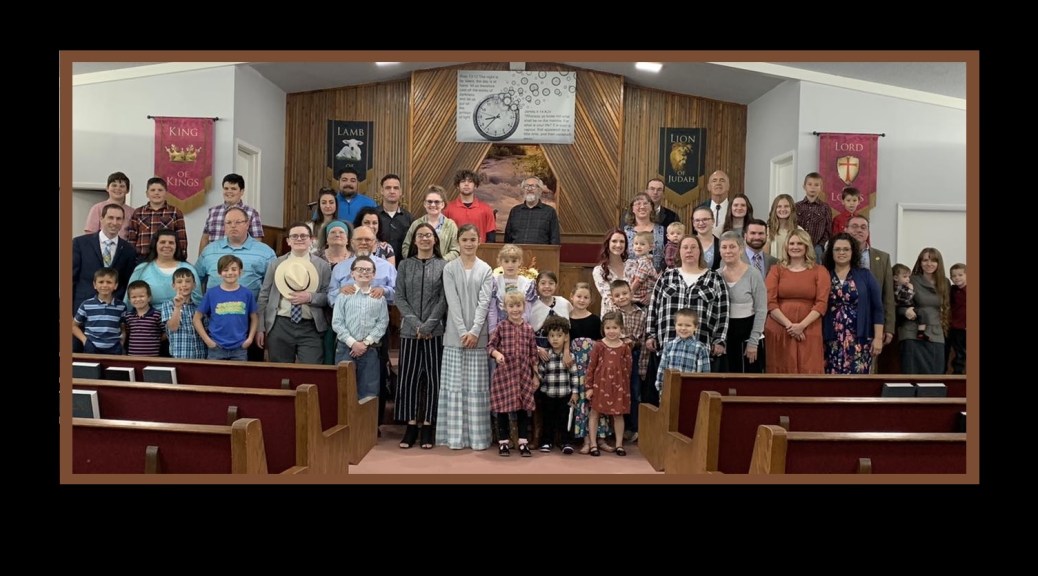
Charity Baptist Tabernacle was planted 30 years ago by Pastor Larry Hickam and has always been exclusively under the Lord Jesus Christ. At one meeting with other pastors in Amarillo, someone once asked Pastor Hickam if CBT had a constitution. His response was to lift his King James Bible and say, “Yes, and here it is.” CBT remains, to this day a First Amendment, non-statutory, non-incorporated, non-501(c)(3), non-508(c)(1)(a) church which gives the preeminence to the Bridegroom, the Lord Jesus Christ.

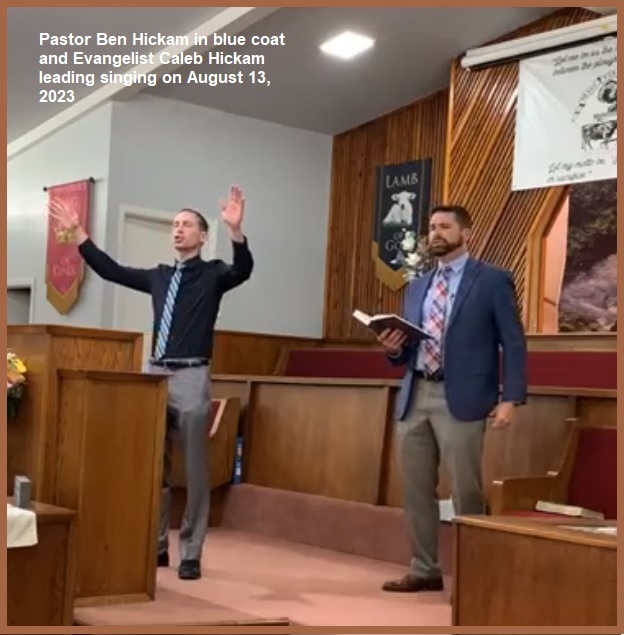
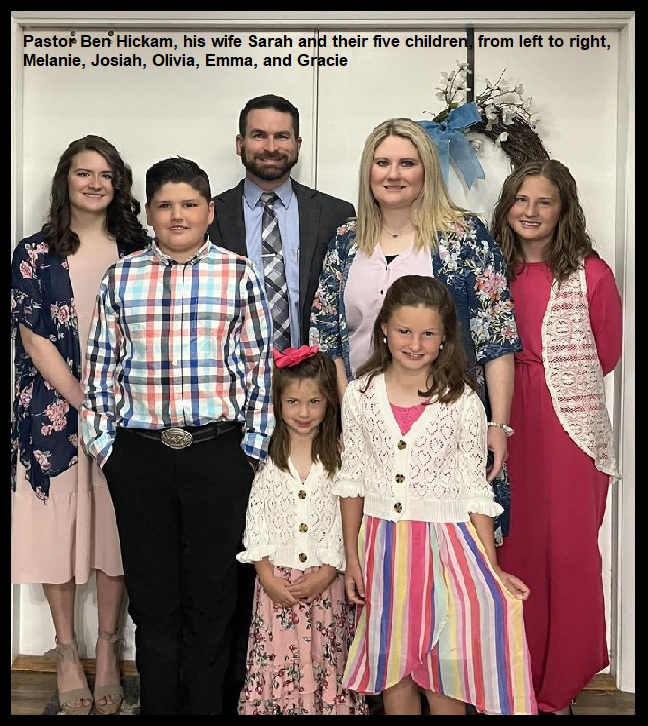
Pastor Larry’s son,  Ben Hickam became Pastor when his dad, Larry Hickam, stepped down in July, 2018. Like his dad, his sole authority for all matters of faith and practice (individual, family, and church) is the King James Bible.

After becoming pastor, he led CBT in executing a Declaration of Trust laying out relevant Bible and legal principles regarding the holding and management of God’s property and the relationship of church and state; something CBT already knew and practiced.

To hear more Charity Baptist Tabernacle sermons and lessons, go to: Charity Baptist Tabernacle: Sermons and Lessons.

Contact information for Pastor Ben Hickam
Cell phone: 806-220-9622
Email: benhickam@gmail.com

Appendix 2 to Simply Church: Common Law versus Statutory Law

Click here to go to the following webpage for Table of Contents with links to all chapters of: Simply Church: The Holy Union of Christ and His Local Church

Jerald Finney
Copyright May 30, 2023

See Endnote for links to state adaptations of the Uniform Trust Code

General Considerations

The concept of the trust fiduciary relationship with property (both material and spiritual) was originated by God. See, The Bible Trust Relationship with Property Is Not Something New: It was God’s Plan Starting with Adam and Eve.  Common law and statutory law, whichever is in effect in a given jurisdiction, recognize the relationship. Courts, under the common law, before government legislated rules for deciding trust issues, decided matters regarding abuse of the trust relationship when petitioned by an interested party or parties, using prior case law, and/or Bible or religious principles, and/or principles of ethics. Under statutory law, courts look at the statutory rules, and/or common law rules, and/or principles of ethics in deciding issues.

Under both the common law and statutory law the trust relationship is private and requires no filing, contract, or registration with or regulation by the state. Thus, the trust relationship with property is dramatically distinct from trusts which are a product of man’s law and creatures of the state—charitable trusts, business trusts, etc.

Both the common law and the codified adaptations of the common law of trusts define trust in the same way. The statutory rules, many of which are adopted directly from the common law, standardize some of the rules for deciding issues, but defer also to the common law if need be. Both the common law and code or statutory law require that a trust be declared and practiced (whether orally or in writing) for a legal purpose. As long as a trust is declared solely as a means of holding and managing property outside the realm of tax laws, inheritance laws, and other laws the courts will apply the applicable statutory or common law rules. Under both common law and statutory law, a court will not intervene in the administration of a trust unless its jurisdiction is invoked by an interested party. If contested, jurisdiction must be established by the petitioning party.

The Bible trust relationship with property declared and/or practiced by churches as a means of holding and managing God’s property invoke no tax consequences. The First Amendment is a statement of the Bible principle of separation of church and state. See for explanation, God Betrayed/Separation of Church and State: The Biblical Principles and the American Application; or Separation of Church and State/God’s Churches: Spiritual or Legal Entities. Thus, a church who remains totally separate from civil government is non-taxable whereas a church who has established a legal connection with civil government is tax exempt. To understand the difference see the essay Church Internal Revenue Code  508(c)(1)(A) Tax Exempt Status and the essays linked to in that article. The property held in a church Bible trust involve no tax matters. The trust is a private fiduciary relationship with property, and assuming that the trust is properly declared and managed, the only reason any party could have for petitioning the court regarding a trust matter would have to involve a violation by the trustee of his fiduciary duties in holding and administering the trust estate. This is true under both common law and statutory law, whichever is applicable.

Trusts are commonly used as part of an individual’s estate plan, to avoid probate and/or to obtain favorable tax consequences. Churches who love the Lord and wish to please their espoused, the Lord Jesus Christ, use God’s trust plan; they declare the trust relationship with material and spiritual properties. Some churches orally apply the concept, others execute trust documents declaring the trust relationship with property given to the Lord Jesus Christ, to God. Generally, the preferred method is for the church to execute written trust documents.

Specific Considerations

Under the common law of trusts, there were no statutes to guide the courts, only prior court decisions and principles of equity. Statutory trust law gives rules to guide courts in the event trust matters are brought to the court for resolution.

Most or all states in America now have codified rules for courts to follow in cases where an interested party has petitioned the court to take jurisdiction over a matter involving a trust relationship with property. The prior law governing the trust relationship is fundamentally American common law. Now, statutes in most states provide rules for courts to look at in deciding issues involving the trust relationship.

Thirty-six states have adopted, usually with some modifications, the Uniform Trust Code (UTC). The UTC is a model law in the United States created by the Uniform Law Commission, which although not binding, is influential in the states, and used by many as a model law.  As of May 19, 2021, 34 states had adopted, usually with modifications, the UTC (See, EN [i] for listing of those states; see also, States that Have Adopted the Uniform Trust Code. Hawaii and the District of Columbia enacted the UTC as of January 1, 2022.

In 2000 the National Conference of Commissioners on Uniform State Laws (NCCUSL) adopted the first national codification of the law of trusts with the Uniform Trust Code (UTC). According to the NCCUSL, the purpose of the Uniform Trust Code is to provide a comprehensive model for codifying the law on trusts. The UTC has its basis in common law sources. The objective of the UTC is a codification of existing law, but with elements of law reform. According to NCCUSL, the reforms are intended to conform trust law to modern needs. The UTC provides fundamental rules that apply to all voluntary trusts. According to NCCUSL, the UTC “does not try to incorporate detailed rules for every conceivable kind of trust, nor does it incorporate all of the kinds of trusts there are.”

The UTC is intended to enable states that enact it to specify their rules on trusts with precision and to provide individuals with a readily available source for determining their state’s law on trusts.

Trust statutes direct courts to the common law when necessary. Section 106 of the UTC states: “The common law of trusts and principles of equity supplement this [Code], except to the extent modified by this [Code] or another statute of this State.” This is also true of trust statutes of states who have not adopted the UTC. For example, The California Probate Code, Division 9, Trust Law, Part 1, Section 15002 states: “Except to the extent that the common law rules governing trusts are modified by statute, the common law as to trusts is the law of this state.” Subtitle B – Texas Trust Code, Chapter 111 Section 111.005 – Reenactment of Common Law states, “If the law codified in this subtitle repealed a statute that abrogated or restated a common law rule, that common law rule is reestablished, except as the contents of the rule are changed by this subtitle.”

Statutory trust law gives uniformity of rules when a court accepts a petition involving a matter involving tax implications.  This can be readily seen by a reading of the Code. The common law was perfectly adequate for dealing with any church Bible trust issue; with a caveat for the church and believer: see I Corinthians 5 and 6,  King James Bible. Under statutory law, if a matter involving a church Bible trust is ever presented to a court, and the court accepts jurisdiction, the court will likely have to refer to the common law and principles of equity. The reason for this is that the trust codes are usually necessary to deal with matters involving matters involving various types of taxes, and the church Bible trust fiduciary relationship with property does not implicate any such concern.

There can be no tax consequences for the Settlor, the Trustee, the Trust Estate, the Beneficiary or anyone else regarding a church Bible trust relationship with property as when a trust is used in estate planning, to avoid probate or to obtain favorable tax consequences. Why? Because:

  • The church Bible trust is not an organization. It is a fiduciary relationship with property. It has no income, no employees, pays no salaries, etc. What is given to God is held in trust to be used according to the will of the Lord Jesus Christ as given in his word, the holy King James Bible. There is no profit to the Settlor, the Trust, Trustee, or anyone else. The matter of use of the trust related to any taxation is not a factor which man’s law must address.

Uniform Trust Code with Comments

Uniform Trust Code – Background Memorandum Prepared by the North Dakota Legislatve Council staff for the Judiciary Committee, September 2005

UNIFORM TRUST CODE (Last Revised or Amended in 2010) Drafted by the NATIONAL CONFERENCE OF COMMISSIONERS ON UNIFORM STATE LAWS and by it APPROVED AND RECOMMENDED FOR ENACTMENT IN ALL THE STATES (General Comment. The Uniform Trust Code is primarily a default statute. Most of the Code’s provisions can be overridden in the terms of the trust.): https://dta0yqvfnusiq.cloudfront.net/fifel38841394/2018/12/Uniform-Trust-Code-5c12a36374cd4.pdf

Massachusetts UTC with Comments: https://www.fieldsdennis.com/uniform-trust-code-report-with-commentary

I would be glad to discuss these matters with you in more detail. You can call me (Jerald Finney) at 512-785-8445.


Endnote

EN[i] Alabama (Ala. Code §§ 19-3B-101, et seq.). Creditor’s Claims Against Settlor.

Arizona (Ariz. Rev. Stat. §§ 14-10101, et seq.). Creditor’s Claims Against Settlor.

Arkansas (Ark. Code Ann. §§ 28-73-101, et seq.). Creditor’s Claim Against Settlor.

Colorado (CO Rev Stat 15-5-101, et seq). Creditor’s Claim Against Settlor (Introduced to be Section 15-5-505).

Connecticut (Connecticut General Statutes 45a-499a)

District of Columbia (D.C. Code §§ 19-1301.01, et seq.). Creditor’s Claim Against Settlor.

Florida (Fla. Stat. §§ 736.0101, et seq.). Creditor’s Claim Against Settlor.

Illinois (760 Illinois Compiled Statutes 3). Creditor’s Claim Against Settlor – 760 ILCS 3/505.

Kansas (Kan. Stat. Ann. §§ 58a-101, et seq.). Creditor’s Claim Against Settlor.

Kentucky (Ken. Rev. Stat. §§ 386B.1-010, et seq.). Creditor’s Claim Against Settlor.

Maine (Me. Rev. Stat. Ann. Tit. 18-B, §§ 101–1104, et seq.). Creditor’s Claim Against Settlor.

Maryland (MD Est & Trusts Code §§ 14.5-101, et seq.). Creditor’s Claim Against Settlor.

Massachusetts (Mass. Gen. Law Chapter 203E). Creditor’s Claim Against Settlor.

Michigan (Mich. Compiled Laws §§ 700.7101, et seq.). Creditor’s Claim Against Settlor.

Minnesota (Minnesota Statutes §§ 501C.0101, et seq. Creditor’s Claim Against Settlor. Until July 2021, Minnesota had a trust-buster statute that effectively nullified Medicaid Asset Protection Trusts. However, this statute was recently struck down (with some help from Evan Farr) by Minnesota’s Court of Appeals.

Mississippi (MS Code §§ 91-8-101, et seq.). Creditor’s Claim Against Settlor not yet enacted.

Missouri (Mo. Rev. Stat. §§ 456.1-101, et seq.). Creditor’s Claim Against Settlor.

Montana (Mont. Code. Ann. §§ 72-38-101, et seq.). Creditor’s Claim Against Settlor.

Nebraska (Neb. Rev. Stat. §§ 30-3801, et seq.). Creditor’s Claim Against Settlor.

New Hampshire (N.H. Rev. Stat. Ann. §§ 564-B-101, et seq.). Creditor’s Claim Against Settlor.

New Jersey (N.J.S. 3B:31-1, et seq.). Creditor’s Claim Against Settlor.

New Mexico (N.M. Stat. Ann. §§ 46A-1-101, et seq.). Creditor’s Claim Against Settlor.

North Carolina (N.C. Gen. Stat. §§ 36C-1-101, et seq.). Creditor’s Claim Against Settlor.

North Dakota (N.D. Cent. Code §§ 59-09-01, et seq.). Creditor’s Claim Against Settlor.

Ohio (Ohio Rev. Code Ann. §§ 5801.01, et seq.). Creditor’s Claim Against Settlor.

Oregon (Or. Rev. Stat. §§ 130.001, et seq.). Creditor’s Claim Against Settlor.

Pennsylvania (20 Pa. Cons. Stat §§ 7701, et seq.). Creditor’s Claim Against Settlor.

South Carolina (S.C. Code Ann. §§ 62-7-101, et seq.). Creditor’s Claim Against Settlor.

Tennessee (Tenn. Code Ann §§ 35-15-101, et seq.). Creditor’s Claim Against Settlor.

Utah (Utah Code Ann §§ 75-7-101, et seq.). Creditor’s Claim Against Settlor.

Vermont (Verm. Stat. §§ 14.A-101, et seq.). Creditor’s Claim Against Settlor.

Virginia (Va. Code Ann. §§ 55-541.01, et seq.). Creditor’s Claim Against Settlor.

West Virginia (W. Va. Code §§ 44D-1-101, et seq.). Creditor’s Claim Against Settlor.

Wisconsin (Wis. Stats. §§ 701.0101, et seq.). Creditor’s Claim Against Settlor.

Wyoming (Wyo. Stat. Ann. §§ 4-10-101, et seq.). Creditor’s Claim Against Settlor.

The Uniform Trust Code went into effect in Hawaii and the District of Columbia on January 21, 2022.


Section I, Chapter 6: The Bible Trust Relationship with Property is Not Something New: It was God’s plan starting with Adam and Eve

Click here to go to the following webpage for Table of Contents with links to all chapters of: Simply Church: The Holy Union of Christ and His Local Church

Appendix 1 gives links to resources which explain why church incorporation, federal tax exempt status, and other statutory or legal status of churches betray the love relationship between Christ and His churches.

Appendix 2 looks at common law versus statutory law church Bible Trust considerations.

Copyright © by Jerald Finney
March 4, 2023

Introduction

Legal scholars have unsuccessfully sought to uncover the origin of the trust relationship with property. They did not go to the source which would have given them the answer: the Word of God. The Bible Trust relationship with property is a concept, a plan created by God. He was the trustor, settlor, or grantor. The property held in trust is the trust estate. Man is the trustee or steward, the person who has a fiduciary duty to hold and manage the trust estate solely for the glory and benefit of the true owner, God.

The Bible Trust is inherent in the execution of God’s plan for the relationship of mankind with His creation. God owns the earth and all that is in it, to include every person. He entrusted man with the responsibility of holding and managing His properties, earthly and spiritual, solely for His benefit, for His glory. After creating man, “God blessed them, and God said unto them, Be fruitful, and multiply, and replenish the earth, and subdue it: and have dominion over the fish of the sea, and over the fowl of the air, and over every living thing that moveth upon the earth” (Genesis 1:28). “And the LORD God took the man, and put him into the garden of Eden to dress it and to keep it.” (Genesis 2:15).

That same trust relationship is still in effect. Everyone is responsible to God for managing His properties. God will hold everyone who has reached the age of accountability responsible for how he exercises his fiduciary duty to hold and manage all that God entrusts him with.

When one examines New Testament Church doctrine, one finds that God’s plan is for the local church to be exclusively a heavenly, spiritual, eternal organism only, not an earthly, material, temporal organization or a hybrid of the two. This is thoroughly examined in Part I of God Betrayed/Separation of Church and State: The Biblical Principles and the American Application. God has entrusted civil government with earthly matters and the church with spiritual matters. Distinct difference between church and state render them mutually exclusive.

New Testament churches were organized according to God’s plan. They had no relationship whatsoever with the state. They acted as spiritual entities only. They entered into no contract with the state or any other entity, owed no debt, depended upon God for everything and the state for nothing, owned nothing, had no employees and therefore paid no salaries, held no bank accounts, held title to no real estate, leased no property, etc.

Of course, as is made clear in Romans 13:8-10 and other New Testament passages, believers and church members are subject to civil government for their relationship with man (the Second Table of the Law), but not for their relationship with  God (the First Table of the Law). God gave civil government temporal earthly jurisdiction over evil doers, those who commit crimes against another or others. He gave the church eternal heavenly jurisdiction over His children. Thus, as to heavenly matters, the church and the believer are to “obey God rather than men.” They are to have no authority over them in those matters other than the Lord Jesus Christ and His Word. Again, see Part I of God Betrayed.

A local church can organize and operate according to God’s will as did churches in the New Testament. As to organization, she can do so by practicing God’s Bible Trust plan. Even better, she can declare the Bible Trust Relationship with both God’s earthly and spiritual properties in writing.

This lesson will explain that:

  1. Although man recognizes the concept of trust, secular scholars have not found its origin.
  2. God originated the Bible (common law) Trust relationship with property, both material/temporal and spiritual/eternal.
  3. There is only one way which a church may organize in compliance with Bible Church Doctrine. The churches in the New Testament all recognized and applied the doctrine of the Bible Trust.

 1. Although man recognizes the concept of trust, secular scholars have not found its origin.

Efforts of scholars to trace the origin have been futile. “Whether these origins are Roman, Canonical or Germanic [or of some other origin] remains an unresolved question. …” Trusts, trust-like concepts and ius commune, 8 Eur. Rev. Private L. 453 (2000), C. H. Van Rhee: … See,  En[i],  (This article can be viewed and/or downloaded at: https://www.academia.edu/5937188/Trusts_Trust_like_Concepts_and_Ius_Commune. It can also be downloaded and viewed at https://www.academia.edu/3568421/On_the_Origin_of_the_Uses_and_Trusts?email_work_card=view-paper.)

The Roman Catholic “Church,” with all its heresies understood this matter, although with some distortion, a long time ago:

  • “Trust-like devices were popular in the Church [speaking of the Roman Catholic ‘church’], since they allowed this institution to accumulate the necessary means to discharge its tasks. At the same time, these devices preempted the criticism that the Church was not practising [sic] its own teachings on the spiritual dangers of wealth. The wealth accumulated by the Church was not regarded as property owned by the Church itself. According to S. Herman, it was said to belong to God the Father as sovereign Lord, the Pope and his clerical lieutenants acting as His stewards. In trust terminology: God acted as ‘settlor’, while the Pope and his clerical lieutenants acted as trustees. Christ, the meek, the poor and the congregation were usually designated as ‘beneficiaries’. God, as the settlor, also figured as the ultimate beneficiary of creation. In this way, the wealth of the Church could be justified, since the Church simply acted as a depositary of goods created for all. Church officials were charged with managing the goods entrusted to them as ‘trustees’ and with using them for the good of the community. ” See Trusts, Trust-Like Concepts and Ius Commune…;Op Cit.

Of course, this Catholic misunderstanding allowed the Institution of the Roman Catholic “Church” to prosper and store up tremendous wealth while the clergy lived a luxurious life (the “beneficiaries” in practice although not in name) since the trust estate was not used for the benefit of God according to his will, the true owner of everything. Nonetheless, even though misapplying the concept, Catholicism recognized it.

2. God originated the Bible (common law) Trust relationship with property, both material/temporal and spiritual/eternal.

Had scholars considered all the evidence, they would have discovered that the concept of trust was originated by God in the manner in which He ordered things. The plan started when God created and covenanted with man; it is evident throughout the Word of God. “Trust” (also explicitly stated), “trust estate,” “trustor,” (or “grantor” or “settlor”), “trustee” or “steward,” “beneficiary,” and “fiduciary” are all found in the Bible. The concept is just part of the way things work, the way God arranged things, as He explains in His Word.

The principle of trust originated with God. God embedded this precept in His word and it is seen from Genesis to Revelation and in all dispensations. God has administered his rule over the world in various dispensations or economies as He progressively works out His purpose of world history. Primarily, dispensations are stewardships. All in a particular dispensational economy are stewards (trustees), although one man usually stands out. For example, Paul was used by God more than any other to reveal His grace and to record the doctrine of the church as dictated by God. Nonetheless, all the apostles and every other believer are also stewards of God’s grace. All have a responsibility to respond to that grace. God will judge those who fail to do so. (Charles C. Ryrie, Dispensationalism (Chicago: Moody Press, 1995), pp. 56-57; for an more detailed analysis of dispensations and dispensationalism, see the short article The Essence of Dispensationalism).

Some meanings of trust, as given in the 1828 Webster’s Dictionary, are:

  1. Confidence; a reliance or resting of the mind on the integrity, veracity, justice, friendship or other sound principle of another person. He that putteth his trust in the Lord shall be safe. Proverbs 29:25.
  2. Something committed to a person’s care for use or management, and for which an account must be rendered. Every man’s talents and advantages are a trust committed to him by his Maker, and for the use or employment of which he is accountable.

This article will deal with definition 2 above. From that definition, one can see that the God ordained a trust arrangement with mankind.

God owns everything—the land, everyone, and everything. That ownership is implicit in the fact that He created it all. (Ge. 1). He clearly stated His ownership of all in His Word:

  • God said, “Now therefore, if ye will obey my voice indeed, and keep my covenant, then ye shall be a peculiar treasure unto me above all people: for all the earth is mine:” (Ex. 19.5).
  • God said, “The land shall not be sold for ever: for the land is mine; for ye are strangers and sojourners with me.” (Le. 25.23).
  • “Thine, O LORD, is the greatness, and the power, and the glory, and the victory, and the majesty: for all that is in the heaven and in the earth is thine; thine isthe kingdom, O LORD, and thou art exalted as head above all. Both riches and honour come of thee, and thou reignest over all; and in thine hand is power and might; and in thine hand it is to make great, and to give strength unto all” (1 Chronicles 29:11-12).
  • “The earth isthe LORD’S, and the fulness thereof; the world, and they that dwell therein.” (Ps. 24.1).
  • God said, “For every beast of the forest is mine, and the cattle upon a thousand hills.” (Ps. 50.10).
  • “The heavens are thine [God’s], the earth also is thine: as for the world and the fulness thereof, thou hast founded them.” (Ps. 89.11).
  • “The silver is mine, and the gold is mine, saith the LORD of hosts.” (Hag. 2.8).

Re.4.11God, the true owner of all things, entrusted man, under God, with the earth and all that is in it. God entrusted man with His property. Man was put in trust to administer God’s earthly property according to God’s plan. Man benefited from use of the property entrusted him. Man was to use the property God entrusted him with for the glory of God, for God’s pleasure (Revelation 4.11). God entrusted a New Testament church to the members of the church. Church members are trustees of the church they are members of.
Man is a fiduciary under God. Fiduciary, as a noun, means “One who holds a thing in trust; a trustee.” Man, as trustee, had a fiduciary duty to hold and administer God’s property for the benefit of God. Church members have a fiduciary duty to organize and operate the church they belong to according to God’s guidelines as stated in the New Testament. Fiduciary as an adjective means, “Not to be doubted; as fiduciary obedience” or “Held in trust.” Man benefits from use of God’s property and church members benefit from belonging to a church under God only.

God, the trustor, ordered man, the trustee, in the Garden of Eden, “Of every tree of the garden thou mayest freely eat: But of the tree of the knowledge of good and evil, thou shalt not eat of it: for in the day that thou eatest thereof thou shalt surely die.” (Ge. 2:16-17). Eating of the tree of knowledge of good and evil was a violation of man’s fiduciary duty to administer God’s property according to the will of the true, beneficial, and equitable owner of the property.

When God entrusted Adam and Eve with the earth and all that is in it, he gave them responsibilities:

Ge.1.26-28“And God blessed them, and God said unto them, Be fruitful, and multiply, and replenish the earth, and subdue it: and have dominion over the fish of the sea, and over the fowl of the air, and over every living thing that moveth upon the earth.  And God said, Behold, I have given you every herb bearing seed, which is upon the face of all the earth, and every tree, in the which is the fruit of a tree yielding seed; to you it shall be for meat.  And to every beast of the earth, and to every fowl of the air, and to every thing that creepeth upon the earth, wherein there is life, I have given every green herb for meat: and it was so.  And God saw every thing that he had made, and, behold, it was very good. And the evening and the morning were the sixth day.” (Ge. 1.28-31).
Man violated his duty and God held him accountable. Satan lied to the woman and tempted her to eat of the fruit of the tree of the knowledge of good and evil. “And when the woman saw that the tree was good for food, and that it was pleasant to the eyes, and a tree to be desired to make one wise, she took of the fruit thereof, and did eat, and gave also unto her husband with her; and he did eat.  And the eyes of them both were opened, and they knew that they were naked; and they sewed fig leaves together, and made themselves aprons.” (Ge. 3:6-7).

God then judged man, woman, and Satan. Things changed. “And the LORD God said, Behold, the man is become as one of us, to know good and evil: and now, lest he put forth his hand, and take also of the tree of life, and eat, and live for ever: Therefore the LORD God sent him forth from the garden of Eden, to till the ground from whence he was taken. So he drove out the man; and he placed at the east of the garden of Eden Cherubims, and a flaming sword which turned every way, to keep the way of the tree of life.” (Ge. 3:22-24)

Man remained in trust of all that God gave him. Mankind continued as trustee of God’s earthly property. Man had legal (temporal earthly) title to God’s earthly property. Later, after the flood, God divided the earth into the nations and instituted civil government–the rule of man by man under God for the purpose of controlling evil doers. The perpetual principle that nations—Gentile nations and Israel—and individuals were left in trust of land and all things for the benefit of God continues.

3. There is only one way which a church may organize in compliance with Bible Church Doctrine. The churches in the New Testament all recognized and applied the doctrine of the Bible Trust.

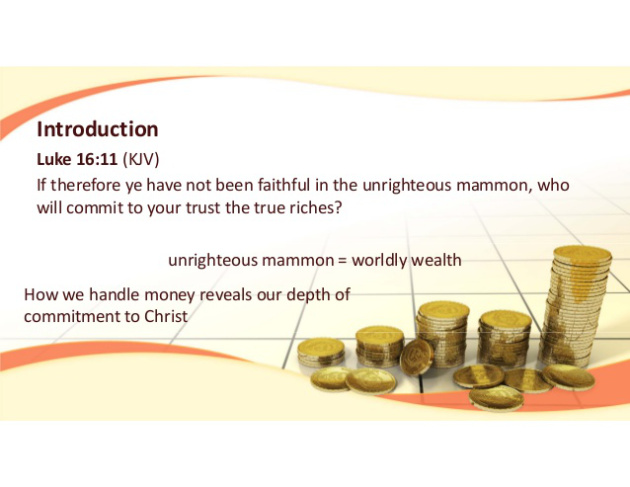
“He that is faithful in that which is least is faithful also in much: and he that is unjust in the least is unjust also in much. If therefore ye have not been faithful in the unrighteous mammon, who will commit to your trust the true riches? And if ye have not been faithful in that which is another man’s, who shall give you that which is your own? No servant can serve two masters: for either he will hate the one, and love the other; or else he will hold to the one, and despise the other. Ye cannot serve God and mammon.” Luke 16:10-13

“Let a man so account of us, as of the ministers of Christ, and stewards of the mysteries of God. Moreover it is required in stewards, that a man be found faithful.” 1 Corinthians 4.1-2

“But as we were allowed of God to be put in trust with the gospel, even so we speak; not as pleasing men, but God, which trieth our hearts.” 1 Thessalonians 2:4

“According to the glorious gospel of the blessed God, which was committed to my trust.” 1 Timothy 1:11

“O Timothy, keep that which is committed to thy trust, avoiding profane and vain babblings, and oppositions of science falsely so called:” 1 Timothy 6:20

As recorded in the New Testament, God ordained his church, an institution made up of local autonomous spiritual bodies. The churches in the New Testament followed the doctrine given them by God through the apostle Paul. They were “built upon the foundation of the apostles and prophets, Jesus Christ himself being the chief corner stone” and were built “together for an habitation of God through the spirit” (Ephesians 2:20-22). They were spiritual, not earthly, entities. God made them to “sit together in heavenly [not earthly] places in Christ Jesus” (Ephesians 2:6). They entered into no contract with the state or any other entity, owed no debt, depended upon God for everything and the state for nothing, owned nothing, had no employees and therefore paid no salaries, held no bank accounts, held title to no real estate, leased no property, and acted legally in no way. Church members were the church. Church members therefore gave to God, not to the church, not to themselves. Someone was entrusted with managing their gifts for the glory of God (See Acts 4:34-37) and according to His will with His Word as their guide.

They were under the authority of the Lord Jesus Christ, and him alone, entirely separate from all civil government. Of course, civil government unlawfully took authority over individual believers, as they had done with our Lord.

God’s doctrine for his churches has not changed. Man’s doctrine has changed. Thus, most churches in America choose to unite with civil government for many purposes. They choose to become legal entities such as non-profit corporations, charitable trusts, and Internal Revenue Code Section 501(c)(3) or Section 508(c)(1)(A) tax exempt worldly organizations.

A church can choose to remain a spiritual entity only by utilizing the Bible concept of trust, by practicing the God’s Bible Trust plan. Churches in any nation can do things God’s way. In many countries they will be persecuted for so doing. Churches in America can, without persecution, choose to operate as did the original churches. They can do so without any documentation other than the Holy King James Bible. However, should they wish their gifts and offerings to God to be held in a checking account, they will need to execute documents which establish a Bible Trust; then the trustee of the trust, not the church, can open a checking account whose owner is the Lord Jesus Christ. Should they wish some of their offerings to God to be used to rent or lease a meeting facility or to buy such a facility, they will need documentation so that the title or lease will be held in the name of the trust signed by the trustee, the owner being the Lord Jesus Christ.

Remember that the true owner of the trust estate is the Lord Jesus Christ; the trustee is merely the legal owner whose duty is to hold and manage the trust estate solely for the benefit of the Lord Jesus Christ. In other words, the trustee as legal owner acts solely for the true owner, the Lord Jesus, not for himself.

The trustor church declares the trust relationship. The  trustee is the appointed temporal and legal owner of the trust estate, and the Lord Jesus Christ is the true, beneficial, and equitable owner of the property held in the trust estate. Gifts, tithes, and offerings are to God (to the trust estate which is owned by God), not to the church. The church is the giver, God is the recipient and owner. God’s money is placed in a checking account owned by Him, not in a checking account owned by the church or by the church corporation.

The trust is not an entity or organization, but merely a relationship with property. The church remains totally under the authority of the Lord Jesus Christ and His word as long as she does not act legally (See, Chapter 3: How a Church Can Nullify the Bible Trust Relationship with Property).

The trustee does not hold the property for the church. The trustee holds and manages the property for the benefit of, and according to the will of, the true owner of the property, the Lord Jesus Christ. The trustee is the legal owner of the property and the Lord Jesus Christ is the true, equitable, and beneficial owner. The trustee has a fiduciary duty under God to use the property, not for his own or the trustor church’s benefit, but for the benefit of the Lord Jesus Christ.

When a church assembles together, God owns the land upon which they meet. Although the trustee has the temporal and legal title to the land, God is the true, beneficial, and equitable owner. An equitable owner is “[o]ne who is recognized in equity as owner of the property, because real and beneficial use and title belong to him, even though bare legal title is invested in another.” (BLACK’S LAW DICTIONARY (6th Ed. 1990), 539). “In a trust relationship, as distinguished from a ‘contract,’ there is always a divided ownership of property, to which the trustee usually has legal title and cestui [que trust] an equitable title.” (90 C.J.S. Trusts § 1, fn. 13 (2007). C.J.S., like AM. JUR 2D, is a highly respected, used, and cited legal encyclopedia). The church does not make Jesus the owner since he is the owner no matter what the church does. The church merely declares and practices the truth: that Jesus Christ is the owner of all, including the real estate upon which the church assembles.

God’s plan requires that man hold legal title to His real property. A church under Christ alone, a spiritual entity only (See, e.g., Ephesians 2:19-22), cannot hold title (an earthly legal declaration of temporal ownership) to property. Nor can a church under Christ alone hold “church property” through a trustee or trustees. If title to property is in the name of church, or if the church holds property through a trustee of a trust, the church has acted legally and is a temporal earthly entity and not a spiritual entity only because she has entwined herself with man’s earthly legal system. Some trusts improperly state that church property will be held by a trustee for the benefit of the Lord Jesus Christ. That is a type of trust arrangement, but it compromises the spiritual only status of the church and combines the holy with the unholy, the church and the state. Corporations (aggregate of sole, profit or non-profit), charitable trusts, business trusts, and Internal Revenue Code § 501(c)(3) and § 508 organizations are legal entities. A church who owns property through one of these legal devises is asserting ownership, as she is if she owns property in the name of the church.

A  church who does not hold property but puts property into a trust estate of a properly structured Bible Trust is not acting legally. By definition, that trust is not a legal entity. The trustee of such a trust holds legal or earthly title to the property in the trust estate. He, like every citizen in his right mind, is a legal entity. Of course, if he is born again, he is also a spiritual entity (1 Corinthians 2:14-16). Thus, any property a church meets on is temporarily held by a legal entity, whether a person, a corporation, a charitable trust, or some other kind of legal entity. However, only with a properly structured Bible Trust is the property declared to be owned by the Lord Jesus Christ.

The Bible instructs the saved man to obey man as to certain temporal earthly matters and God as to eternal spiritual  matters (See Romans 13 and Render Unto God the Things That Are His/A Systematic Study of Romans 13 and Related Verses). A church under Christ alone is eternal and spiritual and subject to the jurisdiction of God only. God’s desires total separation of civil government and the church: separation of church and state, separation of the temporal and earthly from the eternal and spiritual (See, God Betrayed/Separation of Church and State: The Biblical Principals and the American Application).

Real property is temporal and earthly and must have a legal owner. The legal owner is entrusted with God’s property; and God, the trustor, desires that the legal owner use the property solely for His benefit. This is true regardless of whether the legal owner knows this or not. He is to administer the property, if any, for the benefit of the true owner of the property, the Lord Jesus Christ.

When a church establishes the Bible Trust:

  1. She obeys God’s will;
  2. She lessens the chances that the property, and especially the buildings, will become idols. “Their idols are … the work of men’s hands.  … They that make them are like unto them; so is every one that trusteth in them.” (Psalm 115.4-8);
  3. She has not prostituted herself by combining the holy with the unholy;
  4. She has chosen not to be structured like a business or a government created organization;
  5. She can operate according to the principles in the New Testament;
  6. Members of His churches give to Him, not to their church. If church members (a church is made of her members ) give to a church, that church gives to herself. The money given by members of an incorporated church go into the church, inc. bank account. The corporation is owned by the members. When members of a church who give to the church, they are technically giving to themselves since they are the church. Of course, many believers in churches not organized according to the principles of the New Testament, while giving to the churches they are members of, not to God, believe in their heart they are giving to God. I believe God will honor their giving, even though not according to knowledge, understanding and wisdom. However, when one grows to understand the truth about giving to God, he has a responsibility to begin to do things God’s way.
  7. The minds of the members have not been corrupted from he simplicity that is in Christ (See, 2 Corinthians 11:1-3).

Endnote

[i] Trusts, Trust-Like Concepts and Ius Commune, 8 Eur. Rev. Private L. 453 (2000), C. H. van Rhee:  This article concludes:

“Trust and Ius Commune: an Assessment
On the basis of the above, several conclusions may be drawn. Firstly, it may be concluded that it is very likely that the origins of the trust cannot completely be traced. Whether these origins are Roman, Canonical or Germanic remains an unresolved question. A link between Romanocanonical usus -Roman usus in a Canonical guise- and the trust seems the most promising of all possible links. However, much research needs to be conducted of ecclesiastical records both on the continent and in England. Examining these records should be the primary aim of legal historians interested in the origins of the trust.

“Secondly, the nineteenth-century shift from Roman law to indigenous law as the alleged origins of the trust did not change the position of the trust as a concept which may be placed in the ius commune tradition. Both the Germanic and Romano-canonical origins of the trust are of interest to scholars studying the question of whether trusts are part of a shared European tradition. As we know, ius commune comprised elements from both the Germanic and the Romano-canonical legal traditions.

“And thirdly, it may be concluded that it is very unlikely that there has been an exact
continental equivalent to the English ‘use’ or trust. The conclusion may be drawn that trust law cannot be viewed as an amalgam of concepts from the Corpus Iuris. This conclusion has also been drawn by Kenneth Reid (see his paper), who alleges that the modern trust is a relatively new concept, which cannot be explained solely by a contract/real right model. Nevertheless, we must continue to ask the question whether the uncovered similarities amount to more than parallels reflecting similar social conditions. My answer to this question is that it is very likely that English trust law was influenced by ideas on the Continent. This is not too bold a statement paying regard to the influence of the ecclesiastical courts in England as well as to the fact that English civilians frequently used Roman and Canon law texts when describing trusts.”

An interesting except from the article:

“Trust-like devices were popular in the Church [speaking of the Roman Catholic ‘church’], since they allowed this institution to accumulate the necessary means to discharge its tasks. At the same time, these devices preempted the criticism that the Church was not practising [sic] its own teachings on the spiritual dangers of wealth. The wealth accumulated by the Church was not regarded as property owned by the Church itself. According to S. Herman, it was said to belong to God the Father as sovereign Lord, the Pope and his clerical lieutenants acting as His stewards. In trust terminology: God acted as ‘settlor’, while the Pope and his clerical lieutenants acted as trustees. Christ, the meek, the poor and the congregation were usually designated as ‘beneficiaries’. God, as the settlor, also figured as the ultimate beneficiary of creation. In this way, the wealth of the Church could be justified, since the Church simply acted as a depositary of goods created for all. Church officials were charged with managing the goods entrusted to them as ‘trustees’ and with using them for the good of the community.”

1. Christ Has Removed the Candlesticks of Most Traditional American “Bible Believing Churches”; 2. A Scriptural Primer for God’s Soldiers and The Final Victory

Jerald Finney
February 27, 2023

Bible teaching on heresy and apostasy (from God Betrayed, published in 2008):

Essays by others:

Tracts:

Every year for decades, Christ has removed the candlesticks of untold numbers of traditional American “Bible Believing Churches” who do not have the power of God. Those churches are either ceasing to exist, failing to have any meaningful significance and impact for God, or going into apostasy (Emerging Church, Charismatic Movement, etc.).

Sadly, most believers and churches have no clue as to why this is happening since they have not diligently studied and applied the whole counsel of God. “Jesus answered and said unto them, Ye do err, not knowing the scriptures, nor the power of God” (Matthew 22:29). Without knowing the Scriptures, a church cannot have the power of God. Christ does not come upon churches unawares. He admonishes before chastising, warns before laying waste.

Many of these “Bible Believing Churches” revel in their good works, bragging as to the multitude of souls that are allegedly being saved or the good works they are doing. God is saving some souls, but not the multitudes claimed; and those who are saved for the most part are not discipled in any deeper matter covered by God’s Word. Revelation 2:2-3:6. There are always some who diligently seek truth. God promised that those who do so will find the truth (Matthew 7:7, Luke 11:9), even in times of widespread apostasy and the scarcity of churches with the power of God.

God tells a church who is doing a lot of good works, but has left her first love: “Remember therefore from whence thou art fallen, and repent, and do the first works; or else I will come unto thee quickly, and will remove thy candlestick out of his place, except thou repent” (Revelation 2:5).

One first work involves falling in love with, studying and applying God’s Word. The church who does so will find her zeal for the Lord renewed; she will seek to purify her holy relationship with the Lord Jesus Christ; she will watch, fast, pray, reprove sin, carefully attend all the ordinances of God, walk as in His sight, and rest not till she has recovered all her lost ground, and got back the evidence of her acceptance with her Bridegroom.

Except for a small remnant in America, even “Bible Believing Churches” do not know that Scripture says salvation is just the beginning. God’s purposes extend far beyond soul winning. Once saved, God’s plan for believers is to be added to a local church where they can be discipled and grow in knowledge, understanding and wisdom. Then, God desires that they, and their churches, fight on all fronts outside the walls of the place of assembly the spiritual warfare assigned by God. See, e.g. Ephesians 6:10-18 the soldiers enemy; a);   Sadly, many times the believer who is called to fight on a front which has been neglected of abandoned is blackballed or held back by those trapped within their system and traditions.

A Scriptural primer for the soldier of Christ:

Ephesians 1-9 explains that the boot camp for the believer should begin in the home where children are trained for spiritual warfare and that the trained soldier is then, in adulthood, to go into the world to fight as soldiers for Christ.
Ephesians
6:10, the warfare of Spirit-filled believers: “Finally, my brethren, be strong in the Lord, and in the power of his might.”
Ephesians 6:11, the warrior’s armour: “Put on the whole armour of God, that ye may be able to stand against the wiles of the devil.”
Ephesians 6:12-17, the warrior’s foes: “For we wrestle not against flesh and blood, but against principalities, against powers, against the rulers of the darkness of this world, against spiritual wickedness in high places. Wherefore take unto you the whole armour of God, that ye may be able to withstand in the evil day, and having done all, to stand. Stand therefore, having your loins girt about with truth, and having on the breastplate of righteousness; And your feet shod with the preparation of the gospel of peace; Above all, taking the shield of faith, wherewith ye shall be able to quench all the fiery darts of the wicked. And take the helmet of salvation, and the sword of the Spirit, which is the word of God:”
Ephesians 6:18: the warrior’s resource: “Praying always with all prayer and supplication in the Spirit, and watching thereunto with all perseverance and supplication for all saints;”

2 Timothy 2 gives the path of a “good soldier” in time of apostasy. Excerpt: 2 Timothy 2:1-5 “Thou therefore, my son, be strong in the grace that is in Christ Jesus. And the things that thou hast heard of me among many witnesses, the same commit thou to faithful men, who shall be able to teach others also. Thou therefore endure hardness, as a good soldier of Jesus Christ. No man that warreth entangleth himself with the affairs of this life; that he may please him who hath chosen him to be a soldier. And if a man also strive for masteries, yet is he not crowned, except he strive lawfully.”

2 Corinthians 10:3-6: “For though we walk in the flesh, we do not war after the flesh: (For the weapons of our warfare are not carnal, but mighty through God to the pulling down of strong holds;) Casting down imaginations, and every high thing that exalteth itself against the knowledge of God, and bringing into captivity every thought to the obedience of Christ; And having in a readiness to revenge all disobedience, when your obedience is fulfilled.”

Colossians 1:16-19: “For by him were all things created, that are in heaven, and that are in earth, visible and invisible, whether they be thrones, or dominions, or principalities, or powers: all things were created by him, and for him: And he is before all things, and by him all things consist. And he is the head of the body, the church: who is the beginning, the firstborn from the dead; that in all things he might have the preeminence. For it pleased the Father that in him should all fulness dwell;”

John 14:30: “Hereafter I will not talk much with you: for the prince of this world cometh, and hath nothing in me.”

Christ-not the church, not America, not any nation, and not the church working with the state-will win the final victory:

Daniel 8:23-25 “And in the latter time of their kingdom, when the transgressors are come to the full, a king of fierce countenance, and understanding dark sentences, shall stand up. And his power shall be mighty, but not by his own power: and he shall destroy wonderfully, and shall prosper, and practise, and shall destroy the mighty and the holy people. And through his policy also he shall cause craft to prosper in his hand; and he shall magnify himself in his heart, and by peace shall destroy many: he shall also stand up against the Prince of princes; but he shall be broken without hand.”

Daniel 7: “11 I beheld then because of the voice of the great words which the horn spake: I beheld even till the beast was slain, and his body destroyed, and given to the burning flame. … 26 But the judgment shall sit, and they shall take away his dominion, to consume and to destroy it unto the end. 27 And the kingdom and dominion, and the greatness of the kingdom under the whole heaven, shall be given to the people of the saints of the most High, whose kingdom is an everlasting kingdom, and all dominions shall serve and obey him. “

2 Thessalonians 2:8-12: “And then shall that Wicked be revealed, whom the Lord shall consume with the spirit of his mouth, and shall destroy with the brightness of his coming: Even him, whose coming is after the working of Satan with all power and signs and lying wonders, And with all deceivableness of unrighteousness in them that perish; because they received not the love of the truth, that they might be saved. And for this cause God shall send them strong delusion, that they should believe a lie: That they all might be damned who believed not the truth, but had pleasure in unrighteousness.”

Revelation 17:14: “These shall make war with the Lamb, and the Lamb shall overcome them: for he is Lord of lords, and King of kings: and they that are with him are called, and chosen, and faithful.”

Revelation 19:19-20: “And I saw the beast, and the kings of the earth, and their armies, gathered together to make war against him that sat on the horse, and against his army. And the beast was taken, and with him the false prophet that wrought miracles before him, with which he deceived them that had received the mark of the beast, and them that worshipped his image. These both were cast alive into a lake of fire burning with brimstone.”

Romans 8: Romans 8:37-39: The conclusion for the born-again believer in the Lord Jesus Christ: “Nay, in all these things we are more than conquerors through him that loved us. For I am persuaded, that neither death, nor life, nor angels, nor principalities, nor powers, nor things present, nor things to come, Nor height, nor depth, nor any other creature, shall be able to separate us from the love of God, which is in Christ Jesus our Lord.”