Tag Archives: church and state

Spurious rationale for church corporate-501(c)(3) status: Winning souls is the most important thing/The Most Important Thing: Loving God and/or Winning Souls?

Jerald Finney
Copyright © December 10, 2012

Contents:

Preface

I. Introduction
II. The Spirit Filled Walk of the Believer and God’s
Churches and the greatest Commandment
III. The love relationship between Christ and His
churches
A. Practical experience demonstrates the love
relationship between Christ and His churches
B. Old Testament insights concerning the marriage
relationship between Christ and His churches
C. Additional New Testament insights into the love
relationship between Christ and His churches
D. A I Corninthians 13 analysis of the love
relationship between Christ and His churches
IV. Conclusion

The sermon, “The Church Who Left Their First Love” given at Old Paths Baptist Church in Northfield, Minnesota on September 2, 2012 compliments this article, giving additional insights.

Preface

This is a teaching and helps ministry motivated by love: love for our Lord first, and love for others second. I can find no more important subject than the love relationship between Christ and His children and Christ and His churches. Since I am convinced that this is a God-called ministry, I conduct this ministry at my own expense. I do not wish to dishonor my Lord by seeking worldly gain or riches through this ministry or by teaching heresy. Since I am not paid, nor do I seek to be paid for my work in this ministry, I will be convinced only by solid biblical reasoning. In other words, no one can buy me since my Lord, and my Lord only, has paid it all. My highest allegiance is to Him.

If you can disprove what I am teaching, you have an obligation—to God first, and to your brother in Christ second—to correct me. I will not accept conclusory statements backed up by nothing. I will only accept Holy Spirit guided insights based upon biblical principles and the application of legal and historical facts to those principles. If you prove me wrong, I have an obligation to repent, ask your forgiveness, and correct my teachings. If what I am saying is true, you have an obligation to God to conform your actions to God’s principles, including, if need be, repenting and reorganizing your church according to the principles of God.

Today, the most common reasons given by churches for incorporating and seeking 501(c)(3) status are (1) to obey every ordinance of man (2) limited liability; (3) to allow a church to hold property; (4) convenience—it is easier to get a tax deduction for tithes and offerings given to an incorporated 501(c)(3) religious organization than for tithes and offerings given to a New Testament church; (5) one’s convictions; and (6) winning souls is  more important than loving God; if a church is incorporated, don’t cause problems. Just continue winning souls because winning souls is more important than anything else, including loving God.

This article will deal with the second false reason, limited liability. Other articles cover the other five reasons:  

  1. Render Unto God the Things that Are His: A Systematic Study of Romans 13 and Related Verses When a pastor is asked why his church is incorporated, he will often quickly answer: “Because of Romans 13 [Romans 13:1-2 “Let every soul be subject unto the higher powers. For there is no power but of God: the powers that be are ordained of God. Whosoever therefore resisteth the power, resisteth the ordinance of God: and they that resist shall receive to themselves damnation.” Or “We are to obey every ordinance of man.” He may also rely on some other verses. All these verses are examined in this online booklet which is also in online PDF form on this website. Not only that, no law requires a church to get incorporated or apply for 501(c)(3) status or claim 508 status. Instead, the highest law in America protects the right of churches to choose to remain free from corporate and 501(c)(3) or 508 status. See, e.g., First Amendment Protection of New Testament Churches/Federal Laws Protecting State Churches (Religious Organizations) 
  2. Limited liability (corporate status actually increases the liability of church members) (Section VI, Chapter  of God Betrayed; Chapter 6 of Separation of Church and State).
  3. Spurious rationale for incorporating: to hold property (Section VI, Chapter 7 of God Betrayed; Chapter 7 of Separation of Church and State).
  4. Spurious rationale for church corporate-501(c)(3) status: tax exemption and tax deductions for contributions OR Tax reasons given for church corporate 501(c)(3) status: a biblical and legal analysis (Section VI, Chapter 8 of God Betrayed; Chapter 8 of Separation of Church and State).
  5. Spurious rationale for church corporate-501(c)(3) status: one’s convictions (Not included in God Betrayed or Separation of Church and State).
  6. Spurious rationale for church corporate-501(c)(3) status: winning souls is more important than loving God/The Most Important Thing: Loving God and/or Winning Souls.

I. Introduction

Many churches, even “Bible believing churches” with saved pastors and members, state that the salvation of souls (witnessing to others in order to lead them to salvation) is more important than making sure that a church is not entangled with the civil government. Of course, salvation of souls is very important. The Great Commission is still in the Bible; but so is the principle that God desires His people and His churches to love Him. In fact, loving God is the greatest commandment. Loving God, according to the Bible is more important than loving one’s neighbor. However, if one loves God, he will love his neighbor. Please continue reading to the end to see how the Word of God makes this clear. Should you disagree with me, please contact me and give me the biblical basis for your disagreement. If God’s people and God’s churches love God first, many more souls will be saved, since churches who love God will have the power of God rather than a form of godliness.

Of course, churches (not to speak of individuals and families) dishonor their love relationship with Christ in many ways. My ministry is primarily concerned with a much neglected and egregious sin of churches as to their relationship with Christ—the union of churches with civil government through incorporation, unincorporated association status, corporation sole, and Internal Revenue Code Section 501(c)(3) tax exempt status.

I have addressed the biblical principles and the facts concerning legal entities and 501(c)(3) in books, articles on this “Separation of Church and State” blog, and audio teachings. This article is concerned only with the most important of the many sub-issues which must be developed to fully understand the issue of the God-desired relationship between church and state. What does it mean for a church to love God? How does a church demonstrate that she loves God or not? Other sub-issues—such as the God-given definition, purposes, and organization of a church—are covered in God Betrayed/Separation of Church and State: The Biblical Principles and the American Application (For free audio teaching on the book, click this link: “Free abridged audio of God Betrayed;” to order the book, click the following link: “Books”. Click the following link to preview God Betrayed: Link to preview of God Betrayed.).

Application of biblical principles to incorporation, other methods of making a church a legal enitity, and Internal Revenue Code § 501(c)(3) tax exempt status makes clear that churches who become legal entities such as corporations and get 501(c)(3) status violate several biblical principles including the principle of separation of church and state, thereby dishonoring the love relationship between Christ and His church. Nonetheless, many churches use the excuse that the most important thing is winning souls to justify proceeding in the flesh and dishonoring their love relationship between Christ and His church by incorporating and obtaining 501(c)(3) status. However, as the Word of God teaches and reality reveals, corporate 501(c)(3) churches become more and more anemic with the passing of time. They do this because they resort to anti-biblical devises and place themselves at least partially under another sovereign and the anti-biblical rules of that sovereign

II. The Spirit Filled Walk of the Believer and of God’s
Churches and the Greatest Commandment

Just as it is important for a family to understand God’s definition, purposes, and principles for family, so it is important that a church family understand the God-given definition, purposes, and principles for a church and her members in order to fully understand and apply the biblical principle of separation of church and state. Very importantly a New Testament church is a purely spiritual entity made up of saved individuals who are instructed to walk in the spirit. A church will be spiritual only to the degree that the members, individually and as a church, walk in the spirit. Part of the walk of believers requires them to make sure that the church they are members of continues to organize and operate according to New Testament principles.

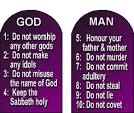
Scripture teaches that the most important thing for a church is the love relationship between Christ and His churches. Nothing a church can do overrides the importance of honoring that relationship. Jesus responded to “[a] lawyer, [who] asked a question, tempting [Jesus], and saying Master, which is the great commandment in the law? Jesus said unto him, Thou shalt love the Lord thy God with all thy heart, and with all thy soul, and with all thy mind. This is the first and great commandment. And the second is like unto it, Thou shalt love thy neighbour as thyself. On these two commandments hang all the law and prophets” (Mt. 22.37-40. See also, Mk. 12.28-34 and Lu. 10.25-28 (Mk. 12.28-34 and Lu. 10.25-28 add loving God with “all thy strength” along with “all thy heart, soul and mind” to the greatest commandment.”)). These commandments were also stated in the Old Testament (See, e.g, De. 6.5 and the Ten Commandments in Ex. 20.1-17).

Most believers will agree with the principle (How can believers who have even a rudimentary knowledge of God’s Word deny this?). Sadly, many miss the mark in the definition and application of love since they have not studied and meditated on relevant biblical teachings and applied them in the real world.

The Bible teaches that loving God first will result in loving one’s neighbor by witnessing to him, helping him, sending missionaries to him, etc. When one loves God with all his heart, soul, mind, and strength, loving one’s neighbor comes naturally and “is like unto [loving God]” (Mt. 22.37-39; Lu. 10.27; Mk. 12.29-31). One who loves God with all his heart, soul, mind and strength will carry out the Great Commission, seek to lead others to salvation, disciple believers, help his neighbors, and walk in the spirit individually and as a church (keep his church body a spiritual entity subject only to the Lord Jesus Christ).

However gifted, moral, or refined, the natural man is absolutely blind to spiritual truth, and impotent to enter the kingdom; for he can neither obey, understand, nor please God because he is not born again and the Spirit of God does not dwell within him. “Jesus answered and said unto him, Verily, verily, I say unto thee, Except a man be born again, he cannot see the kingdom of God. Jesus answered, Verily, verily, I say unto thee, Except a man be born of water and of the Spirit, he cannot enter into the kingdom of God. That which is born of the flesh is flesh; and that which is born of the Spirit is spirit” (Jn.  3.3, 5, 6).

Only believers are indwelt by the Holy Spirit. “Hereby know we that we dwell in him, and he in us, because he hath given us of his Spirit” (I Jn. 4.13). Only one who has the Spirit of God dwelling in him can love God. This does not mean that such a person actually loves God, at least with all his heart, soul, mind, and strength. It does not mean that a believer walks in the spirit (See Jn. 6.63; Ro. 8.1-13; Ga. 5.16-25; Ep. 5.1-17). Positionally, when one is saved, in the reckoning of God, the old man is crucified, and the believer is exhorted to make this good in experience, reckoning it to be so by definitely “putting off” the old man and “putting on” the new (Col. 3.8-14; Ep. 4.24). “And be renewed in the spirit of your mind; And that ye put on the new man, which after God is created in righteousness and true holiness” (Ep. 4.23-24). The fruit God desires from Christians is spiritual. “But the fruit of the Spirit is love, joy, peace, longsuffering, gentleness, goodness, faith, Meekness, temperance: against such there is no law” (Ga. 5:22-23).

As has been pointed out, born-again believers are instructed to love God with all their heart, soul, mind, and strength. In God’s point of view, doing for others may help a person and make his live temporarily happier, but the Word of God teaches that doing for others is not love if one does not love God. The lost man does not know or love God, and he has no clue as to eternal matters. The natural man can only impart earthly, temporal help to others. Although this is not in and of itself a bad thing, this alone—from God’s point of view—is not love.

God is, and He desires His children to be, primarily concerned with the spiritual, the eternal. “While we look not at the things which are seen, but at the things which are not seen: for the things which are seen are temporal; but the things which are not seen are eternal” (II Co. 4.18). Only the saved man can offer anyone eternal hope in addition to helping him with temporal matters (see I Co. 2.1-16). One who loves God first will love and serve his fellow man as to eternal matters first, and temporal matters second; helping others without loving God first is not loving others from God’s eternal spiritual viewpoint.

If one loves, God dwells in him, and he will be a light to others. “No man hath seen God at any time. If we love one another, God dwelleth in us, and his love is perfected in us” (I Jn. 4.12). “And we have known and believed the love that God hath to us. God is love; and he that dwelleth in love dwelleth in God, and God in him” (I Jn. 4.16). “For God, who commanded the light to shine out of darkness, hath shined in our hearts, to give the light of the knowledge of the glory of God in the face of Jesus Christ” (II Co. 4.6).

III. The Marriage Relationship between Christ and His Churches

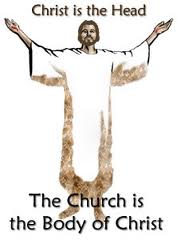
Christ is the Bridegroom/Husband/Head of His churches. As to the issue of separation of church and state, this is particularly important. The church is called the bride of the Lamb (Jn. 3.28, 29). The church is “married” to Christ. “Wherefore, my brethren, ye also are become dead to the law by the body of Christ; that ye should be married to another, evento him who is raised from the dead, that we should bring forth fruit unto God” (Ro. 7.4). Christ wants to be the only Head of His churches (Ep. 1.22; 5.23-33; Col. 1.15-18).

The apostle Paul, from whom Christians are given almost all doctrine of the church, was very concerned about the spiritual status and fruit of God’s churches. Paul spoke of the church as the virgin espoused to one Husband, and reveals that Eve is a type of the church as bride and wife of Christ. Paul said to churches, “I am jealous over you with godly jealousy: for I have espoused you to one husband, that I may present you as a chaste virgin to Christ” (II Co. 11.2). Because of this jealousy over Christ’s church, Paul feared, “lest by any means, as the serpent beguiled Eve through his subtilty, so [the minds of church members] should be corrupted from the simplicity that is in Christ” (II Co. 11.3).

God, as revealed by the apostle Paul, likens the marriage relationship of husband and wife to the relationship of Christ and His church:

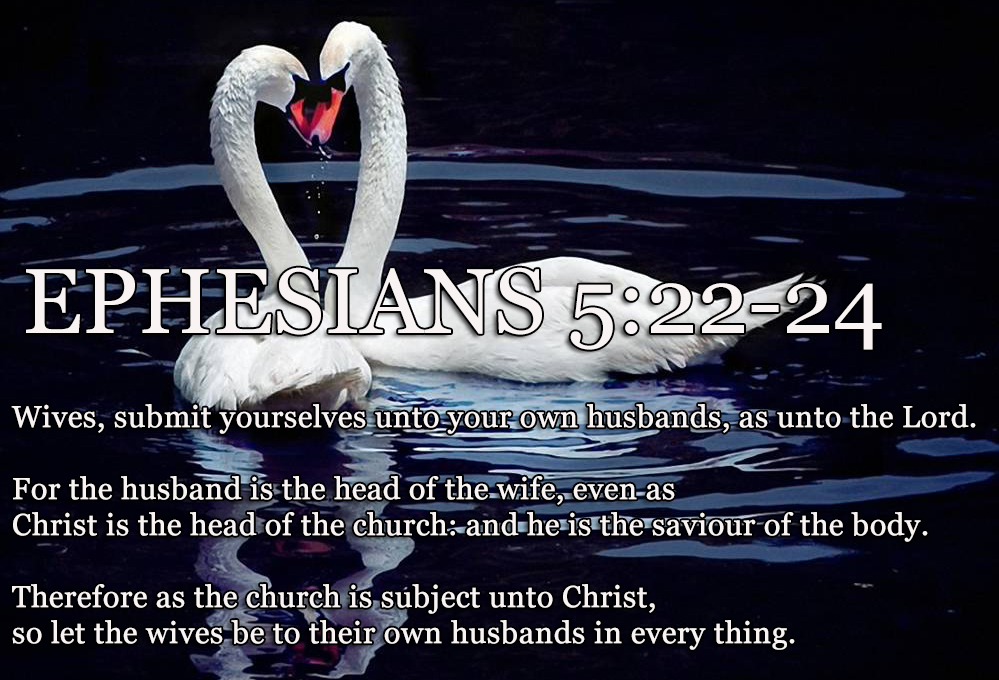
“For the husband is the head of the wife, even as Christ is the head of the church: and he is the saviour of the body. Therefore as the church is subject unto Christ, so let the wivesbe to their own husbands in every thing. Husbands, love your wives, even as Christ also loved the church, and gave himself for it; That he might sanctify and cleanse it with the washing of water by the word.  That he might present it to himself a glorious church, not having spot, or wrinkle, or any such thing; but that it should be holy and without blemish…. For no man ever hated his own flesh; but nourisheth and cherisheth it, even as the Lord the church: For we are members of his body, of his flesh, and of his bones.  For this cause shall a man leave his father and mother, and shall be joined unto his wife, and they two shall be one flesh.  This is a great mystery: but I speak concerning Christ and the church. Nevertheless let every one of you in particular so love his wife even as himself; and the wife see that she reverence her husband” (Ep. 5.23-27, 29-33).

A. Practical Experience demonstrates the love
relationship between Christ and His Churches

The Bible tells believers how God feels concerning certain actions of His churches. The Husband-wife and Bridegroom-bride analogies depicting Christ and His churches have important implications. From the Husband-wife analogy, we know that Christ, likened to a husband, wants to be over His wife, the church, in all things; and He is jealous when His wife, even if remaining for some purposes under Christ, also puts herself under another head. God obviously wants us to know how important this relationship is and how God feels when a church dishonors that relationship. New Testament teaching concerning the relationship of Christ and His churches (as we have already seen and will examine moreinfra), practical experience regarding the husband-wife relationship of man and woman as analogized by God to the marriage of Christ and His churches, and Old Testamentpassages concerning the Husband-wife relationship between God the Father and Israel reveal to the believer how God feels about the relationship of Christ and his churches.

Concerning practical experience, what godly husband would not be jealous if his wife came to him, arms around another man, and said:

“You know that I love you very much. I appreciate your love for me and all you do for me. I have entered into an agreement with Joe. I want you to know that I have decided that I am going to meet with Joe a couple of times a week for breakfast, or lunch, or dinner; and maybe occasionally meet with him just to talk. He cares for me, and he can give me additional advice and information which will be very helpful to me and which you are not able to give, although the advice you do give is most appreciated and helpful as far as it goes and as far as it is correct. He will also help me financially, since you cannot give me all that I need and want. I will still love and honor you. I know that my relationship with Joe will be alright with you.”

How would a husband feel about such an arrangement? Would it affect the marriage in any way? Would not it affect the way the husband and wife treat and respond to one another? Would the husband be jealous? In many such situations, would not the result be a ruined marriage and family? Thus God’s Word uses reality to reveal to us that Christ is jealous over His church and is grieved when His spiritual wife puts herself under the state through incorporation and 501(c)(3) tax exempt status or in any other manner. (See God Betrayed, Section VI and/or Jerald Finney, God’s Churches: Spiritual or Legal Entities?(Austin, TX: Kerygma Publishing Co., 2009; these books are summarized in the audio teachings found on the following link: “Articles and audio teachings.”) for a thorough explanation of the incorporation and 501(c)(3) tax exemption of churches).

What happens when a wife starts to have an affair, even a non-sexual affair? She may be able to hide her earthly affair from her husband, but she cannot hide the effects of the affair. (Of course, a church cannot hide her affair from the Lord.) The attitude, speech, and actions of the wife change. Her relationship with her husband changes. Her husband now has to share his time with another who is partially over his wife. Joy leaves the marriage. Many times, if she does not repent, the marriage is destroyed. Even if she repents, she and her husband will never forget. Hopefully, he will forgive.

In many ways, it is the same with the local assembly that enters into an unholy union with the civil government. Many times, the church who does so tries to minimize the dishonor and grief she has caused her Husband, the Lord Jesus Christ. Many of those who even think about the possible implications of what they have done say, “Well, if my new partner ever tells me that I cannot preach salvation, he will have gone too far.” The pastor and members of such a church actually, if not knowingly, are saying by their actions:

“The Lord and his ways are not sufficient. The civil government takes better care of me than does the Lord. Civil laws are wiser and more beneficial than the precepts of the Word of God. The civil government protects the church, allows the church to enter into contracts, gives the church limited liability, gives the church tax exemption (not realizing that God makes the church non-taxable which is not good enough), allows my people to deduct their contributions, etc.”; or “Romans 13 requires a church to incorporate and get 501(c)(3) status (click the following link for an article which addresses this argument: “American Abuse of Romans 13.1-2 and Related Verses“.).

Any rationale given to justify a union of church and state is spurious, and the Christian who offers such reasoning either does not understand or ignores the Word of God in these matters. He does not understand that God instructs him that the Lord is to be the only Head over His churches, that he is at the very least combining the holy with the unholy, or that he is at worst committing spiritual adultery, and that disastrous consequences, sooner or later, are ahead. He does not understand the spiritual effects that such an unholy relationship has upon the church body, church members individually and as families, and upon society as a whole.

Like the people of the nation Israel, not satisfied with proceeding directly under God as a theocracy, demanded and were granted a king by God, a church who is not satisfied with being solely under God will incorporate, get 501(c)(3) status, organize as a charitable trust, or become a legal entity by some other means. That church may still be blessed by God to some extent; but, like Israel (See I S. 8, 12.16-25), she has committed a great wickedness and started down a slippery slope. After taking the first step to dishonor her Husband, additional steps follow. The church and her members proceed, to a significant extent, according to earthly rules and procedures designed by the god of this world, not by Christ as given in His Word. Incremental compromises begin and continue, resulting in negative spiritual effects to the church, her members and families, and society to one degree or another. Sooner or later complete apostasy will likely result.

Unlike many earthly husbands who have been betrayed, God can and will forgive and forget if a wayward church repents and turns back to the Lord. Christ said to the church at Ephesus who had left her first love (Christ), “Remember therefore from whence thou art fallen, and repent, and do the first works; or else I will come unto thee quickly, and will remove thy candlestick out of his place, except thou repent” (Re. 2.5). How vexing to see that most men of God can understand the importance of honoring the marriage relationship between man and woman, but cannot understand the importance of honoring a more important marriage relationship.

B. Old Testament insights concerning the marriage relationship

The Old Testament offers additional insights about the marriage relationship between Christ and His churches. There God describes His feelings about the Husband-wife relationship. Israel is depicted as the wife of Jehovah God the Father who is called the Husband of Israel.

Isaiah 54 deals with Israel the restored wife of Jehovah & security and blessing of restored Israel. God the Father was the Husband of Israel.  “For thy maker is thine husband; the LORD of hosts is his name; and thy Redeemer the Holy one of Israel; The God of the whole earth shall he be called” (Is. 54.5).

Hosea depicts the dishonored wife (Israel), and the sinful people. “… Plead with your mother, plead: for she is not my wife, neither  am I her husband. Let her  therefore put away her  whoredoms out of her  sight, and her adulteries from between her breasts; Lest I  strip her naked, and set her  as in the day that she was born, and make her as a wilderness, and set her like a dry land, and slay her with thirst. And I will not have mercy on her children; for they be the children of whoredoms. For their mother hath played the harlot: she that conceived them hath done shamefully: for she said, I will go after other lovers, that give me  my bread and  my water, my wool and my flax, mine oil and my drink” (Ho. 2.2-5).

Hosea 4.6-11 speaks of the willful ignorance of Israel: “My people are destroyed for lack of knowledge: because thou hast rejected knowledge, I will also reject thee, that thou shalt be no priest to me: seeing thou has forgotten the law of thy God, I will also forget my children…” (See Ho. 4).

Jeremiah 2-6 discusses the harlotry of Israel toward her Husband, Jehovah, and His warnings and promises to her depending upon whether she repents. “Turn, O backsliding children saith the LORD; for I am married unto you…. Surely as a wife treacherously departeth from her husband, so have ye dealt treacherously with me, O house of Israel, saith the LORD” (Je. 3.14, 20).

Various people in the Old Testament are types of Christ and the church, the Bridegroom and the bride. For example, Rebecca was a type of the church, the “called out” virgin bride of Christ. Isaac was a type of the Bridegroom, who loves through the testimony of the unnamed Servant: “Whom having not seen, ye love; in whom, though now ye see him not, yet believing, ye rejoice with joy unspeakable and full of glory[.]” (I Pe. 1.8). Isaac was a type of the Bridegroom who goes out to meet and receive his bride.

“For if we believe that Jesus died and rose again, even so them also which sleep in Jesus will God bring with him. For this we say unto you by the word of the Lord, that we which are alive and remain unto the coming of the Lord shall not prevent them which are asleep. For the Lord himself shall descend from heaven with a shout, with the voice of the archangel, and with the trump of God: and the dead in Christ shall rise first[.]” (I Th. 4.14-16).

“Typically, the book of Ruth may be taken as a foreview of the church—Ruth, as the Gentile bride of Christ, the Bethlehemite who is able to redeem” (1917 Scofield Reference Edition, Headnote to Ru., p. 315).

The coming of the Bridegroom is cause for great rejoicing by the believer, the friend of the Bridegroom (See, e.g., Jn. 3.29). The marriage of the Lamb to His bride the church will be a glorious event which will occur in heaven:

“Let us be glad and rejoice, and give honour to him: for the marriage of the Lamb is come, and his wife hath made herself ready. And to her was granted that she should be arrayed in fine linen, clean and white: for the fine linen is the righteousness of saints. And he saith unto me, Write, Blessed are they which are called unto the marriage supper of the Lamb. And he saith unto me, These are the true sayings of God” (Re. 19.7-9; see also, Re. 21.9-22.17).

C. Additional New Testament insights into the love
relationship between Christ and His churches

As we have seen, the husband is to be the only head of the wife, and Christ is to be the only Head of His churches (See Ep. 5.23-27, 29-33 quoted above). “And hath put all thingsunder his feet, and gave him to be the head over all things to the church” (Ep. 1.22). “[Christ] is the image of the invisible God, the firstborn of every creature: For by him were all things created, that are in heaven, and that are in earth, visible and invisible, whetherthey be thrones, or dominions, or principalities, or powers: all things were created by him and for him: And he is before all things, and by him all things consist. And he is the head of the body, the church: who is the beginning, the firstborn from the dead; that in all things he might have the preeminence” (Col. 1.15-18).

Christ, likened unto a husband, because of His love for His churches, gave Himself to redeem them. He is, in love, sanctifying the church, and will present the church to Himself as a reward for His sacrifice and labor of love, a glorious church, not having spot, or wrinkle, or any such thing, a perfect church without spot or blemish, “one pearl of great price” (Mt. 13.45-46).

Jesus is the Father’s love-gift to the world: “For God so loved the world, that he gave his only begotten Son, that whosoever believeth in him should not perish, but have everlasting life” (Jn. 3.16).

The believer, the church member, is His reward, given Him as a love-gift by the Father. “As thou hast given him power over all flesh, that he should give eternal life to as many as thou hast given him” (Jn. 17.2). “I have manifested thy name unto the men which thou gavest me out of the world: thine they were, and thou gavest them me; and they have kept thy word” (Jn 17.6). “I pray for them: I pray not for the world, but for them which thou hast given me; for they are thine” (Jn. 17.9). “And now I am no more in the world, but these are in the world, and I come to thee. Holy Father, keep through thine own name those whom thou hast given me, that they may be one, as we are” (Jn. 17.11). “Father, I will that they also, whom thou hast given me, be with me where I am; that they may behold my glory, which thou hast given me: for thou lovedst me before the foundation of the world” (Jn. 17.24). Does not the Lamb of God deserve the reward of His suffering: a chaste virgin?

Just as a bridegroom gives gifts to his earthly bride, so Christ gives gifts to His bride, to those whom the Father gave Him. He gives her: (1) Eternal life: “As thou hast given him power over all flesh, that he should give eternal life to as many as thou hast given him” (Jn. 17.2). (2) The Father’s name: “I have manifested thy name unto the men which thou gavest me out of the world: thine they were, and thou gavest them me; and they have kept thy word…. And I have declared unto them thy name, and will declare it: that the love wherewith thou hast loved me may be in them, and I in them” (Jn. 17.6, 26). (3) The Father’s words: “For I have given unto them the words which thou gavest me; and they have received them, and have known surely that I came out from thee, and they have believed that thou didst send me…. I have given them thy word; and the world hath hated them, because they are not of the world, even as I am not of the world” (Jn. 17.8, 14). (4)His own joy: “And now come I to thee; and these things I speak in the world, that they might have my joy fulfilled in themselves” (Jn. 17.13). (5) His own glory: “And the glory which thou gavest me I have given them; that they may be one, even as we are one” (Jn. 17.22).

As Christ loves His churches, so should they love Him. Mere emotion and proclamations do not equal love. Jesus said, “If ye love me, keep my commandments” (Jn. 14.15). “He that hath my commandments, and keepeth them, he it is that loveth me: and he that loveth me shall be loved of my Father, and I will love him, and will manifest myself to him” (Jn. 14.21). “Jesus answered and said unto him, If a man love me, he will keep my words: and my Father will love him, and we will come unto him, and make our abode with him” (Jn. 14.23 ). “If ye keep my commandments, ye shall abide in my love; even as I have kept my Father’s commandments, and abide in his love” (Jn. 15.10).  “Ye are my friends, if ye do whatsoever I command you” (Jn. 15.14). “For this is the love of God, that we keep his commandments: and his commandments are not grievous” (I Jn. 5.3).

What are Christ’s commandments? As has already been mentioned, the first and greatestcommandment is to love the Lord with all one’s heart, soul, mind, and strength, and thesecond is “like unto it, Thou shalt love thy neighbor as thyself.”

D. A I Corninthians 13 analysis of the love relationship
between Christ and His churches

This love between Christ and His church and what it entails is seen in the Song of Solomon: The Song of Solomon, “[p]rimarily, is the expression of pure marital love as ordained of God in creation, and the vindication of that love as against both asceticism and lust—the two profanations of the holiness of marriage. The secondary and larger interpretation is of Christ, the Son and His heavenly bride, the Church (2 Cor. 11.1-4, refs.)” (1917 Scofield Reference Edition, Headnote to Song of Solomon, p. 705).

“Many waters cannot quench love, neither can the floods drown it: if a man would give all the substance of his house for love, it would be utterly contemned” (Song of Solomon 8.7). “Contemned” means “despised, scorned, slighted, neglected, or rejected with disdain” (AMERICAN DICTIONARY OF THE ENGLISH LANGUAGE, NOAH WEBSTER (1828), definition of “CONTEMNED.” Unless otherwise indicated, all definitions which follow are from this dictionary.). God despises, scorns, slights, neglects, or rejects with disdain all that a church does, whatever professions of love she makes, if those acts and/or professions are without love. No matter what she says, a church who does not honor Christ as her Husband, her Bridegroom, by remaining pure and chaste, demonstrates that she does not love God with all her heart, soul, mind, and strength. Thus, loving ones neighbor by witnessing to him, sending missionaries to him, helping him materially or any other way in obedience to the second commandment—“Thou shalt love thy neighbor as thyself”—is vanity in God’s eyes if one ignores the greatest commandment.

This truth is also articulated in the New Testament. The Lord Jesus is jealous over His churches. If we do not love the Lord Jesus, He despises all the “Christian” work we do and the money we put in the offering plate:

“Though I speak with the tongues of men and of angels, and have not charity, I am becomeas sounding brass, or a tinkling cymbal. And though I have the gift of prophecy, and understand all mysteries, and all knowledge; and though I have all faith, so that I could remove mountains, and have not charity, I am nothing. And though I bestow all my goods to feed the poor, and though I give my body to be burned, and have not charity, it profiteth me nothing” (I Co. 13.1-3).

“In a theological sense, [‘charity’] “includes supreme love to God and a universal good will to men. 1 Cor. xiii. Col. iii. 1 Tim. i.” (definition of ‘CHARITY’). I Corinthians 13.4-8 reveals that love is an act of the will and describes what actions constitute love. A church refutes its proclamations of love for the Lord when it wholly or partially takes the church from under the headship of her Husband, the Lord Jesus Christ and/or violates any of the other attributes of love as given in those verses.

Churches who put themselves even partially under another head dishonor their Husband. Such churches, by their actions, show that they do not have a supreme love for God, that they do not love the Lord with all their heart, soul, mind, and strength. Let’s examine I Corinthians 13.4-8 verse by verse and apply it to the love of a church for the Lord Jesus Christ.

“Charity suffereth long, and is kind; charity envieth not; charity vaunteth not itself, is not puffed up” (I Co. 13.4). “Suffereth long” means that one is patient and forbearing. In other words, he waits upon the Lord. “But they that wait upon the LORD shall renew theirstrength; they shall mount up with wings as eagles; they shall run, and not be weary; andthey shall walk, and not faint” (Is. 40.31).

“But they that wait upon the Lord – The word rendered ‘wait upon’ here (from קוה qavah ), denotes properly to wait, in the sense of expecting. The phrase, ‘to wait on Yahweh,’ means to wait for his help; that is, to trust in him, to put our hope or confidence in him…. “It does not imply inactivity, or want of personal exertion; it implies merely that our hope of aid and salvation is in him – a feeling that is as consistent with the most strenuous endeavors to secure the object, as it is with a state of inactivity and indolence. Indeed, no man can wait on God in a proper manner who does not use the means which he has appointed for conveying to us his blessing. To wait on him without using any means to obtain his aid, is to tempt him; to expect miraculous interposition is unauthorized, and must meet with disappointment. And they only wait on him in a proper manner who expect his blessing in the common modes in which he imparts it to men – in the use of those means and efforts which he has appointed, and which he is accustomed to bless. The farmer who should wait for God to plow and sow his fields, would not only be disappointed, but would be guilty of provoking Him. And so the man who waits for God to do what he ought to do; to save him without using any of the means of grace, will not only be disappointed, but will provoke his displeasure” (Albert Barnes Notes on the Bible…).

A church who loves the Lord and suffers long is patient and waits on the Lord, while using only those means authorized by Him. An incorporated 501(c)(3) church has not “suffered long.”

Charity is kind. “A man who truly loves another will be kind to him, desirous of doing him good; will be gentle, not severe and harsh; will be courteous because he desires his happiness, and would not pain his feelings” (Ibid.). A Church who loves God will not cause God pain or grief by dishonoring her love relationship with the Lord Jesus.

Charity envieth not. One who truly loves another will not envy in the bad sense; that is, he or she “will be kind to him, desirous of doing him good; will be gentle, not severe and harsh; will be courteous because he desires his happiness, and would not pain his feelings” (Ibid.).

Charity vaunteth not itself:

“The idea is that of boasting, bragging, vaunting. The word occurs nowhere else in the New Testament. Bloomfield supposes that it has the idea of acting precipitously, inconsiderately, incautiously; and this idea our translators have placed in the margin, ‘he is not rash.’ But most expositors suppose that it has the notion of boasting, or vaunting of one’s own excellences or endowments. This spirit proceeds from the idea of superiorityover others; and is connected with a feeling of contempt or disregard for them. Love would correct this, because it would produce a desire that they should be happy–and to treat a man with contempt is not the way to make him happy; love would regard others with esteem–and to boast over them is not to treat them with esteem; it would teach us to treat them with affectionate regard–and no man who has affectionate regard for others is disposed to boast of his own qualities over them. Besides, love produces a state of mind just the opposite of a disposition to boast. It receives its endowments with gratitude; regards them as the gift of God; and is disposed to employ them not in vain boasting, but in purposes of utility, in doing good to all others On as wide a scale as possible. The boaster is not a man who does good. To boast of talents is not to employ them to advantage to others. It will be of no account in feeding the hungry, clothing the naked, comforting the sick and afflicted, or in saving the world. Accordingly, the man who does the most good is the least accustomed to boast; the man who boasts may be regarded as doing nothing else” (Ibid.).

The application to the church regarding attachments to the civil government is obvious to the spirit filled believer.

Charity is not puffed up (jusioutai). This “word means, to blow, to puff, to pant; then to inflate with pride, and vanity, and self-esteem. [This word the feeling expresses the feelings of pride, vanity, etc.]…. Love[, on the other hand] is humble, meek, modest, unobtrusive” (Ibid.). Pride, vanity, and self-esteem exclude God, and lead to a betrayal of God by turning to another such as the civil government.

“Doth not behave itself unseemly, seeketh not her own, is not easily provoked, thinketh no evil[.]” (I Co. 13.5). Charity “doth not behave itself unseemly” means, “to conduct improperly, or disgracefully, or in a manner to deserve reproach. Love seeks that which is proper or becoming…” (Ibid.). A church who loves the Lord will seek to abide in Christ and His principles for His churches.

Charity “seeketh not her own:”

“It means, to conduct improperly, or disgracefully, or in a manner to deserve reproach. Love seeks that which is proper or becoming in the circumstances and relations of life in which we are placed. It prompts to the due respect for superiors, producing veneration and respect for their opinions… [I]t prompts to the fit discharge of all the relative duties, because it leads to the desire to promote the happiness of all.” (Ibid.).

Churches incorporate, get 501(c)(3) tax exemption, or become legal entities in other ways in violation of their God-given duties thereby disrespecting their Highest Superior.

Charity “is not easily provoked, paroxunetai:”

“The meaning of the phrase in the Greek is, that a man who is under the influence of love or religion is not prone to violent anger or exasperation; it is not his character to be hasty, excited, or passionate. He is calm, serious, patient. He looks soberly at things; and though he may be injured yet he governs his passions, restrains his temper, subdues his feelings. This, Paul says, would be produced by love. And this is apparent. If we are under the influence of benevolence or love to any one, we shall not give way to sudden bursts of feeling. We shall look kindly on his actions; put the best construction on his motives; deem it possible that we have mistaken the nature or the reasons of his conduct; seek or desire explanation (Mt. 5:23-24).… That true religion is designed to produce this, is apparent everywhere in the New Testament, and especially from the example of the Lord Jesus; that it actually does produce it, is apparent from all who come under its influence in any proper manner.” (Ibid.).

A church who becomes a legal entity has not looked soberly at the principles concerning separation of church and state in God’s Word; and she has not governed her passions and subdued her feelings. This is true even though that church may have acted in ignorance without anger or exasperation.

Charity “thinketh no evil.” This proscription does not apply to the issue we are looking at if one interprets it to mean that one is not to think evil of another, his motives or conduct. However, a church who becomes a legal entity has definitely committed an evil act against God whether she knows it or not.

Charity “[r]ejoiceth not in iniquity, but rejoiceth in the truth” (I Co. 13.6). Iniquity means “Injustice, unrighteous-ness, … [w]ant of rectitude [rightness in principle or practice], … a sin or crime; wickedness….” Jesus is the truth (Jn. 14.6). By following man’s devises and combining Christ’s church with civil government, a church is in effect following man-made principles which are contrary to God’s precepts, committing a great wickedness or sin, and rejoicing in the fact that she is following the methods and provisions of a head other than the Lord Jesus Christ.

Charity “Beareth all things, believeth all things, hopeth all things, endureth all things” (I Co. 13.7). A church who is a legal entity is seeking to avoid bearing perceived burdens such as losing rich earthly oriented church members. She is operating outside scriptural principles so that she can enter into contracts—such as contracts to pay her pastor or others a salary (for a church to pay anyone a salary violates biblical principle. See God Betrayed)—limit liability (not knowing that in effect, she is probably increasing risk and liability rather than limiting it. See Ibid., Section VI, Chapter 6), hold property (not knowing that a church can utilize property in America while honoring biblical principles. (See Ibid., Chapter 7), give tax deductions for contributions (See Ibid., Chapter 8), and for other spurious reasons. She may be allegedly seeking to obey what she incorrectly believes is her master, the civil government (See Ibid., Section III, Chapters 5 and 6,and Jerald Finney,Render Unto God the Things that Are His (Austin, TX: Kerygma Publishing Co., 2009)). Finally, she is attempting to avoid any persecution and any adverse affects—she wants to assure her members that they will have no persecution or anything else to endure. A church who is a legal entity is not believing all the Word of God and she is not placing her hope in the Lord. At the very least, part of her hope is in civil government.

“Charity never faileth” (I Co. 13.8). A church who depends upon and subjects herself to the civil government has certainly failed the Lord.

IV. Conclusion

The Lord Jesus gave a warning to the church at Ephesus:

“I know thy works, and thy labour, and thy patience, and how thou canst not bear them which are evil: and thou hast tried them which say they are apostles, and are not, and hast found them liars: And hast borne, and hast patience, and for my name’s sake hast laboured, and hast not fainted. Nevertheless, I have somewhat against thee, because thou hast left thy first love. Remember therefore from whence thou art fallen, and repent, and do the first works; or else I will come unto thee quickly, and will remove thy candlestick out of his place, except thou repent” (Re. 2.2-5).

As Dr. J. Vernon McGee teaches us, this warning was for every church who has lost her love for the Lord Jesus:

“It was a warning of danger of getting away from a personal and loving relationship with Jesus Christ. The real test of any believer, especially those who are attempting to serve Him, is not your little method or mode or system, or your dedication, or any of the things that are so often emphasized today. The one question is: Do you love Him? Do you love the Lord Jesus? When you love Him, you will be in a right relationship with Him, but when you begin to depart from the person of Christ, it will finally lead to lukewarmness. The apostate church was guilty of lukewarmness. It may not seem to be too bad, but it is the worst condition that anyone can be in. A great preacher in upper New York state said: ‘Twenty lukewarm Christians hurt the cause of Christ more than one blatant atheist.’ A lukewarm church is a disgrace to Christ” (J. Vernon McGee, RevelationVolume I(Pasadena, California: Thru the Bible Books, 1982), pp. 121-122).

As the Lord Jesus Christ is jealous over His churches, so should pastors and church members be jealous, with a godly jealousy, over the church they belong to, just as Paul was (See II Co. 11.1-3).

The church who really loves her Husband, the Lord Jesus Christ, will seek to maintain her purity, to be subject to her Husband in all things. All the professions of love, all the good deeds, the hymns sung, and the messages preached by a church who does not totally submit herself in all things to her Husband are contemned by the Lord since that church, by her actions, shows that she does not love the Lord Jesus Christ with all her heart, soul, mind, and strength. A church who incorporates, organizes as a charitable trust or unincorporated association, takes a 501(c)(3) tax exemption, a license, an employee or taxpayer identification number, any type permit from the state, or puts herself under the state in any way, becomes an earthly legal entity subject to the jurisdiction of an earthly power, the civil government; and, in spite of any professions of love for the Lord, according to her actions, shows that she does not fully love the Lord Jesus Christ.

END
Let Every Soul be Subject unto the Higher Powers? Romans 13

Jerald Finney
Copyright © July 16, 2012

Click here to go to “Self-exam Questions: Let Every Soul Be Subject unto the Higher Powers? Romans 13
[To be added when time permits]

Links to all chapters of “Render Unto God the Things that Are His: A Systematic Study of Romans 13 and Related verses” is at the bottom of this article.

Jerald Finney Lectures on Hierarchy of Law (CD of speech at Old Paths Baptist Church in Fayetville, TN. given on the Sunday the church formally adopted the Declaration of Trust)

Jerald Finney’s audio teaching on Romans 13
To download right click link to audio and left click “Save link as…”

Romans13_6

Romans 13:3-4: “For rulers are not a terror to good works, but to the evil. Wilt thou then not be afraid of the power? do that which is good, and thou shalt have praise of the same: For he is the minister of God to thee for good. But if thou do that which is evil, be afraid; for he beareth not the sword in vain: for he is the minister of God, a revenger to execute wrath upon him that doeth evil.” God, in these verses and many others in the Bible, lays down the jurisdictional boundaries of civil government. Romans 13 and other portions of the Bible limit civil government, and give directions for the believer’s behavior within that jurisdiction.

No born-again believer who has studied the issue can reasonably believe that Romans 13 or any Scripture supports total submission by believers and churches to civil government in all things or in all matters except perhaps a decree that would prevent Christians from preaching the Gospel. As this article will show, The Old and New Testament contain many accounts of violtations of civil government and religious laws by God’s people, including  such disobedience by the apostles. By acting thus, these people violated the false teaching that Romans 13 requires submission to civil government in all matters; nonetheless, Romans 13.1 is often taken out of context by some “Christians” to support that position. Neither the verses immediately preceding or following Romans 13.1, nor the rest of the Bible are considered by those who promote a violation of the true meaning of Romans 13. The author challenges one who believes that the Bible teaches such submission to civil government to study the issue and show him where he is wrong.

God’s law as stated in His Word, is Supreme. God is the Supreme judge, lawgiver, and king. Below His law is the law of civil government. After all, He ordained civil government and laid down the parameters thereof. The State and United States Constitutions and laws are below the law of God. Any Constitutional provisions or laws which are not in line with God’s principles and laws are illegal, and the Highest law is to be observed at all costs; for the believer to do otherwise results in the loss of his liberty. See First Amendment Protection of New Testament Churches/Federal Laws Protecting State Churches (Religious Organizations) for more information on the hierarchy of law and also on true liberty; one may also listen to Jerald Finney’s lecture on “Hierarchy of Law” to gain more understanding of this matter.

Romans 13.1-7 says:

“1 Let every soul be subject unto the higher powers. For there is no power but of God: the powers that be are ordained of God. 2 Whosoever therefore resisteth the power, resisteth the ordinance of God: and they that resist shall receive to themselves damnation. 3 For rulers are not a terror to good works, but to the evil. Wilt thou then not be afraid of the power? do that which is good, and thou shalt have praise of the same: 4 For he is a minister of God to thee for good. But if thou do that which is evil, be afraid; for he beareth not the sword in vain: for he is a minister of God, a revenger to execute wrath upon him that doeth evil. 5 Wherefore ye must needs be subject, not only for wrath, but also for conscience sake. 6 For this cause pay ye tribute also: for they are God’s ministers, attending continually upon this very thing. 7 Render therefore to all their dues: tribute to whom tribute is due; custom to whom custom; fear to whom fear; honour to whom honour.”

Americans are witnessing the proliferation of civil government use of pastors, Christians in general, and churches to address problems, disasters, and emergencies. When that happens, those pastors, Christians, and churches are required by civil government to violate certain biblical principles. Romans 13 is used more than any other verse to justify such cooperation. In addition, other verses are, to a lesser degree, utilized out of context to support submission to civil government in every conceivable way (To fully understand the issue of separation of church and state, see God Betrayed, Part One which is also in the process of being reproduced on the on this website (“Separation of Church and State Law.”)). Indeed, believers, of all people, should be there to help others in times of disaster or need, but not under the auspices of civil government. Of course, everyone, including the believer, is and should be subject to civil government with regard to those matters within its God-given jurisdiction.

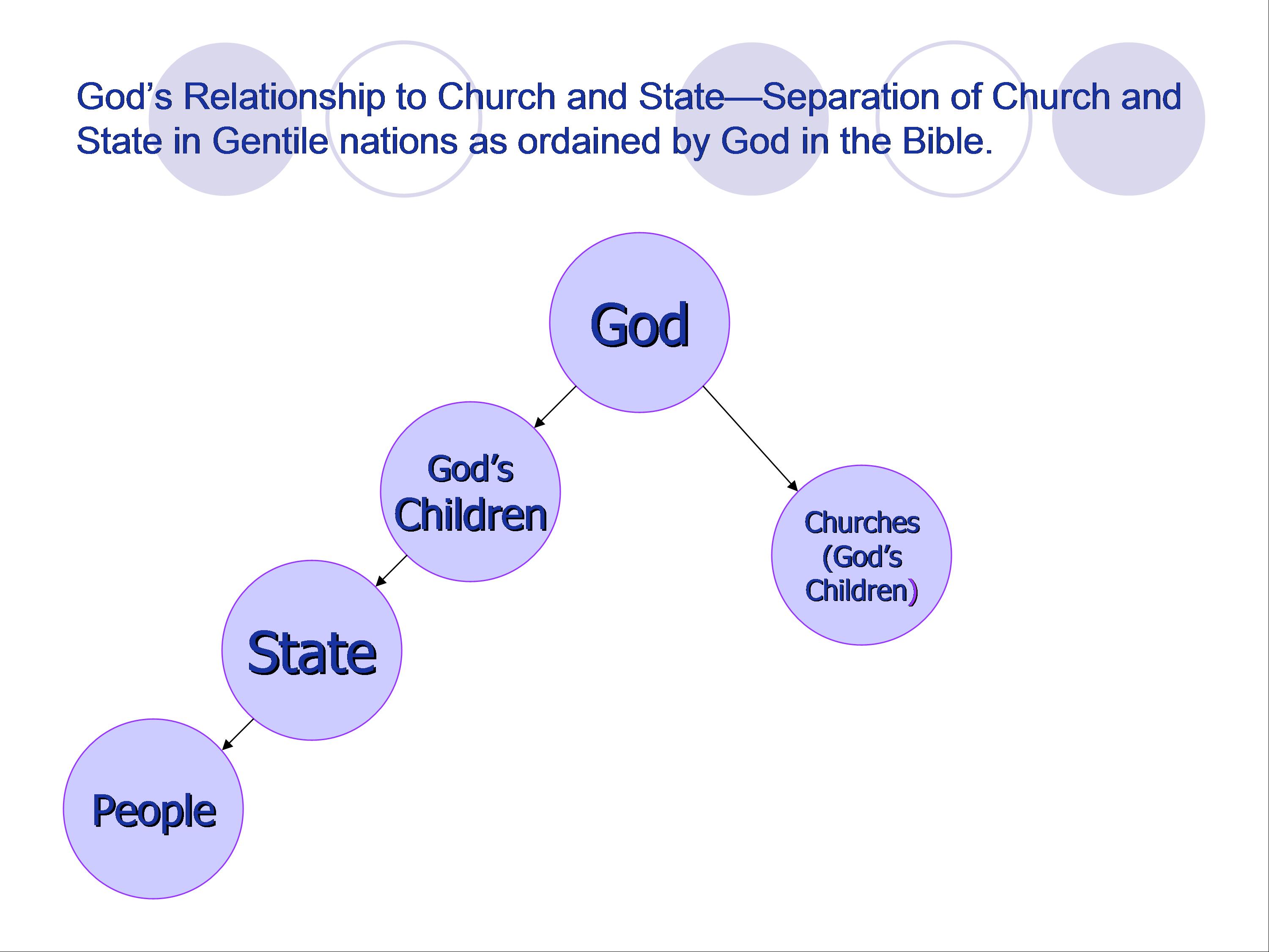
Both church and state should submit to God and His principles. The Bible lays out the jurisdiction and duties of both the the church and civil government, and makes clear that church and state are to be separated. It is wrong to believe that individuals and churches should work under, with, or over civil government for at least two reasons. First, to believe that Romans 13, 1 Peter 2.13, and 1 Timothy 2.1-6 teach blind obedience by individuals and by churches to civil government would make those verses inconsistent with the biblical teaching concerning the hierarchy of law and separation of church and state( See “Laws Protecting New Testament Churches in the United States: Read Them for Yourself”). For example, Scripture tells us that the authors of Romans 13 and 1 Peter 2.13 consistently violated these verses as wrongly interpreted by civil government and many “Christians.” Second, Romans 13 would be inconsistent within itself. The Word of God is never inconsistent.

Romans 13.1 first makes clear that every soul is to be subject to the higher powers. Thus, even human leaders, since they also have souls, are subject to a higher power. According to the Bible, God is the power higher than all other governments. As shown in Part One, Section I, of God Betrayed, God ordains all governments, is above all governments, and lays out the jurisdiction of all governments. Man is to be subject to civil government concerning those earthly matters over which God has given civil government jurisdiction. According to Romans 13.3-4, civil government was ordained by God to be a minister of God to execute judgment over evil doers and to reward those who do good. Man is to be under God only, regardless of what the rules of civil government declare, concerning those spiritual matters for which God has retained jurisdiction for Himself.

Romans 13, consistent with Old and New Testament principles, proclaims the God-ordained purpose of civil government, and that God—the highest power—ordained and is over civil government. According to Romans 13.7, Christians are to render to civil government tribute, custom, fear, and honor—where due under the God-given jurisdiction of civil government.

Romans 13.3-4 and 1 Peter 2.13-14 lay out, consistent with the rest of Scripture, the God-given jurisdiction of civil government over man. In those verses, God grants civil governments jurisdiction over certain earthly, not spiritual, matters, and instructs man to do good and to refrain from doing evil. Many Christians point to those Scriptures and incorrectly declare: “That settles it. The Bible orders blind obedience to civil government in all matters, period;” or they proclaim that those verses require Christians to obey civil government in all things with the possible exception of the preaching of salvation.

Even with the establishment of the church, as recorded in the New Testament, God found it necessary to continue the institution of civil government. The original God-given purpose and jurisdiction of Gentile civil government was to continue. In Romans 13.3 He proclaims that “rulers are not a terror to good works, but to the evil” since – if citizens “do that which is good,” – rulers should praise them. The word from which “evil” in Romans 13.4 is translated means “generally opposed to civil goodness or virtue, in a commonwealth, and not to spiritual good, or religion, in the church” (Roger Williams and Edward Bean Underhill, The Bloody Tenent of Persecution for Cause of Conscience Discussed and Mr. Cotton’s Letter Examined and Answered (London: Printed for the Society, by J. Haddon, Castle Street, Finsbury, 1848),p. 133). Romans 13.4 proclaims that this is because a ruler is a “minister of God to thee for good,” just as he is “a revenger to execute wrath upon him that doeth evil.”

Shortly after this picture was taken, the soldier put a bullet through the head of this teenage girl. Her crime? Telling others about Jesus in public during the Bejing Olympics.

Many civil governments go beyond their God-given jurisdiction. Was Rome a minister of God for good when she executed untold numbers of Christians before the marriage of church and state in the fourth century? What about those governments during the Middle Ages that worked in conjunction with the Roman Catholic “church” to persecute and kill millions of Christians labeled as heretics for refusing to bow down to a false theology? Was Hitler a minister of God for good when he forbade, on penalty of imprisonment and/or death, authentic biblical teaching which condemned his actions against the Jews and true Christians? How about Lenin and Stalin who were not only responsible for the murder of tens of millions of Christians, but who also required the teaching of atheism and established atheism as the official faith of the Soviet Union? How about the governments of Red China, Korea, Iran, Saudi Arabia, and many others at the present time? Are such civil governments legitimately operating under God and His principles? Is the Christian who lives under such civil governments expected by God to follow all their rules?

Hebrew MidwivesHow does God feel about Christians who obey God and thereby disobey civil governments which go beyond their jurisdiction? Were those Christians who conspired against Hitler wrong? Were Corrie Ten Boom and others wrong to save Jews from extermination? Were Moses’ parents wrong to save their son against the order of Pharaoh (Ex. 2.3)? Was the writer of the New Testament book of Hebrews wrong to praise them for hiding Moses, not being “afraid of the king’s commandment” (He. 11.23)? How about the Egyptian midwives when they “feared God, and did not as the king of Egypt commanded them but saved the male children alive” (Ex. 1.17)? Was God wrong in dealing well with those midwives for saving the male babies and lying to Pharaoh (Ex. 1.20)?  Was Moses wrong when he “refused to be

Rahab the Harlot
Rahab the Harlot

called the son of Pharaoh’s daughter; [c]hoosing rather to suffer affliction with the people of God, than to enjoy the pleasures of sin for a season; [e]steeming the reproach of Christ greater riches than the treasures in Egypt: for he had respect unto the recompence of the reward” (He. 11.24-26). Was God wrong when He told Moses to defy Pharaoh (Ex. 3.2-12; 3.15-22; 4.21-23)? Was Moses wrong to exercise his faith, obey God, and defy Pharaoh (Ex. 5.12; He. 11.27)? Was

Jael
Jael

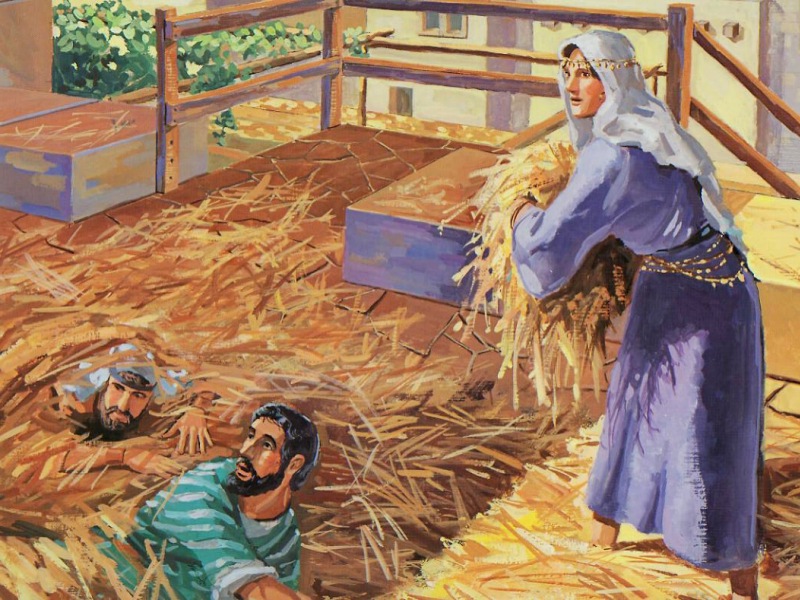
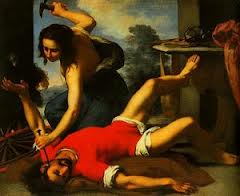
Rahab the harlot wrong to lie to the authorities about the whereabouts of he Jewish spies in her land in order to save their lives (Jos. 2)? Was Joshua wrong for allowing her to live as a reward for defying her governing authorities (Jos. 6.22-25)? Was God wrong to include Rahab in the hall of faith, along with such people as Enoch, Noah, Abraham and Sara, Isaac and Jacob, Joseph, Moses, Joshua, and other heroes of the faith (See He. 11 and 11.31)? What about Ehud who killed King Eglon (Jud. 3.15-26); Joshua who attacked the governing authorities by God’s command (See the book of Jos.); Jael, who nailed her governing authority to the ground with a tent stake (Jud. 4.17-22); Samson who revolted against the governing authorities (Jud. 13.24-16.30); David who ran from Saul (See I S. 18.8 through chapter 31); Mordecai who refused to bow down and worship Haman (Est. 3.5); Elijah who ignored the order of a wicked King even when fifty soldiers showed up, then stood against King Ahab, Jezebel, and their false prophets (1 K. 18.17-41; 2 K. 1.9-16);

Shadrach, Meshach, and Abednego

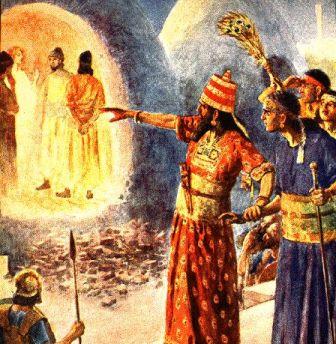
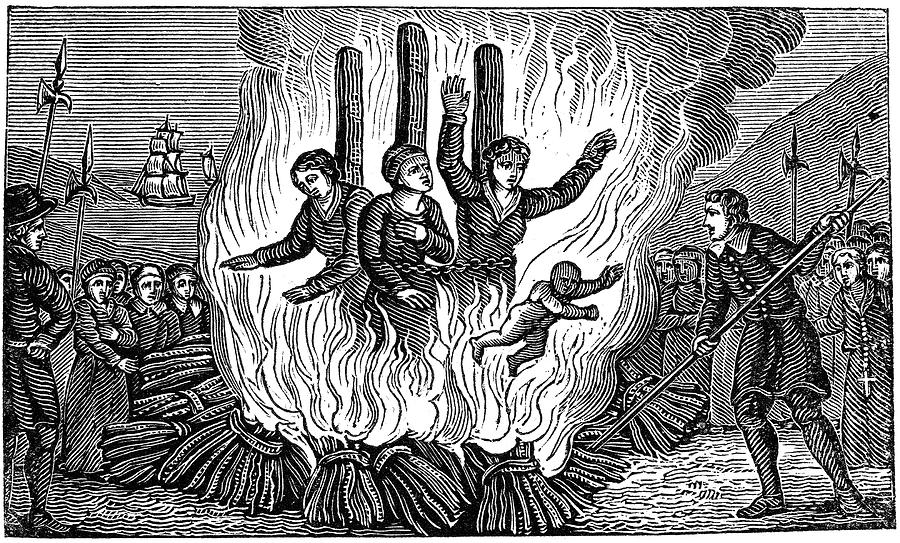
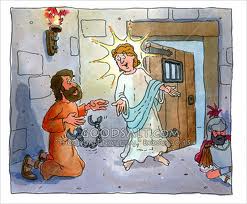
Daniel and Shadrach, Meshach, and Abed-nego (See the book of Daniel); the apostles including Peter who said, “We ought to obey God rather than men (Ac. 5.29);” Paul who disobeyed many of his ruling authorities; all those down through the ages since Jesus’ resurrection and return to glory who have suffered persecution and death for the cause of Christ, including all the apostles, eleven of whom were ultimately martyred for the faith;Martyrs Christians down through the last 2000 years from Christ to this very day who were imprisoned, tortured, and killed because they would not submit to the governing authorities in spiritual matters, many times religious organizations such as the Lutheran or Catholic churches, or renounce Christ, or quit rebaptizing, or quit street preaching, or succumb to false doctrines and/or worship the governing authorities; and those contemporary Christians in the underground churches of China, Cuba, Korea, Indonesia, Iran, Saudi Arabia, Turkmenistan, Pakistan, Bangladesh, Vietnam,, Laos, Malay, the Sudan, Morocco, Libya, Somalia, Algeria, Malaysia, Afghanistan, Colombia, the former Soviet Union, and many other nations (An excellent source to keep abreast of the ongoing persecutions of Christians throughout the world is “The Voice of the Martyrs,” 1-800-747-0085; e-mail: thevoice@vom-usa.org; web site: www.persection.com; children’s web site: www.kidsofcourage.com; address: The Voice of the Martyrs, P.O. Box 443, Bartlesville, OK 74005-0443)?

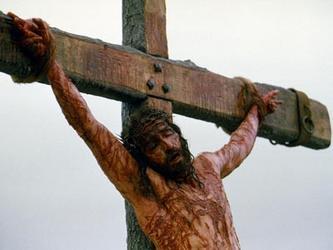
Crucifixion2Did the blessed Savior and God, the Lord Jesus Christ, sin when He chose to continue to do His miracles, to preach to the people, to condemn the religious leaders of His day and their errors, to proclaim that He was the Messiah even though He was upsetting the religious rulers of His day who ultimately used the governing authorities to crucify Him?

ObeyGodRatherThanMenThe Bible, history, and reality show that some rulers, according to Romans 13, exceed their God-ordained power. America does not honor God and His principles. America is a pluralistic nation. All religions are regarded equally, except for Christianity which is now attacked from all quarters. America allows abortion, the murder of unborn babies, to go unpunished (Jb. 31.15: “Did not he that made me in the womb make him? and did not one fashion us in the womb?” Is. 44.24: “Thus saith the LORD, thy redeemer, and he that formed thee from the womb, I am the LORD that maketh all things; …” Is. 49.1: “… the LORD hath called me from the womb; from the bowels of my mother hath he made mention of my name.”  Je. 1.5: “Before I formed thee in the belly I knew thee; and before thou camest forth out of the womb I sanctified thee, and I ordained thee a prophet unto the nations.”). Abortion is the ultimate attack on God (Ge. 1.27: “So God created man in his own image, in the image of God created he him; male and female Abortioncreated he them.”) and the legitimacy of God’s supreme rule. Abortion is an attack on the first institution ordained by God in that it tells men, and especially women, that they can discard God’s rules concerning sex before marriage (See, e.g., Ro. 1.29; 1 Co. 5.1; 6.9-10 (“… Be not deceived: neither fornicators … shall inherit the kingdom of God.”), 13; 18 (“Flee fornication. Every sin that a man doeth is without the body; but he that committeth fornication sinneth against his own body.”); 7.2; 10.8; 2 Co. 12.21; Ga. 5.19; Ep. 5.3; Col. 3.5-6; 1 Th. 4.3) and engage in sex outside the marriage vows with impunity. (In Mt. 19.4-6 Jesus confirms the Genesis narrative of creation ([Jesus said to the Pharisees who were attempting him,] “Have ye not read, that he which made them at the beginning made them male and female, And said, For this cause shall a man leave father and mother, and shall cleave to his wife: and they twain shall be one flesh. What therefore God hath joined together, let not man put asunder.”). See Ge. 1.27 and 2.23-24 (God created male and female in his own image).  See also, for example, Mt. 5.31-32, 32; Mk. 10.1-12; Lu. 16.18; and 1 Co. 7.10-15 which deal with dishonoring the marriage relationship.). Abortion attacks individuals by tempting them to ignore God’s rules regarding fornication and adultery. Women who have their babies killed risk great emotional, and spiritual damage. Likewise, men who allow their babies to be murdered suffer, at the very least, spiritual and emotional harm. Abortion is the ultimate attack on the God-ordained institution of marriage, the basic building block of society.

America has also redefined marriage and the family contrary to biblical definitions and principles. In fact, what authority has the state to define marriage other than it is defined by God? Who—the state or God—ordained marriage? America has redefined marriage as a contract between two equal people. God said marriage is a covenant between a man, a woman, and God (See, e.g., Mt. 5.31-2; 19.3-9; Mk. 10.1-12; Lu. 16.18).  America has redefined the family to be a group of people living together all of whom should have an equal voice, even children. Are fathers and mothers wrong to structure and operate their

“He which made them … made them male and female…”

families according to biblical principles, denying their children an equal voice? Perhaps they are if the state married them since they willingly submitted their marriage and family to the authority of the state. If married by the authority of the state, perhaps they are also wrong to operate their family according to biblical principles because they willingly submitted their family to state authority. Are couples wrong to choose to marry under the authority of a God-ordained minister who refuses to pronounce them man and wife by the authority given him by a God-hating government which operates under Satan’s principles (See God Betrayed, Section VI for more insights into this civil government attack on the marriage of man and woman and the family as well as the marriage of Christ and His church. That section will be reproduced in its entirety on “Separation of Church and State Law” website in the days ahead.)?

America has enticed churches, as will be developed, to operate by the authority given them by the state. Are pastors wrong to continue to operate solely under the Headship of God? By the way, a church can still preach, teach, and operate solely by the authority of the Lord Jesus Christ in this nation. Yet, most pastors choose the government cheese and ease over the principles and promises in the Word of God. Why? The Christian who walks in the flesh does not cherish at least one of the promises of God for the Christian—persecution. “Yea, and all that will live godly in Christ Jesus shall suffer persecution” (2 Ti. 3.12). Most American “Christians” reject suffering instead of accepting it as instructed (“For unto you it is given in the behalf of Christ, not only to believe on him, but also to suffer for his sake” (Ph. 1.29), as mild as it would be compared to the suffering of Paul, Peter, and other apostles and millions of Christians down through the last two thousand years. Those “Christians” do not know what they are missing: “That I may know him, and the power of his resurrection, and the fellowship of his sufferings, being made conformable unto his death” (Ph. 3.10).  And how almost non-existent is the persecution to be suffered by the church and the Christian who refuses to put himself or herself under the American civil government in spiritual matters. What would the American Christian today—who bows down to civil government despite the very mild inconveniences that would result from doing things God’s way—do should he face the persecutions endured by the early Christians; persecutions by, for example, the Apostle Paul and otherswho lived in a society in which Paul, before his conversion, had “imprisoned and beat in every synagogue them that believed on [the Lord]” (Ac. 22.19), and the persecution of Paul and others after Paul’s conversion. Paul noted, shortly before his martyrdom, that he had endured many persecutions (2 Co. 11.23-27: [speaking of the persecutions he endured for serving the Supreme Ruler]:

“… in stripes above measure, in prisons more frequent, in deaths oft.  Of the Jews five times received I forty stripes save one.  Thrice was I beaten with rods, once was I stoned, thrice I suffered shipwreck, a night and a day I have been in the deep; In journeying often, in perils of waters, in perils of robbers, in perils by mine own countrymen, in perils by the heathen, in perils in the city, in perils in the wilderness, in perils in the sea, in perils among false brethren; in weariness and painfulness, in watchings often, in hunger and thirst, in fastings often, in cold and nakedness….”), but that “out of them all the Lord delivered [him]” (2 Ti. 3.12).

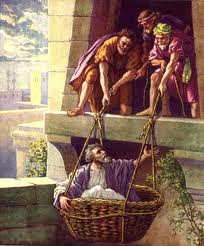
PersecutionOfPaul

Let it be emphasized that despite the fact that America is no longer a nation under God, Christians are required by Scripture to obey, for the Lord’s sake, every legitimate biblically consistent American law dealing with wrongdoing against one’s fellow man.

Although the early colonial dissenters such as the Baptists were persecuted by the established churches in the colonies, they were nonetheless free. On the other hand, today’s Americans, including Christians in churches which place themselves under civil government, are in bondage. The eighteenth century words of Isaac Backus apply to Americans today:

“Now how often have we been told that he is not a freeman but a slave whose person and goods are not at his own but another’s disposal? And to have foreigners come and riot at our expense and in the fruit of our labors, has often represented as to be worse than death…. But how is our world filled with such madness concerning spiritual tyrants! How far have pride and infidelity, covetousness and luxury, yea, deceit and cruelty, those foreigners which came from Hell, carried their influence, and spread their baneful mischiefs in our world! Yet who is willing to own that he has been deceived and enslaved by them? … All acknowledge that these enemies are among us, and many complain aloud of the mischiefs that they do, yet even those who lift up their heads so high as to laugh at the atonement of Jesus and the powerful influences of the Spirit and slight public and private devotion are at the same time very unwilling to own that they harbor pride, infidelity, or any other of those dreadful tyrants. And nothing but the divine law … brought home with convincing light and power, can make them truly sensible of the soul-slavery that they are in. And ’tis only the power of the Gospel that can set them free from sin so as to become the servants of righteousness, can deliver them from these enemies so as to serve God in holiness all their days.

“… Therefore the divine argument to prove that those who promise liberty while they despise government are servants of corruption is this: For of whom a MAN is overcome, of the same is he brought in bondage, 2 Pet. ii. 18, 19. He is so far from being free to act the man that he is a bond-slave to the worst of tyrants. And not a little of this tyranny is carried on by such an abuse of language as to call it liberty for men to yield themselves up to be so foolish, disobedient and deceived as to serve divers lusts and pleasures, Tit. iii. 3” (Isaac Backus, “An Appeal to the Public for Religious Liberty,” Boston 1773, an essay found in Isaac Backus on Church, State, and Calvinism, Pamphlets, 1754-1789, Edited by William G. McLoughlin (Cambridge, Massachusetts, 1968), pp. 311-312).

The biblical truth is that God gives Gentile civil government control only over certain earthly sins involving man’s relationship to man as is attested to by Romans 13 and 1 Peter 2.13 in their immediate context and in the context of Scripture as a whole. As at His original establishment of civil government at the flood, God never mentions one act which involves man’s relationship to God in any Scripture involving the authority of civil government. In Romans 12.9-20 and 13.8-14, the verses immediately surrounding Romans 13.1-7, the Word of God, speaking to Christians, elaborates upon the Christian responsibility to his neighbor and to civil government. Nothing the Christian’s responsibility to God is left out (Notwithstanding, treating one’s neighbor as God desires is a responsibility to God.).  For example, Romans 12.9-20, the verses immediately preceding Romans 13, state nothing about man’s responsibility to God and spiritual matters:

Let love be without dissimulation. Abhor that which is evil; cleave to that which is good. Be kindly affectioned one to another with brotherly love; in honour preferring one another;  Not slothful in business; fervent in spirit; serving the Lord; Rejoicing in hope; patient in tribulation; continuing instant in prayer; Distributing to the necessity of saints; given to hospitality. Bless them which persecute you: bless, and curse not. Rejoice with them that do rejoice, and weep with them that weep. Be of the same mind one toward another. Mind not high things, but condescend to men of low estate. Be not wise in your own conceits.  Recompense to no man evil for evil. Provide things honest in the sight of all men. If it be possible, as much as lieth in you, live peaceably with all men. Dearly beloved, avenge not yourselves, but rather give place unto wrath: for it is written, Vengeance is mine; I will repay, saith the Lord. Therefore if thine enemy hunger, feed him; if he thirst, give him drink: for in so doing thou shalt heap coals of fire on his head.”

Those verses state that believers are to bless those that persecute them. Believers been persecuted for Christ’s sake down through the centuries until the present day. They have been persecuted by civil government for not bowing down civil government and the official state religion in certain matters.

Romans 13.8-14 which follow Romans 13.1-7  says:

LoveThyNeighbor“Owe no man any thing, but to love one another: for he that loveth another hath fulfilled the law. For this, Thou shalt not commit adultery, Thou shalt not kill, Thou shalt not steal, Thou shalt not bear false witness, Thou shalt not covet; and if there be any other commandment, it is briefly comprehended in this saying, namely, thou shalt love thy neighbour as thyself. Love worketh no ill to his neighbour: therefore love is the fulfilling of the law. And that knowing the time, that now it is high time to awake out of sleep: for now is our salvation nearer than when we believed. The night is far spent, the day is at hand: let us therefore cast off the works of darkness, and let us put on the armour of light. Let us walk honestly, as in the day; not in rioting and drunkenness, not in chambering and wantonness, not in strife and envying. But put you on the Lord Jesus Christ, and make not provision for the flesh, to fulfill the lusts thereof.

Notice in those verses that, in regard to obeying the ordinances of men, Paul only dealt with the law of love toward one’s neighbor; that is, with man’s relationship to man, and not man’s relationship to God. God did not give Gentile civil government responsibility for exercising authority over spiritual matters, over the first four commandments dealing with man’s relationship to God.

Civil government has no authority over matters dealing with man’s relationship to God since such matters are spiritual. Spiritual matters, according to God, the Supreme Ruler of the highest government, include both our duties, as individual believers and as members of a church, to God and to man. Christians are to love both God and their neighbor.

Authority2Religious and secular rulers, being led by the god of this world to satisfy their own lusts, have always been concerned with their authority. Not knowing God, they are their own gods. We see that over and over again in the Old and New Testaments. Jesus faced that problem.

“Then the Jews took up stones again to stone [Jesus]. Jesus answered them, Many good works have I shewed you from my Father; for which of those works do ye stone me? The Jews answered him, saying, For a good work we stone thee not; but for blasphemy; and because that thou, being a man, makest thyself God. Jesus answered them, Is it not written in your law, I said, ye are gods (The Lord here quotes Ps. 82.6a: “I have said, Ye are gods[.]”).If he called them gods, unto whom the word of God came, and the scripture cannot be broken; Say ye of him, whom the Father hath sanctified, and sent into the world, Thou blasphemest; because I said, I am the Son of God? If I do not the works of my Father, believe me not. But if I do, though ye believe not me, believe the works: that ye may know, and believe, that the Father is in me, and I in him” (Jn. 10.31-38).

The apostles always obeyed God in regard to spiritual matters, even when, in so doing, they violated ordinances of man. Disregarding threats, imprisonments, and beatings, the apostles continued both to do good for their fellow man and to preach, both in the name of Jesus, repeatedly violating Romans 13, and I Peter 2.13 as interpreted by most contemporary “ Christians.” Peter wrote: “Submit yourselves to every ordinance of man for the Lord’s sake: whether it be to the king, as supreme; Or unto governors, as unto them that are sent by him for the punishment of evildoers, and for the praise of them that do well” (1 Pe. 2.13-14). Notice that Peter pointed out the purpose of civil government and therefore the ordinances of man—to punish evildoers, and to praise those who do well. According to him, Christians were to obey every “ordinance of man for the Lord’s sake,” and civil government was to deal only with earthly matters. More is said about this in the next article.

Punishment by civil leaders did not cause Peter and John to violate the biblical principle of separation of church and state which was at odds with the worldly principle of separation of church and state. The people, the priests, the captain of the temple, and the Sadducees came upon Peter and John, laid hands on them, and held them (Ac. 4.1, 3), after they performed the first apostolic miracle, healing the lame man. The “rulers, and elders, and scribes” brought them in and asked them, “By what power, or by what name, have ye done this” (Ac. 4.5, 7)?

“Then Peter, filled with the Holy Ghost, said unto them, … [B]y the name of Jesus Christ of Nazareth, whom ye crucified, whom God raised from the dead, even by him doth this man stand here before you whole. This is the stone which was set at nought of you builders, which is become the head of the corner. Neither is there salvation in any other: for there is none other name under heaven given among men, whereby we must be saved” (Ac. 4.8, 10-12).

Their response: “[T]hey conferred among themselves, Saying, What shall we do to these men? for that indeed a notable miracle hath been done by them is manifest to all them that dwell in Jerusalem; and we cannot deny it. But that it spread no further among the people, let us straitly threaten them, that they speak henceforth to no man in this name. And they called them and commanded them not to speak at all nor teach in the name of Jesus. But Peter and John answered and said unto them, Whether it be right in the sight of God to hearken unto you more than unto God, judge ye. For we cannot but speak the things which we have seen and heard” (Ac. 4.15-20).

These rulers would have had no complaint had Peter and John and the other apostles done what they did under the authority of the rulers. Obviously, Peter and John had not yet been taught that Romans 13 and 1 Peter 2.13 required them to obey the earthly authorities over them in all matters, including spiritual matters. Of course, the apostles, under the authority of the rulers, would not have been able to heal and do other miracles, nor to preach in the power of the Holy Ghost. They still understood that the Highest Power, God himself, told them to do what they were doing and gave them the power to do it, that no earthly power was given the authority to direct them concerning spiritual matters, and that even had an earthly power given the authority to do those matters under earthly authority, they could not have done the miracles or preached the true gospel with power. Many “Christians” today believe that they and the church can simultaneously achieve God’s spiritual goals while operating under the authority of the god of this world. “Having a form of godliness, but denying the power thereof: from such turn away” (2 Ti. 3.5).

After their release, the response of Peter and John and their Christian friends was quite different from what can be expected of “Christians” today, who now have America’s interpretation of Romans 13 and 1 Peter 2.13 at their disposal. Peter and John then went “to their own company” and prayed:

“Lord, thou art God, which hath made heaven, and earth, and the sea, and all that in them is: Who by the mouth of thy servant David hast said, Why did the heathen rage, and the people imagine vain things? The kings of the earth stood up, and the rulers were gathered together against the Lord, and against his Christ. For of a truth against thy holy child Jesus, whom thou hast anointed, both Herod, and Pontius Pilate, with the Gentiles, and the people of Israel, were gathered together, For to do whatsoever thy hand and thy counsel determined before to be done. And now, Lord, behold their threatenings: and grant unto thy servants, that with all boldness they may speak thy word. By stretching forth thine hand to heal; and that signs and wonders may be done by the name of thy holy child Jesus. And when they had prayed, the place was shaken where they were assembled together; and they were all filled with the Holy Ghost, and they spake the word of God with boldness” (Ac. 4.24-31).

These men knew their Bible.  Within their prayer they quoted from Isaiah 51.12, 13 and Psalm 2.1-3. They did not take Scripture out of context so that they could forego confronting the rulers. They just asked God to give them boldness to remain under His authority while speaking the Word of the Lord and doing signs and wonders in the name of Jesus. They were concerned with not only preaching the Word but also with “doing” for their fellow man under the authority of the Lord Jesus Christ. They knew that they could not do any good for their fellow man without the power of God and that they could not have the power of God should they operate under the authority of the state or anyone else.

The apostles continued to violate today’s perverted interpretation of Romans 13 and I Peter 2.13, accompanied by God’s own angel; and they were so presumptuous as to do so in public places, which is improper according to many of today’s state indoctrinated “Christians” who advise Christians not to preach on the street, or do door-to-door evangelism or any public ministry because they “feel” that to do so is offensive to others and wrong and the proper place for these activities is within the four walls of the church. The apostles continued to do signs and wonders among the people (Ac. 5.12), “healing many sick folks and them which were vexed with unclean spirits” (Ac. 5.16). Because of this, the high priest and all they that were with him, “laid their hands on the apostles, and put them in the common prison” (Ac. 5.17-18). The angel of the Lord opened the prison doors, released them, and told them to “Go, stand and speak in the temple to the people all the words of this life” (Ac. 5.19-20). Here God’s own angel was instructing the apostles to violate America’s false version of Romans 13 and I Peter 2.13. The apostles did what the angel told them to do: “[T]hey entered into the temple early in the morning and taught …” (Ac. 5.21, 25).

Notice, as a side note, that they were not going into their own meeting-place, but were going into the temple—all through Acts they are depicted as not going into the four walls of their own meeting place, but are preaching and helping their fellow man in synagogues, in public places, and going door to door. Maybe the Lord in His wisdom did not mention that a church should own property for a reason—if a church has to operate in the world, outside the four walls of a building, that church, if its members love the Lord, will probably do what God commissioned her to do: “Go into all the world and preach the gospel to every creature” (Mk. 16.15). Luke recorded the words of Jesus:

“Thus it is written, and thus it behoved Christ to suffer, and to rise from the dead the third day: And that repentance and remission of sins should be preached in his name among all nations, beginning at Jerusalem. And ye are witnesses of these things. And behold, I send the promises of my Father upon you: but tarry ye in the city of Jerusalem, until ye be endued with power from on high” (Lu. 24.46-49).

Obviously, God’s intent for the church was to get His message to the whole world, not for the church to seclude itself within four walls. Notice that Christians were to begin at Jerusalem, then to go

 to all the world, to all nations. Because of persecution in Jerusalem for speaking and acting in public in the name of Jesus, the governing authorities forced them to leave Jerusalem and go to the world. God’s will was accomplished through persecution.

The apostles continued to operate under God regarding spiritual matters. They were again apprehended and brought beforeObeyGodRatherThanMen the counsel who said to them, “Did we not straitly command you that ye should not teach in this name? and, behold, ye have filled Jerusalem with your doctrine, and intend to bring this man’s blood upon us” (Ac. 5.28). “Then Peter and the other apostles answered and said, We ought to obey God rather than men. The God of our fathers raised up Jesus, whom ye slew and hanged on a tree. Him hath God exalted with his right hand to be a Prince and a Saviour, for to give repentance to Israel, and forgiveness of sins. And we are his witnesses of these things; and so is also the Holy Ghost, whom God hath given to them that obey him” (Ac. 5.29-32). [Bold emphasis mine].

Romans13Peter“When they heard that they took council to slay them” (Ac. 5.33). Gamaliel talked them out of killing the apostles (Ac. 5.34-38). Instead, they beat the apostles and “commanded that they should not speak in the name of Jesus, and let them go” (Ac. 5.40). The apostles “rejoiced that they were counted worthy to suffer shame for His name. And daily in the temple, and in every house, they ceased not to teach and preach Jesus Christ” (Ac. 5.41-42). and continued to do for their neighbor: Peter healed Aeneas of palsy of which he had been in bed eight years and raised Tabitha from the dead in Jesus’ name (Ac. 9.32-41). Later, the angel of the Lord violated the popular Americanized version of Romans 13 and 1 Peter 2.13 by breaking Peter out of prison (Ac. 12.5-11).

Paul was determined to obey God, not man and not civil government, in regard to spiritual matters. Paul wrote on this matter in Romans and many other books in the New Testament. For example, he instructed the Christian: “For though we walk in the flesh, we do not war after the flesh: (For the weapons of our warfare are not carnal, but mighty through God to the pulling down of strong holds;) Casting down imaginations, and every high thing that exalteth itself against the knowledge of God, and bringing into captivity every thought to the obedience of Christ” (2 Co. 10.5).

Because of the power of God upon Paul as he was challenging the religious leaders, they took council to kill him:

PaulOverTheWallInABasket“And straightway he preached Christ in the synagogues, that he is the Son of God. But all that heard him were amazed, and said; Is not this he that destroyed them which called on this name in Jerusalem, and came hither for that intent, that he might bring them bound unto the chief priests? But Saul increased the more in strength, and confounded the Jews which dwelt at Damascus, proving that this is very Christ. And after that many days were fulfilled, the Jews took counsel to kill him: But their laying await was known of Saul. And they watched the gates day and night to kill him. Then the disciples took him by night, and let him down by the wall in a basket” (Ac. 9:20-25).

Paul simply did not obey the civil government laws which contradicted God’s laws relating to spiritual matters, nor did he teach submission to civil government in spiritual matters. He and Silas were beaten and thrown into prison after casting out a demon from a damsel (Ac. 16.1-24). The masters of the damsel, because they lost the gains of her divination, brought them to the magistrates, charging that they “teach customs, which are not lawful for [them] to receive, neither to observe, being Romans”  (Ac. 16.19-21). Paul was frequently imprisoned as a result of ministering for Christ (2 Co. 11.23). He was concerned with obeying God and with “casting down every high thing that exalteth itself against the knowledge of God.”

Paul, inspired by God, understood that the true Christian was in a warfare initiated by Satan who would do everything in his power to usurp the God-given duties of Christians and churches to love God and to love one’s neighbor. His understanding is reflected in instructions he gave:

“Finally, my brethren, be strong in the Lord, and in the power of his might. Put on the whole armour of God, that ye may be able to stand against the wiles of the devil. For we wrestle not against flesh and blood, but against principalities, against powers, against the rulers of darkness of this world, against spiritual wickedness in high places. Wherefore take unto you the whole armour of God, that ye may be able to withstand in the evil day, and having done all, to stand. Stand therefore, having your loins girt about with truth, and having on the breastplate of righteousness; And your feet shod with the preparation of the gospel of peace; Above all, taking the shield of faith, wherewith ye shall be able to quench all the fiery darts of the wicked. And take the helmet of salvation, and the sword of the Spirit, which is the word of God: Praying always with all prayer and supplication in the Spirit, and watching thereunto with all perseverance and supplication for all saints” (Ep. 6.10-18).

Notice that the armor he mentioned was totally spiritual—loins girt with truth, the breastplate of righteousness, the gospel of peace, the shield of faith, the helmet of salvation, the sword of the Spirit which is the Word of God.

As to the prayer mentioned in the above verses, Paul instructed Christians to pray in the Spirit that all men, including kings and others in authority, would be saved and come to a knowledge of the truth. Christ died for all, including rulers, but he gave everyone a choice of whether to submit to Him.

Tradition has it that Paul's martyrdom was by beheading
Tradition has it that Paul’s martyrdom was by beheading

“I exhort therefore, that, first of all, supplications, prayers, intercessions, and giving of thanks, be made for all men;  For kings, and for all that are in authority; that we may lead a quiet and peaceable life in all godliness and honesty.  For this is good and acceptable in the sight of God our Saviour; Who will have all men to be saved, and to come unto the knowledge of the truth. For there is one God, and one mediator between God and men, the man Christ Jesus; Who gave himself a ransom for all, to be testified in due time” (1 Ti. 2.1-5).

He instructed Christians to include rulers in their supplications, prayers, intercessions, and giving of thanks so that Christians could lead a quiet and peaceable life in all godliness and honesty. In other words, a ruler who is saved and comes to the knowledge of the truth will provide an atmosphere, under God his Supreme Ruler, in which Christians can live quiet and peaceable lives. By implication, and as shown consistently throughout history, lost rulers and others in authority likely will not provide such an atmosphere. This is discussed more in Chapter 6, infra.

Paul knew that Satan would continue to come against the church through earthly powers, through civil government.  He also knew that God wanted His children to fight this warfare using only spiritual, not earthly, means. His goal was the glory of God, not the happiness of man.

Render Unto God the Things that Are His: A Systematic Study of Romans 13 and Related Verses:

  1. Introduction to “Render unto God the Things that Are His: A Systematic Study of Romans 13 and Related Verses” (Chapter 1 of Render Unto God the Things that Are His: A Systematic Study of Romans 13 and Related Verses. This material was also covered in less detail in God Betrayed, Section III, Chapters 5, 6.)
  2. Doth not your Master pay tribute? Matthew 17.24-27 (Chapter 2 of Render Unto God the Things that Are His)
  3. Render unto Caesar…? Luke 20.25, Matthey 22.21, Mark 22.17 (Chapter 3 of Render Unto God the Things that Are His)
  4. Let every soul be subject unto the higher powers? Romans 13 (Chapter 4 of Render Unto God the Things that Are His)
  5. Submit to every ordinance of man? 1 Peter 2.13 (Chapter 5 of Render Unto God the Things that Are His)
  6. Pray for all rulers? 1 Timothy 2.1-6 (Chapter 6 of Render Unto God the Things that Are His)
  7. Conclusion to “Render unto God the Things that Are His: A Systematic Study of Romans 13 and Related Verses” (Chapter 7 of Render Unto God the Things that Are His)

Sermon on Romans 13: Pastor Jason Cooley, “Romans 13 in Context,” July 13, 2012

Definitions of “Separation of Church and State,” “Established Church,” and “Religious Freedom or Soul Liberty”


Jerald Finney
Copyright © March 10, 2012
Revised July 27, 2014


Click here to go to Jerald Finney’s audio teachings on this material.
This article somewhat modifies that audio teaching.


Definitions of “Separation of Church and State,” “Established Church,” and “Religious Freedom or Soul Liberty”

Study Bible to verify this teaching which is explained in the writings and teachings of Jerald Finney.
Study the King James Bible to verify this principle which is explained in the writings and teachings of Jerald Finney.

Definitions of “separation of church and state,” “established church” and “religious freedom or soul liberty,” are necessary in order to understand the principle of separation of church and state. The biblical principle of “separation of church and state” is that God desires both a church and the state to choose to be under God, but desires neither to be over or to work hand in hand with the other. A church has spiritual responsibilities. The state has earthly responsibilities. The Bible contains different principles for a church and the state. God desires the two to be totally separate entities, both ordained by God who desires both to submit to Him in love and to be guided by His principles as stated in His Word.

This statement by Mark Twain is correct.

An established church is a church who is an integral part of the state and receives state support. The established church and state reach an agreement or enter into a contract whereby either the state aids the church in attaining earthly and/or spiritual goals or vice-versa and, to one degree or another, the state runs the church or the established church runs the state. The church and state work hand in hand to enforce earthly and spiritual laws and principles. In modern America state-churches are influenced, perverted, and/or perhaps dominated by state enforced satanic principles.

Historically, the established church has either been over the state, or the state has been over the established church. When the state has been over the church, the state directs the affairs of the church to a greater or lesser degree and vice-versa. In either case, the spiritual affairs of the church are mixed with the earthly responsibilities of the state. In the past, in either a church-state or state-church, leaders of both church and state operated under a false theology based upon false biblical principles. The results were (1) corruption of the church, corruption of the state, corruption of the clergy and political leaders and the members of society and the church, and (2) torture, imprisonment, and/or the killing of those who refused to bow down to the theology of the church-state or state-church. We see the former results in the church-state activities in America today. The latter results are coming.

6Religious freedom exists when every citizen has, by law, the choice, without persecution, of choosing God, false gods or a false god, or no god at all. Religious freedom, as shown in God’s Word, is what He desires in a Gentile nation. Even though He desires Gentile nations to provide for religious liberty, He also wants them to submit themselves to Him and His principles, and recognize that Jesus Christ is the Supreme Sovereign. Thus a nation modeled after biblical principles will provide for religious liberty while also operating under God and His principles.

8In today’s incorporated 501(c)(3) church in America, the rules of civil government for the church are secular and the civil government enforces certain public policies even when those policies go against biblical principles. Christians in America suffer a very mild degree of persection.

10“By religious freedom, or soul liberty, is meant the natural and inalienable right of every soul to worship God according to the dictates of his own conscience, and to be unmolested in the exercise of that right, so long, at least, as he does not infringe upon the rights of others; that religion is, and must be a voluntary service; that only such service is acceptable to God; and, hence that no earthly power, whether civil or ecclesiastical, has any right to compel conformity to any creed or to any species of worship, or to tax a man for its support.

5

Click the above to go to the online version of the book.

“This principle gives to ‘Caesar’ ‘the things that are Caesar’s,’ but it denies to Caesar ‘the things that are God’s.’ It does not make it a matter of indifference what a man believes or how he acts, but it places all on the same footing before God, the only lord of the conscience, and makes us responsible to him alone for our faith and practice. [By 1900 this doctrine was] very generally accepted, not only in Virginia, but also throughout the United States. It [had] been incorporated into our National and State Constitutions, and it [was] the basis for our civil liberties” (Charles F. James, Documentary History of the Struggle for Religious Liberty in Virginia (Harrisonburg, VA.: Sprinkle Publications, 2007; First Published Lynchburg, VA.: J. P. Bell Company, 1900), p. 9.).

God Judges Nations


1Jerald Finney
Copyright © November 5, 2011

Click here to go to “Self-exam Questions: God Judges Nations?


Preface

This article is a continuation of Jerald Finney’s systematic development of the doctrines, application, history, and legalities of “separation of church and state.” See En1 for more on this matter; See En2 for information on books by Jerald Finney which thoroughly examine “separation of church and state law.” This article is an edited version of Section I, Chapter 10 of the book God Betrayed/Separation of Church and State: The Biblical Principles and the American Application (Link to preview of God Betrayed). (Link to Contents of “Separation of Church and State Law” Blog which has links so that the new follower can start his study at the beginning. “Line upon line, precept upon precept.”).


God judges nations

G1od judges nations, both Gentile nations and the nation of Israel. God cast out the nations in the promised land because of their abominations (See Le. 18). He did not drive them out before then, because their iniquity was not yet full (Ge. 15.16). Before that point, as God promised (Ge. 15.13-14), Israel was a servant to the Egyptians who afflicted them four hundred years, after which time God judged Egypt and delivered the Israelites from Egyptian bondage (Ge. 15.13-14; 42-50; Ex.).

God then told Israel to go in and possess the promised land.  Israel, except for Joshua and Caleb, did not believe God could give them the promised land (See Nu. 13-14).   God sentenced all but those who were less than twenty years old and Joshua and Caleb to die in the wilderness because of their unbelief (Nu. 14.28-35). They wandered in the wilderness forty years, until all the unbelievers were dead.

God did not cast the nations in the promised land out from before Israel because Israel was righteous, for they were a stiffnecked people (De. 9.4-6). He did so because of their abominations (See Le. 18) and wickedness (De. 9:4); and so that He could “perform the word which [He] sware unto … Abraham, Isaac, and Jacob (De. 9.4-6). He did not drive them out before then because their iniquity was not yet full (Ge. 15.16; Le. 20.23).

God commanded Israel to obey His commandments and judgments, not to follow and serve the gods of the nations being driven out (Le. 18, De. 12.30-32), and not to commit the abominations of the nations He was driving out. He commanded them to be separate (De. 7:1-11). He promised victory and blessings for obedience (De. 7.12-26; 12; 28). God warned and exhorted them (De. 8-12). He promised chastisement for failing to “hearken unto voice of the LORD …, to observe to do all his commandments and his statutes.” He promised that continued disobedience would be punished by a world wide dispersion (De. 28.63-69).

Israel failed God and He judged them by sending Israel and Judah into captivity because of their repeated failure, despite many warnings from God, to keep His commandments and His statutes.  His prophets repeatedly pointed out their specific sins and warned them of the consequences of their sins, He warned them of the seventy years captivity and their dispersion among all peoples. Here are a few of the many relevant prophecies of warning to Israel:

  1. 1He warned them of the seventy years captivity (Je. 25.1-14).
  2. “… [F]or the LORD hath a controversy with the inhabitants of the land, because there is no truth, nor mercy, nor knowledge of God in the land. By swearing, and lying, and killing, and stealing, and committing adultery, they break out, and blood toucheth blood. Therefore shall the land mourn, and every one that dwelleth therein shall languish, with the beasts of the field, and with the fowls of heaven; the fishes of the sea also shall be taken away…. ”  (Ho. 4.1-3).  Israel was willfully ignorant: “… because thou hast rejected knowledge, I will also reject thee, that thou shalt be no more priest to me: seeing thou hast forgotten the  law of thy God, I will also forget thy children…. (See Ho. 4.6-11).”
  3. God reminds Israel through his prophet Amos of all His judgments against Israel and in spite of those judgments, “yet have ye not returned unto me, saith the LORD.”  God says, “Prepare to meet thy God, O Israel” (Am. 4.6-13 (part of verses 10 and 12 quoted)).
  4. God wanted Amos to preach 3 things to Israel: (1) the people did not respect the preaching of the word of God (Am. 7.10-13, 16); (2) Israel did not honor the Sabbath (Am. 8.5); (3) they did not detest sin any more (Am. 8.14).  God also wanted Amos to tell Israel exactly what he was about to do. They rejected his message. In fact, they didn’t even want to hear him preach. They rebelled at the message and the messenger.

13God also judges Gentile nations. He has given them their authority (Da. 2.37-40), and will hold them to account:

  1. “The wicked shall be turned into hell, and all the nations that forget God. Put them in fear, O LORD: that the nations may know themselves to be but men. Selah” (Ps. 9.17, 20).
  2. “For the LORD most high is terrible; he is a great King over all the earth. He shall subdue the people under us, and the nations under our feet” (Ps. 47.2-3).
  3. Psalm 135.6-12. “Whatsoever the LORD pleased, that did he in heaven, and in earth, in the seas, and all deep places…. Who smote great nations, and slew mighty kings; Sihon king of the Amorites, and Og king of Bashan, and all the kingdoms of Canaan….” (Ps. 135.6, 10-11).
  4. “To him which smote great kings: for his mercy endureth forever; And slew famous kings, for his mercy endureth forever; [kings named]” (Ps. 136.17-21).

3God used Assyria to judge Israel and then judged Assyria for its pride in boasting that Assyria did this (Is. 10.5-19).

God, through his prophets, told of the coming judgments on all nations, and the reasons for those judgments:

  1. destruction of Moab (Is. 10.5-19);
  2. destruction of Damascus (Is. 17);
  3. burden of Egypt (Is. 19);
  4. prophecy that Assyria will waste Egypt and Ethiopia (Is. 20);
  5. 9burden of Tyre (Is. 23);
  6. woe of Ephriam (Is. 28);
  7. Armageddon: “the indignation of the LORD is upon all nations, and his fury upon all their armies: he hath utterly destroyed them…. (Is. 34);”
  8. judgment of Babylon (Is.. 47);
  9. judgment on Israel’s oppressors (Is. 49.22-26; 51);
  10. all nations to be judged—many nations listed to be judged (Je. 25.11-14, 15-38; Je. 45-50);
  11. destruction of Egypt, Philistia, Tyre, Moab, Ammonites, Edom, Damascus, Elam, Babylon, Chaldea, etc.—read through Jeremiah 46-51 and notice the reasons given for destroying these nations;
  12. Babylon destroyed because Nebuchadnezzar, king of Babylon, scattered Israel (Je. 50.17-18); because they [strove] against the LORD (Je. 50.24);
  13. the judgment against Babylon and all the inhabitants of Chaldea because of the violence and evil done to Israel (Je. 51.24, 35-36);
  14. judgments against various nations in Ezekiel 25-32—the reason for each judgment given and the judgment;
  15. judgment of the Gentile nations in Joel 3.2-8 after Armageddon;
  16. judgments on people surrounding Israel prophesied in Amos 1.1-2.3;
  17. judgments on certain nations prophesied in Zephaniah 2.4-15;
  18. Zechariah, more than Haggai or Malachi, gives God’s thoughts about the treatment of Israel by nations surrounding Israel—He has given them their authority and will hold them to account, the test being their treatment of Israel. “For thus saith the LORD of hosts; After the glory hath he sent me unto the nations which spoiled you: for he that toucheth you toucheth the apple of his eye” (Zec. 2.8).

TreatmentOfIsraelThe ultimate test for a Gentile nation, as always, is the way a nation treats Israel. “And I will make of thee [Israel] a great nation, and I will bless thee, and make thy name great; and thou shalt be a blessing; And I will bless them that bless thee, and curse him that curseth thee: and in thee shall all families of the earth be blessed (Ge. 12.2-3).” “Let people serve thee, and nations bow down to thee: cursed be every one that curseth thee, and blessed be he that blesseth thee” (Ge. 27.29).  “He couched, he lay down as a lion, and as a great lion: who shall stir him up? Blessed is he that blesseth thee, and cursed is he that curseth thee (Nu. 24.9).”

Thus, nations that blessed Israel have invariably been blessed, those that have persecuted Israel have suffered ill (See Ge. 15.13, 14; De. 30.5-7; Is. 14.1, 2; Jl. 3.1-8; Mi. 5.7-9; Mt. 25.31-40). A careful study of ancient history and of current events reveals that disaster follows when a nation “curses” the nation Israel (See John McTeman and Bill Koenig, Israel: The Blessing or the Curse (Oklahoma City, Oklahoma: Heathstone Publishing, 2002), cited in William P. Grady, How Satan Turned America Against God (Knoxville, Tennessee: Grady Publications 2005), pp. 1-13.).

The “times of the Gentiles,” a period during which Jerusalem is under Gentile rule, began when Nebuchadnezzar carried Zedekiah into Babylon (2 Chr. 36.1-21; Je. 38.7; Mt. 21.24 (speaking of the time after the destruction of Jerusalem in 70 A.D.)), since which time Jerusalem has been under Gentile rule. Only a remnant returned to Israel after seventy years in captivity. That remnant remained until Jerusalem was destroyed and the Jews were dispersed throughout all nations.  Christ foretold: “And they shall fall by the edge of the sword, and shall be led away captive into all nations: and Jerusalem shall be trodden down of the Gentiles, until the times of the Gentiles be fulfilled” (Lu. 21.24).

BabylonConfusionThe whole world system, made up of the Gentile nations after the dispersion of the Jews, fell into and will remain in confusion until the Lord returns (See 1917 Scofield Reference Edition, n. 2 to Is. 13.1, p. 724; Scofield is right about this):

In the prophets “Babylon,” when not referring to the city [as in Is. 13], is used symbolically to denote the confusion “into which the whole social order or the world has fallen under Gentile world domination.”), conquers the nations with a crushing blow (Da. 2.45, Da. 7.9-11; Re. 19.11-21), and sets up His kingdom (Da. 2.44).

3Israel is “the apple of the eye of the Lord of hosts” “For thus saith the LORD of hosts; After the glory hath he sent me unto the nations which spoiled you: for he that toucheth you toucheth the apple of his eye” (Zec. 2.8). In two other verses, God calls Israel the “apple of His eye:” De. 32.10; Lam. 2.18).

Ultimately, Christ will return and gather the Jews from all nations where He has scattered them, and bring them into the land He has given them: “Thus saith the LORD of hosts: Behold, I will save my people from the east country, and from the west country; And I will bring them, and they shall dwell in the midst of Jerusalem: and they shall be my people, and I will be their God, in truth and in righteousness” (Zec. 8.7-8. See also, Zec. 8.1-8, De. 30.1-9 (God declared the Palestinian Covenant), Ps. 110, Ro. 11.25-27). He will establish His kingdom by power, not persuasion. This will be after the divine judgment upon the Gentile world powers:

  1. “And in the days of these kings shall the God of heaven set up a kingdom, which shall never be destroyed: and the kingdom shall not be left to other people, but it shall break in pieces and consume all these kingdoms, and it shall stand forever.” “And the kingdom and dominion, and the greatness of the kingdom under the whole heaven, shall be given to the people of the saints of the most High, whose kingdom is an everlasting kingdom, and all dominions shall serve and obey him” (Da. 2.44 and 7.27; see also, Da. 2.34, 35, 45; Ps. 2.4-9; Is. 9.7; Zec. 14.1-9).
  2. In addition to His treatment of Israel at His return, Christ will destroy the present political world-system (Da. 2.34, 35; Re. 19.11-21) and judge the nations (Jl. 3.1-8; Mt. 25.31-46). Then there will follow world-wide Gentile conversion and participation in the blessings of the kingdom:
  3. “Then shall he speak unto them in his wrath, and vex them in his sore displeasure. Yet have I set my king upon my holy hill of Zion. I will declare the decree: the LORD hath said unto me, Thou art my son; this day have I begotten thee. Ask of me, and I shall give thee the heathen for thine inheritance, and the uttermost parts of the earth for thy possession” (Ps. 2.5-8).
  4. 1“And it shall come to pass in the last days, that the mountain of the LORD’S house shall be established in the top of the mountains, and shall be exalted above the hills; and all nations shall flow into it. And many people shall go and say, Come ye, and let us go up to the mountain of the LORD, to the house of the God of Jacob; and he will teach us of his ways, and we will walk in his paths: for out of Zion shall go forth the law, and the word of the LORD from Jerusalem. And he shall judge among the nations, and shall rebuke many people: and they shall beat their swords into plowshares, and their spears into pruninghooks: nation shall not lift up sword against nation, neither shall they learn war any more” (Is. 2.2-4).
  5. “And in that day there shall be a root of Jesse, which shall stand for an ensign of the people; to it shall the Gentiles seek: and his rest shall be glorious” (Is. 11.10).
  6. “And the Gentiles shall come to thy light, and kings to the brightness of thy rising” (Is. 60.3).
  7. “Thus saith the LORD; I am returned unto Zion, and will dwell in the midst of Jerusalem: and Jerusalem shall be called a city of truth; and the mountain of the LORD of hosts the holy mountain…. Thus saith the LORD of hosts; It shall come to pass, that there shall come people, and the inhabitants of many cities: … Thus saith the LORD of hosts; In those days it shall come to pass that ten men shall take hold out of all languages of the nations, even shall take hold of the skirt of him that is a Jew, saying, We will go with you: for  we have heard that God is with you” (Zec. 8.3, 20, 23).
  8. LionLamb“And it shall come to pass, that every one that is left of all the nations which came against Jerusalem shall even go up from year to year to worship the King, the LORD of hosts, and to keep the feast of tabernacles. And it shall be, that whoso will not come up of all the families of the earth unto Jerusalem to worship the king, the LORD of hosts, even upon them shall be no rain. And if the family of Egypt go not up, and come not, that have no rain; there shall be the plague, wherewith the LORD will smite the heathen that come not up to keep the feast of tabernacles. This shall be the punishment of all nations that come not up to keep the feast of the tabernacles. In that day shall there be upon the bells of the horses, HOLINESS UNTO THE LORD; and the posts in the LORD’S house shall be like the bowls before the altar. Yea, every pot in Jerusalem and in Judah shall be holiness unto the LORD of hosts: and all they that sacrifice shall come and take of them, and seethe therein: and in that day there shall be no more the Canaanite in the house of the LORD of hosts” (Zec. 4.16-21).
  9. “For then [in context, after the Lord crushes the nations] will I turn to the people a pure language, that they may all call upon the name of the LORD, to serve him with one consent” (Zep. 3.9).
  10. “And to this agree the words of the prophets: as it is written, After this I will return, and will build again the tabernacle of David, which is fallen down; and I will build again the ruins thereof, and I will set it up: That the residue of men might seek after the Lord, and all the Gentiles, upon whom my name is called, saith the Lord, who doeth all these things” (Ac. 15.15-17).
  11. “And I saw the beast, and the kings of the earth, and their armies, gathered together to make war against him that sat on the horse, and against his army. And the beast was taken, and with him the false prophet that wrought miracles before him, with which he deceived them that had received the mark of the beast, and them that worshipped his image. These both were cast alive into a lake of fire burning with brimstone. And the remnant were slain with the sword of him that sat upon the horse, which sword proceeded out of his mouth: and all the fowls were filled with their flesh. And I saw an angel come down from heaven, having the key of the bottomless pit and a great chain in his hand. And he laid hold on the dragon, that old serpent, which is the Devil, and Satan, and bound him a thousand years, And cast him into the bottomless pit, and shut him up, and set a seal upon him, that he should deceive the nations no more, till the thousand years should be fulfilled: and after that he must be loosed a little season. And I saw thrones, and they sat upon them, and judgment was given unto them: and I saw the souls of them that were beheaded for the witness of Jesus, and for the word of God, and which had not worshipped the beast, neither his image, neither had perceived his mark upon their foreheads, or in their hands; and they lived  and reigned with Christ a thousand years. But the rest of the dead lived not again until the thousand years were finished. This is the first resurrection. Blessed and holy is he that that part in the first resurrection: on such the second death hath no power, but they shall be priests of God and of Christ, and shall reign with him a thousand years” (Re. 19.19-20.6).

God will use Israel to “break in pieces the nations” (See Je. 51.19-23). The order of events [of the last days] is:

(1)    We are now at the end of the times of the Gentiles. The end began in 1948 when Israel became a nation. A nation was born in one day. The return was a miraculous event fulfilling the scripture that a nation would be ‘Born in a day:’ ‘Who hath heard such a thing? who hath seen such things? Shall the earth be made to bring forth in one day? or shall a nation be born at once? for as soon as Zion travailed, she brought forth her children’ (Is. 66.8). They returned in unbelief; the Prophet Ezekiel foretold this return of the Jews without God, trusting in their own strength. Without the Holy Spirit the Jews are nothing but ‘dry bones’ (Eze. 37.1-14). The yearning in Re.21.1-2the heart of the Jews for their land—‘Next Year in Jerusalem’—has been the watch cry of Jews for 2000 years. They started going back at the beginning of the 13th Century because of persecution. A trickle in the beginning has reached around 5 million today. Israel is returning to the land in unbelief. ‘Now learn a parable of the fig tree; When his branch is yet tender, and putteth forth leaves, ye know that summer is nigh: So likewise ye, when ye shall see all these things, know that it is near, even at the doors. Verily I say unto you, This generation shall not pass, till all these things be fulfilled. Heaven and earth shall pass away, but my words shall not pass away’ (Mt. 24.32-35). The fig tree is Israel (Jud. 9.11; Jl. 1.7; Mt. 21.18-19).” (Dr. Greg Dixon pointed out these insights to the author.).
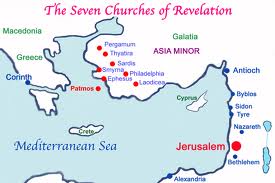
(2)   Invasion of Israel by Russia and Moslem allies –– Magog (Rosh), Meshech (Moscow-Eastern Capitol), Tubal –(Western Capitol), Persia – (Iran), Ethiopia, Libya, Gomer-(Southern Russia), Togarmah (Eze. 38-39). This alliance includes Russia, Iran (Persia) and their Moslem allies.  These nations will be miraculously defeated by Israel (Eze.).

(3)   The invasion of Palestine by Gentile world powers headed up under the Beast and false prophet (Jl. 2.1-10, 18-20; “Armageddon:” Re. 16.13-16; Zec. 12.1-9).

(4)   The destruction of the invaders by the Lord’s army (Jl. 2.11; Re. 19.11-21), and the repentance of Judah in the land (Jl. 2.12-17).

(5)    The answer of Jehovah (Jl. 2.18-27).

(6)   The pouring out of the Spirit (Jl. 2.28, 29)

(7)    The return of the Lord in glory and the setting up of the kingdom (Jl. 2.30-32; Ac. 15.15-17) by the regathering of the nation and the judgment of the nations (Jl. 3.1-16)

(8)   Full and permanent kingdom blessing (Jl. 3.17-21; Zec. 14.1-21).

Endnotes

En1 Why should believers, and especially pastors, be concerned about the area of church and state law? Because only through knowledge can they avoid dishonoring the Husband/Bridegroom/Head of their local church body and thereby failing to achieve their God-given goal—glorifying God and pleasing Him.

These articles systematically examine the biblical doctrines of church, state, separation of church and state and the application of those doctrines in America. For believers and churches, the information presented is—according to God’s Word—of great importance to our Lord. By reading and studying each article using the Bible as the standard, a believer will discover that the biblical principles are correct as presented. By studying the historical and legal facts presented—without bias, prejudice, illicit motive, or an overriding opposing agenda which has a vested interest in maintaining a status quo due to loss of finances, support or something else—and examining those facts in light of biblical principle, a qualified believer (a believer who has the necessary biblical, historical, and legal qualifications and education) can understand that the conclusions are correct.

That said, understanding the biblical principles, relevant history, and legal principles and facts is, first, impossible for one who is not a born again believer who is walking in the Spirit, and, second, daunting for even the spirit filled follower of Christ. Years of honest, open minded study is required to achieve the correct knowledge and understanding of all facets of church and state law. First, one must interpret Scripture correctly (See 2 Ti. 2:15) as to the relevant topics. After mastering the biblical principles, one must then labor through the annals of history, and the intricacies of law. In order to be qualified to comment upon the law, one must have an extensive legal education. He must understand how to do legal research and how to reach correct legal conclusions. Legal commentary by a pseudo lawyer can sound good to the untrained, while he may be correctly understood as frivolous and unlearned and probably heretical by the educated believer.

This is not to say that a non-lawyer cannot understand the legal and historical aspects of spiritual matters. In fact, the author knows some pastors and other believers who, having already correctly divided the Word of Truth and determined to seek to please God in all matters, have open minds and who have eagerly sought truth in the historical and legal church and state law arena. He is working with such a young pastor at this very moment. He is a brilliant young man who had mastered the Scriptures and Baptist history before the author met him. He excels the author in those matters, as do some other pastors and believers known by the author. Unlike most pastors, he does not have the disadvantages of having gone to either a secular or ecclesiastical (Baptist or otherwise) institution of higher learning. Secular colleges and universities usually corrupt even the most devout child of God; and religious colleges, institutions, and seminaries generally (with few exceptions, one of which the author has personal knowledge of)—by either mixing an ample dose of humanism with whatever biblically correct teaching they dose out; or by having totally having abandoned truth—likewise usually corrupt their students to one degree or another.

On the other hand, I am vexed by what I read in some books and websites concerning church and state law; particularly by some vicious, unfounded attacks upon the Biblical Law Center Declaration of Trust by unqualified, biased assailants who are attempting to mislead believers and churches through incorrect biblical and legal analyses and personal attacks upon and outright lies about those with whom they disagree in such matters.

Being a believer alone, even a pastor, does not by itself qualify one to teach on church and state law. The author has been a believer and faithful member of independent Baptist churches since his salvation. He was called by God to go to law school for His glory and to please Him. As a result of that calling, he obtained a Doctor of Jurisprudence degree from one of the best law schools in the country and has practiced law for seventeen years. He has no motive for dishonesty. By design, he has never made a dime above expenses in his work in the church and state law arena. In fact, he has spent tens of thousands of dollars with total income of at most three to four thousand dollars in all the years he has worked in this area of law. Because of this he is beholden to no one and nothing but the truth and his Lord and Savior. Since becoming a lawyer, he has devoted untold thousands of hours in biblical, historical, and legal study and analysis of church and state law.

As always, he declares that if anyone can show him where he is in error, he will recant. Honest, loving believers have taught him much and caused him to modify some of his positions. He has also, in his continued studies, modified some of his conclusions and positions. However, he maintains his primary positions because neither he, through his continued studies, or others have shown him to be wrong about his basic church and state law principles and conclusions.

En2 God Betrayed/Separation of Church and State: The Biblical Principles and the American Application (Link to preview of God Betrayed): may be ordered from Amazon by clicking the following link: God Betrayed on Amazon.com or from Barnes and Nobel by clicking the following link: God Betrayed on Barnes and Noble. All books by Jerald Finney as well as many of the books he has referenced and read may also be ordered by left clicking “Books” (on the “Church and State Law” website) or directly from Amazon by going to the following links: (1) Render Unto God the Things that Are His: A Systematic Study of Romans 13 and Related Verses (Kindle only); (2) The Most Important Thing: Loving God and/or Winning Souls (Kindle only); (3) Separation of Church and State/God’s Churches: Spiritual or Legal Entities? (Link to preview of Separation of Church and State/God’s Churches: Spiritual or Legal Entities?) which can also be ordered by clicking the following Barnes and Noble link: Separation of Church and State on Barnes and Noble.

More letters from pastors and others

Jerald Finney
Copyright © November, 2011
Left click one of the following link for easy access to all articles on this website:
Complete listing of articles on “Separation of Church and State Law” blog
or
Contents

Recommended websites: The Old Time Way;  Old Paths Baptist Church; Only Way: An Appeal to Heaven
Recommended reading: Outcome Based Religion (Click to see review)

Contents:

Note. A “+” represents a supportive letter, a “-” a negative letter

I. Introduction

II. (+) Letter No. 1 and my reply (Thanks for encouraging churches with the truth)
III. (+) Letter No. 2 and my reply (Legal Questions from a pastor)
IV. (-) Letter No. 3 (Letter from a 501c3 state church pastor and my reply)
V. (-) Letter No. 4 and my reply (Letter stressing “Our Common Christian Heritage” and my reply)
VI. (+) Letter No. 5 and my reply (Church member wants advice and help in order to present the truth about church incorporation to the members of his incorporated church)
VII. (+) Letter No. 6 with no reply (Keep them [the articles, sermons, etc.] coming!)
VIII. () Letter No. 7 and my reply, his reply, and my final reply (Calvinism versus free will)

IX. Information on books by Jerald Finney including links to online previews of two of his books.
X. Links to IRS Laws (Some of these links may no longer work. If so, you can use Google to find the laws)
XI. Note concerning the Biblical Law Center and Jerald Finney

I. Introduction

This article presents more e-mails from pastors and others with their comments, concerns, and questions concerning articles on this blog, and my replies to those e-mails. These e-mail letters not only raise important questions which need to be addressed, but also give insights into the thoughts of pastors and other believers and non-believers.

II. Letter No. 1 received October 19, 2011 in response to Film: Divided (Why young people are leaving churches); Sermon: The Method Matters to God; Essay by colonial Baptist Pastor John Leland + MORE

Jerald,

Thank you for the email and the information packet.  Cornerstone is an solid independant fundamental baptist church… and heartily say amen to the information that you so graciously sent to us.

May the Lord bless you as you encourage churches with the truth,
Pastor __________________
Senior Pastor
____________________ Baptist Church
_________________________, Mi

My Reply:

Thanks, Pastor __________________________. Your letter is an encouragement to me.

For His Glory,
Brother Jerald Finney

III. Letter No. 2 received October 19, 2011 (Legal Questions)

Brother Finney,

Thank you for emailing me back. I am definitely planning on starting my church the Bible way and not place it under the restrictions of a 501c3 which would make God’s church into a government-approved Non-Profit Organization. I have recently talked to a Pastor in West Virginia who has been to court twice due to his church not being a 501c3 and he won both times. He told me that the government will consider your church an organization if you have any 1 of these 5 things: a church constitution, church membership, employees, and there were 2 others I cannot think of. I’m trying to learn all I can about how to avoid making any mistake that would cause my church to be defined as an organization or corporation by the government. I learned not to have a church constitution but to claim the Word of God as the church’s defining document. One thing I recently had questions on was how do churches pay their employees… any church that grows will need full-time Christian workers serving in the church, well, I found that churches do not have employees, they have servants who are given love offerings of support and the church cares for them as it does the pastor. That made sense to me.

I undoubtedly will need help and guidance in the matter when I do start my church.  I have many questions, but I am not ready to start a church yet, I have a Bible college degree, I have God’s calling on my life, I have been ordained and had hands laid on me and prayed over, and I believe I know what city God is sending me to, but I am still waiting on God to send me the wife He has chosen for me before I start my church. When that happens, I will be contacting you.

I appreciate the work that you are doing for pastors like me who are not taught these things, as a matter of fact, most pastors have told me to file 501c3 for lawsuit protection, it’s amazing what people tell you, it seems to me that most pastors are simply afraid of the IRS.

Thank you for your future assitance in the ministry God has called me to.

– ___________________

My Reply to Letter No. 2:

Dear Brother _______________,

I was reviewing old e-mails and came across our communications below. I don’t recall is we ever talked about your questions.

If not, feel free to call me.

Brother Jerald Finney

From:
To: Jerald Finney <jerald.finney@sbcglobal.net>
Sent: Wed, December 1, 2010 1:35:31 PM
Subject: Re: Legal Questions

Hello Brother Finney,

Thank you for writing me back. I am available most afternoons and evenings, except on Wednesdays and Sundays. So just let me know what time you’d like for me to call you, it’d have to be sometime next week since this is deer gun season week in Ohio.

Thank you again.
– Brother __________________

From Jerald Finney; To _________________________; Sent: Wednesday, December 01, 2010 2:13 PM; Subject: Legal Questions ______________________

Dear Brother ___________________,

I do have answers to all your questions, but I just have a minute right now. To go over all the questions would take more time than that. I would be honored to discuss your questions with you, so perhaps we can arrange to talk about this over the phone. My cell number is 512-785-8445, and my home number is 512-385-0761. Maybe we can touch base and arrange a time to talk about these matters of utmost importance to our Lord. I will be looking forward to meeting and talking with you. Let me just mention that this is a ministry with me and I do not charge pastors and missionaries.

May the Lord richly bless you in all that you do.

For His Glory,
Brother Jerald Finney

From: …; To: jerald.finney@sbcglobal.net; Sent: Tue, November 30, 2010 6:25:05 PM; Subject: Legal Questions

Hello Brother Finney,

Allow me to introduce myself, my name is ___________________, I recently graduated from Commonwealth Baptist College and God has called me to plant an Independent Fundamental KJV Baptist church in _________________, PA. I’m currently preparing to go on deputation to start raising the support needed to do such. This is all new to me and I’m trying to learn as much as I can – especially about the legalities involved. I stumbled upon your website while trying to find info about the 501c3.

I’ve spent half the day reading various articles on your website blog regarding the legalities and issues that come with incorporating a church, I did not know you had the option. I have heard very little about incorporation but had been told it was something I’d need to do to protect myself from lawsuits and to get tax exempt status. I now see that you do not have to be incorporated to receive tax exempt status which I’m thrilled to learn since I do not believe the government has any right to tax or regulate our churches nor do I want them having any kind of control over God’s pulpit. I also now understand why many pastors say they will lose their tax-exempt status if they endorse a political candidate or fear preaching against sodomy, it’s all related to incorporations, contracts, and government oversight.

So, thank you for your articles, they’ve enlightened me and helped me a lot. But I still have some questions if you wouldn’t mind taking the time to answer them.

First in the matter of deputation, I know most missionaries are supported by monthly check going through their local church, is this money taxable as income? Is it wise for a missionary to receive support money directly or should it go through a local church? I plan to raise support then use that support to both live on and to find a church building to rent or buy.

As a non-incorporated New Testament Baptist Church, how would I go about receiving church money, and specifically a salary, legally? Is my salary taxable? What about church property, would the church have to pay property taxes? Would I need to purchase the church property and put all buildings and such in my name or is there a way of putting it in the church’s name without it being incorporated? Can you open a bank account in a non-incorporated church’s name?

In the event I were to need an assistant pastor, how would I go about “hiring” and paying him legally? or a secretary for that matter? since a non-incorporated church cannot have employees. How would a non-incorporated church go about starting a Christian school? Would the school need to be incorporated?

I apologize for the many questions, I am just thinking ahead and trying to learn as much as I can about the legalities involved so I can plan accordingly. I plan on starting a bus ministry, Christian school, and a Christian children’s home, along with many other things in the future and want to make sure everything is done right from the start.

Thank you for your time and blogs, they have been a blessing.

– Brother ______________________

IV. Letter No. 3 received on March 25, 2010

You stereotype every 501c3 church as doing all of these things when you don’t even know who does and who don’t. It is apparent that you are against having a 501c3, but I would submit to you Romans 14:4. I can stand before God with a good conscience over this issue and I nor our church is guilty of anything you accuse. Now I know that probably bugs you, but I am thankful the God is my judge and not you sir. Tell you what, you keep condemning churches like ours and I will keep trying to win the lost to Christ and glorifying Him.

May you grow in the grace and knowledge of our Lord Jesus Christ

My Response to Letter No. 3

Dear Sir,

You cannot bug me because I love God first and my neighbor (which includes you). Your letter gives me a chance to challenge you to look at the Word of God, history, and law and support what you say from those sources, not from your “conscience.” If your conscience does not condemn you for prostituting God’s bride, then your conscience may have been seared, at least as to this matter. “Now the Spirit speaketh expressly, that in the latter times some shall depart from the faith, giving heed to seducing spirits, and doctrines of devils; Speaking lies in hypocrisy; having their conscience seared with a hot iron” (1 Timothy 4:1-2).

I have done a comprehensive assessment of your argument in the booklet, The Most Important Thing: Loving God and/or Winning Souls. That booklet is also reproduced on this website at the following link: The Most Important Thing: Loving God and/or Winning Souls.

One should try to win souls to Christ without leaving other biblical duties undone (without dishonoring one’s love relationship with Christ). The church I am a member of emphasizes soul winning and support of missionaries. I spend approximately 2 1/2 to 3 hours a week devoted directly to one on one soul winning (door to door evangelism) as well as taking every other opportunity to present the Gospel of salvation to those with whom I come into contact. I pledge monthly support which results in the salvation of souls worldwide. The same can be said of my pastor (who is even more devoted to this cause than I) and other members of the church. By operating according to the principles of Satan in some matters, most “Bible-believing” churches are contributing to the loss of untold numbers of souls, since, by proceeding according to human reasoning rather than Bible principle, they lose the power of God to one degree or another. Honoring God’s principles is much more important than reasoning based upon what one does while discounting or ignoring what one does not do but should be doing.

I do not condemn you-a true understanding of Word of God, history, and law condemn you. I have stereotyped no church. I have explained in detail the biblical principles violated by church incorporation and 501c3. Just operating under those satanic devices violates biblical principle, prostitutes the bride of Christ, and grieves our Lord. You do not address any of my biblical, historical, and/or legal teachings. “Study to shew thyself approved unto God, a workman that needeth not to be ashamed, rightly dividing the word of truth” (2 Timothy 2.15).

Should you wish to contribute intelligently to a resolution of your disagreements with me, please contact me. Read my writings and/or listen to my audio teachings and tell me where you believe I am wrong. I will calmly and sincerely consider what you have to say. I doubt that you can convince me that I am wrong, but if you can, I will publicly repent of any error.

For His Glory,
Jerald Finney

V. Letter No. 4 received on September 13, 2011  in response to “ON SABBATICAL LAWS” by colonial Baptist Pastor + article on the biblical doctrine of government

OUR “CHRISTIAN HERITAGE IS LONGER, STRONGER” THAN ANY OTHER HERITAGE YOU MIGHT ASPIRE TO- WHY STRESS AN ANTI-BIBLICAL DENOMINATIONAL HERITAGE??

My Reply to Letter No. 4

Dear ____________:

I love you. I always get straight to the truth, for I have not enough time for anything else.

God’s people in America are being destroyed for lack of knowledge (among other things such as love for our Lord) (See, e.g., 1 Peter 1 and Hosea 4). Baptists have no common Christian heritage with Protestants and Catholics. Catholicism, led by Constantine and justified by perverted biblical interpretations of Augustine, began in the fourth century to viciously torture and murder all those who refused to bow down to the unified church-state alliance. As many as 50,000,000 people deemed to be “heretics” were killed by that wicked alliance. The Protestant churches which came out of Catholicism adopted the Catholic union of church and state theology, and continued to persecute any who refused to submit to their wicked religion. For example, Martin Luther in Germany, although he at first espoused separation of church and state, succumbed to pressure, changed his theology, and began to persecute Jews and believers who would not bow down to the teachings of the official state church, the Lutheran church. The persecution of Baptists and other dissenters by Protestants continued in the American colonies. In fact, a great spiritual warfare between the dissenters, mainly Baptists, and the Protestants (mainly the Congregationalists in Massachusetts, Connecticut, and New Hampshire and the Anglicans in the southern colonies) resulted in implementation of soul liberty (religious freedom) in the First Amendment to the Constitution.  Those who were by belief Baptist have always been persecuted by the arm of the civil magistrate at the behest of state churches when those churches were united with a civil government.

Sadly, informed secularists know these facts. The common Christian heritage they love to refer to includes the murder of millions when “union of church and state” was practiced, wars (like the Crusades) initiated by the state church; persecution of Baptists and other dissenters by the state established churches in the American colonies, etc. The false revised teachings being disseminated in the “Christian” community in America, in deciding to promote a false “common Christian heritage” in their arguments which allege that America is a “Christian” nation have unknowingly worked with Satan in bringing the downfall of America and the one world government and religion prophesied in Scripture. I cover all these matters and much more in my books, articles, and audio teachings.

Since true believers have decided to revise history, or follow Christian revisionist history, they have become a laughing stock among secular scholars and, due to the trickle-down effect, to the uninformed secularist masses. We see the result of the “Christian” endeavors to bring America back to God, since those endeavors have not been according to knowledge. Individual, family, church, and state morality and depravity have regressed at an accelerating rate. America, American individuals and families (in general), and American churches (in general) are now moral cesspools.

Your e-mail, dear sir, shows your ignorance of history and biblical theology. Biblical doctrine is preeminent for the believer, as is exposure of heretics and apostates. Unrevised history is very important. Without understanding history, one can never learn from and correct the mistakes, heresies, etc. of the past.

To include apostates and heretics in our “Christian” heritage other than to expose their false theologies and consequences thereof has led to tragedy, including the downfall of this nation which has paralleled a dumbing down of Americans-including most “Christians.”

For His Glory,
Jerald Finney

VI. Letter No. 5 received on April 21, 2010

Mr. Finney,

My husband will be attending a Board of Directors Meeting tonight at the church where we attend and presenting the TRUTH about caving to the State for incorporation. This will be a tremendous amount of information to digest for these men and my husband doesn’t want to overwhelm them. However, it is important to give them a snapshot of what it entails to “dissolve” a 501(c)(3) corporation. (He can’t present the PROBLEM with submitting a SOLUTION.)

Could you please provide the process regarding the Declaration of Trust in a nutshell? We realize this process isn’t going to be easy, but understand it is doable.

Your suggestions, comments, or guidance will be appreciated!

Because of Him,
__________________

My Reply to Letter No. 5

Dear Mrs. ______________________:

In order to advise your husband on this matter, I need to talk to him. Dissolving the 501c3 corporation and/or organizing a church under the Declaration of Trust involves complex legal matters. Every case has to be examined individually to determine the best way proceed.

Please have your husband call me and I will be glad to discuss this matter with him. My phone number is 512-385-0761 or 512-785-8445 (cell).

For His Glory,
Jerald Finney

Note. I did talk with and advise this concerned church member. I also sent him copies of all my books at no charge.

VII. Letter No. 6 received July 31, 2011 in response to Pastor’s article on church incorp. & 501c3; Sermon: “Him”

KEEP them coming!   ”  make them shorter ”  CUZ the time(s) are getting shorter before our Lord’s return & the Meeting in the air!

No Reply to Letter No. 6

VIII. Letter No. 7 received March 11, 2011
in response to “The Biblical Doctrine of Separation of Church and State.”

Dear Jerald:

On page 16 of “God Betrayed” you stated: “Man makes a choice of his own free will as to how he will respond to God. The principle of freedom of conscience or free will is found throughout the Bible.”

You quoted from John 3:16, 18 and Rev 22:17. However, I could not see how those passages supported your point that “man makes a choice of his own free will.” Certainly, those passages make the point that salvation is by faith and man must be willing to believe, but they do not in any way suggest that belief is a choice made by man’s “own free will.”

You further stated that “the principle of freedom of conscience or free will is found throughout the Bible.” When I read the bible, however, I find quite another view of man’s condition. The bible states that man is dead in trespasses and sin. We, who are saved, were at one time dead in sin, but God, through his Holy Spirit, made us alive by his glorious grace. “And you hath he quickened, who were dead in trespasses and sins.” Ephesians 2:1.

It is not possible for a dead man to do anything, a dead man cannot even have faith, he must be made alive again. Man does not have it in him to come to Jesus; God must draw him. “No man can come to me, except the Father which hath sent me draw him: and I will raise him up at the last day.” John 6:44. Indeed, Jesus must be the source of our faith because “there is none that seeketh after God.” Romans 3:11.

Notice what Jesus makes clear in John 15:5: “without me ye can do nothing.” Hebrews 12:2 confirms what Jesus said in John 15:5, and pretty well precludes any source for our faith other than Jesus: “Looking unto Jesus the author and finisher of our faith.” Hebrews 12:2.

If Jesus is the author of our faith, then that precludes man from being the author through his free will decision. An author is one that originates or creates. There is no mention in the bible of there being any coauthors of our faith, it is Jesus alone who is the author of our faith. He originates and creates faith in the believer. Jesus is also the finisher of our faith, that is, he completes and perfects our faith. So there is no room for anyone to say that God only makes an offer of salvation, and that we must accept that offer of our own free will. That is to contradict God’s word and say that man is the finisher of his own faith. The bible makes it clear that Jesus is the finisher of our faith. Jesus must first set our will free from the bondage of sin. Our faith in Jesus is both authored and finished by Jesus. Our will is enslaved to sin, and we can only believe in Jesus if Jesus frees us from that bondage and imparts the faith in us, making us new creations by the Spirit of God.

This is not some theological nit-picking; it is the very heart of the gospel. “Even the righteousness of God which is by faith of Jesus Christ unto all and upon all them that believe.” (Romans 3:22 KJV) Notice that the righteousness of God is “by the faith of Jesus Christ.” The passage explains the source of the faith; faith comes from Jesus Christ, hence it is the “faith of Jesus Christ.” The plain language of Romans 3:22 indicates that our faith comes from Jesus. One cannot have faith in Jesus without being given the faith of Jesus.

Next, read Galatians 2:16. The passage indicates that Jesus Christ is both the source of our faith and the object of our faith. There is a clear distinction in the passage between the faith “of” Jesus and the faith “in” Jesus. The passage reveals that the faith “of” Christ is the reason we have faith “in” Christ. Our Justification is by the faith “of” Christ. We believe “in” Jesus, because we have the faith “of” Jesus. Jesus is both the object of our faith and the source of our faith. The faith supplied by Jesus is the means of our justification. Jesus has done it all! The passage refers to the source of our faith as being “of” Christ in two separate clauses.

“Knowing that a man is not justified by the works of the law, but by the faith of Jesus Christ, even we have believed in Jesus Christ, that we might be justified by the faith of Christ, and not by the works of the law: for by the works of the law shall no flesh be justified.” Galatians 2:16.

The passage that absolutely crushes the claim that man has a free will to believe in Jesus is found in John 1:13. In John 3:3 we read that Jesus tells Nicodemus that he must be born again to see the kingdom of God. That is a spiritual rebirth that cannot be by the will of man or through the flesh. God made it clear just three chapters earlier in John 1:13 that this new spiritual birth comes to those “[w]hich were born, not of blood, nor of the will of the flesh, nor of the will of man, but of God.” John 1:13.

Notice God has stated unequivocally in John 1:13 that man does not believe in Jesus by the will of man. Man indeed is completely helpless to believe in Jesus. God must give the man a new heart to believe. Man must be born again by the Spirit of God. Man is then given the faith of Jesus to believe in Jesus. Jesus is not only the object of our faith, he is the “author and finisher of our faith.” There is no room in the gospel for man to believe in Jesus by his “own free will.” The gospel theme encapsulated in John 1:13 is that salvation is completely by the sovereign will of God.

The very theme of the gospel is that God seeks men, men do not seek God. While you state that mans belief is by his “own free will,” God states that belief is not from man’s will, but is completely an act of God’s act of mercy. “So then it is not of him that willeth, nor of him that runneth, but of God that sheweth mercy.” Romans 9:16. From the beginning of Jesus’ ministry he made it clear that he was Lord, and he chose his disciples, they did not choose him. “Ye have not chosen me, but I have chosen you, and ordained you, that ye should go and bring forth fruit, and that your fruit should remain: that whatsoever ye shall ask of the Father in my name, he may give it you.” John 15:16.

Salvation is by grace through faith. Ephesians 2:8. The faith comes by God’s grace; faith is not by man’s “own free will.” Indeed, it cannot be, because man’s condition is one of enslavement to sin and the whole point of Jesus’ sacrifice on the cross was to free his elect from their slavery to sin. Luke 4:18.

Please let me know if you think that I am in error on this. If you have contrary biblical authority supporting your position that “man makes a choice of his own free will” to believe in Jesus I would very much be interested in reading it.

Sincerely,
__________________

My Reply to Letter No.7

Dear Mr. ______________:

I respectfully disagree with your position in the letter [above], based upon what the Bible teaches. Very briefly, I would remind you that “But to him that worketh not, but believeth on him that justifieth the ungodly, his faith is counted for righteousness” (Ro. 4.5); in other words, one’s faith is not a work.

I do not have the time to address all your arguments, but let me refer you to your paragraph 2 which says:

“You [Jerald Finney] quoted from John 3:16, 18 and Rev 22:17. However, I could not see how those passages supported your point that ‘man makes a choice of his own free will.’ Certainly, those passages make the point that salvation is by faith and man must be willing to believe, but they do not in any way suggest that belief is a choice made by man’s “own free will.’”

How can man be “willing to believe” if he has no free will? He cannot. Thus, that argument is contradictory, and all your arguments can be easily answered by a believer educated in God’s Word.

All the arguments on both sides of this issue have been made. Having read the Bible many times and having heard preaching by pastors of both persuasions, it is obvious to me that the Bible teaches that man has free will. One can selectively choose Scriptures which, when taken alone and without a consideration of other Scripture, teach what you contend in your letter.

I quoted some other pastors and gave their reasoning in the book. I believe the quote of Pastor Joey Faust is especially instructive. However, the purpose of the book was not to debate a tenet of Calvinism (I say “a tenet of Calvinism” rather than “the sovereignty of God” because you and I would agree that God is sovereign—I make this clear in the book) or to fully develop what the Bible teaches about free will. I would note that many things such as salvation and the relationship between a local church and Christ (the main issue of the book) is irrelevant if man is just a robot who can make no choice since an individual is either preordained by God to salvation or eternal death in the lake of fire and a church cannot make a choice of whether to remain under Christ alone or submit herself to civil government. If there is no free will, sin is not a choice, repentance (a change of mind, or a conversion from sin to God) is not a choice, nothing is a choice; one cannot exalt himself, humble himself, or abase himself negating verses such as “every one that exalteth himself shall be abased; and he that humbleth himself shall be exalted” (Luke 18.14). Any given person is destined for either heaven or hell and he has no choice as to the matter.
I have much other biblical authority, but really don’t have time to argue with anyone about this. Let me suggest that you listen to the sermon at the bottom of the “Salvation” tab of church and state law. That sermon makes clear that salvation is all of God. However, that does not mean that a man does not have free will to choose to exercise the faith that saves or not.

I was talking to a Baptist preacher and friend who believes as do you about this matter. I said, “Will you explain this portion of Scripture to me?” I read the Scripture to him. His response was, “It doesn’t mean what it says.” He is a brilliant man, but he could not explain away that example of man exercising his free will. I could have given him many others. However, neither of us convinced the other, and you will not convince me nor I you. I still love you in the Lord. There are pastors and others whom I deeply respect and love with all my heart who believe as you do. I don’t argue with them about this matter. It is between them and the Lord.

I hope you will agree that the Lord Jesus commissioned us to “go into all the world and preach the gospel to every creature,” and “to preach repentance and remission of sins in his name among all nations beginning at Jerusalem.” Let us be about our Father’s business as we continue to love one another.

For His Glory,
Brother Jerald Finney

Mr. ___________________’s Reply:

Dear Jerald:

Thank you for getting back to me. It is obvious to me when reading your book that God has gifted you with a sharp intellect. I realize that sometimes discussions like this can be tedious, and if it gets to that point just let me know, and we can leave the issue be. Your email, though, raised some interesting points that I want to follow up on.

I agree with you that “salvation is all of God.” Yet, I can find no biblical authority for your next statement, which contradicts the first: “However, that does not mean that a man does not have free will to choose to exercise the faith that saves or not.” If man has a “free will” to choose, then it cannot be that “salvation is all of God.”  The two statements are mutually exclusive and cannot both be true.  Wouldn’t you agree that if man has free will to choose, then salvation is at least in part of man?

The theme of the bible is that man is spiritually dead (Ephesians 2:1) and that“there is none that seeketh after God.” Romans 3:11. Do you accept that premise? If you accept that premise, how does a man obtain a “free will” without God first regenerating the man?

I can cite passages that unequivocally state that salvation is not by the “choice of man’s own free will.” John 1:13; Romans 9:16.  Can you cite one single passage anywhere in the bible that sates in like unequivocal fashion that salvation is by the “choice of man’s own free will?”

Free will assumes a will unhindered by God (hence the term “free will”). If man has an unhindered free will, that means that Judas had a free will and God was rolling the dice and hoping that Judas would betray Jesus. Under the free will theory, the crucifixion of Christ was one big gamble that paid off for God and man.

The true gospel, however, tells a different story. Judas betrayed Jesus as prophesied by God hundreds of years earlier. Jesus stated, while praying to God the Father: “While I was with them in the world, I kept them in thy name: those that thou gavest me I have kept, and none of them is lost, but the son of perdition; that the scripture might be fulfilled.” John 17:12.

Not only did Judas not have a free will to choose whether to betray Jesus, but every single act of Herod, Pontius Pilate, the Jews, and the Romans was preordained and orchestrated by the sovereign God of Heaven. “For of a truth against thy holy child Jesus, whom thou hast anointed, both Herod, and Pontius Pilate, with the Gentiles, and the people of Israel, were gathered together, For to do whatsoever thy hand and thy counsel determined before to be done.” Acts 4:27-28. In fact, God orders the steps of all men and controls their very tongue. “The preparations of the heart in man, and the answer of the tongue are from the Lord.” Prov. 16:1.

How do you reconcile the theory that unregenerate man has a free will to choose to believe in Jesus with those bible passages that state clearly that the unregenerate do not and cannot seek after God and that salvation is not by the will of man and the fact that God preordained and moved Judas, Herod, Pontius Pilate, the Jews, and the Romans with his divine hand to betray and crucify Jesus?

Sincerely,
_______________

My Reply to Mr. ______________’s Reply:

Dear Bro. ______________________,

Thank you for your concern and kind Christian manner in your correspondence. [Note. If your position is right, I don’t know why I would be thanking you for anything since God actually is responsible for your concern (actually, if you are right, you have no concern nor does God) and your kind Christian manner (actually, if you are right, that manner is not of you, but totally predetermined by God). Since I don’t believe as you do, I will leave the thank you above in this e-mail. Of course, if you are right, God is responsible for everything I write in this e-mail, including this Note and for my leaving this note in it.
Your position on this matter is very confusing. I thought that the Bible says that God is not the author or confusion (1 Co. 14.33). If He is not, then no one can be the author of confusion, since no one else does anything except as God as determined in advance.]

Again, I have heard most of the arguments on both sides and come down on the side that says that the Sovereign God chose to give man a choice. That is my biblically based belief. You pick out Scriptures to support a lot of unbiblical beliefs based upon a partial reading of Scripture. You also reach conclusions that are not supported by a full reading of Scripture. In my e-mail last reply to you, I summarily addressed some of the arguments you stated in your most recent e-mail [above]. You have not even considered those succinct arguments which I presented.

Once more, I refer you to my prior e-mail and to Pastor Joey Faust’s footnote in my book. I believe he offers great insight into this matter.

If you are right, it does not matter what we do or say since we are responsible for nothing we do, say, or believe. My arguments are not my arguments since it was predetermined that I would make them. Likewise, your arguments were also predetermined by God. Each person’s fate is also set. We have no responsibility for anything. God is responsible for everything that every person has ever done, said or believed. He is responsible for every sin, crime, lie, etc. that has ever happened. Only He is responsible for anything. Everything is a gigantic game being totally controlled by God. No person is responsible for anything. God is responsible for what I am writing you at this moment. I have nothing to do with it. God is in fact arguing with Himself. What do you think is the reason for that?

On the other hand, if I am right, each person is responsible and will be held accountable.

I love you in the Lord and wish you the best, but the Lord has already filled my plate with work (not to attain my salvation, but for His Glory and pleasure). I work because I am saved, not to be saved. People have presented postions to me on other biblical matters which are not directly related to the issues concerning church, state, and separation of church and state; for example, matters involving Israel and the Sabbath. They have made arguments that I have  looked into as I do my daily Bible study. I have taken notes and meditated upon their arguments. Sometimes my beliefs have been modified, sometimes not. However, I have not taken the time for lengthy debates on most matters simply because God did not call me to argue about everything that comes along.

May the Lord richly bless you and may you grow in knowledge, wisdom, and understanding. I mean nothing personal by this: I will not be taking the time to answer future e-mails about this matter for the reasons already explained. If your position is correct, God has already predetermined that this would be my final response as to this matter. Regardless of who is right, please take the matter up with Him.

For His Glory,
Brother Jerald Finney

IX. Note

God Betrayed/Separation of Church and State: The Biblical Principles and the American Application (Link to preview of God Betrayed): may be ordered from Amazon by clicking the following link: God Betrayed on Amazon.com or from Barnes and Nobel by clicking the following link: God Betrayed on Barnes and Noble. All books by Jerald Finney as well as many of the books he has referenced and read may also be ordered by left clicking “Books” (on the “Church and State Law” website) or directly from Amazon by going to the following links: (1) Render Unto God the Things that Are His: A Systematic Study of Romans 13 and Related Verses (Kindle only); (2) The Most Important Thing: Loving God and/or Winning Souls (Kindle only); (3) Separation of Church and State/God’s Churches: Spiritual or Legal Entities? (Link to preview of Separation of Church and State/God’s Churches: Spiritual or Legal Entities?) which can also be ordered by clicking the following Barnes and Noble link: Separation of Church and State on Barnes and Noble.

X. Links to Internal Revenue Code Laws [Some of the following links may no longer work [As of November 5, 2011]. If not, you can find the laws by using Google.]

You can read portions of the following Internal Revenue Code laws which pertain to churches and pastors by going to the following site: “Laws Protecting New Testament Churches in the United States: Read Them for Yourself”; or you may read an entire law online by clicking the following links:

1. § 501(c)(3). Exemption from tax on corporations, certain trusts, etc.
2.
§ 508. Special rules with respect to section 501(c)(3) organizations
3.
§ 7611. Restrictions on church tax inquiries and examinations
4.
§ 1402. [Dealing with taxes on income of pastors]
5.
§ 107. Rental value of parsonages
6.
§ 102. Gifts and inheritances (Tithes and offerings are gifts and, therefore, according to the Internal Revenue Code § 102, not income)
7.
§ 2503. Taxable gifts
8.
§ 170. Charitable, etc., contributions and gifts

XI. Note

The Biblical Law Center helps churches to organize as New Testament churches completely out from under civil government and under God only. See churchandstatelaw.com for contact information for Jerald Finney, counsel for the Biblical Law Center. This is a ministry, not a business enterprise. Jerald Finney has made no profit at all in this endeavor of Christian love, but rather has expended much of his own money for God’s glory, in attempting to provide information and service for God’s churches.

All conclusions in this article are opinions of the author. Please do not attempt to act in the legal system if you are not a lawyer, even if you are a born-again Christian. Many questions and finer points of the law and the interpretation of the law cannot be properly understood by a simple facial reading of a civil law. For a born-again Christian to understand American law, litigation, and the legal system as well as spiritual matters within the legal system requires years of study and practice of law as well as years of study of Biblical principles, including study of the Biblical doctrines of government, church, and separation of church and state. You can always find a lawyer or Christian who will agree with the position that an American church should become incorporated and get 501(c)(3) status. Jerald Finney will discuss the matter, as time avails, with any such person, with confidence that his position is supported by God’s Word, history, and law. He is always willing, free of charge and with love, to support his belief that for a church to submit herself to civil government in any manner grieves our Lord and ultimately results in undesirable consequences. He does not have unlimited time to talk to individuals. However, he will teach or debate groups, and will point individuals to resources which fully explain his positions.

About Jerald Finney: The author is a Christian first and a lawyer second. He has no motive to mislead you. In fact, his motivation is to tell you the truth about this matter, and he guards himself against temptation on this and other issues by doing all he does at no charge. He does not seek riches. His motivation is his love for God first and for others second. His goal is the Glory of God. Jerald Finney has been saved since 1982. God called him to go to law school for His Glory. In obedience, Finney entered the University of Texas School of Law in 1990, was licensed and began to practice law, for the Glory of God, in November of 1993.  To learn more about the author click the following link: About Jerald Finney.

END

Israel—the Only Theocracy Ordained by God


Jerald Finney
Copyright © August 12, 2011


Click here to go to “Self-exam Questions: Israel – The Only Theocracy Ordained by God”


Preface

This article is a continuation of Jerald Finney’s systematic development of the doctrines, application, history, and legalities of “separation of church and state.” See En1 for more on this matter; See En2 for information on books by Jerald Finney which thoroughly examine “separation of church and state law.” This article is an edited version of Section I, Chapter 7 of the book God Betrayed/Separation of Church and State: The Biblical Principles and the American Application (Link to preview of God Betrayed). (Link to Contents of “Separation of Church and State Law” Blog which has links so that the new follower can start his study at the beginning. “Line upon line, precept upon precept.”).


Israel—the only theocracy ordained by God

Take the GOSPEL to the Jews is an excellent online teaching on believers’ responsibilities to the Jews.

1Originally, all civil governments were under the same guidelines. Although Gentile nations proceeded under the original plan as ordained by God in the Noahic Covenant, God called out Israel, a nation for Himself. First, Abraham was called out and obtained a promise of God. “And so, after he [Abraham] had patiently endured, he obtained the promise” (He. 6.15). “By faith he sojourned in the land of promise, as in a strange country, dwelling in tabernacles with Isaac and Jacob, the heirs with him of the same promise” (He. 11.9).

“Since man had failed to obey God on the basis of human conscience, the restraint by the Holy Spirit, and human government, God instituted what is called by some the Dispensation of Promise” (Renald E. Showers, There Really Is a Difference: A Comparison of Covenant and Dispensational Theology (Bellmawr, New Jersey: The Friends of Israel Gospel Ministry, 1990), p. 40):

Abraham“Brethren, I speak after the manner of men; Though it be but a man’s covenant, yet if it be confirmed, no man disannulleth, or addeth thereto.  Now to Abraham and his seed were the promises made. He saith not, And to seeds, as of many; but as of one, And to thy seed, which is Christ. And this I say, that the covenant, that was confirmed before of God in Christ, the law, which was four hundred and thirty years after, cannot disannul, that it should make the promise of none effect. For if the inheritance be of the law, it is no more of promise: but God gave it to Abraham by promise. Wherefore then serveth the law? It was added because of transgressions, till the seed should come to whom the promise was made; and it was ordained by angels in the hand of a mediator. Now a mediator is not a mediator of one, but God is one. Is the law then against the promises of God? God forbid: for if there had been a law given which could have given life, verily righteousness should have been by the law. But the scripture hath concluded all under sin, that the promise by faith of Jesus Christ might be given to them that believe” (Ga. 3.15-22).

“For when God made promise to Abraham, because he could swear by no greater, he sware by himself, Saying, Surely blessing I will bless thee, and multiplying I will multiply thee. And so, after he had patiently endured, he obtained the promise” (He. 6.13-15).

God promised Abraham that He would bless him, make his name great, give him many physical descendants, make him the father of many nations, give him the land of Canaan for an everlasting possession, and bless those who blessed him and curse those who cursed him:

“And I will make of thee a great nation, and I will bless thee, and make thy name great; and thou shalt be a blessing: And I will bless them that bless thee, and curse him that curseth thee: and in thee shall all families of the earth be blessed” (Ge. 12.2-3).
“And the LORD said unto Abram, after that Lot was separated from him, Lift up now thine eyes, and look from the place where thou art northward, and southward, and eastward, and westward: For all the land which thou seest, to thee will I give it, and to thy seed for ever. And I will make thy seed as the dust of the earth: so that if a man can number the dust of the earth, then shall thy seed also be numbered. Arise, walk through the land in the length of it and in the breadth of it; for I will give it unto thee” (Ge. 13.14-17).

AbrahamIsaac“And said, By myself have I sworn, saith the LORD, for because thou hast done this thing, and hast not withheld thy son, thine only son: That in blessing I will bless thee, and in multiplying I will multiply thy seed as the stars of the heaven, and as the sand which is upon the sea shore; and thy seed shall possess the gate of his enemies;  And in thy seed shall all the nations of the earth be blessed; because thou hast obeyed my voice” (Ge. 22.16-18. See also, Ge. 15 and 17.1-22).

The Jewish patriarchs failed in the responsibilities God gave them, and judgment followed. Their responsibility was only to believe and serve God who provided all material and spiritual resources requisite to inspire them to do this. God gave them the Promised Land, and blessings were guaranteed while they remained in the land. In spite of this, their future was predominated by failure. Jacob eventually led his children to Egypt where they were enslaved. God delivered them and crushed their taskmasters.

1After God delivered Israel from their Egyptian oppressors, He gave them the Mosaic law. This was, of course, before they entered the Promised Land. He dealt with them now on the basis of that law in addition to conscience, the restraint of the Holy Spirit, civil government, and promise. This new way of dealing with man is called by some the Dispensation of Law. Promise and law are sharply distinguished in Galatians 3 even though the law did not annul the promise (See Charles C. Ryrie, Dispensationalism (Chicago: Moody Press, 1995), pp. 54-55):

“For as many as are of the works of the law are under the curse: for it is written, Cursed is every one that continueth not in Ep.2.8all things which are written in the book of the law to do them. But that no Christman is justified by the law in the sight of God, it is evident: for, The just shall live by faith. And the law is not of faith: but, The man that doeth them shall live in them. Christ hath redeemed us from the curse of the law, being made a curse for us: for it is written, Cursed is every one that hangeth on a tree: That the blessing of Abraham might come on the Gentiles through Jesus Christ; that we might receive the promise of the Spirit through faith. Brethren, I speak after the manner of men; Though it be but a man’s covenant, yet if it be confirmed, no man disannulleth, or addeth thereto. Now to Abraham and his seed were the promises made. He saith not, And to seeds, as of many; but as of one, And to thy seed, which is Christ. And this I say, that the covenant, that was confirmed before of God in Christ, the law, which was four hundred and thirty years after, cannot disannul, that it should make the promise of none effect. For if the inheritance be of the law, it is no more of promise: but God gave it to Abraham by promise” (Ga. 3.10-18).

2The Mosaic Law covered the period from Moses until the death and resurrection of Christ, or from Exodus 19.1 to Acts 1.26. Under the Mosaic Covenant, the Jews were to be responsible for keeping the whole law. “For whosoever shall keep the whole law, and yet offend in one point, he is guilty of all” (Ja. 2.10). They did not succeed in their responsibility. “Brethren, my heart’s desire and prayer to God for Israel is, that they might be saved. For I bear them record that they have a zeal of God, but not according to knowledge. For they being ignorant of God’s righteousness, and going about to establish their own righteousness, have not submitted themselves unto the righteousness of God” (Ro. 10.1-3). The result was the captivity of Judah by Babylon and the captivity of Israel by Assyria. After the Jews later rejected the Lord, they were scattered over the entire world. Jesus lamented, “O Jerusalem, Jerusalem, thou that killest the prophets, and stonest them which are sent unto thee, how often would I have gathered thy children together, even as a hen gathereth her chickens under her wings, and ye would not! Behold, your house is left unto you desolate. For I say unto you, Ye shall not see me henceforth, till ye shall say, Blessed is he that cometh in the name of the Lord” (Mt. 23.37-39).

“All during their many periods of declension and backsliding, God dealt with them graciously from the very first apostasy with the golden calf, when the law was being delivered to Moses, to the gracious promises of final regathering and restoration in the millennial age to come. These promises of a glorious future are guaranteed secure by the Abrahamic promises, which the law in no way abrogated (Gal. 3.3-25). We are also told clearly in the New Testament (Rom. 3.20 [“Therefore by the deeds of the law there shall no flesh be justified in his sight: for by the law is the knowledge of sin.”]) that the law was not a means of justification but of condemnation” (Ryrie, p. 55).

The law was written in stone and “was a totally external way of God’s administering His rule over Israel” (Showers, p. 42). It was an external moral restrainer. “But before faith came, we were kept under the law, shut up unto the faith which should afterwards be revealed. Wherefore the law was our schoolmaster to bring us unto Christ, that we might be justified by faith. But after that faith is come, we are no longer under a schoolmaster” (Ga. 3.23-25).

Israelites crossing the Jordan River

When Israel went into the Promised Land, she operated under a covenant directed solely to the nation Israel. All other nations, the Gentile nations, continued under the Noahic Covenant. Israel entered the land given it by God under the Palestinian Covenant which was declared in Deuteronomy 30.1-10:

“The Palestinian Covenant gives the conditions under which Israel entered the land of promise. It is important to see that the nation has never as yet taken the land under the unconditional Abrahamic Covenant, nor has it ever possessed the whole land (cf. Ge. 15.18, with Nu. 34.1-12). Deuteronomy 30 gives seven parts to the Palestinian Covenant:

“(1) Dispersion for disobedience, v. 1 (De. 28.63-68. See Ge. 15.18, note).
“(2) The future repentance of Israel while in the dispersion, v.2.
“(3) The return of the Lord, v.3 (Am. 9.9-14; Ac. 15.14-17).
“(4) Restoration to the land, v. 5 (Isa. 11.11, 12; Jer. 23.3-8; Eze. 37.21-25).
“(5) National conversion, v.6 (Ro. 11.26, 27; Ho. 2.14-16).
“(6) The judgment of Israel’s oppressors, v. 7 (Is. 14.1,2; Jl. 3.1-8; Mt. 25.31-46).
“(7) National prosperity, v. 9 (Am. 9.11-14)” (1917 Scofield Reference Edition, n. 1 to De. 30.3, p. 250).

Israel was set up originally as a theocracy directly under God for God’s purposes. God spoke directly to Moses, Joshua, and then chosen judges in Israel. Israel is the only theocracy that has ever existed. Gentile nations make a choice of whether to operate under God’s principles as laid down in the Bible, but God does not speak directly to them. He speaks to them only through the conscience of the rulers and people and through His Word. The church, which God instructed to be directly under God and His principles only (See Sections II, III, and VI of God Betrayed/Separation of Church and State: The Biblical Principles and the American Application See En2), is not a state, and therefore not a theocracy. The word “theocracy” comes from two Greek words, theos meaning God and kratos meaning ruler. “Theocracy” means:

“Government of a state by the immediate direction of God; or the state thus governed. Of this species the Israelites furnish an illustrious example. The theocracy lasted till the time of Saul” (AMERICAN DICTIONARY OF THE ENGLISH LANGUAGE, NOAH WEBSTER (1828), definition of “THEOCRACY.”).

3God promised Abraham, Isaac, Jacob, and their seed everlasting possession of a physical land on the earth with prescribed boundaries. The Gentile nations could only look to Israel as God’s chosen nation. Although Gentile nations were not directly under the leadership of God, they still had a responsibility to glorify God and rule under God or suffer the consequences. Israel’s government, working in conjunction with the Jewish religious leaders, was given the responsibility to enforce all ten of the Ten Commandments, as well as all of God’s moral law. The Gentile nations proceeded under the original plan laid down by God and their highest function was the judicial taking of life, from which all other governmental powers may be implied (1917 Scofield Reference Edition, n. 1 to Ge. 8.21, p. 16).

Israel was called by God for specific purposes:

“Israel was called to be a witness to the unity of God in the midst of universal idolatry (Deut. 6.4; Isa. 43.10-12); to illustrate the blessedness of serving the true God (Deut. 33.26-29); to receive and preserve the divine revelations (Rom. 3.1,2; Deut. 4.5-8); and to produce the Messiah (Gen. 3.15; 21.3; 28.10, 14; 49.10; 2 Sam. 7.16, 17; Isa. 4.3, 4; Mt. 1.1.

“The reader of scripture should hold firmly in mind: (1) that from Gen. 12. to Mt. 12.45 the Scriptures have primarily in view Israel, the little rill, not the great Gentile river, though again and again the universality of the ultimate divine intent breaks into view (e.g. Gen. 12.3; Isa. 2.2, 4; 5.26, 9.1, 2; 11.10-12; 42.1-6; 49.6, 12; 52.15; 54.3; 55.5; 60.3, 5, 11-16; 61.6, 9; 62.2; 66.12, 18, 19; Jer. 16.19; Joel 3.9, 10; Mal. 1.11; Rom. 9., 10., 11.; Gal. 3.8-14); (2) that the human race, henceforth called Gentile in distinction from Israel, goes on under the Adamic and Noahic covenants; and that for the race (outside Israel) the dispensations of Conscience and Human Government continue. The moral history of the great Gentile world is told in Rom. 1.21-32, and its moral accountability in Rom. 2.1-16. Conscience never acquits: it either ‘accuses’ or ‘excuses.’  Where the law is known to the Gentiles it is to them, as to Israel, ‘a ministration of death,’ a ‘curse’ (Rom. 3.19, 20; 7.9, 10; 2 Cor. 3.7; Gal. 3.10). A wholly new responsibility arises when either Jew or Gentile knows the Gospel (John 3.18, 19, 36; 15.22-24; 16.9; 1 John 5.9-12) ” (Ibid., n. 1 to Ge. 11.10, p. 19; see also, n. 1, p. 1206).
God declared that Israel would lend to other nations, but would not borrow, that Israel would reign over many nations, but that no nation would reign over Israel (De. 15.6). Israel was called the wife of Jehovah (Is. 54.5; Je. 3.14, 20; Eze. 16.26-59; 24.15-27. In Ho., we see the picture given that illustrates to the Jews how God feels when His wife, Israel, commits adultery.).

Israel is the “rod for his inheritance,” and God will use Israel to “break into pieces the nations ” (See Je. 51.19-23).

Thus, Israel is the key to everything regarding the nations of this world.

Israel was ordained to be a theocracy under the direct rule of God, through His judges. God was directly over the state. This type civil government was unique to Israel. We see how this type of civil government was applied by Israel in the book of Judges. Over and over again, especially in Deuteronomy, the Jews were told to follow God’s law, to keep his commandments and statutes. “These are the statutes and judgments, which ye shall observe to do in the land, which the LORD God of thy fathers giveth thee to possess it, all the days that ye live upon the earth” (De. 12.1)…. God’s laws covered everything, including idolatry. As mentioned above, the Ten Commandments exemplified the law, and the whole of the Ten Commandments, including the first four, were to be enforced in the nation Israel.

kings-crownGod gave Israel free will. Ultimately Israel rejected God’s plan under which God himself ruled over the nation of Israel and demanded a king like the Gentile nations: “Now make us a king to judge us like all nations” (1 S. 8.5). God told Samuel to hearken unto their demand: “And the LORD said unto Samuel, Hearken unto the voice of the people in all that they say unto thee: for they have not rejected thee, but they have rejected me, that I should not reign over them” (1 S. 8.9).

God also told Samuel to tell the people the ill consequences of being ruled by a king:

“And he said, This will be the manner of the king that shall reign over you: He will take your sons, and appoint them for himself, for his chariots, and to be his horsemen; and some shall run before his  chariots. And he will appoint him captains over thousands, and captains over fifties; and will set them to harvest, and to make his instruments of war, and instruments of his chariots. And he will take your daughters to be confectionaries, and to be cooks, and to be bakers. And he will take your fields, and your vineyards, and your oliveyards, even  the best of them, and give them to his servants. And he will take the tenth of your seed, and of your vineyards, and give to his officers, and to his servants. And he will take your menservants, and your maidservants and your goodliest young men, and your asses, and put them to his work. He will take the tenth of your sheep: and ye shall be his servants. And ye shall cry out in that day because of your king which ye shall have chosen you; and the LORD will not hear you in that day” (1 S. 8.11-18).

But they still demanded a king (1 S. 19).  They were looking at man, not God, when they made this demand: “And they said unto Samuel, Behold, thou art old, and thy sons walk not in thy ways” (1 S. 8.5).  They still did not realize that God fulfills His purposes. Had Israel walked in faith and kept His statutes and commandments, God had promised to bless them.

Before the Israelites rejected God, God’s law as transmitted through Moses, then through his successors, was the whole of civil and religious government. God’s chosen people, even in the theocracy, rebelled against God and His ways time and again, were judged by God for so doing, and returned to God.

King_Saul004When kings started to rule, kings dominated prophet and priest. Saul, the first king, disobeyed the command of God through Samuel (See 1 S. 15) and even sought to slay Samuel, the prophet of God (1 S. 16.2). David followed Saul as king of Israel. After the death of Solomon, David’s son who became king after the death of King David, the nation of Israel split in two. The northern Kingdom was called Israel, and the southern Judah. Before those two nations were eventually taken into captivity for their failure to proceed under God, all nineteen kings of Israel were evil and only eight of twenty kings of Judah were good (did that which was right in the eyes of the Lord).

During that time, God sent prophets to warn the kings of both Israel and Judah to cast down their idols and return to the ways of the Lord and to proclaim the consequences that would surely come if they did not do so. Rarely did the kings heed the warnings of those prophets.  The Jews broke the Mosaic Law repeatedly:

“Not according to the covenant that I made with their fathers in the day that I took them by the hand to bring them out of the land of Egypt; which my covenant they brake, although I was an husband unto them, saith the LORD” (Je. 31.32).

“Yea, they made their hearts as an adamant stone, lest they should hear the law, and the words which the LORD of hosts hath sent in his spirit by the former prophets: therefore came a great wrath from the LORD of hosts” (Zec. 7.12).

The nation was judged many times during this dispensation. Israel and Judah were both ultimately conquered and the people taken into captivity because of their rebellion against God. Worldwide dispersion resulted from their rejection of Christ.

Israel miserably failed to obey God on the basis of conscience, the restraint of the Holy Spirit, human government, promise, and law. As a result, God instituted what some call the Dispensation of Grace which will be discussed elsewhere in these teachings. Under this dispensation, conscience, the restraint of the Holy Spirit, human government, promise, and grace are being used by God to govern people. The law is not a ruling factor for the believer during the dispensation of grace:

“Wherefore then serveth the law? It was added because of transgressions, till the seed should come to whom the promise was made; and it was ordained by angels in the hand of a mediator…. But before faith came, we were kept under the law, shut up unto the faith which should afterwards be revealed. Wherefore the law was our schoolmaster to bring us unto Christ, that we might be justified by faith. But after that faith is come, we are no longer under a schoolmaster” (Ga. 3.19, 23-25).
“For sin shall not have dominion over you: for ye are not under the law, but under grace” (Ro. 6.14).
“And unto the Jews I became as a Jew, that I might gain the Jews; to them that are under the law, as under the law, that I might gain them that are under the law” (1 Co. 9.20).

Grace as a ruling factor for the believer consists of two things (See Showers, p. 45). First, a confirmed favorable disposition toward God, the law of God in the heart:
“For I delight in the law of God after the inward man” (Ro. 7.22).

Forasmuch as ye are manifestly declared to be the epistle of Christ ministered by us, written not with ink, but with the Spirit of the living God; not in tables of stone, but in fleshy tables of the heart. And such trust have we through Christ to God-ward: Not that we are sufficient of ourselves to think any thing as of ourselves; but our sufficiency is of God; Who also hath made us able ministers of the new testament; not of the letter, but of the spirit: for the letter killeth, but the spirit giveth life.  But if the ministration of death, written and engraven in stones, was glorious, so that the children of Israel could not stedfastly behold the face of Moses for the glory of his countenance; which glory was to be done away: How shall not the ministration of the spirit be rather glorious? For if the ministration of condemnation be glory, much more doth the ministration of righteousness exceed in glory. For even that which was made glorious had no glory in this respect, by reason of the glory that excelleth. For if that which is done away was glorious, much more that which remaineth is glorious” (2 Co. 3.3-11).

5“For finding fault with them, he saith, Behold, the days come, saith the Lord, when I will make a new covenant with the house of Israel and with the house of Judah: Not according to the covenant that I made with their fathers in the day when I took them by the hand to lead them out of the land of Egypt; because they continued not in my covenant, and I regarded them not, saith the Lord. For this is the covenant that I will make with the house of Israel after those days, saith the Lord; I will put my laws into their mind, and write them in their hearts: and I will be to them a God, and they shall be to me a people:  And they shall not teach every man his neighbour, and every man his brother, saying, Know the Lord: for all shall know me, from the least to the greatest. For I will be merciful to their unrighteousness, and their sins and their iniquities will I remember no more” (He. 8.8-12).

ROMANSThe second thing is the indwelling Holy Spirit. “What? know ye not that your body is the temple of the Holy Ghost which is in you, which ye have of God, and ye are not your own? For ye are bought with a price: therefore glorify God in your body, and in your spirit, which are God’s” (1 Co. 6.19-20).

Sadly, the majority of Jews and Gentiles do not accept the gift of righteousness offered by God in the Dispensation of Grace. Organized Christendom does not fulfill its mission given it by God in the New Testament—it does not “fulfill the Great Commission, maintain a pure membership, discipline unruly members, prevent false teaching from existing within it, and contend earnestly for the true faith” (Showers, p. 46).  As foretold in God’s Word, man again will fail, and judgment will follow.

Endnotes

En1 Why should believers, and especially pastors, be concerned about the area of church and state law? Because only through knowledge can they avoid dishonoring the Husband/Bridegroom/Head of their local church body and thereby failing to achieve their God-given goal—glorifying God and pleasing Him.

These articles systematically examine the biblical doctrines of church, state, separation of church and state and the application of those doctrines in America. For believers and churches, the information presented is—according to God’s Word—of great importance to our Lord. By reading and studying each article using the Bible as the standard, a believer will discover that the biblical principles are correct as presented. By studying the historical and legal facts presented—without bias, prejudice, illicit motive, or an overriding opposing agenda which has a vested interest in maintaining a status quo due to loss of finances, support or something else—and examining those facts in light of biblical principle, a qualified believer (a believer who has the necessary biblical, historical, and legal qualifications and education) can understand that the conclusions are correct.

That said, understanding the biblical principles, relevant history, and legal principles and facts is, first, impossible for one who is not a born again believer who is walking in the Spirit, and, second, daunting for even the spirit filled follower of Christ. Years of honest, open minded study is required to achieve the correct knowledge and understanding of all facets of church and state law. First, one must interpret Scripture correctly (See 2 Ti. 2:15) as to the relevant topics. After mastering the biblical principles, one must then labor through the annals of history, and the intricacies of law. In order to be qualified to comment upon the law, one must have an extensive legal education. He must understand how to do legal research and how to reach correct legal conclusions. Legal commentary by a pseudo lawyer can sound good to the untrained, while he may be correctly understood as frivolous and unlearned and probably heretical by the educated believer.

This is not to say that a non-lawyer cannot understand the legal and historical aspects of spiritual matters. In fact, the author knows some pastors and other believers who, having already correctly divided the Word of Truth and determined to seek to please God in all matters, have open minds and who have eagerly sought truth in the historical and legal church and state law arena. He is working with such a young pastor at this very moment. He is a brilliant young man who had mastered the Scriptures and Baptist history before the author met him. He excels the author in those matters, as do some other pastors and believers known by the author. Unlike most pastors, he does not have the disadvantages of having gone to either a secular or ecclesiastical (Baptist or otherwise) institution of higher learning. Secular colleges and universities usually corrupt even the most devout child of God; and religious colleges, institutions, and seminaries generally (with few exceptions, one of which the author has personal knowledge of)—by either mixing an ample dose of humanism with whatever biblically correct teaching they dose out; or by having totally having abandoned truth—likewise usually corrupt their students to one degree or another.

On the other hand, I am vexed by what I read in some books and websites concerning church and state law; particularly by some vicious, unfounded attacks upon the Biblical Law Center Declaration of Trust by unqualified, biased assailants who are attempting to mislead believers and churches through incorrect biblical and legal analyses and personal attacks upon and outright lies about those with whom they disagree in such matters.

Being a believer alone, even a pastor, does not by itself qualify one to teach on church and state law. The author has been a believer and faithful member of independent Baptist churches since his salvation. He was called by God to go to law school for His glory and to please Him. As a result of that calling, he obtained a Doctor of Jurisprudence degree from one of the best law schools in the country and has practiced law for seventeen years. He has no motive for dishonesty. By design, he has never made a dime above expenses in his work in the church and state law arena. In fact, he has spent tens of thousands of dollars with total income of at most three to four thousand dollars in all the years he has worked in this area of law. Because of this he is beholden to no one and nothing but the truth and his Lord and Savior. Since becoming a lawyer, he has devoted untold thousands of hours in biblical, historical, and legal study and analysis of church and state law.

As always, he declares that if anyone can show him where he is in error, he will recant. Honest, loving believers have taught him much and caused him to modify some of his positions. He has also, in his continued studies, modified some of his conclusions and positions. However, he maintains his primary positions because neither he, through his continued studies, or others have shown him to be wrong about his basic church and state law principles and conclusions.

En2 God Betrayed/Separation of Church and State: The Biblical Principles and the American Application (Link to preview of God Betrayed): may be ordered from Amazon by clicking the following link: God Betrayed on Amazon.com or from Barnes and Nobel by clicking the following link: God Betrayed on Barnes and Noble. All books by Jerald Finney as well as many of the books he has referenced and read may also be ordered by left clicking “Books” (on the “Church and State Law” website) or directly from Amazon by going to the following links: (1) Render Unto God the Things that Are His: A Systematic Study of Romans 13 and Related Verses (Kindle only); (2) The Most Important Thing: Loving God and/or Winning Souls (Kindle only); (3) Separation of Church and State/God’s Churches: Spiritual or Legal Entities? (Link to preview of Separation of Church and State/God’s Churches: Spiritual or Legal Entities?) which can also be ordered by clicking the following Barnes and Noble link: Separation of Church and State on Barnes and Noble.

Definition, Organization, and Purposes of a Church


Jerald Finney
Copyright © December, 2010


Click here to go to “Self-exam Questions: Definition, Organization, and Purposes of a Church”

Click here to listen to Jerald Finney’s audio teaching on the “Definition, organization, and purposes of a church”


Note. This written teaching revises what Jerald Finney originally wrote and taught in his audio teaching on the “Definition, organization, and purposes of a church.”


Definition, Organization, and Purposes of a Church8

The church, as such, is never mentioned in the Old Testament. The Old Testament includes, among other things:

  1. a history of man from the beginning in the Garden of Eden, the fall, the success of man when ruled by conscience, the ordination of human government, the establishment of nations and the rules for Gentile nations and the nation of Israel, the success of man under civil government and the fate of civil government and nations;
  2. God’s past, present, and future dealings with nations, especially Israel and Gentile nations as they relate to Israel, God’s chosen people until the Jewish nation/religion rejected Christ as recorded in the New Testament Gospels;
  3. various covenants established by God;
  4. God’s plan of salvation through grace;
  5. prophecies that go all the way to the establishment of God’s eternal kingdom.

As recorded in the New Testament, born-again believers are the people now chosen by God for His purposes and glory and have been since the nation Israel rejected Him. In the Old Testament, God’s light shined through an earthly organization, the nation Israel, including the trail that led to the death, burial, and resurrection of our Lord Jesus Christ. In the New Testament, God’s light shines through a spiritual organism, the institution of the church which is comprised of local, autonomous, spiritual bodies. No organism which resembled the New Testament church was described in the Old Testament. Old Testament believers were told at times to assemble to worship God (See, e.g., De. 4.10), but nowhere were they described as the church is described in the New Testament. The Holy Spirit did not indwell all believers in Old Testament times. Since the conversion of Cornelius as recorded in Acts 10, He now indwells every believer at the moment of salvation.

Christ ordained the nations and civil government, and He ordained the church. “And I [Jesus Christ] say also unto thee, That thou art Peter, and upon this rock I will build my church; and the gates of hell shall not prevail against it” (Mt. 16.18). Christ, through the epistles of Paul, develops the doctrine of the church. Through those epistles we know that the institution of the church is made up of local, autonomous, spiritual organisms, who are heavenly in calling, promise, and destiny. Through those epistles we know the nature, purpose, and form of organization of local churches and the right conduct of such bodies.

SeparationOfChurchAndStateThe author set out to understand what the Bible teaches about the issue of separation of church and state in America. When investigating the biblical principles of church, state, separation of church and state and the American application of those principles, one meets the issue of Covenant versus Dispensational Theology head on; one must examine the biblical doctrines of government and church.

To understand the issues of government, church, and separation of church and state, one necessarily has to study both Covenant Theology and Dispensational Theology. Bible exposition, history, and law mandate this examination. Dispensational Theology literally interprets Scripture (with an understanding of figures of speech and context) whereas Covenant Theology incorrectly allegorizes or spiritualizes much of Scripture. When one believes what the Bible says, he cannot accept the interpretations of various issues made by those religions that have imposed fallacious interpretations upon the Word of God. These matters will be examined in more detail in the teachings which follow.

3The author disagrees with Covenant Theologians in their interpretation of Scripture. The author does not accept the unbiblical definition of “church” given by Covenant Theologians: “The community of all true believers for all time” (Wayne Grudem, Systematic Theology (Grand Rapids, Michigan: Zondervan; Leicester, England: Inter-Varsity Press, 1994), pp. 859-863 (differences between dispensationalism and Covenant Theology), p. 853 (the Covenant Theology definition of “Church”). See also the lessons which follow in this Section and in Section III.).

The terms “dispensationalism” and “dispensational theology” identify a particular way by which one divides the word of truth. This simplifies discussion just as does the use of the word “trinity.” However, to determine whether any biblical teaching is correct, one must study the Bible. One can, for example, explain the fate of Israel, Gentile nations, and the church without being called a “dispensationalist;” but he is in fact a dispensationalist by definition if he literally interprets Scripture which, without reasonable argument, tells of various dispensations in God’s dealings with mankind. Unfortunately, there are some “dispensationalists” who partially or totally falsely divide biblical teaching. A believer must be careful to “study to shew [himself] approved unto God, a workman that needeth not to be ashamed, rightly dividing the word of truth.”

Instead, for many reasons, some of which are discussed in Part One (Sections I, II, and III) of God Betrayed/Separation of Church and State: The Biblical Principles and the American Application which is reproduced in edited form on this website), the author believes that the correct dispensational view of Scripture will, among other matters, make clear that:

  1. Hyper-dispensationalists divide the Word of God into too many small slices, thereby incorrectly expositing Scripture as to many issues and points. One example is offered here. Contrary to the teachings of some “dispensationalists,” all true believers in Christ after the fall, whether before or after His death and resurrection, are saved by repentance toward God and faith in the Lord Jesus Christ.

    However, the New Testament church is never mentioned in the Old Testament. In the Old Testament, as in the New, God dealt with individuals on the basis of their faith or absence of faith in the coming Messiah. In Old Testament times, believers looked forward to the resurrection; but God had not yet instituted any organism which in any way resembled the church ordained by Christ as recorded in the New Testament. After the resurrection, believers look backward to the resurrection. See, e.g., the Messianic Psalms; research the entire Old Testament on the subject starting with Genesis; Genesis 3-4; Psalm 51; John 5:43-47; Acts 10:40;  Romans 4, 9:30-33; 1 Corinthians 10:1-4; Galatians 3:10-18; 2 Timothy 3:15 (at the time Timothy was written, there was no New Testament, only Old Testament Scriptures; Hebrews 4:1-2; James 2:23-24.

    In the Old Testament God also deals with nations, and much of the Old Testament tells of God’s past, present, and future dealings with nations, especially the nation Israel and Gentile nations as they relate to Israel. However, no organism which resembled the New Testament church was described in the Old Testament. Old Testament believers were told at times to assemble to worship God (See, e.g., De. 4.10), but nowhere were they described as the church is described in the New Testament. Therefore, one must not use Old Testament Scripture to teach, for example, on the position and role of the New Testament church pastor.
  2. 9Yes, “Jesus Christ the same yesterday, and to day, and for ever” (Hebrews 13.8); He has always loved mankind, His creation, so much that He has done everything possible to show man that the only way to Him, after the fall, was by grace through faith. Every person since the fall has is a lost sinner unless he repents toward God and places his faith in the Lord Jesus Christ. Everyone, to the point of salvation, is a sinner whose righteousness is as filthy rags. After salvation, a man still commits sin, but he does not practice sin without consequences as before. “Therefore if any man be in Christ, he is a new creature: old things are passed away; behold, all things are become new” (2 Co. 5.17; see, for more on this, Repentance, the new creature, the new life, and changed behavior).

    Because of the nature and history of man and because God loves man and wishes every person to choose to come to Him, as the Bible explains, He has worked with mankind in various ways since the creation in order to test man and show him that man cannot earn his eternal life; that salvation is a free gift. Every man fails God’s tests and rejects God’s ways or rules which would only benefit man, thus demonstrating that one is saved by grace through faith. The main purpose of God’s tests are to bring men to a saving knowledge of the Lord Jesus Christ. Every man fails; God succeeds for the remnant who put their trust in the Lord Jesus Christ. God worked with Adam and Eve before the fall in a special way: they were not saved by faith in Jesus Christ since they had not yet failed God in any way. However, after failing the one test God presented to them, God-instead of killing them instantly as they justly deserved—graciously spared mankind before his inevitable physical death and gave them a way to Him—faith in the coming seed. Thereafter, every time man has failed God’s tests. God—instead of destroying all human beings (except for the faithful remnant)—has lovingly demonstrated His great love for mankind in spite of man’s rejection of and rebellion against God and His Word.
  3. 2Every teaching on the Word of God—whether it be termed Dispensational Theology, Covenant Theology, or something else—should be carefully examined against Scripture as to its truth. For example, C. I. Scofield was a dispensationalist and his Commentaries on the Bible are very helpful in a serious study of the Word of God. However, he was wrong about many things in his footnotes, margin notes, and headnotes. Every believer is responsible to God to seek out the truth of the Bible. All resources one relies on in his study of God’s Word are to be tested by a careful study of the Word of God. Quotes from Scofield in these teachings indicates agreement unless otherwise indicated.

This author agrees, for the most part, with the writings of those dispensationalists which he has read. Fortunately, the Lord did not lead the author to the teachings of the fundamentally errouneous dispensationalists in his studies for the writings of his books and other writings. Yes, some so-called dispensationalists are wrong, according the Bible, in some of their teachings.  Pastor Mike Hoggard points out critical flaws of the false dispensationalists on Facebook at: “Dispensationalism, True Or False?” Does this mean that the correct dispensational approach to understanding Scripture is wrong? Absolutely, not. Sadly, some good men of God point at erroneous dispensationist teachers or teachings and use that error to totally discount dispensationalism. More on the author’s understanding of dispensatonism is to be found in the article, “Dispensational Theology Versus Covenant Theology.”

dispensations-7_02Simply put, the term dispensation as it relates to Dispensational Theology could be defined as a particular way of God’s administering His rule over the world as He progressively works out His purpose of world history. See “Dispensational versus Covenant Theology” for a more thorough definition and understanding of Dispensational Theology. Seven such dispensations are distinguished in Scripture:

  1. Innocency (Genesis 1.28).
  2. Conscience (Genesis 3.23).
  3. Human government (Genesis 8.20).
  4. Promise (Genesis 12.1).
  5. Law (Exodus 19.8).
  6. Grace (John 1.17).
  7. Kingdom (Ephesians 1.10).

1The author does not agree with Covenant Theologians in their allegorical teaching that the church has replaced Israel. Covenant Theologians believe that the church has replaced Israel, that God is finished with Israel and the Jews, and that God’s promises to and covenants with the nation Israel and selected rules for organization for the Jewish religion should be applied to the church (See Grudem, pp. 859-863). Covenant Theologians reach this false conclusion by allegorizing certain Scriptures. The author addresses this in Section I (reproduced with modifications and editions on this website. Click here to go to the webpage with links to Section I articles.) and Section III of God Betrayed (reproduced with modifications and editions on this website)Click here to go to the webpage with links to Section III articles.). Section IV of God Betrayed shows the anti-biblical consequences of the brand of Covenant Theology practiced in Europe and brought to America by established Protestant churches. (Click here to go to the webpage  with links to Section IV articles.).

UnionOfChurchAndState2The application to modern nations, and the attempt to make the application in America, of certain principles—including the principle of union of religion (or church) and state— regarding the Jewish religion and the relationship of religion to state in Old Testament Israel has had devastating consequences in the United States. Those theologians who would combine religion and state as in the pagan nations of antiquity, as with Israel in the theocracy, as with the established Catholic and Protestant churches who used the arm of the state to kill millions whom they designated as heretics, as with the religion of Islam, etc. have not mastered God’s lessons recorded in His Word and in the historical writings of man. Sadly, America is now overrun with false Catholic and Protestant religions who hate the biblical principle of separation of church and state (not separation of God and state) as enacted in the First Amendment to the United States Constitution.

To properly explain the issue of the relationship, if any, between church and state (separation of church and state), one must correctly understand what the Bible teaches about the government (covered in Section I of these studies) and church (this section, Section II). Section III will culminate this study as it examines the biblical principle of separation of church and state. Dispensational Theology correctly explains the biblical doctrine of separation of church and state. As is explained in Section III, Chapter or Lesson 4, the principles for church and state are so distinct that the two are mutually exclusive.

A New Testament church is made up of visible people who have made a profession of faith in Jesus Christ,are indwelt by the Holy Spirit, and who assemble as members of a local spiritual body. On the other hand, since one cannot see the spiritual condition of people’s hearts, in one sense a church is invisible. “We can see those who outwardly attend the church, and we can see outward evidences of inward spiritual change, but we cannot actually see into people’s hearts and view their spiritual state. Only God can do that…. [An] invisible church is the church as God sees it” (Grudem, p. 855; Alan Cairns, Dictionary of Theological Terms (Greenville, S.C.: Ambassador Emerald International, 2002), p. 90)[Bracketed material indicates modifications]. Therefore, one can be in a visible church, yet unregenerate, lost, and destined for hell; such a person is not really a part of the true church to which he belongs. He is a tare; he will not be at the marriage of the Lamb (see Re. 19.7-10), and he will not be a part of the “general assembly and church of the firstborn” (see He. 12.22-24). According to the Word of God, the future of the visible Church, except for a remnant, is apostasy.

Church members are not to be “fruit inspectors.” A church is authorized to remove a professed believer from fellowship only, and that for gross immorality in order to “deliver such an one unto Satan for the destruction of the flesh, that the spirit may be saved in the day of the Lord Jesus” (See 1 Co. 5).

Click the above image to go to some heretical Roman Catholic teaching on the issue.

Obviously, the Bible rejects the Roman Catholic position that the Roman Catholic “church” is the only true church or even a church as described in the New Testament. The Roman Catholic “church” was responsible for the persecution of untold millions of believers when that “church” had earthly authority. Catholicism justified the persecution by a false theology. Study of God’s Word, without brainwashing, a practice which the vast majority of Roman Catholic churches have traditionally condemned, reveals the fallacies of Roman Catholic theology. The author believes that, is spite of the apostate theology or the Catholic church, many Catholics today are probably saved, but ignorant. Otherwise, they would leave the harlot religious organization and join a Bible believing New Testament church. The Bible also rejects Protestant church theology which has also been responsible for the persecution and murder of those deemed to be heretics. Note. See http://joanandtherese.net/page/16/?title for a Catholic perspective of church and state.

9In the New Testament, the church is spoken of in two senses. In one sense, the Bible speaks of the institution of the Church, just as it speaks of the institution of marriage. As to the institution of the church, Jesus Christ promised, in speaking to Peter, “Thou art Peter and upon this rock I will build my church” (Mt. 16.18). “Christ also loved the church, and gave himself for it” (Ep. 5.25; of course, Ephesians was written to the church at Ephesus, the teachings to be applied by all local churches, Scofield’s misguided headnote notwithstanding. The Bible does not agree with Scofield’s doctrine of what he terms the “true” church. True believers who know and follow the Lord will be part of the marriage of the Lamb (See Re. 19.7-10), at which point there will be only MarriageSupperOfTheLambone church or assembly of the saints. “But ye are come unto mount Sion, and unto the city of the living God, the heavenly Jerusalem, and to an innumerable company of angels, To the general assembly and church of the firstborn, which are written in heaven, and to God the Judge of all, and to the spirits of just men made perfect,  And to Jesus the mediator of the new covenant, and to the blood of sprinkling, that speaketh better things than that of Abel” (He. 12:22-24). However, until the marriage of the lamb, the church, as spoken of in the Bible, is an heavenly institution made up of local spiritual bodies or organisms.

In a second sense, the church is a local body of believers. In this sense, a church has a visible aspect—it is a church as church members see it. Only local autonomous assemblies of actual believers give place for the application of spiritual gifts as a body, worship of the Lord, perfection of the saints, work of the ministry, and edification of the church. All biblical references to a church here on the earth refer to an autonomous local body of Jewish and/or Gentile believers and not to a universal or catholic church. Nowhere in the New Testament is a church here on the earth ever referred to as anything other than a local spiritual body and nowhere does Scripture teach that a church is to have any type authority above it other than the Lord Jesus Christ. Some examples of references to churches as they existed in the New Testament follow:

  1. “Then had the churches rest throughout all Judaea and Galilee and Samaria, and were edified; and walking in the fear of the Lord, and in the comfort of the Holy Ghost, were multiplied” (Ac. 9.31).
  2. Paul said, “Likewise greet the church that is in their house” (Ro. 16.5).  Notice that the church refers to the local body of baptized believers. The house was just the place where they met; it was not a church.
  3. Paul wrote to the church in Corinth, “Paul … Unto the church of God which is at Corinth, to them that are sanctified in Christ Jesus, called to be saints, with all that in every place call upon the name of Jesus Christ our Lord, both their’s and our’s” (1 Co. 1.1-2).
  4. “If therefore the whole church be come together into one place…” (1 Co. 14.23).
  5. “The churches [Not “the church”] of Asia salute you. Aquila and Priscilla salute you much in the Lord, with the church that is in their house” (1 Co; 16.19).
  6. “Paul … unto Philemon … and to the church in thy house” (Phil; 1-2).
  7. “… [T]hat thou mayest know how thou oughtest to behave thyself in the house of God, which is the church of the living God, the pillar and ground of the truth” (1 Ti; 3.15).  The Bible defines “house of God”: “For every house is builded by some man; but he that built all things is God. And Moses verily was faithful in all his house; as a servant, for a testimony of those things which were to be spoken of after; But Christ as a son over his own house; whose house are we, if we hold fast the confidence and the rejoicing of the hope firm unto the end” (He. 3.4-6).
  8. 7 churches of Re.In Revelation, in speaking to “the things that are” at that time, the Lord stands in the midst of the seven candlesticks (churches)(Re. 1.12-13) and speaks to each church individually. He speaks to and has a message for “the church of Ephesus” (Re. 2.1), “the church in Smyrna” (Re. 2.8), “the church in Pergamos” (Re. 2.12), “the church in Thyatira” (Re. 2.18), “the church in Sardis” (Re. 3.1), “the church in Philadelphia” (Re. 3.7), and “the church of the Laodiceans” (Re. 3.14).

Baptists have always recognized the biblical teaching as to this aspect of a church—that is, that a church on earth is only a local spiritual body of believers whose Head is Jesus Christ. As Isaac Backus wisely noted:

ChristIsTheHead “[A] power in councils above particular churches has no foundation in Scripture, and is an endless source of confusion among Christians…. In all earthly governments, the laws are executed in the name of the supreme authority of it, which can see but a little of what is done in its name. But the Son of God is present in every church, as well as through the world, by his universal knowledge and power; and if any of his churches leave their first love, and will not repent, he removes the candlestick out of his place. Rev. ii. 1-5” (Backus, A History of New England With Particular Reference to the Denomination of Christians called Baptists, Volumes 1 and 2 (Eugene, Oregon: Wipf & Stock Publishers, Previously published by Backus Historical Society, 1871), pp. 339-340).

J. M. Carroll said this:

“[N]either Christ nor His apostles, ever gave to His followers, what is known today as a denominational name, such as ‘Catholic,’ ‘Lutheran,’ ‘Presbyterian,’ Episcopal,’ and so forth—unless the name given by Christ to John was intended for such, ‘The Baptist,’ ‘John the Baptist.’ (Matt.11:11 and 10 or 12 other times.) Christ called the individual follower ‘disciple.’ Two or more were called ‘disciples.’ The organization of disciples, whether at Jerusalem or Antioch or elsewhere, was called Church. If more than one of these separate organizations were referred to, they were called Churches. The word church in the singular was never used when referring to more than one of these organizations. Nor even when referring to them all.” (J. M. Carroll, The Trail of Blood, (Distributed by Ashland Avenue Baptist Church, 163 N. Ashland Avenue, Lexington KY 40502, 606-266-4341), p. 9.

J. M. Carroll was a leader among Baptists who studied history and the Bible in an attempt to “find the church which was the oldest and most like churches described in the New Testament.” In the course of his studies, he gathered “one of the greatest libraries on church history. This library was given at his death to the Southwestern Baptist Seminary, Ft. Worth, Texas.” Carroll, Introduction at pp. 1-2.).

For our understanding her nature, Scripture describes a church in many ways. A church is a family. “Rebuke not an elder, but entreat him as a father; and the younger men as brethren; The elder women as mothers; the younger as sisters, with all purity” (1 Ti. 5.1-2). “And [I] will be a Father unto you, and ye shall be my sons and daughters, saith the Lord Almighty” (2 Co. 6.18). “And he stretched forth his hand toward his disciples, and said, Behold my mother and my brethren! For whosoever shall do the will of my Father which is in heaven, the same is my brother, and sister, and mother” (Mt. 12.49-50).

A church is called the body of Christ, and therefore a living organism, not a congregation. The Holy Spirit forms the church:

“(2)(g) When Peter opened the door of the kingdom to the Gentiles (Acts 10), the Holy Spirit, without delay, or other condition than faith, was given to those who believed (Acts 10.44; 11.15-18). This is the permanent fact for the entire church-age. Every believer is born of the Spirit (John 3.3, 6; 1 John 5.1), indwelt by the Spirit, whose presence makes the believer’s body a temple (1 Cor. 6.19; Rom. 8.9-15; 1 John 2.27; Gal. 4.6), and baptized by the Spirit (1 Cor. 12.12, 13; 1 John 2.20, 27), thus sealing him for God (Eph. 1.13; 4.30)…. (5) The Holy Spirit forms [a] church (Mt. 16.18; Heb. 12.23, note) by baptizing all believers [] (1 Cor. 12.12, 13)[and the member is then added to a local New Testament church when he is baptized in water], imparts gifts for service to every member of that body (1 Cor. 12.7-11, 27, 30), guides the members in their service (Lk. 2.27; 4.1; Acts 16.6, 7), and is Himself the power of that service (Acts 1.8; 2.4; 1 Cor. 2.4).“(6) The Spirit abides in the company of believers who constitute a local church, making of them, corporately, a temple (1 Cor. 3.16, 17).” (1917 Scofield Reference Edition, n. 1 pp. 1149-1150 to Acts 2.4). ]Bracketed changes and additions made by the author to clarify or correct Scofield’s note.]

Although the word “congregation” is used several hundred times in the Old Testament, it appears only once in the New Testament, in Acts 13.43, referring to a meeting of the Jews in the synagogue at Antioch where Paul had preached to them on the Sabbath day. A “congregation” is “an assembly of persons, or a gathering; especially, an assembly of persons met for worship and religious instruction” (See AMERICAN DICTIONARY OF THE ENGLISH LANGUAGE, NOAH WEBSTER (1828) definition of “CONGREGATION” and MERRIAM WEBSTER’S COLLEGIATE DICTIONARY 243 (10th ed. 1995), definition of “congregation.”). According to one Rabbi Hisda, the Hebrew word sbr meaning “assembly” or “congregation” is a contraction of three words: s from saddiqim (meaning “righteous”) plus b from benonim (“middle of the road persons”) and r from reshan (“wicked ones”) (Leonard Verduin, The Anatomy of a Hybrid (Grand Rapids, Michigan: William B. Derdmans Publishing Co., 1976), fn W, p. 216.) On the other hand, a New Testament church is described as a spiritual body wherein each member has a specific purpose. For the church body to function correctly, all the members must perform their functions. The difference between the church, a spiritual body, and a congregation is significant: a church body is a spiritual organism whereas a congregation is an earthly gathering of people.

God, through the Apostle Paul, gives two metaphors of the body:

  1. “For as the body is one, and hath many members, and all the members of that one body, being many, are one body: so also is Christ. For by one Spirit are we all baptized into one body, whether we be Jews or Gentiles, whether we be bond or free; and have been all made to drink into one Spirit. For the body is not one member, but many. If the foot shall say, Because I am not the hand, I am not of the body; is it therefore not of the body? And if the ear shall say, Because I am not the eye, I am not of the body; is it therefore not of the body? If the whole body were an eye, where were the hearing? If the whole were hearing, where were the smelling? But now hath God set the members every one of them in the body, as it hath pleased him. And if they were all one member where were the body? But now are they many members, yet but one body. And the eye cannot say unto the hand, I have no need of thee: nor again the head to the feet, I have no need of you.  Nay, much more those members of the body, which seem to be more feeble, are necessary: And those members of the body, which we think to be less honourable, upon these we bestow more abundant honour; and our uncomely parts have more abundant comeliness. For our comely parts have no need: but God hath tempered the body together, having given more abundant honour to that part which lacked: That there should be no schism in the body: but that the members should have the same care one for another. And whether one member suffer, all the members suffer with it; or one member be honoured, all the members rejoice with it. Now ye are the body of Christ, and members in particular” (1 Co. 12.12-27). “Ye” in the last verse, is plural, and is addressed to the Church at Corinth.
  2. “There is one body, and one Spirit, even as ye are called in one hope of your calling; One Lord, one faith, one baptism, One God and Father of all, who is above all, and through all, and in you all. But unto every one of us is given grace according to the measure of the gift of Christ. Wherefore he saith, When he ascended up on high, he led captivity captive, and gave gifts unto men.  (Now that he ascended, what is it but that he also descended first into the lower parts of the earth? He that descended is the same also that ascended up far above all heavens, that he might fill all things.)  And he gave some, apostles; and some, prophets; and some, evangelists; and some, pastors and teachers; For the perfecting of the saints, for the work of the ministry, for the edifying of the body of Christ: Till we all come in the unity of the faith, and of the knowledge of the Son of God, unto a perfect man, unto the measure of the stature of the fulness of Christ:  That we henceforth be no more children, tossed to and fro, and carried about with every wind of doctrine, by the sleight of men, and cunning craftiness, whereby they lie in wait to deceive; But speaking the truth in love, may grow up into him in all things, which is the head, even Christ:  From whom the whole body fitly joined together and compacted by that which every joint supplieth, according to the effectual working in the measure of every part, maketh increase of the body unto the edifying of itself in love.” (Ephesians 4:4-16).

In other passages, Christ is depicted as the head of the church and the earthly members as the body. Remember that these passages are from Epistles written to local church bodies for their instruction.

  1. “And hath put all things under his feet, and gave him to be the head over all things to the church, Which is his body, the fulness of him that filleth all in all” (Ep. 1.22-23).
  2. “But speaking the truth in love, may grow up into him in all things, which is the head, even Christ:  From whom the whole body fitly joined together and compacted by that which every joint supplieth, according to the effectual working in the measure of every part, maketh increase of the body unto the edifying of itself in love” (Ep. 4.15-16).
  3. “And not holding the Head, from which all the body by joints and bands having nourishment ministered, and knit together, increaseth with the increase of God” (Col. 2.19).

The Bible compares a church to a pearl of great price which “a merchant man sold all that he had, and bought it (Mt. 13.45-46):

PearlOfGreatPrice“Of [a] true Church a pearl is a perfect symbol: (1) a pearl is one, a perfect symbol of unity (1 Cor. 10.17; 12.12, 13; Eph. 4.4-6). (2) A pearl is formed by accretion, and that not mechanically, but vitally, through a living one, as Christ adds to [a] Church (Acts 2.41, 47; 5.14; 11.24; Eph. 2.21; Col 2.19. (3) Christ, having given Himself for the pearl, is now preparing it for the presentation to Himself (Eph. 5.25-27).  The kingdom is not the Church, but the true children of the kingdom during the fulfillment of these mysteries, baptized by one Spirit into one body (1 Cor. 12. 12, 13), compose … the pearl.” 1917 Scofield Reference Edition, n. 3 to Matthew 13.45, p. 1017.).

A church is also compared to:

  1. the Father’s love gift to Jesus Christ (Jn. 17.2, 6, 9, 11, 12, 24);
  2. the bride and wife of Christ, who is the Head of the church as the husband is the head of the wife;
  3. a virgin espoused to one husband (2 Co. 11.1-2);
  4. “the household of God” and “an holy temple in the Lord” (Ep. 2.19-21; see also 1 Co. 3.16);
  5. branches on a vine (Jn. 15.5);
  6. an olive tree (Ro. 11.17-24);
  7. a field of crops (1 Co. 3.6-9);
  8. God’s husbandry and God’s building” (1 Co. 3.9);
  9. a harvest (Mt. 13.1-30; Jn. 4.35);
  10. lively stones, built up a spiritual house,
  11. an holy priesthood, to offer up spiritual sacrifices, acceptable to God by Jesus Christ (1 Pe. 2.5);
  12. Christ’s house (He. 3.6) built by Christ Himself (He. 3.3); and
  13. ‘the pillar and ground of the truth’ (1 Ti. 3.15). God gave each metaphor for a reason.

Wayne Grudem explains:

“Each of the metaphors used for the church can help us to appreciate more of the richness of privilege that God has given us by incorporating us into [a local] church. The fact that [a] church is like a family should increase our love and fellowship with one another. The thought that the church is like the bride of Christ should stimulate us to strive for greater purity and holiness, and also greater love for Christ and submission to him. The image of [churches] as branches in a vine should cause us to rest in him more fully. The idea of an agricultural crop should encourage us to continue growing in the Christian life and obtaining for ourselves and others the proper spiritual nutrients to grow. The picture of [a] church as God’s new temple should increase our awareness of God’s very presence dwelling in our midst as we meet. The concept of [a] church as a priesthood should help us to see more clearly the delight God has in the sacrifices of praise and good deeds that we offer to him (See Heb. 13.15-16). The metaphor of [a] church as the body of Christ should increase our interdependence on one another and our appreciation of the diversity of gifts within the body. Many other applications could be drawn from these and other metaphors for the church listed in Scripture.” (Grudem, p. 859)[Brackets contain changes made by the author to reflect true Scriptural teaching].

How can one recognize a true church? J. M. Carroll, in describing the overall organization of the church, listed eleven “Marks of a New Testament Church:

  1. “Its Head and Founder—CHRIST. He is the lawgiver; the Church is only the executive. (Matt. 16:18; Col. 1:18.)
  2. “Its only rule of faith and practice—THE BIBLE. (II Tim. 3:15-17.)
  3. “Its name—‘CHURCH,’ ‘CHURCHES.’ (Matt. 16:18; Rev. 22:16.)
  4. “Its polity—CONGREGATIONAL—all members equal. (Matt. 20:24-28; Matt. 23:5- 12.)
  5. “Its members—only saved people. (Eph 2:21-22; I Peter 2:5.)
  6. “Its ordinances—BELIEVER’S BAPTISM, FOLLOWED BY THE LORD’S SUPPER. (Matt. 28:19-20.)
  7. “Its officers—PASTORS AND DEACONS. (I Tim. 3:1-16.)
  8. “Its work—getting folks saved, baptizing them (with a baptism that meets all the requirements of God’s Word), teaching them (‘to observe all things whatsoever I have commanded you’). (Matt. 28:16-20.)
  9. “Its financial plan—‘Even so (TITHES and OFFERINGS) hath the Lord ordained that they which preach the gospel should live of the gospel.’ (I Cor. 9.14.)
  10. “Its weapons of warfare—spiritual, not carnal. (II Cor. 10:4; Eph. 6:10-20.)
  11. “Its independence—separation of Church and State. (Matt. 22:21.)”

(Carroll, pp. 4-5).

Certainly, a preacher on the street corner with a crowd around him as he preaches is not a church. Nor is a group of people meeting in a house and preaching the Word. However, if that house group chooses a properly ordained and baptized pastor, organizes and operates according to biblical principles, initiates a proper baptism for new believers, and begins to partake of the Lord’s Supper, an ordered New Testament church comes into existence. The Lord desires that those who are saved be baptized into a properly ordered New Testament church.

Where only false doctrines are preached, no church can exist. For example, the Catholic Church, some Baptist churches, many Protestant churches, the Church of Jesus Christ of Latter Day Saints, Islam, and the Jehovah’s Witnesses are not churches. “When the preaching of a church conceals the gospel message of salvation by faith alone from its members, so that the gospel message is not clearly proclaimed, and has not been proclaimed for some time, the group meeting there is not a church” (Grudem, p. 865). A church can exist only where the Bible is believed to be the inerrant Word of God, where the Bible is the sole basis for faith and practice, and where that Bible is preached.

5A church has responsibilities. Strong, knowledgeable believers who are walking in the spirit will practice all their God-given responsibilities and apply their spiritual gifts. Included in those responsibilities, but not developed in this chapter or section, is the responsibility to “present [the church] as a chaste virgin to Christ” (See 2 Co. 11.1-4).

Worship is preeminent for the believer and for a church. “Worship” means “[t]o adore; to pay divine honor to; to reverence with supreme respect and veneration” (AMERICAN DICTIONARY OF THE ENGLISH LANGUAGE, NOAH WEBSTER (1828) definition of “WORSHIP.”).  “Let the word of Christ dwell in you richly in all wisdom; teaching and admonishing one another in psalms and hymns and spiritual songs, singing with grace in your hearts to the Lord” (Col. 3.16).  “That we should be to the praise of his glory, who first trusted in Christ” (Ep. 1.12). “Speaking to yourselves in psalms and hymns and spiritual songs, singing and making melody in your heart to the Lord; Giving thanks always for all things unto God and the Father in the name of our Lord Jesus Christ” (Ep. 5.19-20).

The principles of worship set out in Exodus 30, the great worship chapter, still apply. Exodus 30.38 condemns “making worship a mere pleasure to the natural man, whether sensuous, as in … music …, or eloquence, merely to give delight to the natural mind” (1917 Scofield Reference Edition, n. 3 to Exodus 30.38, p. 112).  Christians are to worship God in spirit and in truth (See Jn. 4.23-24). The Word of God contains principles regarding appropriate music, dress, conduct, and attitude for worship. The Lord commanded, “Ye shall offer no strange incense [on the altar of incense], nor burnt sacrifice, nor meat offering; neither shall ye pour drink offering thereon” (Ex. 30.9). No ‘strange’ incense was to be offered (that is simulated or purely formal worship forbidden) and no “strange” fire was permitted (referring “to the excitation of ‘religious’ feelings by merely sensuous means, and to the substitution for devotion to Christ of any other devotion, as to religious causes, or sects” (See 1917 Scofield Reference Edition, n. 1 to Exodus 30.9, p. 111; I Corinthians 1:11-13; Colossians 2.8,16-19).).

The local body assembles to worship God, for the perfection of the saints, for the work of the ministry, and for the edification of the members of the body, not to preach to the lost. Believers go outside the assembly and seek the salvation of the lost. This does not mean that lost people may not attend the assembly, but the purpose of assembly is not to win the lost. God gifted members of a church “For the perfecting of the saints, for the work of the ministry, for the edifying of the body of Christ: Till we all come in the unity of the faith, and of the knowledge of the Son of God, unto a perfect man, unto the measure of the stature of the fulness of Christ” (Ep. 4.12-13).  A church is to preach the whole counsel of God, “warning every man, and teaching every man in all wisdom; that we may present every man perfect in Christ Jesus” (Col. 1.28).

A church has the responsibility to evangelize. “And he said unto them, Go ye into all the world, and preach the gospel to every creature” (Mk. 16.15).  “Go ye therefore, and teach all nations, baptizing them in the name of the Father, and of the Son, and of the Holy Ghost” (Mt. 28.19).

Along with the obligation to evangelize goes helping and doing good to fellow believers as well as to unbelievers:

  1. “But love ye your enemies, and do good, and lend, hoping for nothing again; and your reward shall be great, and ye shall be the children of the Highest: for he is kind unto the unthankful and to the evil. Be ye therefore merciful, as your Father also is merciful’” (Lu. 6.35-36).
  2. “But whoso hath this world’s good, and seeth his brother have need, and shutteth up his bowels of compassion from him, how dwelleth the love of God in him” (1 Jn. 3.17)?
  3. “Then the disciples, every man according to his ability, determined to send relief unto the brethren which dwelt in Judaea” (Ac. 11.29).
  4. “Recompense to no man evil for evil. Provide things honest in the sight of all men” (Ro. 12.17). “See that none render evil for evil unto any man; but ever follow that which is good, both among yourselves, and to all men” (1 Th. 5.15).
  5. “Praying us with much intreaty that we would receive the gift, and take upon us the fellowship of the ministering to the saints” (2 Co. 8.4).
  6. “What doth it profit, my brethren, though a man say he hath faith, and have not works? can faith save him? If a brother or sister be naked, and destitute of daily food, And one of you say unto them, Depart in peace, be ye warmed and filled; notwithstanding ye give them not those things which are needful to the body; what doth it profit? Even so faith, if it hath not works, is dead, being alone” (Ja. 2.14-17).

a5A church is united together and to Christ by the baptism with the Holy Spirit (1 Co. 12.12-34). As such, it is a holy temple for the habitation of God through the Spirit (Ep. 2.21, 22); is “one flesh” with Christ (Ep. 5.30, 31); and espoused to Him as a chaste virgin to one husband (2 Co. 11.2-4). Other metaphors, as pointed out above, have also been used to describe a church. Local churches assemble in His name for the breaking of bread, worship, praise, prayer, testimony, the ministry of the word, discipline, and the furtherance of the Gospel (He. 10.25; Ac. 20.7; 1 Co. 14.26; 1 Co. 5.4, 5; Ph. 4.14-18; 1 Th. 1.8; Ac. 13.1-). Every such local church has Christ in the midst, is a temple of God, indwelt by the Holy Spirit (1 Co. 3.16, 17), and is “the pillar and ground of the truth” (1 Ti. 3.15). Only the assembly where the true doctrine is preached is a church: “But though we, or an angel from heaven, preach any other gospel unto you than that which we have preached unto you, let him be accursed” (Ga. 1.8). A church is the body of Christ of which He is the Head. Christ desires that a church remain solely under Him: “And [God] hath put all things under his feet, and gave him to be the head over all things to the church” (Ep. 1.22-23). “For the husband is the head of the wife, even as Christ is the head of the church” (Ep. 5.23).

Introduction to Bible Studies on the Biblical Doctrine of Church


Jerald Finney
Copyright © December, 2010


Click here to go to “Self-exam Questions: Introduction to the Biblical Doctrine of Church”

Sermon by Pastor Jason Cooley: “The Gifts of the Body,” September 5, 2012 (Left click to listen to sermon)

Click here to listen to other sermons which deal with church doctrine
Click here to listen to Jerald Finney’s audio teaching on the “Introduction to ‘The Biblical Doctrine of the Church'”

15


Introduction to the Biblical Doctrine of the Church

These teachings are based upon a literal interpretation of Scripture. Of course, the Bible uses metaphors, personifications, similes, and other figures of speech.  However, untold damage to the cause of Christ has been caused by unbridled allegorization or spiritualization of Scripture by Catholics, Protestants, Jehovah’s witnesses and others. Some of those religions, due to their heinous theologies (false interpretations of Scripture) have violently persecuted and murdered others, including true believers who stood on God’s Word in spite of persecutions and martyrdom, down through the last 2,000 years. Sadly, perversions of Scripture by such religions and the resulting atrocities based upon false interpretations have been attributed to true Christians by the world in general—true Christians and churches have been lumped together with imposters by both secular and Christian revisionists.

10This series of articles, a revised and updated version of Section II of God Betrayed/Separation of Church and State: The Biblical Principles and the American Application, will develop the biblical doctrine of the church. In order to understand why church incorporation and 501(c)(3) status violates biblical principles and grieves our Lord Jesus Christ, one must first be saved. Second, he must understand the biblical principles of government, church, and separation of church and state. He must then understand the facts about and legalities of incorporation and 501(c)(3). Finally, he must apply principles to facts and law. To fully understand this requires a lot of time and study, and God wants His children, and especially pastors, to take the time to do the studying (1 Ti. 2.15). Most pastors are so consumed with their ministries that they need to rely on specialists within the local church body-for example, born again, Bible believing, God honoring lawyers or others who have the time, gifts, abilities, and love for the Lord necessary to examine these matters. Those requirements eliminate many so called Christian “lawyers” who are using “churches” and “Christians” to enrich their coffers while dishonoring and grieving God and His principles. The author has done such a systematic study and published the results in God Betrayed. He is now step by step presenting that study in academic course form on this “Separation of Church and State Law” blog. This series of articles will develop the biblical doctrine of the church.

Matthew3.1-3As foretold by Isaiah (Is. 40.3), John the Baptist announced: “Repent ye: for the kingdom of heaven is at hand. For this is he that was spoken of by the Prophet Esaias, saying, The voice of one crying in the wilderness, Prepare ye the way of the Lord, make his paths straight” (Mt. 3.2-3. See also, Mk. 1.2-3; Lu. 3.4; and Jn. 1.23). The phrase “kingdom of heaven” “is peculiar to Matthew and signifies the Messianic earth rule of Jesus Christ, the Son of David. It is called the kingdom of the heavens because it is the rule of the heavens over the earth (Mt. 6.10). The phrase is derived from Daniel, where it is defined (Dan. 2.34-36, 44; 7.23-27) as the kingdom which ‘the God of heaven’ will set up after the destruction by ‘the stone cut without hands’ of the Gentile world-system. It is the kingdom covenanted to David’s seed (2 Sam. 7.7-10, refs.); described in the prophets (Zech. 12.8, note); and confirmed to be Jesus the Christ, the Son of Mary, through the angel Gabriel (Lk. 1.32, 33)” (1917 Scofield Reference Edition, n.1 to Matthew 3.2, p. 996; See also, J. Vernon McGee, Matthew, Volume I (Pasadena, California: Thru the Bible Books, 1980 revised printing), pp. 8-10. The author has diligently studied the biblical principles of government, church, separation of church and state, as well as other principles for years. His studies include extensive study of the Bible and commentaries upon the Bible. He does not agree with Scofield’s doctrine of the church (See C.I. Scofield’s ‘true church’ doctrine). However, he does agree with much of what Scofield includes in his notes and margins. Quoting Scofield indicates agreement unless otherwise indicated.).

After Israel morally rejected the kingdom of heaven, Jesus predicted judgment on the places chosen for the testing of the nation, Chorazin, Bethsaida, and Capernaum, “wherein most of his mighty works were done, because they repented not” (Mt. 11.20-24). Jesus, at that point, turned from the rejecting nation, offered rest and service to individuals in the nation, and turned to the Gentiles (Mt. 11.28-30; Mt. 12.18). “In fulfillment this awaited the official rejection, crucifixion, and resurrection of Christ, and the final rejection of the risen Christ” (Lk. 24.46, 47; Acts 9.15; 13.46; 28.25-28; Rom. 11.11; 1917 Scofield Reference Edition, n. 2 to Mt. 12.18, p. 1012).

Just as God ordained civil government, He also ordained His churches after the nation Israel rejected Him and the kingdom of heaven. The power given by God to His churches on earth was to secure a spiritual good for their members. When Christ asked His disciples whom they thought Him to be (Mt. 16.15, Mk. 8.29, Lu. 9.20), Peter answered, “Thou art the Christ, the Son of the living God” (Mt. 16.16; see also, Mk. 8.29, Lu. 9.20). At that point, our Lord announced the out calling of the church when He said: “And I say also unto thee, [t]hat thou art Peter, and upon this rock I will build my church; and the gates of hell shall not prevail against it. And I will give unto thee the keys of the kingdom of heaven: and whatsoever thou shalt bind on earth shall be bound in heaven: and whatsoever thou shalt loose on earth shall be loosed in heaven” (Mt. 16.18-19).

Mt.16.18_1The building of the church is on the rock of Peter’s confession, the Christ he confessed. Peter makes clear that the rock upon which the Lord will build the institution of the church which is made to be made up of local, autonomous churches, which are spiritual houses made up of spiritual beings offering up spiritual sacrifices, and not physical houses made by man, is Christ Himself:

“To whom coming, as unto a living stone, disallowed indeed of men, but chosen of God, and precious, Ye also, as lively stones, are built up a spiritual house, an holy priesthood, to offer up spiritual sacrifices, acceptable to God by Jesus Christ. Wherefore also it is contained in the scripture, Behold, I lay in Sion a chief corner stone, elect, precious: and he that believeth on him shall not be confounded. Unto you therefore which believe he is precious: but unto them which be disobedient, the stone which the builders disallowed, the same is made the head of the corner. And a stone of stumbling, and a rock of offence, even to them which stumble at the word, being disobedient: whereunto also they were appointed” (1 Pe. 2.4-9).

3“This is the stone which was set at nought of you builders, which is become the head of the corner” (Ac. 4.11, part of Peter’s address to the Sanhedrin). From the context, it is obvious that Peter is speaking of the Lord as being the chief corner stone. Nowhere in the Bible is there any indication that Peter was the cornerstone of a universal visible or invisible church. The words used also make clear that Christ was referring to Himself as the rock on which the church would be built. “There is in the Greek [in Matthew 16.18] a play upon the words, “thou art Peter [petros—literally, ‘a little rock’], and upon this rock [Petra] I will build my church.” He does not promise to build His church upon Peter, but upon Himself, as Peter himself is careful to tell us (1 Pet. 2.4-9)” (1917 Scofield Reference Edition, n. 1 to Mt. 16.18, p. 1021).

Re.1.18Jesus Christ, Head of the church, “loved the church and gave Himself for it” (Ep. 5.25). Jesus did not give Peter the keys—a key being a badge of power or authority (see, e.g., Is. 22.22 and Re. 3.7)—to the church, but to “the kingdom of heaven,” the keys in the sense of Matthew 13, that is of the sphere of Christian profession. Peter assumed no other authority. In the council at Jerusalem as recorded in Acts 15, James seems to have presided. Peter claimed nothing more than to be an apostle by gift and an elder by office (See 1 Pe. 1.1 and 5.1). The power of binding and loosing was shared by the other apostles (See Mt. 18.18 and Jn. 20.23). Since only Christ held the keys of death and the place of departed spirits, “this did not involve the determination of the eternal destiny of souls” (1917 Scofield Reference Edition, n. 1 to Mt. 16.19, p. 1022).  “I [Jesus Christ] am he that liveth, and was dead; and, behold, I am alive for evermore, Amen; and have the keys of hell and of death” (Re. 1.18).

Isaac Backus, the great Baptist leader in New England, elaborated upon the faith confessed by Peter:

keysToKingdom“This faith is the foundation of the church; against this faith the gates of hell shall not prevail; this faith hath the keys of the kingdom of heaven; what this faith shall loose or bind on earth, is bound and loosed in heaven…. Now it followeth, that whatsoever person hath received the same precious faith with Peter, as all the faithful have, 2 Pet. i. 1, that person hath a part in this gift of Christ. Whosoever doth confess, publish, manifest or make known Jesus to be the Christ, the Son of the living God, and Saviour of the world, that person opens heavens gates, looseth sin, and partakes with Peter in the use of the keys; and hereupon it followeth necessarily, that one faithful man, yea, or woman either, may loose and bind, both in heaven and earth, as all the ministers in the world” (Isaac Backus, A History of New England With Particular Reference to the Denomination of Christians called BaptistsVolume 1 (Eugene, Oregon: Wipf & Stock, Publishers, Previously published by Backus Historical Society, 1871), p. 12 quoting John Robinson, A Justification of Separation from the Church of England.).

God’s Word describes the church as being the bride of Christ and the wife of Christ. Those designations carry connotations about how He feels about His relationship with His churches, and the Word of God gives ample instruction Ep.5.22-24to alert churches to what this relationship entails. The Lord while on earth did not explain how, when, or of what materials local church bodies on this earth should be built, or what should be their position, relationships, privileges or duties. Instead, He revealed to Paul the mystery of the churches who were to be made up of both Jewish and Gentile believers in autonomous local assemblies. Paul’s epistles develop the doctrine to be followed by the churches. God, through the Apostle Paul, explained the purpose, membership, make-up, and operation of the churches, and the relationship of His churches to the Lord Jesus. Through Paul alone we know that churches are not earthly organizations, but spiritual organisms, local spiritual bodies.

The Bible makes clear that churches here on earth are to be visible, local, autonomous bodies, each operating under the principles of the Word of God. Paul wrote to local churches or assemblies—the church of God which is at Corinth (1 Co. 1.2, 2 Co. 2.1), the churches of Galatia (Ga. 1.2), the church at Ephesus (See Re. 2.1), the church of the Thessalonians (1 Th. 1.1; 2 Th. 2.1). Christ stood in the in the midst of seven golden candlesticks (local churches still on earth) (Re. 1.11-13); and He instructed John to write to those seven churches (Re. 1.19-20). The Lord delivered individual messages to each of those local assemblies (Re. 2.1-3.22).

Although the Lord made clear that He wants every church to be under Him in all things, God allows men in a church free-will to decide whether to do things His way. Our Lord warned against false teachers to come and some writers of the New Testament warned of already existing apostasy in the church and revealed that before the return of Christ true believers would all be raptured and those left behind in the visible “church” would go into total apostasy, be called a whore and not a church, and be destroyed by the nations. Religious apostasy of some churches in America began with the importation from Europe of modernism and has recently accelerated as seen in the recent Church Growth Movement and, after that, the Emerging Church Movement.

Christ is described as the only head, husband, and bridegroom, of His churches. He will conduct a marriage ceremony, the wedding of the Lamb (Re. 19.7-10). The bride who will be called to the marriage supper of the Lamb will be arrayed in fine linen, which is the righteousness of the saints (Ibid). Because of the signs of the times, as related to biblical prophecy, true believers should be vigilant in seeking the salvation of the lost since it appears that the Lord will return soon. Only true believers have the ultimate hope: they will reign with the Lord. The Holy Spirit is now calling out, not the subjects, but the co-heirs and co-rulers of the kingdom. Since the Lord told believers to love others, since believers will be eternally with God, and since nonbelievers will be eternally separated from God for all eternity, those who are saved should have a great burden for the salvation of the lost.

DoctrineIn order to maximize the witness of the local church, believers should be careful to do all they do as individuals, families, as a church body, and as citizens according to the principles of the Word of God. Initial compromise of God’s principles on the church level inevitably leads to further compromise, to heresy, and in most cases to apostasy. Compromise introduces leaven which in turn infects the whole body. Thus, for example, the initial compromise of many Baptist churches after the adoption of the United States Constitution in getting corporate status introduced a little poison into churches. Corporate churches, generally speaking, had no problem with further compromises such as the abandonment of God’s Word in English, and Internal Revenue Code § 501(c)(3) status. The religious apostasy in America among God’s churches has accelerated at an alarming pace.

This section will delve into what the Bible teaches about God’s institution of the church and the local churches which make up that institution.

Church Incorporation, 501c3, Heresy, and Apostasy


Jerald Finney
Copyright © November, 2010
Click the following for links to articles on:
Christian Issues, Heresy, And Apostasy
When Did the Church Become a Business?” a by Jason Bellard


Contents: 

I. Preface
II. Introduction
III. Church apostasy in America has followed the pattern of apostasy in Israel
IV. Church incorporation in the American colonies and after ratification of the Constitution
V. The relationship of God and state (Gentile nations)
VI. Government control over incorporated 501(c)(3) religious organizations
VII. Free under God or in bondage under Satan?
VIII. Apostasy at the end of the church age
IX. Conclusion
Endnotes [Endnote 1 has information on books by Jerald Finney]


 Note. Go directly to blue underlined articles, books, etc. by left clicking.


I. Preface

As ye have therefore received Christ Jesus the Lord, so walk ye in him: Rooted and built up in him, and stablished in the faith, as ye have been taught, abounding therein with thanksgiving. Beware lest any man spoil you through philosophy and vain deceit, after the tradition of men, after the rudiments of the world, and not after Christ” (Col. 2.6-8).

In the next series to be printed on this blog, the author will explain biblical doctrine of the church, a doctrine that must be correctly understood in order to understand that Christ is not pleased when a church subjects herself to the civil government in any manner, including incorporation and 501(c)(3). In that series the author will go into some detail concerning the doctrine of the church. For now, the following is offered as a brief comment concerning the biblical doctrine concerning churches:

“A church is a local visible assembly of persons who have made a profession of faith in Jesus Christ. Only in the sense that since one cannot see the spiritual condition of people’s hearts is the church invisible. We can see the local assembly and those who outwardly attend a church, and we can see outward evidences of inward spiritual change, but we cannot actually see people’s hearts and view their spiritual state. Therefore, one can be in the visible church, yet unregenerate, lost, and destined for hell. As shown in God Betrayed/Separation of Church and State: The Biblical Principles and the American Application (See En1 for link to preview of this book and ordering information), all references in the New Testament to a church here on earth refer to an autonomous local body of Jewish and/or Gentile believers and not to a universal or catholic church (Ibid. at pp. 72-73). Paul wrote to local bodies here on earth (e.g., to the church at Corinth, the church at Ephesus, the churches of Galatia, etc.). Jesus walked in the midst of seven golden candlesticks (churches or assemblies: Re. 1.13; 2.1), not in the midst of a candlestick, and instructed John to write distinct messages to each of those seven churches or assemblies, each message to address the condition of and a warning to and/or approval of the particular church to whom the message was sent (Re. 1.1-3.22). His message to those churches and other messages to the churches in the New Testament are to local church bodies or assemblies. His messages to churches in Revelation as well as in other New Testament passages are to be studied and applied by each believer and each local New Testament church until the Rapture occurs. Every church should aim to please the Lord completely as did the church at Smryna and the church at Philadelphia.”

The present series addresses biblical teaching on heresy and apostasy of New Testament churches and the application of that teaching to churches in America. Heresy and apostasy of churches received thorough coverage in the New Testament. As understood by Jude, the principle of apostasy was also addressed thoroughly in the Old Testament, but in the context of God’s Old Testament people, the Jews, and their nation and religion. The New Testament predicted the apostasy of the professing church, treated the apostasy as having already set in, and described the cause and course. These biblical teachings are there for the instruction and admonition of individual believers, families, the nation, and the churches. By studying and applying biblical principle in faith, a church will please the Lord. Dire consequences result for individuals, families, the nation, and for every church which fails to do so.

In the first article of this series on heresy and apostasy,  “On Jack Hyles’ Sermon, ‘The Treasure is in a Field,’” the author pointed to what is viewed by many as a great American church. Dr. Hyles missed a preeminent principle in the Word of God as to the organization of God’s churches in his sermon, “The Treasure is in a Field.” Dr. Hyles either did not understand biblical principle concerning the two types of marriage—the marriage of Christ and His churches the marriage of man and woman—or he disregarded those principles. As a result of his error, the chickens may already be coming home to roost at the First Baptist Church of Hammond, Indiana (referred to hereinafter as “First Baptist”). As the author has long pointed out, when a church and pastor compromise basic biblical principle regarding separation of church and state, that church has dishonored her love relationship with the Lord Jesus Christ and has headed down the road to heresy and apostasy. When compromise is made, even by a great man of God like Jack Hyles, the church he pastors has dishonored God, taken a step toward apostasy, and will sooner or later be led by one who will further compromise biblical truth.

In the next article in this series, “Jack Schaap, First Baptist of Hammond, Heresy and Apostasy,” the author pointed to some heretical teachings at First Baptist which Dr. Hyles would never have tolerated, and – in Part II of that article – summarized biblical teaching on heresy and apostasy in God’s churches.

As a result of the first two articles mentioned above, pastors and Christians sent e-mail letters expressing their support or opposition to the articles mentioned above. Some of those letters and my responses may be read in the third article in this series, “Letters from pastors regarding Hyles/Schaap and other articles.”

In the third article in this series “Recent accelerated apostasy in the United States,” the author examined the accelerating pace of apostasy in today’s American churches. Churches are now concerned with growth and appealing to the self and to the flesh rather than with biblical principle and spiritual growth. As a result of these spiritually dead churches and their efforts, a smaller and smaller percentage of people are being saved.

This article, the fourth in this series, traces the beginning and development of heresy and apostasy in American churches beginning in the early history of the United States of America.

The thinking that sacrifices truth for unity and superficial peace is not biblical. Christians are instructed to examine doctrinal differences in light of Scripture. Christians have a duty to expose and condemn unbiblical teaching and behavior. Paul rebuked people by name (Phil. 4.2-3; 1 Ti. 1.20; 2 Ti. 2.17). John condemned Diotrophes, a church leader who rejected the apostolic letters and authority (3 Jn.).

Believers are to speak the truth in love. This series of articles on heresy and apostasy does just that. The ultimate goal is to glorify and please our Lord by presenting truth in the hopes that some Christians and churches will wake up, reject heresy and apostasy, place themselves solely under the authority of the Lord Jesus Christ, and again proclaim the Gospel with power in order that more souls will be saved. Does not the Lamb of God deserve the reward of His suffering? Should a Christian not bear his cross for the glory of the One who gave His all for him?

Spiritual treasure is being lost and abandoned and no one seems to know why. This series of articles explain why.


II. Introduction

Many factors have contributed to the attacks on God’s Word and the apostasy churches—for example, the enlightenment, the industrial revolution, and Darwinism. Enlightenment thought or humanism was brought into churches as religious modernism. Humanistic principles infiltrated most churches, including fundamental Bible believing churches, which moved from acting and preaching with the goal of glorifying God to acting and preaching with the goal being the happiness of man.

Religious apostasy was followed by moral awfulness which resulted in political anarchy. First, God and His principles were attacked and religious apostasy grew. Then followed moral depravity and then the denial by civil government of God’s authority and any established order under God. As to the first stage in the downfall of America, the states of the new nation invited the churches to an ungodly relationship with civil government through incorporation. Then, in the twentieth century the legislative and executive branches of the federal government, through the Internal Revenue Code (“IRC”), extended another invitation to churches to become more entangled and controlled by government. Most churches eagerly accepted that invitation. In the midst of these unions with civil government, religious modernism and revisions of the Word of God were infiltrating churches and Christian educational institutions to one degree or another.

Jesus Christ is the head of His churches in all things. However, Christ will permit a church to betray Him and take herself from under His authority in one thing, some things, or all things. Placing a church under some person or power in only one thing greatly displeases the Lord because doing so violates biblical precept. God’s Word did not say, “and gave him to be the head over all things to the church except one thing” or “all things except secular or earthly matters,” or “all things except property.” God’s Word says, “all things.” Isaac Backus, the great Baptist leader in the colony of Massachusetts wrote: “If Christ Jesus have left such power with the civil rulers of the world, [kingdoms and counties, or] for the establishing, governing, and reforming his church, what is become of his care and love, wisdom and faithfulness, since in all ages since he left the earth, for the general [beyond all exception] he hath left her destitute of such qualified princes and governors, and in the course of his providence furnished her with such, whom he knew would be [and all men find] as fit as wolves to protect and feed his sheep and people!” (Isaac Backus, A History of New England With Particular Reference to the Denomination of Christians called Baptists, Volume I, (Eugene Oregon: Wipf & Stock Publishers, Previously published by Backus Historical Society, 1871), fn. 1, p. 158, quoting Roger Williams, Bloody Tenent.

When a New Testament church does anything contrary to Scripture which gives even partial claim of sovereignty over that church to the state, that church has committed a wicked act which subjects her to another head, thereby greatly displeasing the Lord. That church has betrayed the Lord.

Doing one thing that subjects a church to the state creates a legal entity. “Legal entity” means: “Legal existence. An entity, other than a natural person, who has sufficient existence in legal contemplation that it can function legally, be sued or sue and make decisions through agents as in the case of corporations” (BLACK’S LAW DICTIONARY 893-894 (6th ed. 1990), definition of “legal entity.”).

Corporations are legal entities. On the other hand, a pastor/trustee may hold legal title to real and/or corporal personal property (which includes movable and tangible things such as furniture, merchandise etc. BLACK’S LAW DICTIONARY 1217, definition of “Property.”) for the benefit of the Lord Jesus Christ through a Declaration of Trust without having created a legal entity. Such a trust relationship cannot sue or be sued. “Any kind of property, whether real or personal, freehold or leasehold, and any interest therein, whether legal or equitable, may be impressed with a trust. While the question of what property is made subject to a trust is determined by the terms of the trust, as a general proposition a property interest must be transferable to be the subject of an express trust.” 76 AM. JUR. 2D Trusts § 247 (2007).).

Furthermore, although there is no precedent in Scripture for a New Testament church, a strictly spiritual entity, to own property, a New Testament church obviously must occupy real property to exist. “Real property” means: “Land, and generally whatever is erected or growing upon or affixed to land” (Ibid., p. 1219, definition of “Real property.”). Hereinafter, the author will use the term “property” in referring to “real property.” In America, a New Testament church may occupy property in a manner consistent with biblical principle in at least three ways. As is shown in “Analysis of another reason given for church corporate status: to hold property” (an article on this blog) and in  Chapter 7 God Betrayed/Separation of Church and State: The Biblical Principles and the American Application (See En1 for link to preview of this book and ordering information), a church may use property held by a pastor/trustee, under a Declaration of Trust, for the benefit of the Lord Jesus Christ. Second, a church may use and occupy property if the owner gives the church permission to do so. Or third, a pastor/trustee, under a Declaration of Trust, may lease property to be used by a church for the benefit of the Lord Jesus Christ.

A church who holds real and/or personal property through a corporation has partially placed herself under the control of someone other than the Lord Jesus Christ. Such a church is not under Christ in “all things,” and operates with two heads. A church who further seeks tax exemption under IRC § 501(c)(3) (26 U.S.C. § 501(c)(3) (2007)) (hereinafter referred to as “501(c)(3)”) has agreed to further limitations and controls by a secular head.


III. Church apostasy in America has followed the pattern of Apostasy in Israel

True born again Christians in America have been blessed beyond measure. The First Amendment provided for religious liberty. Christians in America had the opportunity to keep God’s church pure and undefiled and to perform the great commission (“Go ye into all the world, and preach the gospel to every creature” (Mk. 16.15)) without persecution from state or federal governments. What did they do? First, many churches ignored the sound biblical advice of men like Isaac Backus and entered into contracts with the state; that is, they incorporated. Then, when given the opportunity starting in the twentieth century, churches further submitted themselves to another head when they sought 501(c)(3) tax exemption.

To Baptists, passing from persecution to religious liberty without persecution was like God delivering the Israelites from Egyptian bondage and entering the Promised Land. God said to the Israelites in Egypt, “And I am come down to deliver them out of the hand of the Egyptians, and to bring them up out of that land unto a good land and a large, unto a land flowing with milk and honey” (Ex. 3.8a). God did deliver them into that Promised Land. God gave them many instructions and warnings prior to their entry into that land:

“And it shall be, when the LORD thy God shall have brought thee into the land which he sware unto thy fathers, to Abraham, to Isaac, and to Jacob, to give thee great and goodly cities, which thou buildedst not, And houses full of all good things, which thou filledst not, and wells digged, which thou diggedst not, vineyards and olive trees, which thou plantedst not; when thou shalt have eaten and be full; Then beware lest thou forget the LORD, which brought thee forth out of the land of Egypt, from the house of bondage.  Thou shalt fear the LORD thy God, and serve him, and shalt swear by his name. Ye shall not go after other gods, of the gods of the people which are round about you; (For the LORD thy God is a jealous God among you) lest the anger of the LORD thy God be kindled against thee, and destroy thee from off the face of the earth. Ye shall not tempt the LORD your God, as ye tempted him in Massah. Ye shall diligently keep the commandments of the LORD your God, and his testimonies, and his statutes, which he hath commanded thee. And thou shalt do that which is right and good in the sight of the LORD: that it may be well with thee, and that thou mayest go in and possess the good land which the LORD sware unto thy fathers[.]” (De. 6.10-18).

“When the LORD thy God shall bring thee into the land whither thou goest to possess it, and hath cast out many nations before thee, the Hittites, and the Girgashites, and the Amorites, and the Canaanites, and the Perizzites, and the Hivites, and the Jebusites, seven nations greater and mightier than thou; And when the LORD thy God shall deliver them before thee; thou shalt smite them, and utterly destroy them; thou shalt make no covenant with them, nor shew mercy unto them: Neither shalt thou make marriages with them; thy daughter thou shalt not give unto his son, nor his daughter shalt thou take unto thy son. For they will turn away thy son from following me, that they may serve other gods: so will the anger of the LORD be kindled against you, and destroy thee suddenly. But thus shall ye deal with them; ye shall destroy their altars, and break down their images, and cut down their groves, and burn their graven images with fire. For thou art an holy people unto the LORD thy God: the LORD thy God hath chosen thee to be a special people unto himself, above all people that are upon the face of the earth” (De. 7.1-6).

The children of Israel did not do as the Lord had commanded them:

“And it came to pass, when Israel was strong, that they put the Caananites to tribute, and did not utterly drive them out (De. 7.1-6).” “They did not destroy the nations, concerning whom the LORD commanded them: But were mingled among the heathen, and learned their works. And they served their idols: which were a snare unto them. Yea, they sacrificed their sons and their daughters unto devils, And shed innocent blood, even the blood of their sons and of their daughters, whom they sacrificed unto the idols of Canaan: and the land was polluted with blood. Thus were they defiled with their own works, and went a whoring with their own inventions. Therefore was the wrath of the LORD kindled against his people, insomuch that he abhorred his own inheritance. And he gave them into the hand of the heathen; and they that hated them ruled over them” (Ps. 106.34-41).

As shown in Section IV of God Betrayed, in the article “An Abridged History of the First Amendment,” and in the audio teachings by Jerald Finney – “History of the First Amendment,” and “Radio Broadcasts of Jerald Finney’s teachings on the ‘History of the First Amendment” – Americans owe their religious liberty primarily to the Baptists. But many of those same Baptists who had been persecuted for so long in the fight for religious liberty proved again that man never changes—they never saw or they ignored the fact that incorporation entangled churches with the state contrary to biblical principle. Baptists—like the Israelites who, after God brought them into the Promised Land—did not complete the job God had given them. With religious freedom and material prosperity, many Baptists stopped searching the Bible for God’s truth in all matters and betrayed Christ by using their newly acquired freedom to partially subjugate themselves to an earthly power—the state. They practiced pragmatism and introduced a little leaven into many of their churches. They decided that they would proceed according to that which “worked.” God became a means, not an end. Their goal, at least partially, in the beginning became the happiness of man and not the glory of God. They had more important work to do than worrying about contending further for the sovereignty of God over His wife, the church. To remain totally under God and thereby glorify Him would be inconvenient. To incorporate would provide certain earthly benefits and give protection under the contract clause of the United States Constitution.

The results of Israel not obeying God took hundreds of years to play out. At first, the theocracy of Israel was directly under God who ruled through judges.  “[The period of the theocracy of Israel under the judges was] a time of deep declension of the people as they turned from God, the unseen Leader, and descended to the low level of ‘In those days there was no king in Israel: every man did that which was right in his own eyes’ (compare Judges 1.1 with 20.18). This should have been an era of glowing progress, but it was a dark day of repeated failure.

“The ‘hoop’ of Israel’s history [began] with the nation serving God. Then they took certain steps downward. They did evil in the sight of the Lord and served Baalim (see Judges 2.11). They forsook the Lord and they served Baal and Ashtaroth. The anger of the Lord was hot against Israel, and He delivered them into the hands of their enemies. Israel entered a time of servitude. Soon Israel cried out to God in their sad plight and distress. They turned to God and repented. God heard their prayers and raised up judges through whom they were delivered. Then again the nation served God. Soon the same old story repeated itself” (J. Vernon McGee, Joshua and Judges (Pasadena, California: Thru the Bible Books, 1980), pp. 112-113.).

Judges 17 through 21 chronicles events in Israel which represented the state of society at that time. In Judges 17 and 18 God presents the low spiritual state in Israel due to apostasy. In Judges 19 God gives an example of the moral awfulness to which Israel had descended. In Judges 20 and 21 God records the political anarchy of Israel, the final step down by a nation.

After that, the Israelites rejected the headship of God and demanded a king like the other nations. God allowed their request. Even though the nation Israel rejected God’s perfect will, Israel, before the nation split, and Judah, after the division, were blessed by God when ruled by good kings. Israel after the division never had a good king.

As long as the population at least honored the Word of God in most respects, the consequences were not dire. Why? The Bible teaches that God permits deviation from his perfect or directive will:

“It is important to distinguish between the directive and the permissive will of God…. God will take up His people and, so far as possible, bless them, even when they are out of His best. In Israel’s choice of a king (1 Sam. 8:7-9); in the turning back from Kadesh (De. 1:19-22); in the sending of the spies; in the case of Balaam—illustrations of this principle are seen. It is needless to say that God’s permissive will never extend to things morally wrong. The highest blessing is ever found in obedience to His directive will.” (1917 Scofield Reference Edition, n. 1 to Genesis 46.3, p. 65)

Will a believer and/or a church say to God, “Thy will be done;” or will a believer and/or a church set its goal as the happiness of man and not the glory of God? God allows men to choose. He will say to a particular person and/or church who deviates from His will, “Go ahead and do it your way.” What kind of person are you? What kind of church do you belong to?

The experience of the Israelites in rejecting God and demanding a king is very similar to a church rejecting God as her only Head and seeking incorporation and 501(c)(3) status. When Samuel was judge over Israel, the Israelites demanded a king to rule over them so that they might also, as they put it, “be like all the nations; and that our king may judge us, and go out before us, and fight our battles” (1 S. 8.19).

“[T]he LORD said unto Samuel, Hearken unto the voice of the people in all that they say unto thee: for they have not rejected thee, but they have rejected me, that I should not reign over them. According to all the works which they have done since the day that I brought them up out of Egypt even unto this day, wherewith they have forsaken me, and served other gods, so do they also unto thee. Now therefore hearken unto their voice: howbeit yet protest solemnly unto them, and shew them the manner of the king that shall reign over them” (1 S. 8.7-9).

Samuel, at God’s direction, told the people the bad consequences of rejecting the theocracy and choosing to be ruled by a king (1 S. 8.10-17). “Nevertheless the people refused to obey the voice of Samuel; and they said, Nay; but we will have a king over us; That we also may be like all the nations; and that our king may judge us, and go out before us, and fight our battles” (1 S. 8.19-20) Samuel later reminded them that the Lord had always, through His appointed judges, delivered them from their oppressors when  they repented of their evil (See 1 S. 12.6-11) and of their reason for seeking a king: “And when ye saw that Nahash the king of the children of Ammon came against you, ye said unto me, Nay; but a king shall reign over us: when the LORD your God was your king” (1 S. 12.12).

Although Israel’s demanding a king was called a “great wickedness” (I S. 12.12) which they perceived after Samuel foretold and God sent “thunder and rain” (1 S. 12.17-18) on the day of the wheat harvest, the people did not repent of that evil. The people acknowledged their wickedness and asked Samuel to pray to God “that [they] die not” (1 S. 12.19), but they did not repent. Knowing that asking for a king was a great evil, they said to Samuel, “Pray for thy servants unto the LORD thy God, that we die not: for we have added unto all our sins this evil, to ask for a king” (1 S. 12.19).  They were only concerned about their own temporal selves, their own happiness, and not the glory of God. Would not God have been greatly pleased and glorified had they repented, rejected their king, and asked God to rule over them as before? Samuel replied to them:

“Fear not: ye have done all this wickedness: yet turn not aside from following the LORD, but serve the LORD with all your heart; And turn ye not aside: for then should ye go after vain things, which cannot profit nor deliver; for they are vain. For the LORD will not forsake his people for his great name’s sake: because it hath pleased the LORD to make you his people. Moreover as for me, God forbid that I should sin against the LORD in ceasing to pray for you: but I will teach you the good and the right way: Only fear the LORD, and serve him in truth with all your heart: for consider how great things he hath done for you.  But if ye shall still do wickedly, ye shall be consumed, both ye and your king” (1 S. 12.20-25).

The contrast between God as King and a man as king became readily apparent. Samuel said, “Now therefore behold the king whom ye have chosen, and whom ye have desired! and, behold, the LORD hath set a king over you” (1 S. 12.13).  Saul, as king, quickly revealed the contrast. David—who was called a man after God’s own heart—and Solomon to a degree, were good kings of Israel before the division; and a few good kings (but mostly bad kings) ruled Judah, and all the kings of Israel after the division were bad. Furthermore, all the administrations under the kings, as the people had been warned (See 1 S. 8.11-18), consumed resources and the services of citizens that could have been enjoyed by the people and directed toward the glory of God. Israel separated from Judah because Rehoboam, the son of Solomon, in answer to their request to “make thou the grievous service of thy father, and his heavy yoke which he put upon us, lighter and we will serve thee” (1 K. 12.4), replied to them, “And now whereas my father did lade you with a heavy yoke, I will add to your yoke: my father hath chastised you with whips, but I will chastise you with scorpions” (1 K. 12.1). With time, the people and the kings continued to sink further into evil, the nation divided, and ultimately, after hundreds of years, the nations of Israel and Judah, as God had warned them, were taken into captivity.

Many churches in America have reached the point that Israel eventually reached after rejecting God. After Judah was taken into captivity, some were not taken into captivity, but were permitted to stay in Israel. Jeremiah warned them:

“And now therefore hear the word of the LORD, ye remnant of Judah; Thus saith the LORD of hosts, the God of Israel; If ye wholly set your faces to enter into Egypt, and go to sojourn there; Then it shall come to pass, that the sword, which ye feared, shall overtake you there in the land of Egypt, and the famine, whereof ye were afraid, shall follow close after you there in Egypt; and there ye shall die.  So shall it be with all the men that set their faces to go into Egypt to sojourn there; they shall die by the sword, by the famine, and by the pestilence: and none of them shall remain or escape from the evil that I will bring upon them” (Je. 42.15-17).

Against the warnings of God’s prophet, Jeremiah, they decided to go to Egypt (See Je. 42-44). They declared (falsely as to the blessings for worshipping the queen of heaven):

As for the word that thou hast spoken unto us in the name of the LORD, we will not hearken unto thee. But we will certainly do whatsoever thing goeth forth out of our own mouth, to burn incense unto the queen of heaven, and to pour out drink offerings unto her, as we have done, we, and our fathers, our kings, and our princes, in the cities of Judah, and in the streets of Jerusalem: for then had we plenty of victuals, and were well, and saw no evil.  But since we left off to burn incense to the queen of heaven, and to pour out drink offerings unto her, we have wanted all things, and have been consumed by the sword and by the famine. And when we burned incense to the queen of heaven, and poured out drink offerings unto her, did we make her cakes to worship her, and pour out drink offerings unto her, without our men?” (Je. 44.16-19)

Jeremiah pointed out God’s judgment of Israel for their idolatry which left Israel a land of “desolation, and an astonishment, and a curse, without an inhabitant” (Je. 44.22).

Like that remnant, some churches in America who know the truth refuse to repent of their evil. Their goal remains the happiness of man, not the glory of God. Many others simply do not know how to proceed to disentangle themselves.

The spiritual apostasy of churches in America has resulted in moral awfulness (which is obvious to any American Christian) and political anarchy. America is experiencing political anarchy because God has been discarded by the federal government. The philosophy of history exemplified by Israel in the Old Testament has played out in America. America is being judged and will be judged more severely, and the fault lies at the door of believers and churches.

As shown in Section I of God Betrayed, Christ, the prophets, and other men of God have warned America and every nation of the consequences of failure to submit to Him and His principles. Deviation from God’s directive will always bring bad consequences, sooner or later. To dishonor God on the highest level is soon followed by dishonor in many other ways, and God’s patience and mercy extend only so far. The overall trend after disobedience to God in Israel and in America’s churches and America today was and is always downward, away from God. This principle applies to a corporate 501(c)(3) religious organization in America. With a good pastor (in matters other than the headship issue), as with Judah when she had a good king, an incorporated 501(c)(3) religious organization may still be blessed by God, but not as she would be had she honored her marriage to the Lord Jesus Christ. Even with a good pastor, such an congregation is a religious organization and does not enjoy the full power of God, since, by her own choice, part of her power and blessings come from the state. Most likely such an organization will begin to compromise the Word of God and the principles of God. It must, because it either does not understand the biblical doctrine of the church or it understands and refuses through fear and/or other motive to comply with God’s Word. Sooner or later that organization will have a pastor who is not good. As more people are attracted by liberal religious organizations, the number of Bible believing individuals and churches diminishes. The remnant grows smaller by the day. This is demonstrated by the growth of liberal religious organizations, the congregations of the Faith Movement, the “Church” Growth Movement, and the Emerging “Church” Movement as shown in Section II of God Betrayed and in the earlier articles on apostasy on this blog referred to in the “Preface” above. Many of the organizations in those movements are either incorporated 501(c)(3) religious organizations with God-fearing pastors (who did not understand the importance of keeping the marriage to the Lord pure and undefiled) or religious organizations started by pastors such as Rick Warren.  This state of affairs has been reached in a relatively short time. America, as of 2007, has, since the Constitution, existed only two hundred eighteen years, not nearly as long as Israel had been in the land before the dispersion.


IV. Church incorporation in the American colonies
and after ratification of the Constitution

Originally, before and after the ratification of the United States Constitution, the only church involvement with the state was through incorporation. Any incorporation of churches at any time was and is wicked, and modern incorporation significantly subjects churches to the state. The incorporation in the colonies differed in respects to modern incorporation in that, at least in Massachusetts, Connecticut, and New Hampshire, the state church more or less ran the state whereas under modern incorporation, the state has power over incorporated churches, but incorporated churches have no power over the state. Churches rationalized that to incorporate was the pragmatic thing to do. By incorporating, they received protection from the state. They could contract—for example, they could contract with their pastors for his salary. Churches could hold property and receive bequests. As pointed out in Section II, Chapter 5 of God Betrayed, their goal was the happiness of man, not the glory of God. God became a means to an end, not the end. Churches reasoned, without examining Scripture, that doing certain things “worked” and therefore that doing those things was good or even of God.

In the twentieth century incorporated churches further freely submitted to civil government in both earthly and spiritual matters. The federal government took advantage of religious organizations in order to control, educate, and define them. 26 United States Code (“U.S.C.”)(IRC) § 501(c)(3), an unconstitutional law passed in the early twentieth century which violates the First Amendment religion clause when applied to churches, has lured churches into entanglement with the federal government. As did the Israelites, God’s people in America turned from serving Him fully and entered into unholy alliances with the state and federal governments. Although churches may claim that incorporation only subjects a church to civil government in earthly matters, it is obvious that corporate 501(c)(3) churches submit to the civil government in some spiritual matters. Not only that, churches and church members become entangled in satanic rules and procedures that, if honored (and they should be honored by such a church since a God’s people should always strive to keep their agreements, even anti-biblical contracts they willingly enter into), consume tremendous physical and material resources. Modern American incorporated 501(c)(3) religious organizations are many times at odds with their new sovereign over what they may say and do.

By incorporating, a church creates numerous contracts—a contract between the church and the state, a contract between the members or stockholders of a corporation, and between the corporation and its members or its stockholders—which substantially affect the church and the members. Contract, as opposed to biblical covenant, is a satanic/ humanistic/enlightenment principle. A contract is “a binding agreement between two or more persons or parties; esp., one legally enforceable” (WEBSTER’S COLLEGIATE DICTIONARY 251 (10th ed. 1995), definition of “contract.”). God is not included in a civil contract, whereas biblical covenant always includes God and His principles.

Just as marriage of man and woman is a biblical covenant which includes God, the marriage of Christ and His church is designed by God to be a biblical covenant. The Bible compares not only Christ and His church, as shown in Section III, Chapter 7 of God Betrayed, but also Jehovah and Israel to husband and wife. “For thy maker is thine husband; the LORD of hosts is his name; and thy Redeemer the Holy one of Israel; The God of the whole earth shall he be called” (Is. 54.5).  Experience and the Word of God teach man how a husband feels when his wife is unfaithful. The Old Testament teaches that God the Father felt the same way when Israel committed spiritual whoredom. Ezekiel 16 speaks of the harlotry of Jerusalem. God said to Jerusalem: “But as a wife that committeth adultery, which taketh strangers instead of her husband! They give gifts to all whores: but thou givest thy gifts to all thy lovers, and hirest them, that they may come unto thee on every side for thy whoredom” (Eze. 16.32-33).  “Surely as a wife treacherously departeth from her husband, so have ye dealt treacherously with me, O house of Israel, saith the LORD” (Je. 3.20).  God pleaded with Israel and his people to return unto Him.”… [T]hou has played the harlot, with many lovers; yet return again to me saith the Lord… (Je. 3.1).” “Turn, O Backsliding children saith the LORD; for I am married unto you… (Je. 3.14).”  God’s grief over Jerusalem was displayed by Jesus when He lamented the rebellion of Jerusalem: “O Jerusalem, Jerusalem, which killest the prophets, and stonest them that are sent unto thee; how often would I have gathered thy children together, as a hen doth gather her brood under her wings, and ye would not!” (Lu. 13.34).

God gave some object lessons as to the way He felt about Israel’s spiritual fornication. Ezekiel was made a sign to Israel: God told him not to mourn the death of his wife (Eze. 24.15-27).  Likewise, God used Hosea to communicate His feelings. Hosea was told to marry a woman who, after they had children, left him and became a harlot:

“For their mother hath played the harlot: she that conceived them hath done shamefully: for she said, I will go after my lovers, that give me my bread and my water, my wool and my flax, mine oil and my drink. Therefore, behold, I will hedge up thy way with thorns, and make a wall, that she shall not find her paths. And she shall follow after her lovers, but she shall not overtake them; and she shall seek them, but shall not find them: then shall she say, I will go and return to my first husband: for then was it better with me than now. For she did not know that I gave her corn, and wine, and oil, and multiplied her silver and gold, which they prepared for Baal” (Ho. 2.5-8).

Like He will restore Israel, God told Hosea to restore his wife.

The Lord Jesus, as Husband of His church, likewise grieves at the unfaithfulness of His church. Christ and His wife, the church, are one flesh. He loves the church as Himself:

“Husbands, love your wives, even as Christ also loved the church, and gave himself for it; That he might sanctify and cleanse it with the washing of water by the word, That he might present it to himself a glorious church, not having spot, or wrinkle, or any such thing; but that it should be holy and without blemish. So ought men to love their wives as their own bodies. He that loveth his wife loveth himself. For no man ever yet hated his own flesh; but nourisheth and cherisheth it, even as the Lord the church[.]” (Ep. 5.25-29)

Obviously, God, through Scripture and practical experience, has conveyed to born again believers all they need to know in order to understand Christ’s extreme love for His churches and the grief He suffers when His wife places herself, even partially, under another head.

Most churches in America, in choosing to place themselves under the state through incorporation and 501(c)(3) tax exempt status, made the same choice that the Israelites made—they chose to place themselves under someone besides God so that their new “king” may judge them, go out before them, fight their battles. They entered into an illicit relationship with the state. Good pastors who now understand church-state issues have been called to some of those churches. They are presented with a dilemma.

As could have been predicted from “rightly dividing the Word of Truth,” the civil government is doing the opposite of what the churches wished (except for temporal benefits which increase the temporary “happiness of man”); and most incorporated 501(c)(3) religious organizations and members do not realize what is happening. The civil government has educated many or most “Christians” in anti-biblical principles and used the churches to further its satanic purposes. In effect, many churches have become mere arms of the state. Civil government officials, who have absolutely no understanding of Romans 13 point out to miseducated or willfully ignorant church pastors and members—many of whom eagerly follow the directions of their illegitimate master—that under Romans 13 it is the duty of the church to serve the state at the whim of the state. In effect, churches have “rendered unto Caesar the things that are God’s.” Many such religious organizations use tithes and offerings, government money, money obtained from begging on street corner, and/or money from advertisements on television, radio, and elsewhere to carry on their ministries, giving donors tax-deduction acknowledgements available because of 501(c)(3) status. In other words, these incorporated 501(c)(3) religious organizations depend upon the power, authority, reasoning, and techniques of civil government to achieve their goals. Can you imagine our Lord, when Satan offered Him all the kingdoms of the world, En 2 if the Lord would bow down and worship him—that is, if the Lord would operate under satanic principles—accepting Satan’s offer (See Mt. 4.8-9; Lu. 4.5-7)? Instead, the Lord gave us the correct example by quoting Scripture: “Then saith Jesus unto him, Get thee hence, Satan; for it is written, Thou shalt worship the Lord thy God, and him only shalt thou serve” (Mt. 4.10; Lu. 4.8). Can you imagine the Apostle Paul, any other apostle, or persecuted Christians down through the ages when asked “by what authority do you these things,” responding, “by the authority of the state.”

“Churches” which operate even partially by authority of the state get some of their power from the state, not from God. If the power is not of God, it is of Satan. At least a portion of their power is earthly and temporary, not heavenly and eternal. They cannot say as did Peter to the man lame from birth, “Silver and gold have I none; but such as I have give I thee: In the name of Jesus Christ of Nazareth rise up and walk” (See Ac. 3.6). In fact, many churches have turned to another gospel, the social gospel, as their sole or primary offer to mankind. They give mankind temporary “help” but either leave out eternal spiritual matters or depend upon their methods, instead of those methods prescribed by God’s Word, to lead men to earthly “salvation.” They “[h]av[e] a form of godliness, but deny[] the power thereof” (See 2 Ti. 3.5). Paul told Christians to turn away from such (Ibid.).

Without God’s power spearheaded by New Testament churches, there will be no great revivals like those which occurred around the time of the adoption of the Constitution and for years thereafter. Without renewed and more active attention and awakening to the things of God, individuals, families, churches, and the nation will continue down the road to destruction.


V. The relationship of God and state (Gentile nations)

Related to this issue of separation of church and state is the issue of the relationship of God and state. How would a nation under God operate? First, the goal of such a nation—the glory of God—would be clearly and emphatically stated in its constitution. According to its stated purpose, a nation under God would totally implement the principle of biblical covenant which includes two or more people or a nation and God in any agreement unleavened in any way by enlightenment principles such as the principle of contract or any other unbiblical principle. A nation under God would assure that all men have freedom of conscience as proscribed by the Word of God, but that the nation would proceed under the principles of the Word of God, the principles of Christianity, when addressing issues within its God-given jurisdiction in the criminal or civil law. Biblical principle would be used to determine the jurisdiction of civil government and civil government would operate only within the jurisdiction given it by God in His Word. A nation under God would recognize the sovereignty of God and would open up all civil government activities in Jesus name and only in Jesus name. A nation under God, although inherently recognizing the legitimacy of New Testament churches by recognizing the one true God and His principles, would not grant any type material benefits to false religions or to any churches. Such a nation would legitimately proclaim to its citizens and to all nations in the world that it is “one nation under God” whose goal was “the glory of God.”

After God called Israel to be a theocracy directly under Him, the Gentile nations continued under the dispensations of conscience and human government.

“For when the Gentiles, which have not the law, do by nature the things contained in the law, these, having not the law, are a law unto themselves: Which shew the work of the law written in their hearts, their conscience also bearing witness, and their thoughts the mean while accusing or else excusing one another” (Ro. 2.14-15).

God still desired Gentile nations to choose to be under Him, but sadly both the theorcracy of Israel as well as Gentile nations have governed for self and not God. The Word of God makes clear that Gentile nations, like Israel, are without excuse.

“For the wrath of God is revealed from heaven against all ungodliness and unrighteousness of men, who hold the truth in unrighteousness; Because that which may be known of God is manifest in them; for God hath shewed it unto them.  For the invisible things of him from the creation of the world are clearly seen, being understood by the things that are made, even his eternal power and Godhead; so that they are without excuse” (Ro. 1.18-20).

Romans 1.21-23 gives the seven stages of Gentile world apostasy, and Romans 1.24-32 gives the results of Gentile world apostasy.

Since America is not a nation under God, America has subverted the biblical concept of the relationship of church and state, God and state, and God and the church. Churches, even most “fundamental Bible believing churches,” have been willing, or willingly ignorant accomplices in this subversion. As will be shown, the states through incorporation and the federal government through the IRC and the courts have moved into the spiritual arena and invited churches to become established state religious organizations which are to a great degree controlled by the state. Most churches have eagerly accepted the invitations.


VI. Government control over incorporated 501(c)(3) religious organizations

Civil government has no authority over a New Testament church, but it does have authority over incorporated 501(c)(3) religious organizations. Although the IRS recognizes that there is a distinction between churches and other types of religious organizations, a Moslem mosque, a Hindu temple, any type religious organization that meets the test laid down by the Internal Revenue Service is treated exactly as or better than an incorporated 501(c)(3) “church” is treated. In the IRC, a 501(c)(3) church is included with a group of “religious organizations.” At the same time, the IRS and civil government have become involved with the exercise of religion, so that there is no “free exercise thereof” for the 501(c)(3) religious organization as intended by those who ratified the First Amendment. Some organizations which are not churches are classified as churches.

Through offering incorporation and later the 501(c)(3) tax exemption to churches, almost all of the states and the federal government opened the door, and most churches promptly entered and became incorporated 501(c)(3) religious organizations. Incorporation of churches was offered by states and did not violate the First Amendment because originally, as explained in Sections IV and V of God Betrayed, the First Amendment applied only to the federal government. However, the federal government was given some authority over the contracts created by incorporation because of the contract clause of Article I, Section 10 of the United States Constitution. Churches sought incorporation partly to gain federal government protection of the contract with the state.  The 501(c)(3) tax exemption tied the church to the federal government. Through those devices, state and federal governments have successfully tempted most churches to entangle themselves with civil government, thereby removing themselves partially or totally from under the Headship of Christ and placing themselves under the jurisdiction of the state of incorporation and the federal government.

Even though the civil government made an offer, churches did not have to accept it. Most did. Since the ratification of the First Amendment, the federal government has never forced a church to incorporate or get 501(c)(3) status. The Supreme Court still understands that the state cannot legally interfere with a church who does not willingly submit itself to the state. Inevitably, the population of America became more and more corrupted; and a time came when most Americans and most civil leaders were lost and without any understanding whatsoever of biblical principles and the nature of God. Furthermore, many or most church members were either lost or were spiritual babies who sought convenience rather than the truths of the Word of God concerning the issue of separation of church and state. As a result, churches have run to the civil government seeking incorporation and 501(c)(3) tax exempt status and put themselves under bondage to civil government.

In effect, as is shown in “The Internal Revenue Code § 501(c)(3) Exemption-Definition-Control Scheme”, the audio teaching “Union of Church and State in America: Incorporation and 501(c)(3) Tax Exemption,”, in the radio broadcasts “God Betrayed: Union of Church and State,”and in Section VI, Chapter 5 of God Betrayed, the incorporation-501(c)(3) tax exemption is nothing more than an exemption-education-control scheme. The state knows that it cannot control and educate a New Testament church. Civil government cannot tell a New Testament church what to believe, say, or do. The state has no control over such a church. A New Testament church will submit to only one Husband—the Lord Jesus Christ. She gets her spiritual orders from God’s Word, not the civil government. A New Testament church believes and acts upon God’s Words. On the other hand, an incorporated, 501(c)(3) religious organization, in addition to being involved in a wicked act against her Husband, is subject to the teaching and control of civil government.


VII. Free under God or in bondage under Satan?

Saved individuals and churches choose either to be free under God or to be in bondage under Satan. God wants His children and churches to be free.

“Then said Jesus to those Jews which believed on him, If ye continue in my word, then are ye my disciples indeed; And ye shall know the truth, and the truth shall make you free…. If the Son therefore shall make you free, ye shall be free indeed” (Jn. 8.31-32, 36).

Anyone who is not saved is in bondage to sin and the devil. “A Christian is free from the guilt of sin, condemnation (Jn. 3.18, 5.24), the power of darkness (Col. 1.13), the sting of death (1 Co. 15.54-57), the law of sin and death (Ro. 8.1), the power of indwelling sin (Ro. 6), the curse of the law (Ga. 3.13), and pride (Ro. 3.27).”

After salvation, one still has to make choices. A church who incorporates and gets 501(c)(3) status chooses to place herself partially under the civil government and loses part of her freedom.

This does not mean that members of a church are free to commit crimes. As to infractions against another or society, the Bible provides that the state is there “to punish evildoers.” Christians are told not to do evil.

“If ye be reproached for the name of Christ, happy are ye; for the spirit of glory and of God resteth upon you: on their part he is evil spoken of, but on your part he is glorified. But let none of you suffer as a murderer, or as a thief, or as an evildoer, or as a busybody in other men’s matters” (1 Pe. 4.14-15).How many times do Christians and churches allow fear to control, paralyze, and enslave them? God desires to deliver those “who through fear of death were all their lifetime subject to bondage” (See He. 2.15). “For he that is called in the Lord, being a servant, is the Lord’s freeman: likewise also he that is called, being free, is Christ’s servant.  Ye are bought with a price; be not ye the servants of men” (1 Co. 7.22-23).

Although the lost man should fear God, the Christian is not to be subject to fear, even the fear of death for practicing his faith. “And fear not them which kill the body, but are not able to kill the soul: but rather fear him which is able to destroy both soul and body in hell” (Mt. 10.28). “For God hath not given us the spirit of fear; but of power, and of love, and of a sound mind” (2 Ti. 1.7).

If death is no cause for fear to the Christian, why should anything else frighten, control, paralyze, and/or enslave him against the will of God?

Since the founding of the nation, Christians in America have suffered little persecution. When persecution for the Lord’s sake comes, the true Christian should rejoice as did persecuted apostles and Christians down through the ages: “Blessed are ye, when men shall revile you, and persecute you, and shall say all manner of evil against you falsely, for my sake.  Rejoice, and be exceeding glad: for great is your reward in heaven: for so persecuted they the prophets which were before you” (Mt. 5.11-12) .

Jesus said to the church in Smyrna, the suffering persecuted church, and only one of two churches against which the Lord had nothing bad to say: “Fear none of those things which thou shalt suffer: behold, the devil shall cast some of you into prison, that ye may be tried; and ye shall have tribulation ten days: be thou faithful unto death, and I will give thee a crown of life” (Re. 2.10).

Unfortunately, most church members are more American than they are Christian; submission to biblical principles only is impractical and too contrary to the American way of life. The laws passed by the civil government provide that the church who submits to state authority will be able to attract and keep members who are more concerned about their material than their spiritual well-being; who are more concerned with temporary happiness and the absence of fear than with the glory of God. Many church members, including many pastors, either due to biblical ignorance and/or motivated by fear and greed, have misinterpreted or ignored fundamental Bible principles in order to become an arm of the state. Many times good pastors led the move to combine the churches they pastored with the state because they blindly followed their Bible college or seminary education. Also, many good pastors have inherited state-entangled churches and cannot decide what to do about it.


VIII. Apostasy at the end of the church age

The Lord says to the church of the Laodiceans, at the end of the church age and at the final stage of the apostasy:

“I know thy works, that thou art neither cold nor hot: I would thou wert cold or hot. So then because thou art lukewarm, and neither cold nor hot, I will spue thee out of my mouth. Because thou sayest, I am rich, and increased with goods, and have need of nothing; and knowest not that thou art wretched, and miserable, and poor, and blind, and naked: I counsel thee to buy of me gold tried in the fire, that thou mayest be rich; and white raiment, that thou mayest be clothed, and that the shame of thy nakedness do not appear; and anoint thine eyes with eyesalve, that thou mayest see. As many as I love, I rebuke and chasten: be zealous therefore, and repent.” (Re. 3.15-19)

Many pastors believe that the saved will go to heaven but be without rewards should they not follow after Christ after salvation. Pastor Joey Faust states the following concerning the church at Laodicea:

“To fall from, one has to be in something first. I believe Laodicea is a church made up of TRUE (thus real) Christians, who nevertheless have fallen away from truth and fellowship with Jesus in their materialism, pride, etc. This church and its pastor (and all true churches in the last days who are Laodicean) will lose the right to reign and fellowship with Jesus when He appears—thus the Lord’s command to be zealous and repent!” (See J.D. Faust, The Rod: Will God Spare It? (Hanesville, N.C.: Schoettle Publishing Co., Inc. 2002))

Whether one agrees with Pastor Faust or not concerning this issue, the Bible shows that at the end of the church age, the Lord will be outside the Laodicean church (Re. 3.20). Nonetheless, He will still be there for the individual, just as He, while on earth as the second Adam, still appealed to the individual after the nation Israel rejected His rule over the nation: “If any man will hear my voice, I will come in to him, and will sup with him, and he with me” (Ibid.).

The final result of the apostasy will be the great ecclesiastical harlot spoken of in Revelation 17 and 18. In Revelation 17 is mystery Babylon, the apostate church (J. Vernon McGee, Revelation, Volume 1 (Pasadena, California: Thru the Bible Books, 1980), p. 89).

“… The church of Thyatira, described in Revelation 2.18-29, which permitted Jezebel to teach, will become the apostate church of the great tribulation. It will attain the goal of the present-day apostates of all the great systems of the world: Romanism, Protestantism, pagan religions, cults and isms. Even in our so-called independent Bible churches there will be those who are not believers, and during the tribulation they will join this great organization that may call itself a church but is not. The Bible calls it a harlot….  This is ecumenical ecclesiasticism of the one-world church….”  (Ibid., pp. 89-91)

Believers will not go through God’s wrath; they will be raptured out before the God pours out his wrath…. The rest of the church members will be left here on this earth. As Dr. George Gill used to say, some churches will meet the Sunday after the rapture and will not miss a member…. They are part of a pseudo-religious system,

True believers will be glorified (Mt. 13.36-43; Ro. 8.18-23). The Lord will rapture the dead in Christ and those who are born again: “For the Lord himself shall descend from heaven with a shout, with the voice of the archangel, and with the trump of God: and the dead in Christ shall rise first: Then we which are alive and remain shall be caught up together with them in the clouds, to meet the Lord in the air: and so shall we ever be with the Lord” (1 Th. 4.16-17).

Ecclesiastical Babylon (apostate Christendom, the harlot whom many biblical scholars logically conclude will be headed up under the Papacy and which will at that time condone every iniquity of the rich and will be corrupted to the core by commercialism, wealth, and luxury) will be destroyed by political Babylon, that is by the nations; and political Babylon, the nations, will be crushed by Christ when they come against Israel at the end of the tribulation (See Re. 17.15-18). All this will happen because men choose to succumb to Satan’s principles in order to satisfy their lusts.


IX. Conclusion

The Supreme Ruler ordained churches. He gave churches—as He has given individual, family and civil governments—His Word wherein they can learn God’s guidelines which He wishes His body, His churches, as well as all other governments to follow. Satan has successfully misled most churches and other governments, and most have followed his principles. He has used false teachers from the beginning. As a result, apostasy crept into churches shortly after its inception. That apostasy has accelerated in America as the rapture and the tribulation approaches.

Many or most people in American churches today are materially rich, but spiritually poor and blind. “Because thou sayest, I am rich, and increased with goods, and have need of nothing; and knowest not that thou art wretched, and miserable, and poor, and blind, and naked” (Re. 3.17). As He was not deceived, but His bride was, “… Adam was not deceived, but the woman being deceived was in the transgression” (1 Ti. 2.14, Ro. 5.14, Ge. 3.1-6).  As the first Adam had to give up a perfect existence in order to be with his wife, so the last Adam, Christ (1 Co. 15.22, 45), stepped down from heaven to save his bride.

“For God so loved the world, that he gave his only begotten Son, that whosoever believeth in him should not perish, but have everlasting life. For God sent not his Son into the world to condemn the world; but that the world through him might be saved. He that believeth on him is not condemned: but he that believeth not is condemned already, because he hath not believed in the name of the only begotten Son of God. And this is the condemnation, that light is come into the world, and men loved darkness rather than light, because their deeds were evil” (Jn. 3.16-19).

“[Jesus], being in the form of God, thought it not robbery to be equal with God: But made himself of no reputation, and took upon him the form of a servant, and was made in the likeness of men: And being found in fashion as a man, he humbled himself, and became obedient unto death, even the death of the cross” (Ph. 2.6-8).

“While the first Adam “blew it,” the last Adam would make everything right! (Romans 5:12-21) Charles Wesley set this doctrine to music with the words, ‘Second Adam from above, reinstate us with thy love.’ … “The all-important verse that connects this typology to the present Laodicean apostasy is Ecclesiastes 1:9a: ‘The thing that hath been, it is that which shall be; and that which is done is that which shall be done….’ Thus, the history of mankind will undoubtedly end the same way it began—with a bride being deceived!” (William P. Grady, How Satan Turned America Against God (Knoxville, Tennessee: Grady Publications, Inc., 2005), p. vii.)

Regardless of this inevitable apostasy and the events that are to follow, things are looking good for you and me—that is, if you are a Christian! A Christian, as opposed to one who is merely saved, is a saved person who also dies to self and seeks to follow God’s principles. As verified by reality and by biblical teachings, many saved people are not Christians.


Endnotes

En 1 All books, except An Abridged History of the First Amendment, by Jerald Finney are available free in both PDF and online form. One may go to Order information for books by Jerald Finney should he desire to order any of the books which are in print.

En2 The 1917 Scofield Reference Edition, n. 2 to Matthew 4.8, p. 998: “The Greek word kosmos means ‘order,’ ‘arrangement,’ and so, with the Greeks, ‘beauty’; for order and arrangement in the sense of system are at the bottom of the Greek conception of beauty.

      “When used in the N.T. of humanity, the ‘world’ of men, it is organized humanity–humanity in families, tribes, nations–which is meant. The word for chaotic, unorganized humanity–the mere mass of man is thalassa, the ‘sea’ of men (e.g. Rev. 13:1). For ‘world’ (kosmos) in the bad ethical sense, ‘world system’ John 7.7, refs.

Radio Broadcast: Religion Clause Jurisprudence

 Jerald Finney
Copyright © September, 2010
Left click the following link for easy access to all articles on this website:
Complete listing of articles on “Separation of Church and State Law” blog

The two 15 minute segments (see players below) present an abbreviated study of religion clause jurisprudence. What has the United States done with the principle of separation of church and state? This subject is covered in much more detain in Section V of God Betrayed/Separation of Church and State: The Biblical Principles and the American Application.  Link to preview of God Betrayed.

Jerald Finney’s broadcasts on Liberty Works Radio Network are aired and streamed over the internet on Sunday mornings at 8:00 a.m. Central Time (7:00 a.m. ET, 9:00 a.m. MT, 10 a.m. PT). Click the following link and scroll to the bottom to go to LWRN radio: LWRN (this link is also on the “Radio Broadcast” page of churchandstatelaw.com).

Religion Clause Jurisprudence (1): 

Religion Clause Jurisprudence (2):

END

God Betrayed/Separation of Church and State: The Biblical Principles and the American Application (Link to preview of God Betrayed): may be ordered from Amazon by clicking the following link: God Betrayed on Amazon.com or from Barnes and Nobel by clicking the following link: God Betrayed on Barnes and Noble. All books by Jerald Finney as well as many of the books he has referenced and read may also be ordered by left clicking “Books” (on the “Church and State Law” website) or directly from Amazon by going to the following links: (1) Render Unto God the Things that Are His: A Systematic Study of Romans 13 and Related Verses (Kindle only); (2) The Most Important Thing: Loving God and/or Winning Souls (Kindle only); (3) Separation of Church and State/God’s Churches: Spiritual or Legal Entities? (Link to preview of Separation of Church and State/God’s Churches: Spiritual or Legal Entities?) which can also be ordered by clicking the following Barnes and Noble link: Separation of Church and State on Barnes and Noble.