Tag Archives: New Testament church

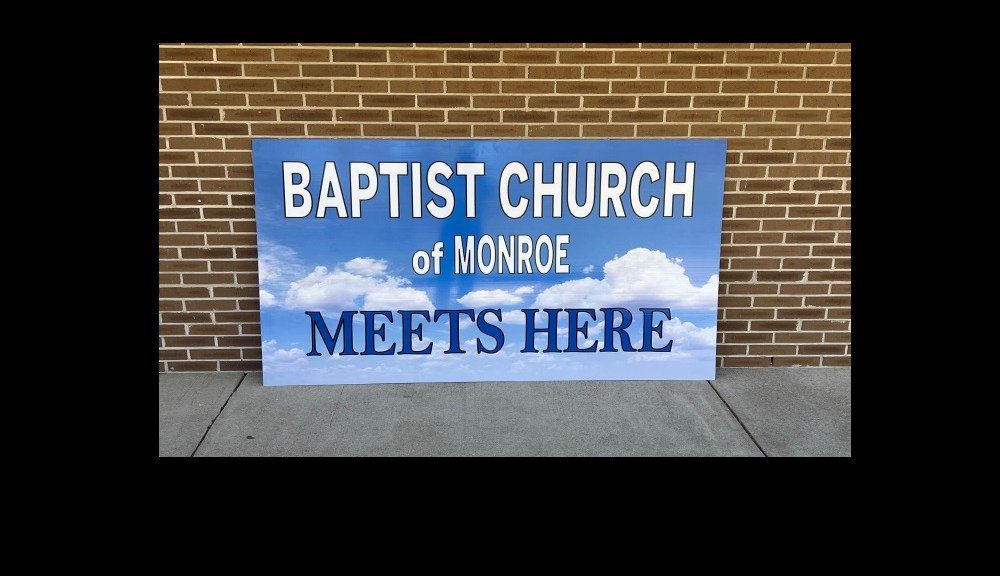
Baptist Church of Monroe

Pastor Brian Stewart
bd92@icloud.com; usmcrev@gmail.com
812-369-1046
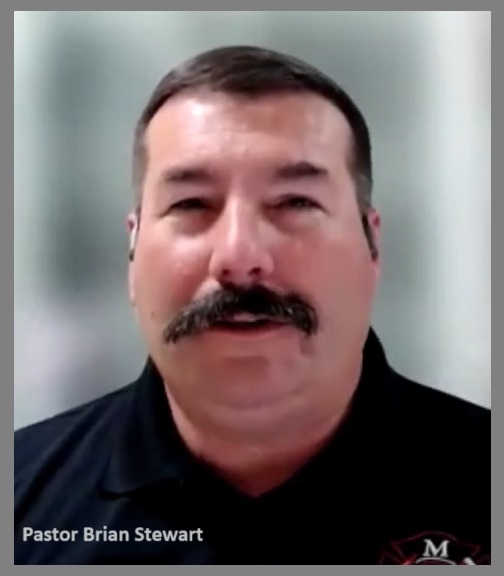
The Simply Church Ministry worked with Pastor Brian Stewart and Baptist Church of Monroe, in Bloomington, Indiana, as they organized the church according to God’s New Testament principles. Pastor Stewart and BCM determined that they would follow God’s guidelines in church organization and conduct no matter the cost. Fortunately, in America, churches can do things God’s way without persecution by civil government. Pastor Stewart and BCM are not afraid to apply God’s principles and shed the light of God’s truths, including His truths concerning church organization.

Pastors of incorporated 501(c)(3) or 508(c)(1)(A) churches in America face problem after problem, each a symptom sprouting from a root cause below the surface. Without digging out and killing the root, the problems will continue to spout, ever bigger and more destructive to God’s purposes. Few churches ever know about and get to the root of their problems. Brian Stewart will share his thought processes as a pastor who experienced this saga, found the underlying problem, and rooted it out.

The first Simply Church Zoom meeting featuring Pastor Stewart on April 30, 2024. Other Meetings have followed. All are linked to below.

In this series of videos, Pastor  Stewart explains the journey of Baptist Church of Monroe from corporate 501(c)(3) church with three heads to New Testament Church with one head, the Lord Jesus Christ.

Links to meetings with Pastor Stewart:

Part 1: From Corporate 501(c)(3) Church to New Testament Church: Introduction. April 30, 2023. See Endnote 1, for the summary of the meeting. Excerpt from Endnote 1: “Problems arose within the corporate church. For example, some church members wanted to follow the corporate constitution and bylaws and some wanted to follow the Bible….”

Email received after the first meeting: Good morning Bro. Finney ……Just dropping you a quick note…thanking you again for the zoom meeting…Isn’t it amazing the riches and fullness of the Lords grace ??  The Spirit led Pastor Stewart to start the meeting after prayer… with ” order ”  being the path the Holy Spirit started him on… that led to you and getting that body of Christ off the governments control….And sense , The Holy Spirit has fed me daily reminders of ‘ order ‘ …..have a blessed day…we love you… praying for you….keep keeping on !!!!

For more on the Biblical problems with church incorporation and 501(c)(3) and 501(c)(1)(A) federal tax-exempt status, click here and go to the relevant links. For more thorough analysis of the Biblical problems with church federal tax-exempt status, click here. For more thorough analysis of  the Biblical problems with incorporation, go to the relevant sections of the PDF of the book, Separation of Church and State/God’s Churches: Spiritual or Legal Entities?

Part 2: From Corporate 501(c)(3) Church to New Testament Church: Getting to the source of the recurring problems of most churches in America. May 7, 2024 at 8 p.m. See Endnote 2 for a synopsis of the meeting.

Part 3: From Corporate 501(c)(3) Church to New Testament Church: Overview of Simply Church Trust Documents. May 14, 2024 at 8 p.m. See Endnote 3 for a synopsis of the meeting.

Part 4: From Corporate 501(c)(3) Church to New Testament Church: Application of the Principles for Church Organization Which Baptist Church of Monroe Declared in Trust Documents. Tuesday, June 4, 2023 at 8 p.m. Central Time. See Endnote 4 for a synopsis of the meeting. Click here to see the Question and Answer Session which followed the initial portion of the meeting.

Future meetings with Pastor Brian Stewart will cover topics such as:

  1.  Applying the Bible principles declared in the trust documents.
  2. The positives of going this route including “What are the top 5 or 10 areas of ministry for the church body and their priority according to God in His Word?”
  3. How to evaluate the maturity of individual believers and the church as a whole and its importance in reorganizing a church God’s way. Explanation of the characteristics of the spiritually dead (the lost), spiritual infants, spiritual toddlers, spiritual children, spiritual young adults, and spiritual parents. In other words, those with whom one deals in church affairs.

Endnotes

En 1

This was the 1st Zoom Meeting hosted by the Simply Church Ministry. Pastor Brian Stewart speaks for the first 34 minutes. Then there is a very enlightening question and answer session. Pastor Stewart of Baptist Church of Monroe (Indiana)  shares his testimony of salvation, preparation for the pastorate, and the story of the repentance and transition of BCM from a church (civil government church) organized according to church tradition to a church organized according to New Testament principles. He lays the foundation for organization according to God’s principles,  not according to personal preference based upon tradition and Satan’s deceptions which results in Satan being, at least partially and sometimes wholly, at the head. He develops the principle that simplicity in Christ is what God desires for us; but that we have complicated matters by departing from God’s principles.

He thought he was leading a church that Christ was the head of, even though incorporated and 501(c)(3). He frequently emphasized to the church that Christ was head of the church. However, Problems arose within the corporate church. For example, some wanted to follow the corporate constitution and by-laws and some wanted to follow the Bible when the two were inconsistent. Then he started looking deeper into incorporation and 501(c)(3).

Pastor Stewart relates the answers of church members to his question on how they felt about having executed documents declaring and establishing the church as a church under Christ alone. Etc.

Questions answered in the question and answer session include:

  1. 39:38 mark: Who is the trustee?
  2. 43:14 mark: Were you (Pastor Stewart) looking for a fight?
  3. 45:50 mark: Has the fact that the beneficiary is the Lord Jesus Christ met any resistance or caused any problems in that it is required that the beneficiary be alive?
  4. 55:45 mark: What if the trustee does not do his job properly?
  5. 1:06.36 mark: What about malfeasance by the trustee? Answer by Jerald Finney followed by perfect answer by Pastor Stewart.
  6. What would the church do if someone from the prior incorporated church caused problems concerning the ownership of the property used by the church?
  7. 112:42 mark: Some facts about the pastor: his income, responsibilities, etc.
  8. 1:18:08 mark: Did the trustee have to record or file the Declaration of Trust with the county or state, regarding spreading the light regarding church organization under Christ, the church relationship to government, what the documents explain to the world, every church member gets a copy of the documents, what the trustee experienced getting the religious property tax exemption and why it is OK to do so according to God’s principles, the Certification of Trust required by the bank (in Indiana) for the bank account for banking purposes only (a trust account owned by Jesus Christ, not  a church checking account), what happens when something happens to the trustee, real example of corruption in a corporate church.
  9. Other things touched on: silencing of churches during Covid; any church attachment to government; control of church by the government; the church is the people, not the property.

En 2

Pastor Stewart begins with a short encounter he had the day before this video was made with a bank teller regarding the trust bank account. The bank teller himself understood that the account was individual, not business. Then, from God’s Word, he explains more on church order and the preeminence of Christ. The head, Christ, needs to be connected to the body in order to have control of the body. As pastor of a corporate 501(c)(3) church, he did not see these things and how they could be. Problems kept sprouting up because they were connected to a deep root. He began to understand that he was not getting to the root of the problems.

Then he found the root of the problems: the church was not rooting in Christ alone, but in the philosophies of the world, the rudiments of the world and not in Christ. To be in God’s order, a church must be organized in love under Christ alone.

So he, and the church began to learn and grow. He had to learn the law side and the Scriptural side. Once he was in command of the principles, it was his duty as pastor to teach the concepts to the church,  which is the people in the assembly, convince them, and them being willing to obey. He started with the biblical principles, then got into the application. Once the body was convinced of these matters, it was time to apply them to their situation. The process was long and drawn out. He waited for the people to study it out and be the driver.

This whole matter has caused the church to trust the Christ more.

He then shared more comments from church members; he had shared some in the first meeting.

Then came a question and answer session. Matters which he addressed included:

  • Being a light to other pastors and churches and how to do it God’s way so as not to stunt the growth of others whille allowing the Holy Spirit to teach others as we shed the light.
  • How he discipled the church on Bible study and how this gave those who were not a reason to do so.
  • Etc

En3

After prayer, Jerald Finney opens with a brief introduction. Then, Pastor Stewart explains the initial resolution made by Baptist Church of Monroe, named, “Resolution on Church Organization and Conduct.” Jerald Finney then gives an overview of the trust documents–the Resolution to Adopt the Declaration of Trust, the Declaration of Trust, and the Appendix. Pastor Stewart then teaches more on God’s order and Satan’s attacks on that order. His teaching is mainly from some Pauline Epistles. Finally, the meeting ends with questions and comments and a closing prayer.

En 4

The trust documents declare certain facts and principles that allow a church, if applied, to honor God’s commandments and principles for church organization under Christ and Christ alone. If the follow-up does not match the declaration, God is not honored and glorified, and the church is still compromised and under more than one head.

In a legal setting, a lawyer (Satan), in such a compromised case, could quickly point out to the Judge (the Lord Jesus Christ), “This church is saying one thing and doing another. What they say and what they practice are two different things.” Of course, the same arguments could be made in an earthly courtroom setting where the state or an individual tries to sue or charge the church.

Thus the high importance of extreme diligence in dealing with church matters. After all, Christ bought the church with his own blood (Acts 20:28).

In this video, Pastor Brian Stewart explains the application of theBible principles Baptist Church of Monroe declared in the trust documents. He explains that once the documents are executed, the work really begins. He describes:

  1. The opening of a checking account in the name of the trust, the Lord Jesus Christ being the true owner of the funds in the account.
  2. The transfer of property from the church to the trust, the owner being the Lord Jesus Christ.
  3. Getting all utility accounts into the name of the trust.
  4. Notification to the state that the church would no longer be collecting payroll and social security taxes.

Then, he explains why it was necessary to get everything out of the name of the church and into the name of the trust. The church must strive to make her actions match up with what they declared and believed in the trust documents.

Questions and comments followed. Those will be posted in Part II of this meeting.
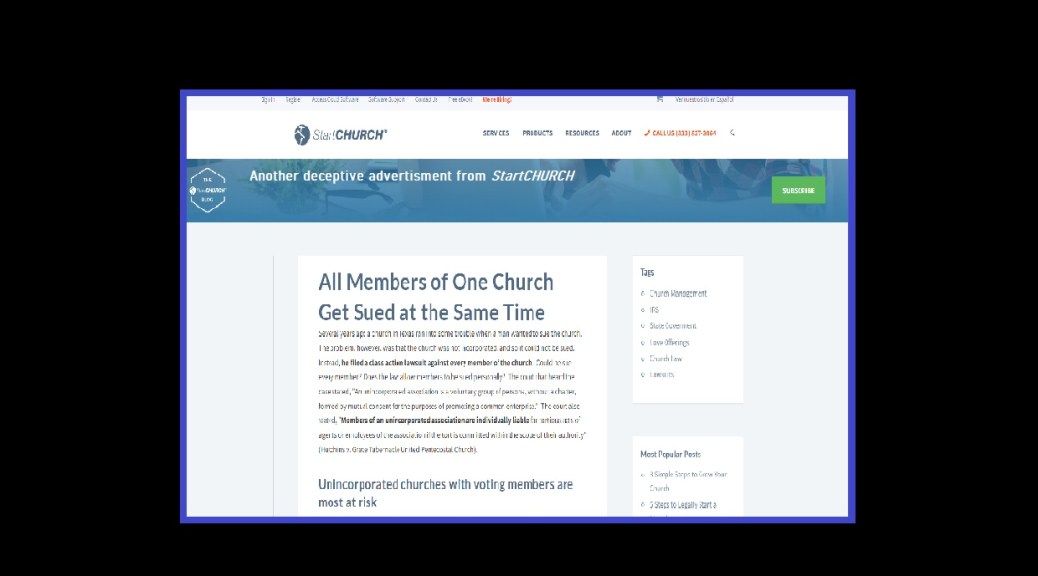
 

More StartCHURCH Deception: “Every church member can be sued if the church is an unincorporated association. Therefore, every church should incorporate.” WRONG.

StartCHURCH ad gets the attention of unknowledgeable “Christians” with deceptive statements such as “All members of one church get sued at the same time.” But the court in the case they rely on said, “No, your class action against all the members will not be allowed.” Again, StartCHURCH uses fear and deceit to terrorize, prociure customers, and make big bucks.

See also, The False and Misleading Teachings and Advertisements of StartCHURCH, Another Spiritual and Legal Deceiver (September 13, 2012)

Jerald Finney
Attorney at Law and Born Again Believer
Texas Bar Number 00787466
Copyright © September 6, 2022

This essay speaks to another false ad by StartCHURCH meant to strike fear into churches and believers so as to induce them to use their expensive and continuing services of “helping” churches organize and operate contrary to Bible and legal principles. StartCHURCH and like organizations rely on fantasy—not knowledge, understanding and wisdom—to sell their anti-God services.

See Endnote[i] or click here to go to the online ad, for the complete StartCHURCH advertisement this essay addresses.

To fully understand the dishonesty of the ad requires a knowledge of Bible church doctrine, corporation law, federal tax exemption law, the First Amendment to the United States Constitution and corresponding state constitutional provisions as well as a careful analysis of the ad itself and the case cited therein, Hutchins v. Grace Tabernacle 804 S.W.2d 598 (Tex. App. 1991) (https://casetext.com/case/hutchins-v-grace-tabernacle).

The first heading in the ad is the title to the ad: “All Members of One Church Get Sued at the Same Time.” The title states a lie. Yes, as the ad states, the plaintiff filed a class action against all members of the church. However, the interlocutory order of the 333rd District Court of Harris County, Texas denied plaintiff’s request to certify a class action. The 1st Court of Appeals, First District, Houston Texas, affirmed the District Court ruling. In other words, the plaintiff’s attempt to continue the suit as a class action failed.

One very important thing to understand about the StartCHURCH dishonesty here is that a legal entity (person(s), corporation(s), etc.) can file a false suit. If that happens, the defendant must respond correctly, as did the defendant in this case. A plaintiff could also improperly file such a suit against all members of a corporate church. Then, I am sure that StartCHURCH would be glad to help the members of the corporate church who were sued in dealing with the court case; for a good fee, of course. The StartCHURCH ad is intended to persuade churches that – because plaintiff filed the action against all members of a church which had not employed StartCHURCH in organizating as a corporation, was not incorporated, and could not be sued – the first thing every church should do is to incorporate.

If a plaintiff files a suit against a church which is not a legal entity and therefore cannot be sued, a Church under Christ alone, someone in the church should file a motion contesting jurisdiction.  StartCHURCH presents us with a case in which plaintiff’s class action against all the members failed, but StartCHURCH still, for it’s insidious and profit making motives, claimed that all the members were sued at the same time.

Sadly, in the case cited and relied upon by the StartCHURCH ad, the church could not be sued since it was not an entity (as recognized by the plaintiff and the Court), but argued that it was an entity which could be sued and also that the members could not be sued. As the Appeals Court opinion states, “In brief, the Church wants both the advantage of an unincorporated entity (no liability for the entity), and at the same time wants the advantage of a corporate entity (no liability for its members.” – But see the remaninder of this essay on this latter statement by the court.)

The paragraph under the title, the first heading, to the StartCHURCH ad states: “‘Members of an unincorporated association are individually liable for tortious acts of agents or employees of the association if the tort is committed within the scope of their authority’ (Hutchins v. Grace Tabernacle 804 S.W.2d 598 (Tex. App. 1991)).” Of course, the ad does not explain that the members of a corporation (including members of a church non-profit corporation) are individually liable for the tortious acts of agents or employees of the association if the tort is committed within the scope of their authority.”

No matter the way a church is organized, a member who is directly involved or interested in any act, tort, affair, contract, transaction or legal proceeding is a “party.” For example, a person who has been given and accepts the responsibility to keep the entry way to a church meetinghouse safe, regardless of the legal status of the church (incorporated legal entity or not) may be sued should a non-member (and maybe a member, depending upon the law of the state), slip and injure himself upon ice left unattended by the person(s) responsible for removing the ice and any other members who saw the danger and said or did nothing about it.

The members of the incorporated church own and fund the corporation. Should someone file a suit against the church corporation (and anyone who is a party to the tort) and prevail, who pays the judgment against the corporation? The corporation. Who funds the corporation? The members. The court will hold the corporation responsible for paying the judgment. Ultimately, the members will furnish the funds to pay the judgment, unless the corporation has insurance, in which case the members paid for the insurance. It goes without saying that, in general, it is wise for every owner of real estate to purchase liability insurance. Additionally, the Lord makes clear that one is to love others and himself. Is trying to avoid helping another who was injured due to one’s individual or church knowling, intentional, negligent, or reckless act loving one’s neighbor? Again, obtaining insurance is a wise way to love one’s neighbor.

The second heading in the StartCHURCH ad is “Unincorporated churches with voting members are most at risk.” Wrong again. First, the analysis above addresses some aspects of this false argument.

Second, unincorporated churches which have not forfeited their non-legal entity status (their First Amendment status) are not at risk of being sued; they cannot be sued as the case cited by StartCHURCH makes clear.  Members of all churches, whether the church can be sued or not,  should not, if they love others as commanded, try to escape responsibility for harming others, dishonoring contracts, mortgage of lease agreements, etc.

Third, StartCHURCH contends that members in an unincorporated church who vote on “issues such as salaries, purchase contracts, and other important things like real estate transactions and lease agreements” … “take upon themselves potential personal liability because they  become a direct personal party to the contract or transaction. This could bring disastrous results [notice the hyperbole].” One who votes on such matters in an incorporated church can also be held to be a liable party. If one votes to approve a contract, salary, real estate transaction, etc., that person has given their authority for the act and any wrong committed in violation of the agreement involved. The matter of “piercing the corporate veil” may come into issue in some cases. Remember, should the corporation be found liable, the members fund the corporation.

If a person is ruled by fear, no matter how the church is organized, the wisest course of action for him is to abstain from becoming a party by not participating in any church affair. Such a person should not become a member of a church. Surely, if he wants to be religious, he will be able to find a church which will allow him to show up, sing, worship, hear the weekly lecture(s), give (especially if he gives to the corporation if the church is incorporated), etc. without requiring him to be a member.

The third heading of the StartCHURCH ad is “One of the first acts of a church.” The ad then states:

  • “Incorporating ought to be one of the first acts of any church.  In 2010, approximately 1,000 churches per month were sued.  That number is likely to keep rising because today, many churches are starting in homes, hotel conference rooms, and schools, which means they have to sign more contracts and enter into unusual contracts.  It is important to ensure that your church forms a legal structure to protect its members, board, and trustees.  As mentioned before, incorporating should be done before conducting your first service.”

Of course, perhaps StartCHURCH is correct should one leave out of consideration his God-given goal (the glory of God; see, e.g., Revelation 4:11: “Thou art worthy, O Lord, to receive glory and honour and power: for thou hast created all things, and for thy pleasure they are and were created.”); God’s principles concerning churches built by Christ as expressed in the New Testament and especially God’s epistles written by the hand or dictation of the Apostle Paul; the First Amendment to the United States Constitution and corresponding state constitutional provisions; and his conscious (knowledge of good an evil).

  • Ephesians 1:22: “And hath put all things under his feet, and gave him to be the head over all things to the church.”
  • Colossians 1:18: “And he is the head of the body, the church: who is the beginning, the firstborn from the dead; that in all things he might have the preeminence.”
  • Acts 20:28: “Take heed therefore unto yourselves, and to all the flock, over the which the Holy Ghost hath made you overseers, to feed the church of God, which he hath purchased with his own blood.”
  • Ephesians 5:25-27: “Husbands, love your wives, even as Christ also loved the church, and gave himself for it; That he might sanctify and cleanse it with the washing of water by the word, That he might present it to himself a glorious church, not having spot, or wrinkle, or any such thing; but that it should be holy and without blemish.”

It is interesting to note that StartCHURCH gives no authority for their positions from the God’s Word.

Most importantly, a church who chooses to submit herself to any authority other than the Lord Jesus Christ has grieved our Lord by committing spiritual fornication. For short answers to any questions this may raise, please see Short Answers to Some Important Questions, Basic Course, Bible Studies: The Doctrine of the Church.  No church who wishes to please God should ever combine with civil government through incorporatipon, Internal Revenue Code § 501(c)(3) or § 508 (c)(1)(A) tax exempt status; contract, purchase or lease real estate, purchase insurance, or do anything else which sets the church up as an entity which can be sued.

Should a church choose, by her actions and declarations, to remain totally separate from and outside the authority of civil government the church will have all her First Amendment protections and cannot be sued. The First Amendment is the highest law of the land concerning churches, church establishment, religious freedom; freedom of speech, freedom of association, and freedom of press.

Civil government has no jurisdiction over a church which is not a legal entity such as a corporation; such a church cannot sue or be sued or act legally in some other way. As pointed out above, if someone tries to sue a church which is not a legal entity,  lack of jurisidiction should be presented to the court. Remember, as well, that no matter how a church is organized, those responsible for tortious or wrongdoing where one has a duty to act or not can be taken to court. Insurande is wise where appropriate.

Again, believers should not try to avoid restitution to those who are damaged by their actions; we are to love others as we love ourselves – to do unto others as we would have them do unto us. The Churches under Christ Ministry, at no charge, shows churches and believers how do deal with all these matters so as to honor both God and man.

The fourth heading of the StartCHURCH ad is: “What happens when you incorporate your church?” Under this heading, StartCHURCH states:

  •  “The legal concept of an artificial person exists where state law has created laws recognizing a corporation.  The laws of all fifty states allow churches to create a corporation that exists separate from that of its members, officers, and board. The church uses the corporation to conduct its business and manage its assets.”

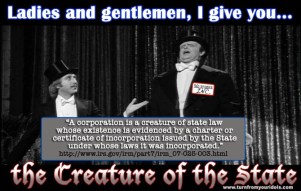
Yes, “A church may choose to apply for corporate status under state law.” However, If the state approves the church application for incorporation, the church becomes a creature of the state, a temporal, earthly, legal entity as opposed to an eternal, heavenly, spiritual entity. Incorporation combines church and state (the unholy is combined with the holy so as to profane the holy) in violation of Romans 13, 1 Peter 2, the Old Testament doctrine of civil government, and New Testament church doctrine. The corporation is a creation of state law and is governed by the law of incorporation. The procedures, officers, members, and board of a corporation are all required and controlled by the non-profit corporation law of the state of incorporation. The church and the corporation are intertwined. Members of incorporated churches can sue the pastor, other church members, the church, etc. as to many church disagreements and matters matters since the state is sovereign of and authority over many corporate matters. The head of and authority over the incorporated church for many matters is the state not the Lord Jesus Christ. The following resources explain incorporation in much more detail:
The fifth heading of the StartCHURCH ad is: “What is indemnification?” It states under that heading:

“When a church forms a corporation, it receives special power to indemnify its pastors, board members, and employees from liability for the action they take in behalf of the church.  This allows one to serve on the board with the confidence of knowing that the acts he/she performs in behalf of the church will not come back to haunt him/her.”

One cannot protect a person, even a pastor, board member, or employee for torts or crimes for the action they take on behalf of the church. Indemnification does give some protection from suit by members of the church, but not from suit by outside parties suing the individual for his alleged wrongdoing which harmed a plaintiff.

1 Corinthians 6 makes clear that churches are to judge internal church infractions. God directs that such matters are not to be submitted to outside authorities.

The sixth heading of the StartCHURCH ad is: “Where is your church?” Under that heading, it states”

“Right now, there are many churches operating on a deficient legal foundation.  Most pastors I have met state that from the first day they started their church, they had always intended on doing things the right way, but then ministry, preaching, and life got in the way.  That does not have to be you.  Today is the best day to start getting right.

StartCHURCH recommends spiritually prostituting your church and calls it “getting right.” See, SEPARATION OF CHURCH AND STATE: CHRISTIANS WHO CALL EVIL GOOD AND GOOD EVIL “Woe unto them that call evil good, and good evil; that put darkness for light, and light for darkness; that put bitter for sweet, and sweet for bitter” (Is. 5.20)!

Click here to go to The False and Misleading Teachings and Advertisements of StartChurch, Another Spiritual and Legal Deceiver (091212)

Click here to go to ANALYSIS OF FALSE REASONS OF CHRISTIANS AND LAWYERS FOR CHURCH CORPORATE, 501(C)(3) AND 508(C)(1)(A) TAX EXEMPT STATUS OR LEGAL STATUS OF ANY KIND

Endnote

[i] The following is a copy and paste of a StartCHURCH ad at: https://www.startchurch.com/blog/view/name/all-members-of-one-church-get-sued-at-the-same-time

 All Members of One Church Get Sued at the Same Time

Several years ago a church in Texas ran into some trouble when a man wanted to sue the church.  The problem, however, was that the church was not incorporated, and so it could not be sued.  Instead, he filed a class action lawsuit against every member of the church.  Could he sue every member?  Does the law allow members to be sued personally?  The court that heard the case stated, “An unincorporated association is a voluntary group of persons, without a charter, formed by mutual consent for the purposes of promoting a common enterprise.”  The court also stated, “Members of an unincorporated association are individually liable for tortious acts of agents or employees of the association if the tort is committed within the scope of their authority” (Hutchins v. Grace Tabernacle United Pentecostal Church).

Unincorporated churches with voting members are most at risk

This court case brings up something that ought to make its members think twice about their legal status as a church.  There are many churches that have voting members who vote on many issues such as salaries, purchase contracts, and other important things like real estate transactions and lease agreements.  In essence, when members of the unincorporated church vote on a particular item, they are taking upon themselves potential personal liability because they become a direct personal party to the contract or transaction.  This could bring disastrous results.

In the case of the church in Texas, the court stated that the ” . . . members of an unincorporated association are individually liable for tortituous acts of agents or employees of the association if the tort is committed within the scope of their authority.” However, the appeals court remanded the case back to the trail court because the plaintiff committed a procedural error in filing her paperwork and claim with the court seeking class action; one that could be easily fixed.  The point we must not miss is that,  the court made it very clear that the members of an unincorporated church could be sued personally for the tortiuous acts of its ” . . . agents or employees of the association if the tort is committed within the scope of their authority.”

One of the first acts of a church

Incorporating ought to be one of the first acts of any church.  In 2010, approximately 1,000 churches per month were sued.  That number is likely to keep rising because today, many churches are starting in homes, hotel conference rooms, and schools, which means they have to sign more contracts and enter into unusual contracts.  It is important to ensure that your church forms a legal structure to protect its members, board, and trustees.  As mentioned before, incorporating should be done before conducting your first service.

What happens when you incorporate your church?

The legal concept of an artificial person exists where state law has created laws recognizing a corporation.  The laws of all fifty states allow churches to create a corporation that exists separate from that of its members, officers, and board. The church uses the corporation to conduct its business and manage its assets.

What is indemnification?

When a church forms a corporation, it receives special power to indemnify its pastors, board members, and employees from liability for the action they take in behalf of the church.  This allows one to serve on the board with the confidence of knowing that the acts he/she performs in behalf of the church will not come back to haunt him/her.

Where is your church?

Right now, there are many churches operating on a deficient legal foundation.  Most pastors I have met state that from the first day they started their church, they had always intended on doing things the right way, but then ministry, preaching, and life got in the way.  That does not have to be you.  Today is the best day to start getting right.


I. B. Bible Doctrine of Church

Click here to go to: Why Understanding and Applying Church and State Law Is Important for Believers and Churches

Click here to go to brief video presentations of these lessons


Links to lessons:

  1. Introduction 
  2. Christ Ordained the Church and Builds It upon the Rock
  3. A Church Is a Mystery, an Assembly, a Spiritual Body
  4. The Holy Spirit Forms a Church which Is a Temple, a Spiritual Body, the Body of Christ
  5. Christ, the Head/Bridegroom/Husband of the Local Church
  6. The Love between Christ and His Churches
  7. Other Bible Descriptors for a Church: Family, Etc.
  8. A Church Is To Be the Pillar and Ground of the Truth
  9. How To Recognize a New Testament Church
  10. Heresy and Apostasy
  11. Conclusion to the Doctrine of the Church

Other resources:

Click here to go to Short Answers to Some Important Questions


Click here to go to Short Answers to Some Important Questions. 
Click here to go to links to the written lessons.
Click here to go to links to the 3 1/2 to 6 minute video lectures.

The Rose of Sharon (Transcript of a sermon depicting the love relationship between Christ and His local visible church, emphasizing the importance of organization under Christ only as opposed to corporate 501c3 or 508 status or legal status of any kind.

Click here to to to Why Understanding and Applying Church and State Law Is Important for Believers and Churches

Click here to go to Articles, Essays, and Other Resources Related to the Doctrine of the Church, Incorporation, 501c3, Etc.

Click here to go to Essays on the Bible Trust Relationship: Links to Essays and Other Resources


9. How To Recognize a New Testament Church


A Publication of Simply Church Ministry


If you miss one part of the puzzle that is being put together in these studies, you will never see and understand the whole picture.


Previous Lesson:
7. Other Bible Metaphors for a Church: Family, Etc.

Next Lesson:
9. Heresy and Apostasy

Click here to go to all lessons on the Bible Doctrine of the Church.

Click here to go to the written lessons.

Click here to go to the 5 minute video lectures.


Jerald Finney
Copyright © January 5, 2018

Prior lessons on the church give much insight into knowing how to recognize a New Testament Church. This lesson gives some additional insights and stresses the importance of seeking a church which is organized and conducted God’s way, according to his commandments and his word.

To recognize a church, an assembly of people, which is modeled after New Testament Church principles, one must look at New Testament Church doctrine. That doctrine is given us in the epistles penned by the Apostle Paul. Prior lessons have examined much of that doctrine.

J. M. Carroll, in describing the overall organization of the church, accurately listed eleven “Marks of a New Testament Church:

  1. “Its Head and Founder—CHRIST. He is the lawgiver; the Church is only the executive. (Matt. 16:18; Col. 1:18.)
  2. “Its only rule of faith and practice—THE BIBLE. (II Tim. 3:15-17.)
  3. “Its name—‘CHURCH,’ ‘CHURCHES.’ (Matt. 16:18; Rev. 22:16.)
  4. “Its polity—CONGREGATIONAL—all members equal. (Matt. 20:24-28; Matt. 23:5- 12.)
  5. “Its members—only saved people. (Eph 2:21-22; I Peter 2:5.)
  6. “Its ordinances—BELIEVER’S BAPTISM, FOLLOWED BY THE LORD’S SUPPER. (Matt. 28:19-20.)
  7. “Its officers—PASTORS and DEACONS. (I Tim. 3:1-16.)
  8. “Its work—getting folks saved, baptizing them (with a baptism that meets all the requirements of God’s Word), teaching them (‘to observe all things whatsoever I have commanded you’). (Matt. 28:16-20.)
  9. “Its financial plan—‘Even so (TITHES and OFFERINGS) hath the Lord ordained that they which preach the gospel should live of the gospel.’ (I Cor. 9.14.)
  10. “Its weapons of warfare—spiritual, not carnal. (II Cor. 10:4; Eph. 6:10-20.)
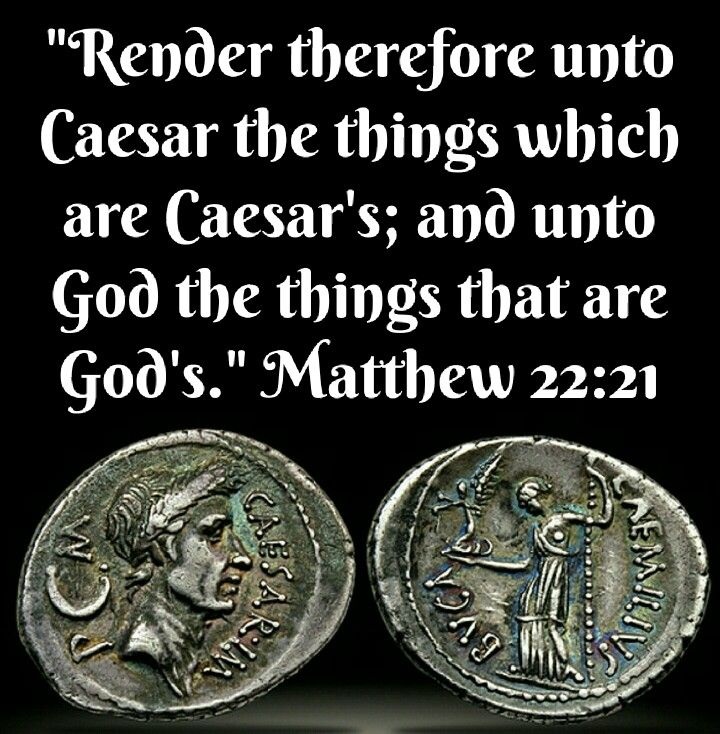
  11. “Its independence—separation of Church and State. (Matt. 22:21.)” [i]

Certainly, a preacher on the street corner with a crowd around him as he preaches is not a church. Nor is a group of people meeting in a house and preaching the Word. However, if that house group chooses a properly ordained and baptized pastor, organizes and operates according to biblical principles, initiates a proper baptism for new believers, and begins to partake of the Lord’s Supper, an ordered New Testament church comes into existence. The Lord desires that those who are saved be baptized into a properly ordered New Testament church.

An eChurch is not a New Testament church, nor is a group who starts following someone on Facebook or other social network. As has been established in prior lessons, a church is a spiritual body or assembly ordered according to the principles of the New Testament.

Only the assembly where the true doctrine is preached is a church: “But though we, or an angel from heaven, preach any other gospel unto you than that which we have preached unto you, let him be accursed” (Ga. 1.8).  Where only false doctrines are preached, no church can exist. For example, the Catholic Church, some Baptist churches, many Protestant churches, the Church of Jesus Christ of Latter Day Saints, Islam, and the Jehovah’s Witnesses are not churches. When the preaching of a church conceals the gospel message of salvation by grace through faith alone from its members, so that the gospel message is not clearly proclaimed, and has not been proclaimed for some time, the group meeting there is not a church.

A church can exist only where the Bible is believed to be the inerrant Word of God, where the Bible is the sole basis for faith and practice, and where that Bible is taught, preached, and practiced.

Local churches assemble in His name for the breaking of bread, worship, praise, prayer, testimony, the ministry of the word, discipline, and the furtherance of the Gospel (He. 10.25; Ac. 20.7; 1 Co. 14.26; 1 Co. 5.4, 5; Ph. 4.14-18; 1 Th. 1.8; Ac. 13.1-). Every such local church has Christ in the midst, is a temple of God, indwelt by the Holy Spirit (1 Co. 3.16, 17), and is “the pillar and ground of the truth” (1 Ti. 3.15).

A church is the body of Christ of which He is the Head. Christ desires that a church remain solely under Him: “And [God] hath put all things under his feet, and gave him to be the head over all things to the church” (Ep. 1.22-23). “For the husband is the head of the wife, even as Christ is the head of the church” (Ep. 5.23). Prior lessons have covered this and other  matters mentioned in this lesson in more completely.

New Testament church doctrine and example further define what a church is to be:

  1. Click here to go to a study of Matthew 22:21, Romans 13, and related verses.

    Spiritual entity only. [ii] A church which is a legal entity such as a 501(c)(3) corporation is, at best, in God’s permissive will and out of God’s perfect will. Such a church has combined the earthly, temporal, and Satanic with the heavenly, eternal and spiritual.[iii]

  2. The body of Christ of which He is the Head. Christ desires that a church remain solely under Him: “And [God] hath put all thingsunder his feet, and gave him to be the head over all things to the church” (Ep. 1.22-23). “For the husband is the head of the wife, even as Christ is the head of the church” (Ep. 5.23). A church which is a legal entity has two heads, the Lord Jesus Christ and civil government. Such a church cannot be a New Testament church.[iv]
  3. Separate from the world. An incorporated 501(c)(3) or 508(c)(1)(A) church is not separated from the world.[v]
  4. A church is to assemble in His name for the breaking of bread, worship, praise, prayer, testimony, the ministry of the word, discipline, and the furtherance of the Gospel (He. 10.25; Ac. 20.7; 1 Co. 14.26; 1 Co. 5.4, 5; Ph. 4.14-18; 1 Th. 1.8; Ac. 13.1-).
  5. Every such local church has Christ in the midst, is a temple of God, indwelt by the Holy Spirit (1 Co. 3.16, 17), and is “the pillar and ground of the truth” (1 Ti. 3.15).
  6. A church has duties outside the meeting house. The teaching of doctrine inside, work outside.[vi] Outside, the members are to present the Gospel, including all relevant truth from God’s word, to the world through door to door and one-on-one evangelism and street ministry, in the political arena, and everywhere one is involved.
  7. Fight the spiritual warfare against powers, principalities and the rulers of darkness in this present world (Ep. 6.10-18). This fight is being waged by Satan on all fronts. Churches and believers should likewise be fighting on all fronts using God’s methods of warfare.

Click here to go to Bible Study of Ephesians. Ephesians reveals the institution of the church as God’s masterpiece. It is more wonderful that any temple made with hands, constructed of living stones, indwelt by the Holy Spirit. Ephesians 1 presents the church as a body. The book is both doctrinal and practical. The first three chapters are doctrinal and go into the heavenlies. The last three chapters are practical and cover the believers responsibilities on earth. A church and a believer are to remain connected to their heavenly head as they walk on this earth.

Bible Studies of various Books on the Doctrine of the Church.

The Biblical Doctrine of the Church.


Endnotes

[i] J. M. Carroll, The Trail of Blood, (Distributed by Ashland Avenue Baptist Church, 163 N. Ashland Avenue, Lexington KY 40502, 606-266-4341), pp. 4-5. J. M. Carroll was a leader among Baptists who studied history and the Bible in an attempt to “find the church which was the oldest and most like churches described in the New Testament.” In the course of his studies, he gathered “one of the greatest libraries on church history. This library was given at his death to the Southwestern Baptist Seminary, Ft. Worth, Texas.”

[ii] See What is a spiritual entity?; A Church Is a Mystery, an Assembly, a Spiritual Body; The Holy Spirit Forms a Church which Is a Temple, a Spiritual Body, the Body of Christ.

[iii] See What is a legal entity?; Links to Lessons on Satan.

[iv]  Christ Ordained the Church and Builds It upon the Rock; Christ, the Head/Bridegroom/Husband of the Local Church.

[v] What is an established church?; The Biblical Doctrine of Separation of Church and State.

[vi] Click here to go to Bible Study of Ephesians. Ephesians reveals the institution of the church as God’s masterpiece. It is more wonderful that any temple made with hands, constructed of living stones, indwelt by the Holy Spirit. The book is both doctrinal and practical. The first three chapters are doctrinal and go into the heavenlies. The last three chapters are practical and cover the believers responsibilities on earth. A church and a believer are to remain connected to their heavenly Head, the Lord Jesus Christ, and Him alone as they walk on this earth.

3. A Church Is a Mystery, an Assembly, a Spiritual Body


A Publication of Simply Church Ministry


If you miss one part of the puzzle that is being put together in these studies, you will never see and understand the whole picture.


Previous Lesson:
2. Christ Ordained the Church and Builds It upon the Rock

Next Lesson:
4. The Holy Spirit Forms a Church which Is a Temple, a Spiritual Body, the Body of Christ

Click here to go to all lessons on the Bible Doctrine of the Church.

Click here to go to links to all written lessons.

Click here to go to the 5 minute video lectures.


Jerald Finney
Copyright © January 1, 2018


Note. For more on this, see Stewards of the Mystery of the Church Found Lacking, Except for a Remnant (033020)

Members of a New Testament Church under Christ alone are stewards of the mysteries of God; therefore, stewards of the mystery of the church. God requires that His stewards be found faithful. (1 Co. 4.1-2).

The institution of the New Testament church, made  up of local assemblies, is a mystery hidden in past ages and, therefore, not revealed in the Old Testament; but now “made known unto the sons of men, as it is now revealed unto his holy apostles and prophets by the Spirit” (Ep. 3.5). A mystery in Scripture means that God is revealing something that, up to that time, he had not revealed. Such a mystery has two elements: (1) It cannot be discovered by human reason. (2) It is revealed at the proper time and not concealed; and enough is revealed to establish the fact without all the details being given. Believers in a local church may understand this mystery of Christ, when they read the words of God penned by the Apostle Paul (Ep. 3:4).

Just as the church in the wilderness was an assembly called out by God, an ecclesia (see Ac. 7.38), so a New Testament church is an assembly of called-out ones. Israel, in the wilderness, was a church or assembly, but in striking contrast with the New Testament assembly. Israel in the land is never called a church; they were not all assembled after they entered the land. Born-again believers are admonished not to forsake the assembling of themselves together, not to forsake the local church, the only assembly of believers on earth (He. 10.25).

That the Gentiles were to be saved was no mystery (Ro. 9.24-33; 10.19-21).[i] The mystery was the divine purpose to make of Jew and Gentile a wholly new thing—the church made up of local autonomous New Testament bodies in this age—and in which the earthly distinction of Jew and Gentile disappears. (Ep. 2.14, 15; Co. 3.10, 11). Jesus Christ established His local assembly while he walked as the God Man on earth and appointed His local assembly as executor of His Will or Testament. For more on this, see, e.g., The New Testament of Jesus Christ:  His Executor Named and Empowered. The revelation of this mystery which was foretold but not explained by Christ (Mt. 16.18) was committed to Paul.

The institution of the New Testament church is solely made up of local spiritual bodies, made up of an assembly of believers (See, e.g., Ep. 4). Christ will gather all members of his earthly family together in a general or universal assembly in the heavenly Jerusalem (He. 12.22-24) at the marriage of the Lamb (Re. 19.7-10). Before that, there will be no universal assembly.

All Bible references to a church here on the earth refer to a local body of Jewish and/or Gentile believers and not to a universal or catholic church. Nowhere in the New Testament is a church here on the earth ever referred to as anything other than a local spiritual body and nowhere does Scripture teach that a church is to have any type authority above it other than the Lord Jesus Christ. Some examples of references to churches as they existed in the New Testament are listed and quoted in endnote [ii].

Adherents can do no more than quote Matthew 16.18, 1 Corinthians 12.12-13, or other verses taken misinterpreted and taken out of context in support of the universal church doctrine. 1 Corinthians was written to a local autonomous church, with principles to be applied by all churches. One must analyze the verse in context of all immediate verses as well as all New Testament doctrine to ascertain its meaning; such an examination gives absolutely no support to a universal church doctrine for this age. See [iii] for links to more resources, a webpage with teachings and links to more sermons, and an article on C. I. Schofield’s “True Church” doctrine.

In his seven letters to seven local autonomous Gentile churches (in Rome, Corinth, Galatia, Ephesus, Philippi, Colosse, and Thessalonica), the church, the “mystery from the beginning of the world hath been hid in God,” (Ep. 3.9) is fully revealed, and fully instructed as to her unique place in the counsels and purposes of God. Through Paul alone, we know that a church is not an organization, but an organism instinct with His life, and heavenly in calling promise and destiny. Through him alone, we know the nature, purpose, and form of organization of local churches, the right conduct of such assemblies, and the commandments for the earthly walk of the members.

A church is a spiritual body made up individual believing members (Ep. 4, 1 Co. 12). Each member is indwelt by the Holy Spirit and has a proper place in the local body. Christ sets some in the body as apostles,[iv] prophets,[v] evangelists, pastors, and teachers; “For the perfecting of the saints, for the work of the ministry, for the edifying of the body of Christ” (Ep. 4.12). The members of the local body are to speak the truth in love, that they “may grow up into him in all things, which is the head, even Christ. From whom the whole body fitly joined together and compacted by that which every joint supplieth, according to the effectual working in the measure of every part, maketh increase of the body unto the edifying of itself in love” (Ep. 4.15-16).


Click here to go to Bible Study of Ephesians. Ephesians reveals the local church as God’s masterpiece. It is more wonderful that any temple made with hands, constructed of living stones, indwelt by the Holy Spirit. Ephesians 1 presents the local church as a body.

Articles, Essays, and Other Resources Related to the Doctrine of the Church, Incorporation, 501c3, Etc.

The Local Church: A Building or What?

Bible Studies of various Books on the Doctrine of the Church.

The Biblical Doctrine of the Church


Endnotes

[i] A mystery in Scripture is a previously hidden truth, now divinely revealed, but in which a supernatural element still remains despite the revelation.

[ii] New Testament verses:

  • “Then had the churches rest throughout all Judaea and Galilee and Samaria, and were edified; and walking in the fear of the Lord, and in the comfort of the Holy Ghost, were multiplied” (Ac. 9.31).
  • Paul said, “Likewise greet the church that is in their house. (Ro. 16.5)” Notice that the church refers to the local body of baptized believers. The house was just the place where they met; it was not a church.
  • Paul wrote to the church in Corinth, “Paul … Unto the church of God which is at Corinth, to them that are sanctified in Christ Jesus, called to be saints, with all that in every place call upon the name of Jesus Christ our Lord, both their’s and our’s” (1 Co. 1.1-2).
  • “If therefore the whole church be come together into one place….” (1 Co. 14.23).
  • “The churches [Not “the church of Asia”] of Asia salute you. Aquila and Priscilla salute you much in the Lord, with the church that is in their house” (1 Co. 16.19).
  • “Paul … unto Philemon … and to the church in thy house” (Phil. 1-2).
  • “… [T]hat thou mayest know how thou oughtest to behave thyself in the house of God, which is the church of the living God, the pillar and ground of the truth” (1 Ti. 3.15).
  • The Bible defines “house of God”: “For every house is builded by some man; but he that built all things is God. And Moses verily was faithful in all his house; as a servant, for a testimony of those things which were to be spoken of after; But Christ as a son over his own house; whose house are we, if we hold fast the confidence and the rejoicing of the hope firm unto the end” (He. 3.4-6).
  • In Revelation, the Lord speaks to “the church of Ephesus” (Re. 2.1) “the church in Smyrna” (Re. 2.8), “the church in Pergamos” (Re. 2.12), “the church in Thyatira” (Re. 2.18), “the church in Sardis” (3.18), “the church in Philadelphia” (Re. 3.7), and “the church of the Laodiceans” (Re. 3.14).

[iii] Defining the word Church: Local, Visible, Institutional, never Universal; Origin of the Universal Church Exposed: Constantine, Augustine & Scofield; Rightly Dividing Baptisms: Is 1 Corinthians 12:13 Spirit baptism or water baptism?. For more in depth teachings and sermons on the church, go to the following webpage and scroll down: The Biblical Doctrine of the Church. See also, the article, Scofield’s headnote to “Ephesians” and margin notes on his false “true church” doctrine.

[iv] The word apostle, means “one sent forth,” and is is used of our Lord He. 3:1. Elsewhere it is used for the twelve who were called to that office by our Lord during His earth ministry; of Paul, called to the apostleship by the risen and ascended Lord, and of Barnabas Ac. 14:14 specially designated by the Holy Spirit Ac. 13:2. Of Matthias, chosen by lot by the eleven to take the place of Judas Iscariot, Ac .1:16-26: “And he was numbered with the eleven.” Ac. 1:26
The “signs” of an apostle were (1) They were chosen directly by the Lord Himself, or, as in the case of Barnabas, by the Holy Spirit (Mt. 10:1-2; Mk. 3:13-14; Lk. 6:13; Ac. 9:6; 13:2; 22:10,14-15; Ro. 1:1). (2) They were endued with sign gifts, miraculous powers which were the divine credentials of their office (Mt. 10:1; Ac 5:15; 16:16-18; Mt 28:8-9). (3) Their relation to the kingdom was that of heralds, announcing to Israel only Mt. 10:5-6 the kingdom as at hand and manifesting kingdom powers Mt. 10:7-8. (4) To one of them, Peter, the keys of the kingdom of heaven, viewed as the sphere of Christian profession, as in Mt. 13, were given Mt 16:19. (5) Their future relation to the king will be that of judges over the twelve tribes Mt 19:28. (6) Consequent upon the rejection of the kingdom, and the revelation of the mystery hid in God (Mt .16:18; Ep. 3:1-12), the Church, the apostolic office was invested with a new enduement, the baptism with the Holy Spirit Ac. 2:1-4; a new power, that of imparting the Spirit to Jewish-Christian believers; a new relation, that of foundation stones of the new temple (Ep. 2:20-22) and a new function, that of preaching the glad tidings of salvation through a crucified and risen Lord to Jew and Gentile alike. (7) The indispensable qualification of an apostle was that he should have been an eye-witness of the resurrection (Ac. 1:22; 1 Co. 9:1).

[v] The church was “built on the foundation of the apostles and prophets, Jesus Christ himself being the chief corner stone (Ep. 2.20). These “prophets” were New Testament prophets; to the Old Testament prophets, the church remained a mystery.

  • The mystery of the church, “Which in other ages was not made known unto the sons of men, as it is now revealed unto his holy apostles and prophets by the Spirit” (Ep. 3.5).
  • “To whom coming, as unto a living stone, disallowed indeed of men, but chosen of God, and precious, Ye also, as lively stones, are built up a spiritual house, an holy priesthood, to offer up spiritual sacrifices, acceptable to God by Jesus Christ. Wherefore also it is contained in the scripture, Behold, I lay in Sion a chief corner stone, elect, precious: and he that believeth on him shall not be confounded” (1 Pe. 2.4-6).

1. Introduction to New Testament Church Doctrine


A Publication of Simply Church Ministry


If you miss one part of the puzzle that is being put together in these studies, you will never see and understand the whole picture.


Previous Chapter:
A. Bible Doctrine of Government

Next Lesson:
2. Christ Ordained the Church and Builds It upon the Rock

Click here to go to all lessons on the Bible Doctrine of the Church.

Click here to go to links to all written lessons.

Click here to go to the 5 minute video lectures.


Jerald Finney
Copyright © January 1, 2018


These short lessons on  Bible Church Doctrine reveal the truth about Christ’s true church and churches and in the process of doing so shatter myths fostered by religio-political lawyers, pastors, establishments, politicians, and theologians. “The house of God, which is the church of the living God,” is to be “the pillar and ground of the truth,” and not a bastion of the lies of Satan.[i]

Untold damage to the cause of Christ has been caused by unbridled allegorization or spiritualization of Scripture by Catholics and Protestants. Some of those religions, due to their heinous theologies (false interpretations of Scripture) have, since the early fourth century:

  1. prostituted religion by joining hands with the state and continuing to call the resultant religious organizations “churches;”
  2. violently persecuted and murdered others, including true believers who stood on God’s Word in spite of persecutions and martyrdom, down through the last 2,000 years;
  3. lied about the history of true believers and churches whom they tried to stamp out and obliterate using every conceivable means, including barbaric torture, murders of horrific proportions, imprisonment, conficscation of property, and banishment.
  4. destroyed or confiscated and held the writings and documents of those persecuted ones in their libraries;
  5. continued their tactics as far as possible, absent the persecutions, against God’s true churches.

Satan and his demons never give up. They continue to attack on all fronts. Because of great religious victories by true believers in America, the efforts of true believers and churches can no longer be thwarted by the atrocious persecutions of the past. The First Amendment to the United States Constitution and corresponding provisions in the constitutions of every state protect freedom of religion, conscious, press, association, and speech from persecution.[ii].

Of course, the states offer churches a choice between spiritual fornication or establishment (combining with the state through incorporation or some other means) or remaining under Christ alone. Sadly, since 1954, without opposition from God’s churches and people, the federal government circumvented the First Amendment freedom from establishment by offering churches 501(c)(3) “tax exemption” which comes with five agreed to rules and a host of regulations which entwine a church with federal government red tape, regulations, and constraints. Most churches again chose to betray Christ and commit spiritual fornication with both the state and the federal government. These matters are explained in detail in resources on this Simply Church Ministry website.

Satan never ceases to fight on all fronts. He unceasingly uses any and all tactics to hide the truth about establishmentarian[iii] theology, history, persecution, and goals.[iv] Perhaps Satan’s greatest tool of warfare is lies, as always. He keeps people in the dark through lies. Most of mankind hate the light (truth, Jesus Christ[v]) and come not to the truth lies because their deeds are evil. Sadly, most churches follow Satan’s lies about these matters.

Most pastor’s have no clue concerning God’s principles for church and state and could care less. Like the church at Ephesus in Revelation 2, they have left their first love and their works, not the glory of God, have become their purpose. They have not taken the time to study the credentials, motives and teachings of “Christian” revisionists. The father of those revisionists is the devil, the god of this world. He controls the institutions of the world—civil government, secular media, secular education, and most churches. Most believers do not continue in the Word of God and studies of the Word of God, much less legal, earthly, historical facts. They have become easy prey for that old serpent and his army.

Let us never join, through ignorance of the Word of God, history, and law with those religions who have prostituted God’s church. God wants His children, and especially pastors, to take the time to study preeminent Bible issues (1 Ti. 2.15) and relevant historical and legal facts concerning the doctrine of the church.

These lessons will provide a good starting point for those who wish to step out of the dark into the light of Christ. “The night is far spent, the day is at hand: let us therefore cast off the works of darkness, and let us put on the armour of light” (Ro. 13.12). “But he that doeth truth cometh to the light, that his deeds may be made manifest, that they are wrought in God” (Jn. 3.21).


Click here to go to Bible Study of Ephesians. Ephesians reveals the institution of the church as God’s masterpiece. It is more wonderful that any temple made with hands, constructed of living stones, indwelt by the Holy Spirit. Ephesians 1 presents the church as a body.

Articles, Essays, and Other Resources Related to the Doctrine of the Church, Incorporation, 501c3, Etc.

The Local Church: A Building or What?

Bible Studies of various Books on the Doctrine of the Church.

The Biblical Doctrine of the Church


Endnotes

[i] John 8:39-45: “They answered and said unto him, Abraham is our father. Jesus saith unto them, If ye were Abraham’s children, ye would do the works of Abraham. But now ye seek to kill me, a man that hath told you the truth, which I have heard of God: this did not Abraham. Ye do the deeds of your father. Then said they to him, We be not born of fornication; we have one Father, even God. Jesus said unto them, If God were your Father, ye would love me: for I proceeded forth and came from God; neither came I of myself, but he sent me. Why do ye not understand my speech? even because ye cannot hear my word. Ye are of your father the devil, and the lusts of your father ye will do. He was a murderer from the beginning, and abode not in the truth, because there is no truth in him. When he speaketh a lie, he speaketh of his own: for he is a liar, and the father of it.  And because I tell you the truth, ye believe me not.”

[ii] See, ESSAYS, ARTICLES, AND OTHER RESOURCES RELATED TO THE DOCTRINE OF THE CHURCH, INCORPORATION, 501C3, ETC. , See also, e.g.,  Church Internal Revenue Code § 508(c)(1)(A) Tax Exempt Status for full explanation of church 508(c)(1)(A) status. That article explains why 508(c)(1)(A) status puts a church under the same rules and regulations that come with 501(c)(3) and the authority of the Internal Revenue Service regardless of whether the IRS has the resources to enforce the rules and regulations that come with the status. This short article is very basic. This essay also has links to other essays which fully explain 501(c)(3) status.

[iii] Establishmentarian definition: “Adhering to, advocating, or relating to the principle of an established church; a person adhering to or advocating this.”

[iv] The history of religious freedom in America and the past, present, and future of the efforts of the religious Calvinists, Catholics, and Charismatics to return America to the days of Old World establishment and persecutions are chronicled in The Trail of Blood of the Martyrs of Jesus/A Case of Premeditated Murder/Christian Revisionists on Trial/The History of the First Amendment.

[v] John 14:6 “Jesus saith unto him, I am the way, the truth, and the life: no man cometh unto the Father, but by me.”

Lesson 1: The Church Is a Spiritual Body (Ephesians)

The Church is a Body – Ephesians 1
(38 questions on the Bible Doctrine of the Church and the American application of that Doctrine with answers at the end)

For help in answering the questions, you may refer to Outline and Teaching on Ephesians.

Click here to go to Lesson 2
Added on March 20, 2017

Click here to go to the links to 14 lessons on Ephesians – a Local Church is a Body (Questions and Answers)

Click here to go to Bible Studies: The Doctrine of the Church

Answers follow the questions.
Those who disagree with anything please see the note at the end. Reasoned dialogue is encouraged and any Bible or fact based comments, if made in a Christian manner in an attempt to get to the truth will be considered.

1. The theme of Ephesians chapter 1 is that a church is a ___________.

Questions 2-7 below are from Ephesians 1.1 which says: “Paul, an apostle of Jesus Christ by the will of God, to the saints which are at Ephesus, and to the faithful in Christ Jesus:”

  1. Paul says he is an apostle. An apostle is the highest ____________ a church has ever had.
  2. A church today cannot have an apostle today because they cannot meet _____ ____________.
  3. The requirements of an apostle are that: (a) The apostles received their commission directly from the living lips of __________. Paul made that claim. He said in Galatians 1.1, “_______, an apostle, (not of men, neither by man, but by Jesus Christ, and God the Father, who raised him from the dead;)” The disciples named___________, but the word of God never states that Jesus made him an apostle. (b) The apostles saw the ______________ after His resurrection. Paul could meet that requirement. 1 Corinthians 9.1. (c) The apostles spoke directly with the Savior. Paul met that requirement. Acts 9.3-6. (d) They expounded and wrote Scripture. See John 14.26, 16.13; Galatians 1.11, 12. (e) They exercised supreme authority. See John 20.22, 23; 2 Corinthians 10.8. (f) The badge of their authority was the power to work miracles. Mark 6.13; Luke 9.1, 2; Acts 2.43. (g) They were given a universal commission to found churches. 2 Corinthians 11.28.
  1. Paul rested his apostleship on the _________ of ______ rather than any personal ambition or will of ______ or request of a _____________. For more on this, see, e.g., Galatians 1.15, 16; 1 Timothy 1. 12, 13; 1 Corinthians 1.1; 2 Corinthians 1.1; 1 Colossians 1.1; 2 Timothy 1.1.
  2. Paul addressed this epistle to the ___________ which are at ____________ and to the ___________ in Christ Jesus.
  3. A saint is a ___________ and a believer is a ___________.
  4. In Ephesians 1.3-6, we learn that God the _______________ planned the church.
  5. In Ephesians 1.7-12, we learn that God the _________ paid the price for the church.
  6. In Ephesians 1.13, 14, we learn that God the ________ ____________ protects the church.
  7. God the Father set ___________ “at his own right hand in the heavenly places, Far above all _____________ and ___________, and _____________, and _______________, and every ________________ that is named, not only in this world, but also in that which is to come: And hath put _____________ things under his feet, and gave him to be the _____________ over ____ _____________ to the ___________, Which is his ___________, and the fullness of him that filleth all in all.” Ephesians 1.20-23.
  8. God clearly states in His word that He wants to be over _____ things to the church.
  9. Which church in the New Testament was under any authority other than Jesus Christ?
  10. What church in the New Testament went to any civil government for non-profit corporation and/or tax exempt status or for recognition, organization, favor, power, or any other perceived advantage?
  11. Who provides the basis for non-profit corporation and/or Internal Revenue Code § 501(c)(3) status?
  12. Who creates the corporate part of a church who is a non-profit corporation?
  13. Who defines a non-profit corporation church?
  14. Who is the authority or authorities over a non-profit corporation?
  15. Who is over a church who is a non-profit corporation?
  16. Is any church in America required by civil law to attain and receive non-profit corporation and/or Internal Revenue Code § 501(c)(3) status?
  17. Does any civil law require a church to obtain non-profit corporation and/or Internal Revenue Code § 501(c)(3) status?
  18. When a church asks for and receives non-profit corporation status, does the state of her incorporation become her authority for many matters?
  19. If the answer to the last question is “yes,” will the authority allow Bible arguments in deciding the controversy?
  20. What is the term for the relationship created by non-profit corporation status?
  21. What is a non-profit corporation contract?
  22. Which New Testament church in the Bible contracted with the state through incorporation and/or tax exempt status?
  23. Who is the controlling party of the contract created between the non-profit corporation and the state of incorporation?
  24. What rules come with 501(c)(3) status?
  25. Who officiates over a dispute which a non-profit corporation takes to her state authority?
  26. According to whose plan is a church who is a non-profit corporation operated?
  27. To whom does a church who is a non-profit corporation report?
  28. To whom does a church who is a non-profit corporation pay a yearly fee?
  29. To whom does a church who is a non-profit corporation go for resolution of many matters?
  30. What officers does a non-profit corporation have?
  31. What are the only church officers authorized by the New Testament?
  32. What New Testament church had any of the following officers: CEO, President, Secretary?
  33. What New Testament church had corporate trustees?
  34. Does corporate and/or 501(c)(3) or 508 status combine church and state?

Answers

For help with questions 15-38 click here to go to Separation of Church and State/God’s Churches: Spiritual or Legal Entities?

  1. The theme of Ephesians Chapter 1 is that a church is a body.
  2. Paul says he is an apostle. An apostle is the highest office a church has ever had.
  3. A church today cannot have an apostle today because they cannot meet the requirements.
  4. The requirements of an apostle are that: (a) The apostles received their commission directly from the living lips of Jesus. Paul made that claim. He said in Galatians 1.1, “Paul, an apostle, (not of men, neither by man, but by Jesus Christ, and God the Father, who raised him from the dead;)” The disciples named Matthias, but the word of God never states that Jesus made him an apostle. (b) The apostles saw the Saviour after His resurrection. Paul could meet that requirement. 1 Corinthians 9.1. (c) The apostles spoke directly with the Savior. Paul met that requirement. Acts 9.3-6. (d) They expounded and wrote Scripture. See John 14.26, 16.13; Galatians 1.11, 12. (e) They exercised supreme authority. See John 20.22, 23; 2 Corinthians 10.8. (f) The badge of their authority was the power to work miracles. Mark 6.13; Luke 9.1, 2; Acts 2.43. (g) They were given a universal commission to found churches. 2 Corinthians 11.28.
  1. Paul rested his apostleship on the will of God rather than any personal ambition or will of man or request of a church. For more on this, see, e.g., Galatians 1.15, 16; 1 Timothy 1. 12, 13; 1 Corinthians 1.1; 2 Corinthians 1.1; 1 Colossians 1.1; 2 Timothy 1.1.
  2. Paul addressed this epistle to the saints which are at Ephesus and to the faithful in Christ Jesus.
  3. A saint is a believer and a believer is a saint.
  4. In Ephesians 1.3-6, we learn that God the Father planned the church.
  5. In Ephesians 1.7-12, we learn that God the Son paid the price for the church.
  6. In Ephesians 1.13, 14, we learn that God the Holy Spirit protects the church.
  7. God the Father set Christ “at his own right hand in the heavenly places, Far above all principality, and power, and might, and dominion, and every name that is named, not only in this world, but also in that which is to come: And hath put all things under his feet, and gave him to be the head over all things to the church, Which is his body, and the fullness of him that filleth all in all.” Ephesians 1.20-23.
  8. God clearly states in His word that He wants to be over all things to the church.
  9. No church in the New Testament was under any authority other than Jesus Christ.
  10. No church in the New Testament went to any civil government for non-profit corporation and/or tax exempt status or for recognition, organization, favor, power, or any other perceived advantage.
  11. The state of incorporation provides the basis for non-profit corporation and/or Internal Revenue Code § 501(c)(3) status.
  12. The law of the state of incorporation creates the corporate part of a church who is a non-profit corporation.
  13. The state of incorporation defines a non-profit corporation church.
  14. The state of incorporation through her courts (and maybe the Lord Jesus Christ for some churches in some matters) is the authority or authorities over a non-profit corporation.
  15. The state of incorporation through her courts (and maybe the Lord Jesus Christ for some churches in some matters) is over a church who is a non-profit corporation.
  16. No church in America is required by civil law to attain and receive non-profit corporation and/or federal (Internal Revenue Code § 501(c)(3)) tax exempt status.
  17. No civil law in America requires a church to obtain non-profit corporation and/or Internal Revenue Code § 501(c)(3) status. On the other hand, the First Amendment to the United States Constitution and corresponding state constitutional provisions protect churches from civil government entanglement (corporate and/or tax exempt status). Churches must seek such status, of their own free will, from the civil government.
  18. When a church asks for and receives non-profit corporation status, the state of her incorporation becomes her authority for many matters.
  19. If the answer to the last question is “yes,” the state authority will not allow Bible arguments in deciding the controversy.
  20. The term for the relationship created by non-profit corporation status is contract.
  21. A non-profit corporation contract is an agreement between the state and the church.
  22. No New Testament church contracted with the state through incorporation and/or tax exempt status.
  23. The state is the controlling party of the contract created between the non-profit corporation and the state of incorporation.
  24. What rules come with 501(c)(3) status? Five rules come with the status. I have listed and explained those rules in my writings.
  25. A court of the state of incorporation officiates over a dispute which a non-profit corporation takes to her state authority.
  26. A church who is a non-profit corporation is operated according to the non-profit corporation laws of the state of incorporation.
  27. A church who is a non-profit corporation reports to the state of her incorporation.
  28. A church who is a non-profit corporation pays a yearly fee to the state of her incorporation.
  29. A church who is a non-profit corporation goes to the courts of her state of incorporation for resolution of many matters.
  30. A non-profit corporation must have officers such as President, CEO, treasurer, etc.
  31. The only church officers authorized by the New Testament are pastors, deacons, and elders.
  32. No New Testament church had any of the following officers: CEO, President, Secretary, etc.
  33. No New Testament church had corporate trustees.
  34. Church corporate and/or 501(c)(3) or 508 status combines church and state.

Should you disagree with an answer given, please explain why you disagree in the comment section below the article. All reasoned comments will be published, perhaps with reply. The purpose of this website is the Glory of God. God cannot be glorified by shutting out honest disagreement in the search for truth. The author would be interested in your explanation. The comments are required by the website to be approved or disapproved. The author is very busy with many matters and may or may not immediately notice your comment. He will address it as soon as he notices it. He almost always approves comments presented with a godly spirit. He never alters comments. Sometimes, he replies to comments.

Introductory Lesson on Ephesians

Introductory Lesson on Ephesians
(9 questions with answers at the end)
Added on March 20, 2017

For help in answering the questions, you may refer to Outline and Teaching on Ephesians.

Click here to go to
Lesson 1: A Church is a Body – Ephesians 1

Click here to go to the links to 14 lessons on Ephesians – a Local Church is a Body (Questions and Answers)

Click here to go to Bible Studies: The Doctrine of the Church

Answers at the end, following the questions
Those who disagree with anything please see the note at the end. Reasoned dialogue is encouraged and any Bible or fact based comments, if made in a Christian manner in an attempt to get to the truth will be considered.

  1. In what verse(s) does the Bible record the out calling of the church?
  2. Please quote the verse(s) referred to in question 1.
  3. Those verses (in the prior 2 questions) record the words of whom?
  4. What New Testament writer explains, as inspired by the Holy Spirit, how, when, or of what materials, that church would be built?
    a. Jude.
    b. Luke.
    c. John.
    d. Paul.
  5. What New Testament writer, as inspired by the Holy Spirit, explains what should be the position, relationships, privileges, and duties of that church?
    a. Jude.
    b. Luke.
    c. John.
    d. Paul.
  6. Where is the doctrine of the church developed?
    a. The book of Jude.
    b. The writings of Luke.
    c. The writings of John.
    d. The Epistles of Paul.
  7. What Epistles present a composite picture of the Christ, the church, the Christian life, and the interrelationship and functioning of all?
    a. Galatians, Ephesians, Philippians, Philemon
    b. Ephesians, Philippians, Colossians, Philemon (the prison epistles)
    c. Galatians, Philippians, Colossians, Titus
    d. Ephesians, Colossians, 1 Timothy, Philemon
  8. The epistle to the Ephesians is written to the church at _________________.
  9. The church, as an institution is made up of _____________, autonomous, _______________ bodies.

Answers

1. Matthew 16.18.
2. Matthew 16:18-19: “18 And I say also unto thee, That thou art Peter, and upon this rock I will build my church; and the gates of hell shall not prevail against it. 19  And I will give unto thee the keys of the kingdom of heaven: and whatsoever thou shalt bind on earth shall be bound in heaven: and whatsoever thou shalt loose on earth shall be loosed in heaven.”
3. Jesus.
4. d. Paul, in his Epistles. In his letters to seven Gentile churches (in Rome, Corinth, Galatia, Ephesus, Philippi, Colosse, and Thessalonica).
5. d. Paul, in his Epistles. In his letters to seven Gentile churches (in Rome, Corinth, Galatia, Ephesus, Philippi, Colosse, and Thessalonica).
6. d. The Epistles of Paul.
7. b. Ephesians, Philippians, Colossians, Philemon (the prison epistles)
8. The epistle to the Ephesians is written to the church at Ephesus.
9. The church, as an institution is made up of local, autonomous, spiritual bodies.

Should you disagree with an answer given, please explain why you disagree in the comment section below the article. All reasoned comments will be published, perhaps with reply. The purpose of this website is the Glory of God. God cannot be glorified by shutting out honest disagreement in the search for truth. The author would be interested in your explanation. The comments are required by the website to be approved or disapproved. The author is very busy with many matters and may or may not immediately notice your comment. He will address it as soon as he notices it. He almost always approves comments presented with a godly spirit. He never alters comments. Sometimes, he replies to comments.

Expose And Reject The Teachings and Methods of Church Organization Con-Artists and Charlatans

Jerald Finney
May, 2016

This article concerns those who falsely claim legal expertise in the area of church/state relations and ends with Bible justification for standing against forces of darkness which invade the arena of church organization in America.

A remnant of believers in America seek to do all things the Bible way, God’s way. One perplexing and somewhat complex matter for those believers concerns the organization of a New Testament church. Believers who study and believe the New Testament quickly come across passages which make clear that Christ wants his churches to be under Him only. Some of those believers, including some of God’s good pastors, seek help in organizing churches. Tragically, many come in contact with and rely on charismatic pseudo-Biblical/legal experts.

Truly, a believer must be well-studied in both the relevant Bible and legal principles in order to intelligently and correctly organize a church such that she remains under the authority of the Lord Jesus Christ (Scripture) only. Knowing the Bible without true legal competence is a recipe for disaster. For example, the Ecclesiastical Law Center alleges Bible as opposed to legal solutions to church organization, but due to legal incompetence organizes churches legally, not Scripturally.

Jethro on the Beverly Hillbillies often stated that he wanted to be a brain surgeon. Some pastors are wannabe “lawyers,” some even going so far as to claim lawyer status even though they never produce any reliable proof of such and even though a diligent examination of their attempts to keep churches under the authority of God and the Scriptures only belie their claim. Of course, few if any believers have the time to check out what they are told about such matters and many follow people who are skilled “Christian” con-artists and charlatans. Most get to liking and even loving their misguided mentors and many lash out at anyone who would try to discredit them. It is hard to confront uncomfortable or damnable truths about those one loves.

Complicating the matter is the fact that many “Christian” lawyers either prove to be incompetent or are trained in the law but not studied in the Bible. Their standard for all matters in faith and practice is not the Bible. Their authority for all matters is the law. As they amass their earthly fortunes, they teach and apply legal, not Bible, principles. For example, David Gibbs relies on the Internal Revenue Service, not the Bible, definition of “church,” and instructs churches to become legal, not spiritual or New Testament entities. These spiritual/legal con-artists, while deceiving and being followed by multitudes, also cause some to distrust all lawyers without further examination.

For years, this lawyer shied away from confronting false teachers. For example, he knew for many years that the Ecclesiastical Law Center (“ELC”) was not qualified to deal with church and state matters even though they falsely claim to have “Bible” as opposed to “legal” solutions to church organization. His attitude was that it is up to believers seeking help to sort out and apply good versus bad advice; and, additionally, he did not wish to attack the ELC because he knew and liked one of their leaders who spoke at his church on the subject of church organization several years before he delved into an extended study of Bible (first), and historical (second), principles and methods of church organization. After completing that study, he studied law to assure that he correctly navigated around the legal landscape in a manner which did not inadvertently result in organization of a church as a legal, as opposed to spiritual only, entity.

However, after coming in contact with many of good men of God who were deceived and who parroted the ridiculous rhetoric, the false teachings, and the foolish and unlearned questions of the ELC and after witnessing relentless and untrue ELC attacks against others over a period of years, this author finally took the time to do an examination of the ELC and their teachings. The result was an online booklet, Ecclesiastical Law Center Exposed.

The corporation sole and Internal Revenue Code § 508 method of church organization is another scam used by skilled but unethical charlatans to deceive the unwary. Critique of “Church Freedom and the Corporation Sole” Website exposes that fraudulent deception.

So far the message of this article to believers and churches seeking help in organizing New Testament churches is, “Beware of false teachers and unskilled pseudo-lawyers.” Do your homework. Look at qualifications and testimonies. Seek truth and apply it, even if you must confront false methods and teachings of others you love. Base all conclusions on Bible precepts and verifiable facts.

Now to the question, “Why is this article justified, under God?” What is the Bible basis for exposing deceivers? As soldiers of the Lord, one is to contend against the forces of darkness, to fight the good spiritual fight of faith. Only a few of many verses which support this conclusion are quoted:

Speaking of deceptions within the churches, Jude wrote: “Beloved, when I gave all diligence to write unto you of the common salvation, it was needful for me to write unto you, and exhort you that ye should earnestly contend for the faith which was once delivered unto the saints. For there are certain men crept in unawares, who were before of old ordained to this condemnation, ungodly men, turning the grace of our God into lasciviousness, and denying the only Lord God, and our Lord Jesus Christ…. Likewise also these filthy dreamers defile the flesh, despise dominion, and speak evil of dignities…. But these speak evil of those things which they know not: but what they know naturally, as brute beasts, in those things they corrupt themselves.” Jude 3-4, 8.

Ep.6.10-12As to Christ’s relationship with his churches, the Apostle Paul wrote: “Husbands, love your wives, even as Christ also loved the church, and gave himself for it; That he might sanctify and cleanse it with the washing of water by the word, That he might present it to himself a glorious church, not having spot, or wrinkle, or any such thing; but that it should be holy and without blemish.” Ephesians 5:25-27. Speaking to the church at Corinth, he said: “For I am jealous over you  with godly jealousy: for I have espoused you to one husband, that I may present you as a chaste virgin to Christ. But I fear, lest by any means, as the serpent beguiled Eve through his subtilty, so your minds should be corrupted from the simplicity that is in Christ.” 2 Corinthians 11:2-3.
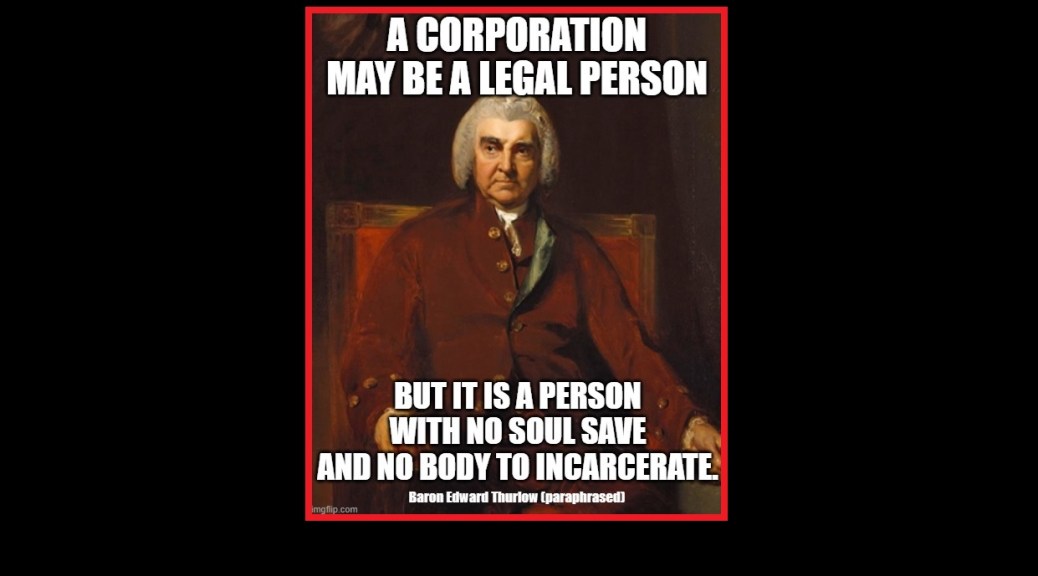
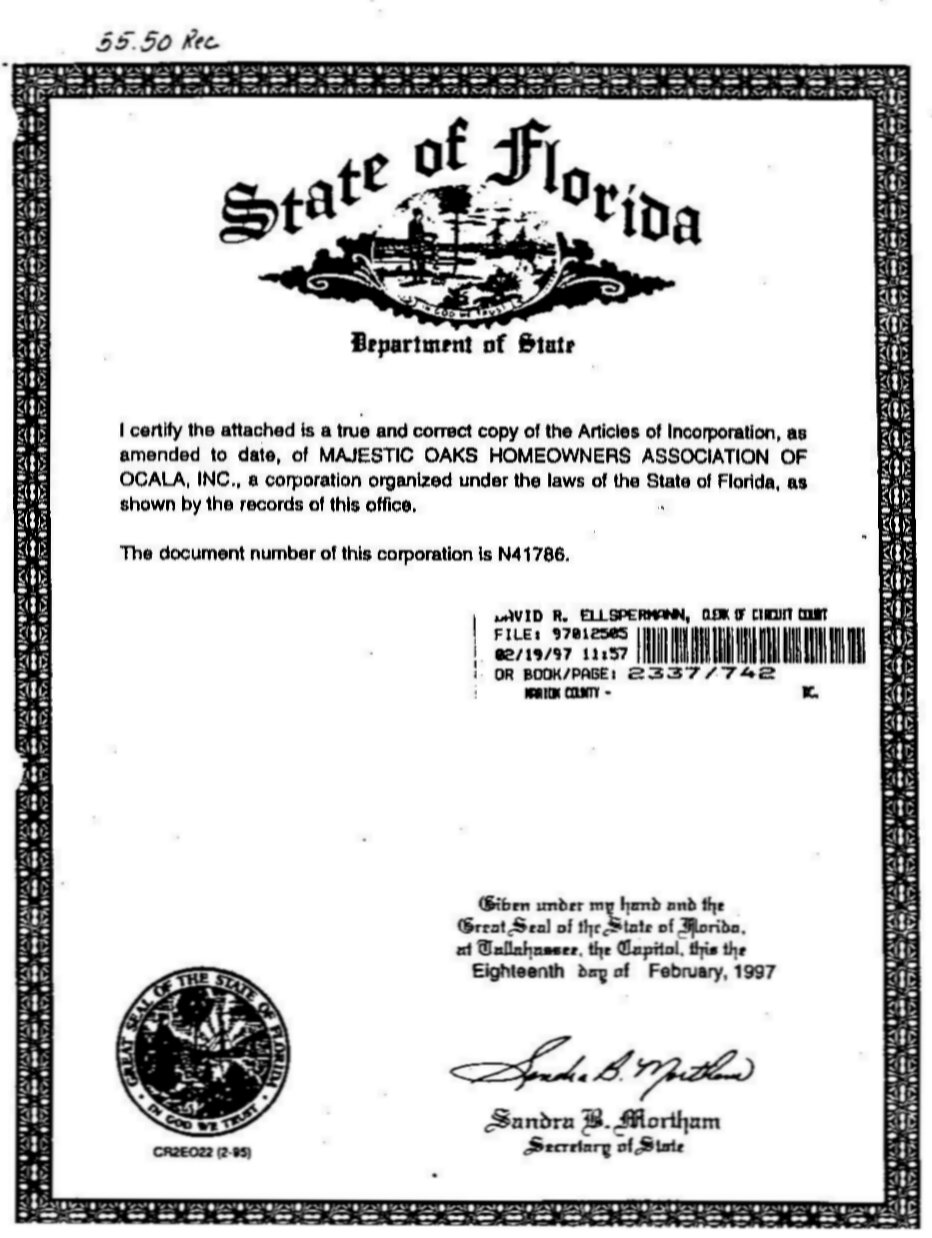

Fight the good fight. Keep the faith. Expose false methods and teaching in all matters, including the preeminent  area of church organization. Make sure you get it right. Is not the Lamb of God worthy of your diligence efforts to keep his body pure and undefiled?

Incorporated Church: A Human Being with No Soul

15

Jerald Finney
Copyright © July 29, 2014

Some define corporation to mean “a human being with no soul;” of course this statement makes an important point even though it is not literally true. A corporation is not a human being, but it is an “artificial person” (a legal fiction) who acts legally, by, for example, entering into contracts, buying and selling property, suing and being sued. And, as an “artificial person” with no soul, the corporation, whether profit or not for profit, will act accordingly. Human beings with souls in a corporation act within an unnatural, soulless, Godless, state-created fiction; because of the contracts created by their act of incorporation, all disputes can be taken to secular courts where only man’s law and rules will be tolerated; do not try to argue God’s law in that environment. The “church” non-profit corporation will be polluted to some degree, greater or lesser, by the immoral, soulless part of the two-headed monster.

“Christian” churches, wiccan churches, planned parenthood, etc. are all under the same non-profit corporation status.

Many secularists understand the nature of incorporation. The statements in a recent article on corporations “Corporations had been viewed as artificial persons for millennia” (click the blue title to go to the article) gives some of the characteristics of incorporation. I urge the interested reader to read that article. The article concerns business corporations; but, although some of what the article says cannot be applied to church incorporation, much of what the article says is applicable to non-profit church corporations. I have explained the intricacies of church incorporation in the Section VI of God Betrayed/Separation of Church and State: The Biblical Principles and the American Application (PDF, Online Version, Ordering Information) and in Separation of Church and State (PDF, Online Version, Ordering Information). Those resources thoroughly analyze church incorporation for the believer who has an open mind, some degree of intellect, and some Bible knowledge and wisdom about the principles of church, state, and separation of church and state—those requirements eliminate most believers and pastors, especially fundamental Baptist pastors.

5Some of the assertions in the article are applicable to non-profit corporations but some are not. The following are applicable to church incorporation (Quotes from the article are in parentheses. The bold material in brackets [] below are my notes, comments, and additions.):

  • Corporations had been viewed as artificial persons for millennia, the debate over whether they should be afforded the same rights as humans had been raging long before the United States created, or the 14th Amendment was adopted. The degree of permissible government interference in corporate affairs was controversial from the earliest days of the nation.”
  • LegalEntityStatus“Corporations as legal entities have always been able to perform commercial activities, similar to a person acting as a sole proprietor, such as entering into a contract or owning property. Therefore corporations have always had a ‘legal personality’ for the purposes of conducting business while shielding individual shareholders from personal liability (i.e., protecting personal assets which were not invested in the corporation).”

16[I cover “limited liability” for church corporation members in the article “Spurious rationale for church incorporation: limited liability/Incorporation increases liability of church members.”].

  • 6Corporate personhood is the legal concept that a corporation may be recognized as an individual in the eyes of the law. This doctrine forms the basis for legal recognition that corporations, as groups of people, may hold and exercise certain rights under the common law and the U.S. Constitution. The doctrine does not grant to corporations all of the rights of citizens.”
  • “As a matter of interpretation of the word ‘person’ in the Fourteenth Amendment, U.S. courts have extended certain constitutional protections to corporations. Opponents of corporate personhood seek to amend the U.S. Constitution to limit these rights to those provided by state law and state constitutions.”

First Amendment to the United States Constitution

[I explain how a church, by incorporating, gives up her First Amendment status and places herself to a large degree under the Fourteenth Amendment in the God Betrayed and Separation of Church and State. Non-incorporated churches (and churches which do not become legal entities in some other manner other than incorporation) are protected by the religion clause of the First Amendment, whereas, of course, the First Amendment religion clause gives no protection to a business. The religion clause is a statement of biblical principles (separation of church and state (the establishment clause) and soul liberty or freedom of conscious (the free exercise clause).]

  • PlannedParenthood_2“The basis for allowing corporations to assert protection under the U.S. Constitution is that they are organizations of people, and the people should not be deprived of their constitutional rights when they act collectively.[5] In this view, treating corporations as “persons” is a convenient legal fiction which allows corporations to sue and to be sued, provides a single entity for easier taxation…, simplifies complex transactions which would otherwise involve, in the case of large corporations, thousands of people, and protects the individual rights of the shareholders as well as the right of association.”

14thAm.[Churches which do not become legal entities, unlike businesses, are protected by the First Amendment religion clause. I explain why First Amendment protection for churches is biblical and much preferable to Fourteenth Amendment protection in God Betrayed/Separation of Church and State: The Biblical Principles and the American Application and in the much more concise book Separation of Church and State/God’s Chruches: Spiritual or Legal Entities. In fact, seeking Fourteenth Amendment protection places a church under Satanic rules and regulations; the creator of the corporation is the state and state incorporation law gives the manner of organization, the officers, etc. that the law of incorporation requires. Therefore, incorporation completely changes the nature of a church. In addition to the books linked to above, some more concise articles on this matter are “Christians Who Call Evil Good and Good Evil,” “Is Separation of Church and State Found in the Constitution” and “Laws Protecting New Testament Church in the United States: Read Them for Yourselves.”]

  • “Generally, corporations are not able to claim constitutional protections which would not otherwise be available to persons acting as a group. For example, the Supreme Court has not recognized a Fifth Amendment right against self-incrimination for a corporation, since the right can be exercised only on an individual basis.”

[A New Testament (First Amendment)  church can claim First Amendment religion clause protection whereas a corporation cannot. Since a New Testament church, unlike a corporation, is a not a legal entity, she cannot sue, be sued, or act legally. Churches which become incorporated begin to act like corporate businesses in may ways.]

  • 9Corporations are NOT people.While it is true that what guides them is the human activity of their executives, boards of directors, managers and employees, all the human emotional factors of the people in the corporation pass through a “filter” created by the two basic rules: (a) Maximize profit (b) Do whatever is necessary to continue the business.”(Rule a should be modified when it conflicts with rule b).”

[In a church corporation, the officers of the corporation operate an entity whose organization, goals, structure, morality, piety, and officers are mandated by state law in direct contradiction to the organization, goals, structure, morality, piety, and officers given by God’s Holy Bible in the New Testament.]

  • 7“It is a slippery road to give personal rights to corporations. The corporation is an amoral entity, i.e., not governed by human moral values. It lacks guilt for what it does, or empathy for those it harms. What’s worse, this “sociopathic” entity is given the rights of a human being, but not similar responsibilities. A corporation is particularly dangerous because of its great concentration of money, power, and political influence–which it uses freely to reach its goals.”

8[These realities are clearly seen in the Catholic “church” (not incorporated), and also in incorporated Fundamental Baptist Churches. A prime example of the latter is First Baptist Church of Hammond, Indiana. See the article “Jack Schaap, First Baptist of Hammond, Heresy and Apostasy.” One can also do a google search to see the reactions of the church lawyer (David Gibbs) and the church members of First Baptist of Hammond for more confirmation. This scenario has played out on a smaller scale in many other Fundamental Baptist Churches, including the offspring, followers, and worshipers of First Baptist of Hammond and her pastors.]

13Other parts of the article (the parts dealing with rights of corporations to make political expenditures under the First Amendment free speech clause, the role corporate money plays and should play in democratic politics, the dangers of giving too much power to corporations to allow corporations to participate directly on political campaigns as a threat to democracy) apply to some degree to church corporations. All one has to do is look at the operations of, for example, the average “fundamental church and her pastor, the average seminary or Bible college and what they teach, and the words and activities of the lawyers involved with those institutions to see the application of those matters. That is all the author will say about that in this brief article.

Fundamental Baptist tradition perceives the truth to be that churches are to incorporate and get 28 U.S.C. Section 501(c)(3) status. At the same time, that tradition preaches that the Bible is to be the sole source of truth. The reality is that the biblical doctrines of church, state, and separation of church and state disprove the first mentioned Baptist tradition. But after all, it is the perception of the truth, not the truth, that matters.