Jerald Finney was the lead counsel for the Biblical Law Center ("BLC") from May, 2005 until 2011. The BLC helps churches who desire to organize according to New Testament principles. In 2016, he again worked with the BLC and still does, but he now heads up the Churches under Christ Ministry which is under the authority of Charity Baptist Tabernacle of Amarillo TX. Finney is a licensed attorney who can be reached at 512-785-8445 jerald.finney@sbcglobal.net. Over the last few years he has lectured and preached on the issues concerning government, church, and separation of church and state.
God called Finney, a Christian and fundamental Baptist since his salvation, to enter the University of Texas School of Law in 1990 at the age of 43 to stand in the gap concerning legal issues facing Christians. Since being saved, he has been a faithful and active member of a local fundamental, Bible-believing Baptist church. He received his JD degree in 1993 and has followed the Lord in the practice of law since that time.
Finney received his law license in November 1993 and began practicing law in January, 1994. All along he was seeking the Lord’s direction. The Lord initially led Finney to practice criminal law. He knew that not many, if any, of the Christian law firms dealt with or specialized in criminal law, and that some Christians were being charged with crimes for their Christian behavior and for taking a stand for God’s principles.
The Lord confirmed Finney's choice. Very soon after he started practicing, he helped an Eastern Orthodox priest with a criminal charge. He was charged under a criminal statute for trying to expose the promotion of sodomy and other sins within a Catholic Church. God gave the victory in that case. Then Steve, a Christian who counseled outside abortion clinics, called Finney. He was charged with a crime under the Austin, Texas Sign Ordinance for his activities outside an abortion clinic. Being a new lawyer, Finney called the Rutherford Institute. They asked him to send them a summary of the facts and a copy of the Sign Ordinance. Then they told him that the case could not be won and that they would not help. Steve lost at trial, but God gave the victory on appeal. The Austin Police Department immediately cited Steve for violation of the state sign ordinance. The Lord gave the victory at trial.
Finney's first felony trial came about a year and six months after he started practicing law. A single Christian mother was charged with third degree felony injury to a child for spanking her six year old son. She left some prominent stripes across his rear end and also a stripe across his face when he turned suddenly during the spanking. The Lord gave the victory at trial. At the same time, Finney was also representing another Christian married lady who was charged with the same crime for spanking her little girl with a switch. On the date the trial in that case was to begin, the prosecutor, with prompting by the judge, lowered the offer to deferred adjudication probation of short duration on a misdemeanor charge with very few conditions on the probation. In a deferred adjudication in Texas, there is never a judgment of guilt if the probationer successfully completes the term of the probation, (and, with successful completion of the probation, the probationer can now file a Motion for Nondisclosure which, if granted, requires the file to be sealed so that the general public has no access to it). The mother decided to take the offer.
The Lord has also allowed Finney to help Christian parents in numerous situations involving Child Protective Services (“CPS”) infringement into parental rights. God has given the victory in all those situations.
The Lord has also used Finney to intervene in numerous situations where government officials or private companies tried to deny certain Christians their rights to do door-to-door evangelization, preach on the street, hand out gospel literature in the public forum, and pass out gospel tracts and communicate the gospel at their place of employment.
Finney has also fought other legal spiritual battles including a criminal case in San Antonio. A peaceful pro-life advocate was arrested and charged with criminal trespass for handing pro-life literature giving information about the development of the unborn baby, places to go for help, and other information to women entering an abortion clinic. All the above-mentioned cases as well as others not mentioned were handled free of charge (except the last spanking case for which Finney received $750).
In 2005 Finney became lead counsel for the Biblical Law Center.
Since his early Christian life, he has considered the issue of separation of church and state as taught in the Bible to be one of the primary issues facing New Testament churches today. He believes, based upon what the Bible teaches, that operating as a corporation (sole or aggregate), unincorporated association, or any other type of legal entity and/or getting a tax exempt status from the federal government at the very least puts the church under the headship of both the Lord and the state, and may even take the church from under the headship of Christ and put the church under the headship of the state. He believes that taking scriptures out of context and applying human reasoning contrary to biblical teaching (such as “Obey every ordinance of man,” or “We should be good stewards and incorporation is good stewardship”) in order to justify unbiblical marriage with the state causes our Lord much grief.
Once he took on the position as counsel for the BLC, it was necessary to do an in-depth study of the issue of separation of church and state. He began with the Bible. He initially read through the Bible at least five times (and many more times since then) primarily seeking the answer to the question, “Does the Bible have anything to say about this issue?” He was amazed at what He learned. The Bible gives God’s principles concerning separation of church and state, the purpose of a church, the purpose of the civil government, the headship of church, the headship of civil government, the principles by which each is to be guided, and much more concerning these two God ordained institutions. He continued to read the Bible daily seeking insights into these and other issues.
He also began to read other books. he had already read starting shortly after being saved, books and other information by Christian authors. For example, he had read, among other works, A Christian Manifesto[1], The Light and the Glory,[2] From Sea to Shining Sea,[3] The Myth of Separation and some other works by David Barton, [4]Rewriting America’s History,[5] and America’s God and Country.[6] These resources inspired, influenced and guided him and millions of other Christians, gave them philosophical and historical underpinning, and led them into battlefields such as politics, law, and education armed with what they learned from those resources.
Sometime in 2006 he began to realize that some of the books by Christian authors which he had come to depend upon were misleading, at the very least. Other books revealed to him that some of the above mentioned books had misinformed and misled sincere Christians by revising and/or misrepresenting the true history of separation of church and state in America. In 2006, he read One Nation Under Law[7] which cites a wealth of resources for one seeking to understand the history of separation of church and state in the United States and of the First Amendment to the United States Constitution.[8] Reading One Nation Under Law, some of the books it cited, and some other books was a launching pad into the universe of historical information which he never dreamed existed. He had expected to be misled in the secular law school he attended. He was amazed that he had been misled by Christian brothers. I asked myself, “How could Peter Marshall and others have missed this vital information?” At an Unregistered Baptist Fellowship conference in Indianapolis, Indiana, James R. Beller, a Baptist historian, gave a PowerPoint presentation which gave him the answer to this question. Finney bought two of Beller's books and read them. Those books filled in the details not mentioned in Pastor Beller’s concise PowerPoint presentation.
Since that time, God has led Finney into an in depth study of the issues of government, church, and separation of church and state. God Betrayed/Separation of Church and State: The Biblical Principles and the American Application and the other books he has written and listed on this website were written as a result of those studies. God Betrayed is not a rehash of the same information that has been circulated in the Fundamental Baptist and Christian community through sermons, books, seminars, etc. since at least 1982, the year Finney was saved. God Betrayed and Finney's other books reveal facts and information that must be understood in order for a pastor and other Christians to begin to successfully (in God's eyes) fight the spiritual warfare we are engaged in according to knowledge.
Finney believes that the lack of attention to the biblical doctrines concerning government, church (which is likened to the wife and bride of Christ), and separation of church and state, has had dire consequences for individuals, families, churches, and America. Unless pastors educate themselves on these doctrines and their application in America, the rapid downhill slide will continue at an accelerating pace.
[1] Francis A. Schaeffer, A Christian Manifesto, (Westchester, Illinois: Crossway Books, 1981).
[2] Peter Marshall and David Manuel, The Light and the Glory, (Old Tappan, New Jersey: Fleming H. Revell Company, 1977).
[3] Peter Marshall and David Manuel, From Sea to Shining Sea (Old Tappan, New Jersey: Fleming H. Revell Company, 1986).
[4] David Barton, The Myth of Separation, What is the Correct relationship between Church and State? (Aledo, Texas: Wallbuilder Press, 1992).
[5] Catherine Millard, Rewriting America’s History (Camp Hill, Pennsylvania: Horizon House Publishers, 1991).
[6] William J. Federer, America’s God and Country, Encyclopedia of Quotations (Coppell, Texas: FAME Publishing, Inc., 1994).
[7] Mark Douglas McGarvie, One Nation Under Law: America’s Early National Struggles to Separate Church and State (DeKalb, Illinois: Northern Illinois University Press, 2005).
[8] The First Amendment to the United States Constitution states: “Congress shall make no law respecting an establishment of religion, or prohibiting the free exercise thereof; or abridging the freedom of speech, or of the press; or the right of the people peaceably to assemble, and to petition the Government for a redress of grievances.” The religion clause, properly interpreted, as is shown in God Betrayed, is a correct application of the biblical principle of separation of church and state.
The WordPress.com stats helper monkeys prepared a 2013 annual report for this blog.
Here’s an excerpt:
The concert hall at the Sydney Opera House holds 2,700 people. This blog was viewed about 16,000 times in 2013. If it were a concert at Sydney Opera House, it would take about 6 sold-out performances for that many people to see it.
Is Separation of Church and State found in the Constitution? Knowing the correct answer to that question is vital in the success of the spiritual warfare of the Christian political activist in America. Does the First Amendment to the United States Constitution establish a wall which is to keep church out of state and state out of church; or does it set up a one way wall: that is, does it forbid state to stay out of church matters, but allow church to enter into state matters? If the latter, since “churches” vary in belief so dramatically, which church is to control in the affairs of state? Most Christians assert that the phrase “One nation under God” on our currency and in our Pledge of Allegiance make clear that the Constitution forbids separation of church and state. They state that the phrase “separation of church and state” is not found in the Constitution; that the Constitution through the First Amendment does not separate church and state. Are they correct in their understanding? [For a thorough analysis of the source of the misunderstandings-revisionist history-set alongside the easily verifiable history with complete citations, see information page on The Trail of Blood of the Martyrs of Jesus by clicking here.]
I begin with an actual encounter with a “Christian” political activist over this matter of the meaning of separation of church and state. Then I:
1) briefly explain my position with reference particularly to the beliefs of Thomas Jefferson and James Madison (with links to more extensive and in depth studies);
2) briefly reveal those who are promoting the incorrect version of “separation of church and state” to conservative Americans (and more specifically to “Christians”) today and their motives;
3) briefly answer the question of whether the Constitution or any other governing document requires the federal government to be guided by God and His principles and explain how a nation can proceed under God without combining church and state;
4) briefly address biblical teaching on the downfall of a nation;
5) conclude.
In 2008, I started a seminar in El Paso, Texas with the diagram at left. A activist Christian lady immediately raised her hand and pointed out that the diagram separated church and state and that she did not agree with this. I had anticipated this question because I had struggled with the issue of separation of church and state for many years. Some years before this seminar I had begun to read in books and articles and to hear on Christian radio and from other Christians that “separation of church and state is not found in the Constitution.” I repeated that sound bite many times myself, but I was always perplexed as to where to go from the simple statement. I had read that the Supreme Court totally misinterpreted Jefferson’s Danbury Letter to mean that the First Amendment created a wall between church and state that was never intended. I had also read that the original intent of the religion clause of the First Amendment was to keep the state out of church affairs but not to keep the church out of state affairs; that the wall only functioned one way. Was this true? I found the answers to these questions after years of historical and legal studies.
This sign gets it wrong: we want Separation of Church and State not Separation of God and State
I answered the lady’s concerns by stating that I believed that she and I were on the same page; that I believe that most of our founding fathers never intended to separate God and state, but that they did indeed intend to separate church and state. I mentioned that the writings of James Madison, Thomas Jefferson, and most of our Founding Fathers showed that they understood this. They knew that church-state unions have always, without exception, resulted in the corruption of both church and state as well as individual citizens, horrible persecutions (imprisonments, murder and torture) of those who did not bow down to the established “church” and its theology, and many other undesirable consequences. The history of the First Amendment proves this (See the “History of the First Amendment” which is available online in the PDF of God Betrayed Section IVand in Online form). Madison and Jefferson were eyewitnesses to the persecutions of dissenting Baptists in Virginia and they understood the history of the persecutions of all those who exercised their God-given freedom to choose a theology contrary to that of the church-state unions, the establishment. They were aware that all church-state unions, beginning with the marriage of church and state in the early fourth century, continuing throughout the dark and middle ages, the reformation, and in the American colonies up until the time they lived resulted in horrible persecutions of those who would not bow down to the established beliefs.
Jefferson’s writings make clear his position on separation of church and state. For example, in 1779 he wrote the Virginia Act for Religious Liberty which was passed in 1786. The act included three factors: church, state, and the individual. It protected the individual from loss at the hands of state incursion into his church affiliation, and implicitly banned church establishment. See En1 to read the entire act and another quote from Jefferson. Jefferson never swerved from his devotion to the complete independence of church and state (See also pp. 264-283 of God Betrayed to read more about Jefferson’s position. Click here to go directly to PDF of God Betrayed.).
Madison also fought for separation of church and state in Virginia. He wrote, in his famous “Memorial and Remonstrance:”
“… Because experience witnesses that ecclesiastical establishments, instead of maintaining the purity and efficacy of religion, have had a contrary operation. During almost fifteen centuries has the legal establishment of Christianity been on trial. What have been its fruits? More or less in all places, pride and indolence in the clergy; ignorance and servility in the laity; in both, superstition, bigotry, and persecution. Inquire of the teachers of Christianity for the ages in which it appeared in its greatest luster; those of every sect point to the ages prior to its incorporation with civil policy. Propose a restoration of this primitive state, in which its teachers depended on the voluntary rewards of their flocks, many of them predict its downfall….
“Because the establishment in question is not necessary for the support of civil government…. If religion be not within the cognizance of civil government, how can its legal establishment be said to be necessary for civil government? What influences, in fact, have ecclesiastical establishments had on civil society? In some instances, they have been seen to erect a spiritual tyranny on the ruins of the civil authority; in more instances, have they been seen upholding the thrones of political tyranny; in no instance have they been seen the guardians of the liberties of the people. Rulers who wished to subvert the publick liberty, may have found on established clergy convenient auxiliaries. A just government instituted to secure and perpetuate it needs them not. Such a government will be best supported by protecting every citizen in the enjoyment of his religion, with the same equal hand which protects his person and property; by neither invading the equal hand which protects his person and property; by neither invading the equal rights of any sect, nor suffering any sect to invade those of another….”
George Carlin is wiser concerning church/state separation than most Christians. Caveat: He knows nothing about true churches under Christ, since heretical, apostate, and unlearned churches and believers predominate the landscape.
Thus, when the First Amendment was introduced and promoted by James Madison, the only question was the exact wording of the Amendment. The representatives at the Constitutional Convention understood that the purpose of the religion clause was (1) to place a two way wall between church and state (This purpose is stated in the establishment clause: “Congress shall make no law respecting an establishment of religion.”) and (2) to provide for freedom of conscious, also known as free will or soul liberty (This purpose is stated in the free exercise clause: “or prohibiting the free exercise thereof.”). These two purposes go hand in hand. The historical established churches, beginning with the spiritual harlot called the Catholic “church” and then her offspring-Protestant “churches”- violently persecuted (hung, burnt at the stake, drowned, buried alive, imprisoned, tortured with unspeakable horror) those who exercised their God-given free will in contradiction to the doctrines of the church-state establishment and were labeled “heretics” by the established church.
At the seminar, I explained my position in more detail and showed that the same theology that justified union of church and state was initially developed and expanded upon from earlier sources by Augustine, practiced by the Catholic church, and later by Protestant churches (in modified form). Proponents of those same theologies remain at work to achieve the impossible goals of their adherents (peace and unity throughout the earth) in America today. In fact, many adherents of those theologies are very active in, and are leaders in, the contemporary American political warfare. Many believe that they will set up the kingdom of heaven on earth, the millennium, either through the efforts of the church or through a church-state combination and without the intervention our Lord Jesus Christ. Others believe that there is no millennium, and that a worldwide church-state combination will bring peace and unity to the earth. Others, such as myself, are totally convinced that the Bible teaches that Christ Himself will return at Armageddon and set up and reign over the earth for a thousand years by power. See En2 for various explanations of millennialism.
Along with the question of whether First Amendment separates church and state, another question that needs to be addressed is whether the Constitution or any other governing document requires the federal government to be guided by God and His principles? The Founding Fathers while implementing the biblical principle of separation of church and state in the First Amendment did not understand that a nation should, within her organic governing documents, recognize that the God of the Bible, the only God, that He should be honored and hailed as the ruler of nations, and that His principles should be recognized and applied within the laws of the nation and in the interpretation of those laws.
A nation can proceed under God without combining church and state. How? The constitution of such a nation will:
1) name the name of Jesus as the Supreme ruler;
2) make clear that the nation will look to the biblical doctrines of government, church, and separation of church and state in ordering and carrying out its responsibilities under God;
3) lay out its God-given jurisdiction as explained in the Bible;
The First Amendment to the U.S. Constitution
4) separate church and state. The First Amendment implements the biblical principle of separation of church and state.
5) provide for religious liberty (also called soul liberty or freedom of conscience). The First Amendment does this.
6) guarantee freedom of speech, press, assembly and the right to petition the government for a redress of grievances. The First Amendment does this.
See En3 for information on an historical example of governing documents which proved that this can be done.
The Constitution allows, but does not require, Americans to recognize the God of the Universe, the God of creation, almighty God, and to operate according to His principles and to pray in the name of Jesus even at government functions. This is obvious from a study of history including the multitude of statements made by Presidents, senators, representatives, government officials at all levels of government; and from a reading and study of state constitutions, laws, and federal and state legal cases.
History also shows that almost everyone in America at the time of the adoption of the Constitution reverenced the Bible and the God of the Bible and that prayers were made to Him at official government functions. Of course, the United States Supreme Court has removed the recognition of God (and especially the Lord Jesus Christ) from practically all civil government affairs. See for an explanation of how the Supreme Court has done this: The Supreme Court Reinterprets the First Amendment and Removes God or Section V of God Betrayed.
However, sad to say, neither the Constitution nor any other federal governing document names the name of Jesus and requires that the United States government be guided by God and His principles (being guided by God and His principles is something entirely different from establishing a church). If you disagree, show me one Constitutional provision or federal law which either requires recognition of God (and specifically the Lord Jesus Christ) and/or His principles as laid out in His Word. I submit that there is none.
Unlearned Christians (this author was once in their fold) argue that the implementation of certain biblical principles in the Constitution prove that the Constitution is a “Christian” document. However, they fail to point out the enlightenment principles which pollute the Constitution. I deal more in depth with these matters in God Betrayed.
Unstudied Christians argue, as this author once did, that the Declaration of Independence did recognize God and that Americans march behind the banner of the Declaration. However, the Declaration was written over a decade before the adoption of the Constitution and the First Amendment, and the Declaration is not law despite the rhetoric which says, “We proceed under the banner of the Declaration of Independence.” This author contends that even the Declaration is flawed when biblically analyzed. Even if the contention that it is not flawed were correct, the Declaration is not controlling law and an examination of the Declaration and the Constitution leaves open the obvious contention that Americans had changed between the time of the writing of the Declaration and the adoption of the Constitution.
The Bible teaches that a Gentile nation, as well as the nation Israel, that rejects the one true God, the God of the Bible, and His principles will become more and more morally bankrupt, will digress to political tyranny, and ultimately be judged by God. The United States is a moral cesspool and is well into the political tyranny stage. You may go to the following audio teaching for a thorough examination of Scripture on this matter: “The Biblical Doctrine of Government.” That teaching is also available in detailed form in Section I God Betrayed in PDF form or which can be ordered by going to Order Information for Books by Jerald Finney. A thorough analysis is impossible in a short article such as this, but here are a few verses from the Old Testament which substantiate this conclusion:
“The LORD is high above all nations, and his glory above the heavens” Psm. 133:4.
“Let all the earth fear the LORD: let all the inhabitants of the world stand in awe of him…. “Blessed is the nation whose God is the LORD; and the people whom he hath chosen for his own inheritance…. There is no king saved by the multitude of an host: a mighty man is not delivered by much strength.” (Psm. 33.8, 12, 16; see the whole chapter of Psm. 33). [Bold emphasis mine]
“Why do the heathen rage, and the people imagine a vain thing? The kings of the earth set themselves, and the rulers take counsel together, against the LORD, and against his anointed, saying, Let us break their bands asunder and case their cords from us. He that sitteth in the heavens shall laugh: the LORD shall have them in derision. Then shall he speak unto them in his wrath, and vex them in his sore displeasure.…. Thou [Jesus] shalt break them with a rod of iron; thou shalt dash them in pieces like a potter’s vessel. Be wise now therefore, O ye kings: be instructed, ye judges of the earth. Serve the LORD with fear, and rejoice with trembling. Kiss the Son, lest he be angry, and ye perish from the way, when his wrath is kindled but a little. Blessed are all they that put their trust in him.” Psm. 2:1-5, 9-12 (The 2nd Psalm gives the order of the establishment of the kingdom.).
The Old Testament details God’s principles for nations, both Jew and Gentile, and lays out the complete history and fate of nations from beginning to end. God ordained civil government, and the fact that God desires nations to submit to Him and His principles is undeniable. That no nation ever has or ever will do so before He returns and establishes His Kingdom on earth is clear from a literal interpretation of scripture.
In spite of the flaws in the Constitution, America, to a great extent, originally honored God. Of course, the First Amendment was not a flaw; the religion clause was a statement of the biblical principle of separation of church and state. With the passing of time, the flaws in the document have made it easier for the natural progression of moral awfulness and political tyranny. This author, like most politically active “Christians” worked-not according to knowledge, understanding and wisdom-to “bring America back under God.” As a result of those efforts in the Republican Party (1982-beginning of the twenty-first century), I saw that America continued to grow worse in every way and at an accelerated pace in spite of our efforts. By 2002, I realized that America had become a grossly immoral nation. America is now a tyrannical and morally awful nation much worse than it was in 2002.
In 2005 God focused my efforts on His doctrine of the church, which is where they should have been in the first place. If Christians cannot get the doctrine of the church right in understanding and practice, how in the world do they think they can get civil government right? Even though many “believers” still seek to honor God in the political arena, they are not proceeding according to knowledge, wisdom, and understanding in either their government or their church efforts. God makes clear that when His people do not act according to knowledge (among other things), they will fall (See, e.g., 2 Pe. 1.2-10; Ho. 4).
For more in depth studies of the First Amendment, one can go to the following resources:
En1. Jefferson wrote: “Is uniformity attainable? Millions of innocent men, women, and children, since the introduction of Christianity, have been burnt, tortured, fined, imprisoned; yet we have not advanced one inch towards uniformity. What has been the effect of coercion? To make one half the world fools, and the other half hypocrites. To support roguery and error all over the earth.” Jefferson understood that establishment of a church (a church working with, over, or under civil government) always brings the worst of persecution of those who do not bow down to the church-state or state-church union.”
Virginia Bill for Religious Liberty drafted by Thomas Jefferson in 1779 and enacted in 1786.
The Virginia Bill for Religious Liberty written by Jefferson and passed in 1786 stated:
“I. Well aware that Almighty God hath created the mind free; that all attempts to influence it by temporal punishments or burthens or by civil incapacitations, tend only to beget habits of hypocrisy and meanness, and are a departure from the Holy Author of our religion, who being Lord of both body and mind, yet chose not to propagate it by coercions on either, as was in his Almighty power to do;
that the impious presumption of legislators and rulers, civil as well as ecclesiastical, who, being themselves but fallible and uninspired men, have assumed dominion over the faith of others, setting up their own opinions and modes of thinking as the only true and infallible, and as such, endeavoring to impose them on others hath established and maintained false religions over the greatest part of the world and through all time;
that to compel a man to furnish contributions of money for the propagation of opinions which he disbelieves, is sinful and tyrannical; that even the forcing him to support this or that teacher of his own religious persuasion is depriving him of the comfortable liberty of giving his contributions to the particular pastor whose morals he would make his pattern, and whose powers he feels most persuasive to righteousness, … that our civil rights have no dependence on our religious opinions any more than [on] our opinions in physics or geometry;
that therefore the proscribing any citizen as unworthy the public confidence by laying upon him an incapacity of being called to offices of trust and emolument, unless he profess or renounce this or that religious opinion is depriving him injuriously of those privileges and advantages to which in common with his fellow citizens he has a natural right; …
that to suffer the civil magistrate to intrude his powers into the field of opinion and to restrain the profession or propagation of principles, on supposition of their ill tendency, is a dangerous fallacy, which at once destroys all religious liberty, because he being of course judge of that tendency, will make his opinions the rule of judgment, and approve or condemn the sentiments of others only as they shall square with, or differ from his own;
that it is time enough for the rightful purposes of civil government for its officers to interfere when principles break out into overt [open, or public] acts against peace and good order;
and, finally, that truth is great and will prevail if left to herself, that she is proper and sufficient antagonist to error and has nothing to fear from the conflict, unless by human interposition disarmed of her natural weapons, free argument and debate, errors [cease] to be dangerous when it is permitted freely to contradict them.
“II. Be it enacted by the General Assembly that no man shall be compelled to frequent or support any religious worship, place, or ministry whatsoever, nor shall be enforced, restrained, molested, or burdened in his body or goods, nor shall otherwise suffer on account of his religious opinions or belief; but that all men shall be free to profess, and by argument to maintain, their opinion in matters of religion, and that the same shall in no wise diminish, enlarge, or affect their civil capacities.
“III. And though we well know that this assembly, elected by the people for the ordinary purposes of legislation only, have no power to restrain the acts of succeeding assemblies, constituted with powers equal to her own, and that therefore to declare this act irrevocable would be of no effect in law, yet, as we are free to declare, and do declare, that the rights hereby asserted are of the natural right of mankind, and that if any act shall hereafter be passed to repeal the present or to narrow its operation, such act will be an infringement of natural rights.”
En2. The word millennium means “1000 years” and comes from Re. 20. 4-6 where it says that certain people “came to life, and reigned with Christ a thousand years. There are three major views on the time and nature of the millennium.
Amillennialism takes the position that this is a period during which Satan’s influence has been greatly reduced so that the gospel can be preached throughout the world. Christ does not bodily reign during this period, and there is no future millennium yet to come. Amillennialists believe that the term “thousand years” is a figure of speech for a long period of time in which God’s will will be accomplished. Christ will return at the end of this period, believers and unbelievers will be resurrected, unbelievers will be eternally condemned and believers reunited with their spirits, judged, and will enjoy heaven forever.
According to postmillennialism, Christ will return after the millennium. The church and state, operating during the period in which we now live, will establish peace and righteousness and a millennial age will occur when this occurs. At the end of that thousand years, Christ will return to earth, believers and unbelievers will be raised, the final judgment will occur, a new heaven and a new earth will be established, and we will enter into the eternal state.
Premillennialism teaches that Christ will return before the millennium, believers who have died will be raised from the dead, their bodies reunited with their spirits, will reign with Christ 1000 years. During this 1000 years, Satan will be bound. At the end of that period, he will be loosed and will lead the unbelievers of the millennium in rebellion against Christ. Satan and his followers will be defeated, Christ will raise the dead and they will be judged. Those whose names are not found written in the book of life will be cast, as was Satan, into the lake of fire. At the final judgment, believers will enter into the eternal state.
There are two main premillennial positions. Classic premillennialism says Christ will return after the great tribulation, rapture believers, and that believes will reign with Christ on earth for 1000 years. Pretribulational premillennialism teaches that Christ will return part way to earth before the tribulation, call believers to Himself, , and return to heaven with those believers. This will be followed by a seven year period of great tribulation. At the end of that time, Christ will return, crush all the Gentile armies which have come against Israel, and set up His millennial reign. See, e.g., Wayne Gruden, Systematic Theology (Grand Rapids, Michigan: Zondervan, 2000), pp. 1109-1113.
En3. The first government in history with complete religious freedom was the government of the colony or Rhode Island (See the online version, “The Baptists in Rhode Island” or go to Section IV, Chapter 6 of God Betrayed available in PDF form – for ordering information go to the following link: Order information for Books by Jerald Finney.).
The first government in history that was to have complete freedom of conscience and religious liberty also declared that the government was to be under the Lord Jesus Christ. Signed on March 7, 1638, the Portsmouth Compact read:
“We whose names are underwritten do swear solemnly, in the presence of Jehovah, to incorporate ourselves into a body politic, and as he shall help us, will submit our persons, lives and estates, unto our Lord Jesus Christ, the King of kings, and Lord of lords, and to all those most perfect and absolute laws of his, given us in his holy word of truth, to be guided and judged thereby.” 38 [19 signatures followed: Thomas Savage, William Dyre, William Freeborne, Philip Sherman, John Walker, Richard Carder, William Baulstone, Edward Hutchinson, Sen., Henry Bull, Randal Holden, William Coddington, John Clarke, William Hutchinson, John Coggshall, William Aspinwall, Samuel Wilbore, John Porter, Edward Hutchinson, Jun., and John Sanford.].
Three passages were marked in support of the compact: Exodus 24.3, 4; II Chronicles
2.3; and II Kings 11.17.
In August of 1638, the people of Providence approved the first public document establishing government without interference in religious matters, the Providence Compact:
“We whose names are here underwritten being desirous to inhabit in the town of Providence, do promise to submit ourselves in active or passive obedience to all such orders or agreement as shall be made for public good to the body in an orderly way, by the major consent of the present inhabitants, masters of families, incorporated together into a township, and such others whom they shall admit into the same, only in civil things.” [Signed by Stukely Westcoat, William Arnold, Thomas James, Robert Cole, John Greene, John Throckmorton, William Harris, William Carpenter, Thomas Olney, Francis Weston, Richard Watearman, and Ezekiel Holliman.]
As James R. Beller proclaims, the document was “the first of a series of American political documents promulgating government by the consent of the governed and liberty of conscience” (James R. Beller, America in Crimson Red: The Baptist History of America (Arnold, Missouri: Prairie Fire Press, 2004), p. 13). Thus, liberty of conscience was the basis for legislation in Rhode Island, and its annals have remained to this day [when Underhill wrote this] unsullied by the blot of persecution. (Roger Williams and Edward Bean Underhill, The Bloudy Tenent of Persecution for Cause of Conscience Discussed and Mr. Cotton’s Letter Examined and Answered. (London: Printed for the Society, by J. Haddon,Castle Street, Finsbury, 1848 (Reprint)), p. xxviii).
Click Image To Go To Teachings On Spiritual Warfare
Where do the judicial system and its lawyers and judges go to seek wisdom? To the Bible or to the movies? “Judges, of course, strive to be perceived as wise, so what better way to add a little Jedi wisdom to an opinion than by invoking Yoda, the Jedi Master himself?” (“A Long Time Ago, in a Courtroom Far, Far Away: There’s no denying that the Force is all around us,” 77 Texas Bar Journal, February, 2014). Do not mention the Lord Jesus Christ or his book as authority in litigation because to do so will violate the satanic version of “separation of church and state,” but it is very appropriate to “look at how George Lucas’s ‘galaxy far, far away’ openly provides insights for judges and lawyers in the resolution of cases.” In myriad ways “pop culture, in the form of Star Wars, has seeped into our legal culture. Do a quick Westlaw search for ‘Star Wars’ and you’ll find everthing from references to strategies that the ill-fated energy giant Enron code-named as ‘JEDI’ AND ‘Death Star’ to a county prosecutor in Michigan named Luke Skywalker.” (Id.). Click the following links to go to relevant articles from the Texas Bar Journal:
Most of the lawyers, judges, and other personnel within the system are nice, good, decent, hardworking people when viewed from a secular perspective. However, the system is now, like the rest of society, proceeding according to the principles of the god of this world. The above two law review articles make clear that this is true, and the state of the legal system corresponds to condition of individuals, families, churches, civil governments including the state and federal governments of the United States, and the world. The Bible tells us what has happened, is happening, and will happen.
Of course one expects the world to go the way of the devil; but tragically, very few members of fundamental Baptist churches (including pastors), much less members of other so-called “churches,” are equipped for the spiritual warfare God has called believers to fight. Few can explain biblical teaching concerning the God-given motivation and goal of a believer; the doctrines, practices, and order of a New Testament church; the doctrine of government; the doctrine of separation of church and state; what the Bible teaches about repentance and salvation (not what they learned from a workbook on “soul-winning”); spiritual warfare; history; the relationship between church and state; the distinctions between God’s dealings with Israel and God’s dealings with Gentile nations, etc. Few have as much as a rudimentary understanding of the origin, goals, and dangers of Hollywood, movies, Disney, country music, rock and roll music, contemporary “Christian” music, the sports industry, etc. As a result, most churches and church members have succumbed to the doctrines and practices of the world.
The desertion from church by young people after they become so-called adults is a prime example of the results of this unlearned, unwise church membership. As children, parents never understood biblical doctrines (never knew that biblical doctrines even existed). Thus, they never understood the evils of, for example, rock and roll music; country music; contemporary “Christian” music;” drinking; watching movies; television; getting caught up in following sports; making heroes of sports stars; dancing, and much more. They were never taught by their parents, the ones to whom God gave the responsibility. “Christian” parents, being spiritually ignorant and maybe even lost, depend upon unbiblical “youth programs,” “Christian” schools, and Sunday schools to ground their children in the faith. And of course church youth programs and Sunday schools do not do that delegated job. Instead, these church “ministries” have done much more harm than good, especially when viewed in light of the metamorphosis of those programs to their present condition and effect.
The great majority of youth who are brought up in “church” leave the church for the world when they grow up. They become doctors, lawyers, janitors, plumbers, carpenters, authors, etc. who believe and practice the principles of the god of this world. They are marching in step with unlearned, unwise members of the “churches” that remain to implement Satan’s agenda which includes a one world government working with a one world church, a new world order.
The solution available for any person is (1) repent and trust Christ for eternal salvation; (2) get into a biblically ordered church where the pastor and members believe and preach the whole word of God; (3) remain faithful to that church in fellowship and attendance; (3) begin an intense study of the Bible; (4) follow God as he leads; (5) remember:
“God is our refuge and strength, a very present help in trouble. Therefore will not we fear, though the earth be removed, and though the mountains be carried into the midst of the sea; Though the waters thereof roar and be troubled, though the mountains shake with the swelling thereof. Selah. There is a river, the streams whereof shall make glad the city of God, the holy place of the tabernacles of the most High. God is in the midst of her; she shall not be moved: God shall help her, and that right early. The heathen raged, the kingdoms were moved: he uttered his voice, the earth melted. The LORD of hosts is with us; the God of Jacob is our refuge. Selah. Come, behold the works of the LORD, what desolations he hath made in the earth. He maketh wars to cease unto the end of the earth; he breaketh the bow, and cutteth the spear in sunder; he burneth the chariot in the fire. Be still, and know that I am God: I will be exalted among the heathen, I will be exalted in the earth. The LORD of hosts is with us; the God of Jacob is our refuge. Selah.” (Psalms 46:1-11).
Relevant Facts And Relevant Laws, From Highest To Lowest,
concerning Northfield, Minnesota cop’s attack on Street Preachers who were acting in conformity with (1) God’s instructions while behaving according to the grace of God (thereby doing good to and benefitting their neighbors) and (2) the law of man.
As to speech in the public forum the job of peace officers is not to shut it down when someone complains; their job is to enforce the law by (1) protecting street preachers and others speaking in the public forum and (2) informing people who would disrupt and/or violate the rights of street preachers of the law concerning free speech in America. I street preached in Austin, Texas for 20+ years. The police in Austin understood and enforced the law. They protected us (and others speaking in the public forum) on numerous occasions. The Minneapolis Police Officer in the following video understands that his job is to protect those involved in First Amendment protected speech:
I. Relevant Facts (including link to audio of actual events)
II. Highest Law (God’s Law)
III. United States Constitution and relevant cases
IV. Constitution of the State of Minnesota
V. Northfield, Minnesota Code of Ordinances and Charter
Pastor Jason Cooley and some other men were street-preaching in Bridge Square Park in Northfield, Minnesota on December 22, 2013.
Bridge Square Park is a city park in Northfield and is therefore, for speech purposes, a free speech area according to the Highest Law as well as the United States Constitution. (To verify this, seehttp://www.ci.northfield.mn.us/Index.aspx?NID=284;see also, Northfield, Minnesota, Code of Ordinances>>PART II – NORTHFIELD CODE>> Chapter 50 – OFFENSES AND MISCELLANEOUS PROVISIONS>> ARTICLE V. OFFENSES INVOLVING PUBLIC MORALS>> Sec. 50-116. Curfew for minors…. Public parks and walkways includes Sechler Park; Odd Fellows Park; Central Park; Babcock Park; Way Park; Riverside Park; Cherry Park; Sibley Marsh; Sibley Swale; Bridge Square; Riverwalkway from Second Street to Fifth Street; River Pedestrian Bridge; and any park, playground or walkway maintained by the city [Emphasis mine]. (Relevant Northfield ordinances, including this one, are reproduced below. See also, the case excerpts below which interpret the First Amendment to the United States Constitution as to speech in a public forum.))
Hear the unconstitutional actions following the above mentioned street preaching of a police officer in Northfield, Minnesota on December 22, 2013 in Northfield, Minnesota: Street Preachers Rights Attempted To Be Chilled By the Police. After contacting the Northfield Mayor, City Council Members, the City Attorney, the Chief of Police, it appeared that the misguided actions of the officer in the encounter will not occur again. Certain citizens were happy about the results. Others mounted a misguided plan, which they never brought to fruition, probably because they learned the truth about freedom of speech in the public forum and knew that if they proceeded, they were doomed to failure and, also, would be the target of civil action by the speakers if they wanted to pursue civil action. Read the rest of the story at: Trials and Tribulations of Old Paths Baptist Church ‘No Small Stir’ Street Preaching Ministry.
For more detailed information on this see the “Separation of Church and State Law” (opbcbibletrust.wordpress.com). Particularly important entries on that website include”:
Fortunately, the highest law of the land is a statement of God’s law concerning freedom of religion (or soul liberty, or separation of church and state), freedom of speech, freedom of the press, freedom of assembly, and the right to petition the Government for a redress of grievances. For a complete explanation of this matter, see the resources above. Two resources on the above mentioned website cover the history of the First Amendment:
First Amendment to the United States Constitution: “Congress shall make no law respecting an establishment of religion, or prohibiting the free exercise thereof; or abridging the freedom of speech, or of the press; or the right of the people peaceably to assemble, and to petition the Government for a redress of grievances.”
Fourteenth Amendment to the United States Constitution:
“SECTION 1.All persons born or naturalized in the United States, and subject to the jurisdiction thereof, are citizens of the United States and of the state wherein they reside. No state shall make or enforce any law which shall abridge the privileges or immunities of citizens of the United States; nor shall any state deprive any person of life, liberty, or property, without due process of law; nor deny to any person within its jurisdiction the equal protection of the laws.
***
“SECTION 5. The Congress shall have power to enforce, by appropriate legislation, the provisions of this article.”
Cases:
Satan Is The God Of This World
1. Everson v. Board of Education, 330 U.S. 1, 67 S. Ct. 504, 91 L. Ed. 711, 1947 U.S. LEXIS 2959; 168 A.L.R. 1392 (1947). “In the words of Jefferson, the clause against establishment of religion by law was intended to erect ‘a wall of separation between church and State.’ Reynolds v. United States, supra at 164…” (Ibid., pp. 15-16). [Emphasis mine.]
Everson stated the original purpose of the religion clause—separation of church and state (not separation of God and state)—but added a twist that has been used to do something the First Amendment never intended and that is to remove God from all civil government matters (separating God and state), thereby creating a pluralistic state that is run to a great degree by the principles of the god of this world. However, the First Amendment and those believers in Christ who wish to engage the public through speech by preaching the Gospel in the public square stand in the way of total dominance by the forces of evil.
2. … The freedom of speech and press are among the fundamental personal rights and liberties which are secured to all persons by the Fourteenth Amendment against abridgment by the state. Thornhill v. Alabama, 310 U.S. 88, 95, 60 S.Ct. 736, 740, 84 L.ED. 1093 (1940).
3. Freedom of speech includes not only the spoken word, but also speech-related conduct, such as picketing, the wearing of arm bands and, in some recent highly publicized cases, flag burning as a type of political protest. Virginia State Board of Pharmacy v. Virginia Citizens Consumer Council, Inc., 425 U.S. 748, 756.
4. “Whenever the title of streets and parks may rest, they have immemorially been held in trust for the use of the public and, time out of mind, have been used for purposes of assembly, communicating thoughts between citizens, and discussing public questions. Such use of the streets and public places has, from ancient times, been a part of the privileges, immunities, rights, and liberties of citizens. The privilege of a citizen of the United States to use the streets and parks for communication of views on national questions may be regulated in the interest of all; it is not absolute, but relative, and must be exercised in subordination to the general comfort and convenience, and in consonance with peace and good order; but it must not, in the guise of regulation, be abridged or denied.’ Hague v. C.I.O., 307 U.S. 496, 515-516, 59 S.Ct. 954, 964, 83 L.Ed. 1423 (opinion of Mr. Justice Roberts, joined by Mr. Justice Black). Shuttlesworth v. City of Birmingham, Ala., 394 U.S. 147, 152, 89 S.Ct. 935, 22 L.Ed.2d 162 (1969).”
5.[Government control of access to its property, public forums, littering] The extent to which the government can control access to its property for expressive purposes depends on the nature of the forums. Reed v. State, 762 S.W.2d 640, 643 (Tex. App.—Texarkana 1988, pet. Ref’d) citing Cornelius v. NAACP Legal Defense & Education Fund, 473 U.S. 788, 105 S.Ct. 3489, 87 L.Ed. 567 (1985); Olvera v. State, 806 S.W.2d 546 (Tex. Crim. App. 1991). Public forums are those areas which traditionally have been devoted to assembly and public debate, such as public streets, sidewalks, and parks. Id. “[The] Streets are natural and proper places for the dissemination of information and opinion; and one is not to have the exercise of his liberty of expression in appropriate places abridged on the plea that it may be exercised in some other place.” Thornhill v. Alabama, 310 U.S. 88, 97-98, 102, 105-106, 60 S.Ct. 736, 741-742, 744, 746, 84 L.Ed. 1093 (1940).
Although a municipality may enact regulations in the interest of the public safety, health, welfare, or convenience, these may not abridge the individual liberties secured by the constitution to those who wish to speak, write, print, or circulate information or opinion. Schneider v. State, 308 U.S. 147, 60 S.Ct. 146, 84 L.Ed. 155 (1939). In Schneider, one appellant was charged with violating a law criminalizing the circulation and distribution of handbills designed, the city said, to prevent littering of the streets even though he did not litter himself—those to whom he handed the literature threw it down. The court said that the city could achieve the same thing without violating appellant’s freedom of speech by punishing those who threw the literature into the streets.
Thornton v. Alabama, 310 U.S. 88, 97-98, 102, 105-106, 60 S.Ct. 736, 741-742, 744, 746, 84 L.Ed. 1093 (1940):
“A threat … is inherent in a penal statute … which does not aim specifically at evils within the allowable area of State control but, on the contrary, sweeps within its ambit other activities that in ordinary circumstances constitute an exercise of freedom of speech or of the press. The existence of such a statute, which readily lends itself to harsh and discriminatory enforcement by local prosecuting officials, against particular groups deemed to merit their displeasure, results in a continuous and pervasive restraining on all freedom of discussion that might reasonably be regarded as within its purview….
“Freedom of discussion, if it would fulfill its historic function in this nation, must embrace all issues about which information is needed or appropriate to enable the members of society to cope with the exigencies of their period….
“[The] streets are natural and proper places for the dissemination of information and opinion; and one is not to have the exercise of his liberty of expression in appropriate places abridged on the plea that it may be exercised in some other place.”
6. [Evils within allowable are of state control]
Terminiello v. Chicago, 337 U.S. 1; 69 S. Ct. 894; 93 L. Ed. 1131; 1949 U.S. LEXIS 2400 (1949):
“Freedom of speech, though not absolute, is protected against censorship or punishment, unless shown likely to produce a clear and present danger of a serious substantive evil that rises far above public inconvenience, annoyance, or unrest.
“The vitality of civil and political institutions in our society depends on free discussion. As Chief Justice Hughes wrote in De Jonge v. Oregon, 299 U.S. 353, 365, it is only through free debate and free exchange of ideas that government remains responsive to the will of the people and peaceful change is effected. The right to speak freely and to promote diversity of ideas and programs is therefore one of the chief distinctions that sets us apart from totalitarian regimes.
“Accordingly a function of free speech under our system of government is to invite dispute. It may indeed best serve its high purpose when it induces a condition of unrest, creates dissatisfaction with conditions as they are, or even stirs people to anger. Speech is often provocative and challenging. It may strike at prejudices and preconceptions and have profound unsettling effects as it presses for acceptance of an idea. That is why freedom of speech, though not absolute, Chaplinsky v. New Hampshire, supra, pp. 571-572, is nevertheless protected against censorship or punishment, unless shown likely to produce a clear and present danger of a serious substantive evil that rises far above public inconvenience, annoyance, or unrest. See Bridges v. California, 314 U.S. 252, 262; Craig v. Harney, 331 U.S. 367, 373. There is no room under our Constitution for a more restrictive view. For the alternative would lead to standardization of ideas either by legislatures, courts, or dominant political or community groups.
“The ordinance as construed by the trial court seriously invaded this province. It permitted conviction of petitioner if his speech stirred people to anger, invited public dispute, or brought about a condition of unrest. A conviction resting on any of those grounds may not stand.”
Substantive evils within the allowable are of state control are obstructing or unreasonable interfering with ingress to and egress for enumerated public places, blocking sidewalks, obstructing traffic, littering streets, committing assaults, and engaging in countless other forms of anti-social conduct. Olvera v. State, 806 S.W.2d 546, 548-549 (Tex. Crim. App. 1991) citing Coates v. Cincinnati, 402 U.S. 611, 91, S.Ct. 1686, 29 L.Ed.2d 214 (1971) and Cameron v. Johnson, 390 U.S. 611, 88 S.Ct. 1335, 20 L.Ed.2d 182 (1968). Evil within allowable areas of state control include molestation or interference with person and vehicles, obstruction of pedestrians and automobiles, threatening or intimidating or coercing anyone, making loud noises, unpeaceful and disorderly conduct, acts of violence, and breaches of the peace. See, e.g., Carlson v. California, 310 U.S. 106, 60 S.Ct. 746, 84 L.Ed. 1104 (1940), Thornhill v. State of Alabama, 310 U.S. 88, 60 S.Ct. 736 (1940), Olvera v. State, 806 S.W. 2d 546 (Tex. Crim. App. 1991). See p. 25 of brief.
Municipal legislation meant to keep community streets open and available for movement of people and property is constitutional so long as the legislation does not abridge constitutional liberty of one to impart information through speech and distribution of literature. Schneider v. State, 308 U.S. 147, 160, 60 S.Ct. 146, 150, 84 L.Ed. 155 (1939). Crimes may be punished by law, but the freedom of speech and the press may not be abridged in the guise of regulations by the governing entity to prevent littering, fraud, or to promote the public health, welfare, or convenience. Id. While declaring laws unconstitutional which infringe upon first amendment rights, the Court has made clear what a city may do to punish evils within the allowable areas of state control: “[A] city is free to prevent people from blocking sidewalks, obstructing traffic, littering streets, committing assaults, or engaging in countless other forms of anti-social conduct. It can do so through the enactment and enforcement of ordinances directed with reasonable specificity toward the conduct to be prohibited.” Coates v. Cincinnati, 402 U.S. 611, 91, S.Ct. 1686, 29 L.Ed.2d 214 (1971).
7. [Disorderly conduct] In Gooding v. Wilson, 405 U.S. 518, 92 S. Ct. 1103, 31 L. Ed. 2d 408, a defendant was found guilty of using opprobrious words and abusive language in violation of a Georgia statute. The Fifth Circuit Court of Appeals declared the statute unconstitutionally vague and broad and set aside defendant’s conviction. “The constitutional guarantees of freedom of speech forbid the States to punish the use of words or [*522] language not within “narrowly limited classes of speech.” Chaplinsky v. New Hampshire, 315 U.S. 568, 571 (1942).Even as to such a class, however, because “the line between speech unconditionally guaranteed and speech which may legitimately be regulated, suppressed, or punished is finely drawn,” Speiser v. Randall, 357 U.S. 513, 525 (1958), “in every case the power to regulate must be so exercised as not, in attaining a permissible end, unduly to infringe the protected freedom,” Cantwell v. Connecticut, 310 U.S. 296, 304 (1940).” Government may pass laws which punish “fighting words. In Chaplinsky, we sustained a conviction under Chapter 378, § 2, of the Public Laws of New Hampshire, which provided: “No person shall address any offensive, derisive or annoying word to any other person who is lawfully in any street or other public place, nor call him by any offensive or derisive name . . . . ‘Chaplinsky was convicted for addressing to another on a public sidewalk the words, ‘You are a _ _ _ damned racketeer,’ and ‘a damned Fascist and the whole government of Rochester are Fascists or agents of Fascists.’ Chaplinsky challenged the constitutionality of the statute as inhibiting freedom of expression because it was vague and indefinite. The Supreme Court of New Hampshire, however, ‘long before [*523] the words for which Chaplinsky was convicted,’ sharply limited the statutory language ‘offensive, derisive or annoying word’ to ‘fighting” words:
“No words were forbidden except such as have a direct tendency to cause acts of violence by the person to whom, individually, the remark is addressed. . . .
“The test is what men of common intelligence would understand would be words likely to cause an average addressee to fight. . . . Derisive and annoying words can be taken as coming within the purview of the statute . . . only when they have this characteristic of plainly tending to excite the addressee to a breach of the peace. . . .
“The dictionary definitions of ‘opprobrious’ and ‘abusive’ give them greater reach than “fighting” words. Webster’s Third New International Dictionary (1961) defined ‘opprobrious’ as ‘conveying or intended to convey disgrace,’ and ‘abusive’ as including ‘harsh insulting language.’ Georgia appellate decisions have construed § 26-6303 to apply to utterances that, although within these definitions, are not ‘fighting’ words as Chaplinsky defines them.”
8. The state of Louisiana both directly [see Cox v. State of Louisiana, 379 U.S. 559, 574, 85 S.Ct. 476, 486 (1965)] and indirectly [see Cox] attempted unsuccessfully to deny freedom of speech to picketers. The United States Supreme Court ruled against the state in both cases. Louisiana indirectly tried to abridge appellant’s freedom of speech and assembly by charging him with violation of “disturbing the peach” and “obstructing a public passage” penal statutes. 379 U.S. 536, 85 S.Ct. 453 (1965).
As to the “breach of the peace” charge, the Court stated that its independent examination of the record, which it is required to make, shows no conduct which the state had a right to prohibit as a breach of the peace. Id. At 545, 85 S.Ct. at 459. In addressing the “obstructing a public passage” conviction, the Court addressed the issue of the “right of a State or municipality to regulate the use of city streets and other facilities to assure the safety and convenience of the people in their use and concomitant right of the people of free speech and assembly.” Id. At 554, 85 S.Ct. at 464. There was no doubt that the sidewalk was obstructed by the picketers. Id. At 553, 85 S.Ct. at 464. The Court said that the statute, as applied, violated the appellant’s Constitutional guarantees of freedom of speech and assembly. Id. At 558, 85 S.Ct. at 466.
8. [As to when a governmental entity seeks to take away one’s freedom to display signs and banners in conjunction with his protected speech.] A municipality in Carlson v. People of State of California, 310 U.S. 106, 60 S.Ct. 746, 84 L.Ed. 1104 (1940) sought to enforce an ordinance which directly infringed on appellant’s freedom of speech. Carlson declared unconstitutional a municipal ordinance which declared it unlawful for any person, in or upon any public street, highway, sidewalk, alley or other public place … to carry or display any sign or banner in the vicinity of any place of business for the purpose of inducing or attempting to induce an person to refrain from purchasing merchandise or performing services or labor. Id. (emphasis mine).
Spence v. Washington, 418 U.S. 405, 94 S.Ct. 2727, 41 L.Ed. 2d. 842 (1974).: Appellant had displayed an American flag upside down out of his apartment window with a peace symbol attached. at 405-406. The Court noted, and the state conceded, that appellant engaged in a form of communication. at 409, 94 S.Ct. at 2729-2730.
To apply an ordinance to prevent the display of banners or signs in conjunction with protected speech activity violates the speaker’s right to freedom of speech and the rights of the people to whom the speech was directed. (see p. 23-24 of brief).
“An assertion that ‘Jesus Saves,’ that ‘Abortion is Murder,’ that every woman has the ‘right to Choose,’ or that ‘Alcohol Kills,’ may have a claim to constitutional exemption from the ordinance [which prohibited certain political campaign signs] that is just as strong as ‘Roland Vincent—City Council.’ To create an exception for … political speech and not these other types of speech might create a risk of engaging in constitutionally forbidden content discrimination.” Members of City Council v. Taxpayers for Vincent, 466 U.S. 789, 104 S.Ct. 2118, 80 L.Ed. 772.
Under the Equal Protection Clause of the Fourteenth Amendment, not to mention the First Amendment itself, government may not grant the use of a forum to people whose views it finds acceptable, but deny use to those wishing to express less favored or more controversial views. Police Department of City of Chicago v. Mosley, 408 U.S. 92, 96, 92 S.Ct. 2286, 2290, 33 L.Ed. 212 (1972)(Holding a Chicago ordinance unconstitutional under the Equal Protection Clause of the Fourteenth Amendment in a case where the equal protection claim was closely intertwined with First Amendment interests)(p 27 of brief). Once a forum is opened up to assembly or speaking by some groups, government may not prohibit others from assembling or speaking on the basis of what they intend to say. Id. Selective exclusions from a public forum may not be based on content alone, and may not be justified by reference to content alone. Id. Mr. Justice Black called an attempt by a government to pick and choose among the views it is willing to have discussed in picketing activities “censorship in its most odious form, unconstitutional under both the First and Fourteenth Amendments.” Cox v. Louisiana, 379 U.S. 536, 85 S. Ct. 453, 13 L.Ed. 2d 471 (1965) cited in 408 U.S. 92, 98-99, 92 S.Ct. 2291; Carey v. Brown, 477 U.S. 455, 100 S.Ct. 2286, 65 L.Ed. 263 (1980) reaffirmed Mosley.
Even if the purpose of an ordinance does not specifically aim at protected speech, it may indicectly attempt to deny freedom of speech. (see p. 34 of brief). Even if the purpose of [an ordinance such as a sign ordinance] is to keep community streets open and available for movement of people and property or to prevent littering, fraud, to promote the public health, welfare, or convenience, to prevent breaches of the peace or other crimes, it is constitutional only so long as it does not abridge constitutional liberty or one to impart information through speech and the distribution of literature. See Schneider v. State, 308 U.S. 147, 60 S.Ct. 146, 84 L.Ed. 155 (1939); Coates v. Cincinnati, 402 U.S. 611, 91 S.Ct. 1686, 29 L.Ed. 2d 214 (1971); Cox v. State of Louisiana, 379 U.S. 536, 85 S.Ct. 453 (1965).
IV. Constitution of the state of Minnesota
Preamble: “We, the people of the state of Minnesota, grateful to God for our civil and religious liberty, and desiring to perpetuate its blessings and secure the same to ourselves and our posterity, do ordain and establish this Constitution.”
Article I. Bill of Rights:
Sec. 2. Rights and privileges.
No member of this state shall be disfranchised or deprived of any of the rights or privileges secured to any citizen thereof, unless by the law of the land or the judgment of his peers. There shall be neither slavery nor involuntary servitude in the state otherwise than as punishment for a crime of which the party has been convicted.
Sec. 3. Liberty of the press.
The liberty of the press shall forever remain inviolate, and all persons may freely speak, write and publish their sentiments on all subjects, being responsible for the abuse of such right.
Sec. 4. Trial by jury.
The right of trial by jury shall remain inviolate, and shall extend to all cases at law without regard to the amount in controversy. A jury trial may be waived by the parties in all cases in the manner prescribed by law. The legislature may provide that the agreement of five-sixths of a jury in a civil action or proceeding, after not less than six hours’ deliberation, is a sufficient verdict. The legislature may provide for the number of jurors in a civil action or proceeding, provided that a jury have at least six members. [Amended, November 8, 1988]
Sec. 5. No excessive bail or unusual punishments. …
Sec. 6. Rights of accused in criminal prosecutions. …
Sec. 7. Due process; prosecutions; double jeopardy; self-incrimination; bail; habeas corpus. …
Sec. 8. Redress of injuries or wrongs.
Every person is entitled to a certain remedy in the laws for all injuries or wrongs which he may receive to his person, property or character, and to obtain justice freely and without purchase, completely and without denial, promptly and without delay, conformable to the laws.
Sec. 9. Treason defined. …
Sec. 10. Unreasonable searches and seizures prohibited. …
Sec. 11. Attainders, ex post facto laws and laws impairing contracts prohibited. …
Sec. 12. Imprisonment for debt; property exemption. …
Sec. 13. Private property for public use. …
Sec. 14. Military power subordinate. …
Sec. 15. Lands allodial; void agricultural leases. …
Sec. 16. Freedom of conscience; no preference to be given to any religious establishment or mode of worship. The enumeration of rights in this constitution shall not deny or impair others retained by and inherent in the people. The right of every man to worship God according to the dictates of his own conscience shall never be infringed; nor shall any man be compelled to attend, erect or support any place of worship, or to maintain any religious or ecclesiastical ministry, against his consent; nor shall any control of or interference with the rights of conscience be permitted, or any preference be given by law to any religious establishment or mode of worship; but the liberty of conscience hereby secured shall not be so construed as to excuse acts of licentiousness or justify practices inconsistent with the peace or safety of the state, nor shall any money be drawn from the treasury for the benefit of any religious societies or religious or theological seminaries.
Sec. 17. Religious tests and property qualifications prohibited. No religious test or amount of property shall be required as a qualification for any office of public trust in the state. No religious test or amount of property shall be required as a qualification of any voter at any election in this state; nor shall any person be rendered incompetent to give evidence in any court of law or equity in consequence of his opinion upon the subject of religion.
Cases: To be added.
V. Northfield, Minnesota Code of Ordinances and Charter
Northfield, Minnesota, Code of Ordinances >> Part 1 Northfield City Charter >> CHAPTER ONE.
Section 1.1. Preamble.
One of our nation’s most cherished qualities is freedom. There can be no freedom, however, without responsibility and order. Written documents governing our nation and state governments clearly declare the right of all persons to life, liberty, and the pursuit of happiness. Accompanying statements spell out the responsibilities and order that make freedom possible. It is proper that cities also spell out the freedoms and responsibilities of their citizens that make for good order.
Be it hereby declared that no person in the City of Northfield shall, on the grounds of age, race, color, creed, sex, religion, national origin, marital status or status with regard to public assistance or disability be subjected to discrimination in any form. Human freedom and human rights are indivisible. If anyone is denied equality, no one is free. The following charter is a declaration of the public policy of the City of Northfield to fulfill its responsibility to treat all of its citizens equally and with good order.
In order to promote and protect the health, safety, morals, comfort, convenience, and welfare of the inhabitants of the city, the city shall have all powers which may now or hereafter be possible for a municipal corporation in this state to exercise in harmony with the constitutions of this state and of the United States. It is the intention of this Charter to confer upon the city every power which it would have if it were specifically mentioned. Unless granted to some other officer or body, all powers are vested in the city council. [Emphasis mine. Note: The city would be subject to state and federal constitutions whether this were in the municipal code or not. This is because city law is subject to the higher laws.]
The council or an officer or officers formally authorized by the council may make investigations into the city’s affairs. The council may provide for an examination or audit of the accounts of an officer or department of the city government. The council may conduct surveys or research studies of subjects of municipal concern.
The ordinances embraced in this and the following chapters shall constitute and be
Char Carlson ParkCherry Park
designated the “Northfield, Minnesota, City Code” and may be so cited. Such ordinances may also be cited as the “Northfield Code.”
…
Sec. 1-2. Definitions and rules of construction.
The following definitions and rules of construction shall apply to this Code and to all ordinances and resolutions unless the context requires otherwise:
…
Dresden ParkG. A. Rysgaard Park
City. The term “city” means the City of Northfield, Minnesota.
City council and council. The terms “city council” and “council” mean the council of the City of Northfield, Minnesota.
Code. The term “Code” means the Northfield, Minnesota, City Code, as designated in section 1-1.
…
Delegation of authority. A provision that authorizes or requires a city officer or city employee to perform an act or make a decision authorizes such officer or employee to act or make a decision through subordinates.
Grant ParkHauberg Woods Park
…
Minn. Stat. The abbreviation “Minn. Stat.” means the Minnesota Statutes, as amended.
…
Owner. The term “owner,” as applied to property, includes any part owner, joint owner, tenant in common, tenant in partnership, joint tenant or tenant by the entirety of the whole or part of such property.
Person. The term “person” means any human being; any governmental or political subdivision or public agency; any public or private corporation; any partnership; any firm, association or other organization; any receiver, trustee, assignee, agent, or other legal representative of any of the foregoing; or any other legal entity.
Heritage ParkHeywood Park
Personal property. The term “personal property” means any property other than real property.
…
Premises. The term “premises,” as applied to real property, includes land and structures.
Property. The term “property” includes real property, personal property and mixed property.
Real property, real estate and land. The terms “real property,” “real estate,” and “land” include lands, buildings, tenements and hereditaments and all rights and interests therein, except chattel interests.
Hidden Valley ParkJefferson Park
…
Sidewalk. The term “sidewalk” means that portion of a street between the curbline, or the lateral lines of a roadway where there is no curb, and the adjacent property line, intended for the use of pedestrians. If there is no public area between the lateral lines of the roadway and the abutting property line, the area immediately abutting the street line shall be construed as the sidewalk.
…
State. The term “state” means the State of Minnesota.
John North ParkLashbrook Park
Street. The term “street” means any alley, avenue, boulevard, highway, road, lane, viaduct, bridge and the approach thereto, and any other public thoroughfare in the city. The term “street” also means the entire width thereof between abutting property lines. The term “street” includes a sidewalk or footpath.
…
(c) Unless specified otherwise, all references to chapters or sections are to chapters or sections of this Code.
…
Sec. 1-8. General penalty; continuing violations.
Liberty ParkOdd Fellows
(a) In this section the phrase “violation of this Code” means any of the following:
(1) Doing an act that is prohibited or made or declared unlawful, an offense, a violation or a misdemeanor by ordinance or by rule or regulation authorized by ordinance.
(2) Failure to perform an act that is required to be performed by ordinance or by rule or regulation authorized by ordinance.
(3) Failure to perform an act if the failure is prohibited or is made or declared unlawful, an offense, a violation or a misdemeanor by ordinance or by rule or regulation authorized by ordinance.
Old Memorial FieldPar Meadow Park
(4) Counseling, aiding or abetting a violation of this Code as defined in this subsection.
(b) In this section the phrase “violation of this Code” does not include the failure of a city officer or city employee to perform an official duty unless it is specifically provided that the failure to perform the duty is to be punished as provided in this section.
(c) Except as otherwise provided by law or ordinance:
(1) A person convicted of a violation of this Code that is not a petty misdemeanor shall be punished by a fine of not more than $1,000.00, imprisonment for a term not exceeding 90 days, or any combination thereof.
Prairie Hills ParkRiverside Lions Park
(2) A person convicted of a violation of this Code that is a petty misdemeanor shall be punished by a fine not exceeding $300.00.
(d) In any case a person convicted of a violation of this Code shall pay the costs of prosecution. Except as otherwise provided by law or ordinance:
(1) With respect to violations of this Code that are continuous with respect to time, each day that the violation continues is a separate offense.
(2) With respect to other violations, each act constitutes a separate offense.
(e) The imposition of a penalty does not prevent suspension or revocation of a license, permit or franchise or other administrative sanctions.
Roosevelt ParkSechlar Park
(f) Violations of this Code that are continuous with respect to time are a public nuisance and may be abated by injunctive or other equitable relief. The
imposition of a penalty does not prevent injunctive relief.
(Code 1986, § 960:00)
State law reference— Authorized penalty for ordinance violations, Minn. Stat. §§ 410.33, 412.231, 609.0332, 609.034.
…
Sec. 1-11. Code does not affect prior offenses or rights.
Spring Creek ParkSibley Swale Park
a) Nothing in this Code or the ordinance adopting this Code affects any offense or act committed or done, any penalty or forfeiture incurred, or any contract or right established before the effective date of this Code.
No person shall encumber the city streets, sidewalks, alleys, lanes or public grounds with carriages, carts, wagons, sleighs or other vehicles or with boxes, lumber, firewood, posts, awnings, paper, ashes, refuse, offal, dirt, garbage, stones or other material or obstruction of any kind.
(1) Intentionally enter upon the property of another and, without claim of right, refuse to depart therefrom on demand of the owner, lawful possessor or person with authority to control access to the property;
(2) Intentionally enter upon the property of another without express consent of the owner, lawful possessor or person with authority to control access to the property in the following situations:
After such person has been given written notice by the owner, lawful possessor or person with authority to control access to the property directing that such person not enter upon the property; the written notice may be given to the person by certified mail or by service as provided for civil process; or
b. After the property has been conspicuously posted with a notice directing that no person or no person other than persons included in a named classification enter upon the property at any time or at specifically stated times; or
(3) Intentionally enter a building or structure of any kind without the consent, express or implied, of the owner, lawful possessor or person with authority to control access to the building or structure. Whoever enters a building or structure while open to the general public does so with consent, unless consent is withdrawn by giving notice to such person directing that such person not enter the building or structure; the written notice may be given to the person by certified mail or by service as provided for civil process.
(Code 1986, § 955:00)
State law reference— Trespass, Minn. Stat. § 609.605.
Sec. 50-27. Defacing sidewalks or public structures.
No person shall write, print, stick, post, or place any bill, placard or sign of any description upon the sidewalks or other public structure of the city.
(3) Disturb an assembly or meeting, not unlawful in its character;
(4) Spit upon any sidewalk or crosswalk;
(5) Appear in public or any exposed place in a state of nudity or in any indecent or lewd dress;
(6) Annoy, disturb, interfere with, obstruct or be offensive to others to a degree whereby a breach of peace may be or is likely to be occasioned;
(7) Fail or refuse to obey a police officer’s lawful order; or
(8) Be guilty of any indecent or obscene acts or any lewd, indecent or obscene conduct, language, or behavior.
Sec. 50-87. Noisy parties or assemblies.
(a) Any person who participates in any party or assembly of two or more people from which noise emanates of a sufficient volume or of sufficient nature to disturb the peace, quiet or repose of another person is guilty of a misdemeanor. Any owner or tenant of the place at which a disturbance is occurring, who has knowledge of the disturbance and fails to immediately abate the disturbance, is guilty of a misdemeanor.
(b) A police officer may order all persons present at a noisy party or assembly prohibited in subsection (a) of this section, other than the owners or tenants of the place at which the disturbance is occurring, to immediately disburse. Any person who shall refuse to leave after being so ordered to do so by a police officer shall be guilty of a misdemeanor.
(a) The following words, terms and phrases, when used in this section, shall have the meanings ascribed to them in this subsection, except where the context clearly indicates a different meaning:
Public parks and walkways includes Sechler Park; Odd Fellows Park; Central Park; Babcock Park; Way Park; Riverside Park; Cherry Park; Sibley Marsh; Sibley Swale; Bridge Square; Riverwalkway from Second Street to Fifth Street; River Pedestrian Bridge; and any park, playground or walkway maintained by the city. [Emphasis mine]
Public places includes public streets, parking lots, highways, roads, alleys, public buildings and grounds; places of amusement, refreshment or entertainment; vacant lots; or other unsupported places. [Emphasis mine]
Responsible adult includes a parent, legal guardian, or his/her adult designee, having care and custody of a minor under the age of 18 or any adult having responsibility for a supervised activity.
Supervised activity includes events sponsored and supervised by schools, churches or civic groups or events where a responsible adult is present.
(b) No minor under the age of 16 shall loiter, loaf or be idle in a public place or public park or walkway between the hours of 10:00 p.m. and 5:00 a.m. of the following day unless in the company of a responsible adult or going to, attending, or returning from a supervised activity.
(c) No minor under the age of 18 and over the age of 15 shall loiter, loaf or be idle in a public place or park or walkway between the hours of 12:00 midnight and 5:00 a.m. the following day unless in the company of a responsible adult or going to, attending, or returning from a supervised event.
(d) No parent, legal guardian or other adult having the care and custody of a minor under the age of 18 shall knowingly permit such minor to violate subsection (b) or (c) of this section.
(e) No person operating or in charge of any place of amusement, entertainment, or refreshment shall knowingly permit any minor under the age of 18 to loiter, loaf or be idle in such place during the hours prohibited by this section. This subsection shall not apply when the minor is accompanied by his/her parents, legal guardian, or other adult having the care and custody of the minor.
(f) It is a defense to prosecution under this section that the minor was:
(1) On an errand at the direction of the minor’s parent or guardian, without any detour or stop;
(2) In a motor vehicle involved in interstate travel;
(3) Engaged in an employment activity, or going to or returning home from an employment activity, without any detour or stop;
(4) Involved in an emergency;
(5) On the sidewalk abutting the minor’s residence or abutting the residence of a next-door neighbor if the neighbor did not complain to the police department about the minor’s presence;
(6) Attending an official school, religious, or other recreational activity supervised by adults and sponsored by the school district, a civic organization, or another similar entity that takes responsibility for the minor; or going to or returning home from, without any detour or stop, an official school, religious, or other recreational activity supervised by adults and sponsored by the city, a civic organization, or another similar entity that takes responsibility for the minor; or
(7) Exercising First Amendment rights protected by the United States Constitution, such as the free exercise of religion, freedom of speech, and the right of assembly. [Emphasis mine]
(g) Any person violating any provision of this section shall be guilty of a petty misdemeanor and punished by a fine of not more than $100.00.
All city parks as defined in section 50-116(a) shall be closed between the hours of 10:00 p.m. and 6:00 a.m. the following day. Any person found in the parks after closing hours shall be in violation of this section. Exceptions to this section shall include annual Defeat of Jesse James Days events, any person or groups granted special permission by city officials or city staff, or any person or groups wanting to camp overnight, after first obtaining permission from the police department. All permissions or special permissions referenced in this section shall be granted upon a showing that there will be compliance with all laws and ordinances and a showing that the proposed activity will not endanger park property, the public peace or the public safety.
The following words, terms and phrases, when used in this chapter, shall have the meanings ascribed to them in this section, except where the context clearly indicates a different meaning:
Peddler means any person who goes from house to house, place to place or from street to street conveying or transporting goods, wares or merchandise or offering or exposing the goods, wares or merchandise for sale, or making sales and delivering articles to purchasers. The term “peddler” does not include vendors of milk, bakery products, groceries, food products or ice, who distribute their products to regular customers on established routes.
Solicitor means any person who goes from house to house, place to place, or street to street, soliciting or taking or attempting to take orders for sale of goods, wares or merchandise, including magazines, books, periodicals or personal property of any nature for future delivery, or for service to be performed in the future, whether or not such individual has, carries or exposes for sale a sample of the subject of such order or whether or not advance payments on such orders are collected. The term “solicitor” includes any person who, for himself/herself or another, hires, leases, uses or occupies any building, motor vehicle, trailer, structure, tent, railroad boxcar, boat, hotel room, lodginghouse, apartment, shop or other place within the city for the primary purpose of exhibiting samples and taking orders for future delivery.
Transient merchant means any person, whether as owner, agent, consignee or employee, who engages in a temporary business of selling and delivering goods, wares and merchandise within the city and who, in furtherance of such purposes, hires, leases, uses or occupies any building, structure, motor vehicle, trailer, tent, railroad boxcar, boat, public room in a hotel, lodginghouse, apartment, shop or any street, alley or other place within the city for the exhibition and sale of such goods, wares and merchandise, either privately or at public auction, provided that the term “transient merchant” shall not be construed to include any person who, while occupying such temporary location, does not sell from stock, but exhibits samples for the purpose of securing orders for future delivery only.
…
Sec. 58-3. Religious and charitable organizations.
(a) Any organization, society, association or corporation (“organization”) desiring to solicit or to have solicited in its name money, donations of money or property, or financial assistance of any kind or desiring to sell or distribute any item of literature or merchandise for which a fee is charged or solicited from persons other than members of such organization upon the streets, in office or business buildings, by house-to-house canvas, or in public places for a charitable, religious, patriotic or philanthropic purpose is exempt from article II of this chapter, provided there is filed a sworn application in writing on a form to be furnished by the finance director/city clerk which contains the following information:
(1) The organization’s name and the specific cause for which exemption is sought;
(2) Names and addresses of the officers and directors of the organization;
(3) The period during which solicitation is to be carried on; and
(4) Whether or not any commission, fee, wage or emolument is to be expended in connection with such solicitation and the amount thereof.
(b) Upon being satisfied that such an organization is a religious, charitable, patriotic or philanthropic organization, the finance director/city clerk shall issue a license without a fee to such organization. Such organization shall furnish all of its members, agents or representatives conducting solicitation credentials in writing stating the name of the organization, the name of the agent and the purpose of the solicitation.
…
Sec. 58-7. Penalty.
Any person convicted of violating any provisions of this chapter shall be guilty of a petty misdemeanor. Each violation shall constitute a separate offense.
Someone recently referred me to a YouTube excerpt from one of Pastor Steven Anderson’s sermons dealing with the issue of church Internal Revenue Code Section 501(c)(3): http://www.youtube.com/watch?v=p0l2EkAZwB8&feature=youtu.be[on August 6, 2020, I clicked this link, and found that you will see, “Private Video. Sign in if you have been grated access to this video.” Now, I wonder why he would do that. However, I quote directly from the video in the article which exposes Anderson on the matters confronted.] A brief review of his ridiculous tirade is in order since Pastor Anderson’s teaching in that blurb is published for the world and since it deals with the institution which Christ loved and gave Himself for. The author offers a cursory analysis in this article, but one can educate himself biblically, historically, and legally on these matters by going to the Separation of Church and State Law blog. Pastor Anderson’s statements, usually in red and parentheses, are followed by the author’s comments.
The author will address some of Anderson’s points in the order or his presentation:
(1) “I don’t go to church because all the churches are 501c3. You didn’t get that from reading the Bible….”
–
The Bible is a book of many principles. One such principle is separation of church and state. 501c3 churches have at least partially submitted themselves to a head other than the Lord Jesus Christ who desires to be the only head of the local New Testament church. This is explained in much detail in the materials on the above website. For specific information on 501c3 go to the following articles: Federal government control of churches through 501(c)(3) tax exemption and The church incorporation-501(c)(3) control scheme.
(2) “You got that off the internet, off some website…. ”
–
How does he know where they got it? The author got it from studying the Bible and 501c3 to see if 501c3 displeases our Lord. That is where the author’s pastor got it. The truth about the matter is undeniable by any knowledgeable believer. Of course, one must first understand the Biblical principles of church, government, and separation of church and state before he can fully understand some more advanced matters, but the above articles will easily be comprehended by the believer who has done some study of the Bible. One can study the Biblical principles of church, government, and separation of church and state by going to sections 1-3 (A-C) of the book God Betrayed/Separation of Church and State: The Biblical Principles and the American Application. The book is available free in both PDF and online form. Or one can order this and other books by Jerald Finney by going to Order information for books by Jerald Finney.
–
(3) He then swerves into an explanation of the meaning of incorporation.
To understand incorporation, go to Church Corporate-501c3 Status, and especially to the Incorporation of Churches chapter. See also, Short Answers to Some Important Questions for accurate information on church incorporation, 501c3, 508 and other matters. You will discover that he does not know what he is talking about. He is out of his field of expertise.
He states that the vehicle outside belongs to “the church” and that for the church to own it, the church has to be its own entity.
–
He is right about that. However, a church can take advantage of the use of a vehicle or the use of a building, for example without owning it. To own anything, a church must become a legal entity, as opposed to a spiritual entity. The Biblical principle is that God desires all His churches to remain spiritual entities only. Study the free materials above to understand this. The book, Separation of Church and State/God’s Churches: Spiritual or Legal Entities, is a short book for a pastor or believer who already has a basic knowledge of Biblical principles. Pastor Anderson does not meet that condition. The book is available in both PDF and online form, or can be ordered (see the link above). See also, Short Answers to Some Important Questions.
–
(4) He then abruptly asks, “Who thinks we should get rid of driver’s licenses, … birth certificates, … not carry I.d…“?
–
That has nothing to do with church incorporation and 501c3. Those things involve the individual, not the church. This author has a driver’s license, birth certificate, and carries an I.D. Anderson, not knowing what he is talking about, resorts to “straw men,” and attacks the straw men. Those who are not studied in these matters may be convinced by his absurdities.
–
(5) He says, “Running a church legally is really complicated. I spend days….”
–
He is incorrect. His church is run illegally and it takes so much time and effort to run his religious organization that he does not have the time to also pastor a First Amendment (New Testament) church. Maybe that is why he is so ignorant about these matters. He does not have the time to do the studying a pastor is instructed by the Bible to do. He does not have time to be a pastor because his religious organization is a worldly temporal legal entity and not a heavenly eternal spiritual entity.
The non-profit corporation law requirements of the sovereign under whose laws the entity he pastors was organized by the state and overwhelm the pastor, the trustees, and the corporate offices in legal red tape. The incorporated religious organization, a legal entity, is illegally organized according to the Highest Law (God’s Law) and man’s law (The First Amendment to the United States Constitution).
According to the First Amendment, the civil government may make no law respecting an establishment of religion or preventing the free exercise thereof. Internal Revenue Code Section 501(c)(3) is a law which was made by Congress which, when applied to churches, violates the First Amendment which is a statement of the Biblical principle of separation of church and state (not separation of God and state). Even though many religious organizations run down to get their illegal 501c3 status, the First Amendment guarantees churches the freedom to do things God’s way. Again, see the website for more information on this – the following articles give a quick look at the issues: Does God and/or Civil Government Require Churches to Get 501(c)(3) Status, and Christians Who Call Evil Good and Good Evil.
–
(6) Then he says, “Same thing with my business. Running a business is even worse than running a church…. [It takes me days and weeks to figure out my taxes].”
–
He runs his church like he runs his business! Exactly. Are you getting the picture? Of course, when one runs a church like he runs a business, he is grieving our Lord, according to the Bible. No wonder this man is so utterly ignorant about these matters. Here he is, running his business and running a church according to the same principles. He is so busy running his religious organization that he has no significant time to study, prepare his sermons and serve as a pastor.
–
(7) “That is the way you have to do it in America to be legal in America, like you have to drive with a driver’s license…. I know a pastor in town … he has no driver’s license, he has no vehicle registration, he never files taxes, his church is totally off the grid, I mean he doesn’t report anything….. He even says to me, ‘Don’t do this’…. His church is much smaller than ours…. All of these people jumping up and screaming, ‘I don’t want to go to any church that’s incorporated,’ … you’d think he’d have 5000 people in his service this morning…. That’s shows me that these people are all just talk. They just have an excuse for not going to church…. ”
–
There are plenty of non-incorporated non-501c3 churches. Refer to the author’s comments under (4) and (5) above for more relevant information. No more time will be expended to explain the obvious about these ridiculous remarks. The goal of a church under Christ is to glorify God. A church which subjects herself to any head other than the Lord Jesus Christ does not glorify God. “And hath put all things under his feet, and gave him to be the head over all things to the church, Which is his body, the fulness of him that filleth all in all (Ephesians 1:22-23).
The goal of a business is to find out what people want and provide it for them. Anderson probably mixes in enough Bible to entice unstudied believers and others to come to listen to his diatribes and false teachings.
–
(8) “There’s all this disinformation and lies out there claiming that any church that’s incorporated is of the devil, and that it’s worshiping Satan, and the head of the IRS actually runs the church….”
–
See Separation of Church and State Law blog, for biblically, historically, and legally reasoned and reliable teaching on these matters. PerhapsAnderson is offering his spurious verbal attacks as justification for his own presumptuous, willful, or ignorant sin.
–
(9) “None of it’s Biblical, none of it came from studying of the word of God, none of it came from the Holy Spirit.”
Those assertions are applicable to his arguments.
–
(10) “There are different levels of going off the grid against government…. [Gets back into straw men arguments as “Driver’s License.”] I render unto Caesar the things that are Caesars.”
–
He renders unto Caesar the things that are God’s when he incorporates a church. The church the author is a member of and the members thereof render unto God the things that are His and unto Caesar the things that are Caesars. See Render unto God the Things that Are His/A Systematic Study or Romans 13 and Related Verses, available in both PDF and onlineform.
–
(11) “I’m not going to prison…. If anyone goes to prison because of the way offerings are taken and the way the bank account is, I’m the one that’s gonna go to prison. Pastor Anderson, the money that you make pastoring, I don’t think you should pay taxes on that. You need to be off the grid, our church needs to be totally off the grid. I church needs to do everything in cash. I’m the one that’s gonna go to prison and you’re just gonna disappear off into the sunset.”
–
Anderson speaks like a businessman or the CEO or a corporate religious organization. He speaks in secular, not Biblical terms. A religious organization pays its pastor. The members of a First Amendment (New Testament) church provide for the pastor and his family.
–
The church the author is a member of is a First Amendment (New Testament) church which means it is non-incorporated and non-501c3. The pastor pays income tax. Tithes, offerings, and gifts which are administered through a common law trust bank account (not a Charitable Trust, Business Trust, or other legal type of trust account). The tithes, offerings, and gifts are given to the Lord Jesus Christ, the owner of the trust estate, not to a corporate 501(c)(3) religious organization.
If any pastor or church member commits a crime and is charged and convicted, he will be punished according to the prescriptions of his state (or the federal) penal code. That is true no matter how one’s church is organized. If one commits a tort, he is subject to suit in civil court, no matter how his church is organized. See Separation of Church and State Lawand resources thereon for much more on this. See the website to learn who is more subject to liability – the member of the incorporated and/or 501c3 church or the member of a church which is not a legal entity.
–
(12) “Most churches are 501c3 and to say they’re wicked, you’re wicked.”
His misleading and false arguments and attacks would be funny if the subject matter were not so important. Sadly, many so called “Doctors” who are pastors, presidents of Bible Colleges, etc. are as lacking in substance and reasoning ability as this man as they argue before their “herd” and before the world, thereby not only hurting the cause of Christ as they mislead the members of their corporation while giving the world a good laugh as they are turned off to what they perceive to be a ridiculous religion. If one is going to invoke the ire of the world, why not do it in a manner which honors God – that is, with knowledge, understanding, and wisdom – the way the apostles did it and the way the Lord instructs us to do it in his word.
The author chooses to stop there with the analysis. The reader has access to enough information in the links above to check the matter out for himself. He can also get the same information by studying the Bible, law, and history.
“For I am jealous over you with godly jealousy: for I have espoused you to one husband, that I may present you as a chaste virgin to Christ.” (2 Corinthians 11:2). “Husbands, love your wives, even as Christ also loved the church, and gave himself for it; That he might sanctify and cleanse it with the washing of water by the word, That he might present it to himself a glorious church, not having spot, or wrinkle, or any such thing; but that it should be holy and without blemish.” (Ephesians 5:25-27).
The incorporated churches and the 501c3 churches have taken on another lover for worldly approval, help, direction, control, power and financial gain. If a church is both incorporated and 501c3, that church has taken on two other lovers and is doubly the adulteress. These actions grieve our Lord, the Bridegroom, Husband, and Head of the church.
Jury nullification has been an issue near and dear to my heart since the time in the 1980s when the Lord was dealing with me about going to law school. After attending the University of Texas School of Law and getting my license to practice law in 1993, I attended a Fully Informed Jury Association seminar and pursued the issue in selected cases. I drafted a brief to present to the court and a Requested Jury Instruction on the issue. The judges became very antagonistic when presented with the brief and the instruction. I will not bore you with the entire battle, but present this article to you so that, by reading the brief and requested instruction you may gain some understanding of the issue. Since I have not been allowed to argue nullification in any of my Texas cases where I attempted to do so, I have come up with a few tactics devised to try to get the jury to apply their right to nullify. Visit the Fully Informed Jury Association by clicking the blue colored link. Following the brief below is a copy of the requested instruction. Note: This website will not allow me to correctly format the headings to the brief and requested instruction (some of the entries in the headings are not centered).
No. ______________
STATE OF TEXAS § IN [Name of Court]
§ VS.§OF § [NAME OF DEFENDANT] § [Name of county] COUNTY, TEXAS
BRIEF IN SUPPORT OF ALLOWING DEFENDANT, THROUGH HIS ATTORNEY, TO ARGUE JURY NULLIFICATION, AND ASKING THE COURT TO INCLUDE A JURY NULLIFICATION INSTRUCTION IN THE CHARGE
Defendant, by and through his attorney, respectfully shows the court as follows:
Jury nullification is a positive force in a civilized society. Only the jury is in a position to balance compassion against the letter of the law and assure justice in a proper case. “[T]he jury stands as a bulwark against laws which it deems unjust or excessively harsh.” Mouton v. State, 923 S.W.2d 219, 222 (Tex. App.–Houston [14th Dist.] 1996, no pet. history). “It is undisputed that a jury has the power of nullification.” Id. at 221. “[J]ury nullification is a recognized aspect of our jury system.” Id. The court in United States v. Burkhart, 501 F2d 993, 997 (6th Cir. 1974) noted that the law of jury nullification “allows a defense attorney “some leeway in persuading the jury to acquit out of considerations of mercy or obedience to a higher law.” Mouton at 221-22.
The majority in Sparf et al. v. United States, 156 U.S. 51 (1895), which was cited in Mouton, “suggested no way of eliminating the power of juries, sua sponte, to nullify the law. CLAY S. CONRAD, JURY NULLIFICATION 106 (Carolina Academic Press 1998). “The case determined only that federal judges were not obligated to inform jurors of their power to bring in a verdict based on the juror’s own judgment of the law.” Id. “The case did not hold that federal judges could not give jurors [a nullification] instruction, or that they must disingenuously inform jurors that they were bound to follow the courts instructions.” Id. (emphasis mine). “The case determined only that federal judges were not obligated to inform jurors of their power to bring in a verdict based on the juror’s own judgment of the law.” Id. “The case did not hold that federal judges could not give jurors such [a jury nullification] instruction.” Id. at 108.
The criminal justice system which allows the defense attorney to argue jury nullification and the judge to tell the jury that it has the right to nullify the law is a better system. And there are good reasons for a jury to be told that they have the right to nullify the law. Jurors may not be aware of their power to render a verdict according to conscience, or that they are immune from prosecution if they do so–particularly if they are under the impression that their oath binds them to enforcing the law as given in the court’s instructions. JURY NULLIFICATION at 126. “Counting on jurors to come to Court aware of their hidden powers runs counter to what little empirical evidence exists.” Id. at 133. “Furthermore, psychological studies indicate that a juror may be willing to convict and impose a cruel sentence if the legal system supports and applauds his actions, because judicial instructions have deprived him of any personal moral responsibility for his verdict.” Id.
Judge Jack B. Weinstein believes that “[n]ullification is but one legitimate result in an appropriate constitutional process safeguarded by judges and the judicial system. When juries refuse to convict on the basis of what they think are unjust laws, they are performing their duty as jurors.” Id. at 145-146 citing HON. Jack B. Weinstein, Considering Jury “Nullification”: When May and Should a Jury Reject the Law to do Justice?, 30 AM. CRIM. L. REV. 239, 240 (1993). He wrote:
“When jurors return with a “nullification” verdict, then, they have not in reality “nullified” anything: they have done their job. . . Juries are charged not with the task of blindly and mechanically applying the law, but of doing justice in light of the law, the evidence presented at trial, and their own knowledge of society and the world. To decide some outcomes are just and some are not is not possible without drawing upon personal views.” Id. at
District Court Judge Thomas Wiseman, in the Middle District of Tennessee, wrote:
“Argument against allowing the jury to hear information that might lead to nullification evinces a fear that the jury might actually serve its primary purpose, that is, it evinces a fear that the community might in fact think a law unjust. The government, whose duty it is to seek justice and not merely conviction, should not shy away from having a jury know the full facts and law of a case. Argument equating jury nullification with anarchy misses the point that in our criminal justice system the law as stated by the judge is secondary to the justice as meted out by a jury of the defendant’s peers. We have established the jury as the final arbiter of truth and justice in our criminal justice system…” United States v. Datcher, 830 F.Supp. 411, 412 (M.D. Tenn. 1993), discussed in Kristen K. Sauer, Informed Conviction: Instructing the Jury About Mandatory Sentencing Consequences, 95 COL. L.REV. (1995) and cited in JURY NULLICICATIONat 146-147.
A Brief History of “Jury Nullification”
History demonstrates that the advent and practice of jury nullification has been a positive and compassionate force in the development and operation of our criminal justice system. “Although the use of the jury in criminal trials in England was encouraged by the Assize of Clarendon in 1166, it was not until 1215 that juries were routinely used in the trial of criminal cases.” JURY NULLIFICATION at 17 citing SIR PATRICK DEVLIN, TRIAL BY JURY, 9 (3d ed. 1966)(Reprinted 1988). This was the result two events: the Pope’s condemnation of the entire system of trials by ordeal and his prohibition of clerics from participating in them and the Magna Charta. JURY NULLIFICATION at 17.
“Although originally juries which returned ‘incorrect verdicts’ were treated very harshly, the power of juries to correct oppressive or unjust laws was beginning to be recognized by the mid-seventeenth century. Id. at 23-28. Bushell’s Case in 1670 ushered in what has been called the heroic age of the English jury.” Id. at 24-28.
“In Bushell’s Case, jurors acquitted the Quakers William Penn and William Mead of the capital offenses of unlawful and tumultuous assembly, disturbance of the peace and riot. They were charged because they preached to their congregation in the street after the police locked them out of their church because the Quaker religion was illegal. After the evidence, the court told the jurors to convict. They did not. They were threatened with starvation, they were held three days without food, drink, or toilet facilities, but acquitted anyway. They were all fined a considerable sum. Eight paid the fine, but four were imprisoned for refusing to pay. One of those made out what was called a writ of Habeas Corpus ad Subjiciendum, which was decided 2 1/2 months later in their favor. The opinion in Bushell’sCase held no more than that a juror could never be punished for his verdict unless he delivered it in bad faith.” Id.
As a result, courts began to use “special verdicts.” Id. at 28. Nonetheless, juries insisted on returning general verdicts, especially in seditious libel cases where the law said that the fact of publication was the only element of a libel prosecution that concerned the jury. Id. at 29. Many pamphlets were published and distributed informing jurors of their right to judge the law. Id. More conventional academic and legal treatise writers also began to accept and promulgate the doctrine of jury independence. Id. at 30.
Alexander Hamilton argued “jury nullification” in Rex v. Zenger, How. St. Tr. 17:675 (1731). Id. at 32-35. John Peter Zenger was accused of seditious libel in New York. Id. The jury acquitted Zinger after only brief deliberations. Id. at 36. The reverberations of Hamilton’s arguments continued both in England and America for many years and prosecutions for seditious libel began to falter with increasing consistency. Id. at 36-38. As a result, the English Parliament in 1791 passed Fox’s Libel Act which re-established the right of juries to render a general verdict in libel cases as in all other criminal cases. Id. at 41-43. “Juries, by exercising the power implicit in the delivery of the general verdict, had demanded and received official recognition of their right to judge whether an alleged libel was in fact false, malicious and intentional.” Id. at 44.
“The founders of this country were in agreement as to the value of the trial by jury as an essential means of preventing oppression by the government. Their primary concern was more with the radical true law-finding power of the jury than with the jury’s power of amelioration.” Id. at 47-48. Many prominent founders such as Theophilus Parsons, a member of the Massachusetts Constitutional Convention and Chief Justice of the Massachusetts Supreme Court, John Adams, Thomas Jefferson, and Alexander Hamilton argued for the rights of jurors to judge the law. “The right of early American jurors to deliver a general verdict according to conscience was not a controversial issue during the early years of this country.” Id. at 52. Chief Justice John Jay, in a rare jury trial in front of the Supreme Court, instructed the jurors of their right to judge the law in the instructions he gave to the jury in Georgia v. Brailsford, 3 U.S. (3 Dall.) 1 (1794). Id. at 52-53. Other cases from the same period expressed the same conception of the role of the jury. Id. at 53.
That federal law continued to recognize the right of jury nullification is shown in Justice Van Ness’ instruction to the jury in United States v. Poyllon, 27 F.Cas. 608, 611 (D.C.D.N.Y. 1812), and by Chief Justice John Marshall’s instructions to the jury in United States v. Hastings, 26 F.Cas. 440, 442 (C.C.D.Vir. 1812): “That the jury in a capital case were judges, as well of the law as the fact, and were bound to acquit where either was doubtful.” Id. at 60-61. For almost five decades following the adoption of the Bill of Rights, the right of jurors to judge both law and fact was uncontroversially accepted. Id. at 60-63.
By the mid-nineteenth century, for several reasons, the prevalence of jury instructions charging jurors with the responsibility for reviewing both law and fact began to give way to increasingly constrained instructions. Id. at 65. For one thing, reducing the power of the jury to determine the law gave trial judges greater control in determining case outcome. Id. Another factor was reduced perception of a need for jury independence. Id. Americans no longer had unjust laws foisted on them by a foreign power across the sea. Id. Furthermore, most Americans were aware of their power to judge the law. Id. Jury independence was rarely used “and most Americans thought it should only be used to curtail gross excrescences of the criminal sanction.” Id. at 66-67.
“The laws establishing and protecting the institution of slavery and punishing those who aided fugitive slaves struck many Americans–including substantial numbers of Southerners–as cruel, unjust and fundamentally un-American.” Id. at 75. Juries in Massachusetts began ending slavery by finding in favor of slaves who sued for freedom. Id. at 75. In one case, the fate of Quock Walker, a “runaway slave,” was debated in a series of civil jury trials, culminating in a decision that “The said Quock Walker is a free man and not the property slave of the defendant,” and Mr. Walker was awarded damages for injuries suffered when his former master, Nathaniel Jennison caught and beat him. Id. at 75-76. Then, Jennison was found guilty of assaulting Mr. Walker and fined forty shillings in the case of Commonwealth v. Jennison. Id. at 76.
Chief Justice William Cushing, in his charge to the jury, instructed them that:
“As to the doctrine of slavery and the right of Christians to hold Africans in perpetual servitude, and sell and treat them as we do our horses and cattle, that (it is true) has been heretofore countenanced by the Province Laws formerly, but nowhere is it expressly enacted or established… But whatever sentiments have formerly prevailed in this particular or slid in upon us by the example of others, a different idea had taken place with the people of America, more favorable to the natural rights of mankind, and to that natural innate desire of Liberty, with which Heaven (without regard to color, complexion, or shape of noses–features) has inspired all the human race. And upon this ground our Constitution of Government, by which the people of this Commonwealth have solemnly bound themselves, sets out with declaring that all men are born free and equal–and that every subject is entitled to liberty, and to have it guarded by the laws, as well as life and property–and in short is totally repugnant to the idea of being born slaves. This being the case, I think the idea of slavery is inconsistent with our conduct and Constitution; and there can be no such thing as perpetual servitude of a rational creature, unless his liberty is forfeited by some criminal conduct or given up by personal consent or contract…” Id. at 76 citing ALBERT P. BLAUSTEIN & ROBERT L. ZANGRANDO, CIVIL RIGHTS AND AFRICAN AMERICANS, 45-46 (1991). “The jury of white male landowners freely chose to convict, heralding the end of slavery in Massachusetts and delivering a fatal blow to the institution throughout the Northeast.” Id. at 77.
Although slavery continued in the South, The Unconstitutionality of Slavery, by Lysander Spooner, which argued the illegality and unconstitutionality of slavery, was widely disseminated both in print and by orators such as Frederick Douglass and lead to one of the most thorough jury revolts in history. Id. at 77-78. The Fugitive Slave Act which was passed in 1850, one of the most infamous pieces of legislation ever passed by any United States legislature provided that a person accused of being a fugitive slave could, without due process of law, be brought before a quasi-judicial commissioner for a summary hearing without a jury. Id. at 79. The commissioner, if convinced of the claimant’s veracity, could return the slave to bondage. Id. The commissioner was paid ten dollars if the slave were returned, but only five dollars if the claim was rejected. Id. The Fugitive Slave Act also provided imprisonment of up to six months and a fine of up to one thousand dollars for anyone convicted of interfering with the recovery of fugitive slaves, or who rescued or harbored fugitives. Id. Any person with black skin could be seized as an escaped slave wholly on ex parte testimony. Id. The Act deprived those arrested under its auspices of the writ of Habeas Corpus.Id.
It is clear that, for whatever reason, jurors frequently refused to convict those who harbored or assisted fugitive slaves. Id. at 80. In one case, twenty-four men helped a captured slave named Fredrick Jenkins (alias Shadrack) escape. Id. at 81. Prosecution of the participants in Shadrack’s rescue was dropped by the government after two acquittals and several hung juries. Id. The second defendant, a black lawyer named Robert Morris, a descendant of slaves, was acquitted by a jury of twelve white men of assisting in the escape of a fugitive slave. Id. at 81-82. According to one authority, “[h]is lawyer told the jury that they should judge the law as well as the facts, and that if any of them conscientiously believed that the Fugitive Slave Law was unconstitutional, they should disregard any instructions by the judge to the contrary.” Id. at 81.
Other evidence that jurors were freely granted the power to deliver an independent verdict during the nineteenth century include jury independence provisions inserted into several state constitutions and state statutes granting jurors the power to judge the law. Id. at 88. Some of those survive until this day in one form or another, but in some states, courts restricted the role of jurors during the latter half of the nineteenth century, “often striking down or limiting earlier precedents and statutes.” Id. at 88-92.
In a sense, the United States Supreme Court rejected jury independence in Sparf et al. v. United States, 156 U.S. 51 (1895). Id. at 99-108. But the majority in Sparf “suggested no way of eliminating the power of juries, sua sponte, to nullify the law. Id. The case determined only that federal judges were not obligated to inform jurors of their power to bring in a verdict based on the juror’s own judgment of the law. Id. The case did not hold that federal judges could not give jurors such an instruction.” Id. at 108.
In spite of Sparf, during the closing decade of the nineteenth century, the prosecution found it increasingly difficult to prevail in labor cases. Id. at 106-108.
“Jury independence is a snapshot in the law, appropriately flaring up when the criminal law exceeds the limits of social consensus, dying away when the law has been reformed, only to flare up anew when the legislative ambition [and now judicial ambition] again overtakes its legitimate bounds.” Id. at 108. It is not debated that the laws which prohibited alcohol manufacture, sale, and consumption were routinely rejected by independent American juries. Id. at 108-115. In some areas of the country as many as sixty percent of alcohol-related prosecutions ended in acquittals. Id. at 109. “Prohibition has been described as a ‘crime category in which the jury was totally at war with the law.’” Id. “Jury independence . . . was still a strong aspect of American culture and many jurors were aware of their powers and willing to exercise them when appropriate.” Id. “Where juries did convict, they often delivered ‘compromise verdicts’ which resulted in reduced sentences for the accused.’” Id. at 111.
“During prohibition, John Henry Wigmore defended trial by jury on several grounds: that it prevented unpopular distrust of official justice, provided necessary flexibility in legal rules, educated the citizens of the country about the administration of the laws and improved verdicts by requiring that, even after the decision in Sparf et al., juries were deciding cases based both on judicial instructions and their own views of equity:
“Law and justice are from time to time in conflict. That is because law is a general rule (even the stated exceptions to the rules are general exceptions); while justice is the fairness of this precise case under all its circumstances. And as a rule of law only takes account of broadly typical conditions, and is aimed on average results, law and justice every so often do not coincide. * * *
“The jury, in the privacy of its retirement, adjusts the general rule of law to the justice of the particular case. Thus the odium of inflexible rules of law is avoided, and popular satisfaction is preserved.
“That is what the jury trial does. It supplies that flexibility of legal rules which is essential to justice and popular contentment.”
Id. at 112 citing John H. Wigmore, A Program for the Trial of Jury Trial, 12 J. AM. JUD. SOC. 166, 169-171 (1929).
Clarence Darrow, America’s most famous criminal defense lawyer of the period and a great opponent of Prohibition and supporter of jury nullification, stated, “Since men began making laws, the favorite form of repeal is by non-observance. It was in this way that Christianity conquered the Roman Empire. If Christians had obeyed the laws of Rome their religion would have died at its birth.” Id. at 114 citing DARROW, THE STORY OF MY LIFE, 293, 294 (1931).
“By the early twentieth century, it seemed that jury independence had become a doctrine of the past, anachronistically surviving in a few isolated jurisdictions and watered down and disparaged where it remained. Rejected by the federal courts and most state courts, it served as interesting fodder for an occasional law review article. Jury independence was not advocated openly, nor had it been a particularly lively topic of discussion since the demise of slavery and the repeal of the Fugitive Slave Act in 1850. The political nature of jury independence allowed the doctrine largely to hibernate until the 1960s when the Vietnam war cases brought it to the forefront as a tool of social protest.
“However, as the last quarter of the twentieth century approached, the rapidly increasing number of academic law journals required an increasing number of articles, in order to fill the equally increasing number of pages. Articles on jury independence found their way onto many of those pages. For the first time in 88 years of history, the doctrine of jury independence had established a life of its own, apart from any particular issue or policy.” Id. at 140-141.
Juries are still nullifying the law. Id. at 143-153 (examples given: e.g., defendant found not guilty of two counts of marijuana cultivation where he admitted to growing more than 40 plants in his home and his sole defense was that smoking and eating marijuana alleviated the nausea and weight loss associated with AIDS; a Michigan jury refused to punish Dr. Kevorkian for his role in helping Thomas Hyde commit suicide; a Colorado jury refused to convict a man for assisting his mother who requested his help because her suffering got to be too much in committing suicide; cases where juries refuse to convict women who have killed their batterers, not in self-defense, after years of abuse). Others categories of cases in which independent juries are likely to nullify the law include abortion protest cases, gun owner cases, and, should Roe v. Wade, 410 U.S. 113 (1973) ever be overturned, it is unlikely that independent juries would enforce laws criminalizing abortion. Id. at 152. In fact, against all reason, it seems to the attorney for defendant that the average “Pro-Choice” person is far more likely to nullify the law in the appropriate case than the average so-called “Pro-Lifer” many of whom have bought the liberal lie that “I am Pro-Life and would never have an abortion, but I don’t think the government should legislate morals. It ought to be up to the pregnant woman.” That reasoning would require the abolition of all our criminal laws. I represented an abortion clinic sidewalk counselor in Austin. At trial, the jury would have nullified the law and convicted had not the judge granted defendant’s motion for a directed verdict. After talking with the jurors after trial, it was apparent that the jurors had lied during voir dire so that they could get onto the jury. It was also apparent that they were angry because the judge followed the law and granted defendant’s motion for directed verdict after the close of the state’s evidence.
Conclusion
At times, jury nullification is necessary to assure that justice is done. A judge can allow the defense lawyer to argue jury nullification. A judge can, but is not required to instruct the jury of its power of nullification. To deny the jury the right to be fully informed – by either the defense lawyer or the judge or both – of its power of nullification in an attempt to prevent it from exercising the full extent of its proper function will likely result in an injustice in a case where the letter of the law and justice conflict. Sometimes, as history demonstrates, law and justice do not coincide.
Respectfully submitted,
____________________________________
Jerald C. Finney
P.O. Box 1346
Austin TX 78767
Tel. & FAX: (512)385-0761
State Bar No.: 00787466
ATTORNEY FOR DEFENDANT
VERIFICATION
STATE OF TEXAS §
§
COUNTY OF TRAVIS §
BEFORE ME, the undersigned authority, on this day personally appeared Jerald Finney who, upon being duly sworn, upon oath did acknowledge and state to me as follows:
“My name is Jerald Finney. I have read the above and foregoing statements and they are to my personal knowledge, true and correct.”
SIGNED this ____ day of _______________, 200___.
______________________________
Jerald Finney
SUBSCRIBED AND SWORN before me on this ______ day of _______________, 201__.
______________________________
Notary Public, State of Texas
______________________________
Printed Name of Notary
My Commission Expires:_________
No. ______________
STATE OF TEXAS § IN [Name of Court]
§
VS. § OF
§
[NAME OF DEFENDANT] § [Name of county] COUNTY, TEXAS
DEFENDANT’S REQUESTED INSTRUCTION NO. ___
TO THE HONORABLE JUDGE OF SAID COURT:
, defendant in this action, before the Court has presented the charge to the jury and in the time and manner required by law, requests that the Court include in the charge to be submitted to the jury the following instruction.
INSTRUCTION NO. ___:
It is presumed that juries are the best judges of fact. Accordingly, you are the sole judges of the true facts in this case.
I think it requires no explanation, however, that judges are presumed to be the best judges of the law. Accordingly, you must accept my instructions as being correct statements of the legal principles that generally apply in a case of the type you have heard.
The order in which the instructions are given is no indication of their relative importance. You should not single out certain instructions and disregard others but should construe each one in the light of and in harmony with the others.
These principles are intended to help you in reaching a fair result in this case. You should give them due respect. Moreover, justice will ordinarily be done by applying them as a whole to the facts which you find have been proven. You should do just that if, by doing so, you can do justice in this case.
Even so, it is difficult to draft legal statements that are so exact that they are right for all conceivable circumstances. Accordingly, you are entitled to act upon your conscientious feeling about what is a fair result in this case, and acquit the defendant if you believe that justice requires such a result.
Exercise your judgment without passion or prejudice, but with honesty and understanding. Give respectful regard to my statements of the law for what help they may be in arriving at conscientious determination of justice in this case. That is your highest duty as a public body and as officers of this court.
Respectfully submitted,
____________________________________
Jerald C. Finney
P.O. Box 1346
Austin TX 78767
Tel. & FAX: (512)385-0761
State Bar No.: 00787466
ATTORNEY FOR DEFENDANT
This requested instruction, having been duly and timely requested, is hereby ________________ and exception allowed. [State modification, if any]:
SIGNED this ________ day of _____________________________, 201__.
Book Review: We Won’t Get Fooled Again/Where The Christian Right Went Wrong, and How to Make America Right Again
by Gregg Jackson and Steve Deace
Reviewed by Jerald Finney, BAB (Born Again Believer), BBA, JD, Church and State Law Specialist
June 24, 2013
First printed in October 2011, this book is (1) an admission of the failure of the evangelical political movement and its Christian Right political allies, marching under the banner of the major pro-family and Christian Right organizations and (supposedly) (2) a long overdue reassessment and reevaluation. The forward states, “It [the evangelical political movement] has not reversed, nor even appreciably slowed, the process of moral, cultural, political and legal degeneration in America. The culture is inexorably ‘slip-sliding-away’ to the Left.” In fact, as James Dobson is quoted as saying in the book, “America is absolutely awash in evil.”
The book states that “Christians’ lack of political and cultural success is of enormous significance, yet most evangelical and pro-family voters who support Christian Right organizations with their votes, lobbying, and funds seem oblivious to the gravity of the losses and the depth of cultural demise…. This book will awaken many of the rank and file to the real record of their leaders, although it is not just about these failed leaders and their organizations, but also about the future of our families, our churches, and yes, our country too.” The authors correctly access facts about some of the Christian Right allies, the Republican Party, President George Bush, Pat Robertson, Ralph Reed, John Piper, John MacArthur, Mitt Romney and others and the failures of “Christians” working in the political system to point out their shortcomings and hold them accountable.
The authors also include interviews of David Barton, Steve Baldwin, Ann Coulter, and thirteen other leaders of the Christian right movement in their search for answers to “Where the Christian Right went wrong and how to make America right again.” These sources, for the most part, have given us the wrong answers since at least the 1980s as shown by the results of listening to and following them. The conclusion of the book purportedly tells “how to make America right again.”
The book is an eye-opener as to factual matters mentioned above for “Christians” who have had their eyes closed. For others, it is a waste of time, not only as to factual revelations but also and especially in one’s search for the answers to the questions posited. Reading the book is akin to reading the analysis of the reason for Job’s losses and sufferings (ultimately, for the answer to the question of “Why are the righteous afflicted?”) given by his “friends” Eliphaz, Bildad, and Zophar. The platitudes of the authors of the book are true enough, but then every “Christian” who has been involved in the cultural wars for any length of time knows them, and they shed no light on the problems addressed.
Only when God answered Job out of the whirlwind was the answer to the question revealed. Likewise, only when American “Christians” listen to the Word of God and apply the God’s knowledge, understanding, and wisdom contained therein will they truly know how to fight the spiritual battles they have been called to fight as children of God. To gain that knowledge, wisdom, and understanding, they must be willing to do a lot of Holy Spirit led meditation on the relevant biblical principles. Of course, the principles of God’s Word must be applied in real life to be effective. Therefore, in order to apply those precepts involving civil government, one must understand the historical, spiritual, and legal atmosphere in which he is operating. This book does nothing to lead one to any understanding of these matters. The book gives no biblical understanding of the principles concerning (1) God-ordained governments (individual, family, civil and church), and the (2) the God-ordained relationship between church and state, nor is it insightful concerning (1) relevant American history, (2) relevant American law, and (3) the American application of the relevant biblical principles. The “authorities interviewed in the book for the most part, including David Barton, have no understanding of these matters. The smooth-talking, charismatic Barton, in particular, has indoctrinated and misled millions of American “Christians” (including the author of this review until he spent several years in intense study) with selected facts taken out of the context of the entirety of the facts. He has revised history and, in effect, pushed anti-biblical goals and methods.
In conclusion, the book is a waste of time for anyone who really wants to make a difference. Following the advice and teachings offered therein will only contribute to continued disaster. Instead of misusing one’s time on such a sham, the concerned believer should go to another source for help, a source whose standard is the Word of God. One such source is the “Separation of Church and State Law” blog (opbcbibletrust.wordpress.com). The author of the blog has done the vast biblical, legal, and historical studies that will equip a believer for spiritual warfare. There one can have free access to all the materials he needs to put on the spiritual armor he needs to successfully glorify God. Even the the books are available free in online and PDF form (of course, if one prefers and can afford the hard copies, such are available). As the student studies the materials, his standard should be the Word of God (in English, the KJV).
The following is a complete list (with links) to prior publications of letters concerning this blog. Notice the article Letters from Pastors Regarding Hyles/Schaap and Other Articleswhich was published September 9, 2010, not long after the 2010 Hyles/Schaap articles were published.):
To download a document, right click the link, then left click “Download Linked File” or “Download Linked File As.”
Contents of this article:
Note. A “+” represents a supportive letter, a “-” a negative letter
I. Introduction
II. (+) Letter No. 1 and my reply (From a pastor in the Philippines regarding the website and some Philippine church matters) III. (+) Letter No. 2 and my reply (Insights of an x-member of First Baptist Church of Hammond, Indiana) IV. (+)Letter No. 3 and my reply (Concerning Internal Revenue Code § 508 status for churches)
V. (+)Letter No. 4 and my reply (Letter criticizing the publication of the article Jack Schaap, First Baptist of Hammond, Heresy and Apostasy)
VI. (+) Letter No. 5 (Pastor Mark Manzoni comments on Pastor Jason Cooley’s message “Whose Church Is It Anyway?)
VII. (-) Letter No. 6 and my reply (Criticizing me for being critical of Jack Schaap)
VIII. (+) Letter No. 7 and my reply (Commenting on the website)
IX. (-) Letter No. 8 (Letter attacking me and my article Jack Schaap, First Baptist of Hammond, Heresy and Apostasy)
IX. Information on books by Jerald Finney including links to online previews of two of his books.
X. Links to IRS Laws (Some of these links may no longer work. If so, you can use Google to find the laws)
I. Introduction
This article presents more e-mails from pastors and others with their comments, concerns, and questions concerning articles on this blog, and my replies to those e-mails. These e-mail letters not only raise important questions which need to be addressed, but also give insights into the thoughts of pastors and other believers and non-believers.
II. Letter No. 1 received April 17, 2013 (From a pastor in the Philippines regarding the website and some Philippine church matters)
Thanks for educating the readers like me about the real principle in separation of Church and state. I learned that our Philippine constitution is pattern to USA constitution. But the Roman Catholic is would like to dominate and benefits the programs of our government. Requiring us Baptist Church and Pastors to submit to the governments when it comes to our Christian school. I started to stand that educating the children both those in our church and from outside that wanted our Christian system of education is our constitutional rights and it is part of our faith and practices so the government should respect it. There is ongoing debate Davao City Counsel concerning our right to have Christian school.
My Reply to Letter No. 1 on April 18, 2013
Thanks for your comment and thanks for taking a stand in the Phillippines! It is encouraging to hear from someone outside the U.S.
Brother Jerald Finney
III. Letter No. 2 received on April 16, 2013 (Insights of an x-member of First Baptist Church of Hammond, Indiana)
Dear Brother you put into words what i was actually trying to convey. I am just SKEPTICAL after being told by a Reverand that i had plenty of time to be saved. Now i credit a Deacon at FBC for showing me that thou knowest not the day nor the hour when thy Lord cometh. Today is the day now is the time for thy salvation. So FBC indeeed led some souls to the Lord, just not through any QUICK PRAYERISM.
Then later being FOOLED by the likes of Dave Hyles and others. Now I had always wondered why the Hyles children was always kept in secret, sort of out of the public eye. It wasn’t until i was a member of Dave Hyles Miller Road Baptist Church in Garland that the Hyles house of cards started to fall. It was then that i started getting some REAL answers. Later i got a hold of Dr. Cloud and some of his e-mails. Then later Dr. Dixon, Joey Faust, yourself, and Pastor Cooley. I grieve over the facts as they came out. Just as the office of the Presidency has been abused so has the pulpits of america. Which is FAR MORE IMPORTANT. The Bible speaks of hirelings.
I know quite a few soul winners have fallen also. We just aren’t here to be followers of Paul or Appolos as the Bible declares. What people think about the pulpits of America is more disgraceful now than the office of the Presidency. II. Chronicles 7:14 If MY PEOPLE, which are called by MY NAME, shall humble themselves, and pray, and seek MY FACE, and turn from their wicked ways; then will I HEAR from Heaven, and will forgive their sin, and will heal their land. Psalms 118:8 It is better to trust in the Lord than to put confidence in man. Psalms 146:3 Put not your trust in princes, nor in the son of man, in whom there is no help. Jerimiah 17:5 Thus saith the Lord; Cursed be the man that trusted in man, and maketh flesh his arm, and whose heart departeth from the Lord. The more i reread the scriptures the more my heart is broken for this country. My hope is BUILT on nothingless than Jesus blood and righteousness. I dare not trust the sweetest frame, but WHOLLY lean on Jesus name. No not even the tea party is gonna get us out of this. It will take the KING of KINGS! I do not intend on fighting or quabbleing with fellow brethren. I shall continue to tell others about Jesus, just as i did when i went to jail twice. For inside or outside i will spread the gospel as the Bible says to do. Matthew tells us of Pastors who scatter the flocks. We have seen through Jack Schaap what the Lord WILL DO! As in Acts 5:11 WOW! If i had not been through so much heresy as with the first reverand then with so called pastors later i may not be so Skeptical of who to give any certain amount of honor to. For fear it may again continue on into man worship. I will let the Lord lead in that part of my life as he did in getting me out of FBC in 1981.
Thank you for your e-mail, please understand i am just being cautious. In Feb. there was a lot of preachers praising FBC and saying how it is the best Church in the world. And yet the Church has not repented nor the deacons for bringing Christ to public reproach. The mockery of Christ and the Bible was bad enough without FBC adding fuel to the fire. Titus 2:5,8 Titus 2:10 I. Timothy 3:7 2nd. Samuel 12:14
I let that reverand tell many other little boys and girls that they have plenty of time to get saved without even getting a chance to rebuke him accordingly. So naturally i am upset over the continuance of similar heresies in our own camps grossly ignored. I shall continue to pray and let the Lord lead.
Sincerely In Christ Brother ___________________
Isiah 40:31
The brother above later sent another e-mail (after my reply below):
With my FULL PERMISSION! And without RESERVATION! I had thought about including my name, but i am already EXPERIENCING great battles from FORMER FBC and FBC and H.A.C. people. Some of whom i am RELATED to. I am outspoken and opinonated but try to be Biblical about such matters. I CERTAINLY INCLUDE myself in II. Chronicles 7:14 because i am only a SINNER saved by grace and no better than anyone else. Perhaps the Chief among sinners. The Bible says ALL we like sheep have gone astray. Everyone has turned their own way. I fall and with the help of my Lord i rise again. Isn’t it WONDERFUL to have such a Heavenly Father to turn to?
What REALLY UPSETS me is the failure of repentance! The facts that Schaap had written such vulgar books without remorse and then turning against the God of the Bible! Denying the POWER thereof. The Bible is VERY CLEAR on such matters! He ACTUALLY said the Bible has 22 thousand errors and then turned around and said it is mostly correct. You cannot have it both ways or partial ways. The FACTS remain that FBC is 501c3 worships the god of money/mammon and did NOTHING to stop Schaap from the very begining.
The Bible IS; INFALLABLE it is INERRANT it is THE INSPIRED WORD OF OUR LORD AND SAVIOUR JESUS CHRIST. Anyone claiming otherwise DESERVES a PUNCH in the nose! I hope people take heed to Acts 5:11 because God means business! I can ALMOST understand the unsaved making such claims against our Lord and HIS word. I could go on and on even with scripture. As a Christian Soldier i shall continue in the battle of wining the lost. We should continue as always with the GREAT COMMISSION as we struggle with those who just celebrated their HOLIDAY on April first. The fool in his heart says there is no God. So they will attack HIS word to.
Brother _________________
Isiah 40:31
My Reply on April 18, 2013
Dear Bro. __________,
Thanks for your very insightful reply. Especially thanks since you are one former member of FBCH who has the biblical understanding of the matter and the implications.
Amen! I agree with you 100%. It is very vexing to see God’s people behaving without remorse or repentance. The men of FBCH not seeing how they failed. Now lawyers and big-name preachers standing up for FBCH instead of calling for an application of II Chronicles 14. And a double Amen to your insight that [many of the] pulpits of America are more disgraceful than the office of the Presidency.
With your permission I will publish this exchange of e-mails, without identities, of course, unless you inform me that you do not want this published. It will be in an article on letters and my replies.
Keep up the great work for our Lord!
For His Glory,
Brother Jerald
IV. Letter No. 3 received on April 13, 2013 (Concerning Internal Revenue Code § 508 status for churches)
Greetings and Shabbat Shalom,
I ran across your information and the website while researching information for the 501. Reason is that I stepped out in ministry as led, first with a home group and then within the will of the lord, establishing a congregation/church. I am very curious after researching the 508 section. What I can not figure out, is how the church receives recognition in order to obtain this standing under 508. The IRS recognition appears to be necessary to obtain state exemption as well. Are there forms, as the government is famous for, for the status under 508? Do you have any books or such that outline how to obtain recognition under section 508? How do expenses, salaries and receipts for offerings, tithes, etc be given to members as well as other contributors and then recognized for tax deduction purposes.
I can say, after recently retiring from 23 years of government service in a management position in Law Enforcement, I by no means trust the government and especially under the present administration. I did not particularly like the idea of the 501, but till I saw your information, I did not think there was any other way.
Any information to clarify this would be greatly appreciated.
Thank You for your time and attention,
_________________
G-d Bless
My Reply to Letter No. 3
Dear ______________,
Thank you so much for your inquiry. I love you in the Lord. I will succinctly answer your questions. To completely answer your questions requires a treatise. I have written comprehensively on these matters. One can have free access to all my books and writings in both online and PDF form on the “Separation of Church and State Law” blog (opbcbibletrust.wordpress.com). Four of the books are now available to be purchased from amazon.com and barnesandnoble.com. You can also see the “Books” page of churchandstatelaw.com for ordering information. Sadly, the internet serves as proof that there are many, many uninformed people who will give you their opinions about these matters. Take such opinions for what they are worth.
I am just beginning a free online course that goes through my teachings. I am teaching one chapter at a time, beginning with teaching on the biblical doctrine of government. You can go to that course at https://opbcbibletrust.wordpress.com/course/.
To claim 508(c)(1)(A) exemption in at least some cases, and maybe in all cases, puts a church in the same position that they would be in if that church applies for and receives 501(c)(3) status. Some churches are including all the 501(c)(3) requirements in their corporate constitutions or in other church documents in order to claim 508(c)(1)(A)status. They are effectively putting themselves under the civil government, under the 501(c)(3) rules when they do this. By the way, incorporation and any other legal entity status of a church is just as grievous to our Lord as 501(c)(3) status. I cover this completely in my writings and audio teachings.
Section 501 is a law passed by the federal govenment which, when applied to churches, respects an establisment of religion and prevents the free exercise thereof. 501(a) says: “(a) Exemption from taxation: An organization described in subsection (c) or (d) or section 401(a) shall be exempt from taxation under this subtitle unless such exemption is denied under section 502 or 503.”
Section501(c)(3)says: “(c) List of exempt organizations: The following organizations are referred to in subsection (a): (3) Corporations, and any community chest, fund, or foundation, organized and operated exclusively for religious, charitable, scientific, testing for public safety, literary, or educational purposes, or to foster national or international amateur sports competition (but only if no part of its activities involve the provision of athletic facilities or equipment), or for the prevention of cruelty to children or animals, no part of the net earnings of which inures to the benefit of any private shareholder or individual, no substantial part of the activities of which is carrying on propaganda, or otherwise attempting, to influence legislation (except as otherwise provided in subsection (h)), and which does not participate in, or intervene in (including the publishing or distributing of statements), any political campaign on behalf of (or in opposition to) any candidate for public office.”
Please notice the rules that are written into 501(c)(3). 501(c)(3)obviously is a law respecting an establishment of religion and which, according to the rules written into the law, “prevents the free exercise thereof.” The Internal Revenue Service added another rule – “may not be illegal or violate fundamental public policy” – which was challenged in court but upheld in the Bob Jones University Case, 461 U.S. 574 (1983) (which is discussed in my writings and audio teachings).
508, like 501(c)(3), is a law passed by the federal government which regards an establishment of religion. If there were no unconstitutional law applicable to churches, 501(c)(3), there would be no need for another unconstitutional law, 508(c)(1)(A) to be applied to churches. Because of the First Amendment which forbade Congress to “make any law respecting an establishment of religion or preventing the free exercise thereof,” and because Congress did just that when it passed 501(c)(3), Congress was left with a dilemma; Congress probably realized that they needed more in order to satisfy the First Amendment. Therefore, instead of repealing 501(c)(3) insofar as it applied to churches, Congress passed 508(c). 508(c) recognizes that churches do not have to get 501(c)(3) status. Why? Because churches are non-taxable under the First Amendment? 508(c) does not say that. 508(c)(1)(A) says that “churches, their integrated auxiliaries, and conventions or associations of churches” are “mandatory exceptions” to the requirement for certain organizations to get 501(c)(3) status.508(c) gives no reason for stating that church are mandatory exceptions. The natural and logical interpretation of 508(c)would be that the First Amendment mandates that churches cannot be required to get 501(c)(3) status; that is, churches are non-taxable because of the First Amendment. The First Amendment says that “Congress shall make no law respecting an establishment or religion, or preventing the free exercise thereof.” Since both 501(c)(3), if applied to churches, and 508(c) are laws respecting an establishment of religion and which prevent the free exercise thereof, both are unconstitutional in their application to churches. I could say much more about this, but I have said enough to show one who thinks seriously that a church should rely on the First Amendment – a statement of the biblical principle of freedom of religion – which protects churches from government power, influence, and interference rather than rely upon the unconsitutional 501(c)(3), as applied to churches, and 508(c) statutes passed by the federal government in spite of First Amendment prohibitions. Thus, I recommend that churches claim First Amendment status as opposed to 508status. I am sure that the God of this world is highly entertained and that our Lord is grieved by the ignorance of most American preachers and churches concerning these matters.
Why are churches non-taxable? For several reasons. First, as to a church who does not illegally, intentionally, and knowingly give up her First Amendment status, because of the First Amendment. Second, even if the First Amendment did not exist, because a true church (a church whose purpose, organization, goals, and operation is in line with New Testament church doctrine) does not make a profit. Even a business which does not make a profit pays no income taxes. A true church is not a business wholly or partially. A true church cannot operate a business or businesses and still be a true church. A true church does not sell a good or a service. A true church makes sure that all tithes and offerings go to God and His purposes. A true church is not a legal entity and therefore acts in no legal way; for example, a true church does not get insurance, hold property, get a bank account, etc. I cover these matters in great detail in my writings and audio teachings. To get more explanation and information on these matters in a nutshell, click the following link: Quick Reference Guide for Churches Seeking to Organize According to New Testament Guidelines.
The real reason churches seek “tax-exempt” status is because they feel that they need to let people know that tithes, offerings, and gifts will be tax-deductible. Other false reasons are given to justify corporate 501(c)(3) church status. I go over all these matters in my writings. The main thing a believer and a church should understand is that God wishes believers and churches to do things according to the principles He has given us in His Word, no matter what the earthly consequences. Even if one has to pay a sales tax, he should never violate God’s law in order to avoid paying the tax. Which is more important, pleasing God or paying a sales tax? That said, no sales taxes are paid on goods bought by the pastors of the churches I have worked with and who operate totally under God without any connections to civil government.
In order to understand these matters, one first needs to understand the biblical doctrines of government, church, and separation of church and state. Then he needs to understand the American application of the biblical principles. That includes an understanding of the First Amendment, including the history of the Amendment. My resources will save you thousands of hours of study. I am not making available a course of study which will teach the biblical doctrines of government, church, and separation of church and state. I have added the first study segment, with self-test questions. Click the following link to go to that course of study: Separation of Church and State: The Biblical Principles and the American Application.
Any local, autonomous New Testament church can honor God, including churches in China, Korea, Iran or the many other nations where there is no religious freedom. However, individuals in non-state churches in those nations will be persecuted, many times murdered. For example, in Korea, there are no open churches and to be found with a Bible or heard saying the name of Jesus means death.
A church anywhere who puts themselves under the civil government in any way grieves our Lord. You see, he is the sovereign of the universe and had made clear that he wants his children and believers to “obey God rather than man.” Of course, an individual and a church should obey his civil government as long as civil government laws are consistent with biblical principles.
Again, I cover this and all related matters in my writings. I cover first the biblical, then the historical and legal information a believer needs to know in order to please God in the organization of one of His local churches. I don’t have time to rewrite my books in this letter. If you are concerned with pleasing God, I humbly suggest that you begin to study these matters in the light of His Word.
May the Lord bless you as you search to please Him.
Jerald…. while I admire your attack on heresy, I thinkall this should not be aired on the Internet, etc. Whyshould we air our dirty laundry before the world It justgives more reason (s), or excuses to reject Christ as Lord.
I would like to know why this is being passed around tothe world. Is it uplifting or edifying? I think not. I becamepastor of my first church at the age of 19, back in 1956. Ihave pastored in four states, from California to Floridaand several in between. Every where I lived we had menwho strayed into sin. The best work was done in Scripturalconfrontation, discussion, edification, prayer “trying tolift up the fallen”….before we walked away and gave himup to the Devil – on his rejection of our love.
I urge you to stop this castigation before the world, lest itaid others on their trip to Hell.
Dr. ______________________ (retired Baptist minister)
My Reply to Letter No. 4 on April 10, 2013
Dear Dr. ________________________,
I apologize for my short answer, but I have a lot on my plate.
I have already partially answered your questions in my letters link which was on the e-mail you received [Click the following link to go to those letters: Letters from pastors regarding Hyles/Schaap and other articles.]. This is being aired all over the world by the lost. I am representing the Lord Jesus in the way he prescribes in His Word. I am calling for contrite repentance which would include beginning at this point to do things God’s way as churches and believers. The world knows what happened at Hammond and is publishing it widely. The world needs to see mourning and true repentance, not the pride being displayed. That might influence the world to consider the message of the Savior, rather than to disdain His message.
I don’t use humanistic reasoning; rather, I seek to obey our Lord in his mandates to his churches and those who make up the body of his churches.
A blessed encouragement; I passed it on to some other preachers who would give it a hearty amen.
In the Service LORD.
Mark Manzoni
Pastor
Fellowship Baptist Church
982 Mendon Road
Cumberland, RI 02864
My Reply to Letter No. 5
Thanks Pastor Manzoni! It is always good to hear from you. I will forward this message to Pastor Jason.
VII. Letter No. 6 received August 9, 2012 (Criticizing me for being critical of Jack Schaap)
Dear Sir,
Let me ask you a question. Who benefits by you being critical of Jack Schaap? Have you ever thought of that? Even if what you say is true, how does that glorify the Lord Jesus Christ?
While you are exposing the sins of another, you are guilty of sins of your own. The men that you criticize will answer to God. And, besides that, this is a local church discipline matter, not your’s.
Please answer these questions.
Sincerely,
Pastor ____________________
John 3:30
My Reply to Letter No. 6 on August 11, 2012
Dear _____________________,
I have answered these questions and many more time and time again through my audio teachings and writings. My answers have always relied upon precepts and directions from the Word of God. The answers are published online at opbcbibletrust.wordpress.com [Also, one can refer to my reply to letter no. 4 above for more reasoning and resources.]. I really do not have time to continually repeat my answers. Let me add that among those who have an interest in spiritual matters there are far more who are knowledgable and thankful that someone is doing the work of God as to these matters than there are those who will not and maybe cannot understand truth when presented.
If only more folks would get saved and rally around Christ and his truths, there would be far fewer instances of heresy and its consequences as demonstrated by Jack Schaap and First Baptist of Hammond. There is sanctification and unity in truth.
I am a sinner saved by grace through faith unto good works which God hath ordained that I should walk in them. I deserve hell, but He gave me eternal life.
If you are lost, my prayer is that you will be saved. If you are saved, my prayer is that you will seek the guidance of the Word of God as led by the Holy Spirit in a search for truth.
For His Glory,
Brother Jerald Finney
VIII. Letter No. 7 on July 12, 2012 (Commenting on the website)
I really like your web site!
My Reply to Letter No. 7 on July 13, 2012
Thanks for the encouragement! Posted on July 13, 2012
Please take me off of your mailing list. I am not pro-Dr. Schapp or anti-Dr. Schapp or First Baptist Hammond as far as that is concerned. My concern is that a church and families are hurting. There is no edification in your slander or hate. Go and win someone to the Lord. Go support a missionary. You are not a defender for God’s purpose. I will pray for you and hope that you will remove yourself from this type of correspondence.
Pastor ________________________
My Reply to Letter No. 8 on August 9, 2012
Dear Sir,
I support missionaries to the tune of $300+ per month and tithe of all that I possess. I have won many to the Lord. I am a faithful member of a Baptist church & have been since salvation in 1981. Etc.
I love you, so I give you truth.
Obviously, you are a spiritual midget. Name calling instead of honesty and biblical analysis is what I detect in your offering. People are hurting because of unchecked heresy by a church and her pastor. Someone is trying, in love, to alert, and spiritual morons distort biblical principles, history, heresy, and apostasy. As a result, far fewer souls are being saved as churches, families, and the nation slide down the slippery slope to hell.
I will continue to do whatever the Lord calls me to do despite unfounded vicious attacks by the unknowledgeable.
I don’t want your prayers because I do not believe they will be heard. You need to get the log out of your eye before attempting to help anyone else.
The First Amendment to the United States Constitution is above all laws including those listed below when a church chooses to remain a totally spiritual entity (does not do something (incorporating, obtaining Internal Revenue Code § 501(c)(3) status, or by becoming a legal entity by some other action) .
1. § 501(c)(3). Exemption from tax on corporations, certain trusts, etc. 2. § 508. Special rules with respect to section 501(c)(3) organizations 3. § 7611. Restrictions on church tax inquiries and examinations 4. § 1402. [Dealing with taxes on income of pastors] 5. § 107. Rental value of parsonages 6. § 102. Gifts and inheritances (Tithes and offerings are gifts and, therefore, according to the Internal Revenue Code § 102, not income) 7.§ 2503. Taxable gifts 8. § 170. Charitable, etc., contributions and gifts
See also, The Love of God Perfected. Are you asking, “What can I do to please my heavenly father?” That is the right question. This short audio teaching on what the word of God teaches about “the love of God perfected.”
An individual, family, church, or civil government will stay on track only should it, in addition to fearing God, have the proper motivation and set the proper God-given goal. The proper motivation for the saved is love for God first, and love for man second. Love is the key. Notice the use of the word “love” throughout the articles on this website and the book God Betrayed (which is reproduced on this website)(See The Most Important Thing: Loving God and/or Winning Souls which is a revised version of the booklet by the same name.). The improper motivation is love for oneself. If one’s motivation is love for God first and man second, he will set the proper goal—the glory of God—and he will have happiness as a side-effect, at least in eternity. If one’s motivation is self-love, he will set the wrong goal—his own happiness—and sooner or later he will be unhappy.
One who is not a child of God cannot love God or neighbor. It is only natural for God’s children to love and glorify God:
“We know that we have passed from death unto life, because we love the brethren. He that loveth not his brother abideth in death. Beloved, let us love one another: for love is of God; and every one that loveth is born of God, and knoweth God. He that loveth not knoweth not God; for God is love. In this was manifested the love of God toward us, because that God sent his only begotten Son into the world, that we might live through him. Herein is love, not that we loved God, but that he loved us, and sent his Son to be the propitiation for our sins. Beloved, if God so loved us, we ought also to love one another. No man hath seen God at any time. If we love one another, God dwelleth in us, and his love is perfected in us. Hereby know we that we dwell in him, and he in us, because he hath given us of his Spirit. And we have seen and do testify that the Father sent the Son to be the Saviour of the world. Whosoever shall confess that Jesus is the Son of God, God dwelleth in him, and he in God. And we have known and believed the love that God hath to us. God is love; and he that dwelleth in love dwelleth in God, and God in him. Herein is our love made perfect, that we may have boldness in the day of judgment: because as he is, so are we in this world. There is no fear in love; but perfect love casteth out fear: because fear hath torment. He that feareth is not made perfect in love. We love him, because he first loved us. If a man say, I love God, and hateth his brother, he is a liar: for he that loveth not his brother whom he hath seen, how can he love God whom he hath not seen? And this commandment have we from him, That he who loveth God love his brother also” (1 Jn. 3.14, 4.7-21).
“But as it is written, Eye hath not seen, nor ear heard, neither have entered into the heart of man, the things which God hath prepared for them that love him. But God hath revealed them unto us by his Spirit: for the Spirit searcheth all things, yea, the deep things of God. For what man knoweth the things of a man, save the spirit of man which is in him? even so the things of God knoweth no man, but the Spirit of God. Now we have received, not the spirit of the world, but the spirit which is of God; that we might know the things that are freely given to us of God. Which things also we speak, not in the words which man’s wisdom teacheth, but which the Holy Ghost teacheth; comparing spiritual things with spiritual. But the natural man receiveth not the things of the Spirit of God: for they are foolishness unto him: neither can he know them, because they are spiritually discerned. But he that is spiritual judgeth all things, yet he himself is judged of no man. For who hath known the mind of the Lord, that he may instruct him? But we have the mind of Christ” (1 Co. 2.9-16).
“Goal” means “the end or final purpose; the end to which a design tends, or to which a person aims to reach or accomplish” (AMERICAN DICTIONARY OF THE ENGLISH LANGUAGE, NOAH WEBSTER (1828), definition of “GOAL”). The two ultimate and mutually exclusive goals are “the glory of God,” and the “happiness of man.” Should a person aim for the goal of “the happiness of man,” his path must differ from one whose goal is “the glory of God.” The conflict between these two goals is seen throughout Scripture and history in the life of every individual, family, church, and nation. Every entity, spiritual or earthly, sets one of these two goals.
Adam and Eve, Abel and Cain set one of the above-mentioned goals. All the heroes of the faith in the Bible understood or came to understand the importance of setting the proper goal. For example, Abraham, Joseph, Moses, King David, the prophets, the apostles, and the Christian martyrs throughout the ages understood the importance of setting the right goal. Joshua understood the importance of setting the right goal. He said, “[C]hoose you this day whom ye will serve; whether the gods which your fathers served that were on the other side of the flood, or the gods of the Amorites, in whose land ye dwell: but as for me and my house, we will serve the LORD” (Jos. 24.14-15).
Paul understood this. Amidst persecution and on his way to martyrdom, he joyfully said, “I press toward the mark for the prize of the high calling of God in Christ Jesus” (Ph. 3.14). In the midst of bonds and afflictions, he said, “But none of these things move me, neither count I my life dear unto myself, so that I might finish my course with joy, and the ministry, which I have received of the Lord Jesus, to testify the gospel of the grace of God” (Ac. 20.24). Certainly his lifestyle would have taken a different course if his goal had been his happiness. If all he had counted his salvation for was “fire insurance,” and his own eternal happiness in heaven, he could have avoided the physical torture, pain, and martyrdom which he experienced on earth. Perhaps one who professes to know Christ as Savior only in order to obtain eternal happiness in heaven without real repentance should examine his eternal salvation. Most “Christians” today have as their goal not only eternal but also temporal happiness.
God desires the goal of every government to be “the glory of God” and not “the happiness of man.” One will set this goal only if he loves God. Should the author of this book, or anyone else, serve God his entire life and die and go to hell, he would only be getting what he deserves. Every person should realize that. But hell does not have to be the destination of sinful man: “For God so loved the world, that he gave his only begotten Son, that whosoever believeth in him should not perish, but have everlasting life” (Jn. 3.16). “We love him, because he first loved us” (1 Jn. 4.19). Eternal happiness in heaven is promised to the believer, but that is never the goal of the believer; it is only a side effect.
The Bible glorifies God and reveals that the glory of God is the God-given goal for every person and that everything was created for His pleasure. The first of the Ten Commandments, “Thou shalt have no other gods before me” (Ex. 20.3), is a concise statement of this principle. Besides that verse, the Bible makes abundantly clear that the God-given goal of man, which man can embrace or reject, is the “glory of God,” and that glory is due to God for many reasons.
“Lift up your heads, O ye gates; and be ye lift up, ye everlasting doors; and the King of glory shall come in. Who is this King of glory? The LORD strong and mighty, the LORD mighty in battle. Lift up your heads, O ye gates; even lift them up, ye everlasting doors; and the King of glory shall come in. Who is this King of glory? The LORD of hosts, he is the King of glory. Selah” (Ps. 24.7-10).
“And he said, Men, brethren, and fathers, hearken; The God of glory appeared unto our father Abraham, when he was in Mesopotamia, before he dwelt in Charran” (Ac. 7.2).
“That the God of our Lord Jesus Christ, the Father of glory, may give unto you the spirit of wisdom and revelation in the knowledge of him” (Ep. 1.17).
“And blessed be his glorious name for ever: and let the whole earth be filled with his glory; Amen, and Amen” (Ps. 72.19).. “For of him, and through him, and to him, are all things: to whom be glory for ever. Amen” (Ro. 11.36).
“… Blessed be thou, LORD God of Israel our father, for ever and ever. Thine, O LORD, is the greatness, and the power, and the glory, and the victory, and the majesty: for all that is in the heaven and in the earth is thine; thine is the kingdom, O LORD, and thou art exalted as head above all. Both riches and honour come of thee, and thou reignest over all; and in thine hand is power and might; and in thine hand it is to make great, and to give strength unto all. Now therefore, our God, we thank thee, and praise thy glorious name” (1 Chr. 29.10-13).
“Give unto the LORD, O ye mighty, give unto the LORD glory and strength. Give unto the LORD the glory due unto his name; worship the LORD in the beauty of holiness. The voice of the LORD maketh the hinds to calve, and discovereth the forests: and in his temple doth every one speak of his glory. The LORD sitteth upon the flood; yea, the LORD sitteth King for ever” (Ps. 29.1-2, 9-10).
“Give unto the LORD, O ye kindreds of the people, give unto the LORD glory and strength. Give unto the LORD the glory due unto his name: bring an offering, and come into his courts. O worship the LORD in the beauty of holiness: fear before him, all the earth. Say among the heathen that the LORD reigneth: the world also shall be established that it shall not be moved: he shall judge the people righteously” (Ps. 96.7-10).
“The LORD reigneth; let the earth rejoice; let the multitude of isles be glad thereof. Clouds and darkness are round about him: righteousness and judgment are the habitation of his throne. A fire goeth before him, and burneth up his enemies round about. His lightnings enlightened the world: the earth saw, and trembled. The hills melted like wax at the presence of the LORD, at the presence of the Lord of the whole earth. The heavens declare his righteousness, and all the people see his glory” (Ps. 97.1-6).
“The LORD is high above all nations, and his glory above the heavens. Who is like unto the LORD our God, who dwelleth on high” (Ps. 113.4-5).
“Not unto us, O LORD, not unto us, but unto thy name give glory, for thy mercy, and for thy truth’s sake. Wherefore should the heathen say, Where is now their God? But our God is in the heavens: he hath done whatsoever he hath pleased” (Ps. 115.1-3).
“All thy works shall praise thee, O LORD; and thy saints shall bless thee. They shall speak of the glory of thy kingdom, and talk of thy power; To make known to the sons of men his mighty acts, and the glorious majesty of his kingdom. Thy kingdom is an everlasting kingdom, and thy dominion endureth throughout all generations” (Ps. 145.10-13).
“In the year that king Uzziah died I saw also the Lord sitting upon a throne, high and lifted up, and his train filled the temple…. And one cried unto another, and said, Holy, holy, holy, is the LORD of hosts: the whole earth is full of his glory…. Then said I, Woe is me! for I am undone; because I am a man of unclean lips, and I dwell in the midst of a people of unclean lips: for mine eyes have seen the King, the LORD of hosts” (Is. 6.1, 3, 5).
“Do not abhor us, for thy name’s sake, do not disgrace the throne of thy glory: remember, break not thy covenant with us” (Je. 14.21).
“And there was given him dominion, and glory, and a kingdom, that all people, nations, and languages, should serve him: his dominion is an everlasting dominion, which shall not pass away, and his kingdom that which shall not be destroyed” (Da. 7.14).
“And Jesus said unto them, Verily I say unto you, That ye which have followed me, in the regeneration when the Son of man shall sit in the throne of his glory, ye also shall sit upon twelve thrones, judging the twelve tribes of Israel” (Mt. 19.28. See also, Mt. 25.31). “Now unto the King eternal, immortal, invisible, the only wise God, be honour and glory for ever and ever. Amen” (1 Ti. 1.17). “To the only wise God our Saviour, be glory and majesty, dominion and power, both now and ever. Amen” (Jude 25).
“And every creature which is in heaven, and on the earth, and under the earth, and such as are in the sea, and all that are in them, heard I saying, Blessing, and honour, and glory, and power, be unto him that sitteth upon the throne, and unto the Lamb for ever and ever” (Re. 5.13).
“Thou art worthy, O Lord, to receive glory and honour and power: for thou hast created all things, and for thy pleasure they are and were created” (Re. 4.11).
“And cried with a loud voice, saying, Salvation to our God which sitteth upon the throne, and unto the Lamb. And all the angels stood round about the throne, and about the elders and the four beasts, and fell before the throne on their faces, and worshipped God, Saying, Amen: Blessing, and glory, and wisdom, and thanksgiving, and honour, and power, and might, be unto our God for ever and ever. Amen” (Re. 7.10-12).
“The Bible indicates that God is glorified through His sovereign dealings with nations (Ezek. 39:17-21), rulers (Rom. 9:17; Dan. 4:17, 34-37), Israel (Isa. 43:1, 7; 46:13; 60:1-3; Jer. 13.11), the Church (Eph. 3:20-21), and the nonelect (Rom. 9:17-18, 21). God is glorified by His sovereign act of creation (Ps. 19:1; Rev. 4:11), His sovereign acts in storm (Ps. 29.1-3, 9-10), His sovereign judgments (Isa. 2.19, 21; 59:18-19; Ezek. 39.17-21; Rev. 11:13; 19:1-2), and His sovereign act of hiding knowledge from human beings (Prov. 25:2). God glorifies Himself by sovereignly redeeming lost human beings and sovereignly keeping those whom He has redeemed (Rom. 9:23; 15:7-9; Eph. 1:5-6, 12, 14, 18; Phil. 4:19-20; 2 Tim. 4:18). God is to be glorified through the righteous deeds of believers performed through the equipment which God sovereignly gives (1 Cor. 10:31; Phil. 1:11; Heb. 13:21)” (Renald E. Showers, There Really Is a Difference: A Comparison of Covenant and Dispensational Theology (Bellmawr, New Jersey: The Friends of Israel Gospel Ministry, 1990), p. 13).
“Christians” who do not love God and whose goal is “the happiness of man,” as opposed to “the glory of God,” probably will not respond to God’s call for active service. They will be like Micah who combined a little of the world with a little religion and employed a Levite for ten shekels, a suit, and his victuals and then said, “Now know I that the LORD will do me good, seeing I have a Levite to my priest” (Jud. 17.13). They have their goal—they will be eternally happy in heaven so why not use God to also bring temporal happiness on earth?
This principle applies to individuals, families, churches, and nations. The goal of lost people and most “Christians” is happiness, not the glory of God. Many families whose goal is “the happiness of man” will seek the American way of life into which they have been indoctrinated. Mom will work, the children will be left at day-care, will attend public schools, and will be brainwashed in Satan’s principles. Many “Christians” set out to make themselves and others happy, not to glorify God. Many nations likewise have the goal of “the happiness of man,” although that goal is only for an elite in many nations.
Individuals and families who love God and whose goal is to glorify God will get to work for the Lord. They will be seeking what they can do for God, not what God can do for them. They will be faithful to a Bible-believing, Bible-preaching church which operates according to biblical principles no matter what. They will seek to serve God, to carry out the Great Commission, and to love everyone, including their enemies. Churches and civil governments who love God will remain totally under Him and neither will seek to be over or under the other.
Saved people will one day be in heaven where they will be happy. There they will be happy, and they, along with all other creatures, will glorify God:
“And God shall wipe away all tears from their eyes; and there shall be no more death, neither sorrow, nor crying, neither shall there be any more pain: for the former things are passed away” (Re. 21.4).
“And every creature which is in heaven, and on the earth, and under the earth, and such as are in the sea, and all that are in them, heard I saying, Blessing, and honour, and glory, and power, be unto him that sitteth upon the throne, and unto the Lamb for ever and ever” (Re. 5.13).
God’s children, unlike when they get to heaven where loving and glorifying God will be natural, may now choose to love and to glorify Him.
Note. This is an edited version of Section V, Chapter 5 of God Betrayed.
Conclusion to “Supreme Court Religion Clause Jurisprudence”
America was once the greatest nation that has ever been. This was because America came closer by far than any nation to operating under God. America was so close, but yet so far, from God’s ideal.
The founding fathers incorporated some biblical principles into the body of the Constitution. For example, they recognized the depravity of man, and therefore provided for a balance of powers among executive, legislative, and judicial branches. However, they did not understand that the God-ordained goal of any nation is to glorify God. They did not, in the document, proclaim that the purpose of America was to be “the glory of God” and that America was to be a nation under God.
The founding fathers were also influenced by enlightenment principles and included some of those principles in the Constitution. According to enlightenment thought, the purpose of government is the happiness of man and that principle was incorporated into the Constitution. This can be discerned from a facial reading of the document and from a study of the history surrounding the adoption of the Constitution. Regardless of assertions that “happiness of man” is ultimately tied into a correct relationship with God, most Americans did not make that connection, and as a result set out to achieve material success and prosperity in order to obtain temporal happiness. A people of a nation had a government that catered to their happiness.
In spite of this and other fatal flaw in the Constitution, multitudes were converted to a saving knowledge of the Lord Jesus Christ in revivals which occurred after the Constitution was ratified. As a result, the nation as a people proceeded under God to a large degree for many years even though the civil law under the supreme law of the land, the Constitution, was ever so slowly changing conceptions of marriage, family, church, state, and law itself.
However, as heresy invaded the churches, the population of America became less and less “Christian” and more secular. Later, apostasy overcame many of the churches, initially those of some of the main-line Protestant denominations and later even many or most Baptist churches. Without a solid Christian base, Americans and America, especially in the mid-twentieth century and thereafter, quickly began to adopt satanic principles. America, like all nations before the return of Christ, is doomed to judgment.
Most Christians who are active in the political system have no idea that they are proceeding without knowledge as they blindly follow the teachings and leadership of people like David Barton, Glen Beck, Sean Hannity, attorneys such as David Gibbs of the Christian Law Association and others. Only a small handful have ever done any study of the relevant biblical principles, history, and law. The study of most is gleaned from leaders who don’t know, ignore, or censor those matters which conflict with their theology and or their “conservative” beliefs. The author knows this because he was among them for twenty years as he followed the leaders who avowed to return America to the status of “One nation under God.” This author read the ever repackaged false “Christian” revisionist literature. After fifteen years of such activity, he began to see that everything the Christian activist population was doing was resulting in nothing but increasing degeneration. At the same time, many “Christians” including many pastors, as did many “Christians” in Germany under Hitler, blindly confederate with civil government because of their false interpretation of Romans 13.
With the degeneration of the general public came the degeneration of the leaders they elected. President Abraham Lincoln set the example for Presidents who desire to operate outside Constitutional constraints. He became the example for presidential tyranny and eventually for the most tyrannical President this nation has ever known, Barack Obama. As of the time of this posting, America has seen some consequences, but has yet to see all the fruits, of the tyranny of Obama and prior presidents. The United States Senate, at present, is dominated by left-wing radicals. The House is said to be under the control of “conservatives”; but, in truth, a small minority are statesmen who will take a real “conservative” stand. Even “conservative” is not always biblical and therefore polluted. And, in truth, most Senators and Congressmen, like the President, are under the thumb of the elite.
Marbury v. Madison, 5 U.S. 137 (1803) laid the groundwork for later Supreme court tyranny. After the adoption of the Fourteenth Amendment, the Supreme Court gradually intruded more and more into the affairs of the states. Humanistic Supreme Court judges are nominated by the President with the advice and consent of the Senate. The reasoning of the Supreme Court was humanistic, even in the nineteenth century (although not as polluted as in the twentieth, and certainly as in the twenty-first). God was left out. In all the examples in this section, the Court only quoted Scripture once, in Stone v. Graham, 449 U.S. 39 (1980) (See page 329 of God Betrayed which is reproduced on this website.), and there in a God-defying manner. In 1940, the First Amendment was incorporated into the Fourteenth Amendment. In 1947, the Supreme Court extended the meaning of “separation of church and state” to also mean “separation of God and state.” Since that time, the Supreme Court has effectively removed almost all vestiges of the sovereign God from public affairs in America, although still upholding the original meaning of the First Amendment to keep the civil government out of the affairs of the church. The task was made much easier for the Court since the Constitution did not proclaim God, and specifically the Lord Jesus Christ, as Sovereign.
“And what is the exceeding greatness of his power to us-ward who believe, according to the working of his mighty power, which he wrought in Christ, when he raised him from the dead, and set him at his own right hand in the heavenly places, Far above all principality, and power, and might, and dominion, and every name that is named, not only in this world, but also in that which is to come” (Ep. 1.19-21).
“Wherefore God also hath highly exalted him, and given him a name which is above every name” (Ph. 2.9).
As is shown in the Section VI of God Betrayed which is reproduced on this website, America, under the god of this world, knew how to tempt even true churches, many which proceeded without knowledge and others which were knowingly disobedient, to place themselves at least partially under another lover. The apostate churches could be expected to do this since they were not churches anyway (they were assemblies, but not churches in the biblical sense). But it is vexing to see a Bible believing pastor lead a church into such an unbiblical union; and it is sad to see a good pastor who discovers the truth struggle with whether and/or how to fully please the Lord and separate the church he pastors from the state.
How can born again Christians, even Christian lawyers, be so deceived? Most think like Americans, not like Bible-believing Christians. They are American or humanistic in their thinking. The bases for the beliefs of Christian lawyers are American statute and case law, not the Bible. Instead of applying biblical principle, they apply the revised history, the humanistic principles, and the secular reasoning and philosophies they learned in public schools, universities, and law schools. Many believe that by compromising in the political and judicial systems and counseling secular politicians and leaders they will either influence a return to God by the civil government or delay the inevitable takeover of churches by the state. Some of them undoubtedly believe that the church is destined to work hand in hand with the state in preparing the earth for the return of the Lord. Yet, as is apparent to the knowledgeable believer, they have been a party to the march to destruction. The civil government, through its laws and courts, has at an accelerating pace rejected the sovereign God. Many pastors have taught and advocated union of church and state because of an improper understanding of biblical principles concerning church, state, and separation of church and state. Well-meaning Bible believing pastors and churches who would insist that they love the Lord, in their rallies and meetings to restore God over America, and proceed without knowledge, thereby leading the way to destruction. Bible Colleges, seminaries, and “Christian” literature have also succumbed to humanistic principles and taught those principles to multitudes of born again students who have carried those principles into their various ministries. Most Christians are too consumed with the cares of this world to make any independent study of the issues.
“Study to shew thyself approved unto God, a workman that needeth not to be ashamed, rightly dividing the word of truth” (2 Ti. 2.15).
“Whereby are given unto us exceeding great and precious promises: that by these ye might be partakers of the divine nature, having escaped the corruption that is in the world through lust. And beside this, giving all diligence, add to your faith virtue; and to virtue knowledge; And to knowledge temperance; and to temperance patience; and to patience godliness; And to godliness brotherly kindness; and to brotherly kindness charity. For if these things be in you, and abound, they make you that ye shall neither be barren nor unfruitful in the knowledge of our Lord Jesus Christ. But he that lacketh these things is blind, and cannot see afar off, and hath forgotten that he was purged from his old sins. Wherefore the rather, brethren, give diligence to make your calling and election sure: for if ye do these things, ye shall never fall” (2 Pe. 1.4-10).
The sad fact is that most Christians are more American than they are Christian. America, not God, is the chosen sovereign and guide of most of America’s citizens, including most Christians and churches. Since America is ruled by the principles of the god of this world, the great majority of citizens, Christians, and churches are placing themselves, at least partially to one degree or another, under state control and rule and live according to American (Satanic) principles.
Some Christians can relate to Habakkuk to whom the holiness of God was more important than that Israel should be delivered. Habakkuk cried out to the Lord:
“O LORD, how long shall I cry, and thou wilt not hear! even cry out unto thee of violence, and thou wilt not save! Why dost thou shew me iniquity, and cause me to behold grievance? for spoiling and violence are before me: and there are that raise up strife and contention. Therefore the law is slacked, and judgment doth never go forth: for the wicked doth compass about the righteous; therefore wrong judgment proceedeth…. Thou art of purer eyes than to behold evil, and canst not look on iniquity: wherefore lookest thou upon them that deal treacherously, and holdest thy tongue when the wicked devoureth the man that is more righteous than he? And makest men as the fishes of the sea, as the creeping things, that have no ruler over them? They take up all of them with the angle, they catch them in their net, and gather them in their drag: therefore they rejoice and are glad. Therefore they sacrifice unto their net, and burn incense unto their drag; because by them their portion is fat, and their meat plenteous. Shall they therefore empty their net, and not spare continually to slay the nations” (Hab. 1.2-4.13-17)?
But God assured Habakkuk that He was in control and that judgment would follow the iniquities of the people and the nation. God has given us His Word which explains that judgment follows a turning away from God and His principles.
God is already judging America, but “you ain’t seen nothing yet.” Family and marriage have to a large extent been redefined and destroyed by the application of humanist principles. Crime is rampant. People are “lovers of their own selves, covetous, boasters, proud, blasphemers, disobedient to parents, unthankful, unholy, without natural affection, trucebreakers, false accusers, incontinent, fierce, despisers of those that are good, traitors, heady, highminded, lovers of pleasures more than lovers of God.” Many “have a form of godliness, but deny the power thereof” (See 2 Ti. 3.2-5). So many “Christians” turn to the state, to false religion, to psychology, or to hedonism instead of to God for answers, for help. Many Americans now look up to the sports entertainment complex, sports commentators and stars for advice and direction on moral matters (Sadly, many of those commentators and stars have better advice than do many “pastors” and spiritual leaders.). In other words, America is, and has been for some time, morally bankrupt. When America completely turns against Israel, America, if she has not ceased to exist before then, will suffer God’s final judgment.
“He which testifieth these things saith, Surely I come quickly. Amen. Even so, come, Lord Jesus” (Re. 22.20).
The local church sanctified and cleansed by the washing of water by the word——————–A ministry of Charity Baptist Tabernacle of Amarillo, Texas led by Pastor Ben Hickam. "Would to God ye could bear with me a little in my folly: and indeed bear with me. For I am jealous over you with godly jealousy: for I have espoused you to one husband, that I may present you as a chaste virgin to Christ. But I fear, lest by any means, as the serpent beguiled Eve through his subtilty, so your minds should be corrupted from the simplicity that is in Christ" (2 Corinthians 11:1-3). ————————————Jerald Finney, a Christian Lawyer and member of Charity Baptist Tabernacle, having received this ministry in the Lord, explains how a church in America can remain under the Lord Jesus Christ and Him only. "As every man hath received the gift, even so minister the same one to another, as good stewards of the manifold grace of God. If any man speak, let him speak as the oracles of God; if any man minister, let him do it as of the ability which God giveth: that God in all things may be glorified through Jesus Christ, to whom be praise and dominion for ever and ever. Amen" (1 Peter 4:10-11; See also, Ephesians 4::1-16 and 1 Corinthians 12:1-25). "Take heed to the ministry which thou hast received in the Lord, that thou fulfil it" (Colossians 4:17). "And hath put all things under his feet, and gave him to be the head over all things to the church" (Ephesians 1.22; See also, e.g. Colossians 1:18).


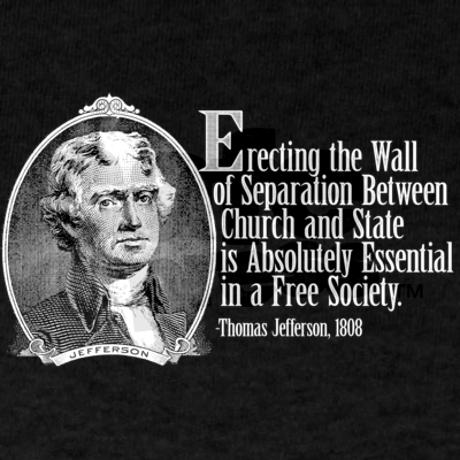


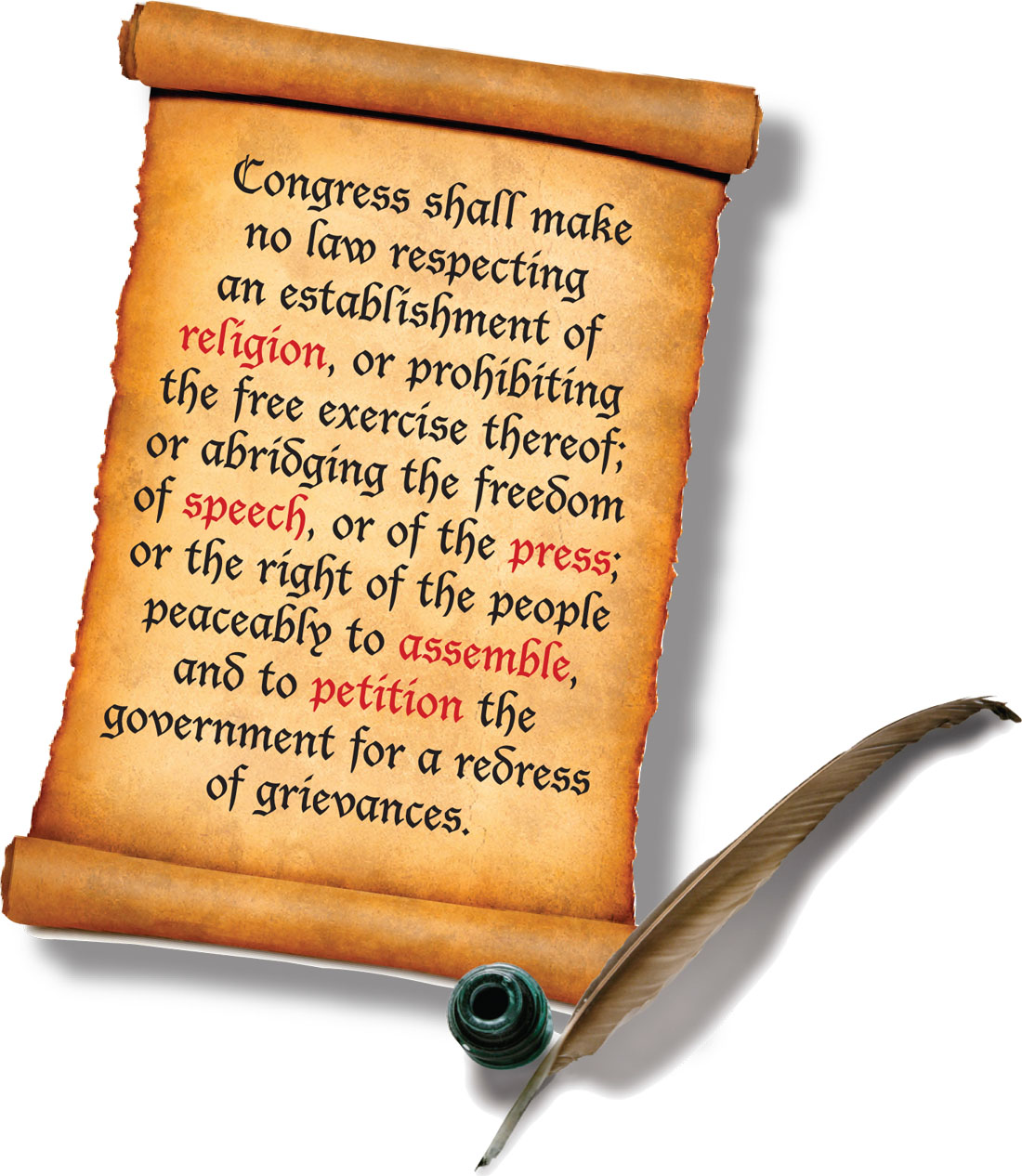



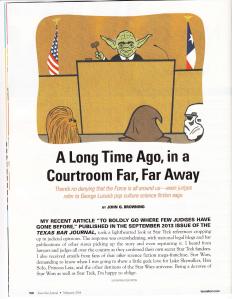


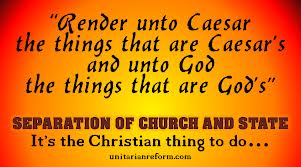

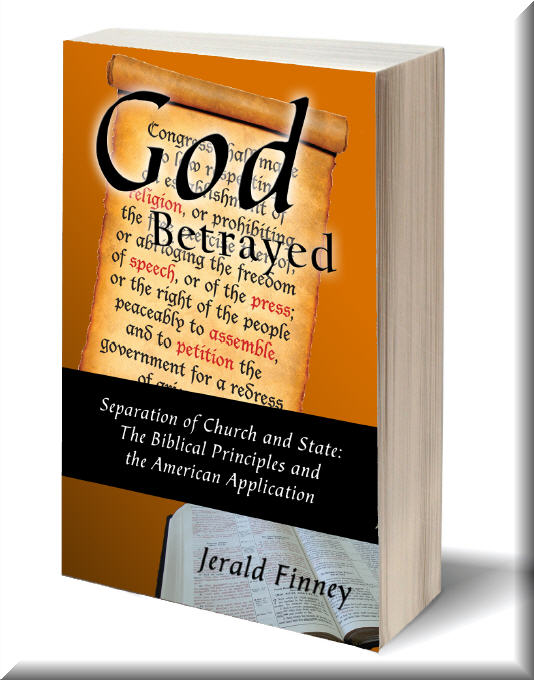


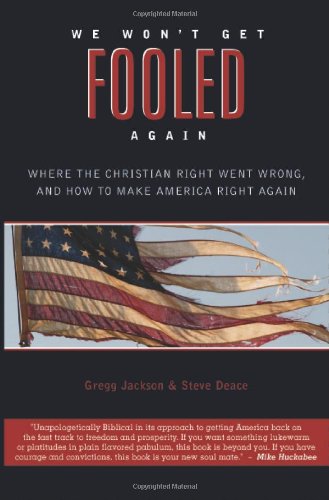

 Simply Church