Reply and Answer to Question 1

[Click here to go back and review Question 1 and other questions.]

Dear Pastor ________________,

Thank you for contacting me. I respectfully submit the following reply with all humility and love to a brother in Christ.

Your letter indicates that you may have some problems, at least technically, with your trust arrangement. As long as nothing happens to bring those problems to the forefront, what you are doing will “work.” Let me respectfully point out some potential flaws in what you have done.

For example, you state that your “church” is deeded to the Lord Jesus Christ. Sometimes people refer to a meetinghouse as a “church.” A church, in the Bible sense, is an assembly of born again believers (perhaps infested with some tares impersonating believers). A trustee can acquire or convey property to and from the trust estate, but one cannot put a church in a trust estate. Only property (real and personal) and money can be put in a trust estate. In order for a real property to be properly deeded to a trust estate, the trustee has to sign the deed. In a trust relationship, the trustee as legal owner of the property can sign a deed. The trust documents make clear that the true, equitable, and beneficial owner of the property is the Lord Jesus Christ, and that the trustee, the legal owner, manages all properties and monies in the trust estate for the benefit of the true, equitable, and beneficial owner of the property.

I do not send out generic DOTs. To do so would be a disservice to you and your church. I would be glad to guide you to resources which explain the principles. In fact, you can find the principles on my website.

There are no certain words needed to create a trust relationship, just so the elements of the trust are present in the relationship. If you understand the principles, your church can establish a proper trust (with a caveat mentioned in the P.S. below). For reasons I have stated in at least one essay or article on the website, creating a trust relationship in writing is much to be preferred over a non-written trust arrangement.

As you probably know, you need a trustor (the church), a trustee (the legal owner of the trust estate), and a beneficiary (the Lord Jesus Christ) who, if the trust is properly established, is the true, beneficial, and equitable owner of the trust estate.

In order to properly establish a trust relationship, a church (or at least leaders in the church) need to understand all about the assets they wish to put in trust, the debts if any and who holds the debts, etc. One also, in order to do this in a way that glorifies our Lord, needs to understand certain Bible principles, the history of the First Amendment and corresponding state constitutional provisions and the relationship of this type of trust to the legal system in America. American law did not originate or create the concept of trust, but American law recognizes the relationship. In establishing a trust, one should be careful to make sure that the trust created is not a legal entity.

Another factor involved is whether or not a church has made itself a legal entity in some way other than church organization. For example, does the church hold a bank account, insurance, etc. in the name of the church? Has the church entered into any contract(s) explicitly or constructively?

Since you know all the facts about your church situation, you can take the principles and tailor a trust accordingly (taking into consideration the caveat in the P.S. below).

I hope that helps.

Brother Jerald Finney

P.S. I respectfully add this caveat.

It appears from your letter that you may have consulted, not only with _______________, but also with others. I have come across several trust relationships which are pushed by certain pastors and others. All the ones I have seen, except that of the BLC, are a disgrace to our Lord. One of the so-called “law centers” (operated out of a church under the leadership of a pastoral authority heretic) which has successfully misled quite a number of churches does not even understand that what they promote is a trust, that the trust they establish actually makes the church a legal entity in that, in their published words, “the church holds property through a trustee in the name of the Lord Jesus Christ.” Their understanding of what they are doing is severely flawed. Others which I have seen have no less problems. It seems that believers think they can just jump into the arena of church and state law without spending the time to grow in the knowledge, understanding, and wisdom needed to proceed in a manner which glorifies God.

1 Corinthians 12:8 “For to one is given by the Spirit the word of wisdom; to another the word of knowledge by the same Spirit. A great pastor and Bible teacher said this, commenting on that verse:

“‘Wisdom’ means insight into truth. I do not think everyone can come to an understanding of the Bible, which is the reason we need teachers, and the Spirit of God has given us teachers. ‘Wisdom’ is insight into the truth of the Word of God. ‘Knowledge’ means to investigate or to dig into the truth. Many people simply do not have the time to dig into the Word of God to dig out the nuggets. I think [teaching the Bible] is my gift. The teacher and the student should be working together as partners, each exercising his own gift.”

The Holy Spirit gifts everyone in a church.  A pastor, or any man, who tries to master too many things will fall short on most, or all, of the matters he deals with. For example, many lawyers practice in several areas of law. Practicing in more than one, or at most 2 kinds of law means that the lawyer cannot possibly keep up with the constant changes in each area of law being implemented by the court system, by the legislature and executive branches, etc.

Similarly, a pastor who thinks he can practice law, pastor a church, lead all meaningful ministries of the church,  properly carry out his duties as father and husband, etc. is violating Bible precept. A pastor who delves into church organization and the concept of trust while carrying on his other responsibilities cannot possibly understand all he needs to know to properly deal with the issue of trust.

The Lord has gifted me, and I boast on Him, not on me, with special knowledge in the area of church organization. That expertise was gained through many years of intense study of first the relevant Bible principles, then history and law. Perhaps you have someone in your church who has the calling and time to take on such an endeavor.

Feel free to contact me at any time for any reason.

May the Lord bless you as you proceed according to His precepts and His will.

Questions on the trust, incorporation, etc. answered

At one time, I would keep questions from pastors and other men of God concerning church incorporation, 501c3 and 508, establishing a trust by a church, etc. After I had accumulated a number of questions to which I replied, I would publish them. In this post, I will publish the questions and answers as I receive them starting 8/1/18.


Question 2

I am an ADF Honor Corp attorney. Attorneys post questions to other associates. The following question was posted on 8/14/18:

Re: Documents of church governance
Sam –
ADF and CLS both put out some excellent white papers on the issue a few years back after the Orbergefell decision.
I’m guessing that those papers are still online. They have sample language to include in church docs that I have used as templates for a number of different churches.
God bless
Ben Boyd

Click here to see my answer to this question.


Question 1

E-mail received 8/1/18:
Dear Brother Finney,
I am Pastor of ________ ___________ Church, [City, state, and e-mail address]. …  Our Church is deeded to the Lord Jesus Christ, its true & Beneficial Owner. I am reviewing our docs, & tried to find a ‘sample’ of your Bible Trust doc.
The site link is not operational.  Is it possible you could send me a pdf?
I just located your publications, & plan to order accordingly.  Thank you for any help you can provide.
Regards, [Name omitted]  [Phone no. omitted]
PS: [Website omitted] I have an avocation as an inventor.

Click here to go to my answer to that question.


Berean Call’s Answer to Important Bible Question

Question: I read with empathy and agreement your excellent article “Jews, Gentiles, and the Church.” However, one thing you said puzzled me. It was this: “Essential also is an understanding that the church was created through offering to both Jews and Gentiles a ‘new covenant’ relationship with God.” My understanding of the “new covenant” is Jeremiah 31:31-40. This covenant is identified clearly as the New Covenant. It is a covenant addressed solely to the Nation of Israel. The church has no part in it—indeed it will not be instituted until after the close of the church age (the catching up of the church). Your statement, quoted above, seems to imply that the new covenant was offered to the church. Is that what you meant, or have I misunderstood you?
Response: As you note, the Scriptures speak of “covenants.” When Israel came to Sinai, and before the giving of the Law, the Lord said, “Now therefore, if ye will obey my voice indeed, andkeep my covenant, then ye shall be a peculiar treasure unto me above all people: for all the earth is mine: and ye shall be unto me a kingdom of priests, and an holy nation. These are the words which thou shalt speak unto the children of Israel” (Exodus 19:5-6, our emphasis).
The only “covenant” in view is the one that God made with Abraham (Genesis 12:1-3), which would be a blessing to all nations. We know this because the Law that was given, beginning in chapter 20, limits the priesthood to the tribe of Levi alone. Yet, in Exodus 19, the Lord states to all Israel “If ye will obey my voice indeed, and keep my covenant, then ye shall be a peculiar treasure unto me above all people: for all the earth is mine: And ye shall be unto me a kingdom of priests, and an holy nation.” Israel refused, and the Law was instituted.
That offer would be repeated centuries later by the promised Seed: “Verily, verily, I say unto you, He that heareth my word, and believeth on him that sent me, hath everlasting life, and shall not come into condemnation; but is passed from death unto life” (John 5:24). It was the fullness of time. “But when the fullness of the time was come, God sent forth his Son, made of a woman, made under the law, to redeem them that were under the law, that we might receive the adoption of sons” (Galatians 4:4-5).
In his first epistle, Peter echoes the words spoken by God in Exodus 19 (1 Peter 1:1): “Ye also, as lively stones, are built up a spiritual house, an holy priesthood, to offer up spiritual sacrifices, acceptable to God by Jesus Christ…. But ye are a chosen generation, a royal priesthood, an holy nation, a peculiar people; that ye should shew forth the praises of him who hath called you out of darkness into his marvellous light” (1 Peter 2:5, 9).
The New Covenant is not “instituted?” It is “solely for Israel”? The longest quotation of any Old Testament passage by any writer in the New Testament is said to be in Hebrews 8:8-12. There, the unidentified writer quotes Jeremiah 31:31-34 in full. It is the core of the inspired writer’s argument that Jesus is “the mediator of a better covenant” and that the old covenant (the Law) was insufficient. The inspired writer proclaims, “For if that first covenant had been faultless, then should no place have been sought for the second” (Hebrews 8:7). The covenant of Jeremiah 31 must be in operation. The language will not allow a differing opinion. 
Between Hebrews 4:14 and 10:18, the writer argues that the sacrifices performed by the priesthood of the old covenant could not bring about the forgiveness of sins. Therefore (he concludes), a new sacrifice and a new priesthood were necessary. They came as a result of Christ’s once-for-all death on the Cross. In light of the “operational” New Covenant, the Old Covenant has ceased to have a role in the lives of New Testament believers, for, “…he saith, A new covenant, he hath made the first old. Now that which decayeth and waxeth old is ready to vanish away” (Hebrews 8:13). In Hebrews 10:16-17 he clinches the argument by repeating Jeremiah 31:31-34 in Hebrews 10:16-17 to show that Jesus’ sacrifice of himself as the “Great High Priest” is the one truly effectual sacrifice for sins. Consequently, the New Covenant has no need of bloody sacrifices or Levitical priests to offer the sacrifices. As Jesus declared, “it is finished!” (John 19:30).

On how a church can operate legally if not incorporated and 501c3, the pastoral authority heresy and other matters

Published online on July 6, 2018:
Questions:
From: ______________________________
To: jerald.finney@sbcglobal.net
Sent: Friday, July 6, 2018 2:07 PM
Subject: _________________________ inquiries regarding 501c3….
Greetings Mr. Jerald.
Grace and peace to you in Jesus name.
1. How should a new church operate and open up legally,  if they are not incorporated and or 501c3, 508??
2. Is habeas corpus null and or obliterated because of executive order Obama ndaa act 2012? Does ndaa give military to detain citizens without warrants and up to execution?
3. Why do most churches take 501c3, or the incorporated route? Especially if its unbiblical? What verses should i study to prove that its unbiblical?
4. If a church is incorporated or 501c3, or 508, can they be sued if they refuse to marry homosexual or lesbian couples legally,  because they are created by the government state?
Same question about abortion,  can they preach against abortion if they are a mega church or could they be sued?
5. I am looking seeking for a church that is not 501 c3, incorporated ect, how do i find them?
 –
Thank you
These are the main ones for now.
God bless in Jesus name.

In Christ,


MY ANSWER:

Dear Brother _______________:

Thank you for your interest in organizing a church in a way that pleases our Lord. I have spent thousands upon thousands of hours over the last 15 years (not to mention my less intense but sincere studies before that time) seeking the Bible answers to some of your questions and the application of those answers in church organization. I had to study relevant Bible principles, law, and history in the process. I have discussed the issues with pastors and other believers who were interested in the issues and sought their insights. Sadly, those who do not like what I say have been unwilling to have a studied discourse; instead, they, like liberals in the political realm, refuse to have a studied and logical, much less spiritual discourse about the issues. They call me names, insult me, warn people against my teachings (without explanation other than, perhaps, “he is a heretic; stay away from him and what he has to say,” etc.).

I can only give you resources that will help you in your search for the truth about the spiritual matters you inquire about.

As to questions 1 and 3, the one that covers them more succinctly than others on the website is:

https://jeraldfinney.com/god-betrayed/books/separation-of-church-and-state-gods-churches-spiritual-or-legal-entities/

Some essays and articles that address question no. 4 are linked to at:

Essays, Articles, and Other Resources Related to the Doctrine of the Church, Incorporation, 501c3, Etc.

For studies on the relevant Bible teachings, see the following pages for links to teachings:

Online version of God Betrayed/Separation of Church and State: The Biblical Principles and the American Application

For a short course, see:

As to question 2, I would have to do a lot of legal study and research to answer that question. I do not have time to keep up with every matter, so I choose to limit my work to eternal matters.

As to question 5, my advice is that you not only earnestly pray but also seek. However, keep in mind that many churches and pastors teach and practice various heresies which are detrimental to the believers and also to the cause of Christ. There are many heresies; examples include those taught and practiced by Charismatics, Catholics, most Protestants, Calvinists, etc.

Let me give you one specific example of a damnable heresy which is proliferating, I believe, in many American churches: the heresy of “pastoral authority.” Many who practice that heresy are cults, according to what I believe to be the definition of “cult.” Some adhere to some Bible principles and even preach and teach a lot of truth, according to the Bible. But, no matter what truth they may preach, teach, and practice, the “pastoral authority” heresy leads to some very bad consequences for the members and for the glory of God, even leading many lost people to blaspheme the name of Christ for the wrong reasons.

Now of course, there are degrees of this heresy, and some churches are still basically sound even though they, to a lesser extent, have fallen for this heresy. What was once one of the largest churches (maybe the largest) in America practiced this heresy of pastoral authority; the chickens came home to roost, a pastor of the church (and the church) was disgraced before the entire nation, membership of the church, the attached College, and other ministries have declined tremendously, and the elite now actively use the testimonies of former members and proven immoralities and “cultic” and other practices of pastors, present and past, of the church and other pastors and churches who have followed the teachings of the church to cause millions to blaspheme the name of the Lord.

Of course, the church mentioned in the last paragraph was one of the largest (or the largest) church corporate, 501c3 religious organizations in America; and the pastors and many members bragged about it. When a church takes corporate 501c3 status, that church, by practicing heresy as to the matter of church organization, has compromised her love for the Lord Jesus Christ and started down a slippery road toward more heresy and apostasy. Yet the church continues on to this day without ever having repented of her sins, a major one of which is corporate 501c3 legal status.

What does “pastoral authority” mean?  It simply means that the pastor of each local church is the final authority in all matters of faith and practice (no matter what the Bible says), so he has the authority to control the thinking and actions of all his  [emphasis on “his”] members down to with whom they can have fellowship, to whom and about what they can and cannot talk, where they can spend their money, where they can go to school and how to finance it (making sure, for one example that I was informed of, that they give a considerable amount of their student loans to the them), whether or not they could sell their homes or cars, and whom they can or cannot not marry, etc.  Versions of this heresy teach that the Holy Spirit speaks to the Pastor about every matter involving every member of the church, that if the Holy Spirit did not speak to the Pastor about a matter, the Holy Spirit did not speak to a particular member about that matter, or that only the pastor has the “vision” to lead the ministries of a church. The members of the church become agents of the pastor who fits them into his agenda, which is supposedly from God.

A church can be properly organized according to the Bible and still be heretical (or even apostate) about other important matters. Some churches are properly organized but teach and practice, for example, the gross heresy of “pastoral authority.”

One other comment. God does not want legal churches (churches organized according to man’s law). He wants spiritual churches (churches organized according to God’s Bible precepts). Due to the First Amendment of the US Const. and corresponding state constitutional provisions, one can organize a church in the United States according to Bible principles without persecution.

May the Lord richly bless you as you seek to know and understand His truths regarding these important matters you inquire about.  The believer must study (not just read) the Bible to avoid becoming the victim of religious charlatans.  “Study to shew thyself approved unto God, a workman that needeth not to be ashamed, rightly dividing the word of truth” (2 Timothy 2:15; read the verse in context to make the application).

For His Glory,
Brother Jerald Finney
____________________

Questions Answered by the Berean Call

From Berean Call, July 27, 2018:
What a Sovereign God Cannot Do. This includes teaching on the Calvinist heresy concerning the sovereignty of God, love, and some other matters.
From Berean Call, Psychology and Psychotherapy (part 1), January 6, 2018:
 –
Question: You emphasize that salvation is based on the fact that Christ “paid the penalty for our sins.”  Strong’s Exhaustive Concordance has no entry for “penalty,” nor did Jesus or the apostles ever mention that a penalty for our sins was paid. If I ask fellow Christians where to find this view in the Bible, either they don’t know the answer or they imply that I’m not saved. I pose that question to you.
 
Response: Nor is the word “trinity” found in either the Bible or Strong’s, yet it’s a basic teaching of Scripture. Was not the casting of Adam and Eve out of the Garden a penalty for their sin? Isn’t the death that came upon Adam and Eve and all of their descendants to this day also a penalty for sin that would continue in eternal separation from God without His pardon? In declaring, “the soul that sinneth, it shall die (Eze 18:13, 20); sin bringeth forth death (Jas 1:15); the strength of sin is the law” (1 Cor 15:56), isn’t Scripture saying that death is the penalty for sin? Does not a penalty have to be paid? Granted, the Bible nowhere uses that exact terminology about Christ paying the penalty for sin. But isn’t that what’s implied when it says, “He was wounded for our transgressions, he was bruised for our iniquities: the chastisement of our peace was upon him; and with his stripes we are healed” (Is 53:5), or “Christ died for our sins” (1 Cor 15:3), or “that he by the grace of God should taste death for every man” (Heb 2:9), as well as in many similar verses? If death is the penalty for sin and Christ died for all, then surely He paid the penalty in full for all of us, or we would have to pay [it] ourselves. Our salvation is a matter of God’s justice, “that he by the grace of God should taste death for every man” (Heb 2:9), et al. Our salvation is a matter of God’s justice, “that he [God] might be just, and the justifier of him which believeth in Jesus” (Rom 3:26).
I don’t understand your objection to saying that the penalty was paid. Wasn’t the force of Christ’s triumphant cry from the cross, “It is finished [tetelestai]” (Jn 19:30), meaning “paid in full”? I am grateful that Christ paid the full penalty for my sins so that God can be just in pardoning me, the sinner! There is no other means of salvation.
 
Question: We’re told that “one day is with the Lord as a thousand years, and a thousand years as one day” (2 Pt 3:8); and that “a thousand years in thy sight are but as yesterday when it is past, and as a watch in the night” (Ps 90:4). Is there any special prophetic significance that might tell us how close we are to the Lord’s return?
 
Response: There is no prophetic significance. The phrases “with the Lord” and “in thy sight” are the keys to understanding this rather simple and straightforward declaration: God is outside of time and therefore, in relation to Him, time is meaningless. Thus Paul can say that we are already seated “together in heavenly places in Christ Jesus” (Eph 2:6). God, being independent of time, sees not only what to us is past but also our present and future as having already happened. Thus His foreknowledge of what in our experience hasn’t yet occurred would have no effect upon its happening and would leave us free to make genuine choices.
Here is what John Wesley said in a sermon more than 200 years ago: “There is no such thing as either foreknowledge or afterknowledge in God. All time, or rather all eternity (for time is only that small fragment of eternity which is allotted to the children of men), being present to God at once, He does not know one thing from another, or one thing after another; but sees all things in one point of view, from everlasting to everlasting. As all time, with everything that exists therein, is preset with Him at once, so he sees at once whatever was, is, or will be to the end of time” (John Wesley, Sermons on Several Occasions, 1833, p. 39).
 
Question: What did Paul mean when he said that he and the other Apostles were “the last appointed unto death”? Did that mean that no one else after them would ever be martyred for their faith? If so, he was wrong.
 
Response: Paul wasn’t wrong when he wrote these words: “For I think that God hath set forth us the apostles last, as it were appointed to death: for we are made a spectacle unto the world, and to angels, and to men” (1 Cor 4:9). Some argue that Paul and the other Apostles thought that the Rapture would occur in their day. Not so. Although he taught believers to expect the Rapture at any moment (Php 3:20-21; 1 Thess 1:9-10; Titus 2:13, etc.), Paul knew that he would be martyred before it occurred: “For I know…that after my departing shall grievous wolves enter in…” (Acts 20:29); “For I am now ready to be offered, and the time of my departure is at hand” (2 Tm 4:6). Likewise, Peter wrote, “Knowing that shortly I must put off this my tabernacle…I will endeavor that ye may be able after my decease to have these things always in remembrance” (2 Pt 1:14-15). The Apostles didn’t expect to be raptured but knew they must each die for their Lord.
Christ declared that His disciples in all ages would be hated by the world and would suffer the same as He had at its hands (Jn 15:18-21); Paul implied that Christians would continue to suffer martyrdom (Rom 8:35-37) and warned that “all that will live godly in Christ Jesus shall suffer persecution” (2 Tm 3:12). We know that has been the case throughout history, and even greater numbers of believers will be killed by Antichrist (Rv 6:9-11; 13:7, 15; 20:4). Obviously Paul did not mean that the Apostles were the last who would be martyred for Christ. They were the last who were “appointed unto death;” i.e., who must die for Christ. Their lives would have been spared had they denied Christ. No one is fool enough to die for what he knows is a lie. The fact that not one of the disciples retracted anything to save his life is powerful evidence of the validity of the Gospels and the Book of Acts. It was thus essential that they die as martyrs, and they were the last upon whom that necessity was imposed.
 
Question: The Apostles’ Creed says that Jesus “descended into hell.” I’ve read your rejection of the Hagan/Copeland teaching that Jesus was tortured in hell by Satan. Did Jesus descend into hell or not? I searched the Scriptures and have no answer.
 

Response: The word sheol, “place of the dead,” is translated “hell” or sometimes as “grave.” In telling the fate of the rich man and Lazarus, Jesus taught that before the Cross, there were two compartments in sheol: one for the lost, and one for the saved, called “Abraham’s bosom” (Lk 16:22). To the latter Christ went in death, as did the thief crucified with Him to whom He said, “Today shalt thou be with me in paradise” (Lk 23:43). There He proclaimed to the redeemed the good news of His death having paid for their sins. Those in sheol could hear what Jesus said (see Lk 16:23-31); and He may even have addressed a few words to them. Thus Peter writes, “He preached to the spirits in prison [sheol]; which sometime were disobedient…” (1 Pt 3:19-20). After His resurrection, Jesus took the souls and spirits of the redeemed to heaven (“he led captivity captive” [Eph 4:8]). Now the souls and spirits of the redeemed upon death go immediately to be with Christ (“absent from the body, present with the Lord” [2 Cor 5:6-8]), when He will bring them to rejoin their resurrected bodies at the Rapture (1 Thess 4:13-18).


Questions answered in From Berean Call, Psychology and Psychotherapy (part 2), Feb. 1, 2018:

Question: The Bible says, “For it is God which worketh in you both to will and to do of his good pleasure” (Philippians 2:13). Then why do I so often fail to do His will and to please Him? I more often please myself by doing my own will. Why?
 
Question: You justify God for sending people to hell because He has provided salvation for them in Christ. That won’t do, for millions and probably billions will spend eternity in hell. God knew that! How could a good God create anyone whom He knew would suffer eternally?
 
Question: “Broad is the way, that leadeth to destruction, and many there be which go in thereat” (Mt 7:13). How has God “won” if there are more souls in hell than in heaven?
Question: Is it really biblical for you or anyone else to point out others’ faults? Isn’t this judging when we are not to judge? Doesn’t the Scripture say that the servant is to be left to the correction of his master, who is Christ?

Question from a Church Concerning Church Organization

E-mail received May 11, 2018. Note. This is one of many inquiry about church organization which I receive on a regular basis.

The church Elders of [] Church have asked me if I could help find answers about getting “organized” since I have a bit more computer experience than they.

I found your website and felt that this was important information and am hoping that you may give advice.

We have a small fellowship of about 35 – 40 people (including children) in a small, remote community in [name of state]. Our church has had it’s “doors open” for over 25 years, the pastor has transitioned the church into an Elder led church of (currently) five elders, of which he is one. We are not, nor have ever been organized as either a 501(c)(3) or a 508(c)(1)(a). We have simply been a group of believers who meet together in a building on the corner of a brother’s property.

So our questions are this….

What is the best way for the church to enter into a lease agreement? The building is on the property of a brother …. He would like to grant the church a … lease, but we are not a legal entity to do this. Any ideas as to how to proceed?

The elders have been encouraged by other pastors to form a 501(c)(3), but after much prayer have determined that isn’t the direction they want to pursue. The next avenue was to look at 508(c)(1)(a), but it would appear that we are already that by definition.

The other question is how to deal with banking? For the last 25 years everything has been run through the pastor’s personal bank account. We’ve considered just adding the other four elders to the account and leaving it as it is. Not certain at this point if the bank would be okay with that.

I read through your article on a trust and the portions I understood sounded like a good direction to take.

Your insights and advice are welcome.

Sincerely,
[Name omitted]
[] Church

My Answer:

Dear []

The way to take care of this is for the church to establish a trust, the right kind of trust. The bank account would be held in the name of the trust, not the church. A lease would be taken out in the name of the trust. If property is acquired, the name of the owner of the property on the deed would be the trust.

You are not a 508 church unless you choose to be so. If you choose to be a 508 church, you submit the church to the rules that come with 501c3. For more on church 508 status, see the following article:

Church Internal Revenue Code § 508 Tax Exempt Status

If your church enters into a lease agreement, opens a bank account, buys property, etc. in the name of the church, the church becomes a legal entity, but not the same type of legal entity as a non-profit corporation. If your church adopts a constitution, by-laws or similar documents, but does not incorporate, your  church may be setting herself up as a legal entity, an unincorporated association, which is viewed much like a non-profit corporation legal entity.

When a church establishes the right kind of trust (not a business trust, a charitable trust, an ELC trust, etc.), the church does not become a legal entity. All money and assets are held in the name of the trust. The money and assets in the trust estate so held are owned by the Lord Jesus Christ. The trust estate does not hold church property and assets. The trust estate holds property owned by the Lord Jesus Christ. The trust estate is managed by a named trustee who has a duty to manage the estate, not for his benefit, but for the benefit of the owner of the trust estate.

From your inquiry, I assume that you wish to have a church ordered according to the principles of the New Testament, a spiritual entity only, an entity under the Lord Jesus Christ only. A legal entity is under man; that is, it is subject to man’s law. The only way a church can be subject to man’s law in America is to voluntarily act legally, or to organize under man’s law. A spiritual entity is under God only.

This does not mean that church members in a New Testament church are not under man’s law for certain God-ordained purposes, for earthly purposes. If one steals, murders, etc. man’s law is authorized by God to assert jurisdiction. God does not authorize man (civil government) to assert jurisdiction over spiritual matters: “We should obey God rather than man” when man’s law contradicts God’s law. The purpose of organizing a church according to the principles of the New Testament is keep the church under God’s rules only. A church who chooses non-profit corp., 501c3, or 508, business trust, charitable trust, etc. status has voluntarily submitted herself to man’s law. When she does so, she has made the civil governments (state and federal) her authority for many purposes.

Feel free to call me for any reason. I would be glad to talk with you concerning these matters.

For His Glory,
Jerald Finney
512-785-8445

Trust

Conclusion: History of Religious Freedom in America


A Publication of Churches Under Christ Ministry


Previous Series of Lessons:
Religious Freedom in America!

Click here to go to all sections dealing with religious liberty in America.

Click here to go to links to all written lessons.

Click here to go to the 3 1/2 to 6 minute video lectures.


Jerald Finney
Copyright © March 5, 2018


Early in the colonial period, men formed the first notable government that legally protected separation of church and state and religious liberty. This historical event arose out of a conflict between the two currents which flowed in opposite directions.

  • “A large number of people fled out of the old world into this wilderness for religious liberty; but had not been here long before some put in high claims for power, under the name of orthodoxy; to whom others made fierce opposition professedly from the light within; and their clashings were so great that several lives were lost in the fray. This made a terrible noise on the other side of the water. But as self-defence is a natural principle, each party wrote volume after volume to clear themselves from blame; and they both conspired to cast a great part of it upon one singular man [Roger Williams], whom they called a weathercock and a windmill. Now let the curious find out if they can, first how men of university learning, or of divine inspiration, came to write great volumes against a windmill and a weathercock? secondly, how such a strange creature came to be an overmatch for them all, and to carry his point against the arts of priestcraft, the intrigues of court, the flights of enthusiasm and the power of factions, so as after he had pulled down ruin upon himself and his friends, yet to be able, in the midst of heathen savages, to erect the best form of civil government that the world had seen in sixteen hundred years? thirdly, how he and his ruined friends came to lie under those reproaches for a hundred years, and yet that their plan should then be adopted by thirteen colonies, to whom these despised people could afford senators of principal note, as well as commanders by sea and land? The excellency of this scene above those which many are bewitched with, consists in its being founded upon facts and not fictions; being not the creature of distempered brains, but of an unerring Providence.”[1]

Many brave men and women, with Baptists at the forefront, paid a high price on the path to religious liberty and freedom of speech, association, and the press. One should not forget that those people were motivated by a deep love for God and his word, not by earthly concerns.

As a result of the fight, Christians, and everyone else in America, have religious freedom. The United States Supreme Court still upholds the wall of separation between church and state and freedom of conscience.[2]

Christians in America have been blessed above measure and can choose to please God and not be persecuted for it. The brief time men will be on earth is miniscule compared to eternity. The time an individual Christian is here is nothing more than a blink of the eye. An American believer now has the opportunity to glorify God without persecution. That opportunity was the result of the trail of blood left by the martyrs for Christ.

If the Son therefore shall make you free, ye shall be free indeed (John 8.36).

Every breath a believer takes out of God’s will is a wasted breath. He will praise God naturally, not as a matter of choice, in heaven. This is his one chance, during his eternal existence, to live for Christ of his own free will. This is the one shot he has to choose to please, serve, praise, and glorify God. After leaving this world, some will learn, when it is too late, that they never glorified him when they had the choice. Some will learn that they did not proceed according to knowledge, understanding, and wisdom; and that they followed and promoted the principles and goals of the god of this world.


Endnotes

[1] Isaac Backus, A History of New England With Particular Reference to the Denomination of Christians called Baptists, Volume 1 (Eugene, Oregon: Wipf & Stock Publishers, Previously published by Backus Historical Society, 1871), pp. 408-409.

[2] See Jerald Finney, God Betrayed, Separation of Church and State: The Biblical Principles and the American Application (Xulon Press, 2008 (www.xulonpress.com), Section V. Sadly, while upholding that wall of separation, the Court has also twisted the meaning of the First Amendment so as to remove God from practically all civil government matters.

II. The Continuing Fight for a Religious Freedom Amendment; The First Amendment Is Adopted and Approved


A Publication of Separation of Church and State Law Ministry


Previous Lesson:
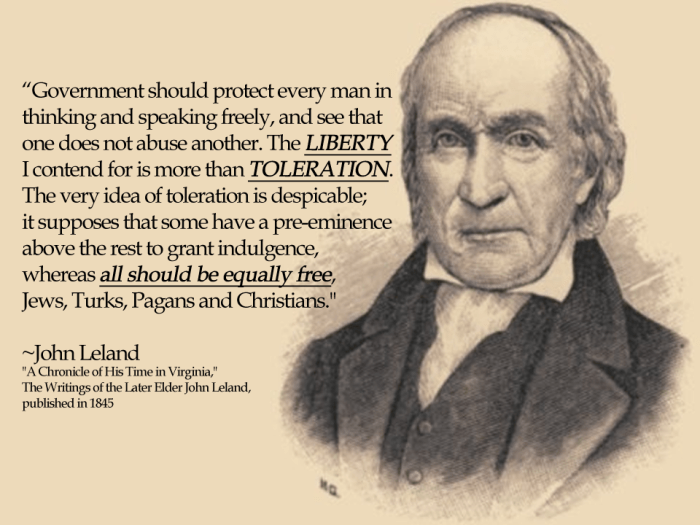
I. Convention to Amend Articles of Confederation; Constitution Drafted; John Leland’s Influence on James Madison; Constitution Ratified by the States

Next Lesson:
Conclusion to Lessons on Religious Liberty in America

Click here to go to links to all written lessons.

Click here to go to the 3 1/2 to 6 minute video lectures.

For accompanying more thorough study from God Betrayed click here.


Jerald Finney
Copyright © March 5, 2018


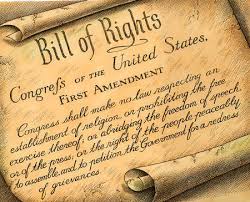
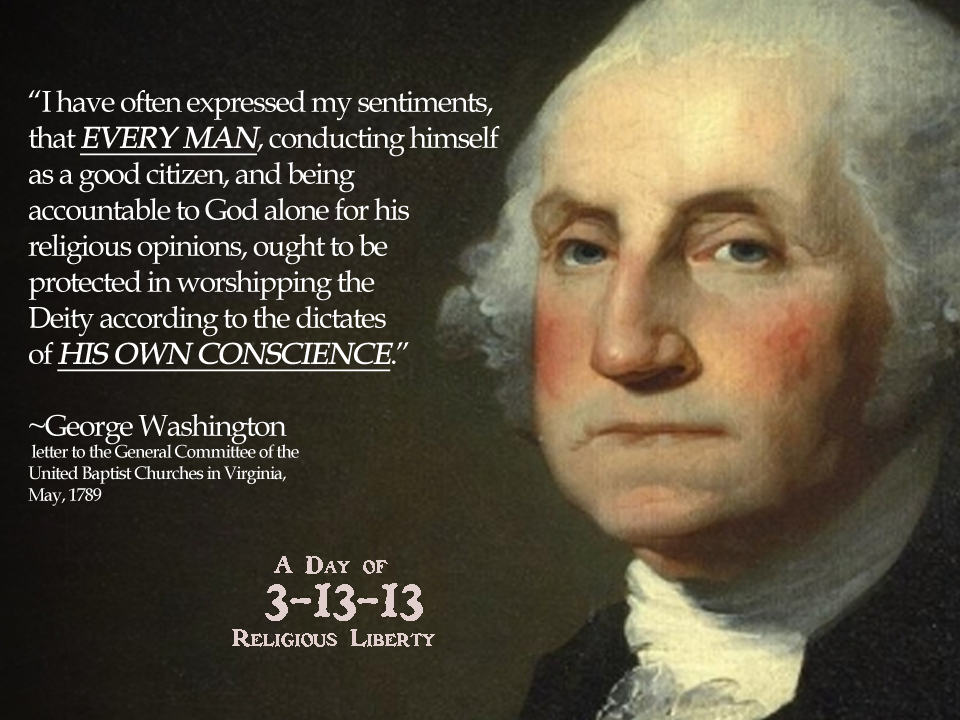
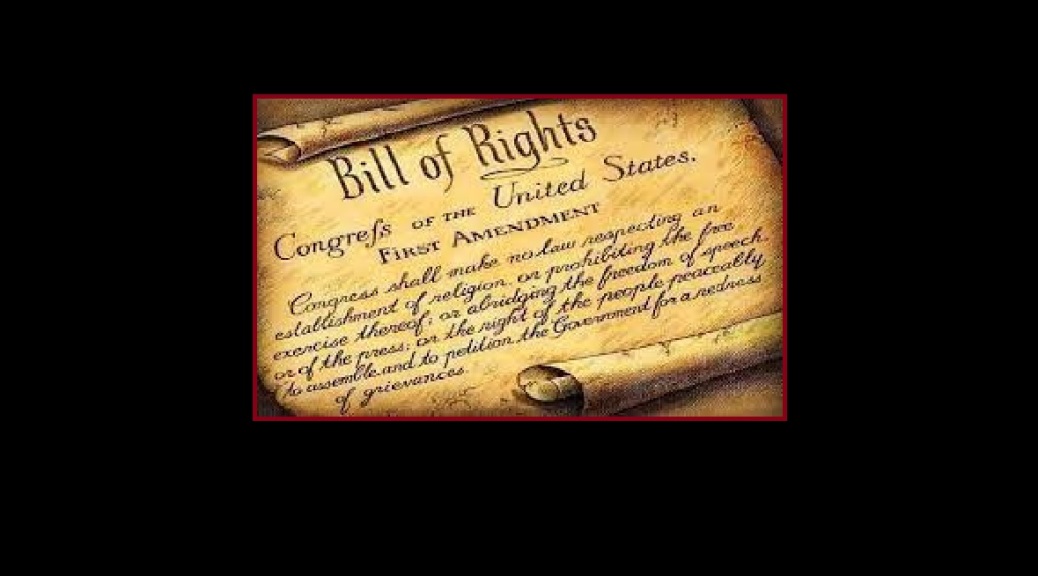
James Madisons first act, after the First Congress was organized, in 1789, was to propose, on June 8, certain amendments, including what is now the First Amendment. His purpose was to “conciliate and to make all reasonable concessions to the doubting and distrustful”—to those, the Baptists, who were concerned about the issue of religious liberty. “Of all the denominations in Virginia, [the Baptists] were the only ones that had expressed any dissatisfaction with the Constitution on that point, or that had taken any action into looking to an amendment.” The Baptists of Virginia had also corresponded with Baptists of other states to “secure cooperation in the matter of obtaining” a religious liberty amendment. No other denomination asked for this change.[1] A general committee of Baptist churches from Virginia presented an address to President Washington, dated August 8, 1789, expressing concern that “liberty of conscience was not sufficiently secured,” perhaps because “on account of the usage we received in Virginia, under the regal government, when mobs, bonds, fines and prisons, were [their] frequent repast.”[2] President Washington assured them that he would not have signed the Constitution if he had had the slightest apprehension that it “might endanger the religious rights of any ecclesiastical society.”[3]

Some Baptists and others did not see the need for a religious freedom amendment. Indeed, the First Amendment may not have been necessary to guarantee separation of church and state. Isaac Backus was elected as a delegate to the Massachusetts convention of January, 1788, which considered the issue of ratification of the new Constitution. He spoke at the convention.

  • “On February 4, [Backus] spoke of ‘the great advantage of having religious tests and hereditary nobility excluded from our government.’ These two items in the Constitution seemed to him a guarantee against any establishment of religion and against the formation of any aristocracy. ‘Some serious minds discover a concern lest, if all religious tests should be excluded, the congress would hereafter establish Popery, or some other tyrannical way of worship. But it is most certain that no such way of worship can be established without any religious test.’ He said ‘Popery,’ but he probably feared, as many Baptists did, that some form of Calvinism of the Presbyterian or Consociational variety was more likely. His interpretation of this article helps to explain why the Baptists [of Massachusetts] made no effort to fight for an amendment on freedom of religion along with the others which the convention sent to Congress.”[4]

Even Madison, who proposed and fought for the First Amendment, did not believe that it was necessary for the security of religion. He wrote in his Journal on June 12, 1788:

  • “… Is a bill of rights a security for Religion? … If there were a majority of one sect, a bill of rights would be a poor protection for liberty. Happily for the states, they enjoy the utmost freedom of religion. This freedom arises from that multiplicity of sects, which pervades America, and which is the best and only security for religious liberty in any society. For where there is such a variety of sects, there cannot be a majority of any one to oppress and persecute the rest. Fortunately for this commonwealth, a majority of the people are decidedly against any exclusive establishment—I believe it to be so in the other states…. But the United States abounds in such a variety of sects, that it is a strong security against religious persecution, and it is sufficient to authorize a conclusion, that no one sect will ever be able to outnumber or depress the rest.”[5]

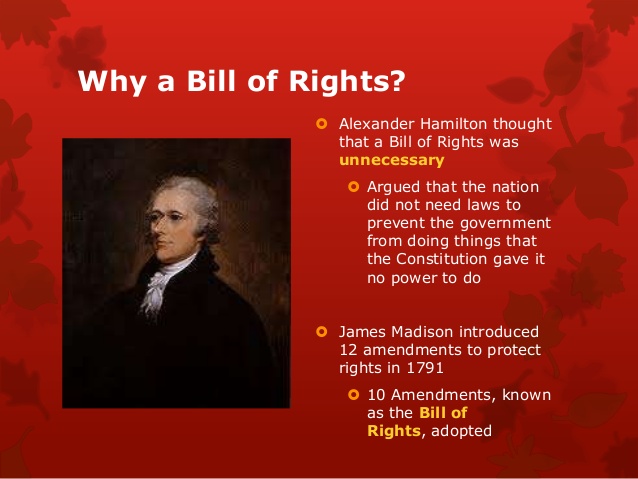
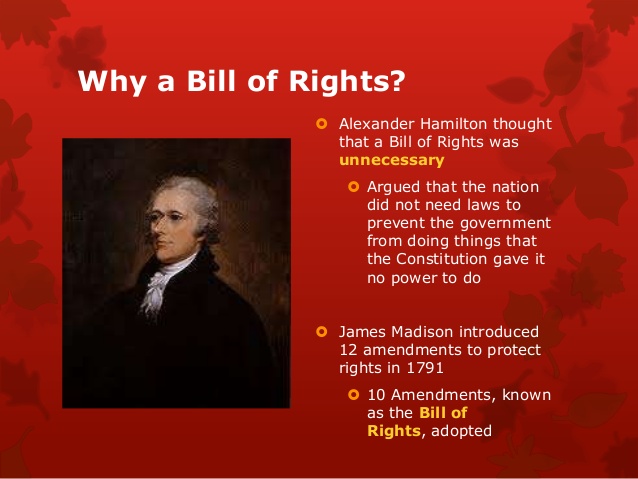
Others were against a bill of rights. “James Wilson argued that ‘all is reserved in a general government which is not given,’ and that since the power to legislate on religion or speech or press was not given to the Federal government, the government did not possess it, and there was therefore no need for an express prohibition.”[6] “Alexander Hamilton argued that a bill of rights, not only was unnecessary, but would be dangerous, since it might create the inference that a power to deal with the reserved subject was in fact conferred.”[7]

The amendment was adopted on September 25, 1789, and was approved by the required number of states in 1791.

“No more fitting conclusion can be had … than to quote the language of the Father of his country. The days of persecution, of blood and of martyrdom were passed. Civil and soul liberty, the inalienable rights of man, enlargement, benevolent operations, educational advantages, and worldwide missionary endeavor, all had been made possible by the struggles of the past. The Baptists consulted George Washington to assist in the securing freedom of conscience. He replied:

  • “I have often expressed my sentiments, that every man, conducting himself as a good citizen, and being accountable to God alone for his religious opinions, ought to be protected in worshipping the Deity according to the dictates of his own conscience. While I recognize with satisfaction, that the religious society of which you are members have been, throughout America, uniformly and almost unanimously the firm friends to civil liberty, and the persevering promoters of our glorious revolution, I cannot hesitate to believe, faithful supporters of a free, yet efficient general government. Under this pleasing expectation, I rejoice to assure them, that they may rely on my best wishes and endeavors to advance their prosperity.”[8]

Endnotes

[1] Charles F. James, Documentary History of the Struggle for Religious Liberty in Virginia (Harrisonburg, VA.: Sprinkle Publications, 2007; First Published Lynchburg, VA.: J. P. Bell Company, 1900), p. 167.

[2] Isaac Backus, A History of New England With Particular Reference to the Denomination of Christians called Baptists, Volume 2 (Eugene, Oregon: Wipf & Stock Publishers, Previously published by Backus Historical Society, 1871), p. 340.

[3] Ibid.

[4] William G. McLoughlin, Isaac Backus and the American Piestic Tradition (Boston: Little, Brown and Company, 1967), pp. 198-199.

[5] Norman Cousins, In God We Trust (Kingsport, Tennessee: Kingsport Press, Inc., 1958), pp. 314-315.

[6] Leo Pfeffer, Church, State, and Freedom (Boston: The Beacon Press, 1953), p. 112.

[7] Ibid., citing Federalist Papers, Modern Library ed., 1937, p. 559.

[8] John T. Christian, A History of the Baptists, Volume I, (Texarkana, Ark.-Tex.: Bogard Press, 1922), pp. 392-393, citing Sparks, Writings of George Washington, SII, 155. Boston, 1855.

I. Convention to Amend Articles of Confederation; Constitution Drafted; John Leland’s Influence on James Madison; Constitution Ratified by the States


A Publication of Churches Under Christ Ministry


Previous Series of Lessons:
To Virginia

Next Lesson:
II. The Continuing Fight for a Religious Freedom Amendment; The First Amendment Is Adopted and Approved

Click here for links to all lessons on “Religious Freedom in America!

Click here to go to the written lessons.

Click here to go to the 3 1/2 to 6 minute video lectures.

For accompanying more thorough study from God Betrayed click here.


Jerald Finney
Copyright © March 5, 2018


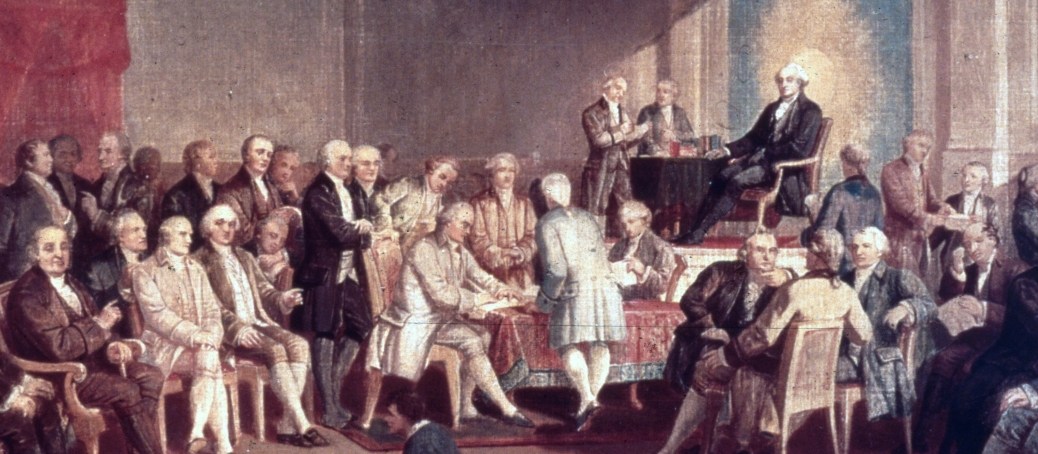
A convention was called in Philadelphia in 1787 to revise the Articles of Confederation.

  • “In a little more than a year after the passage of the Virginia Act for Religious Liberty the convention met which prepared the Constitution of the United States. Of this convention Mr. Jefferson was not a member, he being then absent as minister to France…. Five of the states, while adopting the Constitution, proposed amendments. Three—New Hampshire, New York, and Virginia—included in one form or another a declaration of religious freedom in the changes they desired to have made, as did also North Carolina, where the convention at first declined to ratify the Constitution until the proposed amendments were acted upon. Accordingly, at the first session of the first Congress the amendment now under consideration [the First Amendment] was proposed with others by Mr. Madison. It met the views of the advocates of religious freedom, and was adopted.”[1]

After the drafting of the Constitution, it was submitted to the states for ratification. “[I]t was doubtful whether it would pass. Massachusetts and Virginia were the pivotal states.”[2] The Baptists of Virginia were against ratification because the Constitution did not have sufficient provision for religious liberty. Patrick Henry had declined to serve at the Convention and was against it. He posed as the champion of the Baptists in opposition to the Constitution. Of course, Madison was for ratification. However, the Baptists chose John Leland, the most popular preacher in Virginia, as candidate of Orange County to the state ratification convention opposed to ratification, and his opponent was to be James Madison. Mr. Leland likely would have been elected had he not later withdrawn. Mr. Madison, when he returned from Philadelphia, stopped by Mr. Leland’s house and spent half a day communicating to him about “the great matters which were then agitating the people of the state and the Confederacy” and relieving Baptist apprehensions as to the question of religious liberty. Because of this meeting, Mr. Leland withdrew in favor of Mr. Madison and the Baptists of Orange County were won over to the side of Madison.[3] “If Madison had not been in the Virginia Convention, that Constitution would not have been ratified by the State, and as the approval of nine states was required to give effect to this instrument, and as Virginia was the ninth, if it had been rejected by her, the Constitution would have failed…. [A]nd that it was by Elder Leland’s influence that Madison was elected to the Convention.”[4]

The Constitution was ratified and election of the officers of government was the next order of business. Patrick Henry, using his influence in the Legislature, prevented Madison from being elected as Senator. In addition, the Legislature drew the lines for Representative district to prevent Madison from being elected as Representative. However, he was able to “relieve Baptist apprehensions as to any change in his principles, and assure them of his readiness to aid in securing a proper amendment to the Constitution on the subject of religious liberty.” He was elected.


[1] Reynolds v. United States, 98 U.S. at 164.

[2] John T. Christian, A History of the Baptists, Volume I, (Texarkana, Ark.-Tex.: Bogard Press, 1922), p. 391.

[3] Charles F. James, Documentary History of the Struggle for Religious Liberty in Virginia (Harrisonburg, VA.: Sprinkle Publications, 2007; First Published Lynchburg, VA.: J. P. Bell Company, 1900), pp. 150-158; William P. Grady, What Hath God Wrought: A Biblical Interpretation of American History (Knoxville, Tennessee: Grady Publications, Inc., 1999), pp. 166-167.

[4] Christian, Volume I, pp. 391-392. Statement of J.S. Barbour, of Virginia, in 1857, in an eulogy of James Madison.

Religious Freedom in America!

I. Convention to Amend Articles of Confederation; Constitution Drafted; John Leland’s Influence on James Madison; Constitution Ratified by the States
II. The Continuing Fight for a Religious Freedom Amendment; The First Amendment Is Adopted and Approved


The local church sanctified and cleansed by the washing of water by the word——————–A ministry of Charity Baptist Tabernacle of Amarillo, Texas led by Pastor Ben Hickam. "Would to God ye could bear with me a little in my folly: and indeed bear with me. For I am jealous over you with godly jealousy: for I have espoused you to one husband, that I may present you as a chaste virgin to Christ. But I fear, lest by any means, as the serpent beguiled Eve through his subtilty, so your minds should be corrupted from the simplicity that is in Christ" (2 Corinthians 11:1-3). ————————————Jerald Finney, a Christian Lawyer and member of Charity Baptist Tabernacle, having received this ministry in the Lord, explains how a church in America can remain under the Lord Jesus Christ and Him only. "As every man hath received the gift, even so minister the same one to another, as good stewards of the manifold grace of God. If any man speak, let him speak as the oracles of God; if any man minister, let him do it as of the ability which God giveth: that God in all things may be glorified through Jesus Christ, to whom be praise and dominion for ever and ever. Amen" (1 Peter 4:10-11; See also, Ephesians 4::1-16 and 1 Corinthians 12:1-25). "Take heed to the ministry which thou hast received in the Lord, that thou fulfil it" (Colossians 4:17). "And hath put all things under his feet, and gave him to be the head over all things to the church" (Ephesians 1.22; See also, e.g. Colossians 1:18).