Tag Archives: 501(c)(3)

Jack Schaap, First Baptist of Hammond, Heresy and Apostasy


Jerald Finney
Copyright © August, 2010
Updated in 2012, 2013

To hear companion sermon, “Ten Shekels and a Shirt” click following link
and scroll down to the sermon link: “Sermons


See also,  On Jack Hyles’ Sermon, “The Treasure Is in the Field”

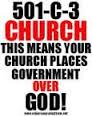
This article is an example of the results of church heresy and apostasy. Subjection of a church to the civil government through church incorporation (aggregate or sole), charitable or business trust status, IRC Code Section 501(c)(3) or Section 508 status, etc. is one step along that road to heresy and apostasy, and may even be the first step. First Baptist of Hammond is a very large corporate, 501(c)(3) religious organization, not a New Testament or Historic Baptist Church, contrary to the claims of the leaders of that religious organization.  To understand these issues in more detail see The Biblical Doctrine of the Church or the much more succinct teachings at Lessons on Bible Doctrines (including Bible doctrine of the church).


LETTERS FROM PASTORS REGARDING HYLES/SCHAAP … ARTICLES


Jack Hyles Cult Exposed
(Facts one cannot deny about Hyles and his followers are presented and verified in videos, many made by First Baptist of Hammond itself.)
The Truth About Jack Hyles Part 1
The Truth About Jack Hyles Part 2
The Truth About Jack Hyles Part 3
The Truth About Jack Hyles Part 4

(These videos give a lot of undeniable facts that are caught by the camera. One is the story of one of Hyles’ daughters who tells it all. Her story and the culmination of the heresy and apostasy by Hyles is given to the world and do tremendous damage to the cause of Christ and true historic New Testament churches. The more an independent Baptist pastor follows the pattern of Hyles, the more he and the church(es) he pastors will eventually damage the cause of Christ. Hyles’ system was, in fact, Satanic. People like Hyles do great harm to the cause of Christ as did Hyles. The chief error is their failure to preach and teach true saving faith. Another great error in their teaching is to divide the church into clergy and laity, as do Protestant churches and as does the Catholic church-this may be one cause of the sexual abuse and appetites of many fundamental Baptist pastors and Catholic clergy. Another chief error is to run a church like a business, according to business methods developed by the god of this world.)

Fundamental Baptist churches who follow Hyles/Schaap principles and methods do great damage to the family through their preaching on husband/wife/family. As the above presentations prove, Hyles’ family was a disaster as is the case with many Fundamental Baptist families who ignore Bible principles. The following two sermons exemplify, in tone and substance, how a pastor should preach to the husband/wife/family in order to glorify God and edify husband/wife/family. Notice that babies are crying in the service. That is the application of Bible principles. Families are to be in church together, not separated so that children are instructed and cared for by others. The parents are responsible for their children in all matters. Youth ministries, Sunday school classes, etc. cannot be justified by accurate Bible study or interpretation:

Husband’s Ministry To His Wife
Wife’s Ministry To Her Husband

WivesMinistryToHusband


Jack Schaap, First Baptist of Hammond, Heresy and Apostasy

Contents:

I. Introduction
II. 2012 and 2013 updates

III. Heresy and apostasy
IV. Conclusion

Endnote (Information on books by Jerald Finney)

Note. Left-click blue underlined links to go directly to sites.


All the biblical principles for the relationship between Christ and his churches and between church and state are meticulously covered on this website and in the books by this author. Churches who violate those principles are building upon the same foundation as did First Baptist of Hammond, Indiana, even if they have not fallen to the degree of that church. One who is a member of a Scripturally compromised church should not criticize Schaap too harshly. The author personally knows of situations in churches similar to that of First Baptist and Jack Schaap as well as variations thereof. The tentacles of First Baptist and its heresies and resulting sins have been spread to untold numbers of “Fundamental” Baptist churches (as well as other types of churches) all over this nation” (Quote from article below).

After I had written the above quote someone emailed me the link to the following article: Let Us Prey: Big Trouble At First Baptist Church. (Notice that this article is 7 pages long, with links at bottom of pages to go to next page.)

  “For thou didst it secretly: but I will do this thing before all Israel, and before the sun. And David said unto Nathan, I have sinned against the LORD. And Nathan said unto David, The LORD also hath put away thy sin; thou shalt not die. Howbeit, because by this deed thou hast given great occasion to the enemies of the LORD to blaspheme, the child also that is born unto thee shall surely die” (2 Sa. 12:12-14). King David repented, neither Schaap nor First Baptist of Hammond have done so.

  “Giving no offence in any thing, that the ministry be not blamed: But in all things approving ourselves as the ministers of God, in much patience, in afflictions, in necessities, in distresses,  In stripes, in imprisonments, in tumults, in labours, in watchings, in fastings;  By pureness, by knowledge, by longsuffering, by kindness, by the Holy Ghost, by love unfeigned, By the word of truth, by the power of God, by the armour of righteousness on the right hand and on the left, By honour and dishonour, by evil report and good report: as deceivers, and yet true; As unknown, and yet well known; as dying, and, behold, we live; as chastened, and not killed; As sorrowful, yet alway rejoicing; as poor, yet making many rich; as having nothing, and yet possessing all things” (2 Co. 6:3-10)(Bold emphasis mine).

Sermon by Jack Schaap: Polishing the Shaft

Click the following link to go to an excellent article dealing with the unbiblical responses of big-name pastors to giving their unqualified blessing to the church and the ministry of the new pastor, John Wilkerson:

Ignoring the Sin of First Baptist of Hammond

‘My Pastor Is On The Ashley Madison List’ (082715)(What about your pastor? My pastor is not on that list. Jack Schaap and many of the other “Hyles” preachers were found out even though they may not have been on that list; by extrapolation, one (especially a believer who loves God and has been exposed to Hyles type ministries) can conclude that many have not. This article is also reproduced below.)

To understand more about the unchecked heresies of Jack Hyles, Jack Schaap, the progression of those heresies and the inevitable consequences click here to read the entire article, “Open Letter to First Baptist Church – Hammond Indiana” by Linda Murphrey, daughter of Jack Hyles.


I. Introduction 

Being called by the Lord to deal with this matter brings no joy to the author. Seeing First Baptist of Hammond and many other churches continue down the road of heresy despite the lessons to be learned from Hyles, Schaap, and First Baptist of Hammond brings grief, not joy, to the author and to the Lord. Pastor Hyles honored the Lord in some of what he preached and practiced, but flaws were obvious and First Baptist did not deal with them. The main flaw, among many, of Hyles was his incorrect plan of salvation. Pastor Schaap took Hyles’ incorrect practices to new depths and introduced new heresies which any serious student of the Word of God can quickly discern. Yet First Baptist did nothing until the corporate board of directors, in order to protect the corporation and in conformity to the corporate bylaws, dismissed him. Seeing the untold numbers of believers who ignorantly continue to follow the leaders of those churches brings sorrow to the author as well as to the Lord. Understanding that far fewer persons are being saved and that many of those who are live immoral lives as the result of the heresies and practices of so-called Bible believing churches in America is vexing, to say the least.

Publishing these matters is done in love. What has been going on at the First Baptist Church of Hammond is illustrative of the natural progression of unchecked heresy. The heresy there, among other things, promoted even inappropriate sexual behavior (See Section II below). The church as well as all those who looked the other way and continued to idolize both Pastor Hyles and Pastor Schaap without checking their inappropriate behaviors are to blame. The church members sat and listened to dangerous heresy and took no action to take the prescribed biblical action. The church, to this point, is proceeding in their misguided direction.

The foundation for this article, which will summarize biblical teaching on heresy and apostasy in Part III below, was laid in the article On Jack Hyles’ Sermon, “The Treasure is in a Field” (The author suggests that the reader study that article and avail himself of the resources linked thereon. If you have already read it, it was revised on August 20, 2010.). In that article, the author pointed out that Dr. Hyles missed a preeminent principle in the Word of God as to the organization of God’s churches in his sermon, The Treasure is in a Field. As a result of his error, the chickens may already be coming home to roost at the First Baptist Church of Hammond, Indiana (referred to hereinafter as “First Baptist”). Spiritual treasure is being lost and abandoned and no one seems to know why.

Although the author will link to a few controversial resources below, he will spend little time and space getting into all the controversies over Jack Hyles, Jack Schaap, and First Baptist church. The purpose of this “Separation of Church and State” site is to teach biblical principles concerning the issue of and sub-issues around separation of church and state, historically an important Baptist distinctive. Unless our Christians and churches fall in love with the Savior, the Head, Bridegroom, and Husband of His churches; spiritually educate themselves in the Word of God; repent; and reorganize their churches according to biblical principles, the decline in the number of true born again believers and Bible believing churches in America will continue.

After Dr. Jack Hyles died in 2001, Jack Schaap was voted in as pastor of First Baptist. From a short study, it is for sure that Schaap in now leading in the promotion of at least one dangerous heresy and possibly others. The first is his teaching on the King James Version. Another which this article will consider may be his teaching on the prosperity gospel.

One can view what he says about the KJV by clicking the following links: http://www.youtube.com/watch?v=_jMP1S7xvdg; http://www.youtube.com/watch?v=LYGzQkaNBiY&feature=related; http://www.youtube.com/watch?v=–Nq-vhjPGc&NR=1; Please inform the author if you believe that these are not the teaching of Jack Schaap. If he did not teach what is on the video, the author will certainly recant.

Thanks be to God that the author has had pastors who have understood the importance of and come down on the right side of the KJV issue. They have brought in preachers and scholars who have spent tens of thousands of hours studying these matters (as opposed to the 1000 to 1500 hours Schaap has allegedly spent studying the issue, and obviously not studying all points of view on the matter.). His pastors have also taught on the issue themselves. He has several books that explain why the KJV is the only inerrant, infallible, verbally inspired English translation of God’s Word. No Holy Spirit led, knowledgeable, born-again believer can deny this; every such person easily sees the lies in the above videos and is able to counter them with sound facts and reasoning. All English versions of the Bible, other than the KJV, are nothing more than perverted interpretations. Yet Bible colleges and churches all over the nation are lying about this matter. Those who discount the KJV should be glad that most Christians neither read well nor can they think and analyze. Otherwise, believers would not be so easily deceived. Yes, fewer and fewer in America are being saved, and one big reason for this is that Christians are more and more going to interpretations and not to the one true translation. This nation was built by Christians who relied upon the mighty spiritual sword—the KJV. With the pejoritive statements about and abandonment of the KJV has come the demise of Christianity in America. As goes the KJV so goes Christianity in the U.S.A.

Some important points for the reader to consider: There was never one substantive change in the original KJV, only changes in spelling and punctuation as spelling and grammar developed and changed in the English language. Would not a studied person know this and point this out when referring to those “errors” or “mistakes” which were “corrected?” Also, in case the reader does not know it, there are no originals, only copies of copies of copies…. The originals are long gone and no one will ever see them. So all that is available for anyone, in any language, are copies of copies of copies, etc.… Yet, God will preserve His Word for those of every language who earnestly seek Him (Read Psalms 12.6-7, Isaiah 59.21, Matthew 24.35, Proverbs 30.5-6, Isaiah 31.1-2, Matthew 12.36-37, John 12.47-48 (How can one be judged by a non-existent Word of God and only by originals which do not exist?), Revelation 22.18-19, John 12.47-48. Be sure to read these verses in the KJV because the interpretations pervert many of them. It would be good to compare.). Jesus believed, verified, and read from the Scriptures (even though the originals had long-since decomposed and all he had was a translation from copies of copies of copies (See, e.g., John 5.45-47, John 5.9-11, Mark 2.2, Matthew 24.35, Mark 8.28, John 10.31-36, etc.). Our Lord constantly referred to the historical Scriptures (translation of copies of copies of copies), and not once did he ever cast doubt on the authority of the Bible.). The same analysis applies to the apostles. The true teachers on this matter go on and on and completely destroy every lie of the modernist, such as all the arguments put forth to belittle the KJV.

A tremendous book on the KJV conflict is The Word: God Will Keep It/The 400 Year History of the King James Bible Only Movement. See Review of The Word: God Will Keep It/The 400 Year History of the King James Bible Only Movement for more information on that book plus a radio interview of the author of the book.

To listen to a radio interview of scholar John Hinton concerning the KJV conflict click: May 18, 2013 radio interview of John Hinton.

Schaap may twist Scripture in his preaching on the “prosperity dotrine: http://www.rapidnet.com/~jbeard/bdm/exposes/schaap/fbcprosd.htm; but see, http://www.jojomoffitt.com/DrSchaap3.shtml. The author has not done an in depth invvestigation of this matter.

Another video which raises concerns is http://www.youtube.com/watch?v=yjVZGUWRJgA. In this video Schaap praises preachers who are pointed out in the video as being heretical, at the least. The author offers no explanation or critique of the video, but it concerns him. The alleged religious practices of the pastors praised by Schaap, if the information given on them is accurate, clearly violate the biblical principles of holiness and separation; principles which, as the author understands it, Dr. Hyles upheld (Note. Of course, everything presented in the videos about those preachers does not violate biblical principles). Again, let Jerald Finney know if this video has been created, altered, or if the allegations are inaccurate. The author includes this video because, on several occasions when he has been out of town, he has visited a church that purports to be a “Bible believing” church (once a Baptist church which renamed herself and started indulging in many modernistic practices) and that reflects some of the practices of the churches pastored by men praised in the video.

Heresies are rampant in many churches which were once fundamental and Bible believing. As pointed out in the article On Jack Hyles’ Sermon, ‘The Treasure is in a Field:

“untold numbers of fundamental Baptist churches are betraying our Lord; abandoning the fundamental doctrines and teachings of the Word of God as well as the Word of God itself; turning to corrupted interpretations of the Bible instead of the tried and true translation; resorting to psychology and other humanistic and business devices in order to increase attendance; feeding milk instead of meat to envying, striving, divided church bodies who are not able to bear the deeper things of God; teaching and/or practicing heresy; and some are falling into apostasy. Every year, droves of fundamental Baptist preachers are abandoning or betraying the faith and scores or hundreds of fundamental, Bible-believing Baptist churches are ceasing to exist. In other words, spiritual treasure is being abandoned and lost and, sadly, very few understand why.”

Based upon his own study and observations as well as conversations with a considerable number of pastors and other Christians, many of whom are far more knowledgeable about these matters than the is he, the author believes that Jack Schaap, First Baptist, and all the other “fundamental Bible-believing” Baptist churches in America who operate as state churches (incorporated, 501(c)(3) religious organizations) prove the author’s theses as stated in On Jack Hyles’ Sermon, “The Treasure is in a Field” (left click to go directly to article). Many or most of those churches are no longer led by a good pastor, the churches themselves have been corrupted, heresy is rampant, and some are in the apostasy stage. The author suggests that one who truly loves the Lord should studiously reread that last article with prayer and under the power of the Holy Spirit: study the author’s theses and arguments in that article and in his other works which cover the totality of the issues involved and begin to examine them in the light of the Word of God.

Unless believers and church bodies first of all become knowledgeable and wise in their understanding of spiritual matters, American churches and believers will suffer the fate of European churches and believers—that is, only a minute remnant (even a much smaller remnant than now exists in America) will remain. “He that hath an ear, let him hear what the Spirit saith unto the churches” (Revelation 2.7, 17, 29; 3.6, 13, 22).

Had First Baptist and other “Bible believing” churches in America honored their love relationship with the Lord Jesus Christ and done things God’s way as to the organization of operation of churches, Christ would have continued to build his churches upon solid foundations; churches would have thrived spiritually; the lost would have seen the power of God instead of the monstrous corporations, businesses, and social clubs that make a mockery of the Word of God; untold people would have continued to be saved; and America would have been a light for Christ in this world.

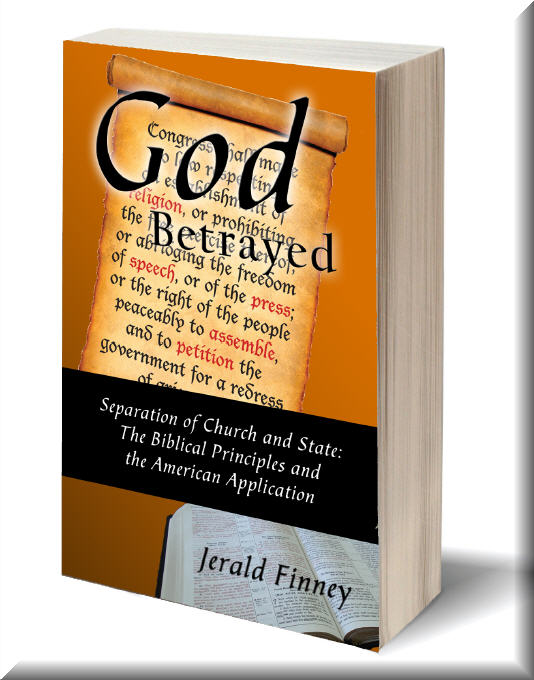
The remainder of this article is a summation of biblical teaching on heresy and apostasy, an important topic in the study of the doctrines of the church and separation of church and state. The material is taken from Section II, Chapter 4 of God Betrayed/Separation of Church and State: The Biblical Principles and the American Application: Link to preview of God Betrayed. God Betrayed may be ordered from Amazon and other sources by left clicking the following link: Books.[See Endnote] (Note the study guide for God Betrayed in the last article). The article which follows this one within a few weeks will chronicle the recent accelerated apostasy in the United States, and will shed light on how American churches have reached their present state. One can also go to the Apostasy page of the Church and State Law”\ website for links to articles on the alarming heresies and apostasies of churches in general.


II. 2012, 2013 Update

Click the following link to go to an excellent article dealing with the unbiblical responses of big-name pastors to giving their unqualified blessing to the church and the ministry of the new pastor, John Wilkerson:

Ignoring the Sin of First Baptist of Hammond

Very good biblically based and biblically appropriate teachings on the First Baptist of Hammond situation are at the following cites: Schaap and the sins of First Baptist; Jack Schaap and First Baptist Church Road to Reconciliation; Avoiding Schaap’s Fall. These teachings are obviously given by pastors with a spirit directed by not only the love of God, but also by the love of their fellow man, including Jack Schaap, the members of First Baptist of Hammond, and the untold numbers of believers and churches who have followed Schaap and First Baptist down the road of heresy and immorality.

The Lord inspired the author to write and publish two articles on Dr. Jack Hiles (On Jack Hyles’ Sermon, ‘The Treasure is in a Field,” August 7, 2010), Dr. Jack Schaap (this article, August 21, 2010), and First Baptist of Hammond, Indiana in 2010. Those articles were meant to serve as a warning against continued heresy at First Baptist and other churches and to proclaim biblical teaching church heresy an apostasy (See part IV below, which was Part III in the original article). After he published those articles, he received numerous letters from pastor, and he published those letters with his responses (Letters from Pastors Regarding Hyles/Schaap and Other Articles, September 2010). Those articles dealt with the marriage of Christ and His church, and the marriage of a man and woman. Those articles alerted readers to certain heresies of Hyles, Schaap, and First Baptist of Hammond and warned Schaap, First Baptist of Hammond, and any others of the ultimate consequences of unchecked and unrepented of heresies within a church body. Since First Baptist, Hyles, and Schaap published their heresies, not only to their church but also to the world in many ways including the internet, sales of books, CDs, DVDs, seminars attended by pastors and believers from all over the nation, this author, as a part of that world to which their heresies were offered, published biblical principles and teachings which exposed some of the main heresies practiced and preached by Hyles and Schaap.

Schaap published an alarming book of heresies, not mentioned in this author’s 2010 articles on heresies coming from that church, back in 2010. Click the following link for information on that heresy: Marriage: The Divine Intimacy by Jack Schaap. In that book, Schaap revealed the extent of his heresies regarding marriage and matters inherently involved with marriage.

The following is from Pastor Jack Schaap’s Perverted Mind was Already Manifested in Sermons and Books:

“Jack Schaap authored, Marriage: The Divine Intimacy. On page 50, his perverted mind is plainly manifested. He sees ‘the marriage bed’ almost everywhere he looks in the Bible.

“On July 8th, he preached a sermon titled, ‘What Mom And Dad Don’t Know Will Hurt Him.’ Many things he preached cannot even be quoted here. One example will suffice:

“‘You know, the most common question I ask our teenagers: are you safe in how you act? Mom and dad, you understand the language?…when your children reach that age, and they start going through that 13, 14, 15 year stage, send them to me, I’ll talk to them. Please don’t look at me like I’m stupid, why are you talking this way?’

“In other words, he obviously thought that the most important subject to discuss with teenagers is how to be ‘safe’ in their lewdness. Many pastors around the country are jumping on the new ‘openness’ band-wagon, as they try to attract attention by shocking the world and their congregations with their frank (profane) language concerning the marriage bed, etc.

“Many ‘Christians’ are using the examples of this pastor to attack what they call ‘fundamentalism.’ Yet, look at what is happening in the Catholic church, in charismatic churches, and in mega-churches with a non-fundamental agenda! It is not what is often called “fundamentalism” that is the problem. It is the lack of fundamentalism in so-called fundamental churches! Hollywood has invaded these churches, and it can be seen in the language used by the preachers. Evil communication corrupts good manners!”

Videos exposing Pastor Jack Schaaps heretical worldly views include:

http://www.youtube.com/watch?v=eMk2F-KLYkQ
http://www.youtube.com/watch?v=rC-SfQ100uE&feature=related
http://www.youtube.com/watch?v=_jMP1S7xvdg&feature=related

First Baptist of Hammond, despite the warnings of this author and others, has proudly and arrogantly continued down the road of heresy. Much damage was being done to individuals, families, churches, and the nation because of those heresies. A climactic, but not final, event resulting from the proud anti-biblical march forward of First Baptist of Hammond is now international news.

The Bible is clear. One heresy leads to another to another. Biblical teaching on church heresy and apostasy is clear. It is also clear on the importance the believer’s and church’s God-given goal of glorifying Him in both belief and method. From all appearances, First Baptist has not learned their lesson. Even in addressing the sin of Schaap, the methods and rationale used by First Baptist dishonor our Lord. One man they immediately called in to preach will make sure that they continue down the same heretical, unrepentant road. In addition to insights to be gleaned from the writings and audio teachings of this author, an article authored by Dr. Bob Gray, in Sincere Questions, published August 4, 2012, offers important questions and insights on the situation at First Baptist of Hammond.

All the biblical principles for the relationship between Christ and his churches and between church and state are meticulously covered on this website and in the books by this author. Churches who violate those principles are building upon the same foundation as did First Baptist of Hammond, Indiana, even if they have not fallen to the degree of that church. One who is a member of a Scripturally compromised church should not criticize Schaap too harshly. The author personally knows of situations in churches similar to that of First Baptist and Jack Schaap as well as variations thereof. The tentacles of First Baptist and its heresies and resulting sins have been spread to untold numbers of “Fundamental” Baptist churches (as well as other types of churches) all over this nation.

After I had written the quote in the above paragraph, someone emailed me the link to the following article: Let Us Prey: Big Trouble At First Baptist Church (Notice that this article is 7 pages long, with links at bottom of pages to go to next page.):

For thou didst it secretly: but I will do this thing before all Israel, and before the sun. And David said unto Nathan, I have sinned against the LORD. And Nathan said unto David, The LORD also hath put away thy sin; thou shalt not die. Howbeit, because by this deed thou hast given great occasion to the enemies of the LORD to blaspheme, the child also that is born unto thee shall surely die” (2 Sa. 12:12-14). King David repented, neither Schaap nor First Baptist of Hammond have done so.  “Giving no offence in any thing, that the ministry be not blamed: But in all things approving ourselves as the ministers of God, in much patience, in afflictions, in necessities, in distresses,  In stripes, in imprisonments, in tumults, in labours, in watchings, in fastings;  By pureness, by knowledge, by longsuffering, by kindness, by the Holy Ghost, by love unfeigned, By the word of truth, by the power of God, by the armour of righteousness on the right hand and on the left, By honour and dishonour, by evil report and good report: as deceivers, and yet true; As unknown, and yet well known; as dying, and, behold, we live; as chastened, and not killed; As sorrowful, yet alway rejoicing; as poor, yet making many rich; as having nothing, and yet possessing all things” (2 Co. 6:3-10).

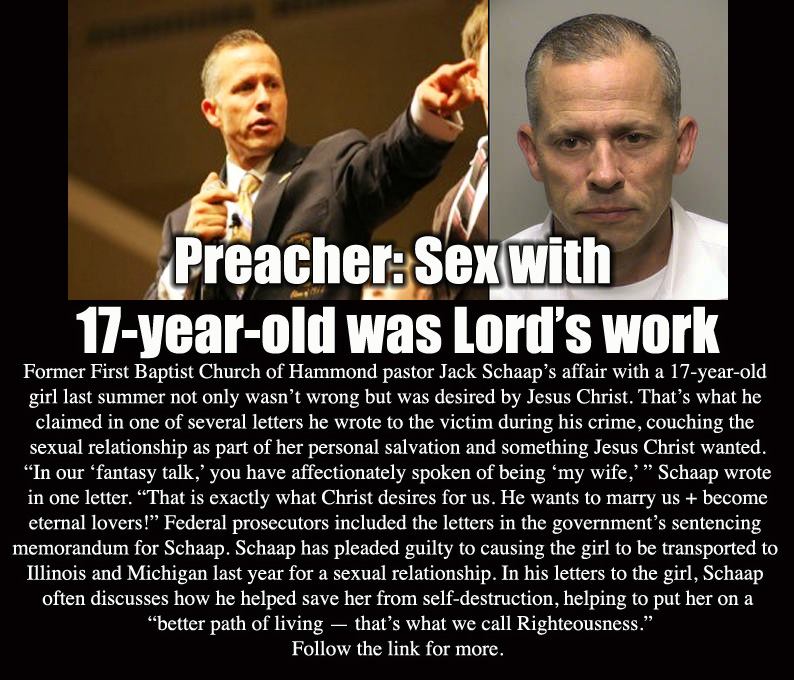
Click this link to see the Government’s Sentencing memorandum in the Jack Schaap case.

Click this link to see an appraisal of the Jack Schaap/First Baptist of Hammond situation by a man who loved First Baptist, Graduated from the college there, knew Jack Schaap, etc.  (Also reproduced in En 2 below).

To understand more about the unchecked heresies of Jack Hyles, Jack Schaap, the progression of those heresies and the inevitable consequences click here to read the entire article, “Open Letter to First Baptist Church – Hammond Indiana” by Linda Murphrey, daughter of Jack Hyles.


III. Heresy and apostasy

Prior to the return of the Lord, the local, visible churches will go into apostasy. “Let no man deceive you by any means: for that day shall not come, except there come a falling away first, and that man of sin be revealed, the son of perdition: who opposeth and exalteth himself above all that is called God, or that is worshipped; so that he as God sitteth in the temple of God, shewing himself that he is God” (2 Th. 2.3-4).

“Apostasy, ‘falling away,’ is the act of professed Christians who deliberately reject revealed truth (1) as to the deity of Jesus Christ, and (2) redemption through His atoning and redeeming sacrifice (1 Jn. 4.1-3 [‘Beloved, believe not every spirit, but try the spirits whether they are of God: because many false prophets are gone out into the world. Hereby know ye the Spirit of God: Every spirit that confesseth that Jesus Christ is come in the flesh is of God: And every spirit that confesseth not that Jesus Christ is come in the flesh is not of God: and this is that spirit of antichrist, whereof ye have heard that it should come; and even now already is it in the world.’]; Phil. 3.18 [‘For many walk, of whom I have told you often, and now tell you even weeping, that they are the enemies of the cross of Christ:”]; 2 Pet. 2.1 [“But there were false prophets also among the people, even as there shall be false teachers among you, who privily shall bring in damnable heresies, even denying the Lord that bought them, and bring upon themselves swift destruction.’]). Apostasy differs therefore from error concerning truth, which may be the result of ignorance (Ac. 19.1-6 [‘And it came to pass, that, while Apollos was at Corinth, Paul having passed through the upper coasts came to Ephesus: and finding certain disciples, He said unto them, Have ye received the Holy Ghost since ye believed? And they said unto him, We have not so much as heard whether there be any Holy Ghost. And he said unto them, Unto what then were ye baptized? And they said, Unto John’s baptism. Then said Paul, John verily baptized with the baptism of repentance, saying unto the people, that they should believe on him which should come after him, that is, on Christ Jesus. When they heard this, they were baptized in the name of the Lord Jesus. And when Paul had laid his hands upon them, the Holy Ghost came on them; and they spake with tongues, and prophesied.’]), or heresy, which may be due to the snare of Satan (2 Ti. 2.25, 26 [‘In meekness instructing those that oppose themselves; if God peradventure will give them repentance to the acknowledging of the truth; And that they may recover themselves out of the snare of the devil, who are taken captive by him at his will.’]), both of which may consist with true faith. The apostate is perfectly described in 2 Ti. 4.3, 4 [‘For the time will come when they will not endure sound doctrine; but after their own lusts shall they heap to themselves teachers, having itching ears; And they shall turn away their ears from the truth, and shall be turned into fables.’]. Apostates depart from the faith, but not from the outward profession of Christianity (2 Ti. 3.5 [‘Having a form of godliness, but denying the power thereof, from such turn away.’]). Apostate teachers are described in 2 Ti. 4.3 [“For the time will come when they will not endure sound doctrine; but after their own lusts shall they heap to themselves teachers, having itching ears.]; 2 Pe. 2.1-19 [quoted here in part: ‘But there were false prophets also among the people, even as there shall be false teachers among you, who privily shall bring in damnable heresies, even denying the Lord that bought them, and bring upon themselves swift destruction. And many shall follow their pernicious ways; by reason of whom the way of truth shall be evil spoken of.  And through covetousness shall they with feigned words make merchandise of you: … But these, as natural brute beasts, made to be taken and destroyed, speak evil of the things that they understand not; and shall utterly perish in their own corruption; …  Which have forsaken the right way, and are gone astray, following the way of Balaam the son of Bosor, who loved the wages of unrighteousness; ….These are wells without water, clouds that are carried with a tempest; to whom the mist of darkness is reserved for ever. For when they speak great swelling words of vanity, they allure through the lusts of the flesh, through much wantonness, those that were clean escaped from them who live in error.  While they promise them liberty, they themselves are the servants of corruption: for of whom a man is overcome, of the same is he brought in bondage.’]; Jude 4, 8, 11-13, 16 [‘For there are certain men crept in unawares, who were before of old ordained to this condemnation, ungodly men, turning the grace of our God into lasciviousness, and denying the only Lord God, and our Lord Jesus Christ…. Likewise also these filthy dreamers defile the flesh, despise dominion, and speak evil of dignities…. Woe unto them! for they have gone in the way of Cain, and ran greedily after the error of Balaam for reward, and perished in the gainsaying of Core. These are spots in your feasts of charity, when they feast with you, feeding themselves without fear: clouds they are without water, carried about of winds; trees whose fruit withereth, without fruit, twice dead, plucked up by the roots; Raging waves of the sea, foaming out their own shame; wandering stars, to whom is reserved the blackness of darkness for ever. These are murmurers, complainers, walking after their own lusts; and their mouth speaketh great swelling words, having men’s persons in admiration because of advantage.’].  Apostasy in the church, as in Israel (Is. 1.5, 6; 5.5-7), is irremediable, and awaits judgment (2 Th. 2.10-12 [‘And with all deceivableness of unrighteousness in them that perish; because they received not the love of the truth, that they might be saved. And for this cause God shall send them strong delusion, that they should believe a lie: That they all might be damned who believed not the truth, but had pleasure in unrighteousness’]; 2 Pe. 2.17, 21 [‘These are wells without water, clouds that are carried with a tempest; to whom the mist of darkness is reserved for ever…. For it had been better for them not to have known the way of righteousness, than, after they have known it, to turn from the holy commandment delivered unto them.’]; Jude 11-15; Re. 3.14-16)” (1917 Scofield Reference Edition, n. 1 to II Timothy 3.1, p. 1280). [Bold emphasis mine].

Inevitably, there is no remedy for apostasy but judgment (Is. 1.2-7, 24, 25; He. 6.4-8; 10.26-31). For example, Noah preached for 120 years, won no converts, and the judgment predicted by his great-grandfather fell (Jude 14, 15, Genesis 7.11.).

“Nevertheless, when the Son of man cometh, shall he find faith on the earth” (Luke 18.8b)?  The reference is not to personal faith, but to belief in the whole body of revealed truth. “Now the Spirit speaketh expressly, that in the latter times some shall depart from the faith, giving heed to seducing spirits, and doctrines of devils”( 1 Ti. 4.1).

In the New Testament, the apostasy was treated as having already set in. In fact, the Asian churches had not disbanded, nor ceased to call themselves Christian; but they had turned away from the doctrines of grace distinctively revealed through the Apostle Paul. Thus, even in the beginning of the church, the apostle Paul and Jude were concerned with the tendency to depart from the faith due to the influence of false teachers:

“I marvel that ye are so soon removed from him that called you into the grace of Christ unto another gospel:  Which is not another; but there be some that trouble you; and would pervert the gospel of Christ. But though we, or an angel from heaven, preach any other gospel unto you than that which we have preached unto you, let him be accursed” (Ga. 1.6-8).

“For there are certain men crept in unawares, who were before of old ordained to this condemnation, ungodly men, turning the grace of our God into lasciviousness, and denying the only Lord God, and our Lord Jesus Christ” (Jude 4).

Many of our churches today, even many of our independent Bible believing churches, have perverted the gospel of Christ and turned the grace of our God into lasciviousness (“Looseness; irregular indulgence of animal desires; wantonness; lustfulness; Tendency to excite lust, and promote irregular indulgences.” AMERICAN DICTIONARY OF THE ENGLISH LANGUAGE, NOAH WEBSTER (1828) definition of “LASCIVIOUSNESS.”) even though perhaps they have not verbally denied our Lord God, and our Lord Jesus Christ.

Gentile world apostasy comes in seven stages:

“Because that, when they knew God, they glorified him not as God, neither were thankful; but became vain in their imaginations, and their foolish heart was darkened. Professing themselves to be wise, they became fools. And changed the glory of the uncorruptible God into an image made like to corruptible man, and to birds, and fourfooted beasts, and creeping things” (Ro. 1.21-23).

As a result of this worldwide Gentile apostasy, mankind sinks to the depths of depravity:

“Wherefore God also gave them up to uncleanness through the lusts of their own hearts, to dishonour their own bodies between themselves: Who changed the truth of God into a lie, and worshipped and served the creature more than the Creator, who is blessed for ever. Amen. For this cause God gave them up unto vile affections: for even their women did change the natural use into that which is against nature: And likewise also the men, leaving the natural use of the woman, burned in their lust one toward another; men with men working that which is unseemly, and receiving in themselves that recompence of their error which was meet. And even as they did not like to retain God in their knowledge, God gave them over to a reprobate mind, to do those things which are not convenient; Being filled with all unrighteousness, fornication, wickedness, covetousness, maliciousness; full of envy, murder, debate, deceit, malignity; whisperers, Backbiters, haters of God, despiteful, proud, boasters, inventors of evil things, disobedient to parents. Without understanding, covenantbreakers, without natural affection, implacable, unmerciful: Who knowing the judgment of God, that they which commit such things are worthy of death, not only do the same, but have pleasure in them that do them” (Ro. 1.24-32).

The apostasy is usually introduced by ungodly men who will “wax worse and worse, deceiving, and being deceived” (2 Ti. 3.13). Our Lord warned against false teachers:

     “Beware of false prophets, which come to you in sheep’s clothing, but inwardly they are ravening wolves” (Mt. 7.15).
“Not every one that saith unto me, Lord, Lord, shall enter into the kingdom of heaven; but he that doeth the will of my Father which is in heaven. Many will say to me in that day, Lord, Lord, have we not prophesied in thy name? and in thy name have cast out devils? and in thy name done many wonderful works? And then will I profess unto them, I never knew you: depart from me, ye that work iniquity” (Mt. 7.21-23).
“And Jesus answered and said unto them, Take heed that no man deceive you. For many shall come in my name, saying, I am Christ; and shall deceive many” (Mt. 24.4-5).
“And many false prophets shall rise, and shall deceive many” (Mt. 24.11).
“For false Christs and false prophets shall rise, and shall shew signs and wonders, to seduce, if it were possible, even the elect” (Mk. 13.22).
“Whosoever therefore shall break one of these least commandments, and shall teach men so, he shall be called the least in the kingdom of heaven” (Mt. 5.19).
“But in vain do they worship me, teaching for doctrines the commandments of men” (Mt. 15.9).

The Lord is obviously warning that many of His children will be deceived by the many false prophets which shall arise. With heresy and apostasy, the God-given doctrines and goal for churches and for Christians are left in the dust. The goal or purpose of most churches and “Christians” is the happiness of man and not the glory of God. They ask “What can God do for me,” not “What can I do for God?” Their purpose for giving, for doing, and for going to church is to get something back from God. Many believers today, many in independent Bible believing churches, are being deceived about many biblical doctrines, including the doctrine of separation of church and state. As a result, they are, among other things, incorporating, operating as unincorporated associations, and becoming 501(c)(3) tax exempt organizations. Section VI of God Betrayed discusses incorporation and tax exempt status of churches in some detail, and explains ways that a church can hold property and also please God.

As a result, God is not glorified at all. Everything in the ultimate modern American church is for self—the headship, the “Bibles,” the doctrines taught, the preaching, the music, the dress, the goal, everything.

Peter, Paul, and Jude traced the origin of apostasy to false teachers, explained their methods of operation, and warned the church to beware of the apostasy:

“Take heed therefore unto yourselves, and to all the flock, over the which the Holy Ghost hath made you overseers, to feed the church of God, which he hath purchased with his own blood. For I know this, that after my departing shall grievous wolves enter in among you, not sparing he flock: Also of your own selves shall men arise, speaking perverse things, to draw away disciples after them. Therefore watch, and remember, that by the space of three years I ceased not to warn every one night and day with tears” (Ac. 20.28-31).
“But though we, or an angel from heaven, preach any other gospel unto you than that which we have preached unto you, let him be accursed. As we said before, so say I now again, If any man preach any other gospel unto you than that ye have received, let him be accursed” (Ga. 1.8-9).
“O foolish Galatians, who hath bewitched you, that ye should not obey the truth, before whose eyes Jesus Christ hath been evidently set forth, crucified among you” (Ga. 3.1)?
“For there must be also heresies among you, that they which are approved may be made manifest among you” (1 Co. 11.19).
“For if he that cometh preacheth another Jesus, whom we have not preached, or if ye receive another spirit, which ye have not received, or another gospel, which ye have not accepted, ye might well bear with him” (2 Co. 11.4).
“For there are many unruly and vain talkers and deceivers, specially they of the circumcision; Whose mouths must be stopped, who subvert whole houses, teaching things which they ought not, for filthy lucre’s sake” (Tit. 1.10-11).
“Now the spirit speaketh expressly, that in the latter times some shall depart from the faith, giving heed to seducing spirits, and doctrines of devils; Speaking lies in hypocrisy; having their conscience seared with a hot iron” (1 Ti. 4.1-2).
“For the time will come when they will not endure sound doctrine; but after their own lusts shall they heap to themselves teachers, having itching ears; And they shall turn away their ears from the truth, and shall be turned to fables. Having a form of godliness, but denying the power thereof: from such turn away” (2 Ti. 4.3-5).
“But there were false prophets also among the people, even as there shall be false teachers among you, who privily shall bring in damnable heresies, even denying the Lord that bought them and bring upon themselves swift destruction. And many shall follow their pernicious ways; by reason of whom the way of truth shall be evil spoken of. And through covetousness shall they with feigned words make merchandise of you: whose judgment now of a long time lingereth not, and their damnation slumbereth not….  Which have forsaken the right way, and are gone astray, following the way of Balaam the son of Bosor, who loved wages of unrighteousness; But was rebuked for his iniquity: the dumb ass speaking with man’s voice forbad the madness of the prophet. These are wells without water, clouds that are carried with a tempest; to whom the mist of darkness is reserved for ever. For when they speak great swelling words of vanity, they allure through the lusts of the flesh, through much wantonness, those that were clean escaped from them who live in error. While they promise them liberty, they themselves are the servants of corruption: for of whom a man is overcome, of the same is he brought into bondage” (2 Pe. 2.1-3, 15-19. All of 2 Pe. 2 deals with false teachers.).
“Whosoever transgresseth, and abideth not in the doctrine of Christ, hath not God. He that abideth in the doctrine of Christ, he hath both the Father and the Son. If there come any unto you, and bring not this doctrine, receive him not into your house, neither bid him God speed: For he that biddeth him God speed is partaker of his evil deeds” (2 Jn. 9-11).
“Knowing this first, that there shall come in the last days scoffers, walking after their own lusts, And saying, Where is the promise of his coming? for since the fathers fell asleep, all things continue as they were from the beginning of the creation” (2 Pe. 3.3-4).
“For there are certain men crept in unawares, who were before of old ordained to this condemnation, ungodly men, turning the grace of our God into lasciviousness, and denying the only Lord God, and our Lord Jesus Christ” (Jude 4. Jude predicts the apostasy of the professing church and describes the cause and course of the apostasy. As in II Timothy and II Peter, the apostasy is treated as having already set in.).

Only a little leaven (false teaching) can completely change and pervert the truth of the Gospel: “Ye did run well; who did hinder you that ye should not obey the truth?  This persuasion cometh not of him that calleth you. A little leaven leaveneth the whole lump” (Ga. 5.7-9).

False teachers deny redemption truth: “[False teachers] shall bring in damnable heresies, even denying the Lord that bought them and bring upon themselves swift destruction” (2 Pe. 2.1). Others deny the truth concerning Christ’s person as Son of God, God himself: “BELOVED, believe not every spirit, but try the spirits whether they are of God: because many false prophets are gone out into the world. Hereby know ye the Spirit of God: Every spirit that confesseth not that Jesus Christ is come in the flesh is not of God: and this is that spirit of antichrist, whereof ye have heard that it should come; and even now already is it in the world. Ye are of God, little children, and have overcome them: because greater is he that is in you, than he that is in the world. They are of the world: therefore speak they of the world, and the world heareth them” (1 Jn. 4.1-5; see also, 1 Jn. 2.18-28).

In Jude all phases of apostasy are seen. Jude mentions those who “ran after the error of Balaam for reward.” Many pastors and other Christians today, like Balaam, revert to human reasoning and, among other unbiblical practices, put God’s church under the state for reward—that is, for money, for popularity, or power. They may not have gone completely into apostasy, but heresy is the first step toward apostasy.

Both Peter and Paul foresee the apostasy in which the history of the professing church will end. Paul finds that apostasy in its last stage when the so-called laity have become infected:

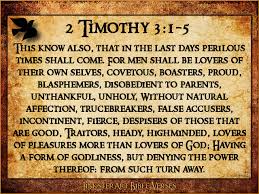
“1 This know also, that in the last days perilous times shall come. 2 For men shall be lovers of their own selves, covetous, boasters, proud, blasphemers, disobedient to parents, unthankful, unholy, 3 Without natural affection, trucebreakers, false accusers, incontinent, fierce, despisers of those that are good, 4 Traitors, heady, highminded, lovers of pleasures more than lovers of God; 5 Having a form of godliness, but denying the power thereof: from such turn away. 6 For of this sort are they which creep into houses, and lead captive silly women laden with sins, led away with divers lusts, 7 Ever learning, and never able to come to the knowledge of the truth.” (2 Ti 3:1-7) “3 For the time will come when they will not endure sound doctrine; but after their own lusts shall they heap to themselves teachers, having itching ears; 4 And they shall turn away their ears from the truth, and shall be turned unto fables.” (2 Ti. 4:3-4).

Peter traces the origin of the apostasy to false teachers (2 Pe 2.1-3,15-19, quoted above). In Peter the false teachers deny redemption truth (2 Pe 2.1); In First John one finds a deeper depth–denial of the truth concerning Christ’s person (1 Jo. 4.1-5).

In this time of heresy and apostasy in modern America, as Jack Schaap points out in the video http://www.youtube.com/watch?v=yjVZGUWRJgA, which is also linked above, the population is going up while fewer and fewer are being saved. What do you do? Too bad most modernistic teachers, so fully indoctrinated by secularlism, turn  to the god of this world and his techniques—business and sales techniques, psychological techniques, anything but the Word of God, to answer that question. 2 John tells the believer what to do when “many deceivers are entered into the world” (v. 7). John says we are to go forward with “the truth” (the Scriptures). “The Bible, as the alone authority for doctrine and life, is the believer’s resource in a time of declension and apostasy” (1917 Scofield Reference Edition, Headnote to 2 Jn.). Paul instructed Timothy, a preacher whom Paul called his “dearly beloved son” (2 Ti. 1.2) and his “own son in the faith” (1 Ti. 1.2), what to do in a time of apostasy: “I charge thee therefore before God, and the Lord Jesus Christ, who shall judge the quick and the dead at his appearing and his kingdom; Preach the word; be instant in season, out of season; reprove, rebuke, exhort with all longsuffering and doctrine” (2 Ti. 4.1-2).

The believer’s resources in a day of general declension and apostasy are faith (2 Ti. 1.5), the spirit (2 Ti. 1.6-7), the Word of God (2 Ti. 1.13; 3.1-17; 4.3-4), the grace of Christ (2 Ti. 2.1), separation from vessels unto dishonor (2 Ti. 2.4, 20-21), the Lord’s sure reward (2 Ti. 4.7-8), and the Lord’s faithfulness and power (2 Ti. 2.13, 19).

The tone of the New Testament writers when dealing with heresy and apostasy is never one of dejection or pessimism. God & His promises are still the resource of the believer. Although Paul as recorded in II Timothy and Peter as recorded in II Peter are aware that martyrdom is near (See 2 Ti. 4.6-8, 2 Pe. 1.14, and Jn. 21.18-19), both are apparently sustained and joyful:

“For I am now ready to be offered, and the time of my departure is at hand. I have fought a good fight, I have finished my course, I have kept the faith: Henceforth there is laid up for me a crown of righteousness, which the Lord, the righteous judge, shall give me at that day: and not to me only, but unto all them also that love his appearing” (2 Ti. 4.7-8).

The whole book of II Timothy reflects Paul’s joyful attitude as II Peter shows Peter to be likewise joyful and sustained.

II Timothy, II Peter, Jude, and II & III John deal the personal walk and testimony of a true servant of Christ in a day of apostasy and declension. For example, Paul instructs the “good soldier” in the face of apostasy:

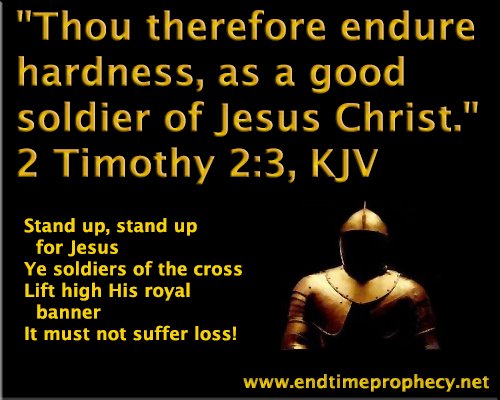
“[B]e strong in the grace that is in Christ Jesus. And the things that thou has heard of me among many witnesses, the same commit thou to faithful men, who shall be able to teach others also. Thou therefore endure hardness, as a good soldier of Jesus Christ. No man that warreth entangleth himself with the affairs of this life: that he may please him who hath chosen him to be a soldier….  Remember that Jesus Christ of the seed of David was raised from the dead according to my gospel: …  It is a faithful saying: For if we be dead with him, we shall also live with him: If we suffer, we shall also reign with him: If we deny him, he also will deny us: If we believe not, yet he abideth faithful: he cannot deny himself….  Study to shew thyself approved unto God, a workman that needeth not to be ashamed, rightly dividing the word of truth. But shun profane and vain babblings: for they will increase unto more ungodliness. And their word will eat as doth a canker: …  Flee also youthful lusts: but follow righteousness, faith, charity, peace, with them that call on the Lord out of a pure heart. But foolish and unlearned questions avoid, knowing that they do gender strifes. And the servant of the Lord must not strive; but be gentle unto all men, apt to teach, patient, In meekness instructing those that oppose themselves; if God peradventure will give them repentance to the acknowledging of the truth; And that they may recover themselves out of the snare of the devil, who are taken captive by him at his will” (2 Ti. 2.1-4, 8, 11-13, 15-17a, 22-25).


IV. Conclusion

The Lord enlisted believers to be soldiers in His army (2 Ti. 2). We are to fight this spiritual warfare on all fronts using spiritual, not carnal, weapons (2 Co. 10.3-5; Ep. 6.10-18). Our God-given goal is to please our Lord and glorify Him. The main thrust in this warfare is the salvation of souls. This warfare requires not only that a preacher preach truth inside a building on Sunday morning and maybe also on Sunday and Wednesday evenings. This warfare must go on in the streets; from door to door; in prisons; in the city halls and capital buildings of our state and nation; in our courtrooms; in our Bible institutes, colleges, and seminaries; in internet articles and videos; in every nook and cranny. The evils occurring everywhere, including and most importantly in our churches, must be confronted if we are to be the good soldiers that God called us to be. What higher places of spiritual wickedness than in many churches where heresy has crept in or apostasy has overcome can be found? In order to fight this warfare, every believer must seek to disentangle himself from the affairs of this world and “endure hardness as a good soldier of Jesus Christ,” “that he may please him who hath chosen him to be a soldier” (2 Ti. 2.3-4).

Let us joyfully march forward with knowledge, understanding, wisdom gained through Holy Spirit led study of the God’s Word, the KJV in English, as we face the inevitable persecutions that follow those who sell out to the service of Our Lord Jesus Christ. Let us disentangle ourselves from the affairs of this life (for example, church incorporation and 501(c)(3), psychology, business and sales techniques, etc.) that we may please our Lord. “Wherefore seeing we also are compassed about with so great a cloud of witnesses, let us lay aside every weight, and the sin which doth so easily beset us, and let us run with patience the race that is set before us, Looking unto Jesus the author and finisher of our faith; who for the joy that was set before him endured the cross, despising the shame, and is set down at the right hand of the throne of God” (He. 12.1-2).


Endnotes

En1 Order page and free online versions and online PDFs of books by Jerald Finney

En2 

A Hyles-Anderson Graduate Speaks Out on Jack SchaapPosted: 19 Mar 2013 06:12 PM PDT

cheshirecatschaap

FBI – Schaap looked like a Cheshire Cat kissing the Teenager

ARTICLE WRITTEN FROM FBI AND PROSECUTION EVIDENCE – LINK BELOW

This past year has seen the complete destruction of all that we hold dear in Hammond, Indiana.  The crimes and sins of Jack Schaap which he has never confessed as sin have soured people around the world including me.  I even created a YouTube video defending First Baptist Church and Hyles-Anderson College.  I especially defended Dr. Jack Hyles and even made a video from his sermon FRESH OIL recorded in the 1980′s.  I was there when Jack Schaap was still a student and then began to teach in the college.  I was there when he proposed to Cindy Hyles who was in some of my classes.  In order to fully understand how shocked some of us are as graduates and alumni of Hyles-Anderson one needs to have been there and known the rules of the college.

One rule was that if a guy or girl had entered any room or classroom of the church or school, a member of the opposite sex was to stay out until there were at least one other guy or girl present so that there would always be an uneven number in the room at the same time.  This was also a rule on the busses and even the night bus did not allow the young women to be on the evening routes because of the late arrival time of those returning from dropping off the night riders.

Another fact was that we were taught in Church Ed class and in Dr. Hyles’ special sessions for young preachers that when counseling a woman, there should never be a one-on-one session.  It would always be preferred to have a woman counsel with women and a man counsel with men.  If for any reason a pastor needed to speak to a woman or young girl, it was to be with a woman present or with a secretary sitting outside a door that was open so that there could be no mistake about what was going on during the counseling session.

What about the story that Dr. Hyles told about two teens that came to his office and they were coming to confess about how that they had “fallen into sin?”  He asked them what they did.  They said that they “held hands,” and he then told them that they still had hope and that God would forgive them. He privately jumped with glee after they left because he had kept them so far away from the edge that they had only “stumbled” into “holding hands” instead of something far worse.  You see, the rules at the college, the grade school, junior high, and high school were totally against even holding hands, much less kissing.  That was the surest way to keep one pure until marriage and it was always a great joy to see a couple kissing for the first time the day they were married.  One of my friends in college, Brad Lake, did not kiss his wife (they met at Hyles-Anderson) until his wedding day.  We all had to grin as they could not stop kissing even during the reception.  That was quite common at First Baptist most of the time with couples who kept themselves until marriage.

Another thing that comes to mind is the philosophy that Dr. Hyles preached in a sermon entitled HOW NOT TO DIE was the principle taught in James.  “Let no man say when he is tempted, I am tempted of God: for God cannot be tempted with evil, neither tempteth he any man: But every man is tempted, when he is drawn away of his own lust, and enticed. Then when lust hath conceived, it bringeth forth sin: and sin, when it is finished, bringeth forth death.”  (James 1:13-15)  Let me explain:

The principle about staying away from death is to stay away from sin.  So then we ask ourselves, how does one stay away from sin.   The scripture explains that the thing that brings sin is lust.  Well then, if it is lust that causes sinand it is sin that brings death, then it seems only logical that in order to avoid death, avoid sin and lust.  That seems fairly simple.  If you don’t want to die, avoid sin and if you don’t want to sin then avoid lust.  But what does James teach us?  It says that a man is drawn away to lust when he is enticed.  This means that if there is no enticement, then there would be no lust.  It means that without lust, there would be no sin and thus no death.  But here is where we get to the whole root of the principle taught by Dr. Hyles and by Hyles-Anderson and First Baptist Church.  There are two statements that the Bible makes that completely obliterates JACK SCHAAP and his excuses which, by the way, seem to be backed by over 100 people who wrote the court in his defense.  First, the Bible says, “Let no man say when he is tempted, I am tempted of God: for God cannot be tempted with evil, neither tempteth he any man.”  We have seen in Jack Schaap’s book on DIVINE INTIMACY that he makes God the one who tempts with evil.  DO YOU HEAR WHAT I AM SAYING?  If Jack Schaap’s “god” was at the root of his temptations THEN HIS GOD WAS SATAN.  The second point I would like to make is that the Bible also says “drawn away.”

When Dr. Hyles taught this in First Baptist he told the story about how he learned this lesson.  It seems that he was with some friends on the way home from school.  They always went the same way home and never turned down a different path but went straight to their houses.  One day a friend asked the others to go just one block over to walk home that day.  Wouldn’t you know that because they went a different way (drawn away) they saw an orange tree on the other side of the fence of a home owner.  It enticed them.  Someone said that there were some oranges leaning over the fence and they could lift up one of them to reach the orange.  They all thought about the good taste of the orange (lust).  So, someone challenged the others and Jack Hyles was elected to be the one lifted up at the edge of the fence.  He and his friends decided to steal an orange from a yard when it did not belong to them (sin).  Then the most horrible thing happened, because it was so hard to reach and it was farther away than he thought, he fell over the fence into the other yard.  Someone must have called the police because before he could escape with his stolen fruit, they showed up (death).  What is the moral of the story?  If he had not gotten diverted from the normal way home he would never been enticed, which means he would never have lusted, and it would not have lead to sin anddeath.

Now here is my problem as we read what is reported CHICAGOMAG.COM.  I am going to take the points that have caused a worldly court system and a public prosecutor to condemn the actions of someone who certainly should have known exactly what is written above.  This is quoted from the online site:

1) Schaap kissing the victim during counseling. “When I asked you if it was wrong, you said, ‘No,’” the girl said in a statement. “You told me that I was sent to you from God; I was his gift to you.”

2) Schaap’s claim that Christ wanted the two to be together. The two spoke on the phone or texted each other more than 600 times, according to prosecutors. In one transcript, a text from Schaap reads: “Yesterday was ‘off-the-charts!’ :) ))”. Another read, in part, “[this] is exactly what Christ desires for us. He wants us to marry + become eternal lovers!”

3) Schaap’s cover stories for his numerous rendezvous with the teen. One, for his trips to an Illinois forest preserve, was that he needed to “spend time with God walking and praying.” To explain his taking the girl alone to his Michigan cabin, he told his assistant that he needed to spend extended periods of time alone with the girl to “save” her—both literally and spirtually. Investigators later recovered photos taken inside the cabin showing a grinning Schaap “on a couch in an intimate pose” with the girl and also “french-kissing [her] while touching her in a sexual manner.”

4) Schaap having sex with the teen in his office. During a church youth conference.

5) Schaap dishonoring the teen’s father and mother. “I will never forget how [he] looked me in the eyes…and told me how great my daughter was doing,” the father wrote in a victim’s impact statement. “It is sickening to me that a man who claims to be a messenger of God, with a daughter of his own, would take advantage of a young girl in such an evil and immoral manner.”

Let me take them one at a time and show why there is a very deep problem in the thinking and the fact that ANYONE would defend him for ANY REASON.

1) Schaap kissing the victim during counseling.   I need to cry out WAIT A MINUTE! WHAT ABOUT HOW TEENS WERE TAUGHT THAT EVEN HOLDING HANDS WAS WRONG?  So it is wrong for a teen to hold hands but the pastor can not only hold hands but kiss during counseling?  The FBI said Schaap was grinning like a Cheshire Cat!  Do you mean that he was counseling a woman (teen) in his office alone?  Do you mean that no secretary was sitting right outside the door?  Do you mean that when the school asked him to counsel a troubled teen he did not ask his wife who is the author of many books to take the case so he could be above reproach?  And, may I ask you, why would one of the directors of the school ask the pastor to do something that was clearly against all that they were taught and against every principle of decency and morals in the whole church, Christian schools, and college?  Why did not someone say, “…that is not how we do things here…” but instead they had blinders on their eyes and no one was bold enough to speak up based upon their own rules or on the principles of the Bible that Dr. Hyles had taught and everyone knew.  Lastly, I might ask, what did God think about this.  The scripture is plain when it says  “Let no man say when he is tempted, I am tempted of God: for God cannot be tempted with evil, neither tempteth he any man.”  Any man of God who is walking in the presence of God every day WOULD NEVER AGREE TO SUCH AN IMMORAL ENTICEMENT.  Dr. Lee Roberson was known by many as a man who would not even pick up his own daughter if she were walking down the road with her car broken down because he did not want anyone to get the wrong impression that the MAN OF GOD had just picked up a WOMAN in his car alone.  I mean, we are not just talking about a girl being in the office but he was kissing her during counseling.  Has anyone ever read that Jack Schaap made a statement saying, “I HAVE SINNED?”  No, because he is so filled with his own selfish ways that he cares not about the intrinsic value of his wife, his church, his schools, his college, his call to the ministry, his salvation (if he is saved) or the intrinsic value of his WALK WITH GOD.  Wasn’t he afraid that God would write ICKABOD on his ministry?  Oh, I almost forgot, he got drawn away.  He was drawn away from everything the institution he pastored believed and taught on a daily basis.  Bob Jones Sr. said that EVERY TRAGEDY IN HUMAN CHARACTER IS BROUGHT ABOUT BY A PROCESS OF WICKED THINKING.  One only needs to look back over the ministry of Jack Schaap and at the book he wrote about DIVINE INTIMACY which is straight out of the PIT OF HELL and was dictated to him by SATAN himself just like an angel spoke to Muhammad when he wrote the Quran.

2) Schaap’s claim that Christ wanted the two to be together.   The article says that Schaap and the girl spoke on the phone or texted one another 600 times.  I have one question:  WHERE WAS HIS WIFE CINDY?  It is obvious that in his mind he was drawn away from his own wife.  Do you mean that she never noticed?  Did he have no conscience about telling the girl he loved her and that he had never felt like this about anyone else in his whole life? Does it mean he never really loved his own wife?  Does that sound like a man that loves God?  Does that sound like a man that loves his church?  Does that sound like a man who loves souls and the ministries around the world?  Does that sound like a man that loves the bus ministry?  Does that sound like a man that loves teens?  Does that sound like a man that walks with God?  Does that sound like a man that reads the Bible?  Is he actually saying that GOD TEMPTED HIM?  How can someone with that mindset even be saved?  It sounds like he was drawn away from his wife, drawn away from his Bible, drawn away from his prayer life, drawn away from his walk with God,drawn away from his position, drawn away from his reputation, drawn away from his teaching in his home, church, and college, drawn away from sound counsel, drawn away from the rules that attended the church and all the schools of that institution, drawn away from good wisdom as Solomon wrote about in Proverbs talking about the fool that got caught by the whore, drawn away from the promise he made to the parents of the girl, drawn away from caring about the fact that this girl was to be someone else’s wife one day, drawn away from the desire to be a good Christian testimony, drawn away from being moral which means loving God and others more than self-gratification, drawn away from even the most base thoughts of conscience even among the unsaved like the FBI and prosecutors who have levied this sentence against him, drawn away from the mind of Christ, drawn awayfrom the writings of Paul who said he feared that after he had preached to others he would be a castaway.  THERE IS NO WAY IN ALL THE THINKING OF THE WORLD OR IN HEAVEN THAT GOD WANTED THEM TO BE TOGETHER.

3) Schaap’s cover stories for his numerous rendezvous with the teen.   I don’t know how I can get through this one without splitting a blood vessel.  JACK SCHAAP LIED IN SAYING HE WAS GOING OFF TO WALK WITH GOD AND PRAY!  This is almost blasphemy of the Holy Spirit!  The truth is that he was being drawn away to spending time with an UNDERAGED TEEN at the complete disregard of any relationship he had with his wife or with God.  When Dr. Hyles had difficulties in his ministry he went out into the woods to GET FRESH OIL not to cavort with an underage teen so he could engage in fornication and commit statutory rape.  Charles Finneywent out into the woods one day and after being there all day he was saved and filled with the Holy Spirit in such a powerful way that he preached some of the greatest revivals this country has ever known.  Oh by the way, Jack Schaap told his assistant he wanted to “save her.”  Well, he SAVED HER all right.  Now the family has been asked to leave the church.  WHY? THEY ARE THE VICTIMS!  He saved her all right.  He saved her from morality, from being in the church she had grown up in, from being in a Christian school (she goes to public school now), from decency, from self esteem, from being able to meet a good Christian young man, from thinking that God loves her, from thinking that she could ever have a name that is not associated with tragedy and immorality, from the love and affection that all her school teachers gave her and her Sunday School teachers taught her,  from any good memories that most teens have at that age, from any desire to serve God or become a minister’s wife or missionary, from any desire to raise her children in a Christian environment, from a desire to pray and walk with God, from a desire to make the Bible the foundation of her life, from a life not entangled with all the vices of the world because with no Christian support group, WHAT HOPE DOES SHE HAVE unless she decides to make God her greatest friend and live in HIS PRESENCE?  Don’t tell me that this liar, Jack Schaap, even had one hint of a bad conscience while he was doing all of this because of his PROSTRATE PAIN.  Maybe we need to get back to the Old Testament where God never gave any excuse for adultery or fornication and in a situation like this the man would be stoned to death.  WHERE IS THE PUBLIC STATEMENT FROM FIRST BAPTIST CHURCH DISTANCING THEMSELVE FROM THESE EGREGIOUS STATEMENTS?  We are waiting for their News Release defining how they believe and showing that they are in total disagreement with these disarming statements.

4) Schaap having sex with the teen in his office. During a church youth conference.   Let me see now!  Was it not during a conference that had as its goal getting teens to live a pure life?  Was it not when they had a theme about the cross of Christ?  Was it not during a time when they were being taught that they should DIE WITH CHRIST so they will not fulfill the lust of the flesh?  Was it not during a time when teens were going forward surrendering themselves to live chaste and keep themselves pure until marriage?  Was it not during a time when they were all making a vow that they would not even hold hands but that their first kiss would be with the one that they marry on their wedding day?  Were the teens all praying in groups for the lost in their home towns?  Were they bonding together in their vows to walk with God and be an example when they got back home?  Were they promising to burn their rock-n-roll records and separate themselves from that crowd because of their immoral ways?  My book FOUNDATIONS OF MORALITY has this to say:

Obedience cannot be partial.  A moral being cannot partly obey and partly disobey all at the same time.

When one speaks of consecration or obedience to moral law, they mean that to be real it must be entire and universal.  There is a simplicity of moral action, namely, it is all or nothing.  We mean wholly conformed or wholly not conformed to moral law.  As we explore this further we will look at two distinct areas:

  1. Can the will make opposite choices at the same      time?  Can it choose the highest good of being as an ultimate end and      at the same time choose the opposite?  Can it make any choices that      are inconsistent with the ultimate choice of highest good?

Can the will make opposite choices at the same time?  Can a person choose something inconsistent with the ultimate end in view?  Let’s make some observations:

  1. When one talks of the ultimate end they are talking      about what must be the supreme preference of the mind.   Sin is      a supreme desire for self-gratification while holiness is a supreme desire      for the good of being.  Can these two opposite ultimate preferences      co-exist in the mind at the same time?  No, it is impossible to make      opposite choices at the same time, to choose conflicting ends.
  2. We have previously shown that all intelligent choice is      for the purpose of some ultimate end or means.  The choice is equal      to the intention.  A choice means that something has been intended or      chosen.  The thing chosen is also chosen for its own sake as an end     in and of itself or for the sake of something else that is related to this      end or means.  If this not so the choice is not intelligent, yet we      are talking about the intelligent choice of a moral agent.
  3. Our conclusion from these truths is that no choice can      ever be made that is inconsistent with the current choice of an ultimate      end.  The mind could never choose two opposite ultimate ends at the      same time.  It is either one or the other.  This means that one      can never choose one ultimate end and then while in the course of acting      with that end in view, make another choice of the opposite or use the      means to secure the opposite.  When we speak of choice being means or      ends and that a person can make one ultimate choice at a time, then it      follows that while in the course of one ultimate end the mind cannot      choose anything inconsistent with that choice.  The reason is that      the mind, while in pursuit of a certain end, is using whatever means it      can to accomplish that end.  That would mean that before the mind can      will the means to secure another ultimate end, it would have to change its      choice to another ultimate end itself.   From these statements it      would follow that if the soul of man chooses the highest well-being of God      and of the universe as the ultimate end, it cannot at the same time that      this choice is in operation choose any other means to another end.       That means that while choosing the highest well-being of God and the      universe, the mind could never choose self-gratification or any other end      at the same time.  It couldn’t be inconsistent with the end that it      has chosen.  The only way a change can be made is to change the      ultimate end and when that is done, new means may be used to secure that      new ultimate end.  That means that only when a new ultimate end has      been chosen, only then can new means to that end be used or chosen and not      before.  From this it should be plainly seen that obedience to the      moral law cannot be partial or less than complete for the same reason that      the mind can not go in two opposite directions at the same time.       This is what makes the Bible so true when it says, “Ye cannot serve God      and mammon….”  One could never will the good of being as the ultimate      end and then at the same time want self-gratification as the ultimate      end.  You cannot be selfish and loving at the same time.  Until      self-gratification is the ultimate end, the means to arrive at      self-gratification will never be used.  No one can choose the highest      good of being and self-gratification at the same time as opposite ultimate      ends.

This calls into deep doubt everything about this man, his call, education, service, marriage, teachings, walk with God and more.  NO MAN THAT WALKS WITH GOD COULD EVER DO SUCH HARM TO HIS LORD JESUS CHRIST.  In my mind, 10 years is not enough in prison, he needs to spend life behind bars.  Has he ever repented?  No!  The officers of the church said that they wished he would but he has not.

5) Schaap dishonoring the teen’s father and mother.  I can say that I don’t know how this man restrains himself.  What would you do if you sent your daughter to the pastor for help and found out that he was having sex with her?  The worst thing is that he actually told the father “how great his daughter is doing.”  What did he mean?  Did he mean how great she was at kissing?  How about writing love notes?  Or, maybe she was great at building his ego and satisfying his lust for self-gratification.  Was she doing great in sending 600 texts and phone calls?  How about doing great in keeping the news private so no one could find out (until a member of the church saw the picture of them French kissing on the pastor’s cell phone?)  How about keeping the trip to Illinois to the beautiful farm that Cindy and Jack had bought for $628,700 (this was a discount by the previous owner who had it on the market at $800,000 to $900,000 but gave them a deal because he was a pastor and school chancellor.)  Maybe she did good not mentioning that Jack and her went to his cabin in Michigan on the “girls night out” and the staff member that drove her there with her own daughter almost made an amber alert when he took the girl to Schaap and they did not show up at their motel for 36 hours.  Perhaps we could fault the parents when she was writing the pastor for not knowing that the text messages were not about improving her life but about having sex and how great it was the last time because it was “off the charts” (Schaap’s own quote to her).  I have to admit that I would have a real problem.  I don’t know if I could be restrained from going to Schaap and beating the living breath out of him and putting him in the hospital with every bone in his body broken so no one could recognize who he was after what Schaap had done to my daughter.

So here is what I am saying to anyone that reads this.  We need to flood First Baptist Church and the new Pastor Wilkerson.  We need to see if they have the morals and the intestinal fortitude to distance themselves from this PERVERT once and for all.  Just calling a new pastor is not enough.  Just reporting this to the authorities is not enough.  I think that there needs to be some serious questions asked about what the position of the church is toward this kind of activity that is strictly taught against by all their institutions and by their former pastor Dr. Jack Hyles.  I have watched their services and it appears that the people are getting back to the old schedule.  I have some questions:

  1. Is the church going to welcome this family back as the victims and not the perpetrators of Schaap’s crimes rather than  tell them that they better not come back for their own safety?
  2. Is the new pastor going to clearly issue a  press release showing how his doctrine and principles are thousands of  miles away from all that Schaap believed, preached and taught?
  3. Is the church going to also issue a clear statement that from now on there will not be any man staff member counseling a young  woman or teen and make it stick so that the world will know they have  cleaned house? 
  4. Is this institution, church, schools, and  college, going to examine all staff members and find out who has been a party to such activities (like the lady staff member who drove the girl across the state lines and should have called the police but didn’t) and make sure that they are removed from their positions?
  5. Is Jack Schaap going to be removed from the membership by church discipline for sins and crimes not becoming a Christian, much less as a pastor?

When we see these things coming out in public as a news release, then we will begin to think that the healing can commence and we can again trust the place that has meant so much to thousands of people around the world.

Alum of Hyles-Anderson College – David Williams


‘My Pastor Is on the Ashley Madison List.’

Too many Christians have been caught using Ashley Madison, many of them pastors and church leaders. What now? |

This week, I’ve already written a couple of posts on the Ashley Madison hack and information leak because pastors, Christian leaders, and families are facing devastating revelation and the after-effects of public sin.

Based on my conversations with leaders from several denominations in the U.S. and Canada, I estimate that at least 400 church leaders (pastors, elders, staff, deacons, etc.) will be resigning Sunday. This is a significant moment of embarrassment for the church—and it should be. To be honest, the number of pastors and church leaders on Ashley Madison is much lower than the number of those looking to have an affair. Yet, there is still much that we must consider in the midst of the embarrassment.

Also, to be clear, in situations like these, we must confirm all things. Not everyone on the list signed themselves up. Among those who did, the sin and circumstances will be different. Many likely signed themselves up and didn’t actually go through with adultery. Regardless, though, trust has been shattered and hearts have been broken. But before we assume a name on a list means adultery has taken place, we must confirm all things and seek the full truth.

On Tuesday I wrote “Life Is Eternal. Don’t Have an Affair,” reflecting on the issue. Yesterday, I wrote, “I’m on the Ashley Madison List. Now What?” to help people caught on the list deal with the consequences.

Today, I want to focus specifically on pastors and staff members.

What happens to the sheep when the shepherd is disqualified from pastoral ministry?

Pastors have been caught on the Ashley Madison list, and it’s devastating to hear the stories. Yet, rarely do people consider a larger group affected by a pastor’s failure, a group larger than even the pastor’s own family, who is facing the primary brunt of the agonizing pain.

For a moment, I want to address what many churches will be addressing this weekend.

What happens to the sheep when the shepherd is disqualified from pastoral ministry?

This is not the only issue, and perhaps not the first to be addressed—spouses have been betrayed, children’s hearts crushed, and more. As I wrote yesterday, some are considering suicide and more at the discovery of their sin.

Churches Matter

Yet, this really isn’t something we can ignore—churches matter here as well.

When the shepherd has violated a sacred trust, it harms the whole flock. This is not the time to act as if everything is fine, rush together a pastor search team, while ignoring the hurt and bleeding flock.

First aid takes a while, and the wounds of the flock must be considered before the shepherd is hurriedly replaced.

Even when members of a church don’t idolize their pastor, there is a great deal of implicit trust in the relationship. The members believe the one teaching them week after week is the same in the park as in the pulpit, the same in private as in public. When a revelation like the Ashley Madison hack occurs, the breach of trust is severe, and often lasting far beyond his moment.

If Your Pastor or a Staff Member Is Resigning

If you are a member of a church whose pastor is outed, what should you do for your own spiritual health and that of your church? Here are a few thoughts.

Focus on God who does not fail. This is the time to remember no one is without blame. Remember—not to alleviate your pastor’s guilt—but to refuse to focus on it. God remains on His throne; He, not your pastor, will never fail. The Apostle Peter failed three times in the same night, but Jesus did not fail. Keep your eyes on Him.

Support those who struggle more than others. Some in your church will struggle more than others with an admission like this. Some will be tempted to “quit church” altogether because “the pastor was a hypocrite.” For some, this is a weight they are spiritually unable to bear alone. Put Galatians 6:2 into practice: come alongside them, bear their burden, and so fulfill the law of Christ.

When the shepherd has violated a sacred trust, it harms the whole flock.

Care for your pastor/staff family. Yes, your church has been betrayed, but not in the same way the spouse has. I sent this to my church staff earlier this week:

If any of you guys have used the service, I need you to let me know now. You will be loved and brought through a process of repentance, counseling, and care. Your wives will be ministered to and loved. But, you need to come clean now. The names are coming out.

Honestly, I am much more inclined to care for those betrayed than the betrayer, but we must care for all.

Love your pastor publicly and privately, with grace and truth. Be consistent in your love for your pastor, who has self-destructed before you and whose world has just crashed. No doubt it is a self-inflicted wound, but even those need care. Speak honestly, but lovingly. I know you are angry—I’m angry—and that’s appropriate, but be angry with grace and with truth.

Love your pastor for the ministry you previously received, and love your pastor and church leaders through the ministry they need now. Remember the grace you have been given in Christ, and do not forget your broken pastor has been afforded that same grace. The same holds true if it’s a pastor, elder, deacon, or other church leader.

If Your Pastor Is on the List

If it comes to it, and no one else, to your knowledge, has done so, confront your pastor or report the information to church leadership.

Thankfully, despite millions of names released in the database breach, it will be a small number who are pastors. The majority are continuing faithfully, obediently in the ministries where God has placed them. The few will be found out sooner or later. Even when they are, it will not be the end of the Kingdom. God reigns and His authority is not threatened when His children fail. Nor is He in danger of overthrow when some are exposed as goats rather than sheep.

God reigns and His authority is not threatened when His children fail.
Recognize That with the Office Comes the Responsibility

I know this is hard, but quiet resignations and hushed conversations are not the answer. Pastoral repentance is different—the Bible says it is.

I know of pastors right now who are negotiating a quiet resignation after an Ashley Madison related affair—but you don’t get to do that if you have taken on the office of pastor.

As I wrote earlier, full and public repentance matters. And, in regard to pastors, the same Bible you preached includes a clear teaching for this moment. First Timothy 5:19 should be a warning to us all: “Publicly rebuke those who sin, so that the rest will also be afraid.”

As I wrote in a post on the need for full, public repentance:

Yes, repentance should be evident when any believer is caught in sin, but something more is required when a pastor is involved, and this matters just as much as the cautions against accusations.

With this higher standard in mind, I want to offer three principles of repentance for pastors and Christian leaders.

1. Repentance must be public.

Yes, pastors have a higher standard to receive criticism, but when that standard is met, a new standard kicks in– as far as the sin is known the repentance should be known.

Pastors have a responsibility to what has been entrusted to them. If you are a small church pastor, your church should know. If you have been entrusted with a global ministry, however, your repentance should be known on a global scale.

Yes, that’s hard. But you cannot use the higher standard of receiving criticism to your advantage when it is beneficial, but ignore the higher standard of repentance when things are difficult.

The details don’t need to be known, but the sin does. Adultery, lying, theft should be named, not hinted. When you became a pastor, you forfeited the right for your sin not to be known when the accusations prove to be true. It does not have to be prurient, but it must be clear.

2. Repentance must be thorough.

…As Lanny Davis wrote about political scandals, Tell it all, tell it early, tell it yourself.” Or, to quote a paraphrase of Proverbs 28:13, “What we cover, God uncovers and what we uncover, God covers.

There is great freedom in confessing it all, early, and moving on toward restoration. The alternative is to be trapped in a cycle of waiting until more evidence comes forward and then trying to spin it to salvage our reputation.

Repentance is freeing.

3. Repentance should lead to restoration.

…When it comes to pastoral repentance, fear leads to forever hiding where faith leads to confession and restoration.

I’m not saying that every pastor can be restored to every role—that’s a discussion for another day. But, a pastor who commits adultery, for example, needs to be under a discipline process with the church that lasts a considerable length of time (at least two years in my opinion).

God’s Grace

For reasons I cannot share (as it is not my story to share), I have much more concern for the victims, but if we care about the church (and the fallen pastor), we need to have a church conversation.

God’s grace is sufficient for the shepherd who falls, and the flock left vulnerable.

God’s grace is sufficient for the shepherd who falls, and the flock left vulnerable. We have a Great Shepherd, a Chief Shepherd, who is for us what earthly shepherds can never be: perfect, absolutely trustworthy, and never failing. It is He who leads us beside still waters in and into green pastures. Let us place our faith in Him, and we will find rest for our weary souls.

Pray for your pastors and church leaders today, even if they weren’t found to be in sin. Pray for them to resist temptation and cling to the cross when presented with sin.

Chris Martin and Marty Duren contributed to this post.
 

On Jack Hyles’ Sermon, “The Treasure is in a Field”


Jerald Finney
Copyright © August, 2010


See also, Jack Schaap, First Baptist of Hammond, Heresy and Apostasy. This article follows up with some of the consequences of  Jack Hyles’ heretical preaching and actions. The lessons from this should be taken to heart by every church and church member.


Contents:

I. Introduction
II. The Problem
III. The Reason for the Problem
IV. Conclusion
Note (First Baptist of Hammond’s statement of doctrine of the church)

Book information (Information on books by Jerald Finney)

Note. (Some excerpts from church doctrine of First Baptist Church of Hammond, Indiana)


I. Introduction

3As any good fundamental Baptist knows, Jack Hyles was a great leader. Under his leadership from 1959-2001, the First Baptist Church of Hammond, Indiana (which will be referred to as “First Baptist,” hereinafter), a fundamentalist Independent Baptist church in Hammond, Indiana which was founded in 1887, became one of the megachurches in the United States and during the 1970s had the highest Sunday school attendance of any church in the world. (Left-click: Wikipedia, “First Baptist Church of Hammond, Indiana”; “The History of the First Baptist Church of Hammond” for an brief audio presention).” First Baptist  also operates Hyles-Anderson College,, and two K-12 schools, called City Baptist Schools (for children of the bus route of the church) and Hammond Baptist Schools (for children of the members of the church). Jack Schaap, Hyles’ son-in-law, succeeded as pastor after Hyles’ death in 2001 (Wikipedia).

9Dr. Hyles was a great teacher and preacher. His teachings and ministry were set forth as examples to fundamental Baptists everywhere. He preached, he taught, he wrote books and articles that influenced untold numbers of people. He was loved by many, hated by some: being loved as well as hated and criticized comes with being a pastor, especially a pastor of his influence, leadership ability, and views (most of which the author would agree with, having served under some powerful Baptist preachers since his salvation in 1982).

Left click the above to go to the transcript of “The Treasure Is in the Field”

The purpose of this article is not to criticize Dr. Hyles or any of his teachings other than the sermon referred to below. Rather, the purpose is to teach to those saved readers who have an ear to hear what the spirit is saying unto the churches the doctrine of the church and how that doctrine has been and continues to be violated by First Baptist and thousands upon thousands of other “Bible-believing” Baptist churches, not to speak of churches of other denominations, in America. Articles which will follow will show how Dr. Hyles, the great man of God that he was, violated a biblical principle regarding the church and how that error has now come home to roost, negatively affecting untold multitudes of people at First Baptist and worldwide.

Hyles’ preached the sermon, “The Treasure is in a Field” (Left-click to go directly to transcript of the sermon.). His text for the sermon was Matthew 13.36-44. Mr. Hyles stated, after giving his text and in the introduction to that sermon:

11I want you to listen to me very carefully. I’m going to tell you the main cause for divorce in our country. I’m going to tell you the main cause for church splits and church troubles in your country. I’m going to tell you the main cause for broken friendships in our country, in our church, in our land, and in your family. I’m going to tell you why sometimes even families have strained relationships. I want you to listen to me. I have no desire to preach a great sermon. I have a tremendous desire to help you. I know as I speak on the subject, ‘The Treasure is in a Field,’ that the treasure is in a field. I want to read for you my text verse. ‘Again, the kingdom of heaven is like unto a treasure hid in a field:’ notice the word hid. You’ve got to find it. You’ve got to look for it, and then it’s in a field. You’ve got to go to a field and look for the treasure. “…in a field: the which when a man hath found, he hideth, and for joy thereof goeth and selleth all that he hath, and buyeth that field.’ Now please, let me have your attention. I promise you, I can help your marriage. I can help your relationship with your friends, I speak this morning a very important message entitled, ‘The Treasure is in a Field.’” [Emphasis mine.]

12Dr. Hyles then asserted that First Baptist church, spouses (both husbands and wives), friends, leaders, parents, and teachers are treasures; but all these treasures come with fields (sins, flaws, irritants). Finally, he concluded by preaching on the One who has no field, the Lord Jesus Christ.

First Baptist, according to Dr. Hyles’ sermon, was a “treasure.” He said that First Baptist was “the greatest soul winning church since Jerusalem,” and “the greatest soul winning church in the history of this world.” He pointed out that Hyles-Anderson College and its leaders—including President Wendell Evans; Vice President Jack Schaap, Executive Vice President Darrel Moore, and others—were treasures. He points out that all these treasures, including himself, have fields which are filled with sins, but that one should never leave a treasure because of sins.


II. The Problem

4Dr. Hyles, as does any knowledgeable fundamental Bible-believing Christian, knew that divorce and church trouble were rampant when he preached his sermon “The Treasure is in a Field.” Things have only gotten worse and continue to get worse at an ever accelerated rate. The divorce rate of couples in American churches has skyrocketed and is now at 50% or more. At the same time, untold numbers of fundamental Baptist churches are betraying our Lord; abandoning the fundamental doctrines and teachings of the Word of God as well as the Word of God itself; turning to corrupted interpretations of the Bible instead of the tried and true translation; resorting to psychology and other humanistic and business devices in order to increase attendance; feeding milk instead of meat to envying, striving, divided church bodies who are not able to bear the deeper things of God; teaching and/or practicing heresy; and some are falling into apostasy. Every year, droves of fundamental Baptist preachers are abandoning or betraying the faith and scores or hundreds of fundamental, Bible-believing Baptist churches are ceasing to exist. In other words, spiritual treasure is being abandoned and lost and, sadly, very few understand why.

Again, and for emphasis, Dr. Hyles stated in his introduction:

“I’m going to tell you the main cause for divorce in our country. I’m going to tell you the main cause for church splits and church troubles in your country.”

The Word of God, as applied to reality in America, gives the true reason for the downfall of both types of marriages in America—the marriage of man and woman and the marriage of Christ and His church (See the Note at the end of this article which gives excerpts from the doctrinal statement of First Baptist concerning certain aspects of the biblical doctrine of the church and which makes clear that the marriage of Christ and His church is like unto God-ordained marriage of man and woman. Whether First Baptist actually applies this and other biblical principles is not considered in this article, nor is the state of marriage and family at First Baptist.). Dr. Hyles points to a symptom and to a solution to easing that symptom, but he does not point to the underlying reason for and solution to the destruction of these marriage relationships.


III. The Reason for the Problem

The reason for the problem is simple: spouses who seek divorces and most churches have an earthly love, not a “heavenly” or spiritual love, for their spouse and for God. Solomon loved a thousand women, but obviously his love for those women was not the love described as “charity” (supreme love for God and for one’s fellow man) in I Corinthians 13 (see also 1 John 2.15-17:

3“Love not the world, neither the things that are in the world. If any man love the world, the love of the Father is not in him. For all that is in the world, the lust of the flesh, and the lust of the eyes, and the pride of life, is not of the Father, but is of the world. And the world passeth away, and the lust thereof: but he that doeth the will of God abideth for ever.”)

Thus, one can love, in an earthly manner, but that love is far from God’s type of love, charity. Earthly love is egocentric and results in problems and betrayal. Godly love is God centered and brings loyalty and fidelity.

When a wife or a church takes the first step away from her Husband, the Lord Jesus Christ, by putting herself even partially under another lover, she has started down the road to the destruction of the marriage relationship. A church takes that first step to dishonor her Husband by entangling herself with the contracts which are created by incorporation. Usually, when she does this, she also subjugates herself further to the federal government through Internal Revenue Code 501(c)(3) tax exempt status. She has, as did Israel when she demanded a king, taken herself from under the total headship of God and committed a wicked act (See I Samuel 8 and 12.). She has now placed herself under the permissive, as opposed to the perfect, will of God. As long as she has a good pastor who obeys God, honors His Word, and adheres to His principles in other matters, God will still bless her. However, the church is now a “religious organization” as well as a “spiritual organism;” and, when viewed by the spiritual eye, adverse effects immediately begin to contaminate the newly incorporated  church.  All state churches have agreed to a multitude of rules formulated unilaterally by their new sovereign which determine the procedures, operation, and functioning of the church body. Incorporation is much more than a way to hold property. In most cases, sooner or later a state church will no longer have a good pastor, and the church body will have become so contaminated that no good pastor would want to be associated with that church anyway.

2A couple takes the first step in the contamination of the marriage when they treat their  marriage as a contract. Biblical covenant marriage is a three-way relationship, a covenant to which God is the controlling party. God’s rules and principles are all that apply to such a marriage, at least as entered into and agreed to by the parties to the covenant. State marriages are contracts and the controlling party to the contract of marriage is the state—a couple who marries under state license and contract voluntarily submit to contract or agreement and state control. If one does not believe this, the author would herein make only two of  many points which verify this: (1)  a civil court will not allow biblical principles into the divorce suit; and (2) in Texas, and I believe in most or all states, no reason is needed for a divorce (“no-fault divorce”). My conclusion is not affected by the fact that states will take control of any marriage, whether sanctioned by the state or not. A couple who understand and apply God-ordained covenant marriage are far less likely to see divorce through the state or by any other means, since they probably love the Lord and are taking into consideration biblical principles before marrying, and they are more likely to apply biblical principles concerning marriage and family after they marry. A spouse who marries under biblical covenant as opposed to earthly or state contract is also more likely to be aware of God’s rules and  feelings concerning the marrriage relationship and therefore less likely to rebel against God by seeking a divorce.

Full explanation of this thesis is beyond the scope of this article. Thorough development requires an application of the biblical principles of government, church, separation of church and state as applied to an accurate understanding of history and civil law. The author respectfully contends that Dr. Hyles came short in the understanding, knowledge, and wisdom as to this matter, as do most fundamental Baptists. As to marriage of man and woman, the author has actually heard from a secular counselor (who also gave much more good advice than Dr. Hyles gave) the same advice which Dr. Hyles gave in his sermon.

Of course, there is always a remnant, and the author knows many Baptists who are very knowledgeable and wise as to spiritual matters. Since this is such an important topic, please consider the remainder of this article. Obviously, most preachers do not have the solution to the problem, so why not consider a rationale based upon the application of biblical principle to facts and civil law?

Having the knowledge, understanding, and wisdom to understand the reason for the problem of divorce and problems of churches and the solution thereto requires intense Holy Spirit led study of the biblical principles of church, state, and separation of church and state, marriage of man and woman, and marriage of the Lord and His church as well as the application of those principles to historical and legal facts. This is where most fundamental Baptists have fallen short.

The spiritual state of churches in America varies widely. Some churches teach the biblical doctrine of salvation; some do not. Some churches seek to please God by getting out the message of salvation and seeking the salvation of the lost; some do not. Some who actually evangelize and see people saved and added to the church continue to “preach the word, and to reprove, rebuke, and exhort with all longsuffering and doctrine, even though the time has come when many will not endure sound doctrine: but after their own lusts heap to themselves teachers, having itching ears and turn away their ears from the truth and are turned into fables” (see. II Ti. 4.2-4); most do not. Some churches are good on the low end of the spiritual education—that is on the kindergarten, maybe grade school level. Few teach on the spiritual middle school level, and fewer on the spiritual high school level. Even more tragic, very few Bible Institutes, Colleges, Seminaries and other Christian institutions of higher learning correctly teach the doctrines of marriage of man and woman, church, state, and separation of church and state. To understand the problem and solution, a believer must understand those doctrines along with a factual application of those doctrines to history and law. To comprehend the problem and solution, a Christian must understand and apply the relevant biblical principles to the history and secular interpretation of “separation of church and state” and the laws concerning incorporation and Internal Revenue Code § 501(c)(3)).

Obviously, a thorough study of these matters is beyond the scope of this article, but please left click the following link to see an online outline of the book God Betrayed/Separation of Church and State: The Biblical Principles and the American Application: free online version; free online PDFLink to preview of God Betrayed. God Betrayed may be ordered from Amazon and other sources by left clicking the following link: Order information for books by Jerald Finney.

PictureOfBookForPostcardsEtcGod Betrayed/Separation of Church and State: The Biblical Principles and the American Application was written at the graduate or post-graduate school level for mature educated Christians who desire to understand the issue of church incorporation and 501(c)(3) status for churches and the state marriage contract for man and wife. The main empahses of the book are reflected in the outline of the book, that is, the Table of Contents. By going to the Table on Contents, one can left-click a chapter, the Bibliography, the Index, or the Index of Scripture verses and go directly to the clicked site. For example, if one left clicks Section VI, Chapter 2 “Incorporation of churches,” in the Table of Contents of the preview of God Betrayed, he will learn about  the law of incorporation in America. Section VI, Chapter 7, “Spurious Rationale for incorporating: to hold property” biblically compares a legal and God-honoring manner for a church to hold property with God-dishonoring church incorporation.

The index is more specific. If one goes to the Index in the preview of God Betrayed above, he can click on a particular page he wants to look at. For example, go to Internal Revenue Code § 501(c)(3) in the “Index” (this is on page 442 of the book which will be noted at the top). Notice the entry, “386 (IRS requirements for recognition of tax exemption)” and left click to go directly to page 386 to read the requirements. Note that this is a preview and some pages are omitted. God Betrayed only touches upon the state marriage contract of man and woman and principles concerning family. God Betrayed may be ordered from Amazon and other sources by left clicking the following link: Order information for books by Jerald Finney.

In addition to God Betrayed, other resources include:

(1) Books which deal with the underlying problem and solution for marriage of man and woman and marriage of Christ and His churches which can be obtained on the Order information for books by Jerald Finney.
(2) A radio show aired at 9:00 a.m. ET, 8:00 a.m. CT, 7:00 a.m. MT, and 6:00 a.m. PT each Sunday morning and which can be heard by going to the “Audio Series” page.
(3) Articles and audio teachings on “Separation of Church and State Law” blog (opbcbibletrust.wordpress.com). You can subscribe to this blog and receive notification as new articles are posted.


IV. Conclusion

The author humbly submits that in the fundamental Baptist church world in America in general , the blind lead the blind in many matters. Most do not consider and apply verses such as II Timothy 2.2-4, 15-26, Ephesians 6.10-18, II Corinthians 10.3-5, II Peter 1.3-10, etc. Instead, Christians follow fables cunningly devised by pastors; Bible school professors; lawyers who have not done a serious examination of the biblical principles, law, and facts; and other teachers. The Lord through Peter wrote:

“We have also a more sure word of prophecy; whereunto ye do well that ye take heed, as unto a light that shineth in a dark place, until the day dawn, and the day star arise in your hearts: Knowing this first, that no prophecy of the scripture is of any private interpretation. For the prophecy came not in old time by the will of man: but holy men of God spake as they were moved by the Holy Ghost.” (II Peter 1.19-21).


Note

First Baptist, as of August 6, 2010, correctly states the doctrine of the church on her website (see Church, Church-2, Church-3). Here are some excerpts:

(1) “The Church must be viewed from two perspectives. The church is not a physical body but a spiritual body. There is the local church, which is a physical expression of the Body of Christ where a group of Christians meet in a physical location. It may be a house, a particular building designated for meeting, a cave or whatever. The people are the church, not the physical structure” (Church).
(2) “The word ‘church’ does not mean the building in which the congregation meets; neither is it as the Catholics say, the Papal system. Others contend that it is a company, or a club, just an organization. The Church is not an organization, but an organism” (Church-2).
(3) “The Body is an organism composed of many members. All members do not have the same function. The Church is not a physical body, but a spiritual body. Believers in Christ are made members of that spiritual body by the Spirit’s baptism” (Ibid.).
(4) “[The Church] Is the Body of Which Christ Is the Head” (Ibid.).
(5) “Remember that the Body is an organism and must be considered as such” (Ibid.).
(6) Under the heading “It Is a Building,” is explained that a church is a spiritual building, not an earthly building. “’Ye also, as lively stones, are built up a spiritual house, an holy priesthood, to offer up spiritual sacrifices, acceptable to God by Jesus Christ’ (I Peter 2:5). We believers are living stones of this new building of God. When the temple of old was erected, there was no sound of hammer, chisel, or saw. All materials were formed beforehand. So are we, for we were selected before the foundation of the earth was laid. The inside stones of the temple could not be seen, for they were covered with cedarwood and gold. Only the gold could be seen. We, the living stones of the Building of God, are not to be seen. Christ only is to be seen” (Ibid.).
(7) Under the heading “It Is a Bride,” is explained that the church is purchased by Christ, is espoused to Christ, and is married to Christ (Ibid.).
(8) Under the heading “It’s Organization,” the doctrinal statement correctly points out the biblically correct organization of a church (Ibid.).
(9) Under the heading “Its Purpose,” the doctrinal statement correctly says, “The purpose of the Church is to glorify God in the building up of the Body of Christ in the holy faith; and to spread the Gospel to the ends of the earth, winning, baptizing, teaching.” (Ibid.)
(10) “Christ is the Head of the church. Colossians 1:18-19; Ephesians 1:22-23. No man may claim this position. Where Christ is acknowledged as Head, the church will look to Him and to Him alone for dictation and guidance” (Church-3).
(11) “The authority of the Holy Spirit should be recognized. Whether in worship or in service, ministry or discipline, there should be liberty for the Holy Spirit to direct. His guidance and authority ought not to be limited by man-made ceremonies or human organization. II Corinthians 3:17; Ephesians 4:3. To summarize, then, a young believer should fellowship with those who acknowledge the Bible as their only guide, who are sound as to the Person and work of Christ, and who seek to carry out the teachings of the New Testament with regard to the church and its functions” (Ibid.).

Book Information

Order Information and free Online versions and online PDFs for books by Jerald Finney

Preaching on Sodomy in a Hate Crime Atmosphere

Jerald Finney
Copyright © June 16, 2010

Re.2.17

They Want To Use ‘Hate Speech Laws’ To Destroy Freedom Of Speech In America
July 3, 2015, Article by Michael Sneider
The Sodomite Agenda, Religious Organizations, And Government Tyranny
Webpage

 Equality Act Creates LGBT Rights Everywhere! (102315)(Revealed: LGBT Nuclear Bomb Against Churches – Will apply to state churches, such as incorporated 501c3 churches and corporation sole 508 churches, only. The article  below explains how this applies to state churches, but not to New Testament churches.)

Virginia Passes Legislation Forcing Churches to Allow “Transgender” Males into Women’s Bathrooms (04720)

The principles in the article below can be applied to the issue of what a church should do if required by civil law to officiate over the impossible – the marriage of people of the same sex.

Jerald Finney
Copyright © June, 2010

Contents:

I. Introduction (includes the question to be answered)
II. The two types of churches in America
III. The answer to the question for a state church
IV. The answer to the question for a New Testament church
V. Conclusion

Ro.6.23I. Introduction

Another storm is brewing over the spiritual foundations of America. That storm may with full force strike our religious edifices at any time. The reaction of preachers to this threatened destruction of the recognition – at least as to some vital matters – of religious liberty, freedom of speech, press, association, and the right to petition the government for a redress of grievances – by the federal and state governments in America is very revealing as to the spiritual condition of America’s “Bible-believing” churches and pastors.

One should understand that Christ, not civil government, has set the believer free, no matter what the civil government does. A civil government can choose to recognize the freedom God has given all who repent of sin and trust Jesus Christ as their savior from their sin, but civil government cannot take away that liberty, even should the civil government take the temporal physical life of believers for following Christ (See “Laws Protecting New Testament Churches in the United States: Read Them for Yourself” for more information on true life and true liberty).

This article answers this question:

What should a church and a preacher do (1) now, (2) when the storm hits and the civil law either forbids him to preach on something included within the counsel of God, or (3) when the civil law is unclear as to the application of a law as against preaching on a biblically covered topic?

1According to the Bible, the answer to the question depends upon whether the church involved is a state church or a New Testament church. The pastor of a state church should honor his sovereign state as to certain matters to which the church has agreed when incorporating and getting Internal Revenue Code § 501(c)(3) (“501c3”) status. The pastor of a New Testament church is under God only and must honor his only Sovereign, the Lord Jesus Christ and His rules laid down in His Holy Word.

New Testament believers including pastors should be ideal citizens (in God’s eyes) of the earthly state they reside in. They should honor those laws which have to do with the treatment of their fellow man as reflected in God’s Word (See, e.g. Matthew 5:38-48; Luke 6:27-36; Romans 12:9-21, 13:8-14; 1 Peter 2:12-20, 4:12-19; 2 Peter 1:3-10); but when the state exceeds its God-given jurisdiction and delves into matters concerning man’s relationship and duties toward God and toward his fellow man as directed by God, they should “obey God rather than men” (Acts 5:29 and the whole book of Acts). No one is exempt from being punished under the criminal laws of their earthly government, whether those laws fall within the God-given jurisdiction of the state or not. (See the article “American Abuse of Romans 13:1-2 and Related Verses” for an in depth study of verses taken out of context to support subjection to the state beyond that desired by God).

1Churches in America are free to operate as either state churches or New Testament churches. A state church has legal status. A state church is a legal entity. A state church chose to be a state incorporated and usually 501c3 or 508 church and therefore agreed to the accompanying rules and procedures. (See Church Internal Revenue Code § 508 Tax Exempt Status which proves that 508 “tax exempt” churches are subject to the same rules as a 501c3 church.) Those rules and procedures are not hidden, but are clearly stated in the law of the state of incorporation and the Internal Revenue Code. As the old adage goes, “Ignorance of the law is no excuse.”

Click the above image to go to PDF of the book

A church organized according to the principles of the New Testament is not a legal entity and has no legal status. A New Testament church is a spiritual entity only and is under the Lord Jesus Christ only. (See Separation of Church and State: God’s Churches – Spiritual or Legal Entities?).

This article will first describe the two types of churches in America. Then, the article will answer the question presented above for the state church. Finally, the article will answer the question as to the New Testament church.

II. The two types of churches in America

8State churches and New Testament churches are distinct. The state church is a legal entity. A legal entity is an entity which can sue or be sued and act legally. Examples of legal entities are corporations, corporations sole, unincorporated associations, business trusts, charitable trusts and certain other trusts. The ordinary Bible trust is not a legal entity, nor does it render a church which places tithes, offerings and gifts in the Bible trust estate a legal entity. Thus, when a church incorporates (sole or aggregate), she becomes a legal entity. An incorporated church is a private, as opposed to a public, corporation (to gain a complete understanding of church incorporation, Internal Revenue Code Section 501(c)(3), and related issues, go to  Separation of Church and State: God’s Churches – Spiritual or Legal Entities?. For proof that church corporation sole status is nothing more than non-profit corporation status see Critique of ‘Church Freedom and the Corporation Sole’ WebsiteFor an example of one trust scheme which renders a church a legal entity, see Ecclesiastical Law Center Exposed.

As a private corporation, an incorporated church is subject to the law of incorporation since the state, through its laws, provides the manner and means and legalities of incorporation. The corporate part of a church is an “artificial being, invisible, intangible, and existing only in contemplation of law.” The law is clear that the sovereign of the incorporated church is the state creator of the corporation and the law makes clear that an incorporated church is a creature of the state. The law is clear as to the definition, requirements, organization and procedures for the corporation, including the corporate church.

Through incorporation, state law creates several contracts: contracts between the corporation and the state, between the corporation and the members, between the members themselves, and between the members and the state of incorporation. Problems can be taken to the sovereign state for resolution. Resolution of those problems by the state, which is the controlling party to the contracts created by incorporation, will exclude God and His principles entirely. Should a state church dispute this observation, let that church try to take a Bible or biblical principles into the courtroom when a matter involving that church goes to a court of law. Of course, the courts have said that they will not interfere with ecclesiastical matters; but the state ultimately determines what is ecclesiastical and what is not.

The state church has lost much of her First Amendment protection by incorporating. Unlike the New Testament church which is subject solely to the First Amendment and retains all her First Amendment protections from encroachment by the state, the state church now falls under the “Fourteenth Amendment” due process and equal protection provisions and is also subject to attack by individual church members, people outside the church, as well as the state itself.

Almost all corporate churches are also 501c3 churches. As such, those churches agree to five rules, four of which have been legislatively added since the statute was enacted and one of which, “the public policy” rule, was added by the Internal Revenue Service and upheld by the United States Supreme Court in Bob Jones University, 461 U.S. 574 (1983)(See God Betrayed for a full analysis of this case and its possible application to churches). A pastor and church should be aware that those rules were enacted unilaterally by the civil government without any input from churches. Therefore, other rules may, in the future, be added by the civil government through the legislative process and by the Internal Revenue Service.

Pastors of state churches are fearful that their sovereign state will come against them for violating the rules of 501(c)(3). For example, most state preachers will not preach that a particular candidate for public office is evil or good, as the case may be; and many pastors fear that they will violate “fundamental public policy” should they preach on certain biblical subjects such as sodomy (See, e.g., the article, “The Internal Revenue Code § 501(c)(3) Exemption-Definition-Control Scheme” for a more thorough analysis of the rules, etc. to which a church submits when she gets 501c3 status). Whether the state comes against a 501(c)(3) church or not, the church is in violation of God’s directive for churches – that churches have no authority over them other than the Lord Jesus Christ.

A New Testament church is a spiritual entity only. She is not a legal entity in any way. She has not compromised her First Amendment protections in any way. More importantly, she is under God only. Her allegiance is to God only. Of course, such an allegiance means that she will be an asset to individuals, families, and the state (regardless of whether the state realizes this or not and regardless of whether the state persecutes her or not). She has entered into no agreement with the state and the state has no jurisdiction over her. Christ is her creator, builder, and head (Matthew 16:28; Acts 4:7-11). She, unlike a state church, is in a position to love God supremely (see the article, “The Most Important Thing: Loving God and/or Winning Souls”). She owns no property (see the article, “Analysis of another reason for church corporate status: to hold property,” in order to understand how a church in American can, under both civil law and biblical precept, meet on property without owning it; see also, the other articles under the topic at left, “Reasons given for incorporating a church”).

III. The answer to the question for a state church

If the church is a state church and if the law is clear, the preacher and church should obey the law. If the law is unclear, the pastor can preach on the subject and wait to see if he and/or his church is charged with violating the law or if the state will act to remove the church tax exempt status. Many times, the pastor chooses to refrain from preaching on a subject or issue which he fears may violate man’s law even though the subject or issue is clearly included in the “whole counsel of God.” Should a state church pastor choose to preach on the matter, the state may come against him; and the state, through a state agency—usually the Internal Revenue Service—or state court will decide the issue. If an agency rules against a church in such a case, the church can appeal to the appropriate court. Whatever the decision of the highest court which hears the issue, the church and pastor are bound by both the state and the Lord to follow the ruling of that court. The Lord makes clear in His Word that it is a great wickedness or iniquity for a church to submit to any authority other than Himself; but should a church do so, that church has an obligation under God to honor the ruling of the state since, as has been stated, the church voluntarily acquired the status and the baggage that accompanied it. The state church is in a catch-22 situation.

IV. The answer to the question for a New Testament church

A cCorporation sole church is not under God only.

On the other hand, if the church is not a state church (that is, if the church has no legal status), then the pastor and church should obey the will of the Lord, as revealed in His Word. Since the church has no legal status, the state cannot proceed against the church. No contract or agreement with the state exists. The church is under God only. The pastor of such a church can preach on the “whole counsel of God,” thereby pleasing the Lord.

Remember, the pastor of a state church displeases God by becoming a state church; and he also grieves the Lord by violating the rules of the earthly sovereign of the state church he pastors. This is not true for a New Testament church because that church still pleases the Lord in this matter of separation of church and state; that church will be under God only and the pastor will preach whatever the Holy Spirit and the Word of God lead him to preach. Should the state become tyrannical and try to assert unauthorized jurisdiction over him and/or the members of church he pastors, his response will be like the Spirit filled response of believers to the authorities who had imprisoned them for healing and speaking in the name of Jesus as recorded in Acts 4:24-30:

And … they lifted up their voice to God with one accord, and said, Lord, thou art God, which hast made heaven, and earth, and the sea, and all that in them is: Who by the mouth of thy servant David hast said, Why did the heathen rage, and the people imagine vain things? The kings of the earth stood up, and the rulers were gathered together against the Lord, and against his Christ. For of a truth against thy holy child Jesus, whom thou hast anointed, both Herod, and Pontius Pilate, with the Gentiles, and the people of Israel, were gathered together, For to do whatsoever thy hand and thy counsel determined before to be done. And now, Lord, behold their threatenings: and grant unto thy servants, that with all boldness they may speak thy word, By stretching forth thine hand to heal; and that signs and wonders may be done by the name of thy holy child Jesus.”

No matter what the state does to a pastor or members of a New Testament church, the state cannot destroy such a church (See the article, “An Abridged History of the First Amendment” for more understanding about this matter).

V. Conclusion

Is.33.22True believers and churches have, since the inception of the church, “obeyed God rather than man.” The apostles and Christians of the New Testament did, the Christians and martyrs before the marriage of church and state in the early fourth century did; true believers including millions of martyrs after the marriage of church and state did; true believers to this day in countries such as China, Korea, Iran, Iraq, Afganistan, etc. are continuing this tradition; but sadly, most “Christians” in America do not.

1Ti.3.1-5It seems a paradox that in America—where the law provides for freedom of religion and where churches may choose to operate under God without any persecution whatsoever—churches and Christians voluntarily place themselves under a head other than the Lord Jesus Christ whereas true believers down through the ages, and to this very day, who were and are persecuted by the state, by the state in conjunction with the established church or religion, or by the established church or religion have chosen to remain under God only in spite of persecution.

Those heroes of the faith showed and continue to show the power of God to the world around them, and as a result, the world was and is influenced and changed by their spiritual actions which are motivated by their love for the Lord and not by worldly ambition, force, greed, selfishness, and sinful pleasure:

And when they had prayed, the place was shaken where they were assembled together; and they were all filled with the Holy Ghost, and they spake the word of God with boldness” (Acts 4:31).

Reliable sources such as The Voice of the Martyrs report that the underground church in China has as many as 100,000,000 members. Chinese citizens—as did the Roman soldiers who threw down their weapons, converted on the spot and walked into the coliseum to be torn asunder by wild beasts, along with the Christians whose power they witnessed—show forth the power of God. Likewise do those North Korean refugees in China who are saved and return to Korea to witness to their friends and loved ones in North Korea in the face of almost certain death.

2Ti.2.3What about churches in America? As a percentage, good churches are a small fraction of the total number of churches in America. Therefore, the author is very thankful to be a member of a good Bible believing and preaching church. However, American churches have become, for the most part, impotent, heretical and apostate and are powerless in the spiritual warfare which Christians are called to fight. Modern American Christians, in the main, have no spiritual knowledge, understanding, and wisdom. They are not “enduring hardness, as a good soldier of Jesus Christ” (2 Timothy 2:3). They are not fighting the spiritual warfare “against principalities, against powers, against the rulers of darkness in this world, against spiritual wickedness in high places” (Epesians 6:12). They are “[entangling] themselves with the affairs of this world” and, as a result, God, who has chosen him to be a soldier, is not pleased (1 Timothy 2:4). “He that hath an ear, let him hear what the Spirit saith unto the churches” (Revelation 2:11, 17, 29; 3:6, 13).

END

The Sodomite Agenda, Religious Organizations and Government Tyranny

I Pledge Allegiance to God and His Kingdom, Not to America

The Proper Response by believers and churches to Obergefell, the United States Supreme Court same sex marriage decision (063010)

The Republican Response to Obergefell – Wrong!!!!!! (070715)

Will Churches in America Have a Choice about Sodomite Marriage: A short critique of the Article “Christian schools will have no choice about gay marriage: Column” as it relates to churches (052315)

The Hierarchy of Law as it relates to sodomy and sodomite marriage (060115)

The Most Important Thing: Loving God and/or Winning Souls?

Jerald Finney
Copyright © April, 2010

Contents:

Preface
I. Preface
II. Introduction
III. The Spirit Filled Walk of the Believer and of God’s
Churches and the greatest Commandment
IV. The love relationship between Christ and His
churches
A. Practical experience demonstrates the love
relationship between Christ and His churches
B. Old Testament insights concerning the marriage
relationship between Christ and His churches
C. Additional New Testament insights into the love
relationship between Christ and His churches
D. A I Corninthians 13 analysis of the love
relationship between Christ and His churches
IV. Conclusion

Preface

This is a teaching and helps ministry motivated by love: love for our Lord first, and love for others second. I can find no more important subject than the love relationship between Christ and His children and Christ and His churches. Since I am convinced that this is a God-called ministry, I conduct this ministry at my own expense. I do not wish to dishonor my Lord by seeking worldly gain or riches through this ministry or by teaching heresy. Since I am not paid, nor do I seek to be paid for my work in this ministry, I will be convinced only by solid biblical reasoning. In other words, no one can buy me since my Lord, and my Lord only, has paid it all. My highest allegiance is to Him.

If you can disprove what I am teaching, you have an obligation—to God first, and to your brother in Christ second—to correct me. I will not accept conclusory statements backed up by nothing. I will only accept Holy Spirit guided insights based upon biblical principles and the application of legal and historical facts to those principles. If you prove me wrong, I have an obligation to repent, ask your forgiveness, and correct my teachings. If what I am saying is true, you have an obligation to God to conform your actions to God’s principles, including, if need be, repenting and reorganizing your church according to the principles of God.

I. Introduction

Many churches, even “Bible believing churches” with saved pastors and members, state that the salvation of souls (witnessing to others in order to lead them to salvation) is more important than making sure that a church is not entangled with the civil government. Of course, salvation of souls is very important. The Great Commission is still in the Bible; but so is the principle that God desires His people and His churches to love Him. In fact, loving God is the greatest commandment. Loving God, according to the Bible is more important than loving one’s neighbor. However, if one loves God, he will love his neighbor. Please continue reading to the end to see how the Word of God makes this clear. Should you disagree with me, please contact me and give me the biblical basis for your disagreement. If God’s people and God’s churches love God first, many more souls will be saved, since churches who love God will have the power of God rather than a form of godliness.

Of course, churches (not to speak of individuals and families) dishonor their love relationship with Christ in many ways. My ministry is primarily concerned with a much neglected and egregious sin of churches as to their relationship with Christ—the union of churches with civil government through incorporation, unincorporated association status, corporation sole, and Internal Revenue Code Section 501(c)(3) tax exempt status.

I have addressed the biblical principles and the facts concerning legal entities and 501(c)(3) in books, articles on this “Separation of Church and State” blog, and audio teachings. This article is concerned only with the most important of the many sub-issues which must be developed to fully understand the issue of the God-desired relationship between church and state. What does it mean for a church to love God? How does a church demonstrate that she loves God or not? Other sub-issues—such as the God-given definition, purposes, and organization of a church—are covered in God Betrayed/Separation of Church and State: The Biblical Principles and the American Application (For free audio teaching on the book, click this link: “Free abridged audio of God Betrayed;” to order the book, click the following link: “Books”. Click the following link to preview God Betrayed: Link to preview of God Betrayed.).

Application of biblical principles to incorporation, other methods of making a church a legal enitity, and Internal Revenue Code § 501(c)(3) tax exempt status makes clear that churches who become legal entities such as corporations and get 501(c)(3) status violate several biblical principles including the principle of separation of church and state, thereby dishonoring the love relationship between Christ and His church. Nonetheless, many churches use the excuse that the most important thing is winning souls to justify proceeding in the flesh and dishonoring their love relationship between Christ and His church by incorporating and obtaining 501(c)(3) status or by not reorganizing according to Bible principles when the church already has legal entity status. However, as the Word of God teaches and reality reveals, corporate (includes corporation sole) 501(c)(3) churches and churches which are legal entities of other types become more and more anemic with the passing of time. They do this because they resort to anti-biblical devises and place themselves at least partially under another sovereign and the anti-biblical rules of that sovereign

III. The Spirit Filled Walk of the Believer and of God’s
Churches and the Greatest Commandment

Just as it is important for a family to understand God’s definition, purposes, and principles for family, so it is important that a church family understand the God-given definition, purposes, and principles for a church and her members in order to fully understand and apply the biblical principle of separation of church and state. Very importantly a New Testament church is a purely spiritual entity made up of saved individuals who are instructed to walk in the spirit. A church will be spiritual only to the degree that the members, individually and as a church, walk in the spirit. Part of the walk of believers requires them to make sure that the church they are members of continues to organize and operate according to New Testament principles as spiritual entities only, not as earthly legal entities.

Scripture teaches that the most important thing for a church is the love relationship between Christ and His churches. Nothing a church can do overrides the importance of honoring that relationship. Jesus responded to

“[a] lawyer, [who] asked a question, tempting [Jesus], and saying Master, which is the great commandment in the law? Jesus said unto him, Thou shalt love the Lord thy God with all thy heart, and with all thy soul, and with all thy mind. This is the first and great commandment. And the second is like unto it, Thou shalt love thy neighbour as thyself. On these two commandments hang all the law and prophets” (Mt. 22.37-40. See also, Mk. 12.28-34 and Lu. 10.25-28 (Mk. 12.28-34 and Lu. 10.25-28 add loving God with “all thy strength” along with “all thy heart, soul and mind” to the greatest commandment.”)). These commandments were also stated in the Old Testament (See, e.g, De. 6.5 and the Ten Commandments in Ex. 20.1-17).

Most believers will agree with the principle (How can believers who have even a rudimentary knowledge of God’s Word deny this?). Sadly, many miss the mark in the definition and application of love since they have not studied and meditated on relevant biblical teachings and applied them in the real world.

The Bible teaches that loving God first will result in loving one’s neighbor by witnessing to him, helping him, sending missionaries to him, etc. When one loves God with all his heart, soul, mind, and strength, loving one’s neighbor comes naturally and “is like unto [loving God]” (Mt. 22.37-39; Lu. 10.27; Mk. 12.29-31). One who loves God with all his heart, soul, mind and strength will carry out the Great Commission, seek to lead others to salvation, disciple believers, help his neighbors, and walk in the spirit individually and as a church (keep his church body a spiritual entity subject only to the Lord Jesus Christ).

However gifted, moral, or refined, the natural man is absolutely blind to spiritual truth, and impotent to enter the kingdom; for he can neither obey, understand, nor please God because he is not born again and the Spirit of God does not dwell within him. “Jesus answered and said unto him, Verily, verily, I say unto thee, Except a man be born again, he cannot see the kingdom of God. Jesus answered, Verily, verily, I say unto thee, Except a man be born of water and of the Spirit, he cannot enter into the kingdom of God. That which is born of the flesh is flesh; and that which is born of the Spirit is spirit” (Jn.  3.3, 5, 6).

Only believers are indwelt by the Holy Spirit. “Hereby know we that we dwell in him, and he in us, because he hath given us of his Spirit” (I Jn. 4.13). Only one who has the Spirit of God dwelling in him can love God. This does not mean that such a person actually loves God, at least with all his heart, soul, mind, and strength. It does not mean that a believer walks in the spirit (See Jn. 6.63; Ro. 8.1-13; Ga. 5.16-25; Ep. 5.1-17). Positionally, when one is saved, in the reckoning of God, the old man is crucified, and the believer is exhorted to make this good in experience, reckoning it to be so by definitely “putting off” the old man and “putting on” the new (Col. 3.8-14; Ep. 4.24). “And be renewed in the spirit of your mind; And that ye put on the new man, which after God is created in righteousness and true holiness” (Ep. 4.23-24). The fruit God desires from Christians is spiritual. “But the fruit of the Spirit is love, joy, peace, longsuffering, gentleness, goodness, faith, Meekness, temperance: against such there is no law” (Ga. 5:22-23).

As has been pointed out, born-again believers are instructed to love God with all their heart, soul, mind, and strength. In God’s point of view, doing for others may help a person and make his live temporarily happier, but the Word of God teaches that doing for others is not love if one does not love God. The lost man does not know or love God, and he has no clue as to eternal matters. The natural man can only impart earthly, temporal help to others. Although this is not in and of itself a bad thing, this alone—from God’s point of view—is not love.

God is, and He desires His children to be, primarily concerned with the spiritual, the eternal. “While we look not at the things which are seen, but at the things which are not seen: for the things which are seen are temporal; but the things which are not seen are eternal” (II Co. 4.18). Only the saved man can offer anyone eternal hope in addition to helping him with temporal matters (see I Co. 2.1-16). One who loves God first will love and serve his fellow man as to eternal matters first, and temporal matters second; helping others without loving God first is not loving others from God’s eternal spiritual viewpoint.

If one loves, God dwells in him, and he will be a light to others. “No man hath seen God at any time. If we love one another, God dwelleth in us, and his love is perfected in us” (I Jn. 4.12). “And we have known and believed the love that God hath to us. God is love; and he that dwelleth in love dwelleth in God, and God in him” (I Jn. 4.16). “For God, who commanded the light to shine out of darkness, hath shined in our hearts, to give the light of the knowledge of the glory of God in the face of Jesus Christ” (II Co. 4.6).

IV. The Marriage Relationship between Christ and His Churches

Christ is the Bridegroom/Husband/Head of His churches. As to the issue of separation of church and state, this is particularly important. The church is called the bride of the Lamb (Jn. 3.28, 29). The church is “married” to Christ. “Wherefore, my brethren, ye also are become dead to the law by the body of Christ; that ye should be married to another, even to him who is raised from the dead, that we should bring forth fruit unto God” (Ro. 7.4). Christ wants to be the only Head of His churches (Ep. 1.22; 5.23-33; Col. 1.15-18).

The apostle Paul, from whom Christians are given almost all doctrine of the church, was very concerned about the spiritual status and fruit of God’s churches. Paul spoke of the church as the virgin espoused to one Husband, and reveals that Eve is a type of the church as bride and wife of Christ. Paul said to churches, “I am jealous over you with godly jealousy: for I have espoused you to one husband, that I may present you as a chaste virgin to Christ” (II Co. 11.2). Because of this jealousy over Christ’s church, Paul feared, “lest by any means, as the serpent beguiled Eve through his subtilty, so [the minds of church members] should be corrupted from the simplicity that is in Christ” (II Co. 11.3).

God, as revealed by the apostle Paul, likens the marriage relationship of husband and wife to the relationship of Christ and His church:

“For the husband is the head of the wife, even as Christ is the head of the church: and he is the saviour of the body. Therefore as the church is subject unto Christ, so let the wives be to their own husbands in every thing. Husbands, love your wives, even as Christ also loved the church, and gave himself for it; That he might sanctify and cleanse it with the washing of water by the word.  That he might present it to himself a glorious church, not having spot, or wrinkle, or any such thing; but that it should be holy and without blemish…. For no man ever hated his own flesh; but nourisheth and cherisheth it, even as the Lord the church: For we are members of his body, of his flesh, and of his bones.  For this cause shall a man leave his father and mother, and shall be joined unto his wife, and they two shall be one flesh.  This is a great mystery: but I speak concerning Christ and the church. Nevertheless let every one of you in particular so love his wife even as himself; and the wife see that she reverence her husband” (Ep. 5.23-27, 29-33).

A. Practical Experience demonstrates the love
relationship between Christ and His Churches

The Bible tells believers how God feels concerning certain actions of His churches. The Husband-wife and Bridegroom-bride analogies depicting Christ and His churches have important implications. From the Husband-wife analogy, we know that Christ, likened to a husband, wants to be over His wife, the church, in all things; and He is jealous when His wife, even if remaining for some purposes under Christ, also puts herself under another head or chooses to enter into a relationship with any other entity. God obviously wants us to know how important this relationship is and how God feels when a church dishonors that relationship. New Testament teaching concerning the relationship of Christ and His churches (as we have already seen and will examine more infra), practical experience regarding the husband-wife relationship of man and woman as analogized by God to the marriage of Christ and His churches, and Old Testament passages concerning the Husband-wife relationship between God the Father and Israel reveal to the believer how God feels about the relationship of Christ and his churches.

Concerning practical experience, what godly husband would not be jealous if his wife came to him, arms around another man, and said:

“You know that I love you very much. I appreciate your love for me and all you do for me. I have entered into an agreement with Joe. I want you to know that I have decided that I am going to meet with Joe a couple of times a week for breakfast, or lunch, or dinner; and maybe occasionally meet with him just to talk. He cares for me, and he can give me additional advice and information which will be very helpful to me and which you are not able to give, although the advice you do give is most appreciated and helpful as far as it goes and as far as it is correct. He will also help me financially, since you cannot give me all that I need and want. I will still love and honor you. I know that my relationship with Joe will be alright with you.”

How would a husband feel about such an arrangement? Would it affect the marriage in any way? Would not it affect the way the husband and wife treat and respond to one another? Would the husband be jealous? In many such situations, would not the result be a ruined marriage and family? Thus God’s Word uses reality to reveal to us that Christ is jealous over His church and is grieved when His spiritual wife puts herself under the state through incorporation and 501(c)(3) tax exempt status or in any other manner. (See God Betrayed, Section VI and/or Jerald Finney, God’s Churches: Spiritual or Legal Entities? (Austin, TX: Kerygma Publishing Co., 2009; these books are summarized in the audio teachings found on the following link: “Articles and audio teachings.”) for a thorough explanation of the incorporation and 501(c)(3) tax exemption of churches).

What happens when a wife starts to have an affair, even a non-sexual affair? She may be able to hide her earthly affair from her husband, but she cannot hide the effects of the affair. (Of course, a church cannot hide her affair from the Lord.) The attitude, speech, and actions of the wife change. Her relationship with her husband changes. Her husband now has to share his time with another who is partially over his wife. Joy leaves the marriage. Many times, if she does not repent, the marriage is destroyed. Even if she repents, she and her husband will never forget. Hopefully, he will forgive.

In many ways, it is the same with the local assembly that enters into an unholy union with the civil government. Many times, the church who does so tries to minimize the dishonor and grief she has caused her Husband, the Lord Jesus Christ. Many of those who even think about the possible implications of what they have done say, “Well, if my new partner ever tells me that I cannot preach salvation, he will have gone too far.” The pastor and members of such a church actually, if not knowingly, are saying by their actions:

“The Lord and his ways are not sufficient. The civil government takes better care of me than does the Lord. Civil laws are wiser and more beneficial than the precepts of the Word of God. The civil government protects the church, allows the church to enter into contracts, gives the church limited liability, gives the church tax exemption (not realizing that God makes the church non-taxable which is not good enough), allows my people to deduct their contributions, etc.”; or
“Romans 13 requires a church to incorporate and get 501(c)(3) status (click the following link for an article which addresses this argument: “American Abuse of Romans 13.1-2 and Related Verses.“).

Any rationale given to justify a union of church and state is spurious, and the Christian who offers such reasoning either does not understand or ignores the Word of God in these matters. He does not understand that God instructs him that the Lord is to be the only Head over His churches, that he is at the very least combining the holy with the unholy, or that he is at worst committing spiritual adultery, and that disastrous consequences, sooner or later, are ahead. He does not understand the spiritual effects that such an unholy relationship has upon the church body, church members individually and as families, and upon society as a whole.

Like the people of the nation Israel, not satisfied with proceeding directly under God as a theocracy, demanded and were granted a king by God, a church who is not satisfied with being solely under God will incorporate, get 501(c)(3) status, organize as a charitable trust, or become a legal entity by some other means. That church may still be blessed by God to some extent; but, like Israel (See I S. 8, 12.16-25), she has committed a great wickedness and started down a slippery slope. After taking the first step to dishonor her Husband, additional steps follow. The church and her members proceed, to a significant extent, according to earthly rules and procedures designed by the god of this world, not by Christ as given in His Word. Incremental compromises begin and continue, resulting in negative spiritual effects to the church, her members and families, and society to one degree or another. Sooner or later complete apostasy will likely result.

Unlike many earthly husbands who have been betrayed, God can and will forgive and forget if a wayward church repents and turns back to the Lord. Christ said to the church at Ephesus who had left her first love (Christ), “Remember therefore from whence thou art fallen, and repent, and do the first works; or else I will come unto thee quickly, and will remove thy candlestick out of his place, except thou repent” (Re. 2.5). How vexing to see that most men of God can understand the importance of honoring the marriage relationship between man and woman, but cannot understand the importance of honoring a more important marriage relationship.

B. Old Testament insights concerning the marriage relationship

The Old Testament offers additional insights about the marriage relationship between Christ and His churches. There God describes His feelings about the Husband-wife relationship. Israel is depicted as the wife of Jehovah God the Father who is called the Husband of Israel.

Isaiah 54 deals with Israel the restored wife of Jehovah & security and blessing of restored Israel. God the Father was the Husband of Israel.  “For thy maker is thine husband; the LORD of hosts is his name; and thy Redeemer the Holy one of Israel; The God of the whole earth shall he be called” (Is. 54.5).

Hosea depicts the dishonored wife (Israel), and the sinful people. “… Plead with your mother, plead: for she is not my wife, neither  am I her husband. Let her  therefore put away her  whoredoms out of her  sight, and her adulteries from between her breasts; Lest I  strip her naked, and set her  as in the day that she was born, and make her as a wilderness, and set her like a dry land, and slay her with thirst. And I will not have mercy on her children; for they be the children of whoredoms. For their mother hath played the harlot: she that conceived them hath done shamefully: for she said, I will go after other lovers, that give me  my bread and  my water, my wool and my flax, mine oil and my drink” (Ho. 2.2-5).

Hosea 4.6-11 speaks of the willful ignorance of Israel: “My people are destroyed for lack of knowledge: because thou hast rejected knowledge, I will also reject thee, that thou shalt be no priest to me: seeing thou has forgotten the law of thy God, I will also forget my children…” (See Ho. 4).

Jeremiah 2-6 discusses the harlotry of Israel toward her Husband, Jehovah, and His warnings and promises to her depending upon whether she repents. “Turn, O backsliding children saith the LORD; for I am married unto you…. Surely as a wife treacherously departeth from her husband, so have ye dealt treacherously with me, O house of Israel, saith the LORD” (Je. 3.14, 20).

Various people in the Old Testament are types of Christ and the church, the Bridegroom and the bride. Typically, the book of Ruth may be taken as a foreview of the church—Ruth, as the Gentile bride of Christ, the Bethlehemite who is able to redeem. Rebecca was a type of the church, the “called out” virgin bride of Christ. Isaac was a type of the Bridegroom, who loves through the testimony of the unnamed Servant: “Whom having not seen, ye love; in whom, though now ye see him not, yet believing, ye rejoice with joy unspeakable and full of glory[.]” (I Pe. 1.8).

Isaac was a type of the Bridegroom who goes out to meet and receive his bride. “For if we believe that Jesus died and rose again, even so them also which sleep in Jesus will God bring with him. For this we say unto you by the word of the Lord, that we which are alive and remain unto the coming of the Lord shall not prevent them which are asleep. For the Lord himself shall descend from heaven with a shout, with the voice of the archangel, and with the trump of God: and the dead in Christ shall rise first[.]” (I Th. 4.14-16).

The coming of the Bridegroom is cause for great rejoicing by the believer, the friend of the Bridegroom (See, e.g., Jn. 3.29). The marriage of the Lamb to His bride the church will be a glorious event which will occur in heaven:

“Let us be glad and rejoice, and give honour to him: for the marriage of the Lamb is come, and his wife hath made herself ready. And to her was granted that she should be arrayed in fine linen, clean and white: for the fine linen is the righteousness of saints. And he saith unto me, Write, Blessed are they which are called unto the marriage supper of the Lamb. And he saith unto me, These are the true sayings of God” (Re. 19.7-9; see also, Re. 21.9-22.17).

C. Additional New Testament insights into the love
relationship between Christ and His churches

As we have seen, the husband is to be the only head of the wife, and Christ is to be the only Head of His churches (See Ep. 5.23-27, 29-33 quoted above). “And hath put all things under his feet, and gave him to be the head over all things to the church” (Ep. 1.22). “[Christ] is the image of the invisible God, the firstborn of every creature: For by him were all things created, that are in heaven, and that are in earth, visible and invisible, whether they be thrones, or dominions, or principalities, or powers: all things were created by him and for him: And he is before all things, and by him all things consist. And he is the head of the body, the church: who is the beginning, the firstborn from the dead; that in all things he might have the preeminence” (Col. 1.15-18).

Christ, likened unto a husband, because of His love for His churches, gave Himself to redeem them. He is, in love, sanctifying the church, and will present the church to Himself as a reward for His sacrifice and labor of love, a glorious church, not having spot, or wrinkle, or any such thing, a perfect church without spot or blemish, “one pearl of great price” (Mt. 13.45-46).

Jesus is the Father’s love-gift to the world: “For God so loved the world, that he gave his only begotten Son, that whosoever believeth in him should not perish, but have everlasting life” (Jn. 3.16).

The believer, the church member, is His reward, given Him as a love-gift by the Father. “As thou hast given him power over all flesh, that he should give eternal life to as many as thou hast given him” (Jn. 17.2). “I have manifested thy name unto the men which thou gavest me out of the world: thine they were, and thou gavest them me; and they have kept thy word” (Jn 17.6). “I pray for them: I pray not for the world, but for them which thou hast given me; for they are thine” (Jn. 17.9). “And now I am no more in the world, but these are in the world, and I come to thee. Holy Father, keep through thine own name those whom thou hast given me, that they may be one, as we are” (Jn. 17.11). “Father, I will that they also, whom thou hast given me, be with me where I am; that they may behold my glory, which thou hast given me: for thou lovedst me before the foundation of the world” (Jn. 17.24). Does not the Lamb of God deserve the reward of His suffering: a chaste virgin?

Just as a bridegroom gives gifts to his earthly bride, so Christ gives gifts to His bride, to those whom the Father gave Him. He gives her: (1) Eternal life: “As thou hast given him power over all flesh, that he should give eternal life to as many as thou hast given him” (Jn. 17.2). (2) The Father’s name: “I have manifested thy name unto the men which thou gavest me out of the world: thine they were, and thou gavest them me; and they have kept thy word…. And I have declared unto them thy name, and will declare it: that the love wherewith thou hast loved me may be in them, and I in them” (Jn. 17.6, 26). (3) The Father’s words: “For I have given unto them the words which thou gavest me; and they have received them, and have known surely that I came out from thee, and they have believed that thou didst send me…. I have given them thy word; and the world hath hated them, because they are not of the world, even as I am not of the world” (Jn. 17.8, 14). (4) His own joy: “And now come I to thee; and these things I speak in the world, that they might have my joy fulfilled in themselves” (Jn. 17.13). (5) His own glory: “And the glory which thou gavest me I have given them; that they may be one, even as we are one” (Jn. 17.22).

As Christ loves His churches, so should they love Him. Mere emotion and proclamations do not equal love. Jesus said, “If ye love me, keep my commandments” (Jn. 14.15). “He that hath my commandments, and keepeth them, he it is that loveth me: and he that loveth me shall be loved of my Father, and I will love him, and will manifest myself to him” (Jn. 14.21). “Jesus answered and said unto him, If a man love me, he will keep my words: and my Father will love him, and we will come unto him, and make our abode with him” (Jn. 14.23 ). “If ye keep my commandments, ye shall abide in my love; even as I have kept my Father’s commandments, and abide in his love” (Jn. 15.10).  “Ye are my friends, if ye do whatsoever I command you” (Jn. 15.14). “For this is the love of God, that we keep his commandments: and his commandments are not grievous” (I Jn. 5.3).

What are Christ’s commandments? As has already been mentioned, the first and greatest commandment is to love the Lord with all one’s heart, soul, mind, and strength, and the second is “like unto it, Thou shalt love thy neighbor as thyself.”

D. A I  Corinthians 13 analysis of the love relationship
between Christ and His churches

This love between Christ and His church and what it entails is seen in the Song of Solomon:

The Song of Solomon, “[p]rimarily, is the expression of pure marital love as ordained of God in creation, and the vindication of that love as against both asceticism and lust—the two profanations of the holiness of marriage. The secondary and larger interpretation is of Christ, the Son and His heavenly bride, the Church (2 Cor. 11.1-4, refs.)” (1917 Scofield Reference Edition, Headnote to Song of Solomon, p. 705).

“Many waters cannot quench love, neither can the floods drown it: if a man would give all the substance of his house for love, it would be utterly contemned” (Song of Solomon 8.7). “Contemned” means “despised, scorned, slighted, neglected, or rejected with disdain” (AMERICAN DICTIONARY OF THE ENGLISH LANGUAGE, NOAH WEBSTER (1828), definition of “CONTEMNED.” Unless otherwise indicated, all definitions which follow are from this dictionary.). God despises, scorns, slights, neglects, or rejects with disdain all that a church does, whatever professions of love she makes, if those acts and/or professions are without love. No matter what she says, a church who does not honor Christ as her Husband, her Bridegroom, by remaining pure and chaste, demonstrates that she does not love God with all her heart, soul, mind, and strength. Thus, loving ones neighbor by witnessing to him, sending missionaries to him, helping him materially or any other way in obedience to the second commandment—“Thou shalt love thy neighbor as thyself”—is vanity in God’s eyes if one ignores the greatest commandment.

This truth is also articulated in the New Testament. The Lord Jesus is jealous over His churches. If we do not love the Lord Jesus, He despises all the “Christian” work we do and the money we put in the offering plate:

“Though I speak with the tongues of men and of angels, and have not charity, I am become as sounding brass, or a tinkling cymbal. And though I have the gift of prophecy, and understand all mysteries, and all knowledge; and though I have all faith, so that I could remove mountains, and have not charity, I am nothing. And though I bestow all my goods to feed the poor, and though I give my body to be burned, and have not charity, it profiteth me nothing” (I Co. 13.1-3).

“In a theological sense, [‘charity’] “includes supreme love to God and a universal good will to men. 1 Cor. xiii. Col. iii. 1 Tim. i.” (definition of ‘CHARITY’). I Corinthians 13.4-8 reveals that love is an act of the will and describes what actions constitute love. A church refutes its proclamations of love for the Lord when it wholly or partially takes the church from under the headship of her Husband, the Lord Jesus Christ and/or violates any of the other attributes of love as given in those verses.

Churches who put themselves even partially under another head dishonor their Husband. Such churches, by their actions, show that they do not have a supreme love for God, that they do not love the Lord with all their heart, soul, mind, and strength. Let’s examine I Corinthians 13.4-8 verse by verse and apply it to the love of a church for the Lord Jesus Christ.

“Charity suffereth long, and is kind; charity envieth not; charity vaunteth not itself, is not puffed up” (I Co. 13.4). “Suffereth long” means that one is patient and forbearing. In other words, he waits upon the Lord. “But they that wait upon the LORD shall renew their strength; they shall mount up with wings as eagles; they shall run, and not be weary; and they shall walk, and not faint” (Is. 40.31).

“But they that wait upon the Lord – The word rendered ‘wait upon’ here (from קוה qavah ), denotes properly to wait, in the sense of expecting. The phrase, ‘to wait on Yahweh,’ means to wait for his help; that is, to trust in him, to put our hope or confidence in him….
“It does not imply inactivity, or want of personal exertion; it implies merely that our hope of aid and salvation is in him – a feeling that is as consistent with the most strenuous endeavors to secure the object, as it is with a state of inactivity and indolence. Indeed, no man can wait on God in a proper manner who does not use the means which he has appointed for conveying to us his blessing. To wait on him without using any means to obtain his aid, is to tempt him; to expect miraculous interposition is unauthorized, and must meet with disappointment. And they only wait on him in a proper manner who expect his blessing in the common modes in which he imparts it to men – in the use of those means and efforts which he has appointed, and which he is accustomed to bless. The farmer who should wait for God to plow and sow his fields, would not only be disappointed, but would be guilty of provoking Him. And so the man who waits for God to do what he ought to do; to save him without using any of the means of grace, will not only be disappointed, but will provoke his displeasure” (Albert Barnes Notes on the Bible…).

A church who loves the Lord and suffers long is patient and waits on the Lord, while using only those means authorized by Him. An incorporated 501(c)(3) church has not “suffered long.”

Charity is kind. “A man who truly loves another will be kind to him, desirous of doing him good; will be gentle, not severe and harsh; will be courteous because he desires his happiness, and would not pain his feelings” (Ibid.). A Church who loves God will not cause God pain or grief by dishonoring her love relationship with the Lord Jesus.

Charity envieth not. One who truly loves another will not envy in the bad sense; that is, he or she “will be kind to him, desirous of doing him good; will be gentle, not severe and harsh; will be courteous because he desires his happiness, and would not pain his feelings” (Ibid.).

Charity vaunteth not itself:

“The idea is that of boasting, bragging, vaunting. The word occurs nowhere else in the New Testament. Bloomfield supposes that it has the idea of acting precipitously, inconsiderately, incautiously; and this idea our translators have placed in the margin, ‘he is not rash.’ But most expositors suppose that it has the notion of boasting, or vaunting of one’s own excellences or endowments. This spirit proceeds from the idea of superiority over others; and is connected with a feeling of contempt or disregard for them. Love would correct this, because it would produce a desire that they should be happy–and to treat a man with contempt is not the way to make him happy; love would regard others with esteem–and to boast over them is not to treat them with esteem; it would teach us to treat them with affectionate regard–and no man who has affectionate regard for others is disposed to boast of his own qualities over them. Besides, love produces a state of mind just the opposite of a disposition to boast. It receives its endowments with gratitude; regards them as the gift of God; and is disposed to employ them not in vain boasting, but in purposes of utility, in doing good to all others On as wide a scale as possible. The boaster is not a man who does good. To boast of talents is not to employ them to advantage to others. It will be of no account in feeding the hungry, clothing the naked, comforting the sick and afflicted, or in saving the world. Accordingly, the man who does the most good is the least accustomed to boast; the man who boasts may be regarded as doing nothing else” (Ibid.).

The application to the church regarding attachments to the civil government is obvious to the spirit filled believer.

Charity is not puffed up (jusioutai). This “word means, to blow, to puff, to pant; then to inflate with pride, and vanity, and self-esteem. [This word the feeling expresses the feelings of pride, vanity, etc.]…. Love[, on the other hand] is humble, meek, modest, unobtrusive” (Ibid.). Pride, vanity, and self-esteem exclude God, and lead to a betrayal of God by turning to another such as the civil government.

“Doth not behave itself unseemly, seeketh not her own, is not easily provoked, thinketh no evil[.]” (I Co. 13.5). Charity “doth not behave itself unseemly” means, “to conduct improperly, or disgracefully, or in a manner to deserve reproach. Love seeks that which is proper or becoming…” (Ibid.). A church who loves the Lord will seek to abide in Christ and His principles for His churches.

Charity “seeketh not her own:”

“It means, to conduct improperly, or disgracefully, or in a manner to deserve reproach. Love seeks that which is proper or becoming in the circumstances and relations of life in which we are placed. It prompts to the due respect for superiors, producing veneration and respect for their opinions… [I]t prompts to the fit discharge of all the relative duties, because it leads to the desire to promote the happiness of all.” (Ibid.).

Churches incorporate, get 501(c)(3) tax exemption, or become legal entities in other ways in violation of their God-given duties thereby disrespecting their Highest Superior.

Charity “is not easily provoked, paroxunetai:”

“The meaning of the phrase in the Greek is, that a man who is under the influence of love or religion is not prone to violent anger or exasperation; it is not his character to be hasty, excited, or passionate. He is calm, serious, patient. He looks soberly at things; and though he may be injured yet he governs his passions, restrains his temper, subdues his feelings. This, Paul says, would be produced by love. And this is apparent. If we are under the influence of benevolence or love to any one, we shall not give way to sudden bursts of feeling. We shall look kindly on his actions; put the best construction on his motives; deem it possible that we have mistaken the nature or the reasons of his conduct; seek or desire explanation (Mt. 5:23-24).… That true religion is designed to produce this, is apparent everywhere in the New Testament, and especially from the example of the Lord Jesus; that it actually does produce it, is apparent from all who come under its influence in any proper manner.” (Ibid.).

A church who becomes a legal entity has not looked soberly at the principles concerning separation of church and state in God’s Word; and she has not governed her passions and subdued her feelings. This is true even though that church may have acted in ignorance without anger or exasperation.

Charity “thinketh no evil.” This proscription does not apply to the issue we are looking at if one interprets it to mean that one is not to think evil of another, his motives or conduct. However, a church who becomes a legal entity has definitely committed an evil act against God whether she knows it or not.

Charity “[r]ejoiceth not in iniquity, but rejoiceth in the truth” (I Co. 13.6). Iniquity means “Injustice, unrighteous-ness, … [w]ant of rectitude [rightness in principle or practice], … a sin or crime; wickedness….” Jesus is the truth (Jn. 14.6). By following man’s devises and combining Christ’s church with civil government, a church is in effect following man-made principles which are contrary to God’s precepts, committing a great wickedness or sin, and rejoicing in the fact that she is following the methods and provisions of a head other than the Lord Jesus Christ.

Charity “Beareth all things, believeth all things, hopeth all things, endureth all things” (I Co. 13.7). A church who is a legal entity is seeking to avoid bearing perceived burdens such as losing rich earthly oriented church members. She is operating outside scriptural principles so that she can enter into contracts—such as contracts to pay her pastor or others a salary (for a church to pay anyone a salary violates biblical principle. See God Betrayed)—limit liability (not knowing that in effect, she is probably increasing risk and liability rather than limiting it. See Ibid., Section VI, Chapter 6), hold property (not knowing that a church can utilize property in America while honoring biblical principles. (See Ibid., Chapter 7), give tax deductions for contributions (See Ibid., Chapter 8), and for other spurious reasons. She may be allegedly seeking to obey what she incorrectly believes is her master, the civil government (See Ibid., Section III, Chapters 5 and 6,and Jerald Finney, Render Unto God the Things that Are His (Austin, TX: Kerygma Publishing Co., 2009)). Finally, she is attempting to avoid any persecution and any adverse affects—she wants to assure her members that they will have no persecution or anything else to endure. A church who is a legal entity is not believing all the Word of God and she is not placing her hope in the Lord. At the very least, part of her hope is in civil government.

“Charity never faileth” (I Co. 13.8). A church who depends upon and subjects herself to the civil government has certainly failed the Lord.

V. Conclusion

The Lord Jesus gave a warning to the church at Ephesus:

“I know thy works, and thy labour, and thy patience, and how thou canst not bear them which are evil: and thou hast tried them which say they are apostles, and are not, and hast found them liars: And hast borne, and hast patience, and for my name’s sake hast laboured, and hast not fainted. Nevertheless, I have somewhat against thee, because thou hast left thy first love. Remember therefore from whence thou art fallen, and repent, and do the first works; or else I will come unto thee quickly, and will remove thy candlestick out of his place, except thou repent” (Re. 2.2-5).

As Dr. J. Vernon McGee teaches us, this warning was for every church who has lost her love for the Lord Jesus:

“It was a warning of danger of getting away from a personal and loving relationship with Jesus Christ. The real test of any believer, especially those who are attempting to serve Him, is not your little method or mode or system, or your dedication, or any of the things that are so often emphasized today. The one question is: Do you love Him? Do you love the Lord Jesus? When you love Him, you will be in a right relationship with Him, but when you begin to depart from the person of Christ, it will finally lead to lukewarmness. The apostate church was guilty of lukewarmness. It may not seem to be too bad, but it is the worst condition that anyone can be in. A great preacher in upper New York state said: ‘Twenty lukewarm Christians hurt the cause of Christ more than one blatant atheist.’ A lukewarm church is a disgrace to Christ” (J. Vernon McGee, Revelation, Volume I (Pasadena, California: Thru the Bible Books, 1982), pp. 121-122).

As the Lord Jesus Christ is jealous over His churches, so should pastors and church members be jealous, with a godly jealousy, over the church they belong to, just as Paul was (See II Co. 11.1-3).

The church who really loves her Husband, the Lord Jesus Christ, will seek to maintain her purity, to be subject to her Husband in all things. All the professions of love, all the good deeds, the hymns sung, and the messages preached by a church who does not totally submit herself in all things to her Husband are contemned by the Lord since that church, by her actions, shows that she does not love the Lord Jesus Christ with all her heart, soul, mind, and strength. A church who incorporates, organizes as a charitable trust or unincorporated association, takes a 501(c)(3) tax exemption, a license, an employee or taxpayer identification number, any type permit from the state, or puts herself under the state in any way, becomes an earthly legal entity subject to the jurisdiction of an earthly power, the civil government; and, in spite of any professions of love for the Lord, according to her actions, shows that she does not fully love the Lord Jesus Christ.

Note

The Simply Church Ministry helps churches to organize as New Testament churches completely out from under civil government and under God only. Should you wish to contact Jerald Finney, click the following link: Contact Jerald Finney. This is a ministry, not a business enterprise. Jerald Finney has made no profit at all in this endeavor of Christian love, but rather has expended much of his own money for God’s glory, in attempting to provide information and service for God’s churches.

All conclusions in this article are opinions of the author. Please do not attempt to act in the legal system if you are not a lawyer, even if you are a born-again Christian. Many questions and finer points of the law and the interpretation of the law cannot be properly understood by a simple facial reading of a civil law. For a born-again Christian to understand American law, litigation, and the legal system as well as spiritual matters within the legal system requires years of study and practice of law as well as years of study of Biblical principles, including study of the Biblical doctrines of government, church, and separation of church and state. You can always find a lawyer or Christian who will agree with the position that an American church should become incorporated and get 501(c)(3) status. Jerald Finney will discuss the matter, as time avails, with any such person, with confidence that his position is supported by God’s Word, history, and law. He is always willing, free of charge and with love, to support his belief that for a church to submit herself to civil government in any manner grieves our Lord and ultimately results in undesirable consequences. He does not have unlimited time to talk to individuals. However, he will teach or debate groups, and will point individuals to resources which fully explain his positions.

The author is a Christian first and a lawyer second. He has no motive to mislead you. In fact, his motivation is to tell you the truth about this matter, and he guards himself against temptation on this and other issues by doing all he does at no charge. He does not seek riches. His motivation is his love for God first and for others second. His goal is the Glory of God. Jerald Finney has been saved since 1982. God called him to go to law school for His Glory. In obedience, Finney entered the University of Texas School of Law in 1990, was licensed and began to practice law, for the Glory of God, in November of 1993.  To learn more about the author click the following link: About Jerald Finney.

END

For His Glory
Jerald Finney, BBB, Historic Baptist, BBA, JD
opbcbibletrust.wordpress.com

Letters from Pastors in Response to this “Separation of Church and State Blog” and My Replies: March, 2010 posting

Jerald Finney
Copyright © March, 2010
All articles on this blog may also be accessed from the following link:
Separation of Church and State Law Blog,” the “Blog” page of churchandstatelaw.com)

Contents
I. Letter No. 1
II. My Reply to Letter No. 1
III. Letter No. 2
IV. My Reply to Letter No. 2
V. Letter No. 3
VI. My Reply to Letter No. 3
VII. Letter No. 4
VIII. My Reply to Letter No. 4
IX. Pastor’s Response to My Reply to Letter No. 4
X. My Reply to Pastor’s Response
XI. Letter No. 5
XII. My Reply to Letter No. 5
XIII. Conclusion
XIV. Links to IRS Laws
XV. Note

Click maroon or blue colored links to go directly to the linked articles, websites, etc.

This article gives some pastors’ e-mails with their comments and questions concerning articles on this blog, and my replies to those e-mails. This is the second article on this blog with letters from pastors. The first article was What Pastors Are Saying in Response to this “Separation of Church and State Law” Blog (click link to go to article).

I will publish future articles on other e-mails from pastors because these e-mails not only raise important questions which need to be addressed, but also give insights into the thoughts of pastors on issues such as church incorporation and 501(c)(3).

You probably have received and possibly read some of my articles on this blog. Click this link, “Separation of Church and State Law Blog,” for links to all the articles on this “Separation of Church and State Law” blog.

 I. Letter No. 1 (Received October 21, 2009:):

Bro. Finney…Thank you for the email.  Where did you get my info?  I am the pastor of ________________ Church in ______________, TN.  We have recently formed a church and were debating about incorporation.  This is very intersesting, we merged with another church that was incorporated and were about to just chnge the name on the incorporation, even though it is a whole new church.  I asked God to stop me if it was ot His will, and I got your email out of the blue.  I would love to talk to you and get the other side of the story.  What is your #, Mine is ______________________.

[Pastor’s name]
“Ye Must be born again”

II. My Reply to Letter No. 1:

Dear Pastor _______________,

My phone nos. are: C: 512-785-8445; H: 512-385-0761. It would be an honor to discuss this with you. I still have some work to do, then going on visitation and church. I will try to call you as soon as I can get my work done, or feel free to call me at anytime.

For His Glory,
Bro. Jerald Finney

Note. I did call this dear brother

III. Letter No. 2 (received December 19, 2009 Pastor gave me permission to use his identifying information.):

Dear Brother [Finney],

I briefly read your article on Separation of Church and State.

When we planted Fellowship Baptist Church in Cumberland R.I. in 1997, I was getting counsel from my sending church on how to write-up the “articles of incorporation” to become “legitimate” .

I praise the Lord that my eyes were open to God’s wisdom and shut to man’s foolishness.  As I was reading through the laws of what  incorporation meant, it struck me like a lightening bolt that Caesar and of course the devil were immediately seeking to control the church that our Lord and Saviour Jesus Christ shed His precious blood for.  The State IS NOT the head of the church and if it becomes the head through incorporation, then one has immediately surrendered.

Incorporation is a way for these  State run entities to protect their lands and buildings.  Of course when Peter warned of false prophets making merchandise out of the brethren, clearly the LORD saw our modern day “churches” being run as businesses.

I have had some professed believers who would not join the church because of us not being incorporated.  Clearly, taking this stance separates the sheep from the goats.

I praise God for your article and will share it with the brethren.

In the Love of Christ Jesus,
Mark Manzoni
Pastor
Fellowship Baptist Church
Cumberland, Rhode Island

IV. My Reply to Letter No. 2:

Dear Pastor Manzoni,

Praise the Lord for men of God like you! Any man of God who believes God’s Word should have your insights, but many professors do not. It is an encouragement to hear from you. The Lord called me into this ministry in 2005, and since then I have spent thousands of hours in research as well as writing and speaking on the issue. As you might suspect, many pastors do not respond to this message as you have. It is encouraging every time I meet another pastor or Christian who realizes the importance of this issue to our Lord.

With your permission, I would like to use your letter. It may be a month or two before I publish it. If you do not want your church or name mentioned, I will delete names.

As I teach in my books, articles, etc., members of a corporate church have less protection than a New Testament church. First a New Testament church has the blessing and power of God, which a state church  does not have. Second, if church property is held properly by a New Testament church, church members have more protection than do members of state churches.

For His Glory,
Brother Jerald Finney

V. Letter No. 3 (Received October 15, 2009):

Are you saying we should not be registered?

________________

VI. My Reply to Letter No. 3:

Dear Brother _________________,

It is not what I say or think about an issue. The real question is, “What does the Word of God teach on this issue. That is, what are the biblical principles concerning this issue?” So, first one must understand the biblical principles involved – in this case, the biblical principles concerning church, state, and separation of church and state. Then, one must apply fact to principle to see if principle is being violated.

This is what I do in the studies provided. A pastor or other Christian can study the teachings. This gives one a reference point to consider these issues. Most pastors, evangelists, missionaries, and other Christians today have never looked at these principles. Christ loved the church and gave himself for it that he migh sanctify and cleanse it with the washing of water by the word (Ep. 5.25-26). The epistles of Paul develop the doctrine of the church who was jealous over the church with a godly jealousy. As Paul wrote “I have espoused you to one husband, that I may present you as a chaste virgin to Christ. But I fear, lest by any means, as the serpent beguiled Eve through his sutilty, so your  minds should be corrupted from the simplicity that is in Christ” (1 Co. 11.2-3). The principles of civil government are also laid out in the Bible as is the principle of separation of church and state. Millions have and continue to give their lives for these principles, but not in America.

It is your love relationship with the Lord that is affected. When an individual and a church violates that relationship, not only is our Lord is grieved but also there are bad consequences.

Thanks for your interest in this matter.

For His Glory,
Bro. Jerald Finney

VII. Letter No. 4 (Received January 16, 2010):

Dear Jerald,

I have been a fundamental Baptist pastor for almost 40 years. My dad was a IFB pastors for 50 years. The churches involved are/were all 501(c)(3). I have never witnessed any government interference or encroachment into church affairs.

Dr. ____________________

VIII. My Reply to Letter No. 4:

Dear Pastor __________________,

There are many good pastors who have never studied either the biblical principles of church, state, and separation of church and state or the facts about the nature of incorporation and 501(c)(3). When a born-again believer does not do such a study, he is easily led astray in the matter of church organization since he does not know or understand those very important biblical principles. Most of the “fundamental Baptist churches” in America are not following God’s principles of organization for His churches. The Bible makes clear that God desires us to continue in His Word so that we may know the truth and so that we may grow and proceed in knowledge, understanding, and wisdom in this spiritual warfare we are in.

In fact, the civil government will not interfere in your church affairs as long as you abide by the rules you agreed to when you took the 501(c)(3). When a church gets a 501(c)(3) exemption, she violates biblical principles and grieves our Lord. 501(c)(3) originally had no rules.  Five rules or requirements for 501(c)(3) organizations have been added to the law since Internal Revenue Code Section 501(c)(3) was initially enacted, four of which were added by legislation and one by the Internal Revenue Service and upheld by Supreme Court decision. There is nothing a religious organization can do to stop further rules from being added to 501(c)(3) or to remove those already there because the controlling party to the agreement initiated by 501(c)(3) status is the federal government.

In order to get the 501(c)(3) a church must be a legal entity such as a corporation. The facts about incorporation and 501(c)(3) prove that for a church to incorporate and get 501(c)(3) status violates many biblical principles and grieves our Lord.

The heretical teaching that 501(c)(3) and incorporation of churches is acceptable to God displeases our Lord and leads to further heresy and finally to apostasy. The steps in the downfall of a nation, according to the Bible, are religious apostasy, moral awfulness, and political anarchy. We are well into the third stage in America.

Fundamental Baptist churches who have incorporated and obtained 510(c)(3) status display the results of heresy to one degree or another. Of course, those churches do not even realize their error and the results; but the consequences of their ignorance, whether willful or not, is on display. Since they have no  power of God or a diluted power of God, the world sees nothing in them that is attractive, nor do I or other knowledgeable Christians.

I get into these matters in great detail in my books, audio teachings, and articles.

For His Glory,
Brother Jerald Finney, BBA, JD
churchandstatelaw.com
opbcbibletrust.wordpress.com

IX. Pastor’s response to my reply to Letter No. 4:

Dear brother Finney,

I have annotated several comments below for your consideration. I find it of interest that you as a lawyer consider yourself to have greater understanding of Scripture than ordained men of God who have spent a lifetime studying the Word. What would you think if I as a layman to the legal arena had read some books on law and therefore were making pronouncements about how lawyers should discharge their law practice? By the way, as the founding pastor of this church, I personally filled out the papers to incorporate with the State of Minnesota and then the 501(c)(3) application myself and did not use a lawyer. The Minnesota not-for-profit papers are renewed each year (or 3 years whatever) on a 3″x5″ post card or more recently a couple of clicks on the internet. I am aware of the benefits of incorporation and have never seen any of the supposed problems thereof in the real-life work of the church.

X. My reply to His response:

Dear Pastor __________________,

A lot of the ordained men of God who have studied the relevant principles agree with me. The problem is that many who do not agree with me have not studied the principles, facts, history, or legalities; nor were they taught these matters in church, Bible College or Seminary, or by the “Christian” lawyers who make millions helping state churches or helping churches to become state churches.

I have been saved since 1982. I was saved in a revival meeting at a non-incorporated, non-501(c)(3) Baptist church. Of course I had no idea that the church was non-incorporated or non-501(c)(3) at that time. I knew nothing about such matters. However, for the first time in my life, I saw the power of God at work.

Since that time, I have been faithful to church and faithful to studying the Bible. In addition to the teaching from my pastors, I read the Bible, heard and took notes on thousands of sermons since I rarely missed church services and attended camp meetings where many pastors preached and taught, and followed the teaching of Dr. J. Vernon McGee for many years. I have been an active particpant in many ministries, a faithful tither and giver, etc.

In 2003, I began an intense study of the biblical principles of church, state, and separation of church and state. I have read many, many other books dealing with those issues, and was called by God, in 2005, to actively deal with those issues. I wrote my findings in my writings, beginning with God Betrayed/Separation of Church and State: The Biblical Principles and the American Application. Before I published it, I gave it to several pastors, including my own pastor, and asked for them to critique it. I received feedback from a few. My pastor said the book was OK to publish.

After publishing the book, I gave copies to probably 50 or more pastors, missionaries, Bible teachers, and other Christians, besides those who have bought the book. I asked for honest feedback. I told everyone, and continue to do so, “Tell me where you believe I am wrong and I will be glad to have a congenial and honest discussion to see if  you can convince me I am wrong.”

The  result has been that many have praised or agreed with the book. However, those Christians and pastors who are against it, but cannot refute it (or just do not take the time to study it), get mad, usually as soon as they learn that I am crusading against churches becoming incorporated and getting 501(c)(3) status or becoming legal entities in any way, and that I believe doing so is contrary to the will of God as laid out in His Word.

I have met very few pastors, Christians, lawyers or anyone else, as a percentage,  who have done a study of the biblical principles of church, state, and separation of church and state; and I have met very few who have studied incorportion, 501(c)(3) or the other methods of becoming a legal entity. Especially of note is that I have never met the pastor of an incorporated, 501(c)(3) who has a clue about the relevant biblical principles and facts, both legal and historical. I see, for the most part, the blind leading the blind.

It is easy for a church to incorporate and get a 501(c)(3) exemption. It is just a matter of filling out forms. Anyone of average intelligence can fill out forms. Thank God you did not abuse God’s money by using a lawyer to do that. However, understanding the law, facts, and biblical principles concerning what you were doing is something entirely different. How many hours have you spent to understand those matters?

I invite you to critique my books. In order to do that, you must read and study them, as well as the Word of God, with an open mind as led by the Holy Spirit. It will be well worth the effort because “Christ loved the church and gave himself, for it;” because He likens His church to His wife, his bride over whom He desires to be the only Head; because He is jealous of His church, etc. Let me say that there are problems with incorporation and 501(c)(3), but only one who is walking in the Spirit according to knowledge, wisdom, and understanding can see them.

All born again believers, including pastors, have a responsibility to study the Word of God. The Holy Spirit leads them into truth when they diligently continue in God’s Word. Every one of us is responsible for growing in knowledge, understanding, and wisdom.

I  am not  your enemy. Actually, I was sent by God to help those who have an ear to hear. “He that hath an ear, let him hear what the Spirit saith unto the churches” (Revelation 3:22).

For His Glory,
Brother Jerald Finney
churchandstatelaw.com

XI. Letter No. 5 (Received 12/28/09):

Dear Jerald Finney, JD

I’m the Pastor of an Independent Baptist church in Texas. I find your information very informative . Now comes my question if our church iscurrently a 501 (c) (3) what can we do to leave the governments program . Would we face legal repercussions. Please when you have time advise me .

Sincerely In Christ,
Pastor _________________

XII. My Reply to Letter No. 5:

Dear Pastor ________________,

In order to properly advise you, I need to talk to you. There is absolutely no charge for my services. Should you decide to go forward, I do ask a love gift for my legal associate who does the ground work. She is highly qualified, and I do ask a love offering for her services since she has given her life to serving the Lord in this cause.

Can you all me at 512-385-0761 (H&O) or 512-785-8445?

For His Glory,
Jerald Finney

Note. Pastor ______________ called and we discussed this matter.

XIII. Conclusion

My conclusions from reading and responding to these e-mails, as I believe you will agree, is that:

“the understanding of the biblical principles, history, law, and facts among pastors varies widely. Some pastors are like secularists in that they have no spiritual knowledge, wisdom, and understanding and refuse to  (and maybe cannot) look at the issues with an open mind. Some rely on their opinions as opposed to the Word of God as the basis for what they believe. Many take Scriptural verses completely out of context to support their erroneous views. Others are eager to please the Lord, and seek to increase their knowledge about these preeminent matters. Some already have some degree of understanding, greater or lesser, about these issues. Some are already practicing biblical principles in the area of church and state.”

XIV. Links to Internal Revenue Code Laws

You can read portions of the following Internal Revenue Code laws which pertain to churches and pastors by going to the following site: “Laws Protecting New Testament Churches in the United States: Read Them for Yourself”; or you may read an entire law online by clicking the following links:

1. § 501(c)(3). Exemption from tax on corporations, certain trusts, etc.
2. § 508. Special rules with respect to section 501(c)(3) organizations
3. § 7611. Restrictions on church tax inquiries and examinations
4. § 1402. [Dealing with taxes on income of pastors]
5. § 107. Rental value of parsonages
6. § 102. Gifts and inheritances (Tithes and offerings are gifts and, therefore, according to the Internal Revenue Code § 102, not income)
7.
§ 2503. Taxable gifts
8. § 170. Charitable, etc., contributions and gifts

XV. Note

The Biblical Law Center helps churches to organize as New Testament churches completely out from under civil government and under God only. See churchandstatelaw.com for contact information for Jerald Finney, counsel for the Biblical Law Center. This is a ministry, not a business enterprise. Jerald Finney has made no profit at all in this endeavor of Christian love, but rather has expended much of his own money for God’s glory, in attempting to provide information and service for God’s churches.

All conclusions in this article are opinions of the author. Please do not attempt to act in the legal system if you are not a lawyer, even if you are a born-again Christian. Many questions and finer points of the law and the interpretation of the law cannot be properly understood by a simple facial reading of a civil law. For a born-again Christian to understand American law, litigation, and the legal system as well as spiritual matters within the legal system requires years of study and practice of law as well as years of study of Biblical principles, including study of the Biblical doctrines of government, church, and separation of church and state. You can always find a lawyer or Christian who will agree with the position that an American church should become incorporated and get 501(c)(3) status. Jerald Finney will discuss the matter, as time avails, with any such person, with confidence that his position is supported by God’s Word, history, and law. He is always willing, free of charge and with love, to support his belief that for a church to submit herself to civil government in any manner grieves our Lord and ultimately results in undesirable consequences. He does not have unlimited time to talk to individuals. However, he will teach or debate groups, and will point individuals to resources which fully explain his positions.

About Jerald Finney: The author is a Christian first and a lawyer second. He has no motive to mislead you. In fact, his motivation is to tell you the truth about this matter, and he guards himself against temptation on this and other issues by doing all he does at no charge. He does not seek riches. His motivation is his love for God first and for others second. His goal is the Glory of God. Jerald Finney has been saved since 1982. God called him to go to law school for His Glory. In obedience, Finney entered the University of Texas School of Law in 1990, was licensed and began to practice law, for the Glory of God, in November of 1993.  To learn more about the author click the following link: About Jerald Finney.

END

For His Glory
Jerald Finney, BBA, JD
churchandstatelaw.com
opbcbibletrust.wordpress.com

Does God and/or Civil Government Require Churches to Get 501(c)(3) Status?

The First Amendment to the U.S. Constitution: God’s law honored by man’s law

Jerald Finney
Copyright © March, 2010
Revised on April 10, 2013

Does the Word of God teach that churches in America should get Internal Revenue Code Section 501(c)(3) (“501c3”) status? What about civil law? Does American law purportedly require that churches get 501c3 status? This article will answer those questions.

Since you will probably want to know something about Jerald Finney before you give any consideration to his positions, this article will begin by providing you with a brief profile of Finney. At the end of the article are links to important Internal Revenue Code laws concerning churches as well as an important note.

The author is a Christian first and a lawyer second. He has no motive to mislead you. In fact, his motivation is to tell you the truth about this matter, and he guards himself against temptation on this and other issues by doing all he does at no charge. He does not seek riches. His motivation is his love for God first and for others second. His goal is the Glory of God. Jerald Finney has been saved since 1982. God called him to go to law school for His Glory. In obedience, Finney entered the University of Texas School of Law in 1990, was licensed and began to practice law, for the Glory of God, in November of 1993.  To learn more about the author click the following link: About Jerald Finney.

The Bible makes clear that God desires that Christians love Him and He tells them what it means to love God. The relationship between God and his children is very important to Him. Likewise, the love relationship between God and His churches is preeminent to Him. After all, “Christ loved the church and gave himself for it” (Ep. 5:25). Do you understand God’s definition of love? Jerald Finney has covered this subject in the booklet, The Most Important Thing: Loving God and/or Winning Souls? which is available on the Order Information on Books by Jerald Finney page of this website, and also free on this website at The Most Important Thing: Loving God and/or Winning Souls in online form as well as in PDF form. Of course, if one loves God, he will win souls.

The author realizes that there are different interpretations of Scripture on any given subject—there are false interpretations and one true interpretation. Christians, including the author, should do everything possible to make sure they correctly divide Scripture since the Bible commands them to do so. In fact, the biblical way for a Christian to make sure that he is right about an issue was given to Timothy and to all Christians by Paul: “Study to shew thyself approved unto God, a workman that needeth not to be ashamed, rightly dividing the word of truth” (2 Ti. 2.15). Most Christians rely totally or heavily upon their pastors for leadership in instruction in spiritual matters. Sometimes, as is the case with the author, they rely upon their pastors and others, and are also called themselves to deal specifically with an issue.

To totally understand all the issues and sub-issues involved with the 501c3, one must not only have extensive knowledge of biblical principles, but he must also have an understanding of history and law. You see, the issue of the relationship between church and state is very important to God and His Word completely explains His desired relationship. Historically, true Christians understood the importance of this relationship, and they stood up for their relationship even though they suffered greatly for their stand on this issue—they were imprisoned, drowned, beheaded, burned at the stake, hung, tortured, etc. because they loved their Savior and were willing to do all that He asked them to do.

With that said, let us now go to the issues—first the issue of the truth about civil government requirement that churches get 501c3 status. The unabashed truth is that civil government does not require churches in America to get 501c3 status. They do so completely voluntarily, just as they incorporate on a voluntary basis. Since there is absolutely no law that requires a church to get 501c3 status, no attorney, pastor, or anyone else can show you such a law.

Click the above to go to the article, “Is Separation of Church and State Found in the Constitution?

In fact, there is a law that clearly states that you do not have to get 501c3 status: The First Amendment to the United States Constitution. The First Amendment to the United States Constitution prohibits the making of any law respecting an establishment of religion, impeding the free exercise of religion, abridging the freedom of speech, infringing on the freedom of the press, interfering with the right to peaceably assemble or prohibiting the petitioning for a governmental redress of grievances. It was adopted on December 15, 1791, as one of the ten amendments that constitute the Bill of Rights. The First Amendment states, “Congress shall make no law respecting an establishment of religion, or prohibiting the free exercise thereof; or abridging the freedom of speech, or of the press; or the right of the people peaceably to assemble, and to petition the Government for a redress of grievances.

The religion clause of the First Amendment, in conjunction with the other clauses of the First Amendment, is a statement of the biblical principle of separation of church and state. To understand this, read An Abridged History of the First Amendment or the more complete version (Section IV of God Betrayed, or Part II of The Trail of Blood of the Martyrs of Jesus which are available free or can be purchased in softback. (See Order information, free PDF, and free online version page for books by Jerald Finney) or. The First Amendment commands that the federal government make no law respecting an establishment of religion or preventing the free exercise thereof.

When I first wrote this article, I stated that Internal Revenue Code § 508 (“508”) is a law that protects churches and states that churches are an exception to getting 501c3 status. That law explicitly states that churches are an exception to the requirement that certain organizations get 501c3 status. However, after years of study, I am convinced that a church should never claim 508 status. A church should rely on the First Amendment to the United States Constitution, not on 508.

508 is a law made by the federal government that regards and establishment of religion and prevents the free exercise thereof. Therefore, a church that agrees to 508 status has agreed to place herself under a law which is unconstitutional as applied to churches (a law which violates the First Amendment when applied to churches) thereby waiving First Amendment status and also weakening the First Amendment. The federal government can also argue that churches who claim 508 status have agreed to the rules of 501c3, since the state may argue that the federal government is granting the exemption under 508 and the church chose to depend upon 508 instead of the First Amendment. The Internal Revenue Service completely understands the First Amendment implications as to churches. The Internal Revenue Service states in Internal Revenue Code Publication 1828: “Unlike churches, religious organizations that wish to be tax exempt generally must apply to the IRS for tax-exempt status unless their gross receipts do not normally exceed $5,000 annually.” One may argue that this interpretation of 508 is too explicit, but the devil is in the details, and the legal system is expert in arguing the details. See, for more thorough explanation, Church Internal Revenue Code § 508 Tax Exempt Status.

501c3 comes with rules that churches agree to honor. Thus, when a church gets 501c3, she places herself under a sovereign other than God to some degree. The author goes into the rules that come along with 501c3 in the following articles: The Internal Revenue Code Section 501(c)(3) Exemption-Definition-Control Scheme, Laws Protecting New Testament Churches in the United States: Read Them for Yourself.

A 501c3 church also has many regulations which it is required to honor. See Publication 4221: Compliance Guide for Tax Exempt Organizations (“Federal tax law provides tax benefits to nonprofit organizations recognized as exempt from federal income tax under section 501(a) of the Internal Revenue Code (the Code). The Code requires that tax-exempt organizations comply with federal tax law to maintain tax-exempt status and avoid penalties….”).

In spite of the irrefutable fact that churches are not required to get 501c3, many Christians will tell you that Romans 13 requires that churches get 501c3 status. Of course, that is a ridiculous statement, since American law clearly gives each church a choice in the matter. No “ordinance of man” requires churches to get 501c3; therefore, churches cannot violate an ordinance which does not exist. To repeat, does God require that a church get 501c3? Of course not, and no “ordinance of man” purportedly requires man to get 501c3.

Another important question, although not at all relevant (as we have seen) to the issue of whether churches in America are required to get 501c3,  is this: “If God is against a church obeying a certain civil law, even if the civil law purportedly requires churches to obey that law, is man to obey the civil law?” When one does an honest and systematic biblical study of the issues involved, the answer becomes very clear. The author has done such a study and has written and taught on this very issue. He has written four books that cover the biblical principles as well as history and law. Again, those books are available free on this website in online form as well as in PDF form or may be ordered in paperback. See Order information, free PDF, and free online version page for books by Jerald Finney.

This article will just mention a few Biblical principles and teachings. Clearly, when a man-made law conflicts with God’s law, Christians are instructed by God to obey God’s law. All the apostles, except John, were martyred for adhering to this principle. Likewise,  as mentioned above, Christians down through the ages in and since the primitive church have stood on this principle.

The Bible teaches that God is sovereign over all, and that He ordained all powers that be. Thus, God established or ordained civil government. He gave civil government the responsibility for ruling over men, under Him. He also gave man free will. Since civil government is run by a man, or by men, civil government, like man, is free, under God to honor or dishonor Him and His principles. Of course, God desires that civil government honor Him, but sadly, civil governments rarely do so, and they never permanently do so in this age. This is the clear teaching of history.

To interpret Romans 13 and other verses to mean that Christians are to obey all civil laws which contradict God’s law would mean that Romans 13 is inconsistent in both the immediate and overall context of Scripture. Many Old Testament characters, the apostles, God, God’s own angels, and Christians throughout the last 2000 years who have refused to honor laws of men which require God’s children to submit to man rather than to proceed under God only in certain matters, violated the modern American interpretation of Romans 13. The author goes into all the details on this matter in Render unto God the Things that Are His: A Systematic Study of Romans 13 and Related Verses and in God Betrayed/Separation of Church and State: The Biblical Principles and the American Application (The book is in online form at Render unto God the Things that Are His: A Systematic Study of Romans 13 and Related Verses. Also, click the following links for other articles which teach on this matter: Separation of Church and God, American Abuse of Romans 13:1-2, An Abridged History of the First Amendment.

In conclusion, churches who get 501c3 dishonor the Lord and His principles concerning His desired relationship between church and state. Christians are responsible to God to study His Word and make the practical application of His Word to real life. The relationship between Christ and His churches is very important to Him: “Husbands, love your wives, even as Christ also loved the church, and gave himself for it; That he might sanctify and cleanse it with the washing of water by the word, That he might present it to himself a glorious church, not having spot, or wrinkle, or any such thing; but that it should be holy and without blemish” (Ep. 5.25-27).

That relationship has been so important to Christians since the beginning of the Church that they have been willing to die rather than to dishonor it. How important is that relationship to you and your church?

You can read the following Internal Revenue Code laws online by clicking the following links:

1. § 501(c)(3). Exemption from tax on corporations, certain trusts, etc.
2. § 508. Special rules with respect to section 501(c)(3) organizations
3. § 7611. Restrictions on church tax inquiries and examinations
4.§ 1402. [Dealing with taxes on income of pastors]
5. § 107. Rental value of parsonages
6. § 102. Gifts and inheritances (A
ccording to Internal   Revenue Code § 102 tithes and offerings are                        gifts and, therefore, , not income)
7. § 2503. Taxable gifts
8. § 170. Charitable, etc., contributions and gifts

Note. Should you desire to know how your church can organize according to both biblical principles and also within the parameters of American law contact Jerald Finney, a licensed lawyer. Click here for contact information for Jerald Finney.

All conclusions in this article are opinions of the author. Please do not attempt to act in the legal system if you are not a lawyer, even if you are a born-again Christian. Many questions and finer points of the law and the interpretation of the law cannot be properly understood by a simple facial reading of a civil law. For a born-again Christian to understand American law, litigation, and the legal system as well as spiritual matters within the legal system requires years of study and practice of law as well as years of study of Biblical principles, including study of the Biblical doctrines of government, church, and separation of church and state. You can always find a lawyer or Christian who will agree with the position that an American church should become incorporated and get 501(c)(3) status. Jerald Finney will discuss the matter, as time avails, with any such person, with confidence that his position is supported by God’s Word, history, and law. He is always willing, free of charge and with love, to support his belief that for a church to submit herself to civil government in any manner grieves our Lord and ultimately results in undesirable consequences. He does not have unlimited time to talk to individuals. However, he will teach or debate groups, and will point individuals to resources which fully explain his positions.

END

First Amendment Protection of New Testament Churches/Federal Laws Protecting State Churches (Religious Organizations)

Jerald Finney
Copyright © February, 2010
Revised, September 2013, July 13, 2015, December 30, 2106

Preliminary note. The author has made significant revisions to this article as his knowledge grows with continued study. The original title to the article, “Laws Protecting New Testament Churches: Read Them for Yourself,” was changed to “First Amendment Protection of New Testament Churches/Federal Laws Protecting State Churches (Religious Organizations)” on July 13, 2015.

You can always find a lawyer or Christian who will agree with the position that an American church should become a religious organization by becoming a legal entity such as a non-profit corporation (included corporation sole), unincorporated association, charitable trust, etc. and get 501(c)(3) or 508 status. Jerald Finney will discuss the matter, as time avails, with any such person, with confidence that his position is supported by God’s Word, history, and law. He is always willing, free of charge and with love, to support his belief that for a church to submit herself to civil government in any manner grieves our Lord and ultimately results in undesirable consequences. He does not have unlimited time to talk to individuals. However, he will teach or debate groups, and will point individuals to resources which fully explain his positions.

You may go directly to a link (letters in maroon), or, to save time, you may read only the relevant portions of a provision or law which are in the article below.

Virginia Passes Legislation Forcing Churches to Allow “Transgender” Males into Women’s Bathrooms(04720)(Of course, this will be contested in court. Regardless of the outcome of such contest(s), keep in mind that the established church (incorporated, 501(c)(3) or 501(c)(1)(A) churches have voluntarily given up much of their First Amendment protections and placed themselves under the 14th Amendment for many purposes. Churches who choose to remain under the First Amendment for all purposes are not subject to state legislation. Contact this Churches under Christ Ministry for more information.)

Contents:

Note. At the very end is an excellent Facebook comment on “What happens if we abuse liberty” by Herei Stand on October 16, 2015.

I. Introduction
II. The Highest Law: God’s Law
III. United States Law: Man’s Law
     A. The First Amendment to the United States Constitution
     B. The Internal Revenue Service Code
          1. § 501(c)(3). Exemption from tax on corporations, certain trusts, etc.
          2. § 508. Special rules with respect to section 501(c)(3) organizations
          3. § 7611. Restrictions on church tax inquiries and examinations
          4.§ 1402. [Dealing with taxes on income of pastors]
          5. § 107. Rental value of parsonages
          6. § 102. Gifts and inheritances (A
ccording to Internal   Revenue Code § 102 tithes and offerings are                        gifts and, therefore, , not income)
          7. § 2503. Taxable gifts
         8. § 170. Charitable, etc., contributions and gifts

IV. Laws from one state, Kansas
     A. The Kansas Constitution
           1. Preamble.
          2. Bill of Rights, § 1.
 Equal rights.
          3.
 Bill of Rights, § 3Right of peaceable assembly; petition.
          4. Bill of Rights, § 7. Religious liberty
          5. Bill of Rights, § 11. Liberty of press and speech; libel.
          6. Bill of Rights, § 15. Search and seizure.
          7. Article 11, § 1(b)
System of taxation; classification; exemption.
     B. Kansas Statutes
          1. Chapter 79. Taxation.  Kansas Statutes, Chapter 79. Taxation. Article 2.—PROPERTY EXEMPT FROM TAXATION
              § 79-201
Property exempt from taxation.
          2. Chapter 79.–TAXATION. Article 36.–KANSAS RETAILERS’ SALES TAX
79-3603.
  Retailers’ sales tax imposed; rate.
79-3606.  Exempt sales.

I. Introduction

1The author is completely aware that most “Christians” and “Christian” lawyers tell churches to incorporate, get 501(c)(3) or 508 status or to become a legal entity in some other manner. The author takes issue with those lawyers and Christians and has written and taught extensively on the God-given principles concerning church and state and the application of those principles in America.

Those of you who do not know the author cannot be expected to trust him. Therefore, in order that a Christian can see for himself what the law says, this article will lay out the law which protects New Testament (the First Amendment) churches, and the laws which allegedly protect state churches. The First Amendment (quoted below) says that Congress shall make “no law” as to certain matters. Yet, 501(c)(3) (and 508) is a law which does exactly what the First Amendment forbids, as to churches. When a church submits herself to either of those laws, she becomes a religious organization (according to the explicit words in those laws) and subjects herself to the rules that come with those laws. The federal government, specifically the Internal Revenue Service, becomes sovereign of a 501(c)(3) or 508 church for certain purposes and enforces the rules that come with 501(c)(3) at its discretion; indeed, as will be seen, the IRS can add rules, having already added one rule which was contested and upheld the Supreme Court. Having succumb to the sovereignty of the federal government for some purposes through willing submission to 501(c)(3) law, the federal government added other laws to the Internal Revenue Code to protect religious organizations to a degree from arbitrary actions by the Internal Revenue Service.

A church which is a legal entity such as in incorporated church and or which gets Internal Revenue Code Section 501(c)(3) status loses much of her First Amendment protection and places herself under the Fourteenth Amendment to a large degree; the author fully explains this in his teachings on this website. One can go directly online to the laws in their entirety by clicking the blue underlined links.

In case you are not aware of it, an American church can operate as a spiritual entity only, under the First Amendment, without persecution, under God as a non-legal entity (as a spiritual entity) instead of a legal entity such as a non-profit corporation, charitable trust, unincorporated association, or corporation sole and without Internal Revenue Code Section (“IRC”) 501(c)(3) (“501(c)(3)” or Section 508 (“508”) status.FN1

New Testament churches are protected, for the time being, by the First Amendment which is a statement of Bible principle and, therefore, in line with God’s law. State churches and other religious organizations – the protection of the First Amendment and God not being enough for them to attain their worldly temporal goals (they think) – have turned to laws which contradict the First Amendment for protection. In so doing, they have shunned the protection of God and the First Amendment for many purposes. The chickens are coming home to roost.

II. The Highest Law: God’s Law

Of course, the highest law that protects churches everywhere, including churches in America, is God’s law as laid out in His Word. Although, in many nations, churches who wish to operate under God only will suffer persecutions, including physical death, for honoring God and His principles of organization and operation, no civil government can take the life or liberty of a true Christian or destroy a true church. The author has done a complete systematic study God’s principles concerning church and state in his other works.FN2

No nation gives anyone or any church life or liberty. Nations choose whether to protect the God-given life and liberty of individuals and churches from persecution.

3God, the highest authority, establishes His churches and gives life to believers only:

  • “And I say also unto thee, That thou art Peter, and upon this rock I will build my church; and the gates of hell shall not prevail against it” (Matthew 16:18).
  • “He that hath the Son hath life; and he that hath not the Son of God hath not life” (1 John 5:12).
  • “While we look not at the things which are seen, but at the things which are not seen: for the things which are seen are temporal; but the things which are not seen are eternal. For we know that if our earthly house of this tabernacle were dissolved, we have a building of God, an house not made with hands, eternal in the heavens. For in this we groan, earnestly desiring to be clothed upon with our house which is from heaven: If so be that being clothed we shall not be found naked. For we that are in this tabernacle do groan, being burdened: not for that we would be unclothed, but clothed upon, that mortality might be swallowed up of life. Now he that hath wrought us for the selfsame thing is God, who also hath given unto us the earnest of the Spirit. Therefore we are always confident, knowing that, whilst we are at home in the body, we are absent from the Lord: (For we walk by faith, not by sight:) We are confident, I say, and willing rather to be absent from the body, and to be present with the Lord.” (2 Corinthians 4.18; 5.1-6, 7-8; See also, Romans 8.18-25.).

Additionally, only Christ gives liberty to believers, and only to believers who continue in His Word:

  • “The Spirit of the Lord is upon me, because he hath anointed me to preach the gospel to the poor; he hath sent me to heal the brokenhearted, to preach deliverance to the captives, and recovering of sight to the blind, to set at liberty them that are bruised” (Luke 4:18).
  • “Then said Jesus to those Jews which believed on him, If ye continue in my word, then are ye my disciples indeed; And ye shall know the truth, and the truth shall make you free” (John 8:31-32).
  • “If the Son therefore shall make you free, ye shall be free indeed” (John 8:36).
  • “Being then made free from sin, ye became the servants of righteousness” (Romans 6:18).
  • “But now being made free from sin, and become servants to God, ye have your fruit unto holiness, and the end everlasting life” (Romans 6:22).
  • “For the law of the Spirit of life in Christ Jesus hath made me free from the law of sin and death” (Romans 8:2).
  • “Because the creature itself also shall be delivered from the bondage of corruption into the glorious liberty of the children of God” (Romans 8:21).
  • “For he that is called in the Lord, being a servant, is the Lord’s freeman: likewise also he that is called, being free, is Christ’s servant” (1 Corinthians 7:22)
  • “For though I be free from all men, yet have I made myself servant unto all, that I might gain the more” (1 Corinthians 9:19).
  • “Now the Lord is that Spirit: and where the Spirit of the Lord is, there is liberty” (2 Corinthians 3:17).
  • “And that because of false brethren unawares brought in, who came in privily to spy out our liberty which we have in Christ Jesus, that they might bring us into bondage” (Galatians 2:4).
  • “So then, brethren, we are not children of the bondwoman, but of the free” (Galatians 4:31).
  • “Stand fast therefore in the liberty wherewith Christ hath made us free, and be not entangled again with the yoke of bondage” (Galatians 5:1).
  • “For, brethren, ye have been called unto liberty; only use not liberty for an occasion to the flesh, but by love serve one another” (Galatians 5:13).
  • “But whoso looketh into the perfect law of liberty, and continueth therein, he being not a forgetful hearer, but a doer of the work, this man shall be blessed in his deed” (James 1:25).
  • “While they promise them liberty, they themselves are the servants of corruption: for of whom a man is overcome, of the same is he brought in bondage” (2 Peter 2:19).

ROMANSChristians are to walk in the spirit, not in the flesh.(See, e.g., 1 Corinthians 2; 3.1-3; Galatians 5, Romans 6-8). Most do not. New Testament churches are spiritual organisms, not earthly entities. Thus, an incorporated, 501(c)(3) or 508 church has violated God’s principles by placing herself, at least partially, under a head other than the Lord Jesus Christ. For systematic studies of all the arguments used to justify submission of individuals and churches to civil government see FN3.

The Martyrs of the faith clearly understood the liberty given them by Jesus Christ.

Martyr’s Song by Watchmen

III. United States Law-Man’s Law

 A. The First Amendment to the United States Constitution

Man’s law is below God’s law. Again, God gives civil governments the option of honoring Him and His principles. America, as a result of a great theological warfare between persecuted dissenters (the persecutions were carried out by colonial governments acting under the guidance of the established churches and their theologies) and the established churches, became the first nation, the second civil government behind the colony of Rhode Island, to apply God’s principles concerning the relationship between church and state and the individual person and the state and to guarantee religious liberty.  This was done in the First Amendment to the United States Constitution (the second highest law in America after God’s law) which reads as follows:

First Amendment to the United States Constitution

“Congress shall make no law respecting an establishment of religion, or prohibiting the free exercise thereof; or abridging the freedom of speech, or of the press; or the right of the people peaceable to assemble, and to petition the Government for a redress of grievances.” FN4

The following lay out the history of the First Amendment:

The History of the First Amendment
An Abridged History of the First Amendment

The First Amendment did not originally apply to the states. As a result, states were free to pass laws which provided state corporate status to churches, and they did so. Many churches ran down to incorporate under state law soon after the Constitution and First Amendment were ratified.FN5  Some did not incorporate or become state churches.

Although the United States Supreme Court has now applied the First Amendment to state and other lower governments, incorporation of churches by state statute has never been held to violate the First Amendment, even though incorporation of churches is contrary to the First Amendment as well as Bible principles.

Churches which become legal entities such as corporations (includes corporation sole), unincorporated associations, charitable trusts, 501c3 and 508 religious organizations lose much or their First Amendment protections and fall, as artificial persons, under the Fourteenth Amendment for many purposes.

Churches which are spiritual entities only are New Testament churches and have the protections of the First Amendment. As we know, First Amendment protections enjoyed since 1791, the date of adoption, are targeted for destruction. When the First Amendment is destroyed, God’s churches, as opposed to state churches (churches which are legal entities) will have no choice but to operate underground, much as the churches in China, North Korea and many other countries, especially in many Muslim countries operate.

B. Internal Revenue Code

5Once a church becomes a religious organization under Internal Revenue Code, Section 501(c)(3) or Section 508, she does have some protection from arbitrary attack by the federal government for some purposes. Such protections are not needed by a First Amendment church since that church is under God only. After the government destroys First Amendment protections for churches and believers, they will have to go underground to maintain their New Testament status.

1. Internal Revenue Code § 501(c)(3)
Click the following link to go to the entire section: IRC § 501(c)(3)
Click the  following link to go directly to a more in-depth study of 501(c)(3):
The Internal Revenue Code § 501(c)(3) Exemption-Definition-Control Scheme

IRC § 501 provides in relevant part:

§ 501. Exemption from tax on corporations, certain trusts, etc.:

“(a) Exemption from taxation. An organization described in subsection (c) … shall be exempt from taxation under this subtitle [26 USCS §§ 1 et seq.] unless such exemption is denied under section 502 or 503 [26 USCS § 502 or 503]….
“(c)(3) Corporations, and any community chest, fund, or foundation, organized and operated exclusively for religious, charitable, scientific, testing for public safety, literary, or educational purposes, or to foster national or international amateur sports competition (but only if no part of its activities involve the provision of athletic facilities or equipment), or for the prevention of cruelty to children or animals, no part of the net earnings of which inures to the benefit of any private shareholder or individual, no substantial part of the activities of which is carrying on propaganda, or otherwise attempting, to influence legislation (except as otherwise provided in subsection (h)), and which does not participate in, or intervene in (including the publishing or distributing of statements), any political campaign on behalf of (or in opposition to) any candidate for public office….
“(h) Expenditures by public charities to influence legislation. (1) General rule. In the case of an organization to which this subsection applies, exemption from taxation under subsection (a) shall be denied because a substantial part of the activities of such organization consists of carrying on propaganda, or otherwise attempting, to influence legislation….”

In the twentieth century, the United States passed § 501(c)(3), a law which, when applied to churches or any other religious organization,  “respects an establishment of religion” and prevents “the free exercise thereof.” 501(c)(3) may be utilized by earthly and religious organizations. A church is not required to get 501(c)(3) and 508 status, but that status is available for any church who wants it. That a church is not required, by civil law, to obtain 501(c)(3) status is made clear by the First Amendment. When a church chooses to get 501(c)(3) or 508 status, she has—in addition to placing herself under state authority through incorporation or some other means—also placed herself under the authority of the Federal government. For more on 508 status, see Church Internal Revenue Code § 508 Tax Exempt Status.

When a church gets 501(c)(3) or 508 status, that church becomes a religious organization. Churches who have 501(c)(3) or 508 tax-exempt status are under four rules which are stated in the 501(c)(3) law. Those rules or laws prevent the free exercise of religion under God by churches.

One can see four requirements in 501(c)(3) by reading the law above. Those rules are:

1. must be organized and operated exclusively for religious, educational, scientific, or other charitable purposes,
2. net earnings must not inure to the benefit of any private individual or shareholder,
3. no substantial part of its activity may be attempting to influence legislation,
4. the organization may not intervene in political activity.

Those four rules for religious organizations were in the law made by Congress and signed by President Eisenhower. All 501(c)(3) and 508 religious and other organizations are required to comply with the requirements. Congress and the President are free to put other requirements into law in the future. You see, they are the sovereigns elected by the people. They decided to dishonor God’s law first and the First Amendment second when they made 501(c)(3) and 508 status available to churches. Churches who incorporate and get 501(c)(3) or 508 status dishonor God and place themselves under two other sovereigns. Of course, they still have some of their God-ordained freedom, but they have voluntarily given up some of those freedoms as they have submitted to other sovereigns.

Not only have Congress and the President added requirements to 501(c)(3) since its initial passage into law, the Internal Revenue Service has also added a requirement to the law which was approved by Supreme Court opinion. The case considered an action—deemed to violate fundamental public policy—by Bob Jones University, an incorporated 501(c)(3) religious organization.FN6  Of course, Bob Jones University was not a church, but a future Supreme Court could easily declare that the new requirement applies to churches, and a future Court could add additional requirements to 501(c)(3). The new requirement is this:

“the organization’s purposes and activities may not be illegal or violate fundamental public policy.”FN7

An old adage in the law says, “Ignorance of the law is no excuse.” In other words, just because one is ignorant of the law does not excuse one from obeying it, especially when one was not required to submit to a law but did so voluntarily. Christians are instructed to proceed with knowledge (See, e.g., 2 Peter 1.3-10). Christians are also to have integrity. If they agree to something, they are to keep their part of the contract or bargain. Corporate 501(c)(3) churches contract with the state when they incorporate, the state being the controlling party to the contracts created by incorporation—in the event of disagreement or suit because over contract, civil courts will decide the issue. Those courts will decide such issues based upon man’s law, not Biblical principle.

Likewise, when a church, of her own free will, obtains 501(c)(3) or 508 status, she agrees (whether she knows it or not) both to be bound by the rules in existence at the time she receives state exemption and any rules which may be handed down after obtaining the status. Only ignorance prevents her from recognizing that, in the event of disagreement with IRS assertion that an action of the church is in violation of the statute, the state (not God) will decide the issue.

2. Internal Revenue Code § 508
Click the following link to go to the complete section:
 IRC § 508

IRC § 508 (the codification of Public Law 91-172 ratified in 1969) provides in relevant part:

§ 508. Special rules with respect to section 501(c)(3) organizations.

“(a) New organizations must notify secretary that they are applying for recognition of section 501(c)(3) status.
“(c) Exceptions. [Emphasis mine.]
“(1) Mandatory exceptions. Subsections (a) and (b) shall not apply to—
“(A) churches, their integrated auxiliaries, and conventions or associations of churches.” FN8 [Emphasis mine.]

“Note. A church applies for 501(c)(3) recognition by filling out and filing IRS Form 1023.”

§ 508(a),(c) says churches are excepted from obtaining § 501(c)(3) tax exempt status. In other words, the federal government recognized by law that churches are non-taxable; and, therefore, that churches are an exception to the civil government requirement that certain organizations file for 501(c)(3) tax exempt status.

Churches should claim First Amendment, not § 508 status. By claiming § 508 status, a church has claimed the protection of a law made by the federal government. Remember what the First Amendment states: “Congress shall make no law respecting an establishment of religion, or prohibiting the free exercise thereof….” § 508 is a law respecting an establishment of religion (and likely may be used to prevent the free exercise thereof) made by Congress and is therefore unconstitutional. By claiming § 508 status, a church thereby agrees that, should an issue regarding that church end up in court, that the court may look at § 508 and interpret issues from the perspective of § 508. In other words, the court will define the terms and determine the relevance and meaning of § 508 and the words therein rather than looking at the First Amendment and clear language of that amendment which was written so that anyone can understand it and make the applications. For example, the court would tell the litigants what the term “exception” means. Also, by claiming § 508 status, a church may be argued to have made itself a legal entity required to abide by the rules that come along with § 501(c)(3) in order to maintain their “tax exempt” status. First Amendment churches are non-taxable whereas § 501(c)(3) churches are “tax-exempt.” For more on this, see Church Internal Revenue Code § 508 Tax Exempt Status.

Churches who remain under God and His principles for churches (First Amendment churches) even if there were no First Amendment are non-taxable anyway because they are not businesses, they are not legal entities of any type, and they have no income and make no profits. Even businesses pay no taxes if they make no profit. To make a profit, income must exceed expenses and deductions. A legal entity, such as a corporate 501(c)(3) religious organization, who poses as a church, who is in business(es), and who makes a profit should, in the opinion of the author, pay taxes.

New Testament (First Amendment) churches are not legal entities, so they cannot and do not receive income. Church members give tithes and offerings to God and which are used for certain purposes and ministries approved by God; for providing for their pastor; for providing for a place to meet; for helping the poor; and for any other purpose consistent with Biblical principle.

If a church does not apply for exempt status, and if it is organized as and operates in conformity to Biblical principle, according to the First Amendment which agrees with the Biblical principle of separation of church and state, the church maintains her non-taxable status.

If a church successfully applies for exempt status under section 501(c)(3) or claims exemption under § 508, the government is granted some jurisdiction over the church since the civil government now declares and grants an exemption.

3. Internal Revenue Code § 7611
Click the following link to go to the entire section:  IRC § 7611

IRC § 7611 gives the only reasons for which the Internal Revenue Service can audit a religious organization defined as a church by the federal government. Of course, a New Testament church is not a legal entity, has no income, and cannot be audited. All tithes, offerings, and gifts by church members are given to God, not to a religious organization such as an incorporated 501(c)(3) or 508 church. There are not church (religious organization) books to keepl IRC § 7611 states in relevant part:

§ 7611. Restrictions on church tax inquiries and examinations

 “(a) Restrictions on inquiries.—
“(1) In general.—The Secretary may begin a church tax inquiry only if—
“(A) the reasonable belief requirements of paragraph (2), and
“(B) the notice requirements of paragraph (3), have been met.
“(2) Reasonable belief requirements.—The requirements of this paragraph are met with respect to any church tax inquiry if an appropriate high-level Treasury official reasonably believes (on the basis of facts and circumstances recorded in writing) that the church –
“(A) may not be exempt, by reason of its status as a church, from tax under section 501(a), or
“(B) may be carrying on an unrelated trade or business (within the meaning of section 513) or otherwise engaged in activities subject to taxation under this title.
“(3) Inquiry notice requirements.—
“(A) In general.—The requirements of this paragraph are met with respect to any church tax inquiry if, before beginning such inquiry, the Secretary provides written notice to the church of the beginning of such inquiry.
“(B) Contents of inquiry notice.—The notice required by this paragraph shall include—
“(i) an explanation of—
“(I) the concerns which gave rise to such inquiry, and
“(II) the general subject matter of such inquiry, and
“(ii) a general explanation of the applicable—
“(I) administrative and constitutional provisions with respect to such inquiry (including the right to a conference with the Secretary before any examination of church records), and
“(II) provisions of this title which authorize such inquiry or which may be otherwise involved in such inquiry.

“(b) Restrictions on examinations.—
“(1) In general.—The Secretary may begin a church tax examination only if the requirements of paragraph (2) have been met and such examination may be made only— 
“(A) in the case of church records, to the extent necessary to determine the liability for, and the amount of, any tax imposed by this title, and
“(B) in the case of religious activities, to the extent necessary to determine whether an organization claiming to be a church is a church for any period.
“(2) Notice of examination; opportunity for conference.—The requirements of this paragraph are met with respect to any church tax examination if—
“(A) at least 15 days before the beginning of such examination, the Secretary provides the notice described in paragraph (3) to both the church and the appropriate regional counsel of the Internal Revenue Service, and
“(B) the church has a reasonable time to participate in a conference described in paragraph (3)(A)(iii), but only if the church requests such a conference before the beginning of the examination.
“(3) Contents of examination notice, et cetera.—
“(A) In general.—The notice described in this paragraph is a written notice which includes –
“(i) a copy of the church tax inquiry notice provided to the church under subsection (a),
“(ii) a description of the church records and activities which the Secretary seeks to examine,
“(iii) an offer to have a conference between the church and the Secretary in order to discuss, and attempt to resolve, concerns relating to such examination, and
“(iv) a copy of all documents which were collected or prepared by the Internal Revenue Service for use in such examination and the disclosure of which is required by the Freedom of Information Act (5 U.S.C. 552).
“(B) Earliest day examination notice may be provided.—The examination notice described in subparagraph (A) shall not be provided to the church before the 15th day after the date on which the church tax inquiry notice was provided to the church under subsection (a).
“(C) Opinion of regional counsel with respect to examination Any regional counsel of the Internal Revenue Service who receives an examination notice under paragraph (1) may, within 15 days after such notice is provided, submit to the regional commissioner for the region an advisory objection to the examination.
“(4) Examination of records and activities not specified in notice.—Within the course of a church tax examination which (at the time the examination begins) meets the requirements of paragraphs (1) and (2), the Secretary may examine any church records or religious activities which were not specified in the examination notice to the extent such examination meets the requirement of subparagraph (A) or (B) of paragraph (1) (whichever applies).

(c) Limitation on period of inquiries and examinations.—
“(1) Inquiries and examinations must be completed within 2 years.—
“(A) In general.—The Secretary shall complete any church tax status inquiry or examination (and make a final determination with respect thereto) not later than the date which is 2 years after the examination notice date.
“(B) Inquiries not followed by examinations.—In the case of a church tax inquiry with respect to which there is no examination notice under subsection (b), the Secretary shall complete such inquiry (and make a final determination with respect thereto) not later than the date which is 90 days after the inquiry notice date. 
“(2) Suspension of 2-year period.—The running of the 2-year period described in paragraph (1)(A) and the 90-day period in paragraph (1)(B) shall be suspended – 
“(A) for any period during which—
“(i) a judicial proceeding brought by the church against the Secretary with respect to the church tax inquiry or examination is pending or being appealed,
“(ii) a judicial proceeding brought by the Secretary against the church (or any official thereof) to compel compliance with any reasonable request of the Secretary in a church tax examination for examination of church records or religious activities is pending or being appealed, or
“(iii) the Secretary is unable to take actions with respect to the church tax inquiry or examination by reason of an order issued in any judicial proceeding brought under section 7609,
“(B) for any period in excess of 20 days (but not in excess of 6 months) in which the church or its agents fail to comply with any reasonable request of the Secretary for church records or other information, or
“(C) for any period mutually agreed upon by the Secretary and the church.

“(d) Limitations on revocation of tax-exempt status, etc.—
“(1) In general.—The Secretary may—
“(A) determine that an organization is not a church which—
(i) is exempt from taxation by reason of section 501(a), or
(ii) is described in section 170(c), or
“(B)(i) send a notice of deficiency of any tax involved in a church tax examination, or
“(ii) in the case of any tax with respect to which subchapter B of chapter 63 (relating to deficiency procedures) does not apply, assess any underpayment of such tax involved in a church tax examination, only if the appropriate regional counsel of the Internal Revenue Service determines in writing that there has been substantial compliance with the requirements of this section and approves in writing of such revocation, notice of deficiency, or assessment.
(2) Limitations on period of assessment.—
“(A) Revocation of tax-exempt status.—
(i) 3-year statute of limitations generally.—In the case of any church tax examination with respect to the revocation of tax-exempt status under section 501(a), any tax imposed by chapter 1 (other than section 511) may be assessed, or a proceeding in court for collection of such tax may be begun without assessment, only for the 3 most recent taxable years ending before the examination notice date.
“(ii) 6-year statute of limitations where tax-exempt status revoked.—If an organization is not a church exempt from tax under section 501(a) for any of the 3 taxable years described in clause (i), clause (i) shall be applied by substituting “6 most recent taxable years” for “3 most recent taxable years”.
“(B) Unrelated business tax.—In the case of any church tax examination with respect to the tax imposed by section 511 (relating to unrelated business income), such tax may be assessed, or a proceeding in court for the collection of such tax may be begun without assessment, only with respect to the 6 most recent taxable years ending before the examination notice date. 
“(C) Exception where shorter statute of limitations otherwise applicable.—Subparagraphs (A) and (B) shall not be construed to increase the period otherwise applicable under subchapter A of chapter 66 (relating to limitations on assessment and collection).
 
“(e) Information not collected in substantial compliance with procedures to stay summons proceeding.—
“(1) In general.— If there has not been substantial compliance with— 
“(A) the notice requirements of subsection (a) or (b),
“(B) the conference requirement described in subsection
(b)(3)(A)(iii), or
“(C) the approval requirement of subsection (d)(1) (if applicable), with respect to any church tax inquiry or examination, any proceeding to compel compliance with any summons with respect to such inquiry or examination shall be stayed until the court finds that all practicable steps to correct the noncompliance have been taken. The period applicable under paragraph (1) or subsection (c) shall not be suspended during the period of any stay under the preceding sentence.
“(2) Remedy to be exclusive.—No suit may be maintained, and no defense may be raised in any proceeding (other than as provided in paragraph (1)), by reason of any noncompliance by the Secretary with the requirements of this section.
 
“(f) Limitations on additional inquiries and examinations.—
“(1) In general.—If any church tax inquiry or examination with respect to any church is completed and does not result in— 
 “(A) a revocation, notice of deficiency, or assessment described in subsection (d)(1), or
“(B) a request by the Secretary for any significant change in the operational practices of the church (including the adequacy of accounting practices),

no other church tax inquiry or examination may begin with respect to such church during the applicable 5-year period unless such inquiry or examination is approved in writing by the Secretary or does not involve the same or similar issues involved in the preceding inquiry or examination. For purposes of the preceding sentence, an inquiry or examination shall be treated as completed not later than the expiration of the applicable period under paragraph (1) of subsection (c).

“(2) Applicable 5-year period.—For purposes of paragraph (1), the term “applicable 5-year period” means the 5-year period beginning on the date the notice taken into account for purposes of subsection (c)(1) was provided. For purposes of the preceding sentence, the rules of subsection (c)(2) shall apply.

“(g) Treatment of final report of revenue agent.—Any final report of an agent of the Internal Revenue Service shall be treated as a determination of the Secretary under paragraph (1) of section 7428(a), and any church receiving such a report shall be treated for purposes of sections 7428 and 7430 as having exhausted the administrative remedies available to it.
 
“(h) Definitions.—For purposes of this section— 
“(1) Church.—The term “church” includes— 
“(A) any organization claiming to be a church, and
“(B) any convention or association of churches.
“(2) Church tax inquiry.—The term “church tax inquiry” means any inquiry to a church (other than an examination) to serve as a basis for determining whether a church –
“(A) is exempt from tax under section 501(a) by reason of its status as a church, or
“(B) is carrying on an unrelated trade or business (within the meaning of section 513) or otherwise engaged in activities which may be subject to taxation under this title.
“(3) Church tax examination.—The term “church tax examination” means any examination for purposes of making a determination described in paragraph (2) of— 
“(A) church records at the request of the Internal Revenue Service, or
“(B) the religious activities of any church.
“(4) Church records.—
“(A) In general.—The term “church records” means all corporate and financial records regularly kept by a church, including corporate minute books and lists of members and contributors. 
“(B) Exception.—Such term shall not include records acquired – 
“(i) pursuant to a summons to which section 7609 applies, or
“(ii) from any governmental agency.
“(5) Inquiry notice date.—The term “inquiry notice date” means the date the notice with respect to a church tax inquiry is provided under subsection (a).
“(6) Examination notice date.—The term “examination notice date” means the date the notice with respect to a church tax examination is provided under subsection (b) to the church.
“(7) Appropriate high-level Treasury official.—The term “appropriate high-level Treasury official” means the Secretary of the Treasury or any delegate of the Secretary whose rank is no lower than that of a principal Internal Revenue officer for an internal revenue region.
 
“(i) Section not to apply to criminal investigations, etc.—This section shall not apply to— 
“(1) any criminal investigation,
“(2) any inquiry or examination relating to the tax liability of any person other than a church,
“(3) any assessment under section 6851 (relating to termination assessments of income tax), section 6852 (relating to termination assessments in case of flagrant political expenditures of section 501(c)(3) organizations), or section 6861 (relating to jeopardy assessments of income taxes, etc.),
“(4) any willful attempt to defeat or evade any tax imposed by this title, or
“(5) any knowing failure to file a return of tax imposed by this title.”

4. Internal Revenue Code Chapter 26, Subtitle A § 1402
Click the following link to go directly to a complete online copy of § 1402 and surrounding sections of the law:
 TAX ON SELF EMPLOYMENT INCOME

Note. A New Testament church cannot have employees as defined by American law. If a church has employees, she is a religious organization. Biblical principle defines a church, her members and their roles, and her destiny. No Biblical teaching is consistent with a church having employees. According to God’s Word, however, a New Testament church must have members and a pastor who is to be provided for by the members. Also, members or anyone else may give gifts to anyone they please.

The following is directly from IRC § 1402:

§ 1402. Definitions

“(a) Net earnings from self-employment.—The term “net earnings from self-employment” means the gross income derived by an individual from any trade or business carried on by such individual, less the deductions allowed by this subtitle which are attributable to such trade or business, plus his distributive share (whether or not distributed) of income or loss described in section 702 (a)(8) from any trade or business carried on by a partnership of which he is a member; except that in computing such gross income and deductions and such distributive share of partnership ordinary income or loss—”…
“(8) an individual who is a duly ordained, commissioned, or licensed minister of a church or a member of a religious order shall compute his net earnings from self-employment derived from the performance of service described in subsection (c)(4) without regard to section 107 (relating to rental value of parsonages), section 119 (relating to meals and lodging furnished for the convenience of the employer), and section 911 (relating to citizens or residents of the United States living abroad), but shall not include in such net earnings from self-employment the rental value of any parsonage or any parsonage allowance (whether or not excludable under section 107) provided after the individual retires, or any other retirement benefit received by such individual from a church plan (as defined in section 414 (e)) after the individual retires;
“…
“(14) in the case of church employee income, the special rules of subsection (j)(1) shall apply;
“…
“(b) Self-employment income.—The term “self-employment income” means the net earnings from self-employment derived by an individual (other than a nonresident alien individual, except as provided by an agreement under section 233 of the Social Security Act) during any taxable year; except that such term shall not include—
“…
“(2) the net earnings from self-employment, if such net earnings for the taxable year are less than $400.

“(c) Trade or business.—The term “trade or business”, when used with reference to self-employment income or net earnings from self-employment, shall have the same meaning as when used in section 162 (relating to trade or business expenses), except that such term shall not include—
“…
“(2) the performance of service by an individual as an employee, other than—
“…
“(D) service described in paragraph (4) of this subsection,
“…
“(4) the performance of service by a duly ordained, commissioned, or licensed minister of a church in the exercise of his ministry or by a member of a religious order in the exercise of duties required by such order;

The provisions of paragraph (4) or (5) shall not apply to service (other than service performed by a member of a religious order who has taken a vow of poverty as a member of such order) performed by an individual unless an exemption under subsection (e) is effective with respect to him.

“(d) Employee and wages.—The term “employee” and the term “wages” shall have the same meaning as when used in chapter 21 (sec. 3101 and following, relating to Federal Insurance Contributions Act).

“(e) Ministers, members of religious orders, and Christian Science practitioners.—
“(1) Exemption.—Subject to paragraph (2), any individual who is (A) a duly ordained, commissioned, or licensed minister of a church or a member of a religious order (other than a member of a religious order who has taken a vow of poverty as a member of such order) or (B) a Christian Science practitioner, upon filing an application (in such form and manner, and with such official, as may be prescribed by regulations made under this chapter) together with a statement that either he is conscientiously opposed to, or because of religious principles he is opposed to, the acceptance (with respect to services performed by him as such minister, member, or practitioner) of any public insurance which makes payments in the event of death, disability, old age, or retirement or makes payments toward the cost of, or provides services for, medical care (including the benefits of any insurance system established by the Social Security Act) and, in the case of an individual described in subparagraph (A), that he has informed the ordaining, commissioning, or licensing body of the church or order that he is opposed to such insurance, shall receive an exemption from the tax imposed by this chapter with respect to services performed by him as such minister, member, or practitioner. Notwithstanding the preceding sentence, an exemption may not be granted to an individual under this subsection if he had filed an effective waiver certificate under this section as it was in effect before its amendment in 1967.
“…
“(g) Members of certain religious faiths.—
“(1) Exemption.—Any individual may file an application (in such form and manner, and with such official, as may be prescribed by regulations under this chapter) for an exemption from the tax imposed by this chapter if he is a member of a recognized religious sect or division thereof and is an adherent of established tenets or teachings of such sect or division by reason of which he is conscientiously opposed to acceptance of the benefits of any private or public insurance which makes payments in the event of death, disability, old-age, or retirement or makes payments toward the cost of, or provides services for, medical care (including the benefits of any insurance system established by the Social Security Act). Such exemption may be granted only if the application contains or is accompanied by—
“…
“(h) Regular basis.—An individual shall be deemed to be self-employed on a regular basis in a taxable year, or to be a member of a partnership on a regular basis in such year, if he had net earnings from self-employment, as defined in the first sentence of subsection (a), of not less than $400 in at least two of the three consecutive taxable years immediately preceding such taxable year from trades or businesses carried on by such individual or such partnership.
“…
“(j) Special rules for certain church employee income.—
“(1) Computation of net earnings.—In applying subsection (a)—
“(A) church employee income shall not be reduced by any deduction;
“(B) church employee income and deductions attributable to such income shall not be taken into account in determining the amount of other net earnings from self-employment.
“…
“(4) Church employee income defined.—For purposes of this section, the term “church employee income” means gross income for services which are described in section 3121 (b)(8)(B) (and are not described in section 3121 (b)(8)(A)).”

5. Internal Revenue Code § 107
Click the following link to go online to the entire law: 
 IRC § 107

 “§ 107. Rental value of parsonages

 “In the case of a minister of the gospel, gross income does not include—
“(1) the rental value of a home furnished to him as part of his compensation; or
“(2) the rental allowance paid to him as part of his compensation, to the extent used by him to rent or provide a home and to the extent such allowance does not exceed the fair rental value of the home, including furnishings and appurtenances such as a garage, plus the cost of utilities.”

6. Internal Revenue Code § 102
Click the following link to go online to the entire section: IRC § 102

§ 102. Gifts and inheritances

“(a) General rule
“Gross income does not include the value of property acquired by gift, bequest, devise, or inheritance.
“(b) Income
“Subsection (a) shall not exclude from gross income—
“(1) the income from any property referred to in subsection (a); or
“(2) where the gift, bequest, devise, or inheritance is of income from property, the amount of such income.

“Where, under the terms of the gift, bequest, devise, or inheritance, the payment, crediting, or distribution thereof is to be made at intervals, then, to the extent that it is paid or credited or to be distributed out of income from property, it shall be treated for purposes of paragraph (2) as a gift, bequest, devise, or inheritance of income from property. Any amount included in the gross income of a beneficiary under subchapter J shall be treated for purposes of paragraph (2) as a gift, bequest, devise, or inheritance of income from property….”

7. Internal Revenue Code § 2503
Click the following link to go online to the entire section: 
 IRC § 2503

§ 2503. Taxable gifts
“(a) General definition.
The term ‘taxable gifts’ means the total amount of gifts made during the calendar year, less the deductions provided in subchapter C (section 2522 and following).
“(b) Exclusions from gifts.
             “(1) In general.—In the case of gifts (other than gifts of future interests in property) made to any person by the donor during the calendar year, the first $10,000 of such gifts to such person shall not, for purposes of subsection (a), be included in the total amount of gifts made during such year. Where there has been a transfer to any person of a present interest in property, the possibility that such interest may be diminished by the exercise of a power shall be disregarded in applying this subsection, if no part of such interest will at any time pass to any other person.
“(2) Inflation adjustment.—In the case of gifts made in a calendar year after 1998, the $10,000 amount contained in paragraph (1) shall be increased by an amount equal to—
“(A) $10,000, multiplied by
“(B) the cost-of-living adjustment determined under section 1 (f)(3) for such calendar year by substituting “calendar year 1997” for “calendar year 1992” in subparagraph (B) thereof.

“If any amount as adjusted under the preceding sentence is not a multiple of $1,000, such amount shall be rounded to the next lowest multiple of $1,000.
“….”

 8. Internal Revenue Code § 170
Click the following link to go to the entire section: 
 IRC § 170 

Note. The author has found only one case, Morey v. Riddell, 205 F. Supp. 918 (S.D. Cal. 1962), which addresses the issue of deductions for members of a New Testament church. That case held that § 170 applies to what appears from the record to have been, at least for the  most part, a New Testament  church. The government argued that contributions did not qualify as deductions. The Court held for the church on all points. The author has done an analysis of the case in God Betrayed/Separation of Church and State: The Biblical Principles and the American Application. Each member of a New Testament church is responsible to God first and the civil government second for the decision he makes as to whether to take a deduction for tithes and offerings to a New Testament church.

IRC 170 provides in relevant part:

“§ 170. Charitable, etc., contributions and gifts

“(a) Allowance of deduction.—
“(1) General rule.—There shall be allowed as a deduction any charitable contribution (as defined in subsection (c)) payment of which is made within the taxable year. A charitable contribution shall be allowable as a deduction only if verified under regulations prescribed by the Secretary.
“…
“(c) Charitable contribution defined.—For purposes of this section, the term “charitable contribution” means a contribution or gift to or for the use of—
“…
“(2) A corporation, trust, or community chest, fund, or foundation—
“(A) created or organized in the United States or in any possession thereof, or under the law of the United States, any State, the District of Columbia, or any possession of the United States;
“(B) organized and operated exclusively for religious, charitable, scientific, literary, or educational purposes, or to foster national or international amateur sports competition (but only if no part of its activities involve the provision of athletic facilities or equipment), or for the prevention of cruelty to children or animals;
“(C) no part of the net earnings of which inures to the benefit of any private shareholder or individual; and
“(D) which is not disqualified for tax exemption under section 501 (c)(3) by reason of attempting to influence legislation, and which does not participate in, or intervene in (including the publishing or distributing of statements), any political campaign on behalf of (or in opposition to) any candidate for public office.

“A contribution or gift by a corporation to a trust, chest, fund, or foundation shall be deductible by reason of this paragraph only if it is to be used within the United States or any of its possessions exclusively for purposes specified in subparagraph (B). Rules similar to the rules of section 501 (j) shall apply for purposes of this paragraph.”

IV. The Laws of Kansas

 A. The Kansas Constitution
Click links (maroon colored words) to go directly to quoted provisions.

1. Preamble.

PREAMBLE. We, the people of Kansas, grateful to Almighty God for our civil and religious privileges, in order to insure the full enjoyment of our rights as American citizens, do ordain and establish this constitution of the state of Kansas, with the following boundaries, to wit: Beginning at a point on the western boundary of the state of Missouri, where the thirty-seventh parallel of north latitude crosses the same; thence running west on said parallel to the twenty-fifth meridian of longitude west from Washington; thence north on said meridian to the fortieth parallel of north latitude; thence east on said parallel to the western boundary of the state of Missouri; thence south with the western boundary of said state to the place of beginning. 

2. Bill of Rights, § 1

§ 1. Equal rights. All men are possessed of equal and inalienable natural rights, among which are life, liberty, and the pursuit of happiness.

3. Bill of Rights, § 3

§ 3. Right of peaceable assembly; petition. The people have the right to assemble, in a peaceable manner, to consult for their common good, to instruct their representatives, and to petition the government, or any department thereof, for the redress of grievances.

4. Bill of Rights, § 7

§ 7. Religious liberty. The right to worship God according to the dictates of conscience shall never be infringed; nor shall any person be compelled to attend or support any form of worship; nor shall any control of or interference with the rights of conscience be permitted, nor any preference be given by law to any religious establishment or mode of worship. No religious test or property qualification shall be required for any office of public trust, nor for any vote at any elections, nor shall any person be incompetent to testify on account of religious belief.

5. Bill of Rights, § 11

§ 11. Liberty of press and speech; libel. The liberty of the press shall be inviolate; and all persons may freely speak, write or publish their sentiments on all subjects, being responsible for the abuse of such rights; and in all civil or criminal actions for libel, the truth may be given in evidence to the jury, and if it shall appear that the alleged libelous matter was published for justifiable ends, the accused party shall be acquitted.

6Bill of Rights, § 15

§ 15. Search and seizure. The right of the people to be secure in their persons and property against unreasonable searches and seizures shall be inviolate; and no warrant shall issue but on probable cause, supported by oath or affirmation, particularly describing the place to be searched and the persons or property to be seized.

7Article 11, § 1(b)

§ 1(b). § 1: System of taxation; classification; exemption. … (b) All property used exclusively for state, county, municipal, literary, educational, scientific, religious, benevolent and charitable purposes, farm machinery and equipment, merchants’ and manufacturers’ inventories, other than public utility inventori es included in subclass (3) of class 2, livestock, and all household goods and personal effects not used for the production of income, shall be exempted from property taxation.

B. Kansas Statutes

1. Chapter 79. Taxation.
Kansas Statutes, Chapter 79. Taxation. Article 2.—PROPERTY EXEMPT FROM TAXATION
              § 79-201

79-201.  Property exempt from taxation; religious, …. The following described property, to the extent herein specified, shall be and is hereby exempt from all property or ad valorem taxes levied under the laws of the state of Kansas:

First.  All buildings used exclusively as places of public worship … with the furniture and books therein contained and used exclusively for the accommodation of religious meetings … together with the grounds owned thereby if not leased or otherwise used for the realization of profit, except that: … (b) any building, or portion thereof, used as a place of worship, together with the grounds upon which the building is located, shall be considered to be used exclusively for the religious purposes of this section when used as a not-for-profit day care center for children which is licensed pursuant to K.S.A. 65-501 et seq., and amendments thereto, or when used to house an area where the congregation of a church society and others may purchase tracts, books and other items relating to the promulgation of the church society’s religious doctrines.

Second.   All real property, and all tangible personal property, actually and regularly used exclusively for … religious … purposes, including property used exclusively for such purposes by more than one agency or organization for one or more of such exempt purposes. Except with regard to real property which is owned by a religious organization, is to be used exclusively for religious purposes and is not used for a nonexempt purpose prior to its exclusive use for religious purposes which property shall be deemed to be actually and regularly used exclusively for religious purposes for the purposes of this paragraph, this exemption shall not apply to such property, not actually used or occupied for the purposes set forth herein, nor to such property held or used as an investment even though the income or rentals received therefrom is used wholly for … religious … purposes. In the event any such property which has been exempted pursuant to the preceding sentence is not used for religious purposes prior to its conveyance which results in its use for nonreligious purposes, there shall be a recoupment of property taxes in an amount equal to the tax which would have been levied upon such property except for such exemption for all taxable years for which such exemption was in effect. Such recoupment tax shall become due and payable in such year as provided by K.S.A. 79-2004, and amendments thereto. A lien for such taxes shall attach to the real property subject to the same on November 1 in the year such taxes become due and all such taxes remaining due and unpaid after the date prescribed for the payment thereof shall be collected in the manner provided by law for the collection of delinquent taxes. Moneys collected from the recoupment tax hereunder shall be credited by the county treasurer to the several taxing subdivisions within which such real property is located in the proportion that the total tangible property tax levies made in the preceding year for each such taxing subdivision bear to the total of all such levies made in that year by all such taxing subdivisions. Such moneys shall be credited to the general fund of the taxing subdivision or if such taxing subdivision is making no property tax levy for the support of a general fund such moneys may be credited to any other tangible property tax fund of general application of such subdivision. This exemption shall not be deemed inapplicable to property which would otherwise be exempt pursuant to this paragraph because an agency or organization: (a) Is reimbursed for the provision of services accomplishing the purposes enumerated in this paragraph based upon the ability to pay by the recipient of such services; or (b) is reimbursed for the actual expense of using such property for purposes enumerated in this paragraph; or (c) uses such property for a nonexempt purpose which is minimal in scope and insubstantial in nature if such use is incidental to the exempt purposes of this paragraph; or (d) charges a reasonable fee for admission to cultural or educational activities or permits the use of its property for such activities by a related agency or organization, if any such activity is in furtherance of the purposes of this paragraph; or (e) is applying for an exemption pursuant to this paragraph for a motor vehicle that is being leased for a period of at least one year.”

2. Chapter 79.–TAXATION
Article 36.–KANSAS RETAILERS’ SALES TAX

79-3603.  Retailers’ sales tax imposed; rate. For the privilege of engaging in the business of selling tangible personal property at retail in this state or rendering or furnishing any of the services taxable under this act, there is hereby levied and there shall be collected and paid a tax at the rate of 5.3%. Within a redevelopment district established pursuant to K.S.A. 74-8921, and amendments thereto, there is hereby levied and there shall be collected and paid an additional tax at the rate of 2% until the earlier of the date the bonds issued to finance or refinance the redevelopment project have been paid in full or the final scheduled maturity of the first series of bonds issued to finance any part of the project upon:

“(a) The gross receipts received from the sale of tangible personal property at retail within this state; …”

79-3606.  Exempt sales. The following shall be exempt from the tax imposed by this act:

“…

“(aaa) all sales of tangible personal property and services purchased by a religious organization which is exempt from federal income taxation pursuant to section 501(c)(3) of the federal internal revenue code, and used exclusively for religious purposes,”

Non-state churches should contact Jerald Finney for help in seeking exception from sales tax on items bought for use in church ministry.


FN1 Many books, articles, and audio teachings address the Biblical principles, history, and facts one can refer to in order to determine that when a church becomes a legal entity and obtains 501(c)(3) status, she violates Biblical principles and displeases our Lord.

 IRC § 5O1 provides in relevant part:

§ 501. Exemption from tax on corporations, certain trusts, etc.:

“(a) Exemption from taxation. An organization described in subsection (c) … shall be exempt from taxation under this subtitle [26 USCS §§ 1 et seq.] unless such exemption is denied under section 502 or 503 [26 USCS § 502 or 503]….

FN2 Browse this website for all written and audio teachings, available at no cost. Books can be ordered – see the Books page. All the books by Jerald Finney are available free in online and PDF form. The links to all online books and PDFs are at the Books Order Information page.

FN3 Ibid. For example, the author analyzes Romans 13:1-3, 1 Peter 2:13 and other articles taken out of context to support a false view of the relationship between individuals and state and the church and state. See, Render Unto God the Things that Are His: A Systematic Study of Romans 13 and Related Verses.

FN4 U.S. CONST. amend. I.

FN5 See God Betrayed/Separation of Church and State: The Biblical Principles and the American Application (Xulon Press, 2008 (www.xulonpress.com) or Austin, TX: Kerygma Publishing Co. 2008 (churchandstatelaw.com), Section IV. This book and all books, articles, audio teachings of Jerald Finney are available at no cost on this website. Ordering information for the books is available at Order Information for Books by Jerald Finney.  All the books by Jerald Finney are available free in online and PDF form. The links to all online books and PDFs are at the Books by Jerald Finney Page.

FN6 Bob Jones University, 461 U.S. 574 (1983).

FN7 Ibid.

FN8 26 U.S.C. § 508 (2007).

“(a) Exemption from taxation. An organization described in subsection (c) … shall be exempt from taxation under this subtitle [26 USCS §§ 1 et seq.] unless such exemption is denied under section 502 or 503 [26 USCS § 502 or 503]….
“(c)(3) Corporations, and any community chest, fund, or foundation, organized and operated exclusively for religious, charitable, scientific, testing for public safety, literary, or educational purposes, or to foster national or international amateur sports competition (but only if no part of its activities involve the provision of athletic facilities or equipment), or for the prevention of cruelty to children or animals, no part of the net earnings of which inures to the benefit of any private shareholder or individual, no substantial part of the activities of which is carrying on propaganda, or otherwise attempting, to influence legislation (except as otherwise provided in subsection (h)), and which does not participate in, or intervene in (including the publishing or distributing of statements), any political campaign on behalf of (or in opposition to) any candidate for public office….
“(h) Expenditures by public charities to influence legislation. (1) General rule. In the case of an organization to which this subsection applies, exemption from taxation under subsection (a) shall be denied because a substantial part of the activities of such organization consists of carrying on propaganda, or otherwise attempting, to influence legislation….”

HeiriStand_Facebook

What Pastors Are Saying in Response to this “Separation of Church and State Law” Blog: October, 2009 posting

Jerald Finney
© October, 2009
All articles on this blog may also be accessed from the following link: http://churchandstatelaw.com/gpage8.html

This article gives (without names or identifying information) some pastors’ e-mails with comments and questions concerning articles on this blog and my responses. I have received other e-mails from pastors and may do future articles on their comments and my responses because these e-mails not only raise important questions which need to be addressed, but also give insights into the thoughts of pastors on issues such as church incorporation and 501(c)(3) as well as the biblical doctrines of government, church, and separation of church and state.

My conclusions from reading and responding to these e-mails, as I believe you will agree, is that:

“the understanding of the biblical principles, history, law, and facts among pastors varies widely. Some pastors are like secularists in that they have no spiritual knowledge, wisdom, and understanding and refuse to  (and maybe cannot) look at the issues with an open mind. Some rely on their opinions as opposed to the Word of God as the basis for what they believe. Many take Scriptural verses completely out of context to support their erroneous views. Others are eager to please the Lord, and seek to increase their knowledge about these preeminent matters. Some already have some degree of understanding, greater or lesser, about these issues. Some are already practicing biblical principles in the area of church and state.”

You probably have received and possibly read some of my articles on this blog. Go to the very end for links to all the articles on this “Separation of Church and State Law” blog.

BEGIN 1st E-MAIL:

E-mail from a pastor who read some of my articles:

“I am writing to ask questions… not as a know it all, or in anger…. but because I always seek to do those things pleasing to the Lord, and according to law as a citizen of both Heaven and the USA.  I became the pastor of a church planting effort almost 3 years ago.  When we wanted to open our own bank account we were told that we needed our own EIN.

“I did not rush into the decision, but after counsel from others who said even Christ paid a “religious” tax with his disciples that he was certainly exempt from… that we could submit to the request to receive such a number.

“Our church did incorporate, believing that this was necessary so that we could file w-2 forms for me as the pastor.  We did not seek 501(c) 3 status because the law explicitly said we did not need to.

“Question:  How would I as a pastor pay tax on my income if I did not incorporate and receive an EIN.

“Question:  How do you have a bank account to hold church money that is given, without an EIN.

“Question:  If these things can be done, how would I communicate that to my bank.

“As a citizen of the USA, I am also a Citizen of Heaven.  I  have a social security number and the government defines much of what I can and cannot do.  Yet I do not tear up such a number, I simply walk when I can in agreement with the law, and when I cannot I obey God.  How is this different from what I now do as a pastor.  I do not read IRS code to determine what I preach.

“I appreciate the work you are doing… but do not think I fully understand.  I did listen to one of your broadcast that was linked below.”

Pastor ____________________

My response:

Dear Bro. __________________,

It is always exciting to hear from a pastor who has an mind open to consider these preeminent issues.

Can you call me? To answer your questions would be much easier if we could talk. Or e-mail me and leave your phone number and I would be glad to give you a call.

Let me suggest my blog article American abuse of Romans 13.1-2 (I think you can access the article by clicking the title) and other related verses. There is an audio teaching included with that article. I have one book which deals specifically with Romans 13 and other verses including the verses dealing with the tribute money which are routinely misinterpreted by many pastors and Christians.

To understand the issues, one must do a dedicated study of Scripture. I have done such a study and have put my findings in God Betrayed. I have also written on three other books dealing with related issues. My studies have consumed thousands of hours. Most pastors, through no fault of their own, were never taught the biblical principles and doctrines concerning church, state, and separation of church and state.

I would be happy to discuss all your questions with you, but I just don’t have the time to write out the answers since to fully answer them would require writing a book.

I appreciate all Bible believing pastors. Hopefully more will, like you, begin to look into these very important issues.

 For His Glory,
Jerald Finney

END OF 1st E-MAIL.

BEGIN 2nd E-MAIL:

After reading the e-mail, I first offer this response followed by his comments and my responses:

Dear Pastor __________,

Thanks for taking  your valuable time to offer your opinions on this subject. I offer the following insights in love. I do not offer my opinions. I base all I say on the Word of God. I base my analysis of fact, law, and history on the Word of God. Truth is not based on opinion. In your opinion, incorporation and 501(c)(3) for churches is a minor issue. To God, according to His Word, this is a major, major issue. That this is a major issue to God is apparent from His Word. That is why He likens Himself to the Bridegroom, Husband, and Head of His church who is the wife and bride of Christ. That is why He tells us:

“Husbands, love your wives, even as Christ also loved the church, and gave himself for it; That he might sanctify and cleanse it with the washing of water by the word, That he might present it to himself a glorious church, not having spot, or wrinkle, or any such thing; but that it should be holy and without blemish” (Ephesians 5:25-27).

God is giving this analogy so that a Christian who is walking in the spirit can understand how important these issues are.

In addition to telling us how He feels about His churches, He gives us His desired organization, purposes, and definition of His churches. I go over all this in great detain in my books and in the audio teachings on my “Separation of Church and State Law” blog.

Now to your comments and my answers – I have already addressed some of your comments. I will give my answer after each of your paragraphs:


From:
To: Jerald Finney <jerald.finney@sbcglobal.net>
Sent: Tuesday, October 20, 2009 7:51:08 AM
Subject: RE: Important information on 501c3 and incorporation of churches

Pastor’s comments:

Dear Brother Jerald,

Thanks for the e-mail my kind sir,  but no thanks on the message.  The day the Feds come after the churches for whatever excuse they will think of, it will matter not if one is 501c3. Matter of fact, they will probably go after the non 501c3 churches first.  While I am very familiar with the whole of the issue wither to be or not to be 501c3,  I find it to be a sub issue with little to no relevance to our Faith and practice as a local Church.  This is a minor issue ,one has to have been burned as BJU (a non local church taking a unbiblical stand, {that they have later recanted of}) was to think it a major one.  The Control of the Federal Government via 501c3 on local churches is nil in my 25 years of ministry experience.  Churches & ministries trying to fleece the people of God with book stores, fund raisers  and the like, ought to be paying taxes when they are turning a profit, like A-BEKA was.

My response: Civil government in America would go after New Testament churches (churches which are not legal entities such as corporations, unincorporated associations, corporations sole, etc. and which have not obtained 501(c)(3) status) if they could. They do not for two reasons: first, such churches are free under God – they are free in America, in China, Korea, and in every nation. I could show you this biblically, but that is a deep study. Let me just give you one verse: “If the Son therefore shall make you free, ye shall be free indeed” (John 8:36). Jesus said, “Upon this rock I will build my church and the gates of hell shall not prevail against it” (Matthew 16.18)(He is speaking of His churches, not state churches). Tyrannical governments can force churches to meet underground, but they cannot touch those churches. They can only persecute Christians when they are caught practicing their faith and destroy or take property. Nonetheless, those Christians are free. Most Christians in America, like lost people, are in bondage to the American system – they have been so Americanized that they cannot walk in the Spirit and do things God’s way in spite of the fact that they can do so without persecution and with only mild inconveniences.

Second, New Testament churches in America are protected by the First Amendment and various state constitutional and legal provisions. Civil government will go after, as they are already doing, state churches (legal entities such as corporations, unincorporated associations, corporations sole, etc. and possibly also 501(c)(3)) first. They have controlled and defined those churches to one degree or another. State churches reflect America’s principles, not God’s principles. Furthermore, state churches have given up much of their First Amendment protection which non-state churches still enjoy. The “gates of hell” are already prevailing against those churches. I do not have time to fully explain this – see my books. Obviously, from the contents of your letter, you are not familiar with the issue of incorporation and 501(c)(3).

By the way, Bob Jones University was not a church, nor was it a free educational institution. It was an incorporated 501(c)(3) institution of higher learning which had subjected itself to civil government control in return for supposed government perks. I have thoroughly read the case and analyzed it in two of my books.

I agree with you about churches which conduct businesses. I believe that they should be taxed. I cannot remove a candlestick, but God may have already done so as to many churches which, to Him, are no longer churches. Ultimately, God is and will be their judge, just as He will judge those churches and Christians who have failed to “love Him with all their heart, soul, mind, and strength.” Incorporated 501(c)(3) churches and churches who have chosen to become legal entities in any way have not loved God, from His perspective – therefore, they do not love Him. State churches arrange their affairs according to man’s laws, not those of God. Even though they may be right about some things, they are wrong in their organization, procedures, and operation. I go over this thoroughly in The Most Important Thing: Loving God and/or Winning Souls. In that book, I explain what the Bible teaches on the subject, not what I think; and I do not take verses out of context to support my opinion.

And let me say this, no one in America is forced to go to any church. In addition, the First Amendment as well as state constitutional provisions and laws protect those churches who do things God’s way and choose not to entangle themselves in the control-definition schemes devised by civil government. I do not go to a state church because to do so would be to dishonor my Lord and Savior. I go to a New Testament church. You are free to run a state church and people are free to go to that church. In America, one is free to serve either God or mammon without persecution.

Also, anyone who commits a crime, regardless of what church he is in, can be charged and subjected to the criminal justice system. I believe that many more members of state churches are guilty of sinning against God and man than members of true New Testament churches.

Pastor’s comments: I know of churches that have un-incorporated, so they can say, “we have no power but God over us.” only to find out that they could not get a bank account, people could no longer deduct their giving, and the church had to operate on a complete cash basis, anyone could be sued personally with no protection and as an added bonus, draw the community’s attention of being secretive and cultish.  No Thanks!  While I am sure the anti-christ in the tribulation will utilize the current finical computer systems of the banking industry to control the masses, I don’t plan on being here.  And Until such time that being 501c3 violate clear biblical  command to obey God rather than man, our church will utilize to the current system of protection set up by the American government.

My response: I know churches who are pleasing God and operating according to the principles of the New Testament. There are ways under the laws of America for New Testament churches to operate and utilize property while not owning that property. Also, it is possible to set up bank accounts for the use of the monies given by church members. I know of many churches which are now utilizing those methods and honoring God. Their people are happy, and they love the Lord and His precepts. Although they suffer some minor inconveniences, many of them take tax deductions. Internal Revenue Code Publications (see my books and audio teachings), in accordance with the law says they can do so and the issue has been taken up and ruled upon positively by at least one federal court. I personally do not take such a deduction, since I give for His pleasure, not so that I can get a tax deduction. One caveat is this – since the enactment of the Patriot Act there are sometimes hurdles for a New Testament church to jump in attempts to open a bank account.

You allow the community, not God to define you? You fear that they will label you as secretive and cultish? Let me tell you, the non-state churches I know of are completely open. Anyone can come and observe them. No IDs are taken at the door and they, like state churches, probably have state agents observing them. God’s churches love and fear God, not man and civil government. The Bible speaks much on the issue of fear to the believer who is walking in the Spirit. For example, “For God hath not given us the spirit of fear; but of power, and of love, and of a sound mind” (2 Timothy 1:7). “Let your conversation be without covetousness; and be content with such things as ye have: for he hath said, I will never leave thee, nor forsake thee. So that we may boldly say, The Lord is my helper, and I will not fear what man shall do unto me” (Hebrews 13:5-6).

In America today, even sold out state churches are disdained. Even pseudo-Christians in state churches are disdained. Jesus was disdained. The apostles were all disdained and persecuted. True Christians over the last two thousand years have been labeled as cultish and secretive by their communities. Furthermore, they have been beheaded, drowned, burned alive, imprisoned, etc. by the church state alliances (by the established churches using the arm of the state or the state using the established churches) all because they would have no power over them but the Lord Jesus Christ. John Bunyan was one of those who refused to bow down to civil government. And over hundreds of years, they had to be somewhat secretive, because to operate openly meant certain torture and/or death. For a state church to use the example of John Bunyan to support their position is beyond ludicrous.

And you fall back on the rapture. I believe in the rapture. But don’t count on it to save you from persecution. First, if you are not saved, you will not be taken in the rapture. Second, there is no guarantee that Christians in America will not once again suffer persecution. Christians all over the world to this very day are beaten, imprisoned, tortured, killed, etc. for their faith by communities and governments who label them as secretive and cultish. What makes you think American Christians are any better? What gives you the right to discount persecution? We are told that those “who live godly in Christ Jesus shall suffer persecution.” Jesus said,

“Blessed are they which are persecuted for righteousness’ sake: for theirs is the kingdom of heaven. Blessed are ye, when men shall revile you, and persecute you, and shall say all manner of evil against you falsely, for my sake.  Rejoice, and be exceeding glad: for great is your reward in heaven: for so persecuted they the prophets which were before you” (Matthew 5.10-12).

Christians who are persecuted for Christ’s are highly favored by God. “Greater love hath no man than this, that a man lay down his life for his friends” (John 15.13). Christ laid down his life for his children, but “Christians” in state churches are unwilling to lay down anything, much less their lives, for Him. After all, that is not necessary since they believe that they will be raptured out of here before they have to suffer anything for our Lord.

Getting 501(c)(3) clearly violates biblical principles and grieves our Lord. You take a portion of 1 Peter 2.13 out of its immediate context and the context of Scripture as a whole to support your erroneous position. I deal with 1 Peter 2.13, Romans 13 and other verses taken out of context and abused by Christians as well as secularists in my books and teachings. One of my books, Render Unto God the Things that Are His: A Systematic Study of Romans 13 and Related Verses, as well as one audio teaching on “Separation of Church and State Law” blog are devoted entirely to this issue. To fully understand the issue, one must either do his own extensive study or get God Betrayed/Separation of Church and State: The Biblical Principles and the American Application.

Pastor’s comments: Do I trust them?  No, no more than Paul did when Rome (the powers that be) cut off his head, but little he did, stopped the Roman government from its evil plan orchestrated by Satan.   So to, little that we do in the matter of 501c3 will have any effect on the end times and Satan’s master plan for world domination.

My response: Here you say you don’t trust them, but in the other paragraphs you praise them for protecting state churches and their members. Our God-given goal is not to “stop them.” Our God-given goal is to glorify Him by following his principles as laid down in His Word. We can only do that if we  are saved, and then only if we cherish Him and His precepts and submit ourselves to Him. We cannot do this  if we are ignorant.

Pastor’s comments: In Conclusion, while I find the premise of why not to be 501c3 somewhat valid biblically, I find the practice of operating without the protection of 501c3 risky and  as well non-biblical, for Christ told us to be as wise as serpents and gentle as lambs.  I must ask myself as a pastor, how wise is it to subject my people to possible lawsuits, government inquires to why we operate below radar,  community people accusing us of not being above board and cultish thus hurting the testimony of Christ.   No, I have made my decision, this is not jolly old England telling me to get a permit to preach the gospel as they did John Bunyan, this is the USA trying to give protection to the 1st amendment as well as keep charlatans who would operate as a non-profit churches and ministries who’s real purpose is political or for profit or worse yet for fleecing the people of God.

My response: Your first sentence in your conclusion is internally inconsistent and you quote a verse completely out of context to support a position that the verse does not speak to. Again, to understand what Scripture teaches about government, church, and separation of church and state requires systematic study. See 2 Timothy 2.15.

As to your reliance on incorporation for “limited liability,” I address this and other spurious rationale you give for becoming a legal entity in my books. I can’t do the subject justice here, but will give you a brief synopsis of biblical truth on the issue of limited liability. See my books for God’s perspective on the other false reasons given for incorporating and getting a 501(c)(3). A state church (legal entity such as corporation, etc. and 501c3) and members of that church have less protection than a non-state church. Members of each are still liable for their crimes and torts and crimes and torts to which they are a party. As to protection of personal assets against suit against the church for failure to pay debts of the church, biblical principles make clear that we are not to go into debt, but that if we do, as Christians, we are to pay those debts, not seek protection through a legal device devised by man. And that device does not offer the protections you allude to. Check my books and audio teachings for a full understanding.

A New Testament church is still fully protected by the First Amendment. A New Testament church cannot be sued, since she is not a legal entity and is protected from state attempts to make it a legal entity by the First Amendment as well as by state constitutional and statutory provisions. Her members can be sued or charged for their crimes and  torts. A New Testament church cannot enter into contract, because she is not a legal entity.

A state church has given up much of its First Amendment protection. Such a church now falls under the Fourteenth Amendment. Again, see my books and teachings.

Whether you know it or not, the state has limited you as to what you can preach if you are an incorporated 501(c)(3) church. Five rules go along with the 501(c)(3) status. Four are clearly stated in the law and one has come about by court decision. If you are like most state church pastors, you have never read the law or the rules that you agreed to when you got your 501(c)(3). In addition, God expects you to honor any rules you agree to, even if they are contrary to His rules. Obviously, He would rather you honor Him in the first place. Should the state say you have violated one or more of those rules, your only recourse is to go to court – the court will tell you whether you have violated the rule(s) and will tell you the consequences. You will not be able to appeal to God’s Word and rules, only the reasoning and rules laid down by the civil government. I go over all this in detail in my books and teachings.

A state church has denied the power of God. She has turned to the state because God and His principles are not sufficient. Christians in state churches (in general), as evidenced by your letter, do not know His principles, much less the facts about incorporation, 501(c)(3), etc. State churches believe that civil law gives them more protection than does God, but they are totally deceived – they have less protection. Most state churches don’t even examine the rules, procedures, etc. that they have bound themselves to keep. To fully understand this read my books and/or listen to my audio teachings.

This does not mean that a church which has chosen not to become a legal entity is operating according to God’s truth in all areas. Those New Testament churches I know of operate very honorably and according to the Word of God. Their pastors preach the whole counsel of God. Although preeminent, church organization and operation are not the only aspects of the Christian walk. New Testament churches who operate according to God’s principles in the area of church organization are much more likely than state churches to honor God’s other precepts as well. On the other hand, state churches are definitely operating outside God’s will in their organization, are at least partially under a head other than the Lord Jesus Christ, and are causing God much grief, even though they may be honoring one or some of His principles.

Churches and pastors who choose to honor God in the way they organize their churches are much more likely to honor him in other ways. The New Testament church pastors I know are far more honorable that most state church pastors I have ever met. Those preachers of New Testament churches do not get big salaries and perks. They preach the whole counsel of God, not just selected portions that do not offend. They are honorable men.

I would like to add that even a state church can have a good pastor. I know such pastors. A state church is like the nation Israel when  she  demanded a king. Being under God alone was not what they wanted. God granted their wish since He always give people what they want, when they have a choice (See 1 Samuel 8). Even though they had committed a great wickedness in demanding a king, God still promised that he would bless them if they would serve the Lord with all their heart and turn not aside (See 1 Samuel 12). However, the nation had dishonored their Husband (Yes, Israel was called the wife of God the father, just as the church is likened unto the wife of the Lord Jesus. See my books.). Once one takes the first step away from her husband, other steps inevitably  follow. Before it was over, Israel was into complete apostasy and the only remedy was judgment. Judah, after the division, had some good kings although most were evil. When she had a good king and followed God, she was blessed and vice versa. Israel never had a good king – all were evil. The same principles apply to a church who has taken that first step to dishonor her Husband. Sooner or later she will not have a good pastor. Sooner or later she will sink into heresy and then into apostasy. We are seeing this happen in many state churches in America.

You try to bolster your opinion with lies that you cannot substantiate interspersed with total ignorance of the issues. Here is one specific example of that from your conclusion: “[T]his is the USA trying to give protection to the 1st amendment as well as keep charlatans who would operate as a non-profit churches and ministries who’s real purpose is political or for profit or worse yet for fleecing the people of God.”  You attack the many excellent New Testament churches, pastors, and Christians in those churches with no basis to support your attack. No New Testament church I know of makes a profit. Every dime given by the members of New Testament churches I know of goes for biblically sound purposes, mostly for legitimate ministries. The last I heard, the church I attend gives 60 or 70% of all tithes and offering to missions.  The only churches I know of that are illegitimate and doing the things you mentioned in the quote above are state churches – churches who have chosen to operate according to worldly principles as legal entities such as corporations, corporations sole, unincorporated associations, etc. and with 501(c)(3) religious organization tax exempt status.

Your statement about what the USA is trying to do is so ridiculous, I am not going to reply to it.

Pastor’s closing:

Take it for what is worth, my brother,
Pastor _______

END 2nd E-MAIL.

BEGIN 3rd E-MAIL:

Another pastor e-mailed me the following question: “Are you saying we should not be registered?”

My reply:

Dear Brother _________________,
It is not what I say or think about an issue. The real question is, “What does the Word of God say about and teach on this issue. That is, what are the biblical principles concerning this issue?” So, first one must understand the biblical principles involved – in this case, the biblical principles concerning church, state, and separation of church and state. Then, one must apply fact to principle to see if principle is being violated.
 This is what I do in the studies provided. A pastor or other Christian can study the teachings. This gives one a reference point to consider these issues. Most pastors, evangelists, missionaries, and other Christians today have never looked at these principles. “Christ loved the church and gave himself for it that he might sanctify and cleanse it with the washing of water by the word” (Ep. 5.25-26). The epistles of Paul develop the doctrine of the church who was jealous over the church with a godly jealousy. As Paul wrote, “I have espoused you to one husband, that I may present you as a chaste virgin to Christ. But I fear, lest by any means, as the serpent beguiled Eve through his subtilty, so your  minds should be corrupted from the simplicity that is in Christ” (1 Co. 11.2-3). The principles of civil government are also laid out in the Bible as is the principle of separation of church and state. Millions of Christians have given their lives and Christians continue to give their lives for these principles, but not in America.
 It is your love relationship with the Lord that is affected. When an individual and a church violates that relationship, not only is our Lord is grieved but also there are bad consequences.
Thanks for your interest in this matter.
For His Glory,
Bro. Jerald Finney
 
END 3rd E-MAIL.
 
BEGIN 4th E-MAIL:
 
Bro. Finney,

I have no desire to be 501c3, and know the reason why.  The first link on our email contains an extra “.” which prevents folks from accessing the information (unless they notice the extra period).

Any relation to Charles Finney?  He is from this area (not that I hold to all that he did).

Bro. _____________________

END 4th E-MAIL.

BEGIN 5th E-MAIL:

Another pastor commented as follows to one of my articles: “Stop connseling pastors and go back to practicing law. You are not helping anyone.”

My response: “The legal association to which I volunteer much of my time (pro bono) has helped many churches to organize according to the biblical principles. Pastors and other Christians who have biblical knowledge, spiritual understanding and wisdom and open minds are coming to me ever more frequently for help in understanding and applying biblical principles relating to church organization.”
 
END 5th E-MAIL.
 
May you find the audio teaching and articles on this “Separation of Church and State Law” blog inspiring and helpful in your attempts to submit to our spiritual Husband and Head, the Lord Jesus Christ.
 
END

Union of Church and State in America: Incorporation and 501(c)(3) Tax Exemption of Churches

Jerald Finney
© October, 2009

Persecuted Christians down through the last two thousand years, including untold millions in the world today, have understood the biblical principles of separation of church and state and have refused, even under the penalty of torutre, imprisonment, and/or death to submit the church and spiritual matters to the ungodly – to the state-religion combination or to civil government.

The First Amendment to the United States Constitution as well as state constitutional provisions and laws allow churches in America to operate totally free from civil government without persecution. Nonetheless, American churches line up to incorporate, become corporations sole or charitable trusts and get their 501(c)(3) tax exemptions, thereby violating the biblical principle of separation of church and state. When they do that, they grieve our Lord who is the Bridegroom, Husband, and Head of His churches.

To play, just click the link. To download, right click link and then left click “Save link as.”

1. Introduction to Section VI of God Betrayed  (Song and prayer is 4 min. 34 sec. Total is 6 min. 13 sec.)

2. Spiritual versus legal entities  (7 min. 22 sec.)(This may also be assessed in a more thorough written form by clicking the following link: Chapter 2 of Separation of Church and State/God’s Churches: Spiritual or Legal Entities?)

3. Incorporation of churches (Section VI, Chapter 2 of God Betrayed; 30 min. 7 sec.)

4. Federal government control of churches through 501(c)(3) tax exemption (Section VI, Chapter 4 of God Betrayed; 19 min. 46 sec.)

5. The incorporation-501(c)(3) control scheme The incorporation-501(c)(3) control scheme (Section VI, Chapter 5 of God Betrayed; 3 min. 37 sec.)

6. Spurious rationale for incorporating: limited liability Spurious rationale for incorporating: limited liability (Section VI, Chapter 6 of God Betrayed; 13 min. 58 sec.)

7. Spurious rationale for incorporating: to hold property Spurious rationale for incorporating: to hold property (Section VI, Chapter 7 of God Betrayed; 42 min. 10 sec.)

8. Spurious rationale for corporate-501(c)(3) status: tax exemption and tax deduction for contributions (Section VI, Chapter 8 of God Betrayed; 17 min. 52 sec.)

9. Conclusion to Section VI of God Betrayed Conclusion to Section VI of God Betrayed (Section VI, Chapter 10 of God Betrayed; 6 min. 42 sec.)

Note. All the chapters of Section VI of God Betrayed are not included above. All the chapters of Section VI in written form, plus more, follow:

  1. Preface to “God Betrayed: Union of Church and State in America”
  2. Introduction to Separation of Church and State: God’s Churches: Spiritual or Legal Entities? (Chapter 1 of Separation of Church and State: God’s Churches: Spiritual or Legal Entities. This introduction is more suitable for one who has not read God Betrayed.
  3. Introduction to Chapter 1, Section VI of God Betrayed: Separation of Church and State/The Biblical Principles and the American Application. This introduction is far one who has read the first 5 sections of God Betrayed.
  4. Spiritual versus legal entities (Chapter 2 of Separation of Church and State.This is a summary of important information for one who has not read God Betrayed.).
  5. Incorporation of Churches (Section VI, Chapter 2 of God Betrayed; Chapter 3 of Separation of Church and State)
  6. Incorporation of churches in the colonies and the new nation (Section VI, Chapter 3 of God Betrayed; Not included in Separation of Church and State)
  7. Federal government control of churches through 501(c)(3) tax exemption (Section VI, Chapter 4 of God Betrayed; Chapter 4 of Separation of Church and State)
  8. The church incorporation-501(c)(3) control scheme (Section VI, Chapter 5 of God Betrayed; Chapter 5 of Separation of Church and State)
  9. Spurious rationale for church incorporation: limited liability/incorporation increases liability of church members (Section VI, Chapter 6 of God Betrayed; Chapter 6 of Separation of Church and State)
  10. Spurious rationale for church incorporation: to hold property (Section VI, Chapter 7 of God Betrayed; Chapter 7 of Separation of Church and State)
  11. Spurious rationale for church corporate-501(c)(3) status: tax exemption and tax deductions for contributions OR Tax reasons given for church corporate 501(c)(3) status: a biblical and legal analysis (Section VI, Chapter 8 of God Betrayed; Chapter 8 of Separation of Church and State)
  12. Spurious rationale for church corporate-501(c)(3) status: one’s convictions (Not included in God Betrayed or Separation of Church and State)
  13. Spurious rationale for church corporate-501(c)(3) status: winning souls is more important than loving God/The Most Important Thing: Loving God and/or Winning Souls (Not included in either God Betrayed or Separation of Church and State)
  14. The results of ignoring the biblical principle of separation of church and state (Section VI, Chapter 9 of God Betrayed; Chapter 3 of Separation of Church and State; Not included in Separation of Church and State)
  15. Conclusion to Separation of Church and State
  16. Conclusion to Section VI, Chapter 10 of God Betrayed: Separation of Church and State/The Biblical Principles and the American Application

END

For His Glory,
Jerald Finney
Christian and practicing attorney

The Internal Revenue Code § 501(c)(3) Exemption-Definition-Control Scheme

Jerald Finney
Copyright © September, 2009
Revised January 31, 2020

Click here to go to: ANSWER TO QUESTION REGARDING A LAWYERS FALSE STATEMENTS CONCERNING CHURCH CORPORATE 501(C)(3) STATUS

“And the lord commended the unjust steward, because he had done wisely: for the children of this world are in their generation wiser than the children of light” (Lu. 16.8b).

It is amazing to see that most of the fundamental “Bible believing” pastors and Christians that I know believe that something is wrong with a church who refuses to incorporate and get Internal Revenue Code (“IRC”) §501(c)(3) (“501(c)(3)”) status. Biblical principles are against incorporation and 501(c)(3) for churches, and civil law does not purport to require that churches get either corporate or 501(c)(3) status. In fact, the First Amendment to the United States Constitution, laws, and regulations of the federal government as well as the constitutions, laws, and regulations of the states guarantee that churches may remain free under God without persecution. This article addresses church 501(c)(3) status.

501(c)(3) invites churches to seek a tax exemption from civil government, even though the First Amendment already has erected a “high and impregnable wall” of separation between church and state which forbids civil government from making any law, including any taxing law, respecting a New Testament Church.

The more I study the subject of “separation of church and state,” the more I realize that secular scholars have more insight into the issue than do most of those, including pastors, who call themselves fundamental Bible believers.  Both the Internal Revenue Service and secular scholars know that churches are not required by law to be incorporated and get 501(c)(3) status and that 501(c)(3), as applied to churches, is an exemption-definition-control scheme which is implemented simply by invitation. In this article I give a brief review of the 501(c)(3)  exemption-control-definition scheme and insights from the law, from the Internal Revenue Service, and from legal scholars.

To qualify for tax exempt status under 501(c)(3) religious organizations must meet the following requirements, i.e. abide by the following rules:

1. Must be organized and operated exclusively for religious, educational, scientific, or other charitable purposes,
2. net earnings must not inure to the benefit of any private individual or shareholder,
3. no substantial part of its activity may be attempting to influence legislation,
4. the organization may not intervene in political activity, and
5. the organization’s purposes and activities may not be illegal or violate fundamental public policy.

The above listed rules, except for rule number 5, are stated in 501(c)(3). The original 501(c)(3) law had no accompanying rules, but four of the five were added by legislative enactment, and signed into law by the president. The last one, “may not violate fundamental public policy,”is not stated in the law; that is, it is not listed as a requirement in § 501(c)(3). This requirement was unilaterally implemented by the Internal Revenue Service and upheld as law by the United States Supreme Court in the illogical Bob Jones University, 461 U.S. 574,  (1983) case. The federal government may add additional requirements to the law in the future.

Under these rules, the state controls, defines, and instructs a corporate 501(c)(3) religious organization to a large degree. Control and definition go hand in hand. The federal government wants to control churches, and does so through 501(c)(3) and 508(c)(1)(A).

501(c)(3) and 508(c)(1)(A) tax exempt status not only come with five government imposed rules. Such status also invokes a myriad of regulations. See, e.g., Publication 557 (01/2019), Tax-Exempt Status for Your OrganizationApplication for Recognition of ExemptionExempt Organizations Treasury RegulationsCharities and Nonprofits A-Z Site Index (F-J)Exempt Organization Revenue RulingsPub. 1828, Tax Guide for Churches and Religious Organizations (PDF)Common Tax Law Restrictions on Activities of Exempt OrganizationsExempt Organizations – Ruling and Determinations LettersrExempt Organizations – Private Letter Rulings and Determination LettersExempt Organizations AnnouncementsAnnual Filing Requirements for Supporting OrganizationsExempt Organizations NoticesPublic Disclosure and Availability of Exempt Organizations Returns: Copies of Exempt Organizations Tax DocumentsExempt Organization Revenue ProceduresExempt Organizations UpdateExempt Organizations – Employment TaxesThe Truth About Frivolous Tax Arguments – Section IITermination of Exempt Organization(“… Internal Revenue Code Section 6043(b) and Treasury Regulations Section 1.6043-3 establish rules for when a tax-exempt organization must notify the IRS that it has undergone a liquidation, dissolution, termination, or substantial contraction. Generally, most organizations must notify the IRS when they terminate. Among other things, notice to the IRS of a termination will close the organization’s account in IRS records. …).

A study of relevant law, as well as IRS regulations and legal scholarship reveals that either 501(c)(3) or 508(c)(1)(A) status is voluntary. 501(c)(3) and 508(c)(1)(A) churches are tax exempt, whereas First Amendment churches are non-taxable. See, First Amendment Protection of New Testament Churches/Federal Laws Protecting State Churches (Religious Organizations) (022610).  In addition,  501(c)(3) or 508(c)(1)(A) statuses are control-definition schemes.

IRC § 508(c)(1)(A) declares that churches are an exception to the requirement for filing for 501(c)(3) tax exempt status. According to 508(c)(1)(A), churches are automatically tax exempt if they obey the rules and regulations that come with 501(c)(3). See Church Internal Revenue Code § 508 Tax Exempt Status (042814).

The IRS doesn’t hide the fact that churches are non-taxable under the First Amendment and that the exemption-definition-control scheme is implemented by invitation. The IRS proclaims in IRS Publication 1828 (2007):

“Although there is no requirement to do so, many churches seek recognition of tax-exempt status from the IRS because such recognition assures church leaders, members, and contributors that the church is recognized as exempt and qualifies for related tax benefits…. Unlike churches, religious organizations that wish to be tax exempt generally must apply to the IRS for tax-exempt status unless their gross receipts do not normally exceed $5,000 annually.”

In the exemption and restriction scheme, the government extends an invitation to incorporated “religious organizations” to receive a tax exemption in return for allowing the government to interpret and categorize their expression and activities.

Civil government not only knows what it is doing when encouraging churches to incorporate and seek 501(C)(3) status; it also blatantly belittles the fact that the IRC provisions exempting churches from taxation and providing for certain controls over corporate 501(c)(3) “churches” are contrary to the First Amendment. The federal government flaunts the lack of knowledge and understanding of the average Christian as to both spiritual and earthly matters. IRS Publication 1828 states:

Congress has enacted special tax laws applicable to churches, religious organizations, and ministers in recognition of their unique status in American society and of their rights guaranteed by the First Amendment of the Constitution of the United States.” [Emphasis mine.] …

A comparison of the above statements of the IRS with the words of the religion clause of the First Amendment reveals the fact that the IRS flaunts the fact that Congress has enacted laws “respecting the establishment of religion and preventing the free exercise thereof.” The First Amendment religion clause says:

“Congress shall make no law respecting an establishment of religion, or prohibiting the free exercise thereof….”  [Emphasis mine.]

Some legal scholars who have studied the issue know what the civil government is up to with the exemption-definition-control scheme. For example, Richard Garnett, assistant professor at Notre Dame Law School, wrote in A Quiet Faith? Taxes, Politics, and the Privatization of Religion, published in Volume 42 of B.C. L. Rev. starting on page 771 (this is a paraphrase of selected portions of the article with citations omitted):

  1. “The imposition of a tax is, after all, an assertion of power and an ‘application of force.’ The same is true of the decision not to tax, or to exempt from taxation. A power is no less real that is exercised selectively or indulged with restraint. The decision to exempt certain associations, persons, activities, or things from taxation presupposes and communicates the ability to do otherwise; definitional lines drawn to mark the boundaries of such exemptions implicitly assert the power to draw them differently…. My claim here is that the decision to exempt religious associations from federal taxation may reasonably be regarded as an assertion of power—the power, perhaps, to ‘destroy’—over these communities, their activities, and their expression….
  2. “In other words, maybe the power to tax churches, to exempt them from taxation, and to attach conditions to such exemptions really does as Chief Justice Marshall quipped, ‘involve the power to destroy’ religion. Neither heavy-handed repression nor even overt hostility toward faith is required, but merely the subtly didactic power of the law. Government need only express and enforce its own view of the nature of religion—i.e., that it is a private matter—and of its proper place—i.e., in the private sphere, not in politics—and religious believers and associations may yield to the temptation to embrace, and to incorporate, this view themselves….
  3. “It is an exemption-and-restriction scheme in which the government extends an invitation to ‘religious organizations’ to receive a tax exemption in return for allowing the government to interpret and categorize the expression and activities of the church.  There is the danger that, having made their own the government’s view of religion’s place, now-humbled and no-longer-prophetic religious associations will retreat with their witness to the ‘private’ sphere where—they now agree—they belong, leaving persons to face the state alone in the hollowed-out remains of the public square….
  4. “Still it strikes me that the Internal Revenue Code Section 501(c)(3)’s exemption-and-restriction scheme is noteworthy in the extent to which it invites government to label as ‘propaganda’ or ‘campaign[ing]’ what are, for religious believers and communities, expressions of their faith and responses to their calling. It is far from clear that this is an appropriate task for the liberal state….
    “My concern … is that the premises of the conditional exemption scheme, the labeling it invites, and the monitoring of distinctions it creates will tame religion by saying what it is and identifying what it is not, tempt religion to revise its conception of itself and of its mission, and convince religious consciousness to internalize the state’s own judgment that faith simply does not belong in politics….
  5. “[The tax exemption] is simply the government’s way of paying churches not to talk about certain things, enforce certain beliefs, or engage in certain actions—in other words, it’s the government’s way of privatizing the church….
  6. “By determining for its own purposes the meaning of religious communities’ statements and activities, and by enforcing the distinctions it draws, government subtly reshapes religious consciousness itself. In other words, by telling religion what it may say, really is saying, or will be deemed to have said, and by telling faith where it belongs, government molds religion’s own sense of what it is….
  7. “[Certain pronouncements] led my colleague, Professor Bradley, to suggest in another context that ‘[t]he Court is now clearly committed to articulating and enforcing a normative scheme of ‘private religion.’ Indeed, he argues powerfully that the Court’s post-Everson v. Board of Education cases ‘are most profitably understood as judicial attempts to move religion into the realm of subjective preference by eliminating religious consciousness.’ … [T]he Court turned to privatization ‘as the ‘final solution’ to the problem of religious faction.’ Its ambition—not merely the unintended effect of its decisions—is not only to confine the potentially subversive messages of religion to a ‘nonpublic ghetto,’ but also to revise and privatize the messages themselves. Having acquiesced to judicial declarations that it is a private matter, and accepted that its authority is entirely subjective, religious consciousness is unable to resist the conclusion that its claims to public truth are ‘implausible nonsense,’ and therefore cannot help but concede the field of public life and morality to government….
  8. “[T]his privatization of religion is not simply its institutional disestablishment or an entirely appropriate respect on government’s part for individual freedom of conscience and autonomy of religion institutions. Nor is the claim only that the exemption privatizes religion by deterring political activism and silencing political advocacy by religious believers and communities. It is, instead, that the exemption scheme and its administration subtly re-form religion’s conception of itself. Government evaluates and characterizes what churches say and do, and decides both what it will recognize as religious and what it will label as political….
  9. “[P]rivatization of the church is its remaking by government and its transformation from a comprehensive and demanding account of the world to a therapeutic ‘cacoon wrapped around the individual.’ It is a state-sponsored change in religious believers’ own notions of what their faith means and what it requires…. The government tells faith communities that religion is a private matter, and eventually, they come to believe it.
  10. “And finally, the retreat of religious associations to the private sphere suggests an ill-founded confidence that government will not follow. But it will. The privatization of religion is a one-way ‘ratchet that stems the flow of religious current into the public sphere, but does not slow the incursion of political norms into the private realm.’”

Michael Hatfield, Associate Professor of Law at Texas Tech University School of Law makes some important points in his article published in Volume 20 of Notre Dame Journal of Ethics and Public Policy beginning on page 125. (I suggest that the serious student get the article and study it for himself.):

  1. “There is an assumption among contemporary scholars [&, I might add, among Pastors and other Christians] that a church doing without tax exemption is ‘fundamentally repugnant,’ so there is no need for substantive analysis of the tax issues involved if a church becomes taxable. Instead of analyzing the tax problem, the tax problem tends to be used to introduce ‘bigger’ ideas about the Constitution, religion, and politics. In the current scholarship, the context of the issue – religion and politics – tends to become substituted for the substance: federal income taxation. The critical issue, however, is federal income taxation.”
  2. Professor Hatfield states that he uses the terms ‘Taxable Church’ and ‘Tax Exempt Church’ to make it clear that churches need not be Section 501(c)(3) organizations.…
  3. Professor Hatfield states, “A tax without a cost has no meaning.… Because of the unique treatment churches receive under the Internal Revenue Code, the impact of the revocation is likely to be more symbolic than substantial.”
  4. He states: “Churches ought not make guesses about the value of their assets or their moral convictions. There is no reason to believe that most American churches are eager to claim an express political identity, though there are indications that, more and more, religious and political identities in America are being fused. For churches with a clear moral conviction to campaign, the implication of the Asset Management Analysis is clear: crunch the numbers. Determine the cost of losing tax exemption. Decide if that cost is worth campaigning. Do not be distracted by imaginations as to what tax exemption is about. It is about taxes. It is about money. It is not about the ‘right’ and ‘wrong’ way to be a church, which is a religious issue and not a tax issue. It should be – and presumably is – the religious convictions and not the tax worries of churches that keep them out of politics.”

Thus, a New Testament Church (“NTC”) – that is, a church operating according to New Testament principles – is non-taxable, because even if the term “taxable” is used, civil government cannot, according to its own IRS law, tax a NTC because (1) all her income is from gifts (See Section 102 of the IRS Code; Professor Hatfield points this out in his article), and (2) a NTC spends every dime given in tithes and offerings for church ministries.  Since gifts are not net income, what is left after subtracting expenses from net income? Even a business with no net income pays no taxes. And an individual or a business has to make a certain amount of money before paying any taxes.

How can it be that “Bible believing” Christians have gotten the churches of America so far astray from the principles for churches laid down by God in His Word? Are pastors and Christians ignorant or are they willfully ignorant? We cannot hope to straighten America out unless we first straighten our churches out, but it seems that more Christians are concerned about the state of America than they are about the state of the churches in America. God’s people and God’s churches, as well as America, are being destroyed because of a lack of knowledge.

Note. The sodomites understand what 501(c)(3) for churches means, yet pastors and other Christians continue to ignore the issue because they, like lepers to whom the leprosy has spread to the head, have ‘their understanding darkened, being alienated from the life of God through the ignorance that is in them, because of the blindness of their heart: Who being past feeling have given themselves over to lasciciousness, to work all uncleanness with greediness” (Ephesians 4.18-19).  Here is a link to a sodomite article on the issue: “Equality is what we’re all about in Maine” (110518: Checked link; link is no longer active).  

END