Tag Archives: church

Introductory Lesson on Ephesians

Introductory Lesson on Ephesians
(9 questions with answers at the end)
Added on March 20, 2017

For help in answering the questions, you may refer to Outline and Teaching on Ephesians.

Click here to go to
Lesson 1: A Church is a Body – Ephesians 1

Click here to go to the links to 14 lessons on Ephesians – a Local Church is a Body (Questions and Answers)

Click here to go to Bible Studies: The Doctrine of the Church

Answers at the end, following the questions
Those who disagree with anything please see the note at the end. Reasoned dialogue is encouraged and any Bible or fact based comments, if made in a Christian manner in an attempt to get to the truth will be considered.

  1. In what verse(s) does the Bible record the out calling of the church?
  2. Please quote the verse(s) referred to in question 1.
  3. Those verses (in the prior 2 questions) record the words of whom?
  4. What New Testament writer explains, as inspired by the Holy Spirit, how, when, or of what materials, that church would be built?
    a. Jude.
    b. Luke.
    c. John.
    d. Paul.
  5. What New Testament writer, as inspired by the Holy Spirit, explains what should be the position, relationships, privileges, and duties of that church?
    a. Jude.
    b. Luke.
    c. John.
    d. Paul.
  6. Where is the doctrine of the church developed?
    a. The book of Jude.
    b. The writings of Luke.
    c. The writings of John.
    d. The Epistles of Paul.
  7. What Epistles present a composite picture of the Christ, the church, the Christian life, and the interrelationship and functioning of all?
    a. Galatians, Ephesians, Philippians, Philemon
    b. Ephesians, Philippians, Colossians, Philemon (the prison epistles)
    c. Galatians, Philippians, Colossians, Titus
    d. Ephesians, Colossians, 1 Timothy, Philemon
  8. The epistle to the Ephesians is written to the church at _________________.
  9. The church, as an institution is made up of _____________, autonomous, _______________ bodies.

Answers

1. Matthew 16.18.
2. Matthew 16:18-19: “18 And I say also unto thee, That thou art Peter, and upon this rock I will build my church; and the gates of hell shall not prevail against it. 19  And I will give unto thee the keys of the kingdom of heaven: and whatsoever thou shalt bind on earth shall be bound in heaven: and whatsoever thou shalt loose on earth shall be loosed in heaven.”
3. Jesus.
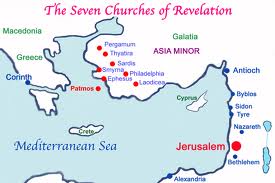
4. d. Paul, in his Epistles. In his letters to seven Gentile churches (in Rome, Corinth, Galatia, Ephesus, Philippi, Colosse, and Thessalonica).
5. d. Paul, in his Epistles. In his letters to seven Gentile churches (in Rome, Corinth, Galatia, Ephesus, Philippi, Colosse, and Thessalonica).
6. d. The Epistles of Paul.
7. b. Ephesians, Philippians, Colossians, Philemon (the prison epistles)
8. The epistle to the Ephesians is written to the church at Ephesus.
9. The church, as an institution is made up of local, autonomous, spiritual bodies.

Should you disagree with an answer given, please explain why you disagree in the comment section below the article. All reasoned comments will be published, perhaps with reply. The purpose of this website is the Glory of God. God cannot be glorified by shutting out honest disagreement in the search for truth. The author would be interested in your explanation. The comments are required by the website to be approved or disapproved. The author is very busy with many matters and may or may not immediately notice your comment. He will address it as soon as he notices it. He almost always approves comments presented with a godly spirit. He never alters comments. Sometimes, he replies to comments.

Church Internal Revenue Code § 508(c)(1)(A) Tax Exempt Status

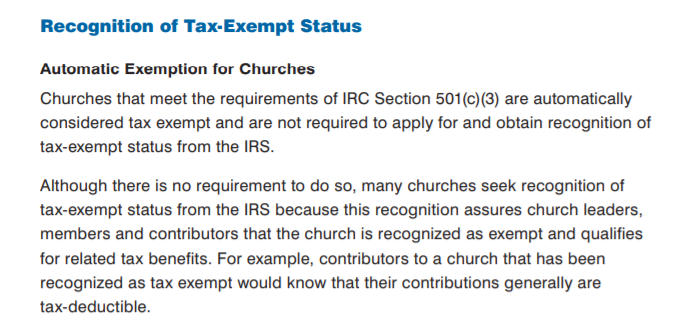
Notice that the above featured image, taken from IRS publications given below, says, churches that meet the requirements of § 501(c)(3) are automatically considered tax exempt and are not required to apply for and obtain recognition of tax-exempt status from the IRS.” This is the correct position.

According to 508(c)(1)(A) a church can claim status without filing for 501(c)(3) status. 508(c)(1)(A) is a subsection of §508. Special rules with respect to section 501(c)(3) organizations;  this alone makes clear that a 508(c)(1)(A) church is a 501(c)(3) church. As such, it is subject to the requirements (the rules and regulations) that come with 501(c)(3). This conclusion is further explained in this article.

Thus, the answer to the question of whether a church is automatically tax exempt is “No.” If the church does not meet the requirements of 501(c)(3) that church is not “tax exempt.” The requirements for 501(c)(3) are given in the essay The Rules and Regulations that Come with Church IRS Code Sections 501(c)(3) and 508(c)(1)(A) Tax-Exempt Status.

Furthermore, according to principles in the Word of God, church tax exempt status is spiritual fornication since she has submitted herself to man’s law, become a temporal legal – as opposed to spiritual eternal only – entity,  and chosen to submit to an authority other than the Lord Jesus Christ as to many church matters.

A church can choose to remain under Christ only as a eternal spiritual organism as opposed to a temporal earthy organization. In America, the First Amendment and corresponding state constitutional provisions protect this choice from persecution. The essay below, and other essays, articles, and books on this website explain these matters more comprehensively.

Ignorance, and especially willful ignorance, is no excuse for dishonoring our Lord.

See also,

  1. Federal government control of churches through IRS Code Sections 501(c)(3) and 508(c)(1)(A) tax exemption (121012)
  2. The church incorporation-501(c)(3) control scheme (121021)
  3.  The Rules and Regulations that Come with Church IRS Code Sections 501(c)(3) and 508(c)(1)(A) Tax-Exempt Status (031722)
  4. Are Churches Automatically Tax Exempt? (040822)
  5. A Biblical and Legal Analysis of the Helping Hand Outreach Publication, “WHY ALL CHURCHES SHOULD BE A 508(c)(1)(a).”
  6. Legal answer to Pastor’s inquiry concerning whether a potential donor of substantial gift an claim a tax deduction under IRC Section 508 even though the church will not give an IRS acknowledgement (123118)
  7. Does a Church Need 501(c)(3) or 508(c)(1)(A) Status? A Biblical and Legal Answer (062324)
  8. Did President Trump Do Away with 501(c)(3) Requirements? (120217)

Jerald Finney
Copyright © April 28, 2014

Click the above to go to online version of God Betrayed.

In the book God Betrayed/Separation of Church and State: The Biblical Principles and the American Application (“God Betrayed”) as well as in other books and writings, I originally taught that a New Testament church could depend upon Internal Revenue Code (“IRC”) § 508(c)(1)(A) for her non-taxable status (See Endnote 1 for links to the two free versions of God Betrayed or for ordering information should you desire a softback copy as well as information on other books and resources by Jerald Finney.). I was wrong. After years of study, I have learned that a New Testament church cannot depend upon 508(c)(1)(A) for her non-taxable status because, in so doing, the church gives up her New Testament and First Amendment status; the church becomes tax exempt as opposed to non-taxable. However, I am more certain than ever of the correctness of my original biblically based conclusions that a church grieves the Lord when they intentionally, knowingly, recklessly, or negligently attain church corporate and/or 501(c)(3)/508(c)(1)(A) status or legal entity status (See Endnote 1) of any kind. I ask those who have followed my teachings to forgive me for misleading them concerning church 508 status. This brief article explains church 508 status and its effect.

A New Testament Church is also a First Amendment Church. This is because the First Amendment is a law which corresponds with biblical principles to include freedom of religion and conscience (separation of church and state), freedom of speech, freedom of press, and freedom of association. The First Amendment is a part of the second highest law of the land, the United States Constitution.

The highest law of every nation is God’s law, whether a nation recognizes it or not. The Lord, for the time being, allows individuals, families, churches, and nations free will to honor His precepts or not. The choices determine the ultimate consequences. Click here to listen to Jerald Finney’s lecture “Hierarchy of Law” (CD of speech at a church in Tennessee given on the Sunday the church formally adopted the Declaration of Trust). The following article “First Amendment Protection of New Testament Churches/Federal Laws Protecting State Churches (Religious Organizationsalso explains hierarchy of law.

The First Amendment says:

“Congress shall make no law respecting an establishment of religion, or prohibiting the free exercise thereof; or abridging the freedom of speech, or of the press; or the right of the people peaceably to assemble, and to petition the Government for a redress of grievances.”

Notice especially that the First Amendment says, “… no law ….”

Are not those words very clear? No law means “no law.” What is IRC § 508(c)(1)(A)? It, like IRC  501(c)(3), is a law made by Congress and signed by the President. IRC § 508(c)(1)(A) and IRC  501(c)(3) are, when applied to churches, laws “respecting an establishment of religion and preventing the free exercise thereof.”

Why would a church take themselves from First Amendment status and protection to either IRC § 508(c)(1)(A) or IRC § 501(c)(3)? One reason is lack of knowledge, wisdom, and understanding. When a church claims either 508(c)(1)(A) or 501(c)(3) status, she has rejected her First Amendment non-taxable status and freely accepted the offer of the federal government to enter into an agreement (contract) for tax exempt status as provided by a law.

Let me repeat: First Amendment churches under God are non-taxable. 501(c)(3) and 508(c)(1)(A) religious organizations are tax exempt. IRC § 508 (the codification of Public Law 91-172 ratified in 1969) provides in relevant part:

A portion of Internal Revenue Code § 508. Click to the above to go to § 508.
A portion of Internal Revenue Code § 508. Click the above to go to § 508.

§ 508. Special rules with respect to section 501(c)(3) organizations. “(a) New organizations must notify secretary that they are applying for recognition of section 501(c)(3) status. … “(c) Exceptions. “(1) Mandatory exceptions. Subsections (a) and (b) shall not apply to— “(A) churches, their integrated auxiliaries, and conventions or associations of churches” (26 U.S.C. § 508). [Emphasis mine.]

§ 508(c)(1)(A) says churches are excepted from applying for IRC § 501(c)(3) tax exempt status (See Endnote 2 for links to articles which fully explain church IRC § 501(c)(3)) status). 508 churches are an exception to the civil government requirement that certain organizations file for 501(c)(3) tax exempt status.

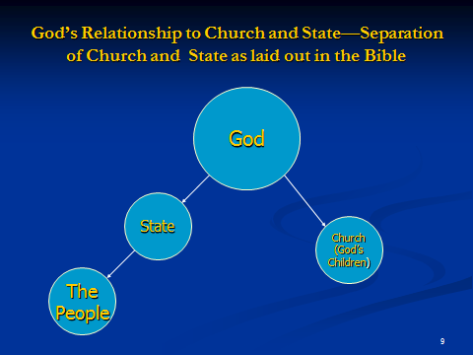
A church should rely on the First Amendment to the United States Constitution, not on 508(c)(1)(A) status for three reasons. First, the First Amendment is a statement of the biblical principle of separation of church and state (See, for a short explanation with links to more in depth studies, Is Separation of Church and State Found in the Constitution?). When a church relies on the First Amendment, they are relying on a biblical principle. Should the biblical principle be abused or ignored by the civil government, so be it—a church should then rely and act only on the biblical principle. Endnote 3.

A law of man which enacts some biblical principles.

Second, to rely on 508(c)(1)(A) contradicts the First Amendment. To repeat, the First Amendment religion clause states:

“Congress shall make no law respecting an establishment of religion, or prohibiting the free exercise thereof; or abridging the freedom of speech, or of the press; or the right of the people peaceably to assemble, and to petition the Government for a redress of grievances.”

IRS Publication 1828. Click the above to go directly to IRS Pub. 1828.

Obviously, 508(C)(1)(A) is a law made by Congress which regards an establishment of religion; 508(C)(1)(A) also prevents the free exercise of religion because a church which claims 508(C)(1)(A) status thereby submits themselves to some control by the federal government in that the church becomes subject to the rules that come with IRC 501(c)(3) status. 508(C)(1)(A) does not state that the First Amendment forbids Congress from making any law in violation of the First Amendment; and that, therefore, a church is non-taxable. 508(C)(1)(A) is a law made by Congress which states that Congress, by law, is declaring an exemption for churches. Thus, by a clear reading of the First Amendment, 508(C)(1)(A) is clearly unconstitutional. Most churches and pastors could care less about this technicality.

From IRS Publication 1828

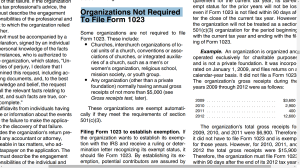
The correct position which is held by the Internal Revenue Service (“IRS”) is that a church has submitted herself to IRC § 501(c)(3) regulation and ignored her First Amendment status by relying on 508(C)(1) (a law passed by Congress) instead of the First Amendment. The IRS makes this position clear. Page 3 of IRS Publication 1828 states that “churches that meet the requirements of § 501(c)(3) are automatically considered tax exempt and are not required to apply for and obtain recognition of tax-exempt status from the IRS” [Bold red emphasis mine]. The IRS repeats this on page 24 of IRS Publication 557, “Tax –Exempt Status for Your Organization.” Under Organizations Not Required To File Form 1023 churches are listed. The following sentence is included: “These organizations are exempt automatically if they meet the requirements of section 501(c)(3).” [Bold red emphasis added.]

IRS Publication 557, p. 24. Click the image to go directly to the publication.

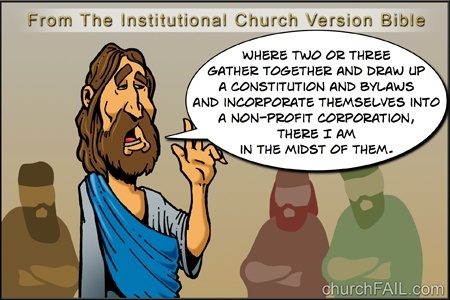
One should also understand that the New Testament (First Amendment) church will not be involved with the IRS for several reasons: the church claims no 501(c)(3) or 508(c)(1)(A) status; is not a legal entity such as a corporation aggregate or sole, an unincorporated association, or a charitable trust; is not a business; has no income; has no employees or staff; has no constitution or by-laws; and, no matter what the particular civil government does, honors the biblical principle of separation of church and state which is reflected in the First Amendment in America.

The New Testament (First Amendment) church who loves the Lord will be prepared for the eventuality that the Internal Revenue Service, some other Federal agency, the President (recent presidential actions and orders as well as the actions of many prior presidents demonstrate what a tyrannical president can and will do), and/or the Supreme Court of the United States may someday misinterpret and apply the First Amendment; and a New Testament church, who loves the Lord and is committed to pleasing Him, will remain submitted to the higher authority. God Betrayed (see above for free links to the book) explains all this and also shows how churches are operating in America without becoming legal entities such as incorporated 501(c)(3) religious organizations thereby retaining their First Amendment and biblical status. For specifics on how to organize a church under the Bible principle of separation of church and state, one can also go to: The CUCM Bible Trust.

Third, a New Testament church (a church organized according to the principles of the New Testament), among other things, receives no income, is not a 501(c)(3) or 508 religious organization, has no constitution or by-laws,  has no employees or staff, and runs no businesses (daycare controlled or licensed by the state, “Christian” schools, “Bible” colleges, seminaries, cafes, etc.). Church members of a New Testament Church give their tithes and offerings to God, not to a religious organization, for use in ways consistent with New Testament teaching. All monies given to God are disbursed in accordance to the guidelines of the New Testament, and no money is left over. Let us use our common sense, if not our biblical sense: Even a business which makes no profit pays no taxes. A church which has no income cannot be taxed. A church which does have net income should be taxed since (1) she is operating as a business and not as a New Testament church; and (2) (if she is a legal entity such as a non-profit corporation (includes corporation sole – see Critique of “Church Freedom and the Corporation Sole” Website), or unincorporated association she is set up as a non-profit religious organization and therefore violates not only biblical principles for the organization of a church but also her non-profit agreements with the state of incorporation by making a profit.

Uncle Sam Wants God's Churches
Uncle Sam Wants God’s Churches

If a church does not apply for 501(c)(3) tax exempt status or claim 508(c)(1)(A) tax exempt status, and if she is organized as a New Testament church, according to the First Amendment which agrees with the biblical principle of separation of church and state, the non-taxable status of that church must be honored. A church claims 508(c)(1)(A) status by giving IRS acknowledgements for tithes, offerings, and gifts. No matter what the civil government claims, a church who has no income cannot be taxed; she gives her tithes, offerings, and gifts to God, not to a government created religious organization. Said another way, the church (the members) give to God, not to the church, inc. or the church (an unincorporated association).

Always keep in mind matters which I cover in detail in other writings and teachings: a church who incorporates (non-profit corporation or corporation sole), or becomes a charitable trust, unincorporated association or some other type legal entity has voluntarily given up her exclusive First Amendment status in favor of partial and substantial Fourteenth Amendment status since she has become a legal entity.

There are other ways a church may violate biblical principles concerning the doctrine of the church thereby becoming some type church other than a New Testament church. Understanding these matters requires a believer to grow in knowledge, understanding, and wisdom through dedicated Bible study.

If a church successfully applies for 501(c)(3) status or claims 508(c)(1)(A) exempt status, the government is granted some jurisdiction over the church since the civil government now, by law, declares and grants an exemption.

Please, God’s dear churches, do not lose your New Testament status by becoming a legal entity of any kind. Please learn to love the Lord as he loves you and gave Himself for you;

“That he might sanctify and cleanse it with the washing of water by the word. That he might present it to himself a glorious church, not having spot or wrinkle, or any such thing; but that it should be holy and without blemish” (Ephesians 5.25-27).

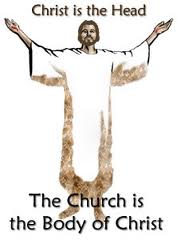
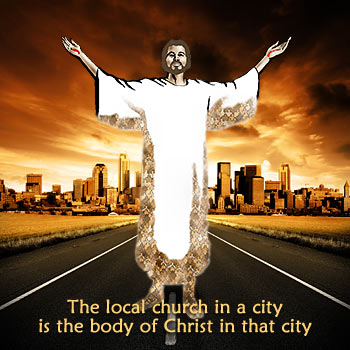
Please, dear believer, learn to think Biblically (spiritually), not practically from the human perspective (fleshly). Please become more Christian than American, more heavenly than earthly. God made clear that Christ in heaven is to be the only authority (power or head) “over all things to” His churches. Put another way, a church, the body whose feet walk and work on earth, is to be connected to only one head, Christ in heaven. A church with two heads (authorities or powers) is a monstrosity.

  • “And what is the exceeding greatness of his power to us-ward who believe, according to the working of his mighty power, Which he wrought in Christ, when he raised him from the dead, and set him at his own right hand in the heavenly places, Far above all principality, and power, and might, and dominion, and every name that is named, not only in this world, but also in that which is to come: And hath put all things under his feet, and gave him to be the head over all things to the church, Which is his body, the fulness of him that filleth all in all” (Ep. 1.19-23).
  • “Now therefore ye are no more strangers and foreigners, but fellowcitizens with the saints, and of the household of God; And are built upon the foundation of the apostles and prophets, Jesus Christ himself being the chief corner stone; In whom all the building fitly framed together groweth unto an holy temple in the Lord: In whom ye also are builded together for an habitation of God through the Spirit” (Ep. 2.19-23).
  • “And he is the head of the body, the church: who is the beginning, the firstborn from the dead; that in all things he might have the preeminence” (Col. 1.18).

From the above verses, and many more that could be quoted, one sees that God desires his churches to be spiritual entities or bodies (See also, e.g., Ep. 4 and the whole book of Ep., Col., and 1 Co. 12 for more on churches as spiritual bodies) connected to their only God ordained Head, the Lord Jesus Christ in heaven, while walking as spiritual entities only here on the earth. Churches are to be “builded together for an habitation of God through the Spirit,” not built together as a corporate 501(c)(3) or 508 organization according to man’s earthly, legal laws.

Please repent and turn from the deceits of the god of this world to the precepts of God. Please prepare for the day when believers and churches will have to choose either to lay it all down for God and for eternal reward or to lay it all up for Satan for a perceived earthly security. That day has not yet arrived for believers and churches in America, but that day appears to be fast approaching.

Endnotes

1. For the definition of and more information on “legal entity” see the index of God Betrayed/Separation of Church and State:The Biblical Principles and the American Application which is available free in PDF, in online form (no index), or which may be ordered by clicking Order information for books by Jerald Finney.

All books, except An Abridged History of the First Amendment, by Jerald Finney are available free in both PDF and online form. One may go to Order information for books by Jerald Finney should he desire to order any of the books which are in print.

God Betrayed/Separation of Church and State: The Biblical Principles and the American Application (Link to preview of God Betrayed)(PDF; online form) may be ordered from Amazon by clicking the following link: God Betrayed on Amazon.com or from Barnes and Nobel by clicking the following link: God Betrayed on Barnes and Noble. All books by Jerald Finney as well as many of the books he has referenced and read may also be ordered by left clicking Order Information for Books by Jerald Finney or directly from Amazon by going to the following links:

  1. Render Unto God the Things that Are His: A Systematic Study of Romans 13 and Related Verses (Kindle only)(PDF; online form);
  2. The Most Important Thing: Loving God and/or Winning Souls (Kindle only from Amazon.com; see Order information for books by Jerald Finney to order directly from Kerygma Publishing Co.)(PDF; online form) ;
  3. Separation of Church and State/God’s Churches: Spiritual or Legal Entities? (Link to preview of Separation of Church and State/God’s Churches: Spiritual or Legal Entities?) which can also be ordered by clicking the following Barnes and Noble link: Separation of Church and State on Barnes and Noble (PDF; online form)
  4. An Abridged History of the First Amendment is available in PDF only.
  5. Tract on the legality of street preaching is available in PDF only.
  6. “Quick Reference Guide for Churches Seeking to Organize According to the Principles of the New Testament” is available in PDF only.
  7. Miscellaneous articles by Jerald Finney.
  8. Links to some of Jerald Finney’s writings on legal issues.

Click here to see for updated list of Finney’s books. This Endnote is complete up to August 1, 2014.

When Did the Church Become a Business? a song by Jason Bellard

2. Federal government control of churches through 501(c)(3) tax exemption and The incorporation-501(c)(3) control scheme.

3. To understand the hierarchy of law, one may read the article Laws Protecting New Testament Churches in the United States: Read Them for Yourself or listen to the lecture Hierarchy of Law.

Click here to go to the article

Click here to go to the article “Is Separation of Church and State Found in the Constitution?”

A biblical and historical Baptist principle is that God desires separation of church and state, not separation of God and church or separation of God and state. Study Jerald Finney’s writings and/or audio teachings to discover the truth about and how to apply the principle. Finney’s teachings prove that the revisionist view of Separation of Church and State accepted without examination by most American “Christians” is false and has done great damage to the cause of Christ and to America.


A Critique of Pastor Steve Anderson’s YouTube Comments on Church Incorporation and Church 501c3 Status

Jerald Finney
Copyright © October 14, 2013

Article follows sermon links

Click here to hear Pastor Sam Adams sermon which reveals other Steven Anderson lies (Steven Anderson ignorantly attacks anti-501c3 church position, falsely claims his church is non-501-c3, makes false accusations, and blatantly lies to his church.)(Click here for Youtube of Pastor Adams’ sermon.)(To see Steven Anderson’s documents proving his church is 501c3 click here.)

Article:

"Pastor" Steven Anderson
“Pastor” Steven Anderson

Someone recently referred me to a YouTube excerpt from one of Pastor Steven Anderson’s sermons dealing with the issue of church Internal Revenue Code Section 501(c)(3): http://www.youtube.com/watch?v=p0l2EkAZwB8&feature=youtu.be [on August 6, 2020, I clicked this link, and found that you will see, “Private Video. Sign in if you have been grated access to this video.” Now, I wonder why he would do that. However, I quote directly from the video in the article which exposes Anderson on the matters confronted.] A brief review of his ridiculous tirade is in order since Pastor Anderson’s teaching in that blurb is published for the world and since it deals with the institution which Christ loved and gave Himself for. The author offers a cursory analysis in this article, but one can educate himself biblically, historically, and legally on these matters by going to the Separation of Church and State Law blog. Pastor Anderson’s statements, usually in red and parentheses, are followed by the author’s comments.

The author will address some of Anderson’s points in the order or his presentation:

(1) “I don’t go to church because all the churches are 501c3. You didn’t get that from reading the Bible….”

The Bible is a book of many principles. One such principle is separation of church and state. 501c3 churches have at least partially submitted themselves to a head other than the Lord Jesus Christ who desires to be the only head of the local New Testament church. This is explained in much detail in the materials on the above website. For specific information on 501c3 go to the following articles: Federal government control of churches through 501(c)(3) tax exemption and The church incorporation-501(c)(3) control scheme.

By the way, all churches are not 501c3 or 508(c)(1)(A), both of which grieve the Lord. See Does God and/or Civil Government Require Churches to Get 501(c)(3) Status?. For more on church 508 status, see Church Internal Revenue Code § 508 Tax Exempt Status and The Bible Answer to the Question, “Is an Incorporated 501(c)(3) or 508 Church a Church of Christ?”. I know of many such churches. If you are looking for one in your area, give me a call. Even though there are numerous such churches in America, they are a small remnant, as always.

(2)  “You got that off the internet, off some website…. ”

How does he know where they got it? The author got it from studying the Bible and 501c3 to see if 501c3 displeases our Lord. That is where the author’s pastor got it. The truth about the matter is undeniable by any knowledgeable believer. Of course, one must first understand the Biblical principles of church, government, and separation of church and state before he can fully understand some more advanced matters, but the above articles will easily be comprehended by the believer who has done some study of the Bible. One can study the Biblical principles of church, government, and separation of church and state by going to sections 1-3 (A-C) of the book God Betrayed/Separation of Church and State: The Biblical Principles and the American Application. The book is available free in both PDF and online form. Or one can order this and other books by Jerald Finney by going to Order information for books by Jerald Finney.

(3) He then swerves into an explanation of the meaning of incorporation.

To understand incorporation, go to Church Corporate-501c3 Status, and especially to the Incorporation of Churches chapter. See also, Short Answers to Some Important Questions for accurate information on church incorporation, 501c3, 508 and other matters. You will discover that he does not know what he is talking about. He is out of his field of expertise.

He states that the vehicle outside belongs to “the church” and that for the church to own it, the church has to be its own entity.

He is right about that. However, a church can take advantage of the use of a vehicle or the use of a building, for example without owning it. To own anything, a church must become a legal entity, as opposed to a spiritual entity. The Biblical principle is that God desires all His churches to remain spiritual entities only. Study the free materials above to understand this. The book, Separation of Church and State/God’s Churches: Spiritual or Legal Entities, is a short book for a pastor or believer who already has a basic knowledge of Biblical principles. Pastor Anderson does not meet that condition. The book is available in both PDF and online form, or can be ordered (see the link above). See also, Short Answers to Some Important Questions.

(4)  He then abruptly asks,Who thinks we should get rid of driver’s licenses, … birth certificates, … not carry I.d…“?

That has nothing to do with church incorporation and 501c3. Those things involve the individual, not the church. This author has a driver’s license, birth certificate, and carries an I.D. Anderson, not knowing what he is talking about, resorts to “straw men,” and attacks the straw men. Those who are not studied in these matters may be convinced by his absurdities.

(5)  He says,Running a church legally is really complicated. I spend days….

He is incorrect. His church is run illegally and it takes so much time and effort to run his religious organization that he does not have the time to also pastor a First Amendment (New Testament) church. Maybe that is why he is so ignorant about these matters. He does not have the time to do the studying a pastor is instructed by the Bible to do. He does not have time to be a pastor because his religious organization is a worldly temporal legal entity and not a heavenly eternal spiritual entity.

The non-profit corporation law requirements of the sovereign under whose laws the entity he pastors was organized by the state and overwhelm the pastor, the trustees, and the corporate offices in legal red tape. The incorporated religious organization, a legal entity, is illegally organized according to the Highest Law (God’s Law) and man’s law (The First Amendment to the United States Constitution).

According to the First Amendment, the civil government may make no law respecting an establishment of religion or preventing the free exercise thereof. Internal Revenue Code Section 501(c)(3) is a law which was made by Congress which, when applied to churches, violates the First Amendment which is a statement of the Biblical principle of separation of church and state (not separation of God and state). Even though many religious organizations run down to get their illegal 501c3 status, the First Amendment guarantees churches the freedom to do things God’s way. Again, see the website for more information on this – the following articles give a quick look at the issues: Does God and/or Civil Government Require Churches to Get 501(c)(3) Status, and Christians Who Call Evil Good and Good Evil.

(6)  Then he says,Same thing with my business. Running a business is even worse than running a church…. [It takes me days and weeks to figure out my taxes].

He runs his church like he runs his business! Exactly. Are you getting the picture? Of course, when one runs a church like he runs a business, he is grieving our Lord, according to the Bible. No wonder this man is so utterly ignorant about these matters. Here he is, running his business and running a church according to the same principles. He is so busy running his religious organization that he has no significant time to study, prepare his sermons and serve as a pastor.

(7)  “That is the way you have to do it in America to be legal in America, like you have to drive with a driver’s license…. I know a pastor in town … he has no driver’s license, he has no vehicle registration, he never files taxes, his church is totally off the grid, I mean he doesn’t report anything….. He even says to me, ‘Don’t do this’…. His church is much smaller than ours…. All of these people jumping up and screaming, ‘I don’t want to go to any church that’s incorporated,’ … you’d think he’d have 5000 people in his service this morning…. That’s shows me that these people are all just talk. They just have an excuse for not going to church….

There are plenty of non-incorporated non-501c3 churches. Refer to the author’s comments under (4) and (5) above for more relevant information. No more time will be expended to explain the obvious about these ridiculous remarks. The goal of a church under Christ is to glorify God. A church which subjects herself to any head other than the Lord Jesus Christ does not glorify God.  “And hath put all things under his feet, and gave him to be the head over all things to the church, Which is his body, the fulness of him that filleth all in all (Ephesians 1:22-23). 

The goal of a business is to find out what people want and provide it for them. Anderson probably mixes in enough Bible to entice unstudied believers and others to come to listen to his diatribes and false teachings.

(8)  “There’s all this disinformation and lies out there claiming that any church that’s incorporated is of the devil, and that it’s worshiping Satan, and the head of the IRS actually runs the church….

See Separation of Church and State Law blog, for biblically, historically, and legally reasoned and reliable teaching on these matters. Perhaps Anderson is offering his spurious verbal attacks as justification for his own presumptuous, willful, or ignorant sin.

(9)  “None of it’s Biblical, none of it came from studying of the word of God, none of it came from the Holy Spirit.

Those assertions are applicable to his arguments.

(10) “There are different levels of going off the grid against government…. [Gets back into straw men arguments as “Driver’s License.”] I render unto Caesar the things that are Caesars.

He renders unto Caesar the things that are God’s when he incorporates a church. The church the author is a member of  and the members thereof render unto God the things that are His and unto Caesar the things that are Caesars. See Render unto God the Things that Are His/A Systematic Study or Romans 13 and Related Verses, available in both PDF and online form.

(11) “I’m not going to prison…. If anyone goes to prison because of the way offerings are taken and the way the bank account is, I’m the one that’s gonna go to prison. Pastor Anderson, the money that you make pastoring, I don’t think you should pay taxes on that. You need to be off the grid, our church needs to be totally off the grid. I church needs to do everything in cash. I’m the one that’s gonna go to prison and you’re just gonna disappear off into the sunset.

Anderson speaks like a businessman or the CEO or a corporate religious organization. He speaks in secular, not Biblical terms. A religious organization pays its pastor. The members of a First Amendment (New Testament) church provide for the pastor and his family.

The church the author is a member of is a First Amendment (New Testament) church which means it is non-incorporated and non-501c3. The pastor pays income tax. Tithes, offerings, and gifts which are administered through a common law trust bank account (not a Charitable Trust, Business Trust, or other legal type of trust account). The tithes, offerings, and gifts are given to the Lord Jesus Christ, the owner of the trust estate, not to a corporate 501(c)(3) religious organization.

If any pastor or church member commits a crime and is charged and convicted, he will be punished according to the prescriptions of his state (or the federal) penal code. That is true no matter how one’s church is organized. If one commits a tort, he is subject to suit in civil court, no matter how his church is organized. See Separation of Church and State Law and resources thereon for much more on this. See the website to learn who is more subject to liability – the member of the incorporated and/or 501c3 church or the member of a church which is not a legal entity.

(12) “Most churches are 501c3 and to say they’re wicked, you’re wicked.”

His misleading and false arguments and attacks would be funny if the subject matter were not so important. Sadly, many so called “Doctors” who are pastors, presidents of Bible Colleges, etc. are as lacking in substance and reasoning ability as this man as they argue before their “herd” and before the world, thereby not only hurting the cause of Christ as they mislead the members of their corporation while giving the world a good laugh as they are turned off to what they perceive to be a ridiculous religion. If one is going to invoke the ire of the world, why not do it in a manner which honors God – that is, with knowledge, understanding, and wisdom – the way the apostles did it and the way the Lord instructs us to do it in his word.

The author chooses to stop there with the analysis. The reader has access to enough information in the links above to check the matter out for himself. He can also get the same information by studying the Bible, law, and history.

“For I am jealous over you with godly jealousy: for I have espoused you to one husband, that I may present you as a chaste virgin to Christ.” (2 Corinthians 11:2). “Husbands, love your wives, even as Christ also loved the church, and gave himself for it; That he might sanctify and cleanse it with the washing of water by the word, That he might present it to himself a glorious church, not having spot, or wrinkle, or any such thing; but that it should be holy and without blemish.” (Ephesians 5:25-27).

The incorporated churches and the 501c3 churches have taken on another lover for worldly approval, help, direction, control, power and financial gain. If a church is both incorporated and 501c3, that church has taken on two other lovers and is doubly the adulteress. These actions grieve our Lord, the Bridegroom, Husband, and Head of the church.

The Coming Universal Church Will Reign with the Lord


Jerald Finney
Copyright © December 19, 2012


Click here to go to “Self-exam Questions: The Coming Universal Church Will Reign with the Lord

Click here to listen to and/or download Jerald Finney’s audio teaching on “The church will reign with the Lord. Note that this audio teaching was significantly revised by this revised article on January 29,2013.


The Biblical Doctrine of the Church has links to the audio teaching of Jerald Finney on this and other subjects related to the doctrine of the church.


Note. This is a significantly revised version of Section II, Chapter 7 of God Betrayed: Separation of Church and State/The Biblical Principles and the American Application. 


The Coming Universal Church Will Reign with the Lord

6Several so-called universal “churches” were instituted and built by those who did not honor the word of God. Those “churches” killed untold millions of what they deem to be heretics (many of whom were born-again believers who refused to bow down to the false religion-state) while leading multitudes to hell since the initiation of the first such “church” in the early fourth century. Nonetheless, true believers in Christ, even in martyrdom, have always rejoiced in exceeding gladness. They will become members of the universal visible church which will be established at the marriage supper of the Lamb.

1As explained in the last article, no universal church exists on earth. Rather, unbiblical “ universal” religious organizations were organized by the god of this world: first the Catholic “church,” then the Protestant “churches,” and many religious offshoots from biblical heresies and apostasies. Due to a lack of knowledge, wisdom, and understanding, some believers join or continue alongside the lost members of those organizations. Those believers are out of order. God’s desire is for them to seek out a local, autonomous, New Testament Church—i.e., a church which orders herself according to the principles of the New Testament. Only in such churches is the service of God in biblical order; and properly ordered New Testament churches have continuously existed since Jesus Christ ordained the institution of the church. Jesus said to Peter, “And I say also unto thee, That thou art Peter, and upon this rock I will build my church; and the gates of hell shall not prevail against it” (Mt. 16:18).

In spite of the steady movement toward the foretold end time political and religious Babylon, true Christians have the ultimate hope: they will reign with the Lord. This should be a cause for great rejoicing as well as incentive to be responsible members of the body of Christ, to make sure that every effort is made to glorify God, and  to assure that the individual, his family and the church he is a member of remains totally under Christ in every way.

The Holy Spirit is now calling out, not the subjects, but the co-heirs and co-rulers of the kingdom:

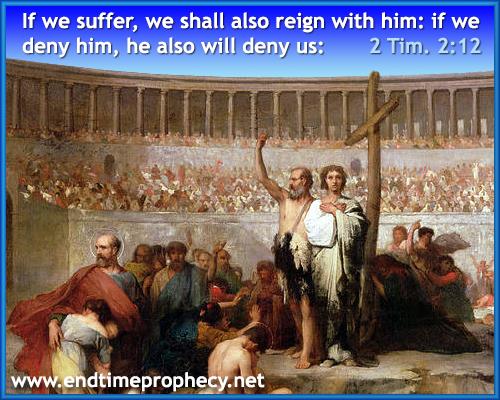
  • Mt5.10-122 Ti. 2.11-12: “It is a faithful saying: For if we be dead with him, we shall also live with him: If we suffer, we shall also reign with him: if we deny him, he also will deny us;”
  • Re. 1.6: “And hath made us kings and priests unto God and his Father; to him be glory and dominion for ever and ever. Amen;”
  • Re. 3.21: “To him that overcometh will I grant to sit with me in my throne;”
  • Re. 5.10: “And hast made us unto our God kings and priests: and we shall reign on the earth;”
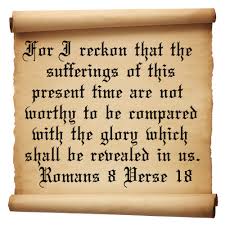
  • Ro. 8.15-18: “For ye have not received the spirit of bondage again to fear; but ye have received the Spirit of adoption, whereby we cry, Abba, Father.’ The Spirit itself beareth witness with our spirit, that we are the children of God: And if children, then heirs; heirs of God, and joint heirs with Christ; if so be that we suffer with him, that we may be also glorified together. For I reckon that the sufferings of this present time are not worthy to be compared with the glory which shall be revealed in us;”
  • 1 Co. 6.2-3: “Do ye not know that the saints shall judge the world? and if the world shall be judged by you, are ye unworthy to judge the smallest matters? Know ye not that we shall judge angels? how much more things that pertain to this life?”

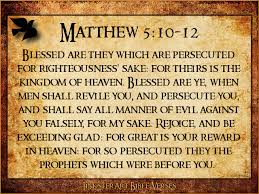
3“Blessed are they which are persecuted for righteousness’ sake: for theirs is the kingdom of heaven. Blessed are ye, when men shall revile you, and persecute you, and shall say all manner of evil against you falsely, for my sake.  Rejoice, and be exceeding glad: for great is your reward in heaven: for so persecuted they the prophets which were before you” (Mt. 5.10-12).

“But ye are come unto mount Sion, and unto the city of the living God, the heavenly Jerusalem, and to an innumerable company of angels, To the general assembly and church of the firstborn, which are written in heaven, and to God the Judge of all, and to the spirits of just men made perfect,  And to Jesus the mediator of the new covenant, and to the blood of sprinkling, that speaketh better things than that of Abel” (He. 12:22-24).

Spurious rationale for church Incorporation: limited liability/Incorporation Increases liability of church members


Jerald Finney
Copyright © December 10, 2012
Revised April 15, 2014


 This is a modified version of Section VI, Chapter 6 of God Betrayed: Separation of Church and State/The Biblical Principles and the American Application;  Chapter 6 of Separation of Church and State/God’s Churches: Spiritual or Legal Entities?


Contents:

I. Preface
II. Introduction
III. Protection from liability for the debts of the corporation
IV. Protection against torts and criminal acts
V. Protection for liability due to contract violations
VI. Conclusion
VII. Links to article on Internal Revenue Code laws as well as direct links to those laws

I. Preface

The author is thankful that the church he is a member of a church which is under Christ and Christ alone. Charity Baptist Tabernacle of Amarillo, Texas is a spiritual entity, not a legal entity such as a non-profit corporation with Internal Revenue Code Section 501(c)(3) status. His pastor, Benjamin Hickam, and the other members of Charity Baptist Tabernacle hold the relationship of Christ and His church on a high level, just as they have honored their earthly marriage relationships. They refuse to compromise that relationship.

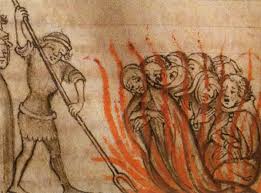
To totally understand all the issues and sub-issues involved with church incorporation, one must not only have extensive knowledge of Biblical principles, but he must also have an understanding of history and law. You see, the issue of the relationship between church and state is very important to God and His Word completely explains His desired relationship. Historically, true Christians understood the importance of this relationship, and they stood up for their relationship even though they suffered greatly for their stand on this issue—they were imprisoned, drowned, beheaded, burned at the stake, hung, tortured, etc. because they loved their Savior and were willing to do all that He asked them to do.

According to the Word of God and the application of the principles concerning church, government, and separation of church and state, church incorporation displeases God. The author has done exhaustive studies of those principles and their application to incorporation and 501(c)(3) tax exemption of churches. The results of those studies are available for free on this website.

II. Introduction

Today, the most common reasons given by churches for incorporating and seeking 501(c)(3) status are (1) to obey every ordinance of man (2) limited liability; (3) to allow a church to hold property; (4) convenience—it is easier to get a tax deduction for tithes and offerings given to an incorporated 501(c)(3) religious organization than for tithes and offerings given to a New Testament church; (5) one’s convictions; and (6) winning souls is  more important than loving God; if a church is incorporated, don’t cause problems. Just continue winning souls because winning souls is more important than anything else, including loving God.

This article will deal with the second false reason, limited liability. Other articles cover the other five reasons:  

  1. Render Unto God the Things that Are His: A Systematic Study of Romans 13 and Related Verses When a pastor is asked why his church is incorporated, he will often quickly answer: “Because of Romans 13 [Romans 13:1-2 “Let every soul be subject unto the higher powers. For there is no power but of God: the powers that be are ordained of God. Whosoever therefore resisteth the power, resisteth the ordinance of God: and they that resist shall receive to themselves damnation.” Or “We are to obey every ordinance of man.” He may also rely on some other verses. All these verses are examined in this online booklet which is also in online PDF form on this website. Not only that, no law requires a church to get incorporated or apply for 501(c)(3) status or claim 508 status. Instead, the highest law in America protects the right of churches to choose to remain free from corporate and 501(c)(3) or 508 status. See, e.g., First Amendment Protection of New Testament Churches/Federal Laws Protecting State Churches (Religious Organizations) 
  2. Limited liability (corporate status actually increases the liability of church members) (Section VI, Chapter  of God Betrayed; Chapter 6 of Separation of Church and State).
  3. Spurious rationale for incorporating: to hold property (Section VI, Chapter 7 of God Betrayed; Chapter 7 of Separation of Church and State).
  4. Spurious rationale for church corporate-501(c)(3) status: tax exemption and tax deductions for contributions OR Tax reasons given for church corporate 501(c)(3) status: a biblical and legal analysis (Section VI, Chapter 8 of God Betrayed; Chapter 8 of Separation of Church and State).
  5. Spurious rationale for church corporate-501(c)(3) status: one’s convictions (Not included in God Betrayed or Separation of Church and State).
  6. Spurious rationale for church corporate-501(c)(3) status: winning souls is more important than loving God/The Most Important Thing: Loving God and/or Winning Souls.

Many incorrectly argue that a church should incorporate to protect personal assets from liability (1) for the debts of the corporation, (2) for the torts and criminal acts of the corporation, and (3) for breach of contract by the corporation. Each of these arguments will be considered in light of biblical principle. A careful consideration of the facts will reveal that not only do churches violate principles in the Word  of God and grieve our Lord when they incorporate, they also increase the exposure of their churches and church members to liability.

Remember that although a New Testament church in America may still utilize property (real and personal) in conformity to Biblical principles, she is not a legal entity who can sue and be sued. A New Testament church owns no property and operates strictly according to principles in the New Testament. The New Testament church, unlike the incorporated state church, retains her First Amendment protections as well as other protections under the constitutions and statutes of the state. The incorporated church no longer has the full protection of the First Amendment, since she now is a legal person created under the laws of her new and additional sovereign. Corporate churches, unlike New Testament churches, can even be charged with certain crimes. When a church incorporates, additional exposure is taken on—the state can, at times, charge not only individuals, but also the corporation, with crimes. The purpose of the Biblical Law Center is to help churches organize solely under  the principles of God as laid out in His Word.

The author includes citations from various legal sources. Although many will not understand the meaning of those citations, the reader more familiar with the legal system will be able to check the veracity of the supported statements. Rest assured that legal assertions made herein are backed up by the law.

III. Protection from liability for the debts of the corporation

One may argue first that incorporating a church protects his personal assets from liability for the debts of the corporation. “One of the major attributes of the corporate form of organization is that it insulates shareholders from personal liability for the debts of the corporation…. As a general rule, and in the absence of a charter, constitutional, or statutory provision to the contrary, stockholders are not liable as such for any of the obligations of a corporation. Because a corporation is an entity, separate and distinct from its officers and stockholders, its debts are not the individual indebtedness of its stockholders” (18A AM. JUR. 2D Corporations § 724).

However, limited liability is not absolute:

  • “The general rule that shareholders are not liable for corporate obligations or conduct is subject to numerous exceptions. Shareholders may be held individually liable to prevent or redress fraud, to achieve equity, or to prevent the avoidance of a legal obligation or duty.
  • “If the corporation is a mere instrumentality or alter ego of the shareholder, the corporate entity will be disregarded, and the individuals owning the stock and the corporation treated as identical, with the result that such individuals will be personally liable for the acts and obligations of the purported corporation. The limitation of liability to the corporate assets must give way to imposition of personal liability if the actions of those in control of the corporation denigrate the purpose of limited liability, which is to encourage investment of risk capital. The fact that a corporation is undercapitalized is not sufficient in itself to establish personal liability of the shareholders.
  • “Corporate creditors may reach unpaid stock subscriptions, and if a corporation is liquidated, the shareholders are liable if, otherwise, they would be unjustly enriched by retaining assets of the corporation free from the debts of the corporation” (Ibid., § 728).

Courts look at the “independent operations” to see whether to set aside the corporate form and go to individuals within the corporation for liability. “Independent operations prong of test for determining if corporate form may be disregarded looks at such things as (1) whether corporation is operated as separate entity, (2) commingling of funds and other assets, (3) failure to maintain adequate records or minutes, (4) nature of corporation’s ownership and control, (5) absence of corporate assets and undercapitalization, (6) use of corporation as mere shell, instrumentality, or conduit of individual or another corporation, (7) disregard of legal formalities and failure to maintain arms–length relationship among related entities, and (8) diversion of corporation’s funds or assets to noncorporate uses” (InterGen N.V. v. Grina, 344 F.3d 134 (1st Cir. 2003) cited in 46 A.L.R.3d 428).…

“Piercing the corporate veil is tool that courts use to prevent shareholders, who are not normally liable for corporate debts or liabilities, from hiding behind corporate shield when corporation is under their direct control; in such cases, court will disregard corporation’s identity and hold shareholder liable for corporation’s debt only where corporation has been used to commit fraud, violate a legal duty, or perpetrate a dishonest or unjust act in contravention of rights of another” (Huffman v. Poore, 6 Neb. App. 43, 569 N.W.2d 549 (1997) cited in 46 A.L.R.3d 428).

Also, most lenders require sureties to  the loan. The assets of those sureties are at risk in the event of default. When a church takes a loan, every member should consider themselves as guarantors, since a church is defined by God as a body made up of all the members.

Not only is limited liability for corporations (including non-profit corporations such as churches who choose to become religious organizations under state laws of incorporation) not absolute under the laws of their state sovereign, God holds churches to a high standard. What does the Bible say about debt and repayment of debts? First, neither a Christian nor a church should go into debt. “Owe no man anything, but to love one another: for he that loveth another hath fulfilled the law. For this, Thou shalt not commit adultery, Thou shalt not kill, Thou shalt not steal, Thou shalt not bear false witness, Thou shalt not covet; and if there be any other commandment, it is briefly comprehended in this saying, namely, Thou shalt love thy neighbour as thyself. Love worketh no ill to his neighbour: therefore love is the fulfilling of the law” (Ro. 13.8-10).

The Bible does not say “owe no man any thing unless you have to borrow money to build bigger church buildings, gyms, bingo halls, sports fields and facilities, cafeterias, fellowship halls, and/or any other type structures for the church.” Notice that the commandment not to covet is also included. Most importantly, notice the importance placed on love. Will a Christian who loves his neighbor seek to protect himself from debts he owes to others; debts which the Word of God instructed him not to enter into?

“He that is faithful in that which is least is faithful also in much: and he that is unjust in the least is unjust also in much. If therefore ye have not been faithful in the unrighteous mammon, who will commit to your trust the true riches? And if ye have not been faithful in that which is another man’s, who shall give you that which is your own? No servant can serve two masters: for either he will hate the one, and love the other; or else he will hold to the one, and despise the other. Ye cannot serve God and mammon” (Lu. 16.10-13). “Mammon” means: “Riches, wealth; or the god of riches. Ye cannot serve God and mammon. Matt. vi” (AMERICAN DICTIONARY OF THE ENGLISH LANGUAGE, NOAH WEBSTER (1828), definition of “MAMMON”)

Thus, churches which go into debt for buildings or anything else distort themselves and become servants of the lender and money, not servants of God. “The rich ruleth over the poor, and the borrower is servant to the lender” (Pr. 22.7). Pastors of churches who are serving mammon will find that they fear to preach everything God has laid on their hearts because they might offend some, especially rich Pharisees, who might either leave the church and/or cause problems within the church. Failure to preach the whole gospel is displeasing to the Lord.

Christians and churches are to seek godliness, not worldly riches:

“Perverse disputings of men of corrupt minds, and destitute of the truth, supposing that gain is godliness: from such withdraw thyself.  But godliness with contentment is great gain. For we brought nothing into this world, and it is certain we can carry nothing out. And having food and raiment let us be therewith content. But they that will be rich fall into temptation and a snare, and into many foolish and hurtful lusts, which drown men in destruction and perdition. For the love of money is the root of all evil: which while some coveted after, they have erred from the faith, and pierced themselves through with many sorrows.  But thou, O man of God, flee these things; and follow after righteousness, godliness, faith, love, patience, meekness. Fight the good fight of faith, lay hold on eternal life, whereunto thou art also called, and hast professed a good profession before many witnesses. I give thee charge in the sight of God, who quickeneth all things, and before Christ Jesus, who before Pontius Pilate witnessed a good confession; That thou keep this commandment without spot, unrebukeable, until the appearing of our Lord Jesus Christ: Which in his times he shall shew, who is the blessed and only Potentate, the King of kings, and Lord of lords; Who only hath immortality, dwelling in the light which no man can approach unto; whom no man hath seen, nor can see: to whom be honour and power everlasting. Amen. Charge them that are rich in this world, that they be not highminded, nor trust in uncertain riches, but in the living God, who giveth us richly all things to enjoy; That they do good, that they be rich in good works, ready to distribute, willing to communicate;  Laying up in store for themselves a good foundation against the time to come, that they may lay hold on eternal life” (I Ti. 6.5-19).

The above verses speak to the saved person who is the temple of God, and, along with other believers, constitute a church body. Nowhere in the New Testament can one find a single verse condoning a church seeking riches and real or personal property. Rather, Christians are to be content with what they have. They are not to go into debt. If they will do the jobs God has given them, lusting after real property and other worldly things will vanish from their hearts and minds. “Let your conversation be without covetousness; and be content with such things as ye have: for he hath said, I will never leave thee, nor forsake thee. So that we may boldly say, The Lord is my helper, and I will not fear what man shall do unto me” (He. 13.5-6).

And as long as a church maintains her New Testament status and remains under Christ alone, she can own nothing since she is a spiritual entity. As will be shown, a church can utilize property in ways which conform to biblical principles.

The apostles, and true Christians in their church body down through the ages, have been careful not to seek worldly riches; and they preached the whole counsel of God no matter who was offended. Nothing was ever mentioned in the Word of God about the early church seeking real or personal property. Churches assembled on property, but churches did not own property. The goals of churches and individual Christians were spiritual, not earthly. Individual Christians, at times, even went further than required by biblical principles. “And all that believed were together, and had all things common; And sold their possessions and goods, and parted them to all men, as every man had need. And they, continuing daily with one accord in the temple, and breaking bread from house to house, did eat their meat with gladness and singleness of heart, Praising God, and having favour with all the people. And the Lord added to the church daily such as should be saved” (Ac. 2.44-47).

Thus, a New Testament church should not go into debt and should occupy property in a manner consistent with biblical principles. If a church does go into debt, God desires that she pay that debt back. Since the members made the debt, they are responsible for honoring God and man and paying the debt as agreed.

IV. Protection against torts and criminal acts

As to torts and criminal acts, anyone—no matter the kind of church he is a member of—is liable for his own tort or crime or for any tort or crime in which he participated or encouraged. In other words, should a member of either type church be directly connected to criminal or tortuous acts, that member is not insulated.

  • “Stockholders are not ordinarily liable for the tortious acts of a corporation unless they participate in or aid the commission of such acts. An individual’s liability for the tortious conduct of corporation depends upon that individual’s acts, and not upon any theory of vicarious liability based upon the individual’s status as an owner. For example, a stockholder is individually liable for constructive fraud committed by a corporation only if he or she had knowledge of and instigated the fraud.
  • “Caution: The rule shielding shareholders from liability for a corporation’s torts do not shield shareholders from personal liability in tort for their own misfeasance or nonfeasance, including liability for negligence; a shareholder may be liable if he or she is the central figure in a corporation’s tortious conduct. For example, a shareholder may be held personally liable for negligent acts in managing and supervising the employees of corporation, if those acts are a contributing factor in causing an injury” (18A AM. JUR. 2DCorporations § 726 (2007)).

A New Testament church cannot be and is not liable for the tort or crime of a member or members since she is not a legal entity. People in a New Testament church may commit and be held accountable for torts or crimes, but the church herself cannot commit a tort or crime. If only one or more in a New Testament church commit a crime or tort, the entire church cannot be charged or sued unless everyone in the church was involved. A Christian is not exempt from being falsely accused of a tort and/or a crime; and a Christian can walk in the flesh and commit or participate in a tort and/or a crime if he so chooses.

“It has been held that shareholders [or members] are not liable for a corporation’s violations of state or local statutes, ordinances, or regulations in the absence of proof of active participation in the management of the corporation or the wrongs. However, it has also been held that the purpose behind incorporating is not to protect those who control a corporation from answering for its criminal actions” (Ibid., § 727). Furthermore, not only individuals within a corporate church, but also the corporation itself is subject to state penal laws criminalizing certain acts of corporations, including non-profits:

“The view taken in the early cases that a corporation is not indictable for a criminal offense has long been abandoned, and it is now almost universally recognized that a corporation is not per se exempt from criminal prosecution. Courts and legislative bodies tend to impose the same standards of criminal responsibility upon corporations as upon natural persons…. a corporation cannot be sent to jail; the discharge of its liabilities, whether criminal or civil, can be effected only by the payment of money. Thus, it has been held in a number of cases that where an offense is one which can be committed by a corporation, and where the penalty provided is a fine, the corporation is liable to criminal prosecution…. The proposition that a corporation is amenable to criminal prosecution for offenses punishable by fine is also supported by cases holding that a corporation may be prosecuted for offenses punishable by fine and imprisonment … or by fine or imprisonment, or both…. It is also implicitly supported by myriads of cases in which corporations have been fined.” (80 A.L.R.3d 1220).

A New Testament church has safeguards, in addition to her supernatural and legal protections: she will not be involved with all the worldly matters with which an incorporated “church” and its members are involved and which give the incorporated church and its members and officers opportunities and temptations for wrongdoing. The member of a church who loves the Lord and has his eyes on spiritual, as opposed to material, matters will be more likely to love his neighbor and to behave in a pious manner. The member of any church should understand that not only the state, but also—and primarily—God, desires him to be liable for and make restitution for damages to another caused by his tort or crime or for any tort or crime with which he knowingly, intentionally, recklessly, or with negligence participates.

V. Protection for liability due to contract violations

A person is not ordinarily liable on contracts entered into by a corporation in which he or she owns stock. However, if a stockholder makes a contract as an individual, he or she is liable (18A AM. JUR. 2D Corporations, § 725).

“A shareholder may expressly guarantee a corporate obligation. A shareholder’s contract unconditionally guaranteeing payment of the corporation’s debts is not abrogated by negligence of the creditor that results in the debt not being discharged in bankruptcy. Whether a shareholder has guaranteed the credit of the corporation so as to become personally liable on its obligations in a particular case is a question of fact for the jury” (Ibid., § 730).

A New Testament church, being a spiritual entity, will not and cannot enter into any type of contract. Contract is an enlightenment principle which is antithetical to biblical principle. The author explains this principle in his writings and audio teachings (Go to, e.g., the following links: “Separation of Church and State Law Blog” (click the following link, “Union of Church and State in America, and scroll down and click on the audio teaching “6. Incorporation of Churches;” or click the following link, “Radio Broadcast,” and scroll down and click on the audio teaching segments under Section VI, Chapter 2, “Incorporation of Churches.” You will also find the teaching on this principle in Section VI, Chapter 2 of God Betrayed/Separation of Church and State: The Biblical Principles and the American Application and Chapter 3 of Separation of Church and State: God’s Churches: Spiritual or Legal Entities for which ordering information is available by clicking the following link: “Order Information for Books by Jerald Finney.”).

Should a church violate God’s principles by incorporating and entering into contracts, the Lord expects that church to honor those contracts at all costs (See Section III above).

VI. Conclusion

In conclusion, churches who incorporate dishonor the Lord and His principles concerning His desired relationship between church and state. Christians are responsible to God to study His Word and make the practical application of His Word to real life. The relationship between Christ and His churches is very important to Him.

“Husbands, love your wives, even as Christ also loved the church, and gave himself for it; That he might sanctify and cleanse it with the washing of water by the word, That he might present it to himself a glorious church, not having spot, or wrinkle, or any such thing; but that it should be holy and without blemish” (Ep. 5.25-27).

That relationship has been so important to Christians since the beginning of the Church that they have been willing to die rather than to dishonor it by becoming members of the established Catholic and Protestant churches or other state-church combinations. How important is that relationship to you and your church?

VII. Links to Internal Revenue Code Laws

You can read portions of the following Internal Revenue Code laws which pertain to churches and pastors by going to the following site: “Laws Protecting New Testament Churches in the United States: Read Them for Yourself”; or you may read an entire law online by clicking the following links:

  1.  § 501(c)(3). Exemption from tax on corporations, certain trusts, etc.
  2. § 508. Special rules with respect to section 501(c)(3) organizations
  3. § 7611. Restrictions on church tax inquiries and examinations
  4. § 1402. [Dealing with taxes on income of pastors]
  5. § 107. Rental value of parsonages
  6. § 102. Gifts and inheritances (Tithes and offerings are gifts and, therefore, according to the Internal Revenue Code § 102, not income)
  7. § 2503. Taxable gifts
  8. § 170. Charitable, etc., contributions and gifts

END


Spurious rationale for incorporating: to hold property


Jerald Finney
Copyright © December 10, 2012
Revised April 22, 2014


Note. This is a modified version of Section VI, Chapter 7 of God Betrayed: Separation of Church and State/The Biblical Principles and the American Application;  Chapter 7 of Separation of Church and State/God’s Churches: Spiritual or Legal Entities?


Contents:

I. Introduction
II. How a church can remain a spiritual entity under the authority of God (Scripture) only, not under the legal system in any way
III. Distinctions between a church corporation holding property and a pastor/trustee holding property for the benefit of the Lord
A. First distinction
B. Second distinction
C. Third distinction
D. Fourth distinction
E. Fifth distinction
F. Sixth distinction
G. Seventh distinction
IV. Other benefits of pastor/trustee holding property for the benefit of the Lord
V. The use of biblical terms within the legal system
VI. Conclusion: For the Glory of God

Note: You may go to the colored titles in this article by left clicking the links. Click “Reasons given for church incorporation,” “Non-theological reasons given for church incorporation,” or “Theological reasons given for church incorporation” to go to links to all of articles on spurious reasons given for incorporating churches. Those links are also in the left column of this blog.

I. Introduction

8Today, the most common reasons given by churches for incorporating and seeking 501(c)(3) status are (1) to obey every ordinance of man (2) limited liability; (3) to allow a church to hold property; (4) convenience—it is easier to get a tax deduction for tithes and offerings given to an incorporated 501(c)(3) religious organization than for tithes and offerings given to a New Testament church; (5) one’s convictions; and (6) winning souls is  more important than loving God; if a church is incorporated, don’t cause problems. Just continue winning souls because winning soul is more important than anything else, including loving God. .

This article will deal with the third false reason, to hold property. Other articles cover the other five reasons:  

  1. Render Unto God the Things that Are His: A Systematic Study of Romans 13 and Related Verses When a pastor is asked why his church is incorporated, he will often quickly answer: “Because of Romans 13 [Romans 13:1-2 “Let every soul be subject unto the higher powers. For there is no power but of God: the powers that be are ordained of God. Whosoever therefore resisteth the power, resisteth the ordinance of God: and they that resist shall receive to themselves damnation.” Or “We are to obey every ordinance of man.” He may also rely on some other verses. All these verses are examined in this online booklet which is also in online PDF form on this website. Not only that, no law requires a church to get incorporated or apply for 501(c)(3) status or claim 508 status. Instead, the highest law in America protects the right of churches to choose to remain free from corporate and 501(c)(3) or 508 status. See, e.g., First Amendment Protection of New Testament Churches/Federal Laws Protecting State Churches (Religious Organizations) 
  2. Limited liability (corporate status actually increases the liability of church members) (Section VI, Chapter  of God Betrayed; Chapter 6 of Separation of Church and State).
  3. Spurious rationale for incorporating: to hold property (Section VI, Chapter 7 of God Betrayed; Chapter 7 of Separation of Church and State).
  4. Spurious rationale for church corporate-501(c)(3) status: tax exemption and tax deductions for contributions OR Tax reasons given for church corporate 501(c)(3) status: a biblical and legal analysis (Section VI, Chapter 8 of God Betrayed; Chapter 8 of Separation of Church and State)(This article covers reasons 3 and 4 above).
  5. Spurious rationale for church corporate-501(c)(3) status: one’s convictions (Not included in God Betrayed or Separation of Church and State)
  6. Spurious rationale for church corporate-501(c)(3) status: winning souls is more important than loving God/The Most Important Thing: Loving God and/or Winning Souls

Many incorrectly argue that a church should incorporate to protect personal assets from liability (1) for the debts of the corporation, (2) for the torts and criminal acts of the corporation, and (3) for breach of contract by the corporation. Each of these arguments will be considered in light of biblical principle. A careful consideration of the facts will reveal that not only do churches violate principles in the Word  of God and grieve ou

To properly understand the relationship between church and state, one must understand the ultimate relationship between the spiritual and the earthly, between a church and the property upon which that church assembles. I have thoroughly explained the spiritual-earthly distinction in God Betrayed/Separation of Church and State: The Biblical Principles and the American Application which is available free in online form (this article is a modified version of Section VI, Chapter 7 of God Betrayed and also Chapter 7 of Separation of Church and State: God’s Churches: Spiritual or Legal Entities?), in PDF form, and on the “Audio Teaching: Separation of Church and State” page of this website and on the “Radio Broadcast” page of“Church and State Law.”Ordering information for those who wish a hard copy may be found on the “Order Information for Books by Jerald Finney Page.

Mt.16.18_1Christ foretold, but did not explain the church (Mt. 16.18). The revelation of this mystery was committed to Paul. In his writings we find the doctrine, position, walk, and destiny of the church (1917 Scofield Reference Edition, n. 1 to Ep. 4.11, p. 1253). Other New Testament writers only touch on church matters. The New Testament makes clear that the church is a spiritual body which cannot own property. However, since a church is a spiritual organism and body made up of saved human beings, she must occupy earthly space. A group of human beings, although saved and spiritual, cannot meet in outer space. Thus, a spiritual body must meet together in an earthly space, upon earthly property. God has given no other alternative. “Not forsaking the assembling of ourselves together, as the manner of some is; but exhorting one another: and so much the more, as ye see the day approaching” (He. 10.25).

There is no teaching in the New Testament that condones a church becoming an earthly or legal entity. In fact, a church which becomes a legal or earthly entity violates biblical principles. Only a legal or entity can own property. A spiritual entity cannot own property. Thus, no church in the New Testament owned or held property since thoses churches were spiritual entities only. Churches in the New Testament assembled on property which the churches did not own.

idols3The love of property, not property in and of itself, has contributed mightily to the decline in the number of New Testament churches in America and the advance of heresy and apostasy. Churches have jumped to unbiblical conclusions as to how to possess property upon which to meet. Two considerations are important. First, as shown in Section II ofGod Betrayed and in corresponding audio teachings, from nowhere in the Bible can one infer that a building or property is a church. Nowhere in the New Testament is there any indication that a church owned property. This is because a church, under God, is a spiritual body. By owning property, a church violates biblical principle, becomes a legal entity, entangles herself with earthly matters, and ceases to be a New Testament church. A spiritual body cannot own property.

Nowhere does the Bible mention that the first churches owned property or that the Lord told churches to own property. In fact, the Great Commission says, “Go ye therefore, and teach all nations, baptizing them in the name of the Father, and of the Son, and of the Holy Ghost” (Mt. 28.19). Christ did not bring people into the temple or synagogue. Evangelism occurs outside the meeting place. Christians meet together for the preaching of the Word of God, for worshipping the Lord, for baptisms and for the Lord’s Supper. There they are uplifted and prepared to go into the World to evangelize. The church who is doing what God desires is in the world where she is a light to those who are lost, not under a bushel where her light is hidden. New churches must go out into the world where they can be a light, so they meet in storefronts or other rented spaces. Maybe some churches grow because they go into the world.

Jesus told church members that they would “be witnesses unto [Him] both in Jerusalem, and in all Judaea, and in Samaria, and unto the uttermost part of the earth” (Ac. 1.8). He said nothing about them getting big buildings or property. None of the conversions in the New Testament occurred in a church building, nor were the lost or new converts ever invited to a church building. Rather, “the Lord added to the church daily such as should be saved” (Ac. 2.47). “[T]here was a great persecution of the church who was at Jerusalem; and they were all scattered abroad throughout the regions of Judaea, and Samaria, except the apostles…. Therefore they that were scattered abroad went every where preaching the word” (Ac. 8.1, 4). Everywhere Christians went, they preached the Word publicly. Never was any concern for property, real or personal, expressed. This is because a church is spiritual, not earthly. Most “churches” today are consumed with their property. They will do anything to get property in the name of the church, and they will do anything to keep it. Church owned buildings are idols to them.

ChurchSecond, the Bible and reality reveal that a church, a spiritual entity, since the spiritual part of the Christian is still housed in an earthly body, must occupy an earthly space and, therefore, property when meeting. Originally churches many times met in a church member’s house. Thus, a church must be concerned with at least one temporal, earthly, secular matter—it has to decide upon what property it will meet and how it will gain the right to possess and assemble on that property. A church must make some type provision for property in order to be able to assemble together and exist.

All property is connected with civil government through a title. Someone must hold legal title to the property upon which a church meets. Since the church must possess property to exist, she should endeavor to possess property in a manner consistent with biblical principle. Again, a church cannot own property, since she is a spiritual entity.

Churches who ignore biblical principles can always rationalize incorporation and 501(c)(3) status. However, incorporation is not an option for a church who wishes to please our Lord and remain a New Testament church. In the colonies and early republic, as pointed out inGod Betrayed and other audio and written teachings by this authorBaptist churches ignored Scripture and sought incorporation for several reasons. For a time, one reason for betraying and displeasing God and incorporating in Massachusetts was to comply with the decision in the Cutter v. Frost case in 1785, and thus be sure that religious taxes paid by Baptists would be returned to their ministers by parish or town treasurers. That reason disappeared with the passage of the “Religious Liberty Act” of 1811, which reversed the Cutter Case by interpreting Article Three as applying to all churches, incorporated and unincorporated. For some Baptists a more compelling reason was to enable a congregation to make binding contracts between its members and its pastor, thereby guaranteeing regular payment of a decent salary. Those Baptists obviously cared little for the teaching of Scripture concerning contract and the manner in which a church was to provide for her pastor. In addition, incorporation gave all persons in the congregation the right to vote on building or repairing a meetinghouse as well as paying the minister’s salary and other matters both spiritual and earthly. Some Baptists argued that incorporation was necessary to hold property or endowment funds in the name of the church. The obsession with property, among other things, has caused churches to jump to unbiblical conclusions and join hands with the state.

II. How a church can remain a spiritual entity under the authority of God (Scripture) only, not under the legal system in any way

If the laws of men allow a church to utilize property openly, the church should do so only in a way that complies with biblical principle. Two biblically acceptable options for a church are the leasing of property by the pastor/trustee under a Declaration of Trust, or, if possible, using someone’s property at no cost. These options would be especially attractive should the pastor/trustee lease from someone who loves God and His church and makes a lease available at a nominal cost or at no cost. Some American churches are utilizing one of these methods.

DeclarationAnother means some churches are pleasing the Lord in the manner in which they meet on property is as follows. A pastor/trustee can hold property for Lord Jesus Christ as beneficiary. A church can execute a Declaration of Trust which proclaims to the world that the church is placing property under the care of a pastor/trustee who will hold the legal, earthly title to the property for the benefit of the true and equitable owner of the property, the Lord Jesus Christ. The Declaration of Trust and necessary associated documents are in line with both biblical principle and American law.

“Declaration” means: “Publication, manifestation; as the declaration of the greatness of Mordecai. Esth. X.; A public annunciation; proclamation; as the Declaration of Independence, July 4, 1776”( MERRIAM WEBSTER’S AMERICAN DICTIONARY OR THE ENGLISH LANGUAGE (1828) definition of “DECLARATION). Declaration of Trust is defined as follows:

AmJur“The act by which the person who holds the legal title to property or an estate acknowledges and declares that he holds the same in trust to the use of another person or for certain specified purposes. The name is also used to designate the deed or other writing embodying such a declaration” (BLACK’S LAW DICTIONARY 408 (6th ed. 1990) under definition of “Declaration.” This definition is consistent with the definitions in more authoritative legal references such as AMERICAN JURURISPRUDENCE 2D and CORPUS JURIS SECUNDUM).

This type of Declaration of Trust does not create a charitable trust or other trust which is a legal entity—this type of trust is only a means of holding property. This is important because the IRS recognizes that charitable trusts are creatures of the state, legally organized under state law, along with unincorporated associations, nonprofit corporations, and corporations sole (IRS Publication 1828 (2007), p. 2).

CJS“It has been said that trusts are generally divided into two main classes: private trusts and charitable trusts. A ‘charitable trust’ is one in which the beneficiary is a governmental entity or in which the purpose of the trust is to implement public welfare or convenience. The primary differences between a charitable trust and other private trusts are that a charitable trust may be perpetual, the denominated recipients of the trust income may be indefinite, and the intended beneficiary is the community itself. It has also been said that the fundamental distinction between private trusts and charitable trusts is that in a private trust, property is devoted to the use of specified persons who are designated as the beneficiaries of the trust, while a charitable trust has as a beneficiary a definite class and indefinite beneficiaries within a definite class, and has a purpose which is beneficial to the community” (76 AM. JUR. 2D Trusts § 4 (2007)).

This manner of holding property, that is by a pastor/trustee for the benefit of the Lord Jesus Christ, is according to biblical principle and is entirely distinct from the man invented anti-scriptural practice of holding property through incorporation. This manner of holding property does not affect the organization of the church at all and does not place the church under the state in any way.

Click here to download the first page of an actual church Declaration of Trust

III. Distinctions between a church corporation holding property and a pastor/trustee holding property for the benefit of the Lord

A. First distinction

1Incorporation can be distinguished from the holding of property by a pastor/trustee for the benefit of the Lord Jesus Christ in many ways which emphasize that incorporation is unbiblical and the concept of holding property in trust is found throughout Scripture.

First, under church incorporation, the church becomes a legal entity and holds property. I have done a much more detailed analysis of incorporation with cited authority in Section VI of God Betrayed  as well as in other articles and audio teachings on this “Separation of Church and State” blog. I will not go into as much detail on the nature of incorporation in this article. Should you desire more legal citations for the assertions about incorporation, go to Section VI, especially Chapters 1-3, of God Betrayed and/or—to a lesser extent—the corresponding audio teachings which are available on this “Separation of Church and State Law” blog. Under the trust method, the pastor/trustee, not the church, holds the property for the benefit of the Lord Jesus Christ—a church holds no property when this method is used. This is totally in line with biblical principles as well as American law as is shown below.

B. Second distinction

Second, unlike a corporation which comes into existence with the consent or grant of the state, holding property in trust in this manner does not create a legal entity. The right to act as a corporation is a special privilege conferred by the sovereign power of the state or nation. On the other hand, God left property in trust to mankind to maintain it for His benefit. God Himself initiated the concept of holding property in trust. For a pastor/trustee to hold property in trust for the Lord Jesus Christ is biblical.

courtThe basic purpose of incorporation—to create a distinct legal entity, with legal rights, obligations, powers, and privileges different from those of the natural individuals who created it, own it, or whom it employs—is at odds with the purpose of a church who is to glorify God by submitting herself to her Husband in all things. When a pastor/trustee holds property for the true beneficiary of all property, the Lord Jesus Christ (“For by him were all things created, that are in heaven, and that are in earth, visible and invisible, whether they be thrones, or dominions, or principalities, or powers: all things were created by him, and for him[.]” (Col. 1.16) by executing a proper Declaration of Trust and other necessary documents, a church is not placed under the state because no legal entity is thereby created. When a pastor/trustee holds property for the benefit of the Lord Jesus Christ, God is glorified in that the property is held by the pastor, not the church, in trust for the Lord Jesus, the equitable owner.

Secular law interprets “trust” in a manner consistent with biblical principle:

“A trust is not a legal entity. A trust is not an entity distinct from its trustees and capable of legal action on its own behalf, but merely a fiduciary relationship with respect to property. A trust is not a legal ‘person’ which can own property or enter into contracts, rather, a trust is a relationship having certain characteristics” (76 AM. JUR. 2D Trusts § 3 (2007).

This concept of trust is not overruled by Black’s Law Dictionary which defines “Entity” as follows:

Blacks“A real being; existence. An organization or being that possesses separate existence for tax purposes. Examples would be corporations, partnerships, estates, and trusts…. ‘Entity’ includes corporation and foreign corporation, not-for-profit corporation, business trust, estate, partnership, trust….” BLACK’S LAW DICTIONARY 532 (6th ed. 1990). Black’s Law Dictionary defines numerous kinds of trusts. For example, a business trust is organized for the business purpose of making money.

However, that definition definitely does not apply to the type trust relationship created by a Declaration of Trust by which a pastor/trustee holds property for the beneficiary, the Lord Jesus Christ. “Legal existence” means “An entity, other than a natural person, who has sufficient existence in legal contemplation that it can function legally, be sued or sue and make decisions through agents as in the case of corporations” (BLACK’S LAW DICTIONARY 893-894 (6th ed. 1990)). The trust contemplated by the author of this book, and as recognized by the law generally, only contemplates holding property by a pastor/trustee for the true beneficiary. No legal entity is thereby created. Black’s Law Dictionary is not the authoritative law. Sometimes it is wrong, or sometimes, as in regards to trust, it is partially wrong, or when taken in context of all it has to say on a subject, has combined some truth with error as to legal conclusions. Here, Black’s is internally inconsistent and clearly overruled by more authoritative legal sources which are cited in this article.

There is a caveat which, if biblical guidelines are followed, is inconsequential to a trust relationship in which a pastor/trustee holds property for the benefit of the Lord Jesus Christ. Modern civil law is beginning to treat a trust somewhat like a legal entity, but only so far as the relationship between the trustee(s) and the beneficiary or beneficiaries is concerned. An outside party still cannot sue a trust. No one can sue a church which is not a legal entity.

“Observation: The Restatement states that increasingly modern common-law and statutory concepts and terminology tacitly recognize the trust as a legal ‘entity,’ consisting of the trust estate and the associated fiduciary relation between the trustee and the beneficiaries. This is increasingly and appropriately reflected both in language (referring, for example, to the duties or liability of a trustee to ‘the trust’) and in doctrine, especially in distinguishing between the trustee personally or as an individual and the trustee in a fiduciary or representative capacity” (Ibid.).

This caveat should be of little or no consequence to church operation because the church does not own the property and cannot sue or be sued. The pastor, as pastor/trustee, has obligated himself under God to lay down his life for the sheep within the church he pastors, something a licentious pastor may not wish to do and something which a licentious, worldly Christian member of a church may not want him to do.

Even should a pastor or other member of a New Testament violate biblical law which is not criminal, the Bible teaches: “Dare any of you, having a matter against another, go to law before the unjust, and not before the saints? Do ye not know that the saints shall judge the world? and if the world shall be judged by you, are ye unworthy to judge the smallest matters? Know ye not that we shall judge angels? how much more things that pertain to this life? If then ye have judgments of things pertaining to this life, set them to judge who are least esteemed in the church. I speak to your shame. Is it so, that there is not a wise man among you? no, not one that shall be able to judge between his brethren? But brother goeth to law with brother, and that before the unbelievers. Now therefore there is utterly a fault among you, because ye go to law one with another. Why do ye not rather take wrong? why do ye not rather suffer yourselves to be defrauded? Nay, ye do wrong, and defraud, and that your brethren” (I Co. 6.1-8).

No matter the status of a church—New Testament church or corporate 501(c)(3)—state courts may possibly attempt to assume illegal jurisdiction initiated by a disgruntled member against a pastor or others in the church as regards temporal matters (just as almost all state courts will assume jurisdiction in a divorce petition initiated by a husband or wife married solely under God without state authority and without a state marriage license). This applies no matter how property utilized by a church is held. However, a court will find it impossible to achieve jurisdiction over a New Testament churc which is a spiritual entity. Appropriate courts may assume jurisdiction over a pastor/trustee who abuses a fiduciary duty.

C. Third distinction

Third, the state is sovereign over a corporation which is an invention of man and a legal entity. A trust relationship whereby a pastor/trustee holds property for the benefit of the Lord Jesus Christ under a Declaration of Trust, implements a principle God laid down in the Garden of Eden and which is seen throughout the Bible, and, as civil law agrees, does not create a legal entity over which the civil government has control. No principle in the Bible supports incorporation; rather, biblical principle is contrary to church incorporation and probably to any type incorporation.

D. Fourth distinction

Fourth, under a corporation, man does not hold property in trust for God. The corporation, a creature of the state, owns property. Under a properly drafted Declaration of Trust in conjunction with other properly worded documents, legal title to property is vested in a pastor/trustee for the benefit of the Lord Jesus. The church owns nothing, and cannot own anything as long as she remains a spiritual entity.

Ps.24.1Who owns all things? The sovereign God owns it all—not only the land, but also everyone and everything. That ownership is implicit in the fact that He created it all. “In the beginning God created the heaven and the earth” (Ge. 1.1). Then God created light and divided the light from darkness. Then He created the firmament and divided the waters which were under the firmament from those which were above the firmament. Then He created grass, herb yielding seed, and fruit trees yielding seed. Then He made the sun and moon, then living creatures whom he told to be fruitful and multiply. Then He created male and female in His image (Ge. 1).

He clearly stated His ownership of all in His Word:

  • God said, “Now therefore, if ye will obey my voice indeed, and keep my covenant, then ye shall be a peculiar treasure unto me above all people: for all the earth is mine” (Ex. 19.5).
  • God said, “The land shall not be sold for ever: for the land is mine; for ye are strangers and sojourners with me” (Le. 25.23).
  • “But who am I, and what is my people, that we should be able to offer so willingly after this sort? for all things come of thee [God], and of thine own have we given thee” (I Chr. 29.14).
    “The earth is the LORD’S, and the fulness thereof; the world, and they that dwell therein” (Ps. 24.1).
  • God said, “For every beast of the forest is mine, and the cattle upon a thousand hills” (Ps. 50.10).
  • “The heavens are thine [God’s], the earth also is thine: as for the world and the fulness thereof, thou hast founded them” (Ps. 89.11).
  • “The silver is mine, and the gold is mine, saith the LORD of hosts” (Hag. 2.8).

Thus, God owns all people and all things. When a church assembles together, God owns the land upon which they meet. The land is temporarily loaned to man for God’s benefit, but God owns it. Although man has the temporal legal title to the land, God has equitable title. God is the equitable owner. An equitable owner is “[o]ne who is recognized in equity as owner of the property, because real and beneficial use and title belong to him, even though bare legal title is invested in another” (BLACK’S LAW DICTIONARY 539 (6th ed. 1990)). “In a trust relationship, as distinguished from a ‘contract,’ there is always a divided ownership of property, to which the trustee usually has legal title and cestui [que trust] an equitable title” (BLACK’S LAW DICTIONARY 539 (6th ed. 1990)).

Mankind holds all property in trust for God. “Trust,” as a noun, has been defined as follows:

“1. Confidence; a reliance or resting of the mind on the integrity, veracity, justice, friendship or other sound principle of another person. He that putteth his trust in the Lord shall be saved. Prov. xxix.
“2. He or that which is the ground of confidence. O Lord God, thou art my trust from my youth. Ps. lxxi.
“3. Charge received in confidence. Reward them well, if they observe their trust.  Denham.
“4. That which is committed to one’s care. Never violate a sacred trust.
“5. Confident opinion of any event. His trust was with th’ Eternal to be deem’d Equal in strength.  Milton.
“6. Credit given without examination; as, to take opinions on trust.
“7. Credit on promise of payment, actual or implied; as, to take or purchase goods on trust.
“8. Something committed to a person’s care for use or management, and for which an account must be rendered.  Every man’s talents and advantages are a trustcommitted to him by his Maker, and for the use or employment of which he is accountable. [Bold emphasis mine.]
“9. Confidence; special reliance on supposed honesty.
“10. State of him to whom something is entrusted. I serve him truly, that will put me intrust. Shak.
“11. Care; management. 1 Tim. vi.
“12. In law, an estate, devised or granted in confidence that the devisee or grantee shall convey it, or dispose of the profits, at the will of another; an estate held for the use of another. Blackstone” (MERRIAM WEBSTER’S AMERICAN DICTIONARY OR THE ENGLISH LANGUAGE (1828), definition of “TRUST”).

A more modern dictionary defines “trust” as a noun as follows, in relevant part:

“… 3. a : a property interest held by one person for the benefit of another. … 5. a (2) : something committed or entrusted to one to be used or cared for in the interest of another….—in trust: the care or possession of a trustee” (WEBSTER’S COLLEGIATE DICTIONARY, 1269 (10th ed. 1995)).

76 American Jurisprudence 2d Trusts § 1 (2007) defines trust as follows:

  • “The fundamental nature of a trust is the division of title, with the trustee being the holder of legal title and the beneficiary that of equitable title. By definition, the creation of a trust must involve a conveyance of property.
  • “A ‘trust’ exists where the legal title to property is held by one or more persons, under an equitable obligation to convey, apply, or deal with such property for the benefit of other persons. A trust has been defined as a fiduciary relationship with respect to property, subjecting the person by whom the title to the property is held to equitable duties to deal with the property for the benefit of another person, which arises as a result of a manifestation of an intention to create it. The Restatement definition is similar, providing that a trust, when not qualified by the word ‘resulting’ or ‘constructive,’ is a fiduciary relationship with respect to property, arising from a manifestation of intention to create that relationship and subjecting the person who holds title to the property to duties to deal with it for the benefit of charity or for one or more persons, at least one of whom is not the sole trustee.
  • “Caution: A trust consists not only of property, but also of the trust instrument, the trust’s beneficiaries and trustees, and the trust administrator [if any]” (WEBSTER’S COLLEGIATE DICTIONARY, 1269 (10th ed. 1995)).

AdamAndEvenBeforeFAllThe principle of “trust” runs throughout the Bible. God entrusted mankind with all property, real and personal. He owned all things—even the body, soul and spirit of man—but left all things, including the land, to man to be used for Him. God trusted man with all His earthly creation and left it to him in trust, as trustee or steward. “Trustee” means, in relevant part:

1 a : one to whom something is entrusted…. 2 a : a natural or legal person to whom property is legally committed to be administered for the benefit of a beneficiary (as a person or a charitable organization)…” (WEBSTER’S COLLEGIATE DICTIONARY 1269 (10th ed. 1995), definition of “trustee.”).

Adam and Eve were trustees of the earth and all that was in it. In what some call the Edenic Covenant, God gave responsibilities to mankind.

“The man and woman in Eden were responsible: (1) To replenish the earth with a new order—man; (2) to subdue the earth to human uses; (3) to have dominion over the animal creation; (4) to eat herbs and fruits; (5) to till and keep the garden; (6) to abstain from eating of the tree of knowledge of good and evil; (7) the penalty—death” (Ge. 1.28-31. This was pointed out on page 13 of God Betrayed).

Although entrusted with all things, God gave mankind free will as to whether to carry out their responsibilities as trustees. The principle that nations—Gentile nations and Israel—and individuals were left in trust of land and all things for the benefit of God runs throughout the Old Testament. This principle of trust continues to this day.

The Lord spoke of this concept of trust in at least two parables as recorded in the books of Matthew and Luke (Mt. 25.14-30; Lu. 19.12-27).  He spoke of an earthly master leaving certain amounts of his goods or money with his servants, according to their abilities. Actually, the more important parallel spiritual meaning was to the Lord and His servants. The master had an absolute right to his own goods, but he distributed to his servants to be used for the benefit of the master, the servants to be awarded according to their profitable use of the property entrusted to them. Some used the money productively and upon the master’s return presented him with a profit. The property belonged to the master, and the servants were to use it for the master’s benefit, not for their own benefit. Of course, they would be rewarded if they used the property wisely for the benefit of the master. One servant in each example returned only the original amount left in trust with them. The master instructed that the goods which he had left with the unprofitable servants be taken from them, and they were left with nothing. The profitable servants were rewarded by the master. In the story found in Matthew, the Master said, “[C]ast ye the unprofitable servant into outer darkness: there shall be weeping and gnashing of teeth” (Mt. 25.30). Men, as servants of the Master are likewise left in trust of all things for His benefit and will be rewarded or punished according to their use of His goods.

1Tim.6.20Timothy was a pastor, and a pastor has a special position of trust unlike other members of the body. Timothy was a trustee of a spiritual heritage: “O Timothy, keep that which is committed to thy trust, avoiding profane and vain babblings, and oppositions of science falsely so called” (1 Ti. 6.20)[Emphasis mine]. The Bible proclaims that pastors rule over the body. “Remember them which have the rule over you, who have spoken unto you the Word of God: whose faith follow, considering the end of their conversation” (He. 13.7). “Obey them that have the rule over you, and submit yourselves: for they watch for your souls, as they that must give account, that they may do it with joy, and not with grief: for that is unprofitable for you” (He. 13.17). “Salute all them that have the rule over you, and all the saints…” (He. 13.24).

Biblically, a pastor must meet much more stringent God-given requirements than other members of the body:

  • “This is a true saying, If a man desire the office of a bishop [pastor [En1], he desireth a good work. A bishop then must be blameless, the husband of one wife, vigilant, sober, of good behaviour, given to hospitality, apt to teach; Not given to wine, no striker, not greedy of filthy lucre; but patient, not a brawler, not covetous;  One that ruleth well his own house, having his children in subjection with all gravity; (For if a man know not how to rule his own house, how shall he take care of the church of God?) Not a novice, lest being lifted up with pride he fall into the condemnation of the devil.  Moreover he must have a good report of them which are without; lest he fall into reproach and the snare of the devil” (I Ti. 3.1-7).
  • “For a bishop must be blameless, as the steward of God; not selfwilled, not soon angry, not given to wine, no striker, not given to filthy lucre” (Tit. 1.7).
  • These requirements are strict because the bishop is entrusted by God to “take care of the church of God” (I Ti. 3.5). He is a “steward of God.”
  • The pastor is an overseer of the church: “Take heed therefore unto yourselves, and to all the flock, over the which the Holy Ghost hath made you overseers, to feed the church of God, which he hath purchased with his own blood” (Ac. 20.28). “Overseers” here refers to pastors. [En2]
  • “The elders [pastors [En3] which are among you I exhort, who am also an elder, and a witness of the sufferings of Christ, and also a partaker of the glory that shall be revealed: Feed the flock of God which is among you, taking the oversight thereof, not by constraint, but willingly; not for filthy lucre, but of a ready mind; Neither as being lords over God’sheritage, but being ensamples to the flock.  And when the chief Shepherd shall appear, ye shall receive a crown of glory that fadeth not away” (I Pe. 5.1-5).

The pastor then is obviously responsible to act as ruler, trustee, steward, overseer of the church. Therefore, the Declaration of Trust must, to be biblical, name the pastor as trustee acting in trust for the beneficiary, the Lord Jesus Christ.

This does not mean that all men are not trustees. God has appointed every human being who has ever lived as trustee over himself, all that God has given him, his spiritual heritage, and his spiritual destiny. The earth was still God’s, but man was told to care for and possess His earth. Mankind was “trustee” of the earth. The pastor is trustee of the church.

stewardshipA declaration of the relationship between property held by a person for the benefit of Christ better serves its purpose if the terms “trust” and “trustee” as opposed to “stewardship” and “steward” be used.  “Steward” means in relevant part:

“1. A man employed in great families to manage the domestic concerns, superintend the other servants, collect the rents or income, keep the accounts, &c. See Gen. xv. 2—xliii….
“5. In Scripture and theology, a minister of Christ, whose duty is to dispense the provisions of the gospel,  to preach  its doctrines and administer its ordinances. It is required instewards, that a man be found faithful. 1 Cor. iv” (MERRIAM WEBSTER’S AMERICAN DICTIONARY OR THE ENGLISH LANGUAGE (1828), definition of “STEWARD”).

The first meaning of “steward” is reflected in several passages of the Bible: Ge. 15.2, 43.19, 44.1, 44.4; I K. 16.9; Mt. 20.8; Lu. 8.3, 12.42, 16.1-8 (parable of the unjust steward). The last meaning is reflected in I Co. 4.1, 2 and Tit. 1.7. “Stewardship” simply means “The office of a steward” (Ibid., definition of “STEWARDSHIP”). The terms “stewardship” and “trust,” are distinct. The term “trust” better describes the desired relationship between the Lord and the person who holds all he has for His benefit. Likewise, the meaning of the terms “steward” and “trustee,” are distinct. “Trustee” better describes the position of a person who is to hold property or anything else for the benefit of the Lord. Compare the definitions of “trust” and “stewardship” and “trustee” and “steward.”

Luke 16.1-8 is the parable of the unjust steward. Following that parable, Jesus said,

“He that is faithful in that which is least is faithful also in much: and he that is unjust in the least is unjust also in much. If therefore ye have not been faithful in the unrighteous mammon, who will commit to your trust the true riches? And if ye have not been faithful in that which is another man’s, who shall give you that which is your own? No servant can serve two masters: for either he will hate the one, and love the other; or else he will hold to the one, and despise the other. Ye cannot serve God and mammon” (Lu. 16.10-13). [Bold emphasis mine.]

E. Fifth distinction

contractFifth, incorporation creates several contracts. The primary contract created by incorporation of a church is a contract between church and state which places an incorporated “church” under the contract clause of Article I Section 10 of the United States Constitution as already shown. The articles of incorporation constitute a contract between the corporation and the state, between the corporation and its members (owners), and between the members (owners) themselves. Furthermore, the corporate church must also have bylaws which creates contracts between the members (owners) of the corporation, and between the corporation and its members (owners). All these contracts come under Article I, Section 10 of the United States Constitution. A Declaration of Trust, as described in this chapter, creates no agreement or contract at all with or between anyone. Under such a Declaration, a trustee merely holds legal title to property for the benefit of the beneficiary, the Lord Jesus Christ. “Contract,” is an enlightenment principle. According to enlightenment thinking, man—who is basically good according to this manner of thinking—through his reason can solve all problems. “Trust” is a biblical principle. According to the Bible, God is the Sovereign and only the application of His principles will bring positive consequences.

The members of the church, under the contracts of an incorporated “church,” not only control the church property, they also control the spiritual direction of the church. Corporate trustees become the de facto rulers and overseers of the church. Members are beginning to realize and understand and exercise the power given them in the contracts entered into between themselves and the sovereign state, between themselves and the corporation, and between themselves. Dr. Greg Dixon explains:

contract2“Fundamental Baptists have operated through a strong pastor/leader who has been able to control his board, but as David Gibbs, Jr. told me [Dr. Dixon] 20 years ago, ‘We have a new breed of trustees now who are educated and understand their fiduciary responsibility.’ Even after the Baptists gained liberty through the First Amendment, they held property by the Protestant method through lay trustees. In reality they had a church board contrary to biblical and Baptist polity which lasts till this day. These trustees are now firing preachers for cause. One old preacher in Ohio testified at a fellowship meeting and said that the trustees fired him on Saturday night and changed the locks, and he couldn’t even get in on Sunday a.m. Another preacher in Colorado said that they fired him on Sunday p.m. and told him not to come back on Sunday night.  They have power to call the police.  They can violate the constitution and by laws, how can the preacher sue?

“Catholic clergy understand the effect of lay control of a ‘church.’ The Catholic laymen came to America without priests to begin with and started ‘churches’ including buying ‘church’ property and holding the property through the Protestant system with lay trustees. When the priests came they tried to take the property over through the corporation sole method as in Europe where the Bishop of the Diocese holds the property in his own name.  The lay trustees didn’t want to give up their power, but finally did; and the Catholic polity of corporation sole prevails to this day.” [En4]

F. Sixth distinction

A corporation goes to the law books and court, not to the Bible and God when problems arise.

Sixth, a corporation is established under a charter from the civil government and conclusively established by filing articles of incorporation with a state agency, the contents of which are commonly specified by a state’s corporation statutes. Statutory requirements as to the form and content of the articles or certificate must be substantially followed. No such requirements exist for the drafting or filing of a Declaration or Trust. A Declaration of Trust can be drafted in any logical manner which contains the elements of the trust and need not be filed to establish the trust relationship. A Declaration of Trust in no way either subjugates a church to the state or creates any contract of any kind between anyone.

G. Seventh distinction

Two headed monsterSeventh, whereas incorporation of a church creates a monstrosity, a pastor/trustee holding property for the benefit of the Lord Jesus Christ implements biblical principle. An incorporated church gets part of its powers from God and part from the civil government. It is under two heads. It operates partly under Satan and partly under God. A church who sees fit to become incorporated under state law is obligated to conduct its business activities in compliance therewith, including governmental regulation of its employment relationships, so long as the employment does not depend on doctrinal matters.

A church who meets on property held by a pastor/trustee for the benefit of the Lord Jesus Christ and does not connect herself to the state in any other way is totally under God. No “business” practices or requirements in the operation of the church are initiated. By utilizing property held in trust by a pastor/trustee for the benefit of the Lord Jesus Christ, no entanglement of church and state results, no elections, board of directors, no officers, no employees, no business meetings, etc. are required since the civil government has absolutely no control over the secular or spiritual affairs of that church.

IV. Other benefits of holding property by a pastor/trustee

idols
An idol
An idol
An idol

Holding property in the recommended manner has additional benefits. Not only does holding property in this manner comport with biblical principles, holding the property in this manner lessens the chances that the property, and especially the buildings, will become idols. “Their idols are … the work of men’s hands.  … They that make them are like unto them; so is every one that trusteth in them” (Ps. 115.4-8). Finally, holding property in this way does not require that the church be structured as a business. A church who loves the Lord and desires to please the Lord will leave no stone unturned in her quest to structure herself as a New Testament church.

V. The use of biblical terms within the legal system

Thus, God instituted the concept of trust in the beginning, in the Garden of Eden. It is a biblical concept which is utilized in America today. Just because the law uses the concept and uses some of the same terms, does not mean that Christians can no longer use the concept and the term(s). For example, if adoption of biblical terms by the state means that thereafter use of those terms are prohibited by Christians, then Christians can no longer use the term “justification.” A Christian who objects to the use of the terms “trust,” “trustee,” and “beneficiary” should never again use the term “justification” since that is a term utilized by the state.

Simply put, justification means “a reason to be found not guilty even though you are guilty.” Biblically, all men are guilty before God. The only reason for a finding of “not guilty” before God will be salvation through the blood of Christ. Temporally, the criminal law provides justifications which allow guilty men to be found “not guilty.” The Texas Penal Code provides: “It is a defense to the prosecution that the conduct in question is justified under this chapter” (Texas Penal Code § 9.02 (2007)). Self-defense is a justification for murder. Texas criminal law further provides for self-defense: “… [A] person is justified in using force against another when and to the degree he reasonably believes the force is immediately necessary to protect himself against the other’s use or attempted use of unlawful force” (Ibid., § 9.31 (2007)). “Justification” in Texas law is a reason for your crime that provides a defense. If the issue of a defense is raised by the evidence, “a reasonable doubt on the issue requires that the defendant be acquitted” (Ibid., § 2.03(d) (2007)).

The Supreme Court of Texas recently addressed the use of certain secular terms by Tyndale Theological Seminary and Bible Institute, a ministry of HEB Ministries, Inc., a church in Fort Worth, Texas.[En5] In that case,

  • “a law in the State of Texas required a private post-secondary school to meet prescribed standards before it may call itself a “seminary” or use words like “degree”, “associate”, “bachelor”, “master”, and “doctor” — or their equivalents — to recognize attainment in religious education and training. Violation of the law was a Class A misdemeanor and was also punishable by a civil penalty of $1,000 per day. The issue was whether this requirement impermissibly intrudes upon religious freedom protected by the United States and Texas Constitutions.
  • “HEB ministries was fined $173,000 for violating the law. The Texas Supreme Court ruled in favor of HEB ministries.
  • “HEB contended that “the State cannot deny the use of such higher education terminology to religious schools that do not meet its standards.”

The court stated, among other important pronouncements, that

“[T]he government cannot set standards for religious education or training.” … “Neutrality is what is required. The State must confine itself to secular objectives, and neither advance nor impede religious activity.” … [S]etting standards for a religious education is a religious exercise for which the State lacks not only authority but competence.” … “By restricting the terminology a religious institution can use, the State signals its approval or disapproval of the institution’s operation and curriculum as vividly as if it hung the state seal on the institution’s front door.”[En6]

VI. Conclusion: For the Glory of God

2More and more churches in America are organizing according to biblical principles. Some have have operated as New Testament churches for many years. Others are learning that they have been misled by unknowing pastors, other “Christians” ignorant of the biblical doctrine of the church, and unscrupulous lawyers and “Christian” legal associations who make a good income by promoting incorporation and 501(c)(3) status for churches. More each day are coming to understand that that those devices are wicked and displease our Lord.

The pastor/trustee who holds property for the benefit of the Lord, since he holds that property in sacred trust for the Lord, is not to utilize the property as a profit-making venture in any way. The purpose of holding the property is to glorify God by allowing the church to assemble together to worship and glorify God,  since the worship of an incorporated church is not totally pure and since a church commits a great wickedness by incorporating. An incorporated church can, at best, be within the permissive—not the perfect—will of God. This does not mean that the pastor/trustee cannot sell the property at an appreciated price. All proceeds from a sale of such property, no matter the sales price, should be used for the glory of God. Since the pastor must meet the highest of biblical standards, he is least likely, of all church members, to deal carelessly or in a sinful manner in carrying out his responsibilities to God. Should a saved pastor betray his fiduciary duties to his Lord, (1) he faces far greater consequences from his Highest Authority than from any lower authority; and (2) the New Testament church, having placed their hope in eternal, not temporal matters, has not been affected at all, since that church is a spiritual, as opposed to legal, entity.

 Endnotes:

1. “Having completed the treatise of doctrine and of the manner of handling of it, as well also of public prayer, he now in the third place comes to the persons themselves, speaking first of pastors….” Geneva Bible Commentary available on SWORDSEARCHER software. Go to http://www.swordsearcher.com for information on SWORDSEARCHER software.
“As [the term ‘bishop’] is never used in the Scriptures with reference to prelates, itshould be used with reference to the pastors, or other officers of the church; and to be a pastor or overseer of the flock of Christ, should be regarded as being a scriptural bishop.”Albert Barnes Notes on the Bible available on SWORDSEARCHER software.

2.Overseers. In Acts 20:17, they are called elders; here, overseers, which is, in the original, the same as the word rendered sometimes bishops.” Abbott New Testament Commentary available on SWORDSEARCHER software. “Made you overseers – Εθετο επισκοπους , Appointed you bishops; for so we translate the original word in most places where it occurs: but overseers, or inspectors, is much more proper, from επι , over, and σκεπτομαι , I look. The persons who examine into the spiritual state of the flock of God, and take care to lead them in and out, and to find them pasture, are termed episcopoi, or superintendents. The office of a bishop is from God; a true pastor only can fulfill this office: it is an office of most awful responsibility; few there are who can fill it; and, of those who occupy this high and awful place, perhaps we may say there are fewer still who discharge the duties of it. There are, however, through the good providence of God, Christian bishops, who, while they are honored by the calling, do credit to the sacred function. And the annals of our Church can boast of at least as many of this class of men, who have served their God and their generation, as of any other order, in the proportion which this order bears to others in the Church of Christ. That bishop and presbyter, or elder, were at this time of the same order, and that the word was indifferently used of both, see Acts 20.17 (note).” Adam Clarke’s Commentary on the Bibleavailable on SWORDSEARCHER software.

3. “In this place the term πρεσβυτεροι, elders or presbyters is the name of an office. They were as pastors or shepherds of the flock of God, the Christian people among whom they lived.” Adam Clarke’s Commentary on the Bible available on SWORDSEARCHER software. “That Peter means the officers, not the aged persons, is shown by I Pe. 5.2.” The People’s New Testament Commentary available on SWORDSEARCHER software.

4. Dr. Greg Dixon is pastor emeritus of Indianapolis Baptist Temple. The information concerning the Catholic “church” is from John Cogley, Catholic America (Garden City, NY: Image Books, A Division of Doubleday & Co., Inc., 1960), pp. 200-203.

5. HEB Ministries, Inc. v. Texas Higher Education Coordinating Board, 235 S.W.3d 627 (Tex. 2007).

6. Ibid.

Spurious Rationale for church corporate-501(c)(3) status: tax exemption and tax deduction for contributions OR Tax Reasons Given for Church Corporate/501(c)(3) Status: A Biblical and Legal Analysis


Jerald Finney
Copyright © December 10, 2012


Note. This is a modified version of Section VI, Chapter 8 of God Betrayed: Separation of Church and State/The Biblical Principles and the American Application;  Chapter 8 of Separation of Church and State/God’s Churches: Spiritual or Legal Entities?


Contents:

Preface
I. Introduction
II. Tax reasons for which churches seek 501(c)(3) tax exemption
III. The deductibility of gifts to New Testament churches
IV. Another reason some churches seek 501(c)(3) status: the convenience offered state 501(c)(3) church members
V. Conclusion
Note

Preface

This is a teaching and helps ministry motivated by love: love for our Lord first, and love for others second. I can find no more important subject than the love relationship between Christ and His children and Christ and His churches. Since I am convinced that this is a God-called ministry, I conduct this ministry at my own expense. I do not wish to dishonor my Lord by seeking worldly gain or riches through this ministry or by teaching heresy. Since I am not paid, nor do I seek to be paid for my work in this ministry, I will be convinced only by solid biblical reasoning. In other words, no one can buy me since my Lord, and my Lord only, has paid it all. My highest allegiance is to Him.

If you can disprove what I am teaching, you have an obligation—to God first, and to your brother in Christ second—to correct me. I will not accept conclusory statements backed up by nothing. I will only accept Holy Spirit guided insights based upon biblical principles and the application of legal and historical facts to those principles. If you prove me wrong, I have an obligation to repent, ask your forgiveness, and correct my teachings. If what I am saying is true, you have an obligation to God to conform your actions to God’s principles, including, if need be, repenting and reorganizing your church according to the principles of God.

I. Introduction

Today, the most common reasons given by churches for incorporating and seeking 501(c)(3) status are (1) to obey every ordinance of man (2) limited liability; (3) to allow a church to hold property; (4) tax reasons and convenience—it is easier to get a tax deduction for tithes and offerings given to an incorporated 501(c)(3) religious organization than for tithes and offerings given to a New Testament church; (5) one’s convictions; and (6) winning souls is  more important than loving God; if a church is incorporated, don’t cause problems. Just continue winning souls because winning souls is more important than anything else, including loving God.

This article will deal with the fourth false reason, tax reasons. Other articles cover the other five reasons:  

  1. Render Unto God the Things that Are His: A Systematic Study of Romans 13 and Related Verses When a pastor is asked why his church is incorporated, he will often quickly answer: “Because of Romans 13 [Romans 13:1-2 “Let every soul be subject unto the higher powers. For there is no power but of God: the powers that be are ordained of God. Whosoever therefore resisteth the power, resisteth the ordinance of God: and they that resist shall receive to themselves damnation.” Or “We are to obey every ordinance of man.” He may also rely on some other verses. All these verses are examined in this online booklet which is also in online PDF form on this website. Not only that, no law requires a church to get incorporated or apply for 501(c)(3) status or claim 508 status. Instead, the highest law in America protects the right of churches to choose to remain free from corporate and 501(c)(3) or 508 status. See, e.g., First Amendment Protection of New Testament Churches/Federal Laws Protecting State Churches (Religious Organizations) 
  2. Limited liability (corporate status actually increases the liability of church members) (Section VI, Chapter  of God Betrayed; Chapter 6 of Separation of Church and State).
  3. Spurious rationale for incorporating: to hold property (Section VI, Chapter 7 of God Betrayed; Chapter 7 of Separation of Church and State)
  4. Spurious rationale for church corporate-501(c)(3) status: tax exemption and tax deductions for contributions OR Tax reasons given for church corporate 501(c)(3) status: a biblical and legal analysis (Section VI, Chapter 8 of God Betrayed; Chapter 8 of Separation of Church and State).
  5. Spurious rationale for church corporate-501(c)(3) status: one’s convictions (Not included in God Betrayed or Separation of Church and State)
  6. Spurious rationale for church corporate-501(c)(3) status: winning souls is more important than loving God/The Most Important Thing: Loving God and/or Winning Souls

This article will deal with the third and fourth reasons listed above: civil government recognition of tax exempt status assures church leaders, members, and contributors that the church is recognized as exempt and qualifies for related tax benefits (For example, contributors to a church that has been recognized as tax exempt would know that their contributions generally are tax-deductible); and convenience. “Church Incorporation Increases Liability of Church Members” looks at the first reason, limited liability. “Analysis of another reason given for church corporate status” addresses the second reason, to hold property.” In addition, audio teaching on these issues are available on this website (see the categories at left); and Jerald Finney has written on these issues in (See God Betrayed/Separation of Church and State: The Biblical Principles and the American Application and/or Separation of Church and State/God’s Churches: Spiritual or Legal Entities? and other books by Jerald Finney for a thorough analysis of these matters. Click the following link to preview God Betrayed: Link to preview of God Betrayed.  These books and many other resources are available on the “Books” page of  the “Church and State Law” website.)

The author judges, as instructed by Scripture, all spiritual matters which he examines by the Word of God (1 Co. 2). After all, “All scripture is given by inspiration of God, and is profitable for doctrine, for reproof, for correction, for instruction in righteousness: That the man of God may be perfect, throughly furnished unto all good works” (2 Ti. 3.16-17; see also, e.g. 2 Pe. 1.19-21). The Bible is therefore written by the Holy Spirit, and the Holy Spirit guides the born again believer who meditates upon God’s Word in conjunction with reality, historical fact, and law concerning a given subject into truth concerning the matter which he is examining (See, e.g., Jn. 16.13; 1 Jn. 4.6; 2 Ti. 2.15-26). Only when a believer, a family, a church, and a nation do this will they escape the “snare of the devil who are taken captive by him at his will” (2 Ti. 2.15-26). Sadly, many individuals (including pastors), families, and churches who profess to be Bible believers have been deceived as to biblical principle, historical fact, and law concerning the preeminent issue of separation of church and state. Many churches who proclaim that they preach the Word of God have been mislead about historical fact, law, and biblical principle concerning this issue.

God chose every Christian to be a soldier (2 Ti. 2.4). He wants us to “endure hardness as a good soldier of Jesus Christ” (2 Ti. 2.3). God told us, “No man that warreth entangleth himself with the affairs of this life; that he may please him who hath chosen him to be a soldier” (2 Ti. 4). We are further told to walk in the Spirit, not in the flesh (Ga. 5). Our weapons are to be spiritual only (Ep. 6.10-18). Only when we fight with the spiritual armor as specified by God may we “be able to stand against the wiles of the devil” (Ep. 6.11). This is because “we wrestle not against flesh and blood, but against principalities, against powers, against the rulers of darkness of this world, against spiritual wichedness in highplaces” (Ep. 6.12).

And yet most Christians, including pastors, and churches walk in the flesh in at least one way. They combine the church with the state by incorporating and getting Internal Revenue Code (“IRC”) § 501(c)(3) (“501(c)(3)”) status for earthly or fleshly reasons.

The author has fully examined the biblical principles as well as the application of those principles to the law of church incorporation and 501(c)(3) status in audio teachings, books, and articles. To fully understand these matters requires study, something which most “Christians” are unwilling to do. Some are willfully ignorant in that they just do not want to face truth. Others may be lazy, and some just don’t have the time. Pastors, evangelists, and missionaries have no good excuse. They are looked up to by other Christians for biblical guidance and leadership. They hold a high position of trust under our Lord.

II. Tax reasons for which churches seek 501(c)(3) tax exemption

As the author has shown in his articles, audio teachings, and books, according to IRC § 508, churches are an exception to the 501(c)(3) filing requirement (See, e.g., “Laws Protecting New Testament Churches in the United States: Read Them for Yourself;” “An Abridged History of the First Amendment,” etc.). Churches which do not file for exempt status under 501(c)(3) are non-taxable. Other types of religious organizations are not so: “Unlike churches, religious organizations that wish to be tax exempt generally must apply to the IRS for tax-exempt status unless their gross receipts do not normally exceed $5,000 annually” (IRS Publication 1828 (2009), p. 3): this link may be slow to download. Internal Revenue Service publications are not the law, just a comment on the law.).

New Testament churches under God are non-taxable. 501(c)(3) religious organizations under civil government are tax exempt. IRC § 508 (the codification of Public Law 91-172 ratified in 1969) provides in relevant part:

“§ 508. Special rules with respect to section 501(c)(3) organizations.
“(a) New organizations must notify secretary that they are applying for recognition of section 501(c)(3) status.
“(c) Exceptions. [Emphasis mine.]
“(1) Mandatory exceptions. Subsections (a) and (b) shall not apply to—
“(A) churches, their integrated auxiliaries, and conventions or associations of churches.” (26 U.S.C. § 508 (2007)) [Emphasis mine.]
Note. A church applies for 501(c)(3) recognition by filling out and filing IRS Form 1023.

§ 508(a),(c) says churches are excepted from obtaining § 501(c)(3) tax exempt status. In other words, churches are non-taxable; and, therefore, churches are an exception to the civil government requirement that certain organizations file for 501(c)(3) tax exempt status. Thus, even the federal government recognizes that a New Testament church is non-taxable.

If a church does not apply for exempt status, and if it is organized as a New Testament church, according to both God’s law (the hightest law) as laid out in the Bible and the First Amendment which agrees with the biblical principle of separation of church and state, the church is non-taxable. A church is better advised to claim First Amendment protection as opposed to  § 508(a),(c) status. If so, a church should not give acknowledgements for tithes and offerings. In a New Testament church, tithes and offerings are given by church members to God, not to the church. In effect, the church does the giving and the recipient is God. This does not mean the church member may not claim deductions for his tithes and offerings. contact attorney Jerald Finney for more on this matter.

If a church successfully applies for exempt status (and maybe if the church claims exempt status under § 508(a),(c)), the government is granted some jurisdiction over the church since the civil government now declares and grants an exemption.

Why then do churches seek 501(c)(3) tax exemption? The IRS gives the answer which pastors and Christians already know: “Although there is no requirement to do so, many churches seek recognition of tax-exempt status from the IRS because such recognition assures church leaders, members, and contributors that the church is recognized as exempt and qualifies for related tax benefits. For example, contributors to a church that has been recognized as tax exempt would know that their contributions generally are tax-deductible” (IRS Publication 1828 (2009), p. 3).

Many Christians who do not love the Lord and who have not studied this matter are fearful and want the assurance of civil government that their tithes and offerings will be tax-deductible. They do not realize that the First Amendment already gives them the assurance that their tithes and offerings will be tax-deductible (one day they may have to fight this issue out in court, but, as of now, the author knows of no non-501(c)(3) church member who has not been allowed the deduction after showing the IRS that the deduction claimed is for tithes and offerings to a church). What is one’s motive for giving: the glory of God or a tax deduction from the civil government?

As will be shown below, many church members also want the convenience given the state church (a church which is a legal entity such as a corporation, corporation sole, charitable trust, unincorporated association, and maybe also a 501(c)(3) religious organization) by the IRS in making their tax deductions for tithes and offerings . Many give tithes and/or offerings because they get a deduction. Some use earthly or fleshly reasoning, displease our Lord, and excuse themselves by saying that they can give more if they get the deduction, as if God could not and would not make up the difference. God does not want our money, He wants our love. If we love Him and our neighbor, all that we have will be His, and our only regret will be that we do not give more, regardless of earthly rules (See “The Most Important Thing: Loving God and/or Winning Souls” for a biblical study of the love relationship between Christ and His churches).

III. The deductibility of gifts to New Testament churches 

Will the IRS disallow a tax deduction for gifts to a New Testament church (a church which is not a legal entity such as an incorporation, unincorporated association, charitable trust, or corporation sole and which does not have 501(c)(3) status)? The IRS Code provides:

“§ 170.  Charitable, etc., contributions and gifts….
“(a) Allowance of deduction.
“(1) General rule. There shall be allowed as a deduction any charitable contribution (as defined in subsection (c)) payment of which is made within the taxable year. A charitable contribution shall be allowable as a deduction only if verified under regulations prescribed by the Secretary. [Emphasis mine.] …
“(c) Charitable contribution defined. For purposes of this section, the term ‘charitable contribution’ means a contribution or gift to or for the use of— …
“(2) A corporation, trust, or community chest, fund, or foundation–
“(A) created or organized in the United States or in any possession thereof, or under the law of the United States, any State, the District of Columbia, or any possession of the United States;
“(B) organized and operated exclusively for religious, charitable, scientific, literary, or educational purposes, or to foster national or international amateur sports competition (but only if no part of its activities involve the provision of athletic facilities or equipment), or for the prevention of cruelty to children or animals;’
“(C) no part of the net earnings of which inures to the benefit of any private shareholder or individual; and
“(D) which is not disqualified for tax exemption under section 501(c)(3) [26 USCS § 501(c)(3)] by reason of attempting to influence legislation, and which does not participate in, or intervene in (including the publishing or distributing of statements), any political campaign on behalf of (or in opposition to) any candidate for public office” (26 U.S.C. § 170).

The author has found only one case, Morey v. Riddell, 205 F. Supp. 918 (S.D. Cal. 1962), which addresses the issue of deductions for members of a New Testament church. That case held that § 170 applies to what appears from the record to have been, at least for the most part, a New Testament church. The government argued that contributions did not qualify as deductions. The Court held for the church on all points. The government’s arguments and the court’s holdings in Morey follow:

   “(1) The government argued that the church was not in fact an ‘organized association as contemplated by the statute (no distinctive identifying name, no written charter, constitution, bylaws, or operational guide other than the Holy Bible; it had no permanent headquarters, it did not maintain comprehensive records, and its funds were not held in a bank account designated as a church account.)
Held. The members of the church regard themselves simply as members of the body of Christ (as following the teachings of Christ in the NT). They have no denominational name, no written organizational guide supplementary to the NT because they believe to do so would be to add an arbitrary gloss to biblical precepts, thus obscuring the word of God. Yet, in adherence to this philosophy, they have bound themselves together in an organized association. Many of them have worshipped together for years in furtherance of the purposes of the church.  They hold regular public meetings in homes and rented quarters for Bible study, worship and evangelism. They assemble together in ‘camp meetings’. As an association, they sponsor radio broadcasts and print and distribute Bible literature.  They recognize specific individuals as ministers and as church officers, from whom they accept guidance.  Through the years their ministers have regularly performed marriage ceremonies accepted as valid by civil authorities.  Thus, while the church lacks some of the common indicia of organization, it plainly is an organized association of persons dedicated to religious purposes.
(2) The government argued that the church was not organized in the U.S. as required by statute.
Held. The basis for this contention is certain testimony that the church had its beginnings in Jerusalem in 33 A.D. It is perfectly obvious that what was meant by this testimony was that the Christian Church in the all-inclusive sense began in Jerusalem in 33 A.D. There is no doubt that the association constituting the church for whose use the contributions were made was organized in the United States.
(3) the government argued that the church does not qualify as a beneficiary for deductible contributions because no showing has been made that in the event of its dissolution its assets would by operation of law be distributed solely for religious purposes.
Held. This suggestion is prompted by [certain sections of the Income Tax Regulations and the C.F.R. that establish] that upon dissolution its assets must be distributable solely for an exempt purpose, either by terms of its articles of by operation of law. This regulation has no governing force in respect to the determination of the deductibility of plaintiffs’ contributions for two reasons. It had not yet been promulgated at the time the contributions were made and tax returns filed…. The regulation … is obviously intended as a safeguard against the possibility that funds accumulated by an organization by reason of its tax-exempt status might, in the event of its dissolution, be used for purposes other that those to which it was dedicated…. [See case for important part of the analysis.] It is evident that the contributions made by plaintiffs have long since been spent in furtherance of the religious purposes of the church, and that there is no possibility of their application to other uses.
(4) The government argued that the contributions were made by checks payable to the order of four of the church’s ministers.
Held. The government cites several cases in which bequests inured to the benefit of the order. These cases are factually distinguishable because in each case the Court found that the testator intended to make the bequest to the named individual. In the present case, it is clear from the evidence that plaintiffs did not intend to make contributions to ministers, individually, but placed the funds in their hands, as agents, for the use of the church.
 “(5) The government argued that the plaintiff’s contributions were not deductible because they inured to the benefit of individuals (the church’s ministers).
Held. The individuals benefited were the church’s recognized ministers, who employed a portion of the contributions given for the use of the church to pay their living expenses.  Such use of the contributions does not constitute a departure from the statutory requirement that no part of the net profits of the organization shall inure to the benefit of any individual, for the sums expended to meet the living expenses of the ministers were no part of the net profits of the church. They were monies expended to meet legitimate expenses of the church in implementing its religious purposes. These expenses were of the same character as the salaries paid by any religious or charitable organization to its staff. The evidence was clear that the ministers devoted the major portion of their time to work of the church and that the amount of church funds used to pay their modest living expenses was small in comparison to the extent of their services.”

The IRS agrees that contributions to a non-incorporated, non-501(c)(3) church are deductible: “You can deduct contributions only if you make them to a qualified organization. To become a qualified organization, most organizations, other than churches and governments, as described below, must apply to the IRS…. You can ask any organization whether it is a qualified organization, and most will be able to tell you. Or you can check IRS Publication 78 which lists most qualified organizations. You may find Publication 78 in your local library’s reference section. Or you can find it on the internet athttp://www.irs.gov. You can also call the IRS to find out if an organization is qualified. Call  1-877-829-5500…” (IRS Publication 526 (2009)). [Bold emphasis mine.]

IRS Publication 778 also reflects the provisions of IRC § 508IRS Publication 778 states: “Publication 78 is based on information received in applications seeking recognition of exemption under Internal Revenue Code section 501(c)(3). Churches, their integrated auxiliaries, conventions or associations of churches, and public charities whose annual gross receipts are normally not more than $5,000 may be treated as tax-exempt without filing an application. Also, many churches are included in group exemptions (see below)  Thus, they may not be listed in Publication 78.”

 IRS Publication 526 and IRS Publication 778 comply with the law, IRC § 508, which is quoted in relevant part above.

IV. Another reason some churches seek 501(c)(3) status:
the convenience offered state 501(c)(3) church members

However, the above does not tell the whole story. Another reason some churches seek 501(c)(3) status is that IRS regulations make it more difficult for members to receive tax deductions for tithes and offerings to a New Testament church than to an incorporated 501(c)(3) religious organization. Those regulations are unconstitutional in that they prefer members of corporate-501(c)(3) churches over First Amendment churches (churches who choose to retain their First Amendment and New Testament status). In other words, those regulations encourage carnal and uninformed believers to join churches organized under secular, as opposed to biblical, law.

“A donor cannot claim a tax deduction for any single contribution of $250 or more unless the donor obtains a contemporaneous, written acknowledgment of the contribution from the recipient church or religious organization. A church or religious organization that does not acknowledge a contribution incurs no penalty; but without a written acknowledgment, the donor cannot claim a tax deduction” (IRS Publication 1828 (2009), p. 24).

To receive a deduction, one must have records to prove his contributions. For cash contributions (includes cash, check, electronic funds transfer, debit card, credit card, or payroll deduction) less than $250, he must keep one of the following:

“1. A cancelled check, or a legible and readable account statement that shows:
“a. If payment was by check—the check number, amount, date posted, and to whom paid,
“b. if payment was by electronic funds transfer—the amount, date posted, and to whom paid, or
“c. if payment was charged to a credit card—the amount, transaction date, and to whom paid.
“2. A receipt (or a letter or other written communication) from the charitable organization showing the name of the organization, the date of the contribution, and the amount of the contribution.
“3. The payroll deduction records described next. … (IRS Publication 526 (2009)). See pp. 18-19 for rules for payroll deductions, contributions of $250.00 or more, and for noncash contributions.).

For contributions of more than $250, one must keep one of the following:

“You can claim a deduction for a contribution of $250 or more only if you have an acknowledgement of your contribution from the qualified organization or certain payroll deduction records.
“If you claim more than one contribution of $250 or more, you must have either a separate acknowledgement for each or one acknowledgement that shows your total contributions and the date of each contribution and shows your total contributions.” (Ibid.).

“Acknowledgement. The acknowledgement must meet these tests:

“1. It must be written.
“2. It must include:
“a. The amount of cash you contributed.
“b. Whether the qualified organization gave you any goods or services as a result of your contribution (other than certain taken items and membership benefits), and
“c. A description and good faith estimate of the value of any goods or services described in (b) other than intangible religious benefits, and
“d. A statement that the only benefit you received was an intangible religious benefit, if that was the case. The acknowledgment does not need to describe or estimate the value of an intangible religious benefit. An intangible religious benefit is a benefit that generally is not sold in commercial transactions outside a donative (gift) context. An example is admission to a religious ceremony.
“3. You must get it on or before the earlier of:
“a. The date you file your return for the year you make the contribution, or
“b. The due date, including extensions, for filing the return.”

 “If the acknowledgment does not show the date of the contribution, you must also have a bank record or receipt, as described earlier, that does show the date of the contribution. If the acknowledgment does show the date of the contribution and meets the other tests just described, you do not need any other records” (Ibid.).

“Payroll deductions. If you make a contribution by payroll deduction, you do not need an acknowledgement from the qualified organization. But if your employer deducted $250 or more from a single paycheck, you must keep:

“1. A pay stub, Form W-2, or other document furnished by your employer that date and amount of the contribution, and
“2. A pledge card or other document prepared by or for the qualified organization that shows the name of the organization.

“If your employer withheld $250 or more from a single paycheck, see Contributions of $250 or More, next.” (Ibid.).

Also, according to the IRS, a church may assist the IRS and issue written statements for gifts of $250 or more given the church, which will be honored by the IRS if such receipts contain the following information:

“the name of the church or religious organization; date of contribution; amount of any cash contribution, and description (but not the value) of non-cash contributions; statement that no goods or services were provided by the church religious organization in return for the contribution; statement that goods or services that a church or religious organization provided in return for the contribution consisted entirely of intangible religious benefits, or description and good faith estimate of the value of goods or services other than intangible religious benefits that the church or religious organization provided in return for the contribution.
“The church or religious organization may either provide separate acknowledgments for each single contribution of $250 or more or one acknowledgment to substantiate several single contributions of $250 or more. Separate contributions are not aggregated for purposes of measuring the $250 threshold” (IRS Publication 1828 (2009), p. 24).

A pastor/trustee of a New Testament church holds property for the benefit of the Lord Jesus Christ (See “Analysis of another reason given for church corporate status: to hold property”). Thus, the pastor of a New Testament church, not the church herself, may keep records if he so desires. However, since all monies given are used for legitimate purposes, there are no profits. As to membership records, only those who have been born again are members of a church and only God knows who has been saved and adds to the church. The Bible contains no example of our Lord or the church keeping financial records. Judas stole from the money bag he carried” (See John 12.6). No apostle made an issue of it. Christ knew about it, but did not rebuke him in any way or turn Judas in to the civil authority. No instructions for a church to keep financial records can be found in the New Testament.

IRS regulations require that: “All tax-exempt organizations, including churches and religious organizations (regardless of whether tax-exempt status has been officially recognized by the IRS), are required to maintain books of accounting and other records necessary to justify their claim for exemption in the event of an audit” (IRS Publication 1828 (2009), p. 21).

A New Testament church is not an earthly entity or organization. Therefore, she has no earthly matter to keep records of. Keeping records would require a church to behave somewhat like a business and keep records of tithes and offerings, thereby destroying her status as a spiritual entity. Again, the pastor/trustee of a New Testament church may keep such records if he so desires. A pastor/trustee is not the church. He is just holding property and/or funds in trust for the benefit of the Lord Jesus Christ, an awesome responsibility under the Lord.

In addition, “charitable contribution” under IRC § 170 quoted supra, means “a contribution or gift to or for the use of … a corporation, trust, or community chest, fund, or foundation … organized and operated exclusively for religious [or] charitable … purposes … which is not disqualified for tax exemption under section 501(c)(3) [26 USCS § 501(c)(3)] by reason of attempting to influence legislation, and which does not participate in, or intervene in (including the publishing or distributing of statements), any political campaign on behalf of (or in opposition to) any candidate for public office.” A New Testament church is not any of the organizations named in IRC § 170 and cannot accept limitations on her spiritual responsibilities. Remember, a New Testament church retains all her protections under the First Amendment to the United States Constitution, as well as under the state constitution and statutes of the state wherein she meets.

The author believes that a New Testament church cannot have employees. First, he believes that to do so is unbiblical. Secondly, to do so subjects the church to Federal Insurance Contributions Act (FICA) taxes which consist of Social Security and Medicare taxes. (Ibid., p. 18).

“Whether a church or religious organization must withhold and pay employment tax depends upon whether the church’s workers are employees. Determination of worker status is important. Several facts determine whether a worker is an employee. For an in-depth explanation and examples of the common law employer-employee relationship, see “IRS Publication 15-A, Employer’s Supplemental Tax Guide.  Those IRS definitions do not apply to members of a New Testament church involved in ministry because those members do not receive wages. The IRS states:

“Wages paid to employees of churches or religious organizations are subject to FICA taxes unless one of the following exceptions applies: (1) wages are paid for services performed by a duly ordained, commissioned, or licensed minister of a church in the exercise of his or her ministry, or by a member of a religious order in the exercise of duties required by such order, (2) the church or religious organization pays the employee wages of less than $108.28 in a calendar year, or (3) a church that is opposed to the payment of social security and Medicare taxes for religious reasons [files Form 8274]…. If such an election is made, affected employees must pay Self-Employment Contributions Act (SECA) tax… (IRS Publication 1828 (2009) p. 18).”

Other IRS rules apply to taxes on compensation of ministers. A New Testament church cannot pay wages or any type of compensation to her pastor or anyone else. According to the Bible, members of such a church can give gifts to take care of a pastor, but those gifts are not wages and are not required by contract or any other earthly rule.

Unlike exempt organizations or businesses, civil law provides that a church is not required to withhold income tax from the compensation that it pays to its duly ordained, commissioned, or licensed ministers for performing services in the exercise of their ministry” (Ibid., p. 18-19). In fact, a New Testament church cannot “compensate” anyone since she is a spiritual entity, and therefore can hold no property of any kind, nor can she hold money. Members as individuals can give tithes and offerings to be used for biblically approved uses. Such gifts are can be held by a pastor/trustee who holds property and money for the benefit of the Lord Jesus Christ and disperses money given for biblically acceptable ministries and uses.

Furthermore, anyone can give a gift or gifts to anyone else. According to the Internal Revenue Code § 102, gifts up to a certain amount are not income and therefore, not taxable. In 1998, gifts of up to $10,000 were not taxable, and that limit has increased each year since according to the formula laid out in Internal Revenue Code § 2503.

V. Conclusion

The Bible lays out the guidelines for churches. No matter what civil law says, a church and her members should adhere to those guidelines, even if inconvenienced, penalized, and/or persecuted. American law is more favorable to true New Testament churches than are the laws of almost all other nations, but the law has become somewhat convoluted, especially regarding deductions for the tithes and offerings of New Testament church members. The conveniences which the federal government offers churches through the 501(c)(3) exemption-definition-control scheme actually violates the First Amendment (See “The Internal Revenue Code § 501(c)(3) Exemption-Definition-Control Scheme” for more information on 501((3)). The First Amendment to the United States Constitution declares that “Congress shall make no law respecting an establishment of religion, or prohibiting the free exercise thereof….”

The complications, inconveniences, and penalties caused members of New Testament churches have come about because the great majority of churches and pastors have not honored the Lord in their understanding of and application of the biblical doctrine of the church. They have not determined, as did the Apostle Paul, to present their church as a chaste virgin to Christ (See II Co. 11.2). In other words, most churches do not love the Lord as He loves His churches (See,  “The Most Important Thing: Loving God and/or Winning Souls“). Most incorporate (or become unincorporated associations or corporations sole) and get 501(c)(3) status. As to this matter at least, they walk in the flesh, not in the Spirit. As the author chronicles in Section VI of God Betrayed/Separation of Church and State: The Biblical Principles and the American Application and in other articles and audio teachings, after the adoption of the First Amendment, many “Bible believing” churches who had fought long and hard for religious liberty ignored the sound biblical advice of men like Isaac Backus and began to run to the state to incorporate. In the twentieth century churches sought 501(c)(3) status when it became available. They violated biblical principles, displeased the Lord, and gave up much of their First Amendment rights and protection.

“Nearly 30 years ago, an eminent minister insisted before Congress that: [T]he first amendment … should not permit the state to tell the church when it is being ‘religious’ and when it is not. The church must be permitted to define its own goals in society in terms of the imperatives of its religious faith. Is the Christian church somehow not being religious when it works on behalf of healing the sick, or for the rights of minorities, or as peacemaker on the international scene? No, the church itself must define the perimeters of its outreach on public policy questions” (Richard W. Garnett, A Quiet Faith? Taxes, Politics, and the Privatization of Religion. 42 B.C. L. Rev. 771, 772, 2001, citing Legislative Activity By Certain Types of Exempt Organizations: Hearings Before the House Ways and Means Committee, 92d Cong., 2d Sess. 99, 305 (1972) quoted in Edward McGlynn Gaffney, Jr., On Not Rendering to Caesar: The Unconstitutionality of Tax Regulation of Activities of Religious Organizations Relating to Politics, 40 DePaul L. Rev. 1, 20 (1990)).

A New Testament church is protected by God forever, and temporally by the First Amendment. On the other hand, a state incorporated church enters into a contract with the state, the sovereign of the corporation. By so doing, the incorporated church assumes a second personality—that of an artificial person, a legal entity, capable of suing and being sued (See “Separation of Church and State: Christians Who Call Evil Good and Good Evil” for more information on the meaning of church incorporation.). Incorporation provides for civil governmental regulation in many areas, and it does not protect the church from all governmental interference with matters outside the contract. When a church seeks and acquires 501(c)(3) status, she thereby has agreed to certain restrictions and that she will abide by public policy (See “The Internal Revenue Code § 501(c)(3) Exemption-Definition-Control Scheme” for more information on 501(c)(3) tax exemption.). She also submits herself to anti-biblical teaching from civil government through the IRS. Most egregious of all, she, like Israel who asked for a king, has committed a great wickedness against God by putting herself, at least partially, under another head. We are witnessing the undesirable consequences which follow church incorporation and 501(c)(3).

Most churches walk in the flesh and not the spirit as to the issue of separation of church and state and are guilty of one or more of the following, among other things: using far more resources to build magnificent edifices than to reach the lost; catering to individual’s flesh instead of preaching against sin, proclaming the true Gospel of salvation, and teaching the deeper principles and doctrines of Scripture; and organizing and running “businesses” instead of New Testament churches to one degree or another. The results are: churches, believers, and church families lack the power of God; many individuals, families, churches, and the nation follow Satan and his principles; and, most importantly, far fewer souls in America, as a percentage, are being saved than would be the case would churches only get serious about the love relationship between Christ and His churches.

Note

All legal conclusions in this article are those of the author, a Christian and a licensed attorney. Please do not attempt to act in the legal system if you are not a lawyer, even if you are a born-again Christian. Many questions and finer points of the law and the interpretation of the law cannot be properly understood by a simple facial reading of a civil law. For a born-again Christian to understand American law, litigation, and the legal system as well as spiritual matters within the legal system requires years of study and practice of law as well as years of study of biblical principles, including study of the biblical doctrines of government, church, and separation of church and state. One who has not paid the price and done his homework in these matters cannot gain a correct understanding of the issues by reading a few articles over the internet—including articles in this “Separation of Church and State” blog—or elsewhere; by studying cases and law himself; by consulting with lawyers, pastors, or Christians of state churches; by consulting with lawyers, pastors, or Christians who embrace a false theology; and/or by consulting with pastors or Christians who have no actual training in a bona fide law school and who have not practiced law.  Those with the proper credentials and who specialize can see and understand things that others cannot. The Lord wishes a church to be a spiritual body and each member of that body to practice the gift with which God has entrusted him. Many “Christians,” including many “Christian” lawyers who are making a lot of money by recommending legal status (non-profit corporation, 501(c)(3) tax exemption, etc), sometimes motivating the unknowledgeable through fear tactics, and helping churches to get legal entity status are not qualified under God and/or under man to advise on church-state issues. Every church and every believer is responsible to God in all matters pertaining to faith and practice, even in matters which require a deep understanding of biblical principles and man’s laws relating thereto.

The author is totally aware that many “Bible believing” pastors and Christians will not seek truth regarding these preeminent legal and spiritual facts and doctrines. He is at peace though, because he has done what the Lord has called him to do—declare the truths about these matters. That is all he can do. After all, the religious crowd did not have ears to hear and rejected the truths which were declared to them by God Himself, the Lord Jesus Christ.

Spurious rationale for church corporate-501(c)(3) status: Winning souls is the most important thing/The Most Important Thing: Loving God and/or Winning Souls?

Jerald Finney
Copyright © December 10, 2012

Contents:

Preface

I. Introduction
II. The Spirit Filled Walk of the Believer and God’s
Churches and the greatest Commandment
III. The love relationship between Christ and His
churches
A. Practical experience demonstrates the love
relationship between Christ and His churches
B. Old Testament insights concerning the marriage
relationship between Christ and His churches
C. Additional New Testament insights into the love
relationship between Christ and His churches
D. A I Corninthians 13 analysis of the love
relationship between Christ and His churches
IV. Conclusion

The sermon, “The Church Who Left Their First Love” given at Old Paths Baptist Church in Northfield, Minnesota on September 2, 2012 compliments this article, giving additional insights.

Preface

This is a teaching and helps ministry motivated by love: love for our Lord first, and love for others second. I can find no more important subject than the love relationship between Christ and His children and Christ and His churches. Since I am convinced that this is a God-called ministry, I conduct this ministry at my own expense. I do not wish to dishonor my Lord by seeking worldly gain or riches through this ministry or by teaching heresy. Since I am not paid, nor do I seek to be paid for my work in this ministry, I will be convinced only by solid biblical reasoning. In other words, no one can buy me since my Lord, and my Lord only, has paid it all. My highest allegiance is to Him.

If you can disprove what I am teaching, you have an obligation—to God first, and to your brother in Christ second—to correct me. I will not accept conclusory statements backed up by nothing. I will only accept Holy Spirit guided insights based upon biblical principles and the application of legal and historical facts to those principles. If you prove me wrong, I have an obligation to repent, ask your forgiveness, and correct my teachings. If what I am saying is true, you have an obligation to God to conform your actions to God’s principles, including, if need be, repenting and reorganizing your church according to the principles of God.

Today, the most common reasons given by churches for incorporating and seeking 501(c)(3) status are (1) to obey every ordinance of man (2) limited liability; (3) to allow a church to hold property; (4) convenience—it is easier to get a tax deduction for tithes and offerings given to an incorporated 501(c)(3) religious organization than for tithes and offerings given to a New Testament church; (5) one’s convictions; and (6) winning souls is  more important than loving God; if a church is incorporated, don’t cause problems. Just continue winning souls because winning souls is more important than anything else, including loving God.

This article will deal with the second false reason, limited liability. Other articles cover the other five reasons:  

  1. Render Unto God the Things that Are His: A Systematic Study of Romans 13 and Related Verses When a pastor is asked why his church is incorporated, he will often quickly answer: “Because of Romans 13 [Romans 13:1-2 “Let every soul be subject unto the higher powers. For there is no power but of God: the powers that be are ordained of God. Whosoever therefore resisteth the power, resisteth the ordinance of God: and they that resist shall receive to themselves damnation.” Or “We are to obey every ordinance of man.” He may also rely on some other verses. All these verses are examined in this online booklet which is also in online PDF form on this website. Not only that, no law requires a church to get incorporated or apply for 501(c)(3) status or claim 508 status. Instead, the highest law in America protects the right of churches to choose to remain free from corporate and 501(c)(3) or 508 status. See, e.g., First Amendment Protection of New Testament Churches/Federal Laws Protecting State Churches (Religious Organizations) 
  2. Limited liability (corporate status actually increases the liability of church members) (Section VI, Chapter  of God Betrayed; Chapter 6 of Separation of Church and State).
  3. Spurious rationale for incorporating: to hold property (Section VI, Chapter 7 of God Betrayed; Chapter 7 of Separation of Church and State).
  4. Spurious rationale for church corporate-501(c)(3) status: tax exemption and tax deductions for contributions OR Tax reasons given for church corporate 501(c)(3) status: a biblical and legal analysis (Section VI, Chapter 8 of God Betrayed; Chapter 8 of Separation of Church and State).
  5. Spurious rationale for church corporate-501(c)(3) status: one’s convictions (Not included in God Betrayed or Separation of Church and State).
  6. Spurious rationale for church corporate-501(c)(3) status: winning souls is more important than loving God/The Most Important Thing: Loving God and/or Winning Souls.

I. Introduction

Many churches, even “Bible believing churches” with saved pastors and members, state that the salvation of souls (witnessing to others in order to lead them to salvation) is more important than making sure that a church is not entangled with the civil government. Of course, salvation of souls is very important. The Great Commission is still in the Bible; but so is the principle that God desires His people and His churches to love Him. In fact, loving God is the greatest commandment. Loving God, according to the Bible is more important than loving one’s neighbor. However, if one loves God, he will love his neighbor. Please continue reading to the end to see how the Word of God makes this clear. Should you disagree with me, please contact me and give me the biblical basis for your disagreement. If God’s people and God’s churches love God first, many more souls will be saved, since churches who love God will have the power of God rather than a form of godliness.

Of course, churches (not to speak of individuals and families) dishonor their love relationship with Christ in many ways. My ministry is primarily concerned with a much neglected and egregious sin of churches as to their relationship with Christ—the union of churches with civil government through incorporation, unincorporated association status, corporation sole, and Internal Revenue Code Section 501(c)(3) tax exempt status.

I have addressed the biblical principles and the facts concerning legal entities and 501(c)(3) in books, articles on this “Separation of Church and State” blog, and audio teachings. This article is concerned only with the most important of the many sub-issues which must be developed to fully understand the issue of the God-desired relationship between church and state. What does it mean for a church to love God? How does a church demonstrate that she loves God or not? Other sub-issues—such as the God-given definition, purposes, and organization of a church—are covered in God Betrayed/Separation of Church and State: The Biblical Principles and the American Application (For free audio teaching on the book, click this link: “Free abridged audio of God Betrayed;” to order the book, click the following link: “Books”. Click the following link to preview God Betrayed: Link to preview of God Betrayed.).

Application of biblical principles to incorporation, other methods of making a church a legal enitity, and Internal Revenue Code § 501(c)(3) tax exempt status makes clear that churches who become legal entities such as corporations and get 501(c)(3) status violate several biblical principles including the principle of separation of church and state, thereby dishonoring the love relationship between Christ and His church. Nonetheless, many churches use the excuse that the most important thing is winning souls to justify proceeding in the flesh and dishonoring their love relationship between Christ and His church by incorporating and obtaining 501(c)(3) status. However, as the Word of God teaches and reality reveals, corporate 501(c)(3) churches become more and more anemic with the passing of time. They do this because they resort to anti-biblical devises and place themselves at least partially under another sovereign and the anti-biblical rules of that sovereign

II. The Spirit Filled Walk of the Believer and of God’s
Churches and the Greatest Commandment

Just as it is important for a family to understand God’s definition, purposes, and principles for family, so it is important that a church family understand the God-given definition, purposes, and principles for a church and her members in order to fully understand and apply the biblical principle of separation of church and state. Very importantly a New Testament church is a purely spiritual entity made up of saved individuals who are instructed to walk in the spirit. A church will be spiritual only to the degree that the members, individually and as a church, walk in the spirit. Part of the walk of believers requires them to make sure that the church they are members of continues to organize and operate according to New Testament principles.

Scripture teaches that the most important thing for a church is the love relationship between Christ and His churches. Nothing a church can do overrides the importance of honoring that relationship. Jesus responded to “[a] lawyer, [who] asked a question, tempting [Jesus], and saying Master, which is the great commandment in the law? Jesus said unto him, Thou shalt love the Lord thy God with all thy heart, and with all thy soul, and with all thy mind. This is the first and great commandment. And the second is like unto it, Thou shalt love thy neighbour as thyself. On these two commandments hang all the law and prophets” (Mt. 22.37-40. See also, Mk. 12.28-34 and Lu. 10.25-28 (Mk. 12.28-34 and Lu. 10.25-28 add loving God with “all thy strength” along with “all thy heart, soul and mind” to the greatest commandment.”)). These commandments were also stated in the Old Testament (See, e.g, De. 6.5 and the Ten Commandments in Ex. 20.1-17).

Most believers will agree with the principle (How can believers who have even a rudimentary knowledge of God’s Word deny this?). Sadly, many miss the mark in the definition and application of love since they have not studied and meditated on relevant biblical teachings and applied them in the real world.

The Bible teaches that loving God first will result in loving one’s neighbor by witnessing to him, helping him, sending missionaries to him, etc. When one loves God with all his heart, soul, mind, and strength, loving one’s neighbor comes naturally and “is like unto [loving God]” (Mt. 22.37-39; Lu. 10.27; Mk. 12.29-31). One who loves God with all his heart, soul, mind and strength will carry out the Great Commission, seek to lead others to salvation, disciple believers, help his neighbors, and walk in the spirit individually and as a church (keep his church body a spiritual entity subject only to the Lord Jesus Christ).

However gifted, moral, or refined, the natural man is absolutely blind to spiritual truth, and impotent to enter the kingdom; for he can neither obey, understand, nor please God because he is not born again and the Spirit of God does not dwell within him. “Jesus answered and said unto him, Verily, verily, I say unto thee, Except a man be born again, he cannot see the kingdom of God. Jesus answered, Verily, verily, I say unto thee, Except a man be born of water and of the Spirit, he cannot enter into the kingdom of God. That which is born of the flesh is flesh; and that which is born of the Spirit is spirit” (Jn.  3.3, 5, 6).

Only believers are indwelt by the Holy Spirit. “Hereby know we that we dwell in him, and he in us, because he hath given us of his Spirit” (I Jn. 4.13). Only one who has the Spirit of God dwelling in him can love God. This does not mean that such a person actually loves God, at least with all his heart, soul, mind, and strength. It does not mean that a believer walks in the spirit (See Jn. 6.63; Ro. 8.1-13; Ga. 5.16-25; Ep. 5.1-17). Positionally, when one is saved, in the reckoning of God, the old man is crucified, and the believer is exhorted to make this good in experience, reckoning it to be so by definitely “putting off” the old man and “putting on” the new (Col. 3.8-14; Ep. 4.24). “And be renewed in the spirit of your mind; And that ye put on the new man, which after God is created in righteousness and true holiness” (Ep. 4.23-24). The fruit God desires from Christians is spiritual. “But the fruit of the Spirit is love, joy, peace, longsuffering, gentleness, goodness, faith, Meekness, temperance: against such there is no law” (Ga. 5:22-23).

As has been pointed out, born-again believers are instructed to love God with all their heart, soul, mind, and strength. In God’s point of view, doing for others may help a person and make his live temporarily happier, but the Word of God teaches that doing for others is not love if one does not love God. The lost man does not know or love God, and he has no clue as to eternal matters. The natural man can only impart earthly, temporal help to others. Although this is not in and of itself a bad thing, this alone—from God’s point of view—is not love.

God is, and He desires His children to be, primarily concerned with the spiritual, the eternal. “While we look not at the things which are seen, but at the things which are not seen: for the things which are seen are temporal; but the things which are not seen are eternal” (II Co. 4.18). Only the saved man can offer anyone eternal hope in addition to helping him with temporal matters (see I Co. 2.1-16). One who loves God first will love and serve his fellow man as to eternal matters first, and temporal matters second; helping others without loving God first is not loving others from God’s eternal spiritual viewpoint.

If one loves, God dwells in him, and he will be a light to others. “No man hath seen God at any time. If we love one another, God dwelleth in us, and his love is perfected in us” (I Jn. 4.12). “And we have known and believed the love that God hath to us. God is love; and he that dwelleth in love dwelleth in God, and God in him” (I Jn. 4.16). “For God, who commanded the light to shine out of darkness, hath shined in our hearts, to give the light of the knowledge of the glory of God in the face of Jesus Christ” (II Co. 4.6).

III. The Marriage Relationship between Christ and His Churches

Christ is the Bridegroom/Husband/Head of His churches. As to the issue of separation of church and state, this is particularly important. The church is called the bride of the Lamb (Jn. 3.28, 29). The church is “married” to Christ. “Wherefore, my brethren, ye also are become dead to the law by the body of Christ; that ye should be married to another, evento him who is raised from the dead, that we should bring forth fruit unto God” (Ro. 7.4). Christ wants to be the only Head of His churches (Ep. 1.22; 5.23-33; Col. 1.15-18).

The apostle Paul, from whom Christians are given almost all doctrine of the church, was very concerned about the spiritual status and fruit of God’s churches. Paul spoke of the church as the virgin espoused to one Husband, and reveals that Eve is a type of the church as bride and wife of Christ. Paul said to churches, “I am jealous over you with godly jealousy: for I have espoused you to one husband, that I may present you as a chaste virgin to Christ” (II Co. 11.2). Because of this jealousy over Christ’s church, Paul feared, “lest by any means, as the serpent beguiled Eve through his subtilty, so [the minds of church members] should be corrupted from the simplicity that is in Christ” (II Co. 11.3).

God, as revealed by the apostle Paul, likens the marriage relationship of husband and wife to the relationship of Christ and His church:

“For the husband is the head of the wife, even as Christ is the head of the church: and he is the saviour of the body. Therefore as the church is subject unto Christ, so let the wivesbe to their own husbands in every thing. Husbands, love your wives, even as Christ also loved the church, and gave himself for it; That he might sanctify and cleanse it with the washing of water by the word.  That he might present it to himself a glorious church, not having spot, or wrinkle, or any such thing; but that it should be holy and without blemish…. For no man ever hated his own flesh; but nourisheth and cherisheth it, even as the Lord the church: For we are members of his body, of his flesh, and of his bones.  For this cause shall a man leave his father and mother, and shall be joined unto his wife, and they two shall be one flesh.  This is a great mystery: but I speak concerning Christ and the church. Nevertheless let every one of you in particular so love his wife even as himself; and the wife see that she reverence her husband” (Ep. 5.23-27, 29-33).

A. Practical Experience demonstrates the love
relationship between Christ and His Churches

The Bible tells believers how God feels concerning certain actions of His churches. The Husband-wife and Bridegroom-bride analogies depicting Christ and His churches have important implications. From the Husband-wife analogy, we know that Christ, likened to a husband, wants to be over His wife, the church, in all things; and He is jealous when His wife, even if remaining for some purposes under Christ, also puts herself under another head. God obviously wants us to know how important this relationship is and how God feels when a church dishonors that relationship. New Testament teaching concerning the relationship of Christ and His churches (as we have already seen and will examine moreinfra), practical experience regarding the husband-wife relationship of man and woman as analogized by God to the marriage of Christ and His churches, and Old Testamentpassages concerning the Husband-wife relationship between God the Father and Israel reveal to the believer how God feels about the relationship of Christ and his churches.

Concerning practical experience, what godly husband would not be jealous if his wife came to him, arms around another man, and said:

“You know that I love you very much. I appreciate your love for me and all you do for me. I have entered into an agreement with Joe. I want you to know that I have decided that I am going to meet with Joe a couple of times a week for breakfast, or lunch, or dinner; and maybe occasionally meet with him just to talk. He cares for me, and he can give me additional advice and information which will be very helpful to me and which you are not able to give, although the advice you do give is most appreciated and helpful as far as it goes and as far as it is correct. He will also help me financially, since you cannot give me all that I need and want. I will still love and honor you. I know that my relationship with Joe will be alright with you.”

How would a husband feel about such an arrangement? Would it affect the marriage in any way? Would not it affect the way the husband and wife treat and respond to one another? Would the husband be jealous? In many such situations, would not the result be a ruined marriage and family? Thus God’s Word uses reality to reveal to us that Christ is jealous over His church and is grieved when His spiritual wife puts herself under the state through incorporation and 501(c)(3) tax exempt status or in any other manner. (See God Betrayed, Section VI and/or Jerald Finney, God’s Churches: Spiritual or Legal Entities?(Austin, TX: Kerygma Publishing Co., 2009; these books are summarized in the audio teachings found on the following link: “Articles and audio teachings.”) for a thorough explanation of the incorporation and 501(c)(3) tax exemption of churches).

What happens when a wife starts to have an affair, even a non-sexual affair? She may be able to hide her earthly affair from her husband, but she cannot hide the effects of the affair. (Of course, a church cannot hide her affair from the Lord.) The attitude, speech, and actions of the wife change. Her relationship with her husband changes. Her husband now has to share his time with another who is partially over his wife. Joy leaves the marriage. Many times, if she does not repent, the marriage is destroyed. Even if she repents, she and her husband will never forget. Hopefully, he will forgive.

In many ways, it is the same with the local assembly that enters into an unholy union with the civil government. Many times, the church who does so tries to minimize the dishonor and grief she has caused her Husband, the Lord Jesus Christ. Many of those who even think about the possible implications of what they have done say, “Well, if my new partner ever tells me that I cannot preach salvation, he will have gone too far.” The pastor and members of such a church actually, if not knowingly, are saying by their actions:

“The Lord and his ways are not sufficient. The civil government takes better care of me than does the Lord. Civil laws are wiser and more beneficial than the precepts of the Word of God. The civil government protects the church, allows the church to enter into contracts, gives the church limited liability, gives the church tax exemption (not realizing that God makes the church non-taxable which is not good enough), allows my people to deduct their contributions, etc.”; or “Romans 13 requires a church to incorporate and get 501(c)(3) status (click the following link for an article which addresses this argument: “American Abuse of Romans 13.1-2 and Related Verses“.).

Any rationale given to justify a union of church and state is spurious, and the Christian who offers such reasoning either does not understand or ignores the Word of God in these matters. He does not understand that God instructs him that the Lord is to be the only Head over His churches, that he is at the very least combining the holy with the unholy, or that he is at worst committing spiritual adultery, and that disastrous consequences, sooner or later, are ahead. He does not understand the spiritual effects that such an unholy relationship has upon the church body, church members individually and as families, and upon society as a whole.

Like the people of the nation Israel, not satisfied with proceeding directly under God as a theocracy, demanded and were granted a king by God, a church who is not satisfied with being solely under God will incorporate, get 501(c)(3) status, organize as a charitable trust, or become a legal entity by some other means. That church may still be blessed by God to some extent; but, like Israel (See I S. 8, 12.16-25), she has committed a great wickedness and started down a slippery slope. After taking the first step to dishonor her Husband, additional steps follow. The church and her members proceed, to a significant extent, according to earthly rules and procedures designed by the god of this world, not by Christ as given in His Word. Incremental compromises begin and continue, resulting in negative spiritual effects to the church, her members and families, and society to one degree or another. Sooner or later complete apostasy will likely result.

Unlike many earthly husbands who have been betrayed, God can and will forgive and forget if a wayward church repents and turns back to the Lord. Christ said to the church at Ephesus who had left her first love (Christ), “Remember therefore from whence thou art fallen, and repent, and do the first works; or else I will come unto thee quickly, and will remove thy candlestick out of his place, except thou repent” (Re. 2.5). How vexing to see that most men of God can understand the importance of honoring the marriage relationship between man and woman, but cannot understand the importance of honoring a more important marriage relationship.

B. Old Testament insights concerning the marriage relationship

The Old Testament offers additional insights about the marriage relationship between Christ and His churches. There God describes His feelings about the Husband-wife relationship. Israel is depicted as the wife of Jehovah God the Father who is called the Husband of Israel.

Isaiah 54 deals with Israel the restored wife of Jehovah & security and blessing of restored Israel. God the Father was the Husband of Israel.  “For thy maker is thine husband; the LORD of hosts is his name; and thy Redeemer the Holy one of Israel; The God of the whole earth shall he be called” (Is. 54.5).

Hosea depicts the dishonored wife (Israel), and the sinful people. “… Plead with your mother, plead: for she is not my wife, neither  am I her husband. Let her  therefore put away her  whoredoms out of her  sight, and her adulteries from between her breasts; Lest I  strip her naked, and set her  as in the day that she was born, and make her as a wilderness, and set her like a dry land, and slay her with thirst. And I will not have mercy on her children; for they be the children of whoredoms. For their mother hath played the harlot: she that conceived them hath done shamefully: for she said, I will go after other lovers, that give me  my bread and  my water, my wool and my flax, mine oil and my drink” (Ho. 2.2-5).

Hosea 4.6-11 speaks of the willful ignorance of Israel: “My people are destroyed for lack of knowledge: because thou hast rejected knowledge, I will also reject thee, that thou shalt be no priest to me: seeing thou has forgotten the law of thy God, I will also forget my children…” (See Ho. 4).

Jeremiah 2-6 discusses the harlotry of Israel toward her Husband, Jehovah, and His warnings and promises to her depending upon whether she repents. “Turn, O backsliding children saith the LORD; for I am married unto you…. Surely as a wife treacherously departeth from her husband, so have ye dealt treacherously with me, O house of Israel, saith the LORD” (Je. 3.14, 20).

Various people in the Old Testament are types of Christ and the church, the Bridegroom and the bride. For example, Rebecca was a type of the church, the “called out” virgin bride of Christ. Isaac was a type of the Bridegroom, who loves through the testimony of the unnamed Servant: “Whom having not seen, ye love; in whom, though now ye see him not, yet believing, ye rejoice with joy unspeakable and full of glory[.]” (I Pe. 1.8). Isaac was a type of the Bridegroom who goes out to meet and receive his bride.

“For if we believe that Jesus died and rose again, even so them also which sleep in Jesus will God bring with him. For this we say unto you by the word of the Lord, that we which are alive and remain unto the coming of the Lord shall not prevent them which are asleep. For the Lord himself shall descend from heaven with a shout, with the voice of the archangel, and with the trump of God: and the dead in Christ shall rise first[.]” (I Th. 4.14-16).

“Typically, the book of Ruth may be taken as a foreview of the church—Ruth, as the Gentile bride of Christ, the Bethlehemite who is able to redeem” (1917 Scofield Reference Edition, Headnote to Ru., p. 315).

The coming of the Bridegroom is cause for great rejoicing by the believer, the friend of the Bridegroom (See, e.g., Jn. 3.29). The marriage of the Lamb to His bride the church will be a glorious event which will occur in heaven:

“Let us be glad and rejoice, and give honour to him: for the marriage of the Lamb is come, and his wife hath made herself ready. And to her was granted that she should be arrayed in fine linen, clean and white: for the fine linen is the righteousness of saints. And he saith unto me, Write, Blessed are they which are called unto the marriage supper of the Lamb. And he saith unto me, These are the true sayings of God” (Re. 19.7-9; see also, Re. 21.9-22.17).

C. Additional New Testament insights into the love
relationship between Christ and His churches

As we have seen, the husband is to be the only head of the wife, and Christ is to be the only Head of His churches (See Ep. 5.23-27, 29-33 quoted above). “And hath put all thingsunder his feet, and gave him to be the head over all things to the church” (Ep. 1.22). “[Christ] is the image of the invisible God, the firstborn of every creature: For by him were all things created, that are in heaven, and that are in earth, visible and invisible, whetherthey be thrones, or dominions, or principalities, or powers: all things were created by him and for him: And he is before all things, and by him all things consist. And he is the head of the body, the church: who is the beginning, the firstborn from the dead; that in all things he might have the preeminence” (Col. 1.15-18).

Christ, likened unto a husband, because of His love for His churches, gave Himself to redeem them. He is, in love, sanctifying the church, and will present the church to Himself as a reward for His sacrifice and labor of love, a glorious church, not having spot, or wrinkle, or any such thing, a perfect church without spot or blemish, “one pearl of great price” (Mt. 13.45-46).

Jesus is the Father’s love-gift to the world: “For God so loved the world, that he gave his only begotten Son, that whosoever believeth in him should not perish, but have everlasting life” (Jn. 3.16).

The believer, the church member, is His reward, given Him as a love-gift by the Father. “As thou hast given him power over all flesh, that he should give eternal life to as many as thou hast given him” (Jn. 17.2). “I have manifested thy name unto the men which thou gavest me out of the world: thine they were, and thou gavest them me; and they have kept thy word” (Jn 17.6). “I pray for them: I pray not for the world, but for them which thou hast given me; for they are thine” (Jn. 17.9). “And now I am no more in the world, but these are in the world, and I come to thee. Holy Father, keep through thine own name those whom thou hast given me, that they may be one, as we are” (Jn. 17.11). “Father, I will that they also, whom thou hast given me, be with me where I am; that they may behold my glory, which thou hast given me: for thou lovedst me before the foundation of the world” (Jn. 17.24). Does not the Lamb of God deserve the reward of His suffering: a chaste virgin?

Just as a bridegroom gives gifts to his earthly bride, so Christ gives gifts to His bride, to those whom the Father gave Him. He gives her: (1) Eternal life: “As thou hast given him power over all flesh, that he should give eternal life to as many as thou hast given him” (Jn. 17.2). (2) The Father’s name: “I have manifested thy name unto the men which thou gavest me out of the world: thine they were, and thou gavest them me; and they have kept thy word…. And I have declared unto them thy name, and will declare it: that the love wherewith thou hast loved me may be in them, and I in them” (Jn. 17.6, 26). (3) The Father’s words: “For I have given unto them the words which thou gavest me; and they have received them, and have known surely that I came out from thee, and they have believed that thou didst send me…. I have given them thy word; and the world hath hated them, because they are not of the world, even as I am not of the world” (Jn. 17.8, 14). (4)His own joy: “And now come I to thee; and these things I speak in the world, that they might have my joy fulfilled in themselves” (Jn. 17.13). (5) His own glory: “And the glory which thou gavest me I have given them; that they may be one, even as we are one” (Jn. 17.22).

As Christ loves His churches, so should they love Him. Mere emotion and proclamations do not equal love. Jesus said, “If ye love me, keep my commandments” (Jn. 14.15). “He that hath my commandments, and keepeth them, he it is that loveth me: and he that loveth me shall be loved of my Father, and I will love him, and will manifest myself to him” (Jn. 14.21). “Jesus answered and said unto him, If a man love me, he will keep my words: and my Father will love him, and we will come unto him, and make our abode with him” (Jn. 14.23 ). “If ye keep my commandments, ye shall abide in my love; even as I have kept my Father’s commandments, and abide in his love” (Jn. 15.10).  “Ye are my friends, if ye do whatsoever I command you” (Jn. 15.14). “For this is the love of God, that we keep his commandments: and his commandments are not grievous” (I Jn. 5.3).

What are Christ’s commandments? As has already been mentioned, the first and greatestcommandment is to love the Lord with all one’s heart, soul, mind, and strength, and thesecond is “like unto it, Thou shalt love thy neighbor as thyself.”

D. A I Corninthians 13 analysis of the love relationship
between Christ and His churches

This love between Christ and His church and what it entails is seen in the Song of Solomon: The Song of Solomon, “[p]rimarily, is the expression of pure marital love as ordained of God in creation, and the vindication of that love as against both asceticism and lust—the two profanations of the holiness of marriage. The secondary and larger interpretation is of Christ, the Son and His heavenly bride, the Church (2 Cor. 11.1-4, refs.)” (1917 Scofield Reference Edition, Headnote to Song of Solomon, p. 705).

“Many waters cannot quench love, neither can the floods drown it: if a man would give all the substance of his house for love, it would be utterly contemned” (Song of Solomon 8.7). “Contemned” means “despised, scorned, slighted, neglected, or rejected with disdain” (AMERICAN DICTIONARY OF THE ENGLISH LANGUAGE, NOAH WEBSTER (1828), definition of “CONTEMNED.” Unless otherwise indicated, all definitions which follow are from this dictionary.). God despises, scorns, slights, neglects, or rejects with disdain all that a church does, whatever professions of love she makes, if those acts and/or professions are without love. No matter what she says, a church who does not honor Christ as her Husband, her Bridegroom, by remaining pure and chaste, demonstrates that she does not love God with all her heart, soul, mind, and strength. Thus, loving ones neighbor by witnessing to him, sending missionaries to him, helping him materially or any other way in obedience to the second commandment—“Thou shalt love thy neighbor as thyself”—is vanity in God’s eyes if one ignores the greatest commandment.

This truth is also articulated in the New Testament. The Lord Jesus is jealous over His churches. If we do not love the Lord Jesus, He despises all the “Christian” work we do and the money we put in the offering plate:

“Though I speak with the tongues of men and of angels, and have not charity, I am becomeas sounding brass, or a tinkling cymbal. And though I have the gift of prophecy, and understand all mysteries, and all knowledge; and though I have all faith, so that I could remove mountains, and have not charity, I am nothing. And though I bestow all my goods to feed the poor, and though I give my body to be burned, and have not charity, it profiteth me nothing” (I Co. 13.1-3).

“In a theological sense, [‘charity’] “includes supreme love to God and a universal good will to men. 1 Cor. xiii. Col. iii. 1 Tim. i.” (definition of ‘CHARITY’). I Corinthians 13.4-8 reveals that love is an act of the will and describes what actions constitute love. A church refutes its proclamations of love for the Lord when it wholly or partially takes the church from under the headship of her Husband, the Lord Jesus Christ and/or violates any of the other attributes of love as given in those verses.

Churches who put themselves even partially under another head dishonor their Husband. Such churches, by their actions, show that they do not have a supreme love for God, that they do not love the Lord with all their heart, soul, mind, and strength. Let’s examine I Corinthians 13.4-8 verse by verse and apply it to the love of a church for the Lord Jesus Christ.

“Charity suffereth long, and is kind; charity envieth not; charity vaunteth not itself, is not puffed up” (I Co. 13.4). “Suffereth long” means that one is patient and forbearing. In other words, he waits upon the Lord. “But they that wait upon the LORD shall renew theirstrength; they shall mount up with wings as eagles; they shall run, and not be weary; andthey shall walk, and not faint” (Is. 40.31).

“But they that wait upon the Lord – The word rendered ‘wait upon’ here (from קוה qavah ), denotes properly to wait, in the sense of expecting. The phrase, ‘to wait on Yahweh,’ means to wait for his help; that is, to trust in him, to put our hope or confidence in him…. “It does not imply inactivity, or want of personal exertion; it implies merely that our hope of aid and salvation is in him – a feeling that is as consistent with the most strenuous endeavors to secure the object, as it is with a state of inactivity and indolence. Indeed, no man can wait on God in a proper manner who does not use the means which he has appointed for conveying to us his blessing. To wait on him without using any means to obtain his aid, is to tempt him; to expect miraculous interposition is unauthorized, and must meet with disappointment. And they only wait on him in a proper manner who expect his blessing in the common modes in which he imparts it to men – in the use of those means and efforts which he has appointed, and which he is accustomed to bless. The farmer who should wait for God to plow and sow his fields, would not only be disappointed, but would be guilty of provoking Him. And so the man who waits for God to do what he ought to do; to save him without using any of the means of grace, will not only be disappointed, but will provoke his displeasure” (Albert Barnes Notes on the Bible…).

A church who loves the Lord and suffers long is patient and waits on the Lord, while using only those means authorized by Him. An incorporated 501(c)(3) church has not “suffered long.”

Charity is kind. “A man who truly loves another will be kind to him, desirous of doing him good; will be gentle, not severe and harsh; will be courteous because he desires his happiness, and would not pain his feelings” (Ibid.). A Church who loves God will not cause God pain or grief by dishonoring her love relationship with the Lord Jesus.

Charity envieth not. One who truly loves another will not envy in the bad sense; that is, he or she “will be kind to him, desirous of doing him good; will be gentle, not severe and harsh; will be courteous because he desires his happiness, and would not pain his feelings” (Ibid.).

Charity vaunteth not itself:

“The idea is that of boasting, bragging, vaunting. The word occurs nowhere else in the New Testament. Bloomfield supposes that it has the idea of acting precipitously, inconsiderately, incautiously; and this idea our translators have placed in the margin, ‘he is not rash.’ But most expositors suppose that it has the notion of boasting, or vaunting of one’s own excellences or endowments. This spirit proceeds from the idea of superiorityover others; and is connected with a feeling of contempt or disregard for them. Love would correct this, because it would produce a desire that they should be happy–and to treat a man with contempt is not the way to make him happy; love would regard others with esteem–and to boast over them is not to treat them with esteem; it would teach us to treat them with affectionate regard–and no man who has affectionate regard for others is disposed to boast of his own qualities over them. Besides, love produces a state of mind just the opposite of a disposition to boast. It receives its endowments with gratitude; regards them as the gift of God; and is disposed to employ them not in vain boasting, but in purposes of utility, in doing good to all others On as wide a scale as possible. The boaster is not a man who does good. To boast of talents is not to employ them to advantage to others. It will be of no account in feeding the hungry, clothing the naked, comforting the sick and afflicted, or in saving the world. Accordingly, the man who does the most good is the least accustomed to boast; the man who boasts may be regarded as doing nothing else” (Ibid.).

The application to the church regarding attachments to the civil government is obvious to the spirit filled believer.

Charity is not puffed up (jusioutai). This “word means, to blow, to puff, to pant; then to inflate with pride, and vanity, and self-esteem. [This word the feeling expresses the feelings of pride, vanity, etc.]…. Love[, on the other hand] is humble, meek, modest, unobtrusive” (Ibid.). Pride, vanity, and self-esteem exclude God, and lead to a betrayal of God by turning to another such as the civil government.

“Doth not behave itself unseemly, seeketh not her own, is not easily provoked, thinketh no evil[.]” (I Co. 13.5). Charity “doth not behave itself unseemly” means, “to conduct improperly, or disgracefully, or in a manner to deserve reproach. Love seeks that which is proper or becoming…” (Ibid.). A church who loves the Lord will seek to abide in Christ and His principles for His churches.

Charity “seeketh not her own:”

“It means, to conduct improperly, or disgracefully, or in a manner to deserve reproach. Love seeks that which is proper or becoming in the circumstances and relations of life in which we are placed. It prompts to the due respect for superiors, producing veneration and respect for their opinions… [I]t prompts to the fit discharge of all the relative duties, because it leads to the desire to promote the happiness of all.” (Ibid.).

Churches incorporate, get 501(c)(3) tax exemption, or become legal entities in other ways in violation of their God-given duties thereby disrespecting their Highest Superior.

Charity “is not easily provoked, paroxunetai:”

“The meaning of the phrase in the Greek is, that a man who is under the influence of love or religion is not prone to violent anger or exasperation; it is not his character to be hasty, excited, or passionate. He is calm, serious, patient. He looks soberly at things; and though he may be injured yet he governs his passions, restrains his temper, subdues his feelings. This, Paul says, would be produced by love. And this is apparent. If we are under the influence of benevolence or love to any one, we shall not give way to sudden bursts of feeling. We shall look kindly on his actions; put the best construction on his motives; deem it possible that we have mistaken the nature or the reasons of his conduct; seek or desire explanation (Mt. 5:23-24).… That true religion is designed to produce this, is apparent everywhere in the New Testament, and especially from the example of the Lord Jesus; that it actually does produce it, is apparent from all who come under its influence in any proper manner.” (Ibid.).

A church who becomes a legal entity has not looked soberly at the principles concerning separation of church and state in God’s Word; and she has not governed her passions and subdued her feelings. This is true even though that church may have acted in ignorance without anger or exasperation.

Charity “thinketh no evil.” This proscription does not apply to the issue we are looking at if one interprets it to mean that one is not to think evil of another, his motives or conduct. However, a church who becomes a legal entity has definitely committed an evil act against God whether she knows it or not.

Charity “[r]ejoiceth not in iniquity, but rejoiceth in the truth” (I Co. 13.6). Iniquity means “Injustice, unrighteous-ness, … [w]ant of rectitude [rightness in principle or practice], … a sin or crime; wickedness….” Jesus is the truth (Jn. 14.6). By following man’s devises and combining Christ’s church with civil government, a church is in effect following man-made principles which are contrary to God’s precepts, committing a great wickedness or sin, and rejoicing in the fact that she is following the methods and provisions of a head other than the Lord Jesus Christ.

Charity “Beareth all things, believeth all things, hopeth all things, endureth all things” (I Co. 13.7). A church who is a legal entity is seeking to avoid bearing perceived burdens such as losing rich earthly oriented church members. She is operating outside scriptural principles so that she can enter into contracts—such as contracts to pay her pastor or others a salary (for a church to pay anyone a salary violates biblical principle. See God Betrayed)—limit liability (not knowing that in effect, she is probably increasing risk and liability rather than limiting it. See Ibid., Section VI, Chapter 6), hold property (not knowing that a church can utilize property in America while honoring biblical principles. (See Ibid., Chapter 7), give tax deductions for contributions (See Ibid., Chapter 8), and for other spurious reasons. She may be allegedly seeking to obey what she incorrectly believes is her master, the civil government (See Ibid., Section III, Chapters 5 and 6,and Jerald Finney,Render Unto God the Things that Are His (Austin, TX: Kerygma Publishing Co., 2009)). Finally, she is attempting to avoid any persecution and any adverse affects—she wants to assure her members that they will have no persecution or anything else to endure. A church who is a legal entity is not believing all the Word of God and she is not placing her hope in the Lord. At the very least, part of her hope is in civil government.

“Charity never faileth” (I Co. 13.8). A church who depends upon and subjects herself to the civil government has certainly failed the Lord.

IV. Conclusion

The Lord Jesus gave a warning to the church at Ephesus:

“I know thy works, and thy labour, and thy patience, and how thou canst not bear them which are evil: and thou hast tried them which say they are apostles, and are not, and hast found them liars: And hast borne, and hast patience, and for my name’s sake hast laboured, and hast not fainted. Nevertheless, I have somewhat against thee, because thou hast left thy first love. Remember therefore from whence thou art fallen, and repent, and do the first works; or else I will come unto thee quickly, and will remove thy candlestick out of his place, except thou repent” (Re. 2.2-5).

As Dr. J. Vernon McGee teaches us, this warning was for every church who has lost her love for the Lord Jesus:

“It was a warning of danger of getting away from a personal and loving relationship with Jesus Christ. The real test of any believer, especially those who are attempting to serve Him, is not your little method or mode or system, or your dedication, or any of the things that are so often emphasized today. The one question is: Do you love Him? Do you love the Lord Jesus? When you love Him, you will be in a right relationship with Him, but when you begin to depart from the person of Christ, it will finally lead to lukewarmness. The apostate church was guilty of lukewarmness. It may not seem to be too bad, but it is the worst condition that anyone can be in. A great preacher in upper New York state said: ‘Twenty lukewarm Christians hurt the cause of Christ more than one blatant atheist.’ A lukewarm church is a disgrace to Christ” (J. Vernon McGee, RevelationVolume I(Pasadena, California: Thru the Bible Books, 1982), pp. 121-122).

As the Lord Jesus Christ is jealous over His churches, so should pastors and church members be jealous, with a godly jealousy, over the church they belong to, just as Paul was (See II Co. 11.1-3).

The church who really loves her Husband, the Lord Jesus Christ, will seek to maintain her purity, to be subject to her Husband in all things. All the professions of love, all the good deeds, the hymns sung, and the messages preached by a church who does not totally submit herself in all things to her Husband are contemned by the Lord since that church, by her actions, shows that she does not love the Lord Jesus Christ with all her heart, soul, mind, and strength. A church who incorporates, organizes as a charitable trust or unincorporated association, takes a 501(c)(3) tax exemption, a license, an employee or taxpayer identification number, any type permit from the state, or puts herself under the state in any way, becomes an earthly legal entity subject to the jurisdiction of an earthly power, the civil government; and, in spite of any professions of love for the Lord, according to her actions, shows that she does not fully love the Lord Jesus Christ.

END
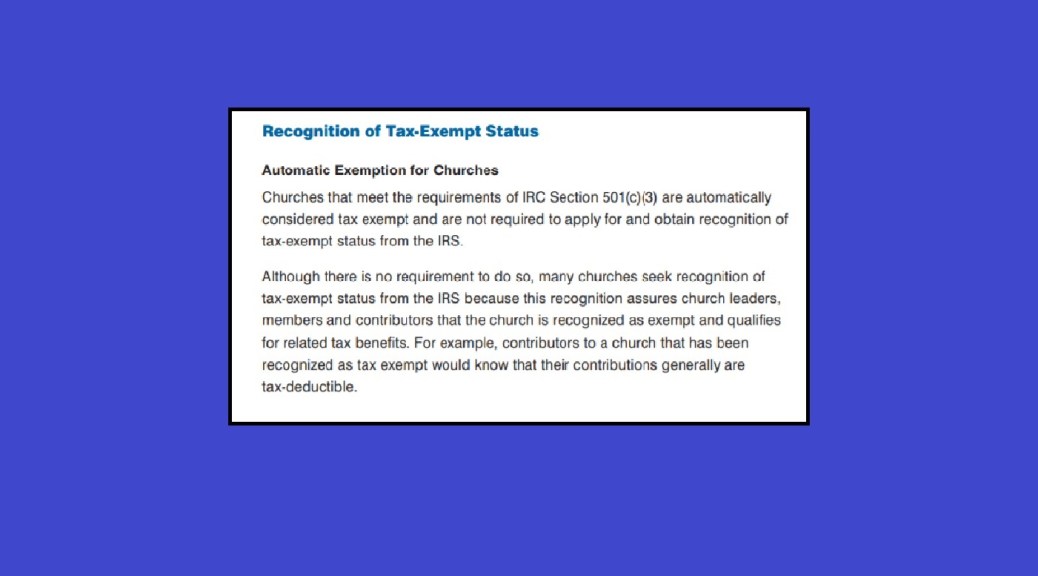
Conclusion to Bible Studies on the Biblical Doctrine of Church


Jerald Finney
Copyright © February 9, 2011


Click here to go to Self-exam Questions on the Biblical Doctrine of the Church

Click here to listen to Jerald Finney’s audio teaching on the “Conclusion to articles on the biblical doctrine of ‘Church’”.


Conclusion to Articles on the Biblical Doctrine of “Church”

41The Supreme Ruler ordained the church, as He ordained civil government. He gave churches—as He has given individual, family and civil governments—His Word wherein they can learn God’s guidelines which He wishes His churches, as well as all other governments, to follow. Satan has successfully misled most churches and other governments, and most have followed his principles. He has used false teachers from the beginning. As a result, apostasy crept into the church shortly after its inception. That apostasy has accelerated in America as the  tribulation approaches.

Many or most people in American churches today are materially rich, but spiritually blind. “Because thou sayest, I am rich, and increased with goods, and have need of nothing; and knowest not that thou art wretched, and miserable, and poor, and blind, and naked” (Re. 3.17).

1Ti.2.14Ep.5.23-27Adam was not deceived, but the woman being deceived was in the transgression (1 Ti. 2.14, Ro. 5.14, Ge. 3.1-6).  Christ was not deceived, but His bride was. “As the first Adam had to give up a perfect existence in order to be with his wife, so the last Adam, Christ (1 Co. 15.22, 45), stepped down from heaven to save his bride. While the first Adam ‘blew it,’ the last Adam would make everything right! (Ro. 5:12-21) Charles Wesley set this doctrine to music with the words, ‘Second Adam from above, reinstate us with thy love.’ … “The all-important verse that connects this typology to the present Laodicean apostasy is Ec. 1:9a: ‘The thing that hath been, it is that which shall be; and that which is done is that which shall be done….’ Thus, the history of mankind will undoubtedly end the same way it began—with a bride being deceived!” (William P. Grady, How Satan Turned America Against God (Knoxville, Tennessee: Grady Publications, Inc., 2005), p. vii.).

Jn.3.16“For God so loved the world, that he gave his only begotten Son, that whosoever believeth in him should not perish, but have everlasting life. For God sent not his Son into the world to condemn the world; but that the world through him might be saved. He that believeth on him is not condemned: but he that believeth not is condemned already, because he hath not believed in the name of the only begotten Son of God. And this is the condemnation, that light is come into the world, and men loved darkness rather than light, because their deeds were evil” (Jn. 3.16-19).

Ro.5.12-21“[Jesus], being in the form of God, thought it not robbery to be equal with God: But made himself of no reputation, and took upon him the form of a servant, and was made in the likeness of men: And being found in fashion as a man, he humbled himself, and became obedient unto death, even the death of the cross” (Ph. 2.6-8).

3Regardless of this inevitable apostasy and the events that are to follow, things are looking good for you and me—that is, if you are a Christian! Christians have the ultimate hope: they will reign with the Lord. This should be a cause for great rejoicing as well as incentive to be responsible members of a local autonomous New Testament church and to make sure that every effort is made to glorify God and assure that a church remains totally under Christ in every way. The Holy Spirit is now calling out, not the subjects, but the co-heirs and co-rulers of the kingdom.

2Ti.2.12“It is a faithful saying: For if we be dead with him, we shall also live with him: If we suffer, we shall also reign with him: if we deny him, he also will deny us” (2 Ti. 2.11-12).

“And hath made us kings and priests unto God and his Father; to him be glory and dominion for ever and ever. Amen” (Re. 1.6).

Ro.8.18_2“To him that overcometh will I grant to sit with me in my throne” (Re. 3.21).

“And hast made us unto our God kings and priests: and we shall reign on the earth” (Re. 5.10).

“For ye have not received the spirit of bondage again to fear; but ye have received the Spirit of adoption, whereby we cry, Abba, Father.’ The Spirit itself beareth witness with our spirit, that we are the children of God: And if children, then heirs; heirs of God, and joint heirs with Christ; if so be that we suffer with him, that we may be also glorified together. For I reckon that the sufferings of this present time are not worthy to be compared with the glory which shall be revealed in us” (Ro. 8.15-18).

“Do ye not know that the saints shall judge the world? and if the world shall be judged by you, are ye unworthy to judge the smallest matters? Know ye not that we shall judge angels? how much more things that pertain to this life” (1 Co. 6.2-3)?

Definition, Organization, and Purposes of a Church


Jerald Finney
Copyright © December, 2010


Click here to go to “Self-exam Questions: Definition, Organization, and Purposes of a Church”

Click here to listen to Jerald Finney’s audio teaching on the “Definition, organization, and purposes of a church”


Note. This written teaching revises what Jerald Finney originally wrote and taught in his audio teaching on the “Definition, organization, and purposes of a church.”


Definition, Organization, and Purposes of a Church8

The church, as such, is never mentioned in the Old Testament. The Old Testament includes, among other things:

  1. a history of man from the beginning in the Garden of Eden, the fall, the success of man when ruled by conscience, the ordination of human government, the establishment of nations and the rules for Gentile nations and the nation of Israel, the success of man under civil government and the fate of civil government and nations;
  2. God’s past, present, and future dealings with nations, especially Israel and Gentile nations as they relate to Israel, God’s chosen people until the Jewish nation/religion rejected Christ as recorded in the New Testament Gospels;
  3. various covenants established by God;
  4. God’s plan of salvation through grace;
  5. prophecies that go all the way to the establishment of God’s eternal kingdom.

As recorded in the New Testament, born-again believers are the people now chosen by God for His purposes and glory and have been since the nation Israel rejected Him. In the Old Testament, God’s light shined through an earthly organization, the nation Israel, including the trail that led to the death, burial, and resurrection of our Lord Jesus Christ. In the New Testament, God’s light shines through a spiritual organism, the institution of the church which is comprised of local, autonomous, spiritual bodies. No organism which resembled the New Testament church was described in the Old Testament. Old Testament believers were told at times to assemble to worship God (See, e.g., De. 4.10), but nowhere were they described as the church is described in the New Testament. The Holy Spirit did not indwell all believers in Old Testament times. Since the conversion of Cornelius as recorded in Acts 10, He now indwells every believer at the moment of salvation.

Christ ordained the nations and civil government, and He ordained the church. “And I [Jesus Christ] say also unto thee, That thou art Peter, and upon this rock I will build my church; and the gates of hell shall not prevail against it” (Mt. 16.18). Christ, through the epistles of Paul, develops the doctrine of the church. Through those epistles we know that the institution of the church is made up of local, autonomous, spiritual organisms, who are heavenly in calling, promise, and destiny. Through those epistles we know the nature, purpose, and form of organization of local churches and the right conduct of such bodies.

SeparationOfChurchAndStateThe author set out to understand what the Bible teaches about the issue of separation of church and state in America. When investigating the biblical principles of church, state, separation of church and state and the American application of those principles, one meets the issue of Covenant versus Dispensational Theology head on; one must examine the biblical doctrines of government and church.

To understand the issues of government, church, and separation of church and state, one necessarily has to study both Covenant Theology and Dispensational Theology. Bible exposition, history, and law mandate this examination. Dispensational Theology literally interprets Scripture (with an understanding of figures of speech and context) whereas Covenant Theology incorrectly allegorizes or spiritualizes much of Scripture. When one believes what the Bible says, he cannot accept the interpretations of various issues made by those religions that have imposed fallacious interpretations upon the Word of God. These matters will be examined in more detail in the teachings which follow.

3The author disagrees with Covenant Theologians in their interpretation of Scripture. The author does not accept the unbiblical definition of “church” given by Covenant Theologians: “The community of all true believers for all time” (Wayne Grudem, Systematic Theology (Grand Rapids, Michigan: Zondervan; Leicester, England: Inter-Varsity Press, 1994), pp. 859-863 (differences between dispensationalism and Covenant Theology), p. 853 (the Covenant Theology definition of “Church”). See also the lessons which follow in this Section and in Section III.).

The terms “dispensationalism” and “dispensational theology” identify a particular way by which one divides the word of truth. This simplifies discussion just as does the use of the word “trinity.” However, to determine whether any biblical teaching is correct, one must study the Bible. One can, for example, explain the fate of Israel, Gentile nations, and the church without being called a “dispensationalist;” but he is in fact a dispensationalist by definition if he literally interprets Scripture which, without reasonable argument, tells of various dispensations in God’s dealings with mankind. Unfortunately, there are some “dispensationalists” who partially or totally falsely divide biblical teaching. A believer must be careful to “study to shew [himself] approved unto God, a workman that needeth not to be ashamed, rightly dividing the word of truth.”

Instead, for many reasons, some of which are discussed in Part One (Sections I, II, and III) of God Betrayed/Separation of Church and State: The Biblical Principles and the American Application which is reproduced in edited form on this website), the author believes that the correct dispensational view of Scripture will, among other matters, make clear that:

  1. Hyper-dispensationalists divide the Word of God into too many small slices, thereby incorrectly expositing Scripture as to many issues and points. One example is offered here. Contrary to the teachings of some “dispensationalists,” all true believers in Christ after the fall, whether before or after His death and resurrection, are saved by repentance toward God and faith in the Lord Jesus Christ.

    However, the New Testament church is never mentioned in the Old Testament. In the Old Testament, as in the New, God dealt with individuals on the basis of their faith or absence of faith in the coming Messiah. In Old Testament times, believers looked forward to the resurrection; but God had not yet instituted any organism which in any way resembled the church ordained by Christ as recorded in the New Testament. After the resurrection, believers look backward to the resurrection. See, e.g., the Messianic Psalms; research the entire Old Testament on the subject starting with Genesis; Genesis 3-4; Psalm 51; John 5:43-47; Acts 10:40;  Romans 4, 9:30-33; 1 Corinthians 10:1-4; Galatians 3:10-18; 2 Timothy 3:15 (at the time Timothy was written, there was no New Testament, only Old Testament Scriptures; Hebrews 4:1-2; James 2:23-24.

    In the Old Testament God also deals with nations, and much of the Old Testament tells of God’s past, present, and future dealings with nations, especially the nation Israel and Gentile nations as they relate to Israel. However, no organism which resembled the New Testament church was described in the Old Testament. Old Testament believers were told at times to assemble to worship God (See, e.g., De. 4.10), but nowhere were they described as the church is described in the New Testament. Therefore, one must not use Old Testament Scripture to teach, for example, on the position and role of the New Testament church pastor.
  2. 9Yes, “Jesus Christ the same yesterday, and to day, and for ever” (Hebrews 13.8); He has always loved mankind, His creation, so much that He has done everything possible to show man that the only way to Him, after the fall, was by grace through faith. Every person since the fall has is a lost sinner unless he repents toward God and places his faith in the Lord Jesus Christ. Everyone, to the point of salvation, is a sinner whose righteousness is as filthy rags. After salvation, a man still commits sin, but he does not practice sin without consequences as before. “Therefore if any man be in Christ, he is a new creature: old things are passed away; behold, all things are become new” (2 Co. 5.17; see, for more on this, Repentance, the new creature, the new life, and changed behavior).

    Because of the nature and history of man and because God loves man and wishes every person to choose to come to Him, as the Bible explains, He has worked with mankind in various ways since the creation in order to test man and show him that man cannot earn his eternal life; that salvation is a free gift. Every man fails God’s tests and rejects God’s ways or rules which would only benefit man, thus demonstrating that one is saved by grace through faith. The main purpose of God’s tests are to bring men to a saving knowledge of the Lord Jesus Christ. Every man fails; God succeeds for the remnant who put their trust in the Lord Jesus Christ. God worked with Adam and Eve before the fall in a special way: they were not saved by faith in Jesus Christ since they had not yet failed God in any way. However, after failing the one test God presented to them, God-instead of killing them instantly as they justly deserved—graciously spared mankind before his inevitable physical death and gave them a way to Him—faith in the coming seed. Thereafter, every time man has failed God’s tests. God—instead of destroying all human beings (except for the faithful remnant)—has lovingly demonstrated His great love for mankind in spite of man’s rejection of and rebellion against God and His Word.
  3. 2Every teaching on the Word of God—whether it be termed Dispensational Theology, Covenant Theology, or something else—should be carefully examined against Scripture as to its truth. For example, C. I. Scofield was a dispensationalist and his Commentaries on the Bible are very helpful in a serious study of the Word of God. However, he was wrong about many things in his footnotes, margin notes, and headnotes. Every believer is responsible to God to seek out the truth of the Bible. All resources one relies on in his study of God’s Word are to be tested by a careful study of the Word of God. Quotes from Scofield in these teachings indicates agreement unless otherwise indicated.

This author agrees, for the most part, with the writings of those dispensationalists which he has read. Fortunately, the Lord did not lead the author to the teachings of the fundamentally errouneous dispensationalists in his studies for the writings of his books and other writings. Yes, some so-called dispensationalists are wrong, according the Bible, in some of their teachings.  Pastor Mike Hoggard points out critical flaws of the false dispensationalists on Facebook at: “Dispensationalism, True Or False?” Does this mean that the correct dispensational approach to understanding Scripture is wrong? Absolutely, not. Sadly, some good men of God point at erroneous dispensationist teachers or teachings and use that error to totally discount dispensationalism. More on the author’s understanding of dispensatonism is to be found in the article, “Dispensational Theology Versus Covenant Theology.”

dispensations-7_02Simply put, the term dispensation as it relates to Dispensational Theology could be defined as a particular way of God’s administering His rule over the world as He progressively works out His purpose of world history. See “Dispensational versus Covenant Theology” for a more thorough definition and understanding of Dispensational Theology. Seven such dispensations are distinguished in Scripture:

  1. Innocency (Genesis 1.28).
  2. Conscience (Genesis 3.23).
  3. Human government (Genesis 8.20).
  4. Promise (Genesis 12.1).
  5. Law (Exodus 19.8).
  6. Grace (John 1.17).
  7. Kingdom (Ephesians 1.10).

1The author does not agree with Covenant Theologians in their allegorical teaching that the church has replaced Israel. Covenant Theologians believe that the church has replaced Israel, that God is finished with Israel and the Jews, and that God’s promises to and covenants with the nation Israel and selected rules for organization for the Jewish religion should be applied to the church (See Grudem, pp. 859-863). Covenant Theologians reach this false conclusion by allegorizing certain Scriptures. The author addresses this in Section I (reproduced with modifications and editions on this website. Click here to go to the webpage with links to Section I articles.) and Section III of God Betrayed (reproduced with modifications and editions on this website)Click here to go to the webpage with links to Section III articles.). Section IV of God Betrayed shows the anti-biblical consequences of the brand of Covenant Theology practiced in Europe and brought to America by established Protestant churches. (Click here to go to the webpage  with links to Section IV articles.).

UnionOfChurchAndState2The application to modern nations, and the attempt to make the application in America, of certain principles—including the principle of union of religion (or church) and state— regarding the Jewish religion and the relationship of religion to state in Old Testament Israel has had devastating consequences in the United States. Those theologians who would combine religion and state as in the pagan nations of antiquity, as with Israel in the theocracy, as with the established Catholic and Protestant churches who used the arm of the state to kill millions whom they designated as heretics, as with the religion of Islam, etc. have not mastered God’s lessons recorded in His Word and in the historical writings of man. Sadly, America is now overrun with false Catholic and Protestant religions who hate the biblical principle of separation of church and state (not separation of God and state) as enacted in the First Amendment to the United States Constitution.

To properly explain the issue of the relationship, if any, between church and state (separation of church and state), one must correctly understand what the Bible teaches about the government (covered in Section I of these studies) and church (this section, Section II). Section III will culminate this study as it examines the biblical principle of separation of church and state. Dispensational Theology correctly explains the biblical doctrine of separation of church and state. As is explained in Section III, Chapter or Lesson 4, the principles for church and state are so distinct that the two are mutually exclusive.

A New Testament church is made up of visible people who have made a profession of faith in Jesus Christ,are indwelt by the Holy Spirit, and who assemble as members of a local spiritual body. On the other hand, since one cannot see the spiritual condition of people’s hearts, in one sense a church is invisible. “We can see those who outwardly attend the church, and we can see outward evidences of inward spiritual change, but we cannot actually see into people’s hearts and view their spiritual state. Only God can do that…. [An] invisible church is the church as God sees it” (Grudem, p. 855; Alan Cairns, Dictionary of Theological Terms (Greenville, S.C.: Ambassador Emerald International, 2002), p. 90)[Bracketed material indicates modifications]. Therefore, one can be in a visible church, yet unregenerate, lost, and destined for hell; such a person is not really a part of the true church to which he belongs. He is a tare; he will not be at the marriage of the Lamb (see Re. 19.7-10), and he will not be a part of the “general assembly and church of the firstborn” (see He. 12.22-24). According to the Word of God, the future of the visible Church, except for a remnant, is apostasy.

Church members are not to be “fruit inspectors.” A church is authorized to remove a professed believer from fellowship only, and that for gross immorality in order to “deliver such an one unto Satan for the destruction of the flesh, that the spirit may be saved in the day of the Lord Jesus” (See 1 Co. 5).

Click the above image to go to some heretical Roman Catholic teaching on the issue.

Obviously, the Bible rejects the Roman Catholic position that the Roman Catholic “church” is the only true church or even a church as described in the New Testament. The Roman Catholic “church” was responsible for the persecution of untold millions of believers when that “church” had earthly authority. Catholicism justified the persecution by a false theology. Study of God’s Word, without brainwashing, a practice which the vast majority of Roman Catholic churches have traditionally condemned, reveals the fallacies of Roman Catholic theology. The author believes that, is spite of the apostate theology or the Catholic church, many Catholics today are probably saved, but ignorant. Otherwise, they would leave the harlot religious organization and join a Bible believing New Testament church. The Bible also rejects Protestant church theology which has also been responsible for the persecution and murder of those deemed to be heretics. Note. See http://joanandtherese.net/page/16/?title for a Catholic perspective of church and state.

9In the New Testament, the church is spoken of in two senses. In one sense, the Bible speaks of the institution of the Church, just as it speaks of the institution of marriage. As to the institution of the church, Jesus Christ promised, in speaking to Peter, “Thou art Peter and upon this rock I will build my church” (Mt. 16.18). “Christ also loved the church, and gave himself for it” (Ep. 5.25; of course, Ephesians was written to the church at Ephesus, the teachings to be applied by all local churches, Scofield’s misguided headnote notwithstanding. The Bible does not agree with Scofield’s doctrine of what he terms the “true” church. True believers who know and follow the Lord will be part of the marriage of the Lamb (See Re. 19.7-10), at which point there will be only MarriageSupperOfTheLambone church or assembly of the saints. “But ye are come unto mount Sion, and unto the city of the living God, the heavenly Jerusalem, and to an innumerable company of angels, To the general assembly and church of the firstborn, which are written in heaven, and to God the Judge of all, and to the spirits of just men made perfect,  And to Jesus the mediator of the new covenant, and to the blood of sprinkling, that speaketh better things than that of Abel” (He. 12:22-24). However, until the marriage of the lamb, the church, as spoken of in the Bible, is an heavenly institution made up of local spiritual bodies or organisms.

In a second sense, the church is a local body of believers. In this sense, a church has a visible aspect—it is a church as church members see it. Only local autonomous assemblies of actual believers give place for the application of spiritual gifts as a body, worship of the Lord, perfection of the saints, work of the ministry, and edification of the church. All biblical references to a church here on the earth refer to an autonomous local body of Jewish and/or Gentile believers and not to a universal or catholic church. Nowhere in the New Testament is a church here on the earth ever referred to as anything other than a local spiritual body and nowhere does Scripture teach that a church is to have any type authority above it other than the Lord Jesus Christ. Some examples of references to churches as they existed in the New Testament follow:

  1. “Then had the churches rest throughout all Judaea and Galilee and Samaria, and were edified; and walking in the fear of the Lord, and in the comfort of the Holy Ghost, were multiplied” (Ac. 9.31).
  2. Paul said, “Likewise greet the church that is in their house” (Ro. 16.5).  Notice that the church refers to the local body of baptized believers. The house was just the place where they met; it was not a church.
  3. Paul wrote to the church in Corinth, “Paul … Unto the church of God which is at Corinth, to them that are sanctified in Christ Jesus, called to be saints, with all that in every place call upon the name of Jesus Christ our Lord, both their’s and our’s” (1 Co. 1.1-2).
  4. “If therefore the whole church be come together into one place…” (1 Co. 14.23).
  5. “The churches [Not “the church”] of Asia salute you. Aquila and Priscilla salute you much in the Lord, with the church that is in their house” (1 Co; 16.19).
  6. “Paul … unto Philemon … and to the church in thy house” (Phil; 1-2).
  7. “… [T]hat thou mayest know how thou oughtest to behave thyself in the house of God, which is the church of the living God, the pillar and ground of the truth” (1 Ti; 3.15).  The Bible defines “house of God”: “For every house is builded by some man; but he that built all things is God. And Moses verily was faithful in all his house; as a servant, for a testimony of those things which were to be spoken of after; But Christ as a son over his own house; whose house are we, if we hold fast the confidence and the rejoicing of the hope firm unto the end” (He. 3.4-6).
  8. 7 churches of Re.In Revelation, in speaking to “the things that are” at that time, the Lord stands in the midst of the seven candlesticks (churches)(Re. 1.12-13) and speaks to each church individually. He speaks to and has a message for “the church of Ephesus” (Re. 2.1), “the church in Smyrna” (Re. 2.8), “the church in Pergamos” (Re. 2.12), “the church in Thyatira” (Re. 2.18), “the church in Sardis” (Re. 3.1), “the church in Philadelphia” (Re. 3.7), and “the church of the Laodiceans” (Re. 3.14).

Baptists have always recognized the biblical teaching as to this aspect of a church—that is, that a church on earth is only a local spiritual body of believers whose Head is Jesus Christ. As Isaac Backus wisely noted:

ChristIsTheHead “[A] power in councils above particular churches has no foundation in Scripture, and is an endless source of confusion among Christians…. In all earthly governments, the laws are executed in the name of the supreme authority of it, which can see but a little of what is done in its name. But the Son of God is present in every church, as well as through the world, by his universal knowledge and power; and if any of his churches leave their first love, and will not repent, he removes the candlestick out of his place. Rev. ii. 1-5” (Backus, A History of New England With Particular Reference to the Denomination of Christians called Baptists, Volumes 1 and 2 (Eugene, Oregon: Wipf & Stock Publishers, Previously published by Backus Historical Society, 1871), pp. 339-340).

J. M. Carroll said this:

“[N]either Christ nor His apostles, ever gave to His followers, what is known today as a denominational name, such as ‘Catholic,’ ‘Lutheran,’ ‘Presbyterian,’ Episcopal,’ and so forth—unless the name given by Christ to John was intended for such, ‘The Baptist,’ ‘John the Baptist.’ (Matt.11:11 and 10 or 12 other times.) Christ called the individual follower ‘disciple.’ Two or more were called ‘disciples.’ The organization of disciples, whether at Jerusalem or Antioch or elsewhere, was called Church. If more than one of these separate organizations were referred to, they were called Churches. The word church in the singular was never used when referring to more than one of these organizations. Nor even when referring to them all.” (J. M. Carroll, The Trail of Blood, (Distributed by Ashland Avenue Baptist Church, 163 N. Ashland Avenue, Lexington KY 40502, 606-266-4341), p. 9.

J. M. Carroll was a leader among Baptists who studied history and the Bible in an attempt to “find the church which was the oldest and most like churches described in the New Testament.” In the course of his studies, he gathered “one of the greatest libraries on church history. This library was given at his death to the Southwestern Baptist Seminary, Ft. Worth, Texas.” Carroll, Introduction at pp. 1-2.).

For our understanding her nature, Scripture describes a church in many ways. A church is a family. “Rebuke not an elder, but entreat him as a father; and the younger men as brethren; The elder women as mothers; the younger as sisters, with all purity” (1 Ti. 5.1-2). “And [I] will be a Father unto you, and ye shall be my sons and daughters, saith the Lord Almighty” (2 Co. 6.18). “And he stretched forth his hand toward his disciples, and said, Behold my mother and my brethren! For whosoever shall do the will of my Father which is in heaven, the same is my brother, and sister, and mother” (Mt. 12.49-50).

A church is called the body of Christ, and therefore a living organism, not a congregation. The Holy Spirit forms the church:

“(2)(g) When Peter opened the door of the kingdom to the Gentiles (Acts 10), the Holy Spirit, without delay, or other condition than faith, was given to those who believed (Acts 10.44; 11.15-18). This is the permanent fact for the entire church-age. Every believer is born of the Spirit (John 3.3, 6; 1 John 5.1), indwelt by the Spirit, whose presence makes the believer’s body a temple (1 Cor. 6.19; Rom. 8.9-15; 1 John 2.27; Gal. 4.6), and baptized by the Spirit (1 Cor. 12.12, 13; 1 John 2.20, 27), thus sealing him for God (Eph. 1.13; 4.30)…. (5) The Holy Spirit forms [a] church (Mt. 16.18; Heb. 12.23, note) by baptizing all believers [] (1 Cor. 12.12, 13)[and the member is then added to a local New Testament church when he is baptized in water], imparts gifts for service to every member of that body (1 Cor. 12.7-11, 27, 30), guides the members in their service (Lk. 2.27; 4.1; Acts 16.6, 7), and is Himself the power of that service (Acts 1.8; 2.4; 1 Cor. 2.4).“(6) The Spirit abides in the company of believers who constitute a local church, making of them, corporately, a temple (1 Cor. 3.16, 17).” (1917 Scofield Reference Edition, n. 1 pp. 1149-1150 to Acts 2.4). ]Bracketed changes and additions made by the author to clarify or correct Scofield’s note.]

Although the word “congregation” is used several hundred times in the Old Testament, it appears only once in the New Testament, in Acts 13.43, referring to a meeting of the Jews in the synagogue at Antioch where Paul had preached to them on the Sabbath day. A “congregation” is “an assembly of persons, or a gathering; especially, an assembly of persons met for worship and religious instruction” (See AMERICAN DICTIONARY OF THE ENGLISH LANGUAGE, NOAH WEBSTER (1828) definition of “CONGREGATION” and MERRIAM WEBSTER’S COLLEGIATE DICTIONARY 243 (10th ed. 1995), definition of “congregation.”). According to one Rabbi Hisda, the Hebrew word sbr meaning “assembly” or “congregation” is a contraction of three words: s from saddiqim (meaning “righteous”) plus b from benonim (“middle of the road persons”) and r from reshan (“wicked ones”) (Leonard Verduin, The Anatomy of a Hybrid (Grand Rapids, Michigan: William B. Derdmans Publishing Co., 1976), fn W, p. 216.) On the other hand, a New Testament church is described as a spiritual body wherein each member has a specific purpose. For the church body to function correctly, all the members must perform their functions. The difference between the church, a spiritual body, and a congregation is significant: a church body is a spiritual organism whereas a congregation is an earthly gathering of people.

God, through the Apostle Paul, gives two metaphors of the body:

  1. “For as the body is one, and hath many members, and all the members of that one body, being many, are one body: so also is Christ. For by one Spirit are we all baptized into one body, whether we be Jews or Gentiles, whether we be bond or free; and have been all made to drink into one Spirit. For the body is not one member, but many. If the foot shall say, Because I am not the hand, I am not of the body; is it therefore not of the body? And if the ear shall say, Because I am not the eye, I am not of the body; is it therefore not of the body? If the whole body were an eye, where were the hearing? If the whole were hearing, where were the smelling? But now hath God set the members every one of them in the body, as it hath pleased him. And if they were all one member where were the body? But now are they many members, yet but one body. And the eye cannot say unto the hand, I have no need of thee: nor again the head to the feet, I have no need of you.  Nay, much more those members of the body, which seem to be more feeble, are necessary: And those members of the body, which we think to be less honourable, upon these we bestow more abundant honour; and our uncomely parts have more abundant comeliness. For our comely parts have no need: but God hath tempered the body together, having given more abundant honour to that part which lacked: That there should be no schism in the body: but that the members should have the same care one for another. And whether one member suffer, all the members suffer with it; or one member be honoured, all the members rejoice with it. Now ye are the body of Christ, and members in particular” (1 Co. 12.12-27). “Ye” in the last verse, is plural, and is addressed to the Church at Corinth.
  2. “There is one body, and one Spirit, even as ye are called in one hope of your calling; One Lord, one faith, one baptism, One God and Father of all, who is above all, and through all, and in you all. But unto every one of us is given grace according to the measure of the gift of Christ. Wherefore he saith, When he ascended up on high, he led captivity captive, and gave gifts unto men.  (Now that he ascended, what is it but that he also descended first into the lower parts of the earth? He that descended is the same also that ascended up far above all heavens, that he might fill all things.)  And he gave some, apostles; and some, prophets; and some, evangelists; and some, pastors and teachers; For the perfecting of the saints, for the work of the ministry, for the edifying of the body of Christ: Till we all come in the unity of the faith, and of the knowledge of the Son of God, unto a perfect man, unto the measure of the stature of the fulness of Christ:  That we henceforth be no more children, tossed to and fro, and carried about with every wind of doctrine, by the sleight of men, and cunning craftiness, whereby they lie in wait to deceive; But speaking the truth in love, may grow up into him in all things, which is the head, even Christ:  From whom the whole body fitly joined together and compacted by that which every joint supplieth, according to the effectual working in the measure of every part, maketh increase of the body unto the edifying of itself in love.” (Ephesians 4:4-16).

In other passages, Christ is depicted as the head of the church and the earthly members as the body. Remember that these passages are from Epistles written to local church bodies for their instruction.

  1. “And hath put all things under his feet, and gave him to be the head over all things to the church, Which is his body, the fulness of him that filleth all in all” (Ep. 1.22-23).
  2. “But speaking the truth in love, may grow up into him in all things, which is the head, even Christ:  From whom the whole body fitly joined together and compacted by that which every joint supplieth, according to the effectual working in the measure of every part, maketh increase of the body unto the edifying of itself in love” (Ep. 4.15-16).
  3. “And not holding the Head, from which all the body by joints and bands having nourishment ministered, and knit together, increaseth with the increase of God” (Col. 2.19).

The Bible compares a church to a pearl of great price which “a merchant man sold all that he had, and bought it (Mt. 13.45-46):

PearlOfGreatPrice“Of [a] true Church a pearl is a perfect symbol: (1) a pearl is one, a perfect symbol of unity (1 Cor. 10.17; 12.12, 13; Eph. 4.4-6). (2) A pearl is formed by accretion, and that not mechanically, but vitally, through a living one, as Christ adds to [a] Church (Acts 2.41, 47; 5.14; 11.24; Eph. 2.21; Col 2.19. (3) Christ, having given Himself for the pearl, is now preparing it for the presentation to Himself (Eph. 5.25-27).  The kingdom is not the Church, but the true children of the kingdom during the fulfillment of these mysteries, baptized by one Spirit into one body (1 Cor. 12. 12, 13), compose … the pearl.” 1917 Scofield Reference Edition, n. 3 to Matthew 13.45, p. 1017.).

A church is also compared to:

  1. the Father’s love gift to Jesus Christ (Jn. 17.2, 6, 9, 11, 12, 24);
  2. the bride and wife of Christ, who is the Head of the church as the husband is the head of the wife;
  3. a virgin espoused to one husband (2 Co. 11.1-2);
  4. “the household of God” and “an holy temple in the Lord” (Ep. 2.19-21; see also 1 Co. 3.16);
  5. branches on a vine (Jn. 15.5);
  6. an olive tree (Ro. 11.17-24);
  7. a field of crops (1 Co. 3.6-9);
  8. God’s husbandry and God’s building” (1 Co. 3.9);
  9. a harvest (Mt. 13.1-30; Jn. 4.35);
  10. lively stones, built up a spiritual house,
  11. an holy priesthood, to offer up spiritual sacrifices, acceptable to God by Jesus Christ (1 Pe. 2.5);
  12. Christ’s house (He. 3.6) built by Christ Himself (He. 3.3); and
  13. ‘the pillar and ground of the truth’ (1 Ti. 3.15). God gave each metaphor for a reason.

Wayne Grudem explains:

“Each of the metaphors used for the church can help us to appreciate more of the richness of privilege that God has given us by incorporating us into [a local] church. The fact that [a] church is like a family should increase our love and fellowship with one another. The thought that the church is like the bride of Christ should stimulate us to strive for greater purity and holiness, and also greater love for Christ and submission to him. The image of [churches] as branches in a vine should cause us to rest in him more fully. The idea of an agricultural crop should encourage us to continue growing in the Christian life and obtaining for ourselves and others the proper spiritual nutrients to grow. The picture of [a] church as God’s new temple should increase our awareness of God’s very presence dwelling in our midst as we meet. The concept of [a] church as a priesthood should help us to see more clearly the delight God has in the sacrifices of praise and good deeds that we offer to him (See Heb. 13.15-16). The metaphor of [a] church as the body of Christ should increase our interdependence on one another and our appreciation of the diversity of gifts within the body. Many other applications could be drawn from these and other metaphors for the church listed in Scripture.” (Grudem, p. 859)[Brackets contain changes made by the author to reflect true Scriptural teaching].

How can one recognize a true church? J. M. Carroll, in describing the overall organization of the church, listed eleven “Marks of a New Testament Church:

  1. “Its Head and Founder—CHRIST. He is the lawgiver; the Church is only the executive. (Matt. 16:18; Col. 1:18.)
  2. “Its only rule of faith and practice—THE BIBLE. (II Tim. 3:15-17.)
  3. “Its name—‘CHURCH,’ ‘CHURCHES.’ (Matt. 16:18; Rev. 22:16.)
  4. “Its polity—CONGREGATIONAL—all members equal. (Matt. 20:24-28; Matt. 23:5- 12.)
  5. “Its members—only saved people. (Eph 2:21-22; I Peter 2:5.)
  6. “Its ordinances—BELIEVER’S BAPTISM, FOLLOWED BY THE LORD’S SUPPER. (Matt. 28:19-20.)
  7. “Its officers—PASTORS AND DEACONS. (I Tim. 3:1-16.)

  8. “Its work—getting folks saved, baptizing them (with a baptism that meets all the requirements of God’s Word), teaching them (‘to observe all things whatsoever I have commanded you’). (Matt. 28:16-20.)
  9. “Its financial plan—‘Even so (TITHES and OFFERINGS) hath the Lord ordained that they which preach the gospel should live of the gospel.’ (I Cor. 9.14.)
  10. “Its weapons of warfare—spiritual, not carnal. (II Cor. 10:4; Eph. 6:10-20.)
  11. “Its independence—separation of Church and State. (Matt. 22:21.)”

(Carroll, pp. 4-5).

Certainly, a preacher on the street corner with a crowd around him as he preaches is not a church. Nor is a group of people meeting in a house and preaching the Word. However, if that house group chooses a properly ordained and baptized pastor, organizes and operates according to biblical principles, initiates a proper baptism for new believers, and begins to partake of the Lord’s Supper, an ordered New Testament church comes into existence. The Lord desires that those who are saved be baptized into a properly ordered New Testament church.

Where only false doctrines are preached, no church can exist. For example, the Catholic Church, some Baptist churches, many Protestant churches, the Church of Jesus Christ of Latter Day Saints, Islam, and the Jehovah’s Witnesses are not churches. “When the preaching of a church conceals the gospel message of salvation by faith alone from its members, so that the gospel message is not clearly proclaimed, and has not been proclaimed for some time, the group meeting there is not a church” (Grudem, p. 865). A church can exist only where the Bible is believed to be the inerrant Word of God, where the Bible is the sole basis for faith and practice, and where that Bible is preached.

5A church has responsibilities. Strong, knowledgeable believers who are walking in the spirit will practice all their God-given responsibilities and apply their spiritual gifts. Included in those responsibilities, but not developed in this chapter or section, is the responsibility to “present [the church] as a chaste virgin to Christ” (See 2 Co. 11.1-4).

Worship is preeminent for the believer and for a church. “Worship” means “[t]o adore; to pay divine honor to; to reverence with supreme respect and veneration” (AMERICAN DICTIONARY OF THE ENGLISH LANGUAGE, NOAH WEBSTER (1828) definition of “WORSHIP.”).  “Let the word of Christ dwell in you richly in all wisdom; teaching and admonishing one another in psalms and hymns and spiritual songs, singing with grace in your hearts to the Lord” (Col. 3.16).  “That we should be to the praise of his glory, who first trusted in Christ” (Ep. 1.12). “Speaking to yourselves in psalms and hymns and spiritual songs, singing and making melody in your heart to the Lord; Giving thanks always for all things unto God and the Father in the name of our Lord Jesus Christ” (Ep. 5.19-20).

The principles of worship set out in Exodus 30, the great worship chapter, still apply. Exodus 30.38 condemns “making worship a mere pleasure to the natural man, whether sensuous, as in … music …, or eloquence, merely to give delight to the natural mind” (1917 Scofield Reference Edition, n. 3 to Exodus 30.38, p. 112).  Christians are to worship God in spirit and in truth (See Jn. 4.23-24). The Word of God contains principles regarding appropriate music, dress, conduct, and attitude for worship. The Lord commanded, “Ye shall offer no strange incense [on the altar of incense], nor burnt sacrifice, nor meat offering; neither shall ye pour drink offering thereon” (Ex. 30.9). No ‘strange’ incense was to be offered (that is simulated or purely formal worship forbidden) and no “strange” fire was permitted (referring “to the excitation of ‘religious’ feelings by merely sensuous means, and to the substitution for devotion to Christ of any other devotion, as to religious causes, or sects” (See 1917 Scofield Reference Edition, n. 1 to Exodus 30.9, p. 111; I Corinthians 1:11-13; Colossians 2.8,16-19).).

The local body assembles to worship God, for the perfection of the saints, for the work of the ministry, and for the edification of the members of the body, not to preach to the lost. Believers go outside the assembly and seek the salvation of the lost. This does not mean that lost people may not attend the assembly, but the purpose of assembly is not to win the lost. God gifted members of a church “For the perfecting of the saints, for the work of the ministry, for the edifying of the body of Christ: Till we all come in the unity of the faith, and of the knowledge of the Son of God, unto a perfect man, unto the measure of the stature of the fulness of Christ” (Ep. 4.12-13).  A church is to preach the whole counsel of God, “warning every man, and teaching every man in all wisdom; that we may present every man perfect in Christ Jesus” (Col. 1.28).

A church has the responsibility to evangelize. “And he said unto them, Go ye into all the world, and preach the gospel to every creature” (Mk. 16.15).  “Go ye therefore, and teach all nations, baptizing them in the name of the Father, and of the Son, and of the Holy Ghost” (Mt. 28.19).

Along with the obligation to evangelize goes helping and doing good to fellow believers as well as to unbelievers:

  1. “But love ye your enemies, and do good, and lend, hoping for nothing again; and your reward shall be great, and ye shall be the children of the Highest: for he is kind unto the unthankful and to the evil. Be ye therefore merciful, as your Father also is merciful’” (Lu. 6.35-36).
  2. “But whoso hath this world’s good, and seeth his brother have need, and shutteth up his bowels of compassion from him, how dwelleth the love of God in him” (1 Jn. 3.17)?
  3. “Then the disciples, every man according to his ability, determined to send relief unto the brethren which dwelt in Judaea” (Ac. 11.29).
  4. “Recompense to no man evil for evil. Provide things honest in the sight of all men” (Ro. 12.17). “See that none render evil for evil unto any man; but ever follow that which is good, both among yourselves, and to all men” (1 Th. 5.15).
  5. “Praying us with much intreaty that we would receive the gift, and take upon us the fellowship of the ministering to the saints” (2 Co. 8.4).
  6. “What doth it profit, my brethren, though a man say he hath faith, and have not works? can faith save him? If a brother or sister be naked, and destitute of daily food, And one of you say unto them, Depart in peace, be ye warmed and filled; notwithstanding ye give them not those things which are needful to the body; what doth it profit? Even so faith, if it hath not works, is dead, being alone” (Ja. 2.14-17).

a5A church is united together and to Christ by the baptism with the Holy Spirit (1 Co. 12.12-34). As such, it is a holy temple for the habitation of God through the Spirit (Ep. 2.21, 22); is “one flesh” with Christ (Ep. 5.30, 31); and espoused to Him as a chaste virgin to one husband (2 Co. 11.2-4). Other metaphors, as pointed out above, have also been used to describe a church. Local churches assemble in His name for the breaking of bread, worship, praise, prayer, testimony, the ministry of the word, discipline, and the furtherance of the Gospel (He. 10.25; Ac. 20.7; 1 Co. 14.26; 1 Co. 5.4, 5; Ph. 4.14-18; 1 Th. 1.8; Ac. 13.1-). Every such local church has Christ in the midst, is a temple of God, indwelt by the Holy Spirit (1 Co. 3.16, 17), and is “the pillar and ground of the truth” (1 Ti. 3.15). Only the assembly where the true doctrine is preached is a church: “But though we, or an angel from heaven, preach any other gospel unto you than that which we have preached unto you, let him be accursed” (Ga. 1.8). A church is the body of Christ of which He is the Head. Christ desires that a church remain solely under Him: “And [God] hath put all things under his feet, and gave him to be the head over all things to the church” (Ep. 1.22-23). “For the husband is the head of the wife, even as Christ is the head of the church” (Ep. 5.23).