Tag Archives: church

Urgent Open Letter to Students of Baptist Bible Schools, Colleges and Seminaries

Dear fellow believers and Bible students,

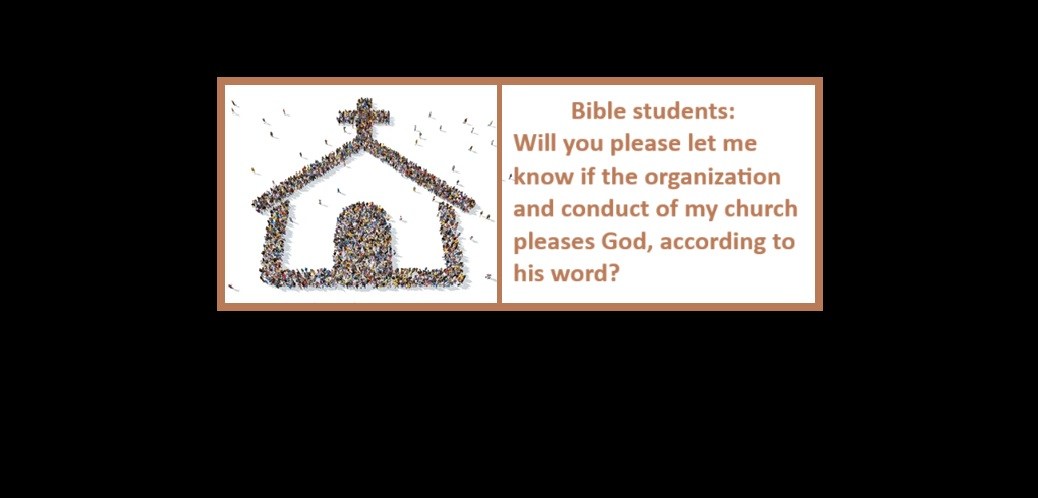
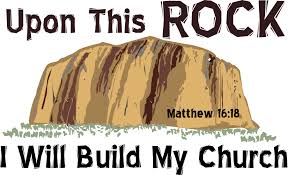
Can you answer the question in the featured picture above? Can you explain what God’s word says about the church: it’s ordination, goal, organization, and conduct?

Even after you have completed your studies, you will not be able to answer those questions unless you seek and find the answers on your own. Why? Because your studies will not cover God’s Church Doctrine.

Many or most of you love your churches and wish to serve God in those churches. That being true, should not you know what God’s word teaches about the church? Should not every church member have a basic understanding of what a church is supposed to be?

Through time-consuming tedious Bible study, you can learn church doctrine on your own. However, would it not be much easier to follow the Bible studies of someone, a born-again attorney, who has spent the last 20+ years of his 55 years as a believer passionately studying what God says about the New Testament church? If so, take just a few minutes a day going through the short lessons on the Simply Church Ministry website.

The concise lessons are presented in both written and video format. Don’t just believe what is taught there. Check it out in the Bible.

Link to short course: Basic Course | Simply Church

God bless you as you seek to please and glorify our great God and savior, the Lord Jesus Christ!

Feel free to contact me anytime for any reason.

Very truly yours,
Jerald Finney,
Born-again believer
Attorney at Law
jeraldfinney157@gmail.com
512-785-8445
jeraldfinney.com

Does a Church Need 501(c)(3) or 508(c)(1)(A) Status? A Biblical and Legal Answer

Jerald Finney
Copyright © June 23, 2024

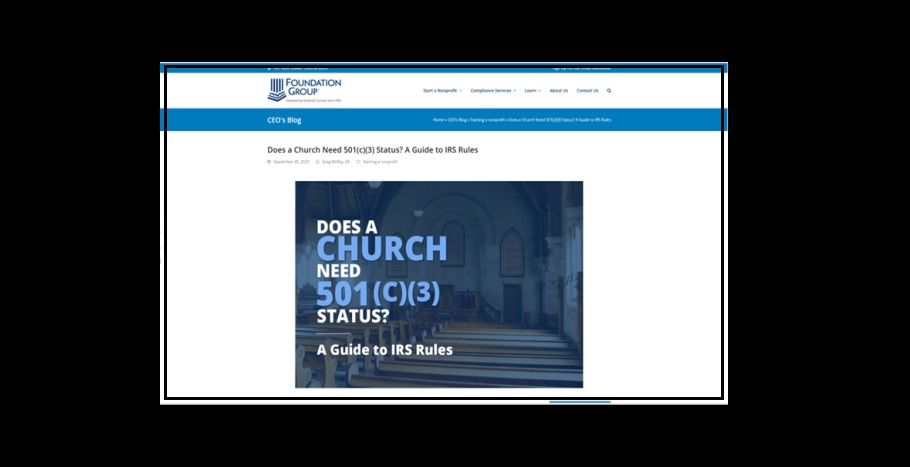
This article will briefly address some, but not all, false and misleading statements in Does a Church Need 501(c)(3) Status? A Guide to IRS Rules, a publication of Foundation Group, that uninformed “Christians” choose to believe and follow. This article applies to Foundation Group, and almost all Christan organizations, lawyers, legal firms, believers and churches; only a small remnant have any understanding of God’s definition of and principles and commandments for God’s churches. Thus, the church they are concerned about is man’s church, not God’s church; they apply man’s, not God’s, definition and principles.

It is apparent that Foundation Group has no concept of what a church-as defined by the word of God-is. Their article defines a church as “an organization with activities that are religious, not commercial.” What a joke! For God’s definition of “church” see, Bible Doctrine of Church.

It is also apparent that the Foundation Group does not understand some other matters. They do not understand that a church who remains solely under the First Amendment is non-taxable. The only way any entity–whether individual, business, religious, etc.–is required to pay taxes is by law. The First Amendment forbids a law taxing churches.

Nor does the Foundation Group understand that the use of the term “tax-exempt” in the context of 501(c)(3) is misleading. Like all other churches, churches who freely choose to dishonor God by accepting the federal government offer for “tax-exempt” status pay no taxes. Churches simply do not pay taxes. That is not why churches choose to become “tax-exempt.” The real reason for their choice is that the Internal Revenue Service will allow deductions claimed on income tax returns by donors to the church.

Their article states: “A tiny handful of churches have given up 501(c)(3) status in order to do and say whatever they choose without regard to limits otherwise placed on charities. However, this comes at the cost of tax exemption and privileges, as well as the ability to have donors give tax-deductible gifts.” This is an admission that churches who reject 501(c)(3) tax exempt status remain free to do and say the things God lays on their heart and that tax-exempt status limits their ability as to what they can to do and say. Unlike 501(c)(3) and 508(c)(1)(A) churches, they are free to follow the commandments, principles, and examples in the word of God. The second part of that quote is addressed below.

The real government purpose for federal tax-exempt status is government control over churches, not to free churches from paying taxes or to give them “tax exemption and privileges.” See, e.g., A Quiet Fatih? Taxes, Politics, and the Privatization of Religion” (Richard W. Garnett, A Quiet Faith? Taxes, Politics, and the Privatization of Religion, 42 B.C.L. Rev. 771 (2001). See also, The Rules and Regulations that Come with Church IRS Code Sections 501(c)(3) and 508(c)(1)(A) Tax-Exempt Status.

Their article states: “By default, the US government considers churches to be 501(c)(3) organizations automatically, simply by virtue of existing. Because no corporate structure is needed, a church (generally) is a 501(c)(3). …” This conclusion has no basis and is patently false. No law or regulation declares such a thing. Such a conclusion would deny the religious liberty guaranteed by the First Amendment. See, Are Churches Automatically Tax Exempt?

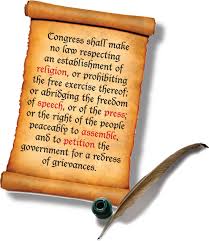
The First Amendment to the United States Constitution states:

  • “Congress shall make no law respecting an establishment of religion, or prohibiting the free exercise thereof; or abridging the freedom of speech, or of the press; or the right of the people peaceably to assemble, and to petition the Government for a redress of grievances.

Notice that the Amendment says “no law.” As one Supreme Court Justice said, “no law” means “no law.” By the way, 501(c)(3) is a law made by Congress, and, when applied to churches, respects an establishment of religion and prevents the free exercise thereof.

All parts of the First Amendment are related to and the result of the fight for religious (not business) freedom by Baptists in the colonial period. The first clause in the Amendment is the Religion Clause. That clause prohibits union of church and state (the establishment clause) and legislates freedom of conscious (the free exercise clause) on the federal level. For unrevised documented explanation, see:

The Religion Clause applies only to churches (and other religions in this pluralistic society). Churches and businesses have a distinct history and are entirely different types of entities. A church in America has a choice of whether to obtain federal tax-exempt status and become a fake church (if she is not already fake through incorporation or some other union with civil government) or to remain a true non-taxable church modeled after the examples and principles in God’s word and legislated in the highest law of America, the United States Constitution, Amendment 1. A fake tax-exempt church, as does a fake church incorporated under state law, submits herself to an authority other than to the Lord Jesus Christ. She agrees to abide by the rules and regulations that come with tax exempt status. See, The Rules and Regulations that Come with Church IRS Code Sections 501(c)(3) and 508(c)(1)(A) Tax-Exempt Status and Church Internal Revenue Code § 508(c)(1)(A) Tax Exempt Status.

The status of a church who chooses to honor God by maintaining her non-taxable status is protected by the First Amendment; she remains a church and is not classified by the government as a business if she chooses to reject the status. The government has no law or regulation which states that a church who rejects the status is now to be treated as a business; such would be in violation of the First Amendment establishment and free exercise clauses. Even if that were not true, a local church under Christ makes no profit whatsoever and therefore cannot be taxed. Even a business which makes no profit cannot be taxed, even though, unlike a church, it is required to file an income tax return.

The statement in their article, “Because no corporate structure is needed, a church (generally) is a 501(c)(3), ” is nonsensical.

Here is a statement in their article that comes from somewhere in the wild and creative imagination of its author who is obviously preying upon the ignorance of churches in his attempt to convince churches to use the services of Foundation Group: “If for some reason you and your church leadership decide that you don’t want to be a 501(c)(3), you are simply deciding to be treated like a taxable, for-profit business. …” I have already discredited this, so let us move on.

As their article indicates, it may be more convenient for a church to bow down to the federal government. For example:

1. In some few cases it may be less convenient to get the state religious tax exemption on property owned by the Lord Jesus Christ which is held and managed by a trustee (the legal or earthly owner of the property) and used by the church (not owned by the church). This ministry has encountered only two situations in which action by the trustee of God’s property being used for church purposes required legal action by the trustee of God’s property, not by the church. Both resulted in granting of the exemption. See The Indiana Board of Tax Review Determines that Property Held in Trust for the Lord Jesus Christ Must Be Granted Property Tax Exemption and Another Victory for a Church under Christ.

Sometimes glorifying and pleasing God in America can be inconvenient, but not as much so as in many nations to this very day and by followers of Christ for the last two thousand years. Our Lord Jesus Christ, the apostles, and millions of other believers from the beginning of the church age until this day were persecuted, imprisoned, beheaded, drowned, burnt at the stake, have had to hide out from church state establishments, etc. Their only way out of these “inconveniences” was to obey man rather than to God. Note: By the way, all state religious property tax exemption laws come with no strings attached and are just a courtesy from a time in this nation when God and the Bible were revered by almost everyone in the nation.

2. Some donors may not join or remain in a church who does not apply for (IRS Form 1023) and receive 26 U.S. Code (Internal Revenue Code) § 501(c)(3) tax exempt status from their new master. Some donors may not join in or remain in a church who claims IRC § 508(c)(1)(A) status. See, 26 U.S. Code § 508 – Special rules with respect to § 501(c)(3)) organizations. Of course, God desires His children to give for His glory and because they love Him, not because they get a tax deduction.

A believer dishonors God when he joins a church (e.g., a corporate and/or federally tax-exempt church) which serves mammon and is unequally yoked with any entity other than the Lord Jesus Christ.

This author, Jerald Finney, has written extensively on these matters. One who wishes to understand all aspects of the issues from a Bible based perspective can find a wealth of resources on the Simply Church Ministry Website, jeraldfinney.com. A good law review article on the Federal Tax Exemption is IGNORE THE RUMORS-CAMPAIGNING FROM THE PULPIT IS OKAY: THINKING PAST THE SYMBOLISM OF SECTION 501(c)(3) by Michael Hatfield, Associate Professor of Law, Texas Tech University School of Law. LAW REVIEW ARTICLES: 501(C)(3), 1ST AMENDMENT HISTORY, ETC. links to other law review articles on this and related First Amendment matters.

God’s Principles for New Testament Church Organization, Application of Those Principles, and Answers to Questions From Pastors and Others

Jerald Finney
February 16, 2024

Contents

 I. Introduction

II. Bible Principles

 III. Application of Principles

 IV. Analysis of False Reasons of Christians and Lawyers for Church Corporate, 501(c)(3) and 508(c)(1)(A) tax exempt Status or Legal Status of Any Kind.

V. Answers to Questions and Comments from Pastors and Other Believers Concerning Church Organization

VI. Contact Information for this Simply Church Ministry

I. Introduction

Most believers in America have never considered whether or not God’s Word communicates teachings, doctrines, and principles concerning Christ’s churhes which are at odds with the organization and conduct of the church they attend. They never ask, “Has my church been corrupted from the simplicity that is in Christ” (See, 2 Corinthians 11:3).

Most have not considered whether violation of His principles is important to God or whether there are long term negative consequences for deviating from God’s church rules. Most pastors were never taught, and do not teach, New Testament Church doctrine and its application. They assume that their practices handed them by tradition are in line with God’s will. That  would be OK if, indeed, their tradition were in line with God’s Word.

Is a church, according to God, to be:

  1. a temporal worldly organization,
  2. or an organism, the body of Christ; instinct with His life, and heavenly in calling, promise, and destiny,
  3. or a combination of the two?

How is one to know “the nature, purpose, and form of organization of local churches, and the right conduct of such gatherings?” God’s Word, mainly in the epistles of Paul, answers these questions.

As the serpent beguiled Eve, has your church been corrupted from the simplicity that is in Christ?” Will you turn your back on God’s Word as regards God’s church principles?

II. Bible Principles

What are the principles and how can a church in America apply them? The essential principles are relatively easy to grasp, but some Bible study is needed to get into the deeper waters of the doctrine.

The basic principles for church organization are rather simple:

  • Christ purchased the church with His own blood (Acts 20:28).
  • He “also loved the church, and gave himself for it; That he might sanctify and cleanse it with the washing of water by the word, That he might present it to himself a glorious church, not having spot, or wrinkle, or any such thing; but that it should be holy and without blemish” (Ephesians 5:25-27).
  • God gave God the Son “to be the head over all things to the church (Ephesians 1:22).
  • Christ “is the head of the body, the church: who is the beginning, the firstborn from the dead; that in all things he might have the preeminence” (Colossians 1:18).
  • A church is to be espoused to one husband, to be presented “as a chaste virgin to Christ” (2 Corinthians 11:3).
  • God desires that a church have no relationship with any other lover, any other entity, than the Lord Jesus Christ.

In other words, God desires His churches to love and glorify Him by remaining 100% faithful  as shown by the fact that they are in relationship with no entity other than the Lord Jesus Christ.

For more thorough studies of the Bible doctrines of government, church, and relationship of church and state, see Separation of Church and State/God’s Churches, Spiritual or Legal Entities?God Betrayed/Separation of Church and State: The Biblical Principles and the American ApplicationThe Bible Doctrine of Government; The Bible Doctrine of the ChurchThe Bible Doctrine Concerning the Relationship of Church and State

 III. Application of Principles

Do the following methods of church organization by which a church becomes a “legal entity”  violate God’s principles:

  1. non-profit corporation organization under man’s law,
  2. federal tax exempt status under Internal Revenue Code §§ 501(c)(3) or 508(c)(1)(A),
  3. other methods of operation and organization by which a church which entangles herself with another lover by becoming a “legal entity“?

The answer to the three questions above is yes.  To understand this, one must understand the Bible principles and then make the application of those principles to a particular type of organization. For links to short answers explaining the facts about church incorporation, tax exempt status, etc. Go to Short Answers to Some Important Questions (each short answer links to additional more in depth studies.)

See the following for short answers which link to additional resources which give more in depth answers:

Sadly, Satan, through his subtilty, has beguiled  most churches  in America, as he did Eve, from the simplicity that is in Christ. Most are temporal worldly organizations who, to one degree or another name the name of Christ but keep the commandments of men as opposed to the principles of God.

In America, the First Amendment to the United States Constitution (the highest man-made law of the land) and corresponding provisions of the Constitutions of all the states allow a church the freedom, without persecution, to apply God church principles. See, Religious Liberty in AmericaThe History and Meaning of the First Amendmentor An Abridged History of the First Amendment. Even though man’s highest laws in America regarding the relationship of church and state protect those churches who choose to honor God in the matter, most churches follow American tradition rather than God’s word in their relationship to civil government, mainly by incorporating and applying for Internal Revenue Code § 501(c)(3) status or claiming 501(c)(3) status under Internal Revenue Code § 508(c)(1)(A).

How can a church organize as did the churches in the New Testament and according to the New Testament Church doctrine? This website gives you God’s principles, the way to apply those principles, and information on many related matters. For a concise explanation of the Bible principles and application of those principles, see Simply Church: The Holy Union of Christ and His Local Church; see also, for more information and links to more resources, Bible Trust: Principles and Application.

 IV. Analysis of False Reasons of Christians and Lawyers for Church Corporate, 501(c)(3) and 508(c)(1)(A) tax exempt Status or Legal Status of Any Kind [Click link]

Among false reasons given for church incorporation, federal tax exempt status under Internal Revenue Code §§ 501(c)(3) or 508(c)(1)(A), or become some other kind of legal entity are:

A.  To Own Property
B. The church must operate as a business
C. So that the church can go into debt
D. So that the church may enter into contracts
E. So that the church can manage their employee payroll and tax matters
F. Limited liability
G. Romans 13 and other verses require a believer and church “to obey every ordinance of ma”
H. Just follow your convictions, but it is best to incorporate your church and get federal tax exempt status
I. To be “practical” a church must incorporate and get federal tax exempt status
J. etc.

V. Answers to Questions and Comments Concerning Church Organization from Pastors and Others:

VI. Contact Information

JERALD C. FINNEY
BAB, HB, BBA, JD

801 Elgin St.
Amarillo, TX 79118
Phone : (512) 785-8445
E-MAIL: jeraldfinney157@gmail.com


The Local Church: Organization or Organism?

Jerald Finney
December 8, 2023

Most churches in America, including most so called “Bible believing Baptist Churches,” deny the power of God by organizing and conducting themselves according to the traditions of men as opposed to the commandments of God. Many, through study of God’s word and the prompting of the Holy Spirit, are realizing their sin, repenting, and committing themselves to glorifying and pleasing God in the matter of church organization and conduct.

Those churches needing help in the matter of transitioning from worldly organization to heavenly organism as well as those who are planting a new church may contact this ministry. This is a God-called ministry of love. There are no charges for our services.

Click here to go to PDF of a RESOLUTION ON CHURCH ORGANIZATION AND CONDUCT.

God bless,
Jerald Finney
Born-again believer and licensed attorney
Texas Bar Number: 00787466 (See texasbar.com)
512-785-8445

Are Churches Automatically Tax Exempt?

Jerald Finney
Copyright © April 8, 2022

Regardless of what one has been told or believes, an honest examination of the evidence proves that churches are not automatically tax exempt. See the essay below, and other resources linked to below, for proof of this conclusion. However, “Churches that meet the requirements of § 501(c)(3) are automatically considered tax exempt [under § 508(c)(1)(A)] and are not required to apply for and obtain recognition of tax-exempt status from the IRS.” This quote is from IRS publications and is the correct position. If a church does not meet the requirements of 501(c)(3) that church is not “tax exempt.”

Furthermore, according to principles in the Word of God, church tax exempt status is spiritual fornication since she has submitted herself to man’s law, become a temporal legal – as opposed to spiritual eternal only – entity,  and chosen to submit to an authority other than the Lord Jesus Christ as to many church matters. A church can choose to remain under Christ only as a eternal spiritual organism as opposed to a temporal earthy organizaion. In America, the First Amendment and corresponding state constitutional provisions protect this choice from persecution. This essay, and the other essays and articles on this website explain these matters more comprehensively.

See also:

Jerald Finney
Copyright © April 8, 2022

Many Christians and churches take the position that churches who do not file Form 1023 in order to obtain federal tax exempt status are “automatically exempt.” They believe that Internal Revenue Code § 508(c)(1)(A) grants automatic tax exempt status to churches. Is this position correct? For emphasis, this brief essay will go directly to that one question which I have already answered in more extensive and comprehensive writings such as Church Internal Revenue Code § 508(c)(1)(A) Tax Exempt Status, and  The Rules and Regulations that Come with Church IRS Code Sections 501(c)(3) and 508(c)(1)(A) Tax-Exempt Status.

A church, because of the First Amendment, can choose either to be automatically non-taxable without any civil government control; or it can choose to be a 501(c)(3) or 508(c)(1)(A) tax exempt organization if(explained below). No if can come with automatic status. Automatically means: “(with reference to a device or process) by itself with no human control.” According to that definition, churches definitely are not “automatically tax exempt.”  Both 501(c)(3) and 508(c)(1)(A) tax exempt status come with IRS rules and regulations. See, The Rules and Regulations that Come with Church IRS Code Sections 501(c)(3) and 508(c)(1)(A) Tax-Exempt Status.  Please let me explain.

The complete title to “508” is “26 U.S. Code § 508 – Special rules with respect to section 501(c)(3) organizations.” This title makes clear that a 508 church is 501(c)(3) tax exempt.

508(a),(c)(1)(A) states:

“(a) New organizations must notify Secretary that they are applying for recognition of section 501(c)(3) status

“(c) Exceptions
“(1) Mandatory exceptions Subsections (a) and (b) shall not apply to
“(A) churches, their integrated auxiliaries, and conventions or associations of churches….”

508(c)(1)(A) does not state that churches are “automatically exempt.” Clearly, 508(c)(1)(A) states that churches are mandatory exceptions to the requirement for filing for Internal Revenue Code § (501)(c)(3) tax exempt status. “Churches, their integrated auxiliaries, and conventions or associations of churches” (not other types of other organizations)  may claim 501(c)(3) tax exempt status without filing for it.

To claim tax exempt status under 508(c)(1)(A) instead of submitting IRS Form 1023 for tax exempt status under 501(c)(3), a church must, like a 501(c)(3) church, make clear to the public and to its members that the church is tax exempt (that givers may deduct their gifts on their income tax returns); and, like a 501(c)(3) church, give IRS Acknowledgements to givers.

Rules and regulations come with 501(c)(3) and 508(c)(1(A) tax exempt status.  One cannot separate the status from attributes, rules, and regulations that go with it. The attributes, rules, and regulations of the status define the status. According to 508(c)(1)(A), a church may claim the status without filing for it. Contrary to unlearned “Christian” propaganda, churches who do so are to comply with the IRS rules and regulations that come with the status. The requirements of 501(c)(3) and 508(c)(1)(A) status are given in The Rules and Regulations that Come with Church IRS Code Sections 501(c)(3) and 508(c)(1)(A) Tax-Exempt Status.

The IRS understands this. Page 2 (the page may vary from year to year) of IRS Publication 1828 states, “churches that meet the requirements of § 501(c)(3) are automatically considered tax exempt and are not required to apply for and obtain recognition of tax-exempt status from the IRS” [Bold red emphasis mine]. The IRS repeats this on page 24 (the page may vary from year to year) of IRS Publication 557, “Tax –Exempt Status for Your Organization.” Under “Organizations Not Required To File Form 1023” churches are listed. The following sentence is included: “These organizations are exempt automatically if they meet the requirements of section 501(c)(3).” [Bold italicized emphasis added.].

By placing a church under a civil government law, either 501(c)(3) or 508(c)(1)(A), a church rejects her First Amendment non-taxable status and accepts the federal government offer for tax exempt status.  Offer and acceptance are necessary for the agreement, the contract, to be completed. The First Amendment makes clear that a church may choose to retain religious freedom without persecution. IRS  §§ 501(c)(3) and 508(c)(1)(A) give churches an alternative: give up First Amendment status as a non-legal entity in favor of Fourteenth Amendment status as a legal entity.

Most churches who obtain either 501(c)(3)  or 508(c)(1)(A) status have already given up much of their First Amendment protection and status by submitting themselves to state non-profit incorporation law, charitable trust law, etc. Churches who are corporations,  Internal Revenue Code Section 501(c)(3) or 508(c)(1)(A) tax exempt, or legal entities of any kind have forsaken higher law by submitting to authorities other than the Lord Jesus Christ.

With 508(c)(1)(A) the government declared in law that they trusted churches and “Christians,” of all people, to understand their actions and to honor their agreements. The government made it more convenient for churches, and for no other type of organization, to obtain tax exempt status. They falsely believed that Christians and churches were bound by a higher law and could be trusted to diligently honor their word.

As mentioned above, one requirement for 501(c)(3) or 508(c)(1)(A) tax exempt status is that the church give donors IRS Acknowledgements for tithes, offerings, and gifts. Should the IRS audit a donor who claimed a deduction for gifts to a church, the IRS will want the IRS Acknowledgment; and proof that the giver of the Acknowledgement was a church. If the church has 501(c)(3) status, the proof is on the IRS list of tax exempt churches. If the church has 508(c)(1)(A) status, the IRS may require the person claiming the exemption to prove that the gift was to a “church” even though they should have a copy of the IRS Acknowledgement for the gift.

The real reason churches file for or claim  tax exempt status is to motivate people to give, and to give more. Some Christians will not give to a church who is approved by the Internal Revenue Service for tax exempt status. See, for an interesting study on this matter, “Churches, Politics, and the Charitable Deduction” (Ellen P. Aprill, Churches, Politics, and the Charitable Contribution Deduction, 42 B.C.L. Rev. 843 (2001).

To reject the offer of the federal government for “tax exempt” status, all a church must do is to reject all offers of state and/or federal government for combination with civil government (incorporation, charitable trust status, tax exempt status under 501(c)(3) or 508(c)(1)(A), or union with the state in any other way); refuse to give IRS Acknowledgements for tithes, offerings, and gifts; and make it known that the church is a First Amendment church solely under the authority of the Lord Jesus Christ.

Some Christians argue that they don’t care what the government requires in order for granting them the “benefits” of tax-exempt status. They know that their authority, the IRS, probably will not catch them since they do not have the resources to monitor churches and pastors. These Christians and churches take God out of the equation. The Lord knows all and does not honor such behavior by believers and churches. He expects his children to honor their word and their agreements which they voluntarily enter into. They are dishonoring God and man, and ignorance will not excuse their misdeeds:

According as his divine power hath given unto us all things that pertain unto life and godliness, through the knowledge of him that hath called us to glory and virtue:  Whereby are given unto us exceeding great and precious promises: that by these ye might be partakers of the divine nature, having escaped the corruption that is in the world through lust. And beside this, giving all diligence, add to your faith virtue; and to virtue knowledge; And to knowledge temperance; and to temperance patience; and to patience godliness; And to godliness brotherly kindness; and to brotherly kindness charity. For if these things be in you, and abound, they make you that ye shall neither be barren nor unfruitful in the knowledge of our Lord Jesus Christ.  But he that lacketh these things is blind, and cannot see afar off, and hath forgotten that he was purged from his old sins. Wherefore the rather, brethren, give diligence to make your calling and election sure: for if ye do these things, ye shall never fall” (2 Peter 1:1-10).

XI. The Fight against the Assessment Bill Continues; The Virginia Act for Religious Liberty, Drafted by Thomas Jefferson, Passes instead; Thomas Jefferson’s Unswerving Position on Religious Liberty, All Vestiges of the Establishment Removed


A Publication of Churches Under Christ Ministry


Previous Lesson:
X. Alliance Between the Episcopalians and the Presbyterians; Bill for Provisions for Teachers of Christian Religion; Madison’s Opposition to the Bill and His Famous Memorial and Remonstrance

Next Series of Lessons:
Religious Freedom in America!

Click here for links to all lessons on “To Virginia.

Click here to go to links to all written lessons.

Click here to go to the 3 1/2 to 6 minute video lectures.

For accompanying more thorough study from God Betrayed click here.


Jerald Finney
Copyright © March 5, 2018


Virginia Bill For Religious Freedom -Passed in 1786. Click above image to go to the online PDF.

The people were against the assessment bill, and the Presbyterians reversed their position, opposed the bill, and for the first time, on August 10, 1785, the whole Presbyterian body supported Jefferson’s “Bill for Establishing Religious Freedom,” “although that bill had been before the Legislature since June 1779.” The Baptists asked all counties which had not yet prepared a petition to do so and agreed to prepare a remonstrance and petition against the assessment. Thus the Presbyterians and Baptists stood together, but for different motives. Mr. Madison’s opinion was that the Presbyterians were “moved by either a fear of their laity or a jealousy of the Episcopalians. The mutual hatred of these sects has been much inflamed by the late act incorporating the latter…. Writings of Madison, I., 175.”[1]

Patrick Henry, the leading proponent of the assessment bill was elected governor, “depriving the bill of its ablest legislative leader.” The Memorial and Remonstrance had received wide distribution. At the next session, the General Assembly was flooded with petitions and memorials from all parts of the State, overwhelmingly against the bill. The bill was defeated by three votes.

On January 16, 1786, the Virginia Act for Religious Liberty, drafted by Thomas Jefferson, was passed instead. That bill provided for religious liberty and freedom of conscience. Click here to see the entire PDF of the Bill. It stated, in part:

  • “I. Well aware that Almighty God hath created the mind free; that all attempts to influence it by temporal punishments or burthens or by civil incapacitations, tend only to beget habits of hypocrisy and meanness, and are a departure from the Holy Author of our religion, who being Lord of both body and mind, yet chose not to propagate it by coercions on either, as was in his Almighty power to do;
  • that the impious presumption of legislators and rulers, civil as well as ecclesiastical, who, being themselves but fallible and uninspired men, have assumed dominion over the faith of others, setting up their own opinions and modes of thinking as the only true and infallible, and as such, endeavoring to impose them on others hath established and maintained false religions over the greatest part of the world and through all time;
  • that to compel a man to furnish contributions of money for the propagation of opinions which he disbelieves, is sinful and tyrannical; that even the forcing him to support this or that teacher of his own religious persuasion is depriving him of the comfortable liberty of giving his contributions to the particular pastor whose morals he would make his pattern, and whose powers he feels most persuasive to righteousness, … that our civil rights have no dependence on our religious opinions any more than [on] our opinions in physics or geometry;
  • that therefore the proscribing any citizen as unworthy the public confidence by laying upon him an incapacity of being called to offices of trust and emolument, unless he profess or renounce this or that religious opinion is depriving him injuriously of those privileges and advantages to which in common with his fellow citizens he has a natural right; …
  • that to suffer the civil magistrate to intrude his powers into the field of opinion and to restrain the profession or propagation of principles, on supposition of their ill tendency, is a dangerous fallacy, which at once destroys all religious liberty, because he being of course judge of that tendency, will make his opinions the rule of judgment, and approve or condemn the sentiments of others only as they shall square with, or differ from his own;
  • that it is time enough for the rightful purposes of civil government for its officers to interfere when principles break out into overt [open, or public] acts against peace and good order; …
  • “II. Be it enacted by the General Assembly that no man shall be compelled to frequent or support any religious worship, place, or ministry whatsoever, nor shall be enforced, restrained, molested, or burdened in his body or goods, nor shall otherwise suffer on account of his religious opinions or belief; but that all men shall be free to profess, and by argument to maintain, their opinion in matters of religion, and that the same shall in no wise diminish, enlarge, or affect their civil capacities.
  • “III. And though we well know that this assembly, elected by the people for the ordinary purposes of legislation only, have no power to restrain the acts of succeeding assemblies, constituted with powers equal to her own, and that therefore to declare this act irrevocable would be of no effect in law, yet, as we are free to declare, and do declare, that the rights hereby asserted are of the natural right of mankind, and that if any act shall hereafter be passed to repeal the present or to narrow its operation, such act will be an infringement of natural rights.”[2]

The act included three factors: church, state, and individual. It protected the individual from loss at the hands of the state incursion into his church affiliation, and implicitly banned church establishment. “It did not attempt to define the relations between Church and State except in terms of the individual.”[3]

Thomas Jefferson, the author of the above bill, never swerved from his devotion to the complete independence of church and state. He wrote:

  • “The care of every man’s soul belongs to himself. But what if he neglect the care of it? Well, what if he neglect the care of his health or estate, which more clearly relate to the state. Will the magistrate make a law that he shall not be poor or sick? Laws provide against injury from others; but not from ourselves. God himself will not save men against their wills.”[4]
  • “But our rulers can have no authority over such natural rights, only as we have submitted to them. The rights of conscience we never submitted, we could not submit. We are answerable for them to our God….
  • “Is uniformity attainable? Millions of innocent men, women, and children, since the introduction of Christianity, have been burnt, tortured, fined, imprisoned; yet we have not advanced one inch towards uniformity. What has been the effect of coercion? To make one half the world fools, and the other half hypocrites. To support roguery and error all over the earth.”[5]

The Baptists continued their struggle to remove all vestiges of the establishment until 1802 when the glebes were sold and all religious societies were placed on equal footing before the law. The glebes were tracts of land and buildings built thereon for the accommodation of the minister and his family, all at the expense of the people within the parish. The Baptists fought to have the act incorporating the Episcopal church repealed. Reuben Ford and John Leland attended the first 1787 assembly meeting as agents in behalf of the Baptist General Committee.[6] On August 10, 1787, the act incorporating the Episcopal church was repealed, and until 2001—when Jerry Falwell and trustees of the Thomas Road Baptist Church, who were joined by the American Civil Liberties Union, challenged the Virginia Constitutional provision forbidding the incorporation of churches in federal district court—no church in Virginia could be incorporated.[7]

“The Baptists continued to memorialize the Legislature … and in 1799 that body passed an act entitled ‘An Act to Repeal Certain Acts, and to Declare the Construction of the Bill of Rights and the Constitution Concerning Religion,’ which act declared that no religious establishment had legally existed since the Commonwealth took the place of the regal government, repealed all laws giving to the Protestant Episcopal church any special privileges, and declared that ‘the act establishing religious freedom’ contains the true construction of the Bill of Rights and of the Constitution; but no order was given for the sale of the glebes.”[8]

As the Anglican establishment in Virginia yielded to pressure from Baptists [and to a much lesser extent Presbyterians] so that religious liberty was established in that state, “[t]he same pressure, reinforced by the conditions of frontier living, ended the Anglican establishment in the Carolinas and Georgia…. [T]he conditions which made establishment possible never existed in the states admitted after Vermont, nor in the territories with the exception of unique Utah.”[9]

By the time the Constitutional Convention convened in 1787, “three states, Rhode Island, New York, and Virginia granted full religious freedom. Pennsylvania, Delaware, and Maryland demanded in different degrees adherence to Christianity. New Jersey, North Carolina, South Carolina, and Georgia demanded Protestantism.”[10]


Endnotes

[1] Lenni Brenner, editor, Jefferson and Madison on Separation of Church and State (Fort Lee, NJ: Barricade Books, Inc, 2004), p. 74 (letter dated August 20, 1785); Charles F. James, Documentary History of the Struggle for Religious Liberty in Virginia (Harrisonburg, VA.: Sprinkle Publications, 2007; First Published Lynchburg, VA.: J. P. Bell Company, 1900), p p. 134-139. Madison’s quote was from a letter to Mr. Jefferson.

[2] Cited in Norman Cousins, In God We Trust (Kingsport, Tennessee: Kingsport Press, Inc., 1958), pp. 125-127; see also, for an edited version, Living American Documents, Selected and edited by Isidore Starr, Lewis Paul Todd, and Merle Curti, (New York, Chicago, Atlanta, Dallas, Burlingame: Harcourt, Brace & World, Inc., 1961), pp. 67-69.

[3] William H. Marnell, The First Amendment: Religious Freedom in America from Colonial Days to the School Prayer Controversy (Garden City, New York: Doubleday & Company, Inc., 1964), pp. 96-97.

[4] Leo Pfeffer, Church, State, and Freedom (Boston: The Beacon Press, 1953), p. 94, citing Saul K. Padover, The Complete Jefferson (New York: Duell, Sloan & Pearce, 1943), p. 943. Keep in mind that although Pfeffer’s quotes of Jefferson and others often spoke of God and His sovereignty and freedom of conscience, Pfeffer passes over God as though he had not been mentioned.

[5] Pfeffer, citing Joseph L. Blau, Cornerstones of Religious Freedom in America (Boston: Beacon Press, 1949), pp. 78-79.

[6] James, pp. 142-146.

[7] See Falwell v. Miller, 203 F. Supp. 2d 624 (W.D. Va. 2002).

[8] James, pp. 142-145.

[9] Marnell, p. 130.

[10] Ibid., p. 98.

Texas Property Tax Law, Booklet, Form, and Sales Tax Law and Forms

This page links to resources and gives excerpts from resources, to include some cases in the Endnote, and is not a legal analysis of any law or the constitutionality thereof.

Texas Property Tax Exemption for Religious Organizations

Texas Constitution, Article 8, Section 2

Texas Tax Code – TAX § 11.20. Religious Organizations

Texas Property Tax Assistance Website (forms, video etc.)

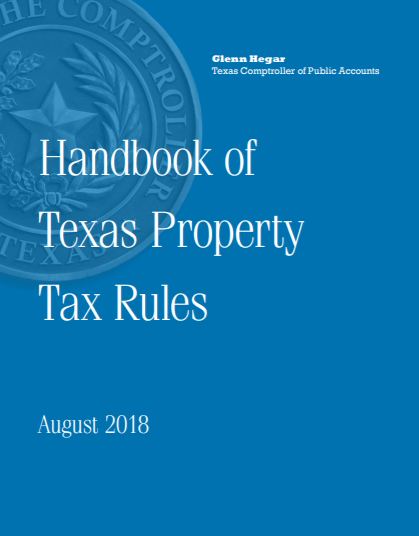
Handbook of Texas Property Tax Rules (April 2018)

Texas Property Tax Exemptions [Click link to download the booklet.]

Brief list of and notes on cases – See Endnote

Sales Tax Exemption for Religious Organizations

The exemption for religious organizations is provided for in Sections 151.310, 156.102 and 171.058 of the Texas Tax Code,
and more detailed information can be found in Comptroller’s Rules 3.322, 3.161, 3.541 and 3.583.

AP-209 Application for Exemption – Religious Organizations

Included on that form is the following statement: ” Special note to unincorporated entities: Include your organization’s governing documents, such as the bylaws or constitution.”


Endnote

904 S.W.2d 621 (1995), CORPUS CHRISTI PEOPLE’S BAPTIST CHURCH, INC., Petitioner, v. NUECES COUNTY APPRAISAL DISTRICT et al., Respondents. No. D-4333. Supreme Court of Texas. Argued October 20, 1994. May 25, 1995. Rehearing Overruled September 14, 1995. [History of property tax exemption. See I. below for excerpt]

194 S.W.3d 501 (2006); CAMERON APPRAISAL DISTRICT, Petitioner, v. Thora O. ROURK, et al., Respondents. No. 04-0359. Supreme Court of Texas. June 2, 2006. [Regarding administrative procedures for contesting property taxes]

846 S.W.2d 554 (1993) BEXAR COUNTY APPRAISAL REVIEW BOARD, et al., Appellants, v. FIRST BAPTIST CHURCH, et al., Appellees. No. 04-89-00543-CV. Court of Appeals of Texas, San Antonio. January 20, 1993. Rehearing Denied January 20, 1993. {Good on Walz, etc. “We consider first the district’s contention that the exemption violates the Texas Constitution, which mandates a tax exemption for “actual places of religious worship” and states that “all laws exempting property from taxation other than the property mentioned in this Section shall be null and void.” Tex. Const, art. VIII, § 2. The district argues that the parking lot at issue in this case is not an actual place of religious worship, and that to exempt it from property taxation goes beyond article eight, § 2 and is void.”]

“For purposes of the tax exemption, a place of religious worship includes not only the sanctuary, but also those grounds and structures surrounding the sanctuary which are necessary for the use and enjoyment of the church.” [See the dissent for good info.]  City of Austin v. University Christian Church, 768 S.W.2d 718, 719 (Tex.1988).[3]

I.

904 S.W.2d 621 (1995), CORPUS CHRISTI PEOPLE’S BAPTIST CHURCH, INC., Petitioner, v. NUECES COUNTY APPRAISAL DISTRICT et al., Respondents. No. D-4333. Supreme Court of Texas. Argued October 20, 1994. May 25, 1995. Rehearing Overruled September 14, 1995.

This case involved a late application made after the application law was enacted. The case gave a brief history of the application law:

I.

Taxes are imposed upon real property each year as of January 1. Tex.Tax Code § 21.02. On that date a lien authorized by article VIII, section 15 of the Texas Constitution attaches to the property to secure their payment. Id. § 32.01. The amount of taxes assessed is not determined until later in the year, however, when appraisals have been completed and tax rates set. Id. §§ 26.01 & 26.05. Tax bills must be mailed by October 1 of the year for which taxes are assessed, or as soon thereafter as practicable. Id. § 31.01. Taxes are due upon receipt of the bill, and if not paid by February 1 of the following year, the taxing unit may sue to collect the tax and foreclose its lien. Id. §§ 31.02 & 33.41.

Article VIII, section 2(a) of the Texas Constitution authorizes the Legislature to exempt the property of religious organizations from taxation, and the Legislature has exercised this authority. Id. § 11.20. To be entitled to the exemption, however, a religious organization, like certain others claiming tax exemptions, must apply to the chief appraiser in the district where the property 623*623 is located before May 1 of the first year for which the tax exemption is claimed. Id. § 11.43(a), (c) & (d). Application for the exemption in subsequent years need not be made unless the chief appraiser requires it. Id. § 11.43(c).

An application for exemption was first required of religious organizations in 1982, after section 11.43 of what was then the new Tax Code took effect. Act of May 26, 1979, 66th Leg., R.S., ch. 841, § 3(a), 1979 Tex. Gen.Laws 2217, 2313. Before 1980, under the prior law, the procedure for claiming the exemption was for a religious organization to file with the taxing authority a sworn, itemized list of exempt property. Act approved May 14, 1931, 42nd Leg., R.S., ch. 124, § 1, 1931 Tex.Gen.Laws 211, 211-12 (formerly TEX.REV.CIV.STAT.ANN. art. 7150(1)). This statute was repealed, effective January 1, 1980, by the enactment of the new Tax Code. Act of May 26, 1979, 66th Leg., R.S., ch. 841, §§ 3(f) & 6(d), 1979 Tex.Gen.Laws 2217, 2315, 2330. The religious organization exemption under section 11.20 of the new Tax Code, which simply carried over from the prior law, became effective on January 1, 1980, along with other parts of the new Code. Act of May 26, 1979, 66th Leg., R.S., ch. 841, § 3(f), 1979 Tex.Gen.Laws 2217, 2315. As already noted, however, this was two years before the effective date of section 11.43, governing applications for exemption. Thus, in 1980 and 1981 a religious organization was not required to file a list of property, make application, or do anything else to claim the property tax exemption.

The requirement of an application and the deadline for filing that application appear to have caught religious organizations and other tax-exempt persons unaware, with the result that some lost their exemption because they did not timely apply for it. See House Comm. ON WAYS & MEANS, BILL ANALYSIS, Tex.H.B. 835, 73rd Leg., R.S. (1993) (explaining the reason for the twelve-year extension enacted in 1993, which also applies to the six-year extension enacted three years earlier.) In response, the Legislature in 1990 enacted section 11.433, effective September 6, 1990, which states:

  • 11.433. Late Application for Religious Organization Exemption

(a) The chief appraiser shall accept and approve or deny an application for an exemption under Section 11.20 [for religious organizations] after the filing deadline provided by Section 11.43 if the application is filed not later than December 31 of the sixth year after the year in which the taxes for which the exemption is claimed were imposed.

(b) The chief appraiser may not approve a late application for an exemption filed under this section if the taxes imposed on the property for the year for which the exemption is claimed are paid before the application is filed.

(c) If a late application is approved after approval of the appraisal records for the year for which the exemption is granted, the chief appraiser shall notify the collector for each taxing unit in which the property was taxable in the year for which the exemption is granted. The collector shall deduct from the organization’s tax bill the amount of tax imposed on the property for that year if the tax has not been paid and any unpaid penalties and accrued interest relating to that tax. The collector may not refund taxes, penalties, or interest paid on the property for which an exemption is granted under this section.

(d) The chief appraiser may grant an exemption for property pursuant to an application filed under this section only if the property otherwise qualified for the exemption under the law in effect on January 1 of the tax year for which the exemption is claimed.

(e) An application may not be filed under this section after December 31, 1991.

Act of June 6, 1990, 71st Leg., 6th C.S., ch. 8, § 1, 1990 Tex.Gen.Laws 46. This is the provision at issue in this case. In 1993, the late application deadline was further extended when subsection (e) was amended to read as follows:

(e) Notwithstanding Subsection (a), the chief appraiser shall accept and approve or deny an application for an exemption under Section 11.20 after the filing deadline provided by Section 11.43 if the application 624*624 is filed not later than December 31 of the 12th year after the year in which the taxes for which the exemption is claimed were imposed and if the application is filed before January 1, 1995. This subsection expires January 1, 1996.

Act of May 30, 1993, 73rd Leg., R.S., ch. 971, § 1, 1993 Tex.Gen.Laws 4235. Section 11.433 does not extend the time for applying for an exemption if the taxes have already been paid, nor does it permit refunds.

Section 11.433 is similar to two other statutes enacted in 1991 permitting late applications for tax exemptions, although the permission granted by those two statutes has now expired. TEX.TAX CODE § 11.434 (six-year extension for school exemption until December 31, 1992); § 11.435 (two-year extension for charitable organization exemption until December 31, 1991); Act of May 27, 1991, 72nd Leg., R.S., ch. 836, §§ 6.3 & 6.4, 1991 Tex.Gen.Laws 2890, 2894-95. The Legislature has also extended the deadline for claiming a homestead exemption for a year after taxes are paid or become delinquent. Tex.Tax Code § 11.431. Section 11.431, unlike sections 11.433-.435, appears to have been motivated by constitutional concerns. See Op.Tex. Att’y Gen. MW-259 (1980) (“A legislatively designated cutoff date for homestead exemption claims under article VIII, section 1-b of the Texas Constitution will not alone operate to deprive a taxpayer of an exemption …”); see also Op.Tex. Att’y Gen. JM-221 (1984) (section 11.431 permits tax refunds when homestead application is filed late).


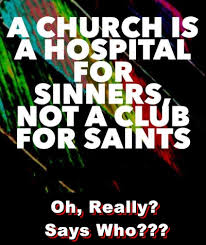
Is a Church a Hospital for Sinners?

CLICK HERE TO GO TO
LETTERS AND QUESTIONS FROM PASTORS AND OTHERS ANSWERED
Jerald Finney
January 28, 2019
Edited January 19, 2024

I received the following e-mail on January 28, 2019:

Good morning Brother Finney,

I’m going to use your outline “The Doctrine of the Church” to teach on Wednesday evenings. My question is one that we so often hear; I’d like your response to it: “The church is a hospital for sinners.”

I’ve always had a problem with that statement.

Thank you,
Pastor ___________________
__________________ Church

I responded to his inquiry as follows:

Dear Pastor ________________________,

I am humbled that you are using my outline to teach the doctrine of the church. I know that you will carefully examine it and modify it as the Lord leads. Please let me know if you find things that you feel need to be clarified, corrected, etc. according to the Word of God.

I humbly offer the following response to your question concerning a church being a hospital for sinners. I believe that the heresy is doing great harm to the cause of Christ. When a believer, family, church, or nation does not honor God’s Word, especially as to such a preeminent matter as the church Christ purchased with his own blood (Acts 20:28), much harm is done to the cause of Christ.

When one compares God’s New Testament church doctrine to the facts about a hospital, he can easily discern that the analogy, “A church is a hospital for sinners,” is heretical. Let us first look at some basics of New Testament church doctrine that make this clear.

Is a church a hospital for sinners? It can be, but if it is, it is not a church modeled after New Testament church doctrine. An assembly of people meeting regularly for some purpose is a church; however, most such assemblies are not churches of Christ, churches under Christ. When Christ declared that “Thou are Peter and upon this rock (Himself), I will build my church,” he knew that there were already churches (ekklesias) in existence that were not His churches and that there would be such churches in the future. He said “I will build my church,” speaking of an institution that would be made up of local autonomous assemblies of born again baptized believers under Him in all things (See Epheisians 1.22; Colossians 1.18) each diligently seeking to follow-according to knowledge, understanding, and wisdom-His New Testament principles as to calling, purpose, organization, conduct, discipleship, discipline, etc.

Christ commissioned his disciples and the churches they planted to go into the world and preach the gospel, baptize, disciple the saved and to do all that he commanded them.

  • Matthew 28:18-20: “And Jesus came and spake unto them, saying, All power is given unto me in heaven and in earth. Go ye therefore, and teach all nations, baptizing them in the name of the Father, and of the Son, and of the Holy Ghost:  Teaching them to observe all things whatsoever I have commanded you: and, lo, I am with you alway, even unto the end of the world. Amen.”
  • Mark 16:15-16:  “And he said unto them, Go ye into all the world, and preach the gospel to every creature. He that believeth and is baptized shall be saved; but he that believeth not shall be damned.”
  • Luke 24:46-47: “And said unto them, Thus it is written, and thus it behoved Christ to suffer, and to rise from the dead the third day: And that repentance and remission of sins should be preached in his name among all nations, beginning at Jerusalem.”
  • Acts 1:8 But ye shall receive power, after that the Holy Ghost is come upon you: and ye shall be witnesses unto me both in Jerusalem, and in all Judaea, and in Samaria, and unto the uttermost part of the earth.

See, for more information on the foundation of Christ’s churches: The New Testament of Jesus Christ:  His Executor Named and Empowered.

Before our Lord ascended to heaven, the Lord, being assembled together with His church:

Acts 1:4 : “… commanded them that they should not depart from Jerusalem, but wait for the promise of the Father, which, saith he, ye have heard of me.” … Acts 1:8: “But ye shall receive power, after that the Holy Ghost is come upon you: and ye shall be witnesses unto me both in Jerusalem, and in all Judaea, and in Samaria, and unto the uttermost part of the earth.”

Thus did the disciples; and, on the day of Pentecost, Christ filled them with the Holy Ghost (Acts 2.1-4) as foretold by John the Baptist (Matthew 3.26; Mark 1.8, Luke 3.16).

Immediately, Peter stood up and preached the gospel (Acts 2.1-36).  “Then they that gladly received his word were baptized: and the same day there were added unto them about three thousand souls” (Acts 2.41). Three thousand souls were added to them (Christ’s church which had waited at Jerusalem)! Those who were saved were baptized and added to the only church under Christ in existence at that time, the church at Jerusalem.

“And they continued stedfastly in the apostles’ doctrine and fellowship, and in breaking of bread, and in prayers. And fear came upon every soul: and many wonders and signs were done by the apostles. And all that believed were together, and had all things common; And sold their possessions and goods, and parted them to all men, as every man had need. And they, continuing daily with one accord in the temple, and breaking bread from house to house, did eat their meat with gladness and singleness of heart,  Praising God, and having favour with all the people. And the Lord added to the church daily such as should be saved” (Acts 2:42-47).

This is the  pattern for all believers and churches from that time on: salvation, baptism into a local church body, discipleship in the assembly, and going into the world in accord with His will. God makes this clear as one studies his doctrine of the church as given us by the apostle Paul in his epistles.n Of course, as a continued study in God’s epistles given us by the apostle Paul, the members of every church are not required to sell all their possessions and goods and part them to all men, as every man has a need. They first church did this voluntarily and not as a requriement.

God’s epistles written by the Apostle Paul further develop the doctrine of the church. Those epistles “fully reveal and instruct as to the purpose of local churches as to their unique place in the counsels and purposes of God.” Through those epistles we know that a church under Christ:

  • “is not an organization, but an organism, the body of Christ; instinct with His life, and heavenly in calling, promise, and destiny. Through him alone we know the nature, purpose, and form of organization of local churches, and the right conduct of such gatherings.”

A New Testament church is a spiritual organism (See, What Is a Spiritual Entity?) made up of born again believers. God reveals the make-up and purpose of a church under Christ in Ephesians; 1 Corinthians 12-14; Romans 12.3-8 and other passages:

Ephesians 4:11-16: “And he gave some, apostles; and some, prophets; and some, evangelists; and some, pastors and teachers; For the perfecting of the saints, for the work of the ministry, for the edifying of the body of Christ: Till we all come in the unity of the faith, and of the knowledge of the Son of God, unto a perfect man, unto the measure of the stature of the fulness of Christ:  That we henceforth be no more children, tossed to and fro, and carried about with every wind of doctrine, by the sleight of men, and cunning craftiness, whereby they lie in wait to deceive; But speaking the truth in love, may grow up into him in all things, which is the head, even Christ:  From whom the whole body fitly joined together and compacted by that which every joint supplieth, according to the effectual working in the measure of every part, maketh increase of the body unto the edifying of itself in love.”

New converts are immediately added to the family of God. God desires them to be baptized into a local church body under Christ. Sadly, such churches are few and far between in America and elsewhere in the world. We see this progression in Ephesians 2:19-22:

  • “Now therefore ye are no more strangers and foreigners, but fellowcitizens with the saints, and of the household of God; And are built upon the foundation of the apostles and prophets, Jesus Christ himself being the chief corner stone; In whom all the building fitly framed together groweth unto an holy temple in the Lord: In whom ye also are builded together for an habitation of God through the Spirit.”

First, addition to the household or family of God, then baptism and church membership. Of course there are those who get saved and do not become church members, but that is not God’s ideal. He wants every believer to be a member of a local church of Christ.

God’s churches under Christ are for the saved and their purpose is stated in Ephesians 4.11-16, 1 Corinthians 12, and other passages. A church is for the saved, not for the lost. Saved church members are to assemble for the purposes given in Ephesians 4.11-16. Then, they are to go out into the world as ambassadors for Christ and preach the gospel to every creature! When sinners get saved, God wants them to be baptized into a local church under Christ.

I suggest that 1 Corinthians 2 gives insight into why the local assembly is for the saints, not the lost. The lost are worldly, fleshly. The saved are heavenly, spiritual. Lost people cannot know the things of God as can born again believers. They are  dead in trespasses and sins whereas the saved are spiritually alive. They serve the god of this world. “And you hath he quickened, who were dead in trespasses and sins; Wherein in time past ye walked according to the course of this world, according to the prince of the power of the air, the spirit that now worketh in the children of disobedience” (Ephesians 2.1-2).

The New Testament teaches that new believers are to be baptized into a Bible believing church under Christ according to Ephesians 4, 1 Corinthians 12, Romans 12.3-8. There they enjoy the fellowship with other believers in the Holy Spirit and are equipped to go to their homes, to the workplace, and to the world as ambassadors winning the lost to Christ and baptizing them into a local New Testament church of Christ.

Instead, many churches tell their members to bring the lost to church where they will hear the gospel and do little to mature the spiritual babies in the assembly. Many of those churches will preach nothing but “salvation” on Sunday morning; and, at other times and at best, little more than a few simple fundamentals of the faith. As a result, most believers remain spiritual babies fed with milk (See 1 Corinthians 3.1-3; Hebrews 5.11-14 and 6.1-2) distracted and misled by the many lost in their midst. A small remnant of Christ’s churches carry out His commission and purposes as the mega-churches and false prophets (such as Joel Olsteen) preach the heresies of the devil to assemblies of lost people (for the most part) and lead untold millions to hell (See, e.g., 2 Corinthians 11.13-15).

Briefly, a hospital is a place which provides for a paid in-patient service and treatment for a worldly disease, sickness, or injury. One does not become a member of a hospital and leaves when he dies or the service and treatment ends. The hospital does not disciple its patients, operate as a worldly or spiritual assembly or congregation, etc. Most adults their right minds know this and much more about hospitals which clearly distinguish them from a New Testament Chruch. Believers, and especially those who are church members should be able to figure this out; but, sadly, most believers know little or nothing about God’s New Testament church doctrine

If anyone disagrees upon the foundation of the King James Bible, I ask them to please explain. If proven wrong, a published repentence will follow.

I hope this is helpful. Again, let me know if you believe something needs correction.

For His Glory,
Brother Jerald Finney
The Church Bible Trust Relationship Explained and How a Church Can Nullify Her Efforts to Remain Under Christ Only

Jerald Finney
Copyright © January 11, 2019
Since this article was published, the ministry has published an online booklet covering the trust relationship with property in much more thoroughly: Simply Church: The Holy Union of Christ and His Local Church 

More and more churches are seeking to exercise their Bible freedom and duty to operate under the Lord Jesus Christ in all things; to repent, do the first works as churches of Christ before He removes their candlesticks. American churches who desire to do so are protected by the First Amendment to the United States Constitution and corresponding state constitutional provisions. This short essay will give a simple explanation of the trust relationship used by churches in order to remain under Christ and Christ alone. Then, it will explain ways some of those churches nullify that attempt to honor the Lord Jesus Christ.
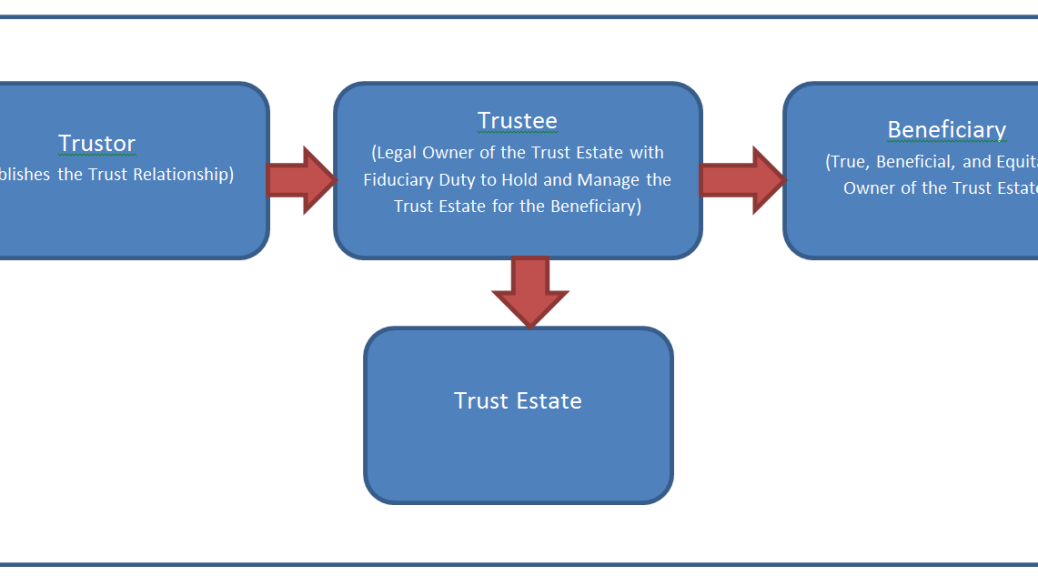
The “Bible” trust is a fiduciary relationship with real and personal property (personal property includes intangible property such as money and bank accounts) recognized but not created by man’s law. This relationship is created by an agreement between a trustor and trustee, is private, creates no contract with the state (the state is not a party), and is not subject to control by civil government and its courts. Trust documents, if any, are never required to be filed in man’s legal system through any of its courts or agencies. This type of trust is not a legal entity. The trust relationship can be established orally or in writing; a properly drafted writing is better.  If not in writing, and if the facts show the intent to establish a relationship with property to be held by a trustee for the benefit of the true owner of the property then a trust relationship has been established. This is so no matter the terms used. It is not necessary to use the terms “trust,” “trustor,” “trustee,” “trust estate,” or “beneficiary” for a trust relationship to come into existence if the essentials of the relationship are there.

The trustor creates the relationship and names a trustee who agrees to administer a trust estate funded by the trustor (and others, if any, who wish to contribute to the trust estate) solely for the benefit of another, the true owner of the trust estate, the beneficiary. The trustor merely establishes the trust relationship. The trustee administers the trust estate solely for the benefit of the owner of the trust estate. Once assets are placed in the trust estate, those assets permanently belong to the beneficiary, not to the trustor  (in an irrevocable trust).

An inactive trust is no trust at all. The elements of valid trust are: trustor, trustee, beneficiary, and trust estate. If an element is missing, there is no trust. If there is no trustor, trustee, trust estate and beneficiary there is no trust. Without a trust estate, there is no trust. For a trust relationship to exist, all elements of the trust must exist. If there is no trust estate, there can be no trust. One cannot establish a fiduciary relationship with property if there is no property.

Some churches have properly drafted and executed documents establishing a proper trust relationship in order to remain under the Lord Jesus Christ only; but they have nullified their efforts by never listing trust property to the trust estate in an appendix to the trust document. All property and assets in the trust estate should be listed in the appendix. Again, if no property is placed in the trust estate, the trust is non-existent. The Appendix should list all personal property (song books, pews, musical instruments, etc.), real property, motor vehicles, bank accounts and other assets held in trust estate.

Another way churches who have set up a trust relationship with money and property – through a Declaration of Trust, Procedures, or whatever the document is titled – nullify their efforts to remain under Christ only is to act legally. When a church acts legally, she is a legal entity subject to the jurisdiction of civil government.

What is a legal entity? A legal entity is an entity that can be sued, sues, can be charged with a crime, enters into contracts or acts legally in any way. When a church acts legally, she has declared herself to be a legal entity.

How can a church act legally? She can, for example, hold deed to real property, open a bank account, hold title to motor vehicle(s), hold insurance, contract, borrow money, incorporate the church or a ministry of the church, get Internal Revenue Code § 501(c)(3) or § 508 status for the church or a ministry of the church, have employees, pay salaries or do anything else in accordance with or subject to man’s legal system and not according to New Testament church guidelines and example. A church who holds insurance admits that she is a legal worldly entity who can be sued. Doing anything is man’s system makes a church a legal entity subject to man’s law.

A properly implemented trust relationship with money and/or property keeps a church entirely out of man’s earthly legal systems and under the Lord Jesus Christ in all things. That is, if the church does not misstep and declare herself to be a legal entity subject to the law of man in some other way. Thank the Lord and The Trail of Blood of the Martyrs of Jesus who in putting Christ first in all things paid the price that gave all Americans freedom of religion and soul liberty as guaranteed by the First Amendment to the United States Constitution and corresponding state constitutional provisions.

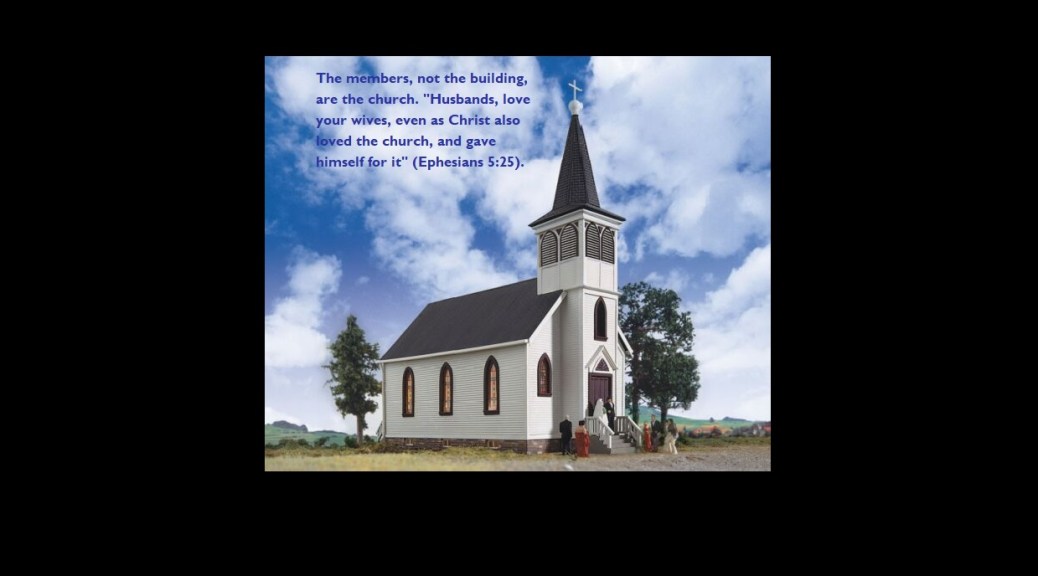
“… Christ also loved the church, and gave himself for it; That he might sanctify and cleanse it with the washing of water by the word, That he might present it to himself a glorious church, not having spot, or wrinkle, or any such thing; but that it should be holy and without blemish. … For we are members of his body, of his flesh, and of his bones.” (Ephesians 5.25-27, 30).


Recommended Online Booklet published after this article which explains the Bible Trust in much more detail:   Simply Church: The Holy Union of Christ and His Local Church (Booklet which explains the Bible Trust in much more detail than this article)

Other resources which will be of help in understanding the concept of trust.

Law on Church Organization (Trusts, Property Tax, Etc.)

Links to Essays, Articles, and Other Resources:

The Bible Trust Relationship: Links to Essays and Other Resources

I. B. Bible Doctrine of Church

Click here to go to: Why Understanding and Applying Church and State Law Is Important for Believers and Churches

Click here to go to brief video presentations of these lessons


Links to lessons:

  1. Introduction 
  2. Christ Ordained the Church and Builds It upon the Rock
  3. A Church Is a Mystery, an Assembly, a Spiritual Body
  4. The Holy Spirit Forms a Church which Is a Temple, a Spiritual Body, the Body of Christ
  5. Christ, the Head/Bridegroom/Husband of the Local Church
  6. The Love between Christ and His Churches
  7. Other Bible Descriptors for a Church: Family, Etc.
  8. A Church Is To Be the Pillar and Ground of the Truth
  9. How To Recognize a New Testament Church
  10. Heresy and Apostasy
  11. Conclusion to the Doctrine of the Church

Other resources:

Click here to go to Short Answers to Some Important Questions


Click here to go to Short Answers to Some Important Questions. 
Click here to go to links to the written lessons.
Click here to go to links to the 3 1/2 to 6 minute video lectures.

The Rose of Sharon (Transcript of a sermon depicting the love relationship between Christ and His local visible church, emphasizing the importance of organization under Christ only as opposed to corporate 501c3 or 508 status or legal status of any kind.

Click here to to to Why Understanding and Applying Church and State Law Is Important for Believers and Churches

Click here to go to Articles, Essays, and Other Resources Related to the Doctrine of the Church, Incorporation, 501c3, Etc.

Click here to go to Essays on the Bible Trust Relationship: Links to Essays and Other Resources